Chhena Gaja: Fried Chhena Blocks Soaked in Warm Rose Syrup from Odisha (ଛେନା ଗଜା)

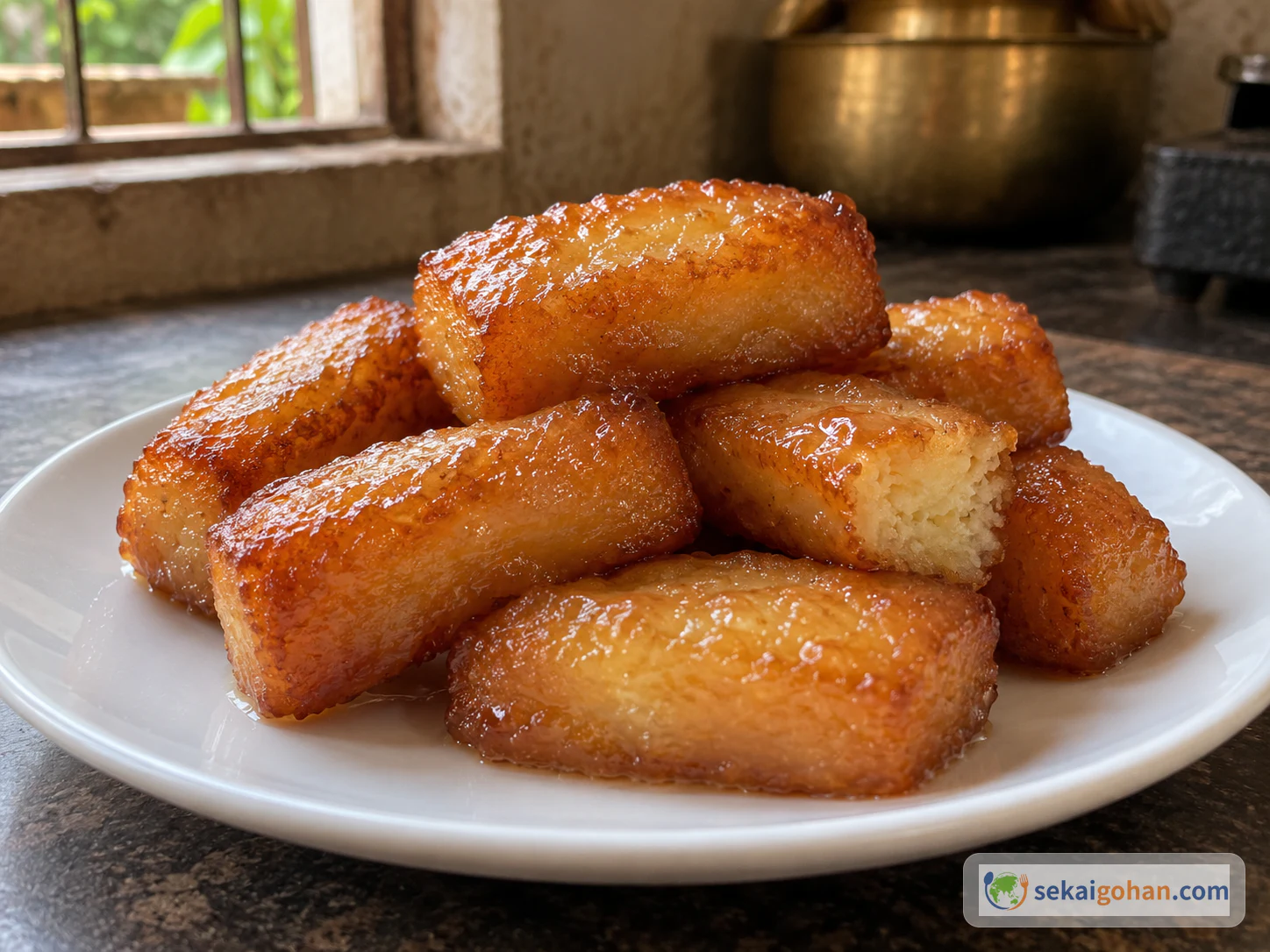
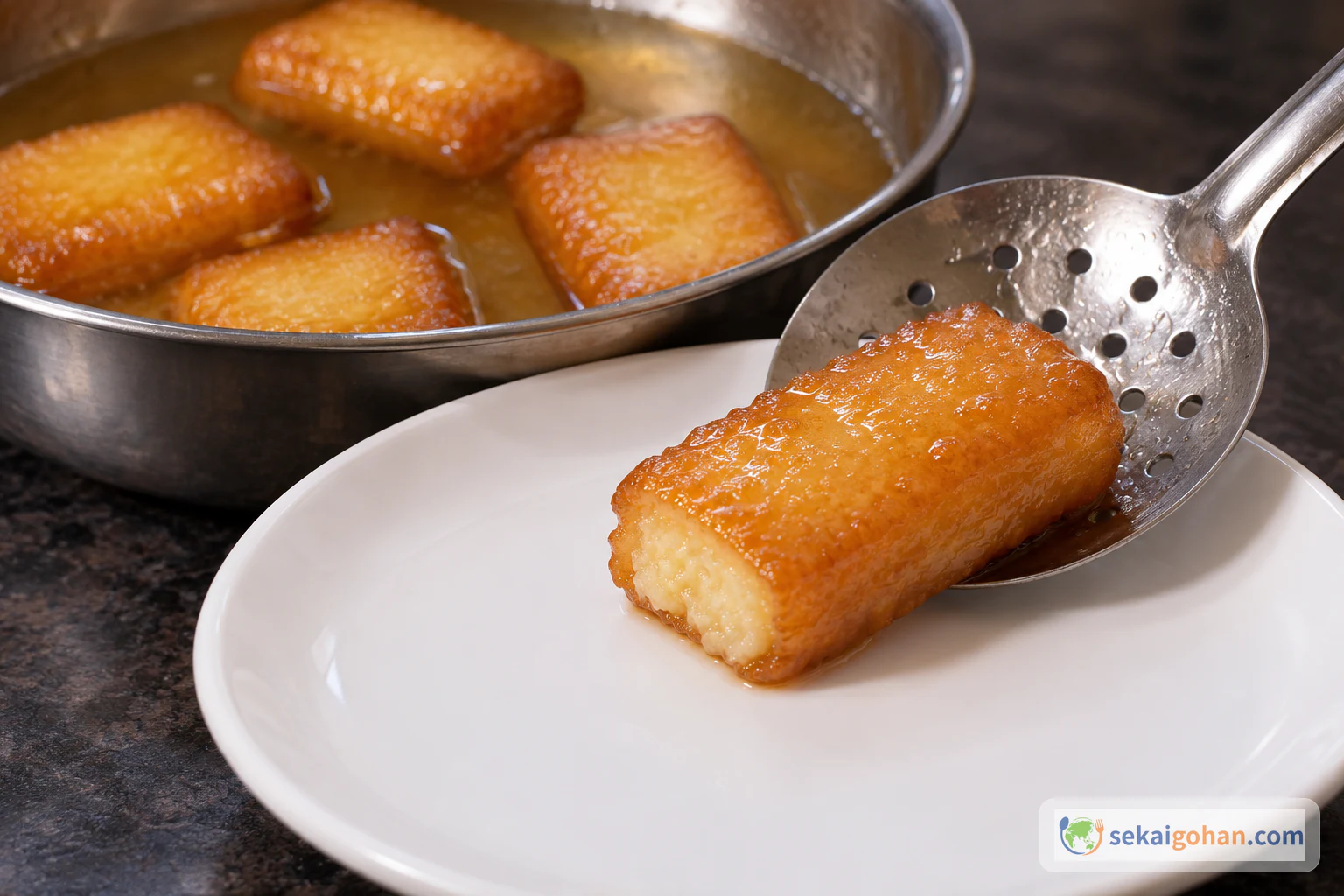
Golden square and short rectangular chhena gaja, glossy with sugar syrup, on a white plate
Cuisine
Indian (Odia)

How to make chhena gaja, the Odia sweet of fresh chhena kneaded with a spoonful of semolina, shaped into small squares or short logs, fried golden and soaked in warm rose-scented syrup for about an hour. Follows one published home recipe from 1 L of milk, with the cues for curdling, the one-string syrup, testing the oil and the soak, plus how other published versions differ.

Cooking flow

Cooking steps

STEP11 / 10

Boil the milk, rest it, and curdle it with lemon

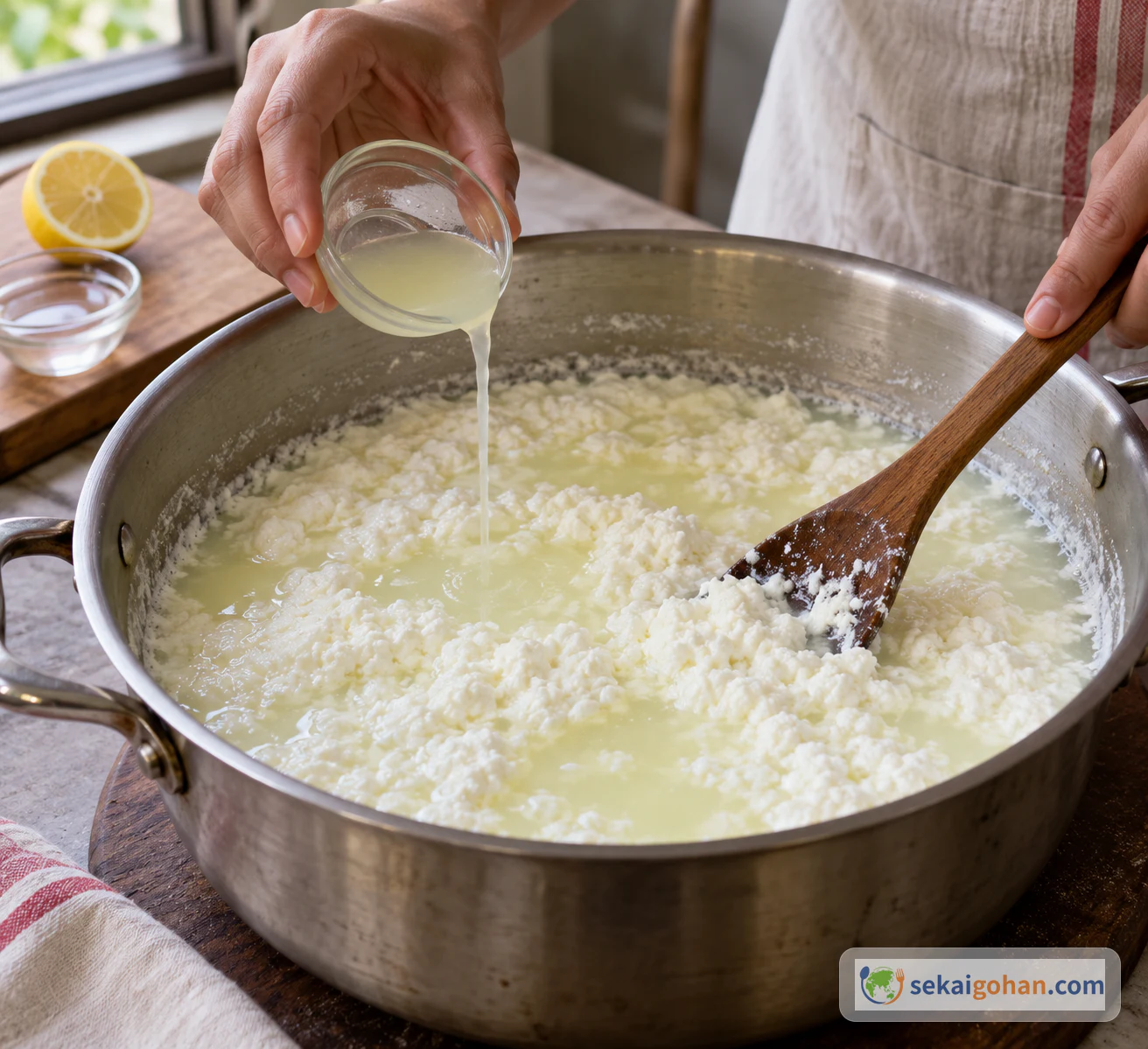
Lemon juice being stirred into hot milk as white curds separate from pale whey
Add the lemon juice a little at a time and stop once curds and whey separate

Bring 1 quart (1 L) of full-fat milk to a boil in a heavy-bottomed pan. Turn off the heat and wait 2–3 minutes. Then add the 2 tbsp of lemon juice gradually, stirring, and stop once the soft white solids have clearly separated from the pale whey.

STEP22 / 10

Add the ice and wait 5 minutes

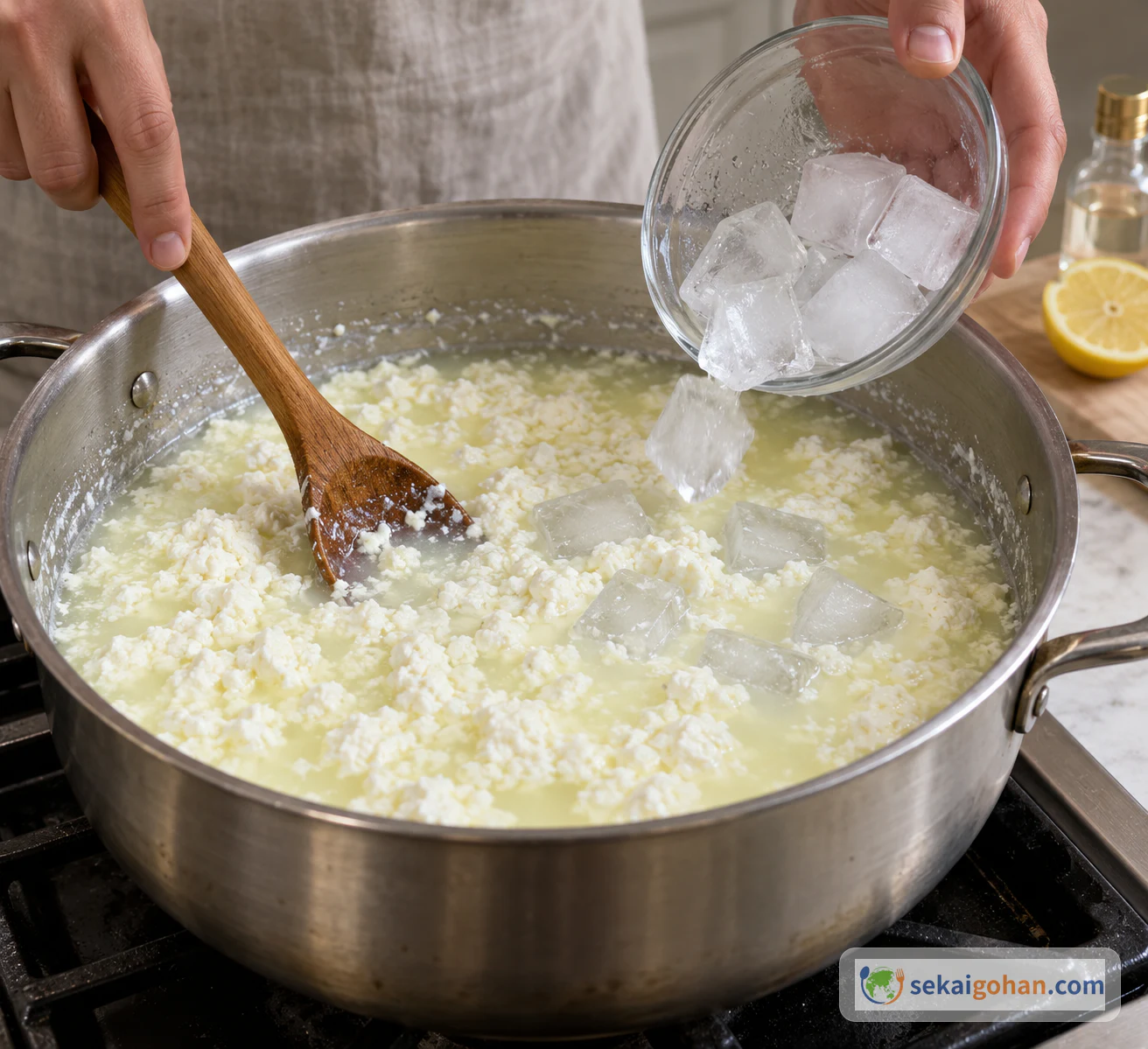
Ice cubes being added to separated curds and whey in the same pan
The ice goes into the curdled milk in the pan, before any draining

Drop 6–8 ice cubes straight into the pan of curds and whey, stir them in gently, and leave it for 5 minutes before draining.

STEP33 / 10

Drain, rinse and squeeze

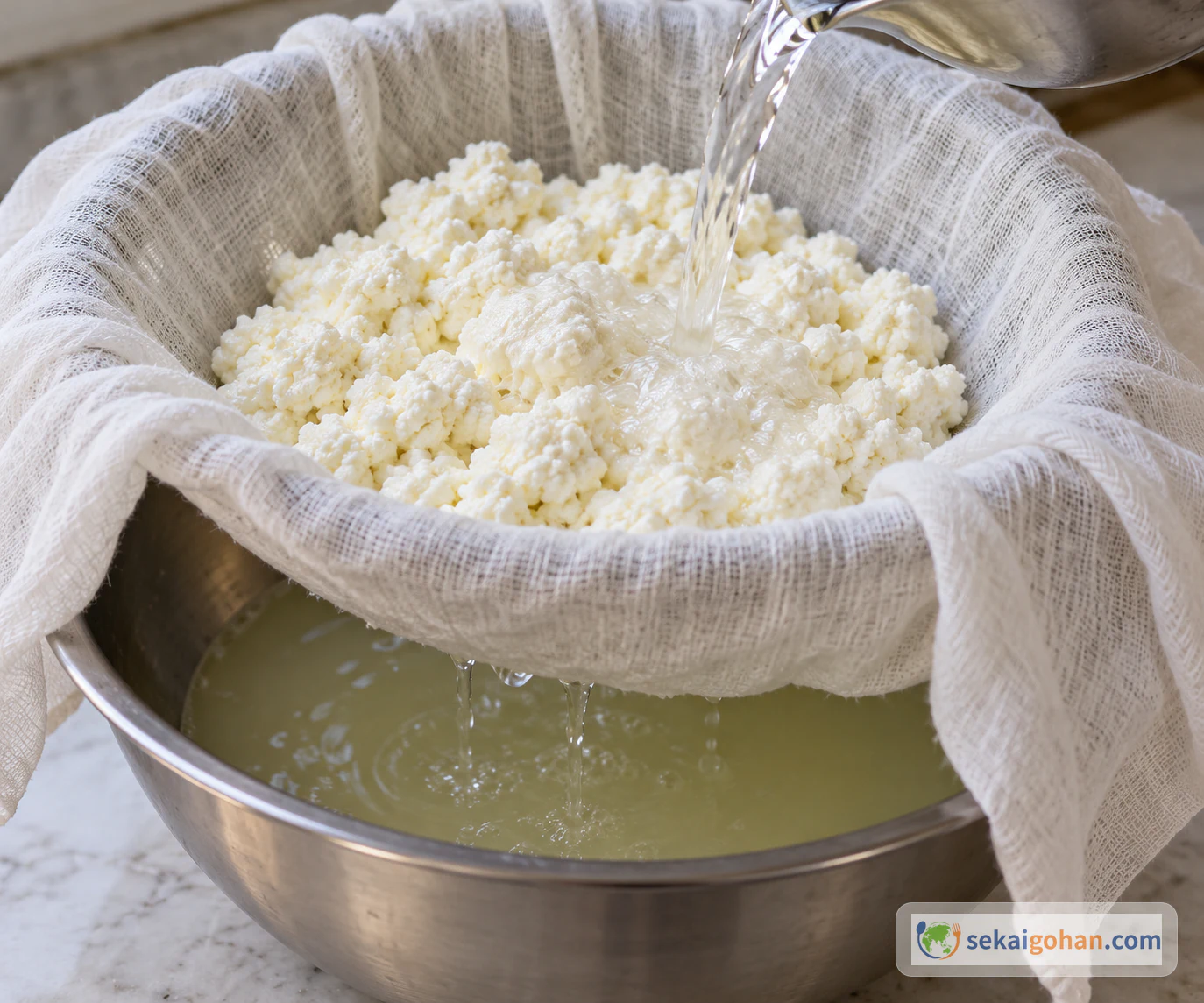
Fresh chhena curds in cotton cloth over a bowl, rinsed under a gentle stream of water
Rinse away the lemon, then squeeze out the extra water

Pour everything through a thin cotton cloth or cheesecloth set over a bowl. Rinse the curds under running water to wash away the lemon flavor, then gather the cloth and squeeze out the excess water. You now have fresh chhena.

STEP44 / 10

Cook the syrup to one-string consistency and keep it warm

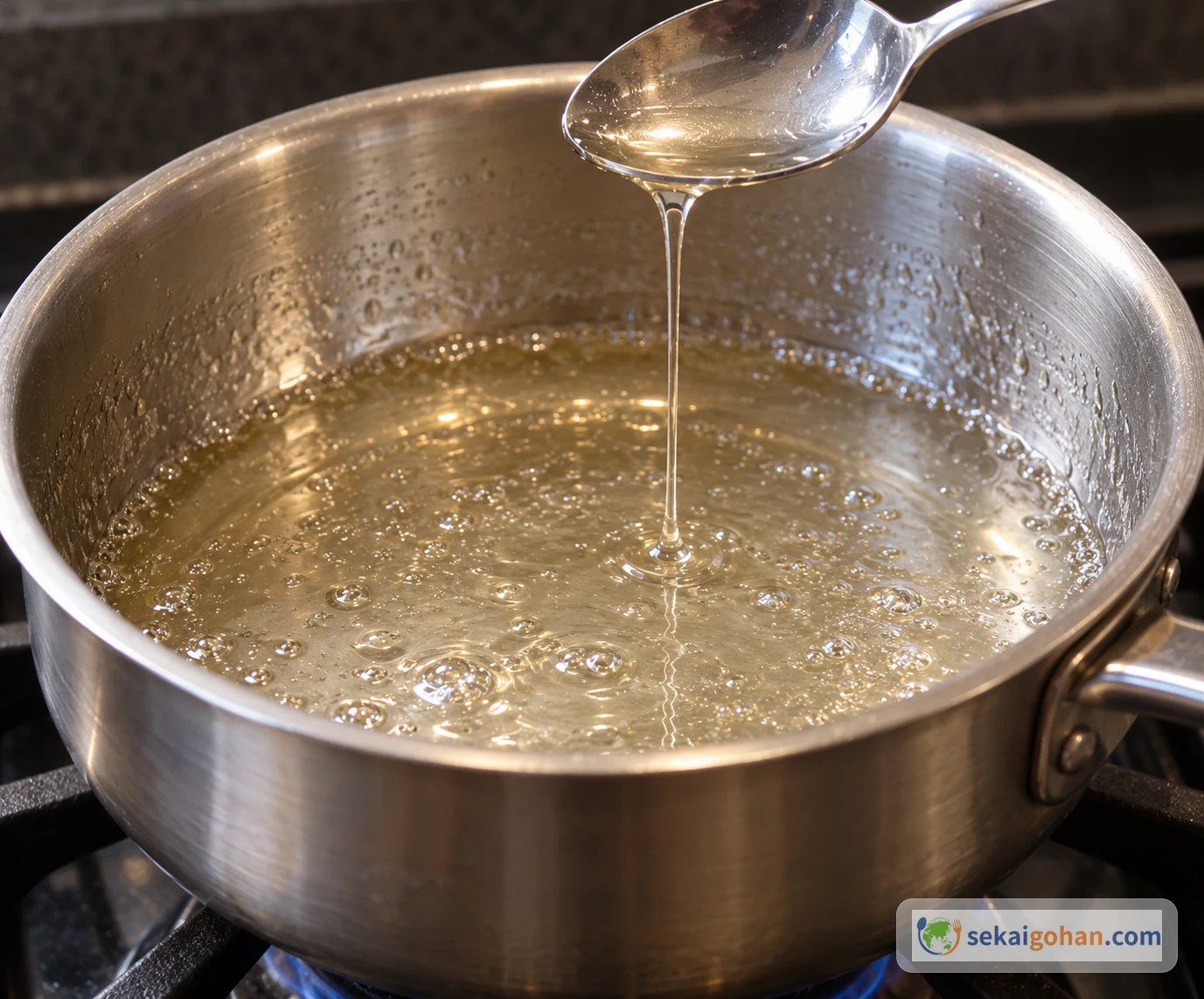
A spoon lifting clear syrup that falls back into the pan in one fine thread
One-string consistency: the syrup falls from the spoon in a single fine thread

Put 1/2 cup sugar and 2/3 cup water in a small pan and cook until the syrup reaches one-string consistency: lift a little on a spoon and it should fall back in a single fine thread. Stir in the 1/2 tsp lemon juice and 1–2 tbsp rose water, then keep the syrup warm over low heat.

STEP55 / 10

Knead the chhena with the semolina

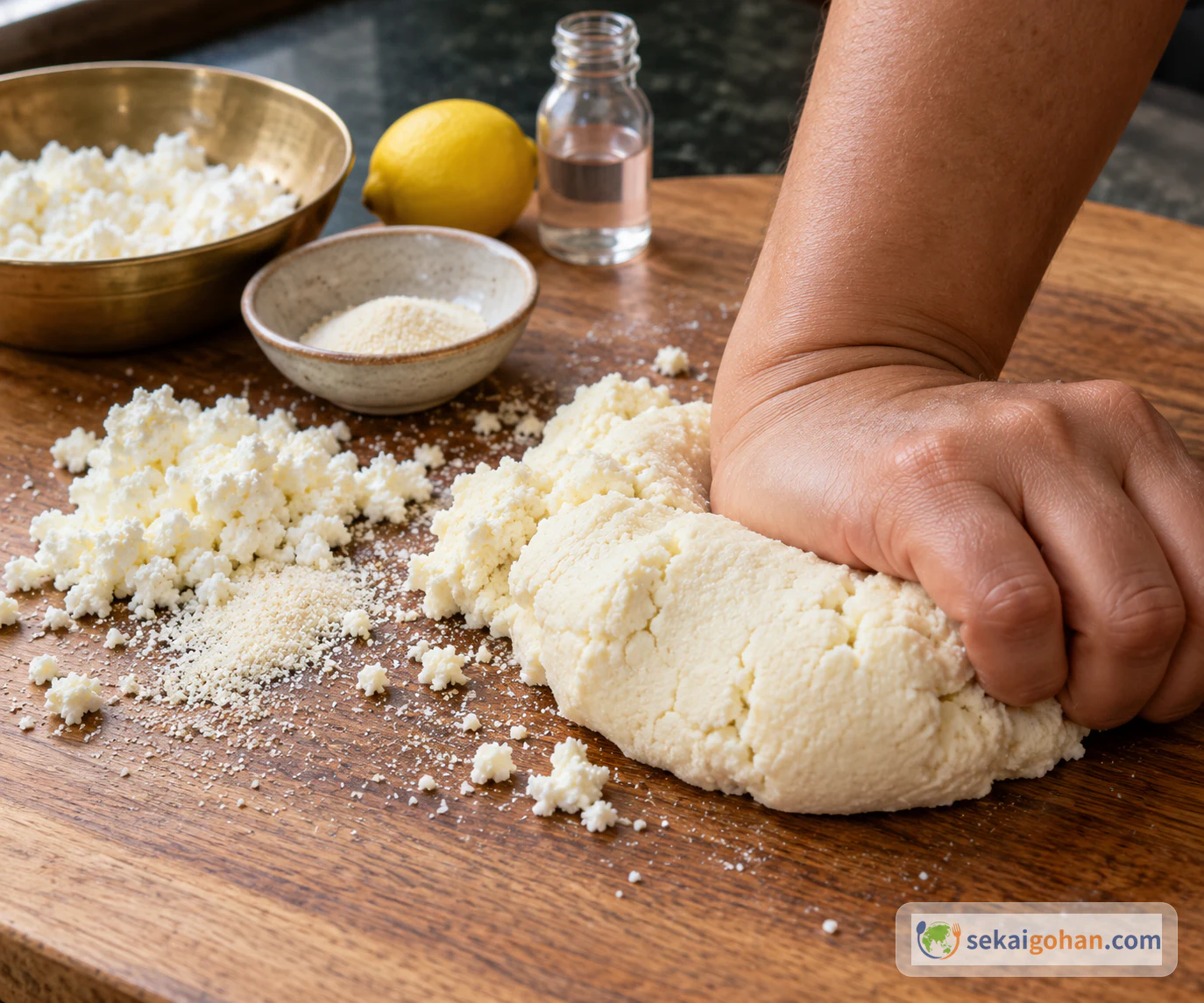
Crumbled chhena being kneaded with a little semolina into a smooth dough
Knead with the heel of your hand until the chhena turns smooth

Crumble the chhena onto a board, add 1 tbsp rava, and knead with the heel of your palm until the mixture comes together as a smooth dough.

STEP66 / 10

Divide and shape into squares or short logs

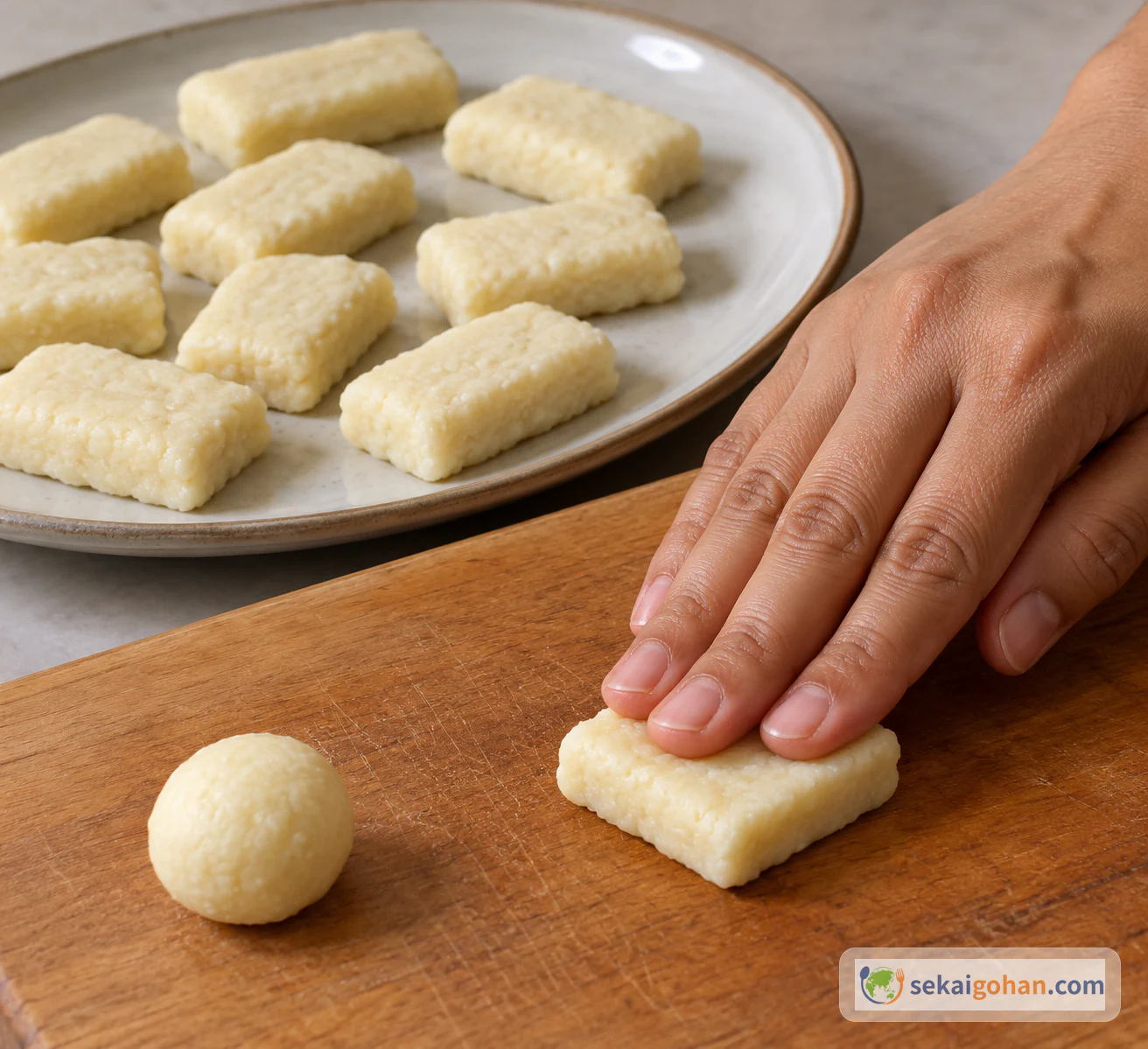
A hand pressing a small ball of dough into a short rectangular block, with shaped pieces on a plate
Ball, then disc, then a square or short log

Divide the dough into 8–12 portions. Roll each into a ball, flatten it into a disc, and then press it into a square. Aruna notes that the square is the traditional shape, but in her own photos she made short rectangular logs. Either short block shape follows her recipe; there is no exact size to hit.

STEP77 / 10

Heat the oil gently and test it

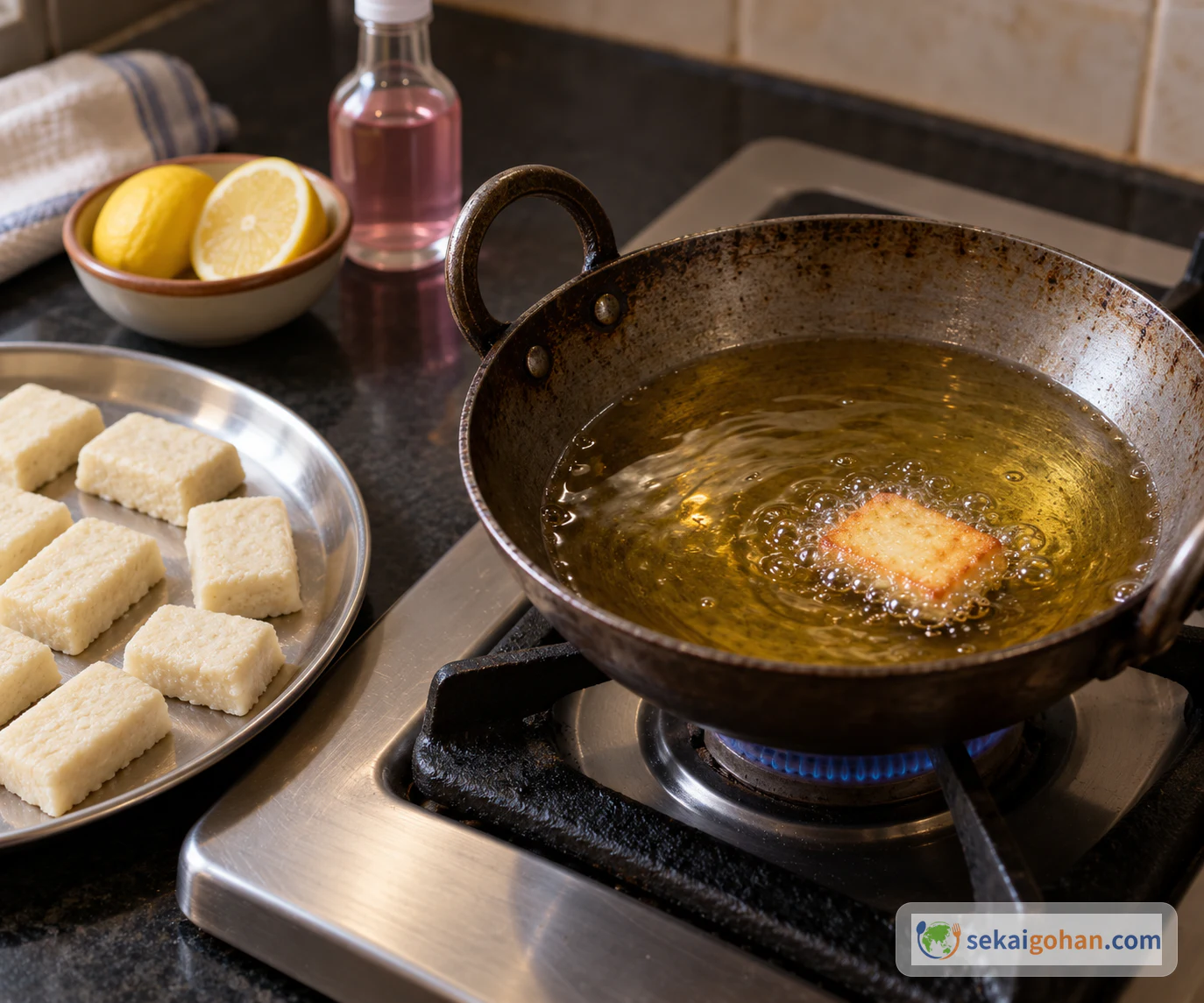
A tiny test piece of chhena sizzling at the surface of oil in a small kadhai over a low flame
The test piece should sizzle at the surface and brown slowly

Heat about 1/2 cup oil in a small kadhai over low heat. Drop in a tiny piece of chhena: when it sizzles at the surface and browns slowly, the oil is ready.

STEP88 / 10

Fry in small batches until golden

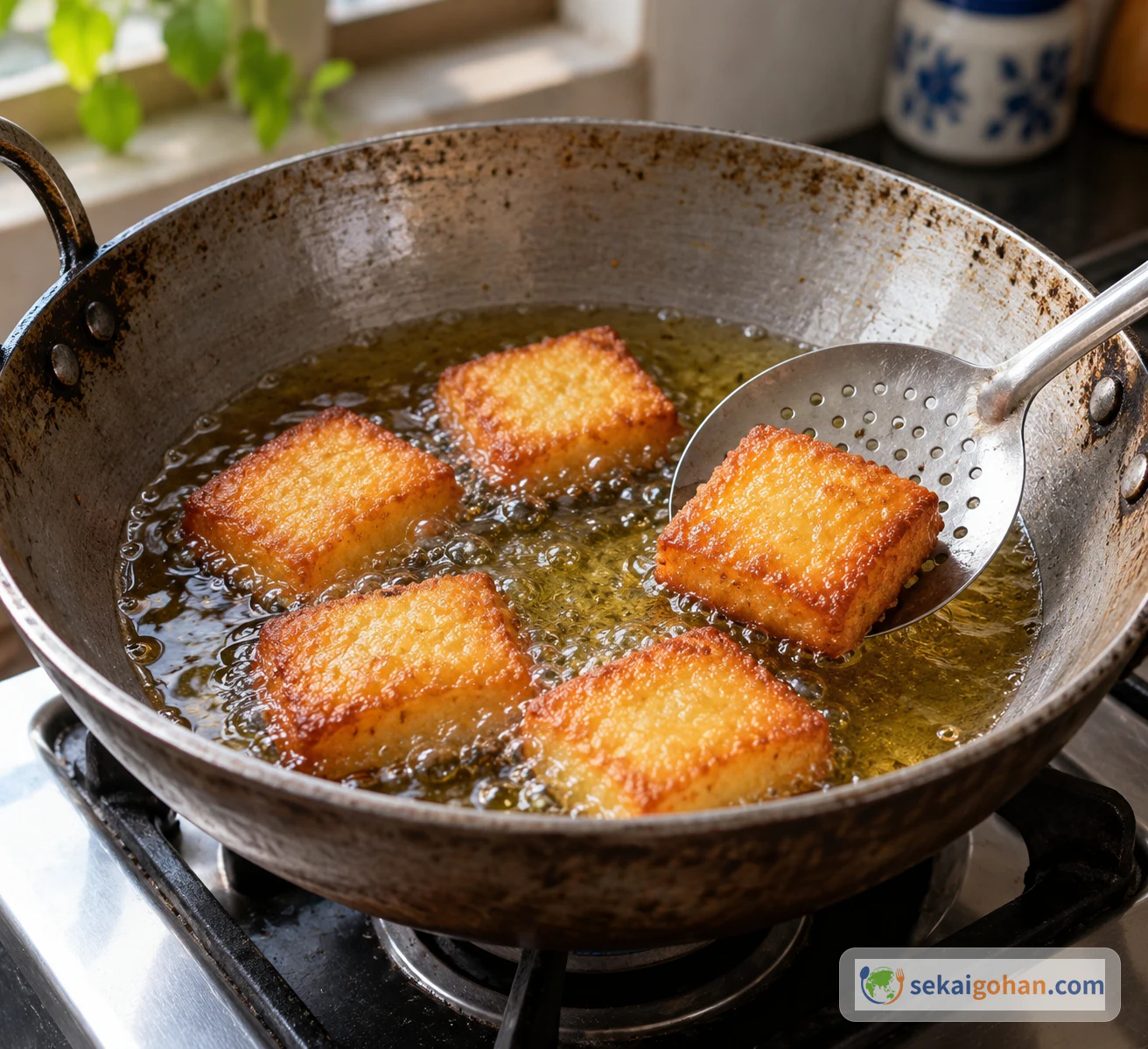
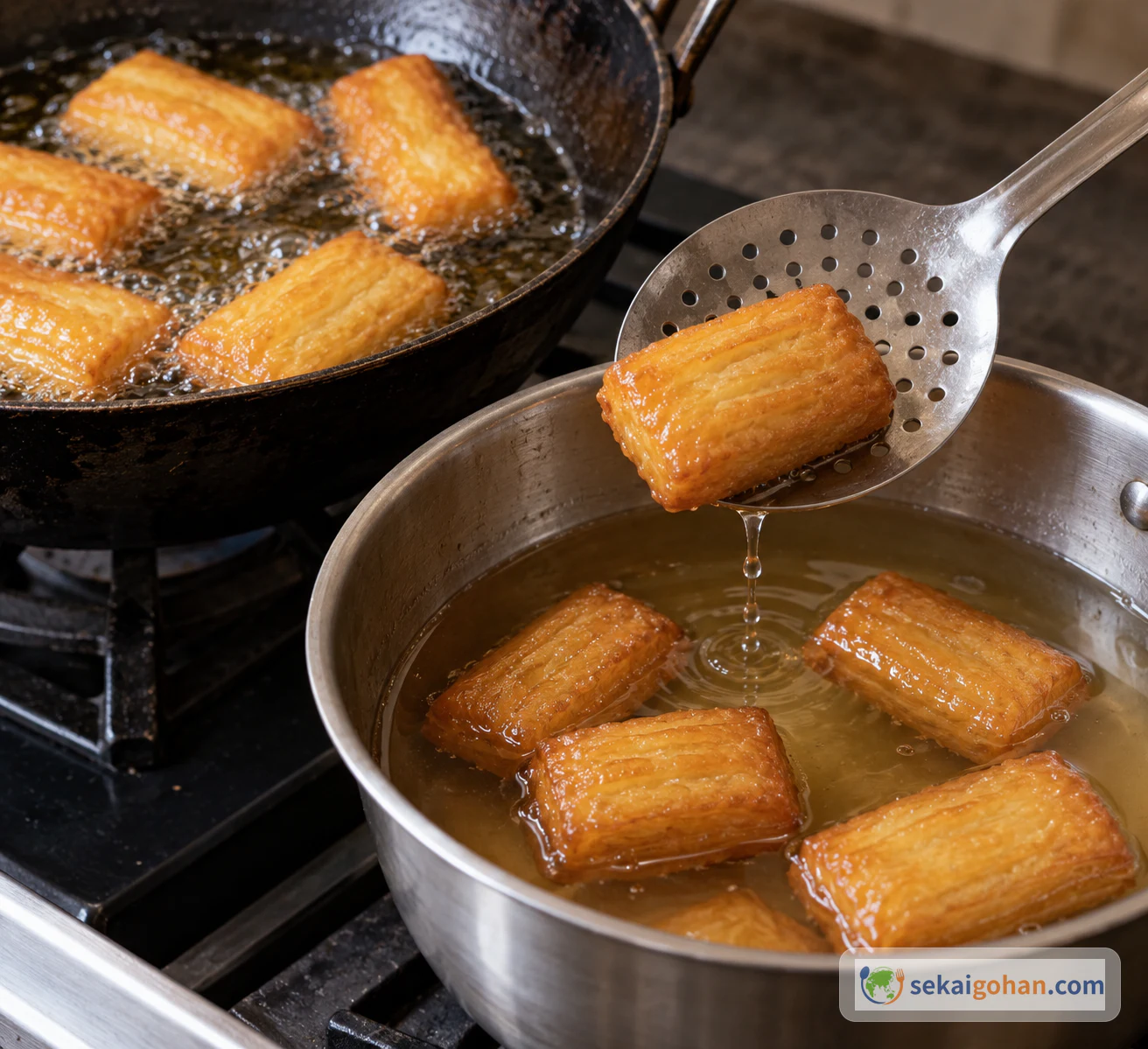
A small batch of short rectangular gaja frying golden in a kadhai, one being turned with a slotted spoon
A few at a time, over low to medium heat, until golden

Fry the shaped pieces a few at a time over low to medium heat, turning them gently with a slotted spoon, until they are golden.

STEP99 / 10

Drain and move straight into the warm syrup

A slotted spoon lowering a golden fried piece into a pan of warm syrup that already holds a few pieces
Let the oil drip off, then into the warm syrup

Lift each batch out with the slotted spoon, let the excess oil drain off, and transfer the pieces into the warm syrup.

STEP1010 / 10

Soak for about an hour, then serve

A syrup-glossed short rectangular gaja being lifted onto a white plate
After about an hour in the syrup, lift the pieces out onto a plate

Once all the pieces have been fried and are in the syrup, let them soak for about 1 hour. Then lift them out of the syrup and serve.

0 / 0
Ingredients

Ingredients

1 / 1

Ingredients

Ingredient Amount Role
Full-fat milk 1 L Curdled with lemon juice to make the chhena
Lemon juice, for the chhena 2 tbsp Added gradually to the hot milk to separate curds and whey
Ice cubes 6–8 Added to the curdled milk, which then rests 5 minutes
Sugar 1/2 cup For the syrup
Water 2/3 cup For the syrup
Lemon juice, for the syrup 1/2 tsp Added to the syrup after it reaches one-string consistency
Rose water 1–2 tbsp Scents the syrup
Semolina (rava) 1 tbsp Kneaded into the crumbled chhena
Oil about 1/2 cup, heated in a small kadhai For frying
0 / 0

Hot curds are drained, kneaded smooth, fried slowly until golden, and then lifted with a slotted spoon straight into a pan of warm sugar syrup. It starts with something simple: a pan of milk brought to a boil, set off the heat, and lemon juice stirred in until soft white curds float apart from pale whey. Those curds, rinsed and squeezed, become chhena gaja (ଛେନା ଗଜା in Odia), a sweet from Odisha in eastern India. The small golden blocks spend about an hour soaking up rose-scented syrup before they're ready.

Chhena Gaja in Odisha and Pahala

Chhena gaja is one of Odisha's chhena sweets, and it is closely associated with Pahala. At a sweet shop there, "ChenaGoja" is a popular order, described simply as deep-fried cheese soaked in sugar syrup. You'll see the name spelled several ways: Chhena Gaja, Chhenagaja, ChenaGoja.

The dough here is just fresh chhena with a spoonful of semolina, pressed into small blocks. Squares are the traditional shape, though short rectangular logs work just as well.

Ingredients: One Batch from 1 quart (1 L) of Full-Fat Milk
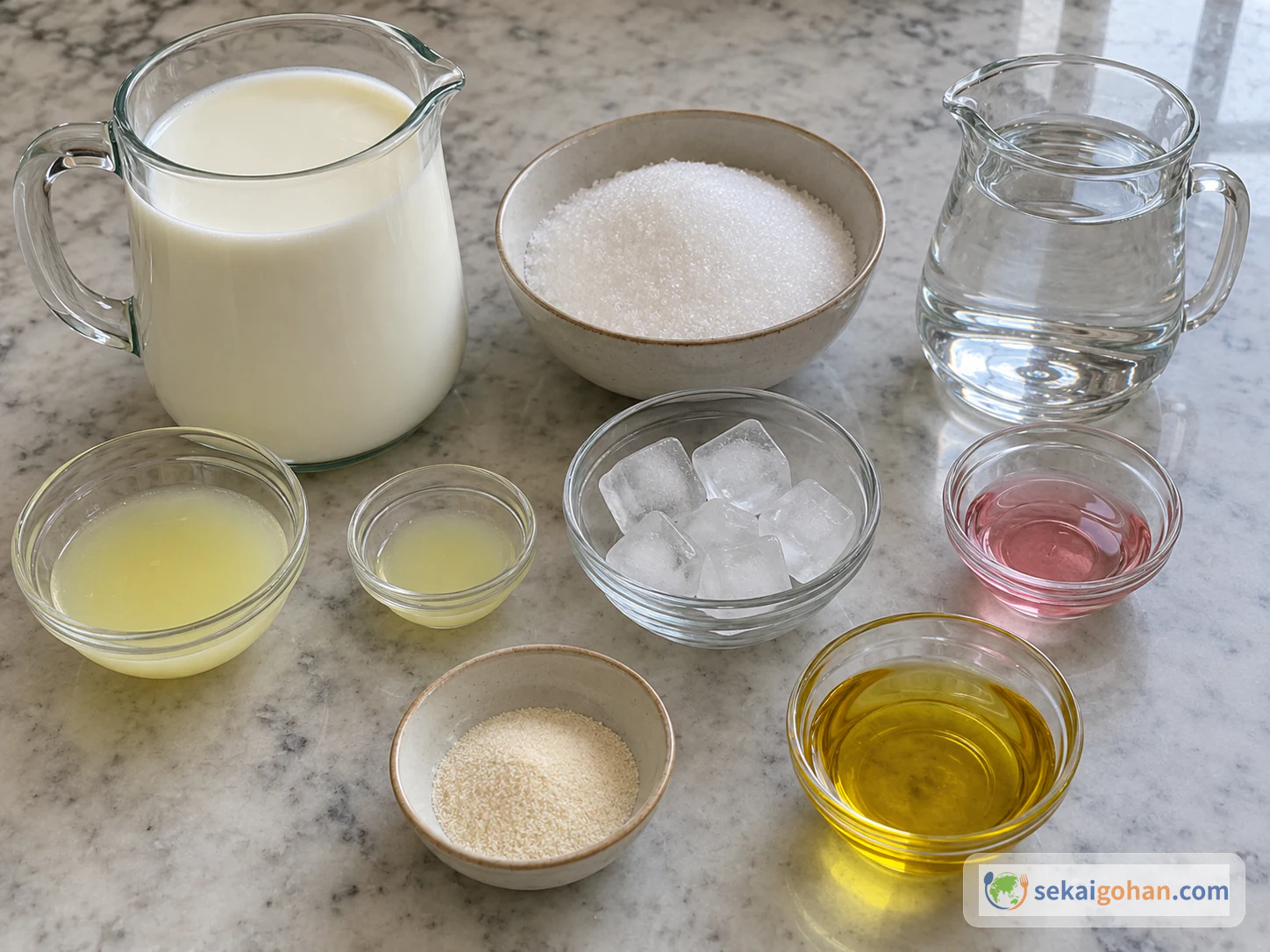
Milk, two portions of lemon juice, ice cubes, sugar, water, rose water, semolina and frying oil set out in separate vessels
Measure the lemon juice for the chhena and for the syrup separately

The ingredients fall into three groups: what makes the chhena, what makes the syrup, and what goes into the dough. The lemon juice appears twice, in two different amounts, so measure it into two separate portions.

The oil amount is how much to heat in a small kadhai; it is not a measure of how much ends up in the sweets.

Equipment

  • A heavy-bottomed pan for boiling the milk
  • A thin, clean cotton cloth or cheesecloth, and a bowl to catch the whey
  • A small heavy-bottomed pan for the syrup
  • A spoon for checking the syrup
  • A board for kneading and shaping
  • A small kadhai (or similar small, deep frying pan)
  • A slotted spoon
  • A plate for the shaped pieces and a plain plate for serving

Choosing Ingredients for Chhena Gaja

Swaps

Rose water can be replaced with a few drops of kewra, and oil for frying with ghee.

  • Milk: use full-fat milk.
  • Acid: lemon juice, added gradually, followed by the ice and the rinse.
  • Semolina (rava): only 1 tbsp, kneaded into the chhena. No wheat flour, no sugar and no spices go into this dough.
  • Syrup flavoring: lemon juice and rose water only, with no cardamom, cloves, saffron or nuts.
  • Finish: the pieces are soaked in syrup, not dusted with powdered sugar.

Method: Make the Chhena, Ready the Syrup, Then Shape and Fry

The order matters

Make the syrup before you fry, so it is already warm and waiting when the first pieces come out of the oil. The cues in each step are what to watch.

Keep the frying heat gentle

Fry over low to medium heat, using a test piece that browns slowly as the readiness cue. Don't turn the heat up to hurry the color.

Chhena Gaja Troubleshooting

This recipe leans on visual cues rather than exact numbers, so most fixes come down to checking those cues again.

What you see What to check What to do
The milk isn't separating Whether the milk was boiled and then rested 2–3 minutes off the heat; whether all 2 tbsp of lemon juice has gone in Keep adding the measured lemon juice gradually, stirring, until curds and whey separate
The chhena tastes of lemon Whether it was rinsed under running water Rinse it before squeezing; rinsing is what removes the lemon flavor
The dough is wet and won't come together Whether the excess water was squeezed out Squeeze the chhena in the cloth again before kneading rather than adding flour; the dough takes only 1 tbsp rava
The syrup runs off the spoon without a thread Whether it has reached one-string consistency Keep cooking and check again with the spoon
The test piece doesn't sizzle The oil isn't ready Give it more time over low heat and test again
The test piece browns quickly The heat is higher than the slow browning the recipe calls for Lower the heat and test again before frying the batch
The syrup has gone cold by the time the pieces are fried Whether it was kept over low heat Rewarm it over low heat; the pieces go into warm syrup

Other Versions of Chhena Gaja

Ask a few cooks for chhena gaja and you'll get quite different sweets. Some put 1/2 cup sugar, cardamom, maida and ghee into the dough, shape small balls into ovals or rounds, and treat the syrup dip as optional. Others work with milk, vinegar, suji and sugar, add cornflour, and cook the shaped dough in sugar syrup instead of frying it. Even recipes that fry and then soak, as this one does, sometimes describe the gajas as boiled in thick syrup.

Frequently Asked Questions

How many pieces does this make?

The method divides the dough into 8–12 portions, and the recipe lists 12 small pieces. The count depends on how large you shape them.

How long does the whole recipe take?

The recipe lists a total time of 1 hour, but the method also includes about 1 hour of soaking in syrup on top of making the chhena, the syrup and the frying.

How much lemon goes into the syrup?

Use 1/2 tsp. The method also mentions a few drops as an option.
Sources