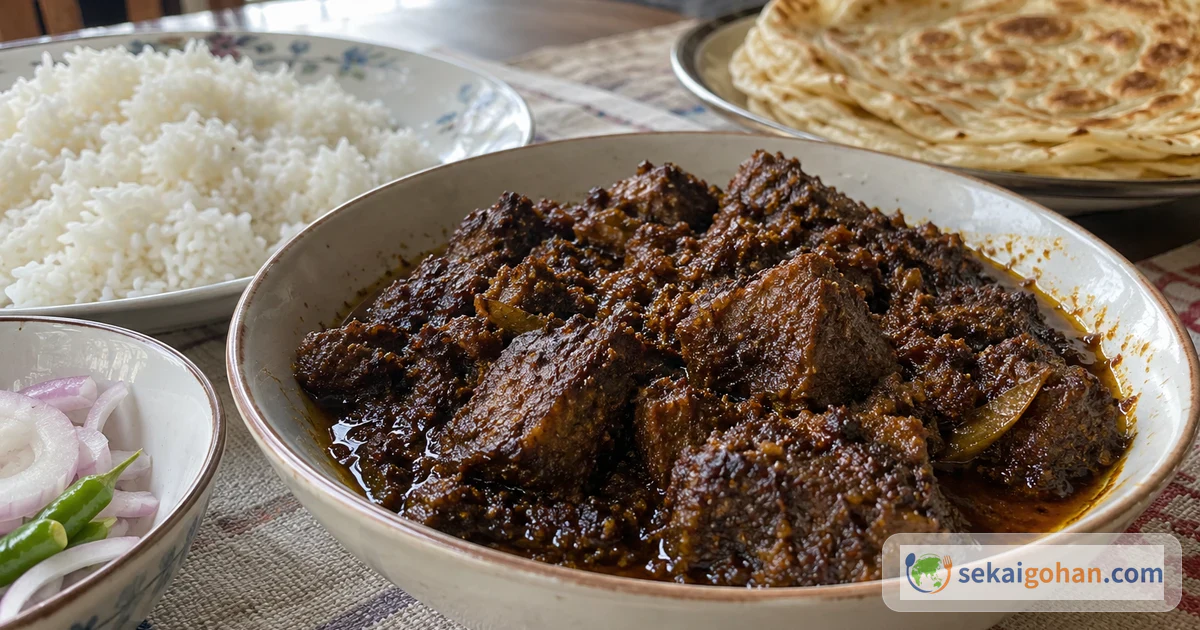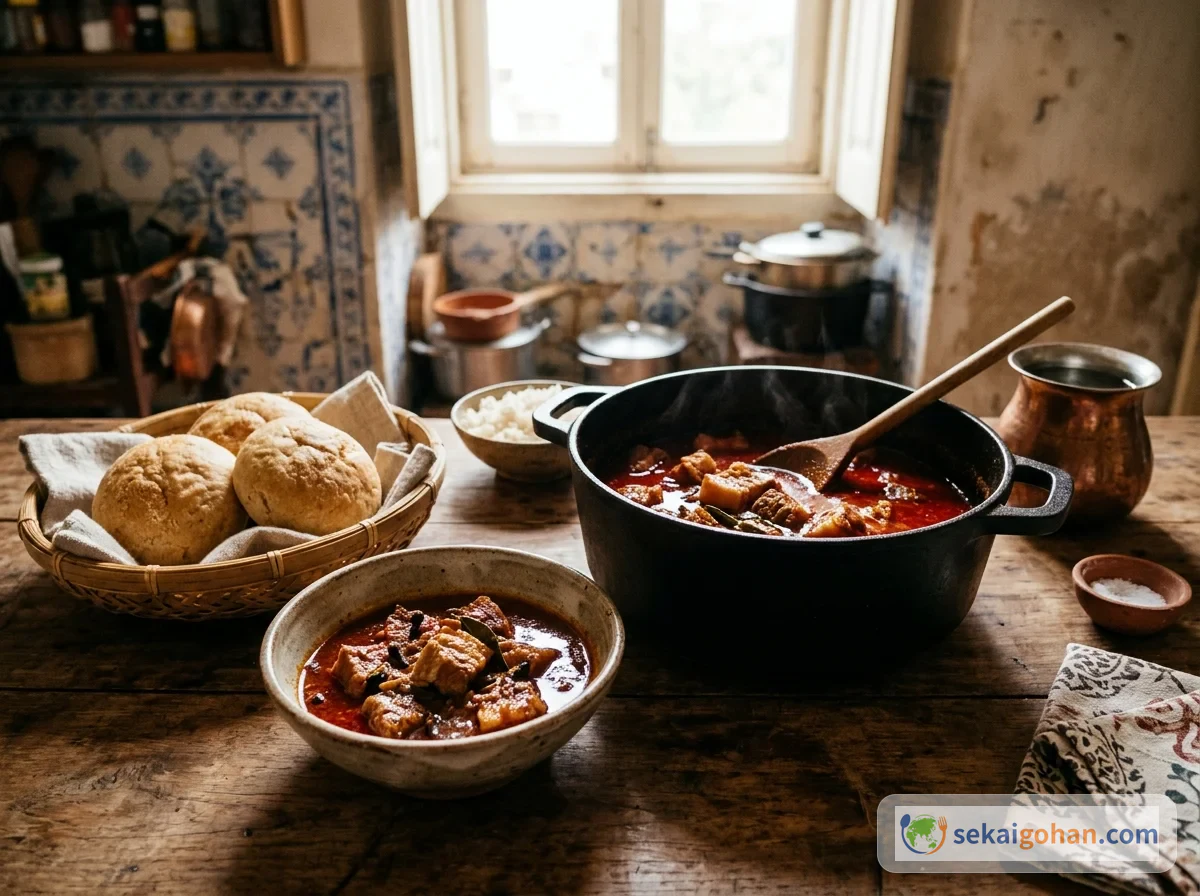
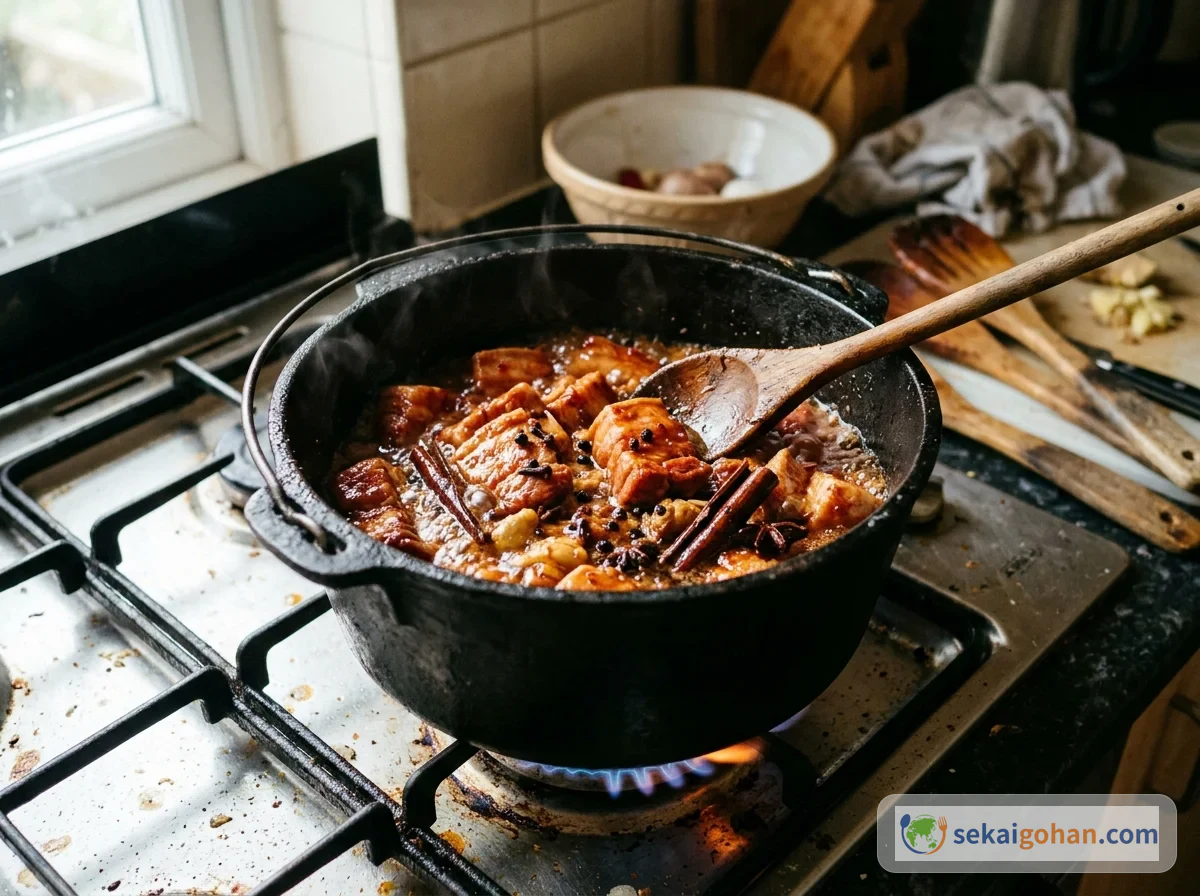
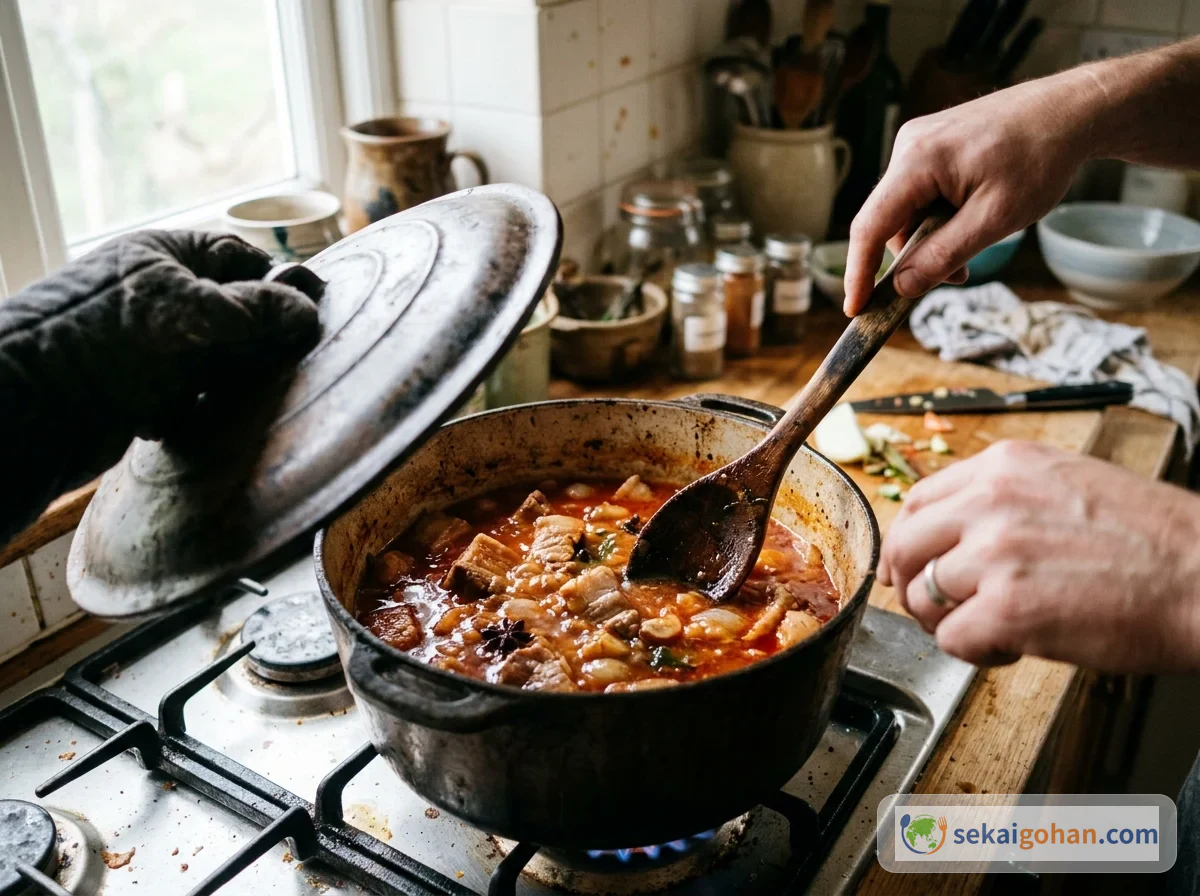
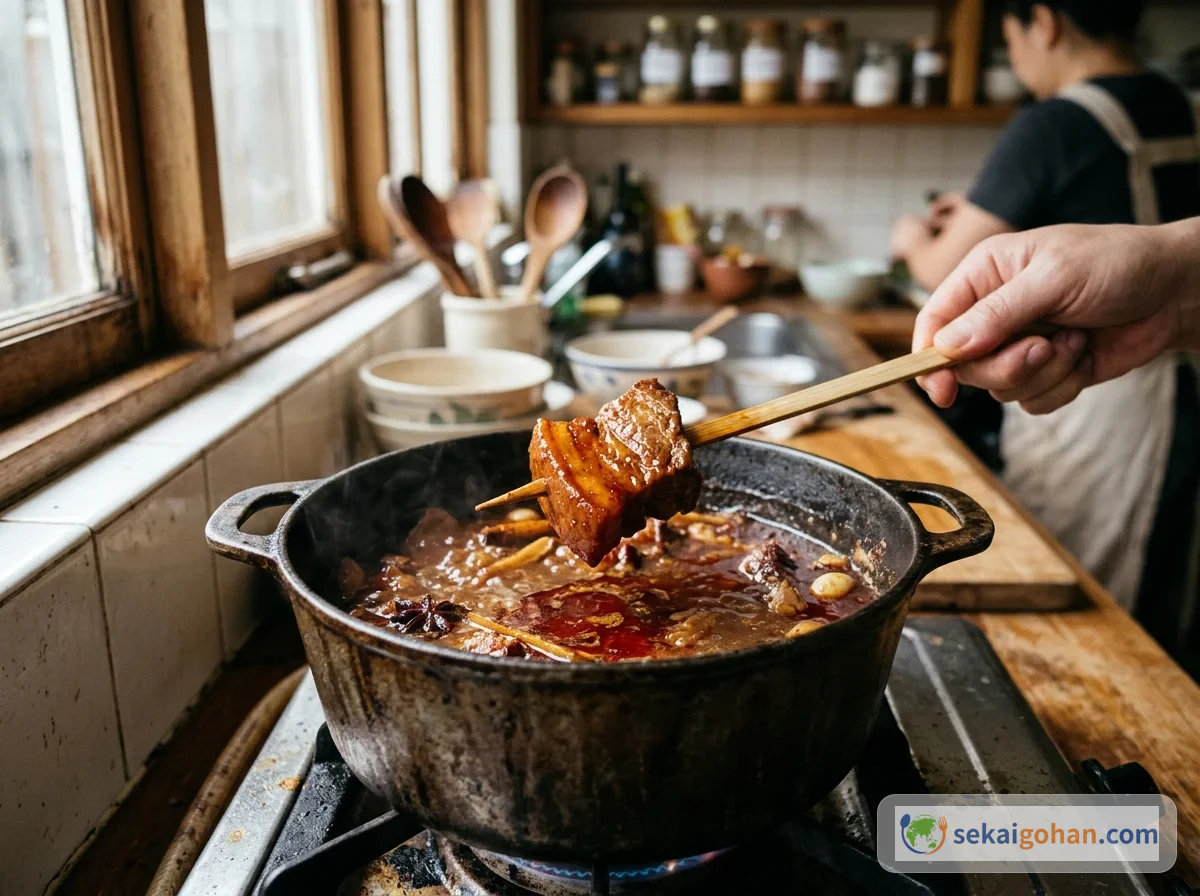
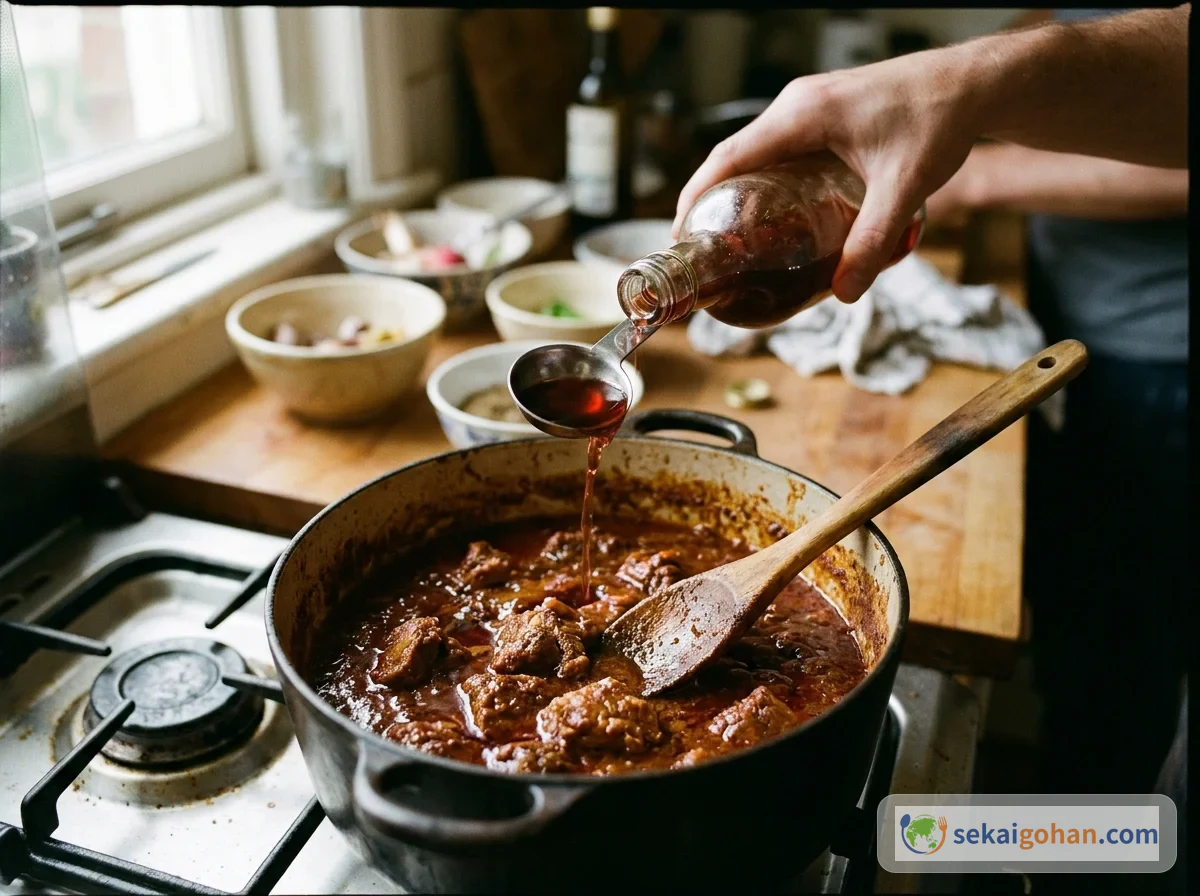
Lift the lid on a heavy pot in a Goan home kitchen at midday, and the smell reaches you first. Sharp vinegar, garlic and the sweet fragrance of cloves rise from pork that has been cooking slowly in a vivid red paste. This is vindaloo. British curry houses turned it into shorthand for "the hottest curry," but in Goa, on India's west coast, it is a dish of aroma and acidity more than heat. It began when a meat marinade carried on Portuguese ships met Indian spices.
Vindaloo's Portuguese roots in Goa
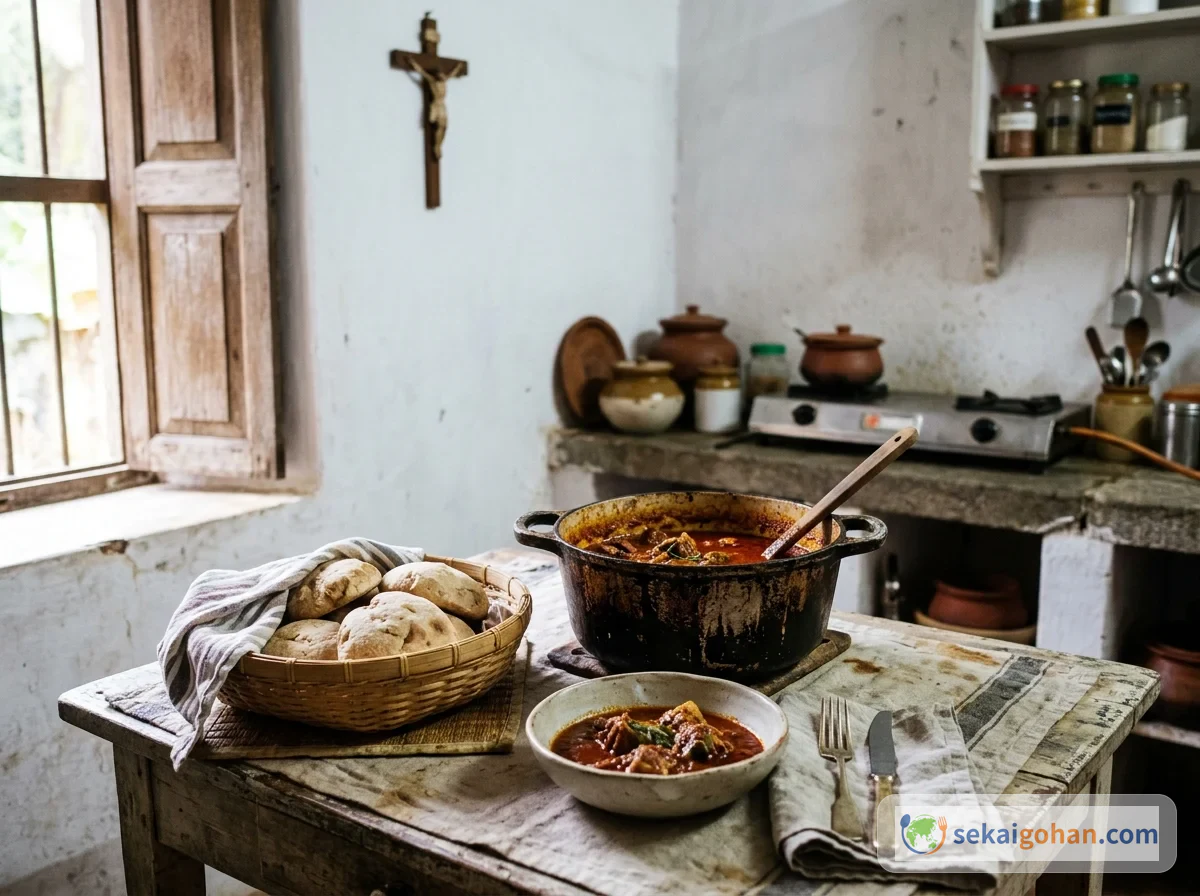
From Madeira to Goa
With its cream-colored church walls and rows of red-tiled roofs, Goa feels somehow different from other Indian towns. Portugal ruled it for about 450 years, until 1961, and along with Catholicism the Portuguese brought the custom of eating pork. The name vindaloo is a corruption of the Portuguese "carne de vinha d'alhos," meaning "meat in wine and garlic." That dish came from the Portuguese island of Madeira, where people preserved meat by marinating it in wine and garlic.
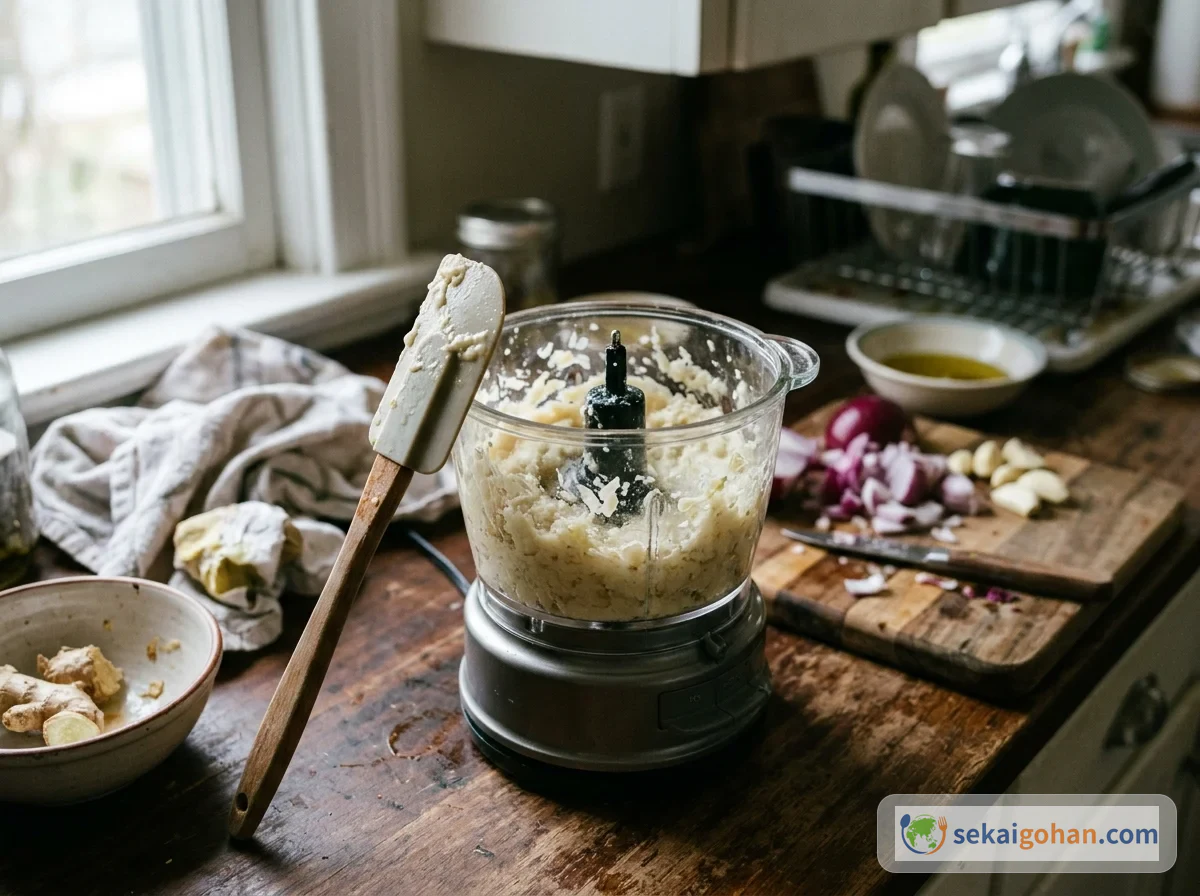
Wine was hard to get in Goa, so cooks used vinegar made from palm sap instead. Old family recipes called for toddy vinegar made from fermented palm sap, plus a little feni, a coconut spirit. Local spices went in too: ginger, garlic, cloves, pepper and cassia, a relative of cinnamon. Chilies give the dish its red color.
Before the Portuguese arrived, many high-status Hindus in Goa are said not to have eaten pork. Vindaloo became a dish of Christian households partly because eating habits changed under Portuguese rule.
Goa's Portuguese-descended families have handed down other dishes as well: sorpotel, a stew of pork offal in spices and vinegar; caldinho, a fish soup; and bebinca, a dessert baked in many layers with coconut milk and eggs.
Goan vindaloo and the curry-house version
The fiery vindaloo served in British and American Indian restaurants split off from the Goan dish. The original is well spiced but not hot, and it is cooked with almost no added liquid, which leaves a thick, vivid red sauce. The traditional chili for color was the mild, deeply colored Byadgi chili. Today Kashmiri chili is the usual substitute.
Ingredients (serves 4)
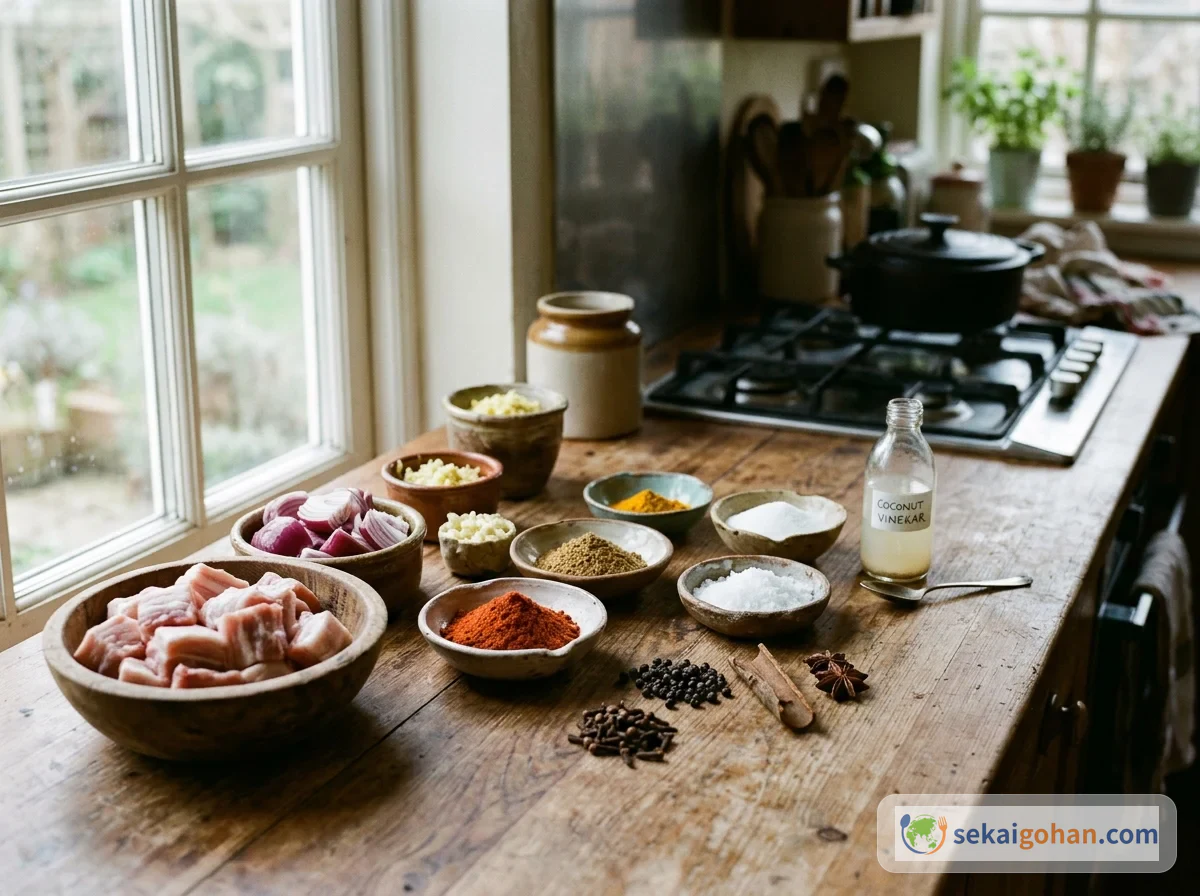
Because it uses vinegar, braising for a long time in an aluminum pot can damage the pot and impart a metallic taste. Use a stainless steel, enameled or heavy cast-iron pot. Adding vodka releases alcohol vapor during the braise, so lower the heat when you add it.
Choosing ingredients for vindaloo
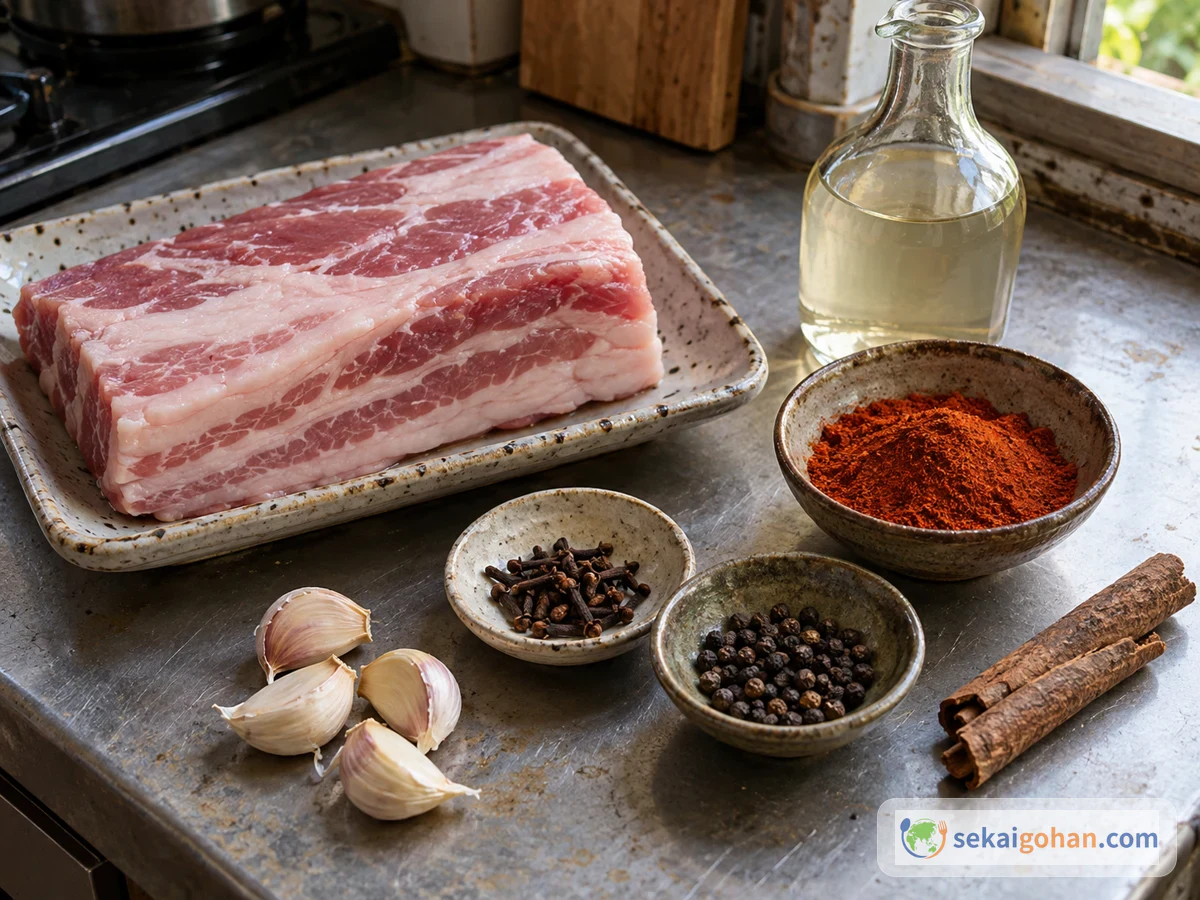
The cut of pork matters here, because pork belly is braised in its own fat without added oil. Traditional vindaloo was made with pork fat. Pork shoulder works too and gives you a lighter dish.
To get closer to the Goan flavor, use coconut vinegar, which is made from coconut sap. It is strongly sour with a sweet aroma, and it doesn't taste of coconut at all. You can find it at Filipino grocery stores or online. If you can't, white wine vinegar will do.
Kashmiri chili powder is quite mild by Indian standards, and its main job is color. The same amount of cayenne pepper or crushed red pepper would make the dish fiery, so if you need a substitute, combine 3 tsp paprika with 1/2 tsp cayenne.
A little vodka stands in for the feni that old Goan homes used. You can skip it, but it adds depth to the aroma. The alcohol almost entirely cooks off during the braise, though you should still leave it out if you're serving children.
How to make vindaloo
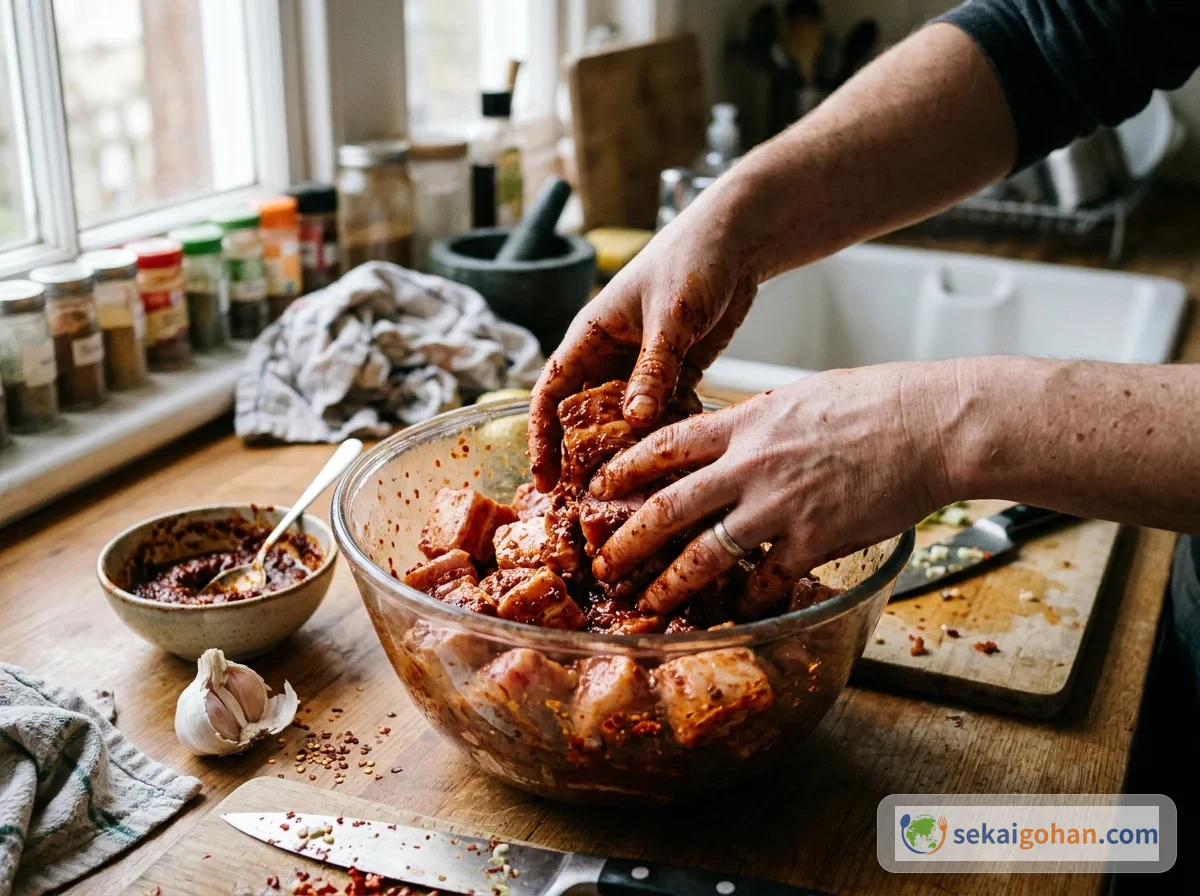
The pork marinates for 2 hours or more (ideally overnight) and braises for 2 hours. Your hands-on work is making the paste and stirring the pot from time to time.
Vindaloo is a dish that tastes better the day after, when the flavors have come together. When chilled in the refrigerator the fat whitens and sets on the surface; remove it before reheating for a cleaner flavor.
Cook the pork all the way through. Japan's Ministry of Health, Labour and Welfare urges cooking the center of meat at 167°F (75°C) for at least 1 minute. A 2-hour braise normally suffices, but cut open one large piece to check that it is cooked through.
Serving vindaloo and variations
With rice, or with Goan bread
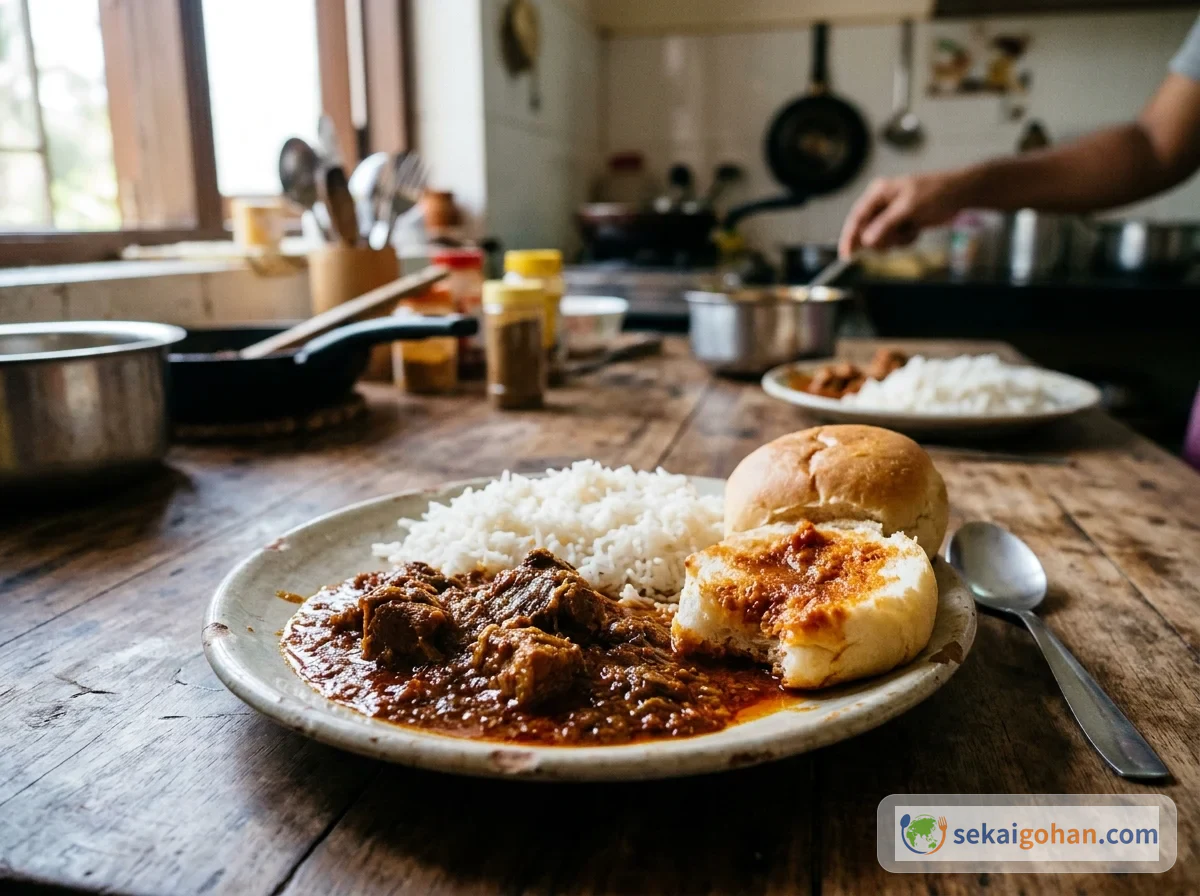
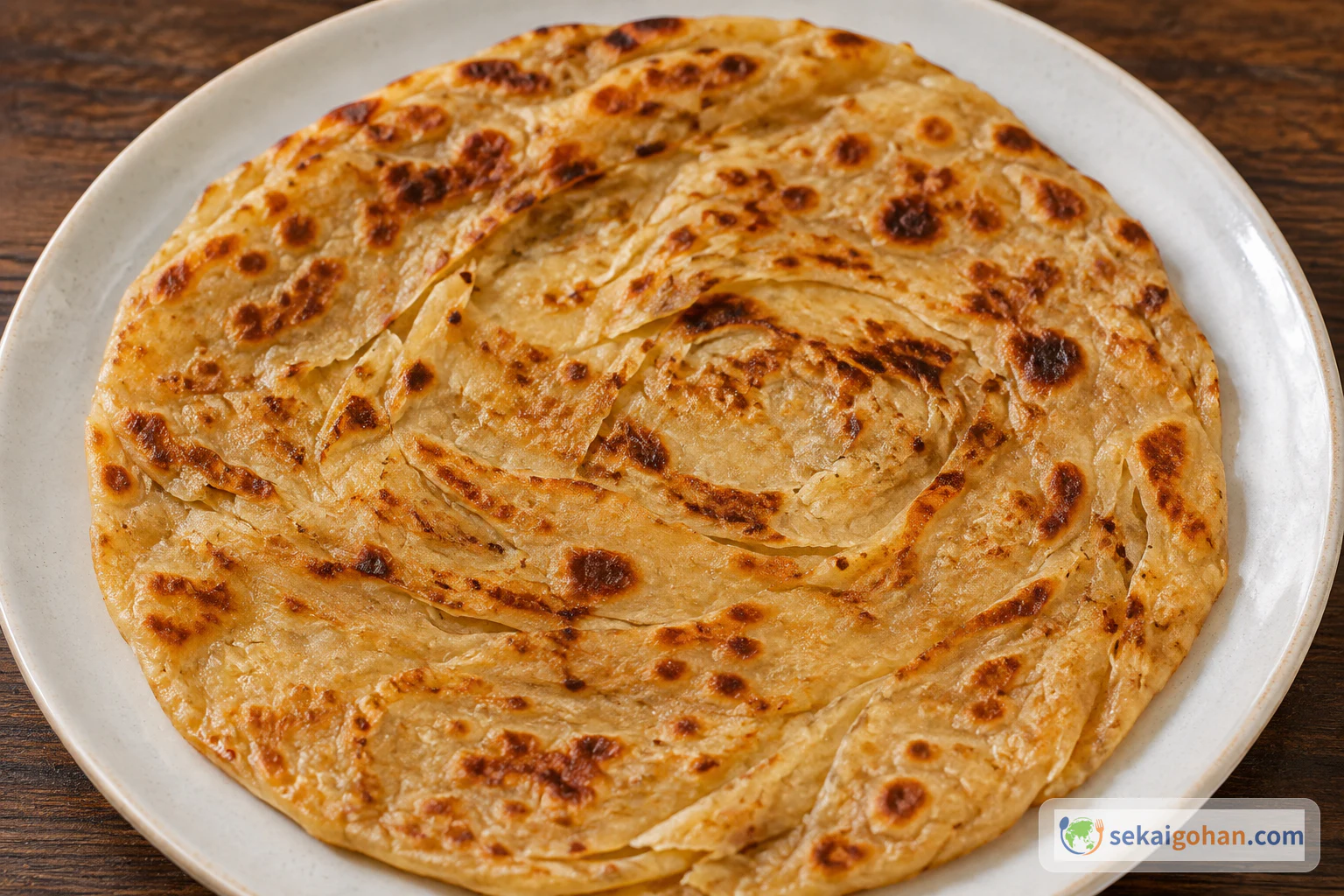
Vindaloo is eaten with white rice, with naan, or with pao, the soft round bread of Goa. Pao comes from Portuguese bread and is lightly sweet, which makes it perfect for mopping up the sauce. Soft dinner rolls are a good stand-in.
Since acidity and aroma are the stars, serve something refreshing on the side to cleanse the palate. Raita, yogurt mixed with vegetables, softens the richness of the pork fat. If you're curious about the Portuguese side of the family tree, try it next to carne de porco à alentejana, the pork-and-clam dish from southern Portugal.
Chicken, lamb, beef and potatoes
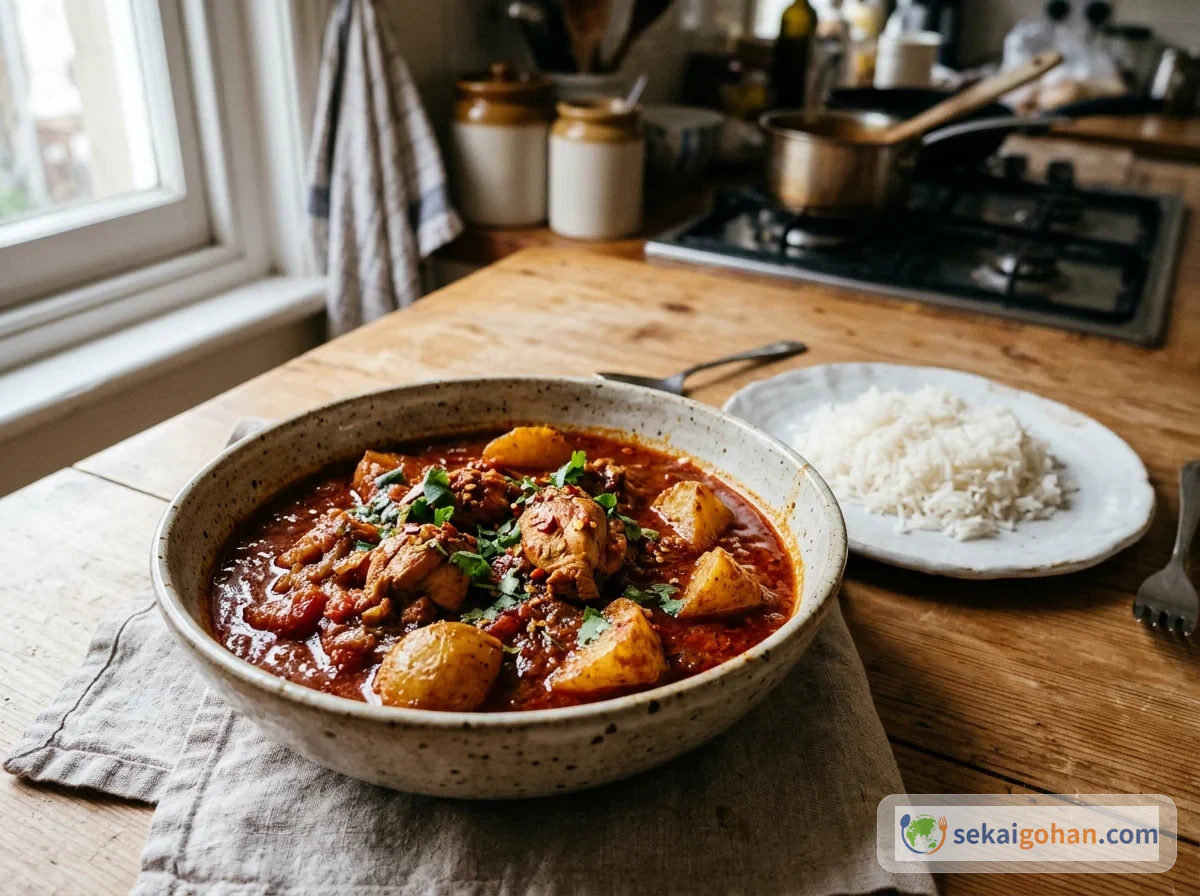
Outside Goa, cooks also make vindaloo with chicken, lamb or beef. For chicken thighs, cut them into 2 inches (5 cm) cubes, marinate them in the same paste, add 1 tbsp vegetable oil and cut the braising time to about 40 minutes. Skin-on pieces give a richness close to pork belly.
British curry houses sometimes add potatoes. Goan cooks don't, but potatoes that have absorbed the sauce are delicious. To try it, cut the potatoes into bite-size pieces and add them at the start of step 5, so they cook for 1 hour with the pork.
FAQ
Is it really not hot?
It has only a gentle pepperiness, because Kashmiri chili powder is mild. If you like heat, add 2–3 dried red chilies along with the braise in step 3.
Isn't the vinegar smell too strong?
The sharp smell of vinegar cooks off as it simmers, and what's left is a mellow acidity. Add the finishing red wine vinegar a little at a time and stop when it's as sour as you like.
Can I make it ahead?
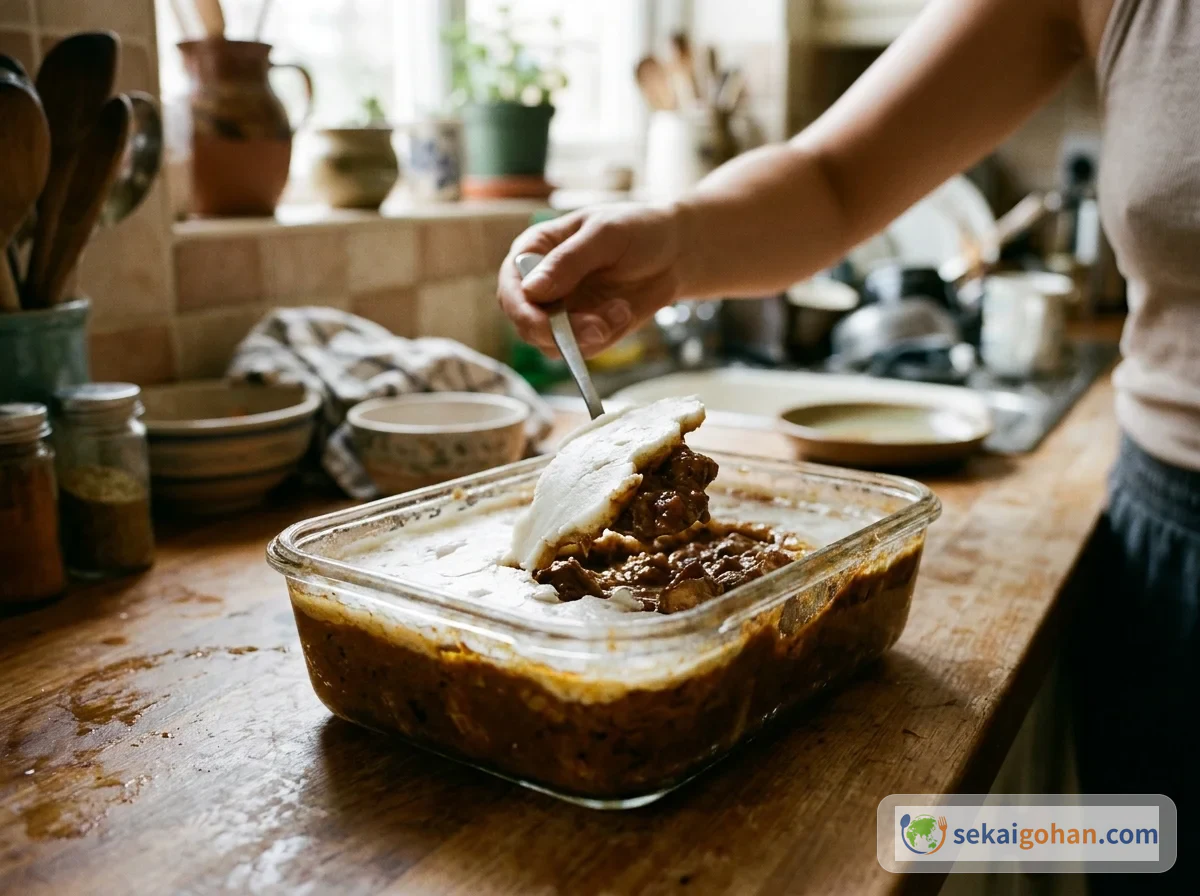
Yes. Let it cool slightly, move it to a storage container and refrigerate, then finish it within 3 days. The vinegar helps it keep relatively well, but reheat it until it is hot throughout. Divided into portions and frozen, it keeps for about a month.
Can I shorten the marinating time?
Marinate for at least 2 hours. A long marinade can sometimes dry out the meat, so if you marinate overnight, choose a fatty cut like pork belly.