Paratha: Plain North Indian Flatbread, Folded into a Triangle and Rolled Round

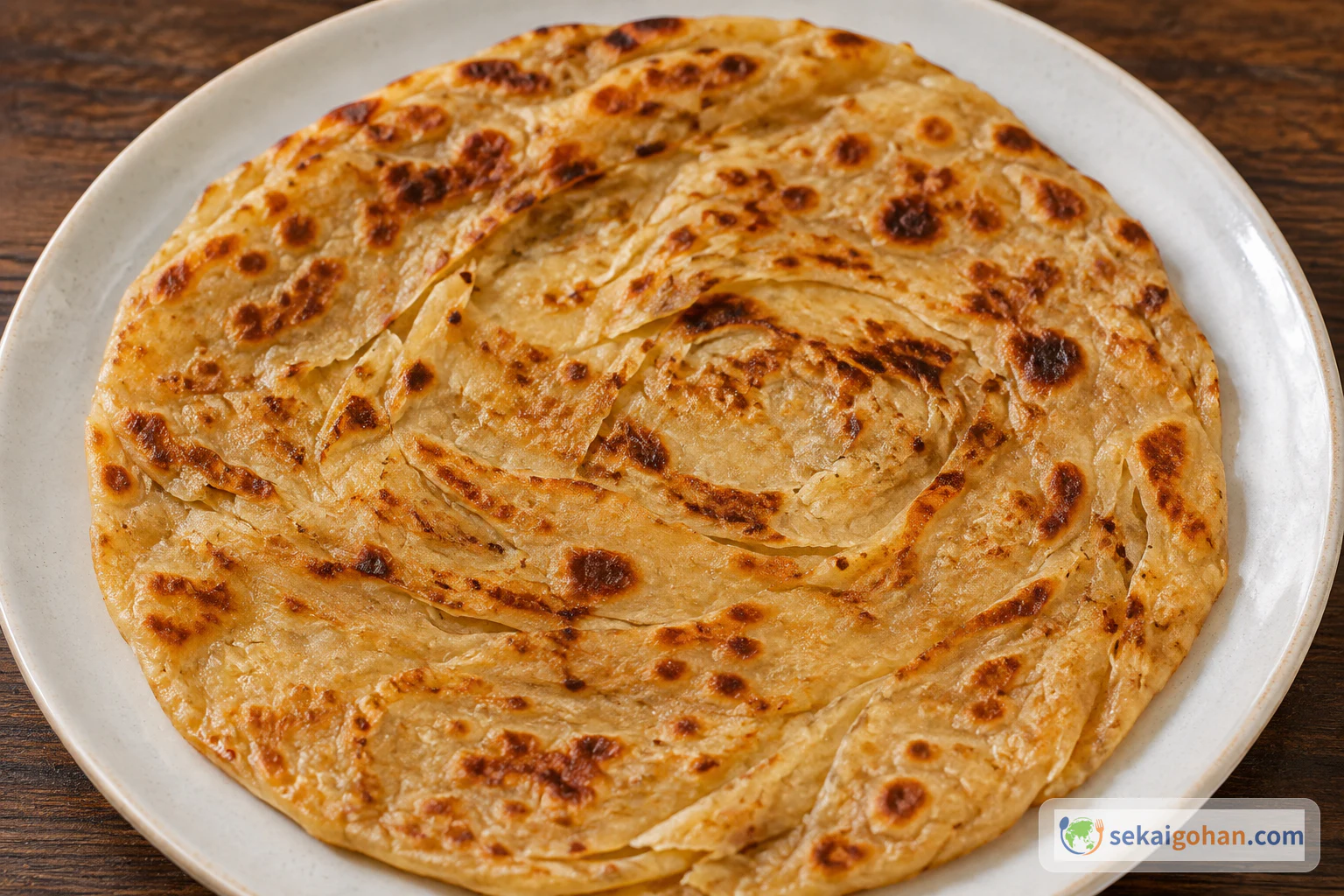
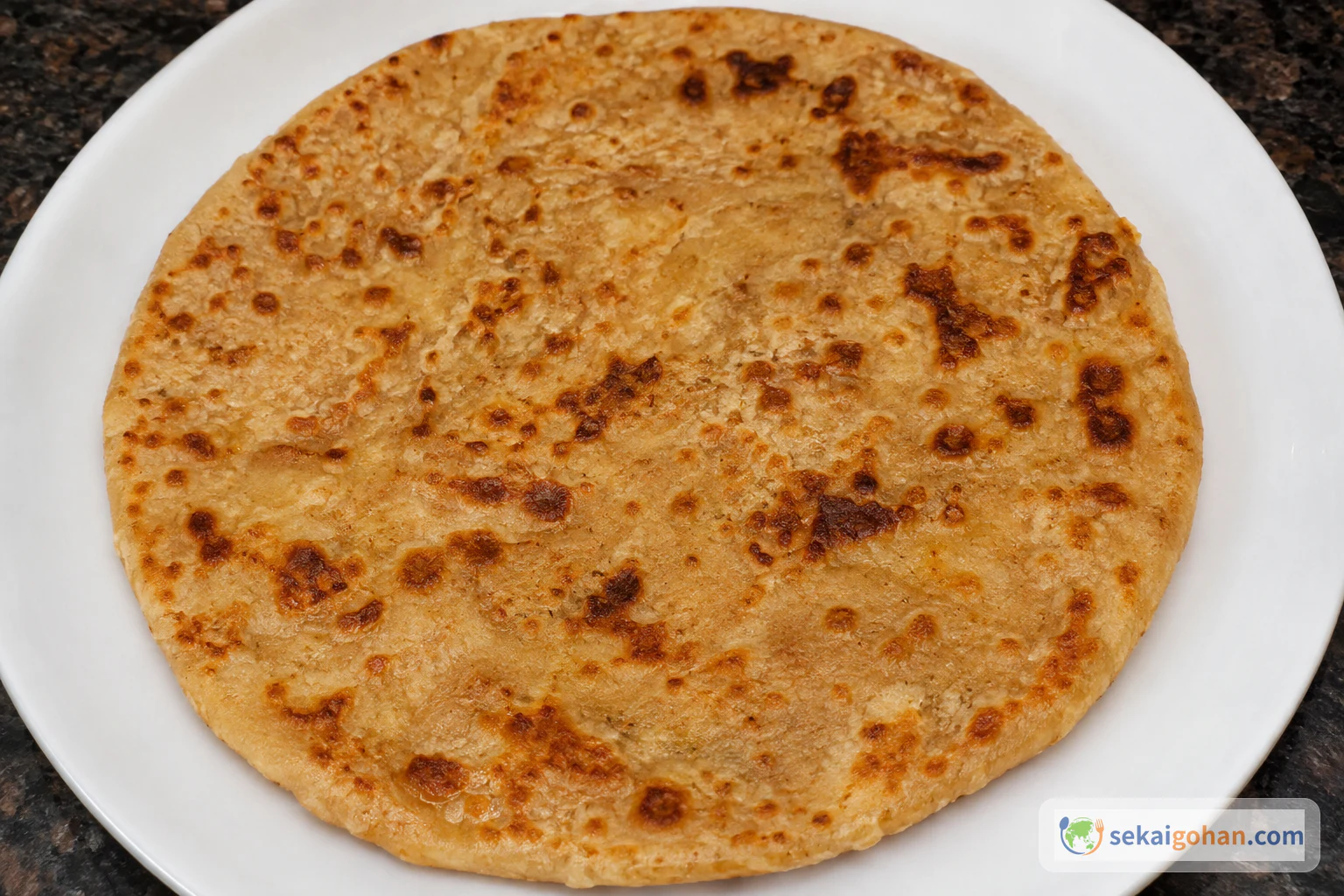
One round plain paratha with thin layers and brown cooking spots on a plate
Serves
3 servings
Level
Intermediate
Cuisine
Indian

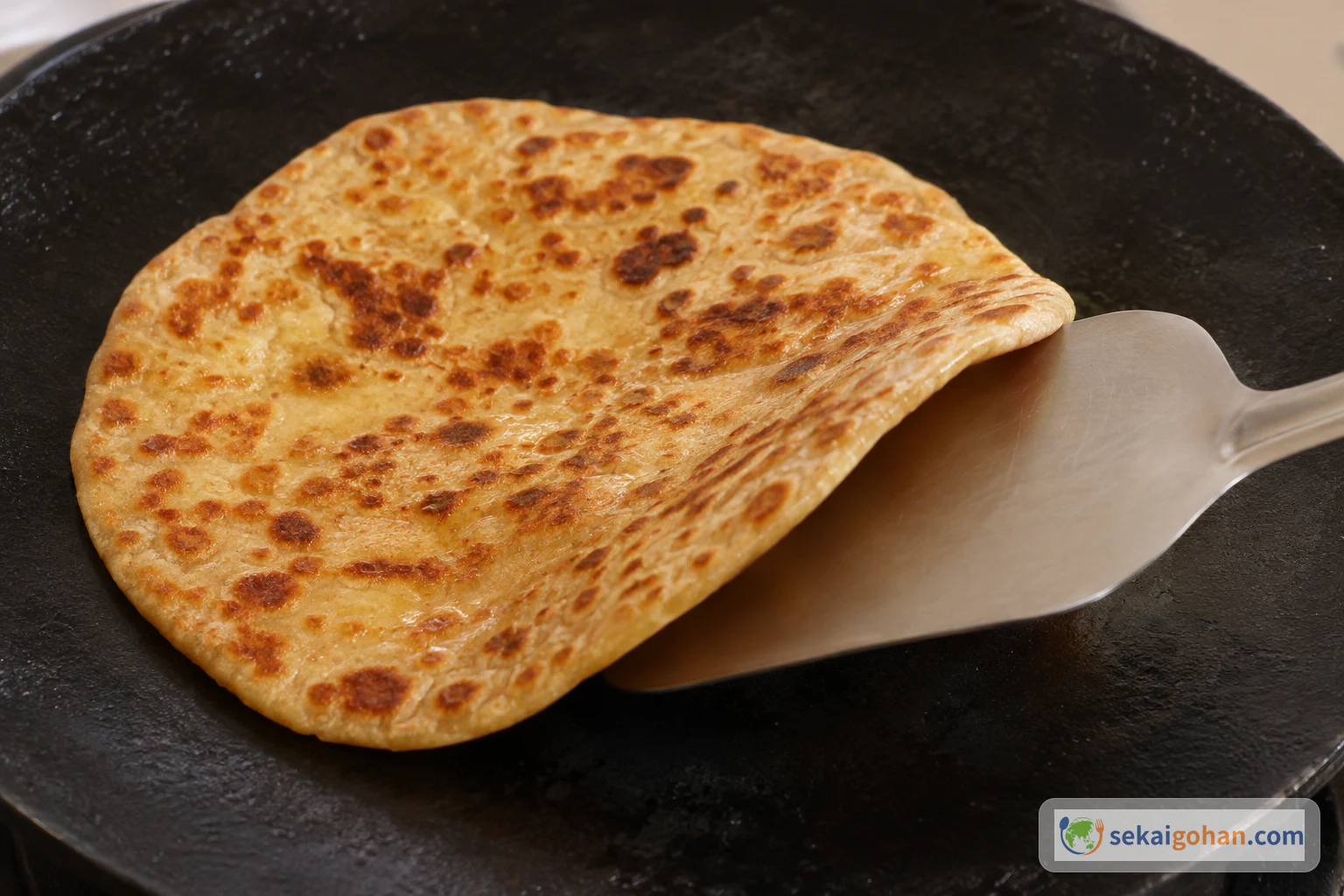
How to make plain paratha with whole wheat atta, salt, water and ghee: a soft unleavened dough rested for 30 minutes, layered with ghee, folded into a triangle, rolled into a round and cooked on a thin pan over medium heat until evenly spotted and served hot.

Cooking flow

Cooking steps

STEP11 / 10

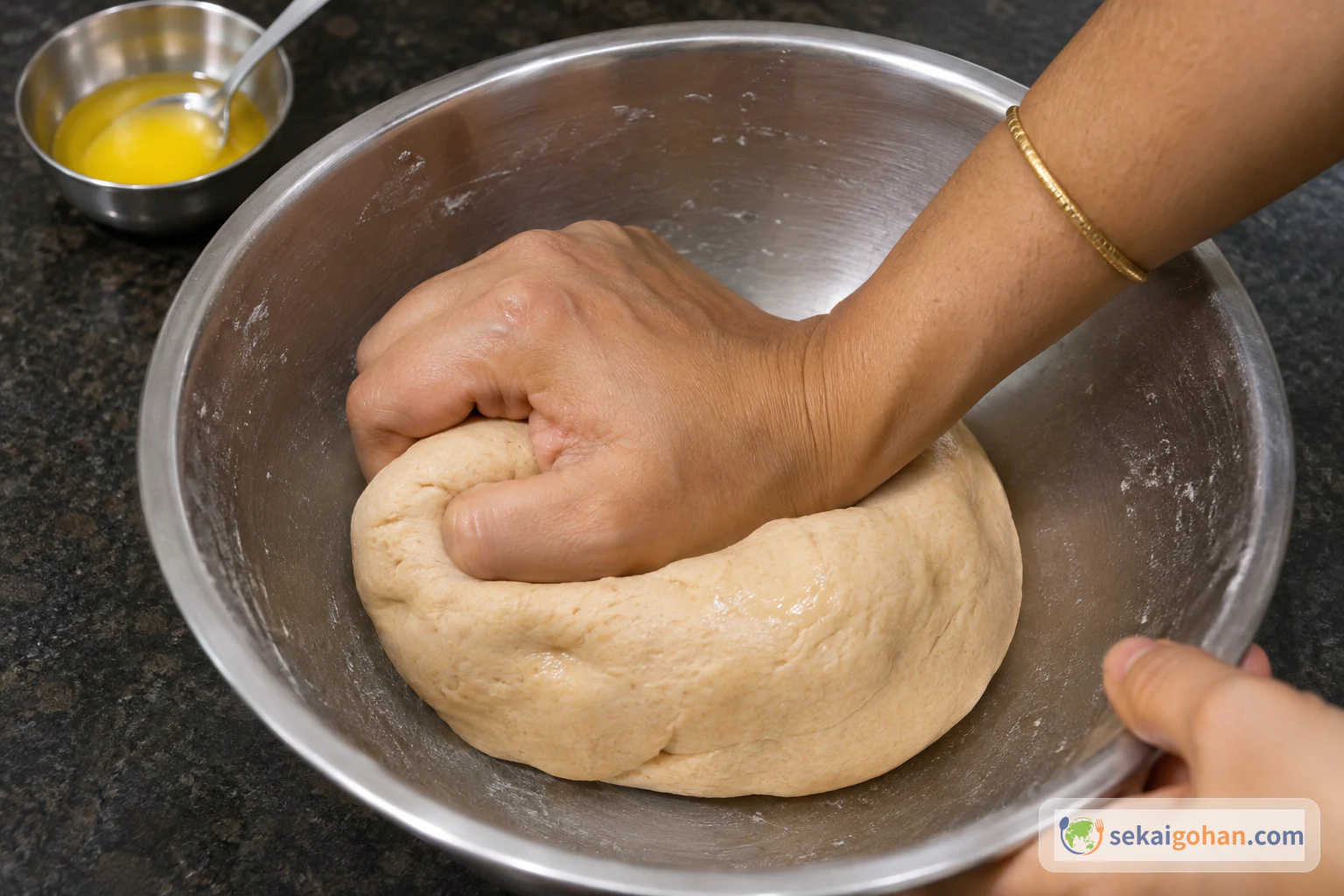
Make the dough

Kneading until the dough is soft and easy to handle
Soft, smooth and pliable

In a bowl, mix the atta, salt and 1 tsp ghee. Add the 1/2 cup water a little at a time, and add more in small amounts if the dough still needs it. Knead until the dough is soft, smooth and pliable.

STEP22 / 10

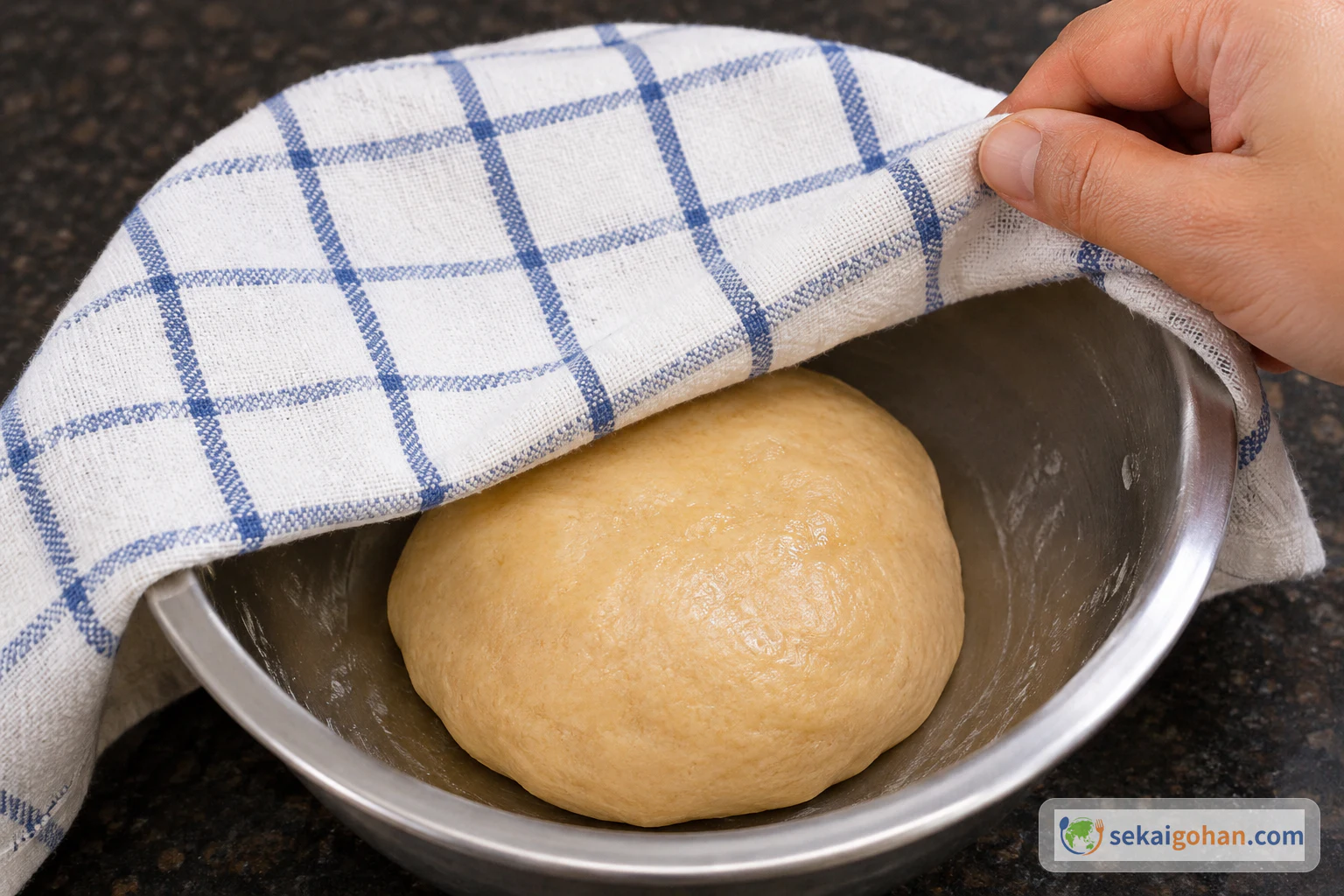
Rest the dough for 30 minutes

Covering the dough with a clean kitchen towel to rest for 30 minutes
A rest, not fermentation

Cover the dough with a clean kitchen towel and let it rest for 30 minutes. This dough is unleavened, so this is a rest and not fermentation. When the time is up, the dough is relaxed and ready to shape.

STEP33 / 10

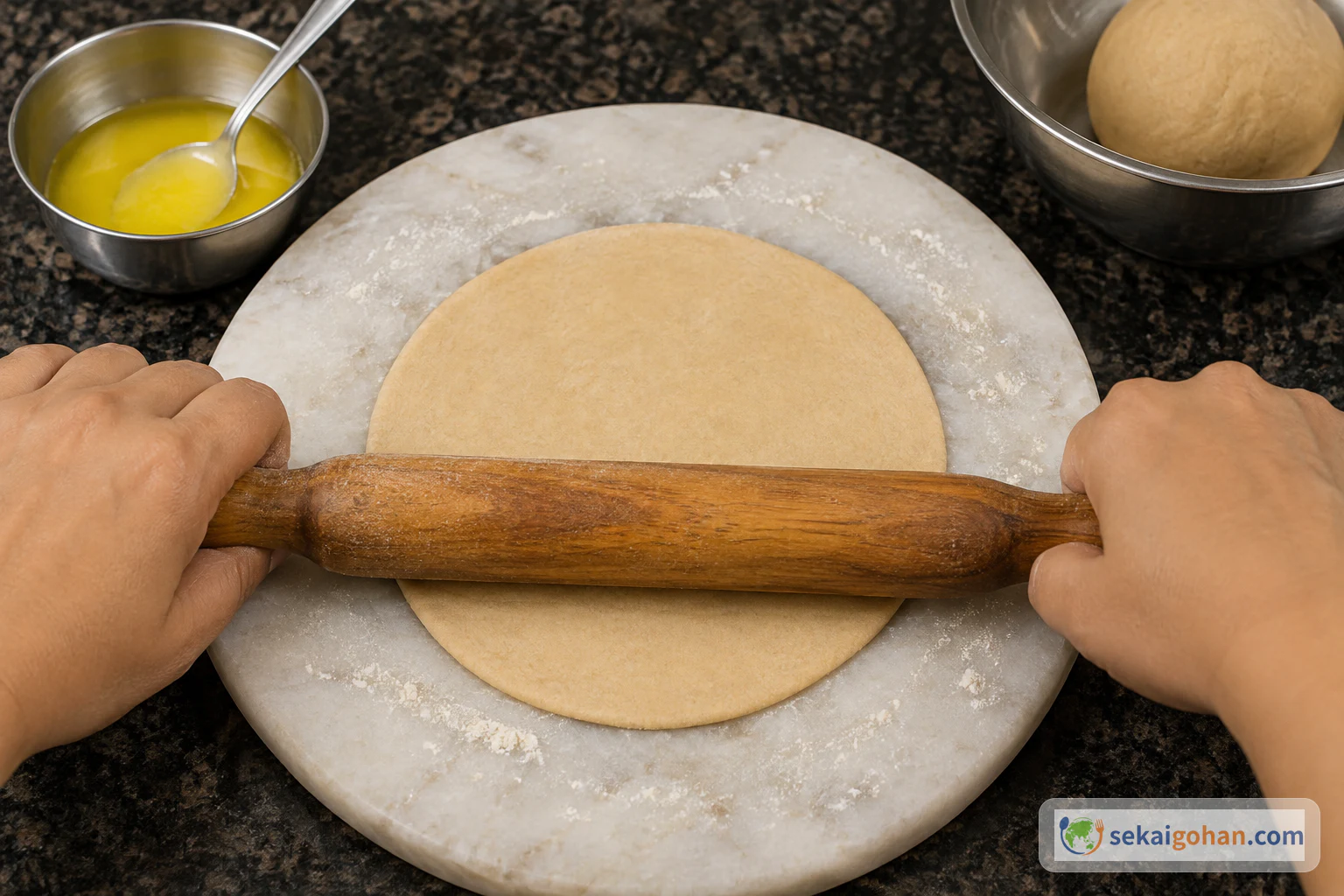
Shape and roll a small circle

Rolling the dough into a circle about 4 inches across
About 4 inches across

Pinch off one medium ball of dough; the next steps shape and cook one bread at a time. Dust the board and the dough ball with a little atta, then flatten the ball with your palm. Roll the dough into a circle about 4 inches across.

STEP44 / 10

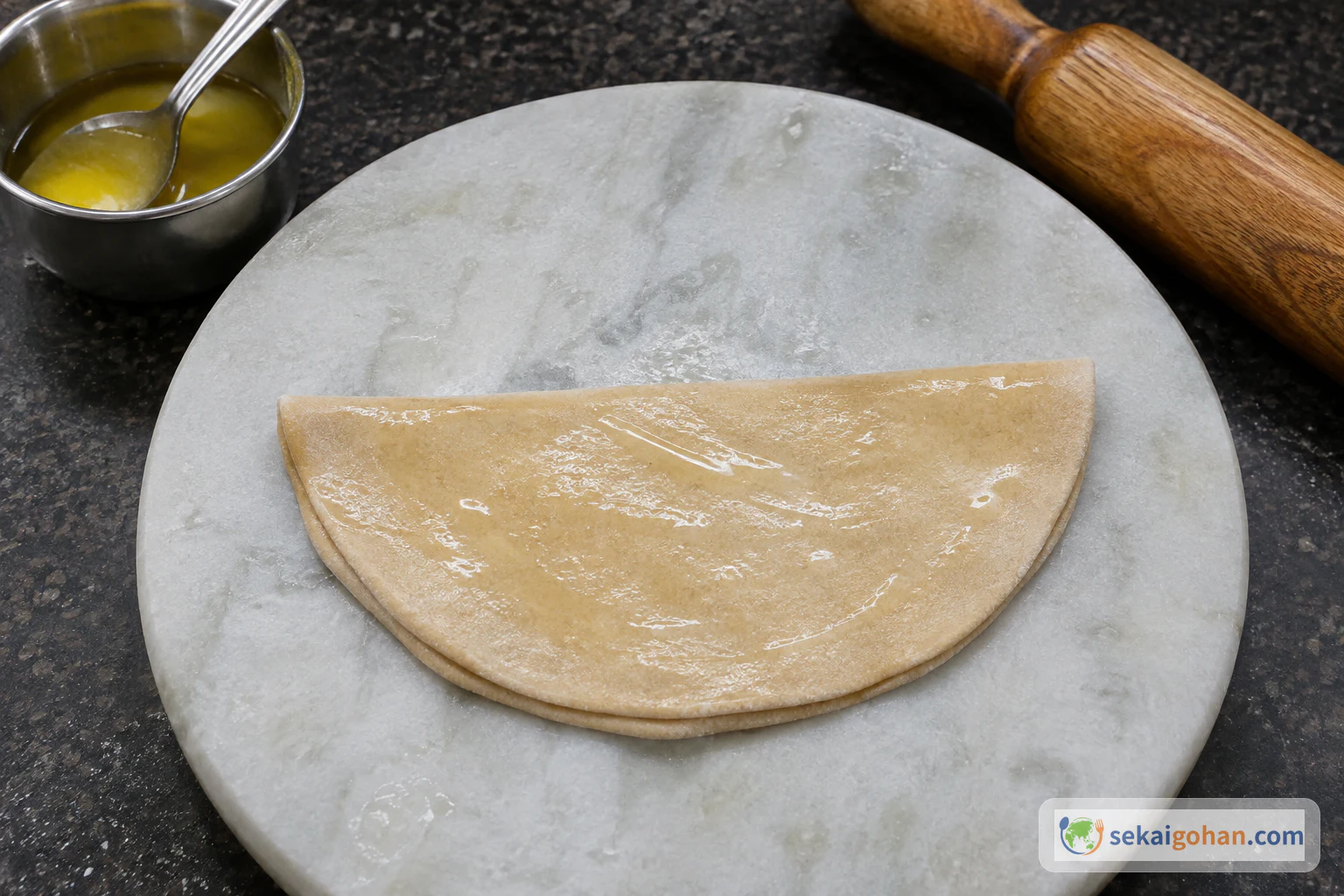
Spread with ghee and fold into a half-moon

Folding the circle in half
One fold makes a half-moon

Spread a thin layer of ghee over the circle. Fold the circle in half. The dough now sits as a neat half-moon with ghee sealed inside.

STEP55 / 10

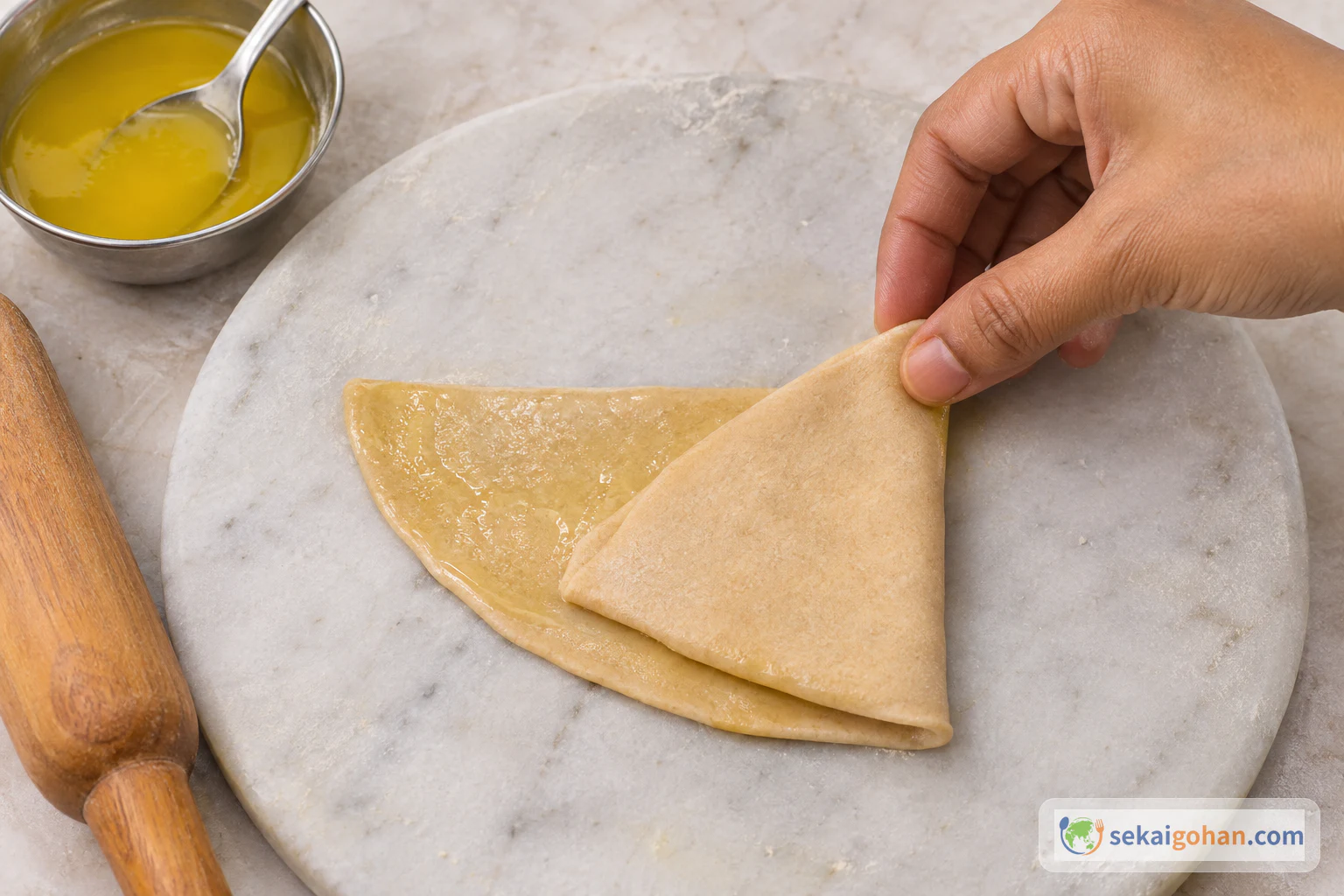
Fold into a triangle

Folding the half-moon sideways into a triangle
The sideways fold makes the triangle

Spread a thin layer of ghee over the top of the half-moon. Fold the half-moon sideways to make a triangle. The dough is now a layered triangle.

STEP66 / 10

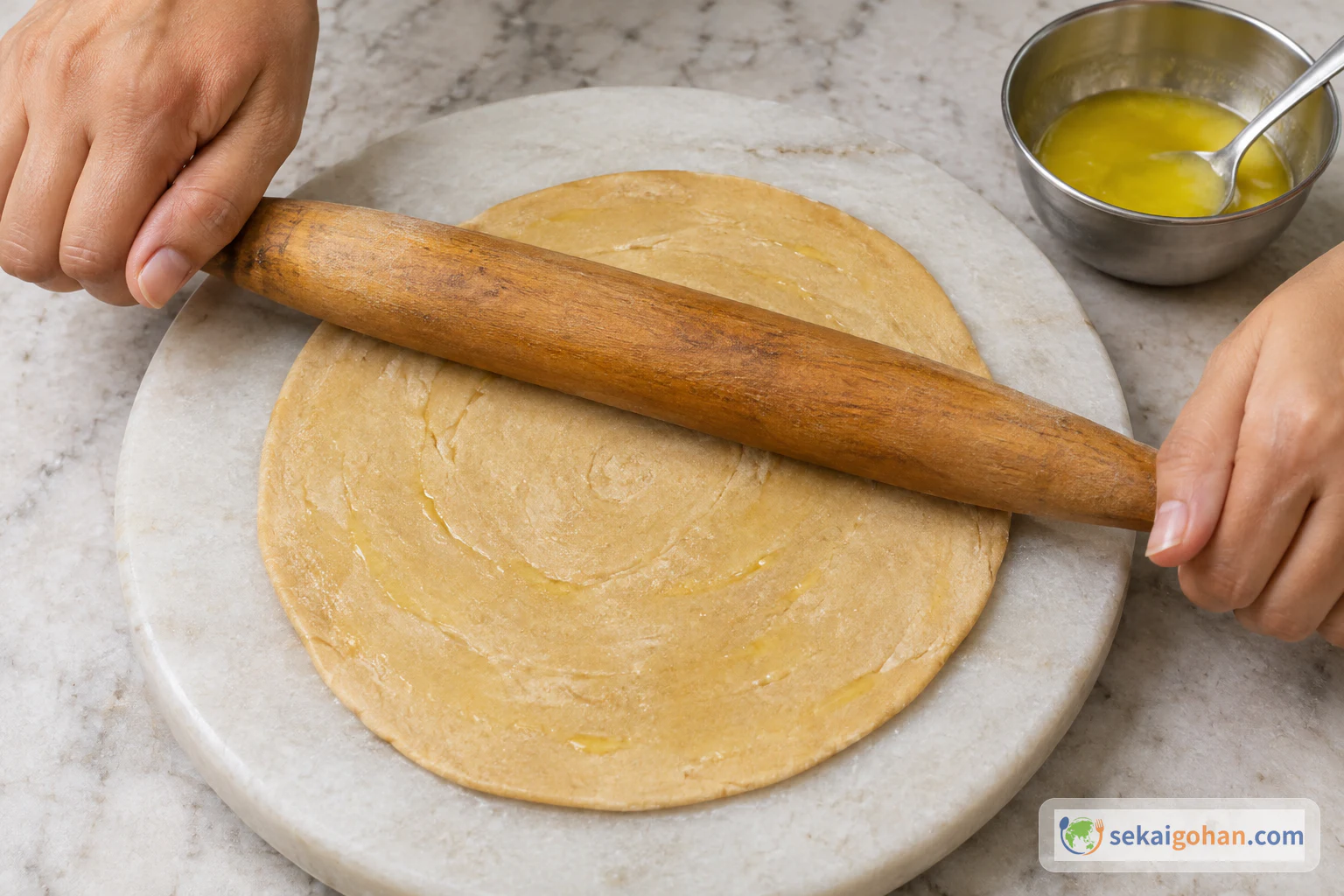
Roll the triangle into a round

Rolling the triangle back out into a round about 6–7 inches across
From triangle to round

Dust the triangle with just enough atta to roll it. Roll it into a round about 6–7 inches across. Don't cook it as a triangle; the dough is ready when it is an even round.

STEP77 / 10

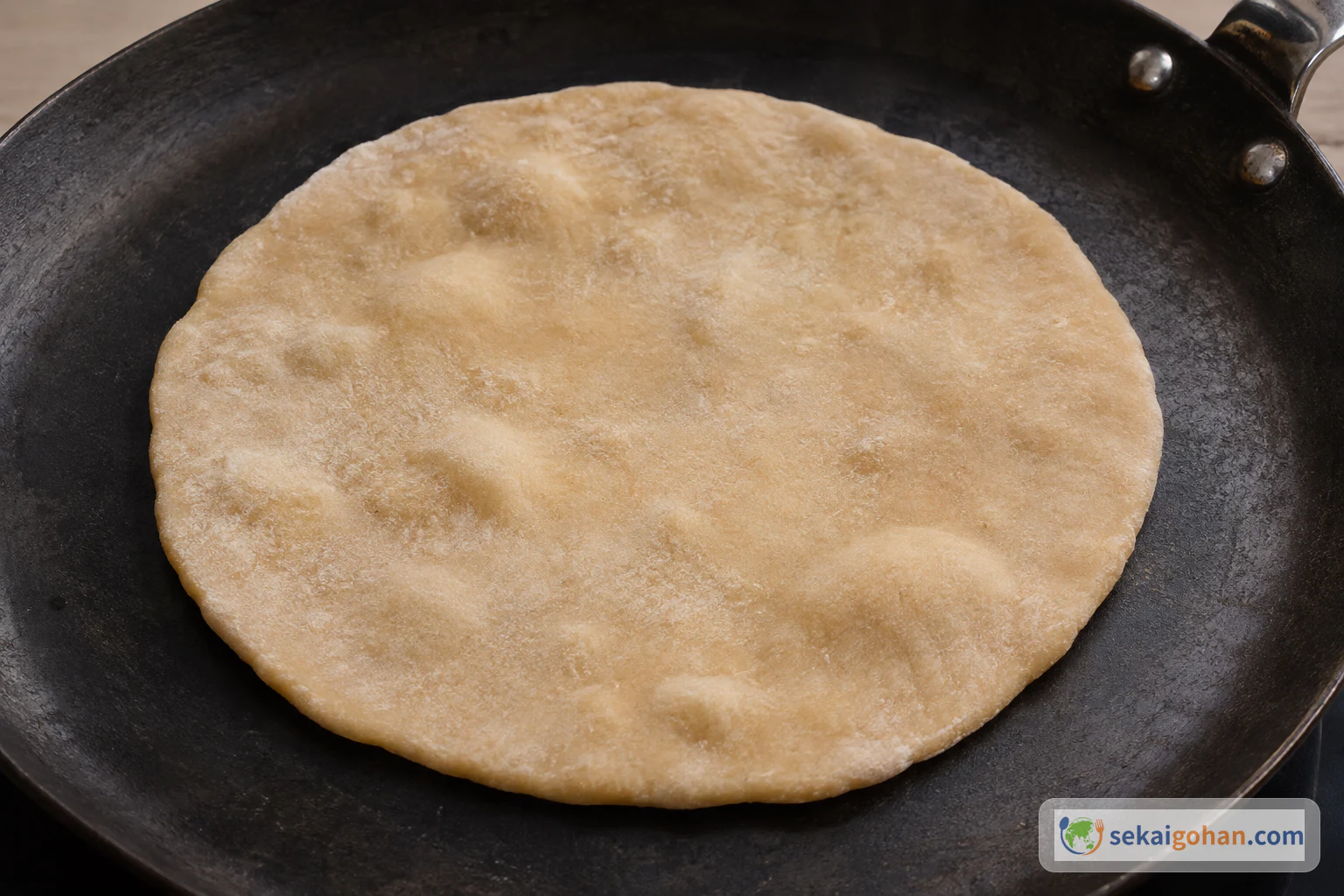
Cook the first side

Cooking the dough until air pockets appear and the underside is about one-quarter cooked
Watch for air pockets

Warm an ordinary thin, flat-bottomed frying pan over medium heat, then lay the round of dough on it. Leave it alone and don't add any ghee yet. It is ready to turn when air pockets form and the underside is about one-quarter cooked.

STEP88 / 10

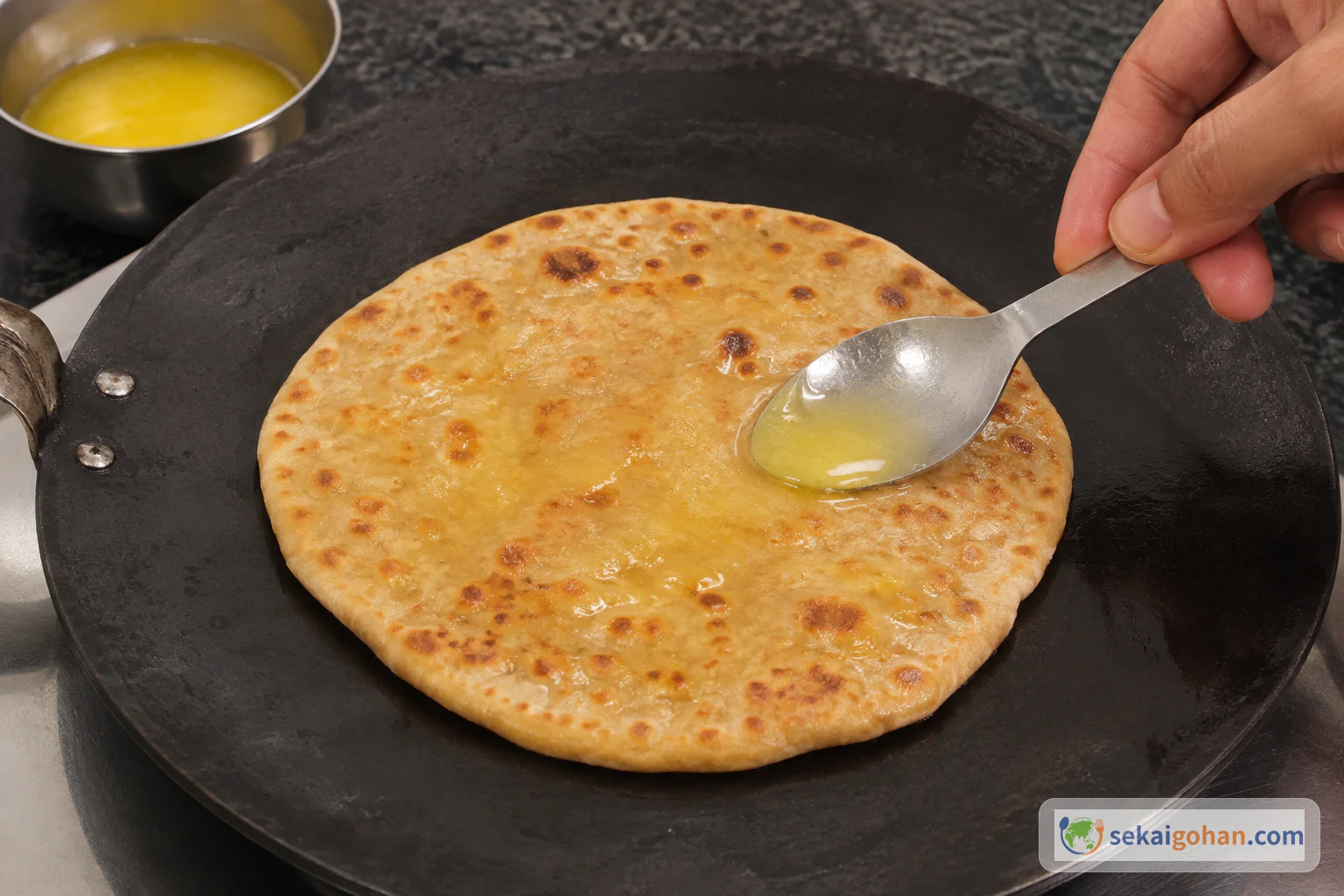
Flip and ghee the second side

Spreading ghee on the side now facing up
Ghee goes on after the flip

Turn the paratha over with a flat spatula. Spread ghee over the side now facing up. Cook until the side on the pan is about half cooked and has brown spots, without adding more ghee at this stage.

STEP99 / 10

Flip again and finish cooking

Turning the paratha several times so both sides cook evenly
Both sides evenly cooked

Turn the paratha over again and spread ghee over the side now facing up. Turn it a few times until both sides are evenly cooked with brown spots. If the edges need it, press them lightly with the spatula; skip this if they don't.

STEP1010 / 10

Serve hot

A cooked plain paratha served hot on a simple plate
Fully cooked and served hot

Once the paratha is fully cooked, serve it hot right away. Repeat the shaping and cooking steps with the remaining dough.

0 / 0
Ingredients

Ingredients

1 / 1

Ingredients

Ingredient Amount Role
Whole wheat flour (atta) 2 cups or 240 g The base of the dough
Ghee, for the dough 1 tsp Mixed into the flour
Salt 1/2 tsp Seasons the dough
Water 1/2 cup to start, more as needed Brings the dough together; add it little by little
Ghee, for layering and cooking as needed Spread between the folds and on the bread in the pan
Atta, for dusting as needed Keeps the dough easy to roll
0 / 0

A small circle of soft dough gets a thin coat of ghee and is folded in half. It gets more ghee, is folded again into a triangle, and goes back under the rolling pin until it is round. On the hot pan, air pockets rise, the bread gets turned, and brown spots spread across the surface. This is the plain North Indian tawa paratha: unleavened whole wheat bread with buttery layers, toasty where it touched the pan.

Plain Paratha and Its Relatives

"Tawa" is the flat griddle the bread cooks on. The dough is made with atta, a whole wheat flour. There is no filling, so everything depends on three things: a soft dough, the ghee spread between the folds, and the brown spots from a hot pan.

"Paratha" covers a lot of breads. Aloo paratha, also on this site, is stuffed with potato, and Mughlai paratha is filled with egg and meat. There is also an oil-based version with a one-hour rest. All of them share the name, but each has its own method.

In Delhi, Chandni Chowk and Paranthe Wali Gali are known for paratha as street food, and stuffed versions are a big part of what you'll find there. For more from the same country, see dishes from India.

Ingredients: Atta, Ghee, Salt and Water
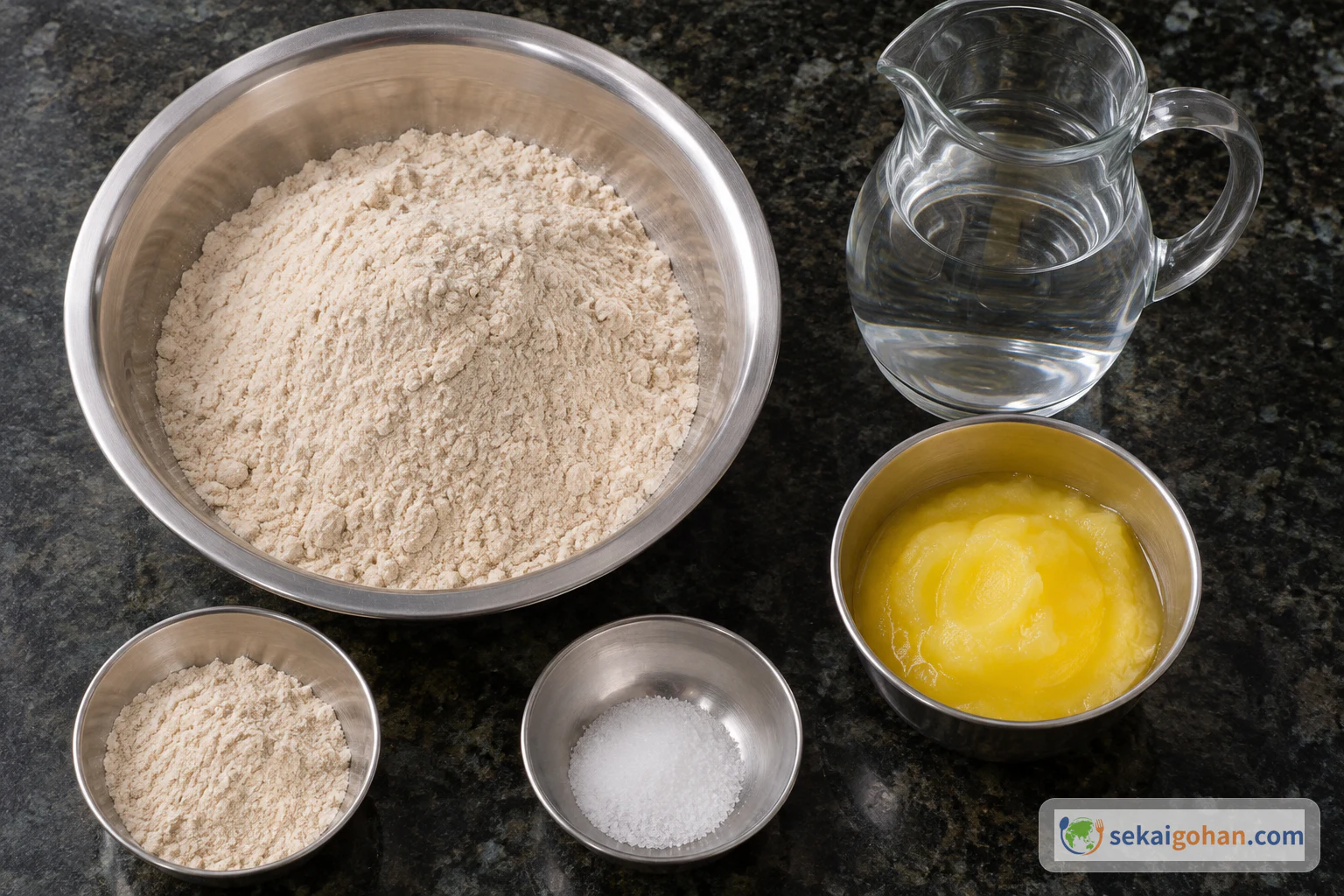
Atta, salt, water and ghee for the dough, layers and cooking, set out together
Four ingredients, with a little extra atta kept aside for dusting

Choosing Flour, Fat and Pan for Paratha

Flour. If you can't find atta, ordinary supermarket whole wheat flour works. Flours are ground differently and absorb water differently, so go by how the dough feels rather than by the exact amount of water.

Fat. This version uses ghee all the way through: in the dough, between the layers and on the pan.

Pan. At home, a thin, flat-bottomed frying pan stands in for the tawa. The medium heat given in the steps is meant for that kind of pan.

Equipment

  • Mixing bowl
  • Clean kitchen towel
  • Board for rolling
  • Rolling pin
  • Thin, flat-bottomed frying pan
  • Flat spatula
  • Spoon for spreading ghee

Method: Rest, Fold, Reroll, Cook

Cook it through

Don't taste the raw dough. Cook each bread fully before eating it.

The photos show each action. Go by the written amounts, sizes, times and cues.

Paratha Troubleshooting

What you notice What to do
The dough is too dry to knead smoothly Add more water a little at a time and keep kneading
The dough did not rise during the rest That's expected. It is unleavened, and the 30 minutes is not fermentation
The folded dough is hard to roll Dust it with just enough atta to keep rolling
The second side has no brown spots yet Keep cooking, and wait for the spots before you flip
One side looks less cooked than the other Turn the bread a few more times until both sides are even
The edges still need attention at the end Press them lightly with the spatula

Serving and Variations

Paratha is best eaten hot, straight off the pan. It needs no particular side dish.

Within this bread, the room to adjust is small. The dough can take 1–2 tsp of ghee, and this method uses 1 tsp. You can also change the heat for a heavier pan, as the FAQ explains. Bigger changes give you a different bread:

Type What sets it apart How it differs from this recipe
Aloo paratha Filled with potato Wrapped its own way, without these folds
Mughlai paratha Filled with egg and meat Shares only the name
Oil-based paratha Uses oil and a one-hour rest Has its own amounts and timings

Frequently Asked Questions

Can I use a heavy pan or griddle?

Yes. A thin pan works on medium heat, while a heavy pan may need medium-high or high. The steps are written for a thin pan, so if yours is heavy, watch the bread's cues closely as you adjust the heat.

How do I know it's done?

Both sides should be evenly cooked with brown spots. Use the "about one-quarter" and "about half" cues in the steps as guides. If the bread doesn't look cooked through, keep cooking it, and don't taste the raw dough.

Do I have to finish with a round shape?

Yes. The triangle is only the folding stage, so roll it out into a round before it goes on the pan.
Sources