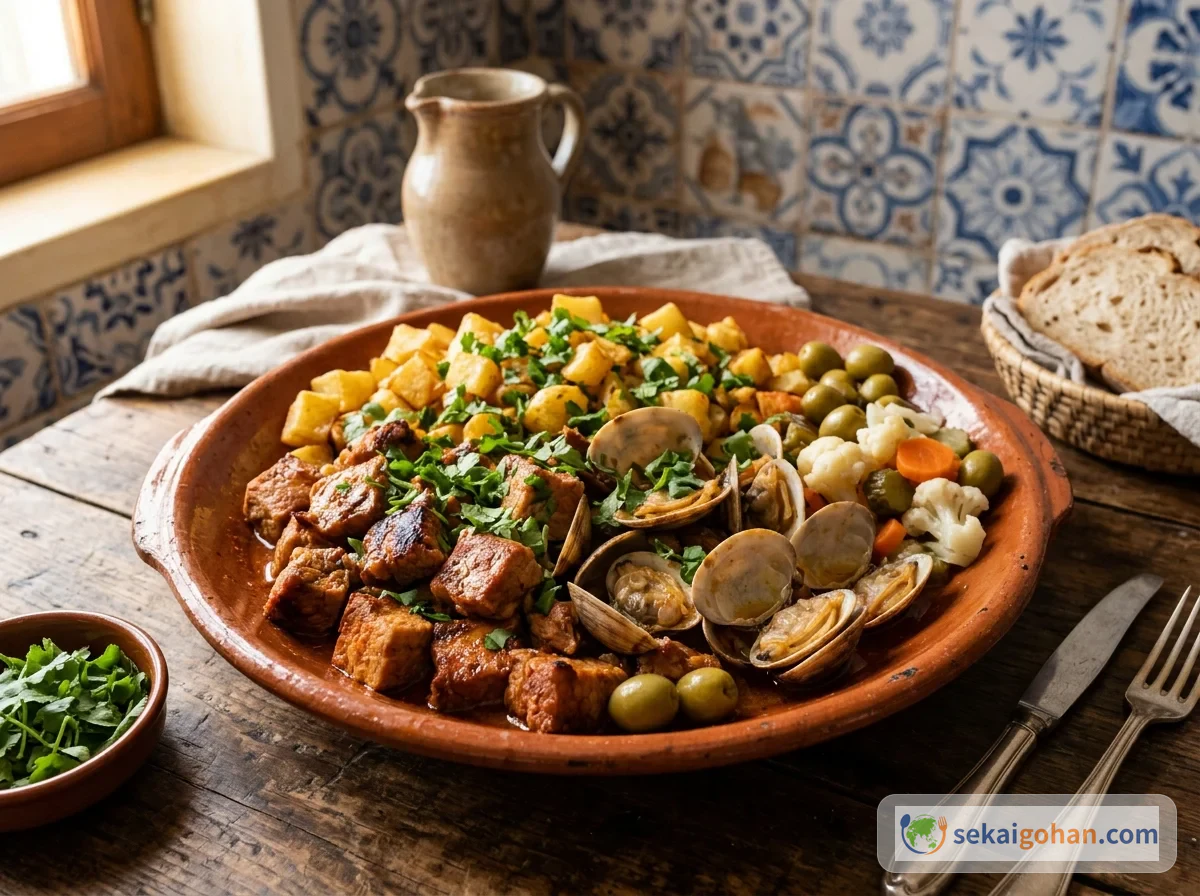
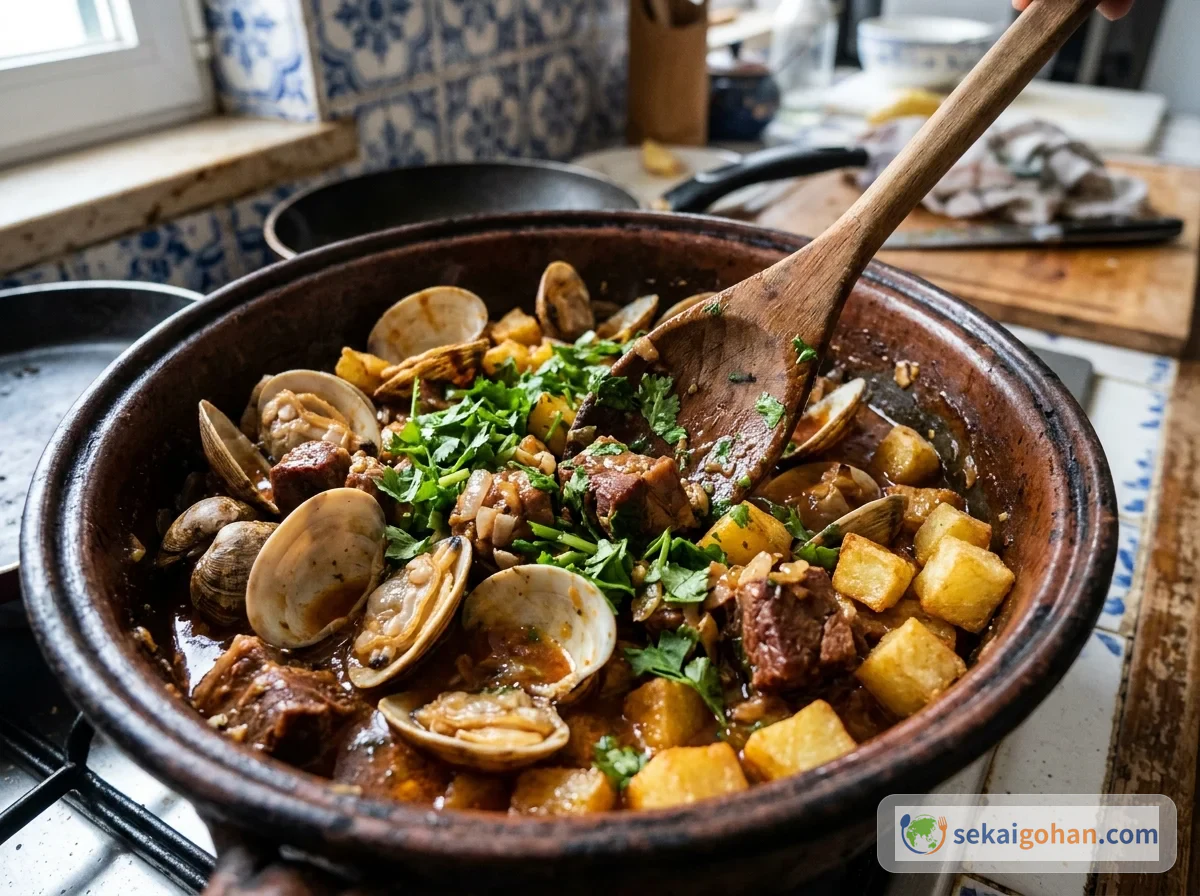
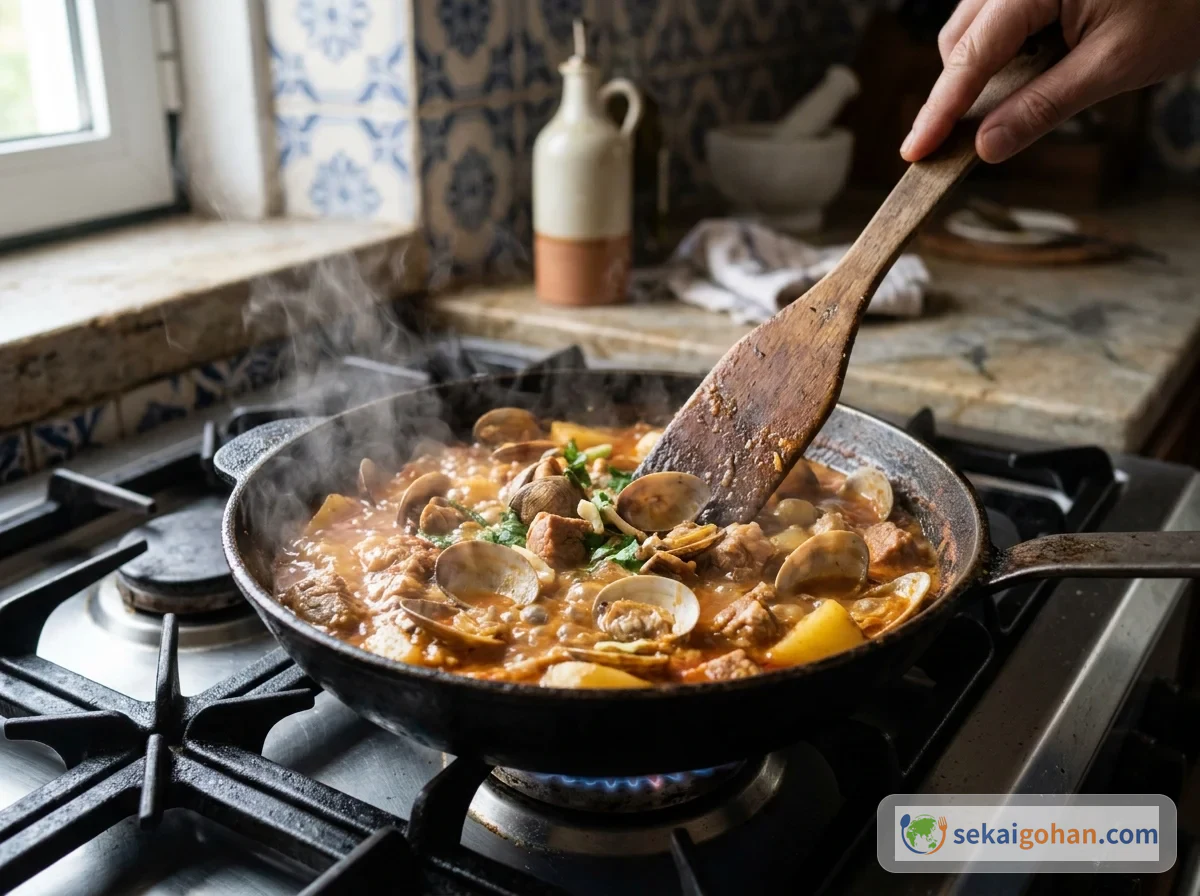
A large earthenware pot lands on the table of a Lisbon neighborhood eatery. Among red-tinged cubes of pork, the clams have opened and hold the cooking juices in their shells, and on top sit crisply fried potatoes under plenty of chopped coriander. This is carne de porco à alentejana, one of Portugal's signature pork dishes. The name means "Alentejo-style pork," yet it contains clams from the sea, and that pairing is the point: the clam juices melt into the sauce, a fusion of land and sea. Marinate the pork well in red pepper paste and white wine, add the clams last, and take the pot off the heat the moment they open.
Origin of carne de porco à alentejana
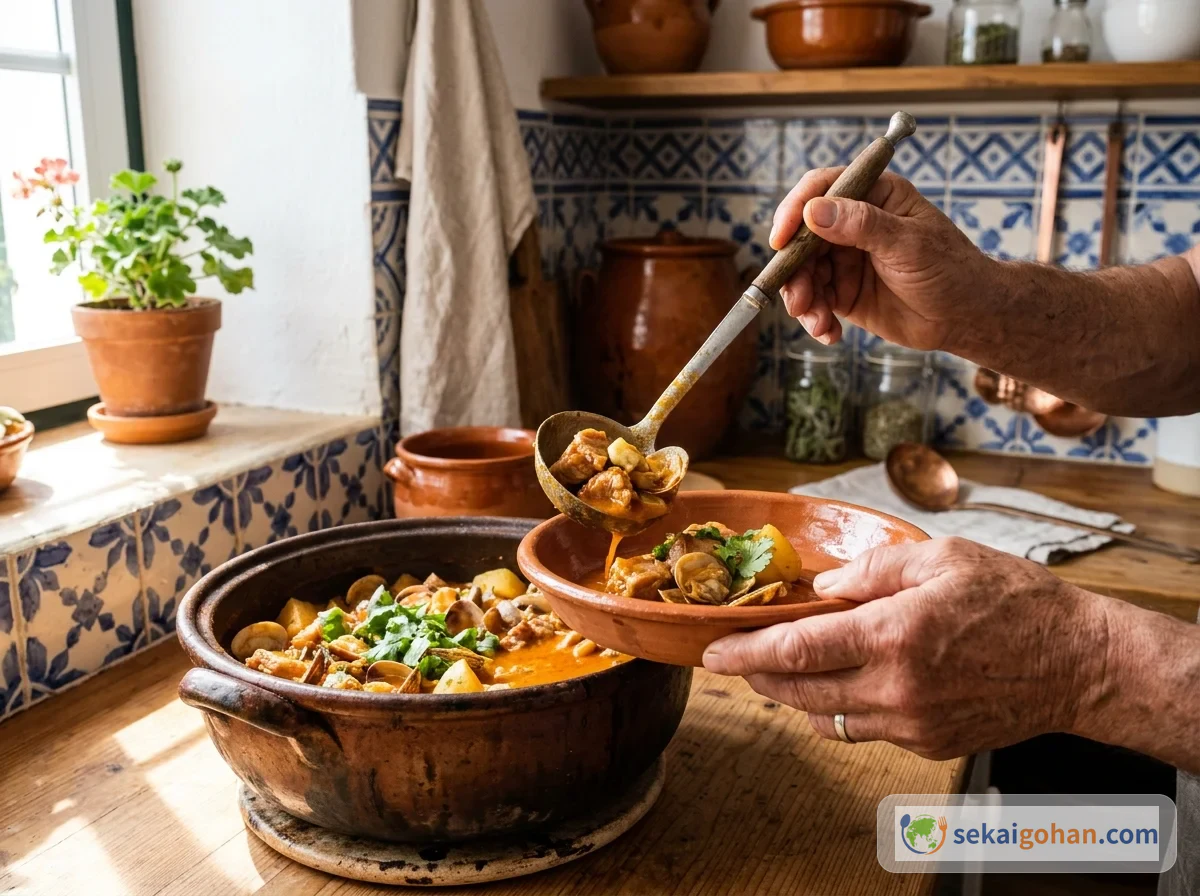
The Alentejo is a region of inland plains in southern Portugal, known for pigs raised free-range in cork oak woods and fed on acorns. Its pork has a reputation for quality. Even so, the dish's origin is often traced to the Algarve, the coastal region farther south.
The best-known story is that Algarve pigs were fed on fishmeal and scraps from fish canneries, which gave the meat a fishy smell, so cooks combined it with the clams they had on hand to hide it. Another story has an Algarve cook choosing the name to show that the pork came from acorn-fed Alentejo pigs. Others trace the dish to Alverca, near Lisbon. No one knows when the name was given, or whether Alentejo pork was really used.
There is also a story that in 1496, after King Manuel I forced Jews to convert or leave the country, he tested the faith of converts (New Christians) with this dish, which combines pork and shellfish, ingredients forbidden by Jewish law.
Today's version, with pork, clams, potatoes and coriander, is a combination that settled over a long time in eateries and home kitchens.
Ingredients (serves 4)
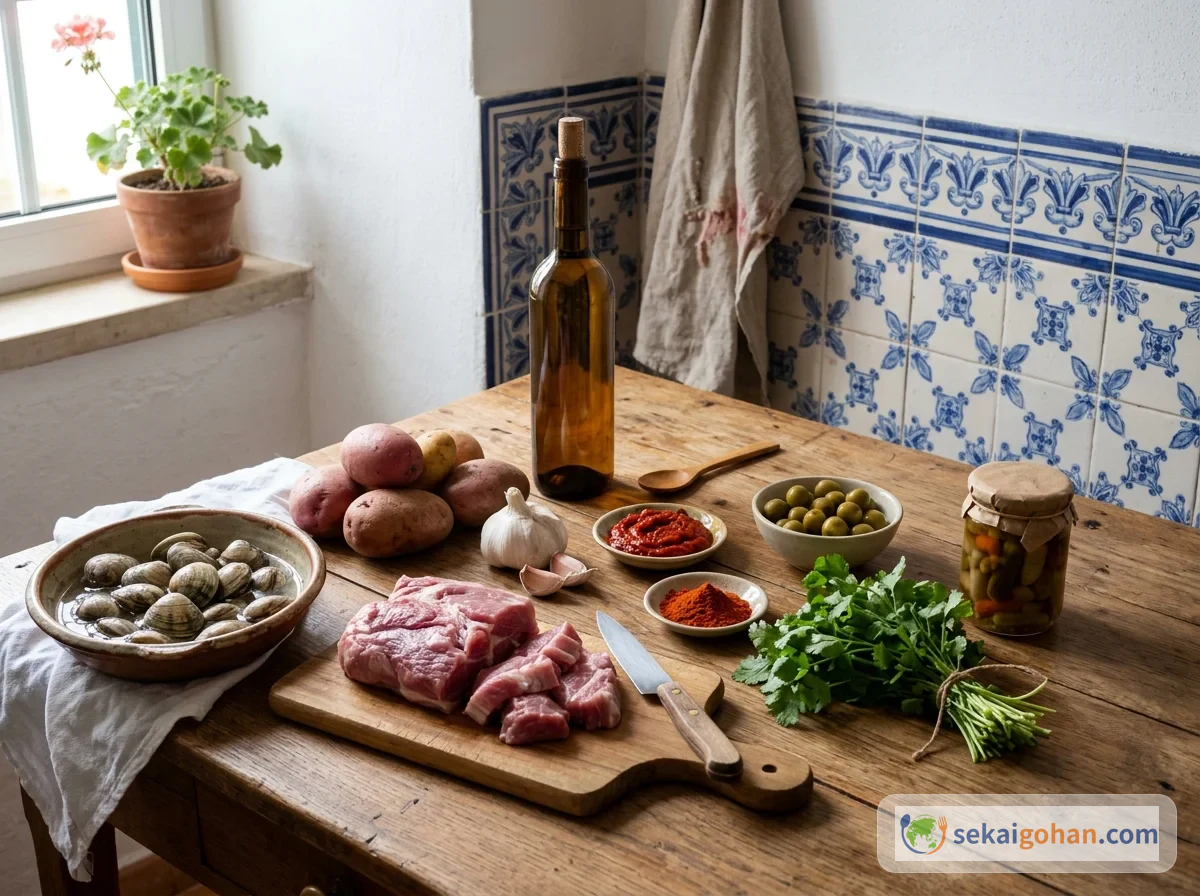
This is a home formula with ingredients swapped for those easier to find elsewhere.
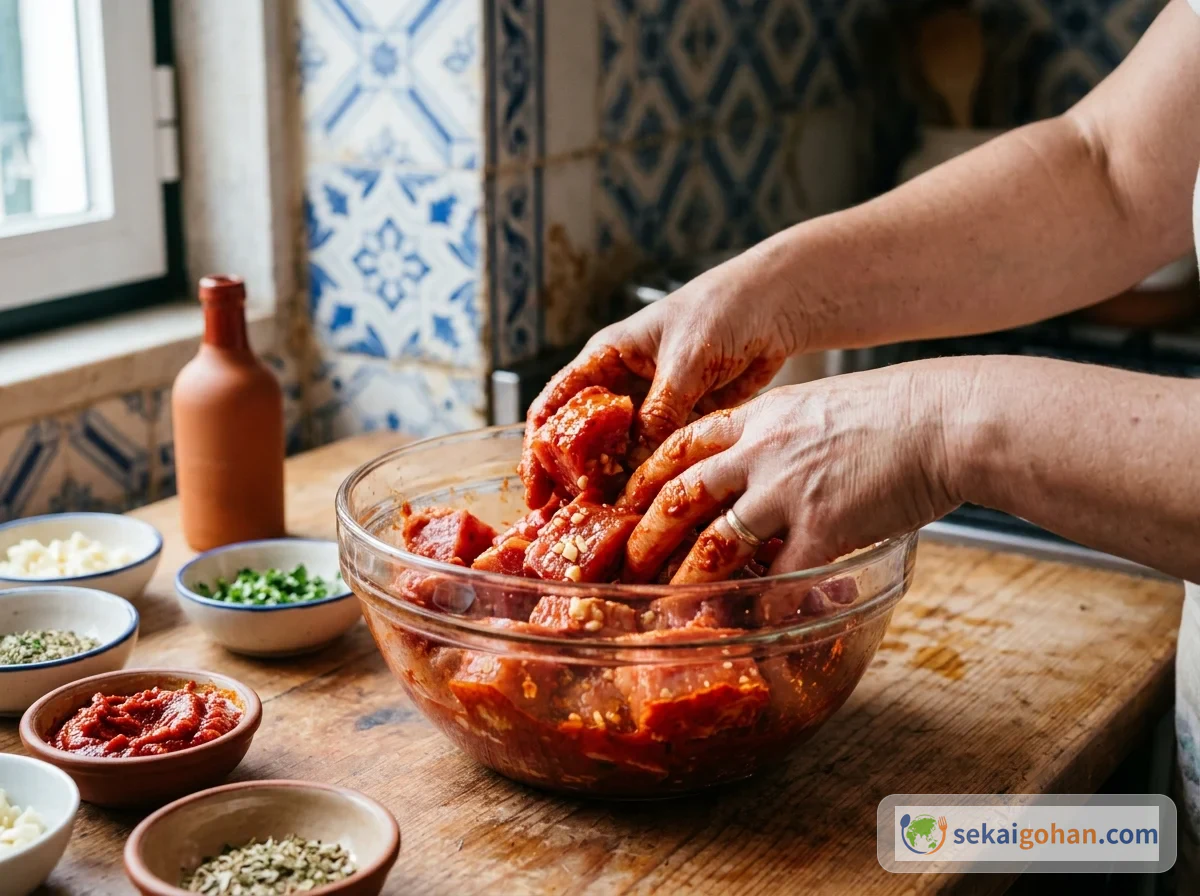
Red pepper paste (massa de pimentão) is a seasoning born in the Algarve, made by salting and mashing red peppers. Along with white wine, garlic, bay leaf and coriander, it is one of the key ingredients of this dish. It is only occasionally sold at Portuguese food shops or online outside Portugal, so the substitute is the practical choice: knead paprika powder with salt and olive oil. Most of the color and aroma come from the paprika, so the substitute gives a result very much like the dish.
Soak the clams in salt water about as salty as seawater (1 tbsp salt to 2 cups (500 ml) water), cover them with newspaper or the like to darken it, and leave them 2 to 3 hours to spit out their sand. Rinse by rubbing the shells together and they are ready. If you cut the purging short, gritty sand ends up in the sauce.
Coriander for carne de porco à alentejana
Fresh coriander at the finish is essential. Southern Portuguese cooking uses it often, and the Alentejo bread soup Açorda is also full of chopped leaves. Against fatty pork and a sauce rich with shellfish, a fresh green aroma cuts through at once. Ordinary fresh cilantro works fine, and if you dislike it, use parsley instead.
How to make carne de porco à alentejana
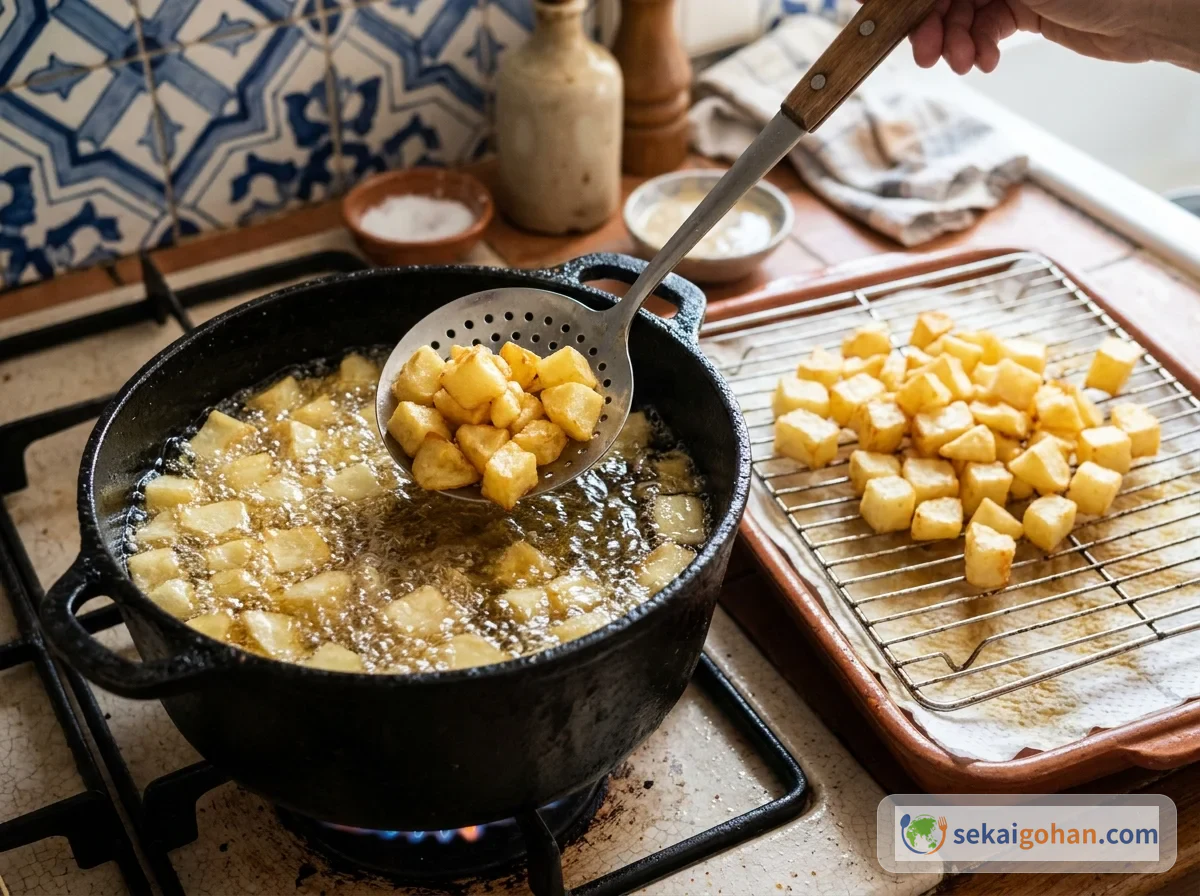
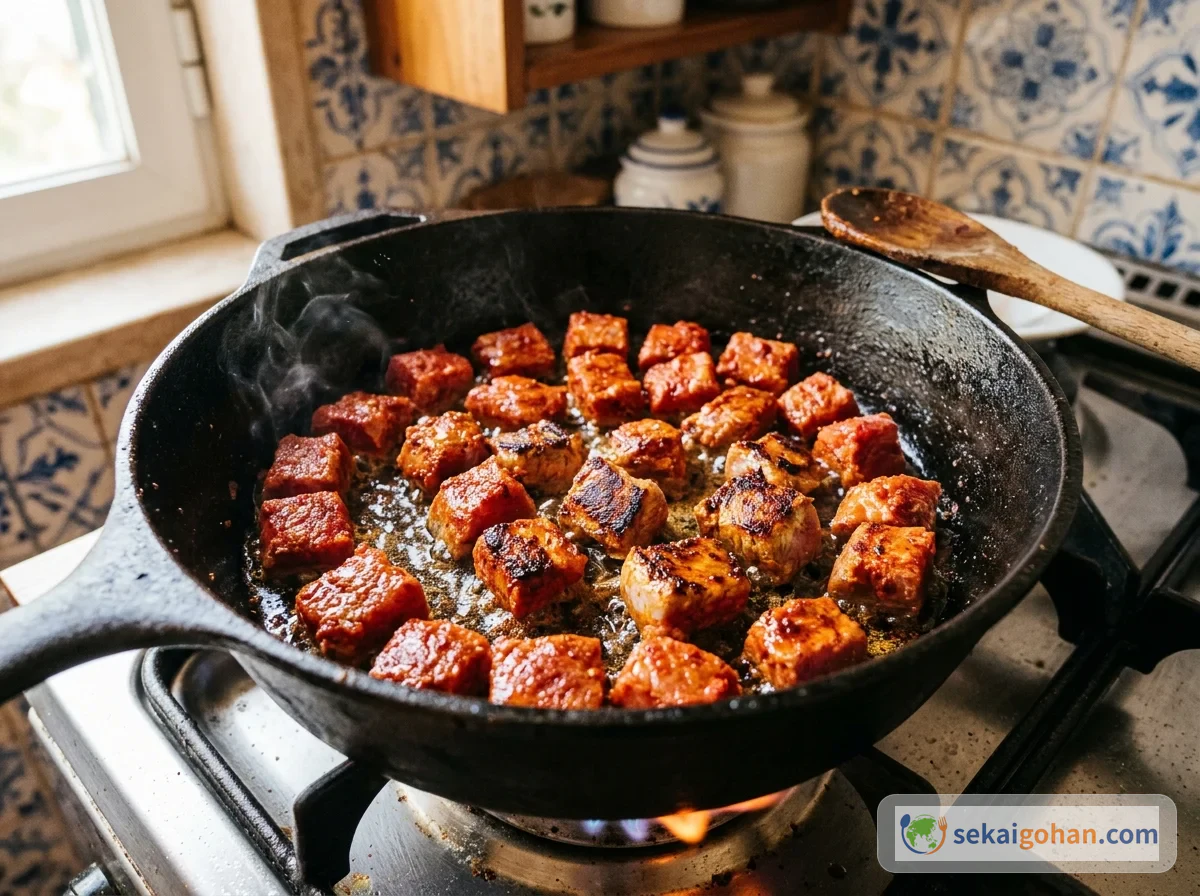
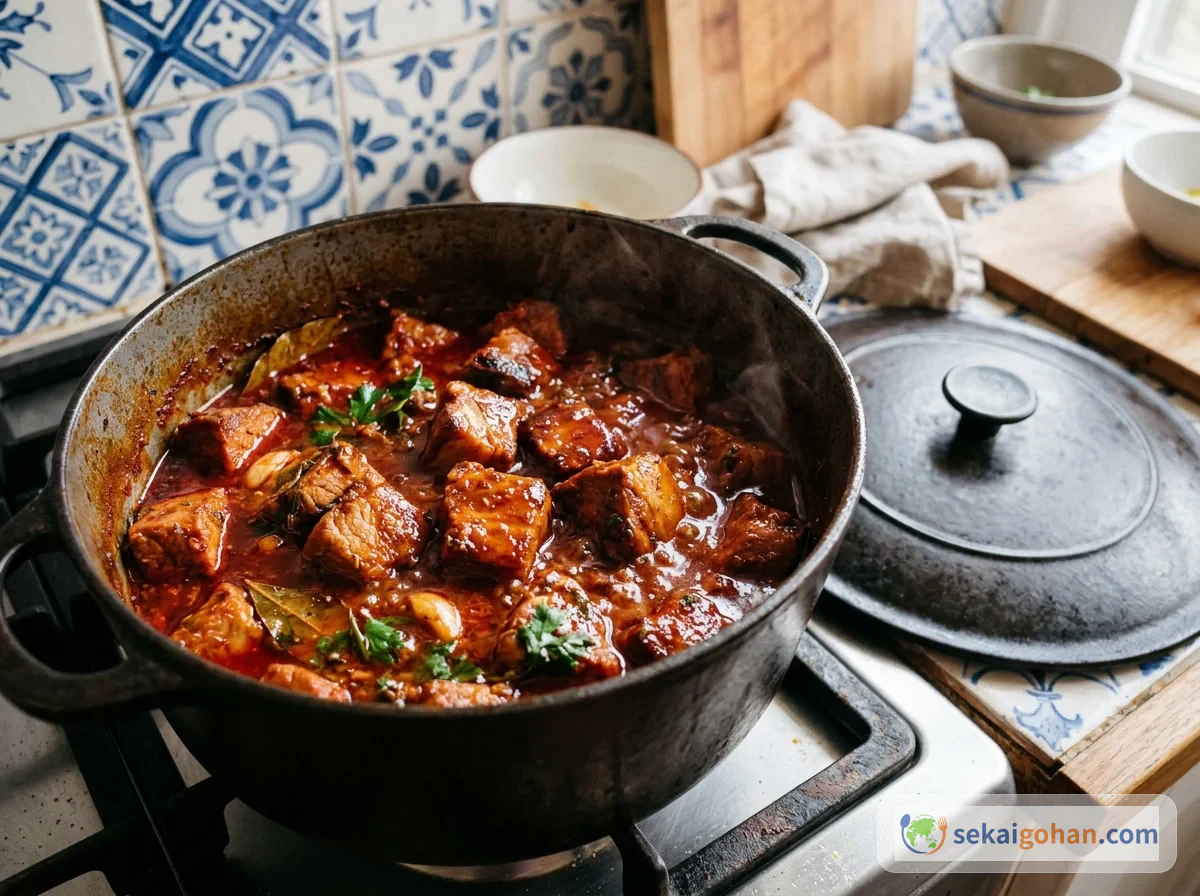
Marinating takes 1 hour (ideally 2 hours or more), frying the potatoes about 15 minutes, browning and simmering the pork about 25 minutes, and cooking the clams about 5 minutes. While it marinates, prepare the clams for purging and the potatoes, so the waiting time is not wasted.
Cook pork thoroughly through to the center. Heat it to 167°F (75°C) for at least 1 minute to kill pathogens such as enterohemorrhagic E. coli. When frying potatoes, do not leave the pot, and beware of burns from spattering oil. People with an allergy to shellfish such as clams cannot eat it.
Clams shrink and turn tough if overcooked. The moment they open is the signal to turn off the heat. If the potatoes go in early they soak up the cooking liquid and go limp, so if you want to keep the crisp texture, add them just before serving.
Serving carne de porco à alentejana
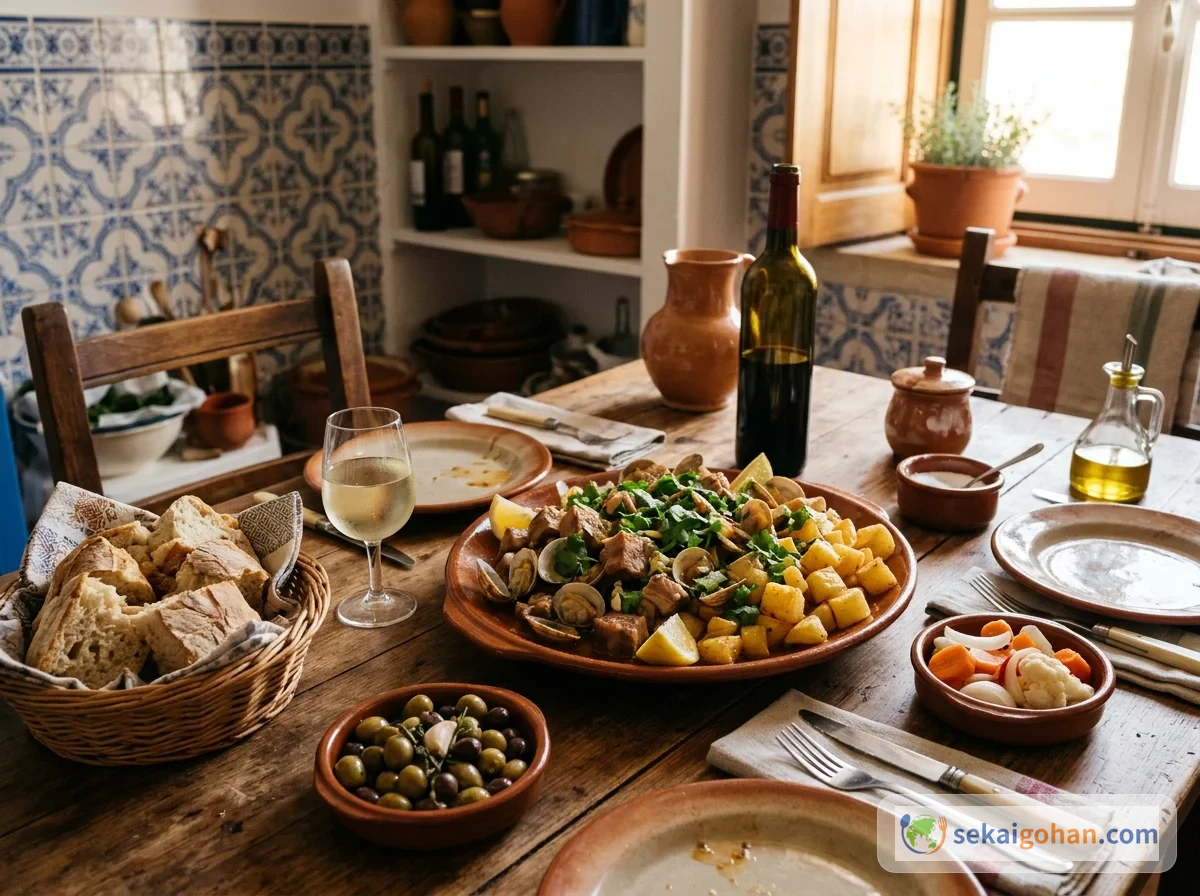
Heap it in the center of a large platter, arrange the open clams on top, and scatter with coriander so everyone can help themselves. The juice that collects in the clam shells and the sauce at the bottom of the dish are the best part, so mop them up with bread. The potatoes, soaked in that sauce, have a flavor you only get from this dish.
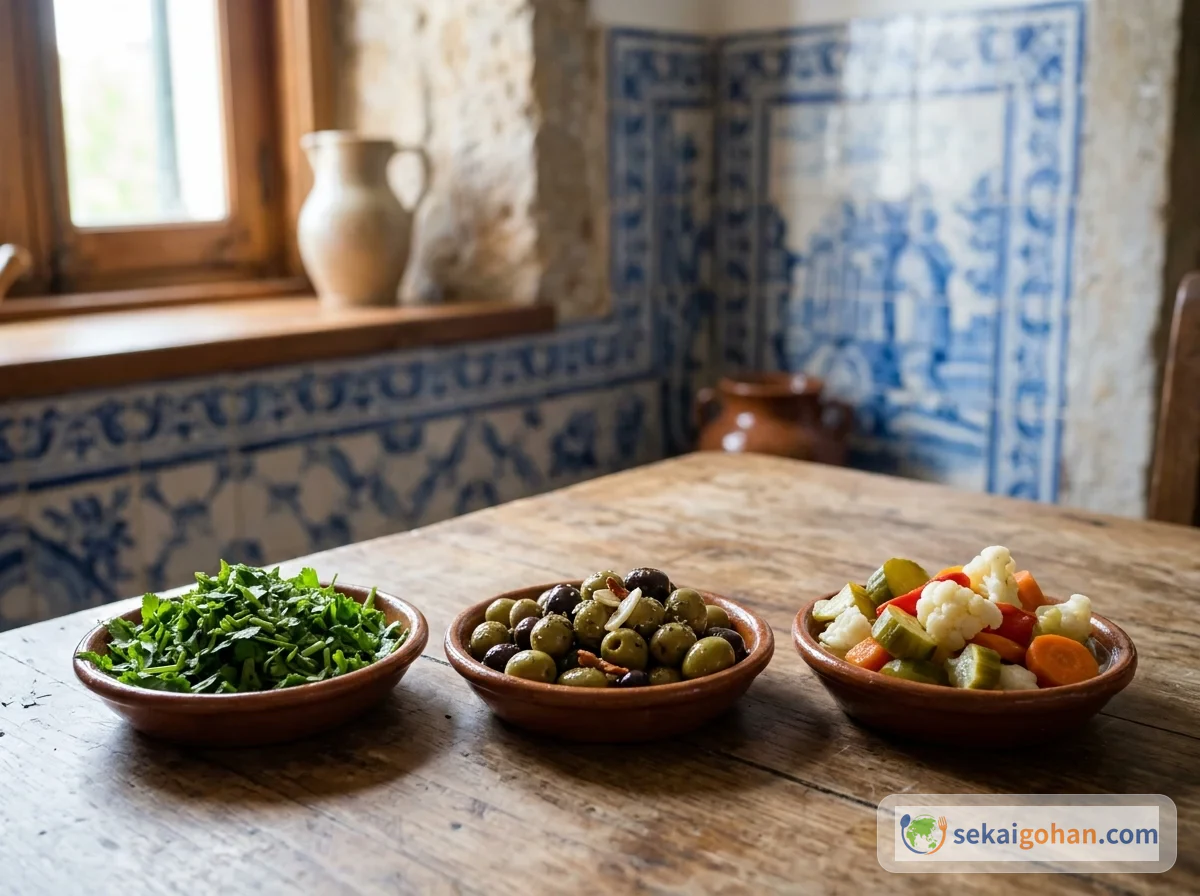
Olives and pickles matter too. Pork, clams and fried potatoes make a heavy combination, and their acidity and saltiness reset your palate. Always add a tart accompaniment, and you'll get to the end of your plate without it feeling heavy.
For wine, choose a lighter red, a rosé, or a Portuguese white that goes well with the aroma of coriander.
If meat and shellfish together is new to you, try it alongside another Portuguese dish, Amêijoas à Bulhão Pato, clams steamed with garlic, coriander and lemon. Side by side, the two show how differently clams can be used.
Frequently asked questions
What happens if I don't have red pepper paste?
The substitute paste of paprika powder, salt and olive oil is enough. The real paste has the acidity and depth of fermented red pepper, so if yours tastes flat, add 1 tsp white wine vinegar to the substitute.
Can I use frozen clams instead of fresh?
Yes. Add them while still frozen and heat until they open. Shell-on clams come closer to fresh in both looks and juices.
Can I make it without frying the potatoes?
You can bake them in the oven, or microwave them and then brown them in a skillet. They won't be as crisp as fried, but it's easier.
Can I leave the marinade overnight?
Yes, in the refrigerator. The longer it sits, the more flavor soaks in, though the wine's acidity can turn the surface of the meat slightly whitish.
Can I make it ahead?
Cool the pork stew before refrigerating, and when reheating, heat it until everything is simmering well. Clams turn tough and potatoes turn sticky over time, so it's best eaten freshly made.