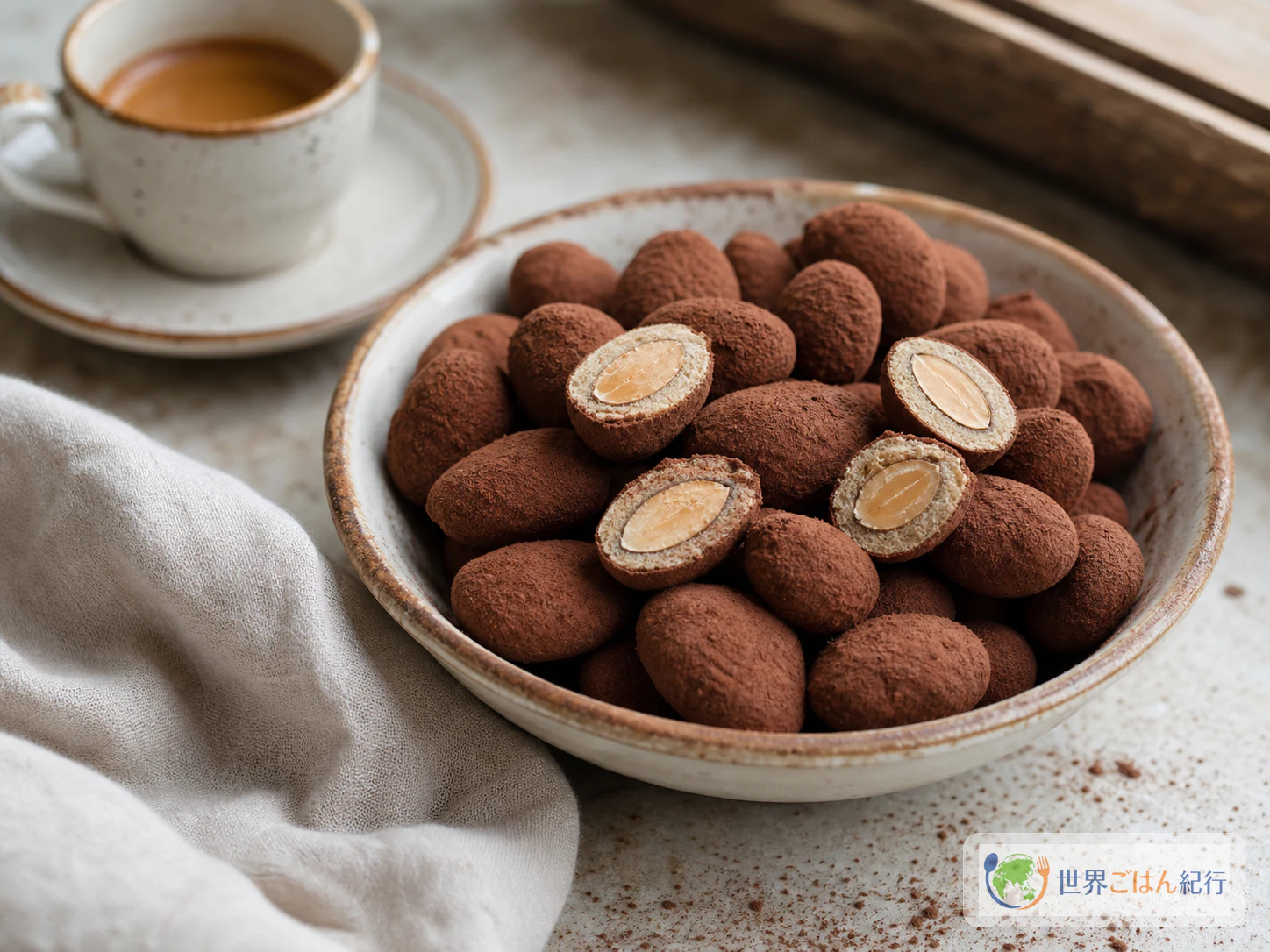
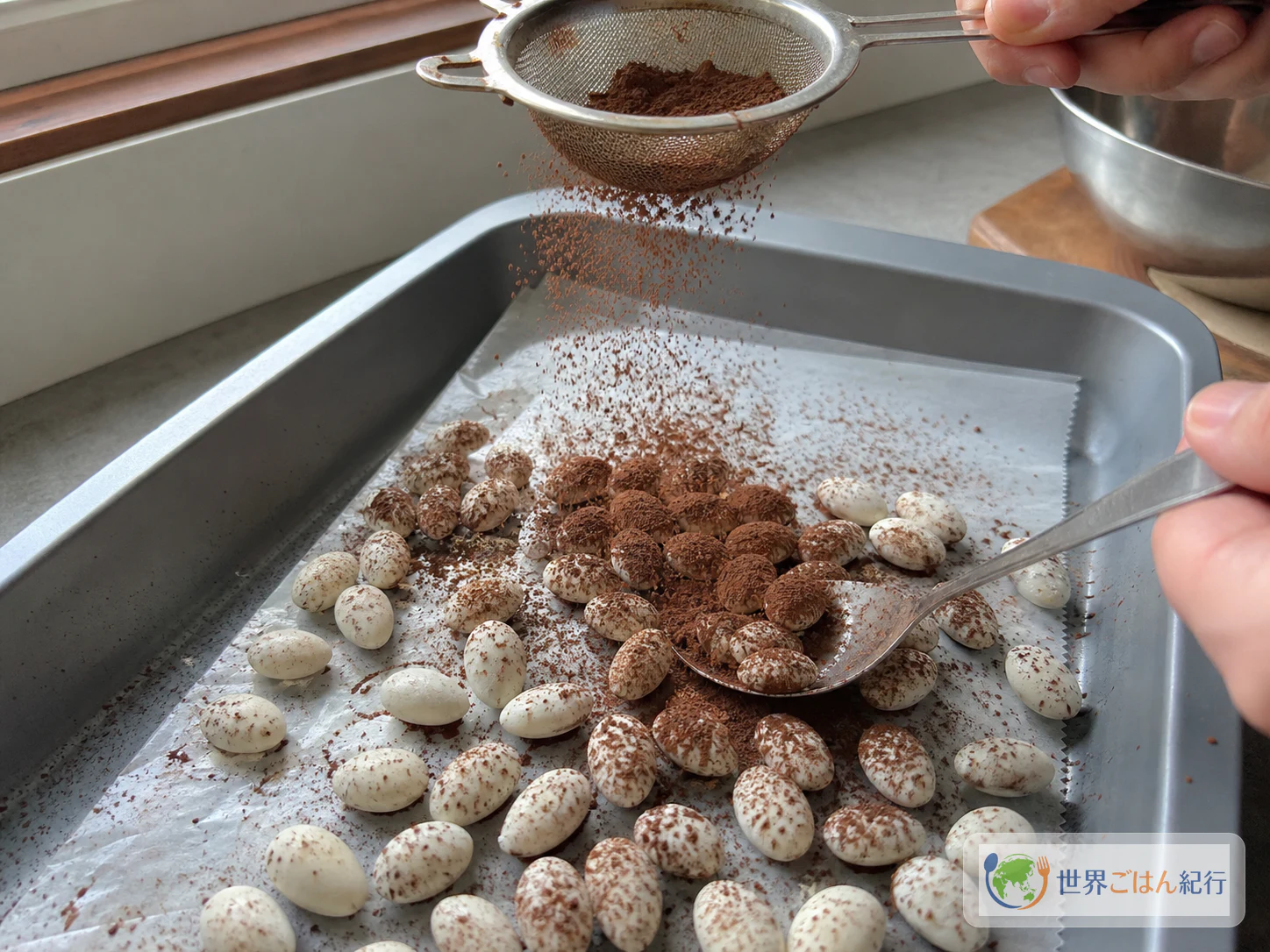
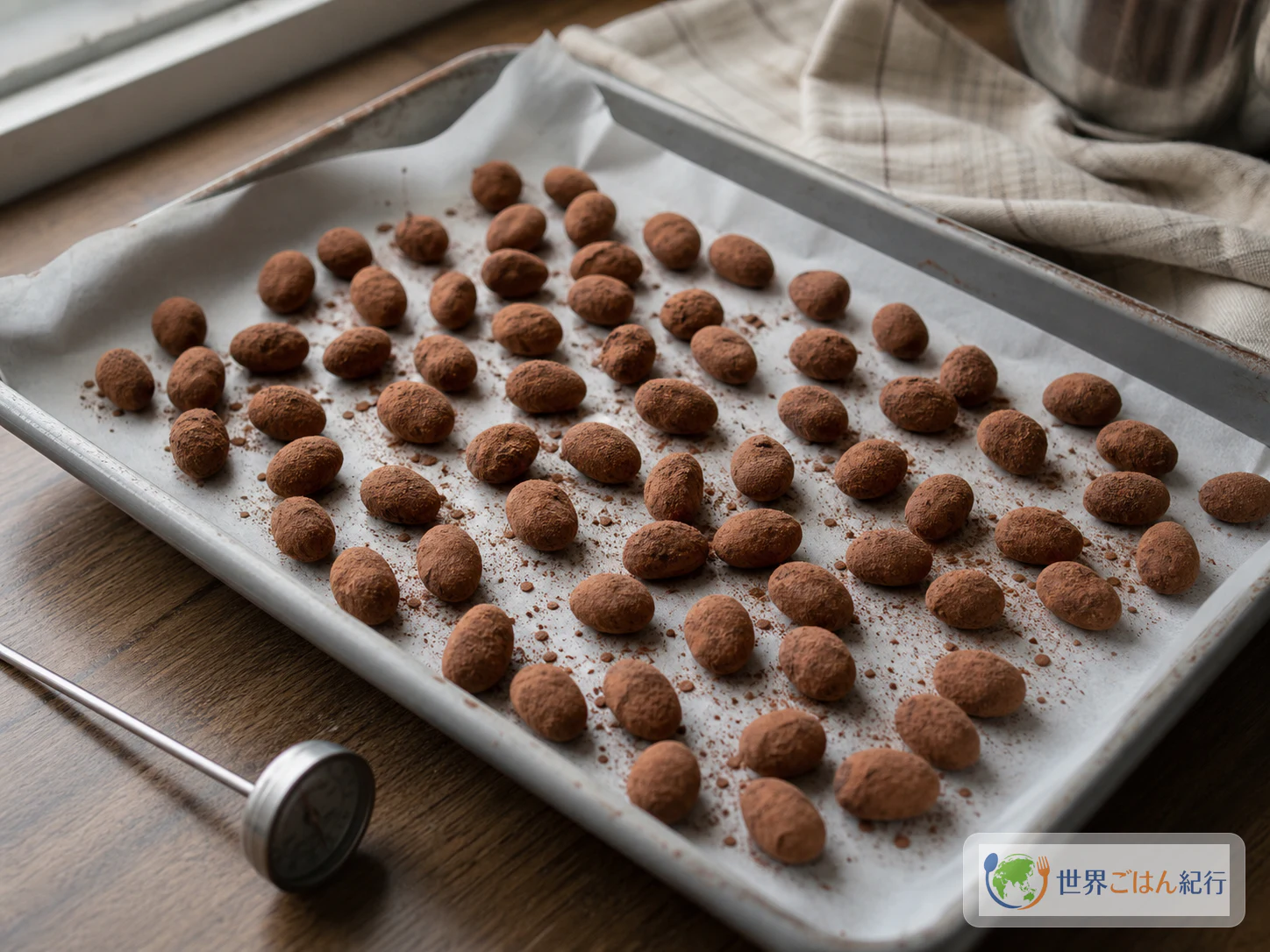
After coffee at the end of a meal, two or three small brown pieces at the edge of the plate change the mood of the table a little. Catànies are a Catalan sweet of almonds wrapped in caramel, coated in a layer of white chocolate, and finally laid to rest in cocoa. Bite in and the bitterness of the cocoa comes first, then a milky sweetness, and last the fragrant almond.
Catànies from Vilafranca del Penedès
Catànies come from the Penedès region of Catalonia in northeastern Spain, an area also known for its wine. They are a specialty of Vilafranca del Penedès, where the Cudié family has made them since the 1940s. The classic version has a caramelized almond at the center, a white praline-like layer, and a cocoa finish.
At local confectioners, catànies are sold in a box or bag and eaten a few at a time. Nobody cuts them into portions like a cake. They belong with post-meal coffee, the last of the wine, or a small plate set out for guests.
Like other nut-and-chocolate sweets, they invite comparison with Sicily's Mpanatigghi and the nut pastry Mhancha. None of them push sweetness alone. They build a small after-meal satisfaction from layers of nuts, flour and aroma.
An exact copy is hard at home, since the original needs a dedicated white praline and fine temperature control. Blanched almonds, white chocolate, nut flours and unsweetened cocoa get you close. Treat it as a small after-dinner confection with the almond as the star, rather than a chocolate sweet, and you'll be nearer to how it is eaten locally.
Ingredients (makes 36 pieces)
Equipment
| Tool | Use | Substitute |
|---|---|---|
| Small heavy-bottomed pot | For making the caramel | A small skillet |
| Cooking thermometer | To watch the temperature of caramel and chocolate | You can judge by color and bubbles, but a thermometer is reassuring the first time |
| Small food processor | To coarsely crush chipped almonds | Chop coarsely with a knife |
| Sieve or tea strainer | To dust the cocoa thinly | A fine-mesh strainer |
| Airtight container | To store away from humidity | A clean glass jar |
This recipe uses almonds, hazelnuts, dairy, and chocolate. Check the chocolate label for soy lecithin. If you have a nut or dairy allergy, do not eat it. For children, a hard almond sits at the center, so check the piece size and their chewing ability for their age.
Choosing ingredients and tools for catànies
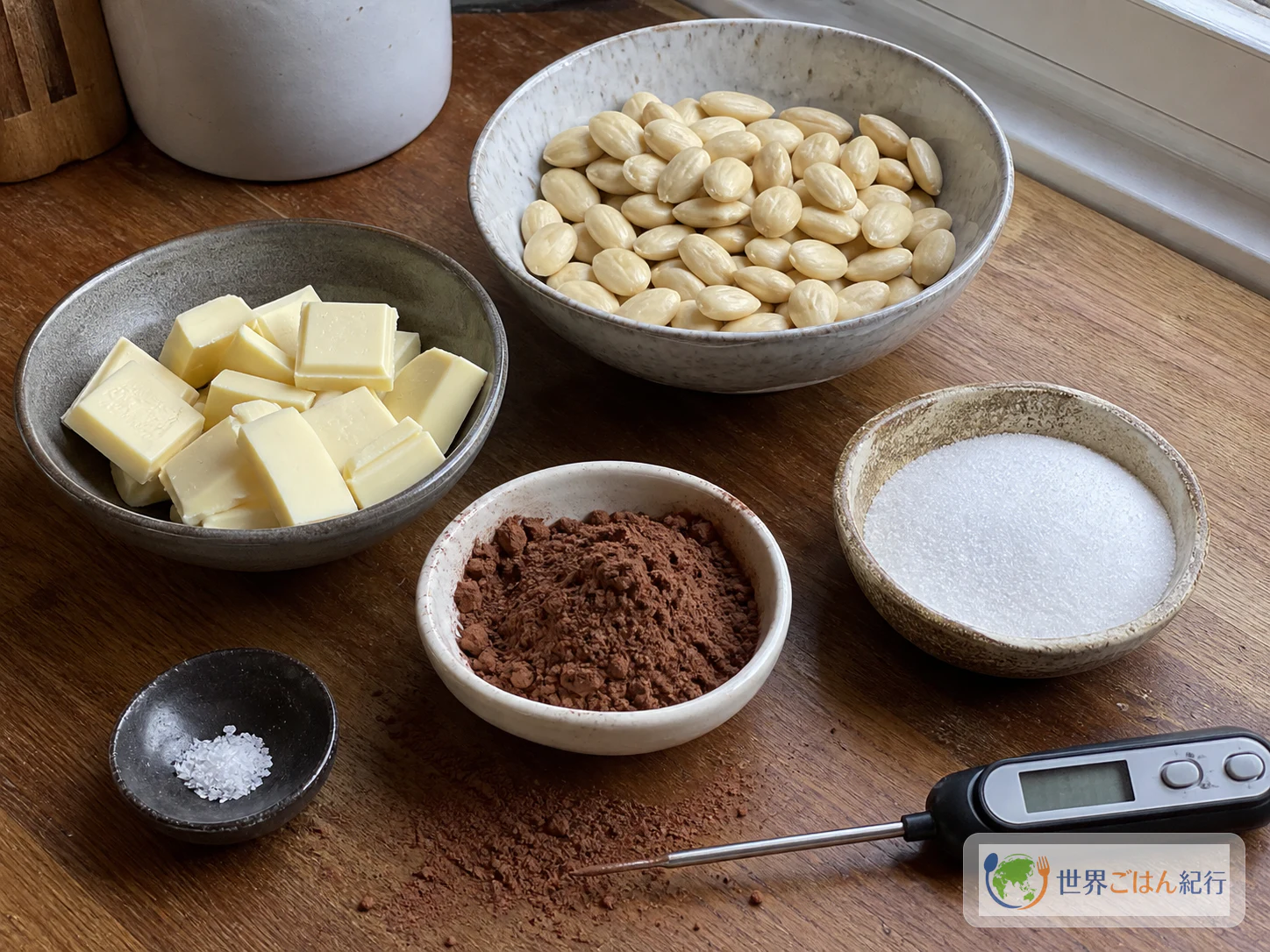
With catànies, temperature and humidity decide the result more than the ingredient list does. Toast the almonds until fragrant without scorching them, keep the caramel thin, keep the white layer from getting too thick, and shake off the excess cocoa at the end. Get those right and ordinary ingredients will do the job.
| Where you hesitate | Close to local | Practical answer in a home kitchen | Direction to avoid |
|---|---|---|---|
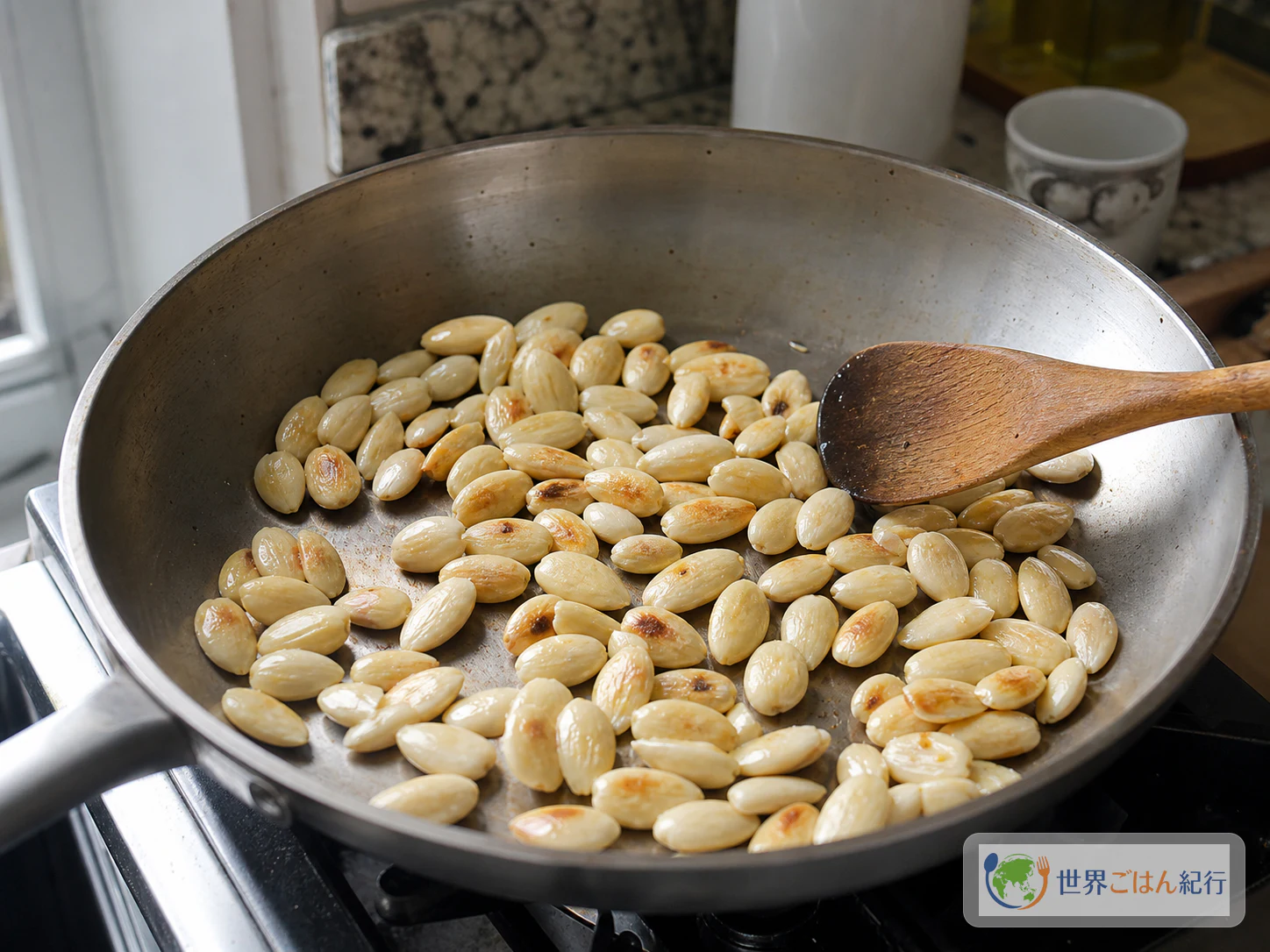
| Almonds | Blanched Marcona-type almonds | Dry-toast blanched whole almonds | Using them raw, or using damp nuts |
| White layer | A white praline-like layer | White chocolate mixed with almond flour and hazelnut flour | Coating thickly with white chocolate alone |
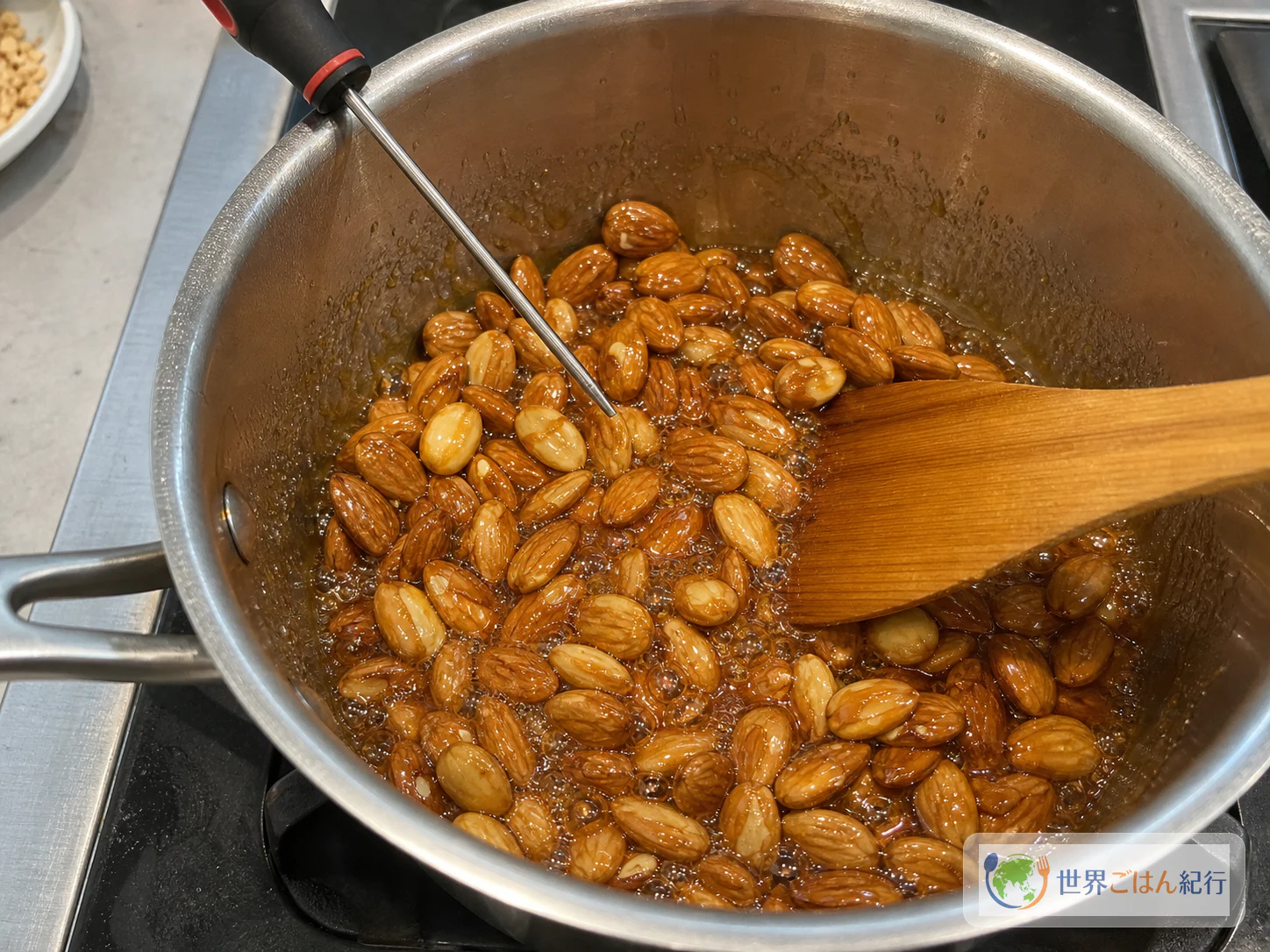
| Caramel | A thin, fragrant sugar shell | Stop at a thin amber color, guided by 165 to 350°F (170°C) | Scorching to a dark brown |
| Cocoa | A bitter powder finish | Dust unsweetened cocoa thinly and shake off the excess | Coating thickly with sweet instant cocoa |
| Storage | Sealed as a dry small sweet | Seal after fully setting at around 68°F (20°C) | Putting them warm into a jar |
Almonds, white chocolate and cocoa
A baking supply or import food shop is the safest place for all three. With white chocolate, how it melts matters more than its cocoa butter content; a high-end brand isn't necessary, but baking chocolate in bars or tablets is easy to handle. Confectionery white chocolate is very sweet, so skip the powdered sugar and balance it with unsweetened cocoa.
Chipped almonds and end pieces are worth saving. Crushed fine and mixed into the white layer, they cut through the flat sweetness of white chocolate alone, and a small food processor makes even a small amount uniform.
Thermometer
If you judge caramel by color alone, you'll likely stop too late. Past 165 to 350°F (170°C) it darkens, and the aftertaste turns scorched on top of the cocoa's bitterness. The first time, a thermometer makes it much easier to stop at a thin amber.
How to make it: layer thin coats and settle them with cocoa
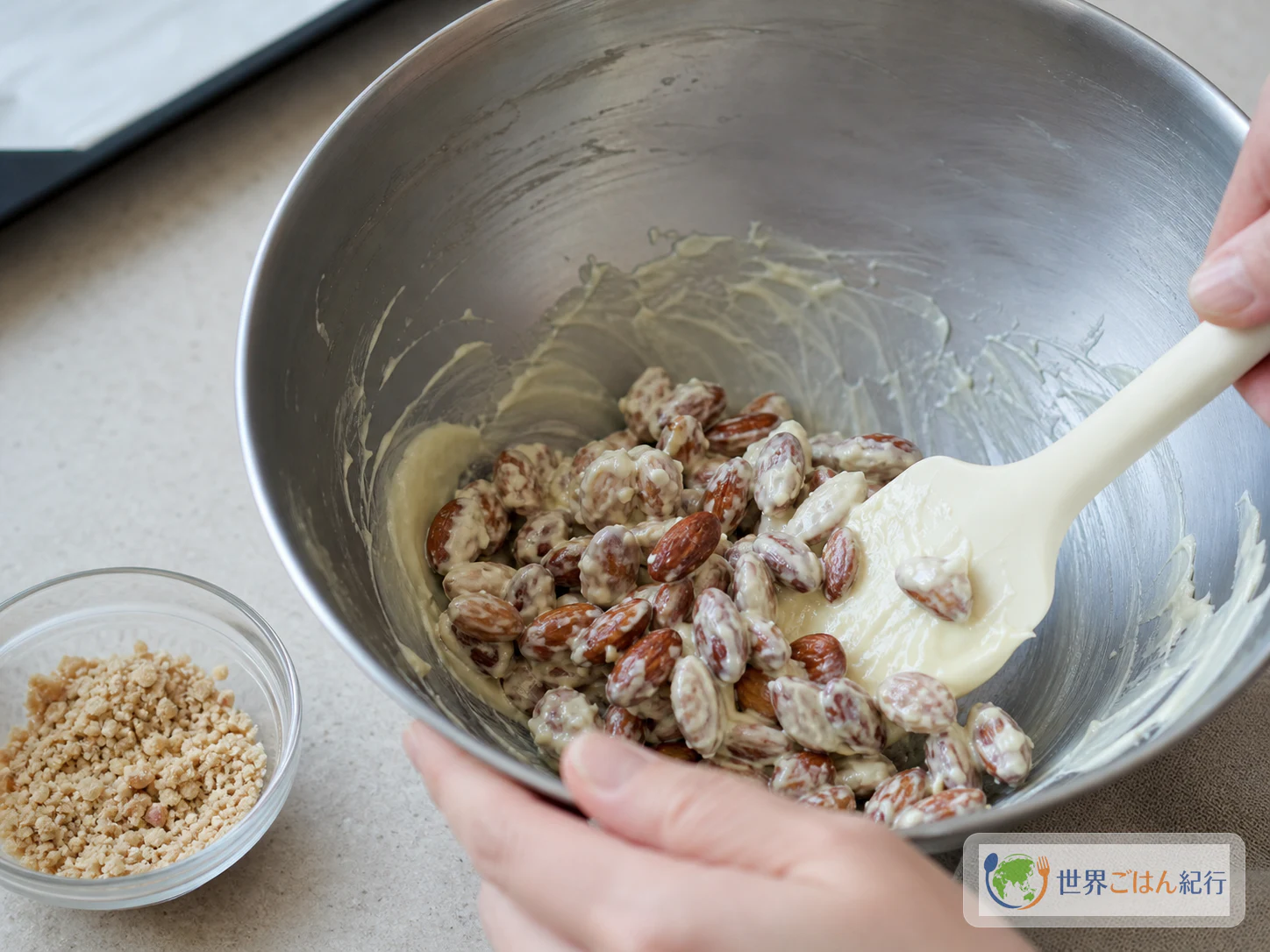
Chocolate confections are more stable if you put in time to bring the temperature down rather than finishing all at once. Dry-toast the almonds, coat them in caramel, cool them completely, and then add the white layer. After dusting with cocoa, do not jar them at once but wait until the surface settles.
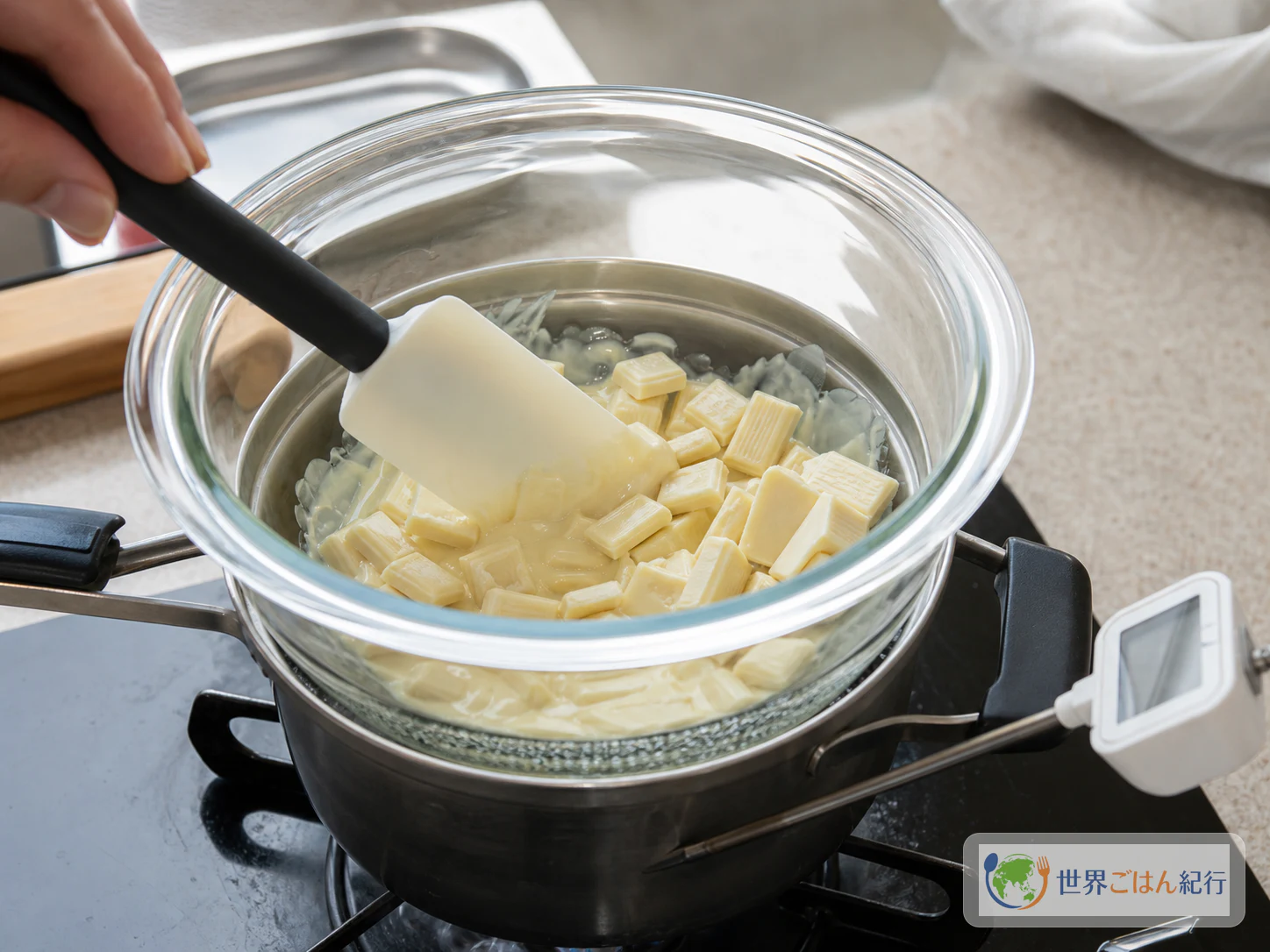
At home, the guide is 165 to 350°F (170°C) for the caramel, 40 to 113°F (45°C) when melting white chocolate, 28 to 86°F (30°C) when coating, and 18 to 72°F (22°C) where they set. Without a thermometer, judge the caramel by a pale amber color, the chocolate by a viscosity that falls slowly from the spatula, and the finish by cocoa that does not stick thickly to the fingers.
Where catànies go wrong and how to fix it
Most failures come down to scorching, thick coating and humidity. Cocoa hides flaws on the surface, so while you work, put lightness ahead of looks: a thick white layer makes the sweet heavy, and dark caramel leaves bitterness behind.
| State | Cause | How to fix it on the spot |
|---|---|---|
| Caramel is bitter | Went well past 350°F (170°C), made the color too dark | Don't use the scorched part. Next time stop at a pale amber |
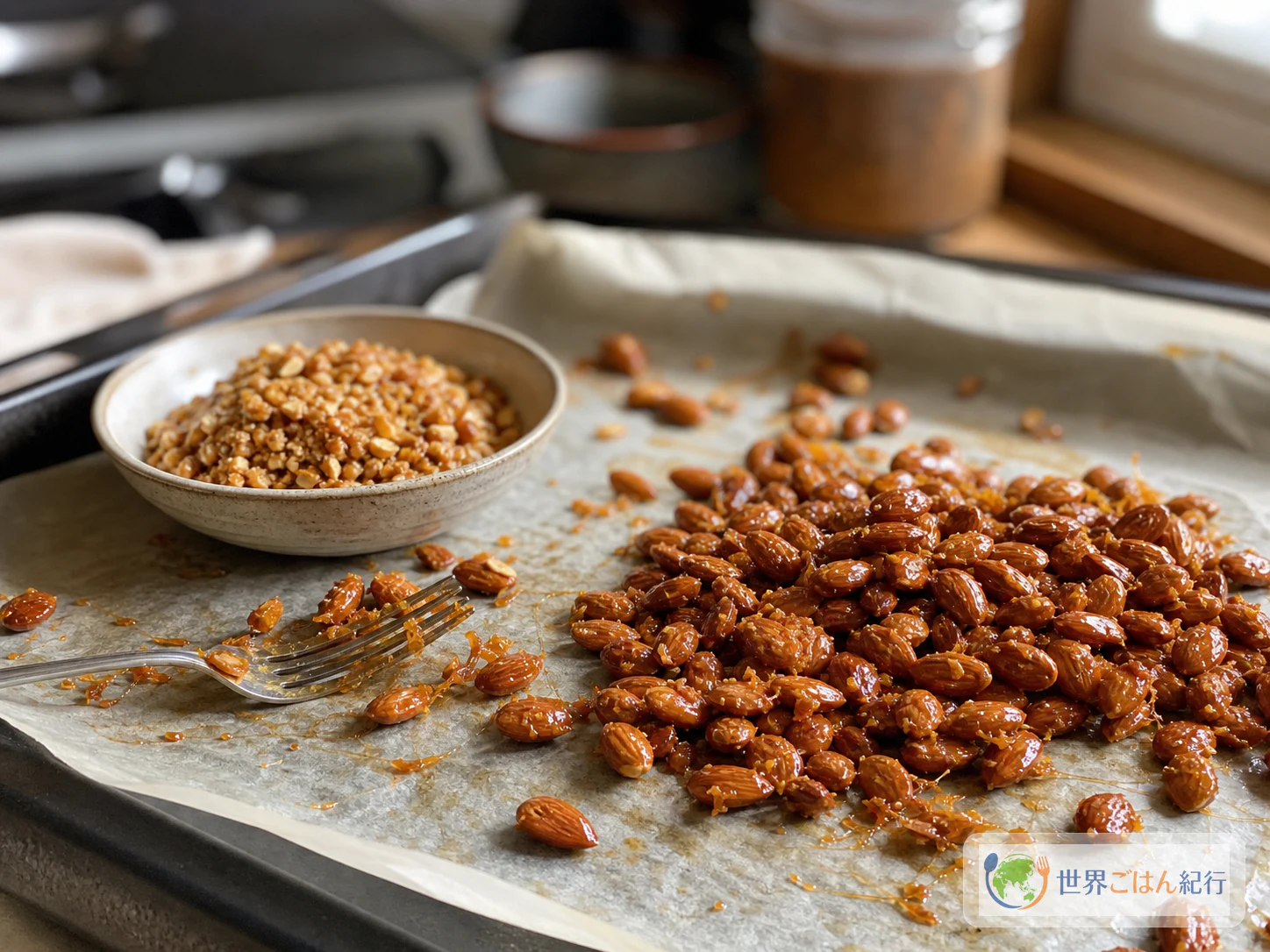
| Pieces form large clumps | Coated with caramel or white layer thickly all at once | Separate with a fork while warm, and work the white layer 10 pieces at a time |
| White chocolate is grainy | Water bath too hot, water got in | For this batch, coat thinly instead of thickly. Next time use a water bath of about 122°F (50°C) |
| Cocoa is sticky | White layer is warm, humidity is high | Rest 10 minutes in a cool place and dust thinly with cocoa again |
| Mottled surface the next day | Sealed before fully cooling | Open the lid and leave in a dry place for 15 minutes. Next time rest for more than 30 minutes |
If they taste too sweet, adjust with the final powder rather than the caramel: keep the cocoa unsweetened and leave out the powdered sugar. Cut the caramel sugar too far and it won't coat the almonds thinly, leaving some pieces bare. Catànies depend on thin layers stacked one on another.
Serving and storing catànies
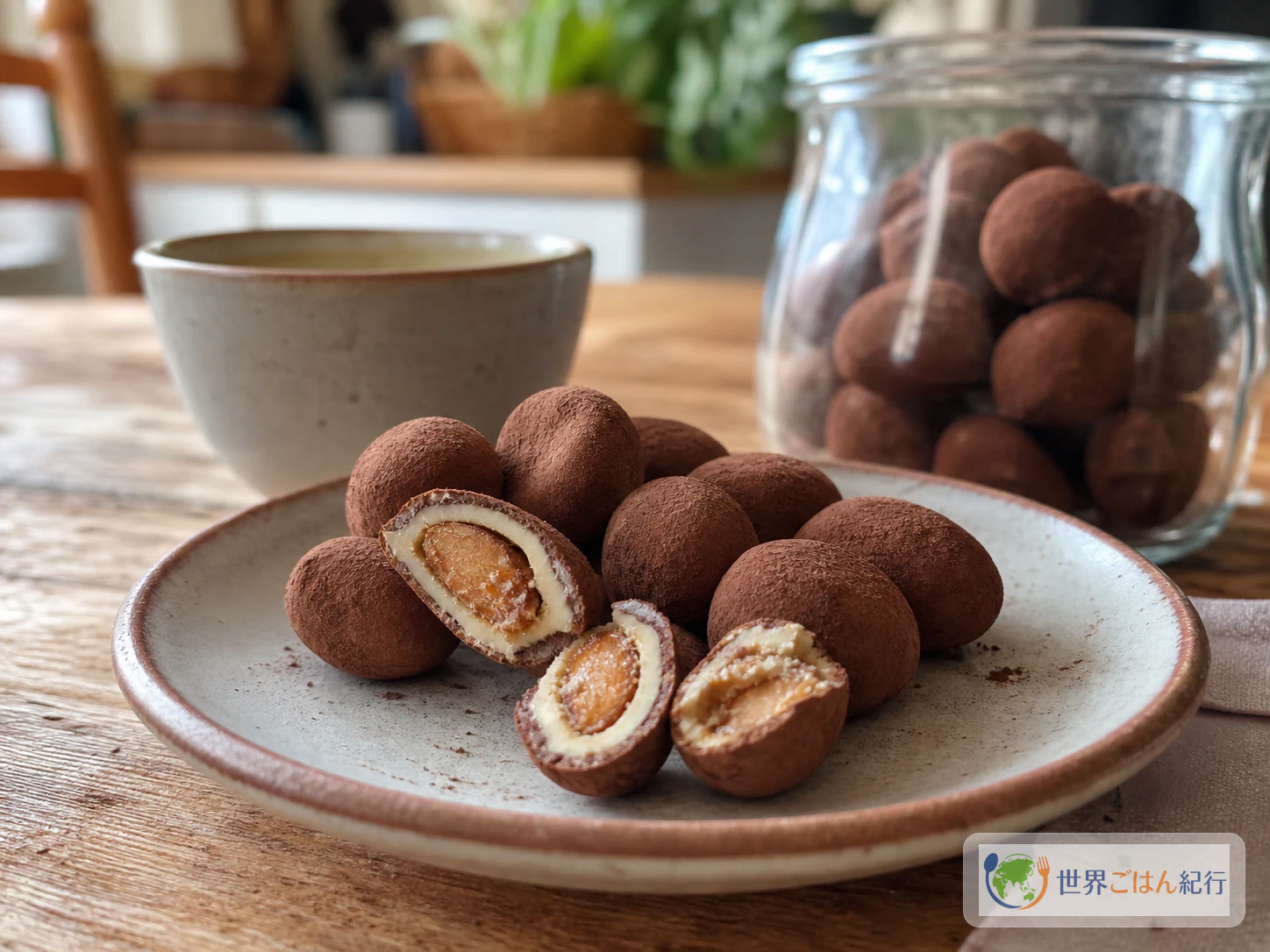
Catànies taste best once they've cooled completely and the cocoa has settled, not straight after making. Two or three pieces in a small dish bring out the aroma better than a full plate. They make a good ending when a big dessert would feel heavy: start with a cold Gazpacho or a charcoal-grilled Calçotada, move on to Fideuà or Paella Valenciana, and finish with coffee and a cocoa-coated almond instead of a rich chocolate cake.
Storage and making ahead
Store fully cooled catànies in an airtight container in a cool place and eat them within 3 to 4 days, or within 1 week if refrigerated. Humidity makes the surface mottled, so move them into the container only after they've cooled all the way. Straight from the fridge, let the container sit at room temperature for 10 minutes before opening it; otherwise condensation forms and the damp cocoa spoils both look and texture.
Freezing doesn't work: moisture on thawing mottles the cocoa and dulls the white layer. To get ahead, make only the caramel almonds the day before and keep them sealed. Coat with white chocolate and dust with cocoa on the day you serve them, and the surface stays clean.
To bring them to a gathering, put each piece in a small paper cup and line the container with dry paper towel. In humid weather, keep ice packs from touching them directly, since that causes condensation; wrap the container in a cloth, even inside a cooler bag, and the surface will stay smooth.
Frequently asked questions
Can I make it with skin-on almonds?
You can, but the astringency of the skin tends to stack on the bitterness of the cocoa, and the pieces look darker. Blanched whole almonds give better contrast with the white layer, so start with those. If you use skin-on almonds, let them cool slightly after dry-toasting and pick only the ones whose skins aren't scorched.
Can I coat them with white chocolate only?
You can, but the sweetness comes forward and the nutty character weakens. A small amount of almond flour or hazelnut flour gives a praline-like aroma that also ties in with the bitterness of the cocoa.
How do I judge the caramel if I have no thermometer?
Stop when the bubbles get bigger and the liquid turns from clear to a pale amber; wait for dark brown and bitterness stays behind. Use a reasonably large, silver-colored pot so the color is easy to read. A black nonstick pot hides it.
The cocoa sticks too thickly.
Either the white layer is too warm or the cocoa is being piled on. Sift it thinly over a tray before rolling, and shake off the excess with a tea strainer at the end. Even if you want more bitterness, unsweetened cocoa gives a cleaner result than a heavier coat.
Can I make it in summer?
Yes, though on hot days the white layer is slow to set and the cocoa gets damp more easily. Work in an air-conditioned room. If the pieces turn sticky partway through coating, spread them on parchment paper and chill them for only 5 minutes; any longer and condensation forms, so bring them back out quickly.