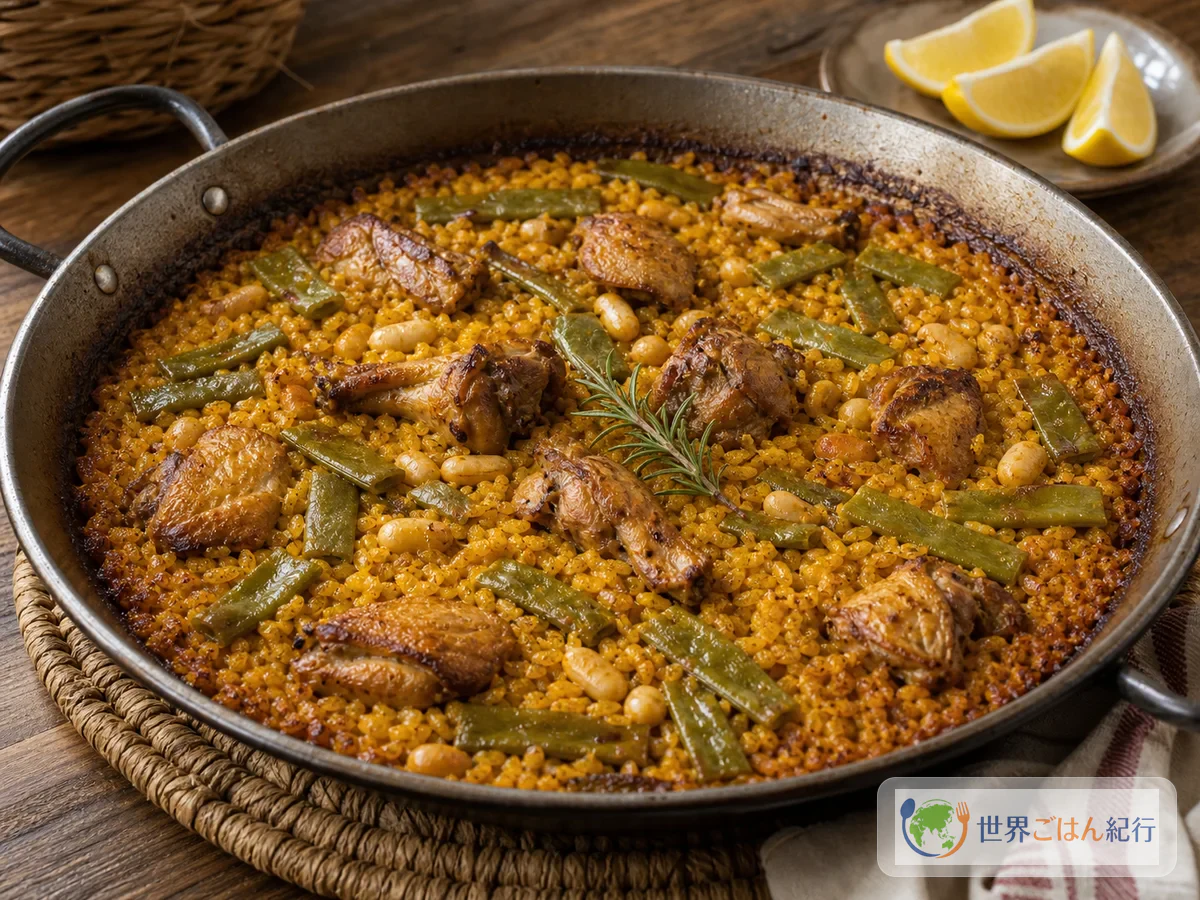
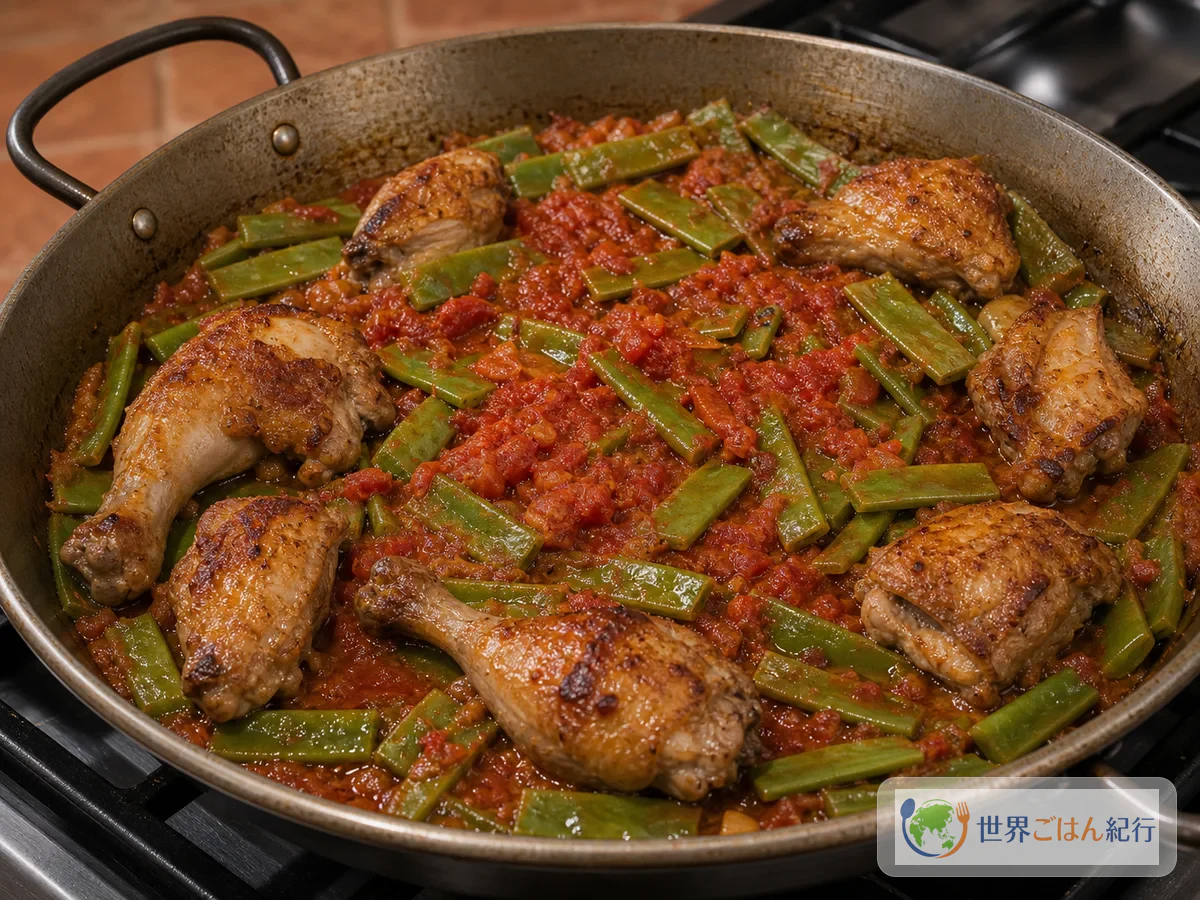
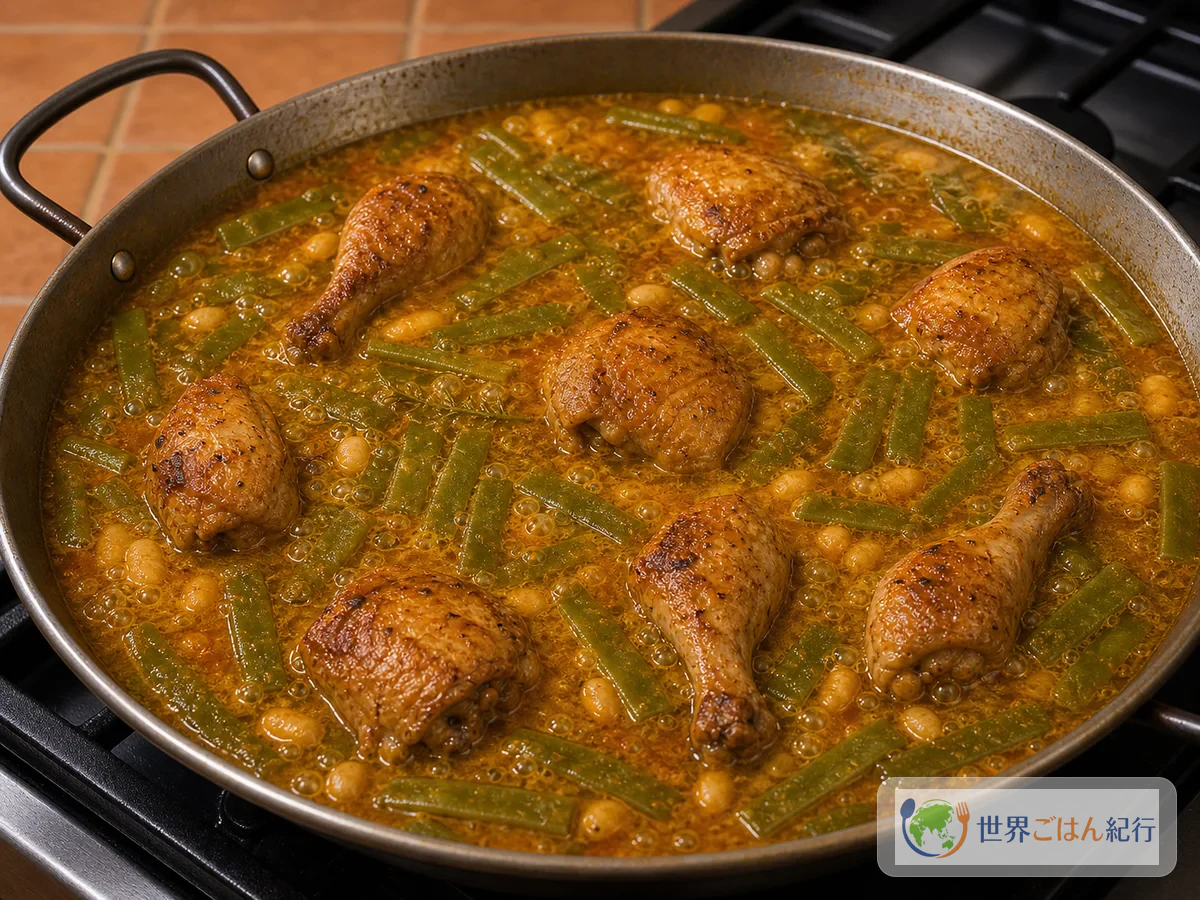
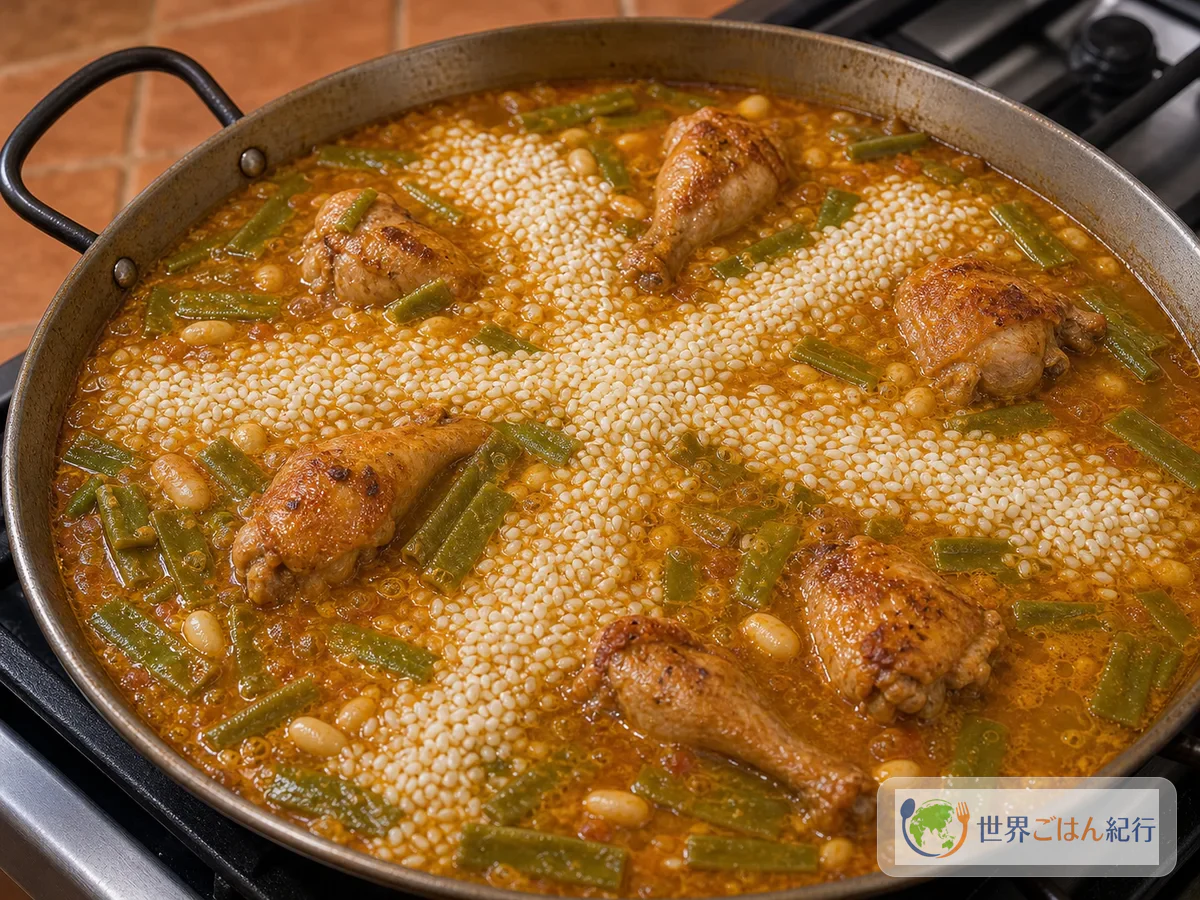
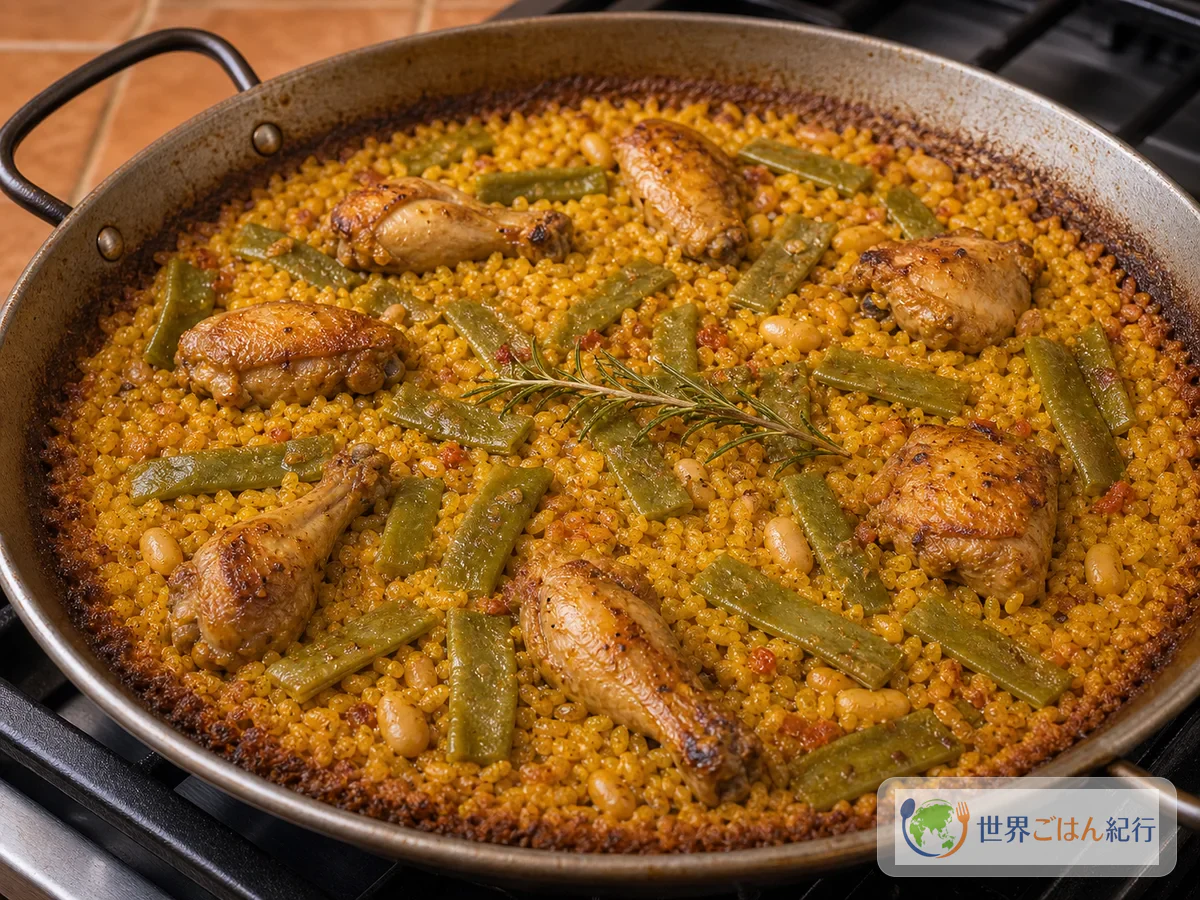
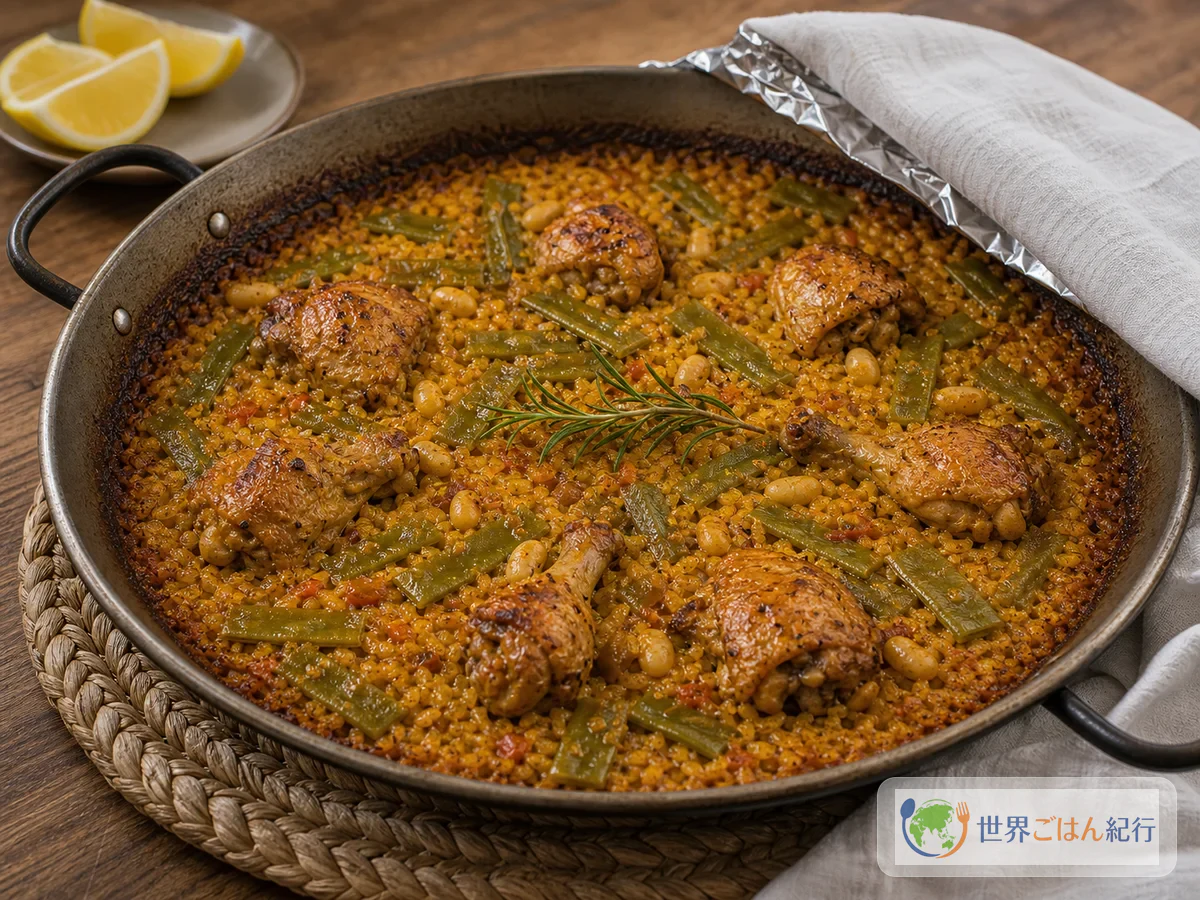
When the rice at the bottom of the pan starts to crackle softly, the air in the kitchen changes a little. Is it burning, or is it browning well? You resist the urge to lift a lid and, for a few minutes, adjust the heat by scent alone. That moment is the finish of paella valenciana, the saffron rice dish of Valencia in eastern Spain: chicken and rabbit, beans and tomato, and rice cooked in a thin layer until the bottom toasts. It's a dish that's hard to step away from until the very end.
About Paella Valenciana
The name comes from the pan itself, the flat two-handled "paellera." In that shallow pan the moisture cooks off and the rice cooks in a layer almost one grain thick. That is what makes paella different from rice simply cooked with lots of ingredients.
Abroad, seafood paella is the famous version. In Valencia, though, people draw a firm line on ingredients. The traditional recipe stars chicken and rabbit, ferradura (flat green) beans, garrofón (white) beans, tomato, paprika, saffron, olive oil, rice and water. Some people are surprised that seafood and chorizo are left out. Locals simply say, "that is a different rice dish."
Valencia's Rice and the Sunday Fire
Valencia is a region deeply tied to rice growing, and rice farming developed in the wetlands around Albufera lake. Between farm tasks, people cooked chicken, rabbit, beans and vegetables in a shallow pan, and that dish led to today's paella. The current form spread around Valencia in the mid-19th century, and from there paella traveled the world as a "dish you can put anything in."
Paella at Home
At home, the key is the heat, not the ingredients. Brown the meat deeply, cook down the tomato, add the water and season it, leave the rice unstirred once it's in, and toast the bottom at the end. Keep those five steps and you'll get close to the Valencian flavor, even without a big special paella pan.
Even with the same rice, "steaming," "toasting" and "simmering" lead to very different results. For a comparison, put Iran's tahchin and Uzbekistan's plov side by side. Valencia also makes fideuà in the same shallow-pan style, with short noodles instead of rice and a flavor close to socarrat. And for another Spanish dish, with chickpeas eaten in three acts, try cocido madrileño.
Ingredients (serves 4): Valencian Style with What You Can Gather
Paella looks more lavish the more ingredients you add, but for a first attempt, use fewer. Too many toppings make the rice layer thick, and the moisture does not cook off evenly. Start with a skillet or paella pan 12 inches (28–30 cm) across and about 10.5 oz (300 g) rice.
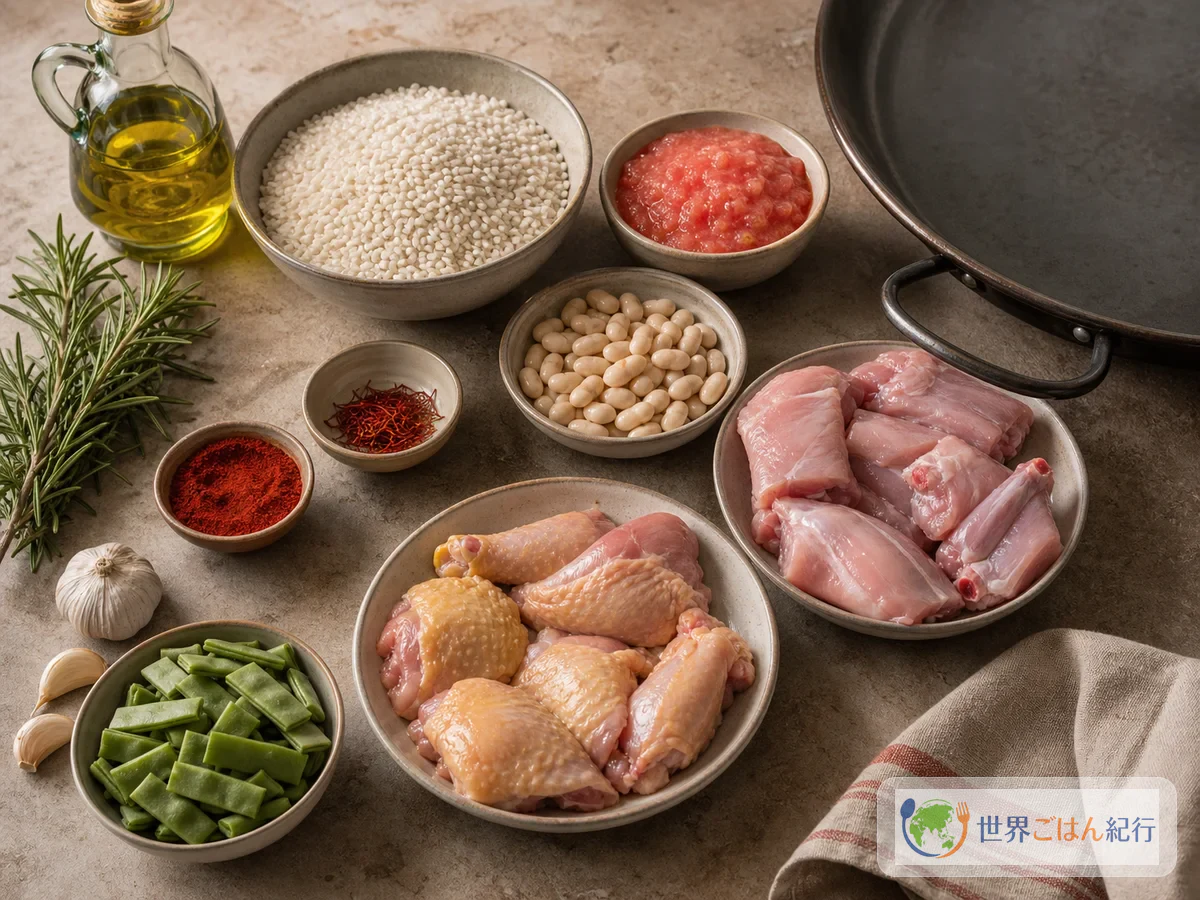
This recipe uses chicken. Cook poultry to an internal temperature of 165°F (about 74°C). If you use rabbit, cook it through to the bones as well. No seafood is used. If you adapt it with seafood, follow separate cautions, such as not eating shellfish that do not open.
Saffron and short-grain rice decide how paella-like the dish tastes. You can substitute other ingredients, but for the aroma from the first attempt, buy rice and saffron first.
Shop in this order: rice, meat, beans and aroma. Bomba or Valencia rice is ideal. If you cannot find it, start with other short-grain rice. Prioritize bone-in chicken, and do not hunt hard for rabbit. Flat green beans and white beans give it shape. Add saffron last, and the scent in the kitchen steps up a level.
Adding a big seafood set or chorizo from the first attempt makes the heat harder to control. More toppings release more liquid and thicken the rice layer. Learn to cook rice without moving it in a small pan first, then widen to seafood once you are comfortable. You can cook calmly on a weekend at noon.
Lemon is a matter of taste, but keep one on hand at home. When the salt seems weak or the oil feels heavy, one last squeeze brings the outline back. At a table gathered around the pan, that little lift is a comfort.
For a home skillet, choose one with a thick, wide, shallow base. A deep pot does not let moisture cook off easily, and the rice ends up close to pot-cooked rice.
Choosing Paella Ingredients and a Pan
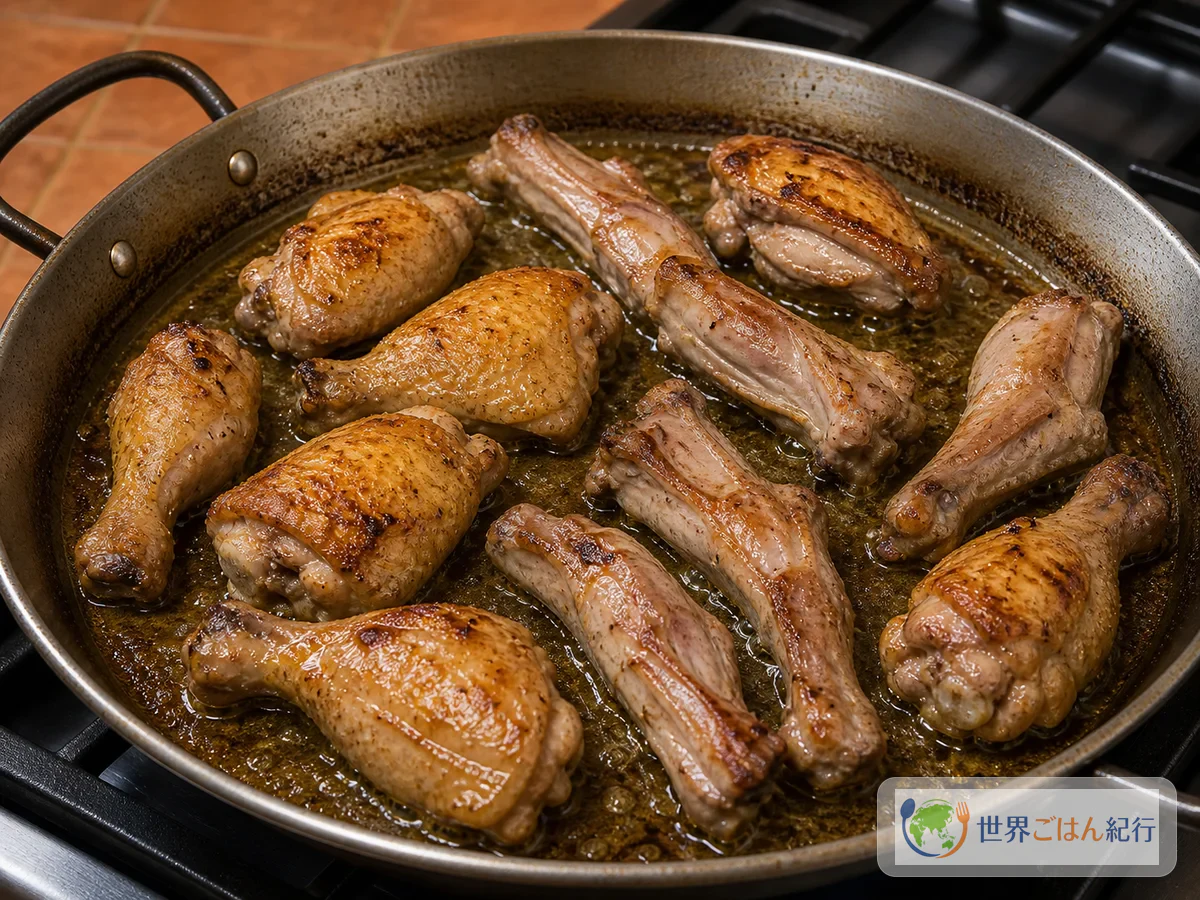
Rabbit is mild and gives savor from its bones, but it's hard to find in many places, and garrofón beans aren't a pantry staple either. If you can't get rabbit, use 1.75 lb (800 g) of bone-in chicken thighs or drumettes in total. Chicken alone is plenty tasty as long as you brown it deeply, and bone-in meat gives the broth savor even with a short simmer.
Rice
Bomba absorbs water well and resists breaking down. Other short-grain rice is easier to find but tends to turn soft and sticky, so it needs a little less water and a lighter hand.
Spanish rice and Bomba are often used unwashed. If you want to rinse other short-grain rice, rinse lightly and don't soak it, then dry it in a sieve for about 30 minutes. Rice that absorbs water before cooking breaks down easily in the pan, and rice added still wet turns sticky on the surface.
For 10.5 oz (300 g) rice, start with 3¾ cups (900 ml) for Bomba and 3½ cups (850 ml) for other short-grain rice, and add more partway if needed. Starting with less water fails less often.
The Pan
In a deep pot the rice layer gets thick, and the top turns hard while the bottom stays soft. If you have no special pan, use a skillet 12 inches (28–30 cm) across. A thin-bottomed skillet burns easily, so start checking the final socarrat after 1 minute.
If you buy a paella pan, one around 12 inches (30 cm) that fits a home burner is easiest to handle. A bigger pan looks good, but on a home stove the heat doesn't reach the edges, and only the center burns.
Method: Do Not Stir Once the Rice Is In
Paella leaves little room to taste and correct as you go. Stirring after the rice is in releases starch and makes it sticky, and also makes it harder to form the toasty layer at the bottom. Decide the flavor at the broth stage, before the rice goes in.
On a home gas flame, the times are 10 minutes browning meat, 12 minutes simmering the broth, 8 minutes high for the rice, 10 minutes low, and 1–2 minutes at the end to toast. Rice and pan thickness change the timing, so the first time, watch the liquid go down rather than the clock.
Socarrat and Common Paella Mistakes
The hardest word in paella is socarrat, the toasty layer of rice on the bottom of the pan. It isn't bitter black char. It's a thin, cracker-like layer where oil, starch and meat savor have toasted together, and it's the part everyone reaches for.
With ordinary short-grain rice, keep it unstirred after it goes in, don't turn the heat too low, and toast only briefly at the end. Even home rice can show real "paella-ness" that way.
Rosemary has a strong scent. If you add it at the start of simmering, the herb comes out ahead of the rice. Lay it on during the low-heat cooking of the rice, and remove it once the aroma rises. That leaves only the Valencian-style finish.
Serving, Variations and Leftovers
Paella is served in the pan. Move it to a platter and you break the rice layer and the toasty bottom. Put the pan in the middle of the table and serve from the edge. If someone asks for "a little of the bottom, please," you've succeeded.
Once you know the Valencian style, variations are easy. Keep the water ratio, leave the rice unstirred, and toast the bottom at the end. With that skeleton, you can change the ingredients freely.
Seafood Paella
Replace the meat-browning step with preparing the seafood. With shrimp, clams, mussels and squid, the key is not to overcook. Cook fish to 145°F (about 63°C). Shrimp and shellfish are done when the flesh turns white and opaque and the shellfish open. Do not eat shellfish that do not open.
Vegetable Paella
Without meat, use peppers, artichokes, mushrooms, green beans and white beans. The savor is weaker, so cook the tomato until its moisture is gone and make a rich vegetable stock. A little squeeze of lemon at the end lightens the oil and rice.
Reheating Leftover Paella
Refrigerate leftovers and finish them the next day. To reheat, spread the rice thin in a skillet, sprinkle over 1 tbsp water, warm on low, and finally drive off the moisture on medium. A microwave alone softens the rice evenly but makes socarrat hard to bring back.
FAQ
Can I put chorizo in paella?
You can, and it will taste good, but it becomes something other than Valencian paella. Chorizo's smoky aroma and fat are strong and hide the lightness of chicken, rabbit, beans and saffron. Enjoy it as a Spanish-style home rice dish if you like, but leave it out of your first Valencian paella.
Can I use turmeric instead of saffron?
The color gets close, but the aroma changes. Saffron gives a floral aroma and lingering finish even in small amounts, while turmeric has an earthy scent and, in excess, drifts toward curry. If you substitute, keep to one or two ear-pick scoops and accept that it's there for color.
Why not stir the rice partway?
Stirring releases starch from the surface of the rice and gives a risotto-like stickiness. In paella the rice cooks in broth, and at the end the moisture is driven off and the bottom toasted. Once you've spread the rice just after adding it, adjust the heat contact by turning the pan instead.
Can I make it without a paella pan?
Yes, with a shallow skillet. Deep pots and rice cookers drive off moisture differently and make socarrat hard to form. On induction the heat builds gently, so give the final toasting a bit longer and stop before it smells burnt.