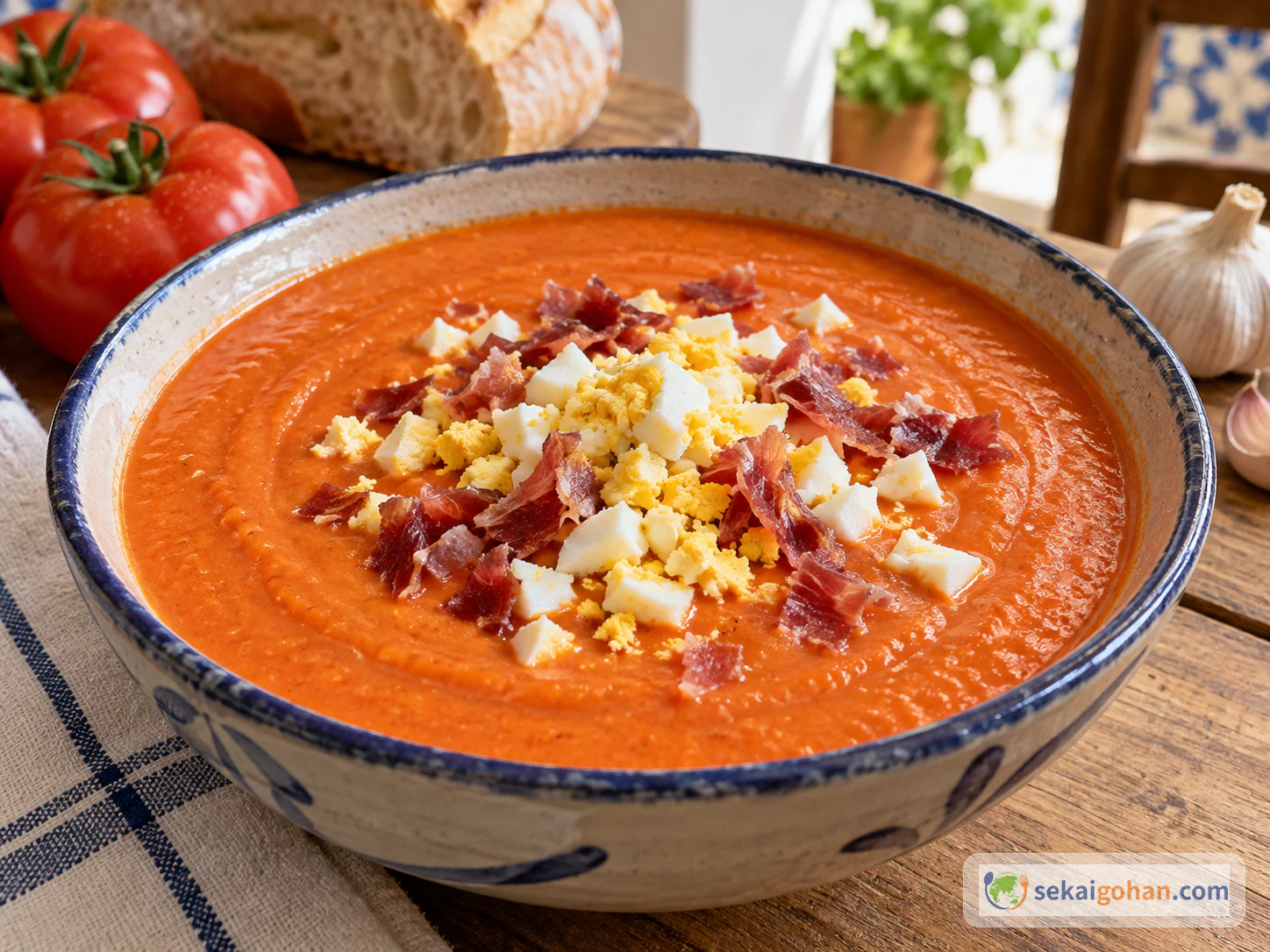
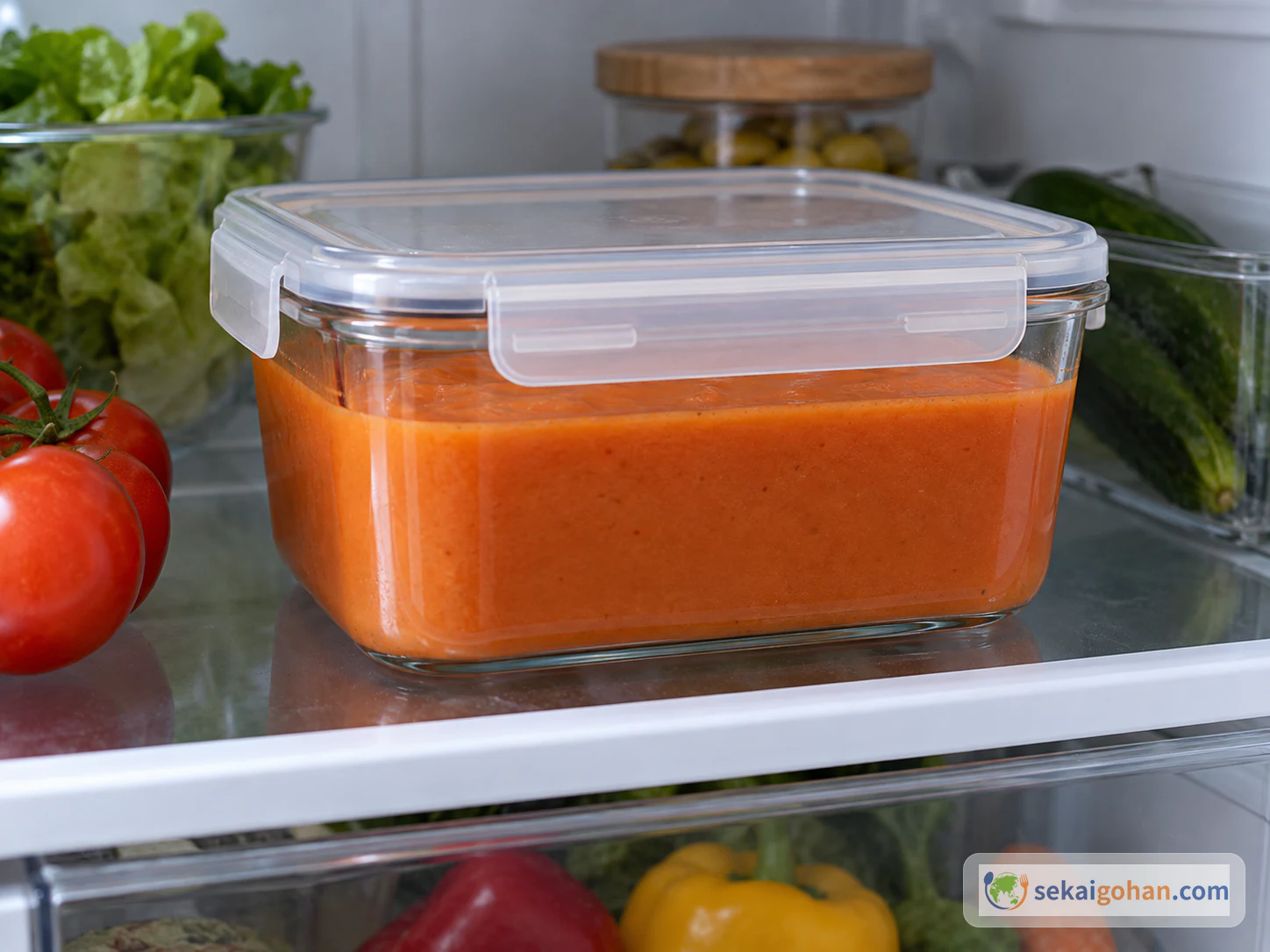
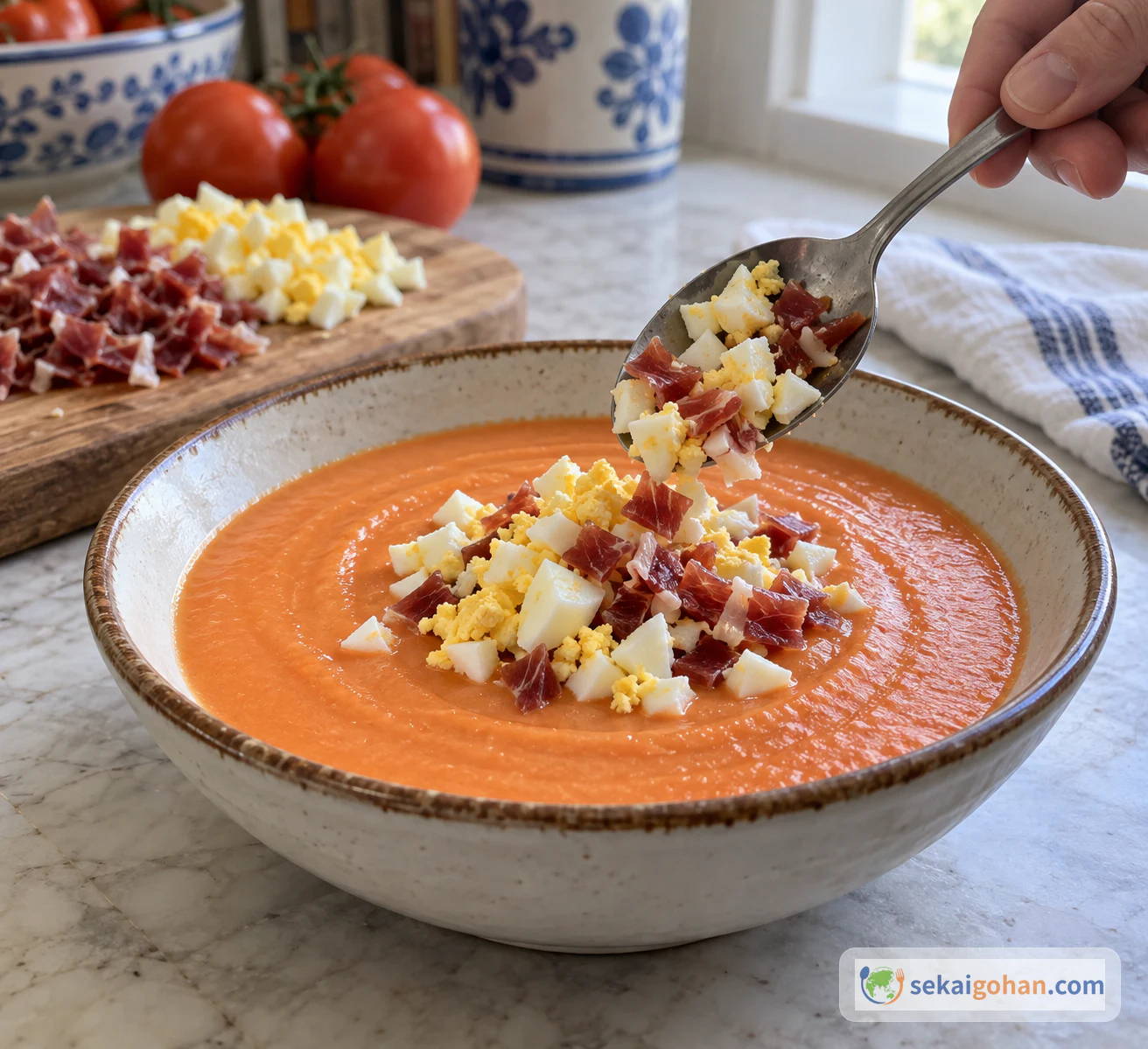
A bowl comes out of the refrigerator, deep red-orange and so thick that a spoon leaves a trail on the surface. On top go a little chopped white egg and a few small pieces of red ham. This is salmorejo cordobés, a creamy cold soup of tomato, bread and olive oil, and one of Córdoba's signature dishes. What surprises many first-time cooks is how much bread goes in. It doesn't float in the soup; it disappears into it and gives the soup its body.
Salmorejo in Córdoba and How It Differs From Gazpacho
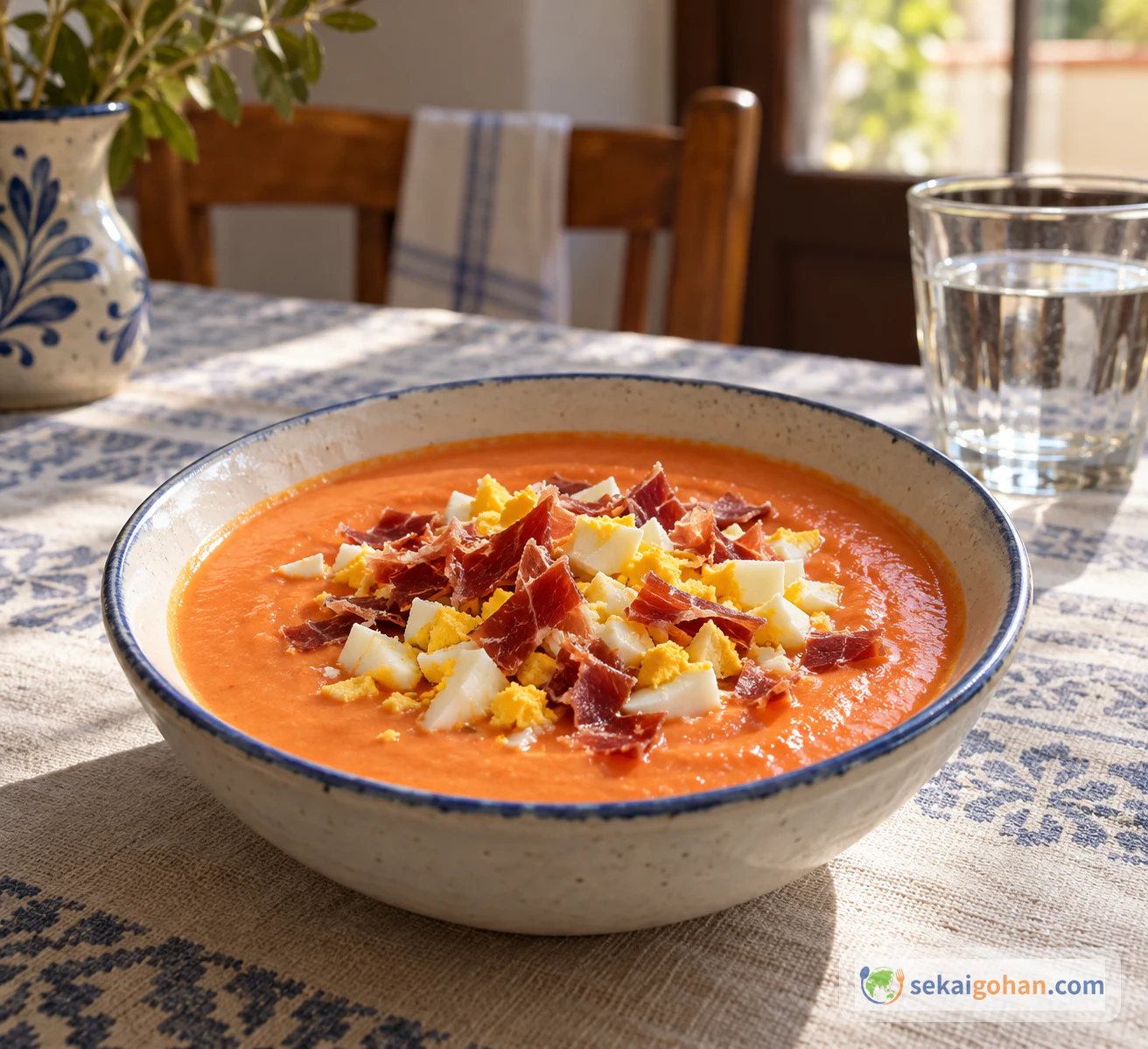
In Córdoba, salmorejo is served as a starter in bars, taverns and restaurants. At home it plays the same role: a modest bowl, well chilled, with egg and ham on top, before the rest of the meal. The base is only tomatoes, bread, olive oil, garlic and salt. The bread is the backbone of the soup, and the olive oil turns it into something you eat with a spoon.
The star isn't only the tomato. It's the balance of ripe tomato with the white crumb of the bread and the olive oil. That's why people in Córdoba pay so much attention to the bread, and why this recipe weighs the oil instead of pouring it freely.
Because both soups are cold, tomato-based and Andalusian, salmorejo is often compared with gazpacho. This salmorejo has no cucumber, no green pepper, no vinegar and no added water. The bread and oil are blended with strained tomato into a dense, creamy soup. Some gazpachos include bread too, but set this salmorejo beside a typical vegetable-heavy gazpacho and the short ingredient list and the weight of bread and oil make the difference clear.
This is salmorejo cordobés, the cold tomato and bread dish of Córdoba in Andalusia. The word "salmorejo" is also used in other parts of Spain for different preparations, such as sauces for stewed dishes. That is why the full name includes "cordobés."
Ingredients
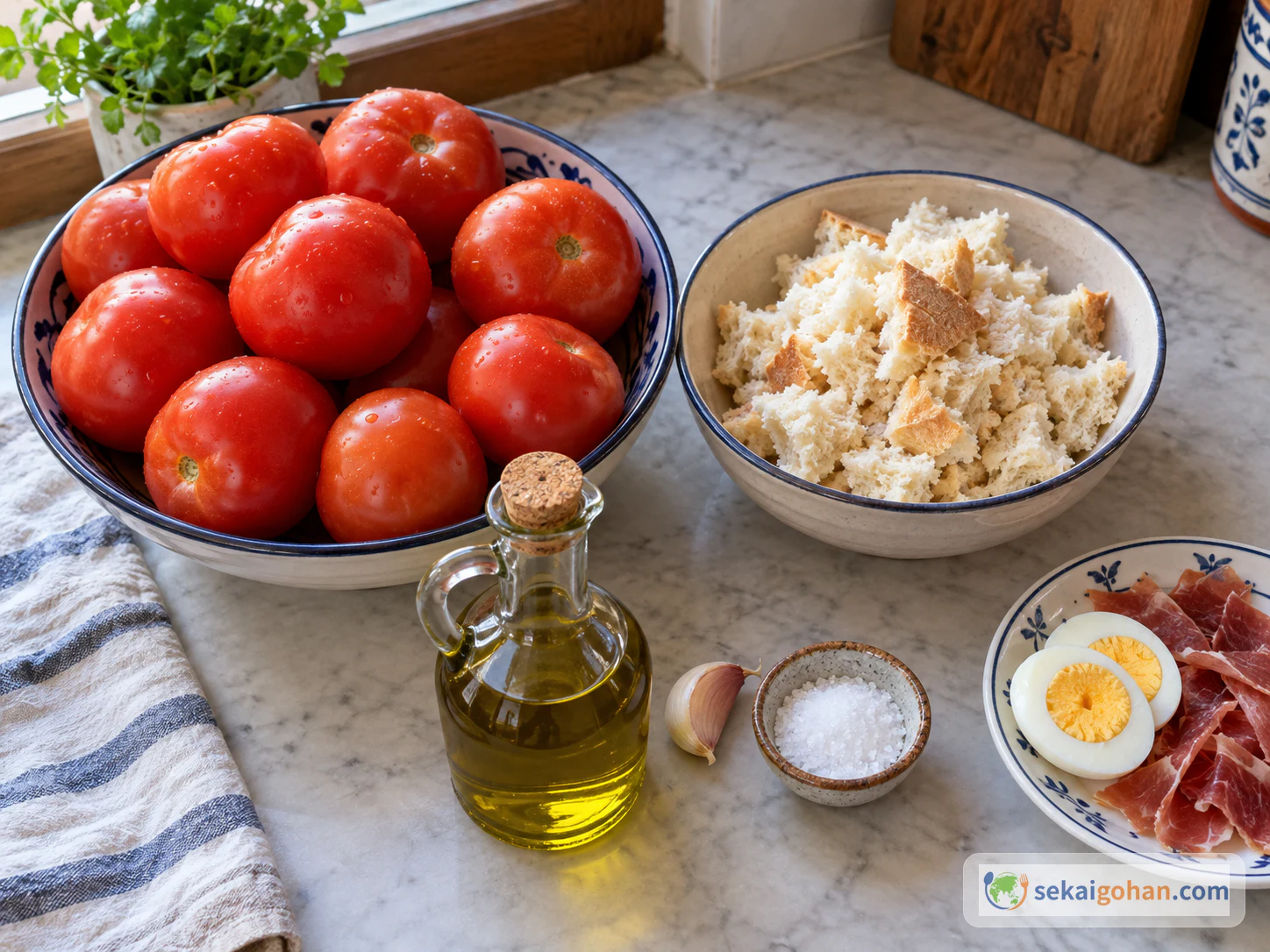
The 2.25 lb (1 kg) of tomatoes is the amount you start with, before straining. You do not need to top the strained purée back up to 2.25 lb (1 kg).
This recipe contains wheat (gluten) from the bread and egg in the garnish. Check the labels of the bread and the ham you buy for allergen and shared-facility information.
Equipment
- Blender (a powerful one makes it easier to blend the tomato and bread evenly)
- Fine-mesh sieve
- Large bowl to catch the strained purée
- Cutting board and knife
- Kitchen scale (the oil, bread and salt are given by weight)
- Clean container with a lid, for chilling
Choosing Bread, Tomatoes and Garlic for Salmorejo
Bread. Telera is a bread from Córdoba with plenty of white crumb (miga). If you can't find it, use the crumb of a dense white loaf or country-style bread, and expect a slightly different texture. If you remove the crust, weigh the bread after trimming. Soft, airy sandwich slices absorb liquid differently, so pick a dense loaf, and use the bread as it is, without soaking it in water or milk.
Tomatoes. Choose ripe tomatoes with good flavor and aroma for eating raw; any variety will do. Watery tomatoes give a looser soup, and more bread or oil won't fix that without changing the recipe. Pear-shaped tomatoes with their excess water removed make a thicker soup, a variation worth trying once you know the base.
Garlic. Montalbán garlic, from a town in Córdoba province, is the traditional choice. Elsewhere, ordinary fresh garlic works. Cloves vary in size and sharpness, so if raw garlic is too strong for you, pick a smaller clove.
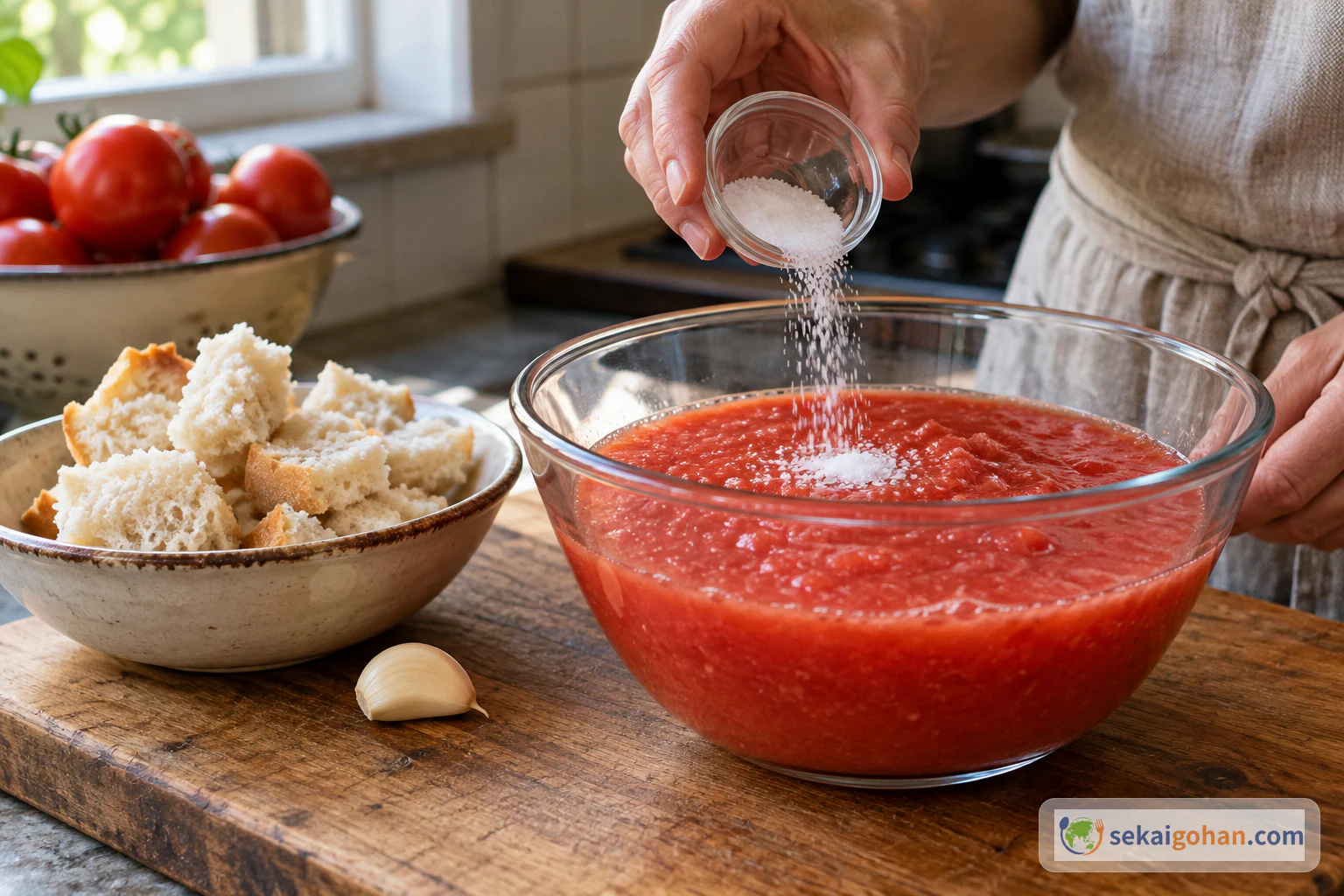
Olive oil and salt. The oil isn't cooked, so you will taste it; choose an extra-virgin olive oil whose aroma you like. When you salt, remember that the ham on top is salty too.
Method: Blend, Strain, Blend Again, Chill
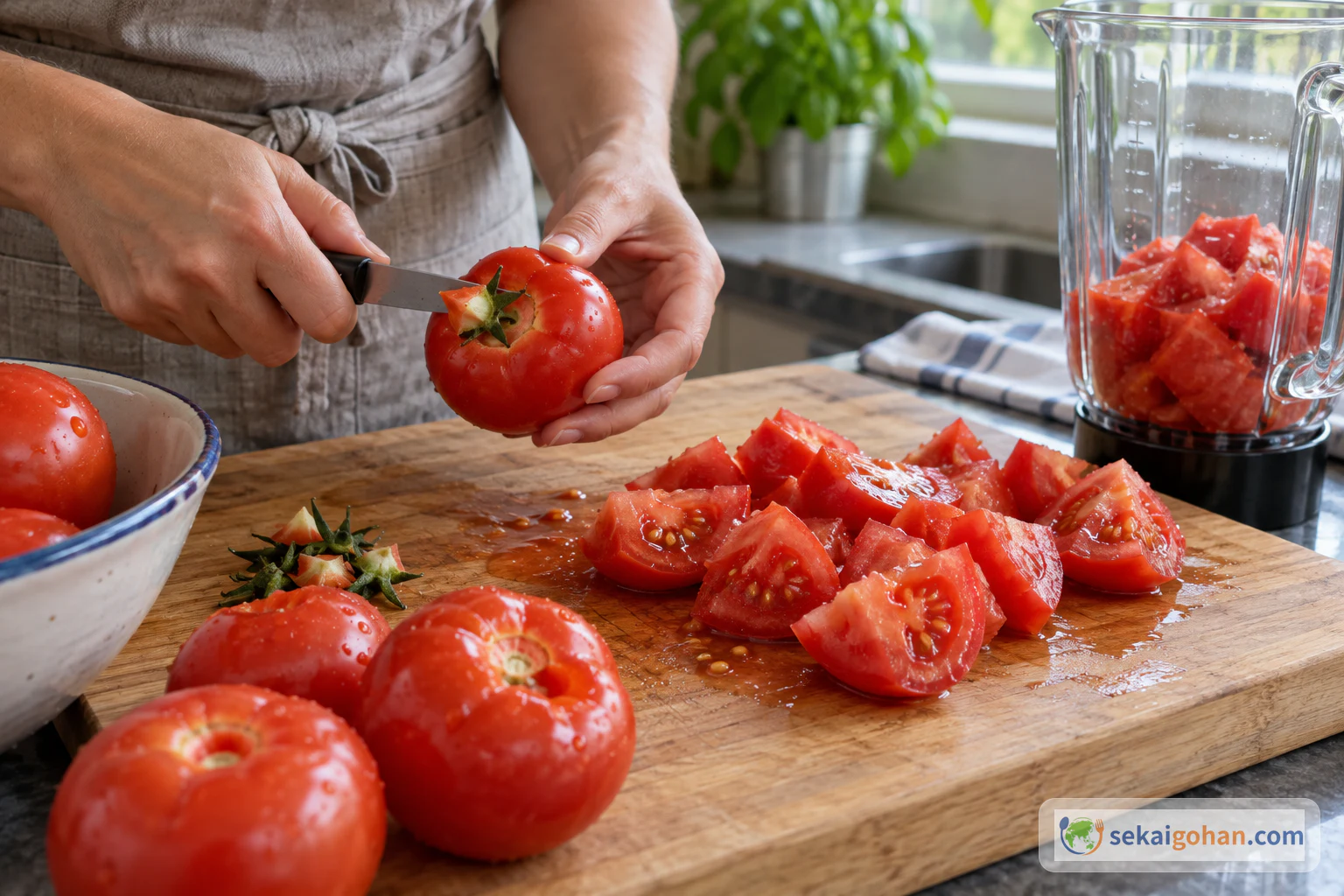
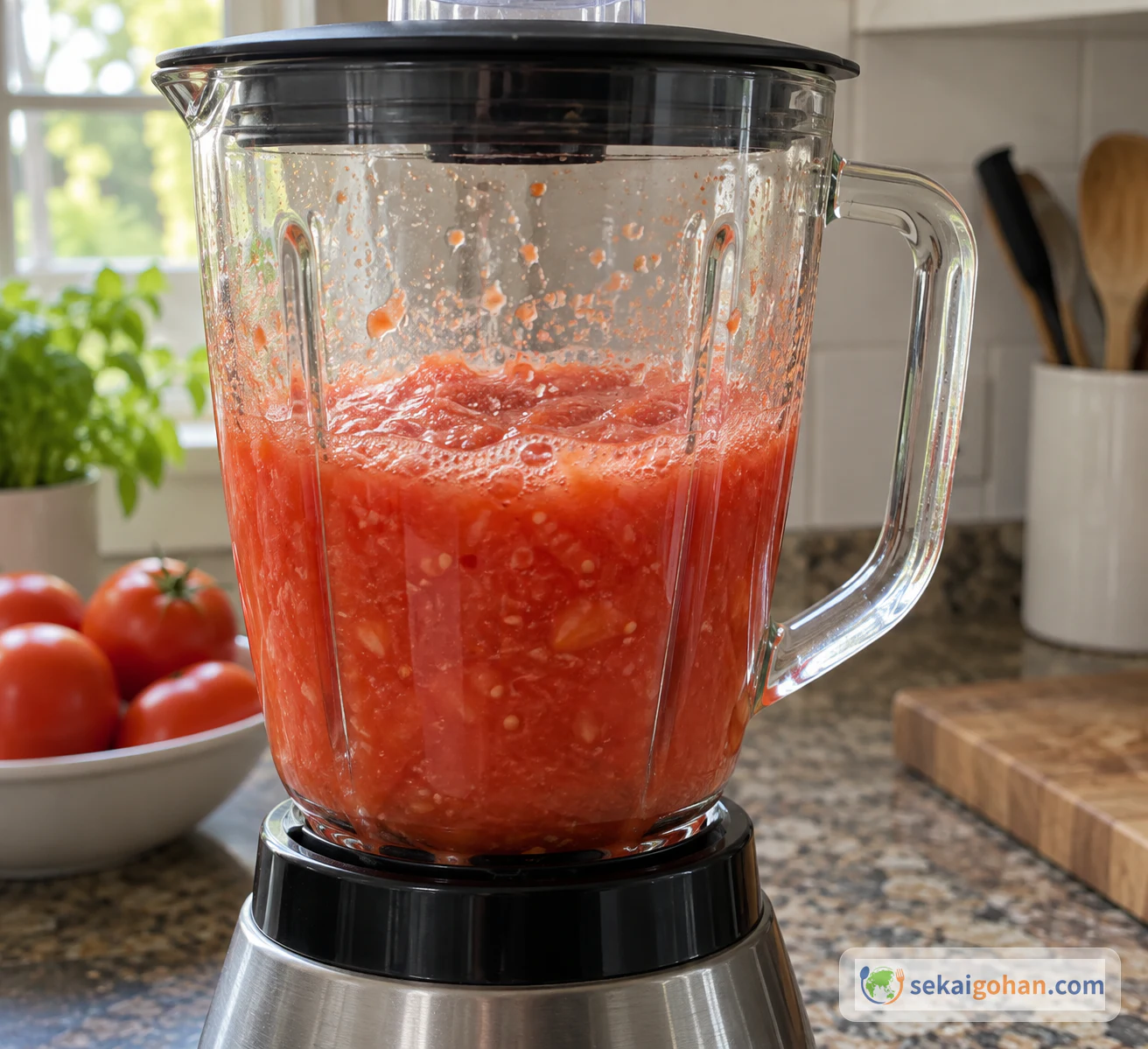
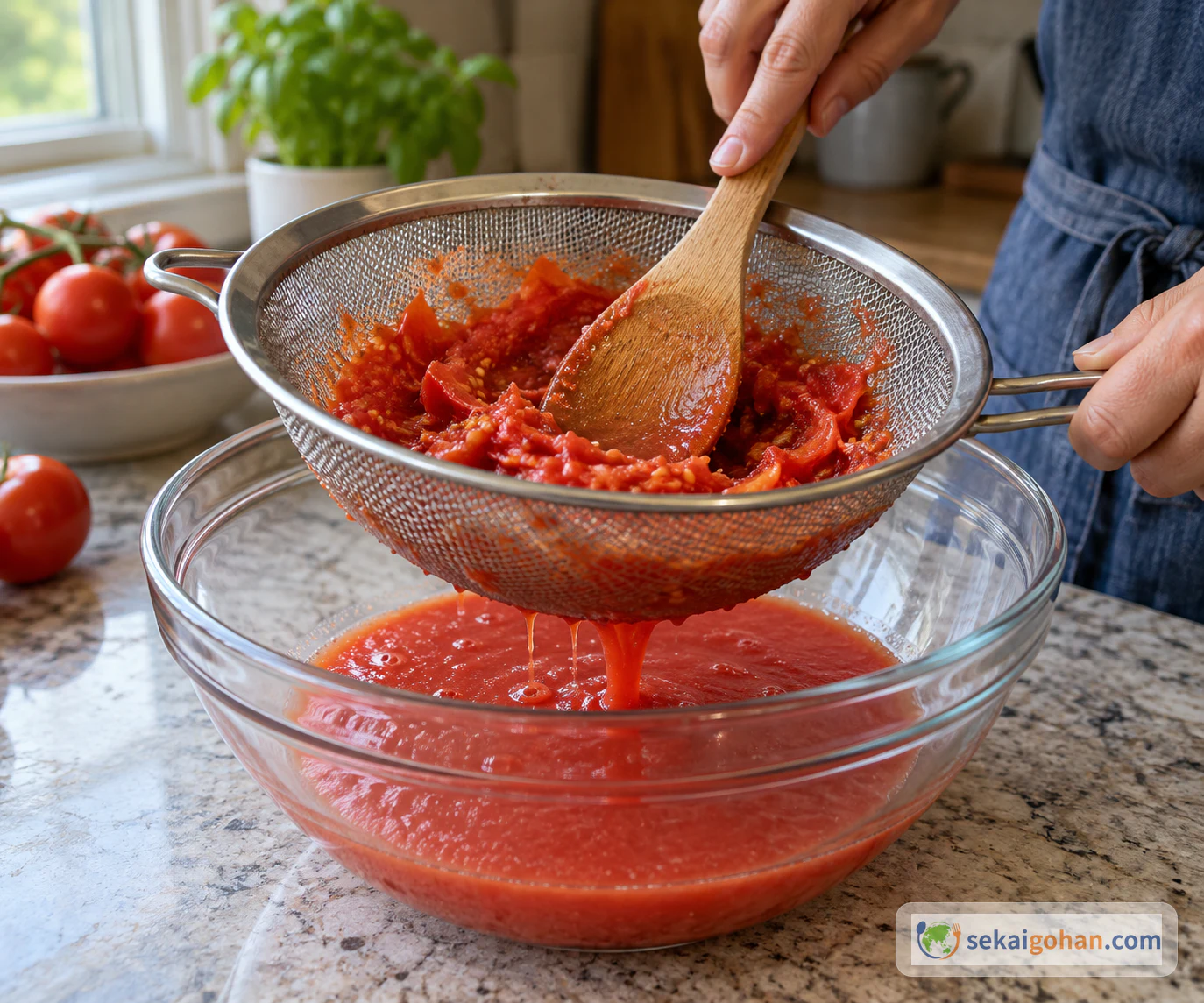
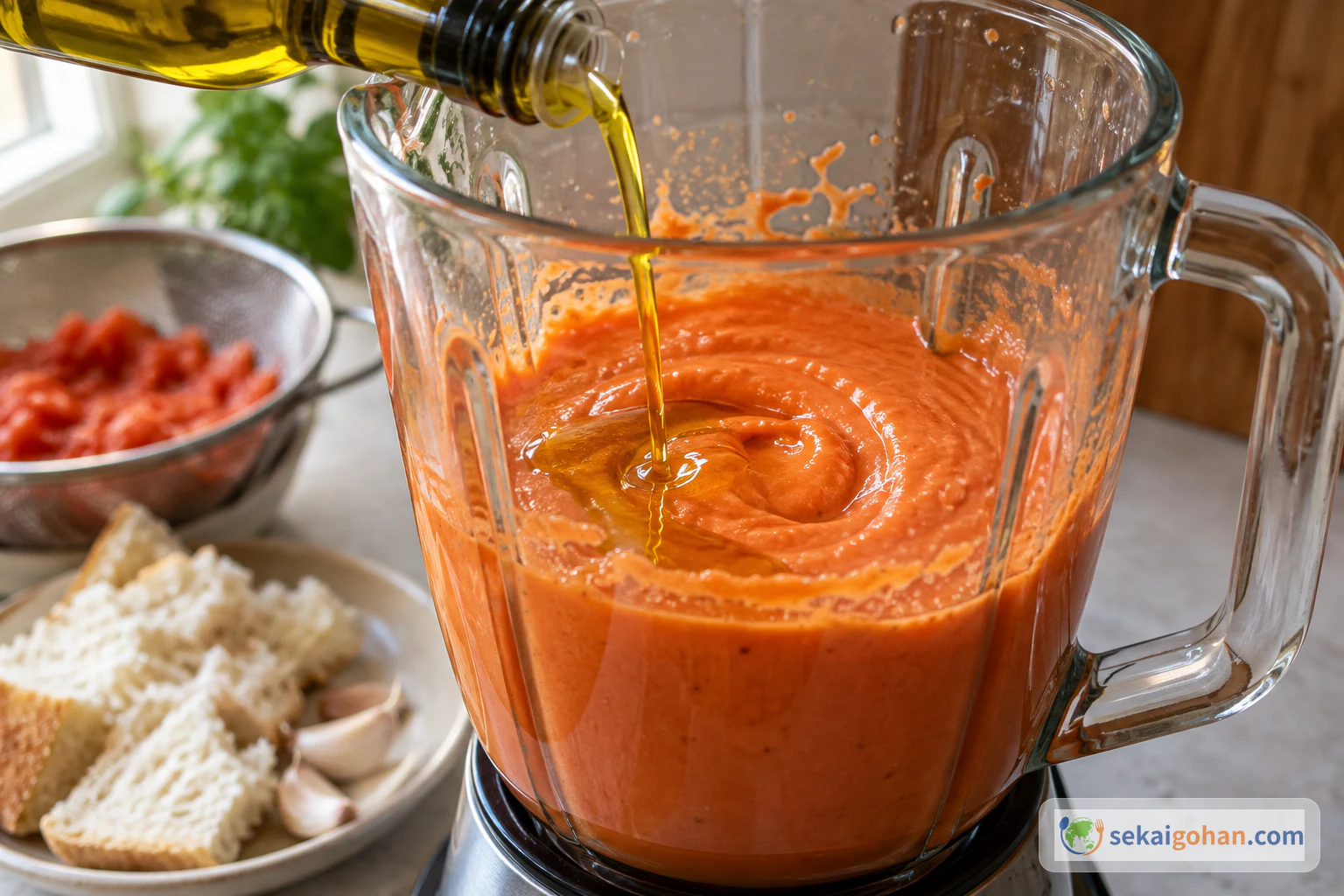
Blend the tomatoes first, strain out the skins and seeds, and only then add the bread, oil, garlic and salt for a second blend. Nothing is cooked at any stage.
Use your blender according to its manufacturer's instructions, and judge each stage by how it looks.
Salmorejo is made from raw vegetables and is never heated, so do not treat it as a cooked or sterilized food. For dishes eaten cold, follow these rules:
- Use clean hands, utensils and work surfaces, and keep raw and ready-to-eat foods from cross-contaminating.
- Refrigerate the salmorejo promptly after making it.
- Do not leave it at room temperature for more than 2 hours.
- Keep it at 41°F (5°C) or below.
If you carry it somewhere, keep it cold and don't let it sit out for long. Refrigerate it promptly and eat it soon.
Fixing Grainy, Loose or Sharp Salmorejo
Most problems come from the bread, the tomatoes or the blending, so try these fixes before changing the amounts.
| Problem | Likely reason | What to try |
|---|---|---|
| Grainy texture | Not blended long enough, or bread with a coarse, uneven crumb | Blend longer, within your blender's instructions. Next time, choose a denser white bread |
| Specks of skin or seed | The sieve was coarse, or too much purée was pushed through at once | Strain again through a finer sieve, in smaller batches |
| Looser than expected | Watery tomatoes, or a light, airy bread | Chilling firms it somewhat. Next time, choose riper, more flavorful tomatoes and a denser bread |
| Garlic too strong | The clove was large or particularly sharp | Next time, choose a smaller clove |
| Warm after blending | Heat from the blender motor | Refrigerate until thoroughly cold before serving |
| Too salty with the ham | Salt in both the soup and the topping | Use less ham |
Garnishes and Other Versions of Salmorejo
The traditional garnish is chopped egg and jamón serrano. If you don't eat pork, top it with egg only. Other cured hams can stand in for jamón serrano, though their saltiness and aroma differ. Blend tomatoes, oil, garlic and salt without bread and you get a different dish, not salmorejo.
Other versions of salmorejo exist around Córdoba, each with its own proportions:
| Version | What it uses | How it differs from this recipe |
|---|---|---|
| This recipe | Tomatoes 2.25 lb (1 kg), telera 7 oz (200 g), EVOO 3.5 oz (100 g), Montalbán garlic 1 clove, salt 10 g | Tomatoes blended and strained first, then blended again with the rest. Garnished with egg and jamón serrano |
| Priego de Córdoba | Ripe tomatoes 2.25 lb (1 kg), green pepper 1.75 oz (50 g), hard wheat bread 14 oz (400 g), garlic 2 cloves, EVOO ½ cup (150 ml) | Includes green pepper, more bread and more oil, and lets the ingredients rest for 2 hours before blending |
| Telera version with more oil | Telera 7 oz (200 g), tomatoes 2.25 lb (1 kg), EVOO ½ cup (150 ml), garlic 1 clove, salt | More oil, measured by volume. Chilled, then topped with egg and ham |
| Córdoba bread-and-oil version | Bread, oil and garlic, without fixed amounts for bread and oil | The bread is soaked in oil and garlic from the night before |
For more dishes from Spain, see the Spain page.
Frequently Asked Questions
Does salmorejo include green pepper or vinegar?
Not this one. Some other versions do include green pepper, such as the Priego de Córdoba version.
How many days does salmorejo keep?
Salmorejo is a raw, uncooked dish. Refrigerate it promptly in a clean, covered container, keep it at 41°F (5°C) or below, don't leave it at room temperature for more than 2 hours, and eat it soon.
Should I drizzle olive oil on top?
All the olive oil goes into the blend, and the soup is finished with egg and ham only.