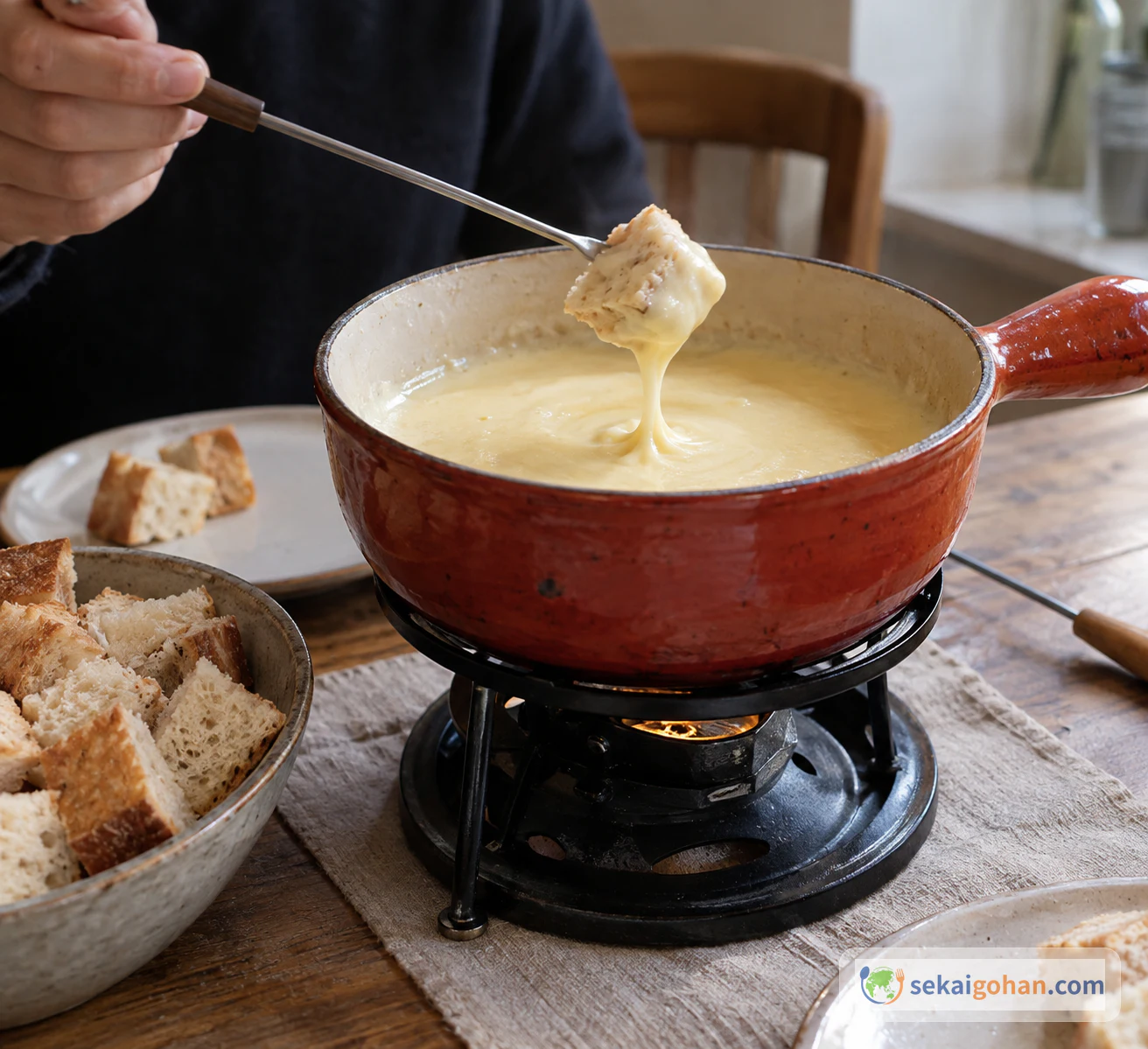
Picture a winter night in the Alps: a half wheel of cheese leaning toward the fire, its cut face bubbling, then scraped in one soft fold over a skin-on boiled potato. Melted raclette tastes toasty and nutty, with a rich, creamy depth, and against the fluffy potato it makes a bite that warms you right through. This is raclette, the herders' dish of Valais in Switzerland. It stands alongside Belgium's carbonnade as one of Europe's famous dishes. It is also one of the easiest to bring home to your own table.
Raclette and the Alpine Herders of Valais
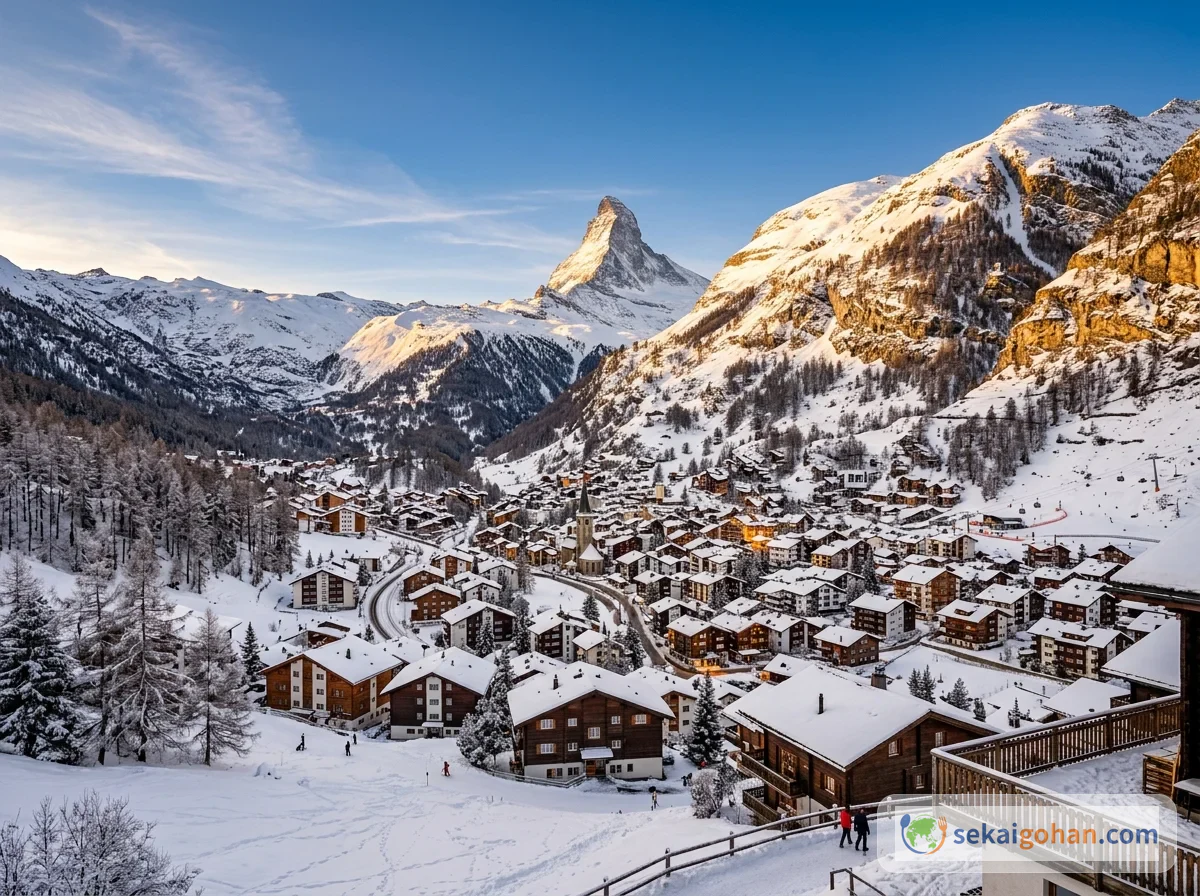
Valais is a Swiss canton of steep Alpine slopes, where pastures cling to the mountainsides and the summer grazing tradition is still alive. The name raclette comes from the French "racler," to scrape: you melt the cut face of a cheese toward a fire, scrape it off with a knife and put it on boiled potatoes. The method is simple, and that simplicity runs deep in Swiss food culture.
"Raclette" is the name of both a cheese and a dish. A traditional cow's-milk cheese of Valais (a wheel about 12 inches (30 cm) across and weighing up to 13.25 lb (5–6 kg)) is cut in half, the cut face is held to a heat source to melt, and the cheese is scraped off with a knife and eaten. Today, tabletop raclette grills are common at home parties.
A mountain meal of the Alps
For centuries, people in the Alpine region around Valais have practiced "Alpaufzug," taking cattle up to the high pastures (alps) for the summer. Herders spending months on the mountain carried foods that keep: cheese, potatoes, dried meat. Those are exactly the ingredients of raclette. Turning the cut cheese to the fire and scraping the melted part onto potatoes was a rational and delicious way to eat, and it became established as raclette. High in calories but rich in calcium and protein, it made good mountain nourishment for the Swiss winter cold.

"Raclette du Valais" holds Swiss AOP (protected designation of origin) status. AOP raclette cheese is made only from the raw milk of designated farms within Valais, using traditional methods, and must be aged at least 3 months.

The raclette evening
From November to March, the Swiss often host "Raclette-Abend," or raclette evenings. Friends and family gather around a grill set in the middle of the table, and everyone melts cheese at their own pace while they talk. It is as much a social event as a meal: waiting for the cheese makes natural pauses in the conversation, and the mood stays relaxed. As with Denmark's smørrebrød, where guests build open-faced sandwiches of many kinds, the making is part of the pleasure.
Choosing Raclette Cheese and Substitutes
What sets raclette cheese apart is the balance between how it flows when melted and how much flavor it keeps. A hard cheese like Parmesan is too firm to melt easily. Raclette sits at a good midpoint, running smoothly over the potatoes without losing its taste.
If you can't find it, Gruyère is the closest substitute: it is also Swiss and melts in a similar way. French Reblochon or Comté work too. Gouda (aged 3 months or more) is the most convenient option, and its melted texture is close to raclette. Processed cheese melts quite differently and isn't suitable.
How Far to Brown Raclette
The thin crust that forms on the surface of raclette cheese is the most delicious part. The Maillard reaction brings a nutty toastiness and caramel sweetness. Wait another 30 seconds to 1 minute after the cheese starts to bubble, until the surface turns golden brown. If it turns black it gets bitter, so judging it right at the edge is where skill shows.
Serving Raclette: Drinks, Variations and Pairings
The Swiss have a distinctive habit with drinks. With the meal, pour a dry white wine, ideally a Valais Fendant (made from the Chasselas grape); if you can't get one, Sauvignon Blanc or Chablis is close. Finish with a hot herbal tea after the meal. A dry sake also goes surprisingly well.
Raclette variations

For a vegetable-rich raclette, steam broccoli, cauliflower, carrots and bell peppers alongside the potatoes, and put them in the mini pan with the melted cheese before bringing it to the table.
For seafood raclette, grill shrimp, scallops and baby corn on the upper plate of the grill and combine them with the cheese in the mini pan. Plump shrimp and rich raclette pair surprisingly well, and it is outstanding with white wine.
You can also skip the potatoes and pour the cheese over thick slices of country bread or baguette (thick-cut toast works too), where the toasty bread meets the melting cheese. Or go luxurious and pour it over a burger patty. The cheese flavor is far stronger, and once you've had it, going back to an ordinary cheeseburger is hard.
Nutrition (per serving, of four servings)
| Nutrient | Amount |
|---|---|
| Calories | 580 kcal |
| Protein | 24 g |
| Fat | 1.25 oz (34 g) |
| Carbohydrates | 1.5 oz (42 g) |
| Fiber | 4 g |
| Sodium | 820 mg |
Dishes to make alongside
- How to make carbonnade: ingredients and aromas of the same region.
- Waterzooi: ingredients and aromas of the same region.
- Risotto alla ticinese: a rice dish of southern Switzerland, for comparing the Italian-speaking table with this mountain cheese dish.
- Pasticada: ingredients and aromas of the same region.
More European cheese and traditional dishes
- Carbonnade flamande: Belgian beer stew, from Europe's winter stew culture
- Moussaka: Greek gratin of eggplant and béchamel
- Khachapuri: Georgian cheese bread from the Caucasus
- Goulash: Hungarian stew-soup, Central European winter food
- Svíčková: Czech beef in cream sauce
FAQ
Q1. What if I don't have a raclette grill?
A broiler or toaster oven works. Arrange the potatoes on a heatproof dish, lay cheese slices on top and bake 3 to 5 minutes until melted. You can also lay aluminum foil on a hot plate and put the cheese on it. If you have a fire, melt a block of cheese toward it just as they do in Valais.
Q2. How many grams of cheese per person?
Plan on 5.5–7 oz (150–200 g) per person. That sounds like a lot, but raclette is eaten slowly over 3 to 5 rounds, so it is just right. The first time, start at 5.5 oz (150 g) per person and add more if it isn't enough.
Q3. Can children eat it?
Yes. Raclette is cheese and potatoes with nothing spicy, so it suits children well. Melting their own cheese in a mini pan is fun, too, and turns dinner into a family event.
Sources
- McGee, H. (2004). On Food and Cooking: The Science and Lore of the Kitchen. Scribner.