Waterzooi: Belgian Creamy Chicken and Vegetable Stew from Ghent

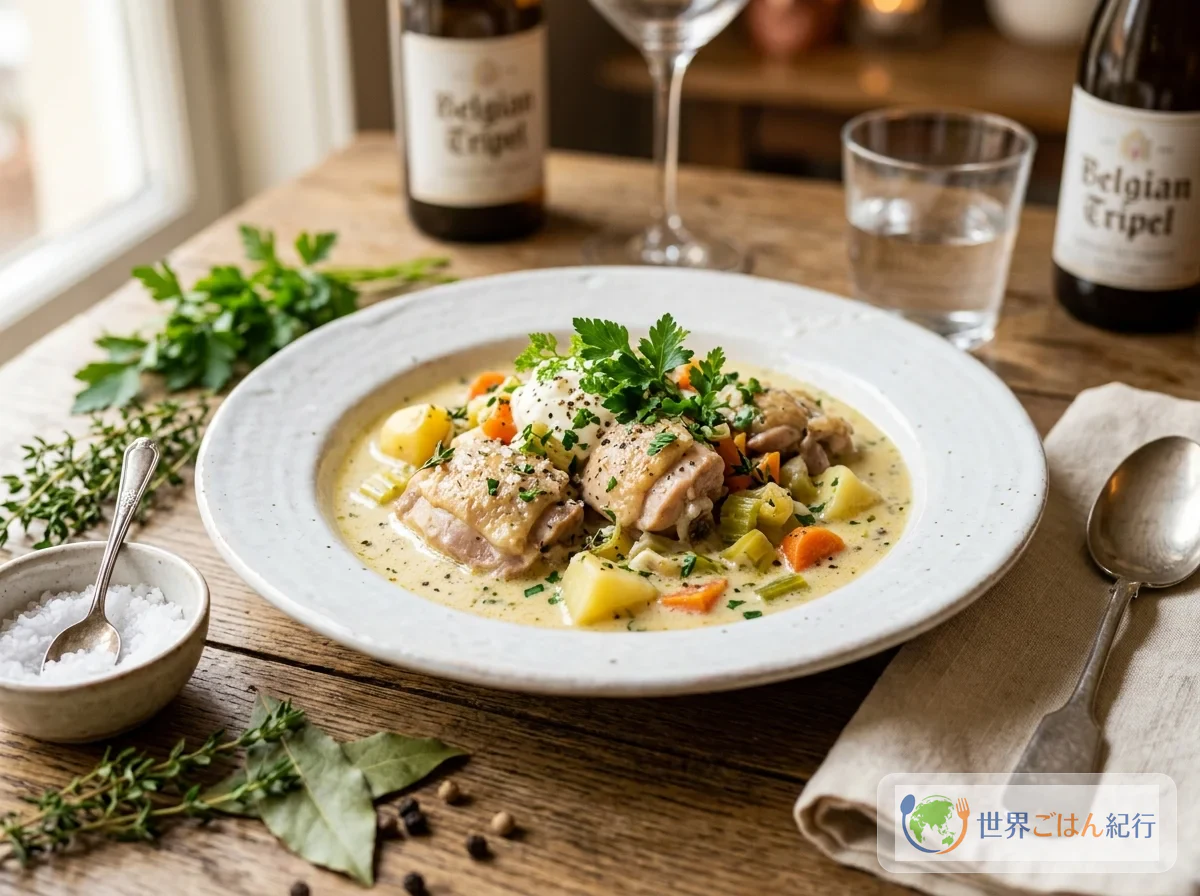
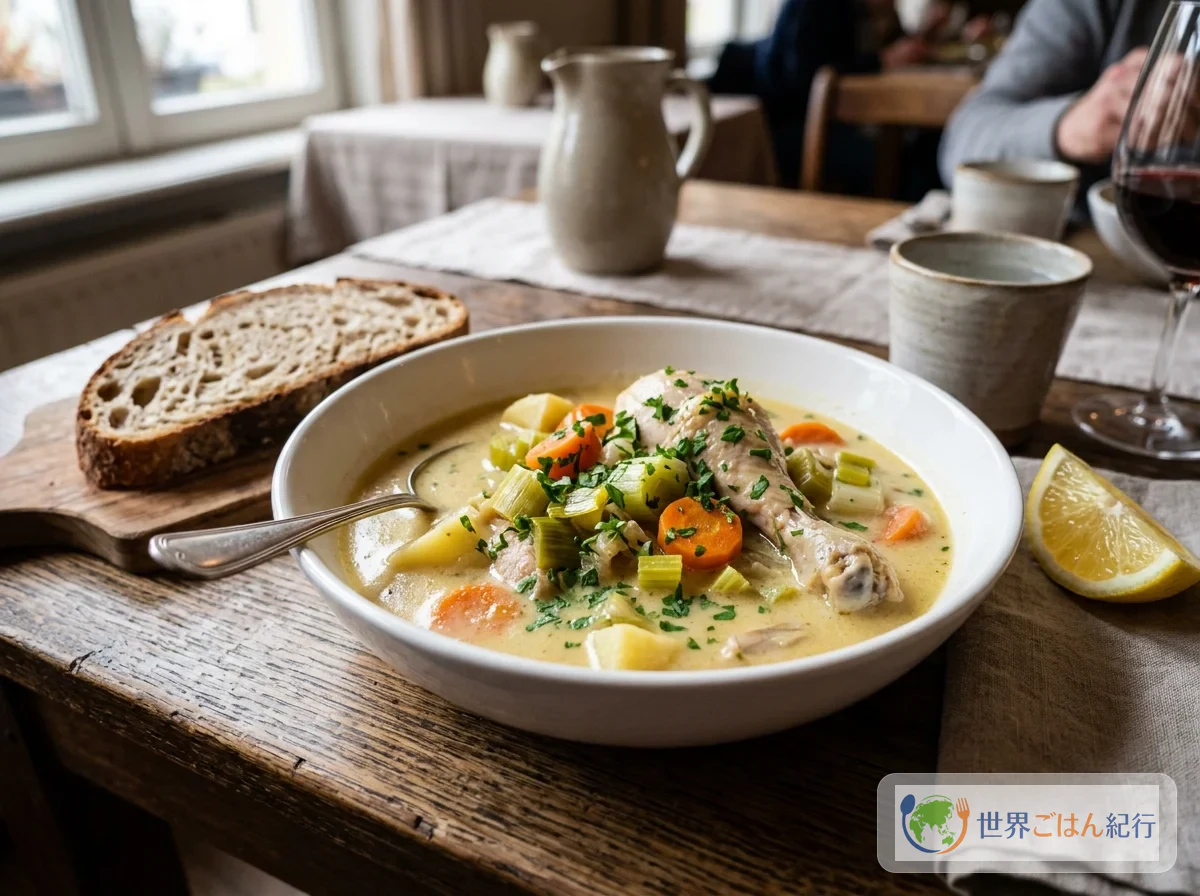
Belgian waterzooi: chicken and root vegetables in a golden cream broth, scattered with green parsley
Prep
20 min
Cook
45 min
Total
1 hr 5 min
Serves
4 servings
Level
Intermediate
Cuisine
Belgian

How to make waterzooi, the Flemish stew from Ghent: bone-in chicken thighs and root vegetables simmered in chicken stock, then finished with an egg yolk and cream liaison. Includes tempering tips, fish and vegetarian variations, and the dish's history.

Cooking flow

Cooking steps

STEP11 / 6

Season the chicken

5 min

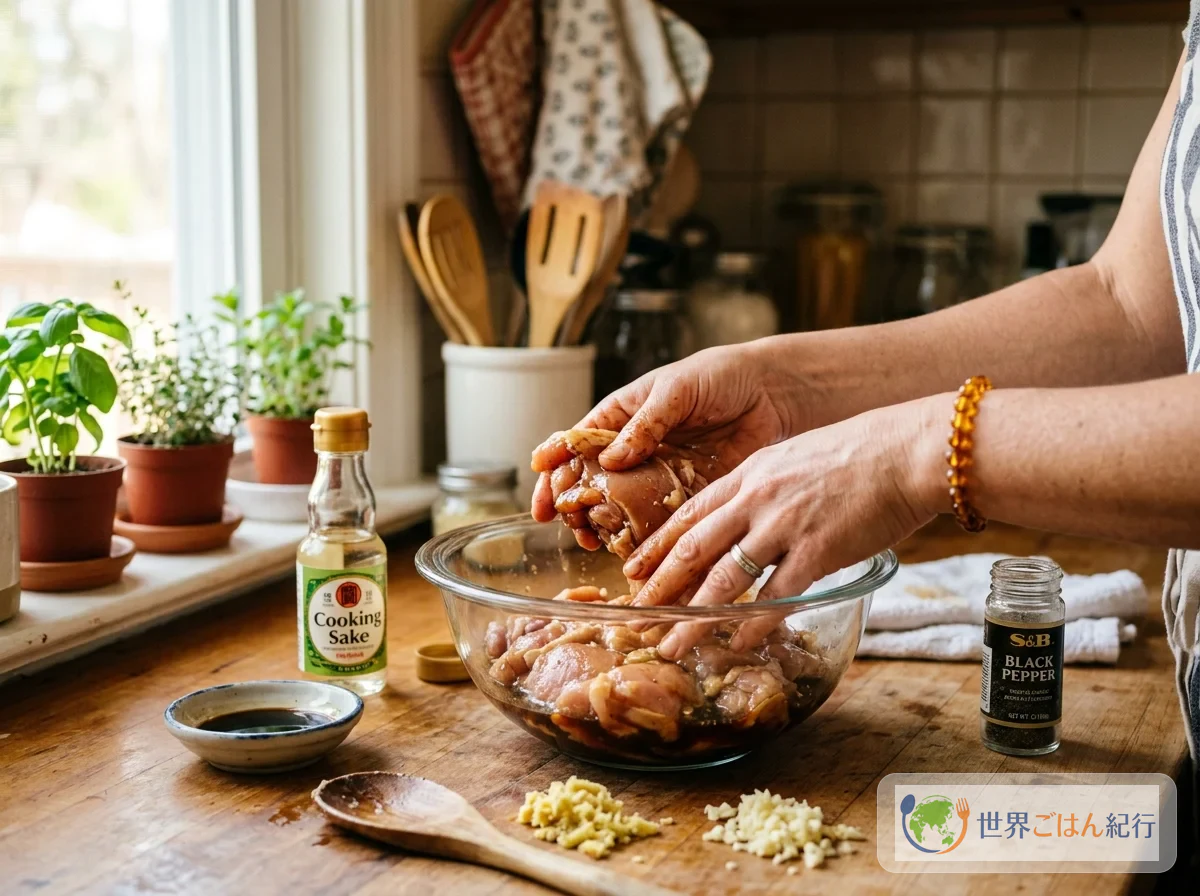
Sprinkling salt and white pepper over chicken thighs
Seasoning the chicken thighs. Salt and white pepper go evenly over the surface. Cooking on the bone is the Flemish way

Sprinkle the chicken thighs with 1/2 tsp salt and white pepper and leave for 5 minutes. If the chicken is bone-in, find the joint and cut each leg in two, thigh and drumstick, so the bones release more flavor into the broth. If it is boneless, cut it into 4–5 cm (about 2 inches) chunks.

STEP22 / 6

Brown the chicken

8 min

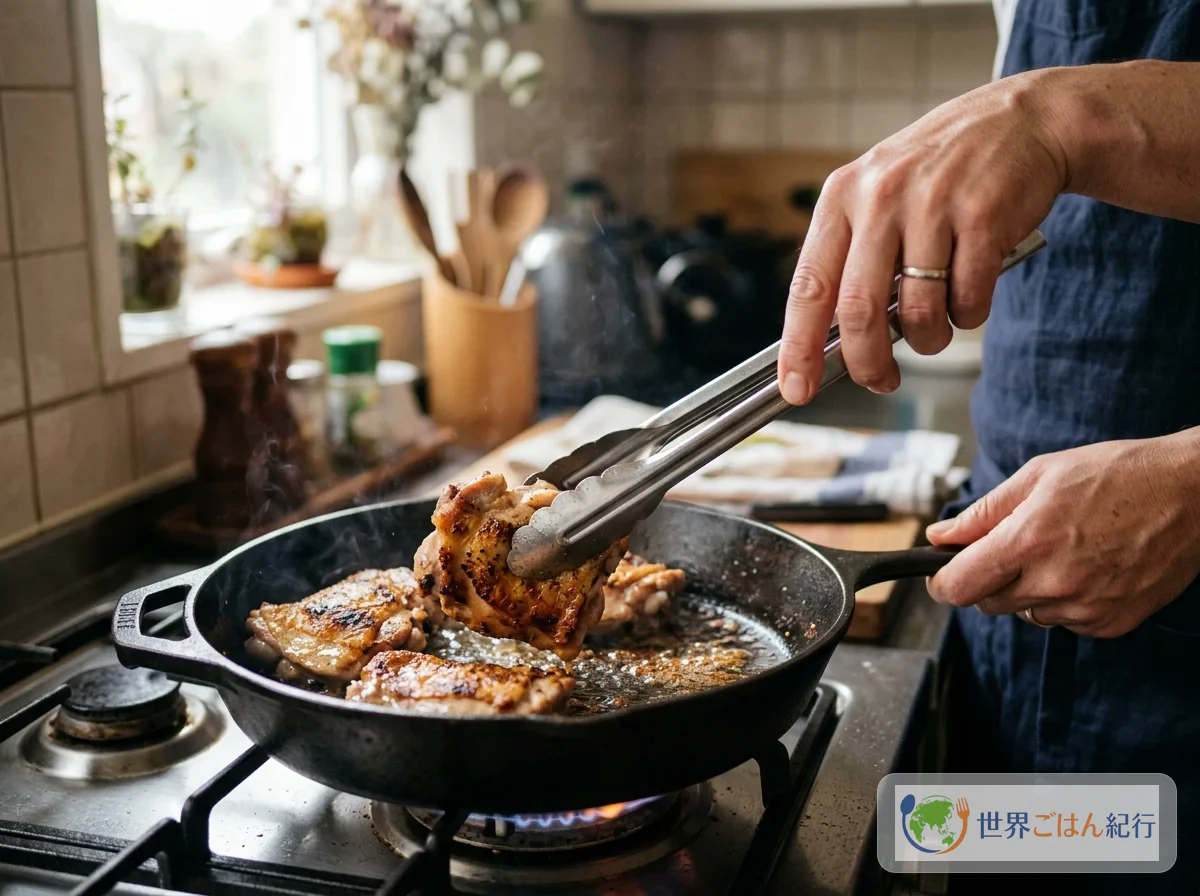
Browning chicken in butter in a pot
Searing the chicken in butter. The golden crust is the foundation of the broth's richness. Color only the surface without burning it

Melt the butter in a large pot over medium heat (a heavy pot such as a Dutch oven is ideal) and brown the chicken for 4 minutes per side. The chicken does not need to cook through. It is enough for the surface to turn golden brown. Take the chicken out of the pot for now.

Those browned bits (the Maillard reaction) are the source of the broth's deep flavor. As with Hungarian goulash, skipping this step makes the soup flat.

STEP33 / 6

Sauté the vegetables

5 min

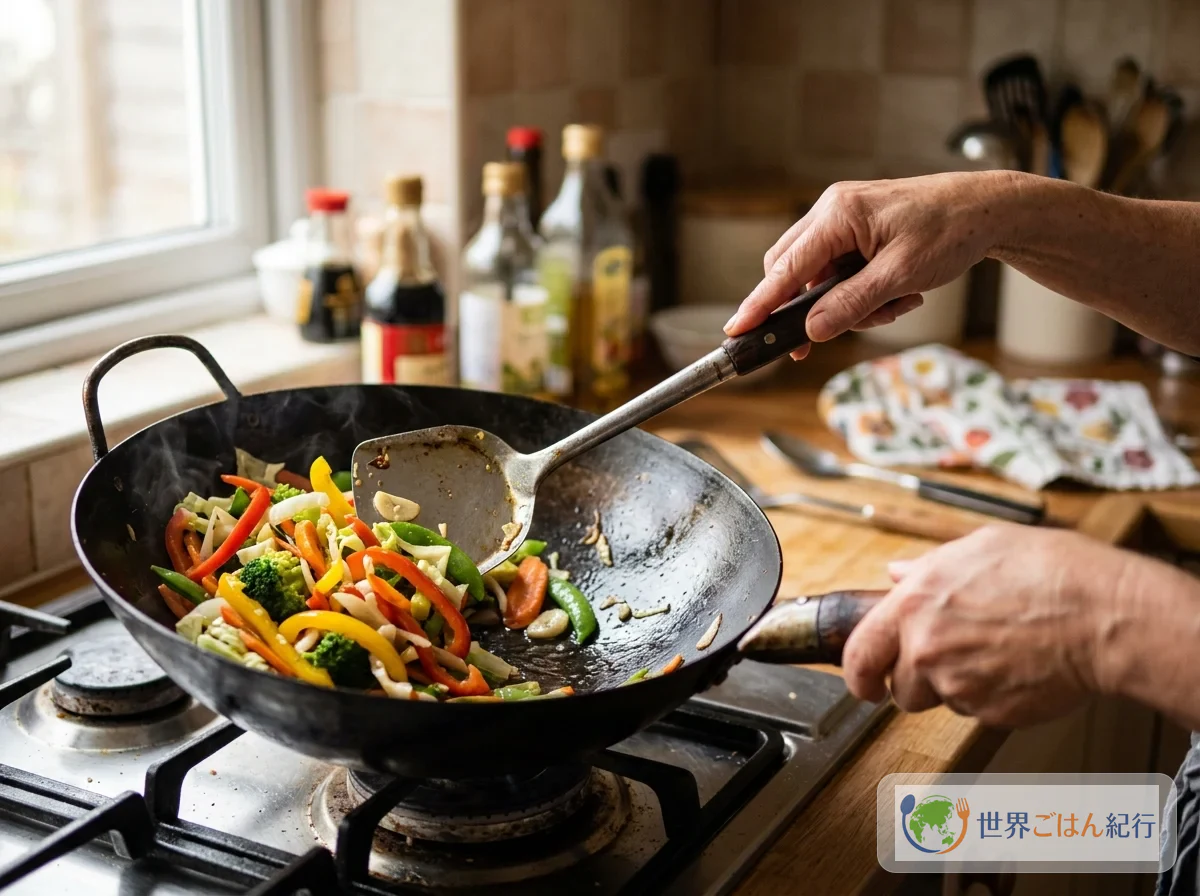
Sautéing leeks and carrots in a pot
Sautéing the vegetables. The sweet aroma of leeks mixes with the freshness of celery. The white wine dissolves the browned bits on the bottom so no flavor is lost

Add a little more butter to the same pot (wipe out any burnt bits with a paper towel), add the sliced onion, and sauté for 3 minutes. When it turns translucent, add the leeks, carrots and celery and sauté for 2 minutes.

When the sweet smell of the leeks rises, pour in ½ cup (150 ml) white wine and let it boil for 1 minute, scraping up the browned bits from the bottom of the pot with a wooden spoon. This is deglazing.

A little extra effort: deglazing

The brown bits stuck to the bottom of the pot are concentrated flavor. After adding the wine, scrape the bottom carefully with a wooden spoon. When those bits dissolve into the liquid, plain chicken soup turns into deep, rounded waterzooi. In Belgian carbonnade you deglaze with beer, but in waterzooi white wine is the classic.

STEP44 / 6

Simmer in the stock

30 min

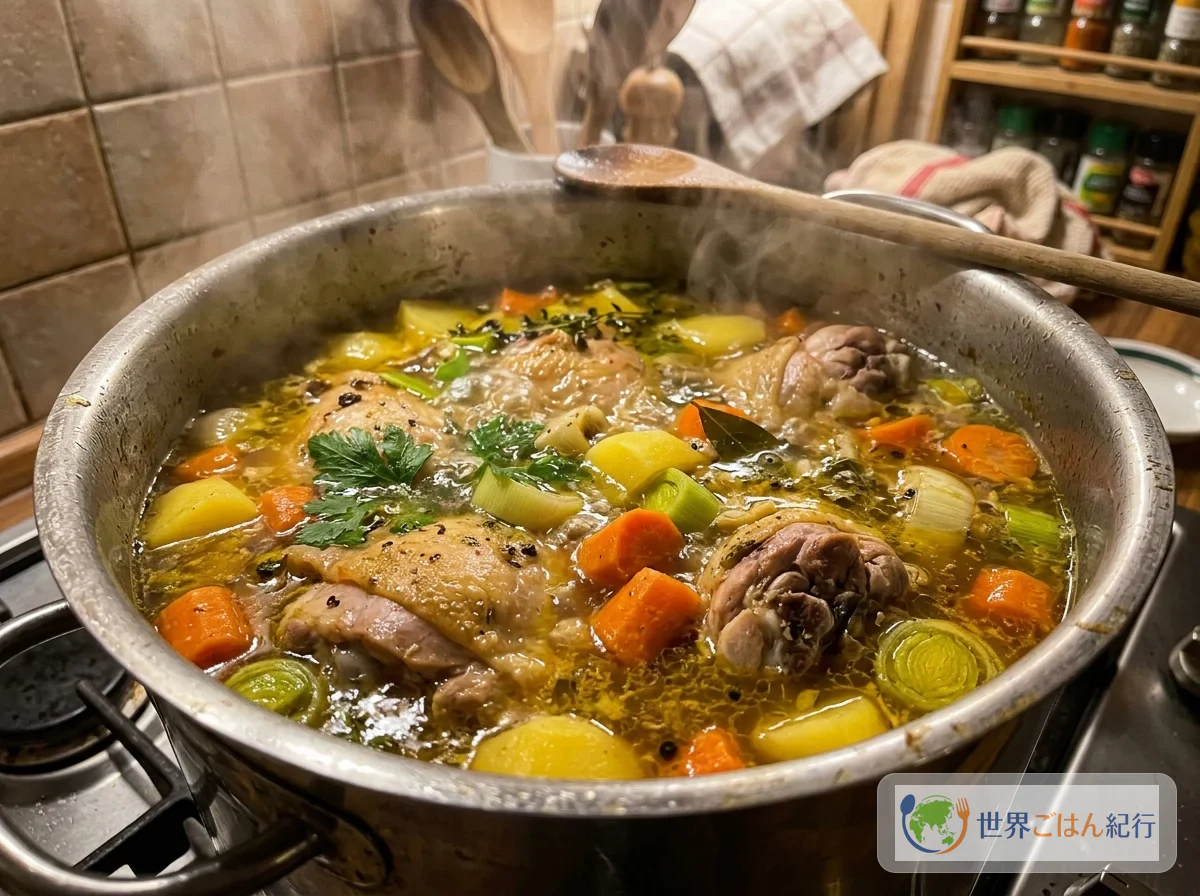
Chicken simmering in stock in a pot
Simmering in chicken stock. The chicken and root vegetables sink into the golden broth and bubble gently. Covered for 30 minutes to draw out the flavor

Return the chicken to the pot and pour in the chicken stock. Add the cubed potatoes too. Bring to a boil over high heat, then lower the heat, cover, and simmer for 30 minutes.

Keep the lid closed as much as possible during simmering. The circulating steam keeps the chicken moist. The chicken is done when a skewer pushed into it releases clear juices.

STEP55 / 6

Finish with the liaison (egg and cream)

3 min

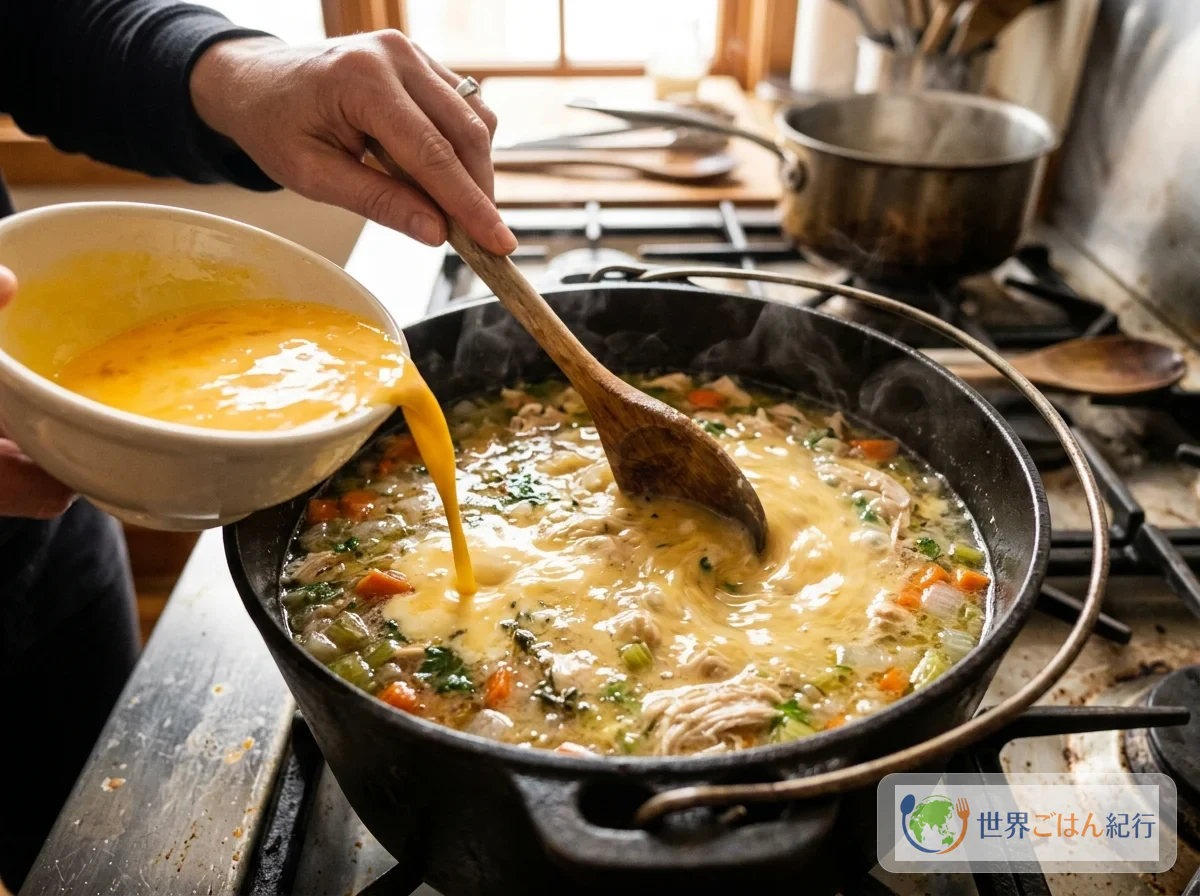
The moment the liaison goes into the broth
Finishing with the liaison. The golden mixture of egg yolk and cream flows into the broth. Stir slowly with a wooden spoon and never let it boil. This moment is the heart of waterzooi

In a bowl, whisk 3 egg yolks and ¾ cup (200 ml) cream for about 30 seconds. The streaks of yolk should disappear, the mixture should be a uniform pale yellow, and it should fall from the whisk in a thin ribbon.

With the pot off the heat, take out 2 ladles of broth and add them to the liaison bowl a little at a time, stirring (tempering). Raising the temperature of the yolks slowly prevents curdling.

Pour the warmed liaison back into the pot and stir slowly with a wooden spoon over low heat for 2 minutes. Never let it boil. When the broth has thickened and turned a pale golden color, turn off the heat. Add 1 tbsp lemon juice and adjust the seasoning with salt.

STEP66 / 6

Plate and serve

5 min

Finished waterzooi in a deep bowl
The finished waterzooi. Pale golden cream broth fills a deep bowl with chunks of chicken and root vegetables. Green parsley and a lemon slice accompany it, with thick bread alongside

Place 1–2 pieces of chicken in the center of each deep bowl and arrange the potatoes, carrots and leeks around them so the dish has height. Ladle in plenty of broth so it covers about 70% of the ingredients and the tops still show. Scatter chopped flat-leaf parsley and a little white pepper over the top.

In Flanders it is traditionally served with thick slices of bread (a round country loaf) to dip in the broth. A baguette or sourdough works best at home.

0 / 0
Ingredients

Ingredients

1 / 2

Main ingredients

Ingredient Amount Substitutes & notes
Chicken thighs (bone-in) 1.75 lb (800 g) (4 pieces) Bone-in is best. If you use boneless, make the stock stronger
Carrots 2 Thinly sliced on the diagonal
Leeks 2 Cut into 0.5 inches (1 cm) rounds. 2 spring onions (scallions, thick white parts) work as a substitute
Celery 2 stalks Thinly sliced on the diagonal
Potatoes 2 Cut into 1 inch (2 cm) cubes. A waxy variety is recommended
Onion 1 medium Thinly sliced
Butter 1.5 oz (40 g) Unsalted
Chicken stock 3¼ cups (800 ml) Bouillon granules dissolved in water also works
Dry white wine ½ cup (150 ml) Cooking sake can stand in, but salt carefully
Leeks are the key to waterzooi

Leeks are the quiet star of Flemish cooking. If you can't find them, use the white parts of 2 thick scallions or spring onions. These are sharper than leeks, so sprinkle them with salt, leave them for 5 minutes, and rinse them in water for a closer flavor.

2 / 2

Liaison (the egg and cream finish)

Ingredient Amount Substitutes & notes
Egg yolks 3 Bring to room temperature first
Heavy cream ¾ cup (200 ml) Preferably 35% fat or more
Lemon juice 1 tbsp Added at the end
Salt 1 tsp Adjust to taste
White pepper 1/4 tsp Black pepper is fine too
Flat-leaf parsley 3 tbsp Finely chopped, for finishing
0 / 0

When the pot comes to the table, waterzooi looks like a pale golden cream soup. Take a spoonful, though, and you find chicken thighs that fall off the bone, sweet concentrated carrots and leeks, and floury potatoes all melting into the creamy broth. A "liaison" of egg yolk and cream gives the whole pot body and richness, and fresh parsley keeps it from feeling heavy. It comes from Ghent, in Belgium's northern region of Flanders, and it is one of the country's proudest traditional dishes. Belgium is famous for beer, yet this one contains none: if Belgian carbonnade flamande is the great beer braise, waterzooi is the great cream braise.

Waterzooi and Ghent

A Flemish "water stew"

Ghent is an old city that still looks medieval, with stone buildings lining its canals, and it is a center of Flemish food culture. Waterzooi is its signature dish. The name comes from the Flemish for "water stew" (water = water, zooien = to boil), and that humble name suggests it began as everyday food for fishermen and farmers: fish from the Ghent canals put in a pot with vegetables from the fields and boiled in water.

A canal in the old town of Ghent, Belgium
Along a canal in Ghent. Medieval stone buildings reflect in the water, hinting at the depth of this city's food culture. Waterzooi was born from fish caught in these canals

The oldest versions used freshwater fish such as pike, carp and eel. Chicken became the standard from the 19th century onward, and in Ghent today the chicken version is by far the most common, so "Gentse waterzooi" (Ghent-style waterzooi) usually means chicken. Both are real waterzooi.

From fisherman's pot to refined soup

Over time the dish was refined. Butter and cream were added, the egg yolk liaison was introduced, and white wine came into use. A "fisherman's pot" became a refined soup.

The liaison comes from French sauce technique. Flanders borders francophone Wallonia and has exchanged ideas with French cooking for centuries. Egg yolk lecithin acts as a natural emulsifier, holding water and fat together, which is why waterzooi tastes creamy without being too heavy.

Belgian food beyond beer and frites

Most people think of Belgium as chocolate, waffles and beer, but the braises of Flanders have a style of their own, combining French refinement with Dutch practicality. Carbonnade flamande carries the strength of Belgian beer; waterzooi carries the elegance of cream. Together they are the front and back of Flemish cooking.


Ingredients (serves 4)

Temperature control of the liaison is the hardest part

Waterzooi succeeds or fails on the liaison. If you pour the egg yolk and cream mixture straight into very hot broth, the eggs curdle and turn grainy. Take out 2 ladles of broth, stir them into the liaison a little at a time (tempering) to raise the temperature of the yolks slowly, and only then return it to the pot. Always take the pot off the heat first.
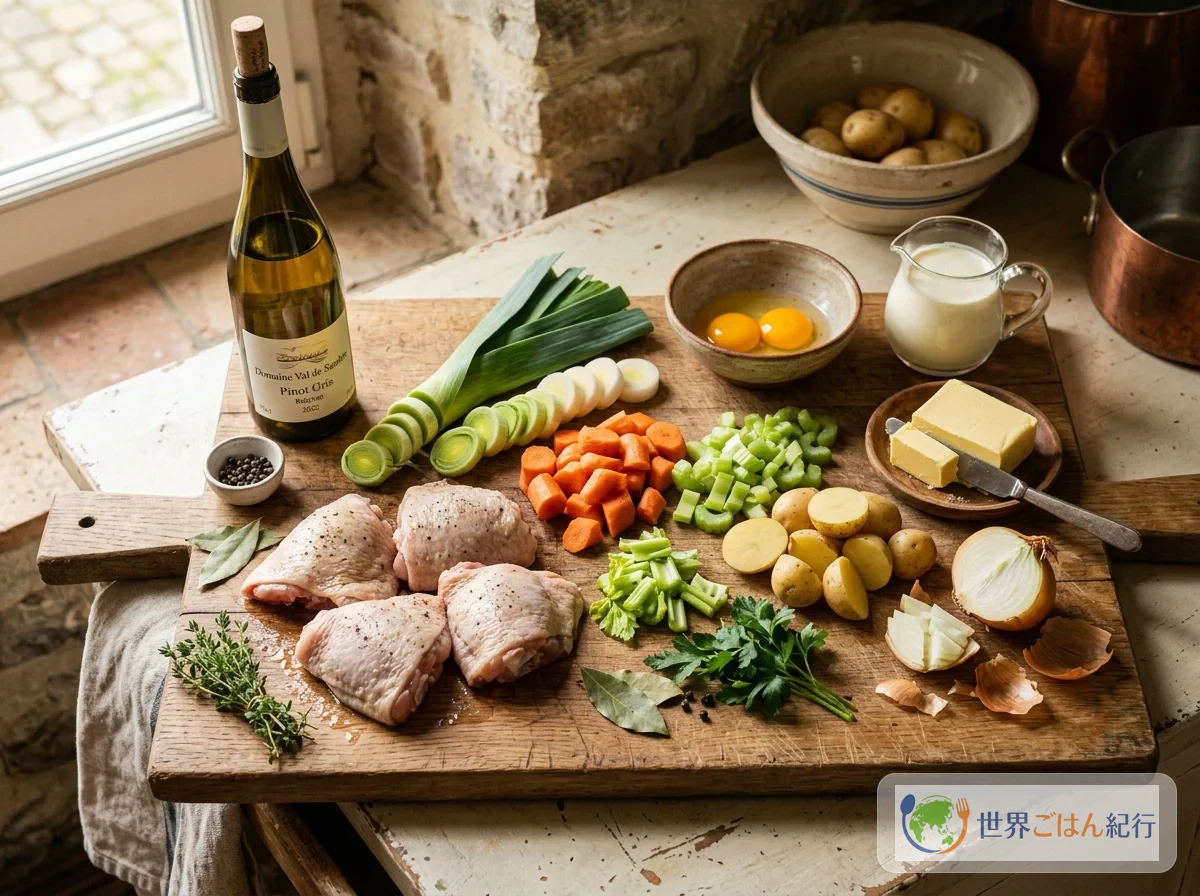
Waterzooi ingredients: chicken thighs, leeks, carrots, celery, potatoes, egg yolks and cream
The ingredients: bone-in chicken thighs, thick rounds of leek, orange carrots, green celery, potatoes, and 3 egg yolks with cream laid out on the counter

Choosing Ingredients for Waterzooi

Bone-in chicken is the foundation. Thighs are juicier and more flavorful than breast meat, and the collagen and gelatin that dissolve out of the bones give the soup body and depth. With boneless thighs, use a more concentrated stock or simmer 3 chicken wings along with it to add gelatin; the result improves noticeably. It's the same principle as in French pot-au-feu (article in Japanese).

For the wine, choose a dry white. A sweet wine makes the soup too sweet. Chardonnay or Pinot Gris is typical in Belgium, and a reasonably priced Sauvignon Blanc works well. If you substitute cooking sake, watch the salt and add less.


When the Liaison Goes Wrong

The liaison is where waterzooi can fail. Pour it straight into the hot broth without tempering, and it turns into scrambled eggs in an instant, so take the 3 minutes to temper it.

If it does scramble, it can't be fully repaired, but you can recover the soup by straining out the egg curds through a sieve. Add ½ cup (100 ml) of cream to the strained soup and rewarm it gently over low heat. It will look a little less nice, but the flavor is not spoiled.


Waterzooi Variations and Nutrition
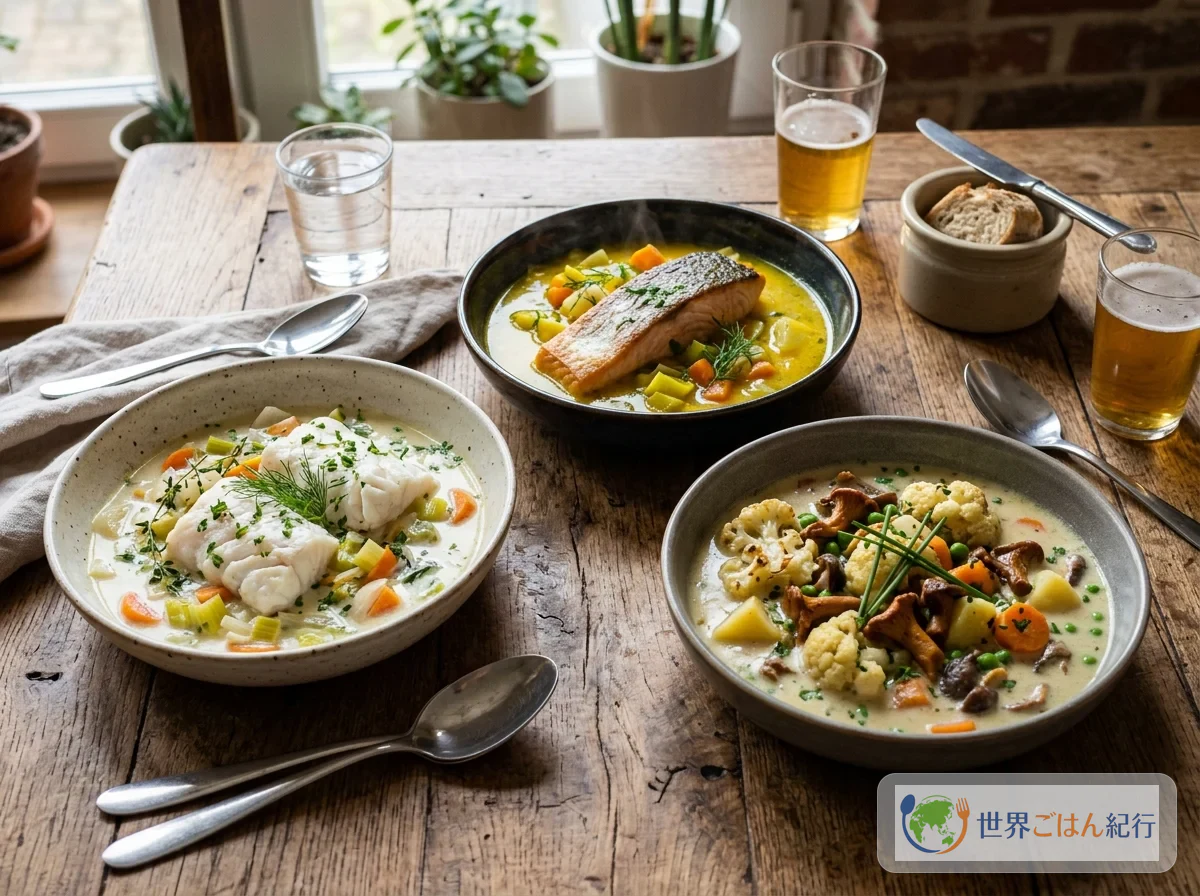
Waterzooi variations: fish and vegetarian versions
Waterzooi variations. Besides the chicken version, white fish and salmon versions are also popular

Fish waterzooi (the original recipe)

To recreate the original, use 1 lb (500 g) white fish (cod or sea bream) and 7 oz (200 g) salmon. Don't simmer the fish: add it after the broth is done and cook it over low heat for just 5 minutes.

Salmon version

This Nordic-style variation uses 4 fresh salmon fillets. Add them once the broth is finished, cover, and steam-simmer for 5 minutes. The salmon's fat melts into the broth and makes it richer.

Vegetarian version

Use 1 head of cauliflower and 10.5 oz (300 g) mushrooms in place of the chicken, vegetable stock instead of chicken stock, and olive oil instead of butter. The sweetness of the root vegetables and the richness of the liaison still make a satisfying soup.

Pressure cooker version

A pressure cooker cuts the simmering time from 30 minutes to 10 minutes. Brown and deglaze as usual, pressure-cook for 10 minutes, let the pressure release naturally, then add the liaison to finish.

Nutrition (per serving, from 4 servings)

A protein-rich soup that warms you from the inside, waterzooi is ideal for winter. The root vegetables add vitamins and minerals, and the cream adds fat-soluble vitamins.

Nutrient Amount
Calories 480 kcal
Protein 1.25 oz (36 g)
Fat 26 g
Carbohydrates 22 g
Fiber 4 g
Sodium 620 mg

More Dishes to Cook

Frequently Asked Questions

Q1. I can't find leeks.

The white parts of thick scallions or spring onions are the closest substitute. Regular onion has a different sweetness, so I don't recommend it much.

Q2. Can I make it a day ahead?

Yes. Refrigerate it before adding the liaison, then reheat it the next day and add the liaison then; reheating after the liaison is in risks curdling the yolks. It keeps for 2 days in the refrigerator.

Q3. Can children eat it?

The alcohol in the white wine cooks off during simmering, and the stew has no spicy ingredients, so it is safe for children. Its creamy flavor is popular with them.