Croquetas de Jamón: Spanish Ham Croquettes with a Creamy Béchamel Center

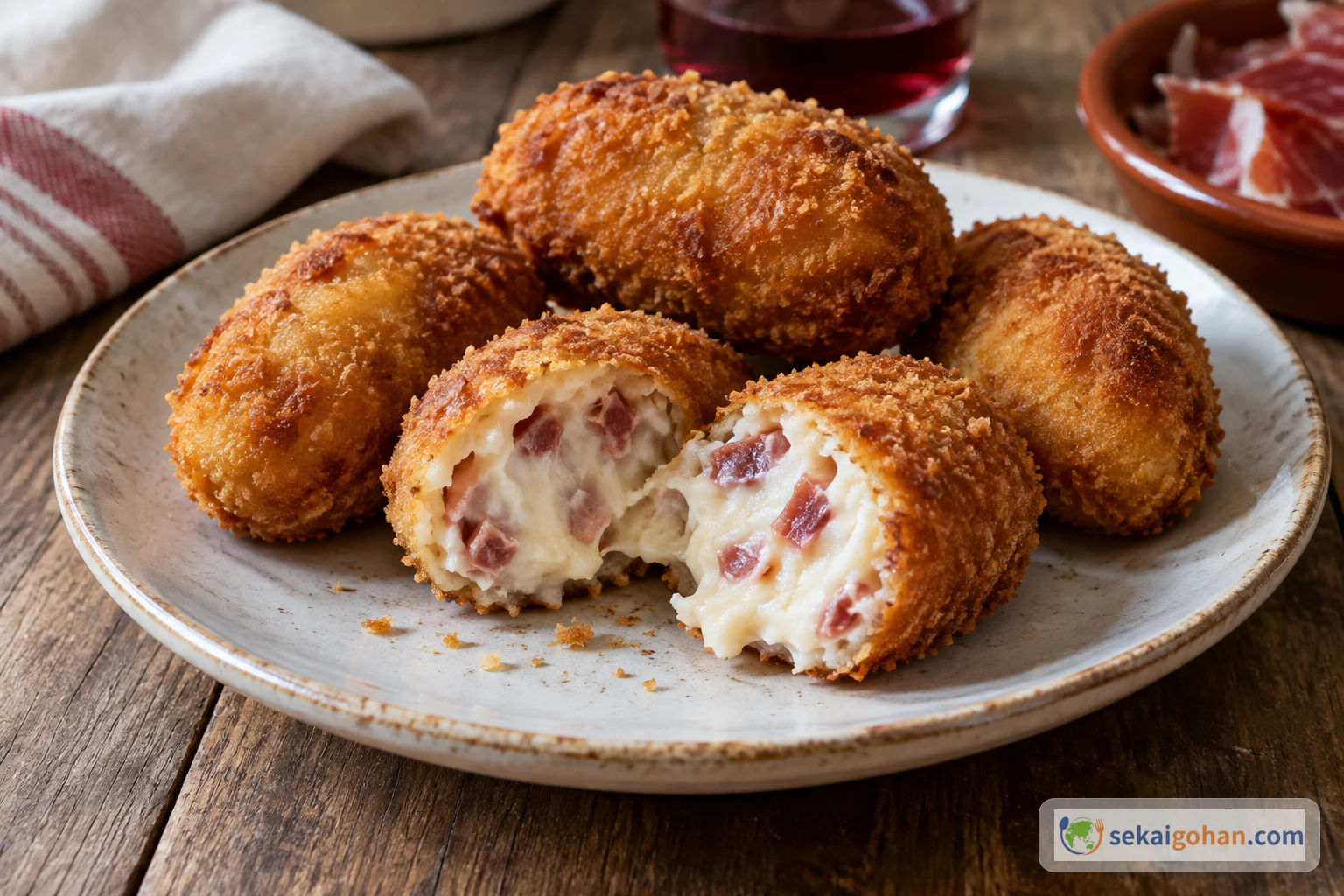
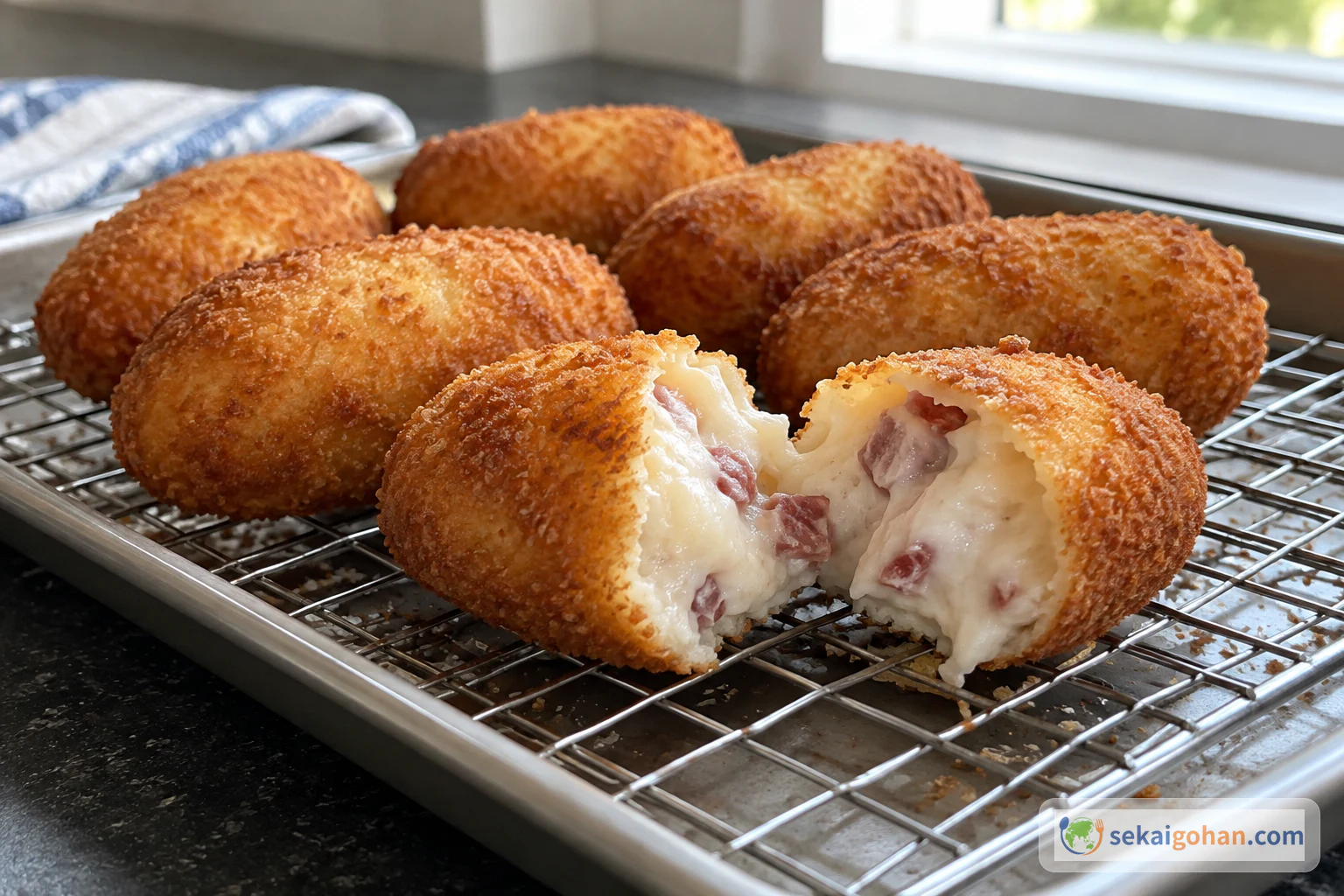
Croquetas de jamón with a golden crust, one cut open to show a creamy béchamel filling dotted with cured ham
Cuisine
Spanish

How to make croquetas de jamón, the Spanish tapa of cured ham folded into a thick béchamel, chilled, breaded and fried. Covers the order of roux, milk and ham stock, and ham, how thick to cook the béchamel, the long refrigerated rest, coating, frying in small batches, salt control, choosing between jamón ibérico de bellota and jamón serrano, fixing croquettes that burst, and their place among Spanish tapas.

Cooking flow

Cooking steps

STEP11 / 8

Dice the ham, then make the roux

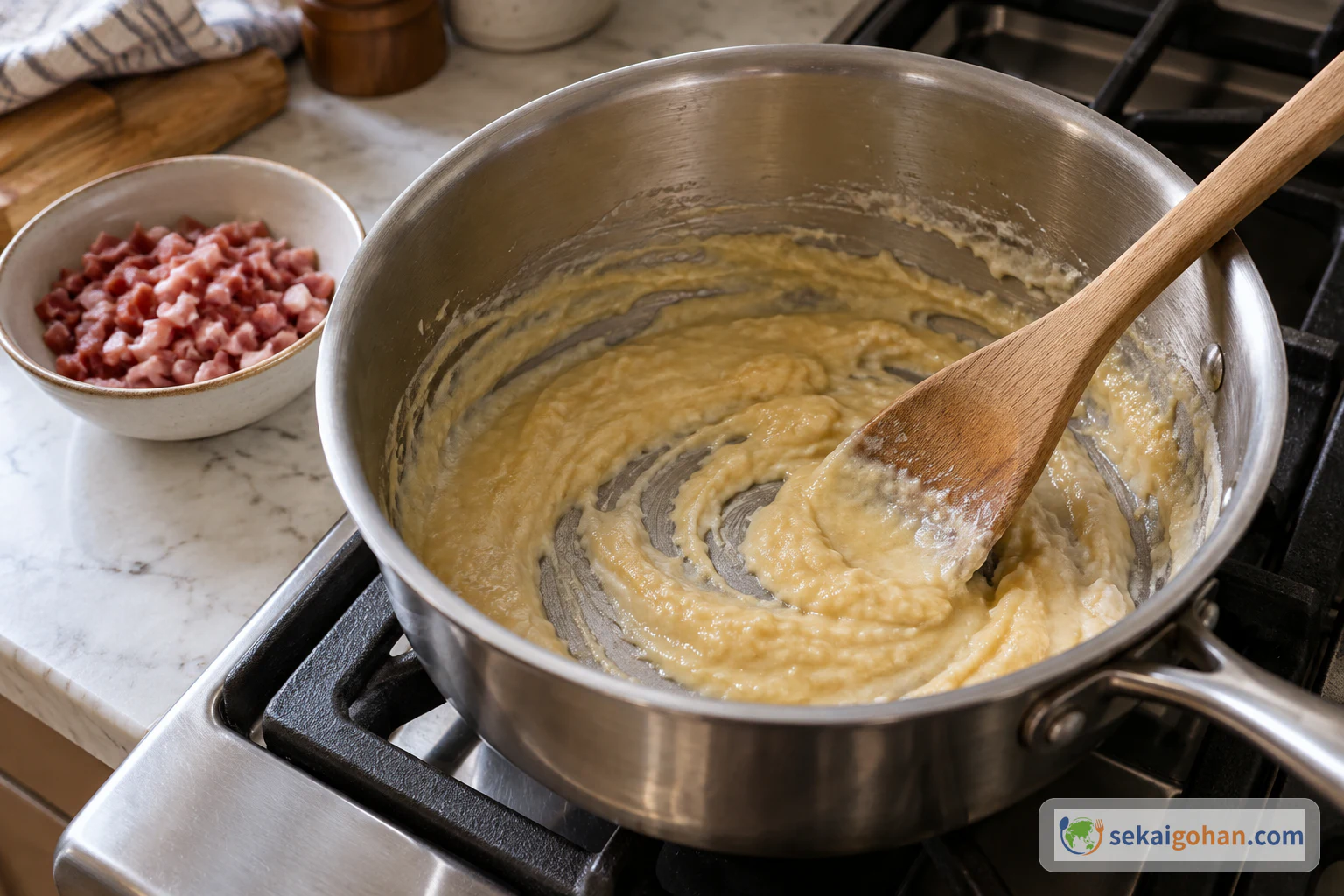
Butter and flour stirred into a pale roux, with the diced ham still waiting in a separate bowl
A pale roux with the ham kept to one side for later

Cut the 7 oz (200 g) of jamón into small dice. Ham cut straight from the refrigerator is easier to handle because the fat stays firm. Keep your hands and board clean, and set the ham aside in a bowl.

Melt the butter in the saucepan over gentle heat, add the flour and stir constantly. Keep cooking over low heat until the raw, floury smell is gone and the roux smells faintly toasty. Judge by smell and texture rather than the clock, and don't let it brown.

STEP22 / 8

Add the milk and ham stock and reduce the béchamel

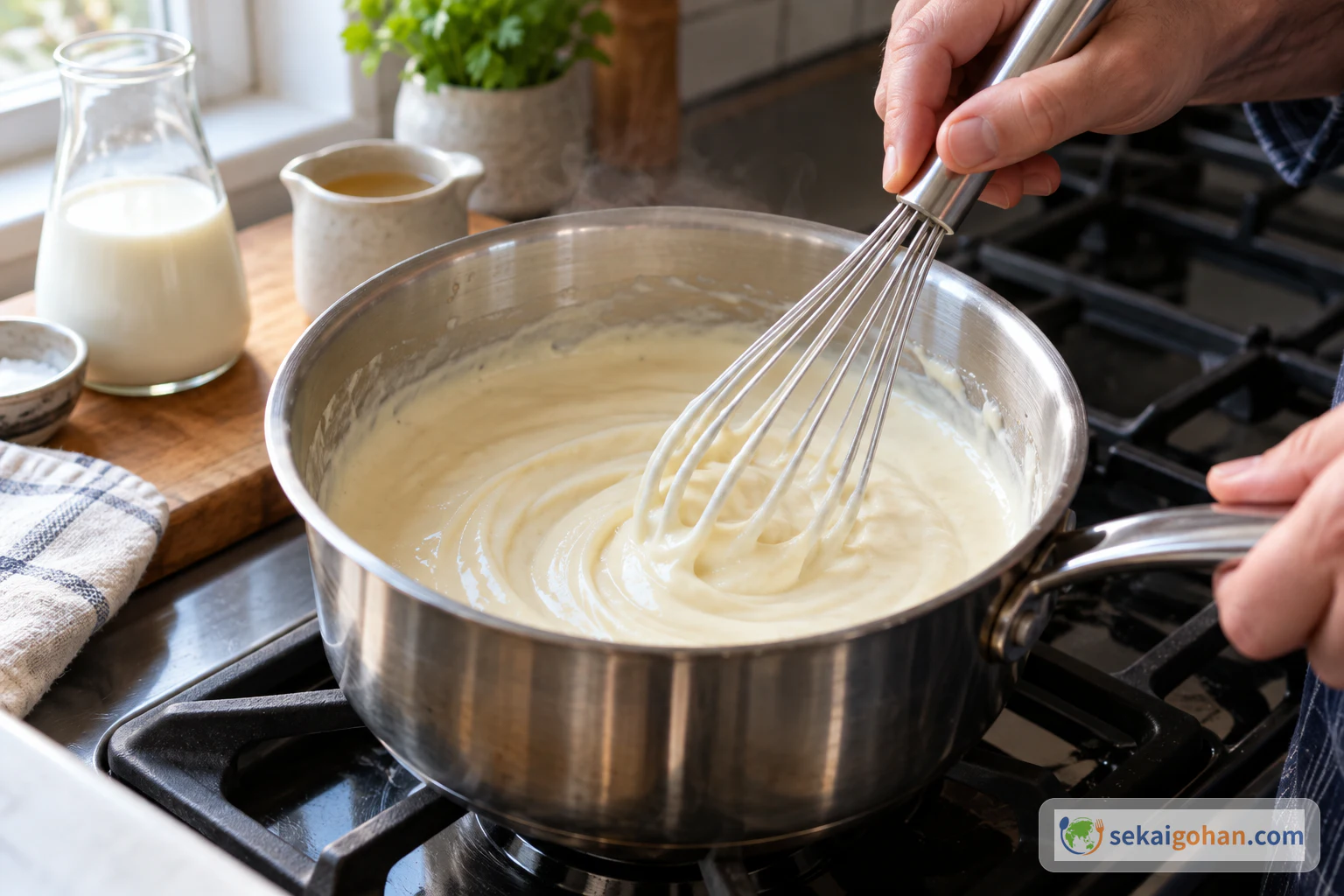
Milk whisked a little at a time into a smooth béchamel in the saucepan
Whisk in the liquid gradually over low heat until the béchamel is smooth and thick

Add the milk and ham stock a little at a time, whisking out any lumps before each addition. Keep the heat low and scrape the bottom of the pan continuously so the béchamel doesn't catch. Flours absorb liquid differently, so if it becomes very stiff before all the milk is in, keep going gently; only adjust the liquid if needed.

Simmer gently until the béchamel is smooth and thick: when you draw the spatula across the bottom of the pan, the trail should not fill in right away, and a spoonful dropped back should hold its shape.

STEP33 / 8

Fold in the ham and season

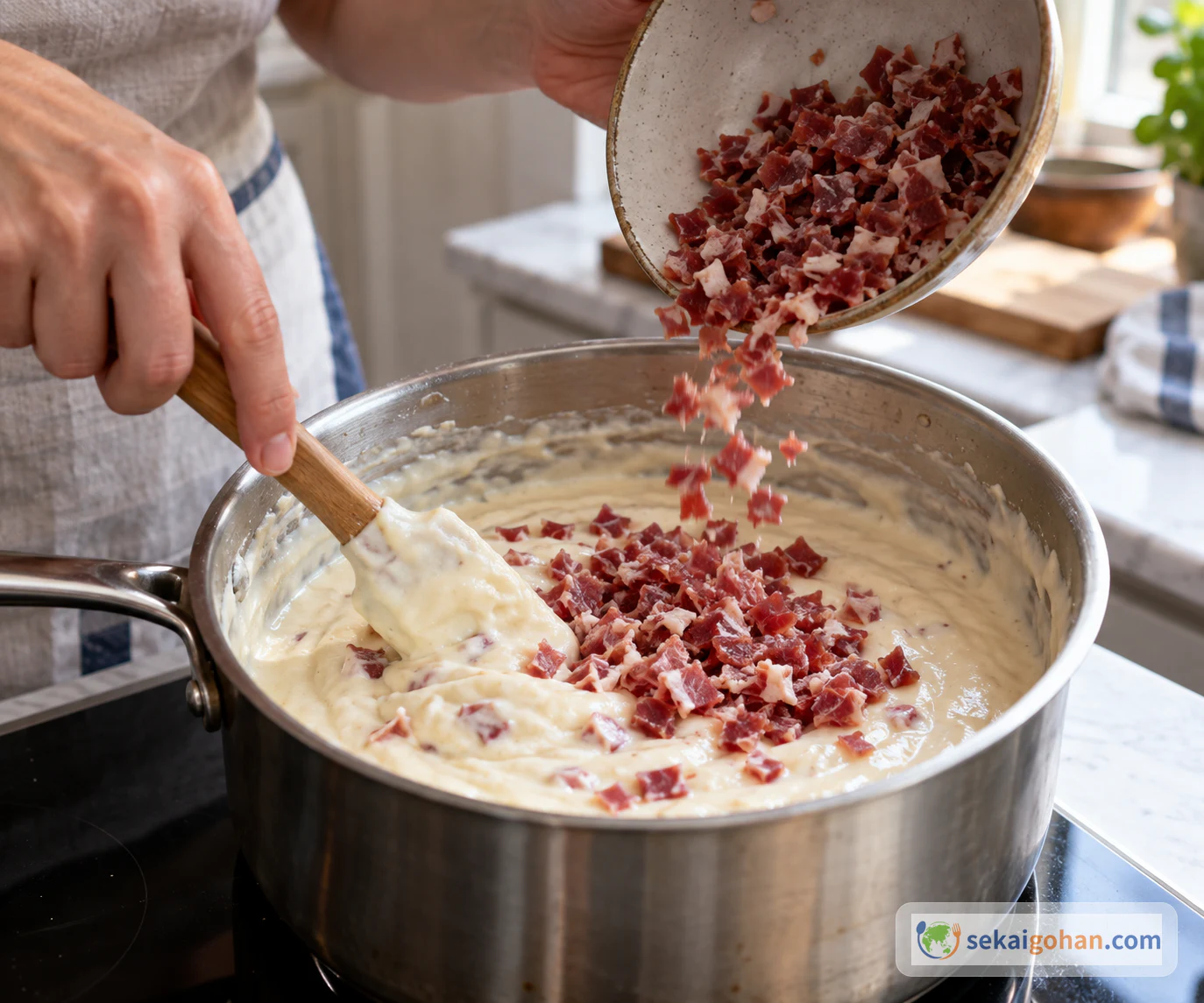
Diced cured ham being folded into the reduced béchamel
The ham goes in once the béchamel has finished reducing

Add the diced ham to the reduced béchamel and fold until it is evenly spread. Add a small pinch of nutmeg, then taste before adding any salt. The cooled mixture tends to taste saltier than it does hot, so add salt only a little at a time, if at all.

STEP44 / 8

Spread thin and chill in the refrigerator

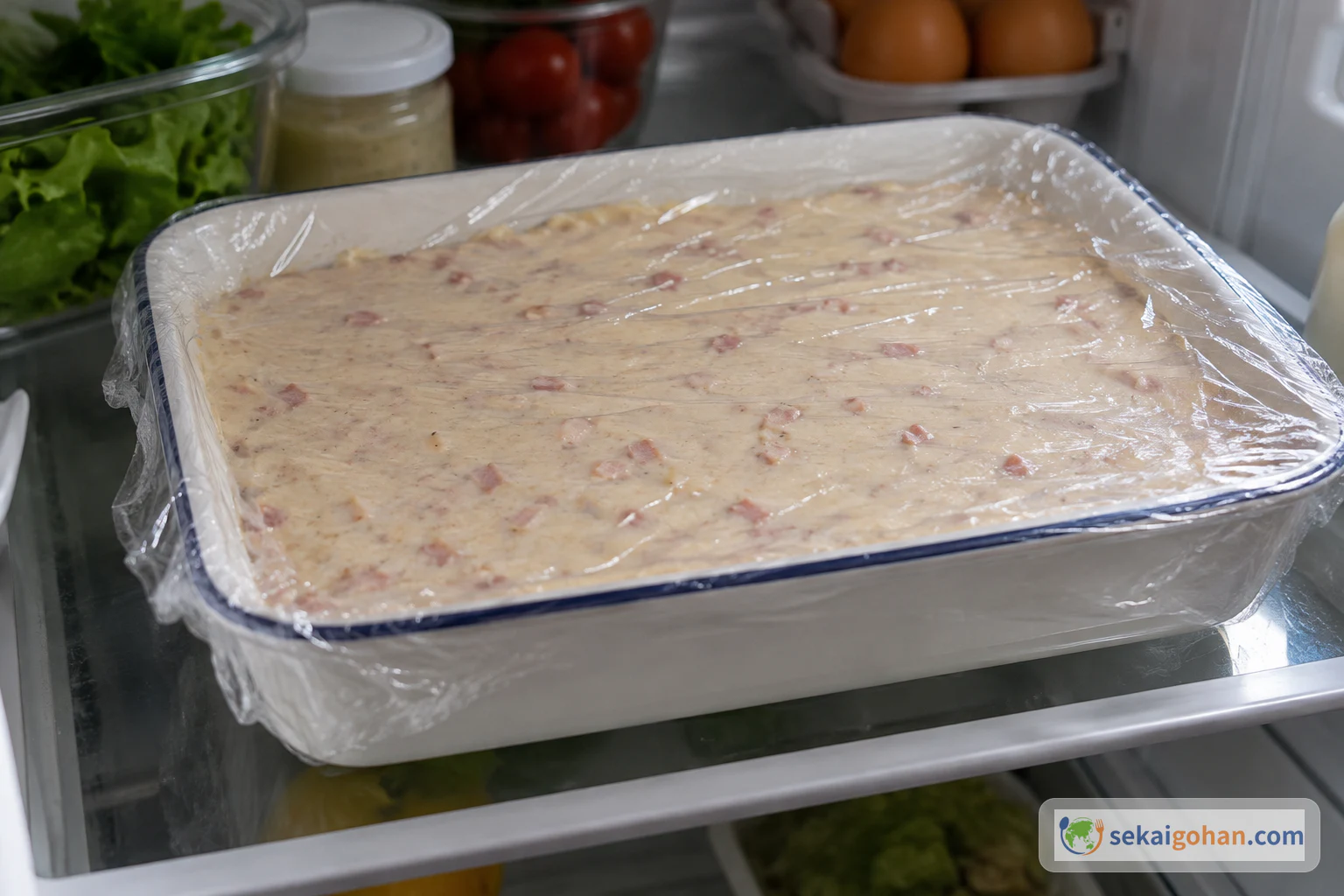
Ham béchamel spread in a shallow dish with wrap pressed onto the surface, ready to chill
A thin, even layer with wrap touching the surface, chilled in the refrigerator

Spread the mixture evenly and thinly in a shallow container, smooth the surface, and press plastic wrap directly onto it so no skin forms. Refrigerate for 12–24 hours, until it is firm all the way through.

Don't leave the dough out at room temperature for long, and never leave it out overnight. Keep this cooked dairy mixture in the refrigerator.

STEP55 / 8

Shape into small ovals

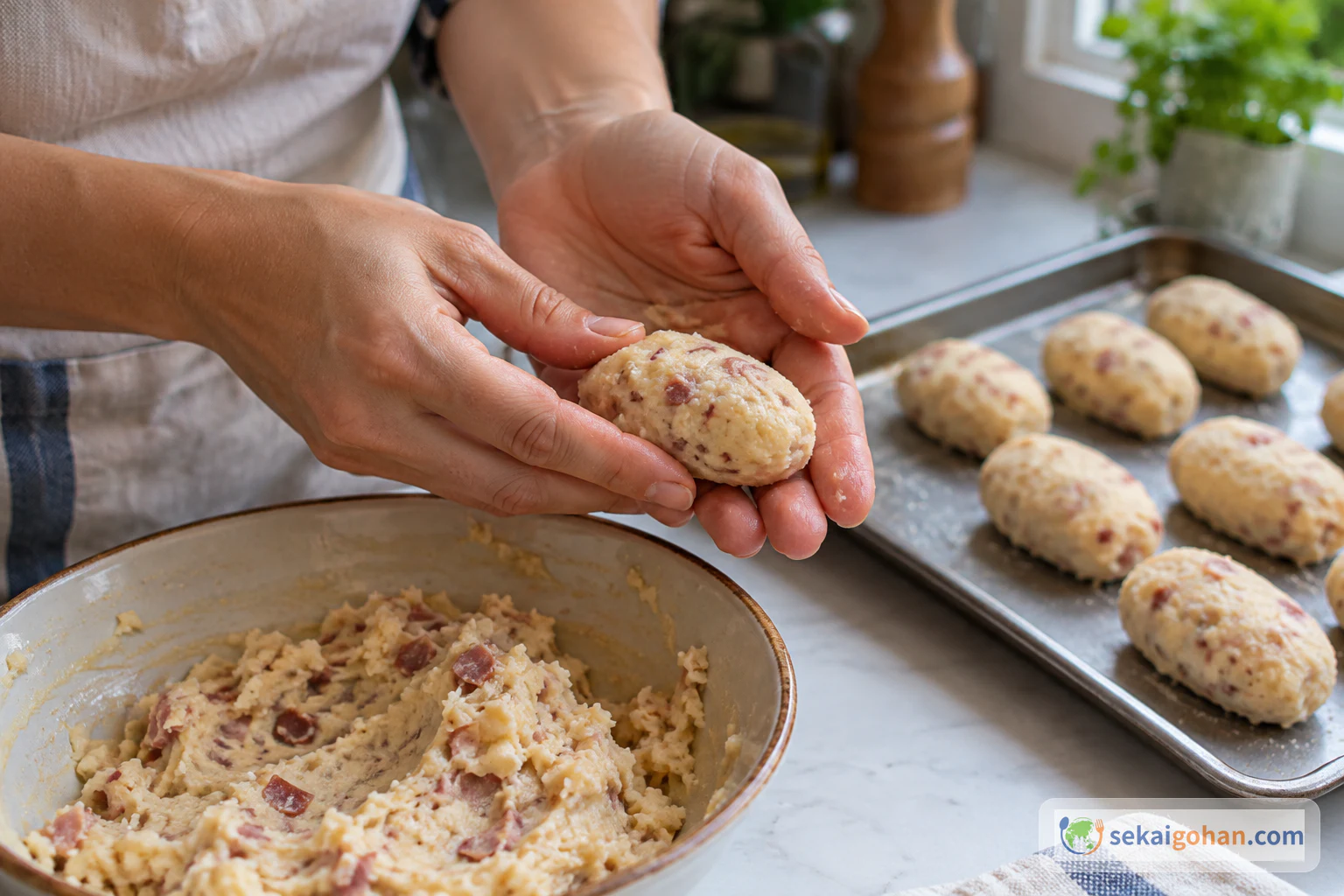
Clean hands shaping chilled ham dough into a small oval
Shape even portions of firm, chilled dough into ovals

Take even portions of the chilled dough and shape each into a small oval with clean hands. Keeping the portions the same size helps them cook evenly. If the dough softens as you work, return it to the refrigerator for a while.

STEP66 / 8

Coat in egg and breadcrumbs

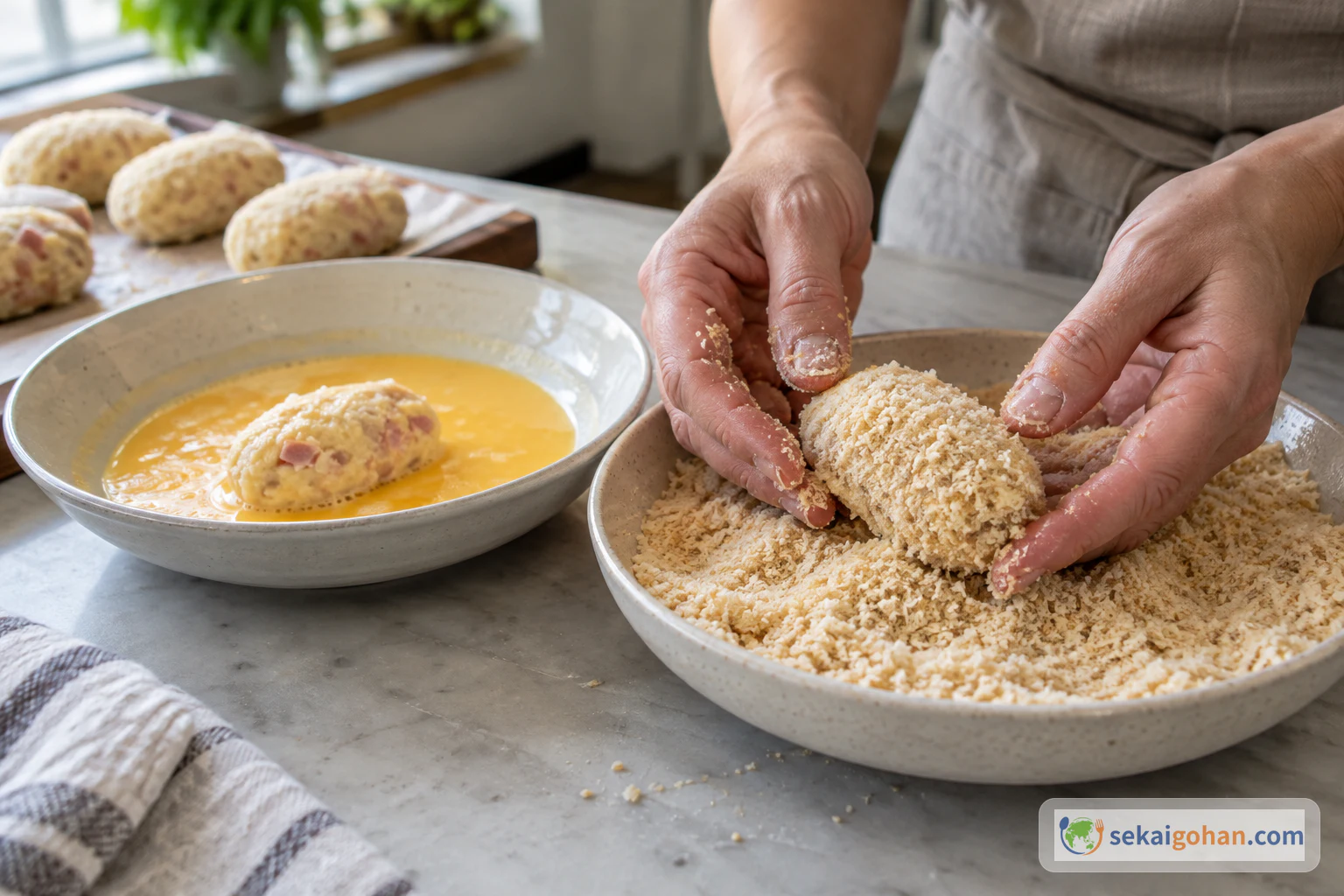
An oval ham croquette coated evenly in beaten egg and breadcrumbs
Cover every bit of the surface so no béchamel shows through

Dip each oval in beaten egg, then roll it in fine breadcrumbs so the whole surface is covered. Patch any cracks or thin spots with more crumbs so no filling is exposed. Some recipes dust the croquetas in flour before the egg; this recipe uses egg and breadcrumbs only. Chilling the coated croquetas again before frying helps them hold together.

STEP77 / 8

Fry in small batches

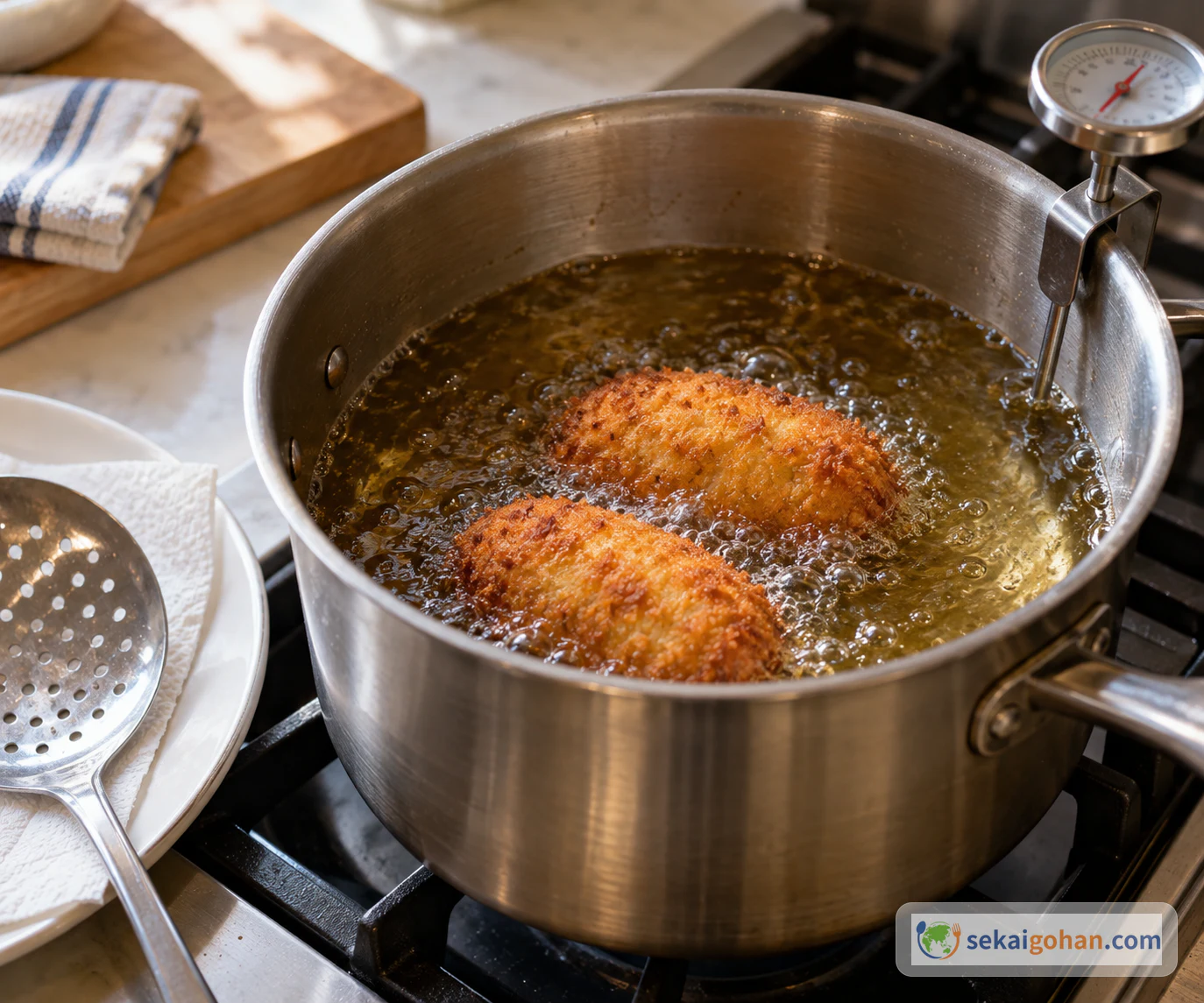
A few breaded croquetas frying golden in a deep pot with a thermometer attached
A few at a time, with a thermometer to keep the oil steady

Fry at about 350°F (180°C) as a starting point, and adjust for your pot and the size of your croquetas.

Heat enough oil to cover the croquetas, using a thermometer. Fry one first to see how quickly the crust colors and whether it holds together. Then fry a few at a time without crowding the pot, turning them so they don't sit on the bottom, until evenly golden. Color alone doesn't prove the inside is done: cut one open to check that the center is hot.

STEP88 / 8

Drain, rest briefly and serve

Golden croquetas draining on a wire rack, one broken open to show béchamel with ham
Drain on a rack and let the hot filling settle for a moment before eating

Lift the croquetas onto a wire rack to drain the excess oil, and let them rest briefly: the béchamel inside is very hot and can burn your mouth. Serve on small plates as a tapa, to share alongside other dishes.

0 / 0
Ingredients

Ingredients

1 / 2

Béchamel and ham

Ingredient Amount Role and notes
Unsalted butter 4 oz (110 g) The fat for the roux. Unsalted makes the final salt easier to control
Wheat flour 4 oz (110 g) Thickens the béchamel so it can be shaped once chilled
Whole milk 1 quart (1 L) The liquid of the béchamel. Lower-fat milk changes the richness
Jamón (jamón de bellota) 7 oz (200 g) The heart of the flavor. Finely diced
Ham stock 3.5 tbsp (50 ml) Adds depth of ham flavor. Check how salty it is
Salt A little, at the end Ham and stock are already salty; add sparingly after tasting
Nutmeg A small pinch Aroma only; it should not take over
2 / 2

Coating and frying

Ingredient Amount Role and notes
Eggs, beaten 2–3, as a guide Glues the breadcrumbs on. RTVE gives no number; how many you use depends on the size and number of croquetas
Fine breadcrumbs As needed The crust. Fine crumbs give a thin, even coating
Extra virgin olive oil or a neutral frying oil Enough to cover the croquetas in the pot For deep-frying
0 / 0

You pick one off a small plate while it's still hot and break it open. The breadcrumb crust gives way, and inside is a smooth, thick cream flecked with little pink pieces of ham. Croquetas de jamón, "ham croquettes," are small ovals of béchamel and cured ham, coated in egg and breadcrumbs and fried until crisp. They are among the most popular tapas in Spain, and the ham version is the most traditional. The pleasure is in the contrast: a thin, crackling shell around a center that holds its shape yet melts on the tongue.

Croquetas de Jamón in Spanish Tapas Culture

Croquetas are made for tapear, going out for small plates. Friends order a few tapas or larger raciones to share, then take one croqueta at a time alongside a drink. They are among Spain's best-loved tapas, and nobody seems to tire of them.

Fillings change from region to region and bar to bar, so croquetas are really a family rather than one fixed recipe. Besides ham, you'll find them filled with mushrooms, crab, squid, prawns, cod or strongly flavored cheese, and chicken versions are common too. Even the coating varies: some cooks use flour, egg and breadcrumbs, others only egg and breadcrumbs.

Getting them right at home comes down to two things. The béchamel has to be cooked to the right thickness and chilled long enough to shape, and the salt has to stay in check, because the ham and stock already bring plenty.

A dish that needs planning, not a quick one

The dough rests in the refrigerator for 12–24 hours. The active cooking happens in two sessions: making the béchamel on the first day, then shaping, coating and frying after the rest.

Ingredients: One Batch, Built on 1 quart (1 L) of Milk
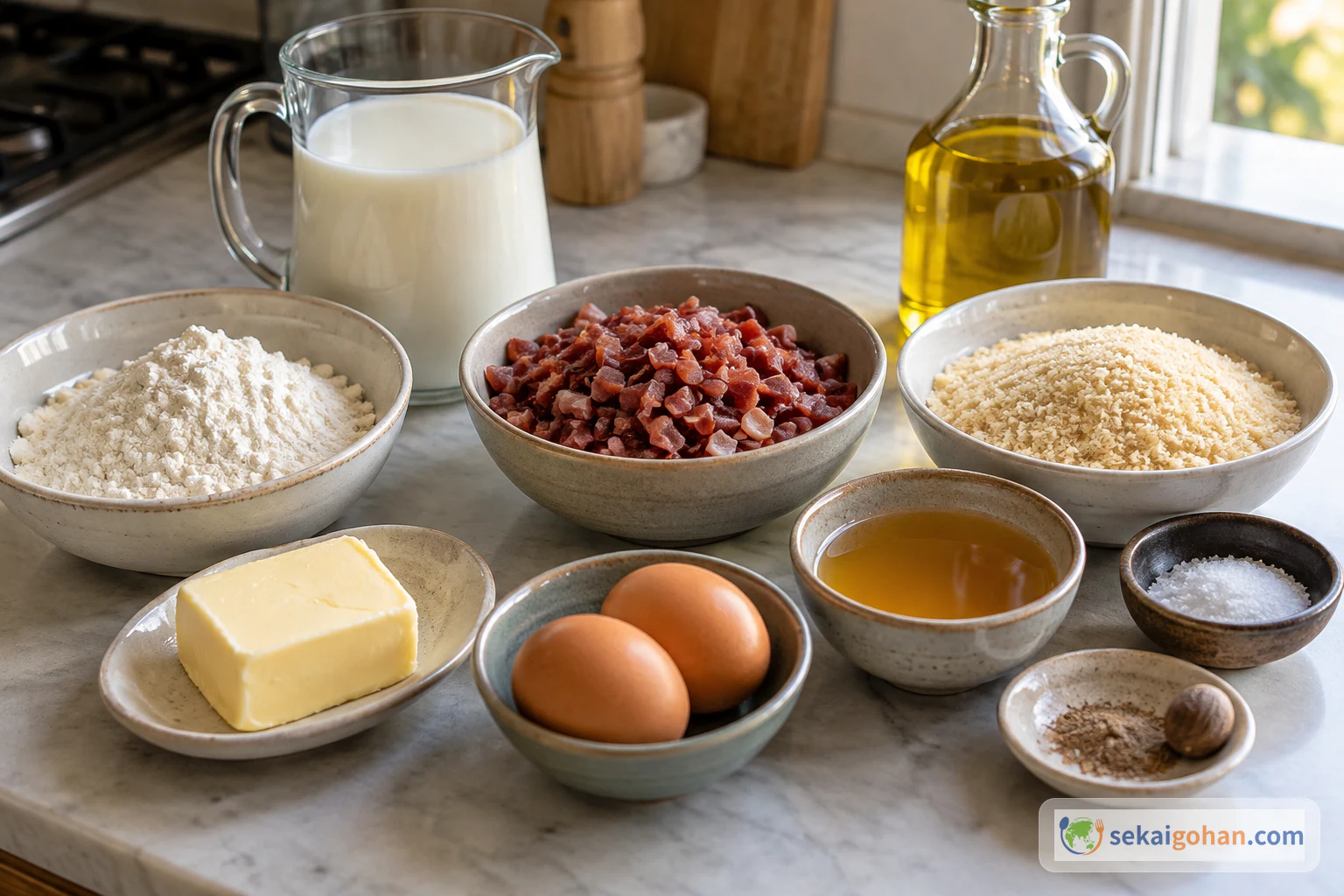
Wheat flour, butter, milk, cured ham, eggs and breadcrumbs laid out for croquetas
Get the béchamel ingredients, the ham and stock, and the coating ready before you start

These amounts make one consistent batch; don't mix them with other proportions of flour, butter and ham. The count depends on the size you shape.

Allergens

These croquetas contain wheat, milk and egg. Check the labels on the ham, the ham stock and the breadcrumbs, and if you use substitute products, read their ingredients and any cross-contact statements.

Equipment

  • Knife and cutting board
  • Medium saucepan with a heavy base
  • Whisk and a heatproof spatula or wooden spoon
  • Shallow container for chilling the dough
  • Food-safe plastic wrap
  • Tray for the shaped croquetas
  • Two shallow bowls for egg and breadcrumbs
  • Deep, sturdy pot for frying
  • Frying thermometer
  • Slotted spoon
  • Wire rack set over a tray

Choosing Ham, Stock, Breadcrumbs and Oil for Croquetas

Ham. Use jamón de bellota, from the jamón ibérico de bellota category. Jamón serrano is easier to find outside Spain and makes a practical substitute, though it is a different product, with its own fat, saltiness, cured aroma and price. If you use another cured ham, check the label to see whether it is suitable for cooking.

Ham stock. The stock deepens the ham flavor. Without it, use the same amount of milk; the béchamel will taste less meaty and less salty. With a bought stock, check the salt first.

Breadcrumbs. Fine crumbs give the thin, even shell you're after. Coarser crumbs, such as Japanese panko, work too, but make a crunchier, rougher crust.

Oil. Fry in olive oil or a neutral refined oil such as rapeseed (canola) oil. Each gives the finished croquetas a noticeably different aroma.

Method: Roux, Béchamel, Ham, a Long Chill, Then Frying

The order matters

Cook the roux first, whisk in the milk and ham stock and reduce, and only then add the diced ham. The ham goes into the finished béchamel, not into the roux.

Troubleshooting Croquetas de Jamón

Problem What to check How to fix it
Croquetas split or burst in the oil Dough not chilled enough, gaps in the coating, oil temperature dropping Chill the shaped croquetas again, cover them fully and evenly with crumbs, and fry fewer at once
The filling runs out The béchamel was not reduced enough Test a small piece of chilled dough first. If it won't hold its shape, return it to the pan, cook it down further, and chill again. Kneading in raw flour leaves a raw taste
Too salty Salt in the ham and stock varies widely Taste before finishing the béchamel and keep added salt minimal; it tastes saltier once cold
The crust darkens before the inside is hot Oil too hot Watch the thermometer and lower the heat. Cut one open to check the center rather than trusting color

Serving Croquetas and Making Small Bites

At home, croquetas sit naturally alongside other Spanish dishes such as tortilla española, or open a meal before paella valenciana or cocido madrileño. For one-bite tapas, roll the dough into small balls and shorten the frying time to suit the smaller size. The other fillings found in Spain are best treated as separate recipes rather than swaps into this one.

Frequently Asked Questions

Is it fine to chill the dough overnight?

Yes. Rest the dough for 12–24 hours in the refrigerator, spread in a shallow container with wrap pressed onto the surface. Keep it out of room temperature overnight.

What oil temperature should I use?

Start at 350°F (180°C). Fry one croqueta first as a test, then adjust for your pot and croqueta size.

How many croquetas does this make?

That depends on how large you shape them. Keeping every portion the same size matters more for even frying than hitting a particular count.
Sources