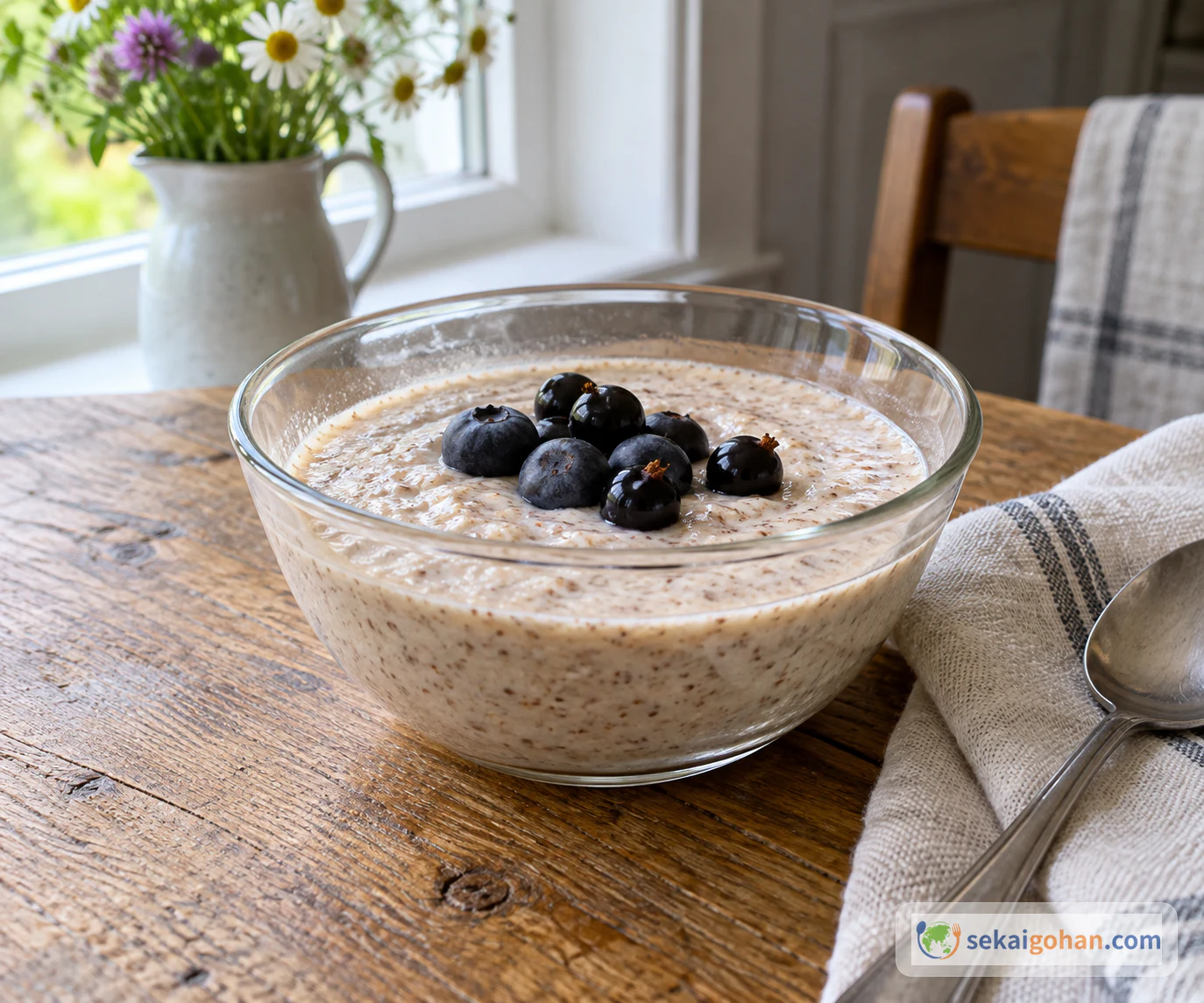
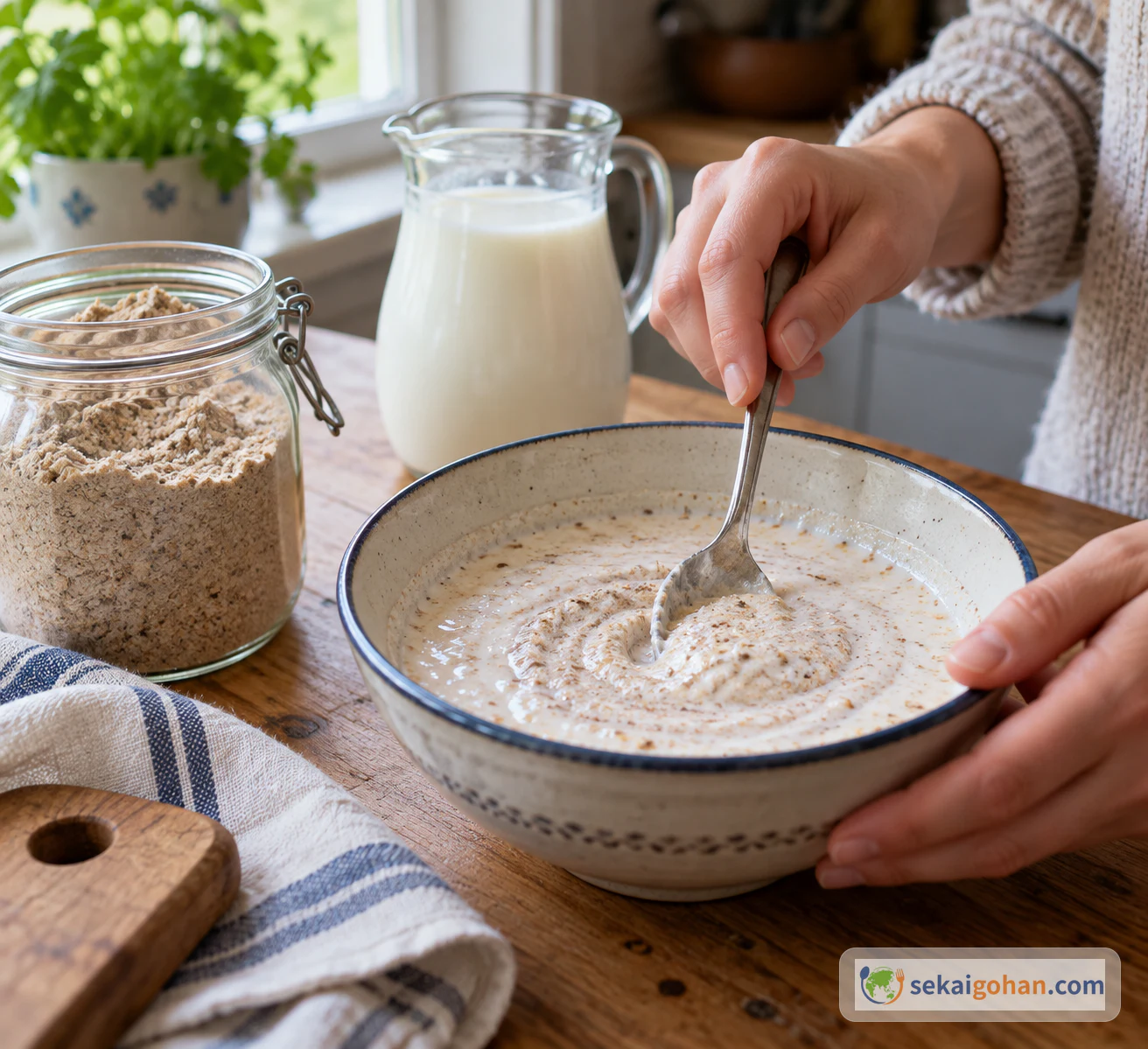
Kama belongs to the Estonian summer. It was once carried out to the fields during haymaking, and today it's a light snack for hot weather. There's no stove involved: a ready-made flour of roasted grains and legumes is stirred into soured milk, and the bowl is ready to eat. What you taste is the roasted aroma of the flour against the gentle sourness of curdled milk or kefir, with just a little sweetness. For more dishes from the same country, see Estonian recipes.
What Kama Is
The word kama names both the flour and the food made from it. Kama flour (kamajahu) is a blend of roasted grains and legumes, and its components can include roasted wheat, rye, barley, oats, dried peas and beans. The usual mix is barley, rye, oat and pea, but there is no single fixed blend. Traditionally it's eaten with sour milk such as buttermilk or kefir.
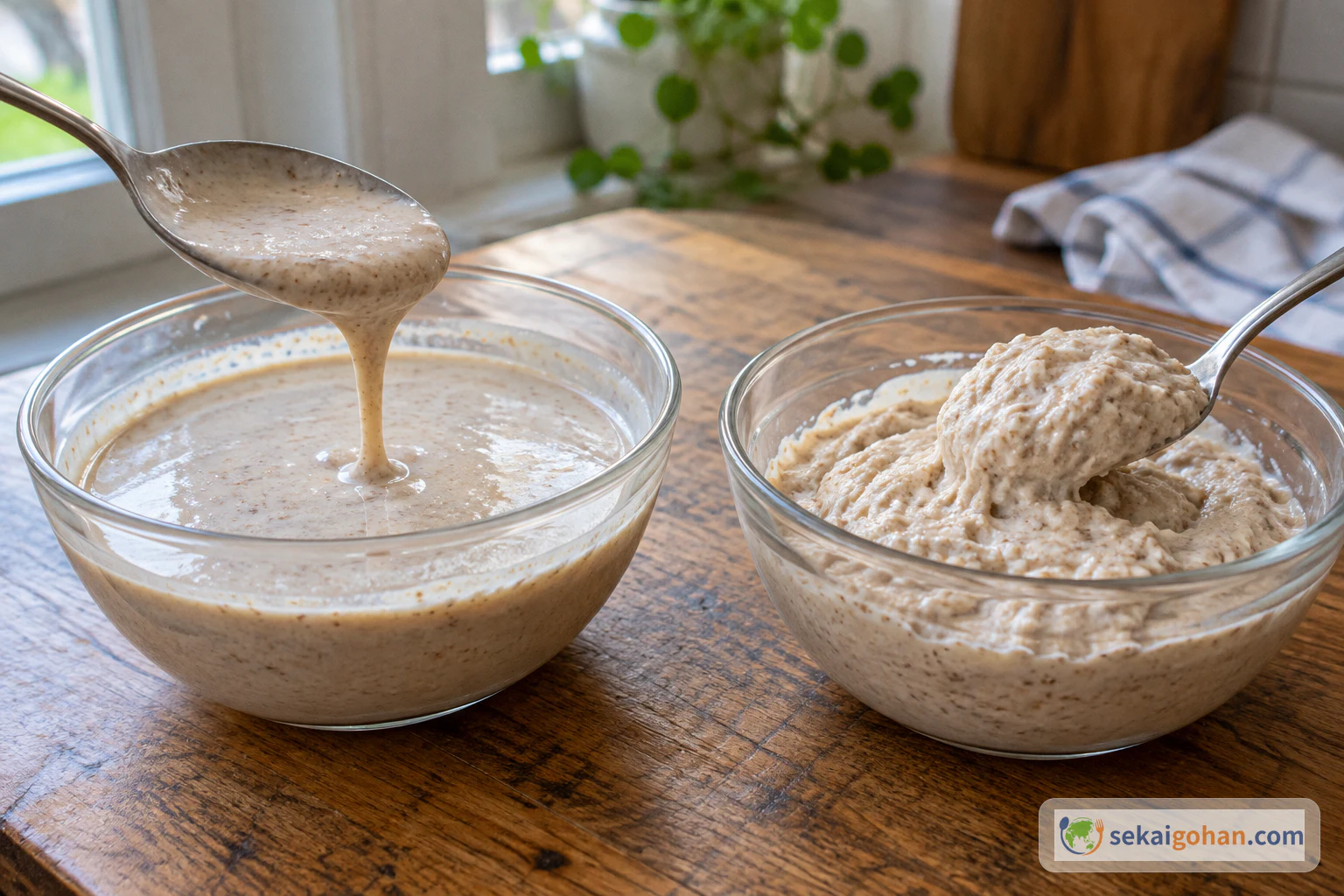
How thick the bowl gets is part of the dish's character. Mixed with sour milk, kefir or yogurt, kama can be thin enough to drink or thick enough to eat with a spoon, and the amount of flour decides which.
Kama in Mulgimaa and beyond
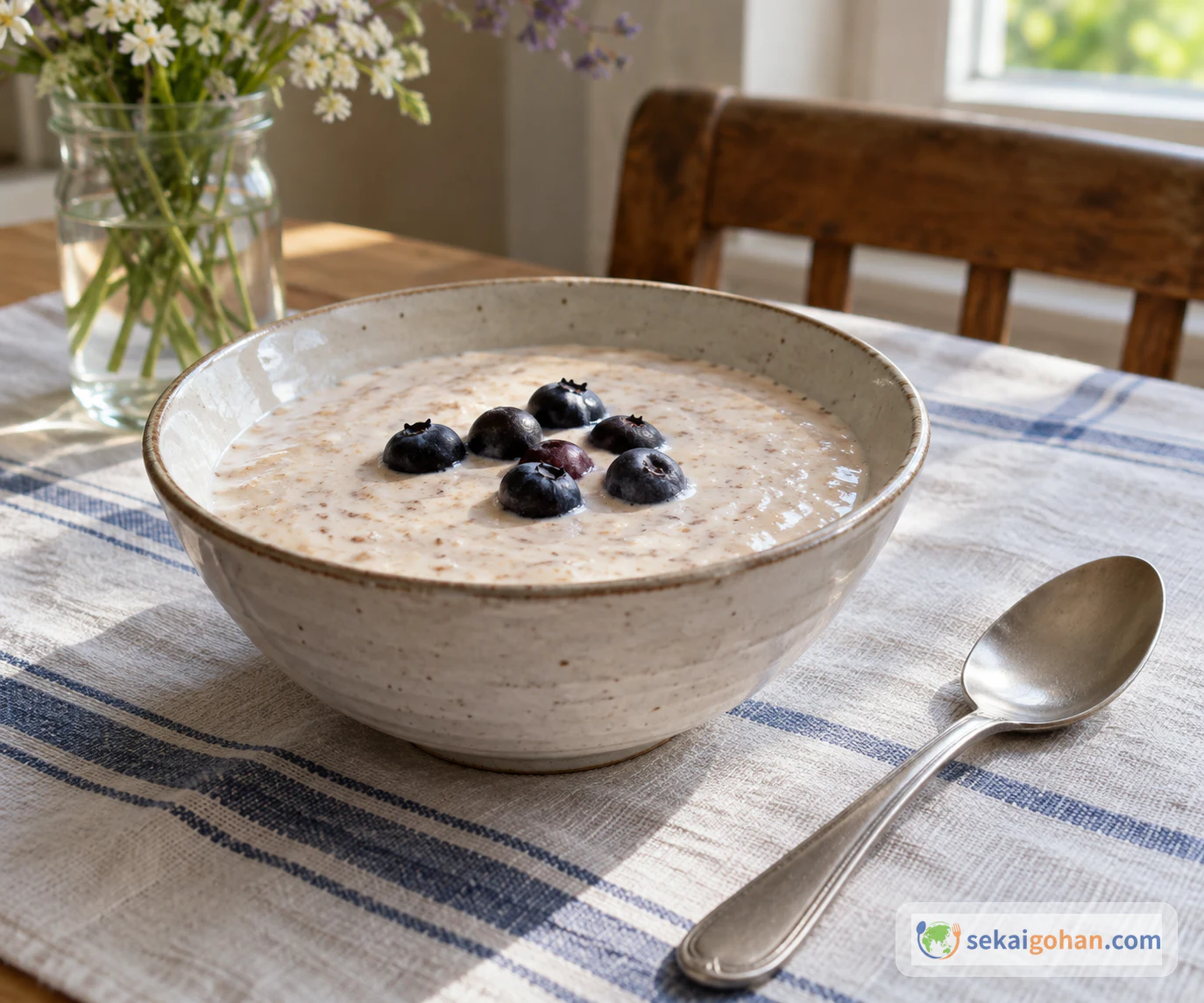
The word kama appears in an Estonian–German dictionary from the early 18th century, where it meant flour made from cooked oats. The mixed grain-and-legume kama known today is associated with Mulgimaa, and it has spread more widely from there. The Mulgimaa version, known as Mulgi kama or segakama, includes barley, oats, rye, wheat, peas and beans, in ratios that depend on what's available, on preference and on custom.
As a haymaking food, a ready flour that only needed mixing with soured milk suited long working days in summer. That same quality makes it a snack you can put together in moments in a home kitchen. Kama has also moved beyond the bowl: modern Estonian chefs use it as an ingredient in desserts.
Ingredients for One Bowl of Kama
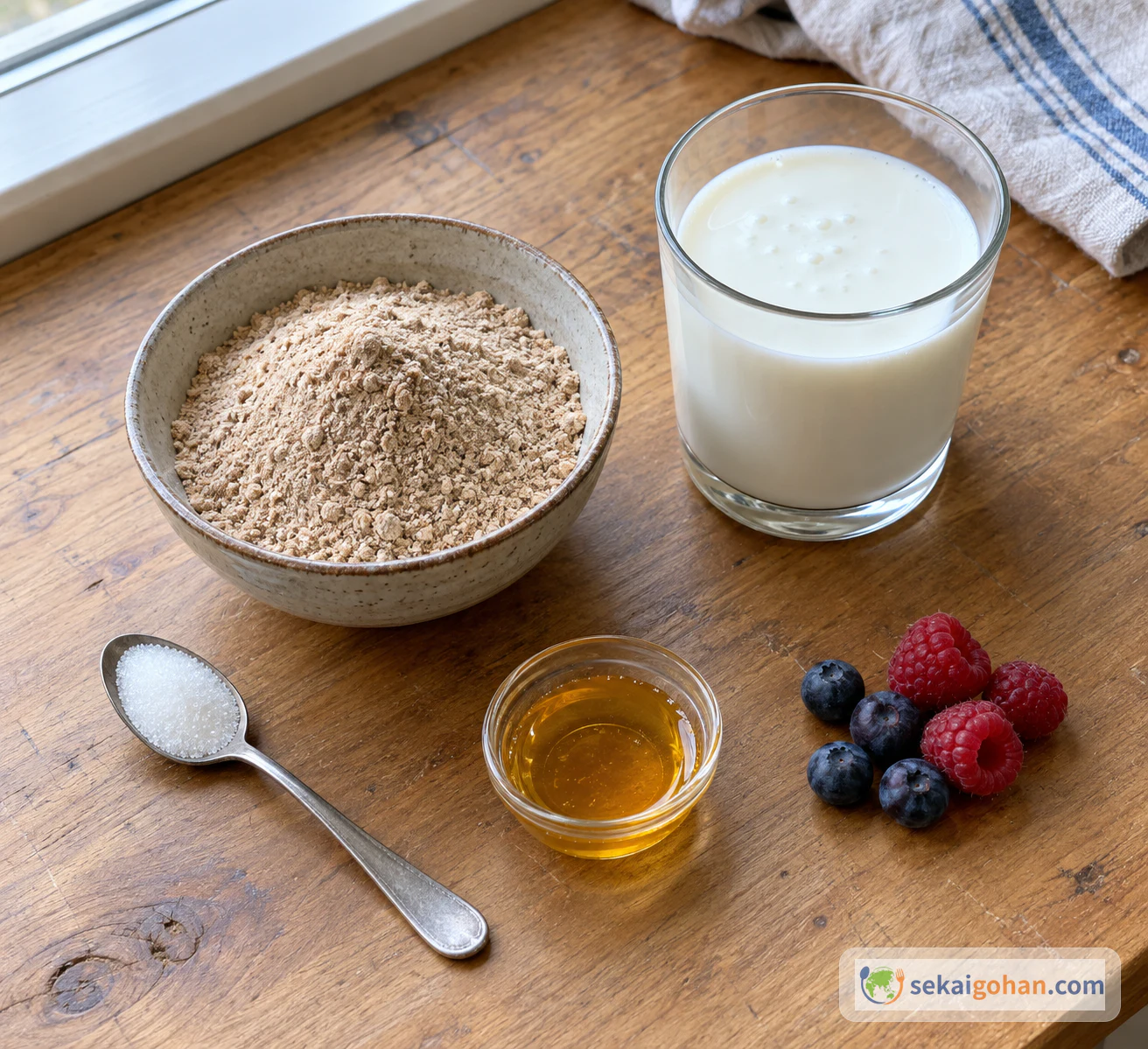
These amounts make one bowl. Choose either sugar or honey, not both.
Depending on the product, kama flour can contain gluten-containing grains such as wheat, rye and barley, as well as peas and beans. Always check the product label. Kefir, curdled milk and yogurt are dairy, and honey, if you use it, should be checked as well. Do not assume a product is free of cross-contact, or that it contains it. Check the label for each product you use.
Equipment
- A bowl
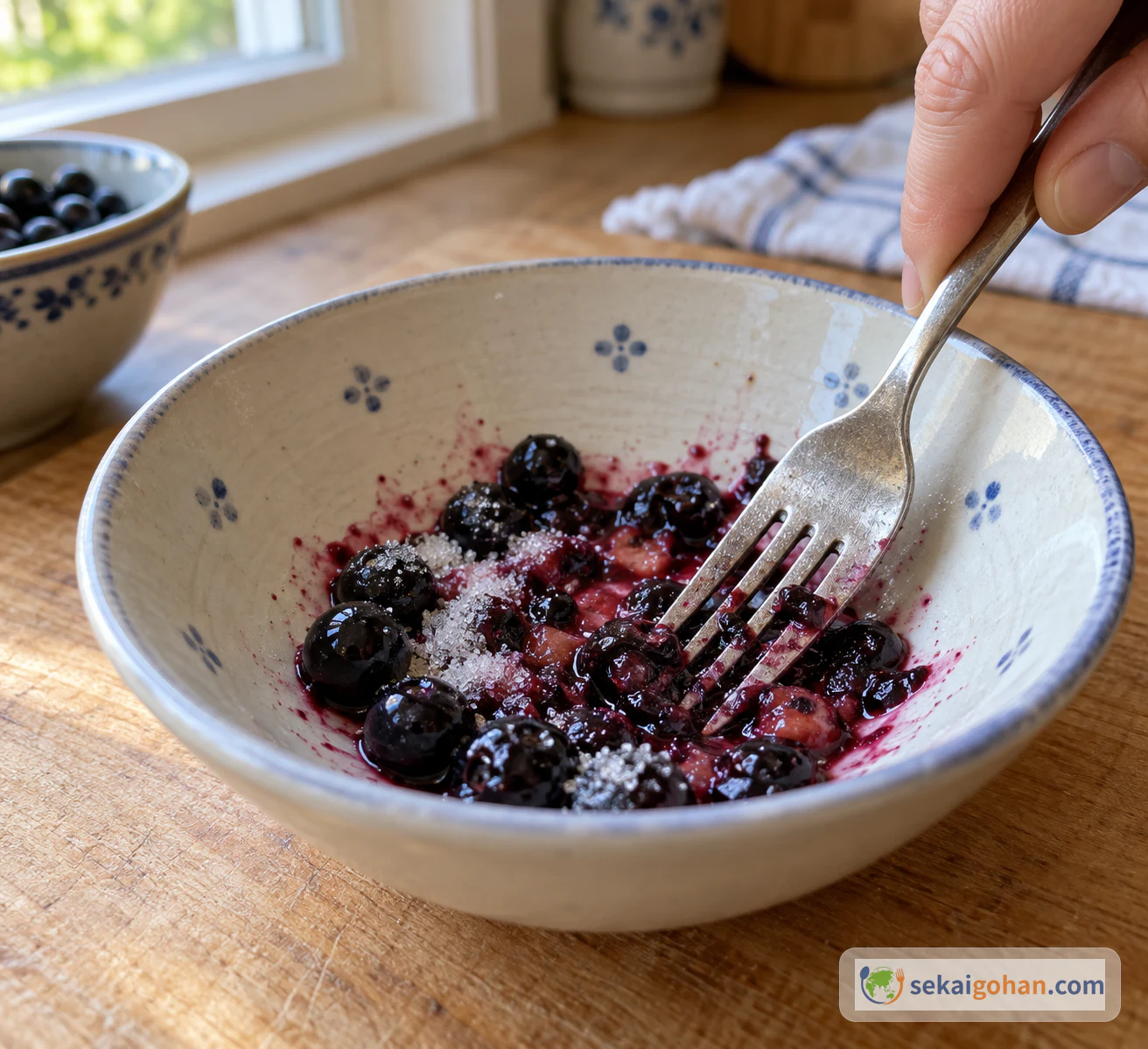
- A fork (only if using berries)
- A spoon for mixing
Choosing Kama Flour and Kefir
Look for kama flour itself. Search for "kama flour" or "kamajahu", and read the label. Two packets with the same name can contain different grains, legumes or proportions. Plain barley flour or starches such as potato starch don't reproduce the blend or the roasted flavor, so what you make with them is a different dish.
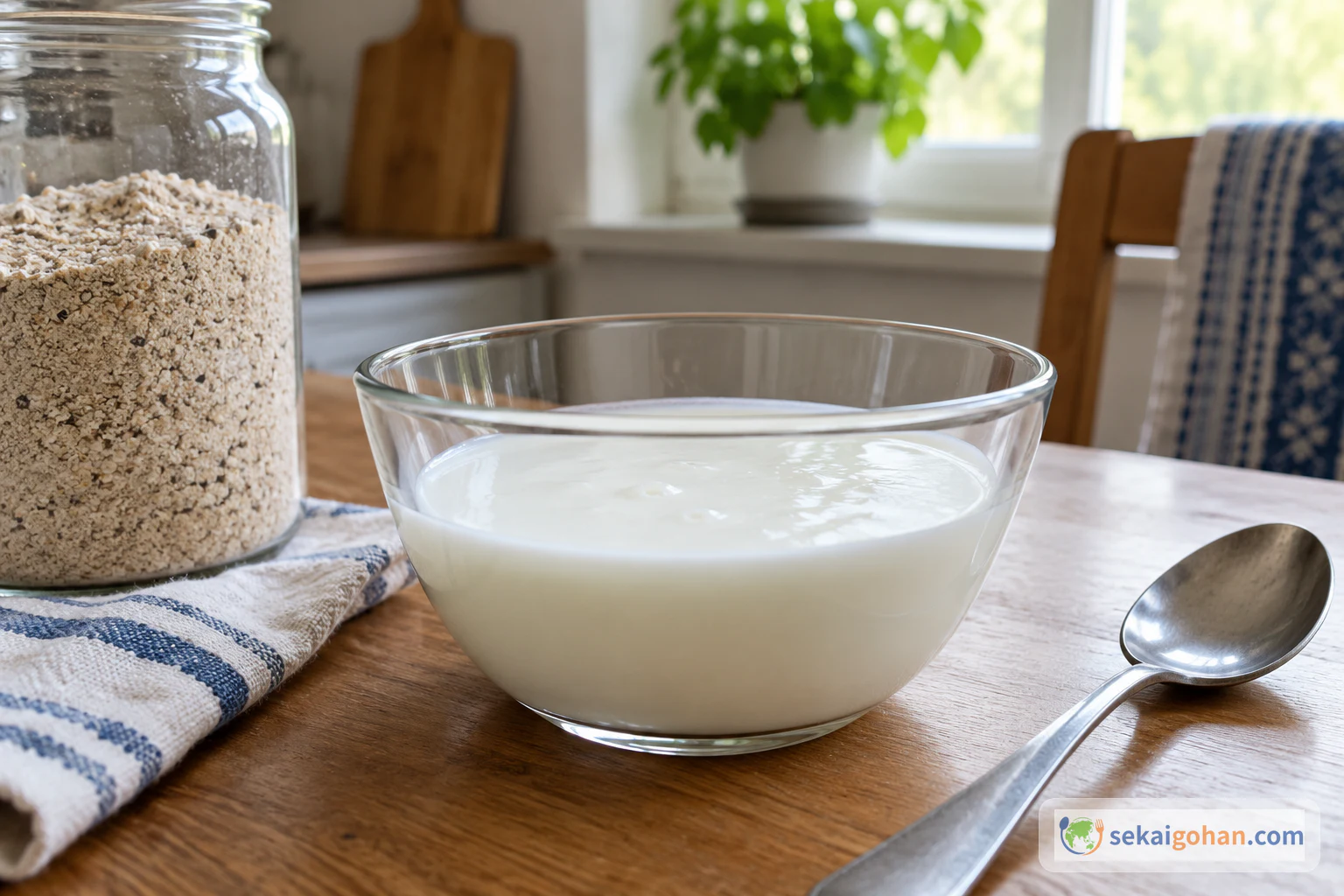
Plain unsweetened kefir lets you control the sweetness yourself and stays close to the soured-milk base. Yogurt is an allowed swap with a different result. Unflavored yogurt is thicker, so the same amount of flour gives a heavier bowl with a different sourness.
How to Make Kama
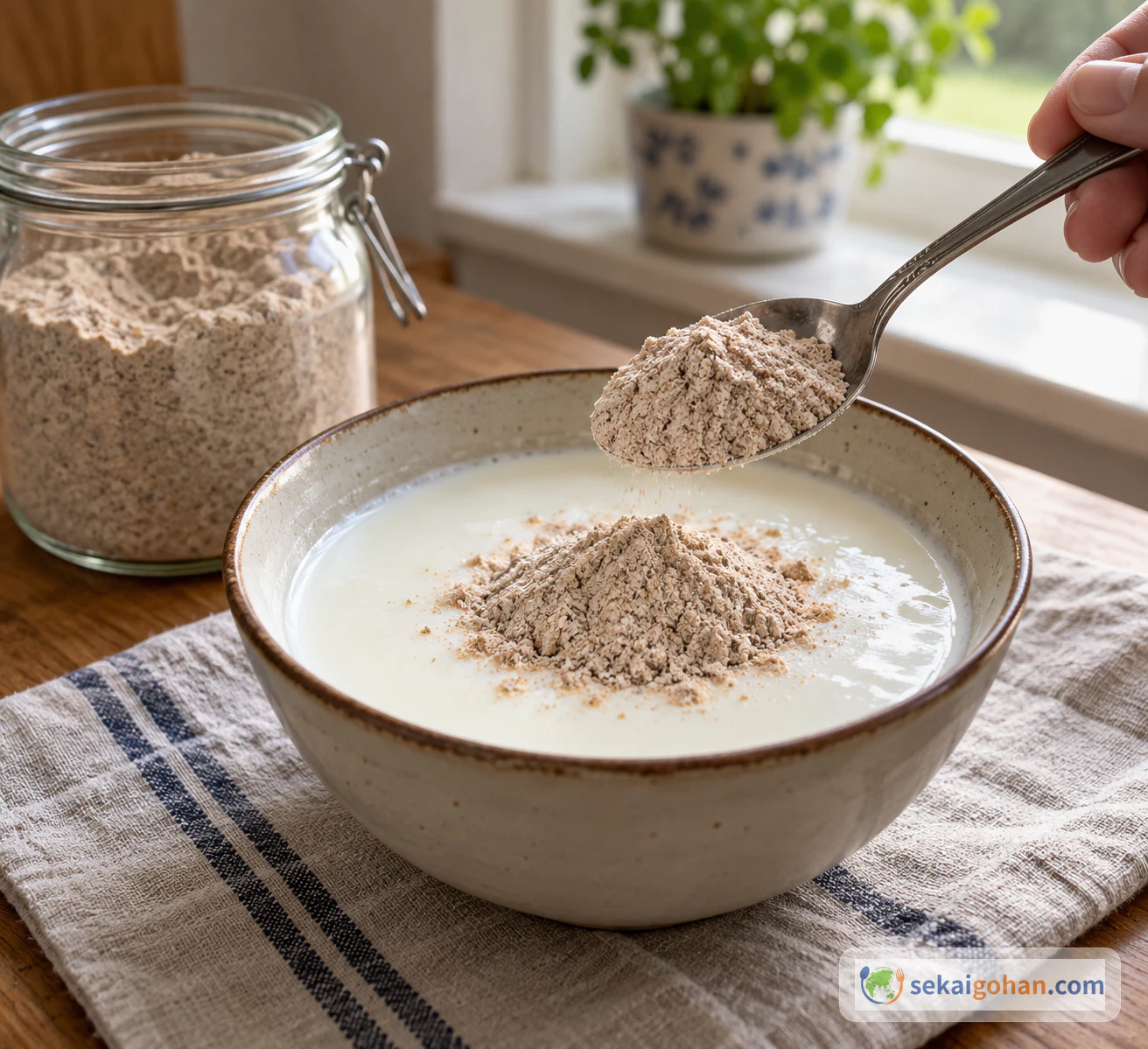
Everything is simply mixed. Serving it cold suits its role as a hot-weather snack.
Kama contains dairy and is meant to be made fresh and eaten right away; mix only as much as you will eat.
Kama Troubleshooting
| Condition | Likely reason | What to do |
|---|---|---|
| Too thick or heavy | Flour toward the 3-tablespoon end, or yogurt instead of kefir | Start at 2 tablespoons next time, or loosen with a little more kefir |
| Lumps of flour | Flour added in one heap | Spread the flour over the surface and stir it in gradually; press any lumps against the side of the bowl with the spoon |
| Thin and watery | Flour at the low end | Add more flour, staying within 2–3 tablespoons in total |
| Flavor tastes unfamiliar compared with another kama | Different product blend | Check the label for which grains and legumes it contains |
| Tastes nothing like kama | A substitute flour was used | Look for kama flour itself |
Kama Variations
- Honey instead of sugar. Use 2 teaspoons of either.
- With or without berries. Fresh or frozen wild berries are optional. Without them, the sourness of the milk and the roasted aroma of the flour carry the bowl.
- Less sweet. In Mulgimaa, kama is seasoned with salt, sugar or honey to taste, so a less sweet bowl is part of the tradition.
- Letting it stand. Leave the mixture to stand for a while and its thickness changes.
Frequently Asked Questions
Can I use kinako instead?
Roasted soybean flour (kinako) is not the same blend or the same roast, so the flavor and texture will be different. If you use it, treat the result as a different dish rather than kama.
Is kama a cooked dish?
No. The flour is simply mixed with curdled milk or kefir; there is no heating step.