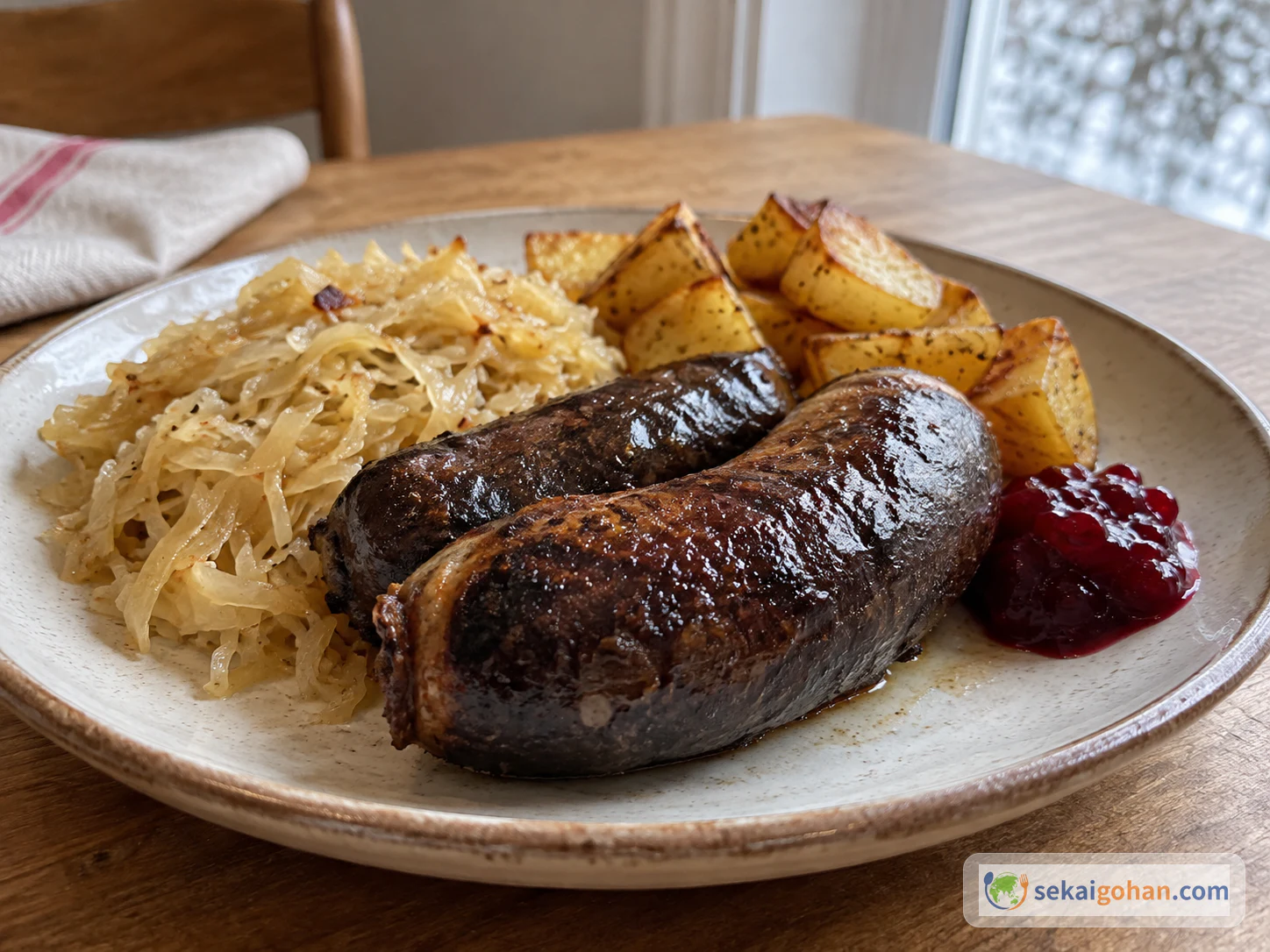
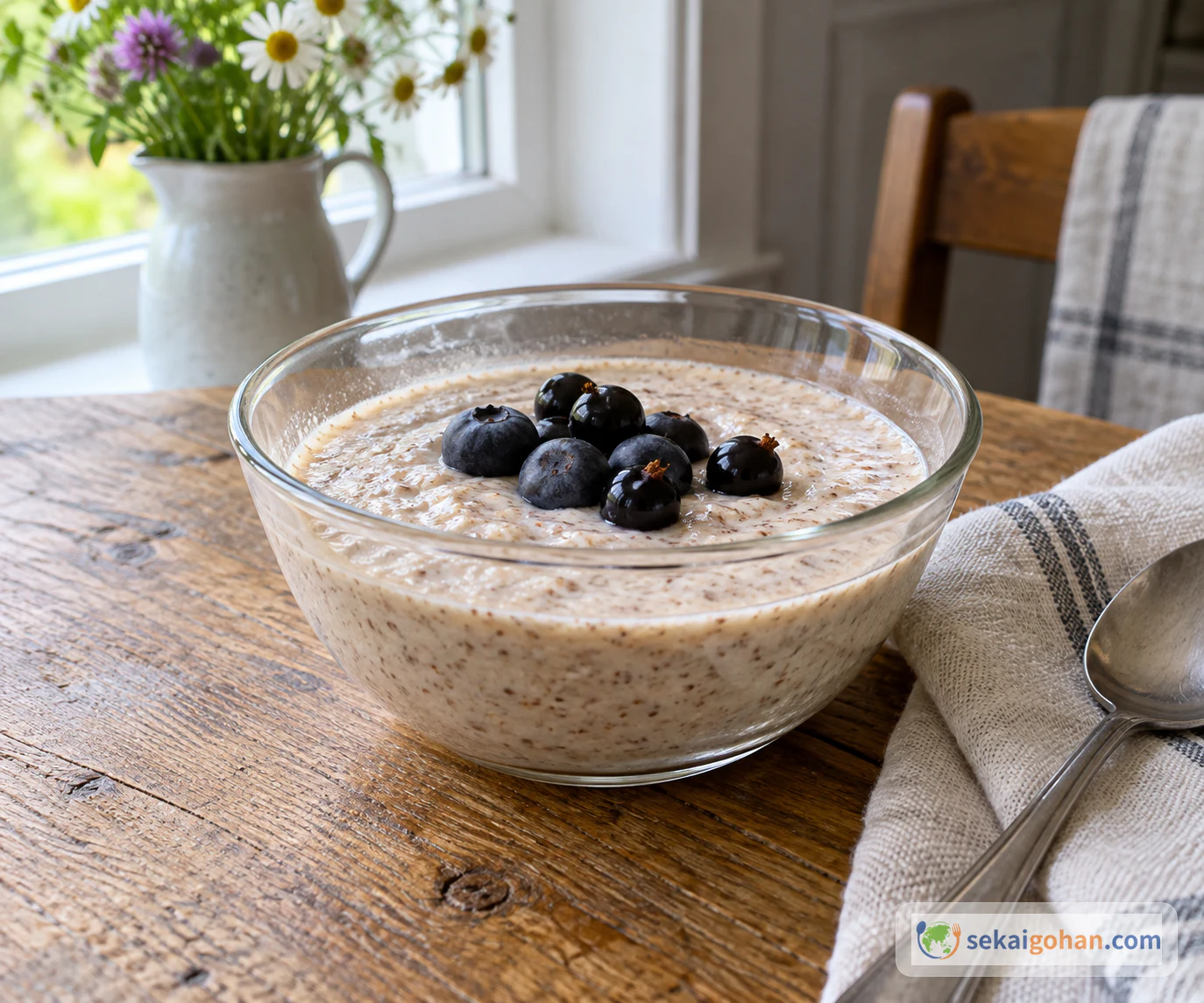
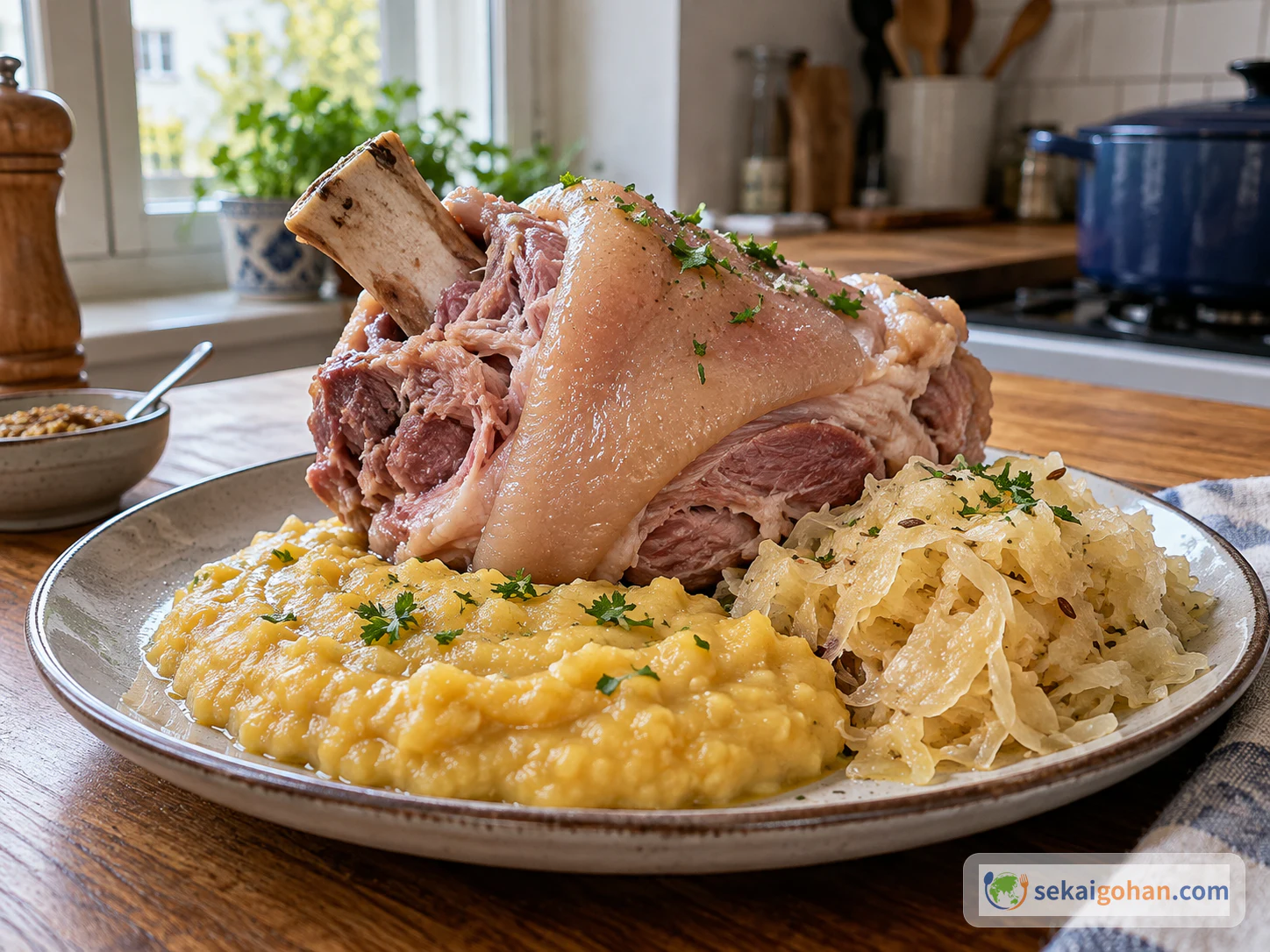
The moment you open a bag of sauerkraut, it is quite sour, the pork looks plain, and the barley is a humble grain rather than a star. But render the pork fat in a heavy pot, layer in the cabbage and barley, drop the heat to low, and the smell of the kitchen slowly changes. The lactic sourness rounds off, the barley takes up the pork fat and swells soft, and you end up with a winter plate that begs for white potatoes. This is mulgikapsad, a stew of sauerkraut, pork and barley from the Mulgi region of southern Estonia.
About mulgikapsad
Mulgikapsad (also written Mulgi kapsad) belongs to the local food culture of the Mulgi region. Pork fat and meat, fermented cabbage and grain are braised for a long time in a pot or the oven. Households once layered the pork, cabbage and grain and let the slow heat of the oven or hearth do the work, and to get close to that old way, you want a fatty cut of pork, strongly fermented cabbage, whole grain kernels and a long braise.
Mulgi is the region of southern Estonia, and kapsad means cabbage. In English it is often called Estonian sauerkraut with pork and barley.
Compared with Poland's bigos, it has less meat and mushroom, and unlike Norway's fårikål, there is more going on than meat and cabbage. What makes mulgikapsad Estonian is the way the barley takes up the liquid in the pot.
Making it at home calls for no unusual seasoning. It comes down to three things: keep some of the sauerkraut's sourness, brown the pork a little, and cook the barley until it is soft.
| What to keep | Why | How to bring it down to a home kitchen |
|---|---|---|
| Fermented cabbage | The sourness and the scent of a preserved food are the core of the dish | Use store-bought sauerkraut; rinse half only if the sourness is strong |
| Pork fat | Keeps the cabbage and barley from being monotonous | Use pork belly or shoulder and render the fat first |
| Barley | Sets this dish apart from a plain cabbage stew | Use pearl, rolled or hulled barley, rinsed first |
| A long braise | Rounds off the sourness and makes the meat and barley one | Low heat, keeping a little liquid at the bottom |
| Potatoes | A staple that catches the saltiness and sourness | Boil separately and mash them together on the plate |
Ingredients (serves 4)
This amount is for four as a main dish. With potatoes and dark bread alongside the table comes together, and a little is left for the next day.

This recipe uses pork and barley. Barley is a grain that contains gluten, as wheat does. Sauerkraut salt content differs a lot between brands, so don't add too much salt at the start of cooking, and adjust at the end.
Choosing ingredients for mulgikapsad
Sauerkraut is where the balance is set. Wash all of it and you get a thin cabbage stew; add all the liquid from the jar or bag and it can taste too sour for a weeknight dinner. The first time, rinsing only half, lightly, is the safest bet.
Pork, onion and potatoes come from any ordinary supermarket. Allspice is optional, since the stew stands up with just black pepper and bay leaf, but if you cook several Baltic and Central European stews, a small jar of the whole spice also goes into svíčková and bigos.
Equipment matters more than you might expect. Mulgikapsad has little liquid, so a thin pot scorches easily, and a heavy one pays off for any dish that simmers long over low heat. A thermometer is also handy: when the pork goes in late or you reheat the next day, it is hard to tell by looks whether the center is hot.
| Local-leaning | Easy to use at home | Caution |
|---|---|---|
| hapukapsas, fermented cabbage | Store-bought sauerkraut | Vinegar-style products are sharply sour, so rinse half |
| kruubid, barley grains | Hulled barley, rolled barley, pearl barley | Rolled barley cooks quickly, so watch for it falling apart |
| Fatty pork | Pork belly block, shoulder | Thin scraps dry out easily. If using them, shorten the stewing time |
| Dark bread | Rye bread, whole wheat bread | A sour bread suits better than sweet white bread |
| Residual heat of hearth or oven | Low heat in a heavy pot | Set the lid slightly ajar to let moisture escape |
Method
It is a layered stew, but if you mix everything together from the start, the barley sets at the bottom and the aroma of the pork weakens. Rinse the barley, render the pork fat, layer the cabbage. In this order, it comes together naturally in the pot.
Common mulgikapsad problems and fixes
When mulgikapsad goes wrong, it turns out sour, watery or with hard barley. The fix is usually heat and moisture, not more ingredients. Keep a little liquid on the bottom of the pot without letting the cabbage swim in it; with too much liquid, the flavor thins before the barley can take it up, and only the sourness floats.

| State | Cause | How to recover |
|---|---|---|
| Too sour | Used all the sauerkraut as it was | Serve more boiled potatoes. Next time rinse half |
| Watery | Water covered the ingredients | Take off the lid and reduce 10 minutes over medium-low |
| Barley is hard | Not soaked enough, heat too low | Add ¼ cup (80 ml) water and cook 15 more minutes over low heat |
| Burnt bottom | Thin pot, heat too high, not stirred | Don't mix in the burnt layer; move only the top into another pot |
| Turns into just cabbage stew | Not enough browning and fat from the pork | Fry a little bacon in a separate pot, return it with its fat and cook 10 minutes |
Sugar alone can't hide the sourness without tasting odd. Let potatoes and dark bread take it, round it with the pork fat, and let long cooking take off the corners.
Serving and storing mulgikapsad
At the table
To keep it Estonian, potatoes, dark bread and a little sour cream are all you need. On a day you want more meat, a grilled sausage alongside makes the table heartier, though mulgikapsad already has pork in it, so the first time, let the sourness and the barley lead.
Storage and reheating
Mulgikapsad comes together even better the next day. The barley soaks up the liquid and firms up in the refrigerator, so add a little water when reheating to bring it back without scorching.

| Storage method | Time | Reheating |
|---|---|---|
| Refrigerator | 3 days | Add 2 tbsp water to a pot and heat 8 to 10 minutes over low |
| Freezer | 3 weeks | Freeze in portions. Thaw in the refrigerator, then reheat in a pot |
| Packed lunch | Not recommended | The plentiful liquid easily migrates into rice |
| Potatoes | Same day | Store separately. Freezing spoils the texture |
To reheat in a microwave, put a single portion in a heatproof dish, sprinkle with 2 tsp water, cover loosely with plastic wrap and heat at 600 W for 2 1/2 to 3 minutes, stirring once partway. Heat until steam rises from the center.
Related dishes
Among northern European cabbage dishes, fårikål stews lamb and cabbage quietly, while mulgikapsad puts the sour cabbage and the weight of the barley forward. For a richer meat dish, try bigos; for a sweet-sour cabbage side, Germany's Bavarian kraut (bayrisch Kraut) is a close match.
Toward the Nordic countries, the fish soup lohikeitto shows another way with dairy and potatoes, and if you like rye and thin crusts, Finland's Karelian pies (karjalanpiirakka) are worth a look. For a rich staple of potatoes and fermented dairy, Slovakia's bryndzové halušky can sit beside it.
Frequently asked questions
Can I make it with ordinary cabbage instead of sauerkraut?
You can, but it loses much of the character of mulgikapsad. Rather than adding 1 tbsp white wine vinegar and 1/2 tsp salt at the end, mix in even just 7 oz (200 g) of sauerkraut.
Can I make it with rolled barley?
Yes. Rolled barley softens faster than hulled barley, so 10 minutes' soaking is enough. Plan on 60 minutes of stewing and check partway that the grains haven't broken down too much.
Can I make it without pork?
Meatless home versions exist, though the taste is different. Cook the onion in 2 tbsp oil and add 5.5 oz (150 g) mushrooms to make up the savoriness, and serve it with sour cream.
Are caraway and allspice essential?
No. Some home versions use just salt, sugar and pepper, and the first time, bay leaf and black pepper are fine. Caraway lightens the aroma of the cabbage, and just 2 allspice berries add a warm fragrance.
How do I serve it to family members who dislike sourness?
Rinse half the sauerkraut and serve more potatoes. A teaspoon of sour cream on top makes the sourness feel rounder than extra sugar would; make the stew itself too sweet and the fermented cabbage loses its character.