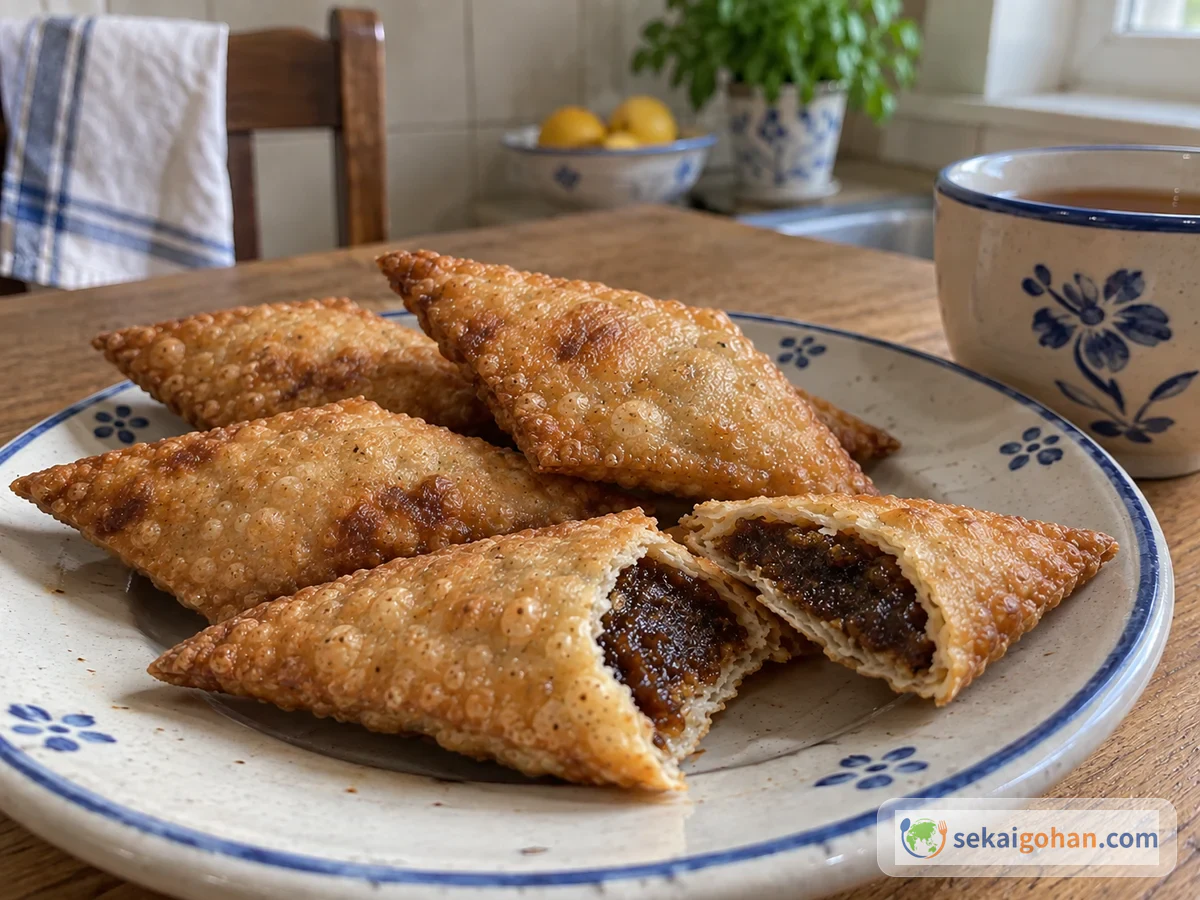
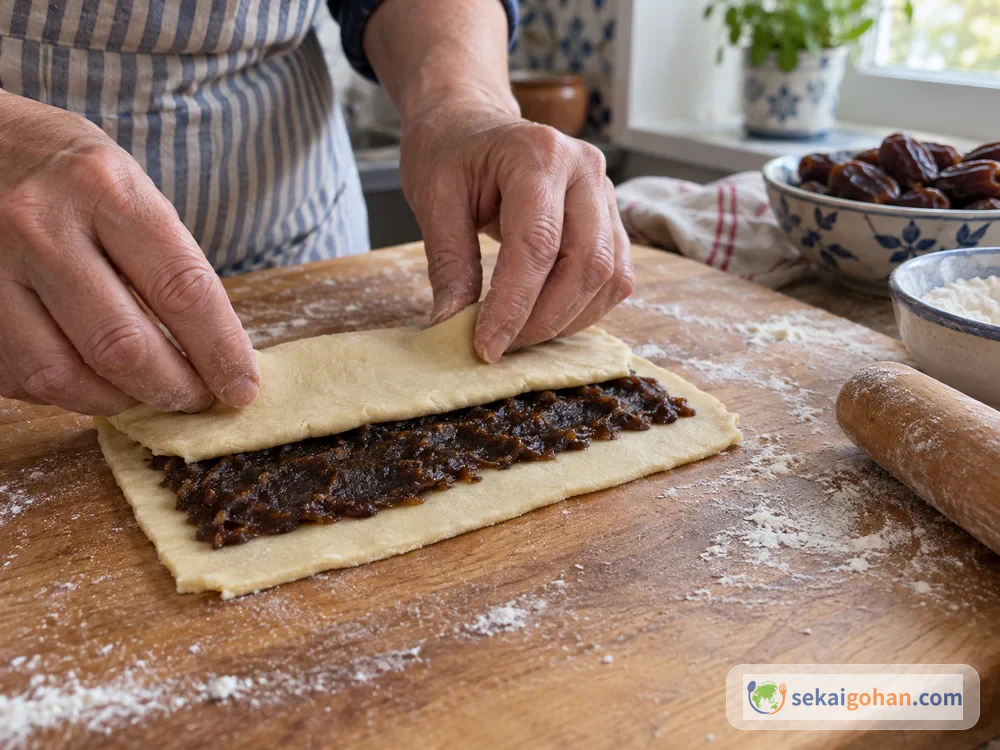
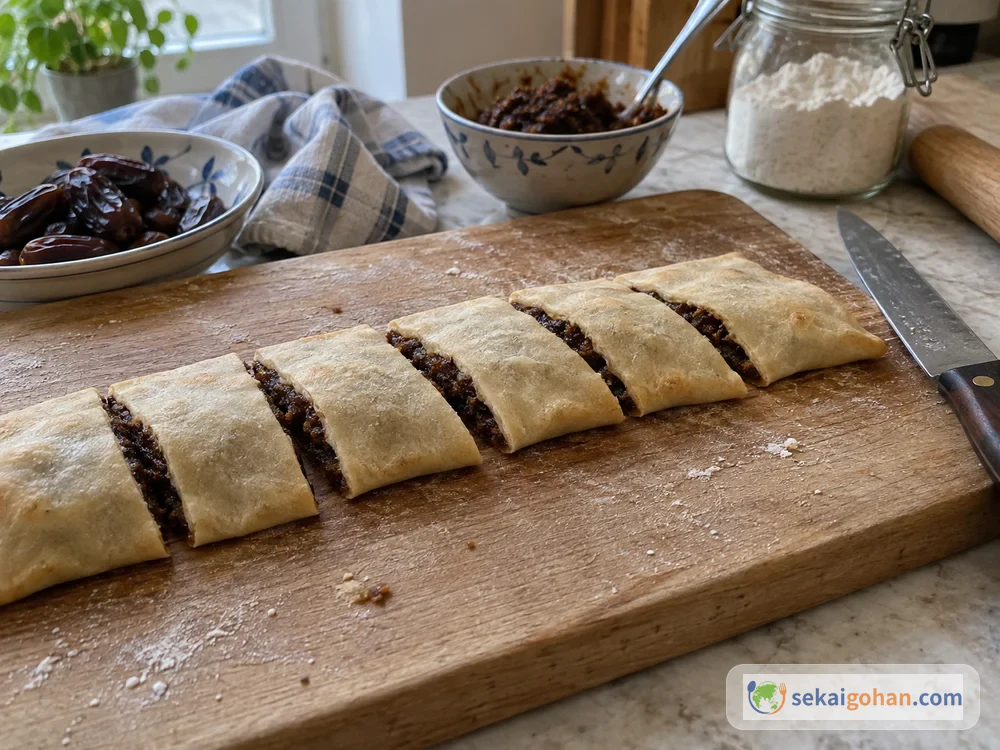
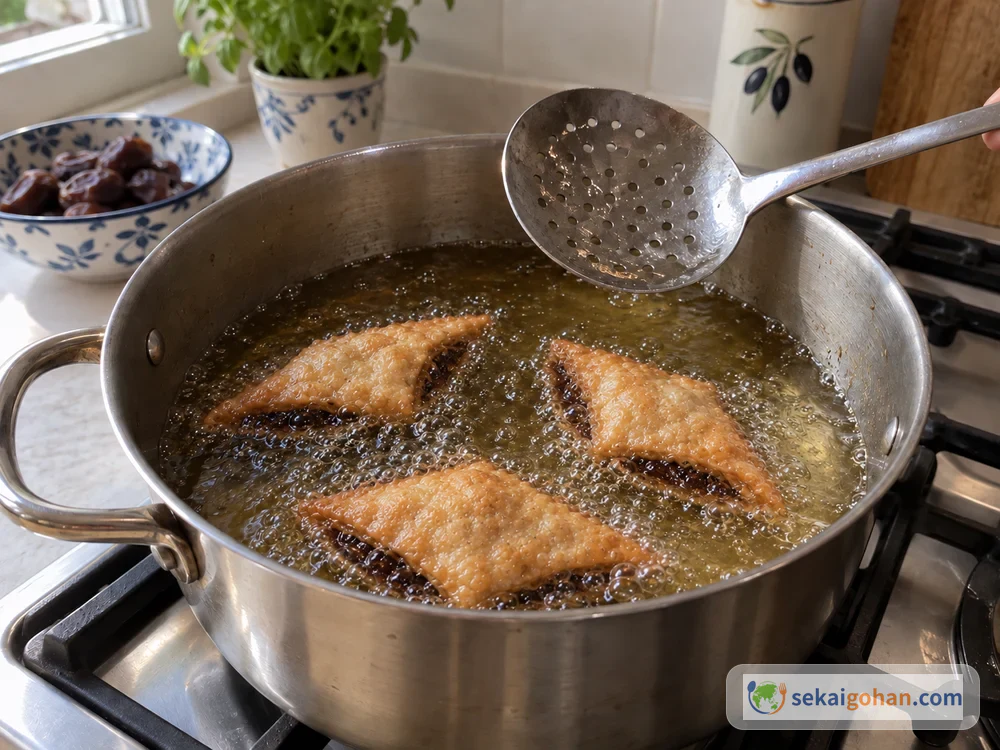
At a village festa in Malta, diamond-shaped sweets come straight out of the stall's oil and get lined up on paper, small bubbles still standing on their golden skins. Break one open and steam drifts up from the dark brown date filling. Imqaret are Maltese date pastries, traditionally fried, and their appeal is the contrast between thin dough and dense date filling. The sweetness comes almost entirely from the dates; only 1 tbsp of sugar goes into the dough. At home you can fry them or bake them, and the ingredient list is short: flour, butter and dates, plus orange flower water if you want its aroma.
Imqaret in Malta: the name, the festa and the home kitchen
Imqaret is a plural; the singular is maqrut, a word linked to the Arabic for a diamond shape, and the sweet shows Arab cultural influence. Cut the filled roll on the diagonal and you get that diamond, so the diamond remaining in the name is something you can check in your own kitchen.
You'll find imqaret in restaurants and cafés, at home and at festival stalls. Sometimes you eat one fresh from a stall; sometimes it sits beside a cup of tea at home. They're enjoyed with tea at Christmas too, but they belong to the whole year, from the festival stall to teatime.
Recipes vary from maker to maker rather than between Malta and Gozo. Some cooks use citrus juice or zest, some aniseed or anise liqueur, others cinnamon, clove and flower water, or a mix of anise, citrus and vanilla. One local baked version uses flour, margarine, orange, dates and star anise. Each household settles on its own spices.
Imqaret can look like Tunisian makroud, but this version uses a flour and butter dough, skips the honey syrup and leaves semolina optional. For the dough and syrup, compare it with the makroud recipe.
Ingredients (serves 6, 12 pieces)
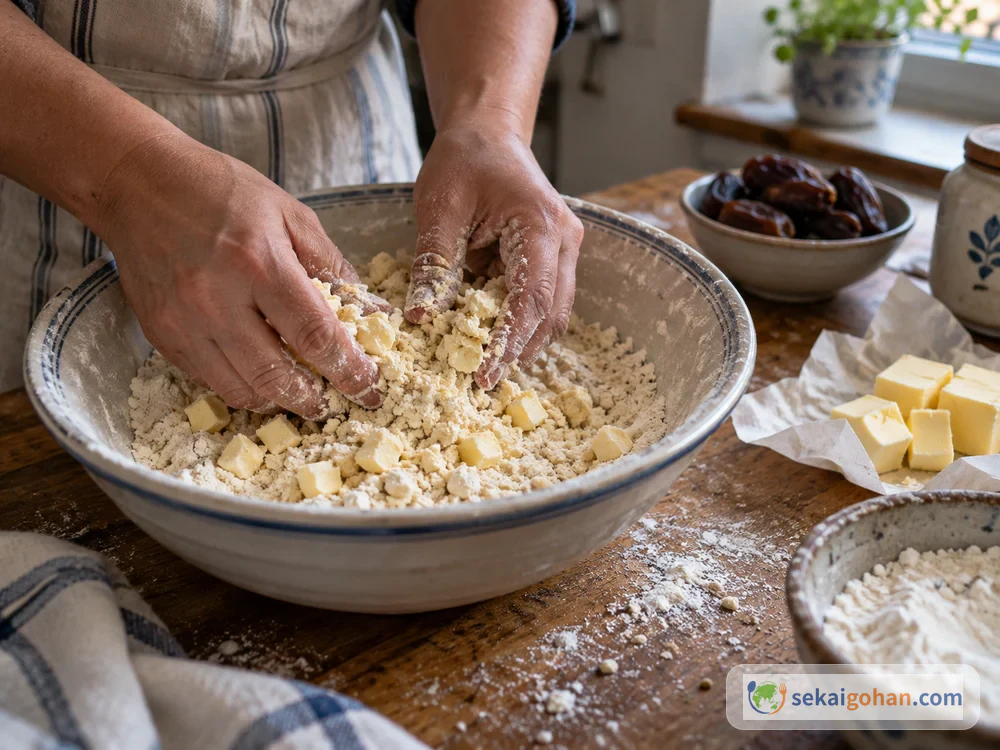
The dough is 10.5 oz (300 g) flour with 3.5 oz (100 g) unsalted butter, and the filling is 9 oz (250 g) pitted dates. The 1 tbsp of sugar goes only into the dough. If the dates have pits, remove them and then weigh. The standard is 9 oz (250 g) with pits removed. Even if the package says pitted, check each one for leftover pits and remove any hard parts.
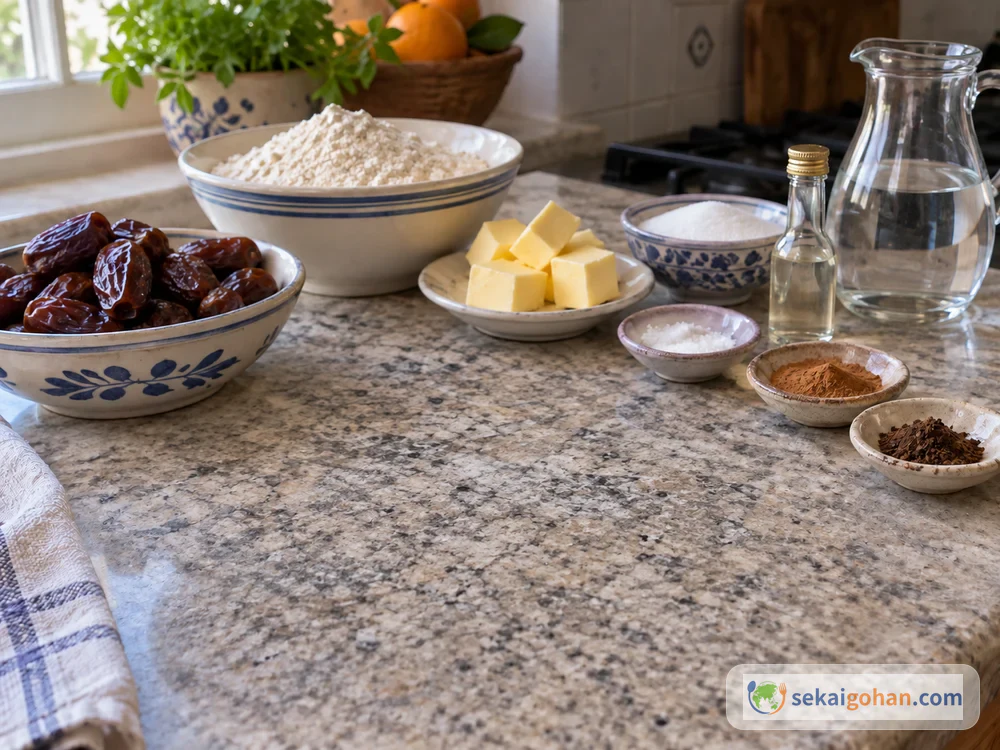
Orange flower water is a food-grade water that adds the scent of orange blossom. It smells different from juice or zest, so do not replace it with the same amount of orange juice. When buying, check for a food label and do not choose cosmetic or fragrance products. Choose food-grade flower water. Without it, the result is still a date and spice sweet. It is worth getting when you want to reproduce the floral aroma too. If you leave out the 1 tsp in the dough, put that 1 tsp (5 ml) back as water.
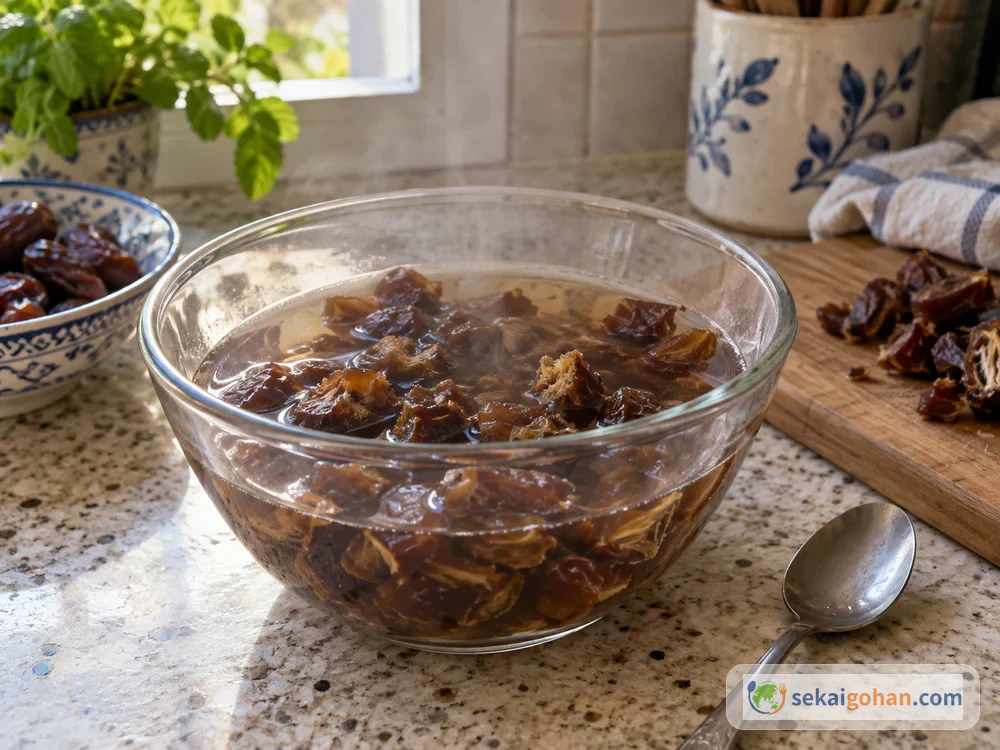
Dates vary in dryness by product. After soaking, check whether they can be crushed by pressing with a spoon, not a finger. 1 hour is the standard; if they are still hard, soak another 15 to 30 minutes. Replacing them with raisins changes the skin and the acidity of each piece, so it does not give the same filling.
This sweet contains the wheat in the flour and the milk in the butter. People who react to wheat or milk should not eat it. Do not assume that swapping in margarine removes the milk components; check the ingredient list of processed foods. People who need to avoid food allergens should check the ingredient labels and not use the foods that cause the reaction.
Choosing dates and aromatics for imqaret
The result depends on the moisture of the filling and the thickness of the dough. Use pitted dried dates for a sticky filling that stays put inside the 0.25-inch-thick (5 mm) dough. Raisins, with their different skins and acidity, won't give the same result.
Orange flower water is optional, but leaving it out changes the aroma. Local cooks also use orange zest: finely grate just the colored part of 1/2 a well-washed orange, since the white pith is bitter. Zest can stand in for the flower water, though flowers and zest are different scents. Stick to zest rather than juice, which would loosen the filling.
Some local recipes use aniseed. To try it, leave out the 1/4 tsp clove and add 1/2 tsp lightly crushed aniseed. Star anise and aniseed don't swap in equal amounts. Some recipes also add liqueur; this is an alcohol-free way to get a similar aroma.
How to make it
Run the 1 hour of soaking the dates and the 1 hour of chilling the dough at the same time. Soaking and chilling in parallel keeps hands-on work to about 30 minutes. Frying takes about 15 minutes in total, in 3 batches. The total is about 1 hour 45 minutes, not counting extra soaking time for the dates.
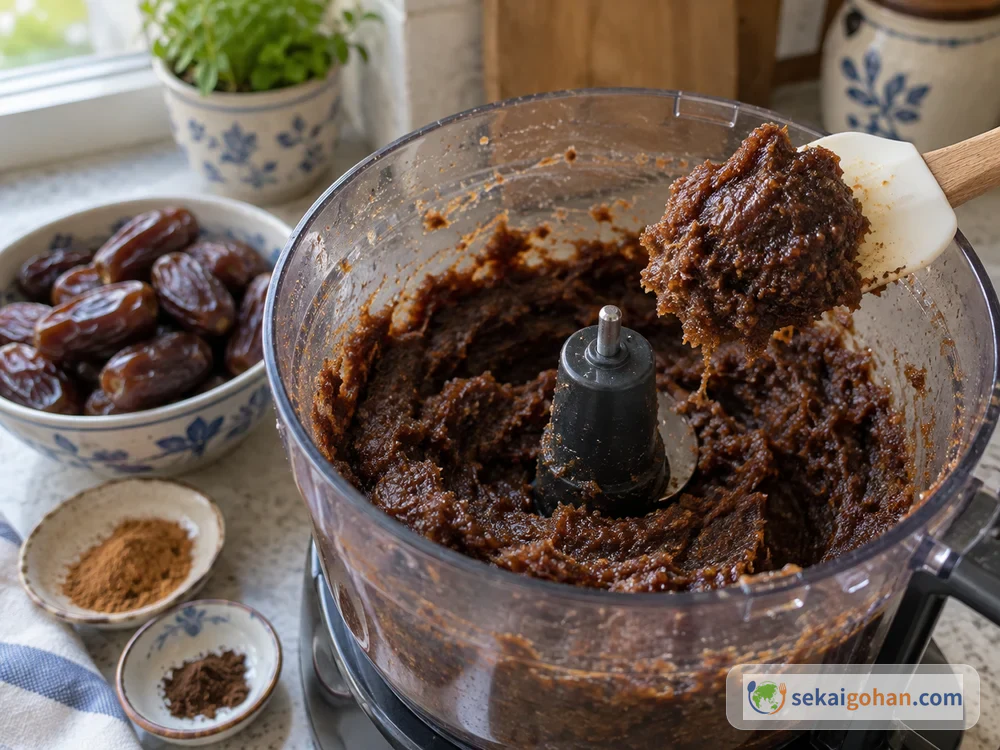
You need a thermometer, rolling pin, knife, deep pot, slotted ladle, rack and paper towels. Without a food processor, you can still make the filling by chopping the softened dates finely with a knife.
If the rested dough tears as soon as you roll it, it is dry or too cold. First leave it at room temperature for 5 minutes, and if it still falls apart, work in a small amount of water with wet fingers. Adding a lot of flour makes the dough hard.
If it sticks to the counter, the dough has warmed too much. Cover and chill in the refrigerator for 10 to 15 minutes, and use the dusting flour thinly, about 10 g.
Do not step away from the pot while frying. If the oil smokes, turn off the heat. Do not point the pot handle toward the walkway, and keep a lid that can cover the pot nearby.
Right after frying, the filling holds heat longer than the outside. After taking them out, leave them about 5 minutes, then break one open to check the temperature before serving.
Why imqaret seams open
A seam that opens usually means the filling was spread to the very edge, there was too much of it, or the dough had warmed up. Leave a 0.25 inch (5 mm) margin when shaping, and press any long side that has opened closed again before it goes into the oil. Closing the long seam is a job for before the pot. Filling showing at the diagonal cut ends is normal, so don't try to reseal it with fingers or chopsticks once it's in the oil.
Serving, storing and baking imqaret
Serving imqaret with tea
Once the fried pastries have cooled a little, try them with unsweetened tea or coffee, or with ice cream. If you serve ice cream alongside, let the piping hot filling cool to a safe temperature first. There's no need for sauce or honey; the center of the sweetness is the dates.
For another pastry filled with date paste, try the maamoul recipe. Making the thin-wrapped fried pastry alongside the molded one shows two sides of the same filling.
Baking imqaret and other variations
To bake instead of fry, shape them the same way, then arrange them with space between on a paper-lined baking sheet. Bake in an oven preheated to 375°F (190°C) for about 15 minutes, until the surface is pale golden and the dough is crisp; you won't need the 3¼ cups (800 ml) of oil. Frying gives a skin with fine bubbles, while baking gives a crisp skin closer to a biscuit. Home ovens vary, so if the color is still pale, add 2 to 3 minutes at a time.
| How to change it | Amount and method | The taste and texture that change |
|---|---|---|
| Bake in the oven | 375°F (190°C), about 15 minutes | A crisp baked-pastry texture rather than the bubbles of a fried skin |
| Leave out the flower water | ½ cup (125 ml) cold water for the dough, 0–5 ml water for the filling | Centered on dates and spices |
| Add orange zest | Zest of 1/2 to the filling | Fresh peel scent rather than floral aroma |
| Add anise | Omit the clove and use 1/2 tsp crushed aniseed | A sweet licorice-type aroma |
| Tone down the sweet aroma | Omit the clove and keep the cinnamon at 1/4 tsp | The dates come through more clearly |
Storing leftover imqaret
The texture is best the day you make them, so make only as many as you can finish that day. Divide leftovers into clean shallow containers, don't leave them long at room temperature, and refrigerate them. Divide and cool quickly is the rule.
Rather than serving refrigerated ones cold, warm them in an oven preheated to 325°F (160°C) for about 5 to 10 minutes, until the center reaches 167°F (75°C) or more. Lay aluminum foil loosely over any surface that looks about to burn.
Equipment and size change how long this takes, so check the center temperature rather than relying on time. A microwave alone tends to make the dough soft. Appearance and smell can't confirm safety, but if there is an off smell or discoloration, don't eat them.
Nutrition
Per serving of 2 pieces: 518 kcal, 6 g protein, 24 g fat, 2.5 oz (72 g) carbohydrate, 4 g fiber and 102 mg sodium. This doubles the baked version per piece (214 kcal, 3 g protein, 7 g fat, 1.25 oz (36 g) carbohydrate, 2 g fiber, 51 mg sodium) and adds 90 kcal and 10 g fat, assuming 10 g of frying oil absorbed per person, so treat it as an estimate that assumes an amount of absorbed oil. Oil temperature, frying time, size, dusting flour and substitutions all shift the numbers. Baked, 2 pieces come to 428 kcal.
Frequently asked questions
Can I make it without a food processor?
Yes. After soaking, soften the dates until a spoon can crush them, drain, chop very finely with a knife, and mix in the spices and flower water. Chopping takes about 5 to 10 minutes. It won't be as smooth as from a machine, but aim for a filling that spreads without running.
Is it a spicy sweet?
No chile is used. Cinnamon and clove are there for aroma, and you can leave out the clove if you don't like its scent.
How far can I prepare the day before?
Prepare it on the day; the dates soak and the dough chills within the same day. If you must stop partway, put everything in the refrigerator rather than leaving it at room temperature overnight.