Stuffat tal-Fenek: Maltese Rabbit Stew with Red Wine and Tomato

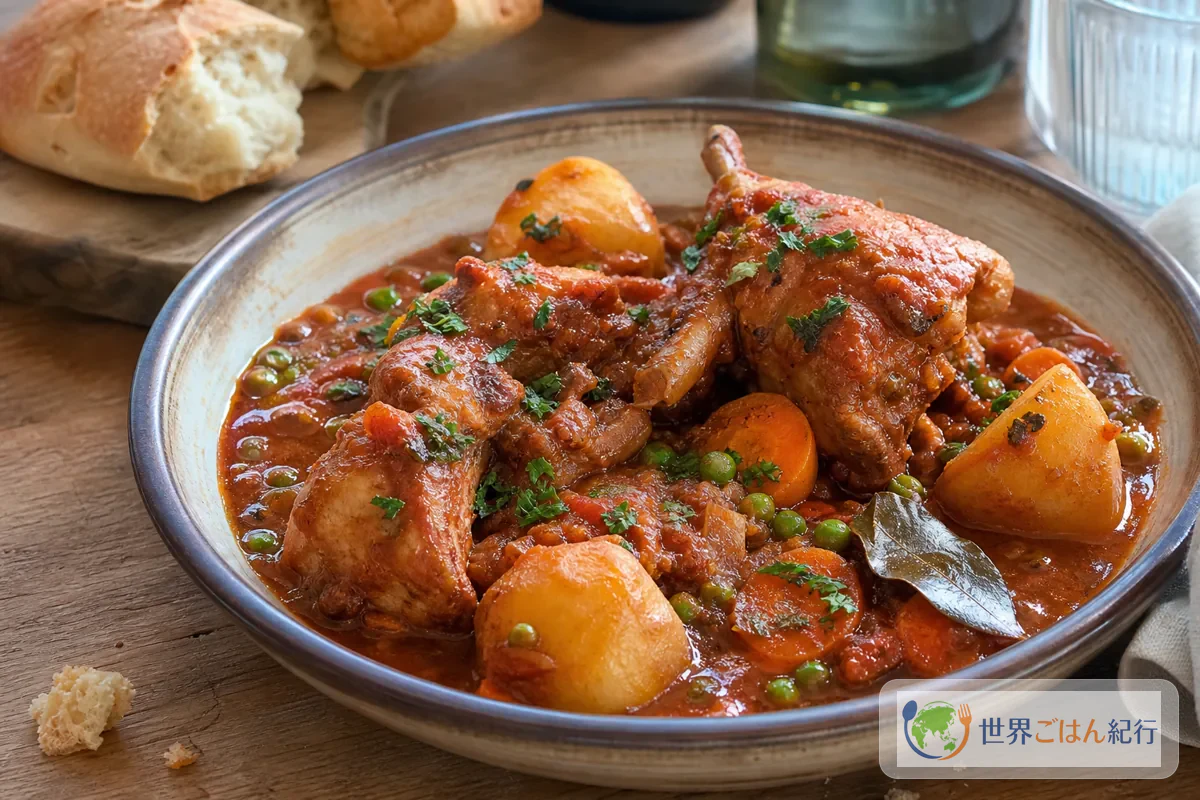
Stuffat tal-Fenek, the Maltese rabbit dish braised in red wine and tomato
Prep
35 min
Cook
1 hr 25 min
Total
2 hr
Serves
4 servings
Level
Intermediate
Cuisine
Maltese

Stuffat tal-Fenek, the Maltese rabbit stew, adapted for a home kitchen. Covers the heat for simmering in red wine and tomato, bone-in chicken as a substitute when rabbit is unavailable, the local habit of tossing the sauce with pasta, what to buy, how not to over-reduce, storage and reheating, and an FAQ.

Cooking flow

Cooking steps

STEP11 / 7

Rest the rabbit in red wine

25 min (marinating takes at least 30 min)

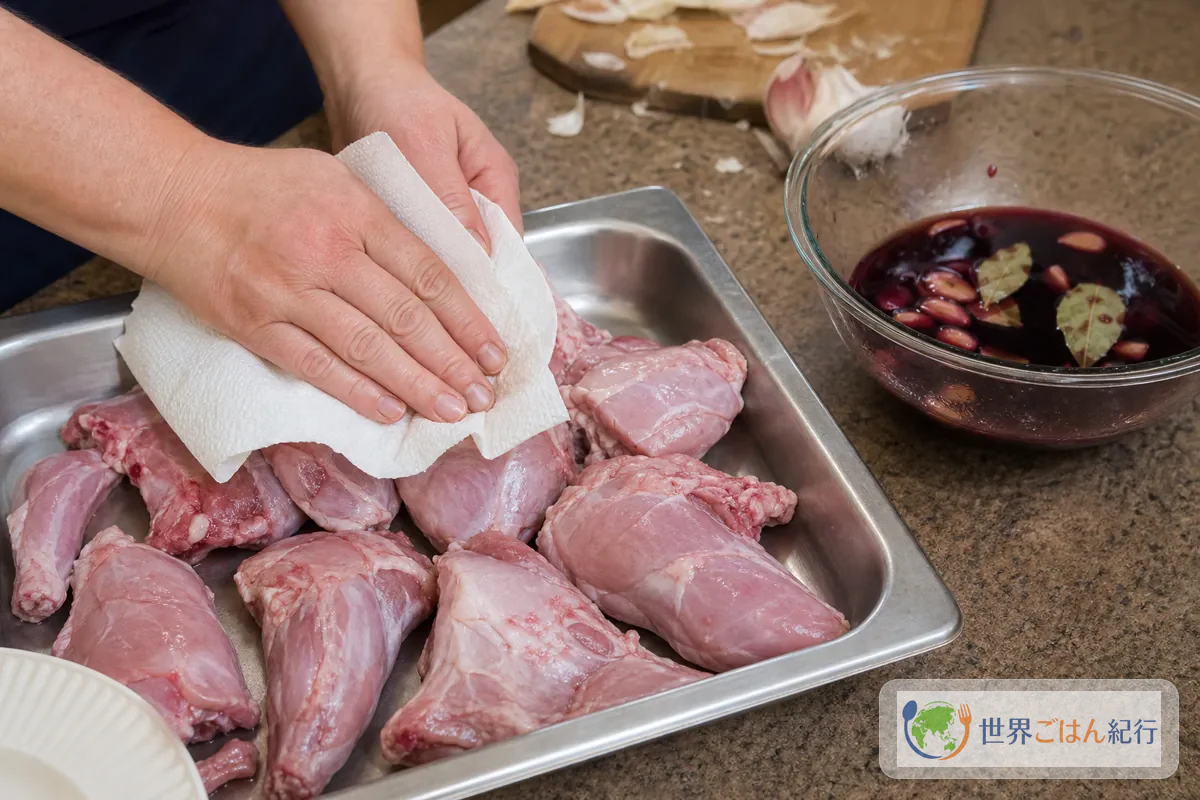
Hands patting dry the rabbit before resting it with red wine and bay leaf

No heat needed. Rub the rabbit with 1 tsp salt and the black pepper, then put it in a bowl with the red wine, 2 crushed garlic cloves and 2 bay leaves. Refrigerate for 30 minutes to overnight. Even a short rest lets the wine's aroma into the meat and ties the stew together.

After marinating, take the meat out and pat it thoroughly dry with paper towels. Do not throw out the marinade; set it aside. If moisture remains, the meat starts to stew before it browns in the next step and the sauce turns dull.

STEP22 / 7

Sear the meat

12 min

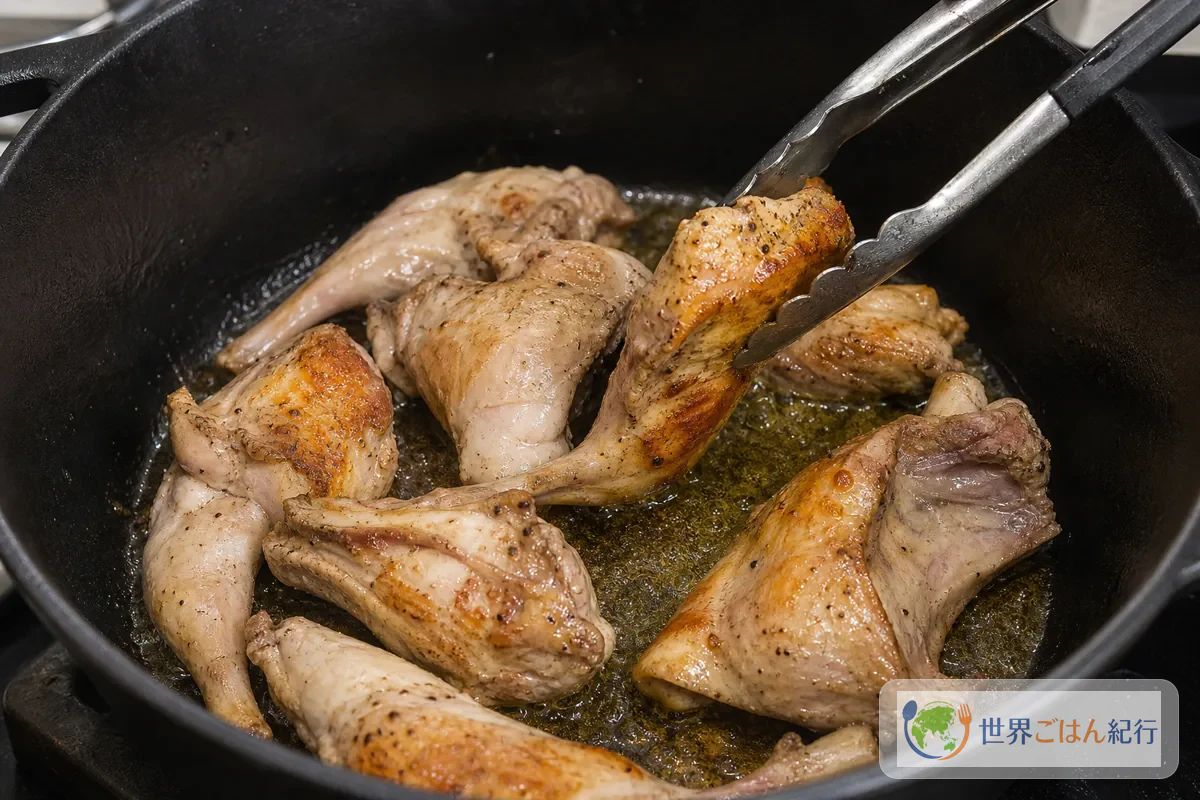
Searing the surface of rabbit to golden in a heavy pot

Put 2 tbsp olive oil in a heavy pot and warm it over medium heat for 2 minutes. It is hot enough when the meat makes a small sizzle as it goes in. Do not crowd the rabbit in all at once; cook in two batches, 2 minutes per side. The surface only needs to be pale golden; you do not need to cook it through.

Transfer the seared meat to a plate for now. The brown bits on the bottom of the pot are savor. Wipe off only the parts that have burned black, lightly, with damp paper.

STEP33 / 7

Sauté the aromatics

8 min

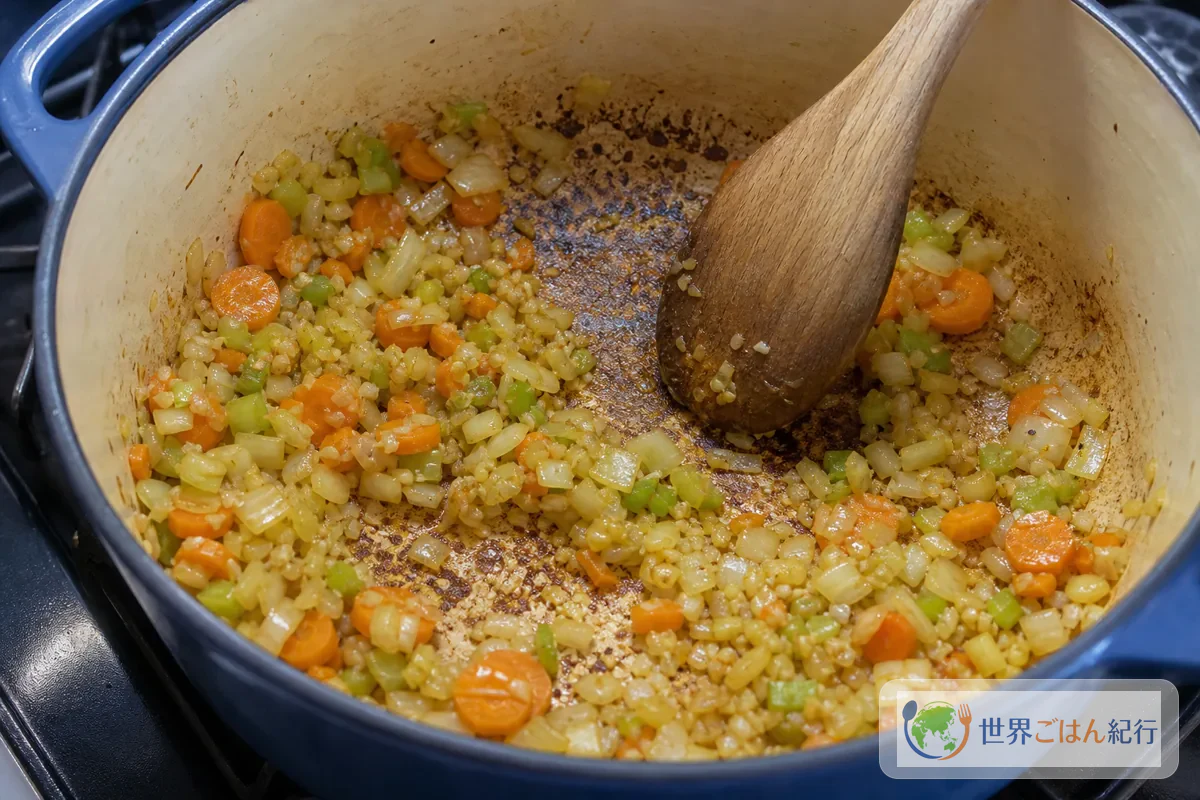
Sautéing onion, carrot and celery in the pot where the rabbit was seared

Add 1 tbsp olive oil to the same pot and, over the same medium heat, add the onion, carrot and celery. Sprinkle with 1/2 tsp salt and cook for 6 minutes, scraping the bottom with a wooden spoon. When the onion is translucent and the corners of the carrot have rounded a little, add the 2 minced garlic cloves and cook 1 minute.

Adding the garlic too early makes it bitter. Once the aroma rises, go straight on to the tomato paste.

STEP44 / 7

Dissolve the bottom of the pot with wine and tomato

7 min

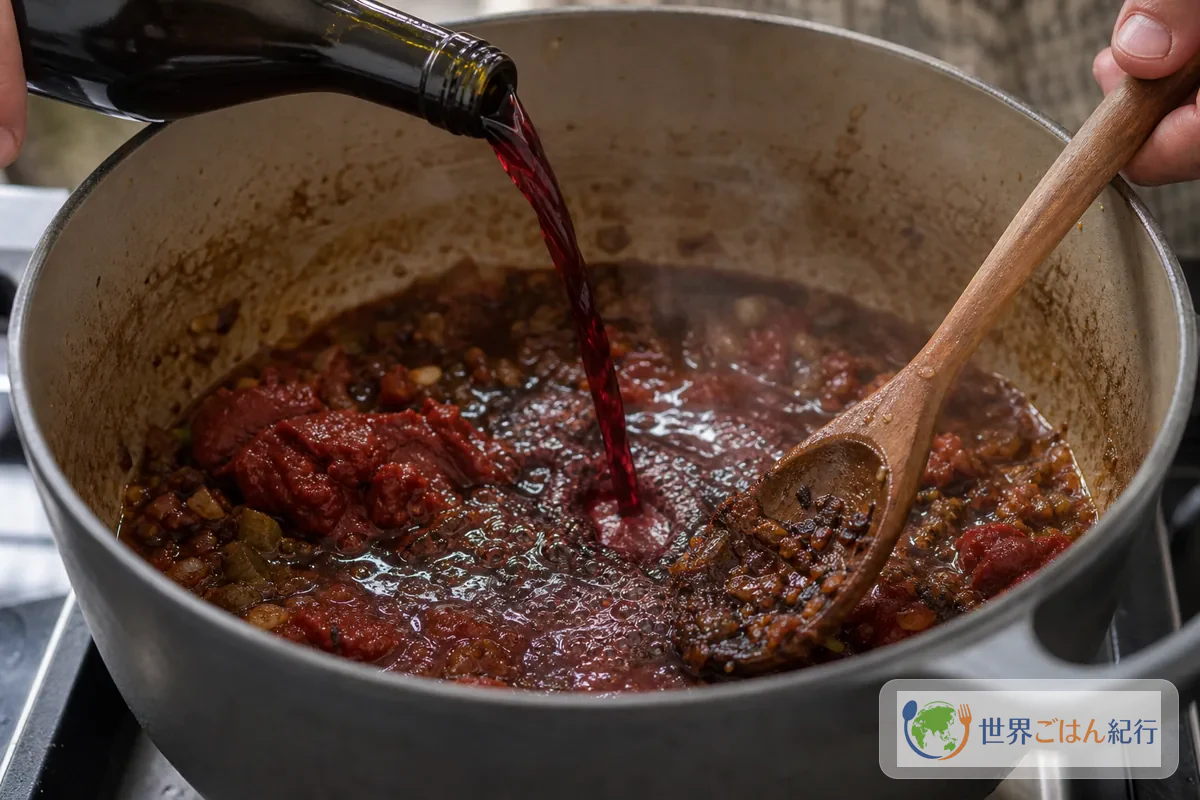
Pouring red wine into the pot and dissolving the tomato paste and browned bits

Add the tomato paste and cook over medium heat for 1 minute. When the color has deepened a little, add the reserved marinade. Scrape the bottom with a wooden spoon to move the brown bits into the liquid. Keep it at a boil over medium heat for about 3 minutes, reducing until the sharp smell of alcohol turns round.

Add the canned tomatoes, 1 cup (250 ml) water or light stock, 1 bay leaf and the allspice. Taste the liquid here, and stop when it seems a little under-salted. It concentrates as it simmers, so do not make it strong from the start.

STEP55 / 7

Return the meat and simmer gently

45 min

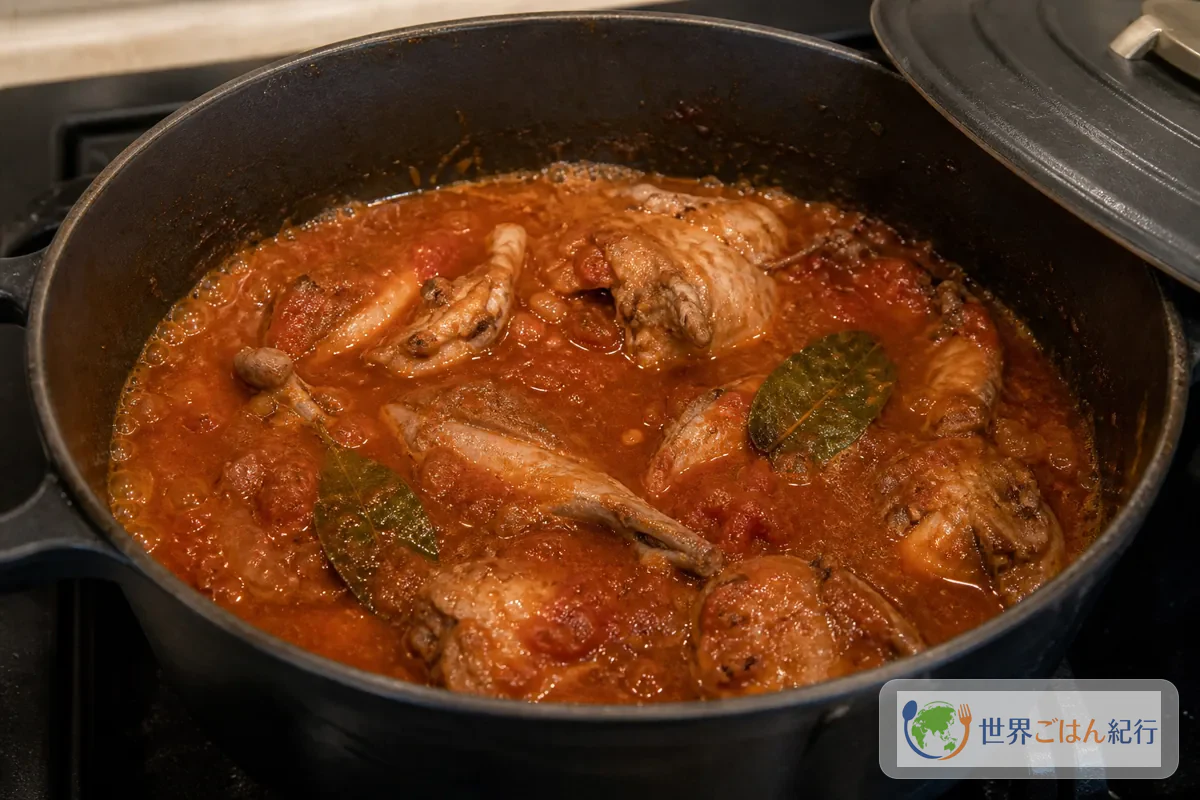
A pot of rabbit gently simmering in red tomato and wine sauce

Return the rabbit to the pot and let the liquid come up to about 70% of the meat. Bring it to a bubble once over medium heat, then immediately lower to low. If you put a thermometer in the liquid at the edge of the pot, aim for 90 to 95°C (up to 203°F); by eye, small bubbles should rise slowly at the edge of the pot. Leave the lid slightly ajar and simmer for 35 minutes.

Turn the meat once along the way. Boiling hard tightens the low-fat rabbit and clouds the sauce. If the heat feels too strong, take the pot off the heat once to bring the temperature down and then return it.

STEP66 / 7

Add the potatoes and peas

28 min

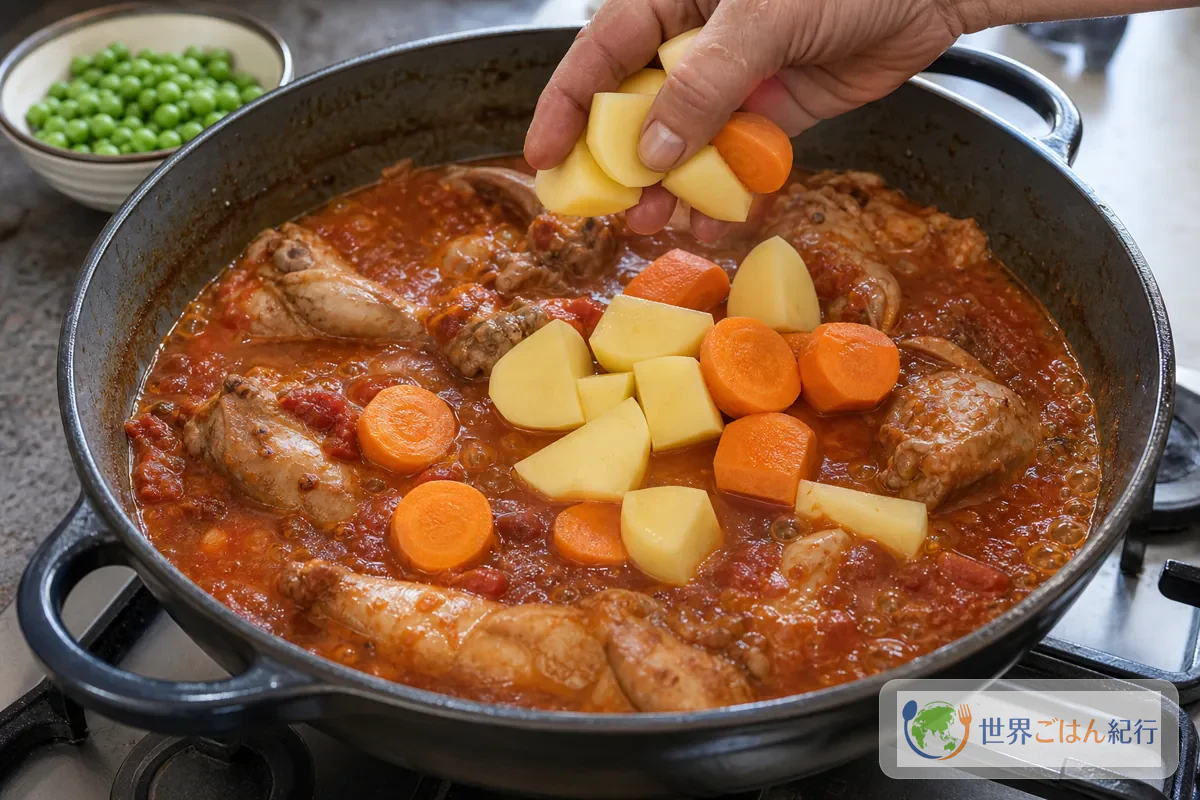
Adding potatoes and carrots to the pot of stewed rabbit

Add the potatoes and frozen peas. If the liquid is short, add just 3.5 tbsp (50 ml) water. Keep it at a low to slightly-above-low heat with small bubbles at the edge, lid slightly ajar, for 20 minutes. It is cooked through when a skewer goes easily into the potatoes and the thickest part of the rabbit reaches 160°F (71°C) or more.

For the chicken substitute, heat until the thickest part reaches 167°F (75°C) or more. Without a thermometer, open the meat near the bone a little and check that the juices run clear with no raw redness. But overcooking spoils the texture, so if possible judge by thermometer.

STEP77 / 7

Adjust the sauce and rest

10 min

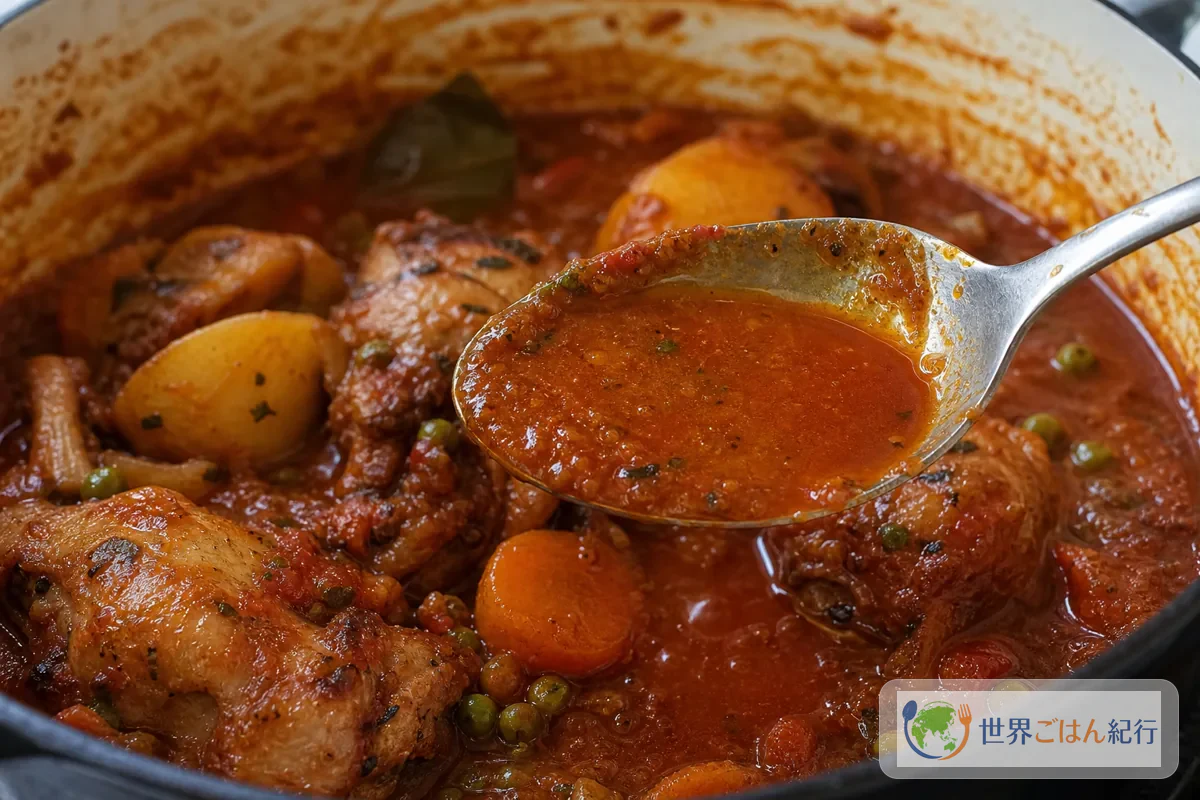
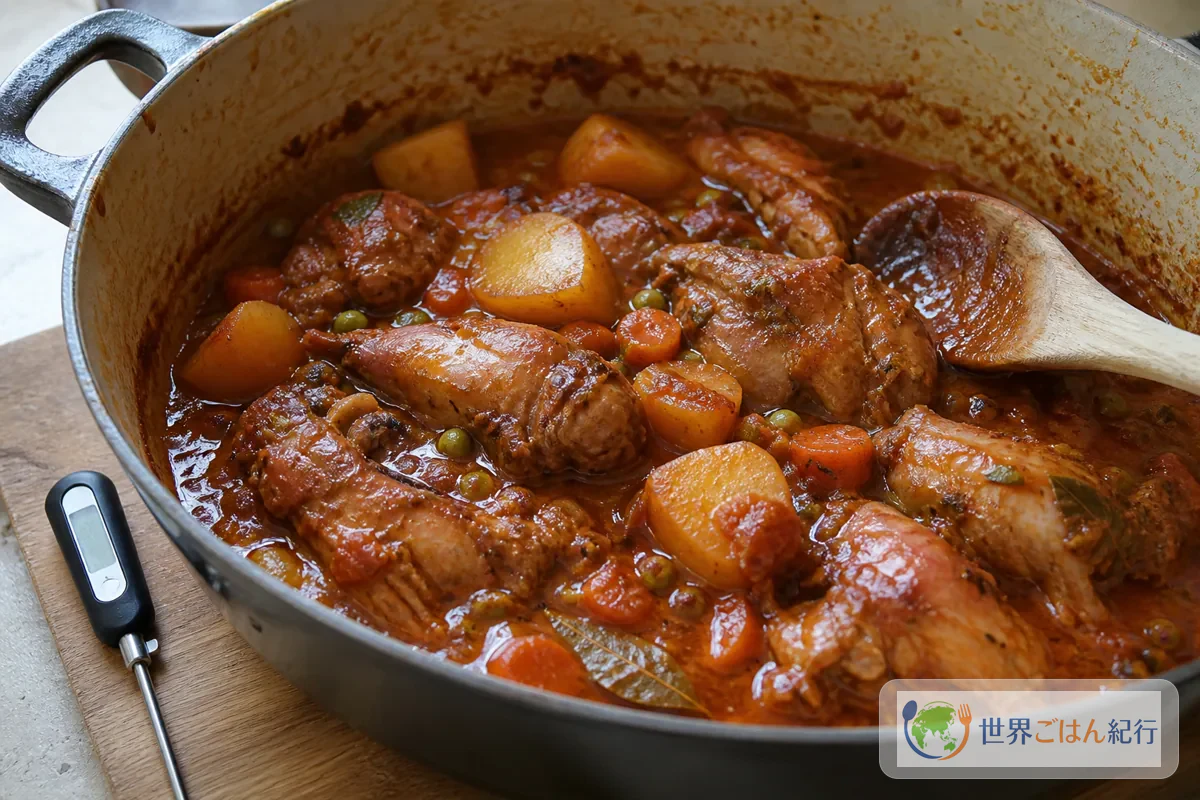
The reduced sauce clinging to a wooden spoon, Stuffat tal-Fenek

Mix lightly so as not to break the meat and potatoes, take off the lid and reduce over a gentle medium heat for 3 to 5 minutes. As a guide, the sauce lightly coats the wooden spoon and a line drawn across the bottom of the pot stays for just a moment. Add 1/2 tsp salt a little at a time, and if the acidity is strong, 1 tsp sugar.

Turn off the heat, cover and rest for 5 minutes. Serve on a plate and scatter with chopped flat-leaf parsley. If tossing with spaghetti, take 1 ladleful of sauce from the pot, warm it lightly with the boiled spaghetti in a small pot and serve it alongside.

0 / 0
Ingredients

Ingredients

1 / 2

Main ingredients

Ingredient Amount How to buy and substitute
Rabbit (bone-in pieces) 2.75 lb (1.2 kg) Order online or from a butcher. If unavailable, 2 lb (900 g) bone-in chicken thighs
Salt 2 tsp Divided between seasoning the meat and finishing
Black pepper 1/2 tsp Coarsely ground suits it
Red wine 1¼ cups (300 ml) A dry one that is not too astringent. Leftover wine is fine
Garlic 4 cloves 2 crushed, 2 minced
Bay leaves 3 Dried is fine
Olive oil 3 tbsp A generous amount for searing the meat
Onion 1 (7 oz / 200 g) Minced
Carrot 1 (5.5 oz / 150 g) In 0.5 inches (1.5 cm) cubes
Celery 1/2 stalk (1.75 oz / 50 g) If you have it. If not, increase the onion by 1.75 oz (50 g)
Tomato paste 2 tbsp Ketchup would be too sweet
Diced tomatoes, canned 1 can (14 oz / 400 g) Tomato purée also works
Water or chicken stock 1 cup (250 ml) Water for rabbit; a light stock if using chicken
Potatoes 3 (12.5 oz / 360 g) Waxy types that hold their shape
Frozen green peas 2.75 oz (80 g) Adds a little of the local bean feel
Allspice 1/4 tsp Optional. Rounds out the aroma of the meat
Sugar 1 tsp Only if the tomato acidity is strong
Flat-leaf parsley 10 g For finishing
2 / 2

To serve alongside

Ingredient Amount Role
Spaghetti 5.5 oz (160 g) When tossing the sauce with pasta as a starter
Country loaf or baguette 1/2 loaf Catches the sauce
Lemon 1/2 A light squeeze at the end, to taste
0 / 0

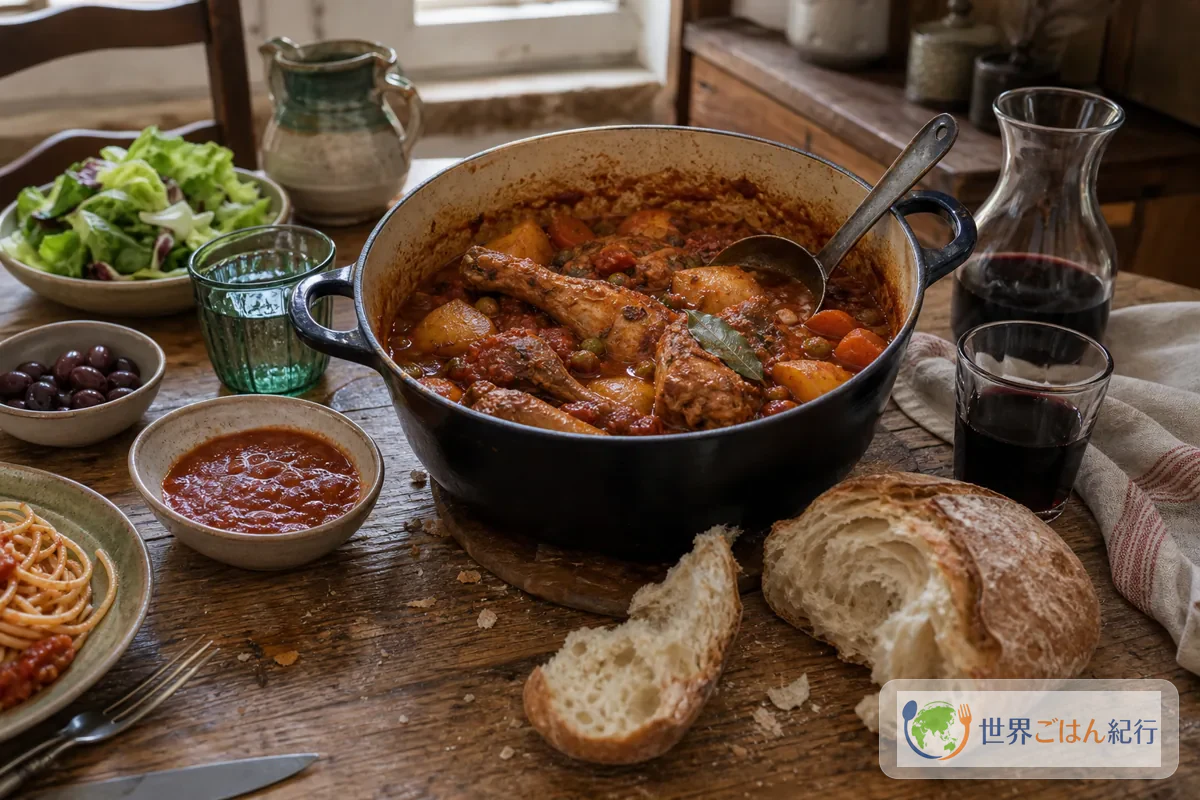
Lift the pot lid a little and the smell of red wine, garlic, bay leaf and tomato rises with the steam. The sauce is lighter than a beef stew and wilder than a tomato braise, and as it slides off the bone-in meat you'll want to wipe it up with bread. Stuffat tal-Fenek is the rabbit stew Malta has loved for generations, slow-cooked with potatoes, herbs and red wine until the rabbit is tender and the sauce is deep and savory.
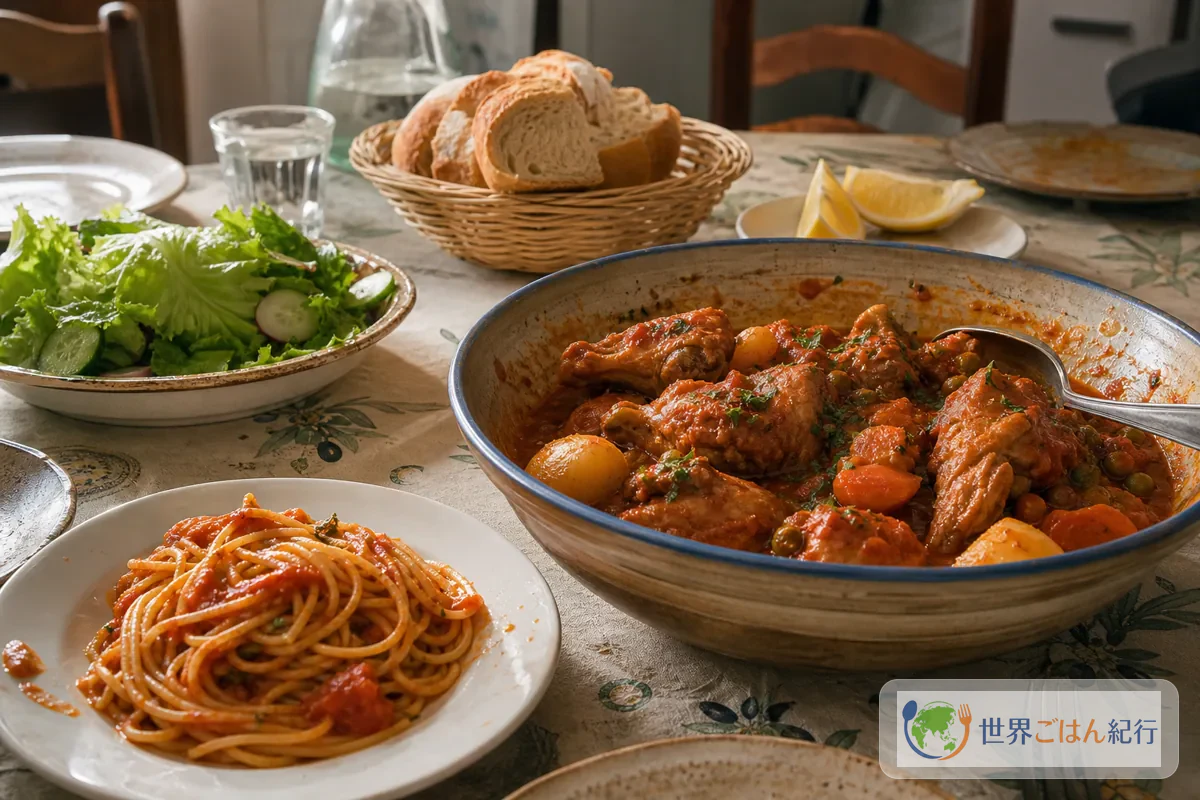
Stuffat tal-Fenek on the table, with spaghetti tossed in the sauce

Stuffat tal-Fenek in Malta

A table around Maltese rabbit stew, with bread and pasta to catch the sauce

In Maltese, fenek means rabbit and stuffat means stew. Visitors often just call it "Maltese rabbit stew." It comes from the Maltese Islands and is made with rabbit, vegetables, tomato paste or tomatoes, potatoes, beans, bay leaf and herbs, all cooked slowly over low heat. It belongs to rural food culture: in the past it simmered for hours in a simple oven of earth or stone, or in a traditional pot.

Fenkata is the word for the meal built around rabbit. It means less the dish itself than the whole spread: starters, pasta with rabbit sauce, then stewed or fried rabbit. Many households toss some of the rich sauce with spaghetti first, then bring out the rabbit and potatoes as the main course.

Other Mediterranean dishes cook rice or noodles together with meat and seafood in one big pan, such as the Spanish fideuà and paella valenciana. Stuffat tal-Fenek works the other way around. The rabbit and its red wine cooking liquid are the stars, and the bread or pasta comes alongside to catch the sauce.

Ingredients (serves 4)
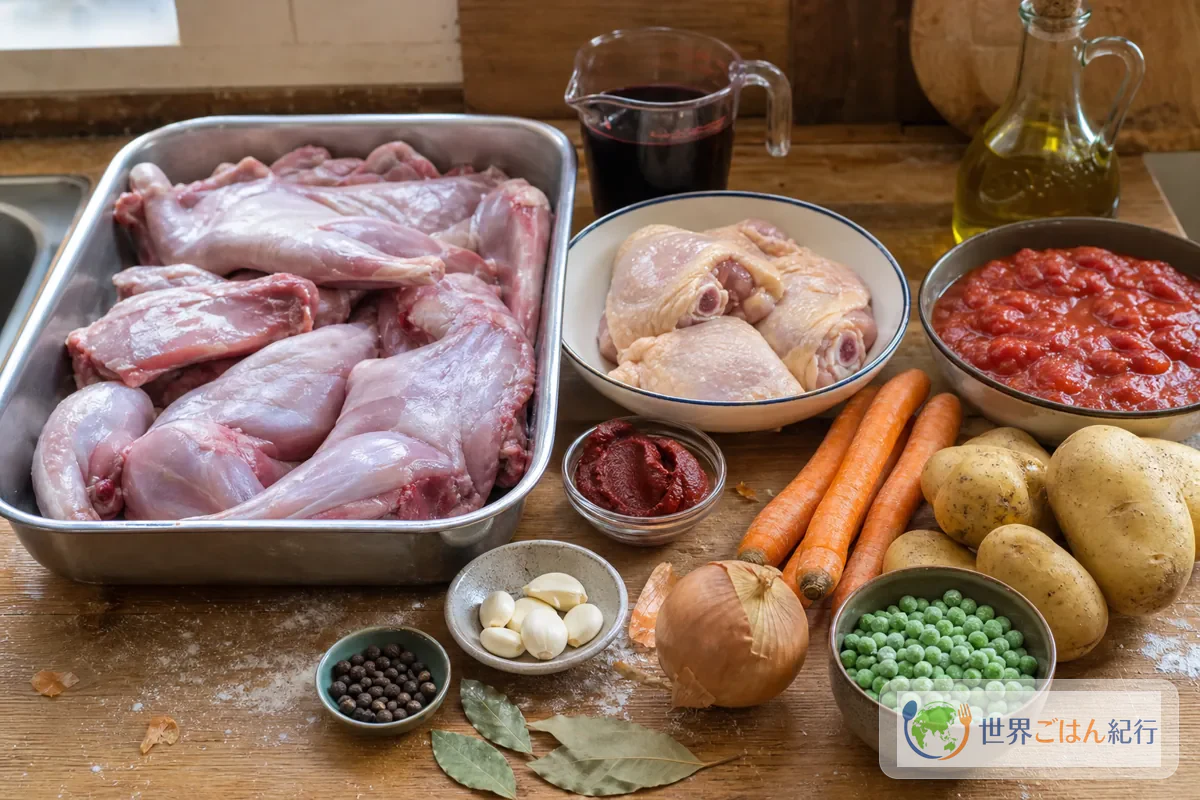
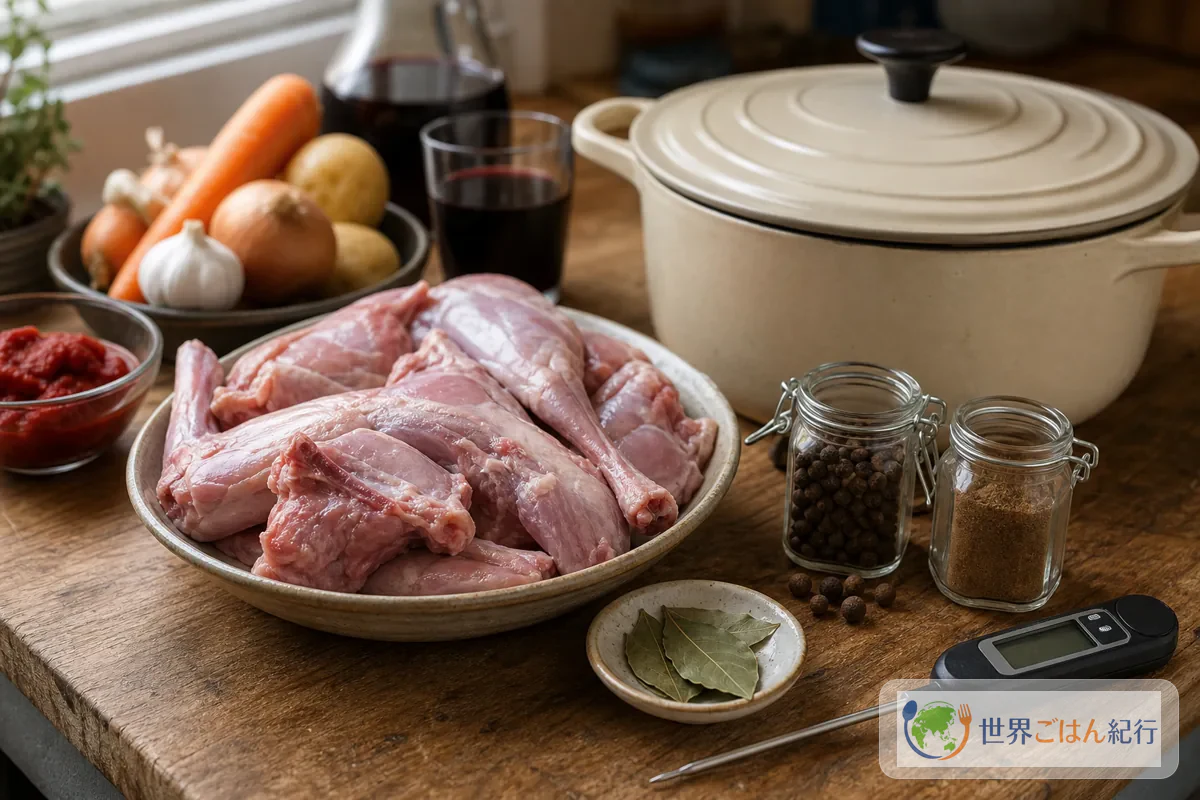
Rabbit, vegetables, red wine, tomato and spices for Stuffat tal-Fenek

Choosing rabbit, substitutes and equipment

Rabbit and chicken
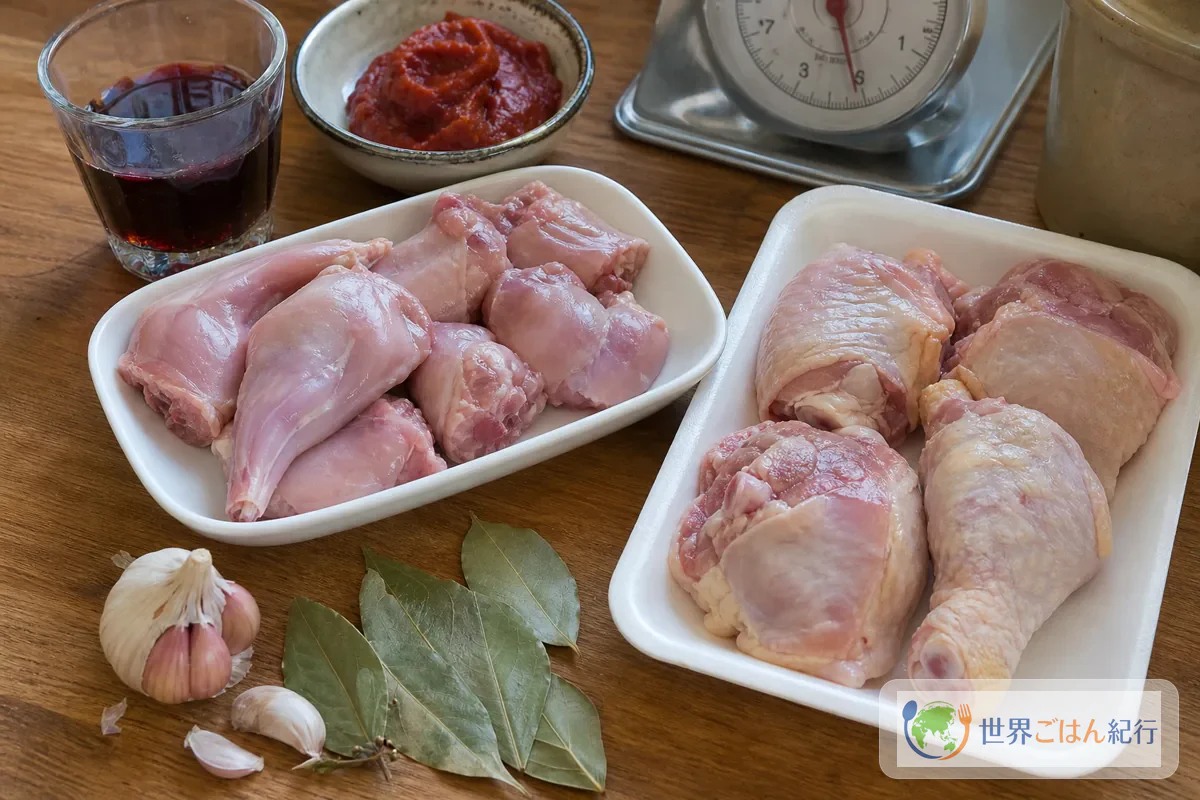
Rabbit and bone-in chicken thighs placed side by side as a substitute ingredient

Rabbit is low in fat, moister than chicken breast and lighter than chicken thigh. Quality varies a lot from shop to shop and by season, so the first time, find a butcher who can order it or a reliable frozen product. If you can't get it, bone-in chicken thighs are the easiest substitute. Boneless thighs work too, but they give less savor than the bone, so use a light chicken stock instead of water.

For chicken, start with 2 lb (900 g) bone-in chicken thighs, 1 cup (250 ml) red wine and 1 cup (250 ml) water or light stock. It needs less time than rabbit: about 35 minutes on low heat after returning the meat, then 20 minutes after adding the potatoes. Chicken isn't true fenek, of course, but keep the red wine, bay leaf, tomato paste and low heat and you get close to the Maltese flavor.

Decision Substitution
Fine to swap Rabbit for bone-in chicken thighs, celery for onion, frozen peas for green beans
Fine to adjust in amount Red wine, canned tomatoes, water. Evaporation of the liquid changes with the size of the pot
Better not to change Bay leaf, garlic, tomato paste, the searing step, simmering at low heat
Avoid Replacing with a lot of ketchup, a strong sweet wine, long simmering in a thin saucepan

Spices, pot and thermometer

A shopping guide laying out a heavy pot, thermometer, allspice and bay leaves

Onion, carrot, potatoes, canned tomatoes and red wine are easy to find nearby. Spend your online shopping on the tools and spices you'll use again and again. Allspice is optional, but a very small amount rounds off the sharp edges of a red wine and tomato sauce; it works alongside the bay leaf and garlic, never instead of them. It also goes into Guyanese pepperpot and Congolese babute, so the jar won't sit unused.

The pot changes a stew considerably. In a thin pot the bottom scorches and the sauce tightens before the rabbit is done. For 4 servings, a heavy pot of about 8.5 inches (22 cm) is easy to use and holds small bubbles steadily on low heat.

Tenderness tells you nothing about safety with bone-in meat, so measure the thickest part with a thermometer. Take it off the heat once rabbit reaches 160°F (71°C) or more, or chicken reaches 167°F (75°C). That way you avoid both overcooking and undercooking.
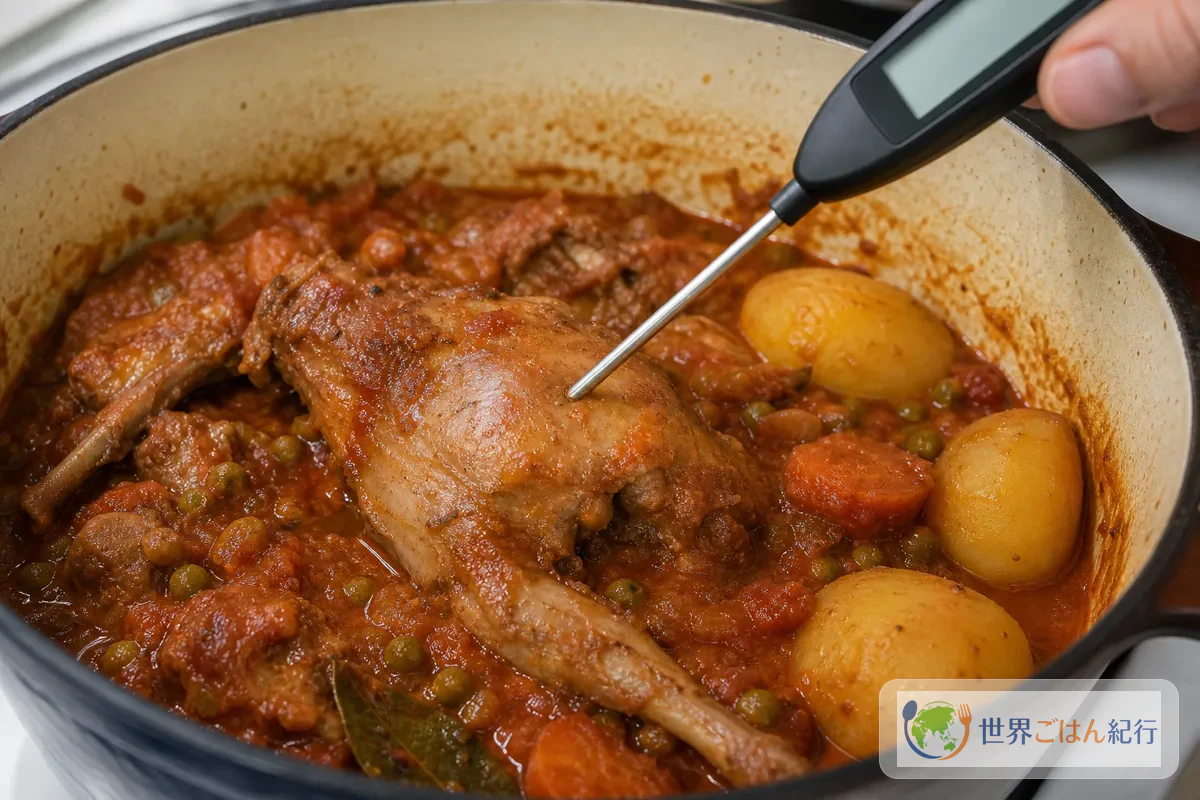
Checking the internal temperature of bone-in meat in the stew pot with a thermometer

Stuffat tal-Fenek problems and fixes

A wooden spoon of red wine and tomato sauce, checking the thickness of the sauce

Problem Cause Fix
Meat is tough Heat too high, or boiled hard after searing Add liquid and simmer 15 more minutes on low heat. Keep the bubbles small
Sauce is watery The lid was kept shut, or the pot is small and does not evaporate Remove the meat and reduce over gentle medium heat for 5 to 8 minutes
Sourness stands out Acidity of canned tomatoes, astringency of wine Add 1 tsp sugar and 2 tsp olive oil
Flavor is weak Too little salt before simmering Add salt 1/4 tsp at a time at the end, rather than a bouillon cube
Potatoes broke up Stirred hard, or added too early Next time add them for the last 20 minutes. This time, catch it with bread or pasta

Gentle heat matters more than long cooking here. Rabbit won't melt into softness the way beef shank does, and because it's so lean, it toughens quickly when the heat is high. If the meat is dancing in the pot, turn it down. Small bubbles, the lid slightly ajar and one turn of the meat along the way: those three things alone make a real difference.

Serving and storing Stuffat tal-Fenek
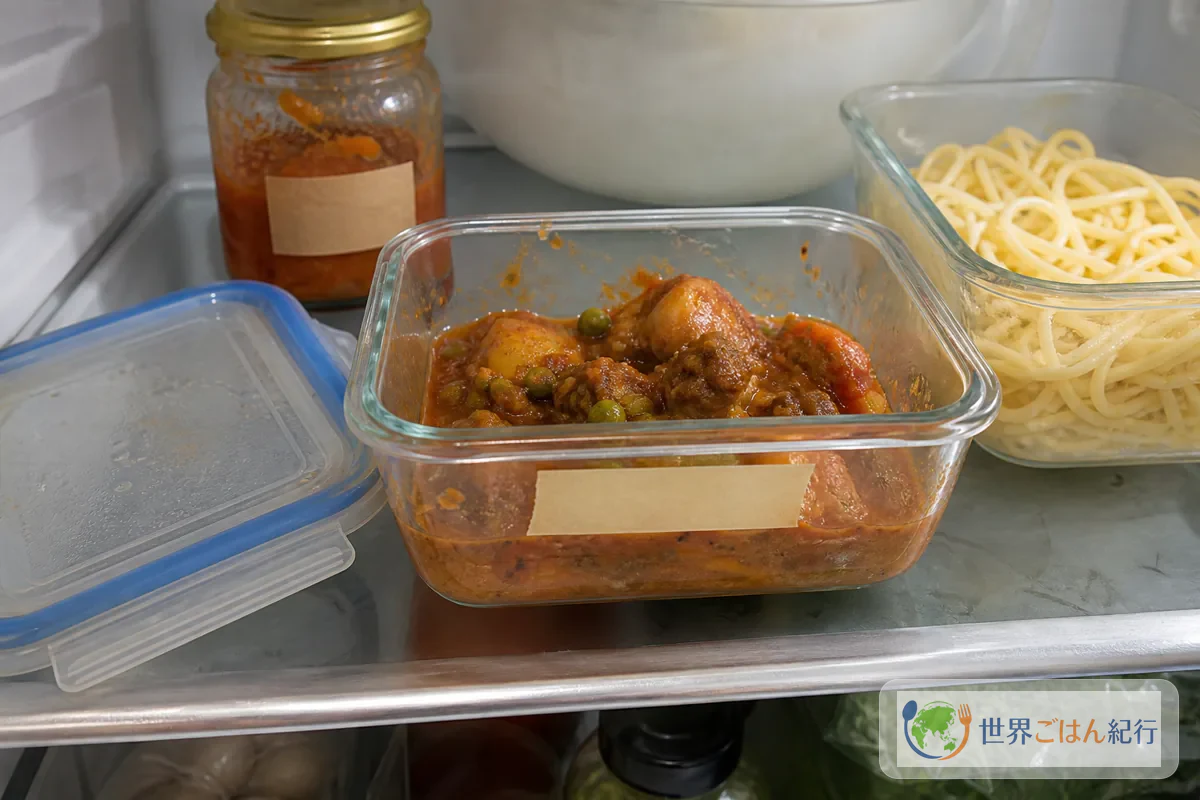
Leftover Stuffat tal-Fenek divided into containers, with pasta kept separate

For something close to a local fenkata, toss a little of the sauce with spaghetti and serve it on small plates first, then bring out the rabbit, potatoes and bread. On a weeknight, one big platter with bread and salad is plenty. A tart salad, grilled zucchini, olives and a light red wine all go well with it.

Store leftover meat and sauce together in a container in the refrigerator and finish them within 2 days. Keep pasta separate, since it soaks up the sauce and turns heavy. To reheat, move it to a pot, add 2 to 3 tbsp water and warm on low heat for 8 minutes, or microwave at 600 W for 2 minutes, stir once and add 1 more minute.

A little sauce left over the next day is still worth having. Spread it on bread, toss it with short pasta or spoon it over grilled eggplant. Leftover rabbit stew has even been used as a pie filling, and that kind of thrifty home reuse is part of the charm of this dish.

Frequently asked questions

Where can I buy rabbit?

You rarely see it in ordinary supermarkets. Try butchers who deal in game or imported meat, restaurant-supply stores and online frozen-meat sellers. For your first time, bone-in pieces already cut up are easier to handle than a whole rabbit.

Can I replace red wine with white?

Red wine gives depth to a sauce of tomato and bone-in meat, so it's the one to use here. If you go with white, use a little less tomato and add rosemary or thyme for a lighter result.

Can I make it without wine for children?

The wine shapes this dish, and without it you get a different tomato braise. If you skip it, make up the acidity with ¾ cup (200 ml) water, ½ cup (100 ml) unsalted tomato juice and 1 tsp rice vinegar, and keep the same simmering time. When you do use wine, boil it firmly for 3 minutes or more in step 4.

What can I combine it with from other world cuisines?

For a Mediterranean table, pair it with the Spanish fideuà, the Greek fasolada or the Cypriot koupepia, which share its tomato, beans, herbs and slow stewing. For another bone-in meat stew, the German Gaisburger Marsch is a good comparison for heat control.

Sources