Makroud: Tunisian Date-Filled Semolina Pastry

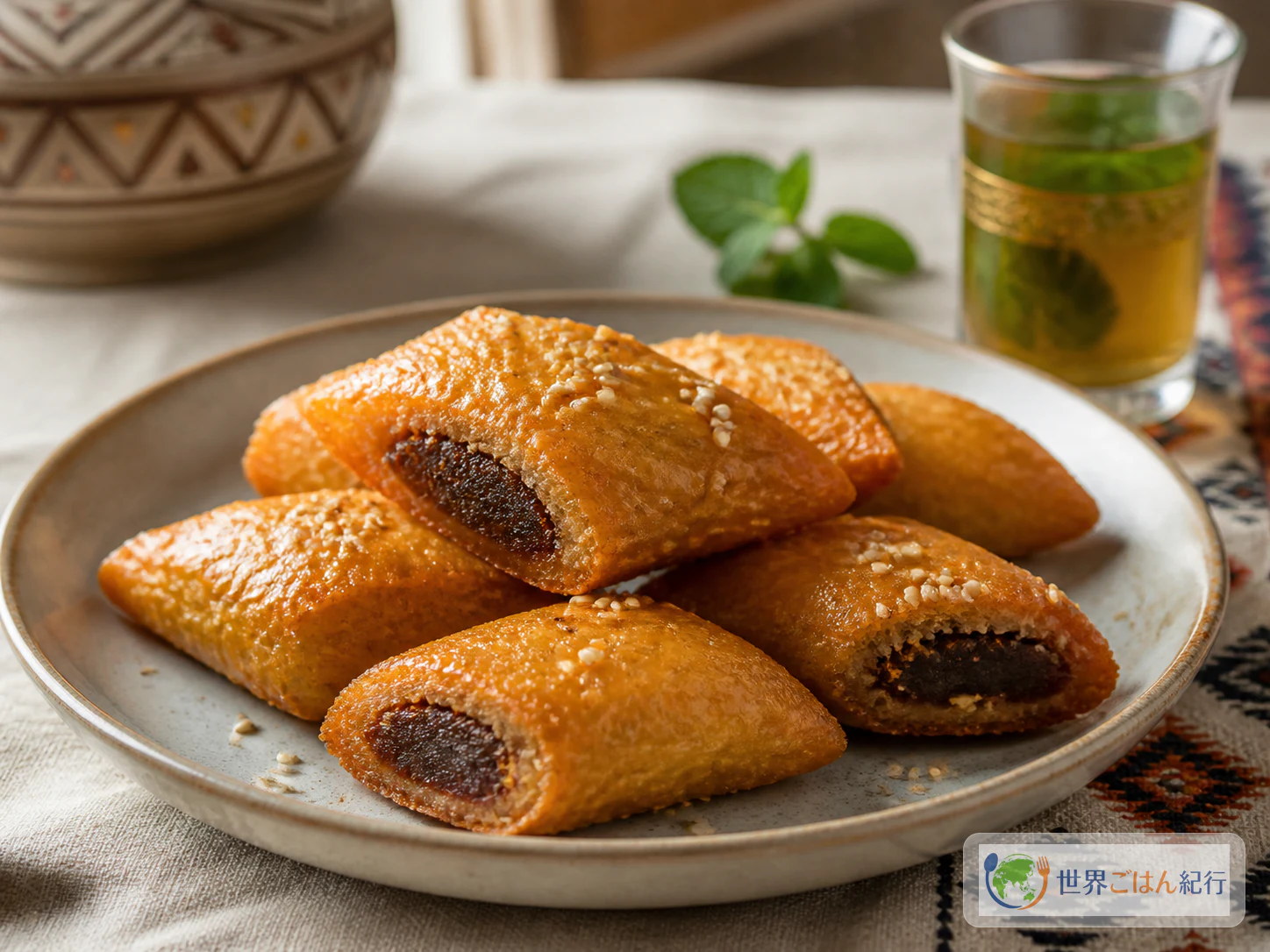
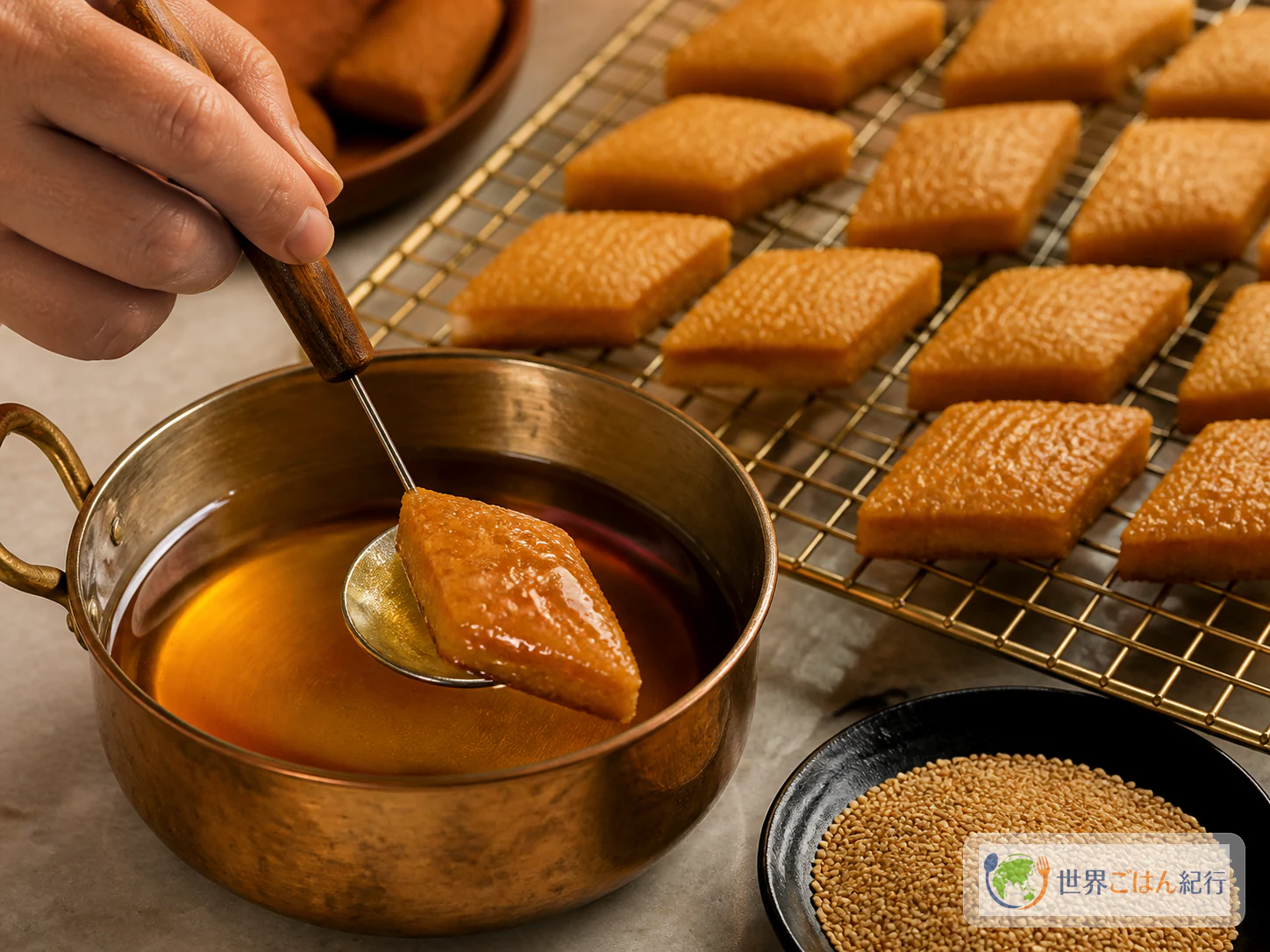
Tunisian makroud glistening with honey syrup, the date filling visible inside a diamond of semolina dough
Prep
1 hr 30 min
Cook
25 min
Total
1 hr 55 min
Serves
20 pieces
Level
Intermediate
Cuisine
Tunisian

A recipe for makroud, the North African pastry known from Kairouan, made with a date filling and semolina dough. Shaped into diamonds, fried, and dipped in a honey and orange flower syrup. Covers the grain of the flour, resting time, frying versus baking, easy substitutions and storage, for a texture that holds up against the sweetness.

Cooking flow

Cooking steps

STEP11 / 6

Form the date filling into a rope

15 min

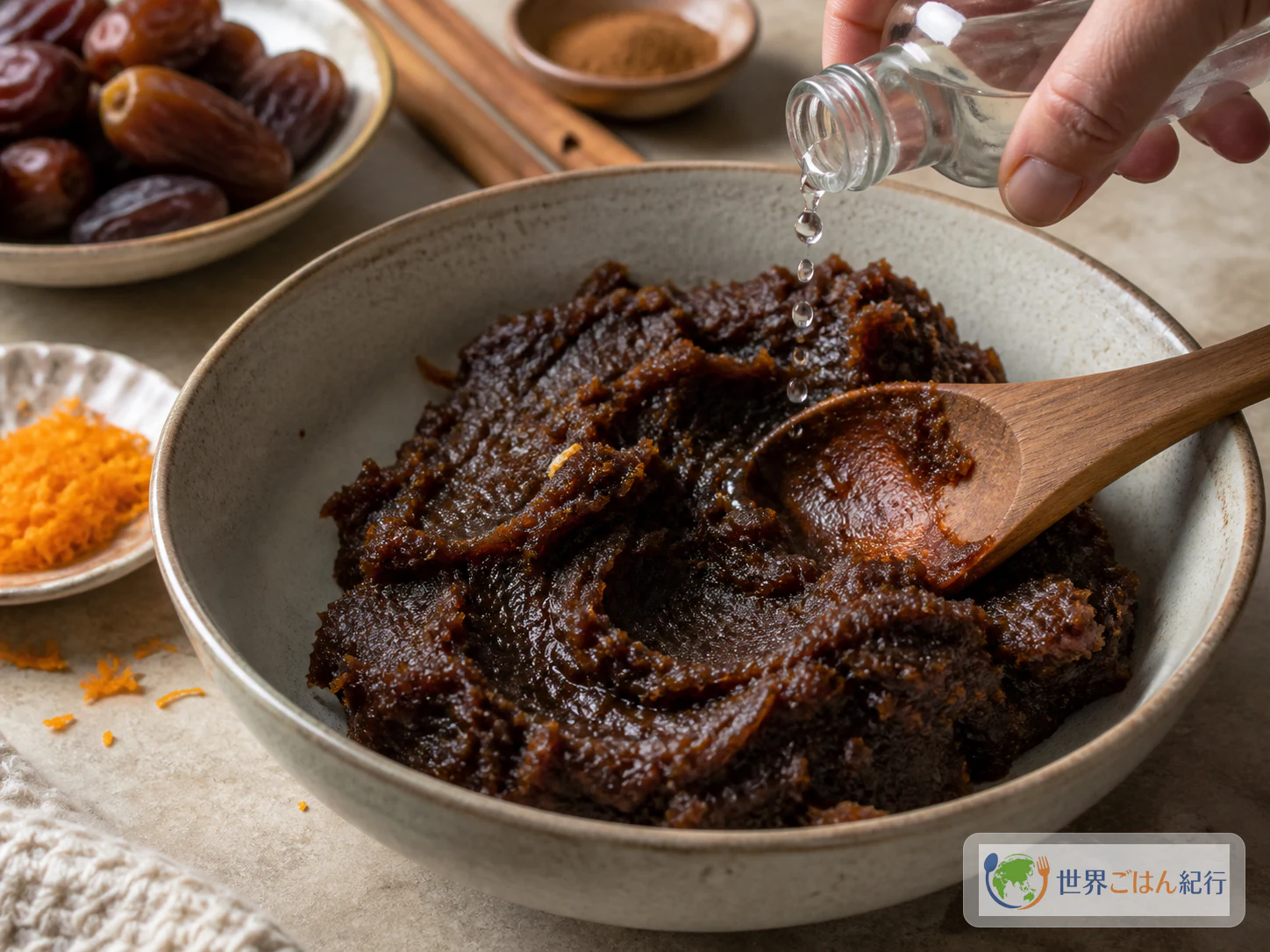
Mixing oil and spices into dates and forming them into a thin rope of filling
The date filling gathers into a 1.5 cm diameter rope, with no oil floating on the surface

Chop 9 oz (250 g) dates into 0.25 inch (5 mm) pieces with a knife and combine with 2 tsp (10 ml) olive oil, 2 g cinnamon, 2 g orange zest and 0.2 g cloves. If using hard dates, sprinkle with 1 tbsp (15 ml) hot water, warm at 600 W for 40 seconds, and press with a fork. Or warm paste over low heat for just 3 minutes. Turn off the heat when the filling is warm, holds together when pressed with a finger, and has no oil floating on the surface. Make two ropes, 0.5 inches (1.5 cm) in diameter and about 12 inches (30 cm) long, so it can be divided into 20 pieces, and let them cool slightly. If the filling is sticky, chill it in the refrigerator for 10 minutes rather than adding flour to firm it up.

STEP22 / 6

Let the semolina absorb the fat

10 min

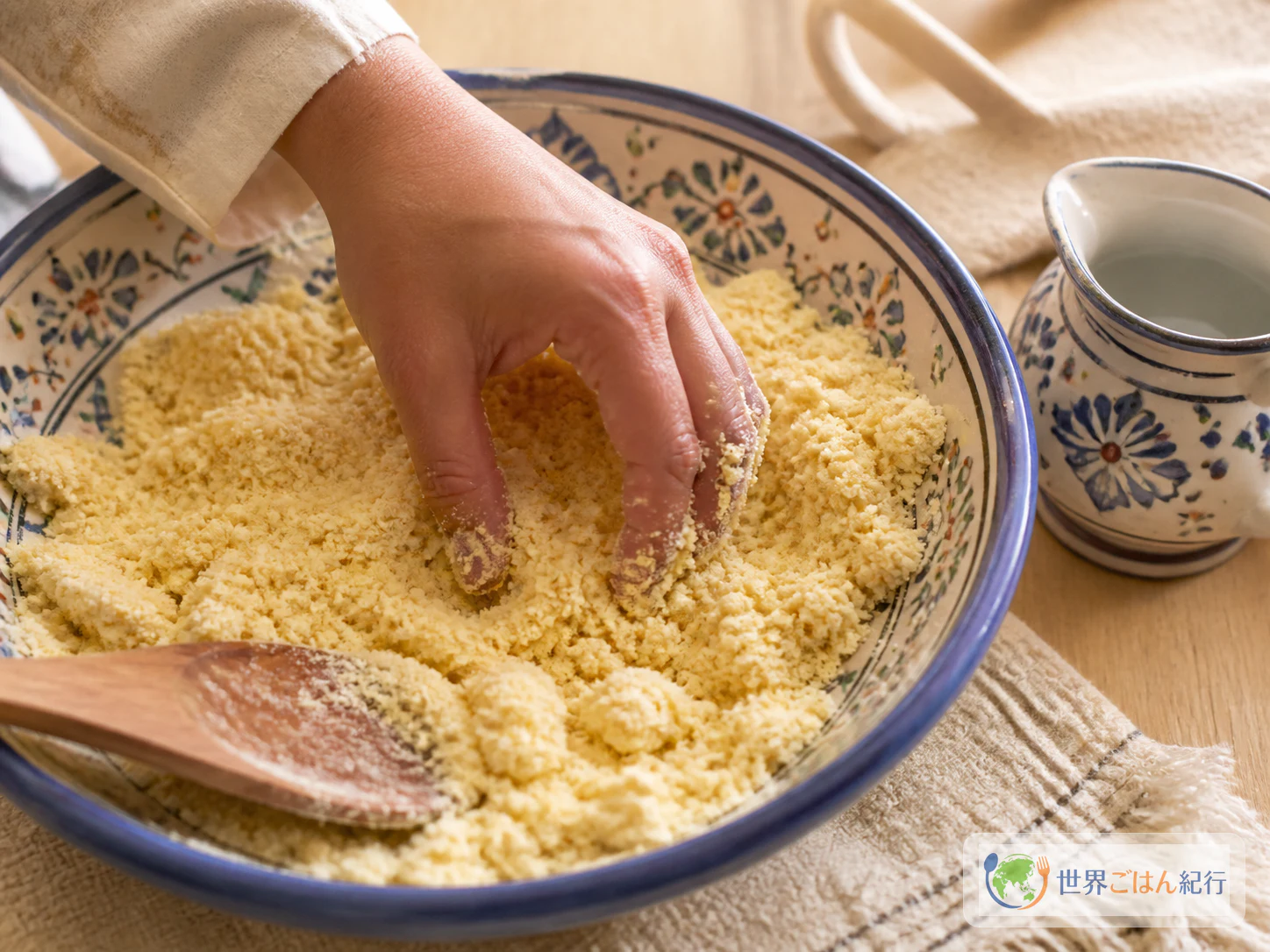
Working melted butter into semolina to make a damp-sand texture
Don't knead the semolina smooth; stop at a damp sand that keeps its shape when squeezed

Melt 2.75 oz (75 g) unsalted butter or ghee over low heat and turn off the heat before it steams. Pour over 10.5 oz (300 g) semolina and 2 g salt, and rub together with your fingertips for about 5 minutes. The guide is that the whole mixture is like damp sand, and when squeezed it holds its shape for a moment and then crumbles. Add 1.5 tbsp (20 ml) orange flower water and ½ cup (100 ml) lukewarm water in 3 portions, pressing together with a spatula. Don't knead it toward a glossy bread dough; stop when no white flour is visible. If large cracks remain, add the reserved water 1 tsp (5 ml) at a time.

STEP33 / 6

Rest the dough and make the syrup

65 min

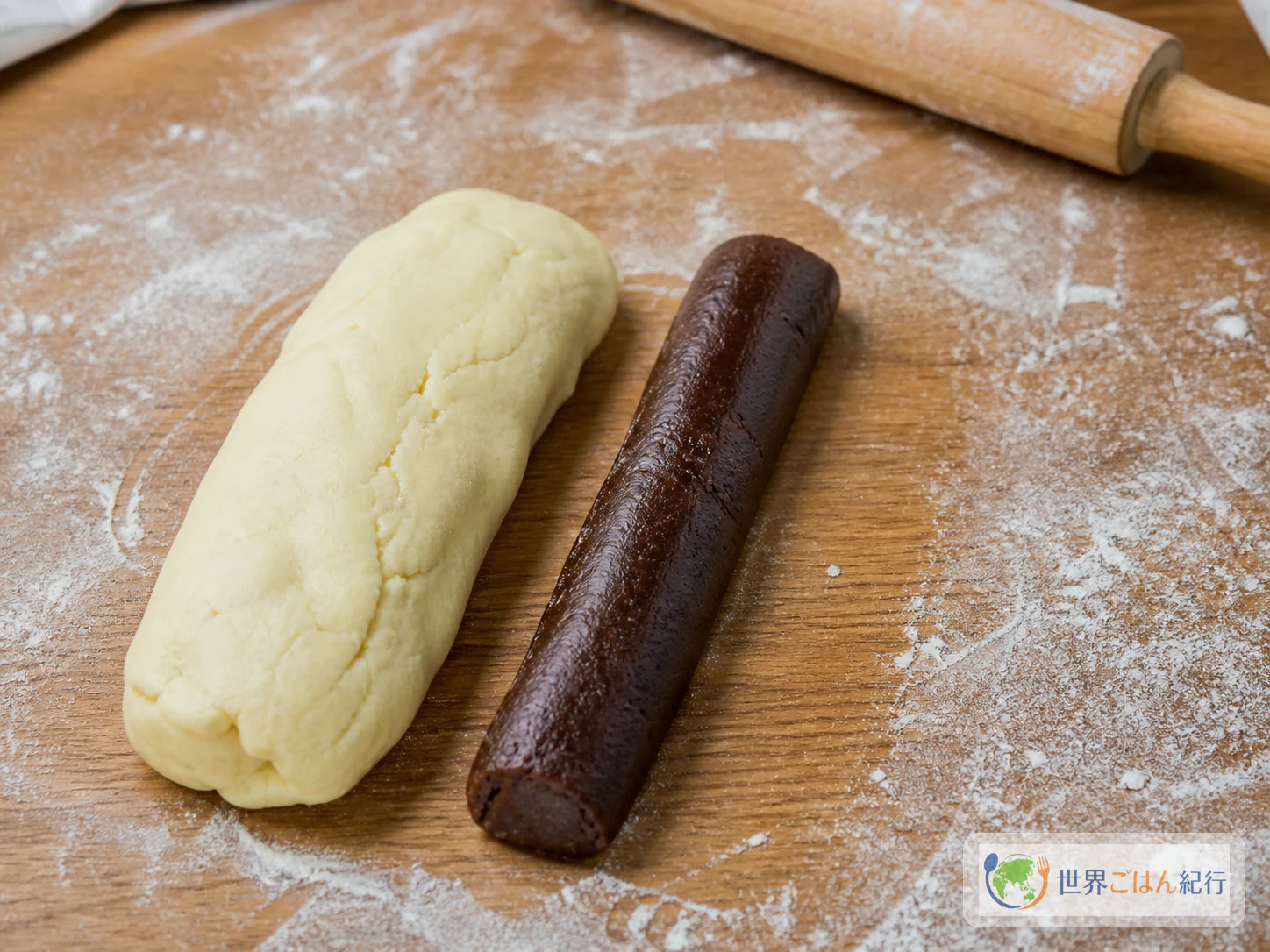
Rested semolina dough and a rope of date filling laid out
After resting 60 minutes the dough no longer spreads cracks and is firm enough to wrap the rope of filling

Divide the dough in two, cover with a dry cloth or plastic wrap and rest at a room temperature of 20–25°C for 60 minutes. Meanwhile, put 4 oz (120 g) honey, 1.5 oz (40 g) granulated sugar and ¼ cup (60 ml) water in a small pot and warm over medium heat for 3–4 minutes. When the sugar has dissolved and fine bubbles continue on the surface, turn off the heat and add 1 tsp (5 ml) lemon juice and 1 tbsp (15 ml) orange flower water. Boiling after adding the flower water drives off the aroma, so keep the syrup warm over low heat or rewarm it just before use. The rested dough is ready when, pressed with a finger, only the edge cracks slowly and the center does not return to powder.

STEP44 / 6

Wrap the filling and cut into diamonds

25 min

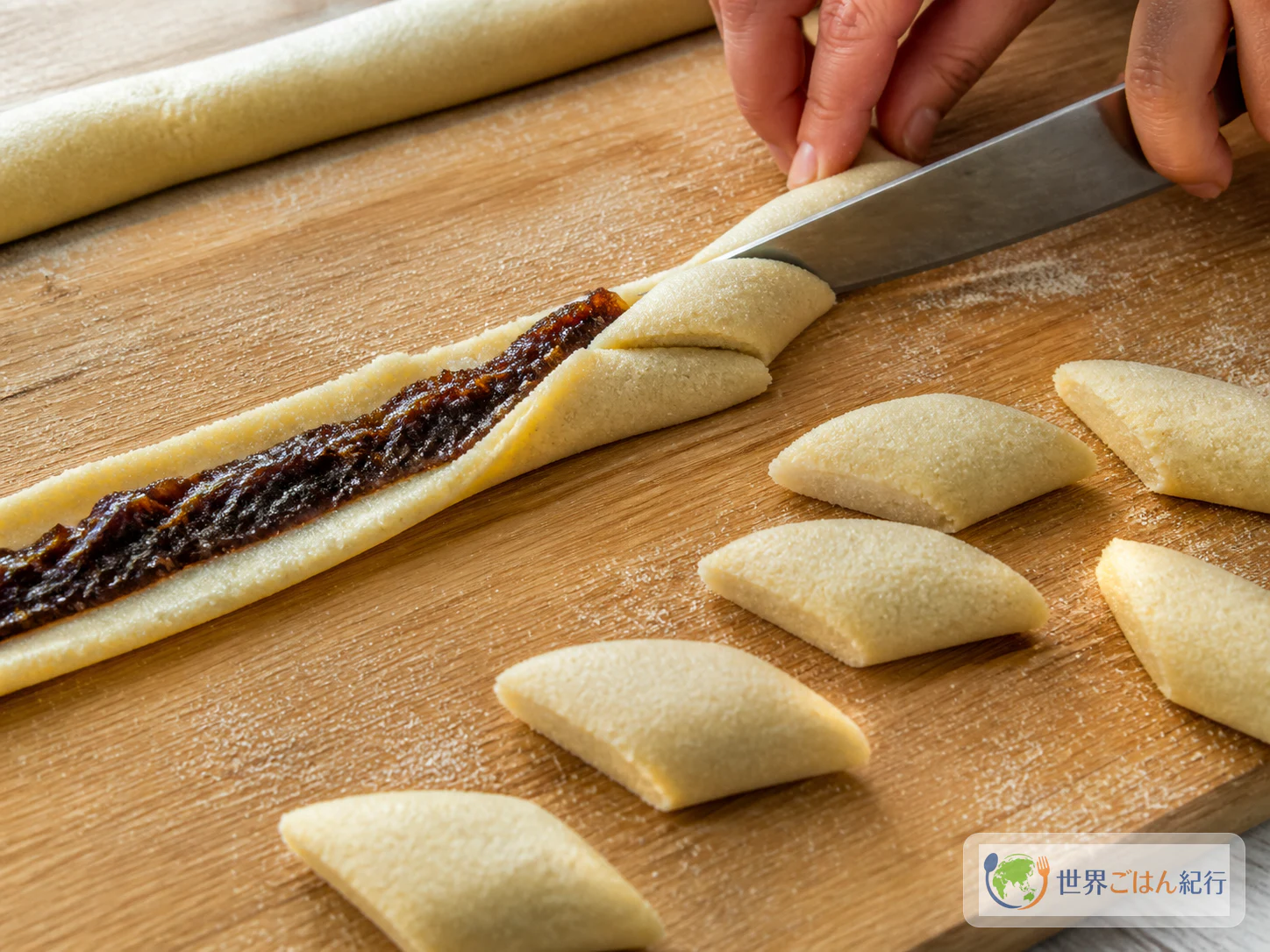
Wrapping date filling in semolina dough and cutting it into diamonds
Run the filling through the center and cut the 1.5 cm thick band into 3 cm wide diamonds

Divide the dough into 2 ropes and roll each to about 12 inches (30 cm) long and 1 inches (2.5 cm) in diameter. With a chopstick or similar, make a groove 0.5 inches (1 cm) deep in the center, lay one rope of date filling in each, and close the edges of the dough. Place seam side down and press lightly into a band 0.5 inches (1.5 cm) thick. If you have a 12 inches (30 cm) rolling pin, press from the center outward to even the thickness; if not, use your palms to even it. Cut on the diagonal into 20 diamonds 1 inches (3 cm) wide. If the filling pokes out from the ends it will easily run into the oil, so pinch both ends closed with your fingers after cutting.

STEP55 / 6

Fry in 350°F (170°C) oil

15 min

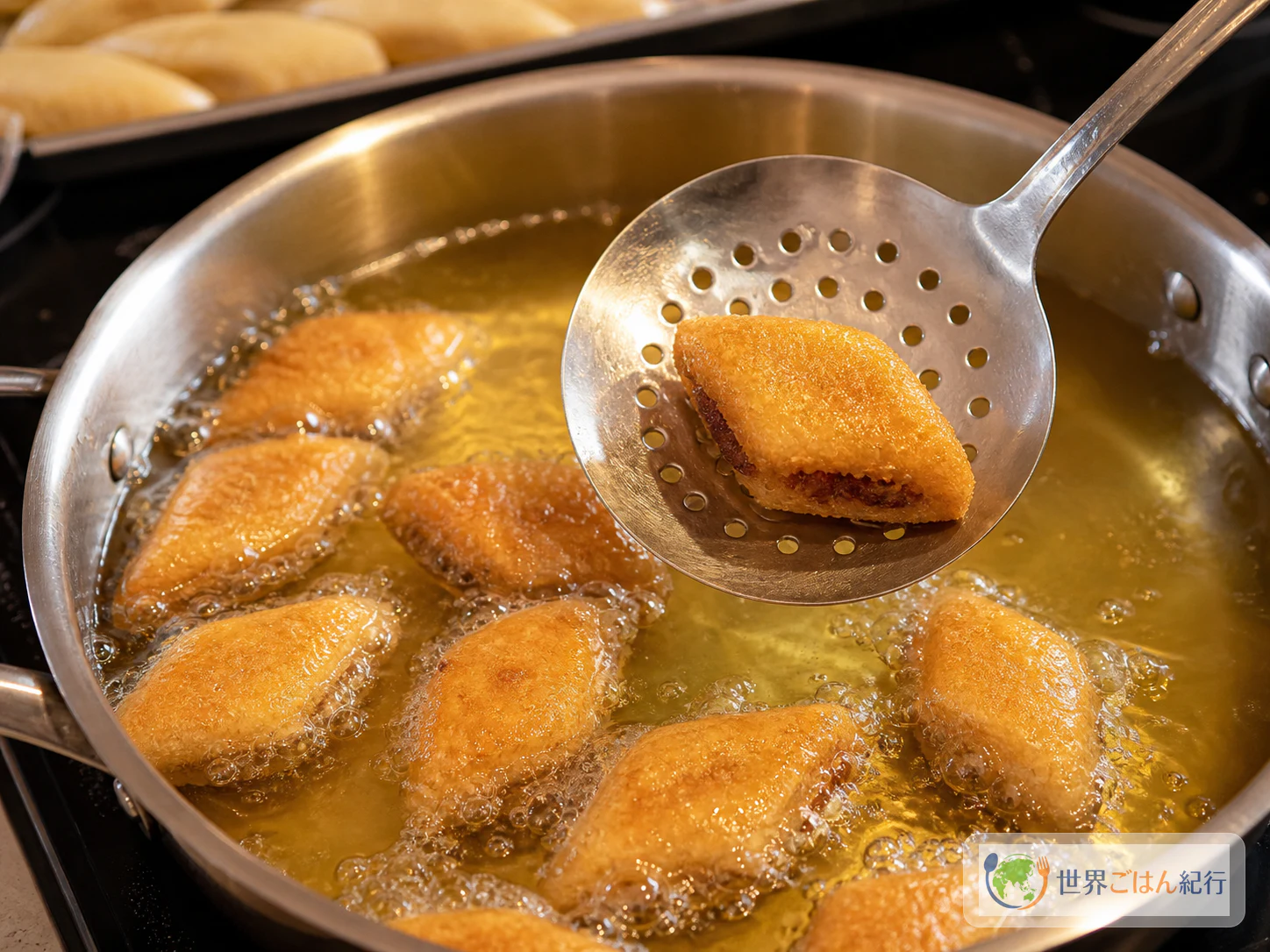
Frying makroud in 170°C oil and lifting the golden diamonds to a rack
3–5 minutes at 170°C. Done when the surface is a deep golden color and the corners remain

Put 3¼ cups (800 ml) frying oil in a deep pot and heat over medium heat to 350°F (170°C). Without a thermometer, drop in a small piece of dough and check that it sinks to the bottom, then rises slowly with fine bubbles. Add up to 6 pieces at a time and fry 2 minutes on one side, then turn and fry 1–3 minutes. When the surface is a deep golden color, the corners hold, and the line of filling shows through, lift to a rack. When the oil temperature drops the shell absorbs oil, and when it rises too high only the outside darkens. If the bubbles are weak just after adding, reduce how many go in at once; if strong bubbles continue, lower the heat and return to 350°F (170°C).

STEP66 / 6

Dip in warm syrup

10 min

Dipping fried makroud in warm honey syrup and cooling it on a rack
A total of 10 seconds in warm syrup. Aim for a thin sheen and only a few drops falling when set on the rack

Warm the syrup over low heat, without boiling, and bring it back to a warm state. Add the freshly fried makroud one at a time and roll about 10 seconds in total, 5 seconds per side. The guide is a thin sheen on the surface, with syrup not running off onto the plate in quantity but only a few drops falling after it is set on the rack. Sprinkle with 10 g white sesame seeds and cool for 30 minutes before eating. The shell breaks easily while hot, so don't keep touching it with chopsticks; move it once the syrup starts to set.

0 / 0
Ingredients

Ingredients

1 / 3

Semolina dough

Ingredient Amount Substitutes & what to check
Medium-ground semolina 10.5 oz (300 g) Fine-ground in the same amount. It absorbs quickly, so add the water in the second half
Unsalted butter or ghee 2.75 oz (75 g) Melt the butter before using. Ghee on days you want a stronger aroma
Salt 2 g Tightens the sweetness of the dough
Orange flower water 1.5 tbsp (20 ml) Food-grade labeled. 2 g lemon zest can substitute
Lukewarm water ½ cup (100 ml) Keep 1.5 tbsp (20 ml) aside as an extra and add after looking at the dough
2 / 3

Date filling

Ingredient Amount Substitutes & what to check
Soft pitted dates 9 oz (250 g) Date paste in the same amount. Rehydrate hard dates with 1 tbsp (15 ml) hot water
Olive oil 2 tsp (10 ml) One with a mild aroma
Ground cinnamon 2 g Tightens the sweetness of the filling
Grated orange zest 2 g Don't include the white part
Cloves 0.2 g If you dislike them don't leave them out; use 3 g cinnamon
3 / 3

Honey syrup and finishing

Ingredient Amount Substitutes & what to check
Honey 4 oz (120 g) A mild-flavored one
Granulated sugar 1.5 oz (40 g) Don't cut by much, to keep the syrup's concentration
Water ¼ cup (60 ml) Thins the honey
Orange flower water 1 tbsp (15 ml) Added after turning off the heat
Lemon juice 1 tsp (5 ml) Tightens the aftertaste of the syrup
Frying oil 3¼ cups (800 ml) A neutral oil such as canola
White sesame seeds 10 g For finishing. Leave out if you avoid sesame
0 / 0

Break one of these deep golden diamonds with your fingers and the outside crumbles softly, leaving only a thin line of date filling at the center. A film of honey and orange flower water syrup glints on the fried semolina shell, and what reaches your nose first isn't sugar but the scent of toasted grain and a flower that smells like citrus. Makroud (also Makroudh; in Arabic مقروض) is a date-filled pastry loved across North Africa. This version follows the Kairouan side of Tunisia: crumbly, grainy, and sweet with dates and honey.
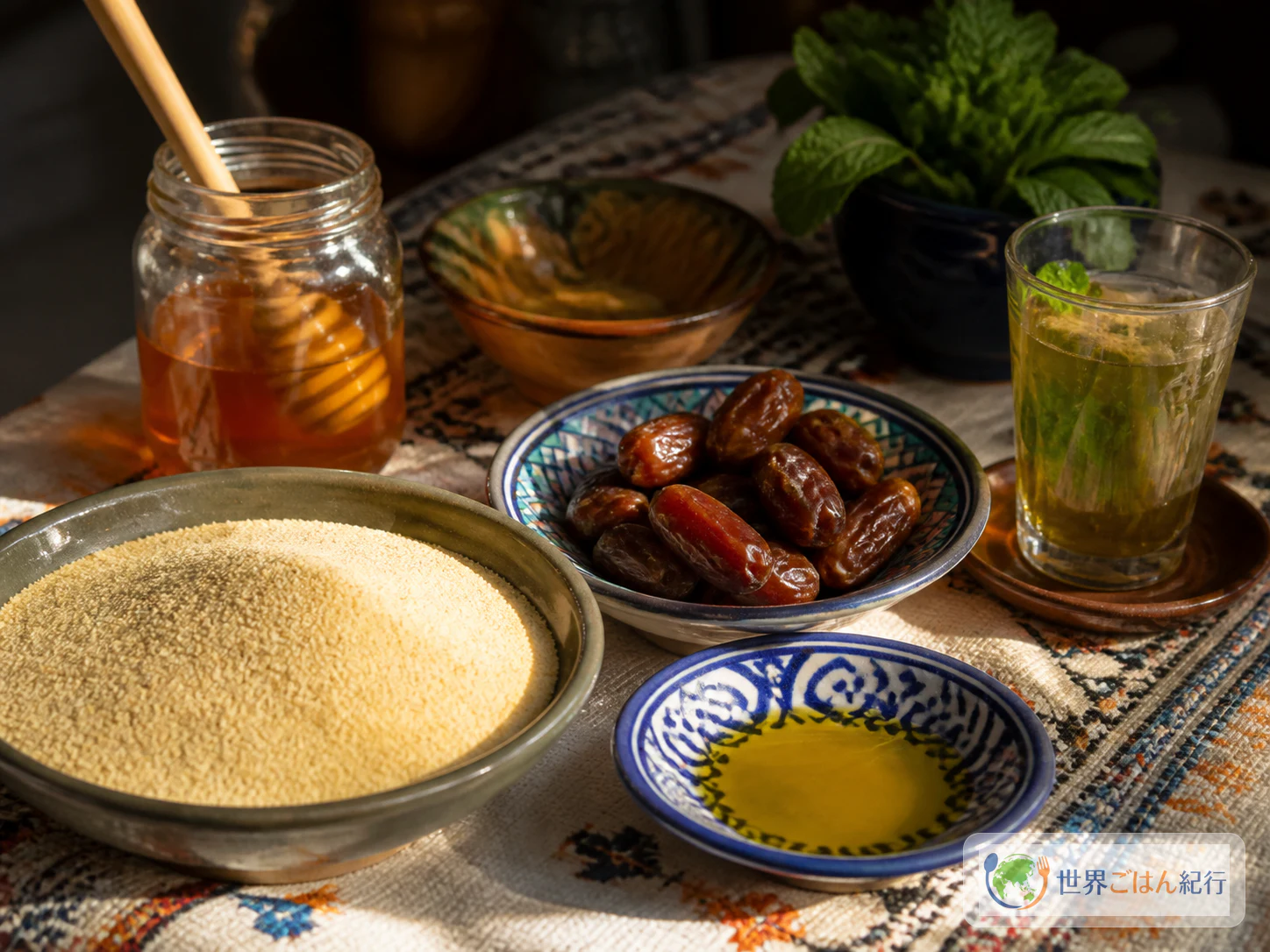
A finished plate of makroud with the sheen of honey and the date filling showing, served with mint tea
With makroud, the grain of the surface, the outline of the diamond and the thin line of date filling show how it turned out

Makroud in Kairouan and across the Maghreb
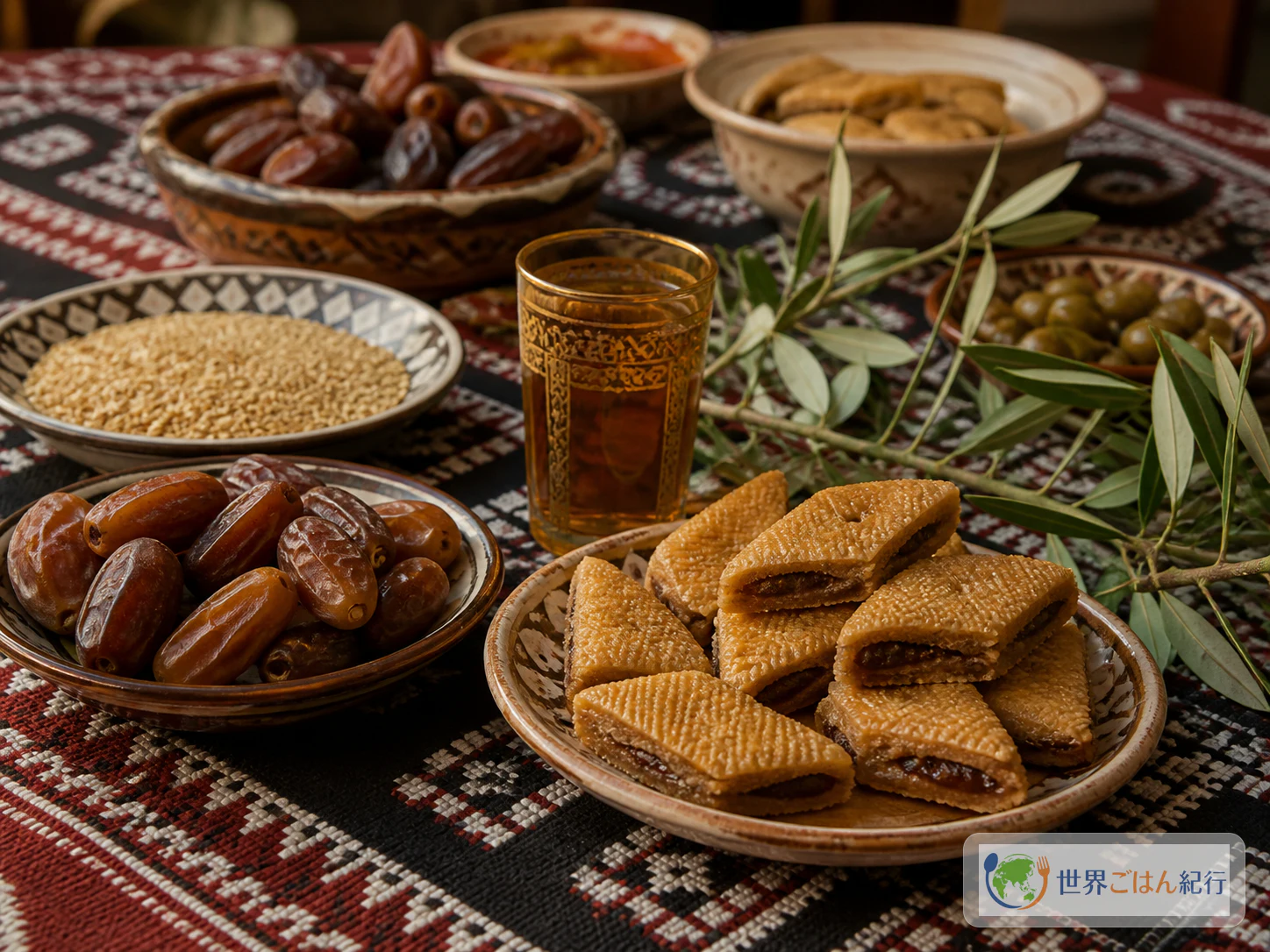
A North African table with dates, semolina, an olive branch and makroud
A table showing the background in which grain, olive oil and dates come together in one pastry

Makroud is eaten across the Maghreb, and there are several theories about its origin. In Algeria, Tunisia, Morocco, Libya and elsewhere, versions differ in whether they use dates or replace them with figs or nuts, and whether they are fried or baked. At its core, it is a semolina dough filled with dates or nuts, fried in oil and soaked in sugar or honey.

Among all these places, Kairouan in Tunisia is the one most strongly tied to makroud. Founded in 670, it was the capital of Ifriqiya for five centuries, and in this old religious city the pastry is sold not only in shops but wherever people gather. At the Mouled festival, makroud lines the streets and locals and visitors buy it by the kilo. You pick a quantity in the crowd, carry it home and share it.

The ingredients come from different parts of the country: grain from the north, olive oil from the Sahel and dates from the south. The land that mills the wheat, the land that presses the oil and the land that stores the dried fruit are all different, and the pastry brings them together in one diamond. The diamond shape has a job, too. It lets you wrap the filling in a thin line and cut pieces of even thickness, and it gives the syrup more surface to reach every corner.

At home, you won't need local flour brands or oils from a particular region. Wrap medium-ground semolina in fat, rest it without overworking, run a thin line of date filling through the center, and finish with one coat of honey and flower water. What matters is the order in which the flour is wrapped in fat, not the names of the ingredients. Keep that skeleton and the outline of makroud survives even when you substitute. Once you know it, you can go on to Algerian mhancha or Egyptian basbousa and see why the texture changes even with the same semolina and syrup.

Ingredients (makes 20 pieces)
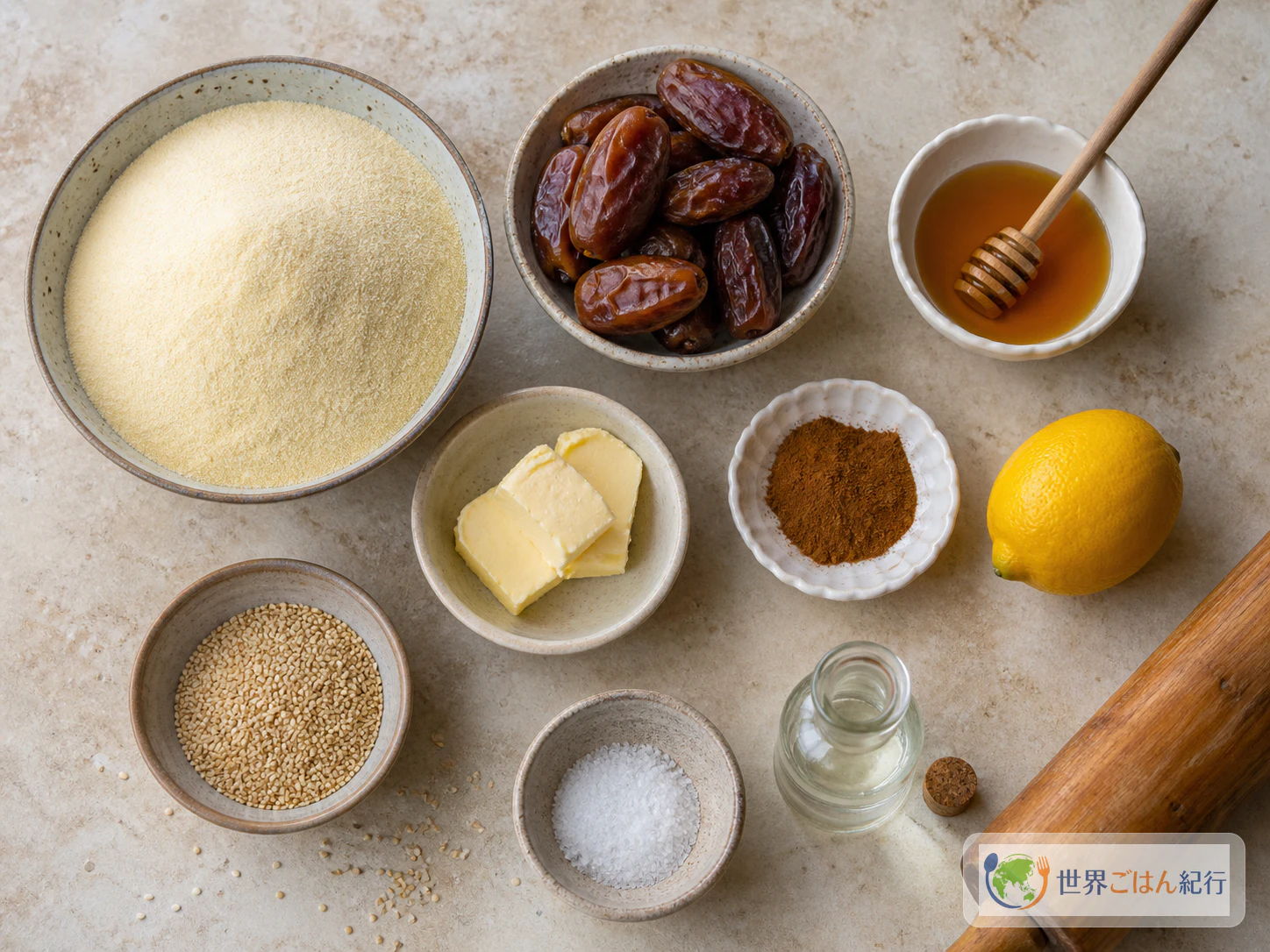
Ingredients for makroud: semolina, dates, honey, orange flower water and more
Measure the flour, filling and syrup separately so you don't have to stop while shaping

Semolina is flour from durum wheat, so it is unsuitable for people with a wheat allergy or who must avoid gluten. Using butter adds dairy, and sprinkling white sesame adds sesame. Because it uses honey, do not give it to children under 1 year old. Date paste and flower waters with the same name can differ in ingredients and intended use, so check the food-use labeling.

Choosing ingredients for makroud
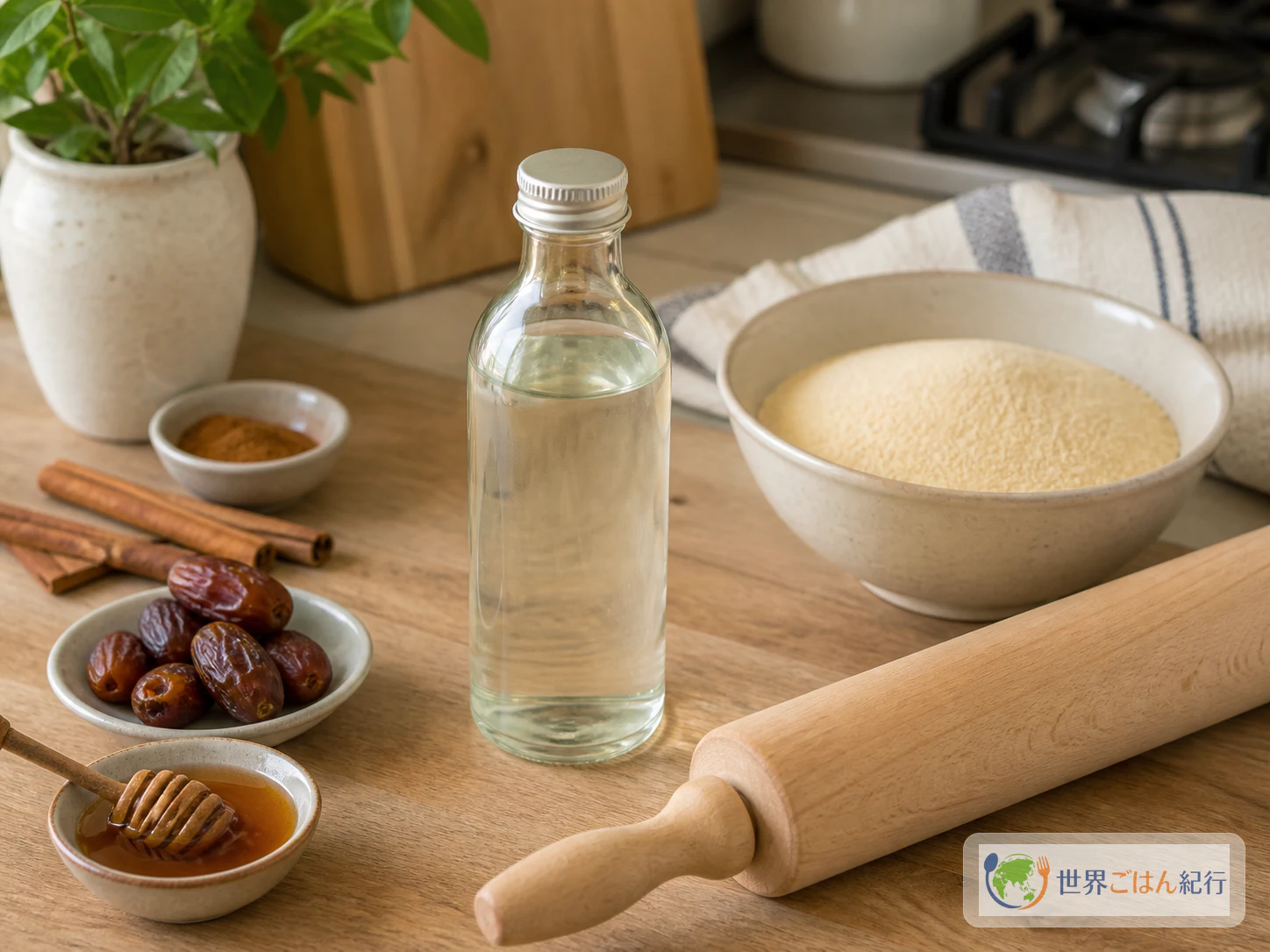
A shopping basket with orange flower water, semolina, dates and honey
The flower water that sets the local fragrance: check the food-use labeling and volume first

Orange flower water is a fragrant water distilled from citrus blossoms, not orange juice. Only 2.5 tbsp (35 ml) goes into makroud, but it runs a thread of floral aroma behind the sweetness of the syrup. If you're not fond of floral scents or are making this only once, 2 g orange zest and lemon juice will still let you see how the dough and filling work.

When you shop for it, check that it is labeled food-grade and that the ingredient list shows a flower water meant for pastry rather than a flavored drink. Buy it if you can confirm the food-use labeling and plan to use it up. A 1 cup (240 ml) bottle leaves plenty for the syrup of mhancha or basbousa.

Powdered cinnamon works, but on days you want the aroma to stand out, grind it from stick cinnamon. If the powder you already have still smells strong, use that; a new small jar holds more than the 2 g used here, and the rest can go into chai and baked sweets.

For a handmade filling, choose soft, pitted dates. Dates so hard that they don't spring back when pressed with a finger should be sprinkled with 1 tbsp (15 ml) hot water, warmed in a 600 W microwave for 40 seconds and mashed with a fork. Store-bought paste saves work, but chopping whole dates makes it easier to leave a few pieces in the filling. Either way, judge by whether it gathers into a 0.5 inches (1 cm) rope when you shape it.

Method: make the dough that doesn't crack first

The judgment for the dough is not smoothness but whether dry sand comes together into one. Add water until it is soft enough to wrap the filling, and don't knead until it stretches like bread. Keep to this boundary, and after frying a crumbly semolina shell remains.

Common makroud problems and fixes

The hardest part at home is judging how much water to add to the semolina. Don't add the water all at once. Knead it like bread dough and it becomes harder to crack but loses its granular, crumbling quality in the mouth. With too little water, though, cracks run through the dough while you shape it and the filling leaks out in the oil.

If the diamonds crack, the usual causes are dough left dry, filling that is too thick, or seams not facing down. Before frying, work a single drop of water into the crack with your fingertip, press the seam and rest it for 10 minutes. Pieces that are still wide open shouldn't go into the oil; bake them separately in a 350°F (180°C) oven so you don't lose the filling. Next time, before adding 1 tsp (5 ml) more water, make sure you rested the dough for 60 minutes.

How to judge when it is done

It is done when the corners of the diamond remain and the surface is a deep golden color. Right after soaking in syrup the surface is soft, but after 30 minutes of cooling the shell firms up, and when you break it the line of date filling shows.

Frying, baking and serving makroud
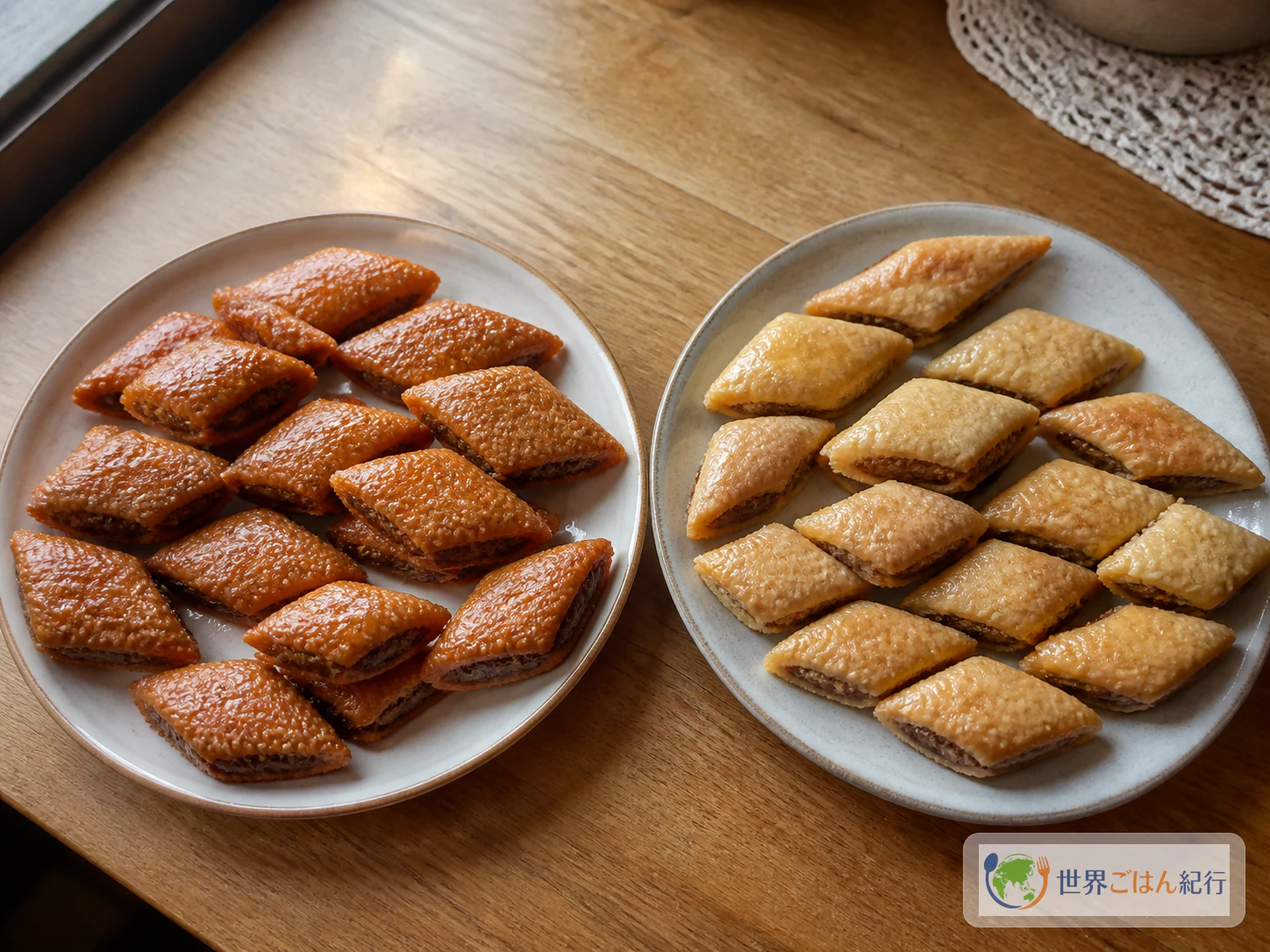
Fried makroud and baked makroud compared on a plate
Frying gives a toasty shell, baking makes the oil easier to handle. Choose by color and texture

Choose frying for texture, baking for easy cleanup. Frying firms the surface quickly and builds a shell that takes up the syrup, bringing the toasty note and the sheen forward; it suits days you serve a little with mint tea. Baking leaves a drier, grainier shell and less oil to dispose of, which suits shaping in the morning and baking in the evening. Either way, keep the filling thin and the dough an even 0.5 inches (1.5 cm).

Baking makroud

Arrange the shaped diamonds on parchment and bake in an oven preheated to 350°F (180°C) for 40–50 minutes. Take them out when the surface and corners are golden brown and the shape doesn't sag when you lift the base. Dip the fresh-baked pieces in warm syrup for 10–15 seconds and cool them on a rack.

Varying the filling

Algerian makroud is known for its date filling, and regional versions also use figs or almonds. For the first batch, keep the date filling to stay close to Kairouan, then make small changes, such as swapping white sesame for black. To add nuts, coarsely chop only 1 oz (30 g) almonds and mix them with 8 oz (220 g) dates. Keep the pieces under 0.125 inch (3 mm), since large ones push through the dough.

Adjusting the sweetness

Halving the syrup makes the shell and filling feel separate. Instead, cut the pieces smaller, shorten the time in the syrup and serve unsweetened mint tea alongside, so the pastry keeps its structure.

FAQ

I only have fine-ground semolina.

It works. Use the same 10.5 oz (300 g), add only ¼ cup (80 ml) lukewarm water at first, and decide on the rest after resting 5 minutes. Fine-ground absorbs water quickly, so adding the whole amount from the start makes it sticky. Stop when it holds its shape when squeezed and a few streaks of flour show on the surface.

Can I make it without orange flower water?

Yes. Replacing the 1.5 tbsp (20 ml) in the dough and the 1 tbsp (15 ml) in the syrup with lukewarm water and lemon zest gives a plain date pastry without the floral aroma.
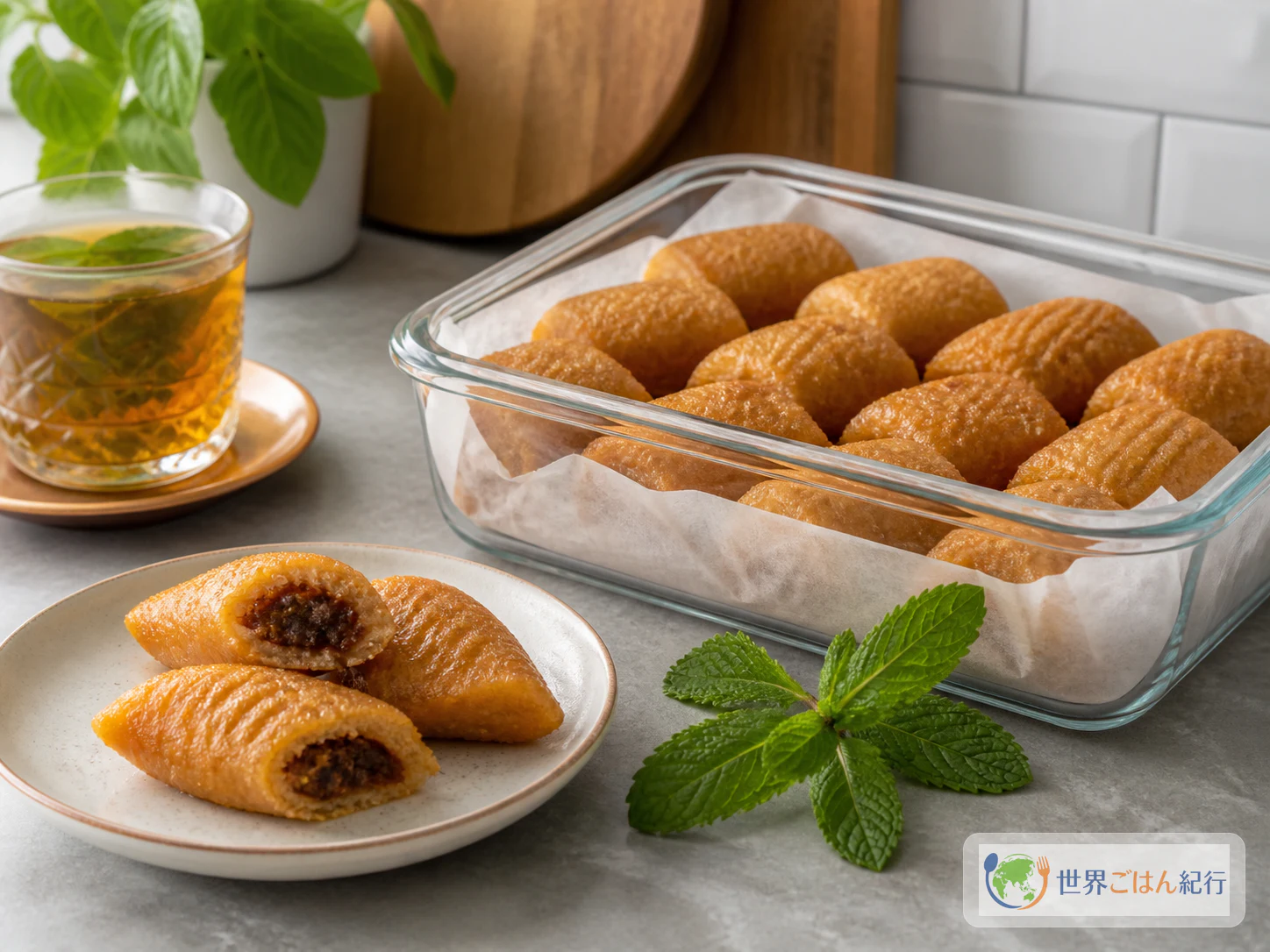
A cross section of makroud, a storage container and mint tea laid out as a serving scene
A cross section soaked with syrup and the state of storage: makroud

How long does it keep?

Store it fully cooled in an airtight container; plan on 2 days in a cool room, or within 4 days refrigerated in hot weather. After refrigerating, leave it at room temperature for 15 minutes before eating and the semolina shell recovers a little. To make ahead, freeze the pieces before dipping, rebake on the day you eat them and then dip in syrup, so the surface is less likely to turn heavy. Do not eat anything that develops an off smell, mold or an unusual stickiness.
Sources