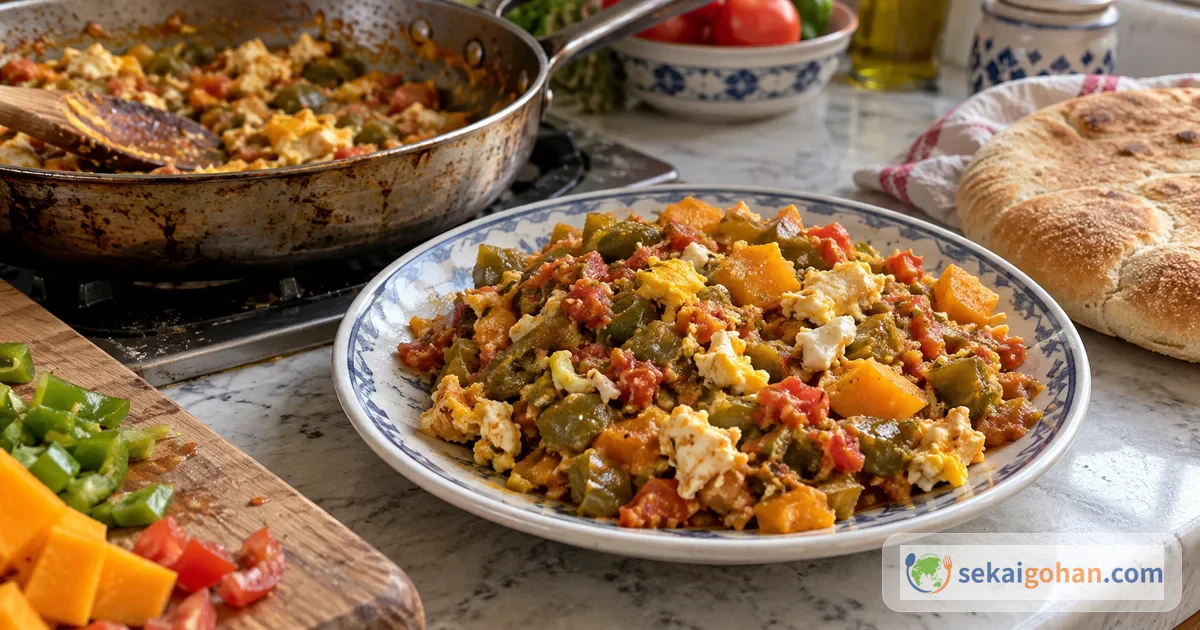
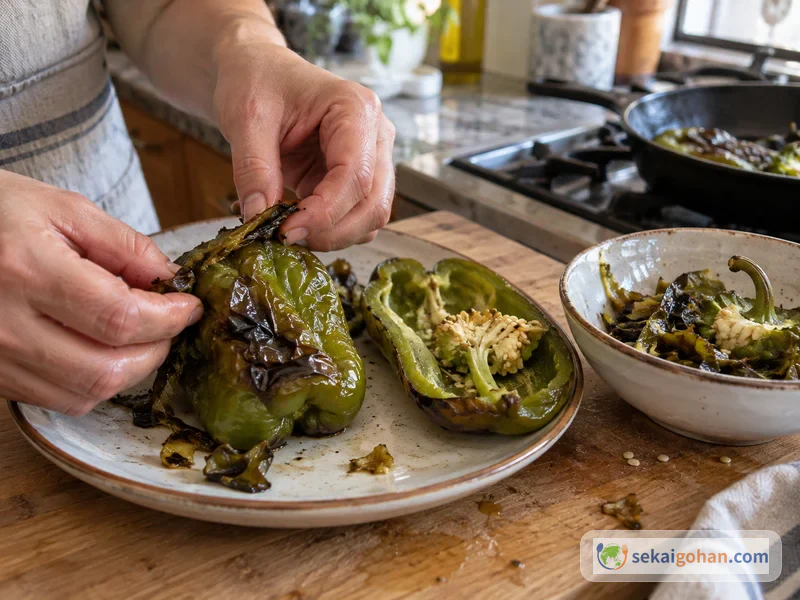
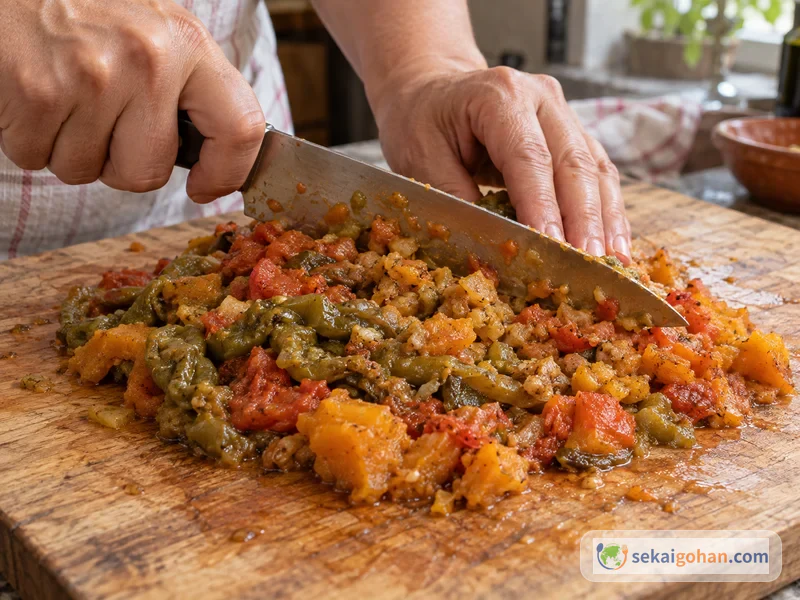
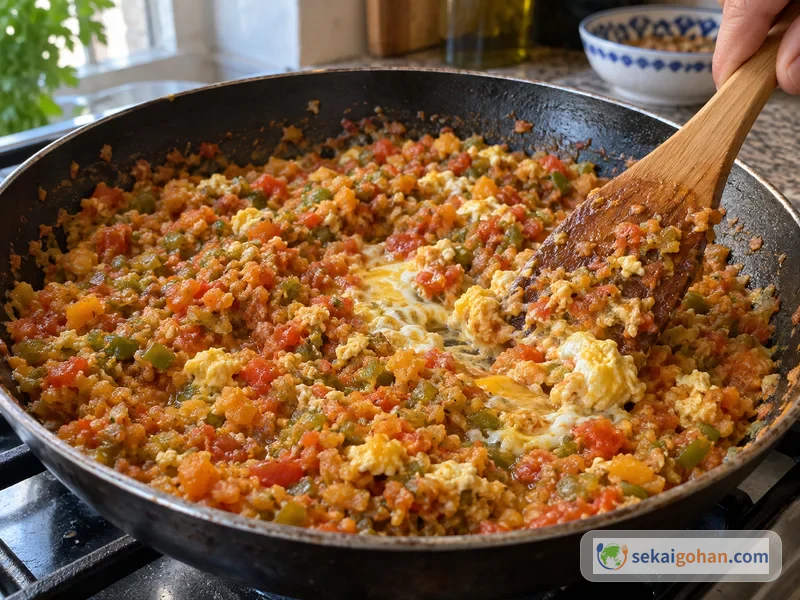
From the canteen kitchen comes the quick tapping of a knife on a cutting board. Peppers, tomatoes, and squash, just fried in oil, are gathered into one heap, eggs go in, and the whole thing is chopped finer still. Scoop some up with a torn piece of bread and the heat of chile, the sweetness of tomato, and the richness of egg all arrive at once. Kafteji (kafteji / keftaji) is an everyday Tunisian dish, and one of the simplest pleasures of the country's table.
What Kafteji Is and How Tunisians Eat It
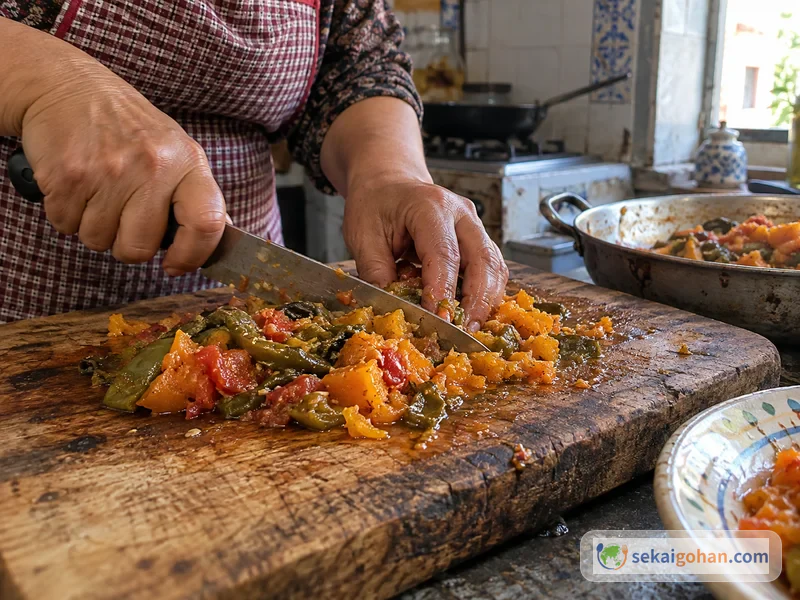
The heart of this dish is the chopping step. The vegetables are fried in oil first and only then chopped together on the cutting board, the reverse of the order most dishes follow. That's what gives kafteji its soft, unified texture.
In Tunisia, kafteji turns up everywhere, from family gatherings and celebrations to ordinary weekday meals. It is often served as a side to a larger dish, but it works just as well alongside grilled meat or fish, on its own as a meatless plate, or tucked into bread as a sandwich.
Tunisians eat it with their hands, scooping it up with bread called khobz. You put the vegetables and egg on the bread, press them together with your fingers, and eat. The oil and tomato juice left on the plate get wiped up to the very end with bread, the Tunisian way.
Kafteji in Kairouan and Tunis
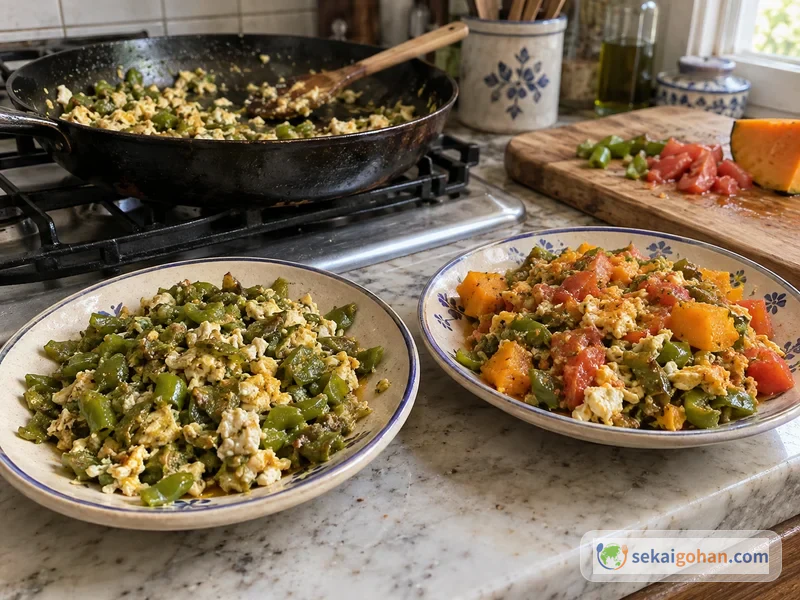
The contents of kafteji change by region. In the inland old city of Kairouan, kafteji is made almost entirely of green chiles and green peppers and is very hot. In the capital Tunis, it is common to add squash, which gives a sweet, mild taste.
Kafteji is a signature dish of the Kairouan region, and locals have a tongue-in-cheek tip for its fire: drink a sweet fizzy soda (gazouz) alongside. In Tunis, the squash does more than tame the heat. Its tender sweetness blends with the chiles and the acidity of the tomato and rounds out the whole plate.
Some versions are served with french fries or diced potatoes simmered in sauce, and some add harissa (chile paste), cumin, or parsley for aroma. At home, deciding the heat yourself is part of the fun.
Ingredients (serves 4)
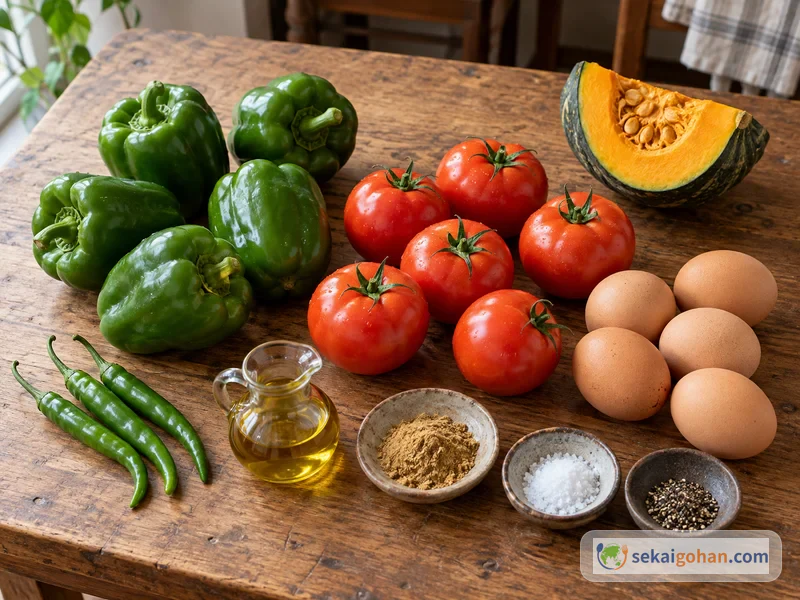
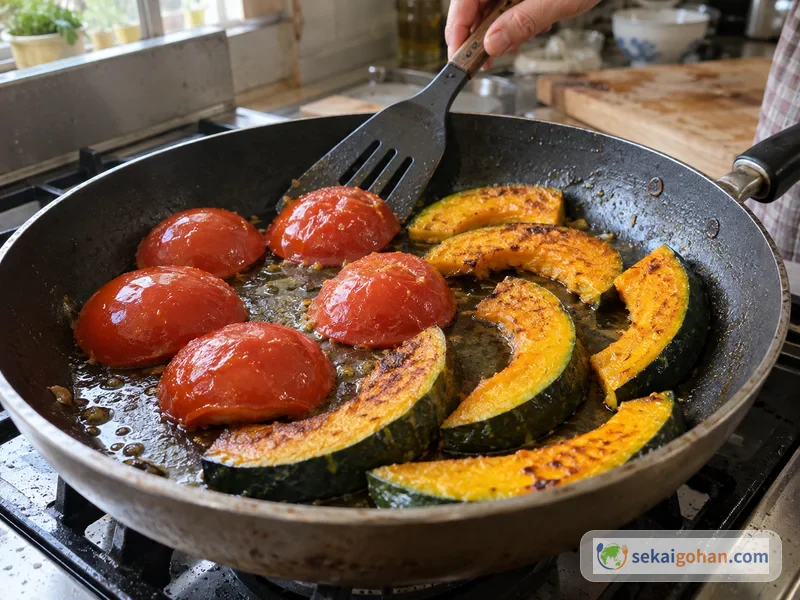
The ratio of peppers to green chiles is up to the cook. Using 2–3 green chiles and making up the rest with bell peppers gives a pleasantly sharp heat. If you roast the squash with the skin on and peel it before chopping, it is less likely to fall apart while cooking.
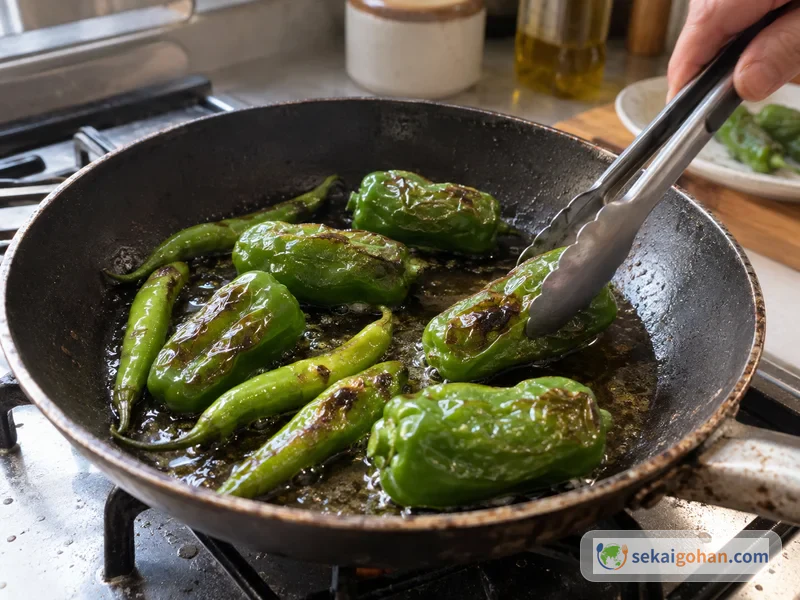
It is important to cook each vegetable separately. Peppers, squash, and tomatoes cook at completely different speeds, so if you cook them together, one of them will scorch or stay underdone.
Choosing Peppers, Chiles, and Squash for Kafteji
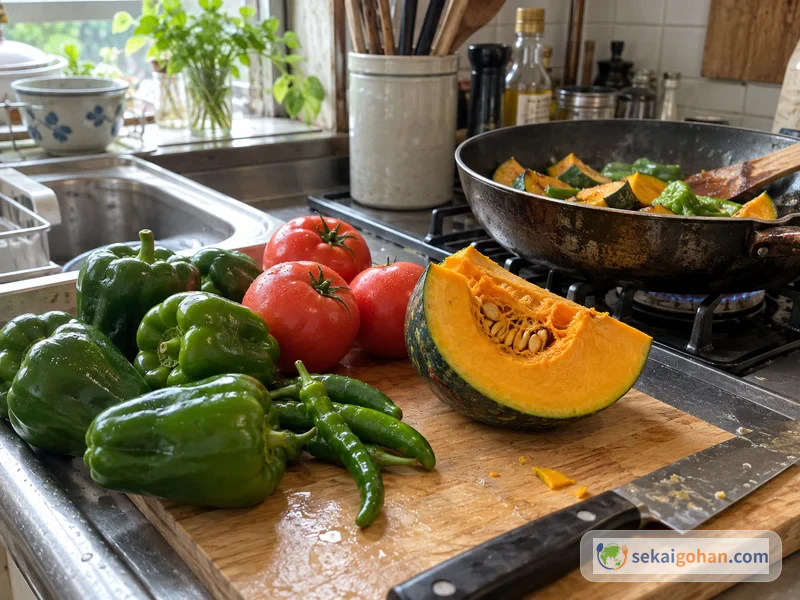
In Tunisia, kafteji uses long, slender green chiles and hot peppers. Outside Tunisia, bell peppers combined with green chiles give a similar flavor. For less heat, lean on mild peppers such as shishito or other mild long green peppers and cut back on the green chiles; for Kairouan-style fire, add more chiles.
Any ordinary squash will do, since it is chopped after roasting and differences in texture between varieties hardly matter. Very ripe tomatoes give more juice when chopped, so the mixture comes together moist.
The seasoning is just ground coriander, salt, and pepper. That sounds plain, but the toastiness of the roasted vegetables and the olive oil give it surprising depth. A little harissa brings in the red heat typical of Tunisia.
Do not touch your eyes or face with hands that have peeled or chopped green chiles. The hot compounds can cause strong pain. When using a lot of hot chiles, disposable gloves give peace of mind. Also, when peppers are fried whole, the air inside can expand and burst, spattering oil, so pierce them in a few places with a skewer before cooking.
Put the roasted peppers into a bowl while still hot, cover with plastic wrap, and steam them for about 5 minutes, and the thin skins peel off smoothly. Even if a little skin remains, once chopped it hardly affects the mouthfeel.
The secret with the eggs is not to stir too much. If the whites and yolks set slightly apart, yellow and white are scattered in patches through the chopped vegetables, which gives contrast in both appearance and texture.
Serving Kafteji with Bread
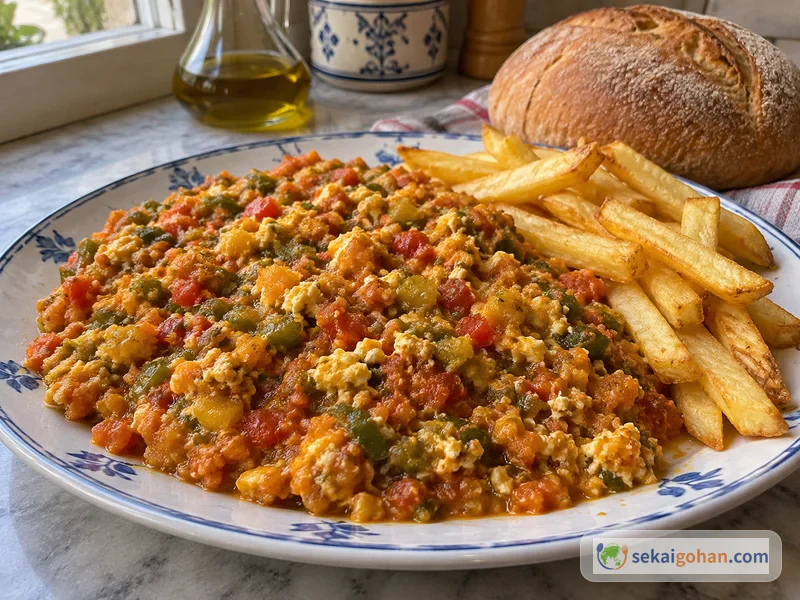
Serve kafteji warm on a flat plate with bread alongside. Add french fries and you have a plate like the ones at Kairouan canteens. Next to grilled meat or fish, the sweetness and heat of the vegetables set off the main dish nicely.
In Tunis, kafteji is a staple lunch for students and workers, topped with a fried egg, served with fried beef liver, or stuffed into split bread as a quick sandwich. That sandwich is the easiest way to try it at home. The flavors settle as it cools, so it's good cold too, and it makes a fine packed-lunch filling.
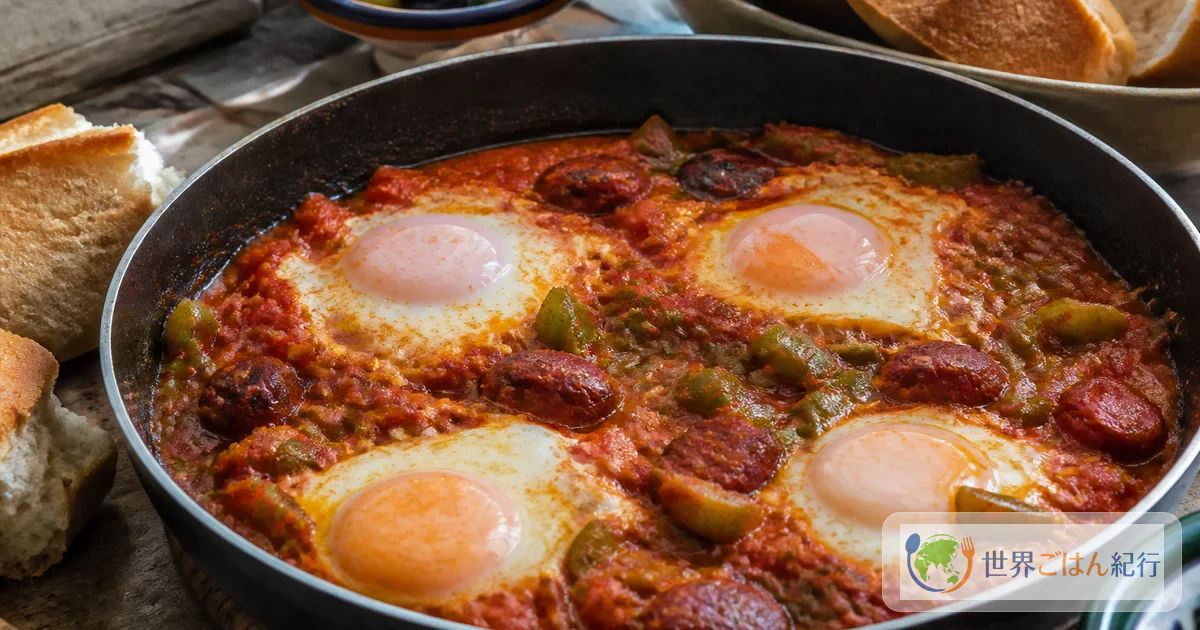
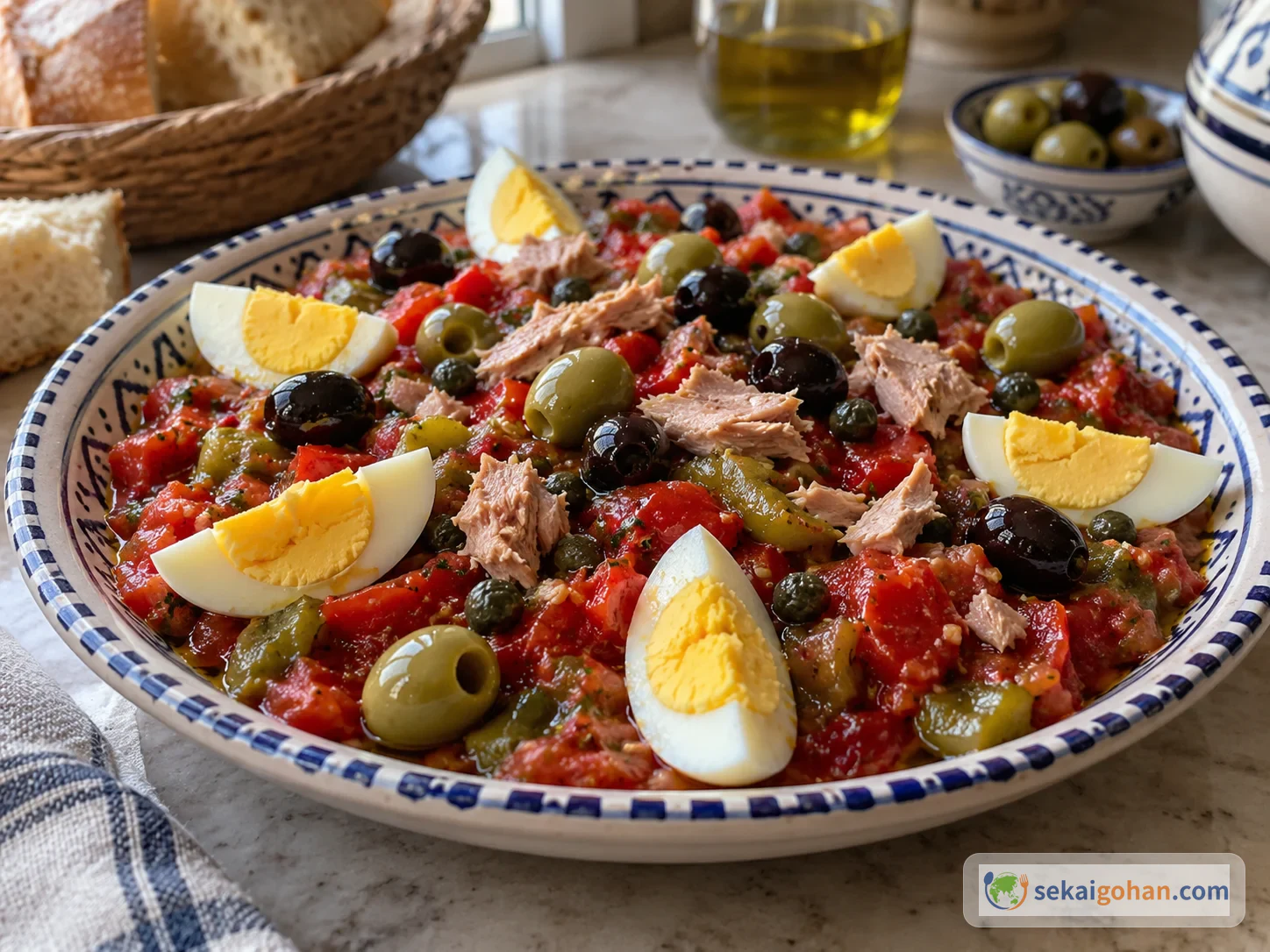
Eating it side by side with chakchouka, where tomatoes and peppers are stewed and eggs are dropped in, shows how different kafteji's roast-then-chop method is. Slata mechouia, a salad of crushed roasted vegetables, shares that same toasty flavor. If you like the heat of harissa, try ojja as well.
Frequently Asked Questions
How do I adjust the heat?
Use the number of green chiles. For no heat at all, make it with only bell peppers or other mild peppers; the toastiness of the roasted vegetables still makes it delicious. For more heat, add more green chiles or some harissa.
Can I make it without squash?
Yes. Kairouan-style kafteji is traditionally made without squash, so the sweetness drops and the heat comes forward.
Can I fry the eggs whole instead of mixing them in?
You can drop the eggs on top of the chopped vegetables and cover the pan to finish them like soft fried eggs. Breaking and mixing them in, though, gives the texture typical of kafteji, where vegetables and egg become one.
Can I make it ahead and store it?
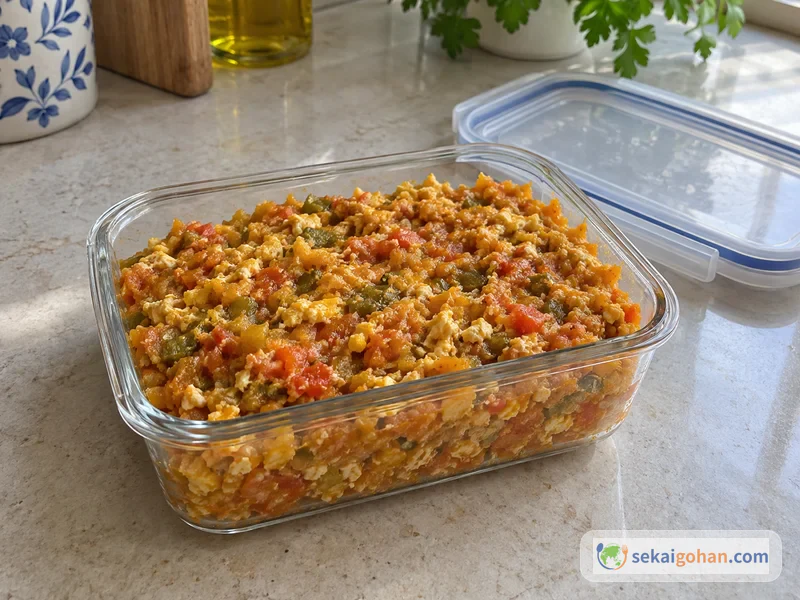
Let it cool slightly, put it in a storage container, refrigerate, and eat it soon. Because it contains egg, keep it out of room temperature for long. When reheating, warm it through in a skillet.
Isn't the frying oil too much?
The roasting oil is generous, but you don't eat all of it. Drain the excess when you take out the vegetables and the result stays light. The leftover oil carries the vegetable aroma and is good for stir-fries and the like.