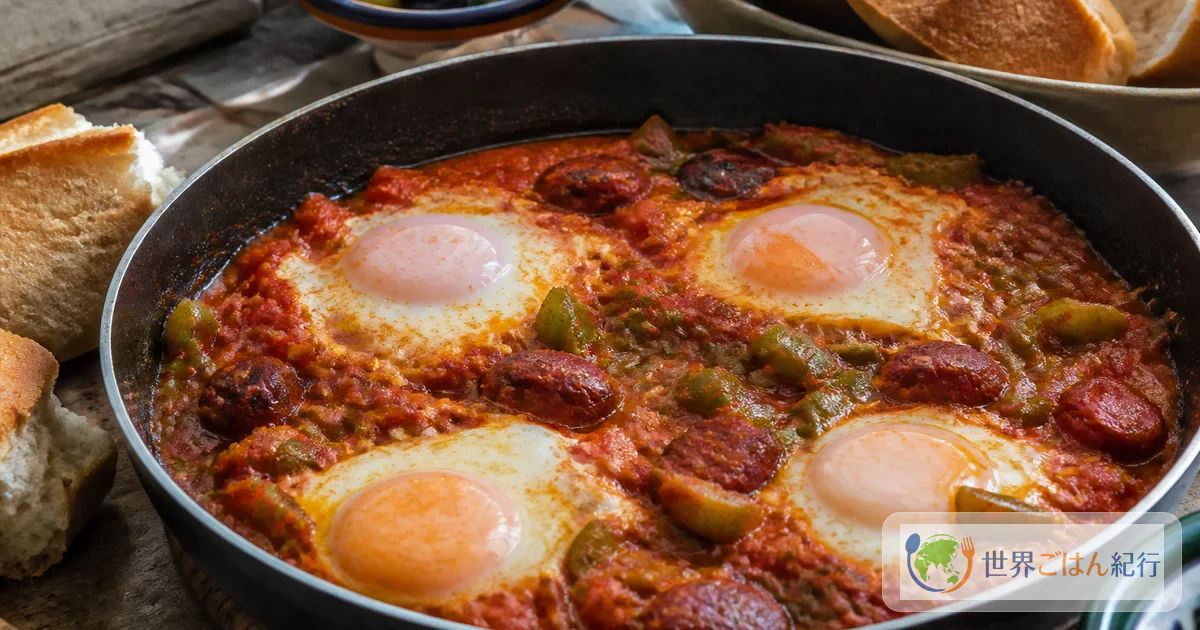
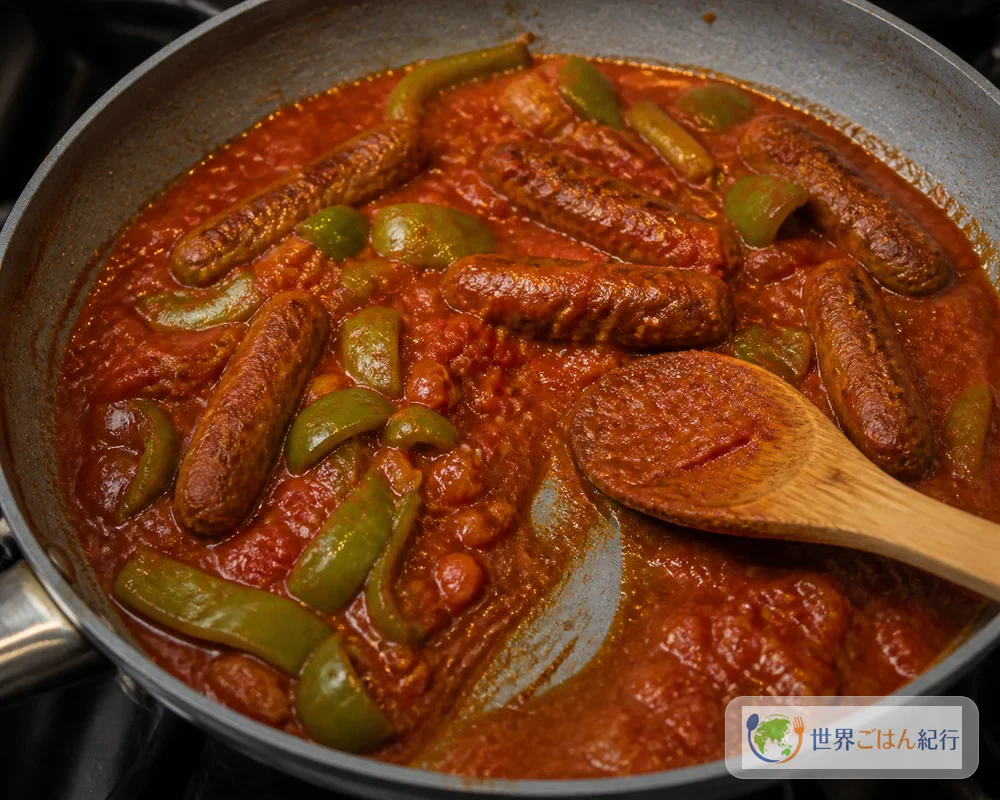
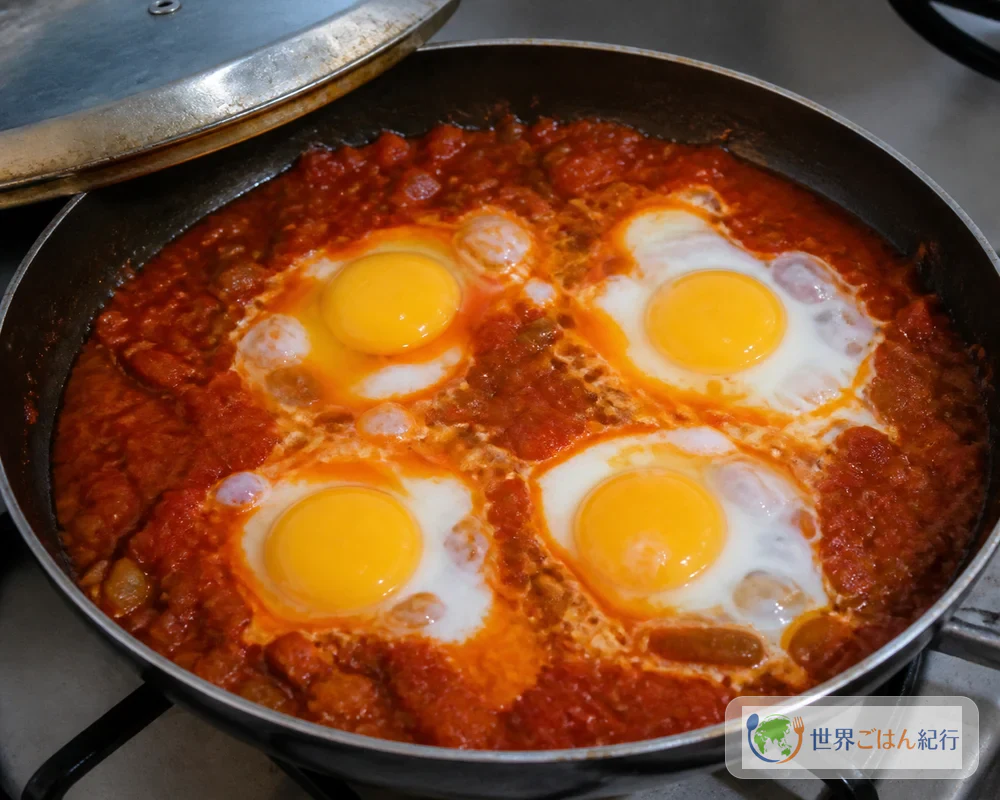
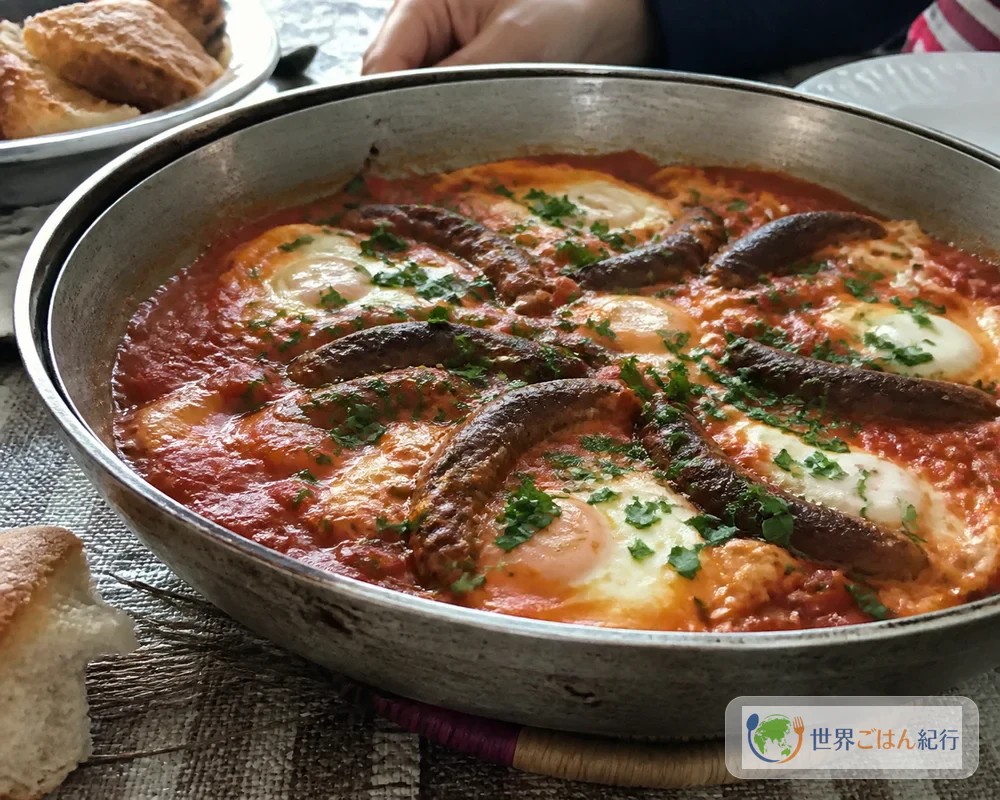
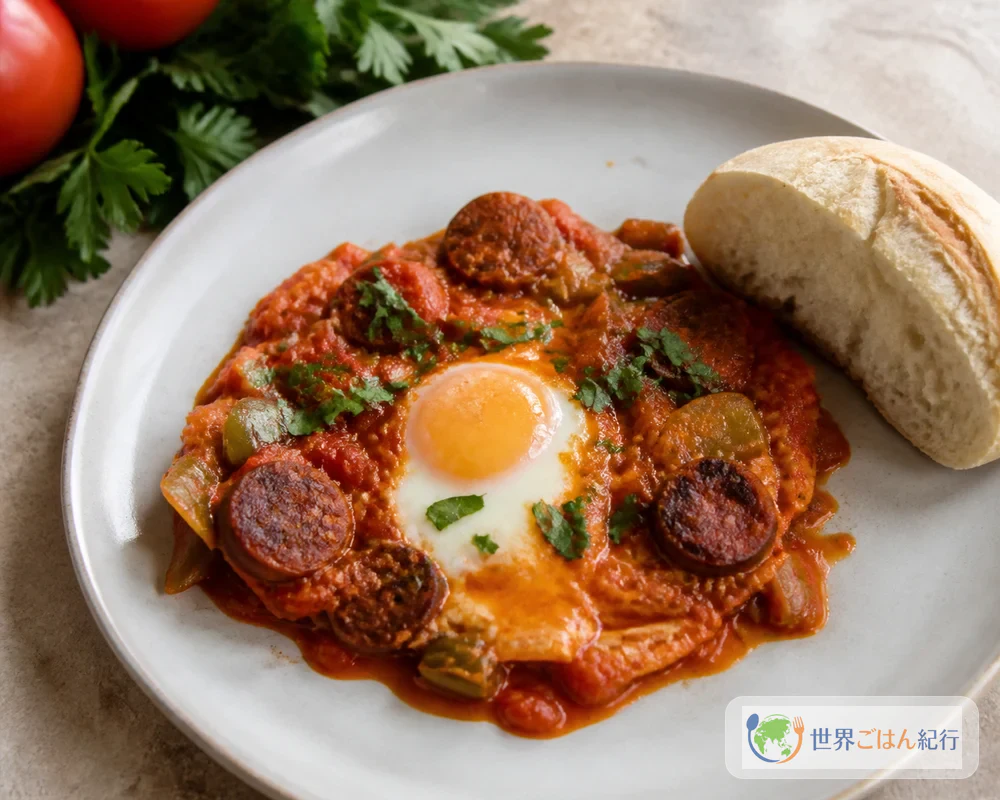
Lift the lid from the skillet and the red steam of tomato rises, carrying the fat of grilled lamb sausage and the scent of garlic. The whites have set on the surface of the sauce while the yolks still tremble. Sink a torn piece of bread in from the edge and you get heat, acidity and the savoriness of the meat in one bite.
Ojja (also spelled oujja) is a Tunisian dish of tomatoes and peppers cooked down with harissa and spices, with eggs added at the end. The version with merguez is the best known, but cooks also make it with seafood or tuna, or with no meat at all.
Ojja in Tunisia and how it differs from shakshuka
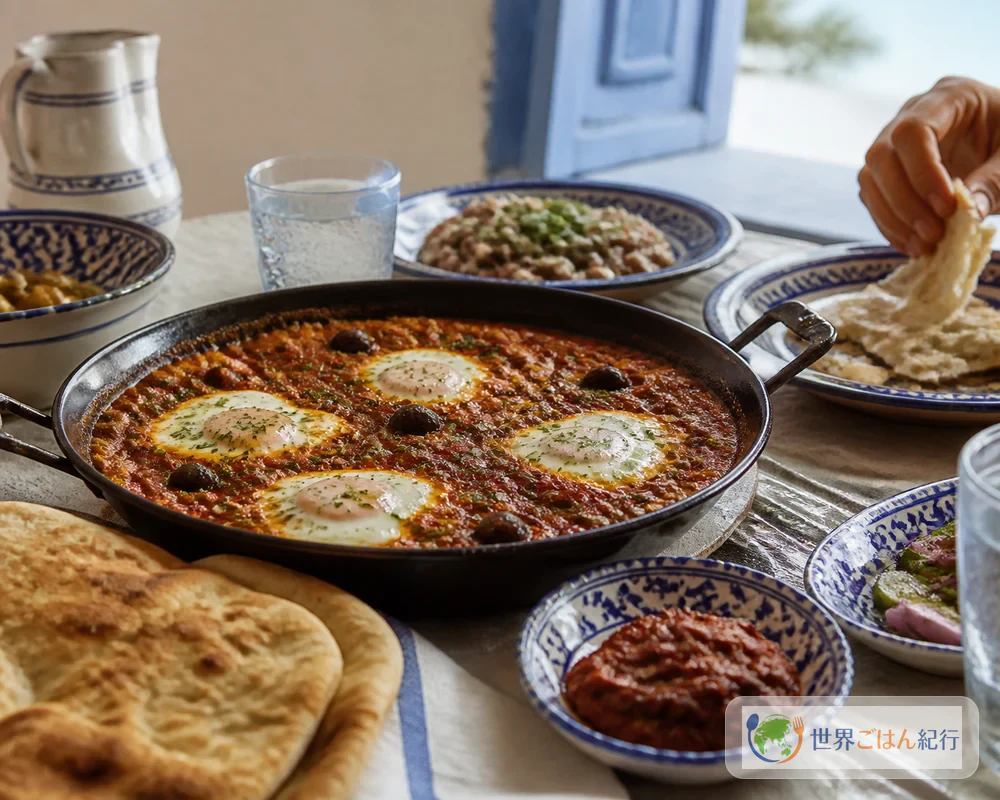
Nabeul, in northeastern Tunisia, sits on the Cap Bon peninsula, which juts into the Mediterranean. Red chiles, harissa, cumin and caraway, and bread baked in clay ovens shape the coastal table there. Ojja is one of its quick dishes: eggs brought together in a garlicky, hot sauce, with merguez, with seafood, or without meat.
In Nabeul, harissa turns up at home, in restaurants and at street stalls, with bread, eggs, fish, stews and sandwiches. It is also a household practice: people dry chiles, combine them with garlic and spices, and keep and share the paste among families and neighbors. That is why the heat of ojja depends as much on how much harissa each person adds at the table as on what goes into the pot.
What goes into ojja follows what is at hand. On the coast, fish, shrimp, tuna and sardines cooked with eggs and tomato are a natural combination. In the dry south, tables center on beans, grains and red meat rather than fish and raw vegetables. For a lighter, coast-style pot, leave out the merguez and use shrimp or tuna.
Ojja and shakshuka are hard to tell apart by name alone. Some say ojja stirs the eggs into a garlic-centered sauce while shakshuka sets them on top, but the names and steps overlap, and home cooks don't keep to those lines. Here the eggs are set on top. Brown the merguez first, return its fat to the aromatic oil, and set the eggs on a loosely flowing red sauce. That way the bread and the richness of the yolk shift from bite to bite, more than when the eggs are stirred in. Harissa heat varies by product, so start mild and add more at the end.
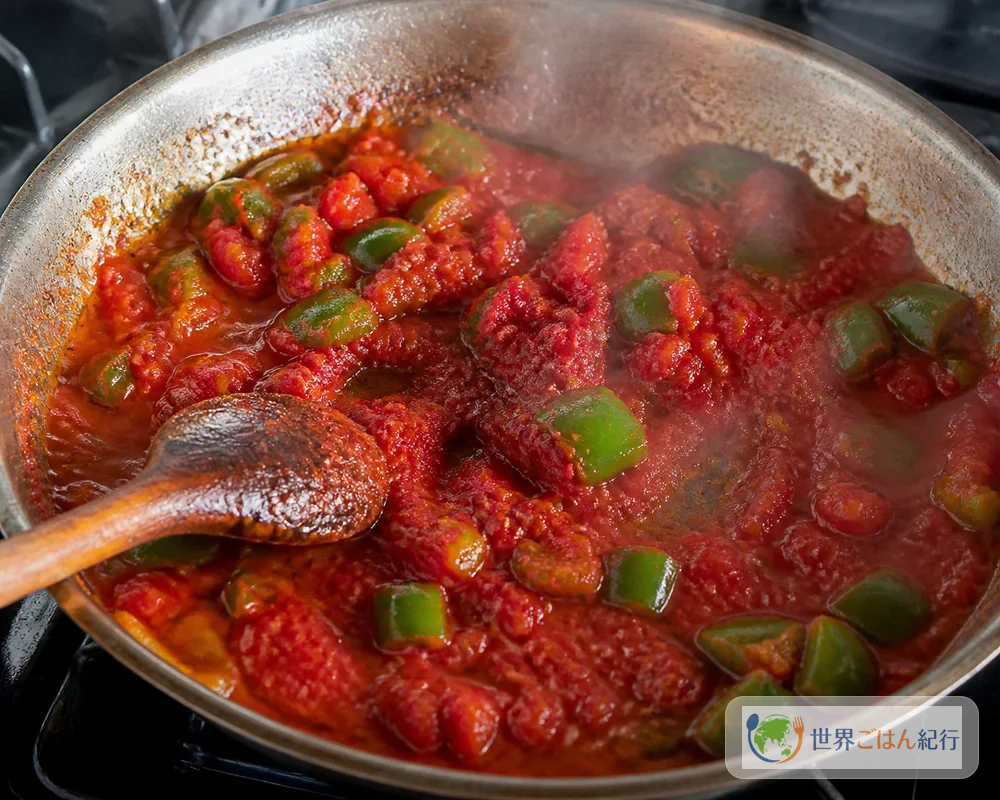
Serves 4. Allow 20 minutes of prep and 35 minutes of cooking, 55 minutes in all. The sauce is thick enough that a wooden spoon dragged across the bottom of the pan leaves a path for a moment. The whites are firm and the yolks runny, though you can set the yolks to suit the eater. Use a deep 24–26 cm skillet or a shallow pot that can go over a flame.
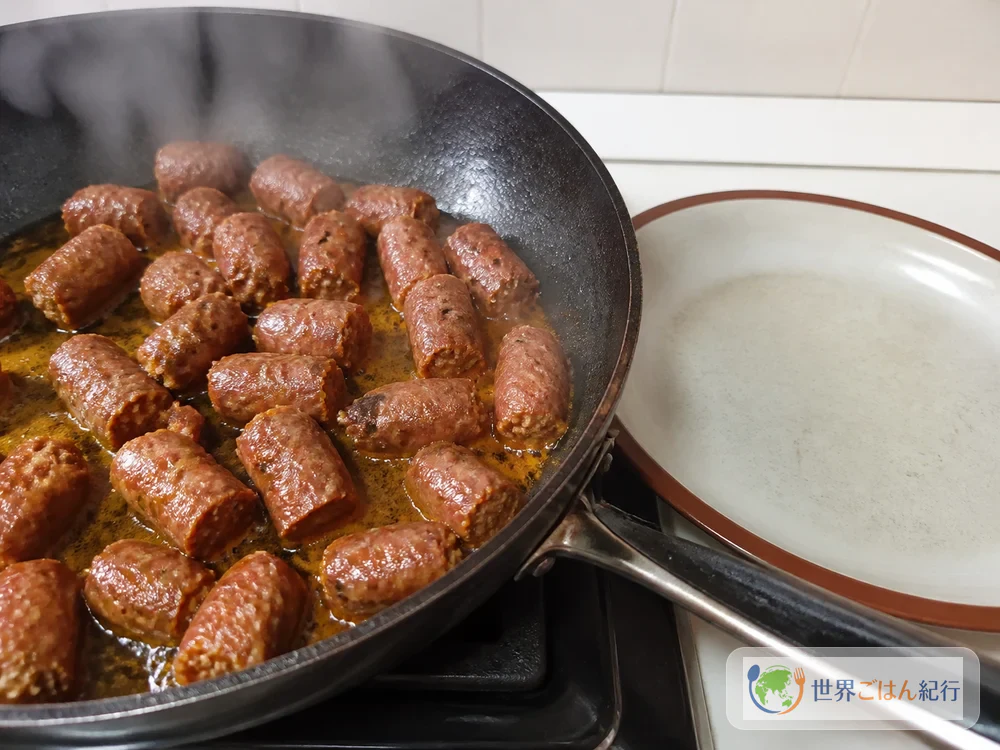
Method: grow the red sauce in the sausage fat
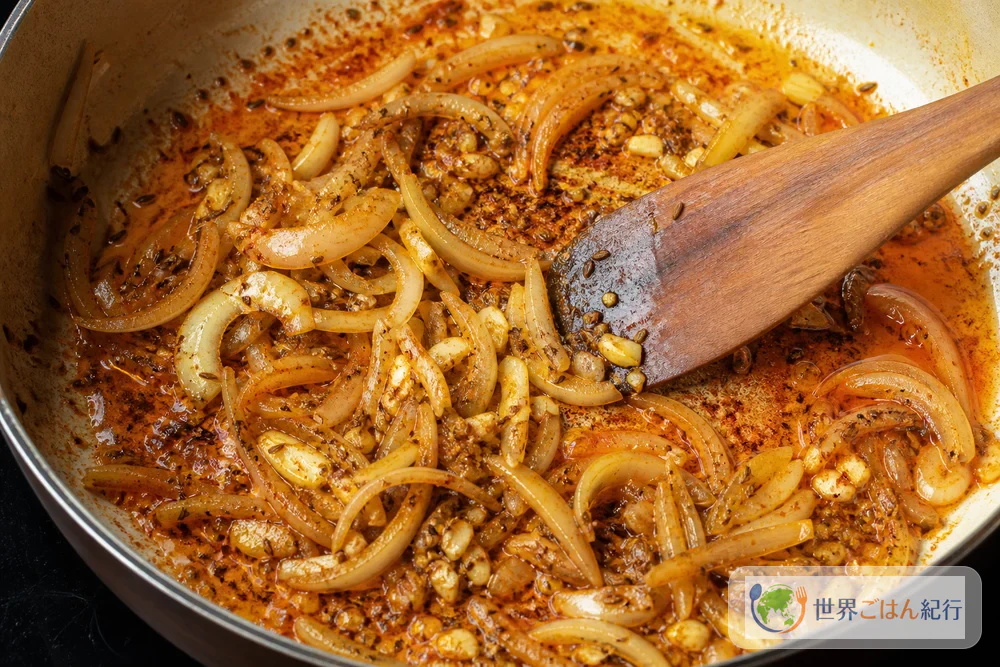
Don't put everything in the pan at once. Brown the merguez, cook the onion and spices, reduce the tomato and cook the eggs as separate steps. Each step builds flavor, even in a short simmer. Finish the sauce first, and decide the saltiness and heat before you drop in the eggs.
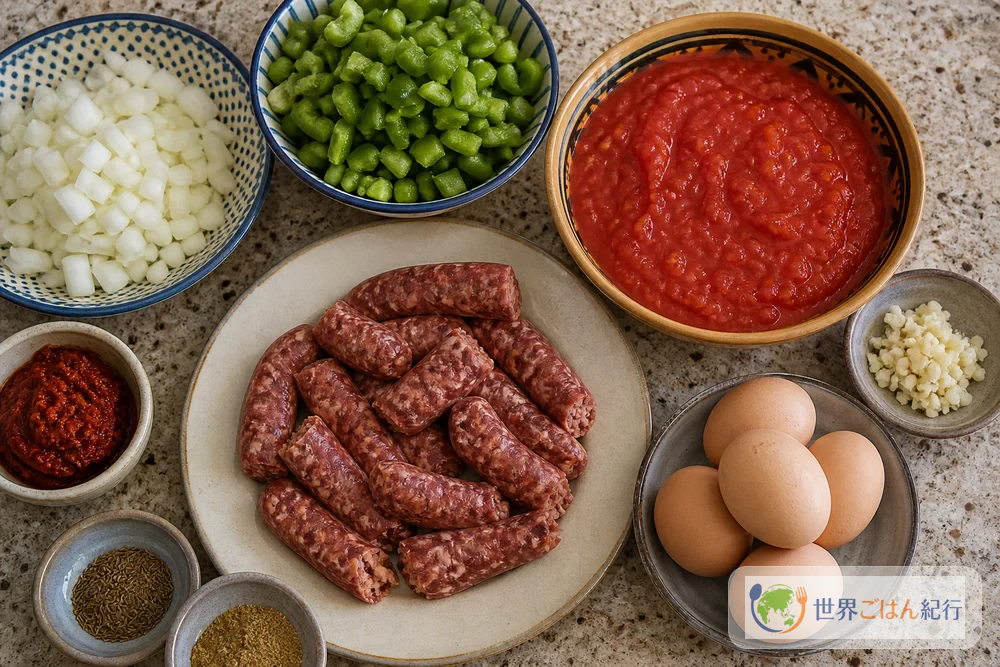
Ingredients (serves 4): decide heat, moisture and salt separately
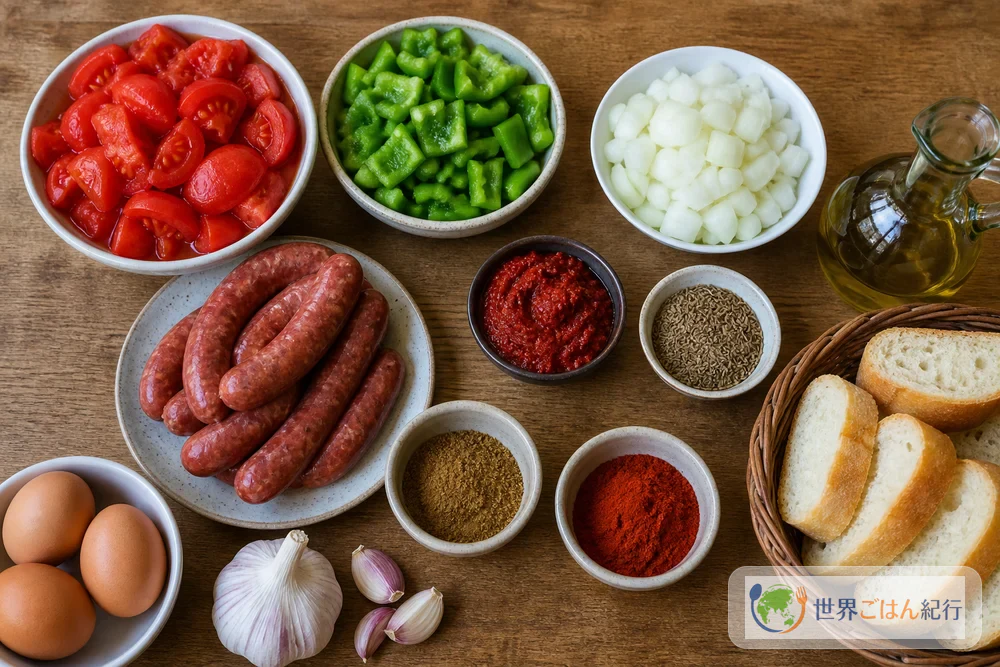
The finish changes with the water in the canned tomatoes, the saltiness of the merguez and the heat of the harissa. The amounts are set so that you do not add much salt at the start and decide the seasoning after the merguez goes back in. Green peppers give a green aroma, and red bell peppers add sweetness.
Merguez, eggs and bread are the ingredients whose labels you want to check. Some sausages contain dairy, soy or wheat, and bread contains wheat. Harissa also differs by product in garlic, spices and allergen production lines, so choose after reading the label. For the closest result, choose lamb or beef sausage. Pork sausage works only as a substitute and tastes different.
Choosing ingredients for ojja
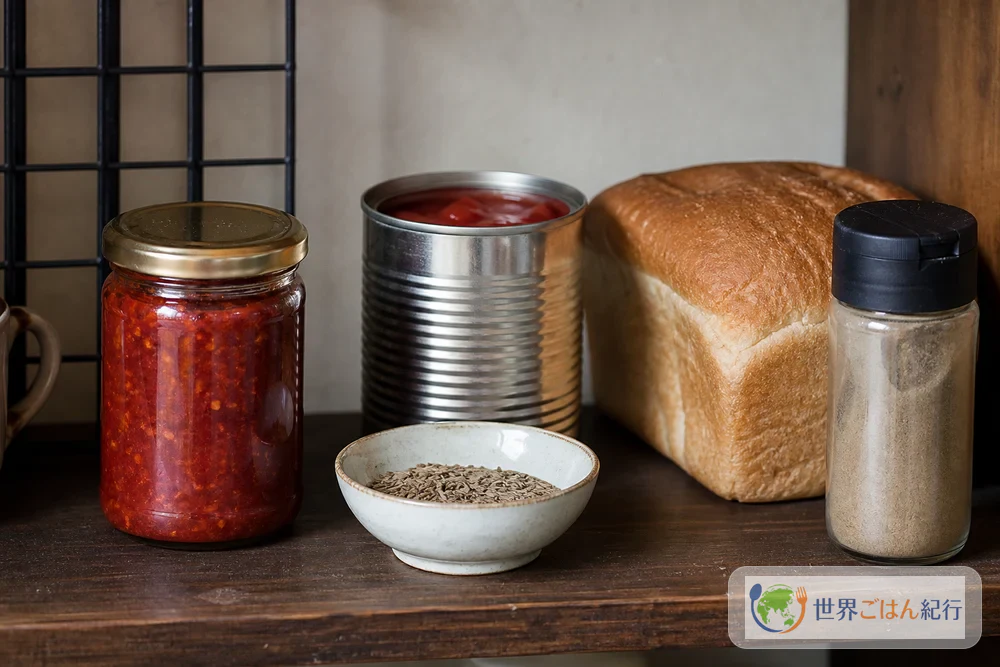
Harissa
With harissa, read the ingredient list as closely as the heat level. Some products add garlic, spices such as coriander, salt and oil, so the same tablespoon can bring a very different red aroma and saltiness. If you don't like much heat, or you're cooking for the family, add it lightly to the pan and put the rest on the table.
If you'd rather not buy a jar for one dish, use 2 g paprika, a little ground chile, a little grated garlic and salt. The heat and color come close, but you lose the way the spices and oil of a good harissa hold together. If you plan to cook Tunisian food often, and use harissa with bread, fish and bean dishes too, buy a jar: check whether it's a tube or a jar, the net contents, what's in it besides chile, and how to store it.
Caraway
Caraway has a lighter, slightly cooling aroma compared with cumin, and it cuts through the fat of the merguez and the heaviness of the tomato. Don't skip the 2 g the first time; it's what makes ojja taste like ojja. If you don't have it, increase the cumin to 2.5 g and add just a little lemon zest.
Buy whole seeds rather than powder, in an amount you can keep airtight, and store them away from light and heat; they're also good in breads, sausages and cabbage dishes. Dry-roast the seeds in a skillet for about 20 seconds and crush them coarsely in a mortar or spice mill, and the aroma really comes up. Ground caraway loses its aroma if over-roasted, so add it briefly after the onion. A mortar does the job fine; if you buy a spice mill, check that it's rated for dry spices, its capacity and how to wash it.
Merguez and other substitutes
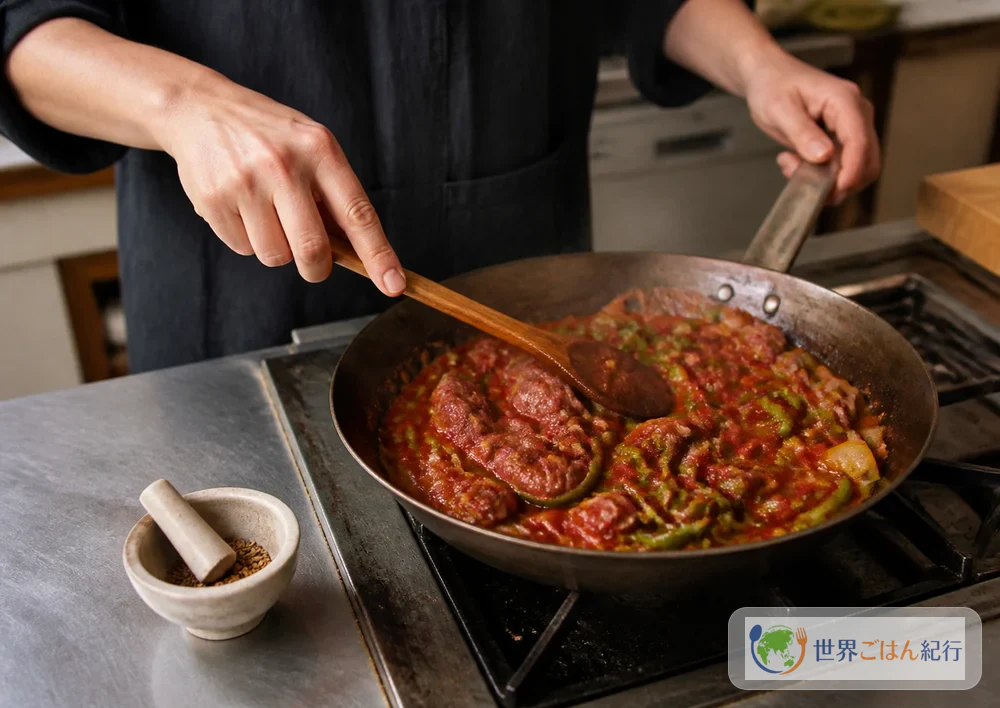
What matters at home is the layering: the chile and garlic of harissa, the cooling caraway, the acidity of tomato, the fat of the sausage and the richness of the yolk. Without merguez, lamb sausage is the closest choice; coarse-ground beef sausage with a little extra harissa also works. Ordinary pork sausage will do, but it won't taste like Tunisian merguez. Thin wieners are weak on fat and meat, so grill them whole and cut them into large pieces. If your sausage is low in fat, increase the olive oil for frying the onion by 1 tsp (5 ml).
| Local role | Choice elsewhere | What changes |
|---|---|---|
| Lamb and spices of merguez | Lamb sausage or coarse-ground beef sausage | Meat aroma and fat change. Leave a little browned fat in the sauce |
| Green peppers | Green pepper or red bell pepper | Red bell pepper is sweet, green pepper gives a green aroma |
| Moisture of fresh tomatoes | Canned diced tomatoes | Moisture is stable, so the reduction is predictable in any season |
| Flatbread or clay-oven bread | Baguette, naan, whole-wheat bread | Crust and aroma change, but it still scoops the sauce |
If you use fresh tomatoes, choose ripe, juicy ones, then peel and crush them; with hard winter tomatoes, canned gives a redder sauce. Cut the peppers into pieces large enough to hold their shape while the eggs cook.
Fixing common ojja problems
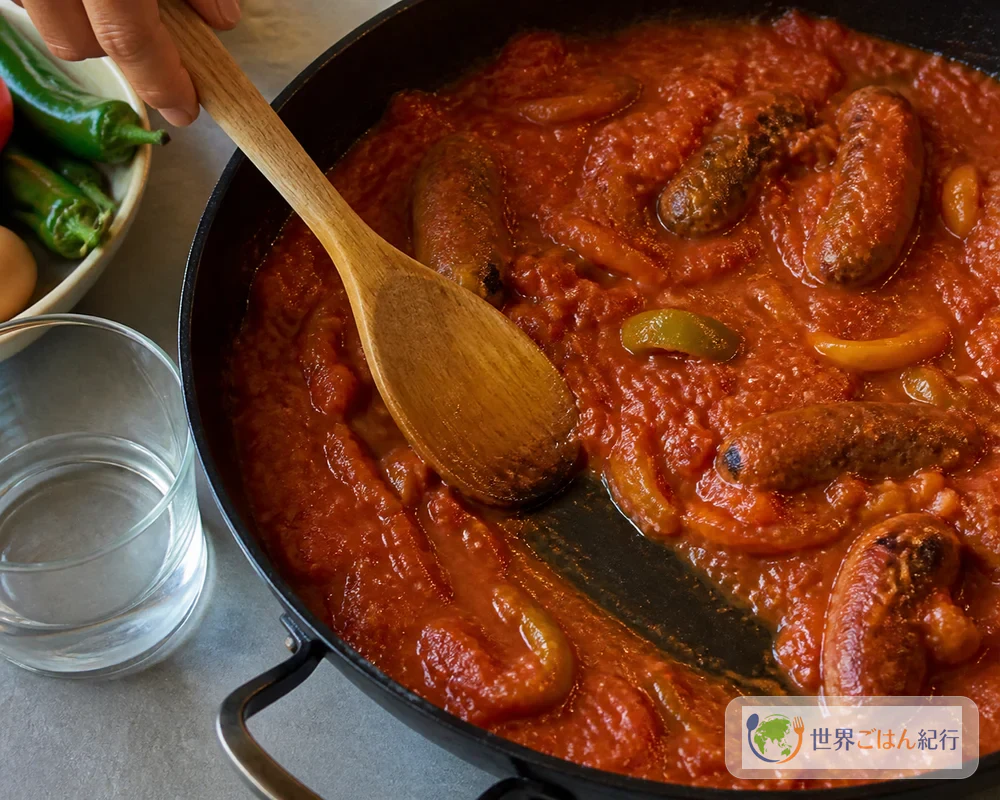
Ojja has few ingredients, so you can usually read what went wrong by looking at the pan. Most trouble comes down to moisture, heat, scorching or the eggs, and each can be fixed without piling on seasoning to cover it up. Keep three things in mind: don't overcook the merguez, don't scorch the spices, and settle the moisture before the eggs go in.
The sauce is watery
Before the eggs go in, remove the lid and simmer 5–8 minutes over medium-low heat. As long as the spoon's trail vanishes immediately and the sauce falls from the spoon like water, hold off on the eggs. Adding salt or harissa to mask the thinness only makes it hotter, so reduce first.
The sauce is too stiff or scorched
If the bottom of the pan starts to show, loosen the sauce with hot water 1 tbsp at a time. If you smell black scorch, move the sauce and everything on top into another pan without scraping the bottom. Scorch stirred in spreads a bitterness the tomato's acidity can't hide.
Too hot or too salty
If it's too hot, add unsalted tomato, pepper or eggs, or go easy on how much sauce each person scoops up with bread. Water alone blurs the flavor, so add a little tomato and reduce again. For too salty, the same applies: add unsalted tomato and eggs, and use less of the merguez, saving the rest for another dish.
The merguez is tough
Merguez toughens when it cooks too long. Next time, take it out once the surface has color, then return it to the sauce for only 3–4 minutes. For the pot in front of you, slice it thin, mix it into the sauce and put a little at a time on the bread.
The eggs are overcooked
A set yolk won't go back to soft. Next time, turn off the heat when the whites turn white and let the residual heat finish them under the lid. For someone who avoids runny yolks, plan on set yolks from the start and keep the sauce a little looser so the bread doesn't dry out.
Storing and reheating ojja
Eggs lose their soft set in storage, so if you can, keep only the sauce and merguez and drop in fresh eggs the day you eat it. Don't leave leftovers cooling in the pan for long; once they've cooled a little, move them to a shallow container and refrigerate. With egg, meat and tomato sauce in the pot, throw out anything left at room temperature for a long time or that has a sour smell, bubbles or sliminess.
Reheat until it's hot all the way through, with steam rising from the sauce; 165°F (74 °C) is the guide for reheated leftovers. If you add eggs afterward, cook them to suit the eaters and serve the bread right away. To freeze, divide the egg-free sauce and the merguez into single portions, then reheat after thawing, watching the moisture.
Ojja nutrition per serving
These figures are for 10 oz (280 g) merguez, 4 eggs, bread, 2 tbsp (30 ml) olive oil, tomatoes, peppers and harissa, divided among 4 servings. They'll shift with the labels on your sausage, bread and harissa. To cut heat or fat, adjust how much you eat and how much bread, not the ingredients.
| Per serving, approximate | Amount |
|---|---|
| Energy | about 590 kcal |
| Protein | about 25 g |
| Fat | about 1 oz (30 g) |
| Carbohydrate | about 1.75 oz (52 g) |
| Fiber | about 7 g |
| Salt equivalent | about 3.3 g |
Serving and frequently asked questions
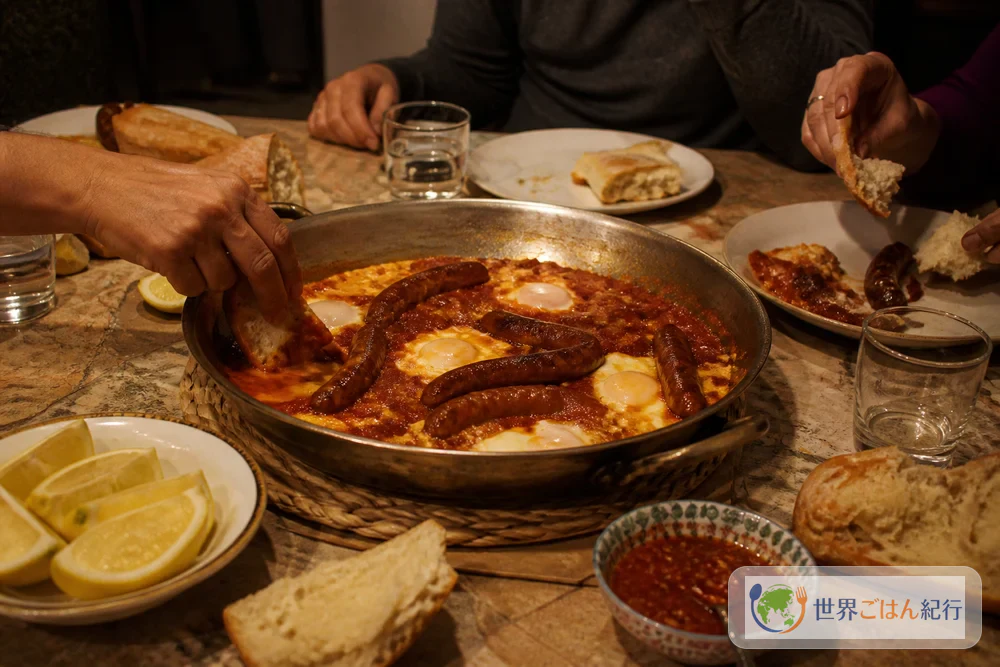
Skip the neat individual plates: set the shallow pan in the middle of the table with bread and extra harissa alongside. The bread soaks up the sauce, stretches the richness of the yolk and gathers the merguez fat into each bite. If you serve lemon, don't squeeze it over everything; use a little on the seafood version or wherever you want to soften the heat.
To keep going with Tunisian food, start with brik, eggs wrapped in fried pastry, or lablabi, chickpeas and bread; the same harissa takes on a different character with oil, beans and tomato. For another take on tomato and egg, try chakchouka, which skips the merguez fat. When seafood is the star, serve it beside a dish where the staple soaks up the cooking liquid, like Tunisian fish couscous.
Can I make a meatless ojja?
Yes. Omit the merguez, add one more pepper, and add 4 oz (120 g) chickpeas or coarsely chopped mushrooms. Without browned meat fat, use the 2 tbsp (30 ml) olive oil from the start and build the aroma with caraway and harissa. Allow 2–3 minutes longer for the beans to absorb moisture before dropping in the eggs.
Can I stir the eggs into the sauce?
Yes. When the whites begin to set, stir broadly once from the bottom of the pan with a wooden spoon for a soft finish, the eggs tangled through the red sauce. If you want clear spots to scoop the sauce and taste the yolk, break the eggs into hollows as in this recipe.