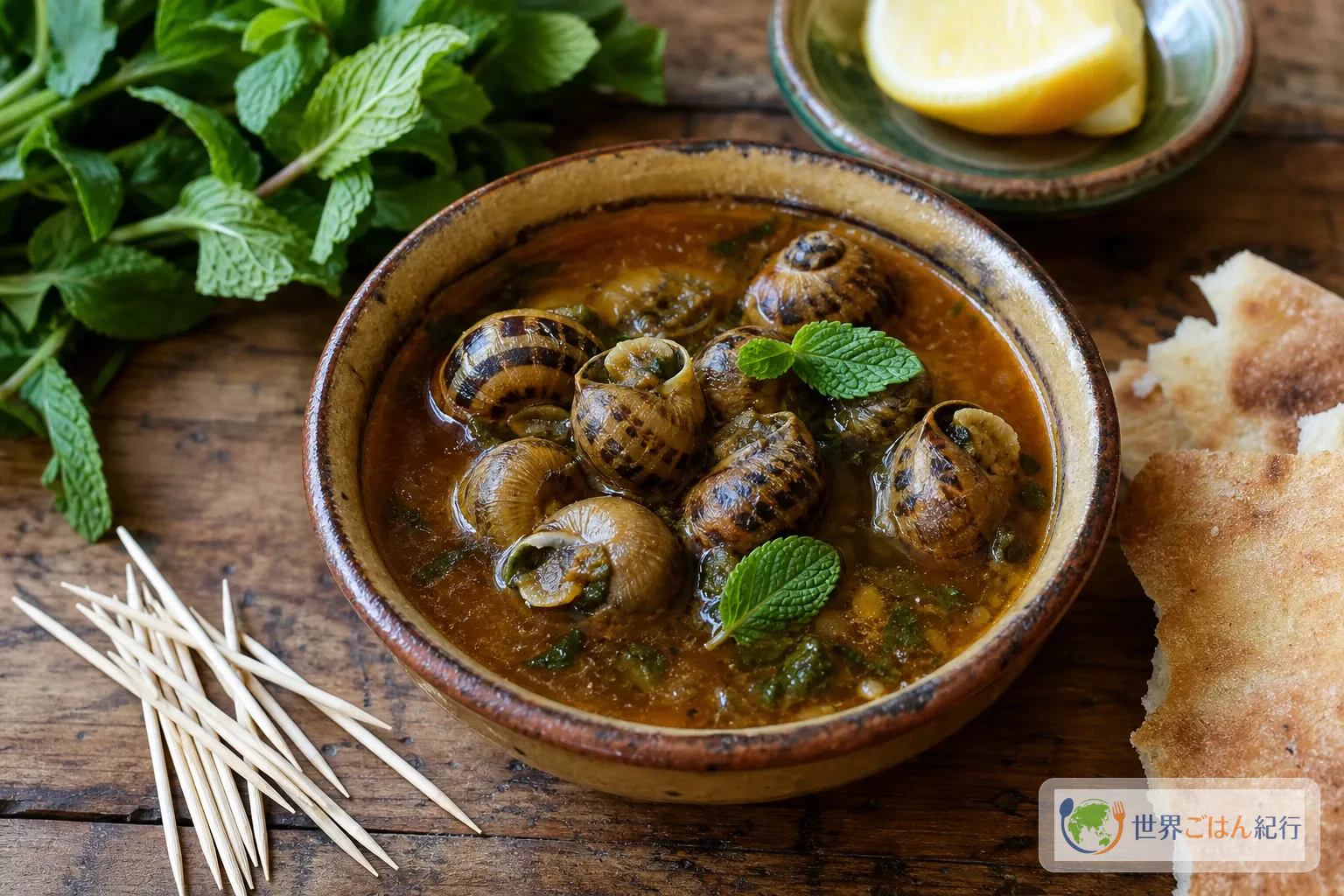
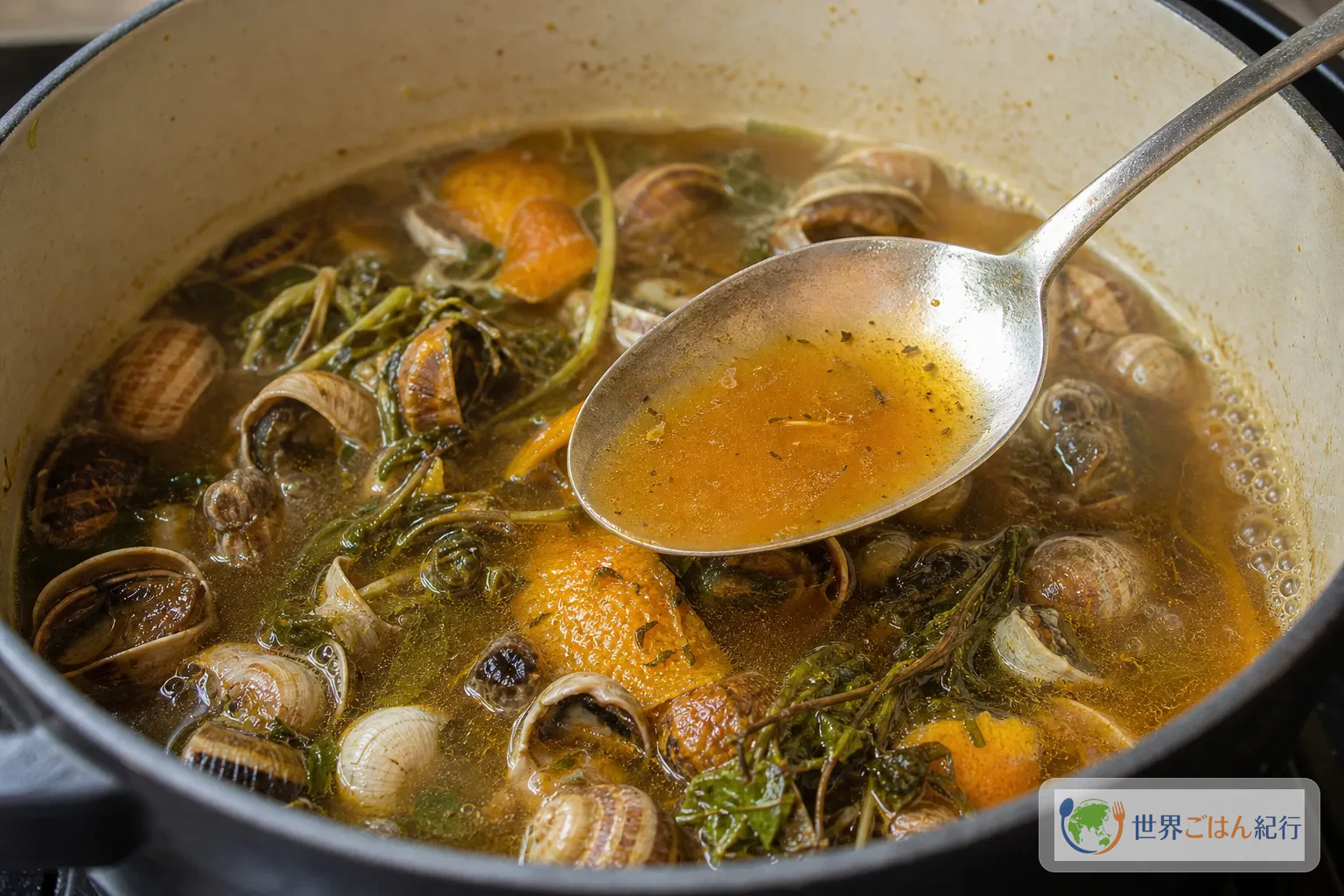
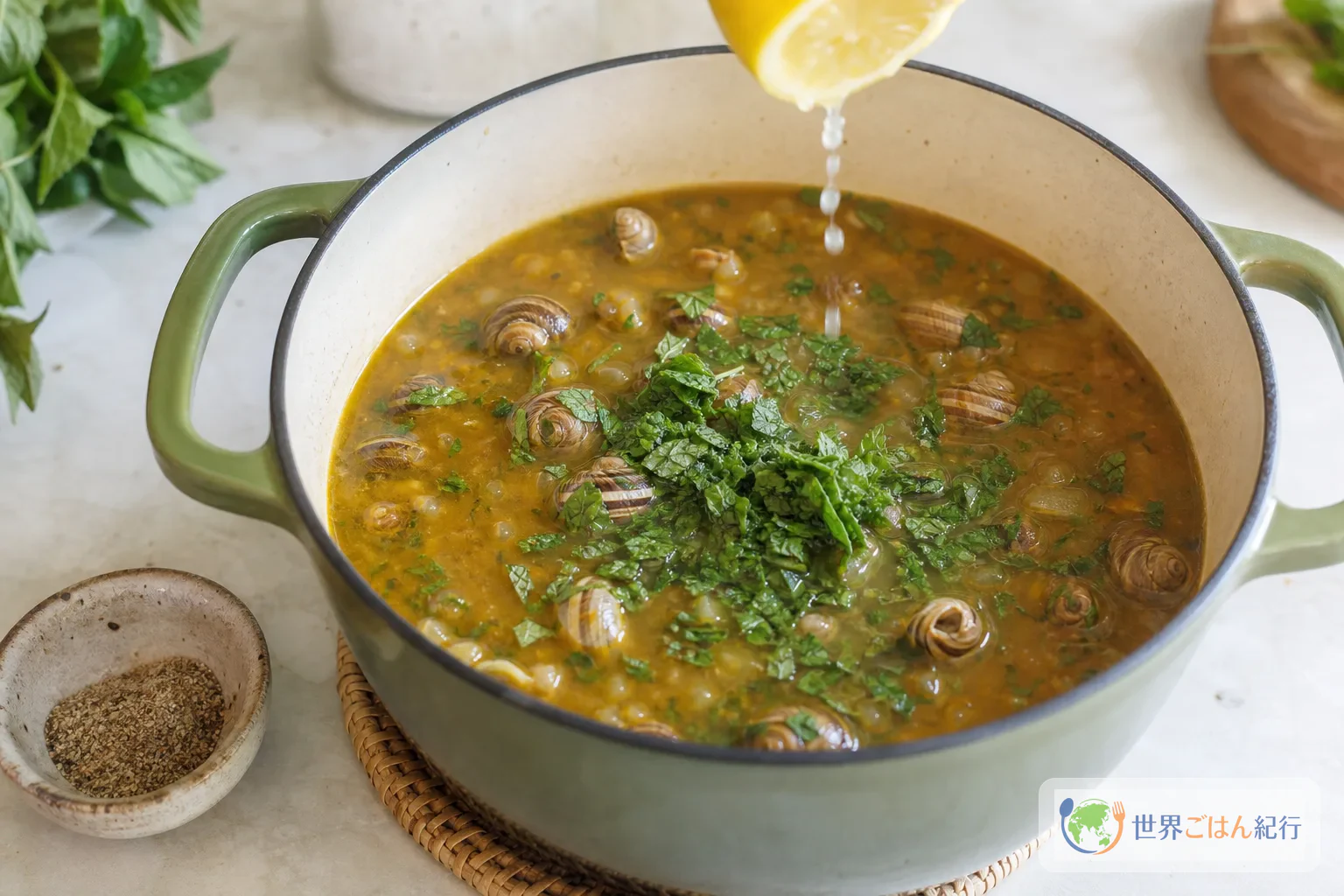
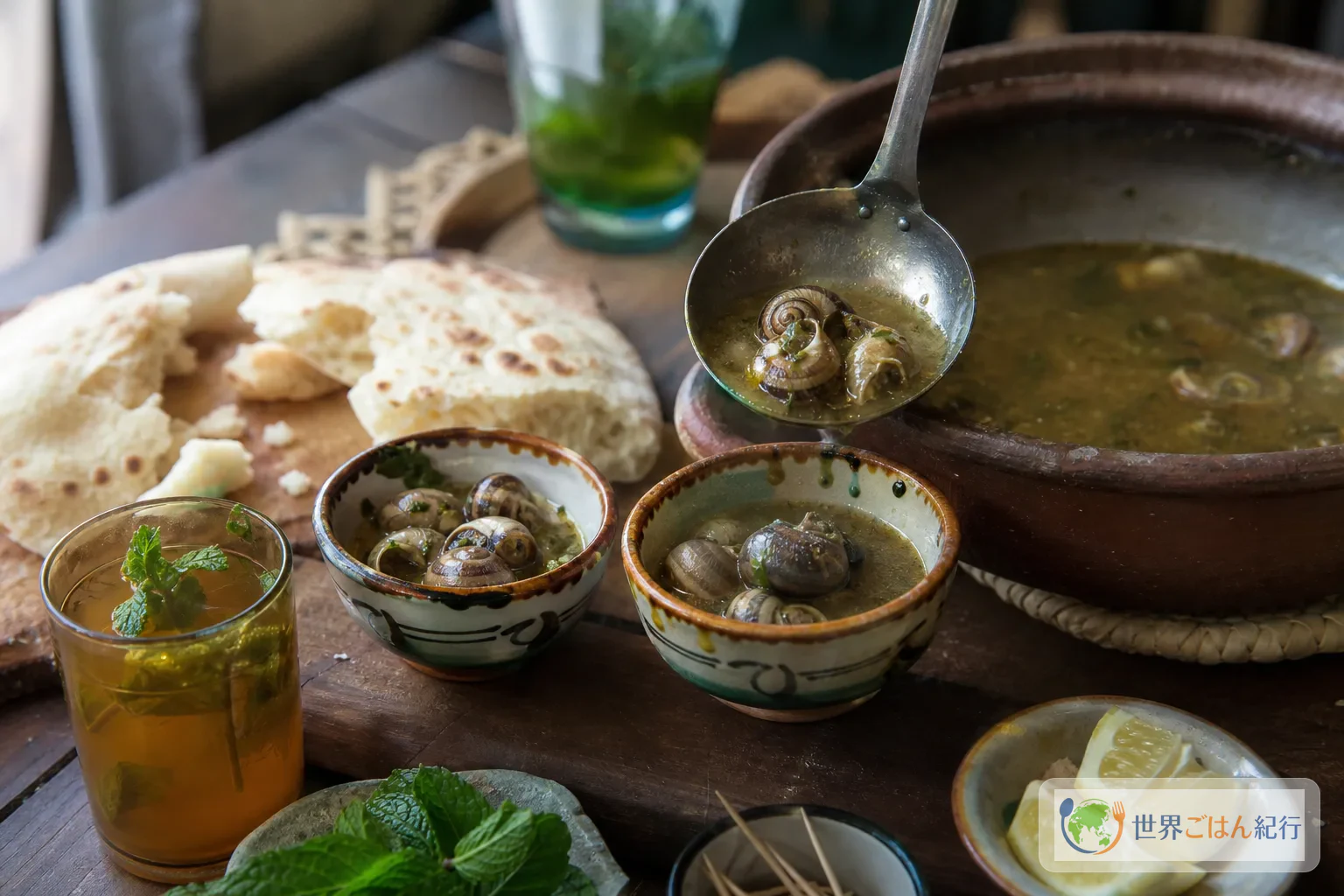
The small bowl is handed over, and the first thing to reach you is the sweet scent of mint and anise, then cumin, caraway, orange peel and a little chili. You probe the shell with a wooden toothpick, then sip the hot broth. Moroccan babbouche (Babbouche / بَبُّوش) is a street-stall cup that heads in an entirely different direction from French escargots. The ingredients look a little braver than harira or couscous, but the method is simple. Think of it as shellfish warmed in spiced steam rather than meat seared in a pan, and a home pot can get quite close.
Babbouche at the stall and at home
In Morocco, babbouche is served in small bowls at street stalls and markets. It is usually called snail soup in English: the snails are cooked slowly in a strongly scented broth that includes thyme, anise, mint and caraway. You pick out the meat with a toothpick and drink the broth too.
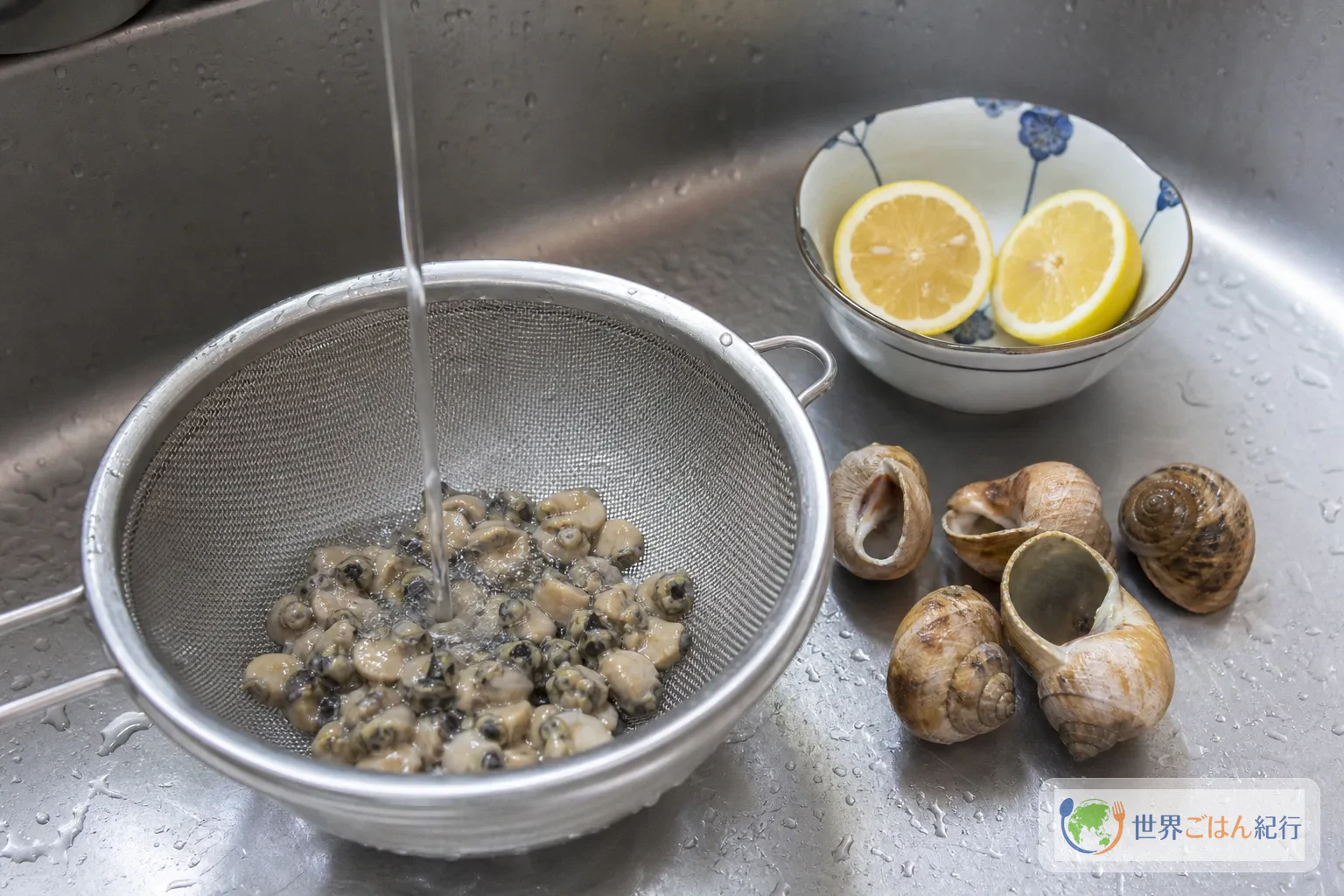
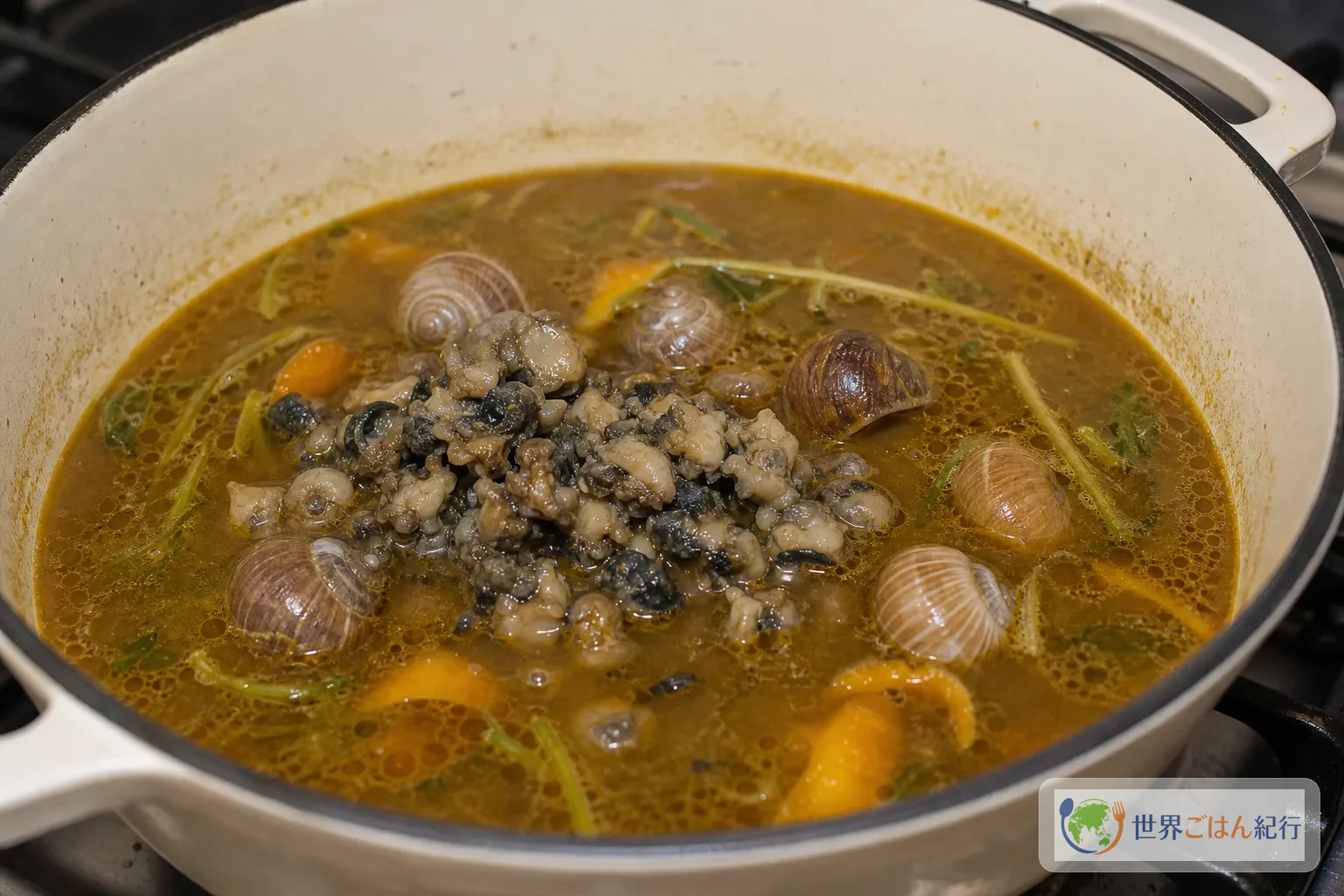
At home, the first question is the snails. Use cooked, food-grade escargots, canned or frozen, and never snails from the garden or park. Empty shells add atmosphere if you can find them; if not, make it with the meat alone. Shells, like the hours-long simmer of a street-stall cauldron, can take lower priority in a home kitchen.
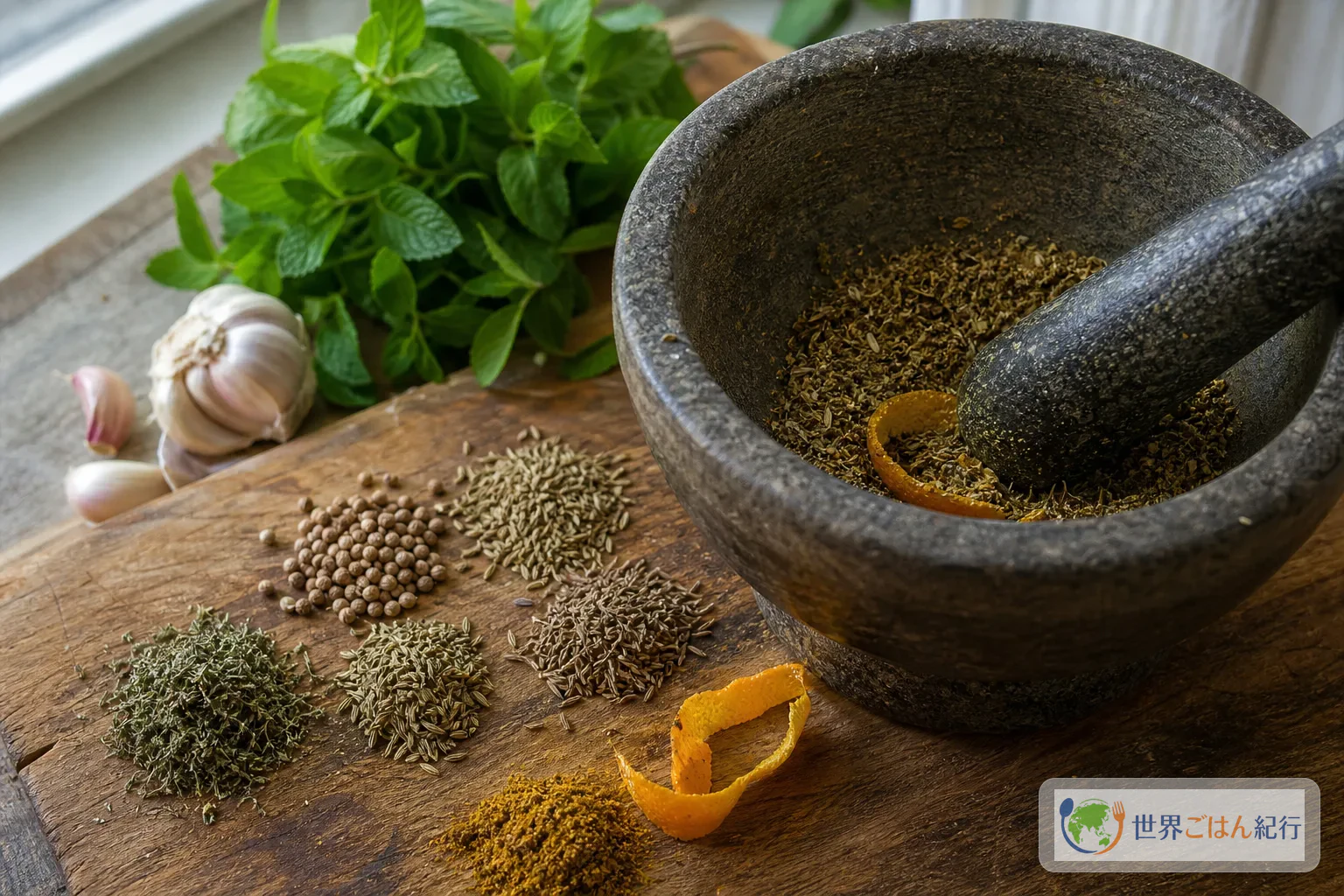
What matters more is the "sweet, slightly herbal" fragrance of mint, anise, cumin, caraway and thyme. Cut it back too far and all you have is a shellfish soup. The real work is moving that aroma into the broth and warming everything without letting it boil hard.
Ingredients (serves 4)
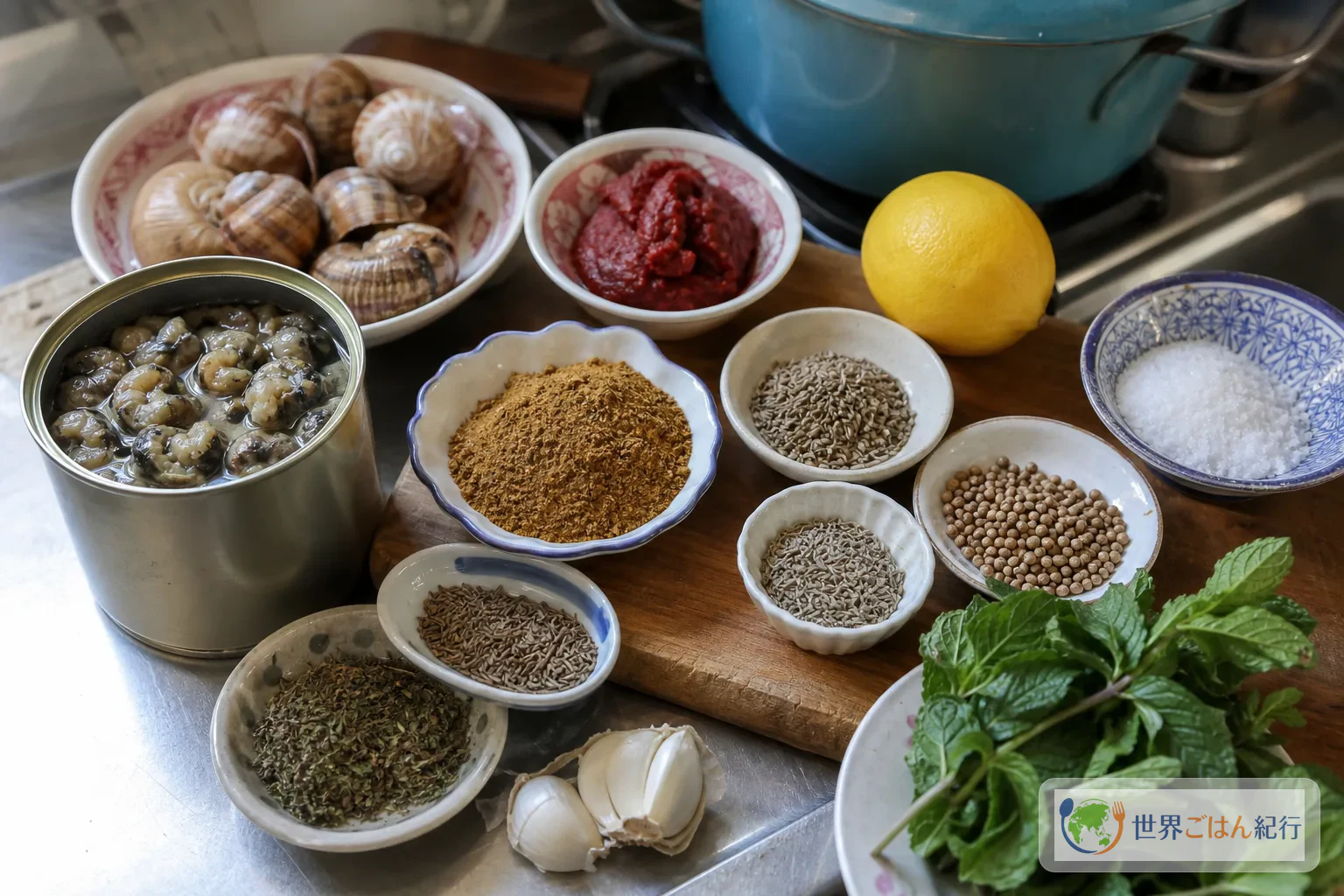
Do not use snails gathered from a garden or park. Parasites, pesticides, heavy metals, and risks from what the snails ate cannot realistically be removed at home. Use cooked escargots, frozen escargots, or edible processed products sold as food, and heat them as labeled. Even canned snails should be used right after opening, and leftovers kept in a clean container in the refrigerator.
Choosing babbouche ingredients and substitutes
Look for the escargots at import grocers, restaurant-supply stores, or online as canned or frozen products. Garlic, lemon, mint and olive oil are easy to find at any supermarket.
Ras el hanout is worth owning if you plan to cook more Moroccan food. In babbouche it plays a supporting role, adding a round aroma that cumin and anise can't give on their own.
Cumin is what keeps this broth from being just a herb soup. Ground cumin works to start, but lightly crushing whole seeds lets a sweet fragrance ride the steam. Grind all the whole spices to powder, though, and the aroma flattens; cracking them coarsely in a mortar lets the broth pick up the scent without turning gritty.
| Ingredient in doubt | Why keep it | Practical substitute |
|---|---|---|
| Snails | The core of the dish. Gives texture and look | Food-grade canned or frozen escargots. Don't forage |
| Anise | The sweet aroma of babbouche | Fennel seeds. Star anise is strong, so at most 1 segment |
| Shells | Create the street-stall way of eating | Optional. With meat only, eat it as a soup in a small bowl |
How to make it: draw out the aroma, then warm the snails
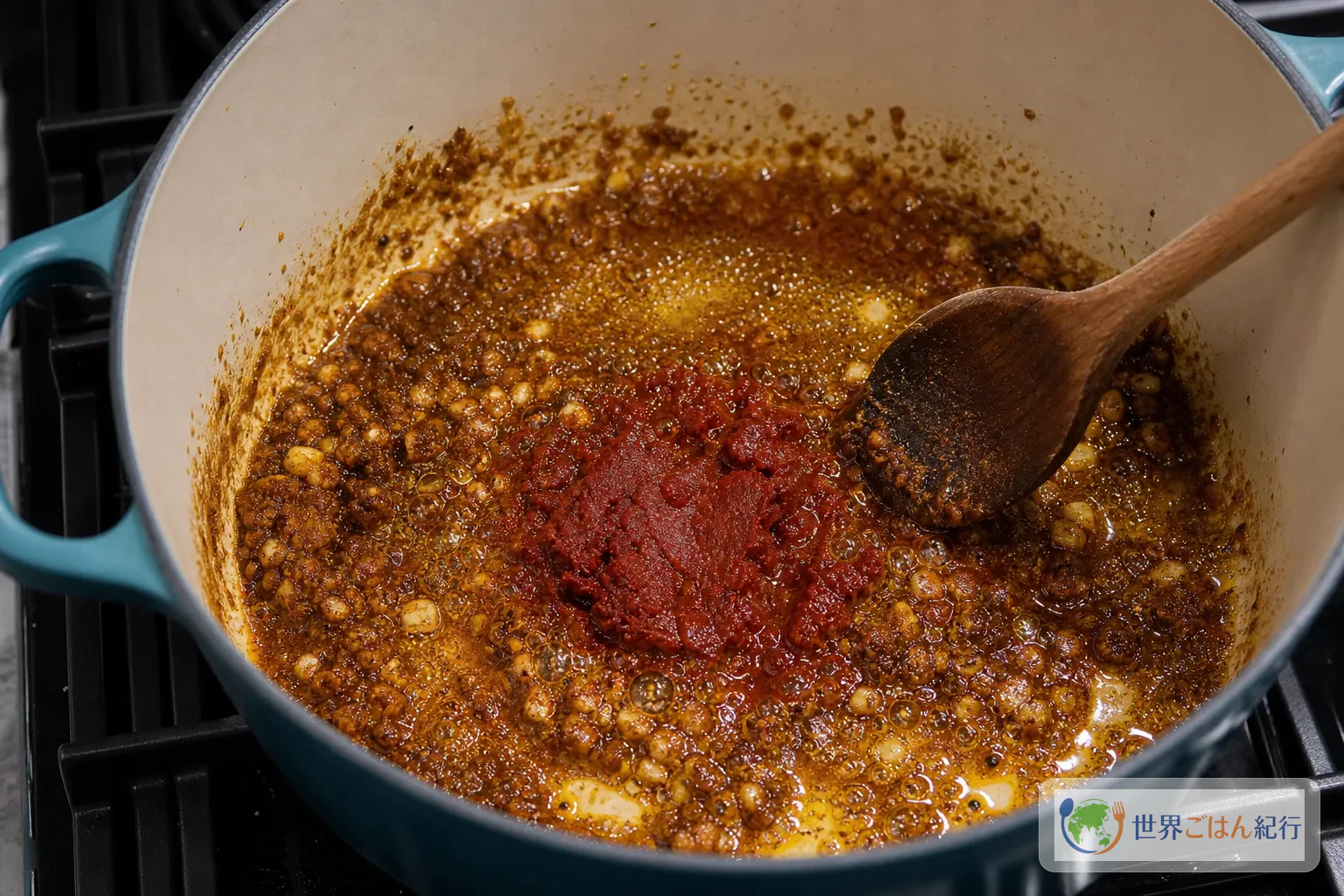
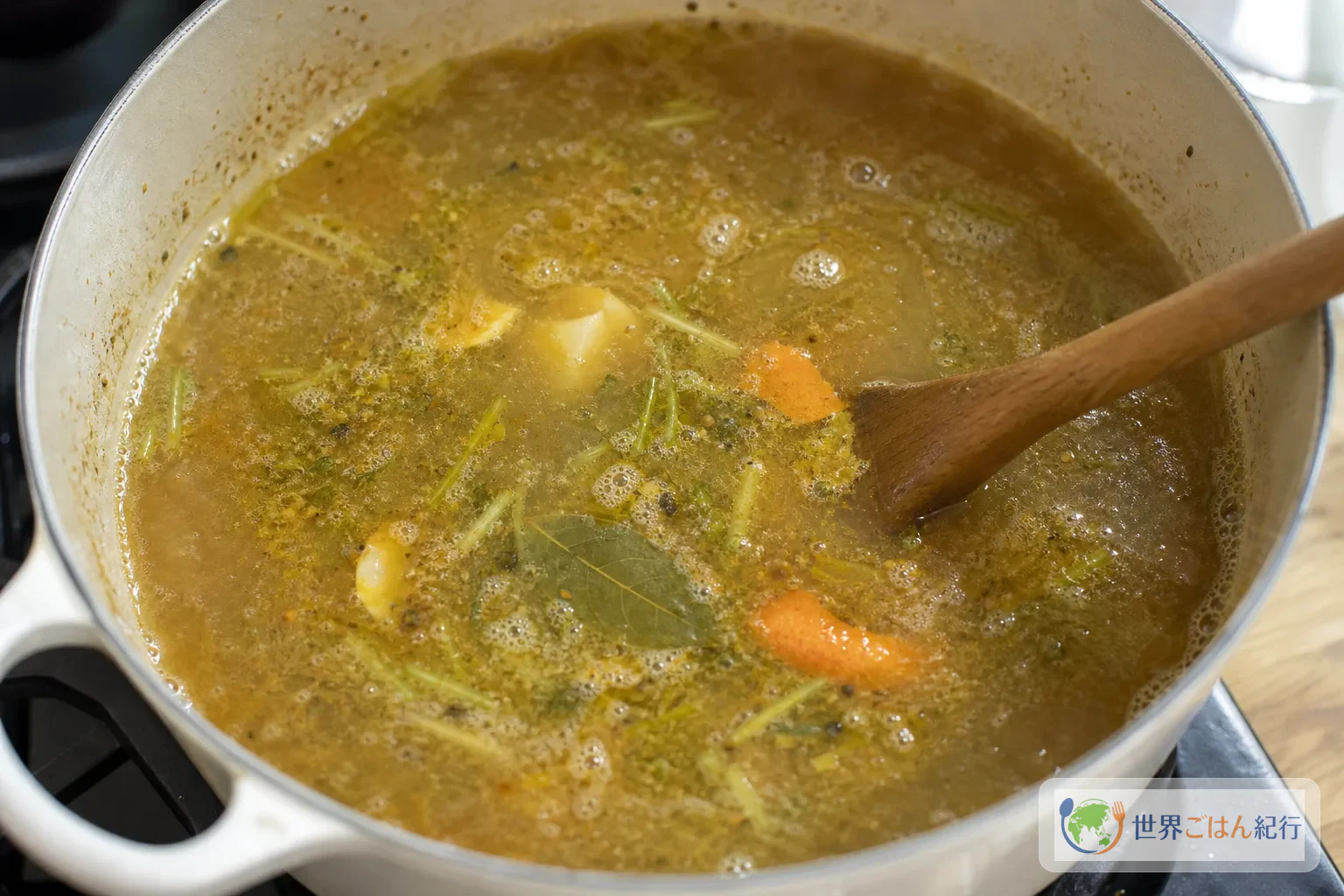
Babbouche is not a dish that gets better the harder you boil it. Moving the aromatics into the oil first, then drawing them into water, and only at the end warming the escargots keeps canned snails from tasting off and puts the broth's aroma up front.
Common babbouche mistakes
| Problem | Cause | Fix |
|---|---|---|
| Bitter broth | Mint leaves simmered long, or boiled hard | Add leaves last, simmer only the stems on low. If bitter, thin with 2–3 tbsp water |
| Fishy smell | Canning liquid not rinsed off, or thawing water added | Rinse in a sieve and drain. Soak 2 minutes in lemon water |
| Powdery | Spices ground too fine | Crack whole spices coarsely. If using powder, keep to the teaspoon amounts |
| Tough meat | Boiled hard for a long time | Keep a low simmer; with cooked snails, think of it as warming |
| Just tomato flavor | Too much tomato paste | Up to 1 tbsp. Build aroma with spices and mint |
Serving and storing babbouche
Serving
Babbouche is less a main dish than a "hot little bowl." Bread to catch the broth makes it easier to eat, and served before Moroccan zaalouk or tagine, it makes a street-stall-style opening to the meal. Because the scent is strong, sides with the acidity of tomato, cucumber, lemon and olives suit it better than a heavy cream dish.
Keep the heat gentle in the pot. Hold the chili to 1/4 tsp and set out chili flakes or harissa in a small dish for those who like it hot. When eating as a family, make the first bowl mild and let people add salt and lemon at the table.
Storage and reheating
The aroma is best on the day it is made. For leftovers, move the meat and broth together to a clean container, let it cool slightly, and refrigerate.
| Method | Guideline | Reheating |
|---|---|---|
| Refrigerator | 1 day | Small pot on low heat |
| Freezer | Not recommended | The meat tends to toughen |
| Taking to a potluck | Not recommended | It is shellfish; avoid leaving it at room temperature for long |
Reheat over low heat and never boil it hard: once small bubbles appear at the edge of the broth, give it just 2 minutes. Mint and lemon fade along the way, so a little fresh after reheating makes it much nicer to eat.
FAQ
Is it not babbouche without shells?
Shells give the look and the way of eating of a street stall, but food-grade escargot meat alone works. What matters is warming it in the aromatic broth and eating it from a small bowl with a toothpick or bread. Without shells it is easy to eat as a soup, which makes it a good first try.
Do I use the liquid from the can?
No. Depending on the product, canning liquid can taste metallic or too salty and get in the way of the mint and anise. Rinse the escargots lightly in a sieve and drain before adding them to the broth.
Can I serve it to children or people who dislike heat?
Leaving out the chili reduces the heat considerably, though the scent of mint, anise and caraway is still distinctive. For a first time, serve a small amount in a small bowl with bread and lemon, and let people adjust the aroma as they eat.
Can I prepare wild snails and use them?
Please don't. Safety can't be guaranteed at home, and there are risks from parasites, from what the snails ate, and from chemicals. Always use escargots sold as food; this one point has no substitute.