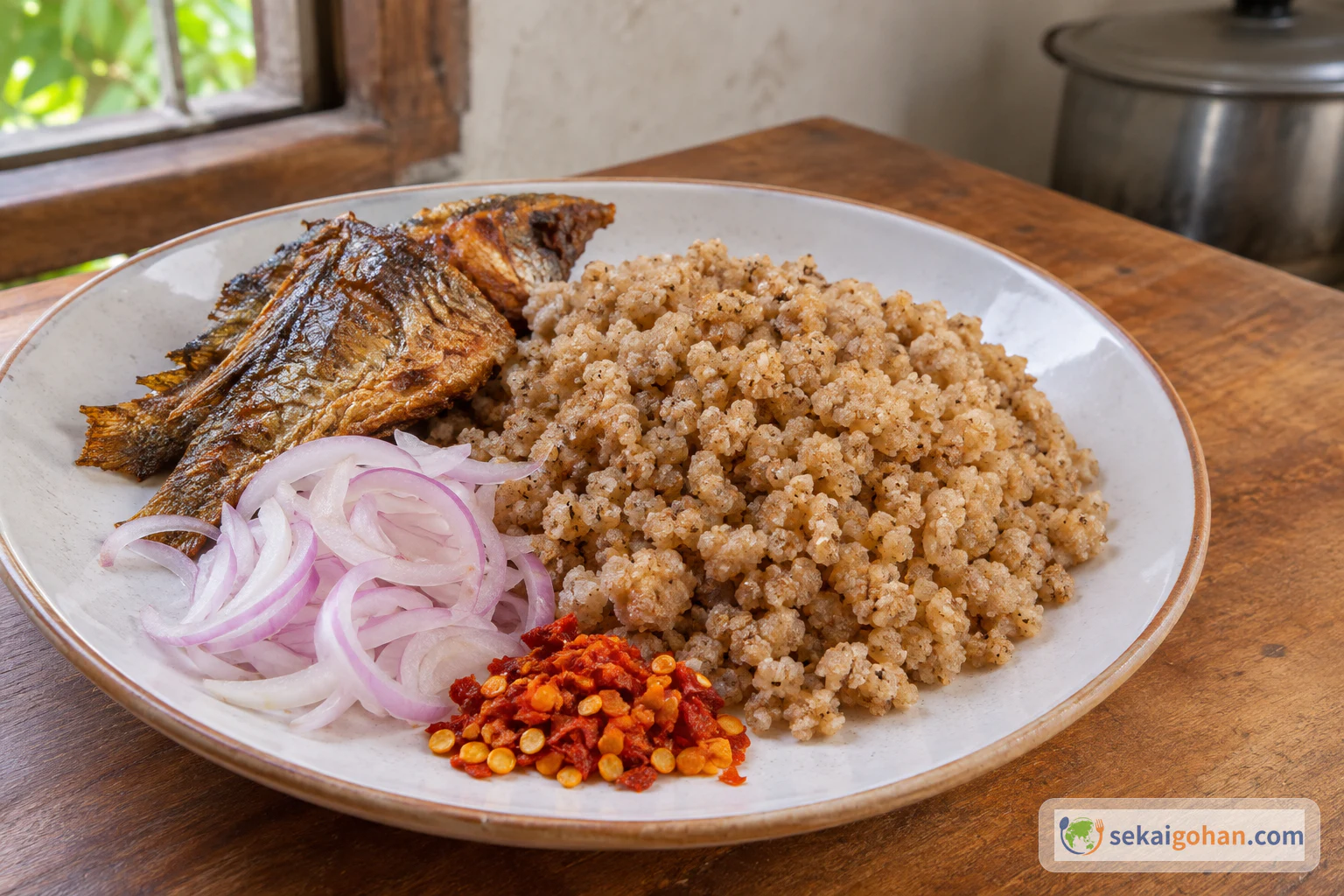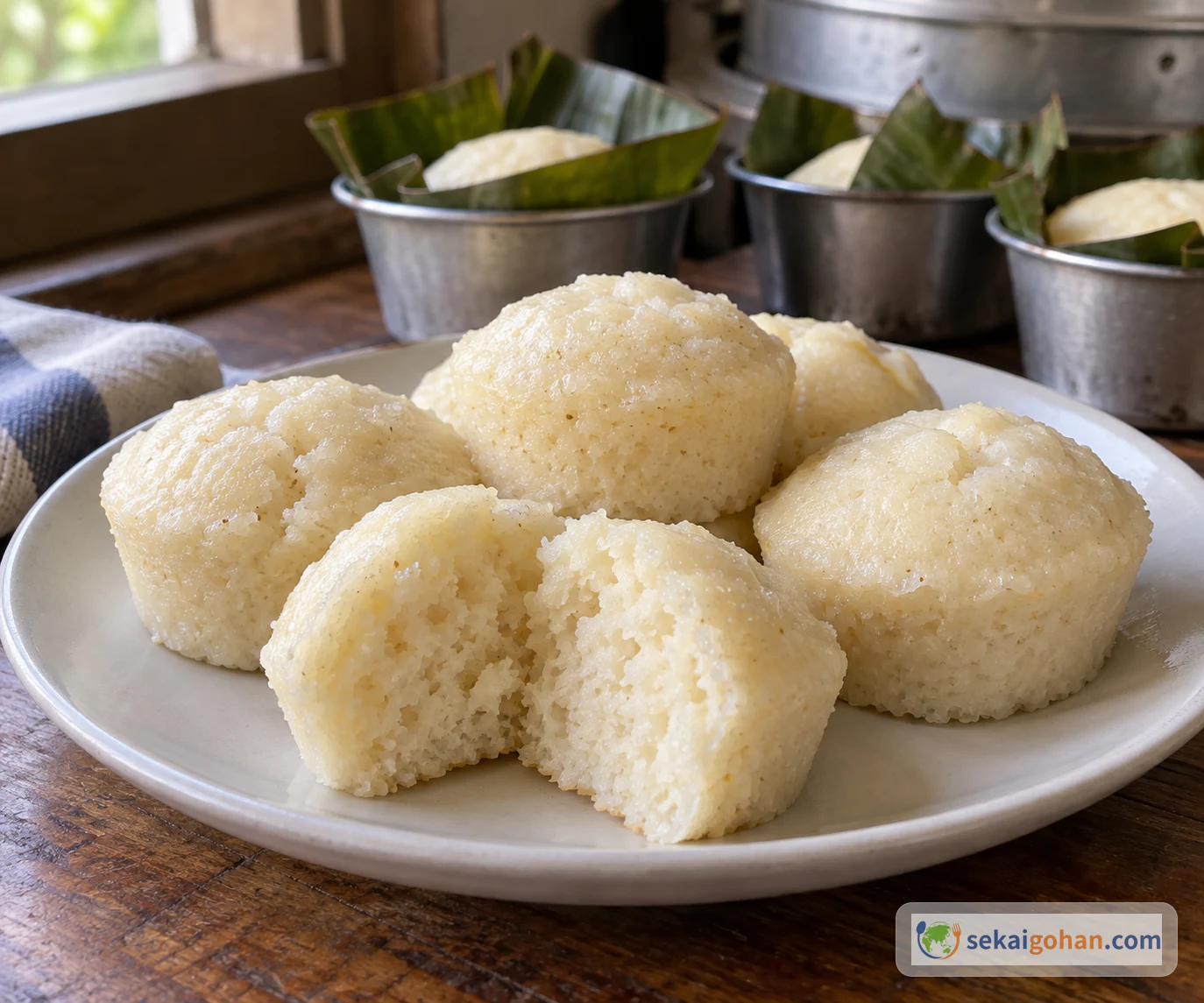
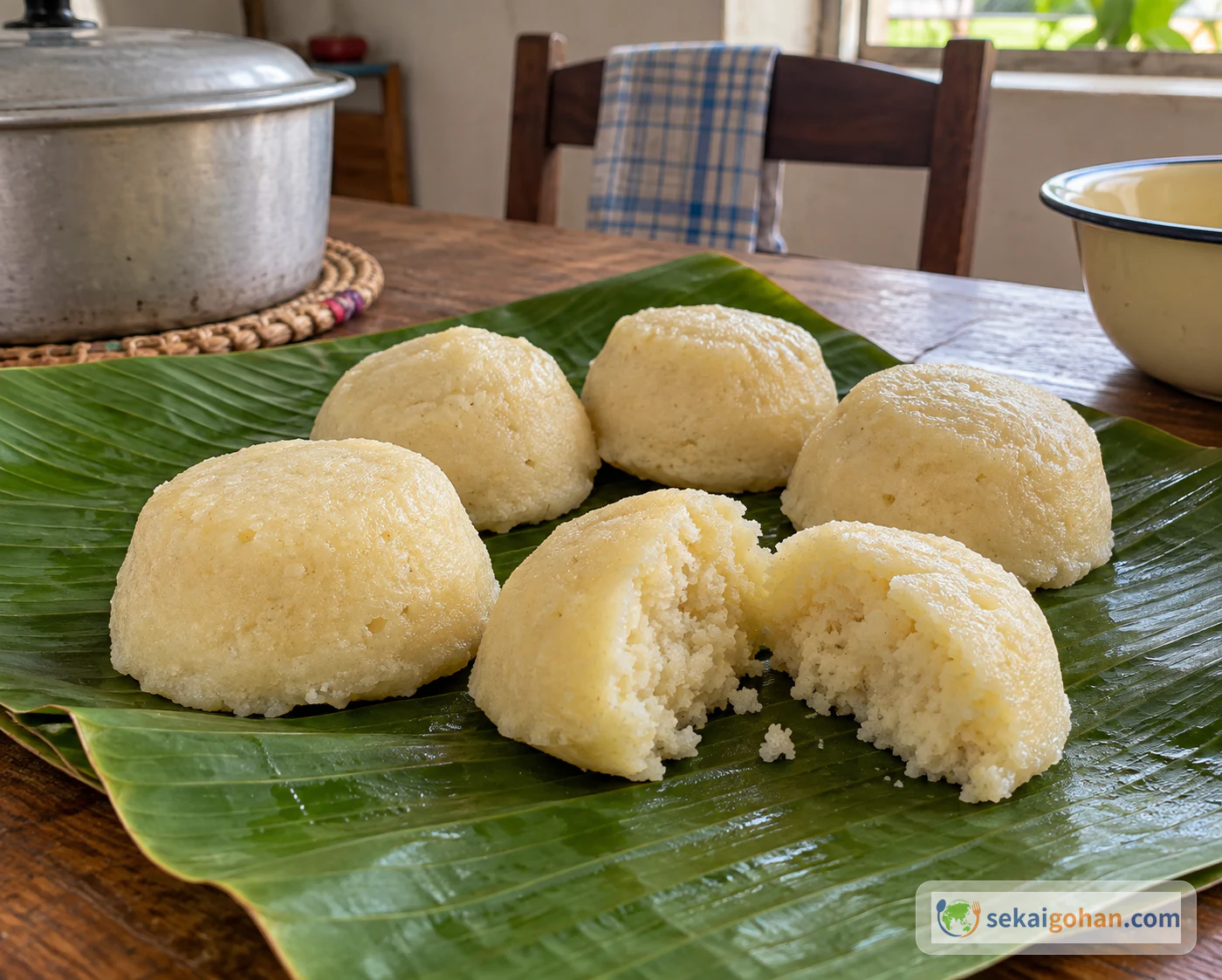
Lift the steamer lid and small pale cakes rise out of the mist, their tops rounded and their crumb soft. On the table they sit beside fried fish, onion, chili and a tomato or gboma sauce, and they are there to take up those sauces. Ablo (also written abolo) is a springy steamed bread from southern Benin and coastal Togo, eaten as a staple or a snack. Yeast gives it a light crumb, steaming keeps it moist, and the flavor is mild and grainy with a gentle sweetness.
About Ablo
Maize, Rice and Mixed Ablo
Ablo is a fermented grain batter, portioned into small molds and steamed. In southern Benin there are three production types: maize, rice, and a mix of 2/3 maize and 1/3 rice. The maize type is the original, and the rice type is a later technical change.
In the traditional maize method, the base is mawè, an intermediate dough of processed maize that ferments naturally. It then goes through a second fermentation with baker's yeast before it is steamed. The fermentation acidifies the dough and produces CO2, which gives the cake its air cells.
Rice ablo has become common in Cotonou and Porto-Novo, partly because the process is shorter, and consumers preferred the rice products. In Comè, the maize type has continued, and mixed types also appear.
Ablo in Daily Life
Ablo is eaten at breakfast and as a snack, and it appears at baptisms, weddings and local festivals. Making and selling it is part of the livelihood of women producers. An oral tradition also links ablo to Guin d'Aného and the Pierre Sacrée festival. For more dishes from the country, see the Benin page.
The bread is known in both Togo and Benin, and how it is eaten and which flours go into it vary by place. A rice cake called abolo is also known in Ghana, though the shared name alone doesn't show that the two are the same recipe or share an origin.
Ingredients for a Home Ablo of Rice Flour, Maize Flour and Cornstarch
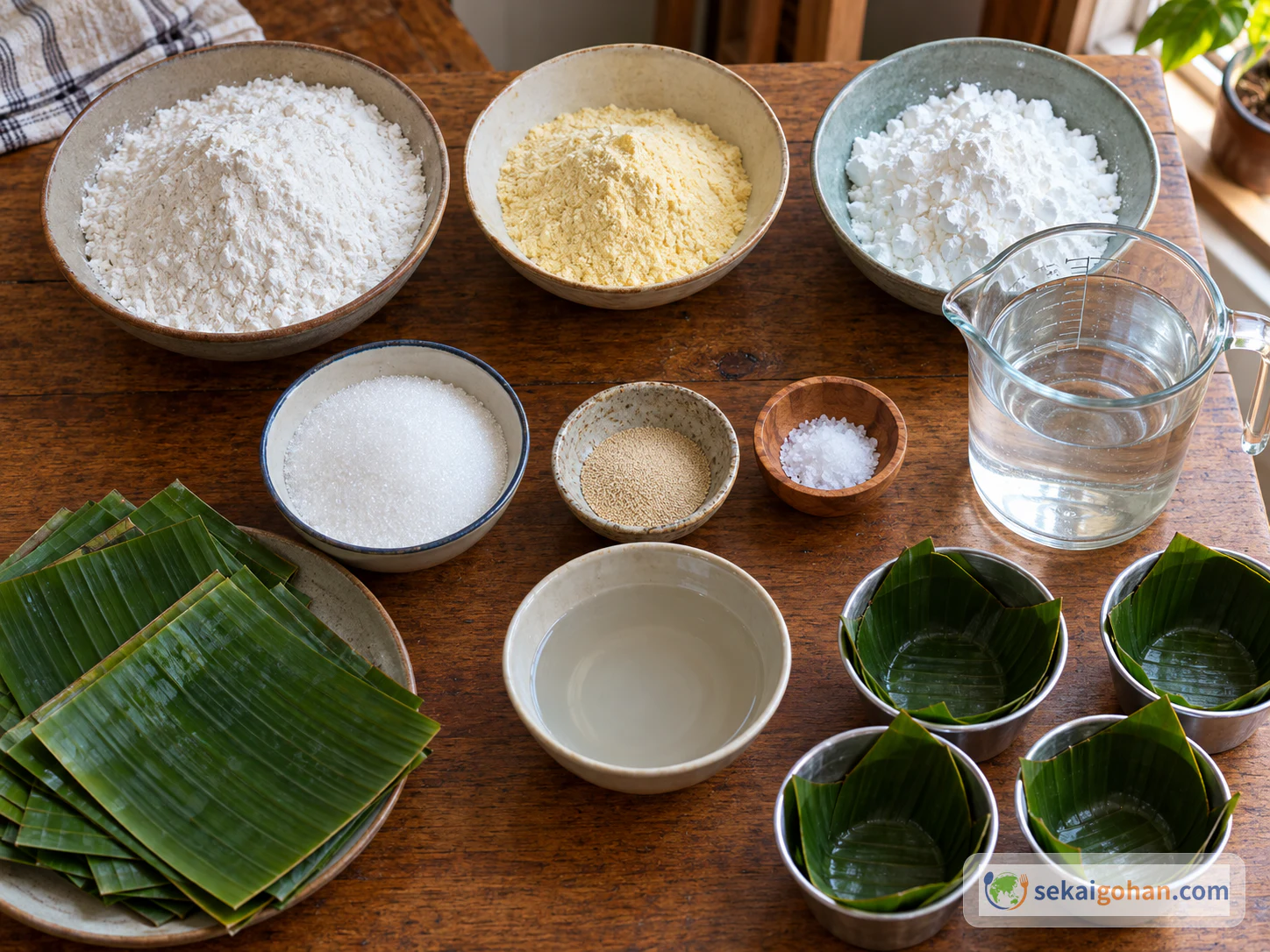
This is a mixed-flour home recipe. It is a shortened method that uses baker's yeast, not the mawè process. Serves 4.
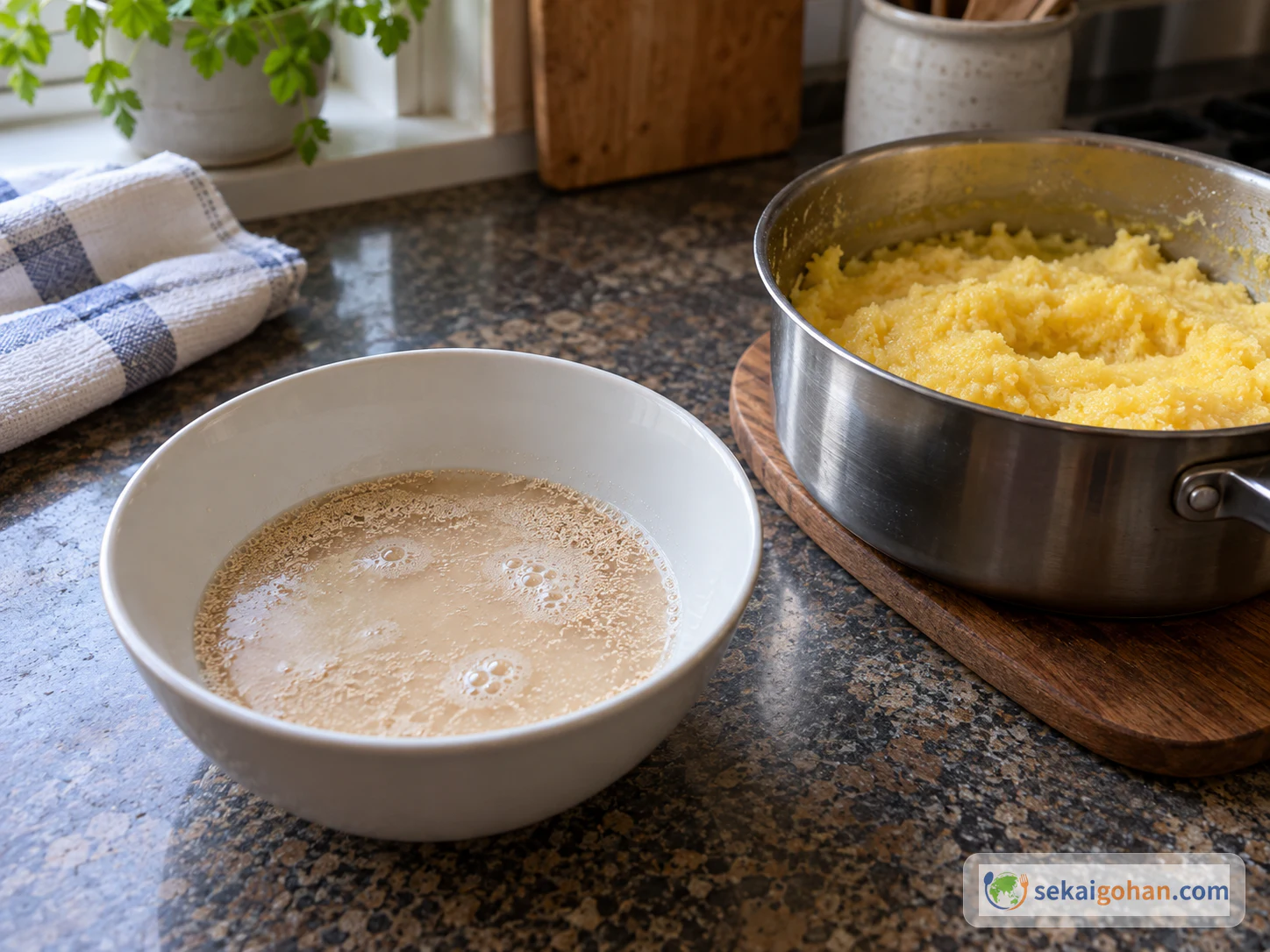
1 tsp = 5 ml. Cook the porridge in the 2 cups (500 ml) of water, and dissolve the yeast separately in a little warm water that is not taken from the 2 cups (500 ml).
Equipment
- A large lidded pot for cooking the maize flour
- A whisk or wooden spatula
- A small bowl for the yeast
- A lidded container for the rise that lets gas escape (not a sealed glass jar)
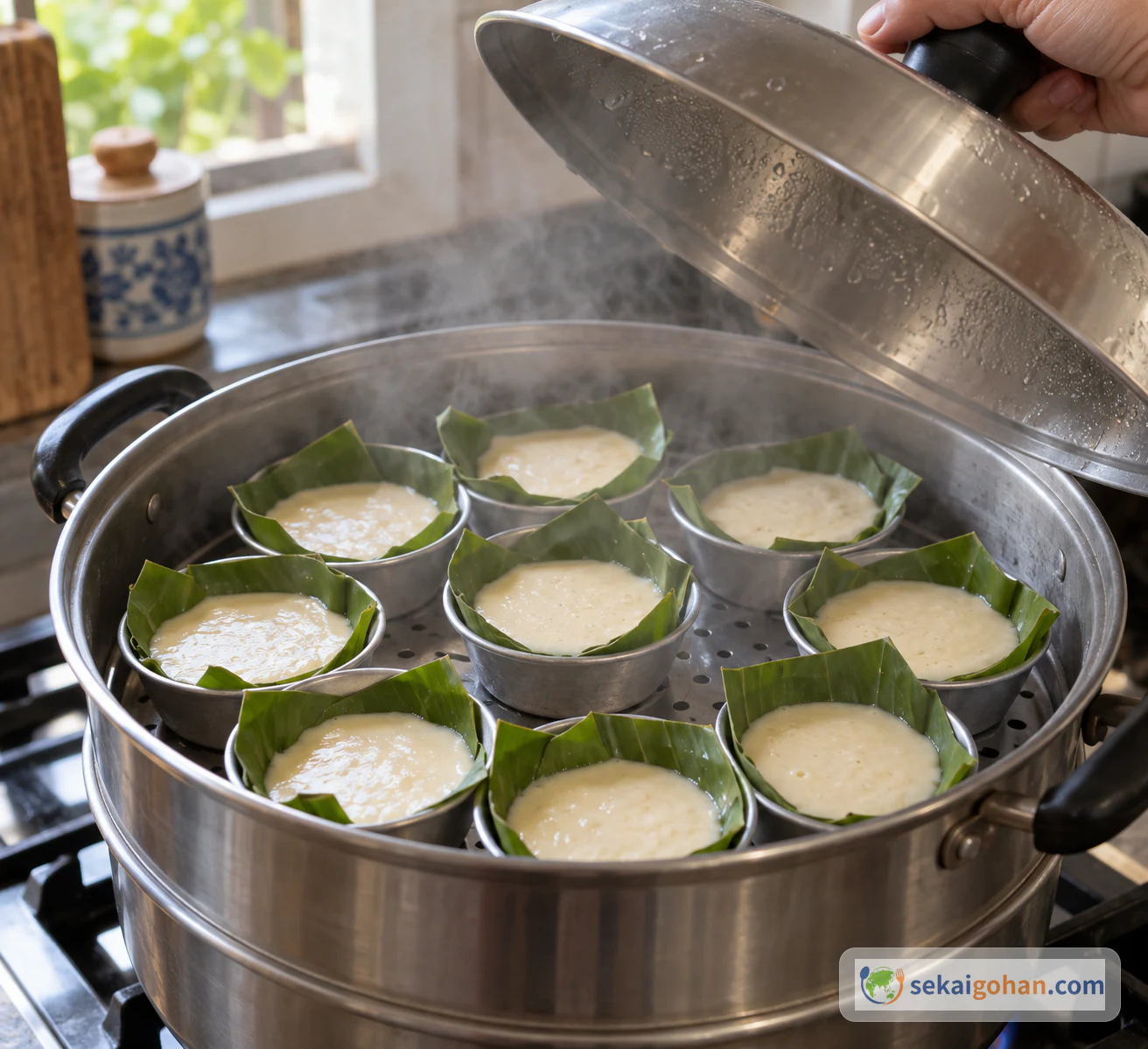
- A steamer or couscoussier, plus water for it and boiling water for topping up
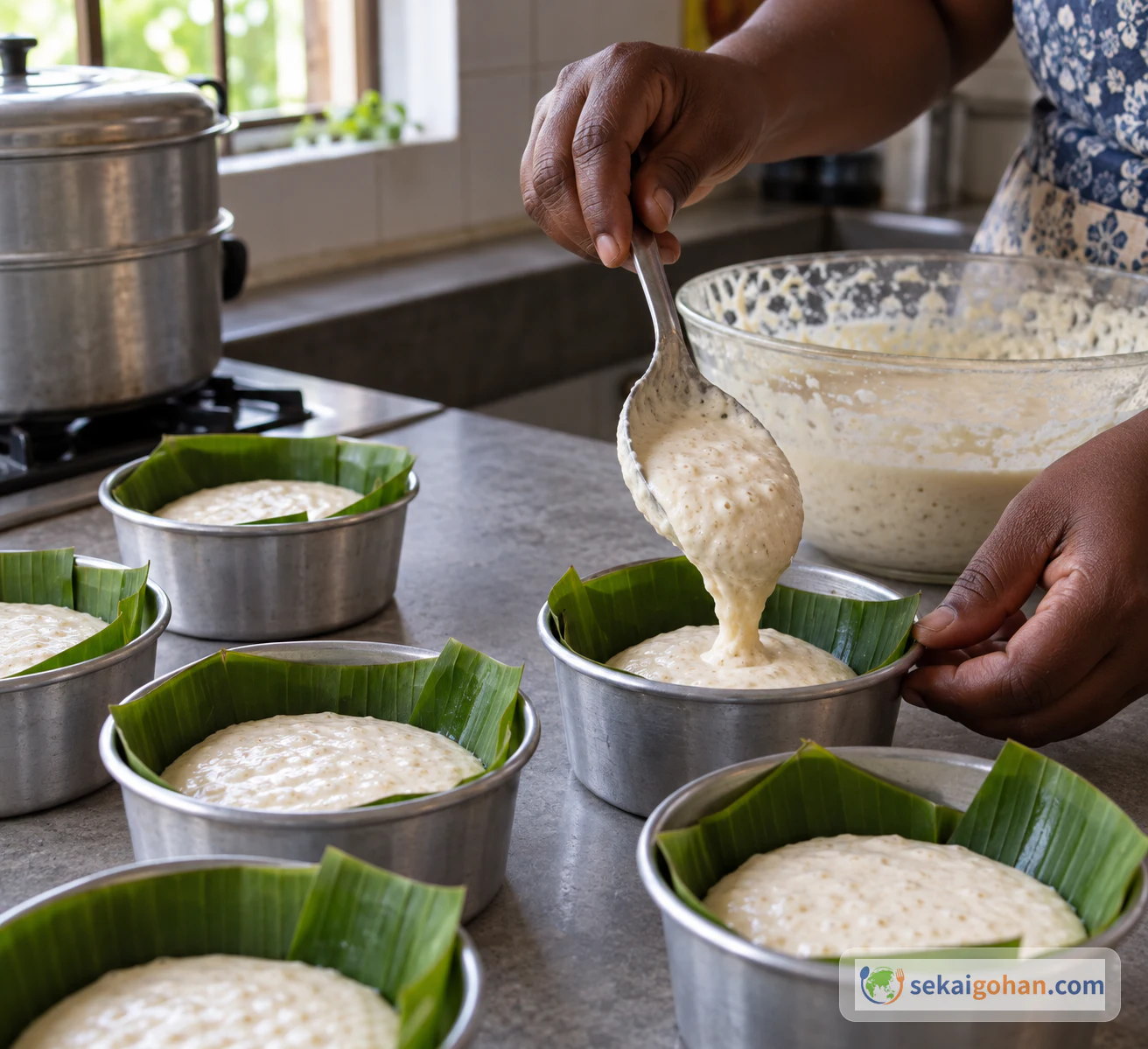
- Several small metal molds (small aluminum molds)
- Food-grade banana leaf or aluminum foil to line the molds. Use banana leaf, and add no oil
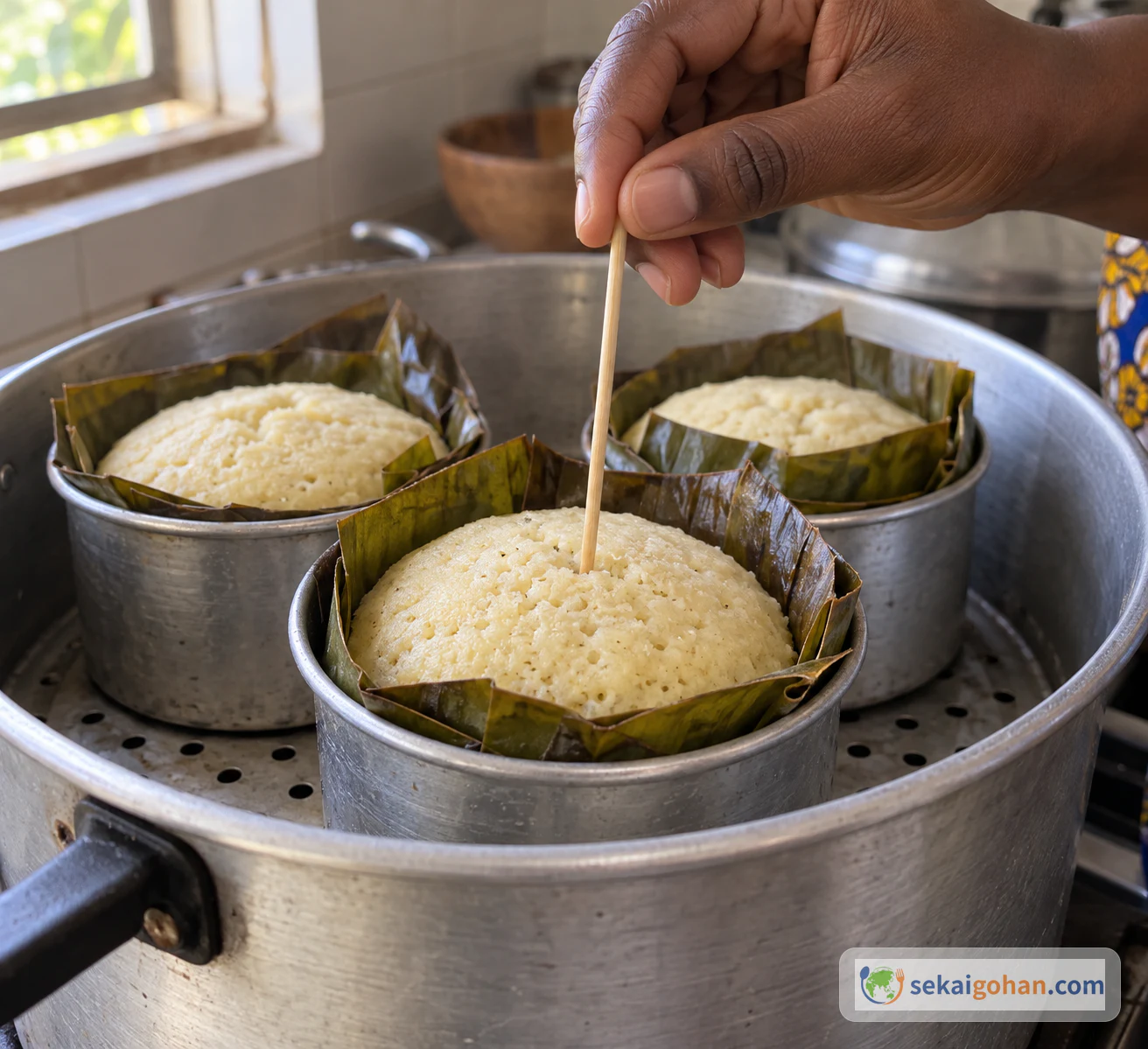
- A thin bamboo skewer
Choosing Flours and Yeast for Ablo
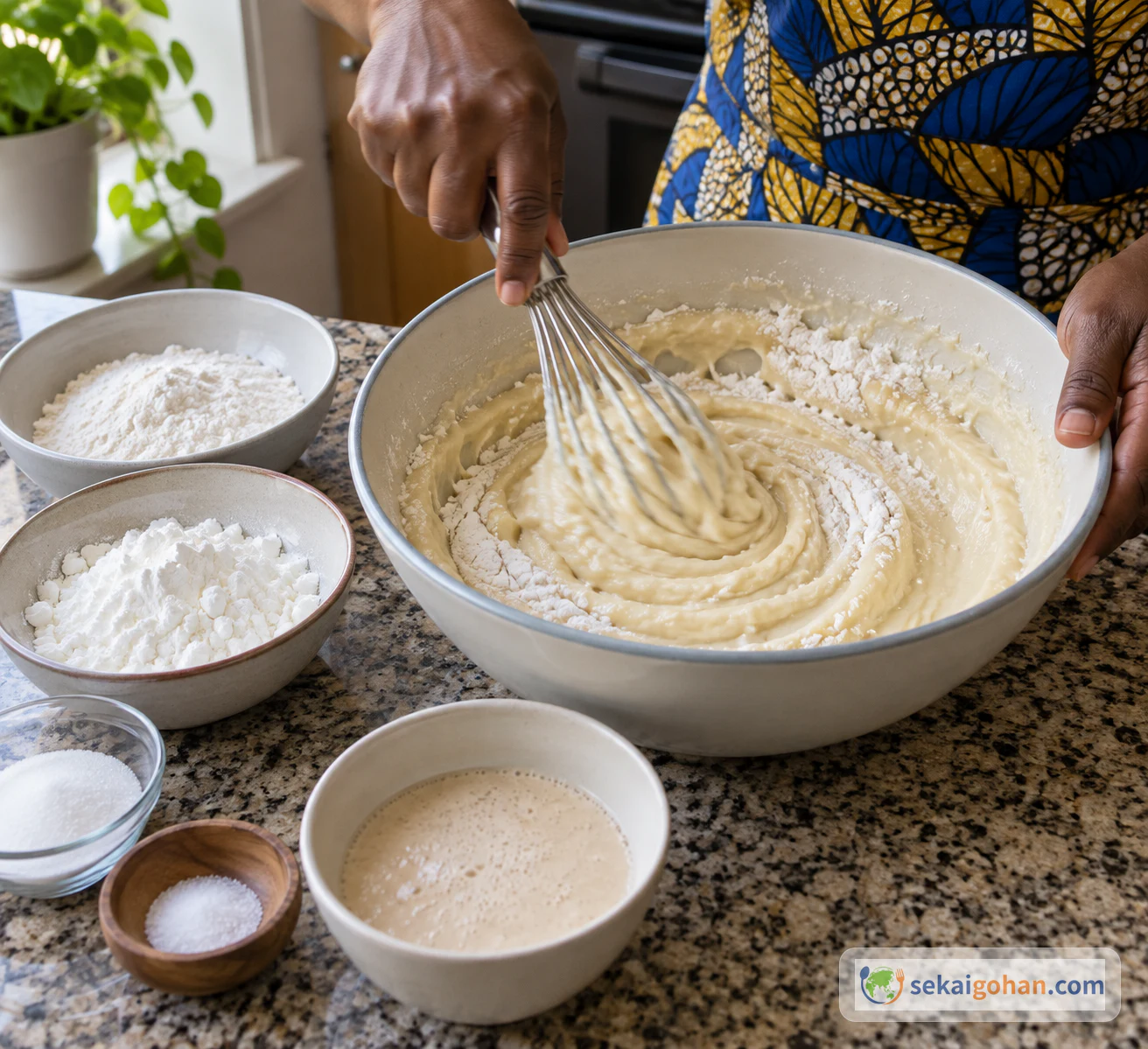
Maize flour and cornstarch are not the same thing. Here, farine de maïs is maize flour, which is cooked with water first. Fécule de maïs or Maïzena is cornstarch, which goes in later with the rice flour. Some countries sell cornstarch as "cornflour," so check the label. Maize flour products also differ in how finely they're ground and how they thicken. Keep to cornstarch rather than swapping in potato starch.
Use ordinary rice flour made from non-glutinous rice; the recipe contains no wheat flour, so leave it out. For the yeast, use dry baker's yeast and follow the label for how to activate it and how warm the water should be, since products differ.
This recipe uses rice, maize, yeast, sugar and salt, and contains no wheat flour. Ingredient lists and shared-facility statements vary by product, and some yeast products contain additives, so check every label.
Method: Cool the Porridge, Let It Rise, Then Steam
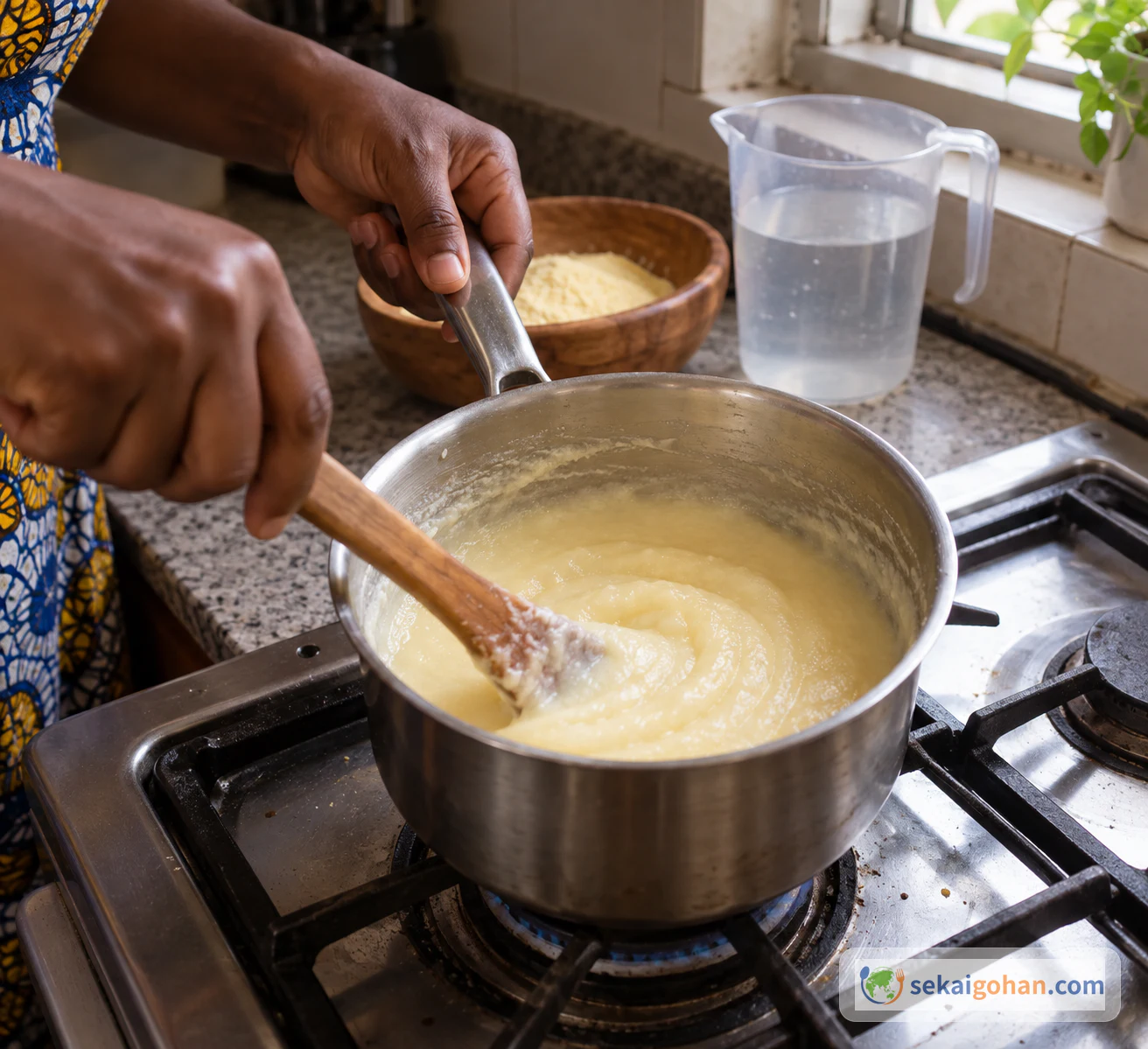
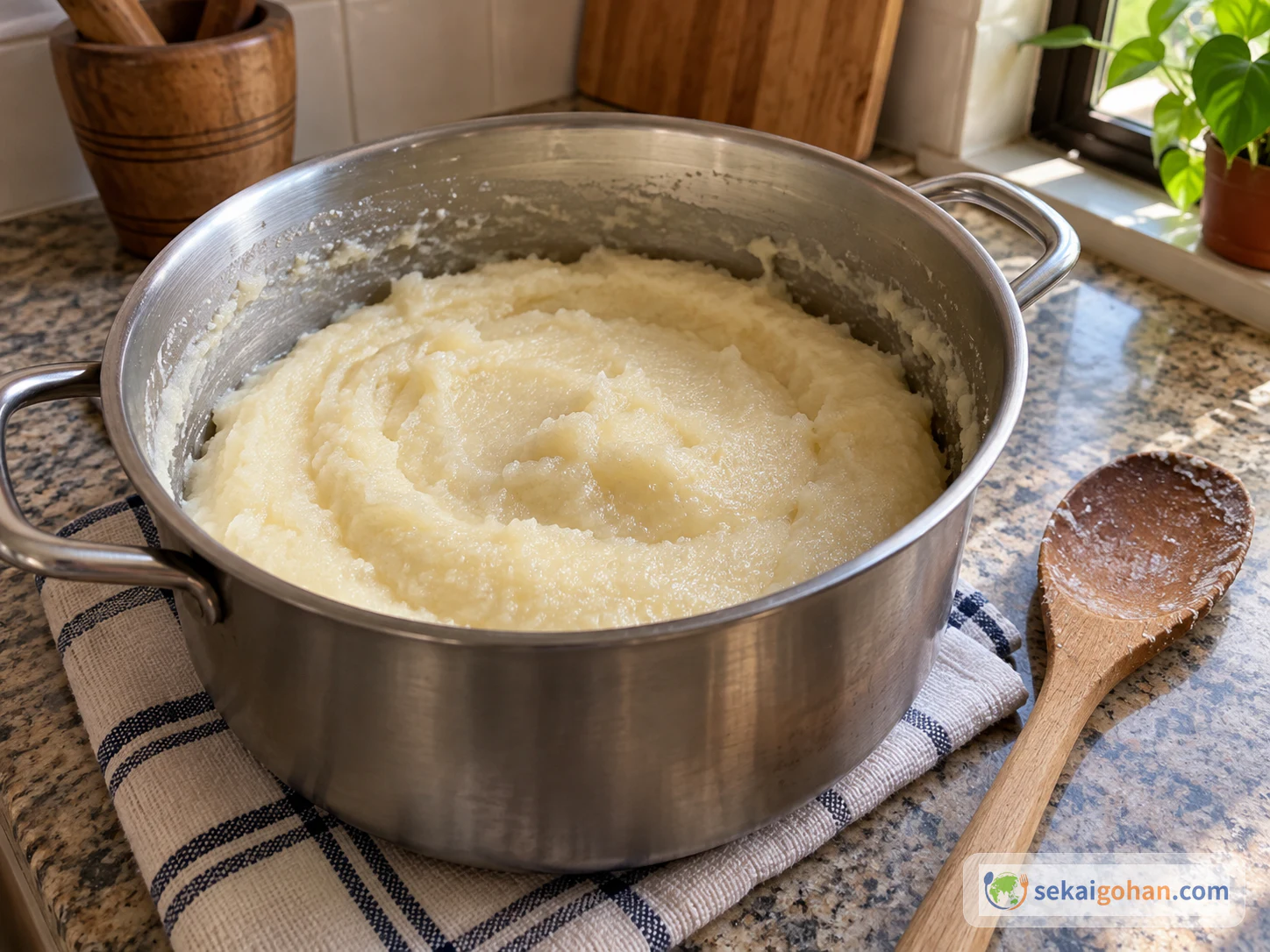
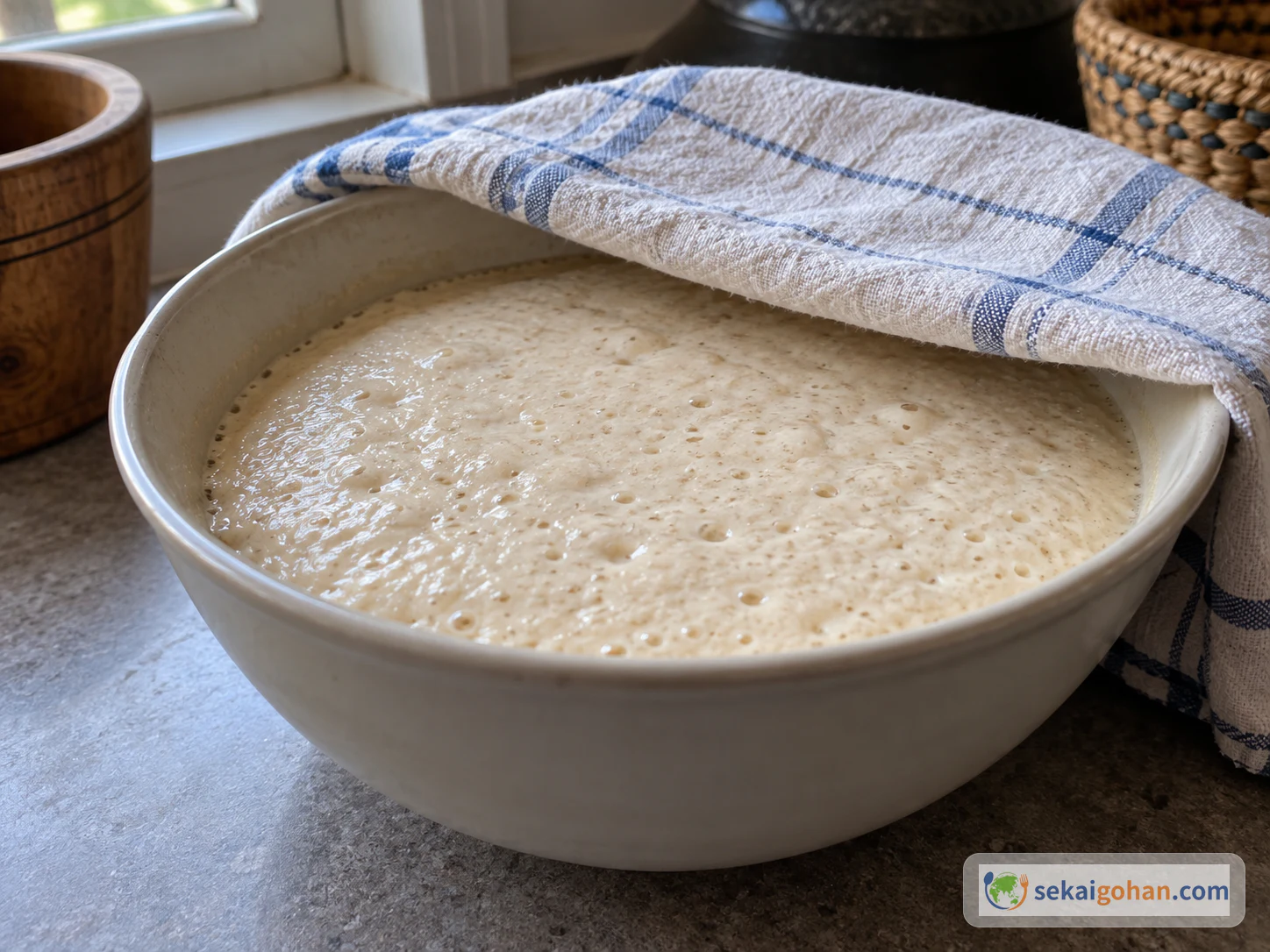
Wait until the porridge is completely cool before anything else goes in. The rise is done when the batter has grown in volume. Steaming time depends on the size of your molds.
Ablo Problems and Fixes
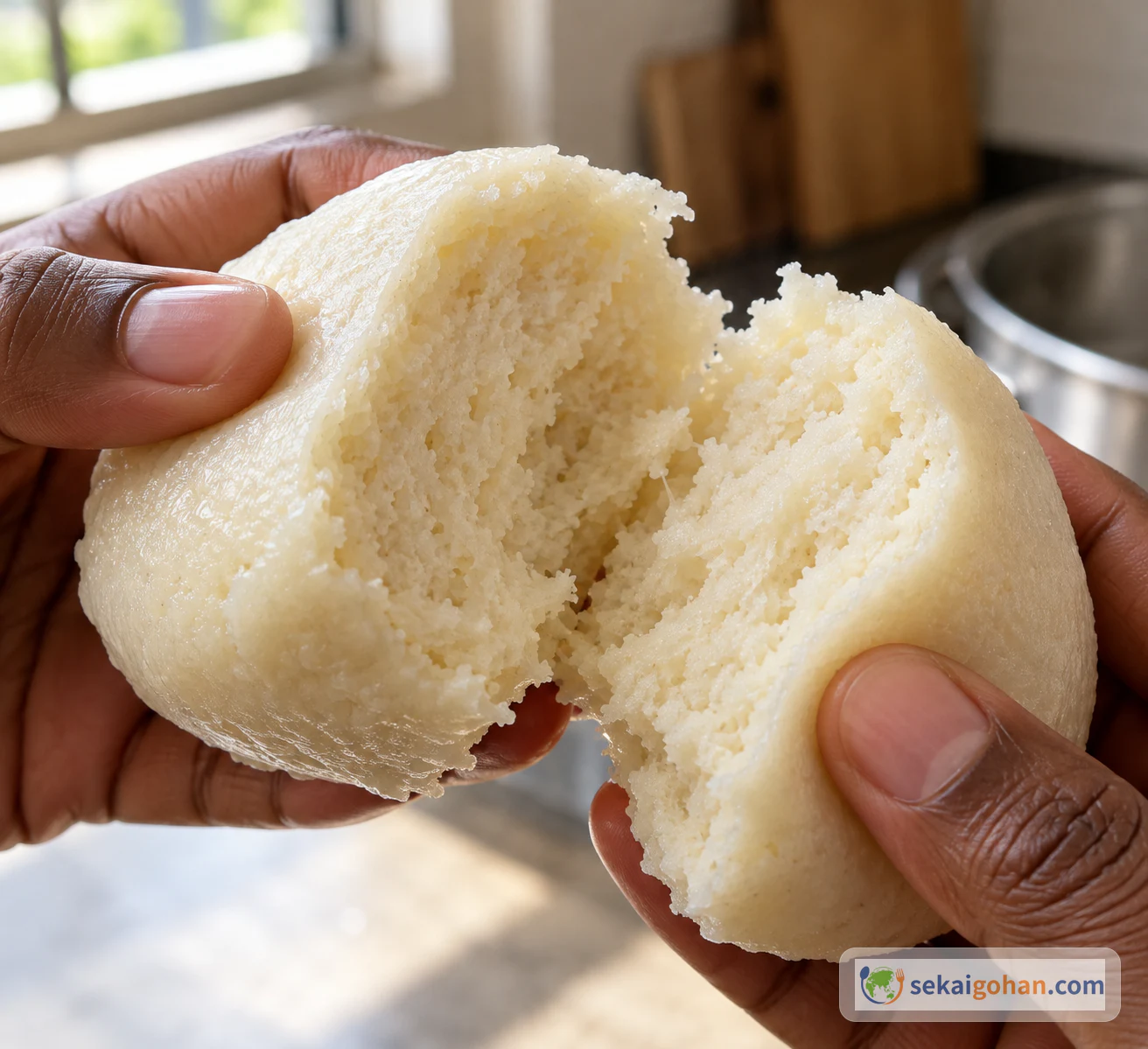
Most trouble with ablo traces back to two steps: the cooked maize flour has to cool completely before the yeast goes in, and the batter has to rise fully before it reaches the steamer.
| Problem | What to look at | What to do |
|---|---|---|
| The batter barely rose | Whether the yeast went in while the porridge was still hot, the kitchen temperature, the yeast product, the grind of the flours | Next time, wait until the porridge is completely cool. Judge the rise by the growth in volume, not by time alone |
| The center is wet or sticky | Mold size, how full the molds are, whether steam is reaching every cake | Keep steaming and repeat the skewer check. Keep the molds in one layer and keep the water topped up |
| The cakes seem heavy | Lifting the lid often during steaming, molds packed too tightly | Keep the lid closed early on. Leave room between molds so steam can move |
| The cakes stick to the molds | Lining missing or incomplete | Let them cool, then loosen the edges. Line the molds with banana leaf or foil rather than switching to oil or paper |
Serving Ablo and Variations
Serve ablo with fried fish, onion, chili, gboma sauce or tomato-chili sauce. Its mild, grain-forward flavor is made for soaking up the sauce, so be generous with it.
A couple of variations change the cake in ways worth knowing about:
- Less sugar, for eating with savory food: This changes the flavor, and it can affect the rise.
- Wrapped in banana leaf: Wrap the batter in banana leaf instead of lining the molds. It changes the aroma, how the steam reaches the batter, and the shape.
The traditional maize type and the 2/3 maize, 1/3 rice type are separate production methods. Changing the flour ratio in this recipe won't reproduce them.
Frequently Asked Questions
Can I make the naturally fermented maize version?
The mawè process is a different recipe that includes processing the grain and making an intermediate dough. Its long fermentation comes from artisanal production, and its times and steaming conditions don't carry over to this mixed-flour version, so keep the two separate.
Is ablo sweet, or is it a staple?
This recipe contains 3.5 oz (100 g) of sugar, so it is lightly sweet. It is also eaten with fish and sauces, as a staple. If you want it less sweet, see the reduced-sugar variation.
How should I store or reheat leftovers?
Ablo is best eaten freshly made. If you keep leftovers, divide them into small, shallow portions, cool them quickly and refrigerate promptly. When reheating, heat it to 167°F (75°C) or above, and keep the center at 167°F (75°C) for at least 1 minute. Risen batter shouldn't be kept for later; steam it all the same day.