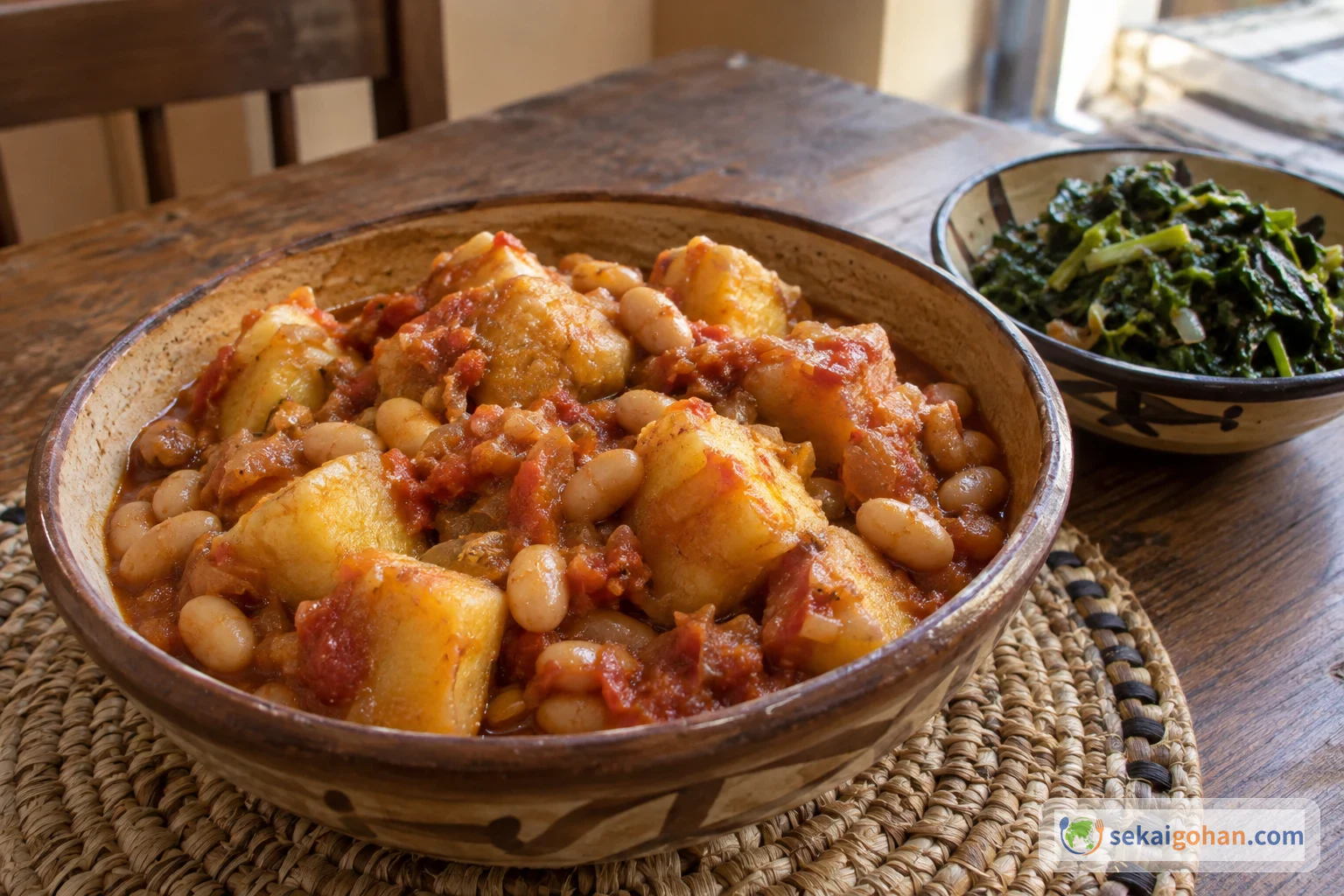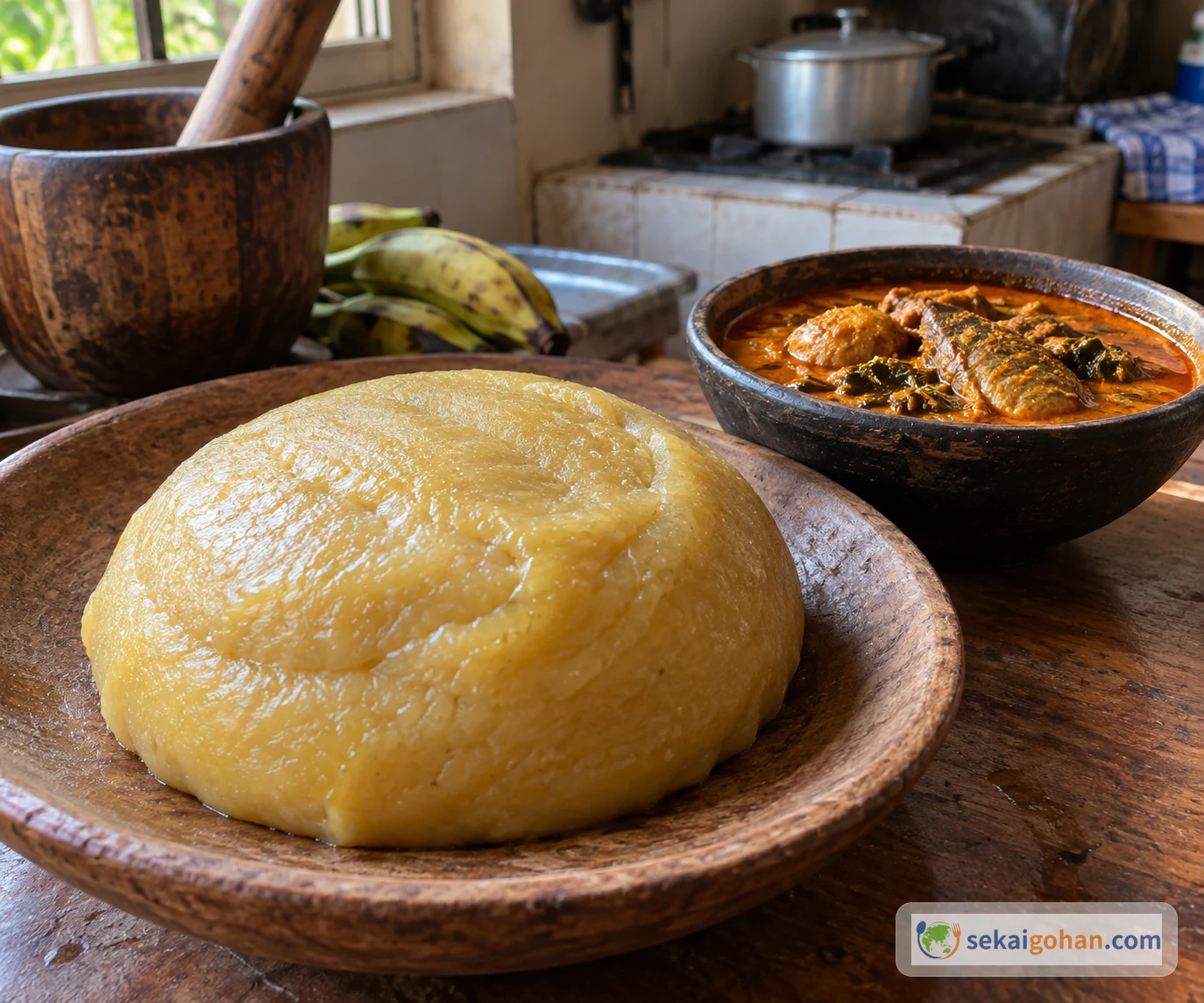
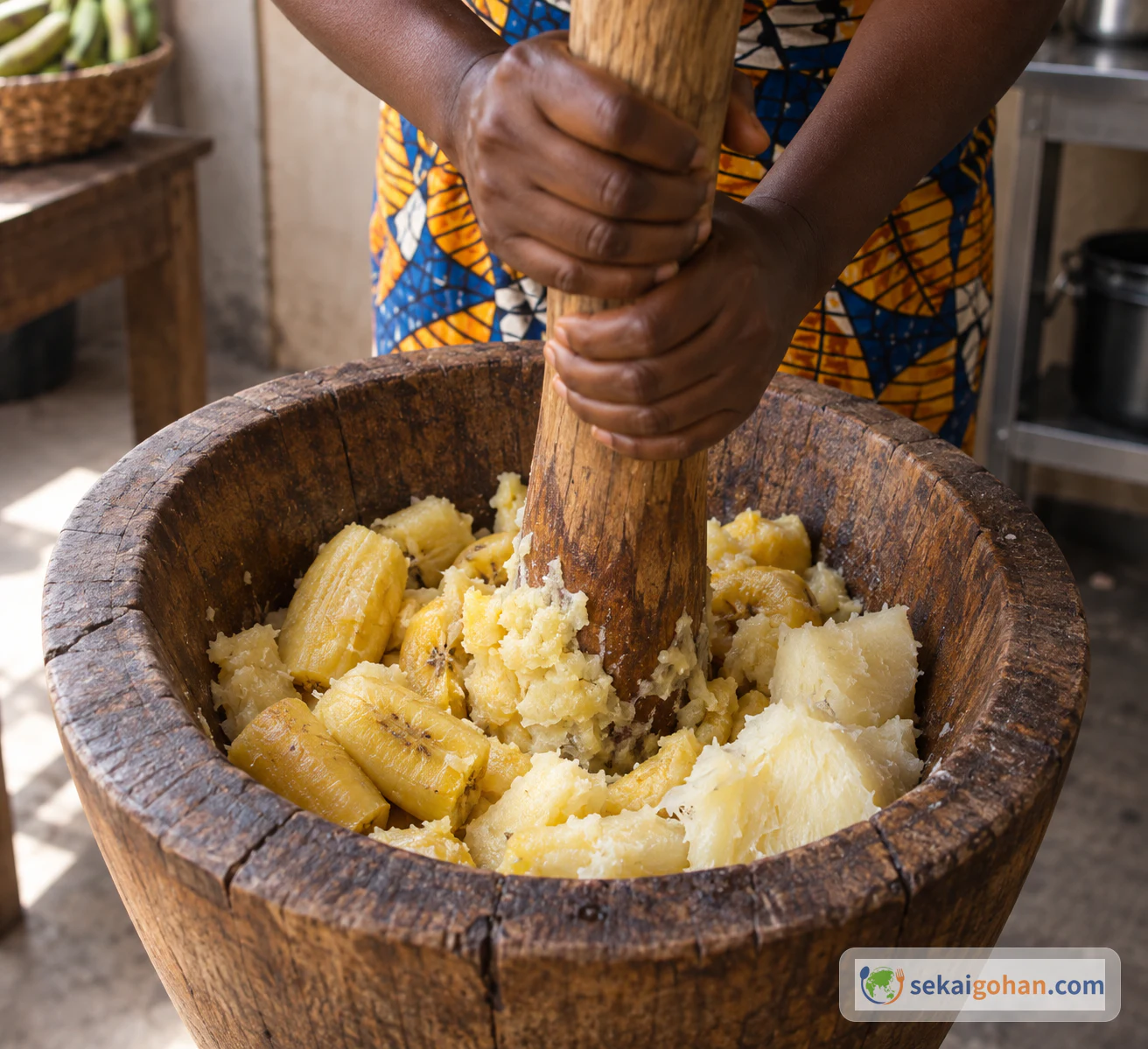
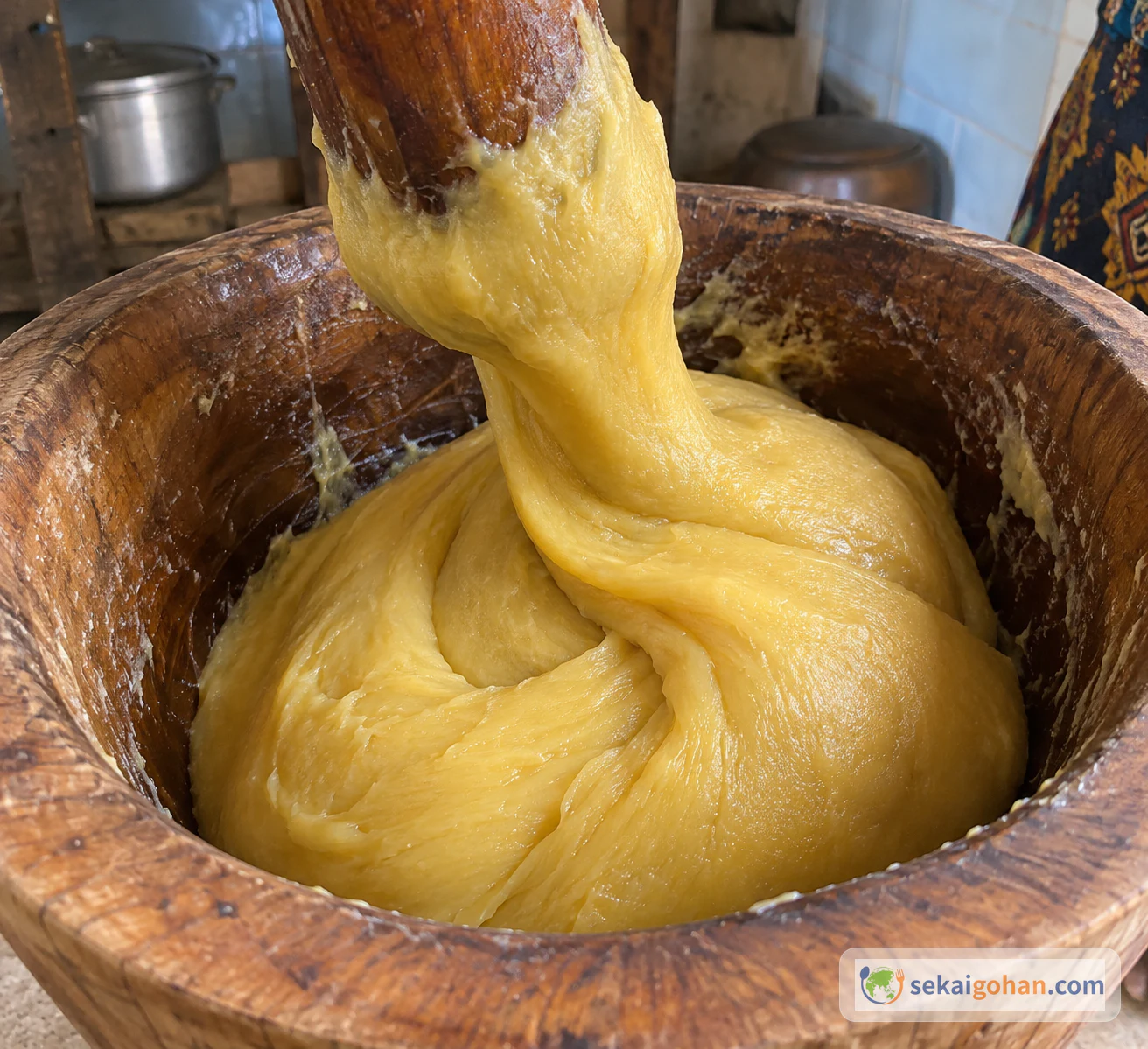
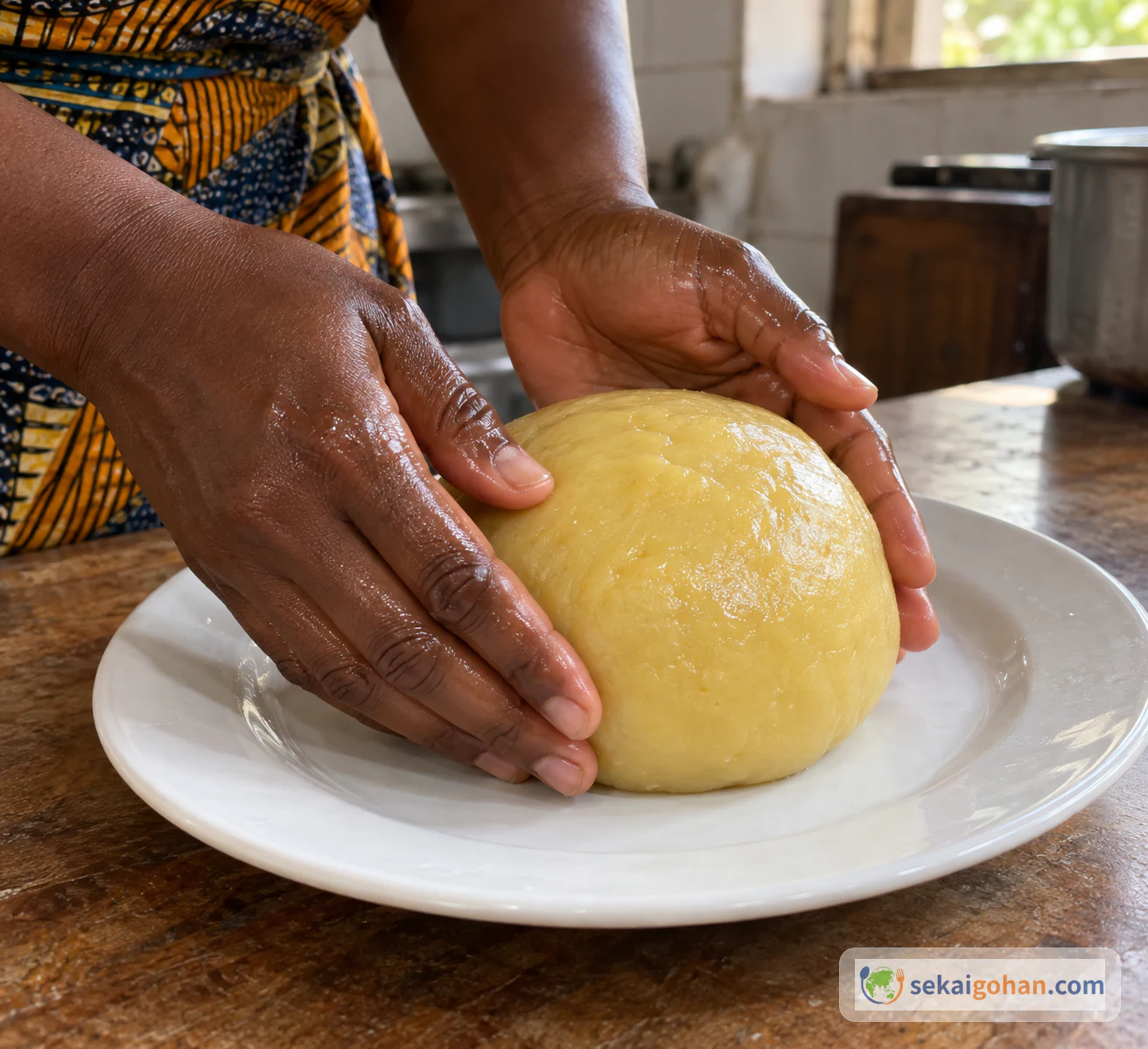
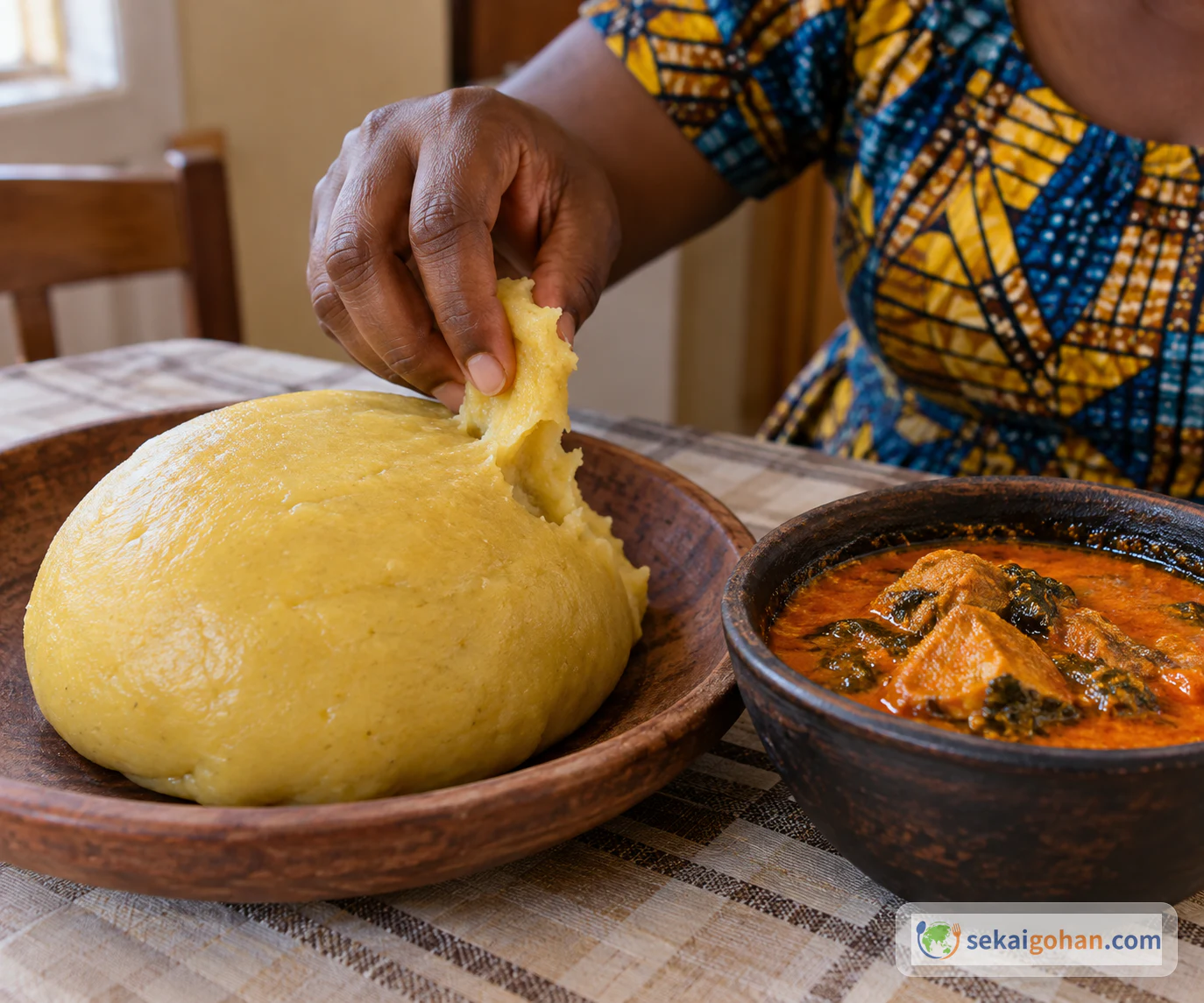
A pale golden mound sits beside a bowl of sauce. Someone tears off a small piece by hand, shapes it into a scoop, and dips it. That's foutou banane, the pounded plantain-and-cassava staple of Côte d'Ivoire, served warm and always with sauce. The dough itself is plain, a little sweet from ripe plantain, and springy. The sauce brings the seasoning.
Foutou Banane in Côte d'Ivoire
Foutou banane is eaten with Ayé tro, a palm-seed sauce, across the west, central-west and south of the country. It's a lunch dish, especially on Sundays among the Ebrié, Abidji and Aladjan peoples in the south, and some southern families eat foutou every day.
Elasticity is the quality people prize most in foutou, and green plantain gives more of it. Afoto (Corne 1) is one plantain variety used for it. Cooks also make foutou with plantain alone, with yam, or with added cassava flour. This recipe uses ripe plantains with cassava, which gives a softer dough. For more dishes from the same country, see Ivory Coast.
Two ingredients, boiled together and pounded together while hot. Aim for a smooth, cohesive dough with some spring, and let the sauce bring the seasoning.
Ingredients: Ripe Plantain and Cassava, Nothing Else in the Dough
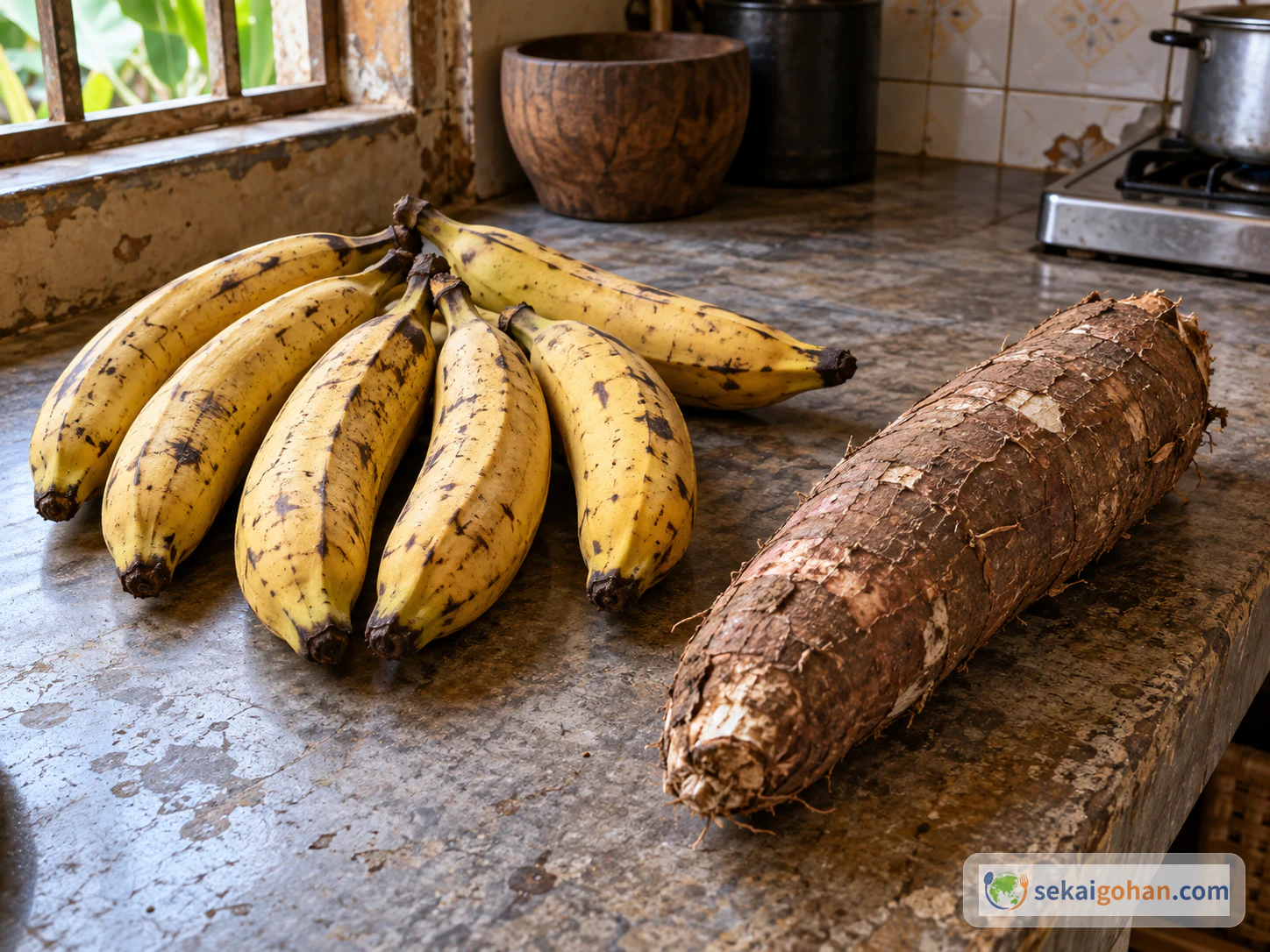
The dough has two ingredients. The water is only for boiling and does not go into the dough. No salt, flour or other liquid is added to the dough.
Equipment
- Knife and cutting board
- Large pot
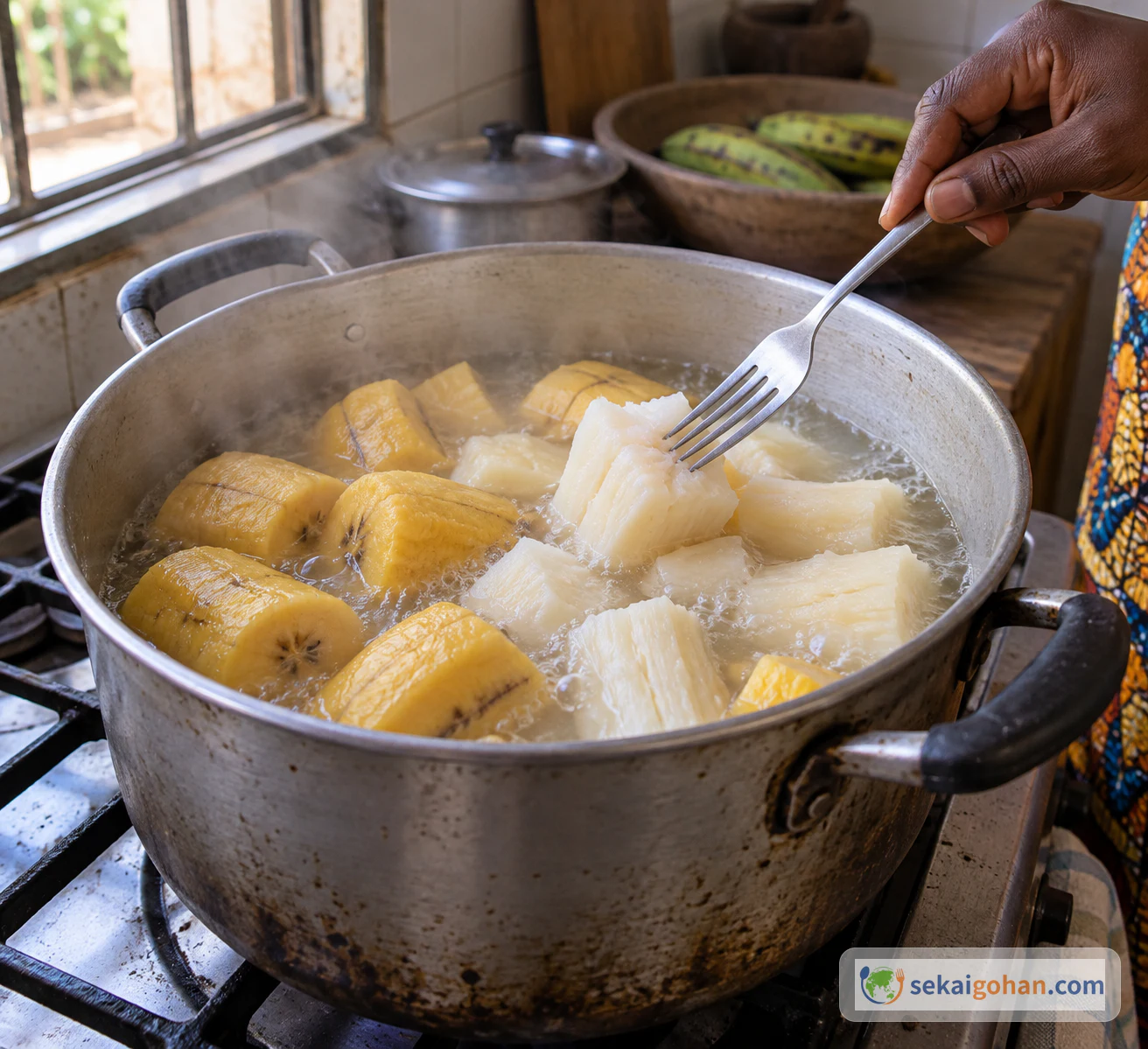
- Fork, for testing tenderness
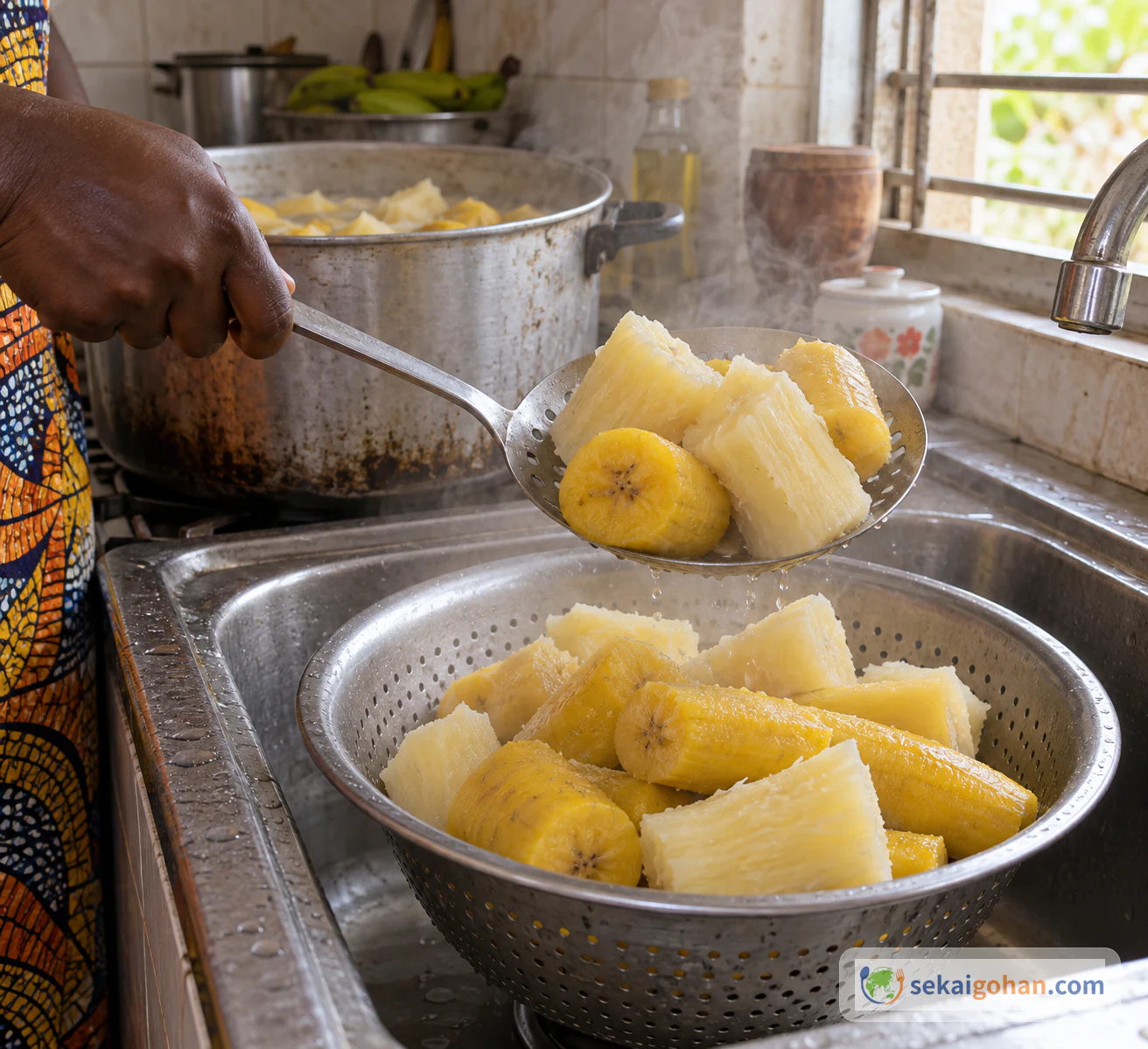
- Slotted spoon and colander
- Sturdy wooden mortar and long pestle
- Plates for shaping and serving
Choosing Plantains and Cassava
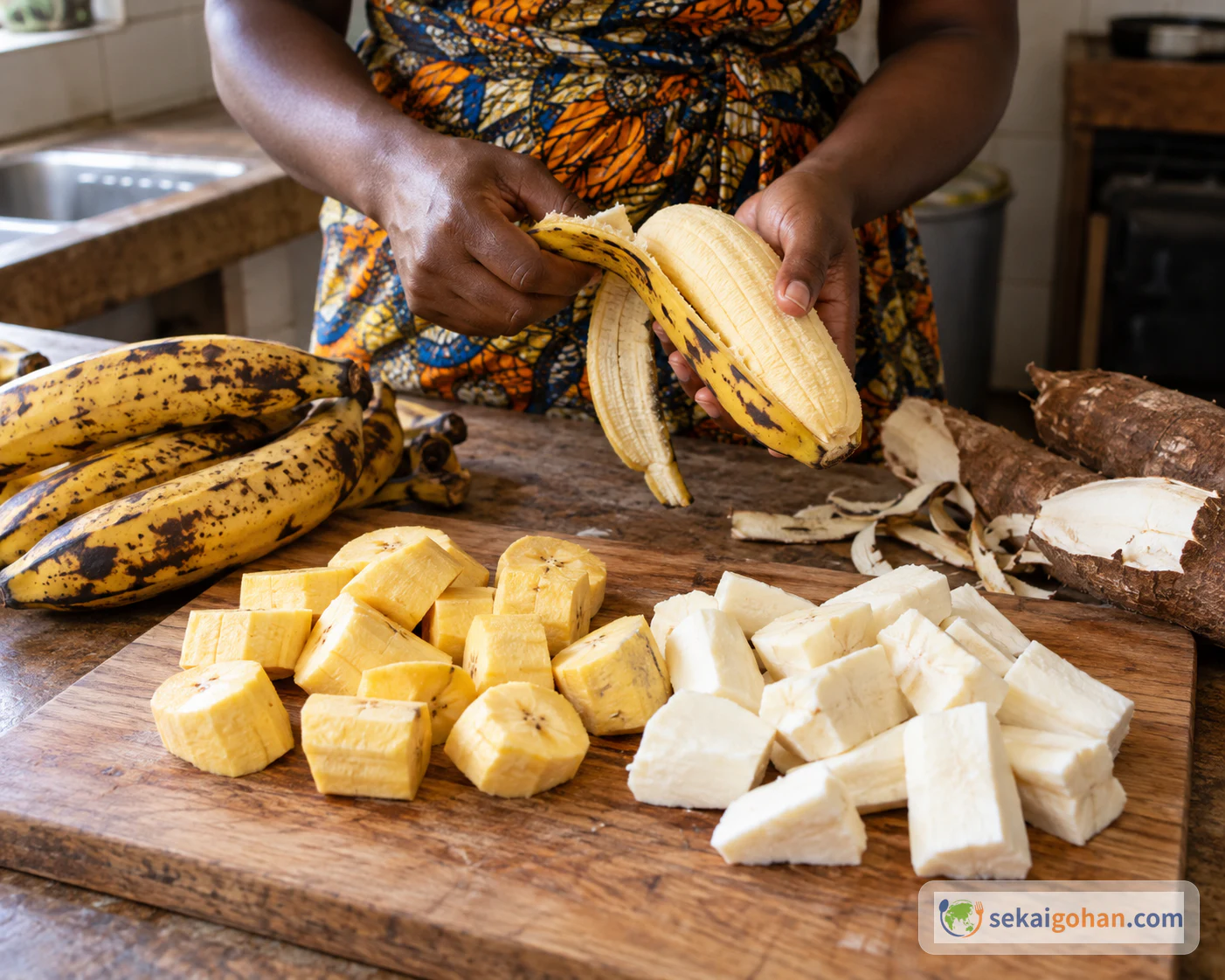
Plantain is not a dessert banana. Look for fruit sold specifically as plantain at greengrocers or import shops. Sweet eating bananas have different sweetness and starch, so they make a different dough. For this version, choose ripe plantains with yellow skins, often freckled with dark spots.
Ripeness changes the dough. Ripe plantain makes a softer foutou. Green plantain makes a more elastic one, and that's a separate version of the dish.
Cassava contains cyanogenic glycosides. Peel cassava and cook it fully before eating. Boiling, steaming, baking or frying whole fresh roots or pieces does not reliably reduce cyanogenic glycosides to safe levels, because the amount removed varies. Use only cassava processed and sold for food, and follow the supplier's preparation instructions. Do not use roots of unknown origin or bitter cassava on the assumption that boiling makes them safe. If you cannot confirm the seller's processing and cooking guidance, do not use that cassava. Frozen cassava sold for cooking, with clear package instructions, is easier to judge than an unlabeled fresh root.
Method: Boil Together, Pound Together
Cook until a fork slides into the center of the cassava with little resistance and the plantain crushes easily. Then pound while everything is still hot.
Eat foutou freshly made and warm. Make it for the meal you are serving.
Fixing Foutou Banane Problems
There's no set cooking time for the foutou, so judge doneness by feel. Most problems trace back to one of three stages: cooking the cassava through, draining, and pounding while hot.
| Problem | Likely cause | What to do |
|---|---|---|
| Hard core in the cassava | Pieces too large, or a harder root | Test the center of the biggest pieces with a fork and keep boiling until no hard core remains. Never eat undercooked cassava |
| Dough sticky or loose | Not drained enough, or water added | Drain thoroughly and keep the cooking water out of the dough. Check draining before reaching for flour |
| Grains remain or it won't come together | Pounded after cooling, or too much in the mortar at once | Pound while hot, in small batches, and keep going |
| Not enough spring | Ripe plantain gives a softer result | That's the nature of this version; green plantain gives more elasticity |
A food processor can break the pieces down, but the texture will differ from pounding. If you use one, work in small amounts and watch the dough.
Serving and Variations
Serve foutou banane warm with Ayé tro, or with sauce graine, sauce claire or peanut sauce. How far the batch goes depends on appetite and on the sauce you serve. Each sauce is its own dish, and the foutou stays a plain dough of plantain and cassava.
The dough itself contains only plantain and cassava. Sauces served alongside, especially peanut sauce, may contain peanuts or other allergens. Check each sauce separately and keep it in its own bowl.
Once you've made the ripe-plantain version, you can change one thing at a time:
| Version | What changes | Note |
|---|---|---|
| Green plantain | More elasticity | Prized for its spring |
| Plantain only | No cassava | Plantain pounded alone |
| Yam | Yam instead of plantain | A different dish, not a substitute |
| With cassava flour | Optional 5.5 oz (150 g) cassava flour, cassava pounded first, plantain added gradually | A separate method |
| Different sauce | Same dough, different accompaniment | Palm-seed sauce, sauce graine, sauce claire or peanut sauce |
Frequently Asked Questions
Should I use ripe or green plantains?
Use ripe plantains for this version, and don't mix the two. Green plantain gives more elasticity, so it makes a separate version of foutou. Recipes with other amounts give their own times, such as 3 plantains and 1 lb (500 g) cassava for 4 people, boiled about 20–25 minutes. Here, judge by tenderness.
Can I add cassava flour?
Some versions add an optional 5.5 oz (150 g) of cassava flour, pounding the cassava first and adding the plantain gradually. This version uses no flour. If your dough is loose, check your draining and pounding first.
Is it enough to just boil cassava?
Only if you know where the cassava came from. Boiling whole fresh roots or pieces alone does not reliably bring cyanogenic glycosides to safe levels. Peel and fully cook cassava, use cassava sold for food, and follow the supplier's preparation instructions. Skip roots of unknown origin and bitter cassava.