Katogo Recipe: Uganda's One-Pot Matooke and Beans

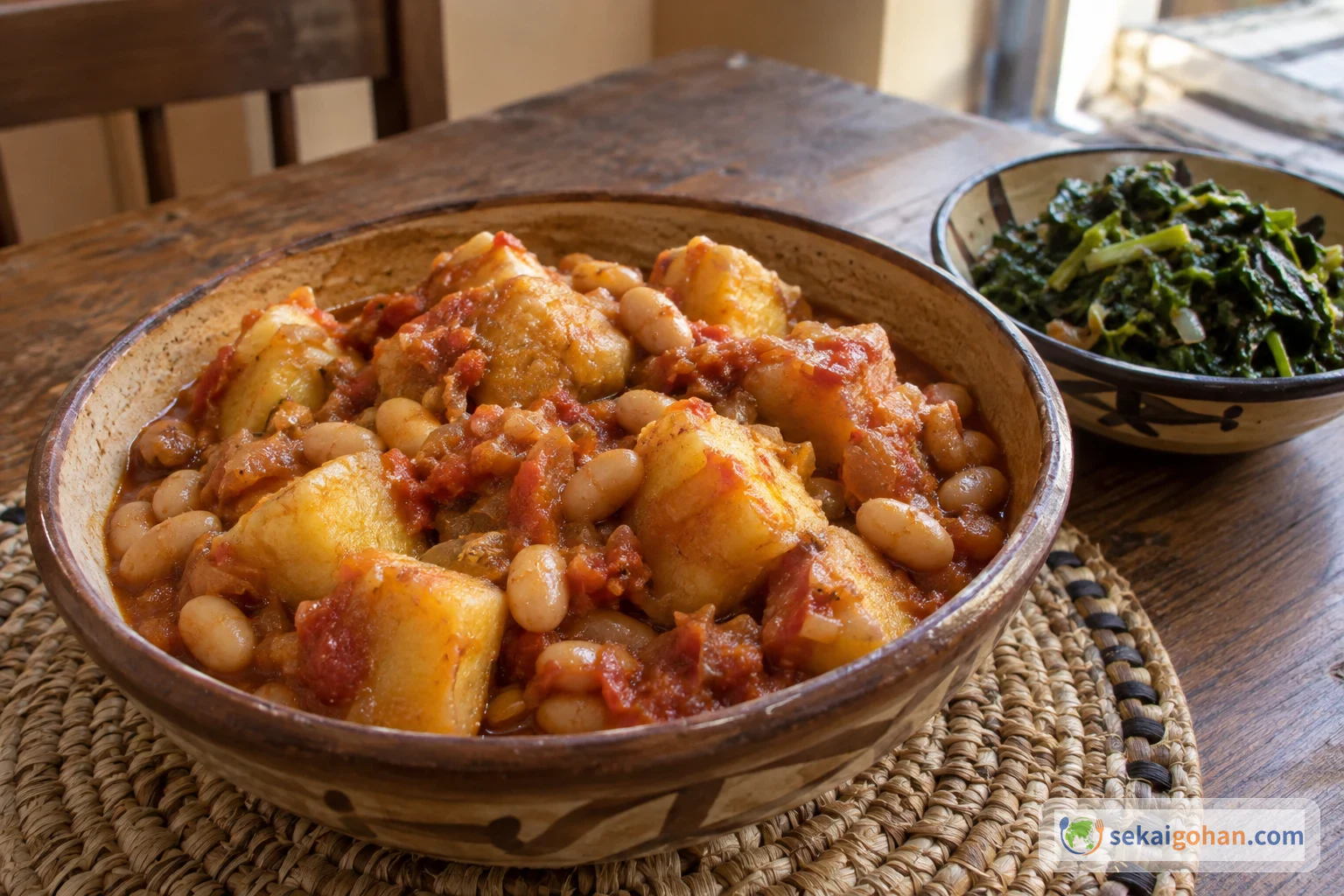
Ugandan katogo, green cooking bananas and white beans stewed in tomato sauce, served in a simple bowl
Prep
25 min
Cook
45 min
Total
1 hr 10 min
Serves
4 servings
Level
Beginner
Cuisine
Ugandan

Katogo is a Ugandan one-pot dish of green cooking bananas (matooke) stewed with beans or meat. Gives an ingredient table, 5 steps and a plantain swap.

Cooking flow

Cooking steps

STEP11 / 5

Cut the cooking bananas

10 min

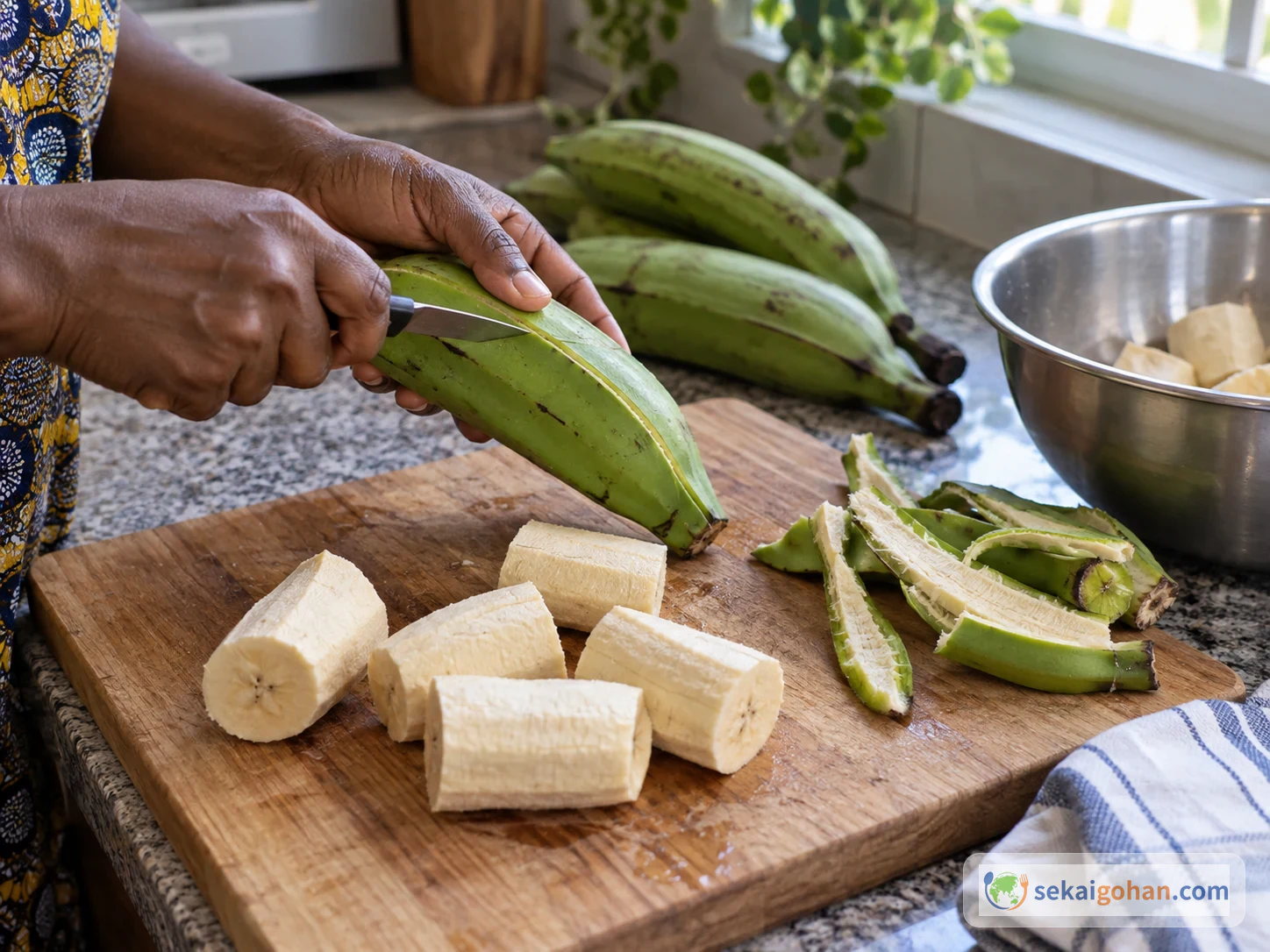
Green cooking bananas with slits cut into the peel, being cut into thick 4 cm pieces
Slit the peel of green cooking bananas lengthwise and cut to about 4 cm

Wash 2.75 lb (1.2 kg) of green cooking bananas with peel and cut off both ends. Make a lengthwise slit in the peel with a knife, peel, and cut into half-moons or large rounds about 1.5 inches (4 cm) thick. Cutting thick at 1.5 inches (4 cm) evens out the cooking between the center and the outside. Bananas with yellow skin, soft flesh or a strong sweet smell are not right for this dish. After cutting, wipe off the moisture, don't leave them long at room temperature, and keep them in a bowl until the aromatic base is ready. If the cut surface has dried and darkened, slice off a thin layer and check the usable part.

STEP22 / 5

Simmer the tomato and onion

12–15 min

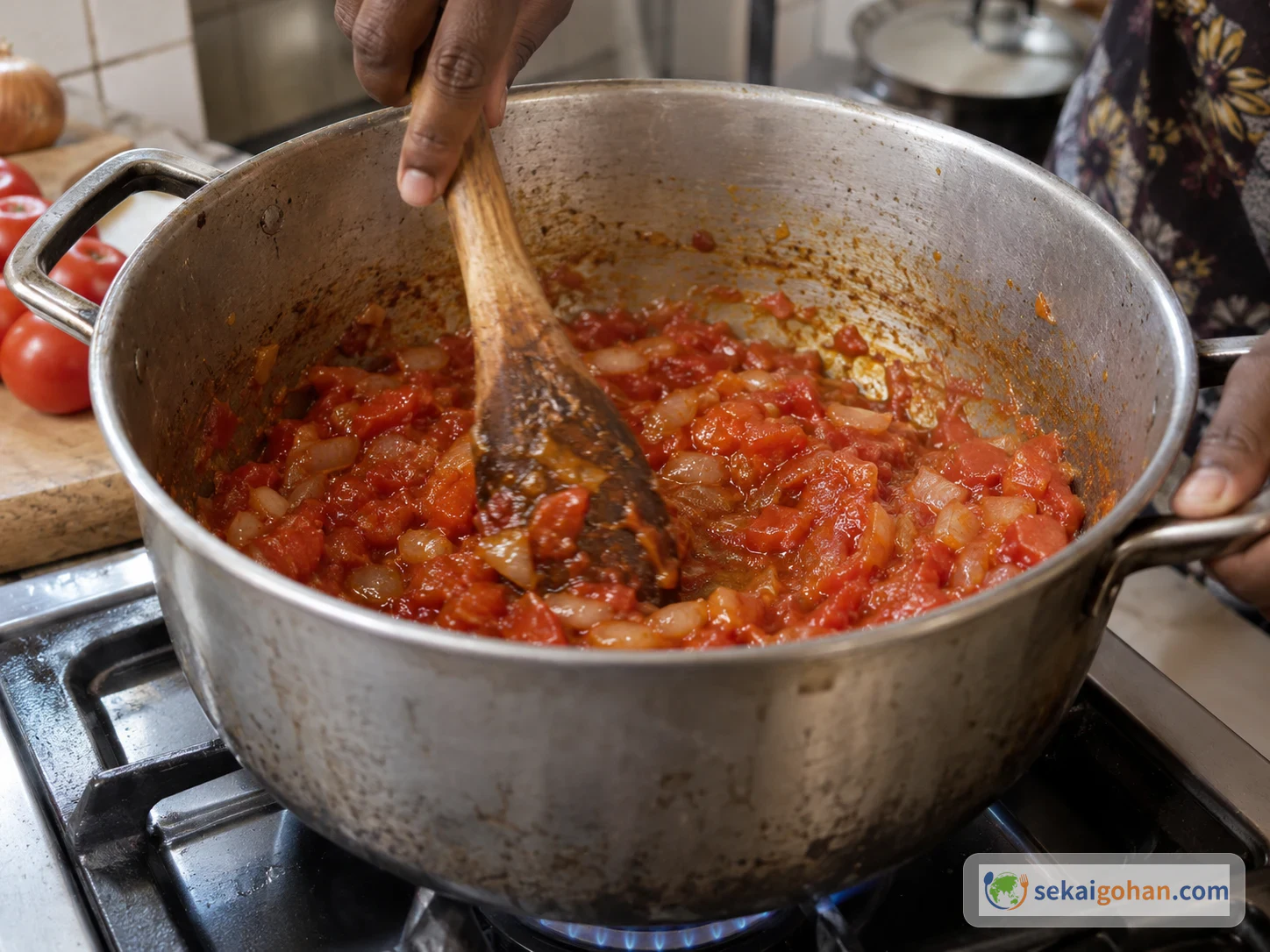
Onion and chopped tomato simmered in a heavy pot into a deep red base
Simmer the aromatic base until the onion is soft and the corners of the tomato have collapsed

Put 1 tbsp (15 ml) ghee or vegetable oil in a heavy pot and fry 7 oz (200 g) onion over medium heat for 5–7 minutes. When the onion is translucent and only the edges are a light golden brown, add 1 lb (450 g) tomatoes cut into 0.5 inches (1 cm) dice and 1/2 tsp salt. Cook over medium heat for 5–7 minutes until the corners of the tomato are gone, the sauce is thick and cohesive, and the trace of the wooden spoon remains for a moment. Don't drive the water off too much on high heat; leave a thin layer of liquid on the bottom of the pot. If the onion looks about to scorch, add 1 tbsp water at a time so no black scorch gets into the sauce.

Tip

Even if the tomato is very watery, don't reduce it completely here; leave a thin liquid on the bottom of the pot. The thickness of the stew can be corrected later with water, but the bitterness of scorching cannot be undone. Take away the raw smell of the aromatics before adding the cooking bananas.

STEP33 / 5

Let the beans take on the stew

10 min

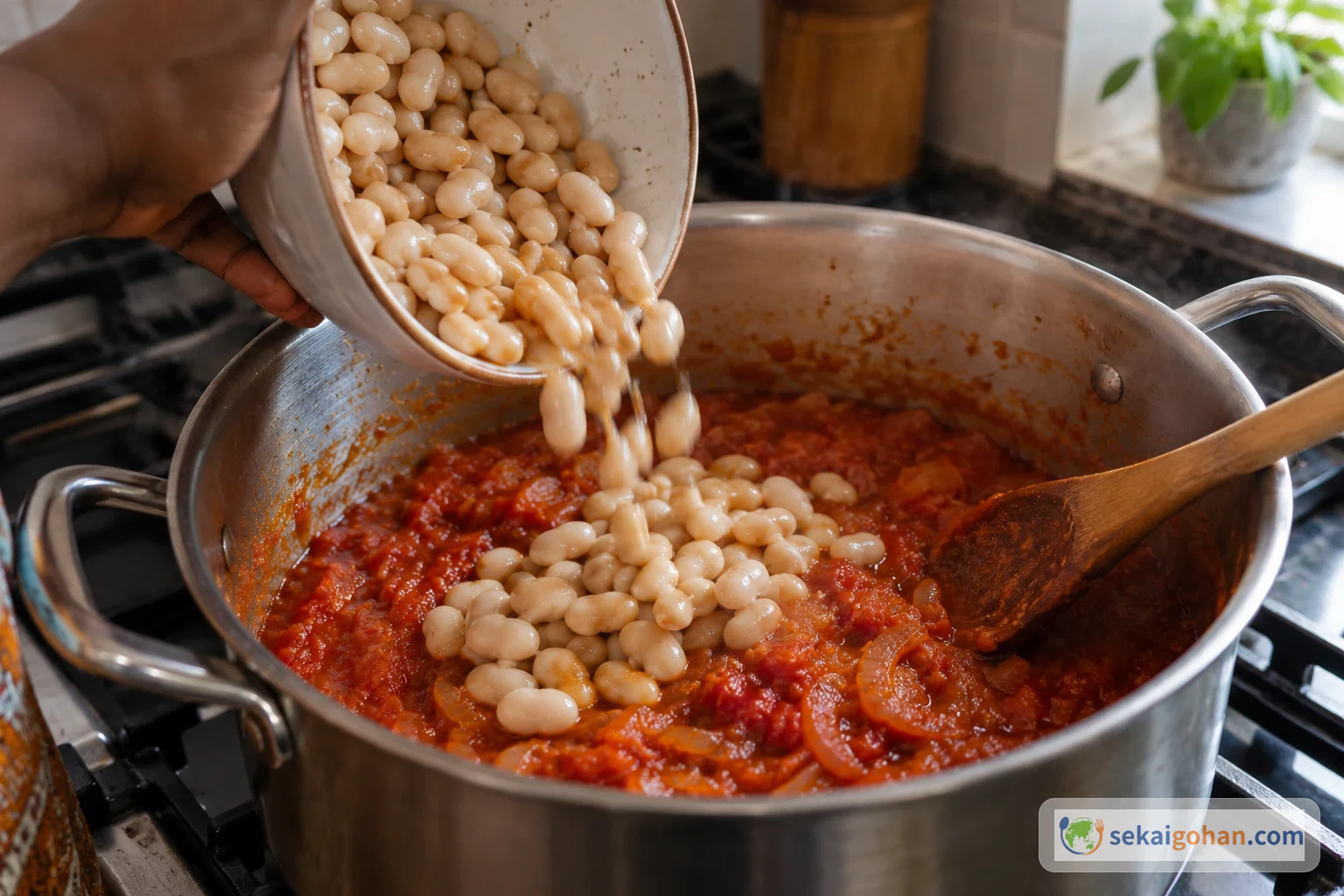
White beans added to the tomato base and let take on the stew without breaking
Warm the cooked beans first and let them soak up the tomato stew

Add 14 oz (400 g) well-drained cooked beans and 1¼ cups (300 ml) water to the pot and boil over medium heat for 5 minutes. Lower to medium-low, cover and cook 5 more minutes. Move on when the beans are warm through to the center and the stew has turned reddish brown. To keep the bean skins intact and turn only the stew reddish brown, just run the wooden spoon once around the bottom of the pot. If you use raw beans, soften them completely in a separate pot rather than in this step, and add the same amount. If there is not enough liquid and the beans stick to the bottom, add 3.5 tbsp (50 ml) boiling water at a time and move them before they scorch.

STEP44 / 5

Layer the cooking bananas and simmer

20–25 min

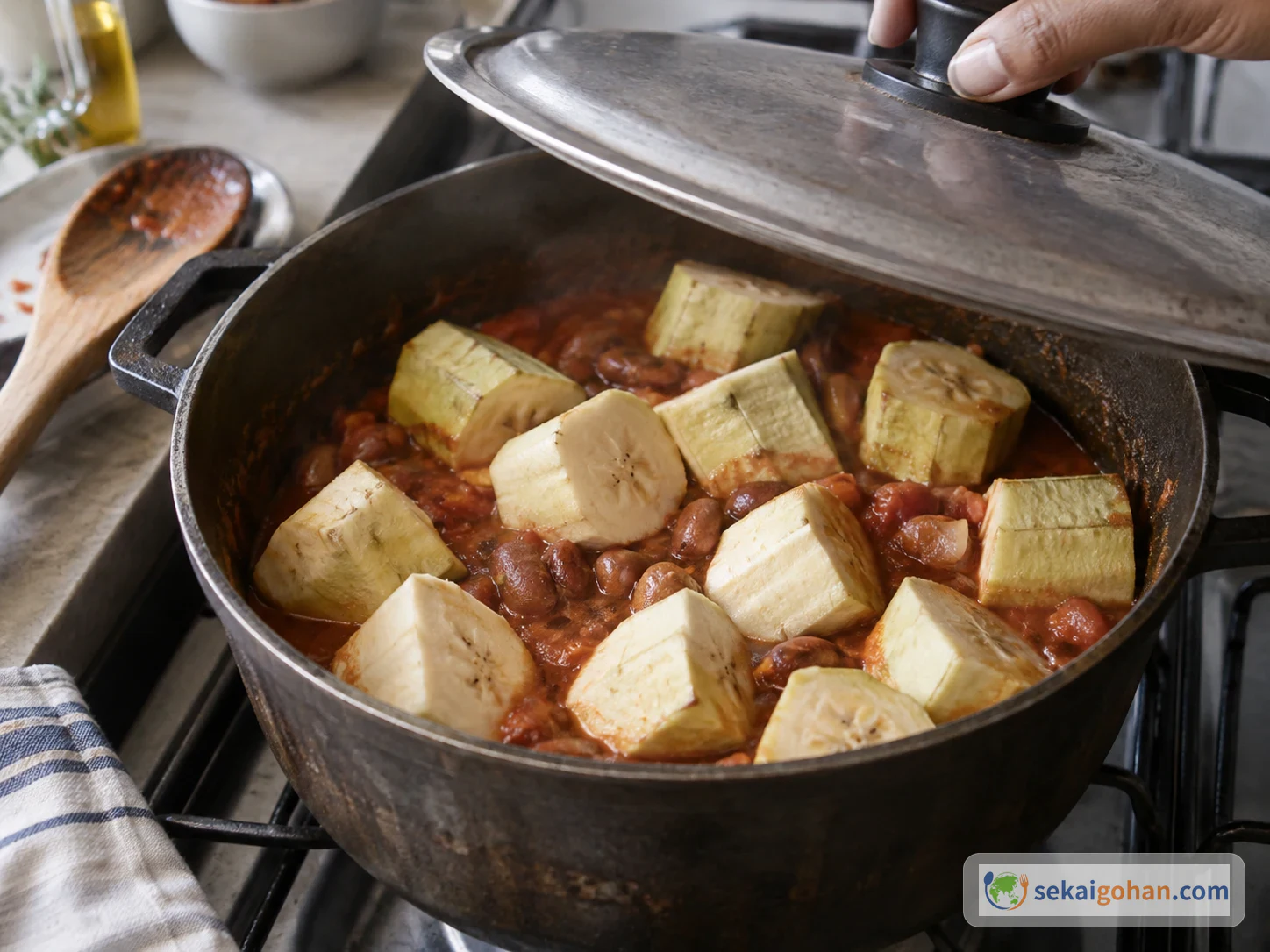
Thick cooking-banana pieces layered over the bean stew and simmered with a lid
Layer the cooking bananas over the beans and simmer over medium-low heat, keeping their shape

Layer the cut cooking bananas on top of the beans, add ¾ cup (200 ml) water to make about 2 cups (500 ml) in total from the bottom of the pot. The liquid should touch half to 70% of the bananas. Submerging them completely makes them break down and more watery. Cover and cook over medium heat for 5 minutes, and when steam rises, lower to medium-low and simmer for 15–20 minutes. Turn them gently from the bottom just once midway, and stop when the stew clings thinly to the bananas, a fork goes through but the corners of the rounds remain. If it dries out, add 3.5 tbsp (50 ml) boiling water at a time; if there is too much liquid, remove the lid and cook 5 minutes over low heat. Do not stir hard.

Tip

Don't stir the bananas repeatedly; shake the pot back and forth or pass a wooden spoon along the bottom just once. If the liquid is too little it scorches, too much and the sauce is thin, so adjust in units of 3.5 tbsp (50 ml) of boiling water. If you use leaves, lay softened banana leaves on the bottom of the pot in an amount that the leaves don't sit in water the whole time. The main recipe works without leaves.

STEP55 / 5

Bring the stew together and serve

5 min

Katogo, with the stew gathered onto the bananas and beans, being served from the pot before the greens are added
Adjust the stew over low heat and turn off the heat while the outline of the cooking bananas remains

Remove the lid and adjust the liquid over low heat for just 3–5 minutes. Turn off the heat before the corners of the bananas begin to break down, and add the remaining 1 tsp salt while tasting. Aim for a stew that thinly remains on the spoon while the outline of the ingredients shows. It should run when scooped with a spoon, and the trace when poured back onto the bottom should remain for about 2 seconds. Cook 7 oz (200 g) greens separately, and serve cilantro (10 g) or green chili (5 g), if using, at the time of plating. Do not crush the pieces of matooke completely; keep the skins of the beans and the cut faces of the bananas, and serve warm. If the bananas have broken down, don't stir; just turn off the heat and spoon the stew and beans over the top to leave a difference in texture.

0 / 0
Ingredients

Ingredients

1 / 2

The katogo

Ingredient Amount Substitutes & notes
Green cooking bananas (green plantain, in place of matooke) 2.75 lb (1.2 kg) with peel (6–8) Skin should be green and hard. Do not use yellow dessert bananas
Cooked white beans or kidney beans 14 oz (400 g) Drain canned or packaged ones. Cook local raw beans soft in a separate pot first
Onion 1 (about 7 oz (200 g)) 0.25 inch (5 mm) dice. Red onion also works but changes the sweetness
Tomatoes 3 (about 1 lb (450 g)) Chop ripe ones. For low-moisture varieties, add 3.5 tbsp (50 ml) water
Ghee or vegetable oil 1 tbsp (15 ml) Ghee is closer to the local flavor. For oil, rice bran or canola, for example
Water 2 cups (500 ml) Adjust from the amount that half-covers the bananas and leaves stew on the bottom of the pot
Salt 1 1/2 tsp (about 9 g) Reduce to match the salt in the beans. Don't add it all at the start; adjust at the end
2 / 2

Finishing and side

Ingredient Amount Substitutes & notes
Leafy greens 7 oz (200 g) Spinach, kale, komatsuna and so on. Boil or sauté separately
Cilantro 10 g An optional finish matching Viva! Uganda's serving suggestion. Omit if you dislike it
Green chili 1 (about 5 g) Optional. Add with the tomato only if you want heat
Banana leaves 2 Optional. Lay on the bottom of the pot if you want to add fragrance. The main recipe works without leaves
0 / 0

On a Ugandan morning, someone lifts the lid of a big pot at the back of a canteen. In the steam you see the pale cut faces of peeled green cooking bananas, a red stew where tomato and onion have melted down, and beans sunk into it. This is katogo (Katogo / Katoogo), a name that means "a mixed thing." It's Uganda's one-pot breakfast, built around matooke (matooke / matoke): firm, floury green bananas, nothing like the sweet ripe dessert banana. Its greatest charm is that the staple and the sauce go into the morning pot together.
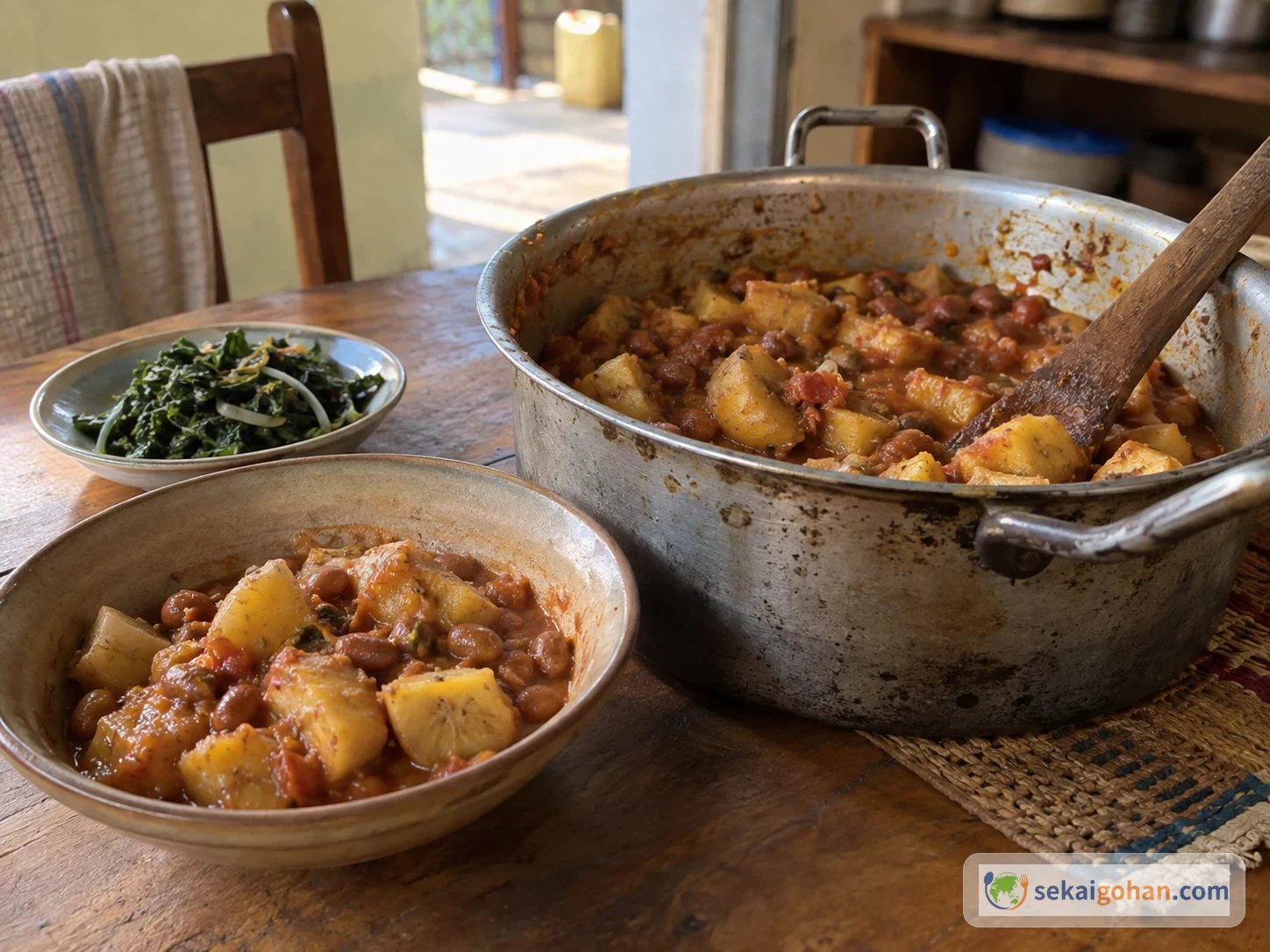
A katogo breakfast table: cooking bananas and beans layered over a tomato and onion stew
Katogo, a Ugandan breakfast of cooking bananas and beans stewed in one pot

Katogo in Uganda

Katogo is often eaten for breakfast, especially in Buganda and western Uganda, and it's made across the country's regions. There's no single fixed recipe. It's best understood as a one-pot dish whose ingredients change around matooke.

Did you know?

You'll see both Katogo and Katoogo, and both matooke and matoke. A different spelling doesn't mean a different dish, so try the other spelling when you search.

Staples and Sauces

In Buganda, katogo combines matooke, cassava, sweet potato or yam with beans. Elsewhere in Uganda, other root vegetables serve as the staple too. The sauce can be meat, groundnuts or leafy greens as well as beans. One local version pairs matooke with byenda, and the simplest katogo is just matooke with onion, tomato, salt, water and ghee. Even with the same name, the contents of the pot change the look of the breakfast.
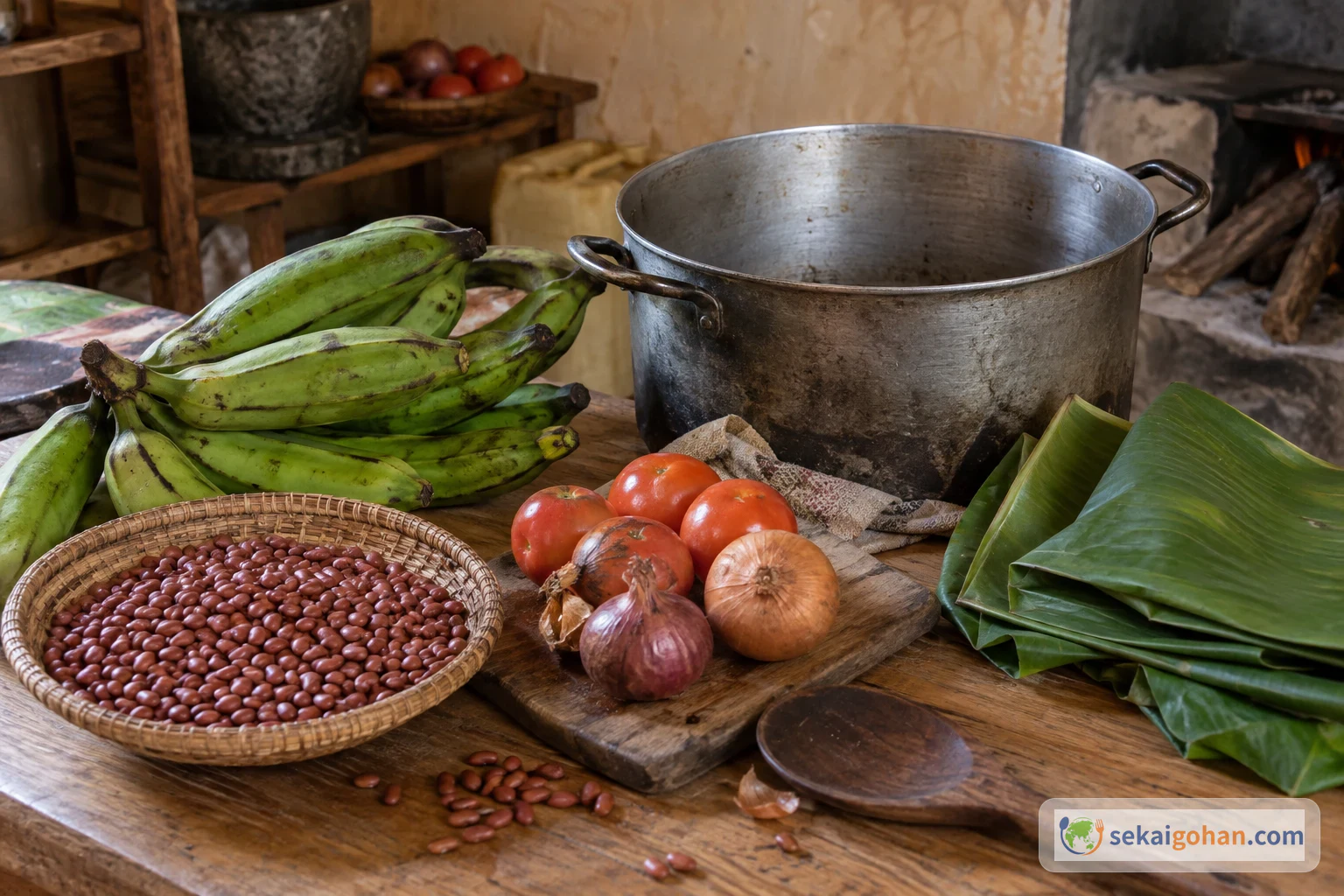
A kitchen with green cooking bananas, beans, root vegetables, tomatoes and onions laid out as the ingredients for a Ugandan pot dish
Katogo combines not only matooke but beans, root vegetables and whatever is at hand locally in one pot
Did you know?

Byenda is tripe and sweetbread. Offal is a broad term for organ meats, so byenda isn't the name of a single cut.

Katogo, Steamed Matooke and Luwombo

Steamed matooke is cooked for a long time, propped on leaves and stems so the water never touches the food directly, and it chases the fragrance of the leaf. Katogo is a different method that finishes the staple and the sauce in one pot, making it a dish that holds the pot's liquid. When you're cooking for a few people, a braise like this is far more practical than a long steaming. For a Ugandan dish that wraps meat and sauce in banana leaves, look to luwombo.


Ingredients (serves 4)

The bean version is made with 10 matoke, 1 lb (500 g) of raw beans, onion, tomato, oil, salt and water. The quantities below serve 4, converted to weight with peel and cooked beans so they are easy to buy at the shop. Do not substitute sweet yellow bananas for green cooking bananas; ripeness changes both texture and sweetness. Choose cooked beans that are unsalted or low in salt, and drain the canning liquid before using. If you use raw beans, soften them in a separate pot and then add them to the same steps. The cooking bananas are the thing to track down; the beans and aromatics you can gather nearby.
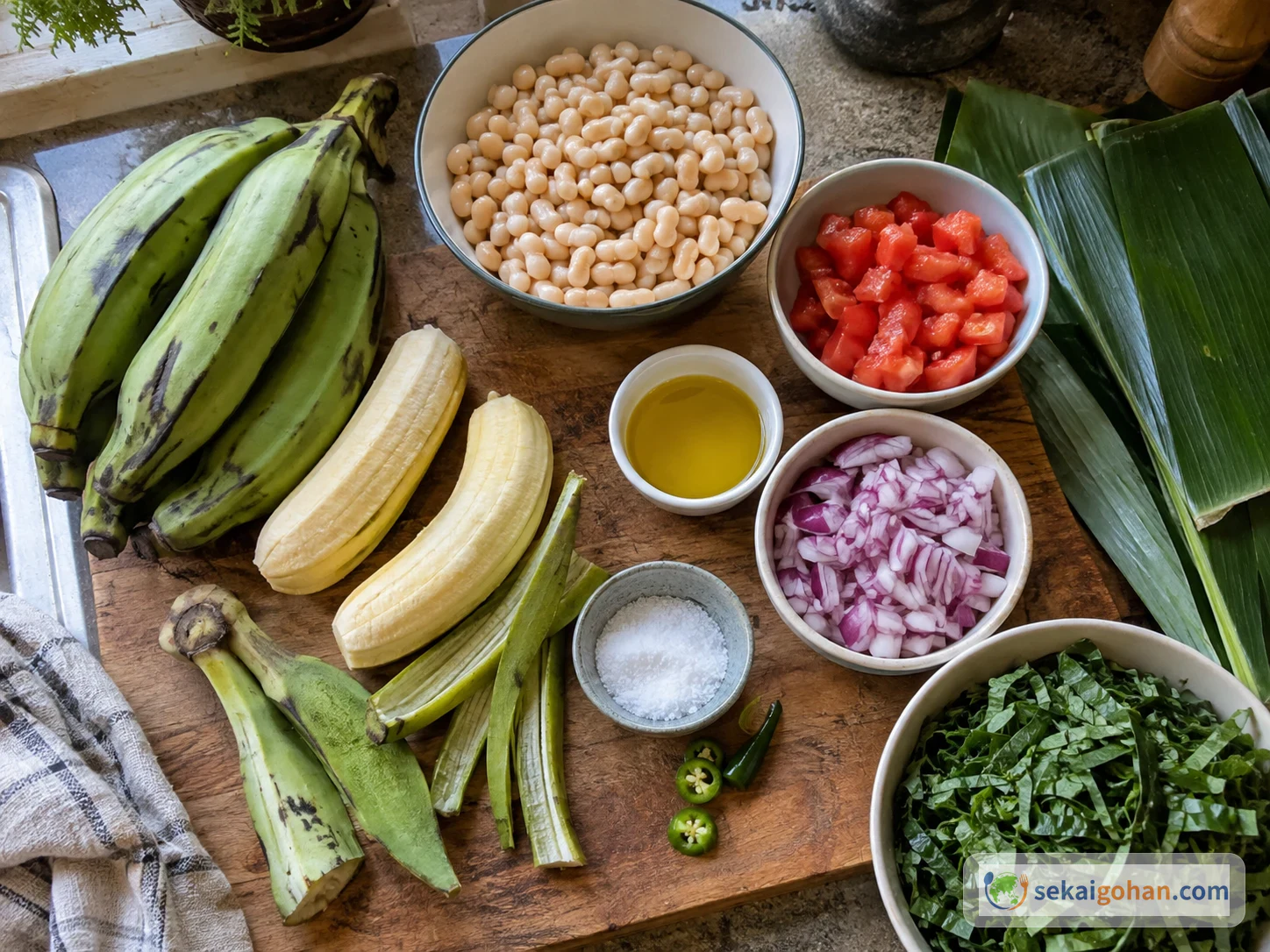
Green cooking bananas, cooked beans, tomatoes, onion, ghee and greens divided up as the ingredients for katogo
Prepare the katogo ingredients in groups: cooking bananas, beans, tomato and onion, and greens for the finish
Tip

Look for cooking bananas under the general names "plantain" or "cooking banana." Beans, tomato, onion, greens and oil can be ordinary grocery items. Banana leaves are optional, an ingredient for when you want to add fragrance.

Caution

It uses beans, so do not serve it to anyone with a legume allergy. Ghee is a milk product, so people avoiding dairy should use vegetable oil and check the label. Check the ingredients and salt content of canned or packaged beans, ghee and oil.

Choosing Matooke and Substitutes
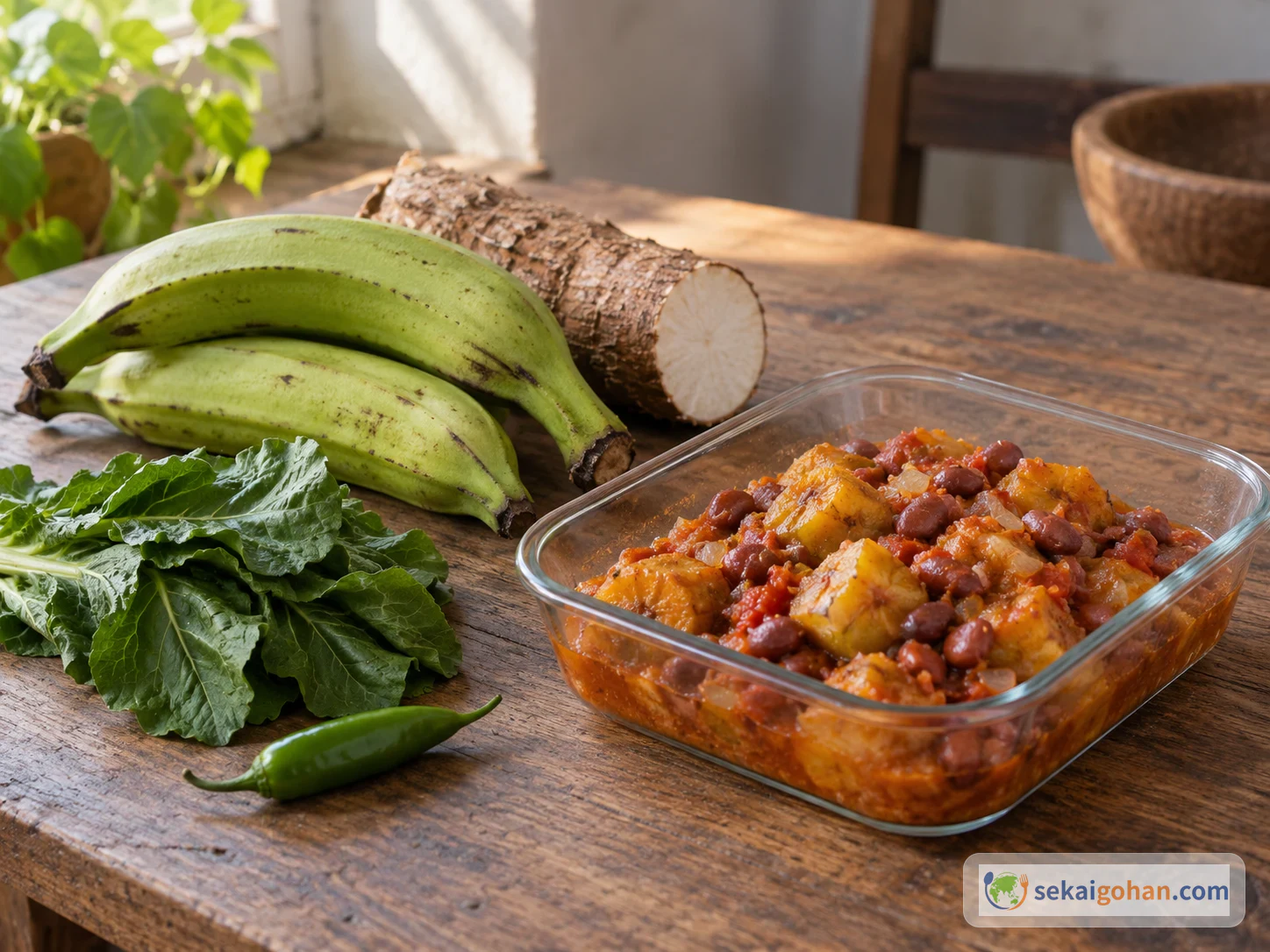
Substitute ingredients such as cooking bananas and cassava, and katogo divided into shallow containers with green chili, laid out for storage preparation
Substitute ingredients, and preparation for storage by dividing leftovers into shallow containers

Choosing green cooking bananas, not yellow ones, is the first step with this dish. Look for them under general names such as "cooking banana," "green plantain" or "plantain," and pick firm ones. Yellow dessert bananas are too sweet and soft to use here.

Cassava and sweet potato are other staples used in katogo and work on days without bananas, though they won't taste like the banana version. Cooked beans save you the soaking time, and vegetable oil can stand in for ghee. If you have no banana leaves, make the recipe without them; you'll just miss the leaf's aroma.


Instructions

The steps come in 5 stages: preparation, aromatic base, beans, cooking bananas and finishing. Cut the cooking bananas first, make the tomato and onion base, warm the beans, and then add the bananas. The goal is bananas soft in the center, warmed beans, and a liquid that has thickened while everything keeps its shape. Work for coating, not breaking down.

Common Katogo Problems and Fixes

If the cooking bananas are still hard, check the amount of liquid and the lid, add 3.5 tbsp (50 ml) boiling water and cook 10 more minutes over medium-low. If the stew is thin, take the lid off and cook 3–5 minutes over low, stirring gently rather than crushing the beans.

When the bananas have broken down, turn off the heat and stop stirring. Next time, cut them to 1.5 inches (4 cm) thick and keep any extra cooking short. Watch the color, the thickness and how a fork goes in rather than the clock. Remember that dryness is fixed with boiling water, thinness with the lid off, and breakdown by stopping, and you won't panic.
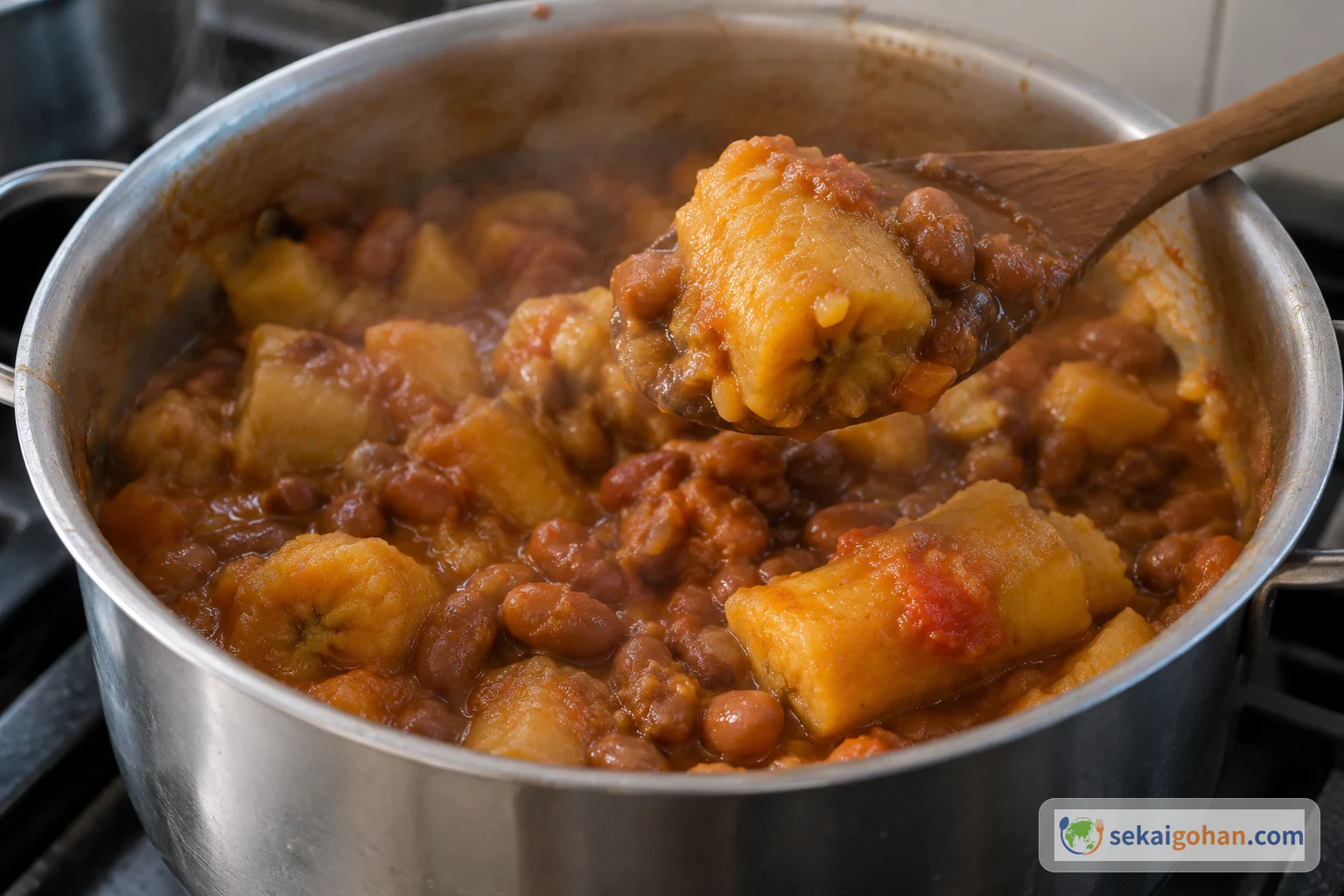
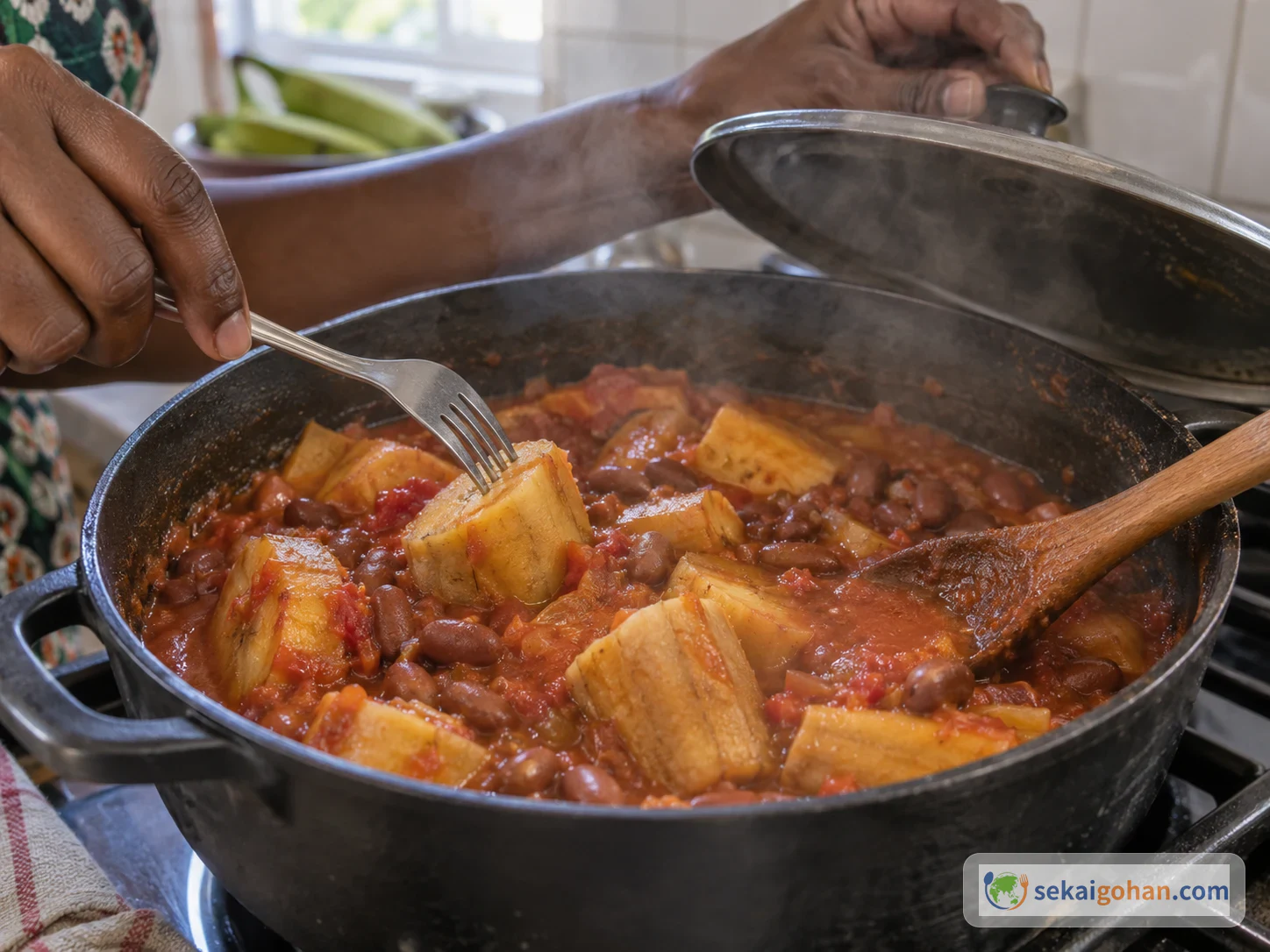
Katogo as finished: checking the thickness of the stew and the corners of the cooking bananas in the pot
A fork goes through, the stew clings thinly, and the corners of the cooking bananas remain
Tip

Add boiling water 3.5 tbsp (50 ml) at a time, never a lot at once. Cold water drops the temperature, so avoid it. Extra cooking with the lid on softens things but builds steam and liquid. With the lid off, it reduces the liquid but scorches the bottom more easily, so keep the heat low and the time short.

Caution

Do not leave leftovers in the big pot. Divide them into shallow containers, cool them quickly, and refrigerate or freeze promptly. When eating, reheat thoroughly to the center. Do not judge safety by smell, color or taste alone, and do not eat it if anything seems off. Check the ingredient labels too.

Serving Katogo

Serve katogo warm. Nobody splits the staple and the sauce onto separate plates here. The stew clings to the cooking bananas, and you spoon up banana that has taken on the tomato liquid. No staple is cooked separately; breakfast is complete in the pot. Tomato, onion, beans and banana on their own are a little heavy. A finish of cilantro, greens on a separate plate and a glass of juice balance it nicely.
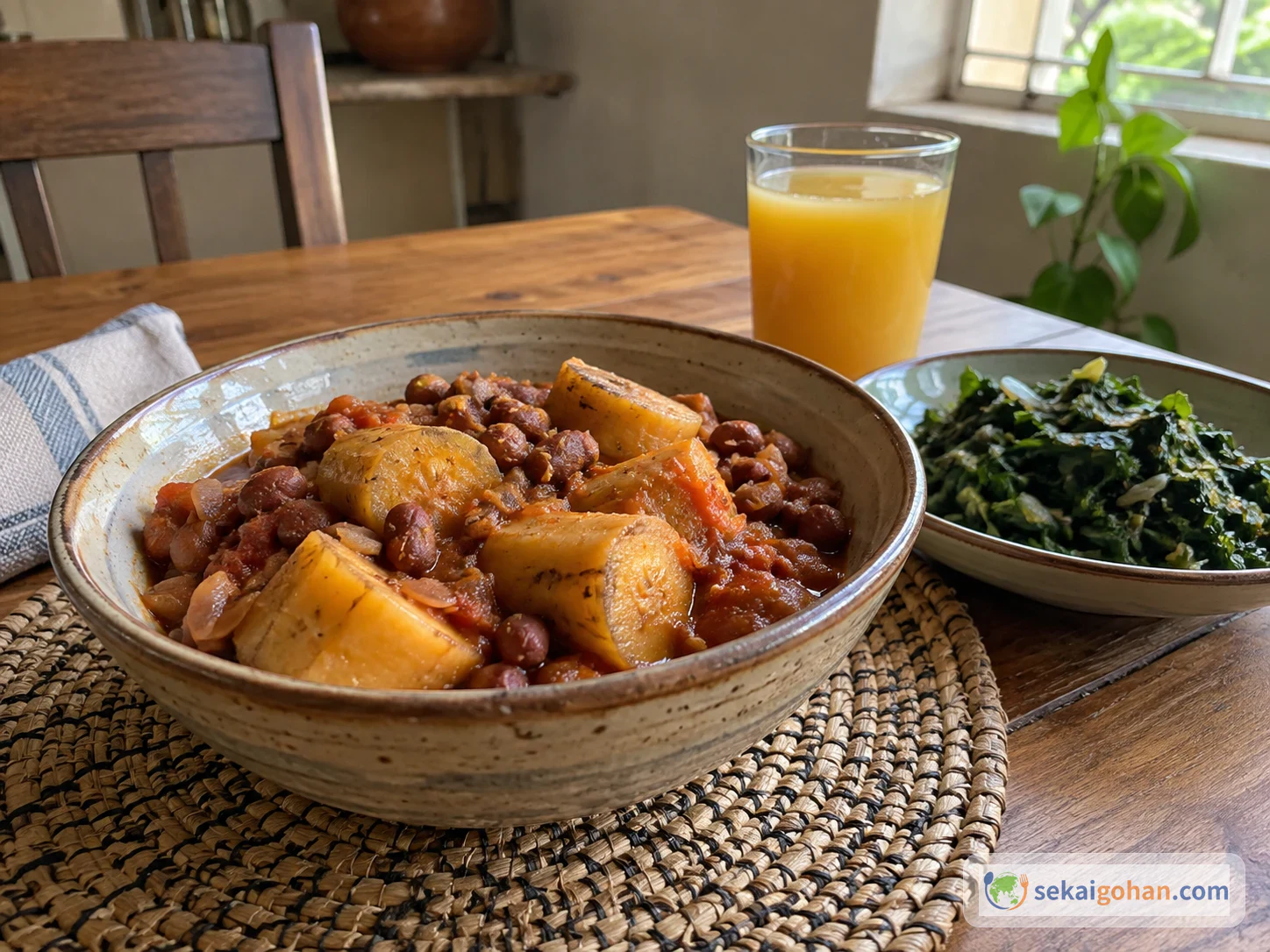
Katogo coated in tomato-colored stew on a morning table, with greens and cilantro
Katogo is served with beans and cooking bananas on one plate, with greens alongside

Katogo sits among several related Ugandan dishes. Matooke is the steamed and mashed staple, and luwombo steams meat or mushrooms wrapped in banana leaves. Kikomando is a street or home snack of chopped chapati with beans, a different kind of staple at the same breakfast. Each one is eaten at a slightly different time and plays a slightly different role on the Ugandan table.

Substitutes, Heat and Storage

Is it still katogo if I replace the beans with meat?

Yes. The sauce side of katogo can be meat, beans, peas, groundnuts, leafy greens and more, and matooke with byenda is its own local version. Switching from beans to raw offal changes the simmering time, the hygiene handling and the taste, so treat it as a different dish rather than a simple swap. If you try it, check the labeling on prepared ingredients and cook them through.

How do I add heat?

Add one green chili of about 5 g at most when the tomato goes in. The seeds make it hotter, so the first time, use half and taste. Keep the bananas, beans and stew thickness as in the main recipe.

Can I make it ahead?

Cool it quickly, divide it into shallow containers and refrigerate or freeze; don't leave it in the big pot at room temperature. Reheat only what you'll eat, in a pot or the microwave, thoroughly to the center. In the fridge the cooking bananas soak up the stew and soften, so the next day add a little water and warm it over low heat. If you're unsure how it was stored, or the smell, color or taste seems off, throw it away.

Sources