When you fry tomato in red palm oil, the first aroma that rises is a little like tropical nuts. Add the cornmeal and the thin red liquid suddenly turns heavy, until the trail of the wooden spoon starts to stay on the bottom of the pot. That moment of stirring it red is what amiwo (Amiwô / Amiwo) from Benin comes down to. It's a cornmeal staple cooked in a broth of tomato, onion, chili and oil, so the paste itself tastes of tomato's acidity and palm oil's aroma before any sauce touches it.
Amiwo in Benin and West Africa
Amiwo, also called pâte rouge, is a red staple of French-speaking West Africa. It's eaten with a sauce of meat or chicken, or with a fish stew. It looks close to Tanzanian ugali or Burkina Faso's tô, which are flour stirred into plain hot water. Amiwo is stirred into a seasoned broth, so the staple carries flavor of its own.
It also sits close to some of its neighbors. Nigeria's asaro is yam broken down in red palm oil, while amiwo is flour stirred up in a red broth. On one plate you get the tomato red of jollof rice, the savory depth of seafood found in egusi soup, and a staple built to receive a sauce, like tô or fufu.
Ingredients (serves 4)

The amiwo and the chicken tomato sauce share the aroma of one pot. Part of the red sauce the chicken was cooked in is used as the liquid for stirring the amiwo, and the rest is spooned over at the table.
This recipe uses chicken and dried shrimp powder. If you have a shellfish allergy, do not use the dried shrimp powder; substitute bonito flake powder or a little kombu stock. Scotch bonnet and habanero are intensely hot even in small amounts, so for a first try it is safer to use 1/4 or add it at the table.
Chicken, tomatoes, onion and lemon are easy to find. For amiwo, look for three things: the red palm oil that is the core of the aroma, the dried shrimp powder that adds seafood savoriness, and a Scotch bonnet-type hot sauce to adjust the heat at the plate.
| Priority | What to buy | Role in the dish | What to accept if you substitute |
|---|---|---|---|
| Top | Red palm oil | The red color, the nutty aroma, the oil that makes a flour dish West African | Rice bran oil and paprika give only the color. Treat the aroma as a different thing |
| High | Dried shrimp powder | Adds the savory depth of dried seafood to the chicken sauce | Bonito flake powder leans Japanese, so use a small amount |
| High | Scotch bonnet-type sauce | Adds aroma at the table without making the whole pot hot | Habanero sauce is fine. For strongly acidic products, start with a few drops |
Red palm oil and dried shrimp powder also work in other red stews, such as asaro, egusi soup and poulet moambé. Add Scotch bonnet-type sauce a few drops at a time on the plate, so everyone can set their own heat.
Choosing the flour for amiwo
The flour is what trips people up. Use corn flour made by finely grinding the whole corn, fine-ground cornmeal, or white cornmeal. Cornstarch won't work, because it's only the starch of the corn and lacks the grain aroma and slightly gritty texture amiwo needs.
You don't have to track down the exact local flour. Get three things right first: the kind of flour, the amount of water, and the thickness of the finished paste.
Method
Amiwo is quick once the flour goes in. Make the chicken sauce first, set aside the broth, and measure the flour before you start stirring. If you go looking for flour or water midway through stirring, lumps form easily.
Ingredients to hold on to, and substitutes

Cornmeal is not cornstarch
The easiest mistake with amiwo is the flour. Labels such as 'corn flour' can cover both a fine cornmeal for baking and cornstarch, which is only starch, and the two sit side by side on the shelf. Cornstarch gives a translucent paste with neither the aroma nor the texture of corn.
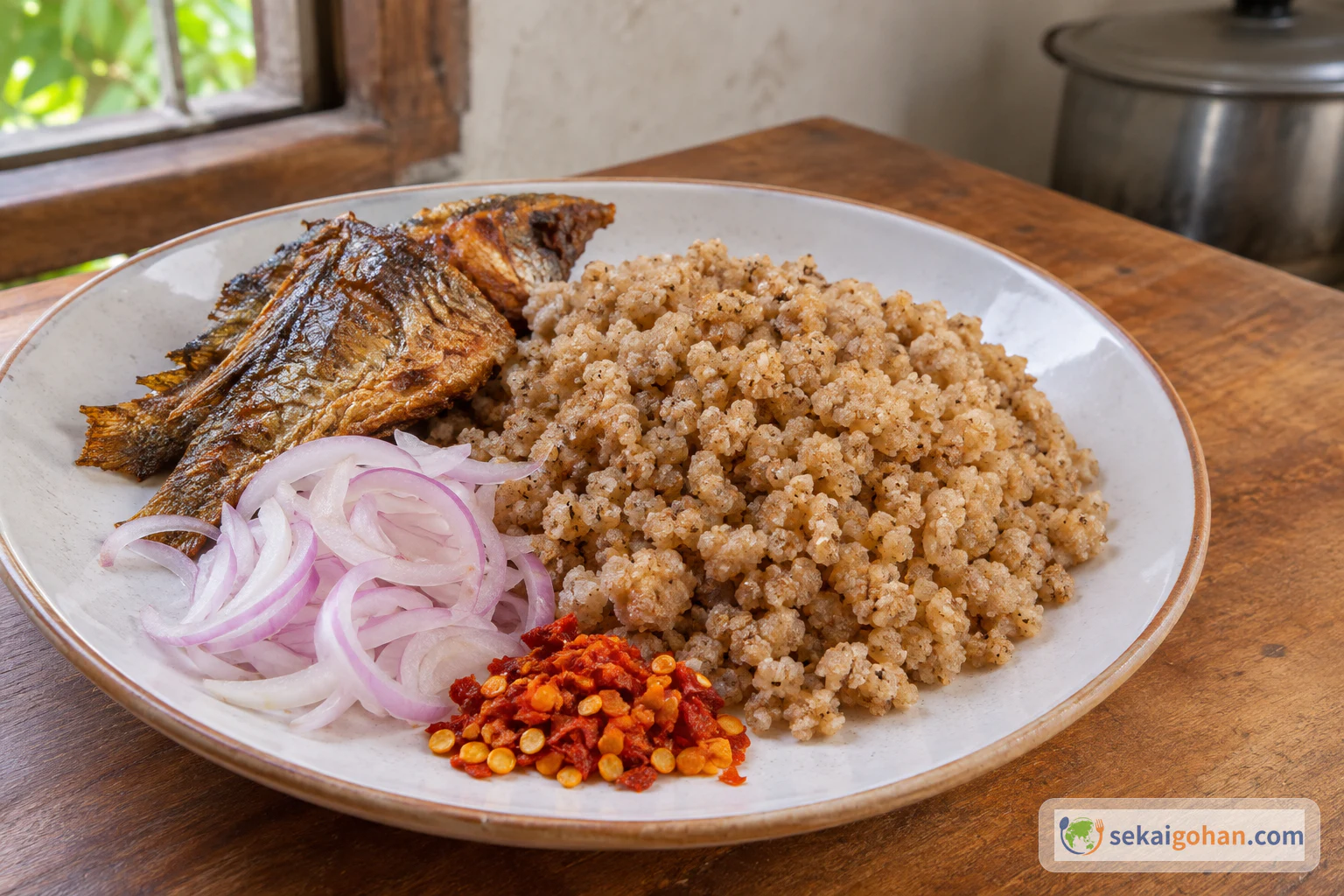
Use fine-ground cornmeal, white cornmeal, or pre-cooked corn flour such as Harina P.A.N. Coarse polenta flour also works, but the grain remains in the finished dish. In that case, extend the slurry time to 10 minutes and stir for 3 minutes longer over low heat after adding the flour, and it is easier to eat.
Red palm oil is the pillar of aroma
Red palm oil decides the color and aroma of amiwo. Mixing paprika into a neutral oil brings it close in looks, but not the nutty aroma or the weight. 3 tbsp is enough for a first try. Too much and the oil separates on the plate, and the heaviness of oil comes before the sweetness of the flour.
On the other hand, leave the red palm oil out entirely and the amiwo character weakens. Choose one stored in a cool, dark place after opening, not an old oil with a strong smell. If there is an oxidized smell, do not use it.
Chicken or fish
Around Benin, combinations of chicken, fish and tomato sauce are common. In a home kitchen, chicken is easier to handle and gives a more stable broth. To make it with fish, salt fillets of white fish and leave for 10 minutes, brown them in oil, and return them to the sauce. When using a fish with many bones, always strain the broth before setting some aside for the amiwo.
If you like dishes that carry the fragrance of fish into rice or flour, like Senegalese thieboudienne, the fish version also suits well. Conversely, if it is your first time and you are serving the family, the chicken version makes it easier to adjust the heat and the seafood aroma.
Common amiwo problems and fixes
White lumps remain
If you put flour straight into the red broth, only the outside sets and a white core remains. Dissolve 2.75 oz (80 g) of flour in cold water first to make a slurry, then add the rest of the flour in 4 batches. If lumps do form, lower the heat and crush them against the side of the pot with the wooden spoon.
Watery and won't stand on the plate
There's too much broth. Stir over low heat 2 minutes at a time and check whether the spoon's trail stays. If you add more flour, go 1 tbsp at a time, since too much brings back a floury taste. Resting it for 5 minutes before plating also lets the flour absorb liquid and firm up a little.
The bottom scorches
High heat after the flour goes in is the cause. Keep it at medium-low while adding the slurry and low after adding the flour, and scrape the bottom of the pot as you stir. Once it gets heavy, you can turn off the heat and keep stirring on residual heat. A heavy pot or a deep frying pan scorches less than a thin aluminum one.
The tomato tastes too sharp
Tomato paste cooked too briefly leaves acidity behind. After sautéing the onion, cook the paste in the oil for about 2 minutes, until the color deepens and the aroma turns sweet. Canned diced tomatoes carry more water, so reduce the sauce 5 minutes longer if you use them.
Serving and storing amiwo

At the table
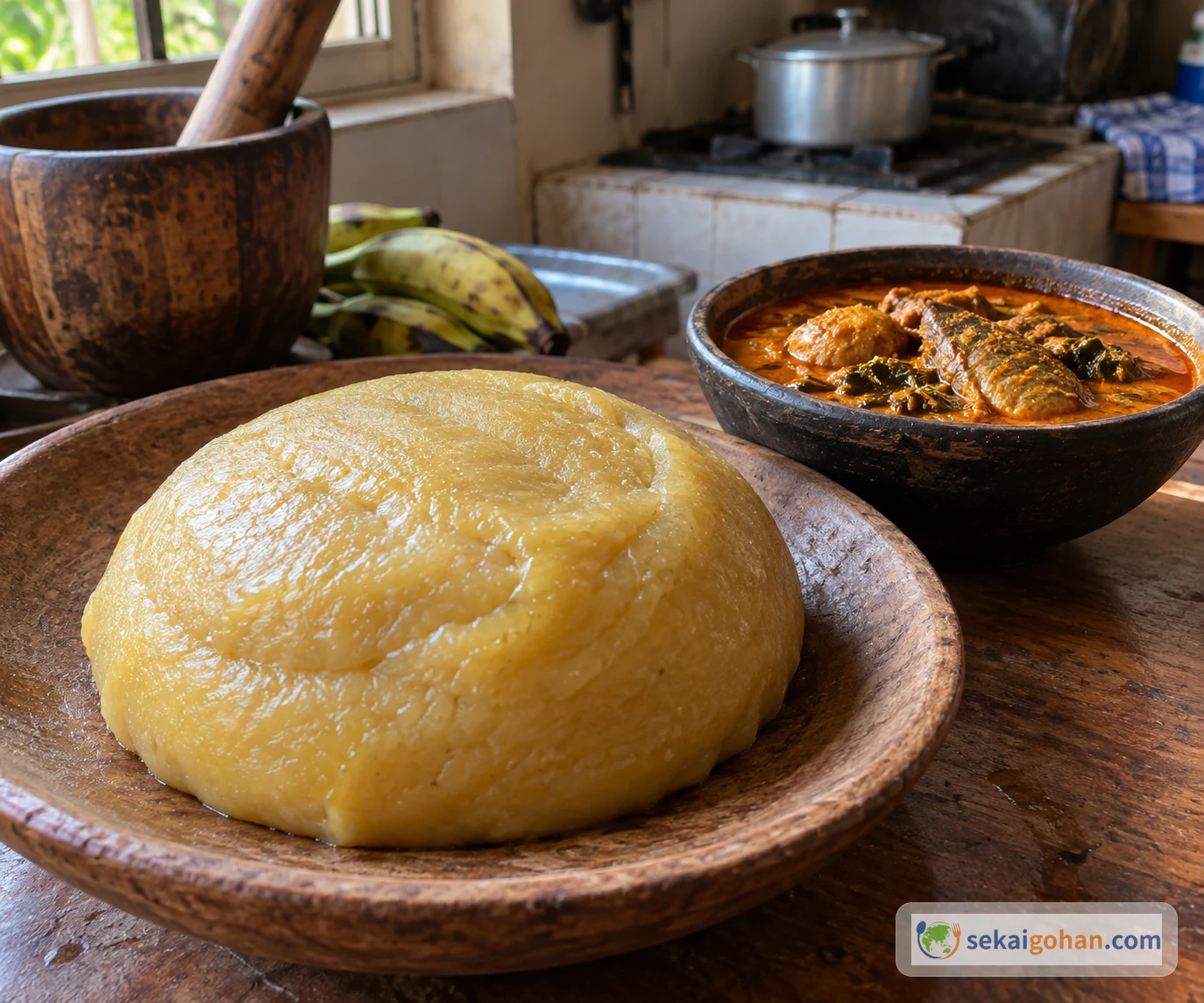
The red cornmeal paste is a base for a rich sauce. Put amiwo on one half of the plate and chicken sauce on the other, then cut off small pieces with a spoon as you eat. Since amiwo already carries tomato and oil flavor, it suits a rich chicken or fish sauce better than a pale soup. Ghanaian fufu, by comparison, is whiter and chewier and made for scooping soup, while tô has a strong grain flavor and depends entirely on its sauce.
Both the amiwo and the sauce are red and heavy, so something green or sharp helps you finish the plate. Lightly boiled leafy greens, cabbage with a squeeze of lemon, or thin slices of cucumber all work.
Storage and reheating
Amiwo is smoothest freshly made, but it keeps. Once the heat is off, wrap single servings in plastic wrap, place them in a container, and eat within 2 days from the refrigerator. Store the chicken sauce separately; it keeps up to 3 days in the refrigerator.
To reheat, sprinkle 2 tsp water over the amiwo, cover with plastic wrap, and microwave at 600 W for 1 minute 30 seconds, adding 30 seconds at a time if the center is still cold. In a pot, stir it up again over low heat with 2 tbsp water. High heat dries the surface and makes it crack.
You can freeze it, though it turns a little crumbly after thawing. Flatten it thin rather than shaping a dome, put it in a freezer bag, and use within 2 weeks. A generous pour of chicken sauce after thawing makes the change in texture less noticeable.
Frequently asked questions
Is amiwo the same as ugali?
Both are staples made by stirring cornmeal, but amiwo is stirred into a red broth made with tomato and red palm oil. Ugali is basically hot water and flour, served as a plain staple under a sauce.
What if I have no red palm oil?
Adding 1 tsp paprika to 3 tbsp rice bran oil brings the color closer, but the aroma changes a great deal. Think of the result as an amiwo-style tomato cornmeal porridge, and make the real thing once you have red palm oil.
Can I make it without heat?
Yes. Leave the Scotch bonnet or habanero out of the pot and use just red bell pepper and black pepper. Anyone who wants heat can add a few drops of Scotch bonnet-type sauce on their plate, which makes the pot easier for the whole family to eat.
Can I make it with fish instead of chicken?
Yes. Season white fish with salt, garlic and lemon for 10 minutes, brown both sides in oil, and return it to the sauce. With a bony fish, always strain the broth before setting some aside for the amiwo. The fish version has an aroma closer to thieboudienne.
How can I enjoy leftovers the next day?
Cut the amiwo into thin slices and pan-fry them over medium-low heat for 2 minutes on each side, until the outside turns slightly toasty. Pour the warmed leftover chicken sauce over the top, and you have something quite different from the fresh dish, a bit like grilled rice cake.