The sauce comes to the table a deep orange, and the first bite is a surprise: the sweet, earthy richness of palm nut, the acidity of tomato and the heat of chili all blend into one. Poulet moambe is chicken stewed in cream pressed from palm nuts, the fruit of the oil palm. It's the pride of the Democratic Republic of the Congo, and served with rice or fufu, it's very hard to stop eating. Here's how to make it with ingredients from an ordinary grocery store.
Poulet Moambe and the Congo
The Democratic Republic of the Congo spreads across the center of the African continent. Once called Zaire, it holds the world's second-largest tropical rainforest, and more than 250 ethnic groups live on land nourished by the great Congo River. In a country this diverse, poulet moambe is a dish loved across ethnic lines.
In Lingala (one of the common languages of the Congo), "moambe (moamba / muamba)" is the name of the palm nut cream sauce itself. It is used as both a dish name and a seasoning name. In Portuguese-speaking Angola it is called "muamba de galinha (Muamba de Galinha)," and both the Congo and Angola take pride in it as a national dish.
Palm nuts and the Congo Basin
The Congo Basin is one of the places of origin of the palm nut, Elaeis guineensis. People here have used it for thousands of years, crushing the fruit to extract a cream and building their cooking on it. Moambe comes straight out of that long life alongside the palm forests.

How moambe became a national dish
Its status as a national dish wasn't built overnight. Under Belgian colonial rule (1908 to 1960), palm oil was exported along with rubber latex, and the Congolese were forced into harsh harvesting labor. The home table was another matter: dishes made with palm nut cream carried on there, protected as a "sanctuary of the home."
Independence came in 1960, and with President Mobutu's "authenticity" policy, traditional culture was taken up and re-examined. You see the same pattern with feijoada and ndole: in countries that went through colonial rule, food becomes a symbol of national identity. And palm nut dishes don't stop at borders. As with the jollof rice debate, the question of who a dish belongs to is exactly where each country's pride crosses.
Moambe in Kinshasa
The capital, Kinshasa, has a population of over 17 million and is one of the largest cities in Africa. Its countless street stalls and simple eateries, called "nganda," serve moambe everywhere: a heaping mound of white rice under orange sauce, with a bone-in piece of chicken plopped on top. The Kinshasa way is to tear it apart by hand as you eat.
At home, moambe is the standard Sunday lunch. After church the family gathers around a big pot of it, and that is the scene of a Congolese Sunday.

Ingredients (serves 4)
Imported canned palm nut cream can be found online under "palm nut cream" or "palm soup base," and at African and West African grocery stores. Brands from Ghana and Nigeria such as "Trofai" and "Praise" are the standards. If you cannot find it, a combination of 7 oz (200 g) unsweetened peanut butter, 2 tbsp paprika, and 2 tbsp red palm oil brings the flavor closer.
Palm oil (the red oil) is a cooking oil, while palm nut cream is a creamy paste made by crushing palm fruit. The star of poulet moambe is palm nut cream. You cannot make it with palm oil alone. This distinction is very important in Central African cooking.

Choosing Palm Nut Cream
The water content of canned palm nut cream varies greatly by maker. "Trofai" is relatively thick and "Praise" is slightly looser, so expect to adjust the sauce as it simmers. To find imported cans, search online for "palm cream concentrate." If you can't get any at all, there's a peanut butter substitute in the FAQ below.
Poulet Moambe Tips and Fixes
Finish the sauce when it coats the back of a spoon and does not run off. If it is too thick, add water; if too thin, take off the lid and reduce.
In Congolese homes, the rule when simmering chicken is "never use high heat." A slow, low simmer melts gelatin from the bones and makes the chicken fall-apart tender. If the liquid reduces too much partway, add hot water 3.5 tbsp (50 ml) at a time. The chicken is ready when the meat comes off the bone at the touch of a fork.
Adding 1 tbsp lime juice at the end of the simmer cuts the heavy richness of the palm nut sauce and leaves a cleaner aftertaste. At Congolese restaurants, lime wedges always come to the table so diners can add acidity to taste. As in Peruvian ceviche, lime balances the whole dish.
Poulet Moambe Variations and Nutrition
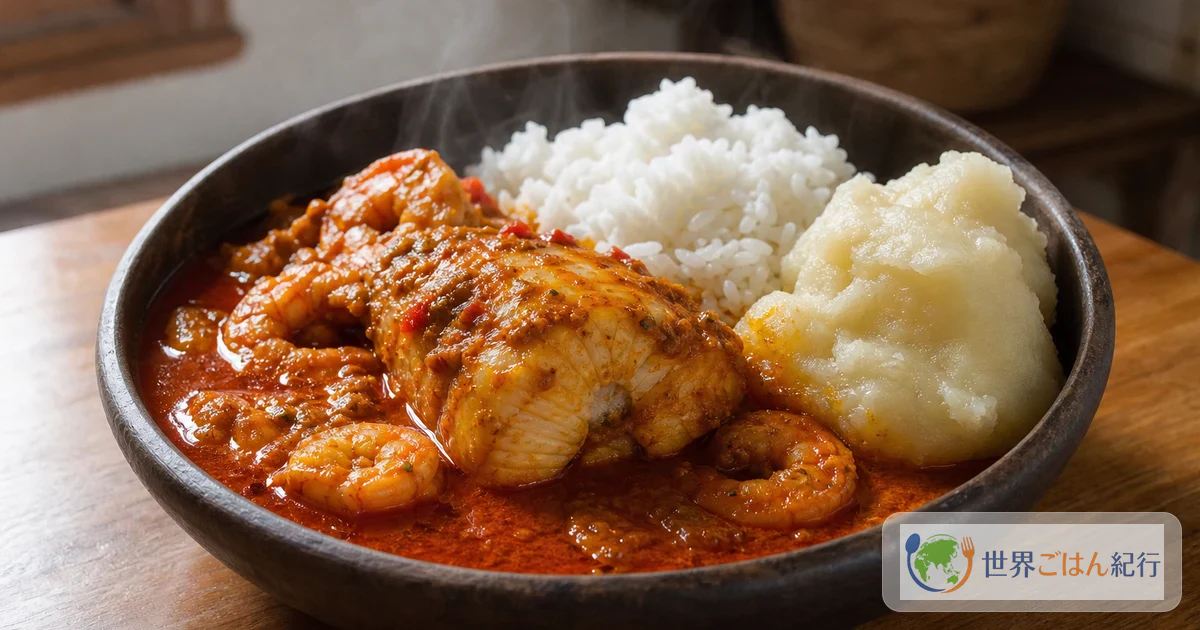
Fish moambe (poisson moambe)
Use 1.25 lb (600 g) of white fish such as cod, sea bass, or tilapia instead of chicken. Fish breaks easily, so skip the searing: once the sauce is simmering, quietly submerge the fish, cover, and cook 15 minutes over low heat. As with thieboudienne, the umami of the fish melts into the sauce.
Vegan moambe
Replace the chicken with 14 oz (400 g) thick fried tofu (atsuage) and 7 oz (200 g) mushrooms. Sear the surface of the tofu before simmering, and you get a texture close to chicken.
Spicy version (Lingala style)
This is the Kinshasa street-stall style. Use 2 habanero peppers instead of pili pili, seeded and chopped, and add 1 tbsp Scotch bonnet sauce too. It has a heat that makes you sweat, and it goes superbly with beer.
Peanut curry version
You can also make it without palm nut cream. Substitute 7 oz (200 g) peanut butter and add 1 tbsp curry powder, 2 tbsp paprika, and 1 tsp turmeric. It's delicious as an "African peanut curry," with a flavor close to mafe.
Nutrition (per serving of 4)
Bone-in chicken makes this a high-protein dish, and the palm nut cream is very rich in beta-carotene (a vitamin A precursor).
| Nutrient | Amount |
|---|---|
| Calories | 580 kcal |
| Protein | 1.5 oz (42 g) |
| Fat | 1.25 oz (36 g) |
| Carbohydrate | 22 g |
| Dietary fiber | 5 g |
| Sodium | 720 mg |
Palm nut cream is high in fat, but most of it is oleic acid (a monounsaturated fat) and palmitic acid. Unrefined palm nut cream is rich in carotenoids, tocopherols (vitamin E), and tocotrienols, which have strong antioxidant action.
More African dishes to cook
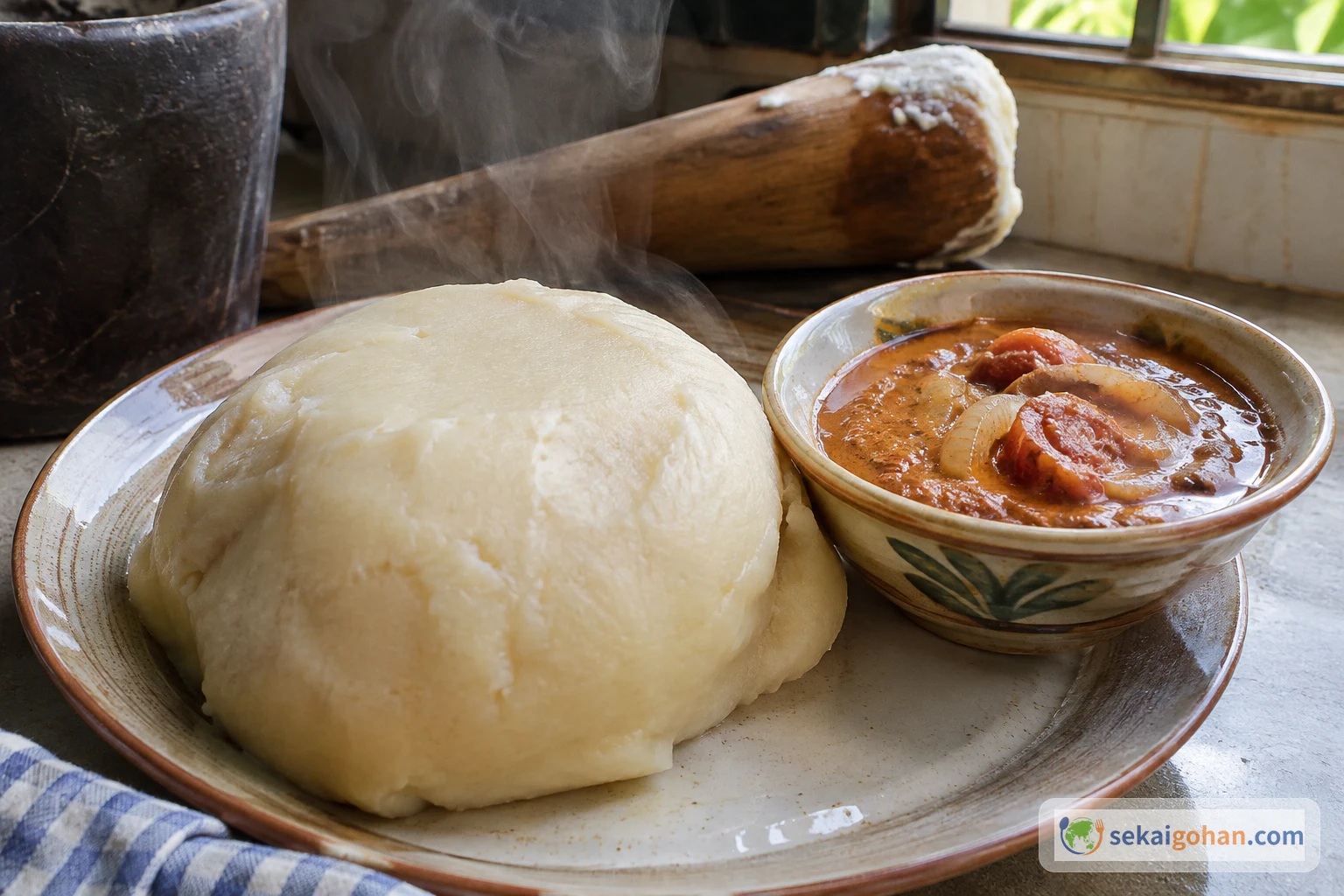
- Fufu: Ghana's pounded cassava and plantain, the traditional accompaniment to poulet moambe
- Jollof rice: Nigeria's tomato-based cooked rice, which also works as a side
- Ndole: Cameroon's national dish, a stew of bitterleaf and peanuts from the same palm oil culture as moambe
- Mafe: Mali's peanut butter stew, built on the same West African technique of stewing with nuts
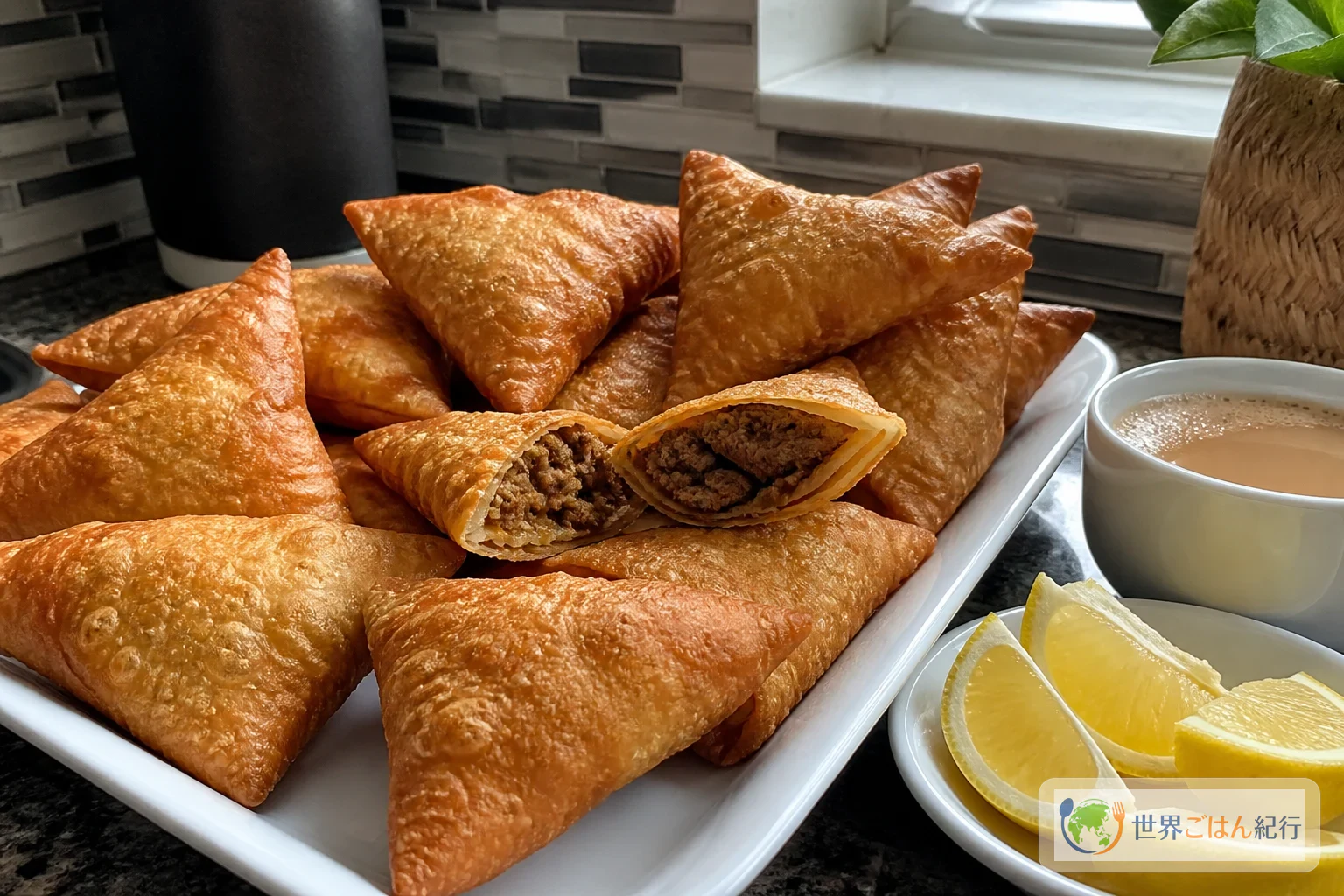
- Babute: a Congolese home dish of baked ground meat and egg
- An introduction to African cuisine, Ethiopian cuisine, and Moroccan cuisine: ingredients and aromas you can reuse from the same region
Frequently Asked Questions
Q1. What should I do if I cannot get palm nut cream?
The easiest substitute is 7 oz (200 g) unsweetened peanut butter, 2 tbsp paprika, and 2 tbsp red palm oil. It won't fully match the earthy richness of palm nut cream, but the richness and the orange color come close. If you like peanut-based stews such as Mali's mafe, it will suit you.
Q2. Can I make poulet moambe ahead?
Yes, and it's even better the next day, once the palm nut sauce has soaked into the chicken and the flavors have come together. It keeps 3 days in the refrigerator; reheat it slowly over low heat. You can also freeze it with the sauce in a zip-top bag for 1 month. Okra gets slimier when frozen, so add fresh okra when reheating.
Q3. How do I adjust the heat?
The heat comes from the pili pili sauce. If you don't like heat, leave it out and make up the color with 2 tsp paprika. If you want it hotter, add 1 to 2 habanero peppers partway through the simmer, or do as the Congolese do and serve pili pili sauce on the side so each person can adjust.
Q4. Are there ingredients other than chicken that make it delicious?
In the Congo, goat, beef shank, tilapia (a freshwater fish), and dried fish are often used as well. Easy-to-find options include lamb chops, beef short rib, and sea bass fillets. For meat, extend the simmer to 45 to 60 minutes; for fish, shorten it to 15 minutes.
Q5. What drinks go with poulet moambe?
In the Congo, beer (Primus, Skol, Turbo King) is the standard, its carbonation and bitterness a good match for the rich palm nut sauce. Without alcohol, ginger beer (a nonalcoholic fermented ginger drink) and maracuja (passion fruit juice) go splendidly. A dry white wine or a barley shochu with soda also lightly washes away the weight of the sauce.