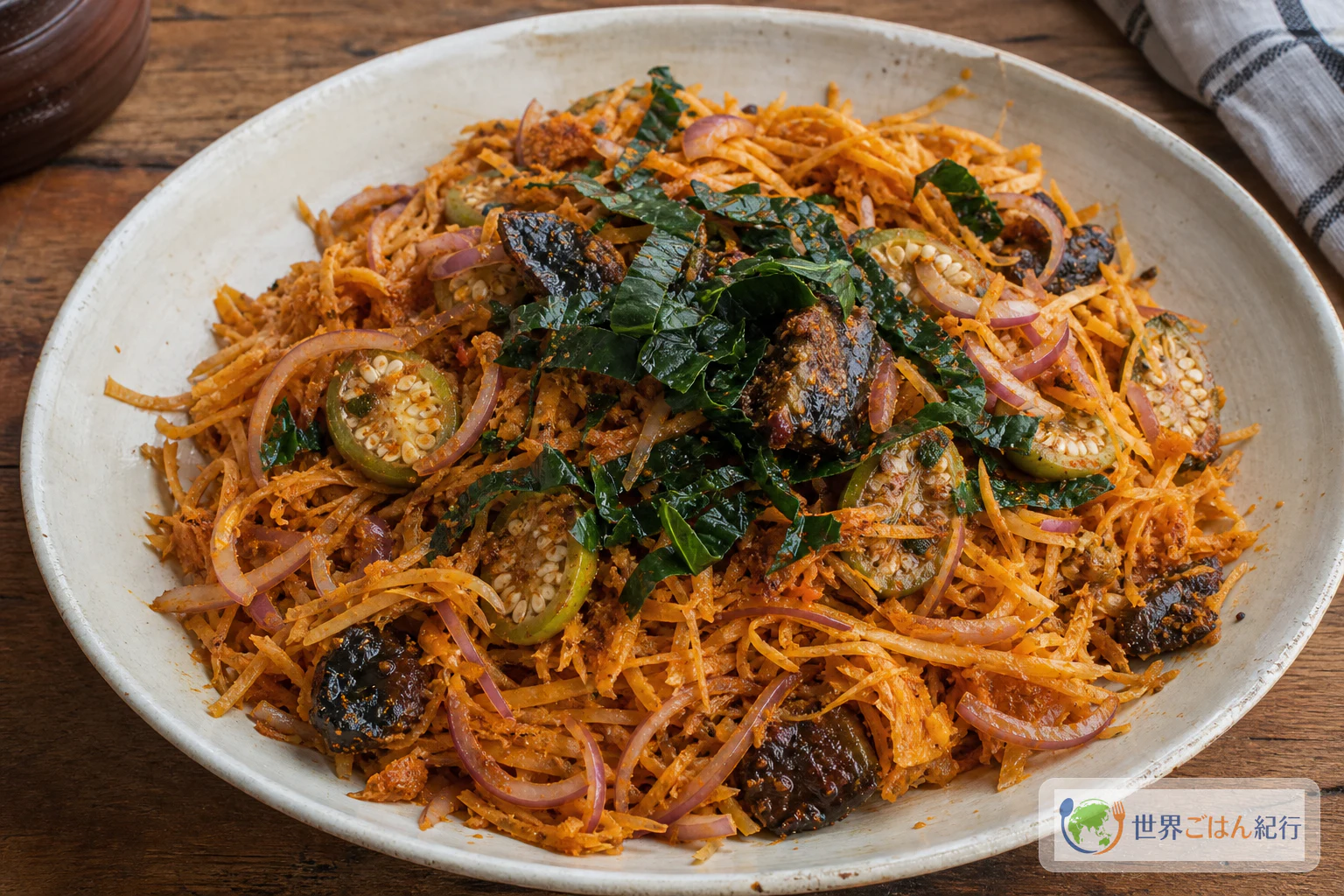
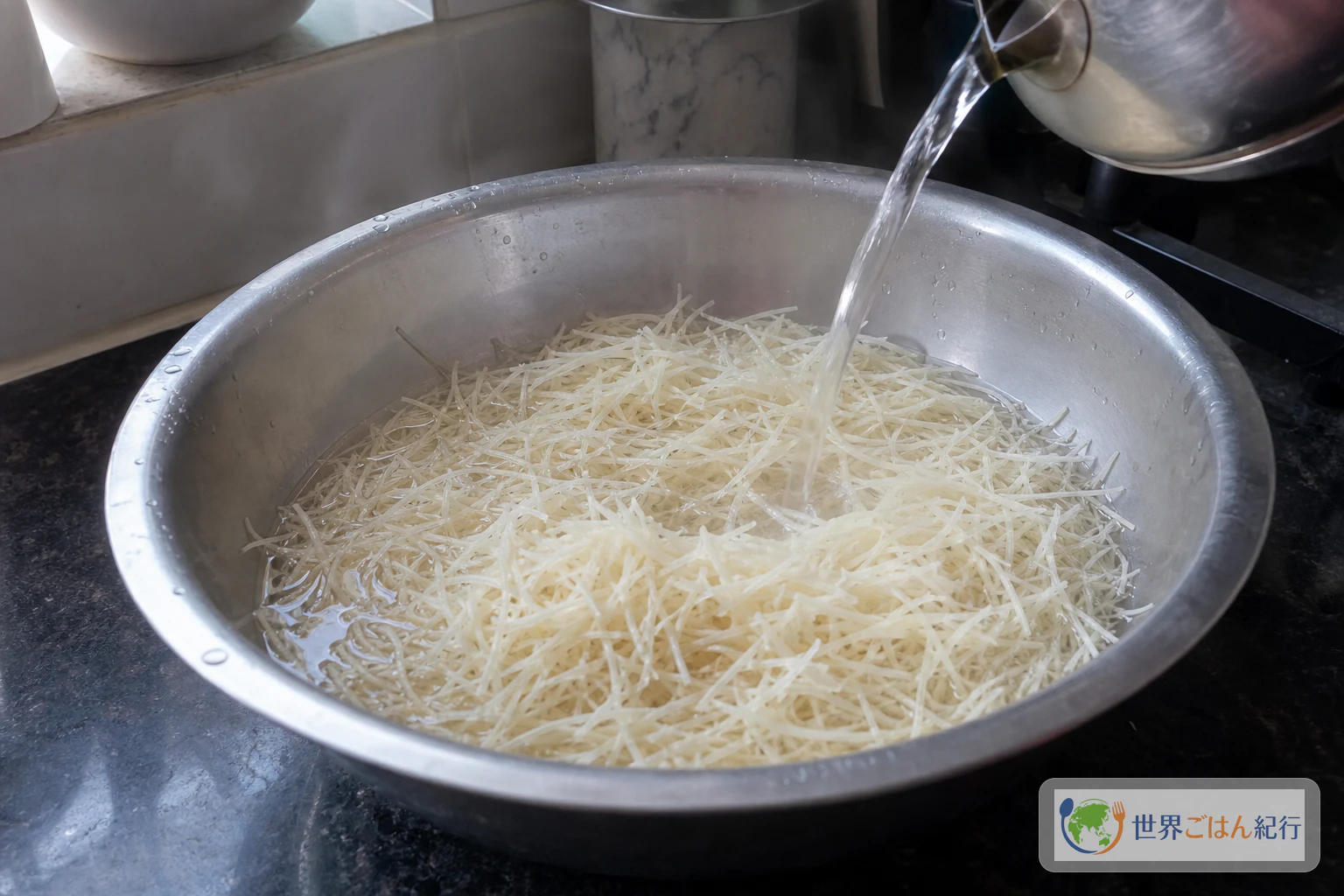
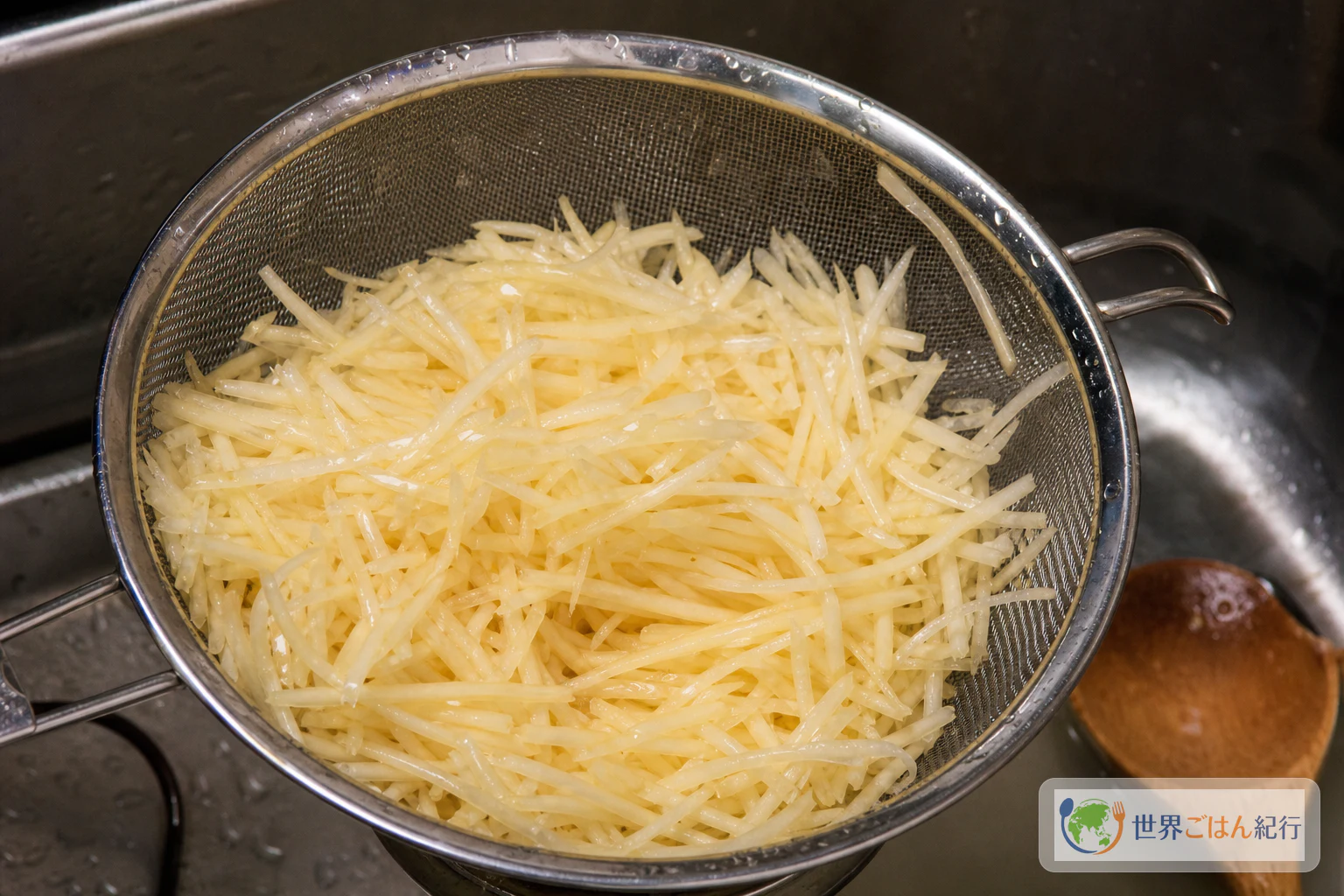
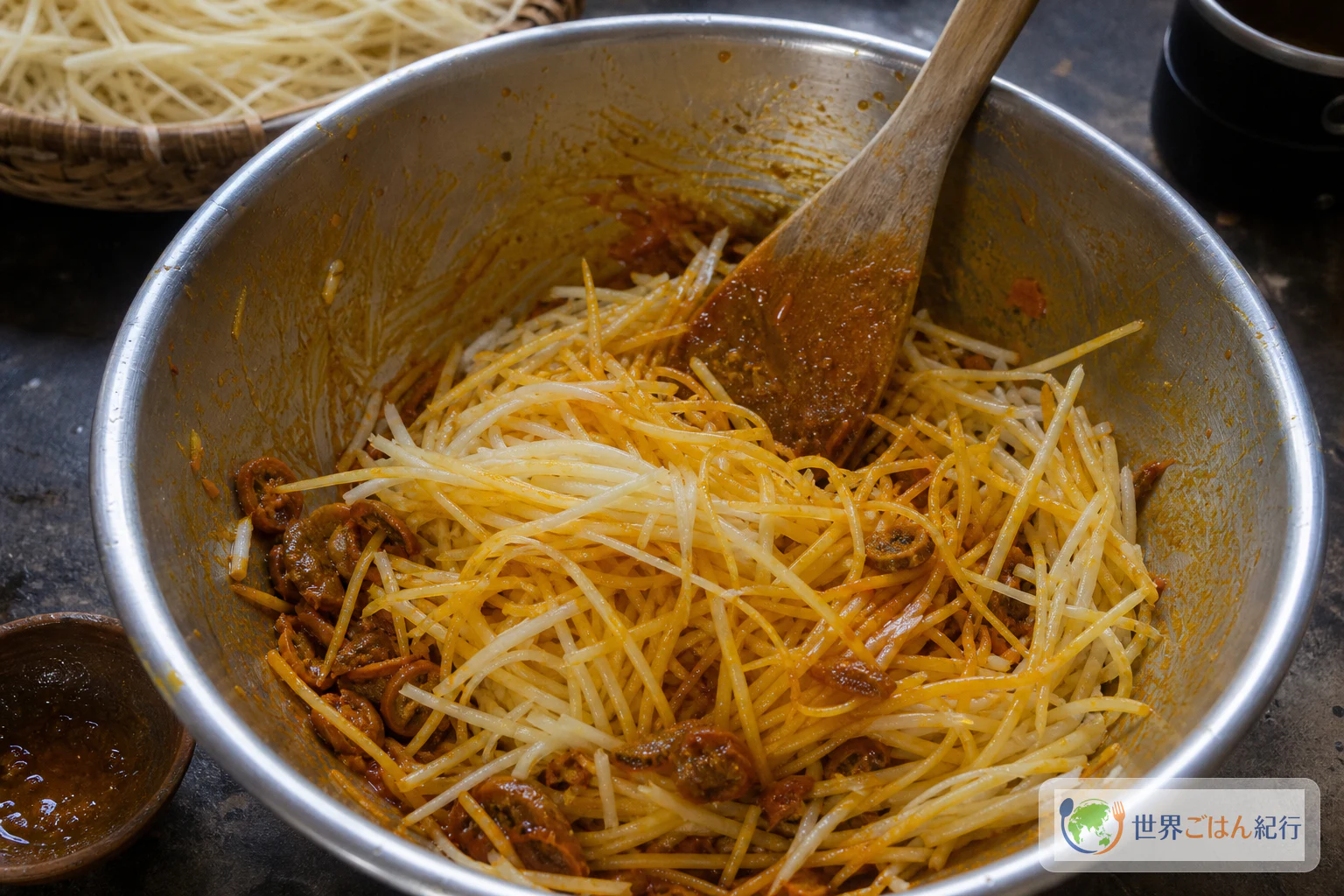
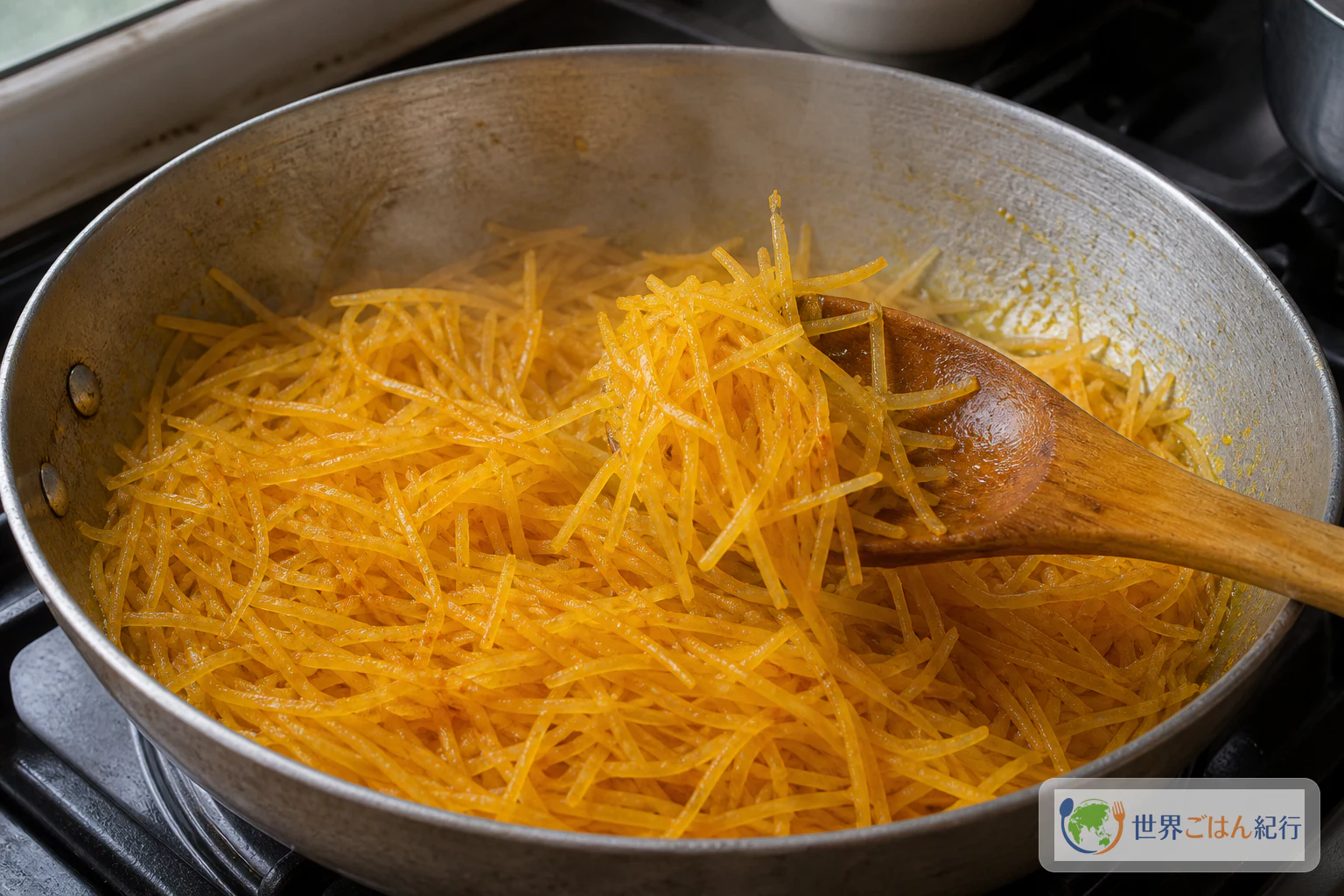
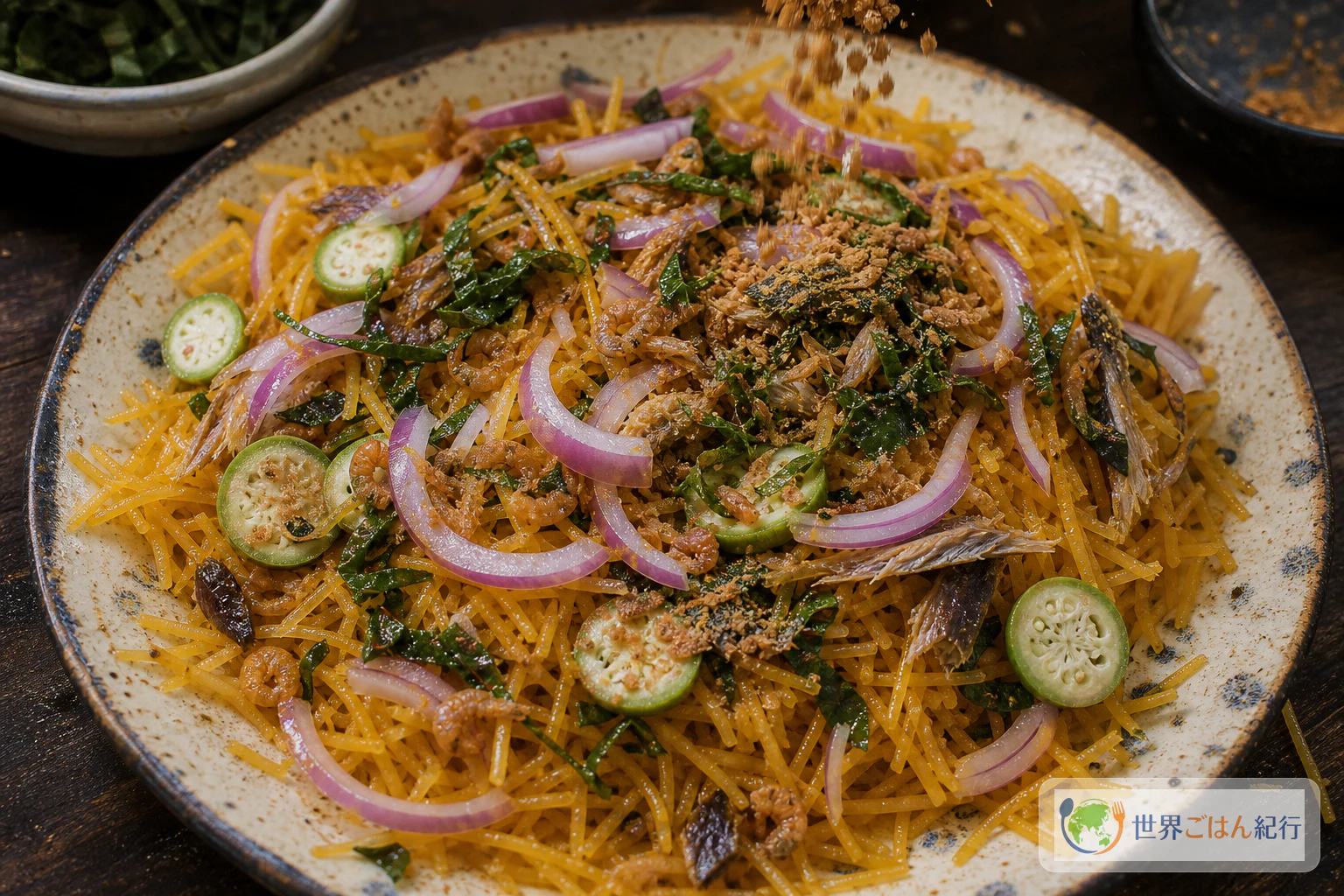
Pour hot water over a bundle of dry cassava strands and a sweet, root-vegetable smell lifts off the bowl. The pale, ribbon-like strands soften, and the moment they pick up red palm oil the plate turns the color of a Nigerian street stall. This is abacha, a cassava dish from southeastern Nigeria, tossed with dried seafood, onion, chili and greens until it is savory, a little bitter and rich with oil. Nothing here simmers for hours. The dish comes down to how you rehydrate the cassava, how you toss it and how well the oil emulsifies.
What Abacha Is
Abacha is best known among the Igbo of southeastern Nigeria. Dried, shredded cassava is rehydrated and tossed with red palm oil, ground crayfish, dried fish, ugba (fermented oil bean), onion, chili and leafy greens. In English it often goes by African Salad, which makes it sound like a light side of raw vegetables. In practice it is a filling cassava plate that gets its savory depth from oil, seafood and fermented beans.
"Abacha" is the name of the dish, and it also refers to the dried shredded cassava used as an ingredient. It is also called African Salad, but think of it as a staple of cassava tossed in red palm oil, with the cassava, not the leaves, as the star.
Cassava is one of the key staples at West African tables. It can be eaten as a flour or paste, as in fufu and eba, or shredded, dried, rehydrated and tossed, as in abacha.
Within Nigerian cooking, abacha sits apart from its neighbors. Jollof rice is about the toasty depth of rice and tomato, egusi soup is a rich soup of ground seeds and greens, and akara is a breakfast of fried black-eyed peas. Abacha is a rehydrated staple eaten with oil and dried seafood, a different doorway from the charred-meat appeal of suya.
Ingredients (serves 4)
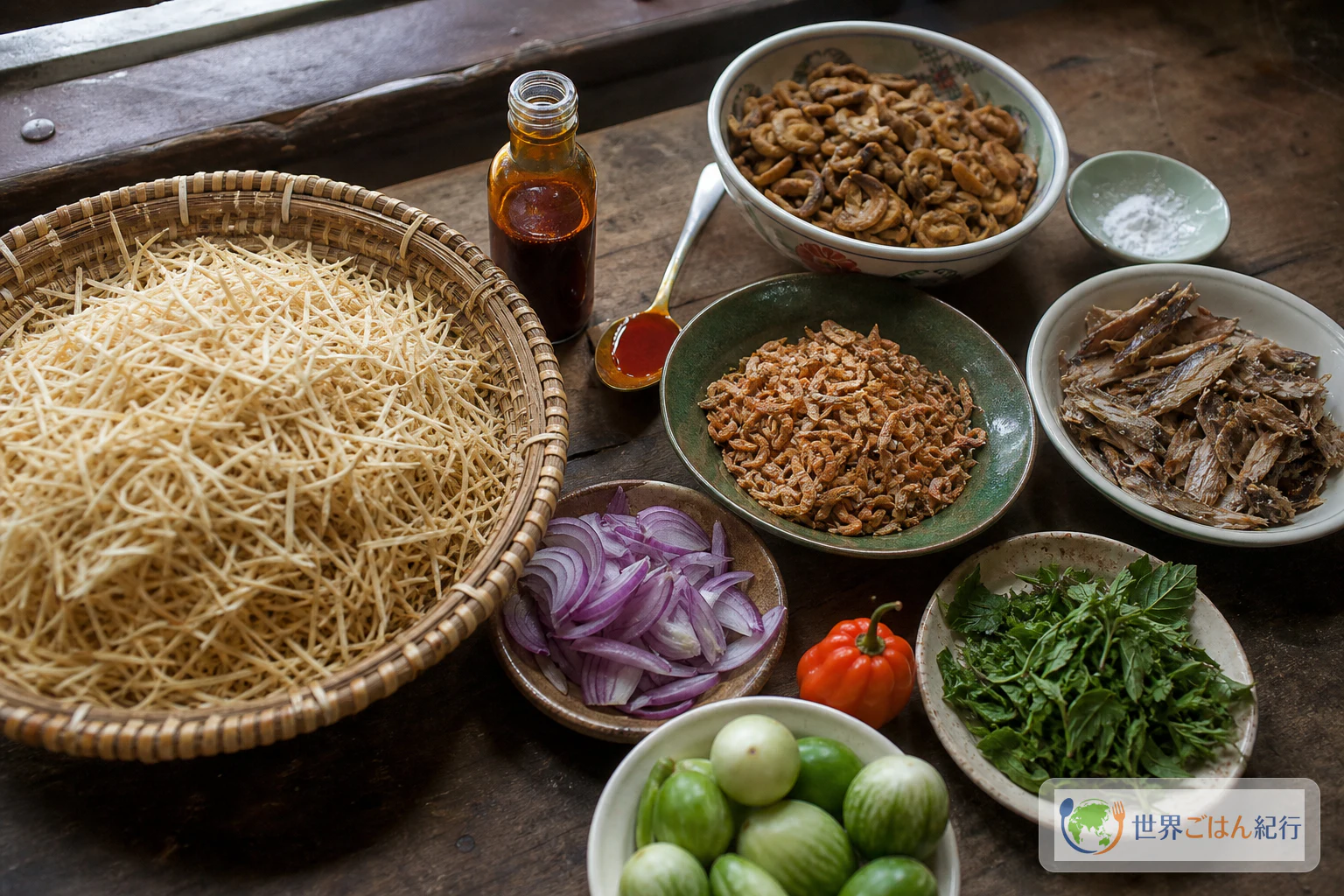
This recipe uses fish, shrimp, peanuts, a fermented food, and chili. If anyone at the table reacts to shellfish, fish, or nuts, keep those ingredients out from the start instead of just serving them on a separate plate. Use commercially sold, food-grade dried cassava. Do not try to grate and dry raw cassava at home, and do not use kaun or potash unless they are clearly labeled as food-grade.
Nutrition estimate
One serving is roughly 360 kcal, 9 g protein, 18 g fat, and 1.5 oz (44 g) carbohydrate. Cassava is the star, so it fills you up much like rice, but the red palm oil and peanuts push the fat up. For a dinner, avoid stacking it with other oil-heavy dishes such as fufu or groundnut soup at the same table; adding greens and something sour makes the meal easier to finish.
Choosing Ingredients and Substitutes for Abacha
What to shop for
Look for dried abacha at African grocery stores or through international online sellers. Onion, cucumber, eggs and fish are easy to find at any supermarket, so the ones worth hunting down are red palm oil and dried seafood.
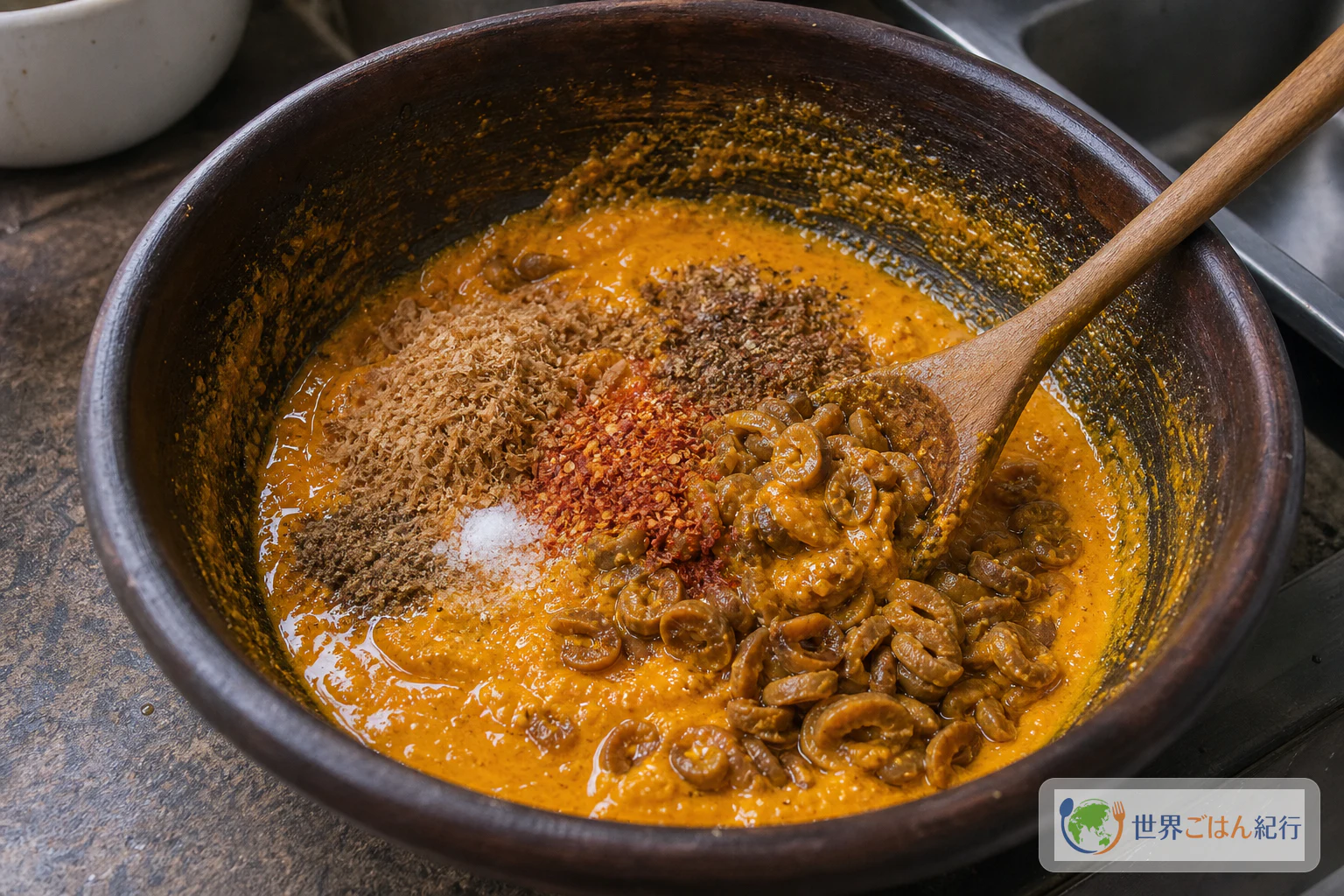
Red palm oil sets the color, aroma and body of abacha. You only need a little, since it is there for character, so a small bottle is the realistic choice. Ground crayfish gives Nigerian cooking its savory taste of the sea, and dried shrimp ground in a spice mill plays nearly the same role. If shellfish is fine for everyone at the table, keep it in: it is what pulls the flavor together.
Substitutions
Three things make abacha what it is: shredded dried cassava, red palm oil and the savory depth of dried seafood. The supporting ingredients (ugba, efu, utazi and garden egg) can bend.
| Ingredient in doubt | Role to protect | Realistic substitute |
|---|---|---|
| Dried abacha | Supple shredded cassava | Look in African grocery stores or online. Cassava flour will not give the same texture |
| Red palm oil | Color, aroma, body of the oil | Hard to replace. Even if you cut back, keep at least 3 tbsp |
| Ugba | Savory depth and bite of fermented beans | Toss 2.75 oz (80 g) sliced rehydrated dried shiitake with 1/2 tsp fish sauce |
| Efu | Sweet, resinous aroma | A tiny pinch of nutmeg (about an ear-pick scoop). Too much tastes like a sweet |
| Utazi | Bitterness and green aroma | 8 g arugula plus 2 shiso leaves. Komatsuna alone is not bitter enough |
| Garden egg | Juicy bitterness | A little thinly sliced cucumber or small eggplant |
| Kaun, potash | Alkali that emulsifies the oil | Use only food-grade ones. 1/8 tsp baking soda is enough at home |
If you can't get dried abacha, skip glass noodles and dried daikon strips. They can look similar, but you lose the cassava's stickiness and root aroma, and then it is hard to call it abacha. Make akara or jollof rice that day, and cook abacha once you have the dried cassava. Cassava flour products for fufu or eba are a separate staple, good alongside egusi soup and groundnut soup.
Kaun and cassava safety
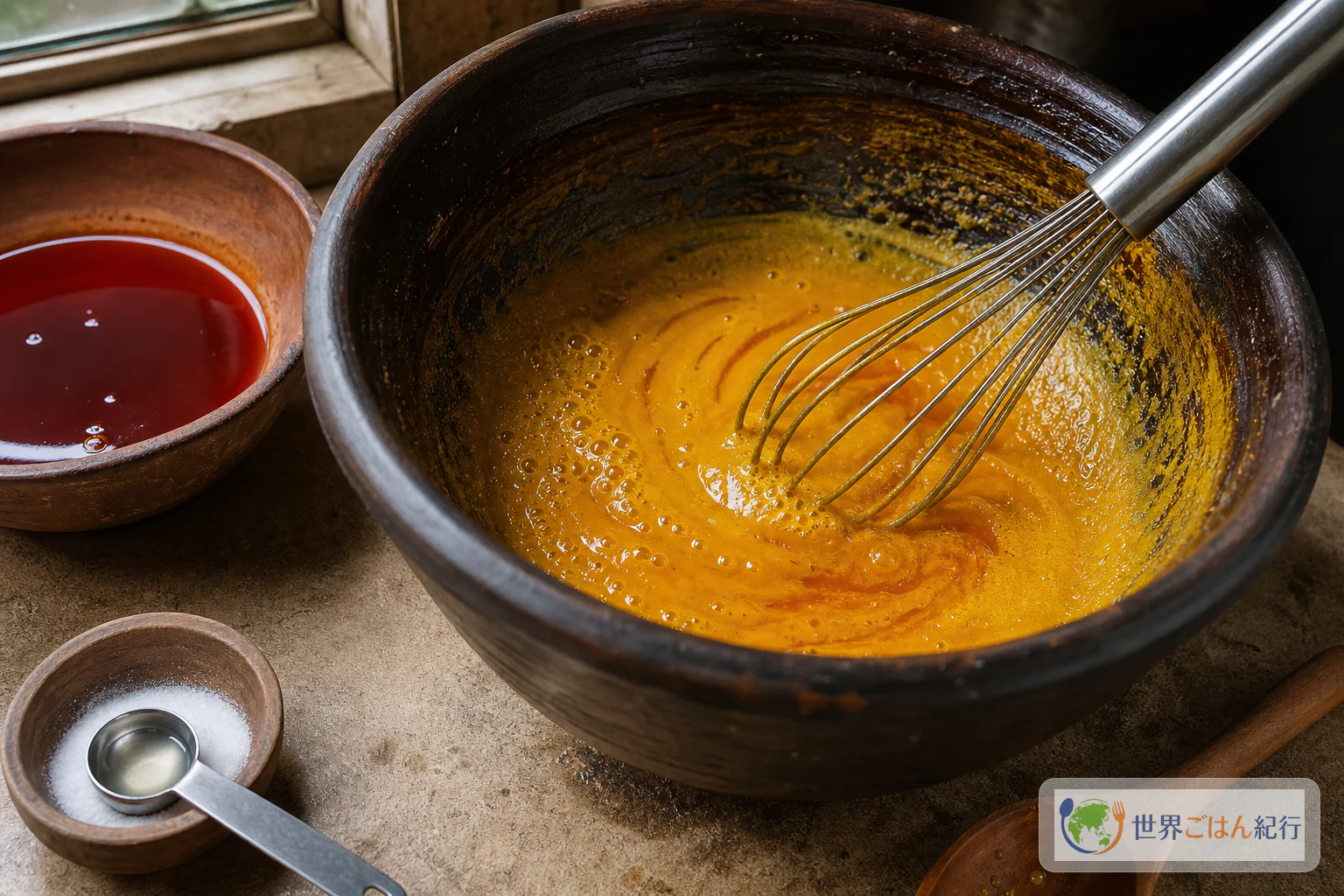
Local recipes often use kaun or potash to emulsify red palm oil to a yellowish color. At home, skip any alkaline agent whose composition or food-grade status you cannot confirm; a small amount of food-grade baking soda, mixed in until the oil turns cloudy, does the same job.
Cassava must be properly processed. Use commercially sold, food-grade dried abacha, rehydrate it as the label says, and throw out any that smells strongly bitter or off.
Method
Abacha is not a dish you simmer for a long time to let flavor soak in. Over-rehydrated cassava snaps, and if the oil is not emulsified, only red oil is left at the bottom of the plate. The only heat comes at the end, and it is gentle, so watch the moisture and temperature at each step.
Why Abacha Goes Wrong
You'll know it worked when the cassava is intact, no oil is left at the bottom of the bowl, and the onion and leaf aromas keep you going back for another forkful. If not, here's where to look.
The cassava turns mushy and breaks
The water was too hot or the soak was too long. Bend a strand at 8 minutes to check; thin strands need about 8 minutes and thick ones about 10. Squeezing hard after soaking breaks it, so let it drain naturally in the sieve for 5 minutes.
Only red oil pools at the bottom
Either the oil is not emulsified or the cassava is too wet. Add the baking-soda water 1 tsp at a time. Add the dried seafood only after the oil has gone cloudy orange, and toss in the abacha in three batches at the end to prevent separation.
The shrimp smell is too strong
Coarse shrimp powder, or too much of it, causes this. The first time, cap it at 12 g, grind it fine and blend it into the oil first. If someone dislikes seafood aroma, start with 8 g dried shrimp and 1.5 oz (40 g) smoked fish.
Too bitter
Utazi or its substitute leaves, efu, or red palm oil is coming through too strongly. Bitterness is part of abacha's charm, but the first time, keep the leaves to 10 g and the nutmeg substitute to a tiny pinch. Old red palm oil smells sharp, so store it in a cool, dark place after opening and discard any that smells oxidized.
Too spicy
Scotch bonnet is strong even in a small piece. When serving a family, leave fresh chili out of the oil and use only 1/4 tsp chili flakes. Hot sauce added at the table makes it easier to share with children and older relatives.
Serving and Storing Abacha
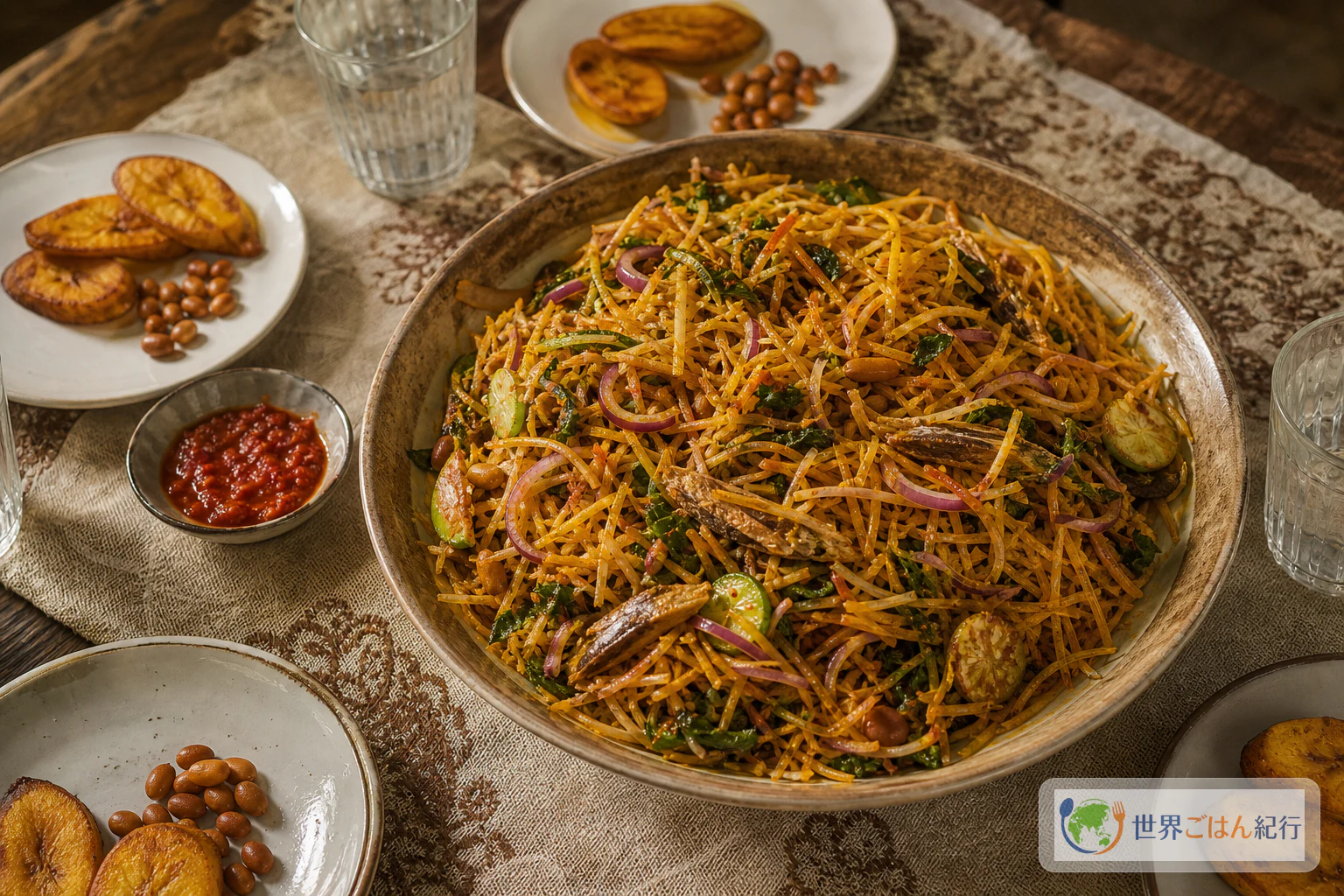
Abacha is at its best somewhere between warm and room temperature, when the aroma of the oil and cassava comes up. At the table, put sliced onion, leafy greens, boiled egg, peanuts and hot sauce on separate plates so each person can add a little at a time.
| Occasion | Combination | Result |
|---|---|---|
| Light lunch | Abacha, boiled egg, onion, lime | Acidity cuts the oil's aroma; eaten as a staple |
| Street-stall style | Abacha, peanuts, hot sauce, cucumber | Crunch and heat; leans toward a snack or light meal |
| Nigerian menu | Abacha, suya, sautéed greens | Adds the charred flavor of meat. The oils stack up, so keep portions modest |
| West African menu | Abacha, a little fufu, groundnut soup | Cassava and nuts overlap, so add greens and acidity |
When you want more from the same kitchen, make suya for charred meat skewers another day, or move on to a rich egusi soup.
| State | Storage guideline | Reheating |
|---|---|---|
| Freshly made | Within 2 hours | Eat warm or at room temperature |
| Refrigerated | Until the next day | Microwave 40 seconds at 600 W, stir, then 1 minute over low heat |
| Frozen | Not recommended | The cassava breaks and the oil tends to separate |
| Components prepped the day before | 1 day | Store onion, leaves, and eggs in separate containers |
Because abacha uses dried seafood and fermented ingredients, keep it out of long stretches at room temperature in summer. To make it ahead, rehydrate the cassava on the day itself and keep the onion, leaves, boiled egg and peanuts in separate containers, which also prevents sogginess and odor transfer.
FAQ
Q1. What can I use if I can't find dried abacha?
Nothing really matches the texture. Glass noodles are too slippery, and dried daikon strips bring too much sweetness and fiber. Search international grocery stores or online sellers for "abacha," "African Salad cassava," or "dried cassava flakes."
Q2. Can I make a non-spicy abacha?
Yes. Keep the chili out of the oil and use only 1/4 tsp chili flakes, or serve hot sauce on a separate plate. With the dried seafood, red palm oil, onion and the bitterness of the leaves, the dish holds together even with little heat.
Q3. Can I make it without ugba?
You can, but the aroma and bite of fermented beans will be weaker. The shiitake and fish sauce substitute fills in some of the missing savory depth. Natto pushes the aroma strongly in a different direction, so leave it out of this dish.