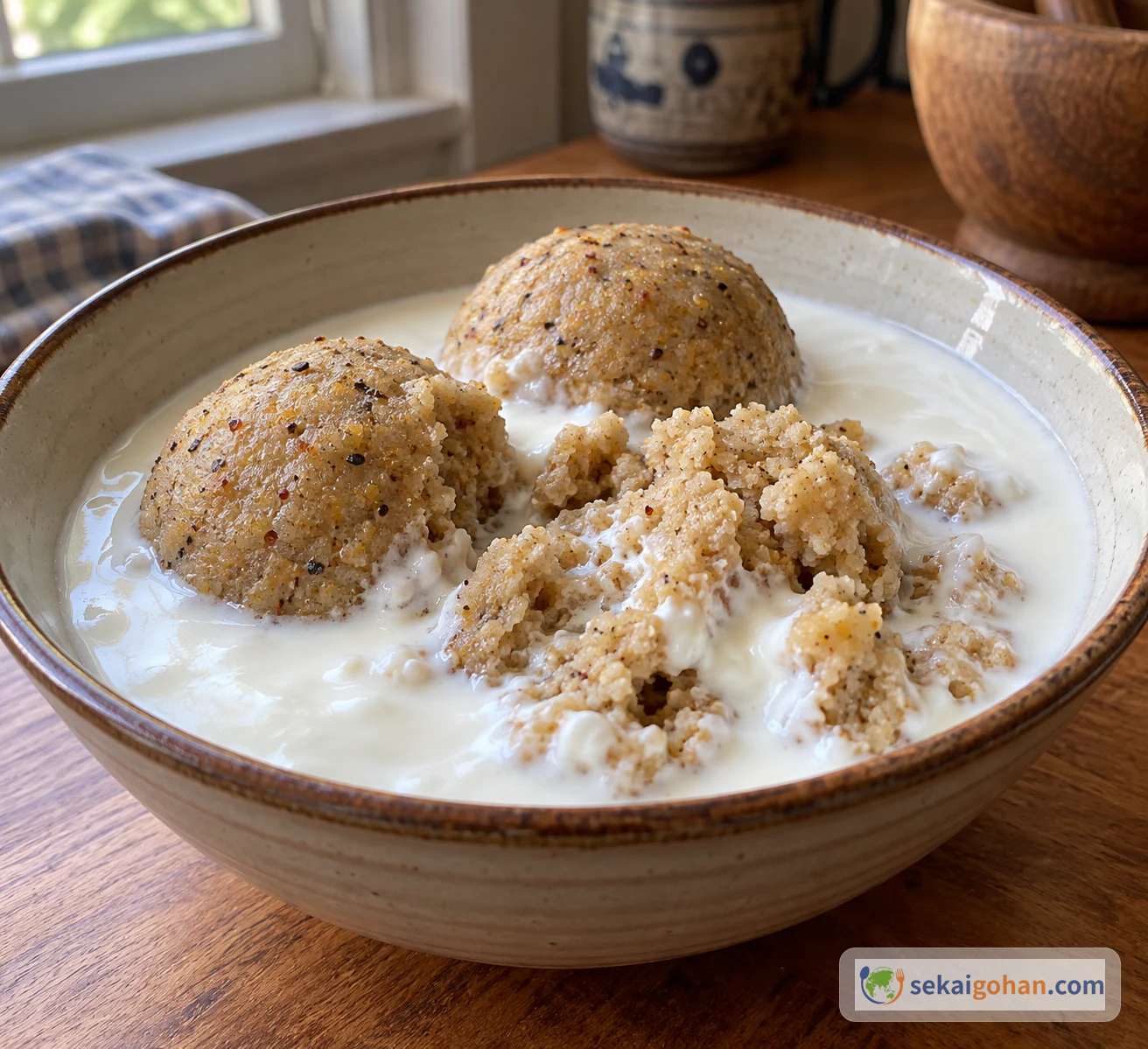
When you grind soaked beans in the morning, a faintly green smell of dried beans rises from the bowl. Onion and chile go in, and as you beat the batter with a wooden spoon it turns paler and lighter. Dropped into hot oil, each spoonful puffs, floats and turns golden bit by bit in a cloud of fine bubbles. That's akara, the black-eyed pea fritter Nigerians eat for breakfast, as a snack and from street stalls: a thin, crisp shell around a soft center that still tastes sweetly of beans.

Nigerian Akara and Its Relatives
Akara is made by grinding peeled black-eyed peas and frying them. In Nigeria it comes with pap (also called ogi or akamu), a fermented corn porridge, or with soft bread. Compared with other Nigerian dishes, such as toasty jollof rice, peanut-and-chile suya or rich, melon-seed egusi soup, akara has the fewest ingredients. That puts the whole skill in frying the beans so they stay light.
Close relatives turn up across West Africa. In Ghana the fritter goes by names like koose, kosai or akla and is eaten at breakfast or as a snack. In Bahia, in northeastern Brazil, the African bean fritter crossed the Atlantic and became acarajé. That dish is fried in strongly aromatic dendê oil and stuffed with vatapá, dried shrimp and vegetables, so it calls for different shopping and a different order of work. Basic Nigerian akara is simply black-eyed peas, onion, chile and salt, fried in vegetable oil.
| Name | Main region | Oil and how it is eaten | How to separate them at home |
|---|---|---|---|
| Akara | Nigeria | Fried in vegetable oil, eaten with pap or bread | The easiest form to make the first time |
| Koose, kosai | Ghana and elsewhere | Breakfast or snack fritter | Same bean shelf as red red and waakye |
| Acarajé | Bahia, Brazil | Fried in dendê oil and stuffed | Requires red palm oil, dried shrimp and coconut-based items |
Ingredients (serves 4)

The main ingredient is beans, but people who react to soy, peanuts or other legumes should be careful. If you share frying oil, also check for contamination from wheat, egg, milk and seafood. Chile is strong even in small amounts, so on days when you eat with children or older family members, leave it out of the batter and add it at the table.
Ingredients and tools for this dish
Akara has so few ingredients that what is worth looking for online or at a specialty store is the black-eyed peas and the tools. If you limit shopping to the things that make the beans light, rather than everyday items like meat or milk, they can carry over to your next Ghanaian or Nigerian dish.
If you grind black-eyed peas in a mortar every time, akara becomes a bit too much of an undertaking. A small food processor that can make a thick batter also doubles for the aromatic pastes of sambal and soto ayam.
If you are not used to deep frying, a thermometer is a tool for flavor. Below 350°F (170°C) the fritters soak up oil; above 350°F (180°C) only the outside darkens and the bean batter at the center stays heavy.
Choosing Ingredients and Substitutes for Akara
Akara is made almost entirely of beans, so too many substitutions turn it into a different bean dumpling. Knowing what to hold onto and where you can bend makes the first attempt much less stressful.
| Point of doubt | What to keep | Realistic solution |
|---|---|---|
| No black-eyed peas | The lightness of dried black-eyed peas | Look online or at a specialty store rather than switching to white beans |
| Peeling is hard work | The mouthfeel and lightness | 80 percent removed is enough. Rub in water and pour off the floating skins several times |
| The chile is too hot | Aroma and a little bite | Start with 1/4 habanero. For the family, leave it out of the batter and serve it on a separate plate |
| No pap | A staple to take up the oil | Cornstarch porridge, fine cornmeal porridge, soft bread |
| No mortar | A thick paste and air | Make it thick in a food processor, then beat in a bowl to add air |
Method
Akara failures cluster in three places: watery batter, too little air and low oil temperature. If you soak the beans the night before and add the salt just before frying on the day, the schedule becomes much easier.
Common Akara Problems and Fixes
It sinks in the oil
The batter is heavy, the oil is too cool or there is too much water. Bring the oil back to 350°F (170–175°C) and beat the batter for another 1–2 minutes. If it is still loose, let it sit in a strainer for 5 minutes to drain. Flour dulls the bean flavor, so your best defense is keeping the water down from the start.
Dark outside, heavy center
The oil is too hot or the pieces are too big. Keep them small, a little more than 1 tbsp, and aim for 2 1/2–3 minutes per side over medium heat. If the outside colors too fast, turn the heat down slightly and let the oil settle for about 30 seconds before the next batch.
Soggy and greasy
This usually means the oil was too cool. Large, sluggish bubbles are the giveaway, so wait until the oil is properly hot and fry fewer pieces at a time. Drain them on a rack rather than straight on a plate, and the bottoms stay crisper.
Serving and Storing Akara
For a Nigerian-style breakfast, put akara, pap, bread and chile sauce on the table together. Outside Nigeria, think of pap as a warm grain base rather than something to re-create perfectly: stir cornstarch into hot water with a little sugar or milk, and you have a soft bed to soak up the oil from the fritters. At lunch, the acidity of tomato, cucumber and onion makes a lighter plate than a side of jollof rice.
| Occasion | Combination | Result |
|---|---|---|
| Closer to a local breakfast | Akara, pap, chile sauce | Warm porridge softens the heaviness of the oil |
| A morning meal at home | Akara, dinner rolls, cucumber, tomato | Tucks into bread, easy for children. Serve heat on a separate plate |
| A light lunch | Akara, onion-tomato acidity, lemon | Cuts the oil and eats like a salad |
| A West African menu | Akara, a little jollof rice, sautéed greens | Rice, beans and vegetables together; keep portions modest since it's fried |
Akara loses its crust as it cools, and the center turns dense. If you make it ahead, cool it completely and store the pieces without overlapping. To reheat, finish in a toaster oven rather than relying on the microwave alone, so the surface crisps up again.
| Condition | Storage guide | Reheating |
|---|---|---|
| Freshly fried | Finish on the spot | Rest 3 minutes and eat hot |
| Refrigerated | Until the next day | Toaster oven or 350°F (180°C) oven for 6–8 minutes |
| Frozen | 2 weeks | Half-thaw in the refrigerator and reheat at 350°F (180°C) for 8–10 minutes |
| Batter | Not recommended for storage | Fry as soon as the salt goes in |
FAQ
Q1. Can I make it with canned beans?
I don't recommend it. Canned beans are already cooked and hold a lot of water, so the batter won't come together or turn light. Start from dried black-eyed peas, soaked, skinned and ground.
Q2. Should I fry it in red palm oil?
A mild vegetable oil is the basic choice in Nigerian home kitchens. Red palm oil brings a stronger aroma and color and pulls the dish toward Brazilian acarajé. For your first batch, use vegetable oil and get a feel for how light the beans can be.
Q3. Can I use a blender instead of a food processor?
Yes, but resist adding extra water to get the blades turning; that's where it goes wrong. Blend the beans a little at a time, stopping to scrape down the sides. A thick batter with a few grains left suits akara better than a perfectly smooth liquid.
Q4. What can I do with leftover black-eyed peas?
Use them in Ghana's red red or waakye. And next time you make akara, try pairing it with egusi soup or suya for a fuller Nigerian spread.