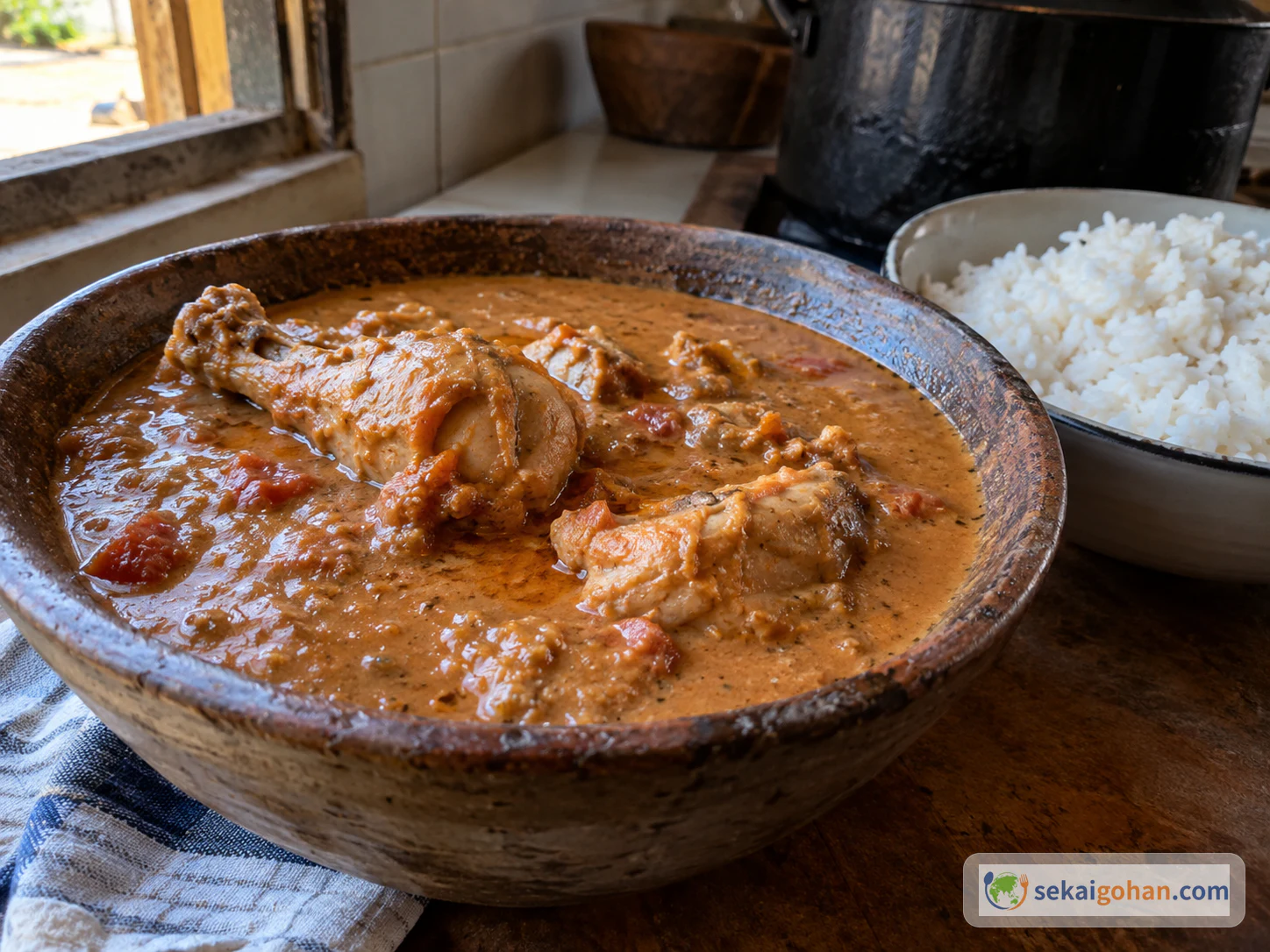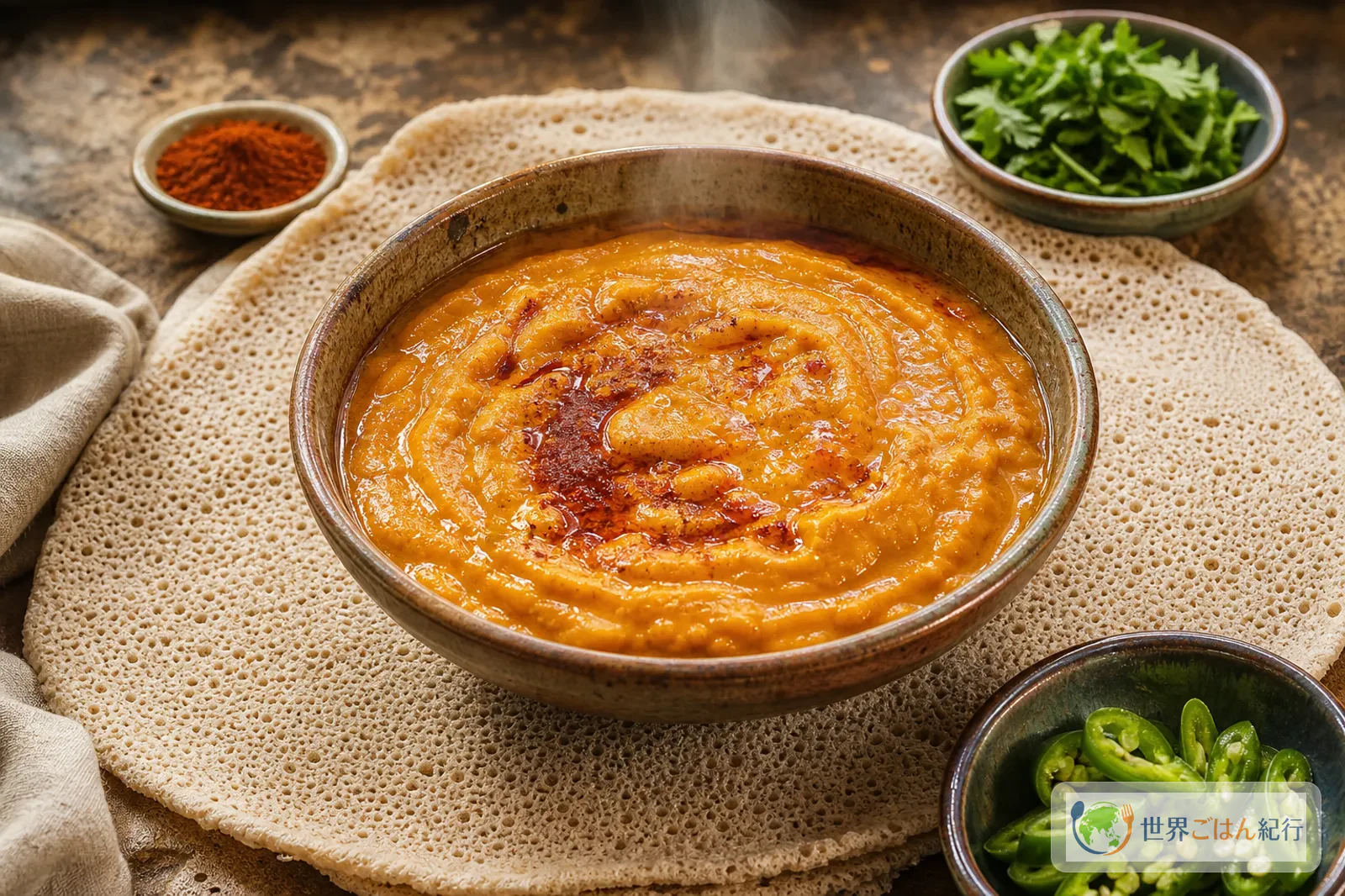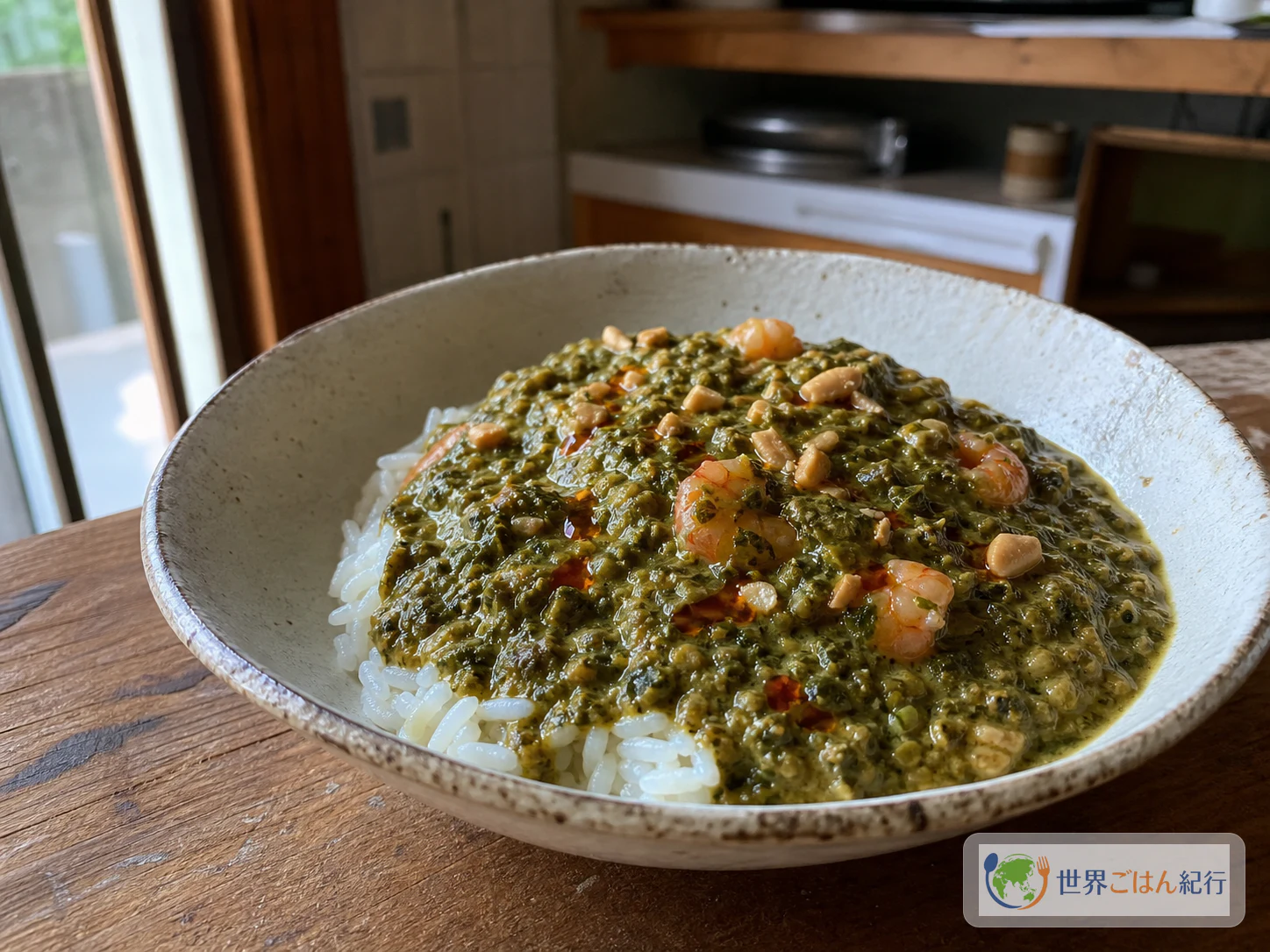
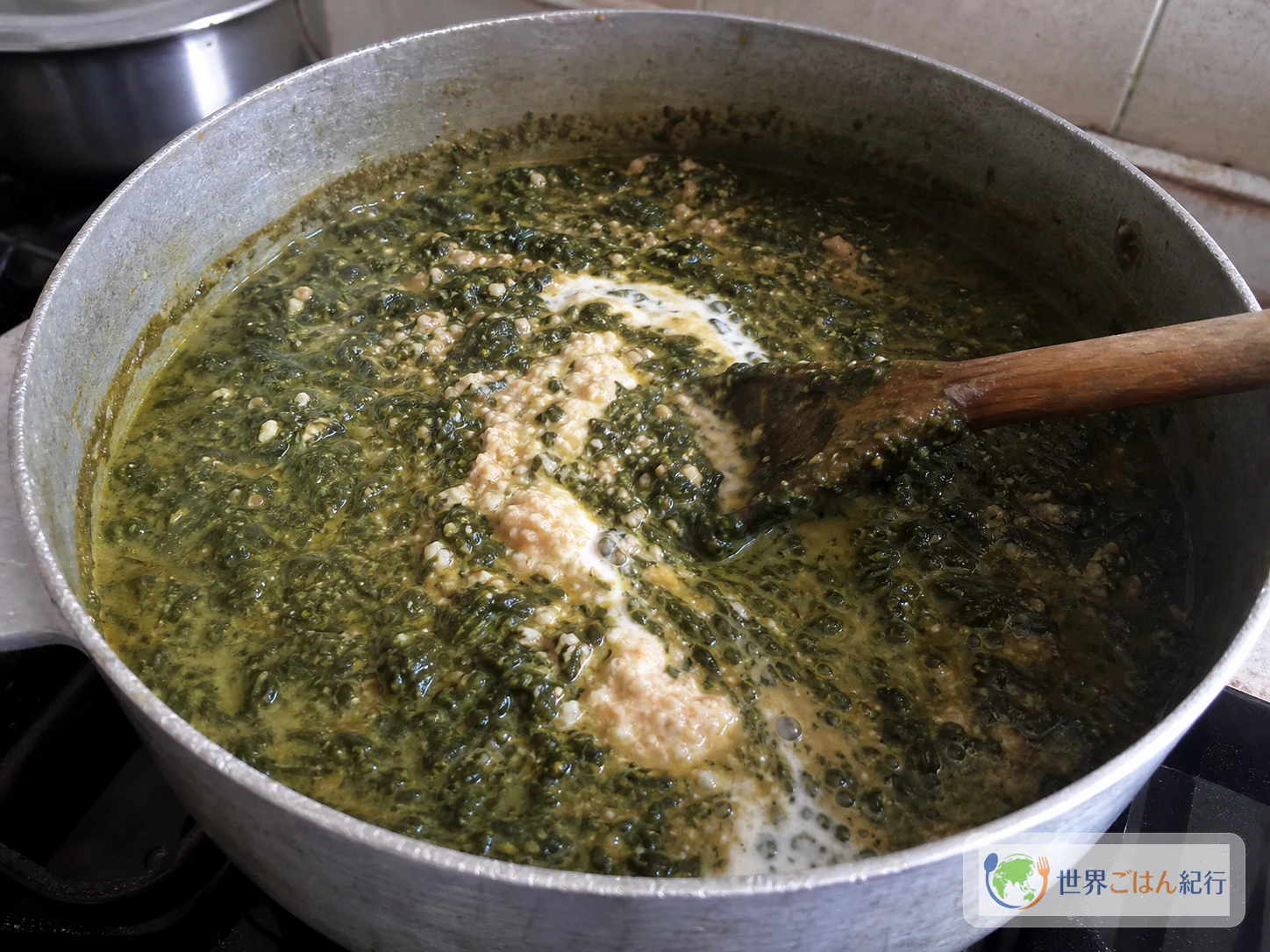
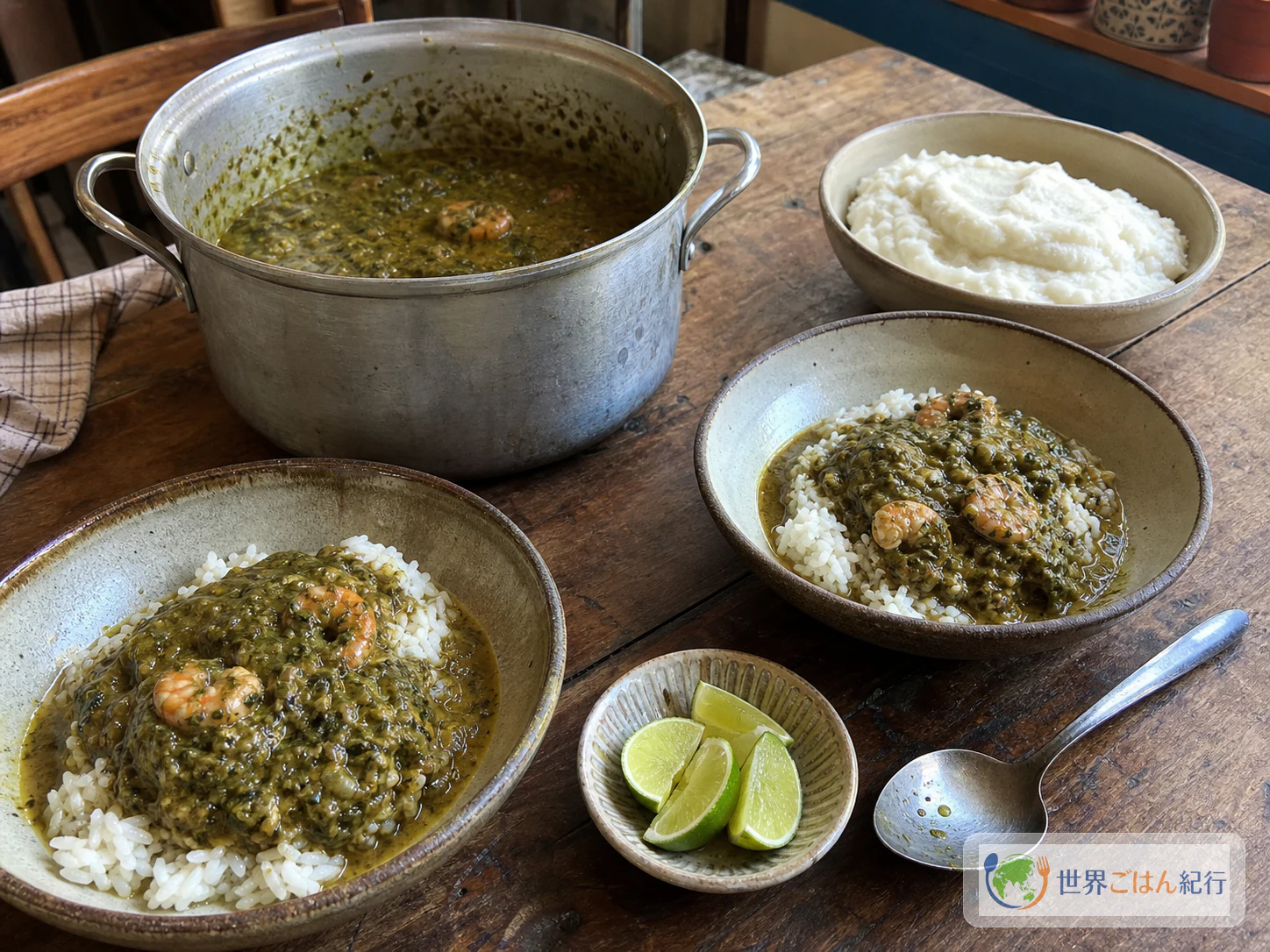
Lift the lid and the first thing to rise isn't the sweet smell of coconut but a green steam from chopped leafy greens. Stir in unsweetened peanut paste slowly with a wooden spatula, and the white sauce turns green; when a line drawn across the bottom of the pot holds for just a moment, the matapa is ready to come off the heat. This Mozambican stew pairs pounded leaves with peanuts and coconut, finished with shrimp or crab. Eaten with rice or xima, a staple made from cornmeal and similar flours, each bite brings the slight bitterness of the leaves, the roundness of the nuts and the savoriness of seafood. You'll find matapa, xima and seafood side by side on the Mozambique food page.
Matapa in Mozambique
Origin and the traditional method
Mozambique faces the Indian Ocean in southeastern Africa, and its coastal cooking has been shaped by Portuguese, Arab and African traditions, so no single flavor represents it. Matapa is built on cassava leaves, peanuts, coconut and seafood. The leaves, nuts and coconut are constant; the seafood and the staple served alongside change.
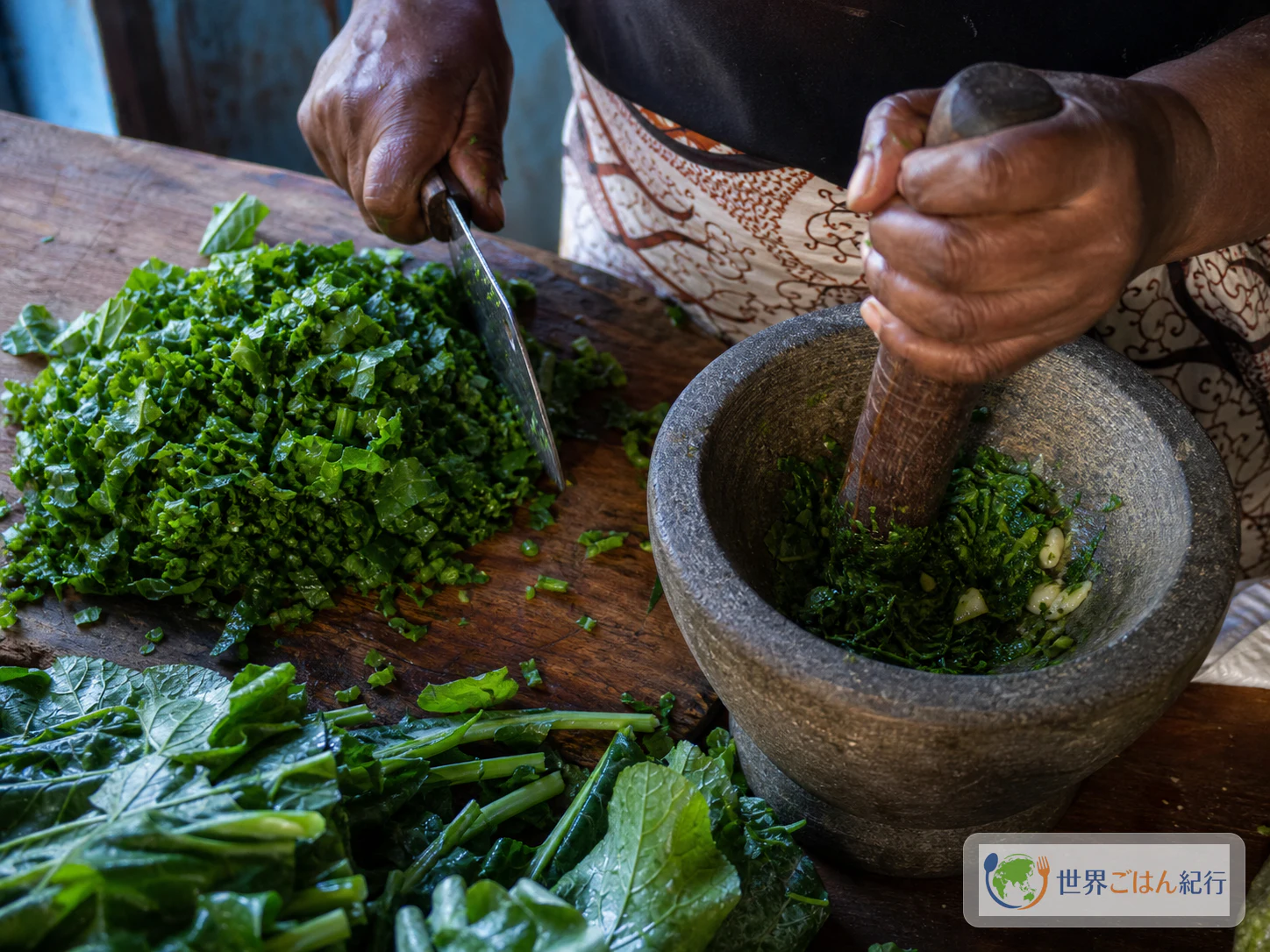
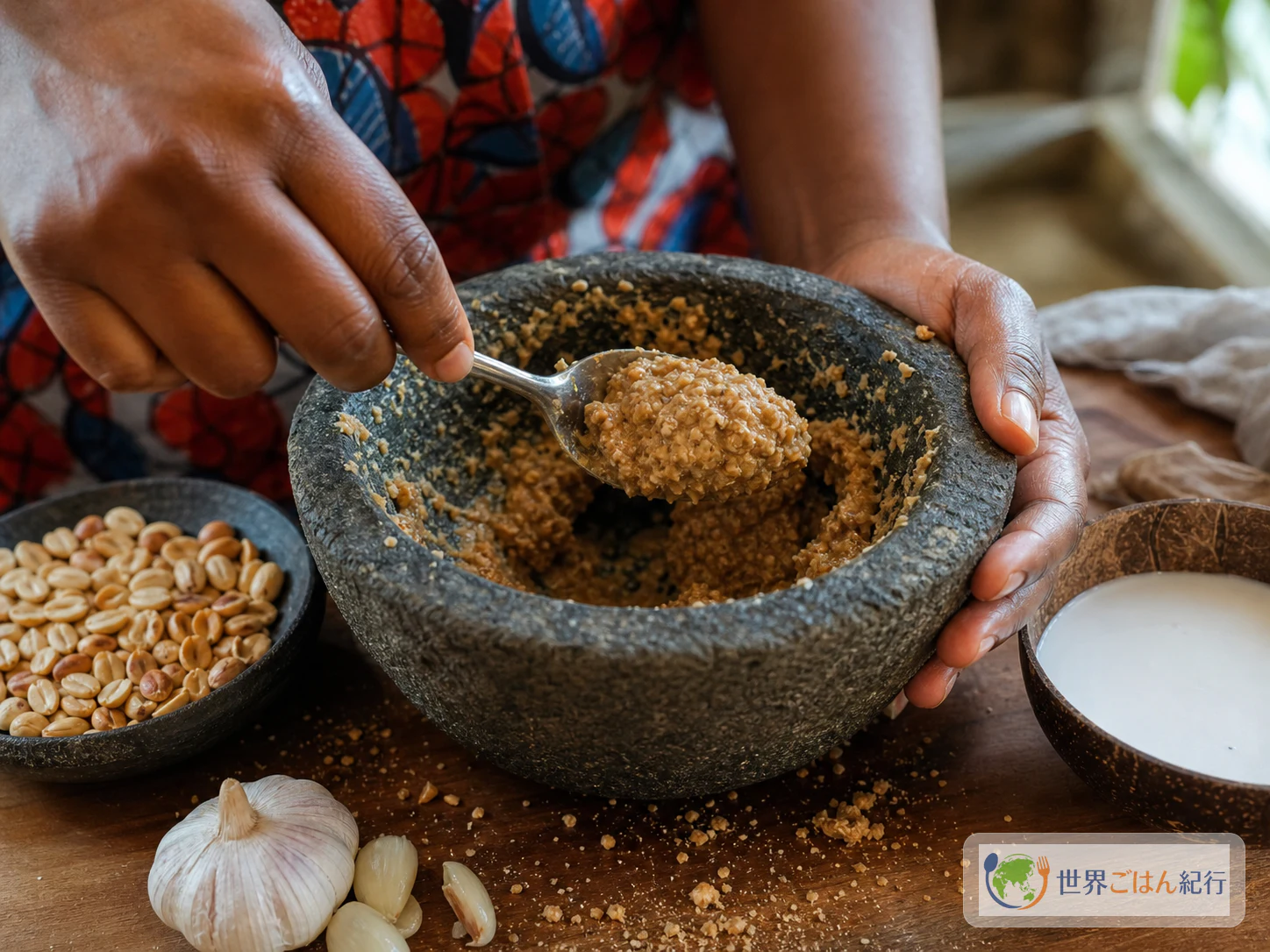
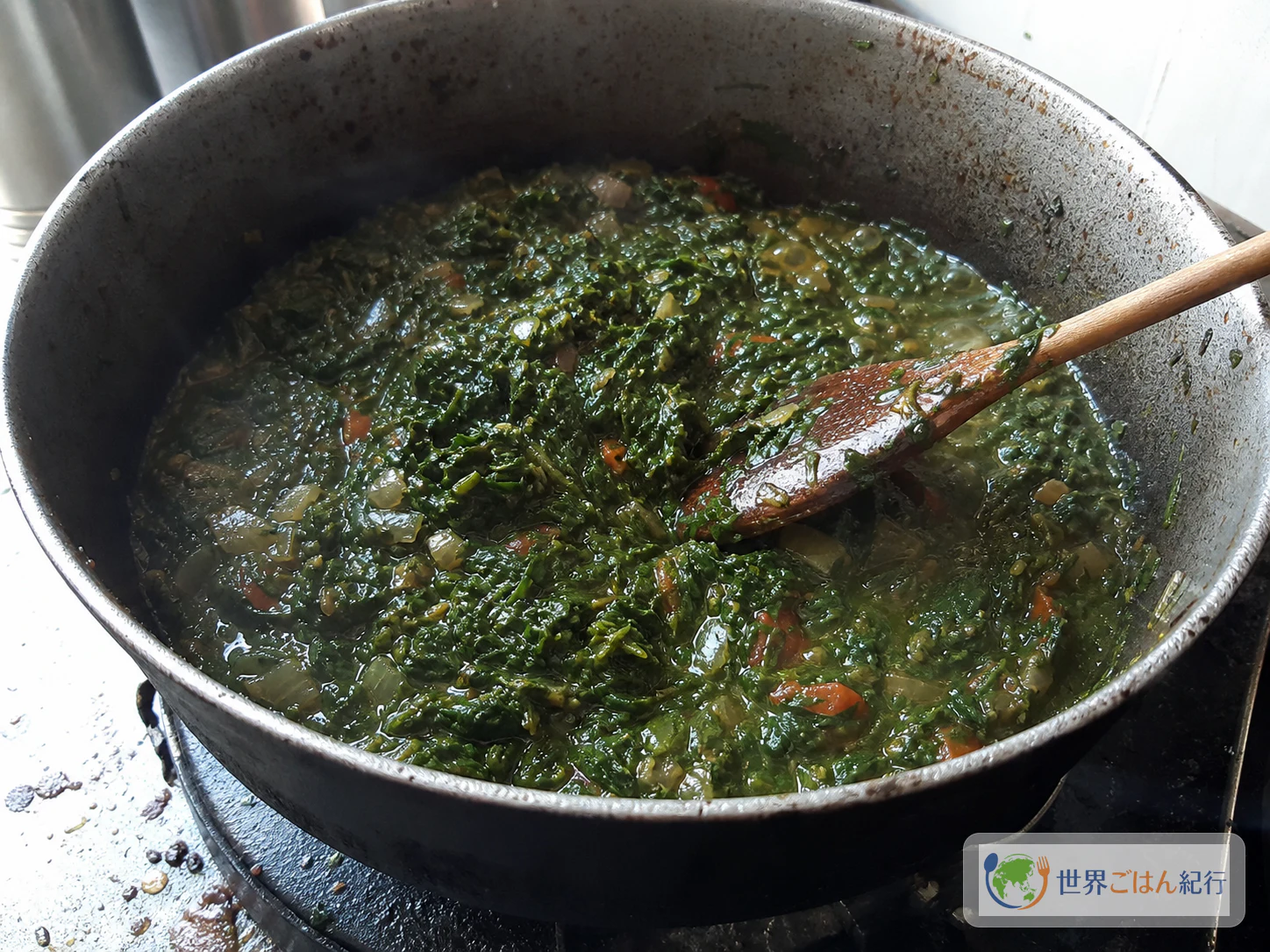
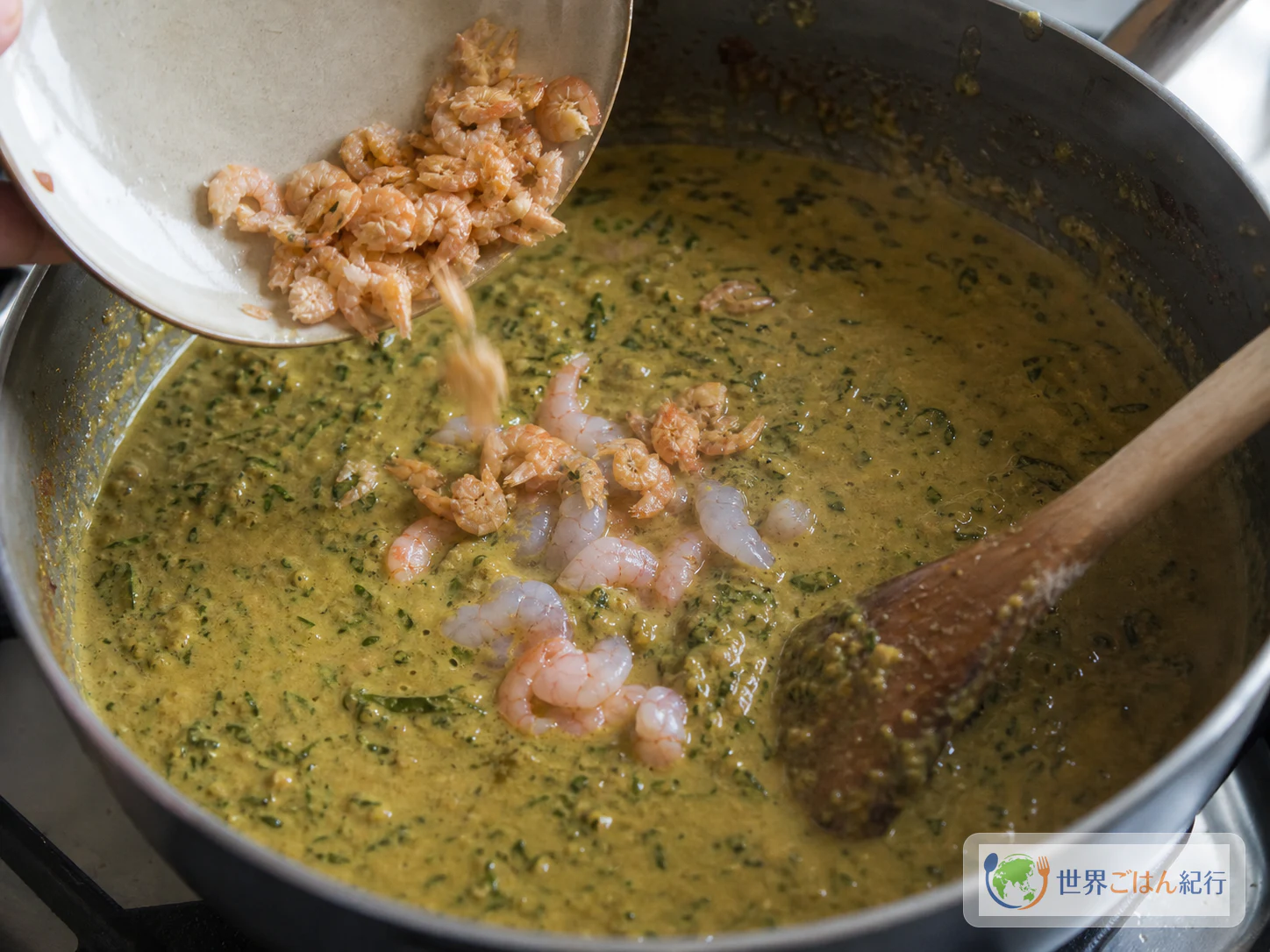
Traditionally, the leaves are pounded with salt and garlic and cooked, then peanuts and coconut go in, and shrimp or crab simmers in last over low heat. The Mozambique culture and food brochure describes the peanut sauce, the seafood and that low, slow simmer. This home version saves time with a food processor and unsweetened peanut butter but keeps the same order: soften the leaves first, then add the nuts, so you control both the raw green taste and the oiliness.
Regional versions and the staple
In Vilankulo, matapa uses fresh or dried seafood, especially crab and shrimp, while versions in the south use fish or sea snails. It's a stew of leaves and nuts with whatever seafood the area offers, so leaving out shrimp still gives you matapa. Here, peeled shrimp and dried shrimp from an ordinary supermarket bring in the taste of the sea.
The staple matters as much as the seafood. White rice is easy, but with a flour-based staple like xima, matapa becomes a thick stew you scoop up with each bite, and the staple balances its salt and fat. Think of it as a partner to the staple rather than a side of greens, and it's easier to judge how far to cook it down.
Among other greens-and-nuts dishes, Rwanda's isombe is an East African take on cassava leaves and peanuts, and Ghana's groundnut soup puts peanuts at the center of a soup. Matapa stands apart for its coconut and seafood, and for serving the thick sauce alongside a staple.
Finely chopped greens, rich unsweetened peanuts, coconut milk that never boils hard, and a little shrimp for savoriness. Keep these four points and it won't turn into plain creamed greens.
Ingredients (serves 4)
These amounts make 4 servings as a main dish spooned over white rice. As a side dish, it serves about 6. Aim for a thick stew, not a soup: when you lift it with a wooden spatula, it should fall off slowly.
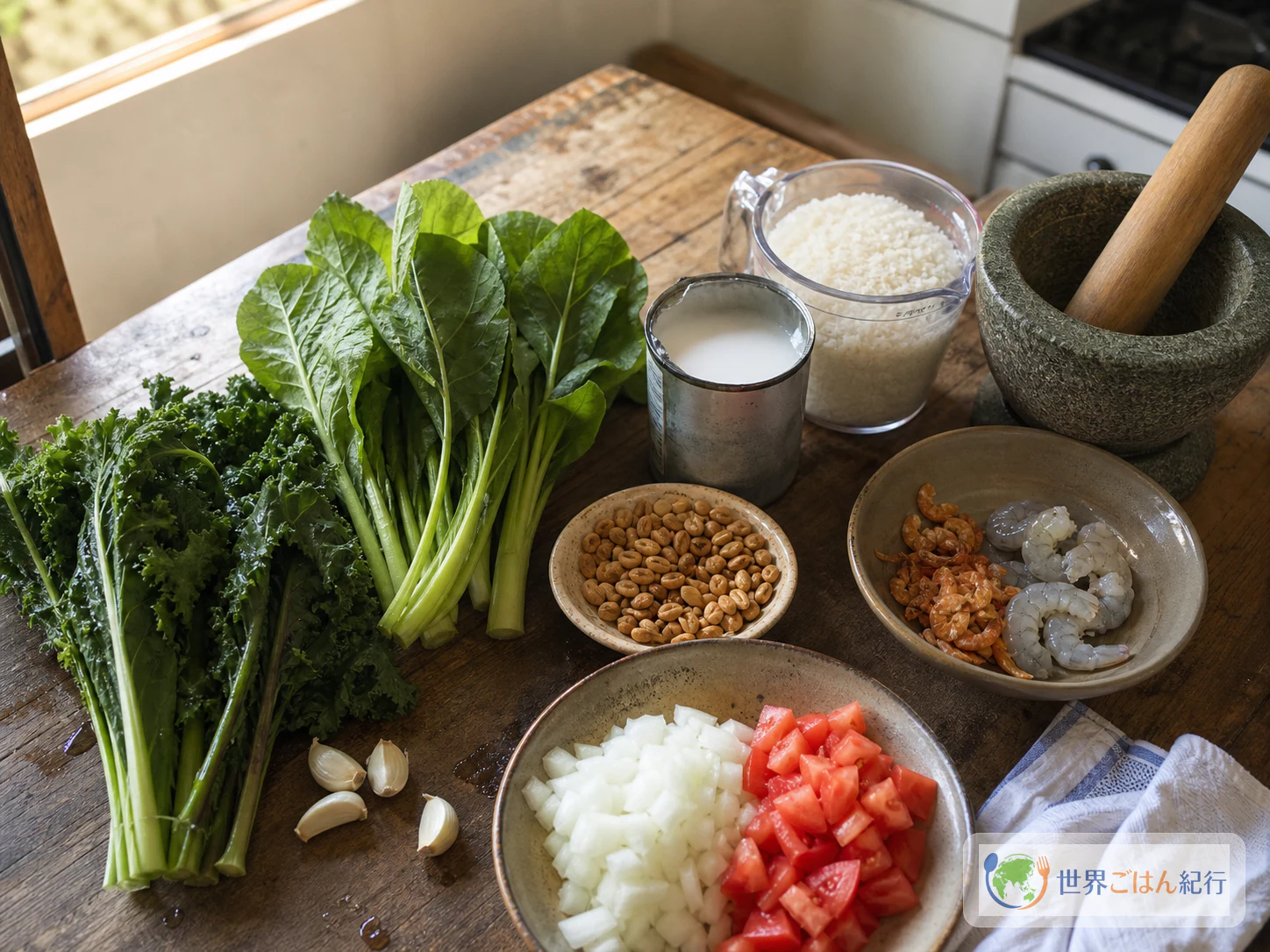
The safety of cassava leaves depends on the variety and how they're processed. Don't buy raw leaves and process them yourself at home. If you use frozen cassava leaves sold ready to eat, check the label and cook them thoroughly. This recipe uses komatsuna and kale.
This recipe uses peanuts, shrimp and coconut milk. If you swap the dried shrimp for dried sakura shrimp, check the label and any shared-facility warnings. If anyone at the table must avoid peanuts or crustaceans, check every substitute before cooking.
Matapa ingredients and substitutes
Greens, onion, shrimp and rice can come from your usual store. What's worth hunting down is peanut butter with no added sugar and coconut milk meant for cooking.
Peanut butter and coconut milk
Unsweetened peanut butter sets the thickness and sweetness of matapa; a sweetened one leaves a candy-like sweetness even after simmering. Check the ingredient list for sugar and flavorings. An unsweetened jar of around 5.5 oz (150 g) makes the amount easy to measure, and if you only want to try the dish once, grinding skinless roasted peanuts works instead.
Choose canned coconut milk for cooking, not a coconut drink. If the fat content is low, the peanuts and greens won't come together and the stew turns watery. With a standard 400 ml (13.5 fl oz) can you'll have about 100 ml left over for a curry or soup, so check the volume and ingredient list before buying.
A tool for chopping the leaves
A knife and a mortar are plenty for a one-time batch, but finely breaking down the leaves is the heavier part of the work. If you plan to chop greens often, a tool that stops at a coarse paste shortens the job of pulsing 10 seconds at a time to even out the bits, and it's useful beyond matapa for things like ta'ameya or sambal-style pastes.
Cassava leaves and what to use instead
Cassava leaves are hard to buy reliably outside the regions that grow them. You may find them at African grocers or frozen-food shops, but check the labeling, processing and cooking instructions. Cassava roots and leaves contain cyanogenic glycosides, which must be reduced by processing before eating, and varieties differ, so never improvise with raw leaves of unknown origin. The background on cassava toxicity explains how processing and toxicity connect.
Komatsuna and kale are easier to keep safe and to adjust in flavor. Komatsuna alone tastes light, and kale alone is bitter with tough stems, so chop both finely and combine them.
| Ingredient closer to Mozambique | Home substitute | How the result differs |
|---|---|---|
| Cassava leaves | 10.5 oz (300 g) komatsuna and 4 oz (120 g) kale | Lighter green flavor, easier to balance bitterness and texture |
| Pounded raw peanuts | Unsweetened peanut butter | Less texture; 2 tbsp chopped peanuts brings it closer |
| Milk pressed from fresh coconut | Canned coconut milk | Aroma a bit flatter; a gentle simmer protects its roundness |
| Small shrimp or dried fish | Peeled shrimp and dried shrimp | Taste of the sea, less of the fermented aroma of fish |
| Xima | Polenta, white rice | Lacks xima's springiness, but holds the thick sauce |
The peanuts and coconut milk are the parts to keep. Sesame paste alone gives a different nuttiness, and milk or cream moves the dish well away from Mozambique. Once the coconut milk is in, hold the pot at a gentle, bubbling simmer; that also evens out differences between brands of can.
Common matapa problems
With matapa, looking into the pot is quicker than tasting. Check whether large bits of leaf remain, whether the sauce pours off the spatula all at once, and whether rings of oil float on the surface. If only one of these is off, the pot can be saved.
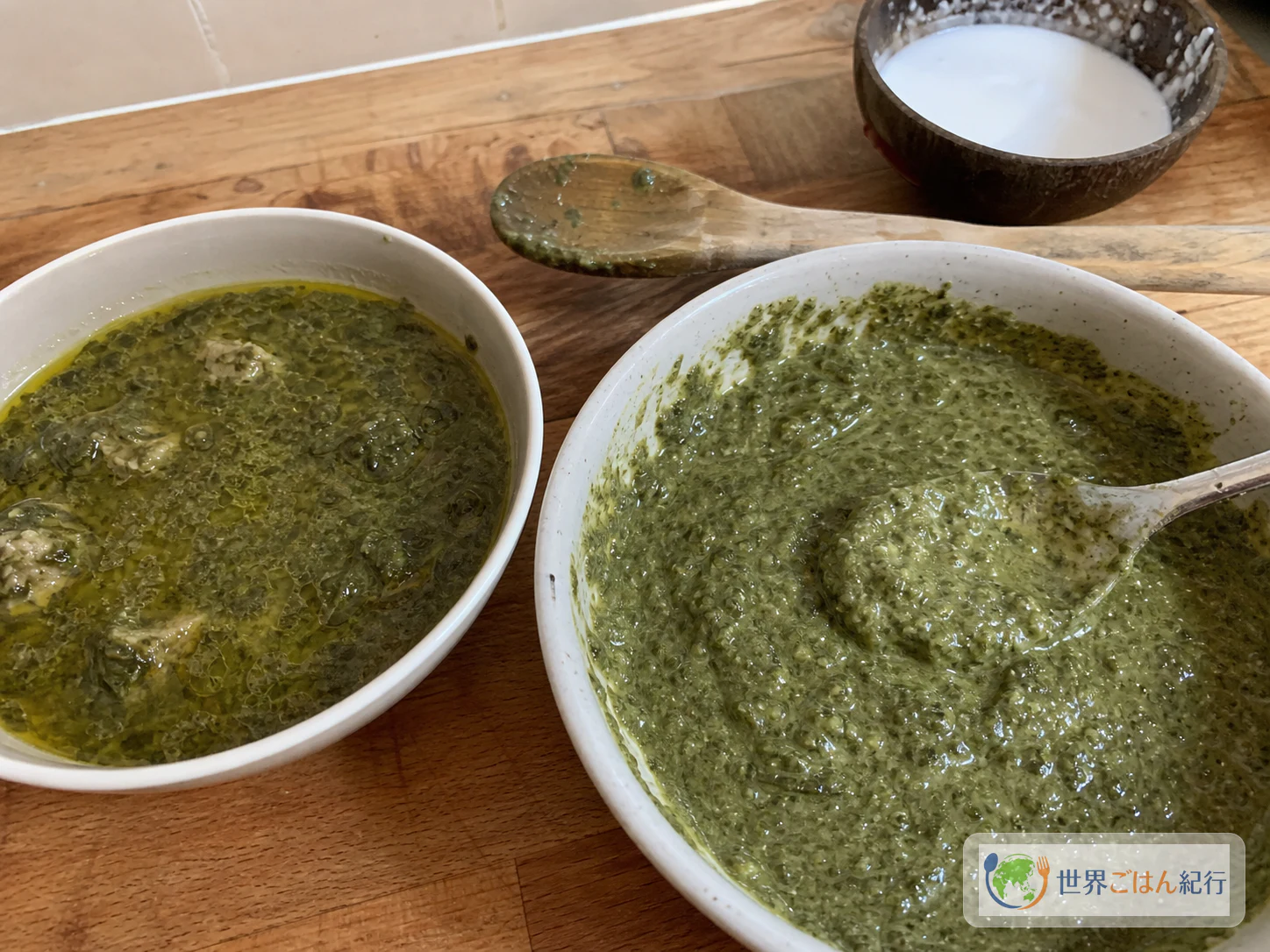
| Problem | Cause | Fix |
|---|---|---|
| Leaves stay in your mouth | Chopped too coarsely, too many stems | Remove the thick kale stems and chop the leaves to a coarse mince |
| Tastes like sweet peanut | Used sweetened peanut butter | Switch to unsweetened. If already made, tighten with 1 tsp lemon juice and a pinch of salt |
| Watery | Liquid came out of the leaves, not cooked down enough | Uncover and cook over medium-low for 3 minutes, then check the spatula line |
| Oil floats | Coconut boiled too hard | Lower the heat, add 2 tbsp water and stir slowly |
| Tough shrimp | Added too early | Shrimp go in for the last 5 minutes, after the stew's flavor is set |
A little floating oil is fine to eat. Stir slowly with a wooden spatula for about 1 minute after adding the water; even if the sauce doesn't fully come back together, it's hard to notice over rice. Next time, turn the heat to low as soon as the coconut goes in.
Serving and storing matapa
Serving and pairing
Matapa is meant for a staple, not for eating alone by the spoonful. Over rice, the sweetness of the coconut comes forward; with polenta or a fufu-style staple, the starch soaks up the richness of the leaves and peanuts. Eaten in alternating bites with the staple, the sauce balances best at full seasoning, so don't suddenly cut the salt. On days you serve white rice, cook the matapa a little thicker so it doesn't look watery on the plate.
For another African staple, try Ghanaian fufu; staples kneaded from flour or root vegetables suit stews. More greens are on offer in isombe, and peanut richness in another form in groundnut soup. Niger's dambou mixes moringa and komatsuna into couscous, a good way to give leftover greens or peanuts a different texture.
To follow Indian Ocean coconut cooking further, read coastal Kenya's kuku paka, the Seychelles' ladob and Brazil's moqueca baiana. Sweet coconut, seafood coconut and leafy-green coconut dishes side by side show the differences between Indian Ocean and Atlantic cooking.
Storage and reheating
With leafy greens, shrimp and coconut milk, matapa shouldn't sit in the pot at room temperature. Refrigerate leftovers within 2 hours, or within 1 hour above about 32°C (90°F), dividing large batches into shallow containers so they cool quickly. The leftover food safety guide has the details.
| Storage | How long | Reheating |
|---|---|---|
| Room temperature | Within 2 hours. Within 1 hour above about 32°C (90°F) | Don't leave it in the pot |
| Refrigerator | Within 2 days for best flavor | Cool in shallow containers; reheat in a pot with 2 tbsp water over low heat for 5 minutes |
| Freezer | Up to 2 weeks for best quality | Shrimp texture suffers. Freeze in single portions and thaw in the refrigerator |
| Packed lunches | Not suitable | With coconut and shrimp, temperature control is difficult |
Reheat slowly over low heat; boiling it hard makes the oil float and the leaves taste heavy. If it has firmed up in the fridge, add water 1 tbsp at a time and stir up from the bottom with a wooden spatula. Turn off the heat once it's piping hot all the way through, and add 1 tsp lemon juice only if the flavor seems dull. Reheat only what you'll eat, and don't refreeze anything that has been thawed.
FAQ
Is it still matapa without cassava leaves?
Cassava leaves are at the heart of the dish in Mozambique, but komatsuna and kale are the practical choice for cooking it safely again and again at home. If you use frozen cassava leaves sold ready to eat, follow the label and check whether they're precooked. Don't process raw leaves yourself: safe processing depends on the variety and method, not just the type of leaf.
Can I make it without shrimp?
Yes. Leave out the dried shrimp too, add 1/4 tsp more salt, and finish with 2 tbsp chopped peanuts. The savoriness is lighter and the leaves and nuts take the lead, so serve it with polenta or a fufu-style staple rather than white rice.
Can I substitute for peanuts if there's a peanut allergy?
If peanuts are off the table, skip this dish. Sesame paste or cashews give a similar thickness, but the flavor changes, and if you substitute for allergy reasons, check each label and its shared-facility warnings. For a nut-free table, kuku paka, a coconut chicken dish, is easier to put together.
Is it meant to be spicy?
No. The green chili is there for aroma, and too much heat hides the roundness of the leaves and peanuts. If you like it hotter, add a little piri-piri sauce or chili flakes at the table rather than to the whole pot.