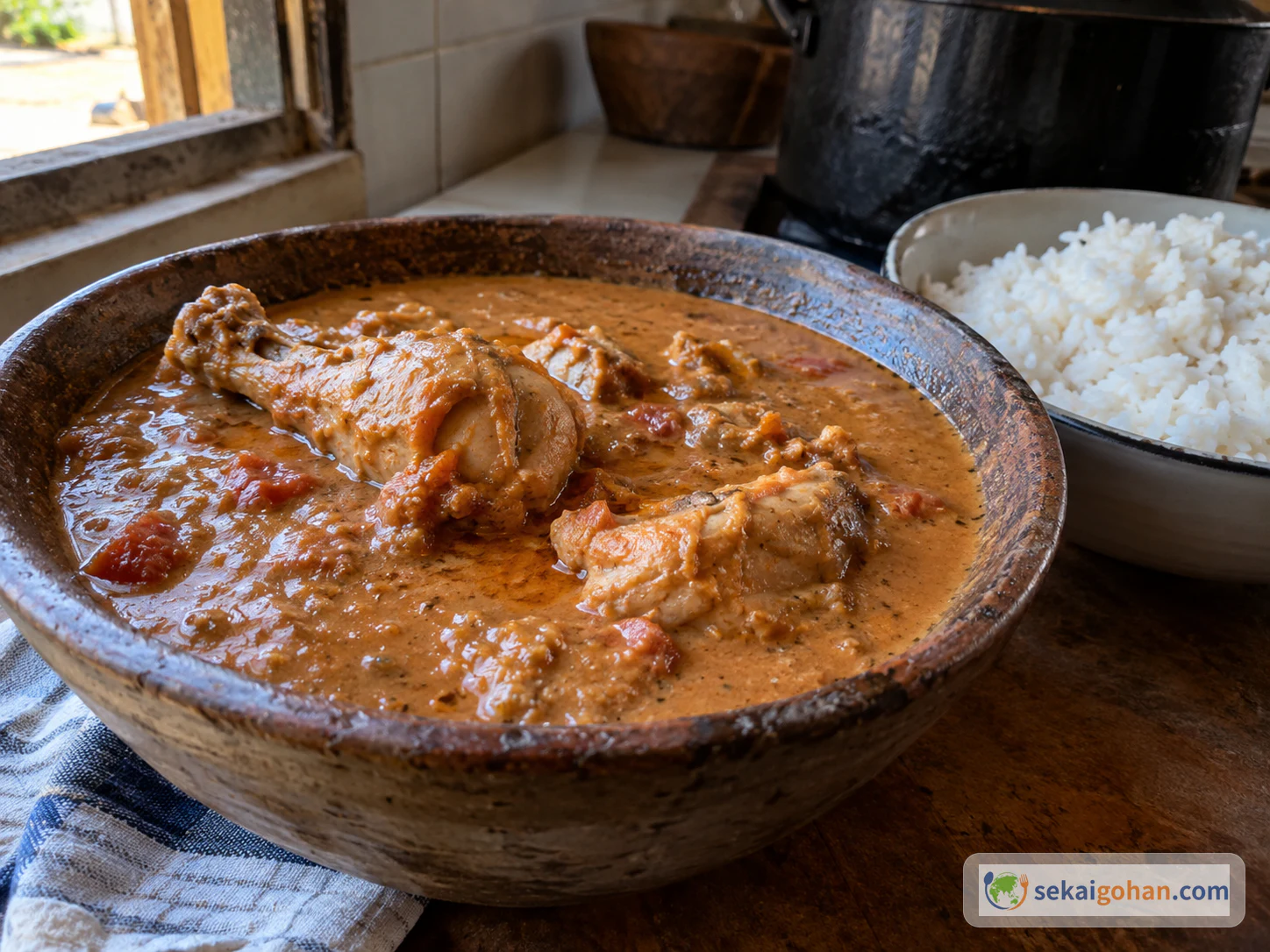
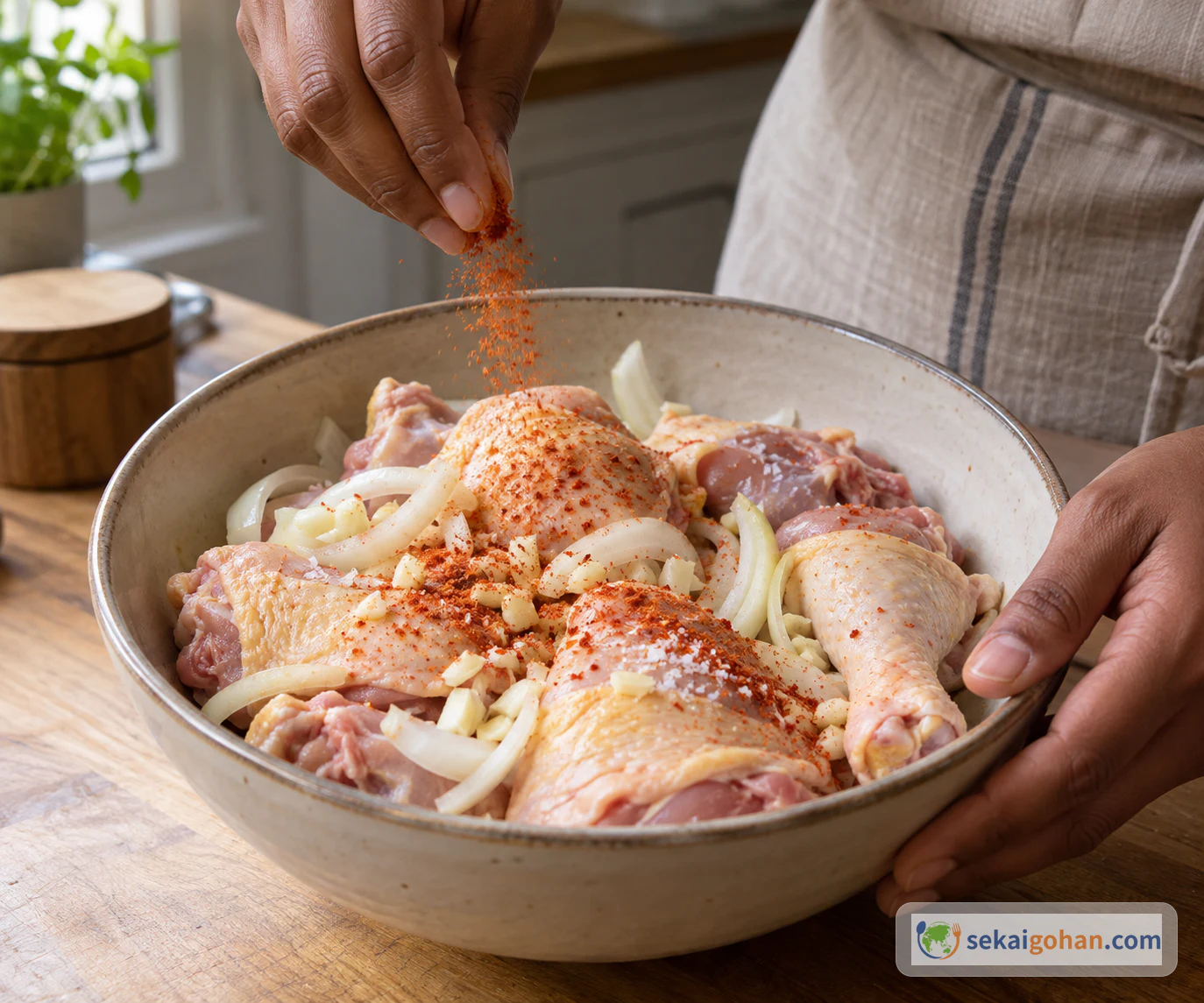
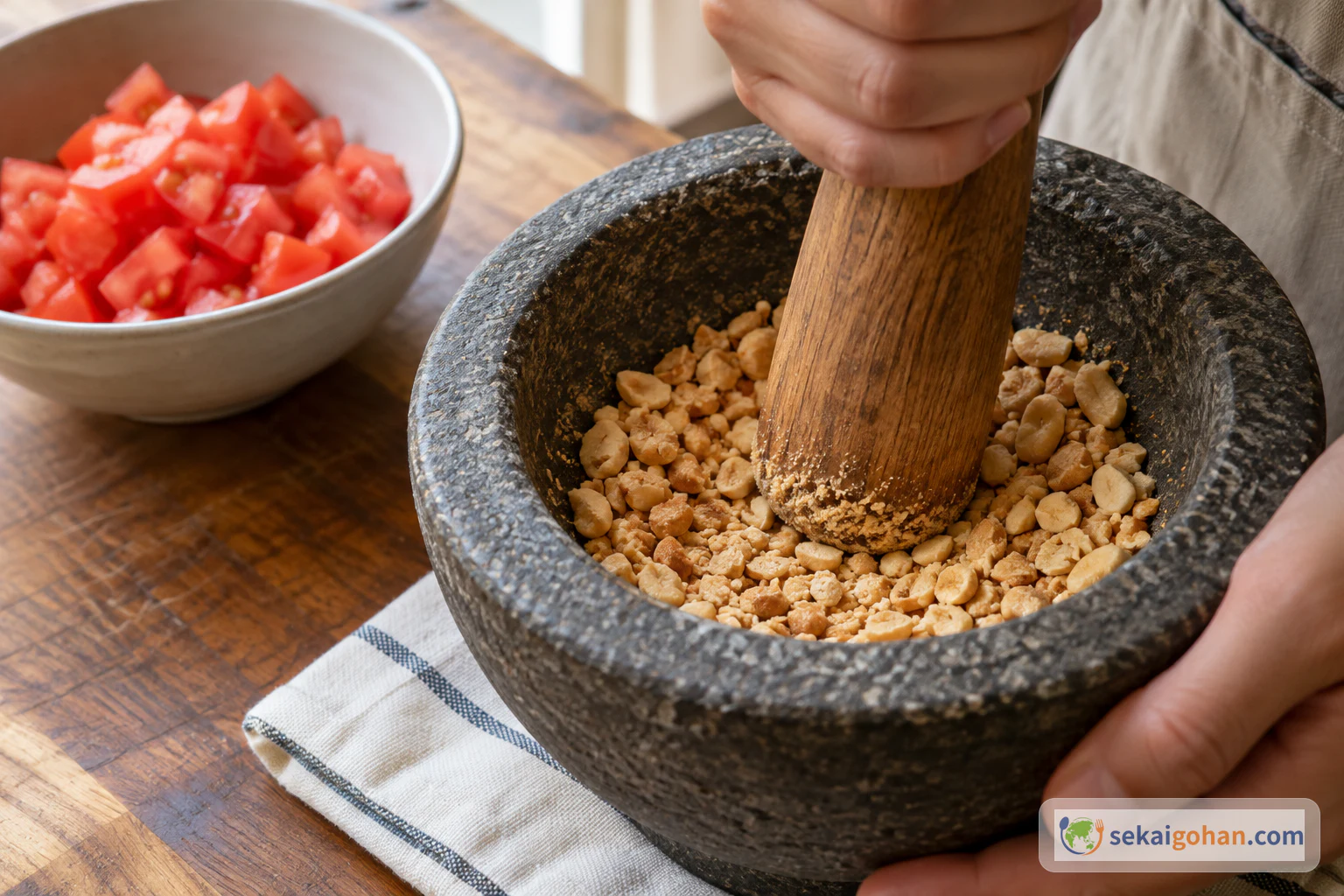
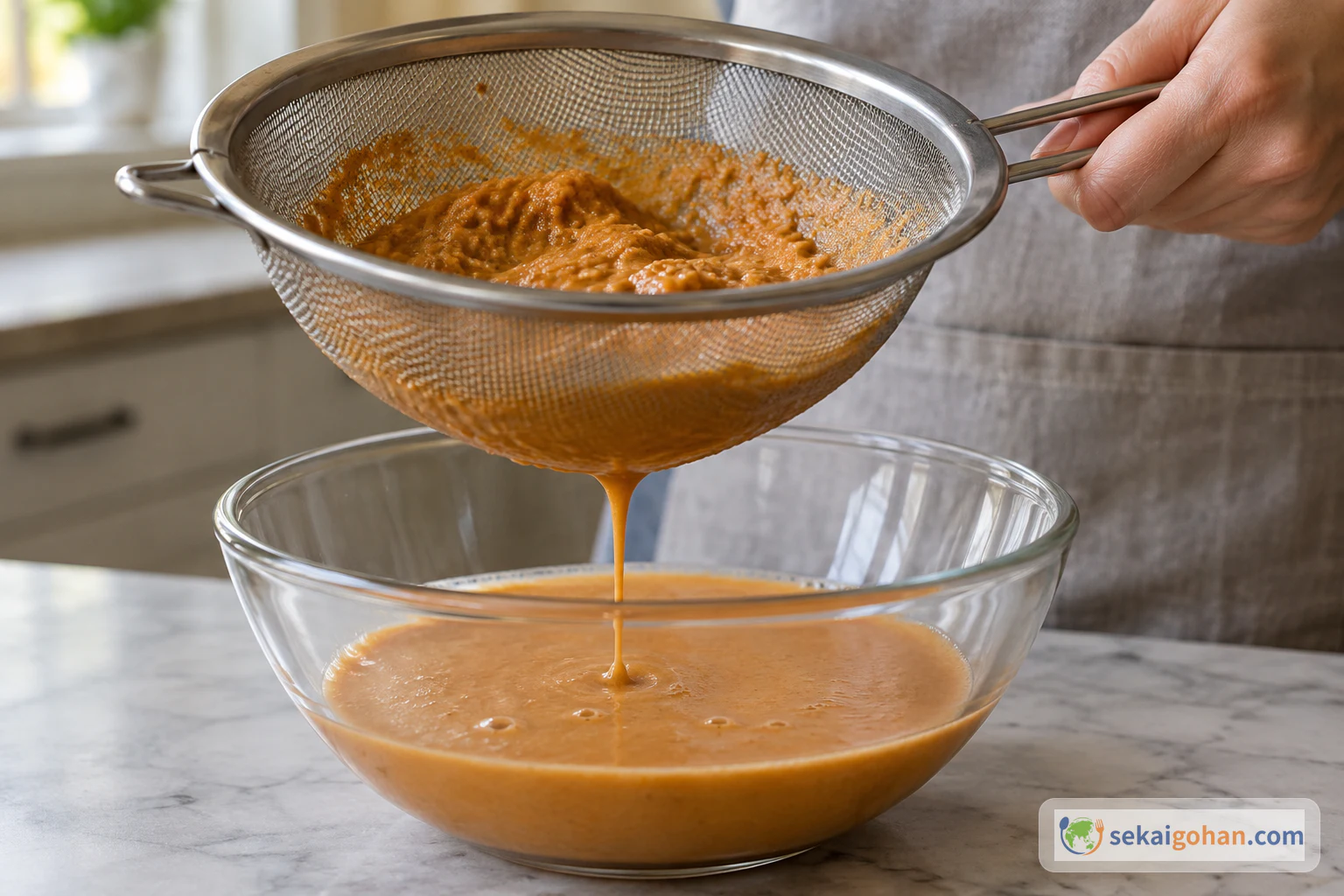
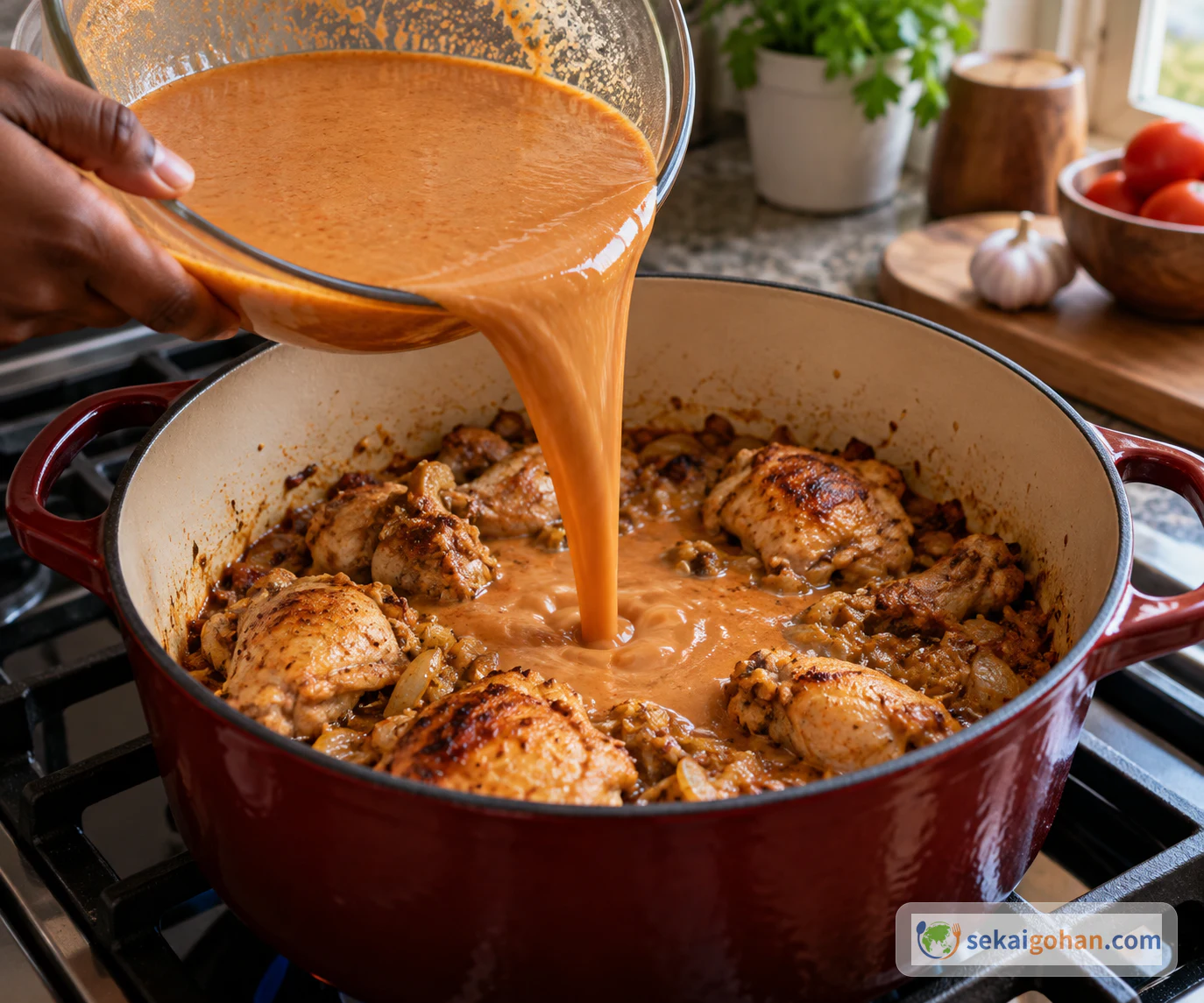
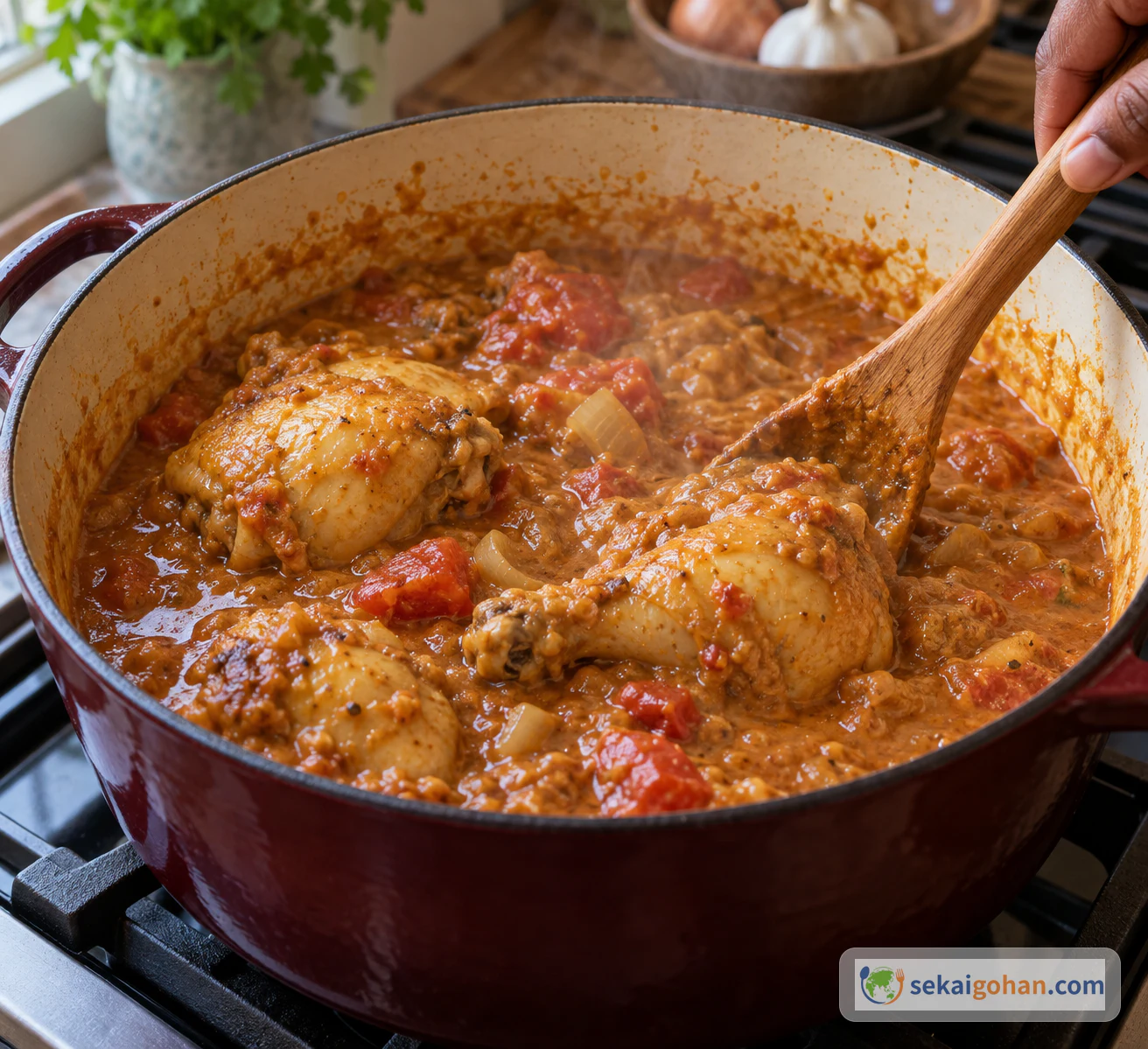
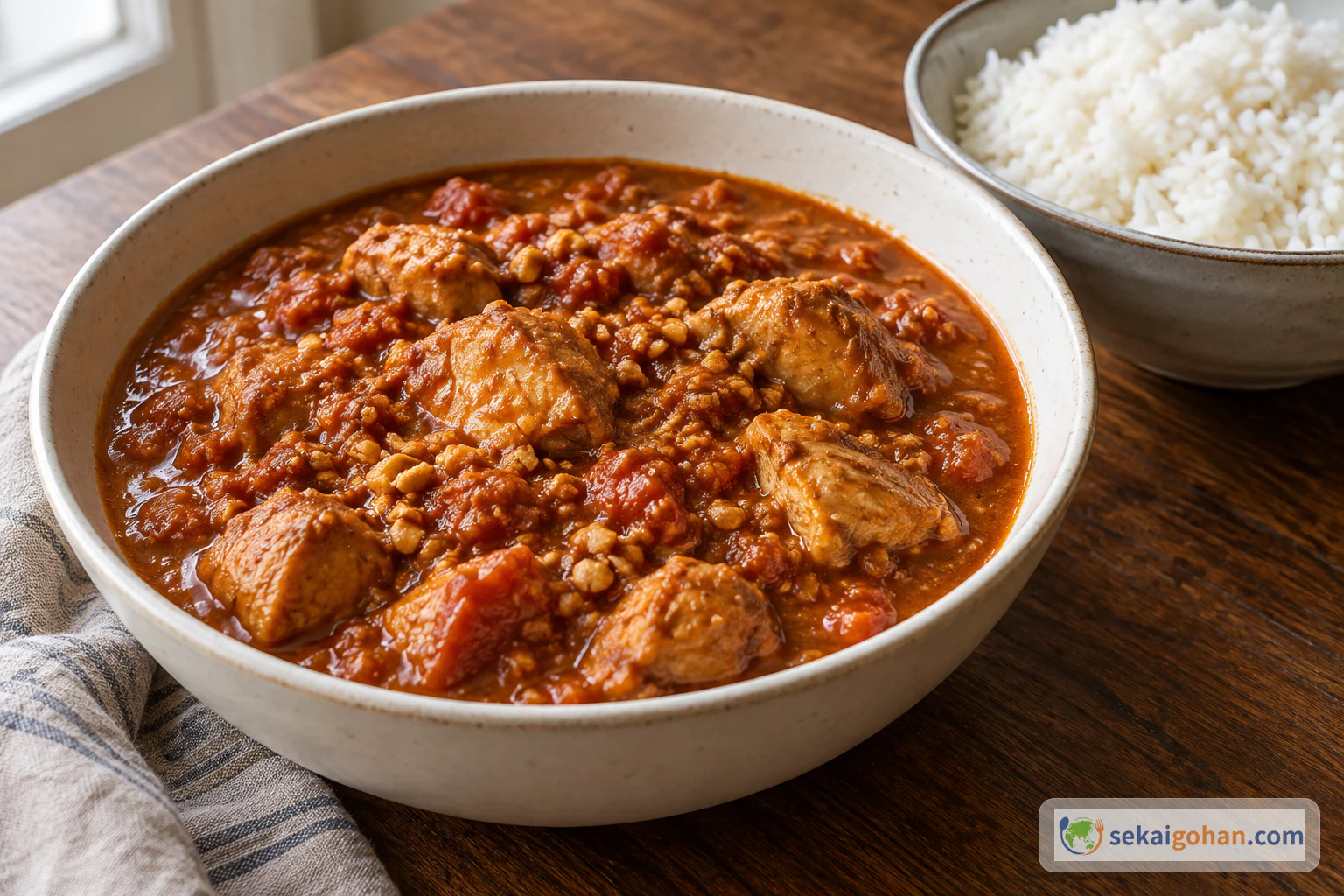
Steam rises off a pot of chicken in a thick, tan broth of crushed peanuts and tomato, with a squeeze of lemon stirred in at the very end. This is caldo de mancarra, one of the representative dishes of Guinea-Bissau. The peanuts are crushed with tomatoes, loosened with hot water and pushed through a sieve, so the broth goes into the pot in two parts: first the smooth strained liquid, then the thicker paste left behind. Seasoned with salt and piripiri, the chicken comes out rich and nutty with a gentle heat, brightened by the lemon.
About Caldo de Mancarra
Mancarra means peanut, and caldo de mancarra is a peanut broth made with either meat or fish. This version uses chicken. Lime or lemon, chili, palm oil and peanut broth turn up often in the cooking of Guinea-Bissau, where rice is served alongside sauces and stews, so a bowl of caldo de mancarra with rice fits right in.
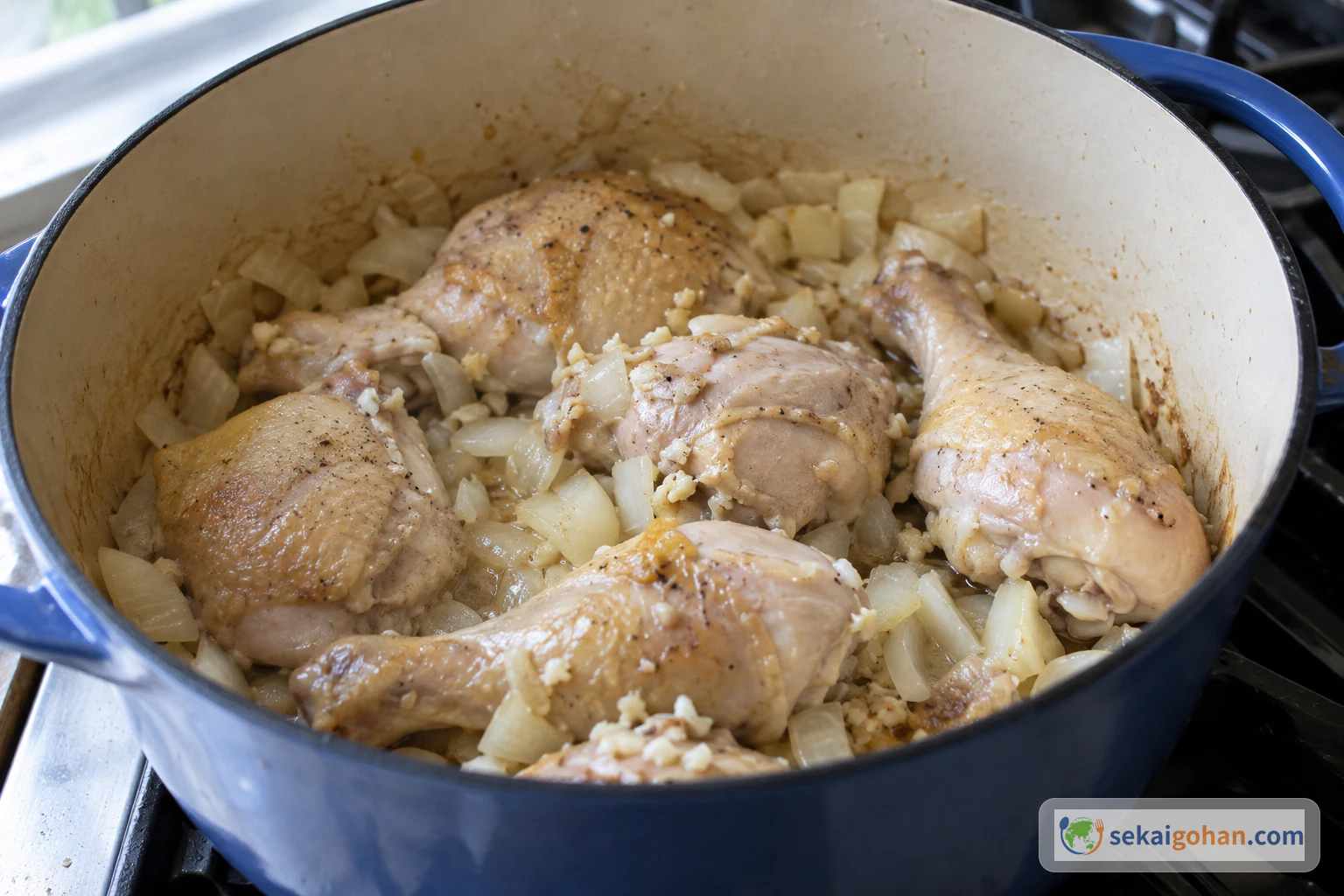
The method is what sets it apart. Chicken browns in its own fat with onion and garlic, then simmers in the strained peanut-tomato liquid. Once the meat is partly cooked, the paste goes in, and the pot is stirred slowly over low heat until the broth turns thick and tan. The lemon juice goes in only after the heat is off.
This recipe makes these home adaptations:
- returning the strained solids to the pot;
- browning the chicken in its own fat;
- the choice of roasted, skinless peanuts;
- adjusting the stew with small amounts of the prepared water.
These adaptations are part of the method below.
Ingredients: One Whole Chicken and 9 oz (250g) of Peanuts
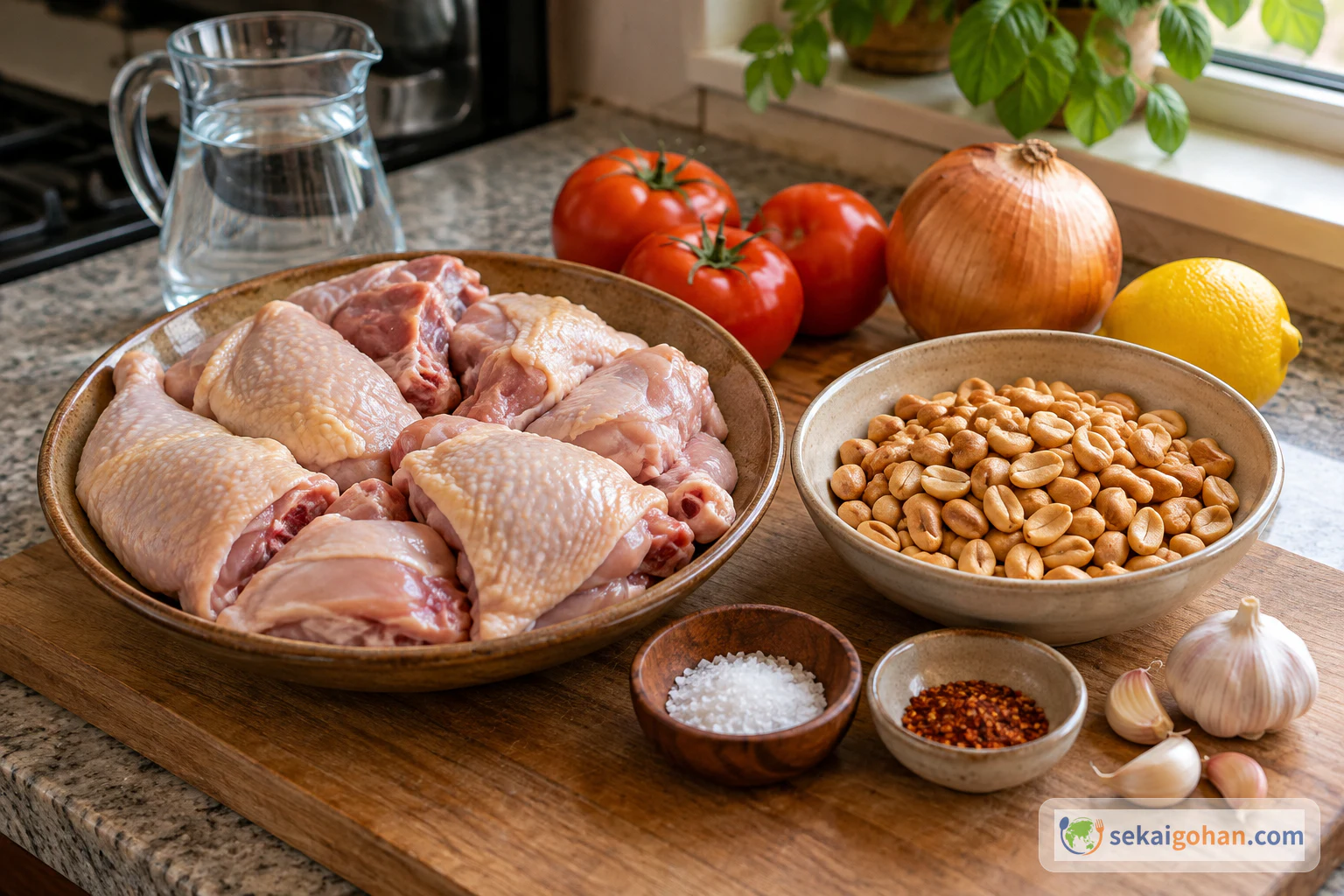
This recipe makes one chicken's worth of stew.
Equipment
- Mortar and pestle or a food processor, to crush the peanuts
- Fine-mesh sieve and two bowls, one for the strained liquid and one for the paste left behind
- Heavy pot
- Instant-read thermometer, to check the center of the chicken
- Separate cutting board and knife for raw chicken
Choosing Ingredients for Caldo de Mancarra
Peanuts. Look for unsalted, roasted, shelled and skinless peanuts. Unsalted ones leave the seasoning in your hands, and shelled ones save you a lot of effort.
Peanut butter. Canned peanut butter can stand in for crushed peanuts. Choose an unsweetened one made from peanuts alone. There is no set equivalent for the 9 oz (250g) of peanuts, so add it gradually and judge by the thickness, and expect a different texture.
Piripiri. No amount is given, so season to your taste. Plain ground dried chili brings heat if you can't find piripiri, though not the same flavor; add it sparingly and adjust. Garlic is also to taste.
Chicken. Use a skin-on, bone-in whole chicken cut into pieces. Its fat does the browning, so no oil goes in. Boneless pieces, or only certain parts, change the weight and the way the chicken cooks.
This dish is built on peanuts and is not suitable for anyone with a peanut allergy. If you use peanut butter or other processed products, read the ingredient list and any cross-contact statements.
Method: Liquid First, Paste Later, Lemon Off the Heat
- Brown the chicken.
- Add the reserved strained liquid and simmer.
- When the chicken is partly cooked, add the paste and stir over low heat.
- Make sure the chicken is fully cooked.
- Turn off the heat, then add the lemon juice.
Each step below tells you what to look for instead of how long to wait.
Caldo de Mancarra Troubleshooting
| Problem | Likely cause | What to do |
|---|---|---|
| The bottom is catching | The paste settles and sticks once it is in | Keep the heat low and keep stirring. Loosen with a little of the prepared water |
| The stew is too thick | Not enough liquid for this chicken and pot | Add the prepared water a little at a time, rather than all at once |
| The chicken sticks during browning | Not much fat has rendered yet | Lower the heat slightly and add a small splash of the prepared water instead of oil |
| The sauce feels gritty | The peanuts weren't crushed finely enough | Crush the peanuts finer next time. Straining the thinned paste in step 3 is what gives the liquid its smoothness |
| The chicken hasn't reached temperature | Thick pieces, or a tougher bird | Keep cooking over low heat, stirring, until the center reaches 167°F (75°C) for at least 1 minute |
Serving, Storing and Variations
Serve caldo de mancarra with rice, as is common with sauces and stews in Guinea-Bissau; plain white rice works well. If your table prefers less heat, cut back on the chili.
Divide any leftovers into clean, shallow containers and cool them quickly. When you reheat them, heat them thoroughly.
Frequently Asked Questions
Is it only made with chicken?
No, caldo de mancarra can also be made with fish. Fish needs its own amounts and timing, so work from a fish recipe rather than adapting this one.
How long should it simmer?
There's no set time. It depends on the size of the chicken and the pot, and chickens in Guinea-Bissau are tougher than commercial birds, so they take longer. Go by the thermometer, not the clock.