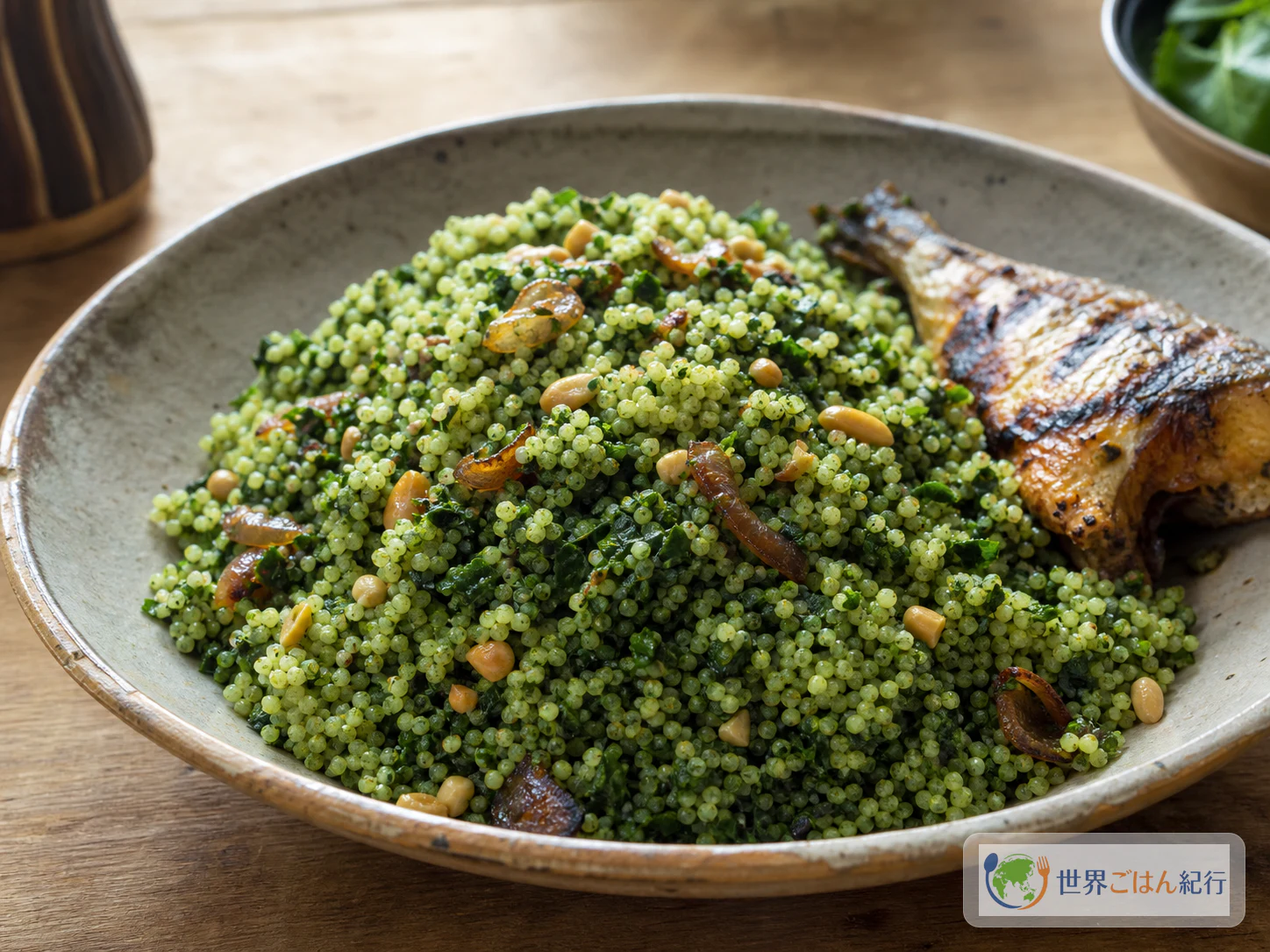
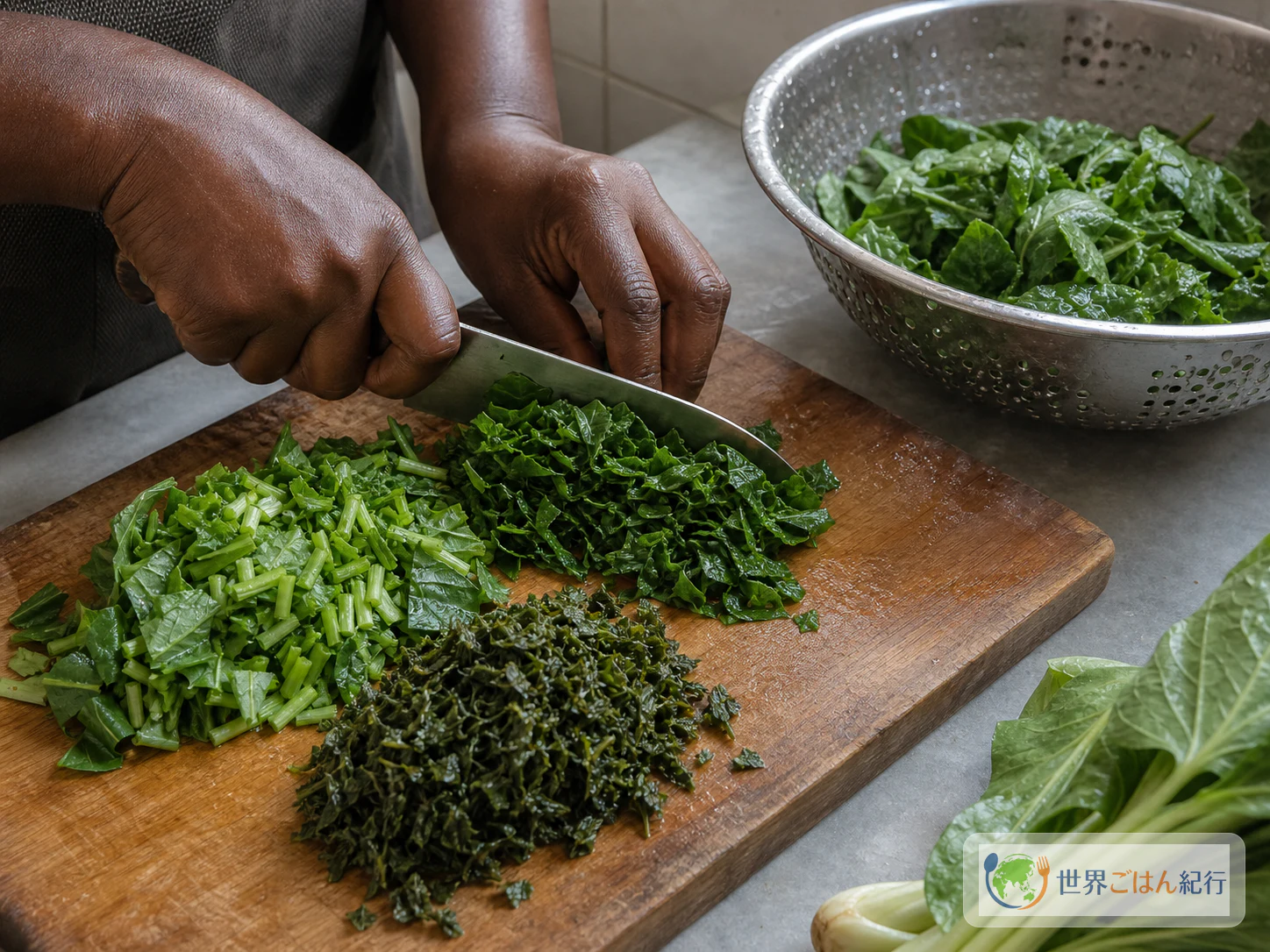
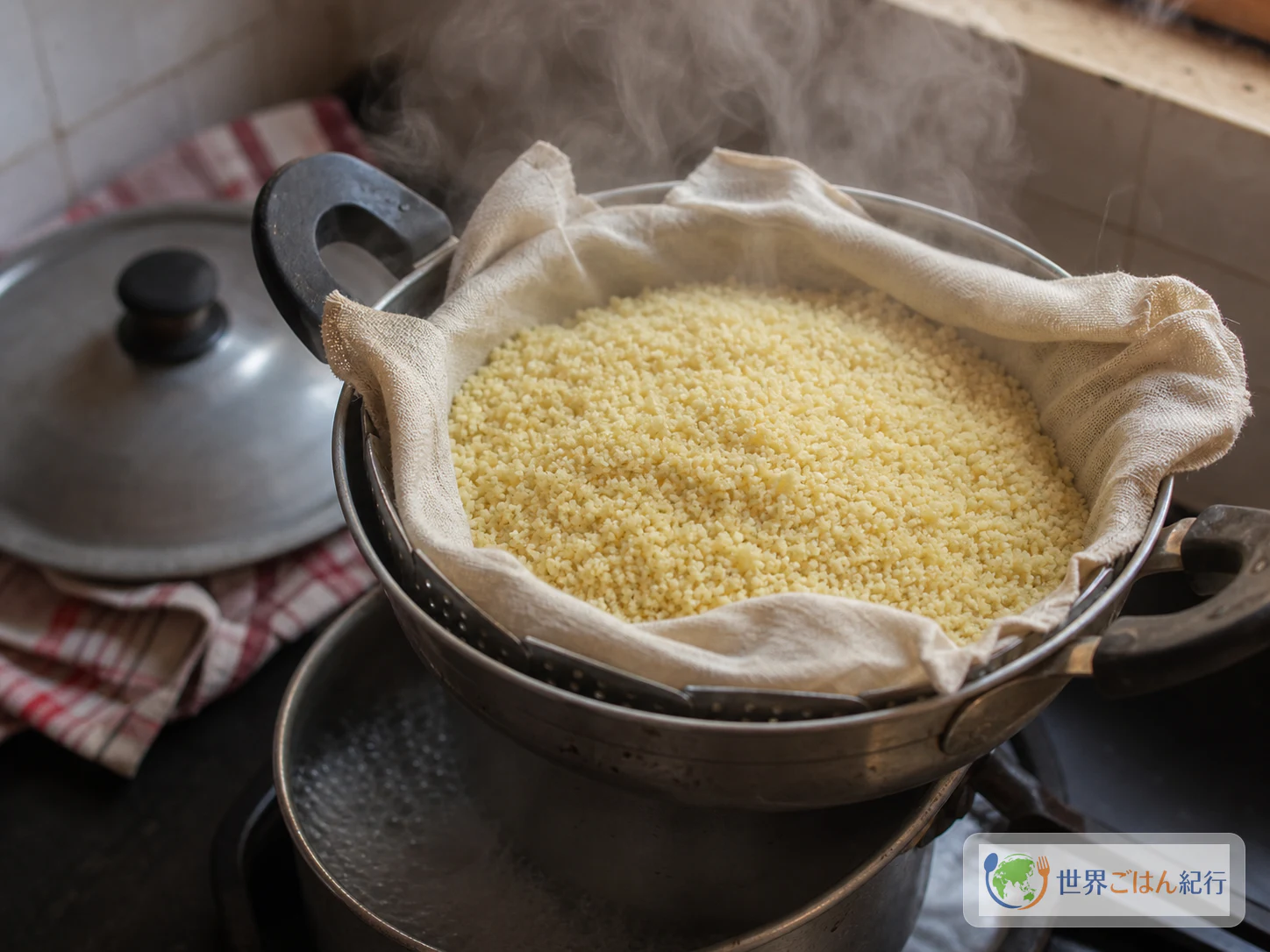
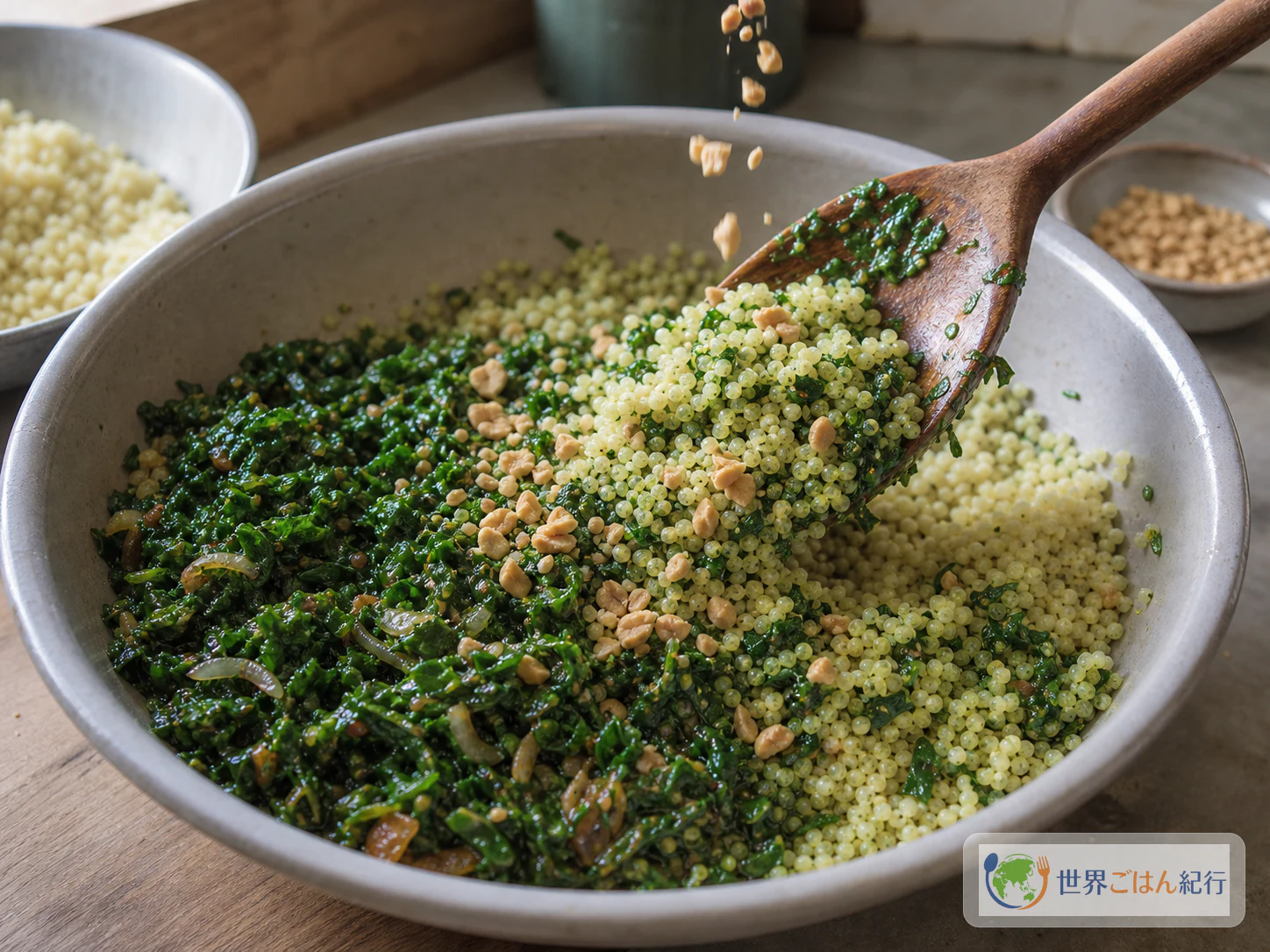
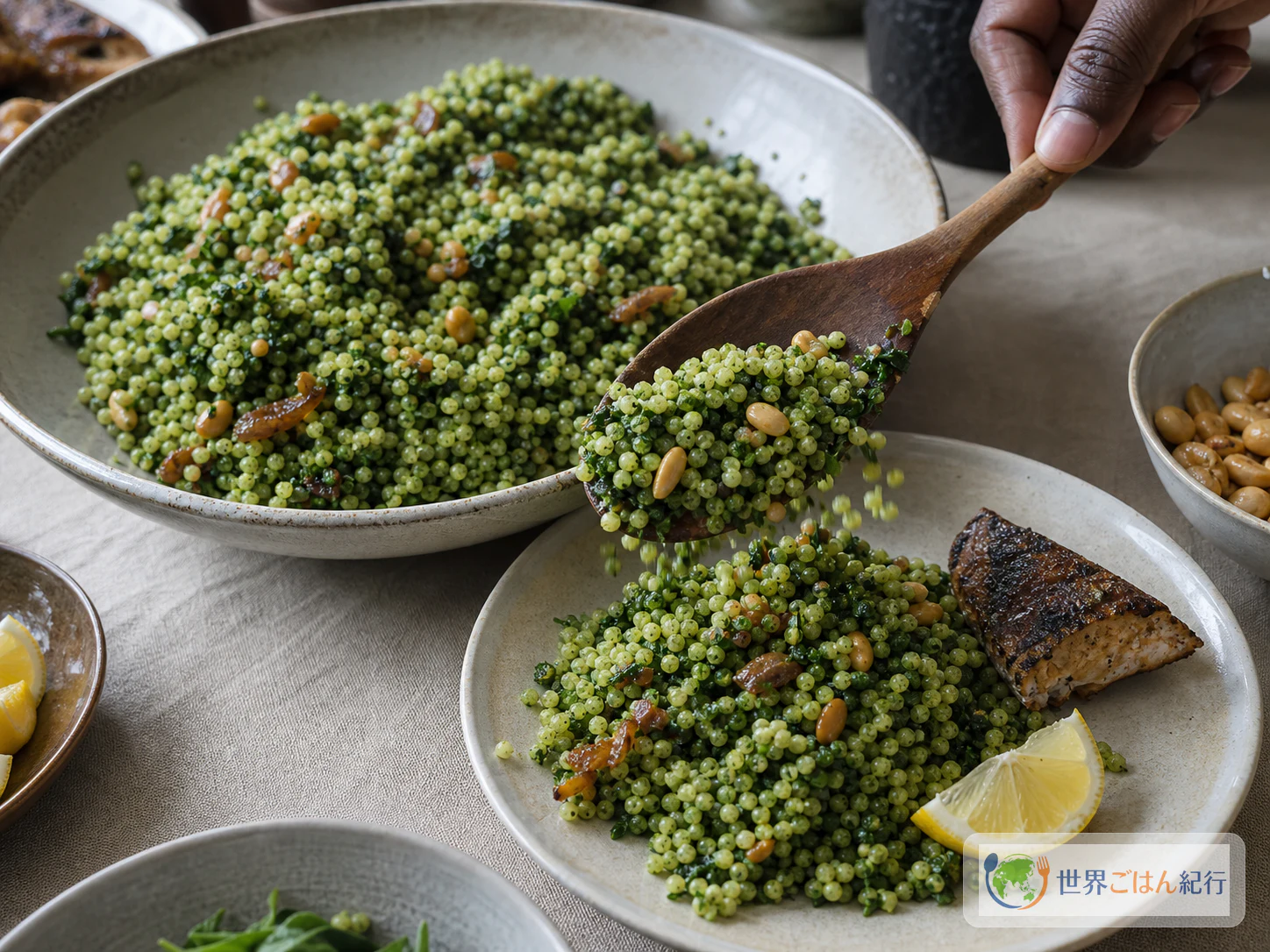
Lift the lid of the steamer and the tiny grains of couscous have swelled; touch them and they fall apart lightly between your fingers. In goes a pan of sautéed chopped greens, and with it onion that has soaked up oil, crushed peanuts and the slightly earthy bitterness of moringa. This is dambou (also dambu), a dish of grains and leafy greens from Niger, and on the plate it lands somewhere between a light staple and a vegetable dish. It isn't pushed around in oil like fried rice. Think of it as grains steamed until light, then coated with the moisture and aroma of the greens.
Dambou in Niger
Niger spans the Sahara Desert and the Sahel. Where rain is limited, meals built from millet, sorghum, wheat, beans and leafy greens, alongside rice, matter a great deal. Dambou shows that approach clearly: grain is the staple, and leaves and peanuts turn it into a satisfying plate.
The dish spread from the Zarma and Songhai peoples of southwestern Niger, and the Dendi people of northern Benin eat it widely too. It's an everyday meal, and it is also made for celebrations such as naming ceremonies and weddings. Cooks use rice flour, millet, wheat, corn or couscous-style grains for the base, and moringa leaves are the usual greens, softened with onion, oil, peanuts and chili.
Dambou looks more at home mounded high on a large platter than portioned onto individual white plates. Fish, eggs or meat go alongside, often with tomato and cucumber, and each person combines the grains and sides a little at a time.
If North African couscous is a large platter that soaks up a stew, dambou mixes the leaves into the grains themselves. Pairing leaves with nuts brings it close to Mozambican matapa, but matapa is a stew, while in dambou the lightness of steamed grain is the point.
The character of dambou comes from steaming the grains without letting them turn sticky, adding the green aroma of moringa, softening the leaves with onion and oil, and finishing with crushed peanuts for toastiness. Fish or meat are served alongside, not as the star.
Ingredients (serves 4)
These amounts serve 4 as a combined staple and side, with grilled fish or eggs. As a light lunch of dambou alone, they serve about 3.
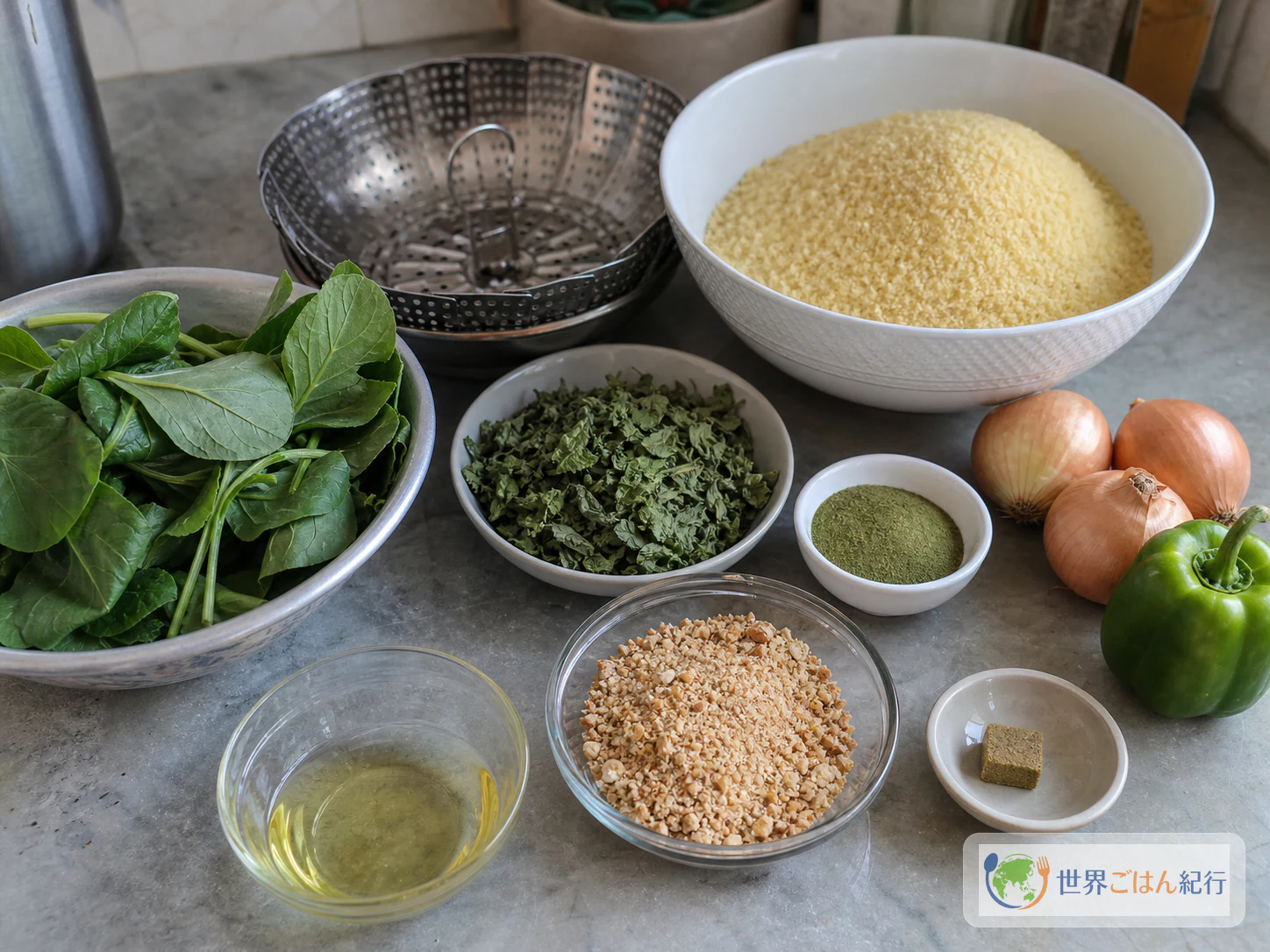
Moringa is sold as a food, but a large amount of powder makes the dish bitter and grassy. The first time, use no more than 12 g dried leaf, or 2 tsp powder. If you are pregnant, being treated for a medical condition or taking medication, keep it to a small amount as an ingredient rather than using a lot for health purposes.
Ingredients worth seeking out
Komatsuna, spinach, onion, fish and eggs are easy to buy. What's worth seeking out is the couscous that forms the base, a steamer that keeps the grains light, and peanuts without added sugar. Look for moringa as dried leaf or powder at natural food stores or on the herbal tea shelf.
Couscous determines how light the dambou is. Even with quick-cooking couscous, steaming it once rather than just rehydrating it in boiling water makes it less sticky when mixed with the greens.
A steamer is useful not only for dambou but for Moroccan couscous and steamed vegetables. You can manage with a colander set over a pot, but a steamer with a lid that sits securely gets steam to the grains more easily.
Peanuts crushed from whole keep more of their toasty flavor. If you can't find unsalted roasted peanuts, stir 2 tbsp unsweetened peanut butter in at the end in place of the crushed peanuts.
Choosing ingredients for dambou
Fresh moringa leaves are hard to find, so this recipe uses a small amount of dried moringa leaf or moringa powder and builds the bulk of the greens with komatsuna and spinach. For the grain, dried couscous is the easiest choice. It rehydrates quickly, fluffs up well after steaming and is far simpler than steaming millet, so you'll get dambou on the table on your first try.
The supporting ingredients are about keeping things light. Rice bran oil or untoasted sesame oil won't fight the aroma even without peanut oil, and unsalted roasted peanuts keep some crunch without soaking up too much moisture at the end. If you're short on time, secure the couscous, dried moringa and peanuts first; the rest is easy to find nearby.
Moringa powder is convenient, but it releases its leaf aroma all at once. Cap it at 12 g dried leaf or 2 tsp powder, and if you want more, sprinkle a little at the table. Buying a big bag of powder, mixing several grains from the start or adding a lot of peanut butter are the usual ways a first batch goes wrong. Make it light the first time and change the grain or leaves next time.
Away from Niger, three things matter more than sourcing every local ingredient: keep the grains light, add the aroma of green leaves, and soften everything with oil and onion.
| Local-style ingredient | Substitute | How the result differs |
|---|---|---|
| Millet or wheat grains | Dried couscous | Lighter grains that steam quickly. Milder grain flavor |
| Fresh moringa leaves | Dried moringa, komatsuna, spinach | Less fresh-leaf greenness, but easier to control the bitterness |
| Peanut oil | Rice bran oil, untoasted sesame oil | Lighter aroma. Crushed peanuts make up the toastiness |
| Local grilled fish | Salted mackerel, white fish, salmon | With oily fish, serve lemon so the grains don't feel heavy |
| Green chili | Shishito or other mild green peppers, a little ground red chili | Adds green aroma more than heat |
The one thing to hold onto is grains that stay separate. Mixing greens into cooked rice may taste similar, but it changes the nature of the dish. If you can't get couscous, boil bulgur or rolled barley in a separate pot until still firm, drain thoroughly and combine with the greens the same way.
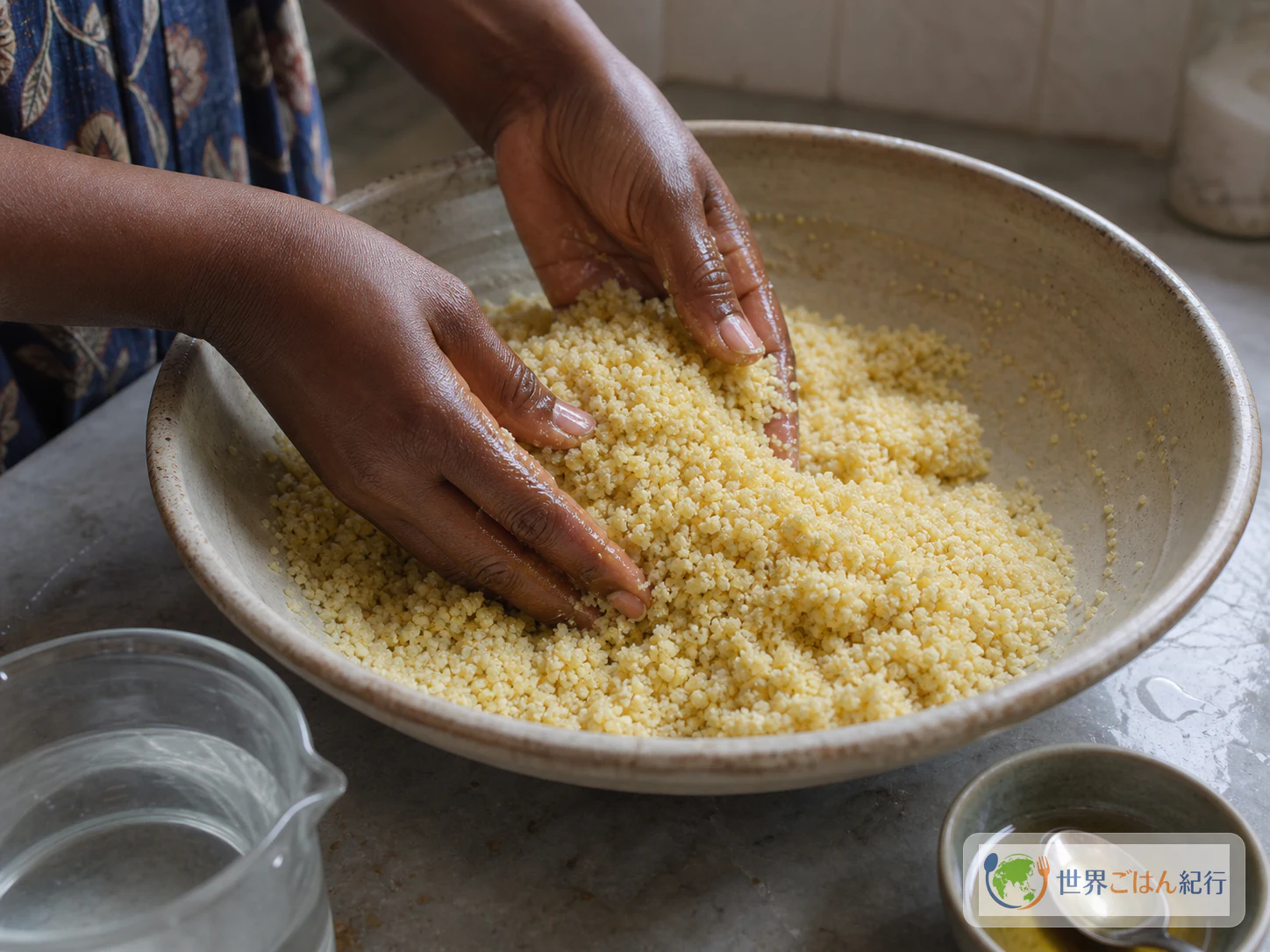
Don't add the water to the couscous all at once. Add it in 3 additions, working it in with your hands each time. Stop when it's loose and sandy like damp sand, and the grains will separate into fluffy beads even after steaming.
Common dambou problems and fixes
How satisfying dambou is depends less on seasoning than on moisture. Couscous absorbs water quickly, so even if you measure exactly, the result shifts with the room's humidity, how well the greens are drained and how strong the steam is. Check the texture once at each stage and you can correct it before it reaches the table.
Checking the grains at each step
| When to check | Good state | How to fix |
|---|---|---|
| Right after moistening in step 2 | Holds together lightly when squeezed and loosens when you open your hand | If floury, add 1 tbsp lukewarm water; if clumpy, add 2 tbsp dry couscous |
| Right after steaming in step 3 | No white core in the grains, and the surface isn't wet | If there's still a core, steam 5 more minutes over medium heat; if wet, remove the cloth and let it sit 1 minute |
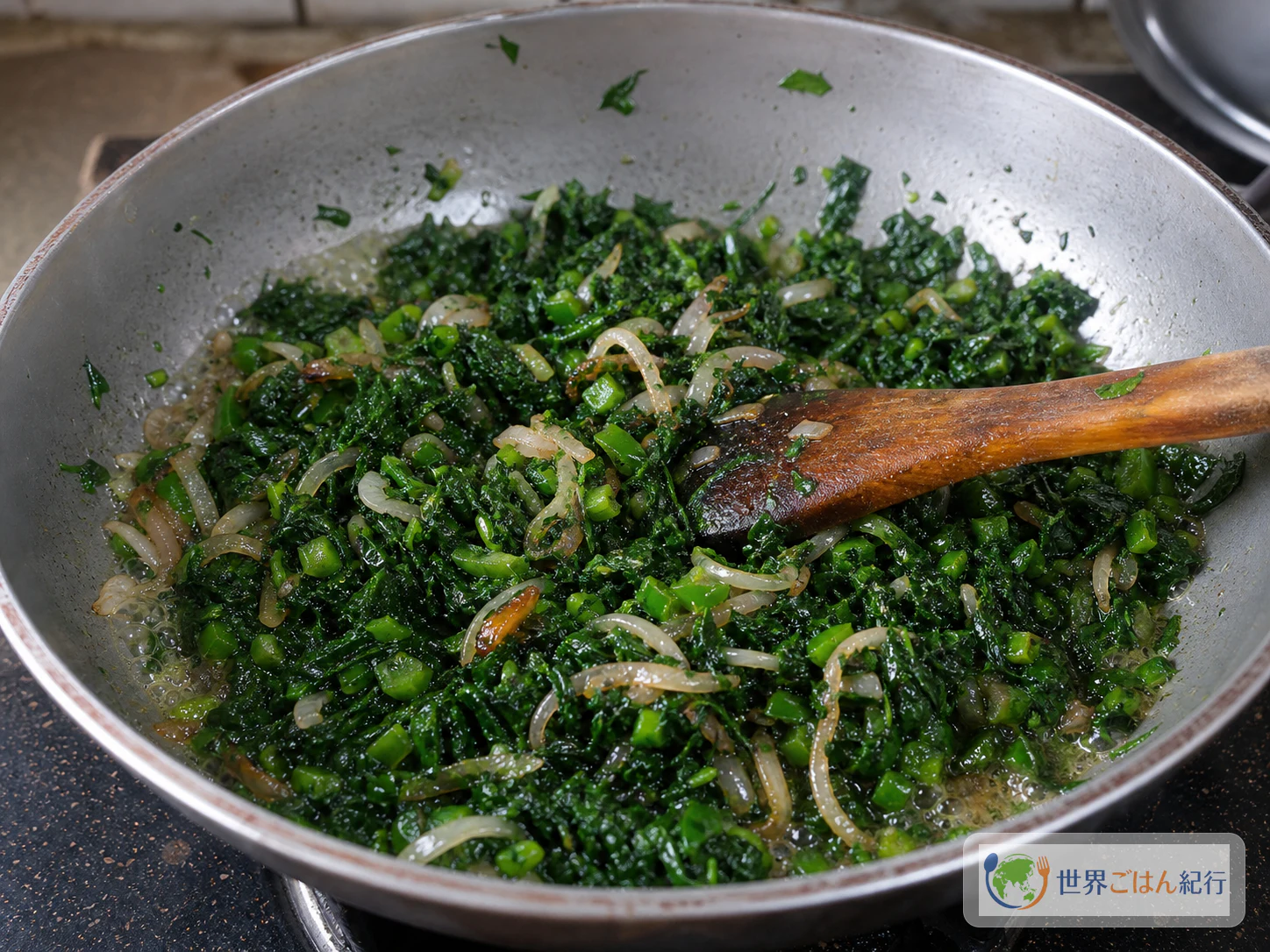
| Greens in step 4 | About 2 tbsp of liquid left in the bottom of the pan | If too much liquid, 1 minute over medium heat; if about to scorch, add 1 tbsp water |
| After combining in step 5 | Falls lightly from the spatula, with no liquid left in the bottom | If heavy, turn off the heat and spread it out. If dry, sprinkle 2 tsp water |
| After resting | Steam has died down and the peanut aroma comes forward | If the salt tastes flat, add salt to the sides rather than the whole dish |
The most common mistake at home is pouring in all the liquid from the greens because it seems a waste not to. That liquid carries aroma, but whatever the grains can't absorb turns into stickiness. Cook it completely dry, though, and the greens won't cling to the grains. As a guide, when you draw the spatula across the bottom of the pan, a thin line should appear for a moment and then close up.
Troubleshooting
| Problem | Cause | Fix |
|---|---|---|
| Grains form clumps | Water added all at once, or grains not fluffed after steaming | Break up with a fork and warm over low heat for 1 minute to release steam |
| Watery from the greens | Washed leaves too wet, or too much liquid left from steam-sautéing | Reduce the greens alone over medium heat for 1 minute before adding the grains |
| Moringa tastes bitter | Too much powder, or overcooked at the end | Add 1 tsp lemon juice and 1 tbsp crushed peanuts |
| Aroma is weak | Onion not sautéed long enough | Next time, sauté the onion 5 minutes until translucent |
| Hard once cooled | Grains absorbed too much moisture | When reheating, sprinkle 1 tbsp water, cover and warm over low heat for 3 minutes |
Serving, storing and varying dambou
Sides for dambou
For dinner, treat dambou as the staple and add one salty item on the side. Adjust the flavor through the sides rather than seasoning the grains heavily: extra lemon with grilled fish, a little chili with boiled eggs, less oil with chicken. The green chili in the pot is there for aroma, not heat, and grain dishes soak up heat easily, so let people add chili or lemon at the table. That also makes it easier to serve to children and anyone who doesn't like spice.
| Side | Best for | Adjusting the flavor |
|---|---|---|
| Salted mackerel, white fish, salmon | Days you want dinner to be filling | Serve lemon on the plate and don't add more salt to the dambou |
| Boiled eggs | Days without meat or fish | Add 2 tsp coarsely crushed peanuts |
| Tomato and cucumber | Lunch on a hot day | Toss with lemon juice and a little salt and set beside the grains |
| Chicken thigh | Days you want a one-plate meal | Cook it first in step 4 and reduce the rice bran oil to 2 tbsp |
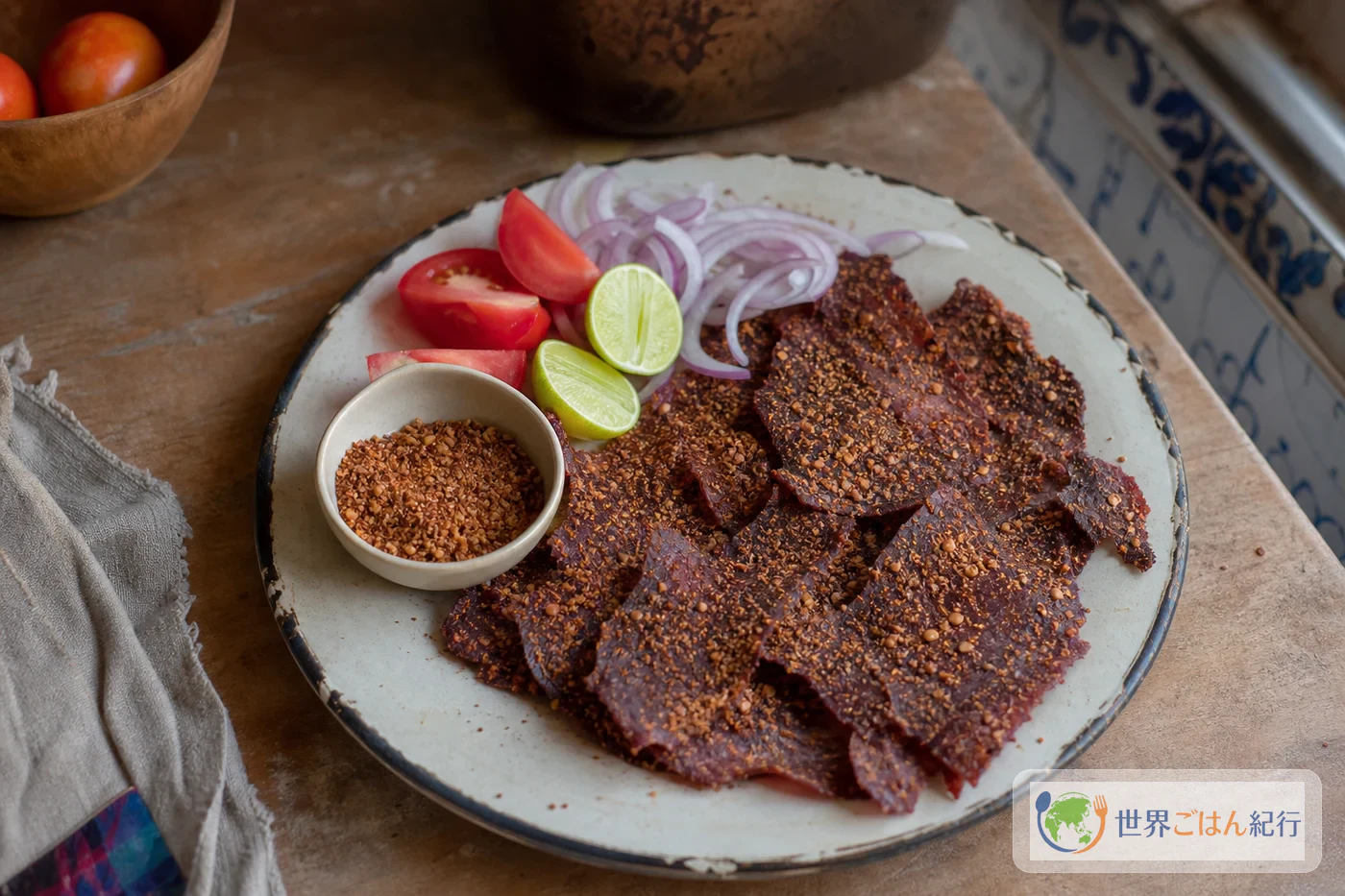
On a day you want a little meat on the table, set kilishi, the spiced dried meat of the Hausa region, alongside for a contrast between light grains and dry beef.
Weeknight and weekend versions
The same ingredients work for a quick weeknight dinner or a slower weekend cook. On weeknights, focus on grains that aren't sticky and getting the sides out at the same time. On weekends, spend the time on fluffing the grains twice, adjusting the moringa and crushing the peanuts coarsely; it makes a real difference to the texture.
| Version | Best for | What to skip | What not to skip |
|---|---|---|---|
| Weeknight | Dinner after work, prepping lunches | Couscous can be rehydrated in boiling water. Salted mackerel or salmon is fine for the fish | Draining the greens, fluffing the grains with a fork |
| Weekend | Your first time, cooking for guests | Nothing | Steaming the grains in a steamer, adjusting the moringa starting small |
| Make-ahead | Using it through the next day's lunch | Sides can be stored separately | Spreading the dambou thin to cool it quickly |
| Mild | Eating with children or people who don't like heat | Use half the green chili | Building aroma with onion, ginger and peanuts |
For the weekend version, return the grains to the bowl after steaming and fluff them again before combining with the greens. They're hot, so start with a fork, then switch to your fingertips once they're cool enough to touch so the grains don't get crushed.
Storage and reheating
Dambou dries out faster than seasoned rice dishes and releases more moisture than a leafy side dish, so spread it thin and cool it quickly.
| Storage | How long | Reheating |
|---|---|---|
| Room temperature | Within 2 hours | Even shorter in summer. Keep fish and eggs separately |
| Refrigerator | 2 days | Put in a skillet, sprinkle 1 tbsp water and warm over low heat for 3 minutes |
| Freezer | 2 weeks | Wrap flat in single portions. Microwave at 600 W for 2 minutes, fluff, then 1 more minute |
| Packed lunch | Reheat in the morning and eat the same day | Pack fish in a separate container, and cool completely before packing |
If the aroma fades after refrigeration, add 1 tsp lemon juice at the end of reheating. More oil tends to make it heavy, so revive it with water and lemon first.
Using up the pantry, and what to cook next
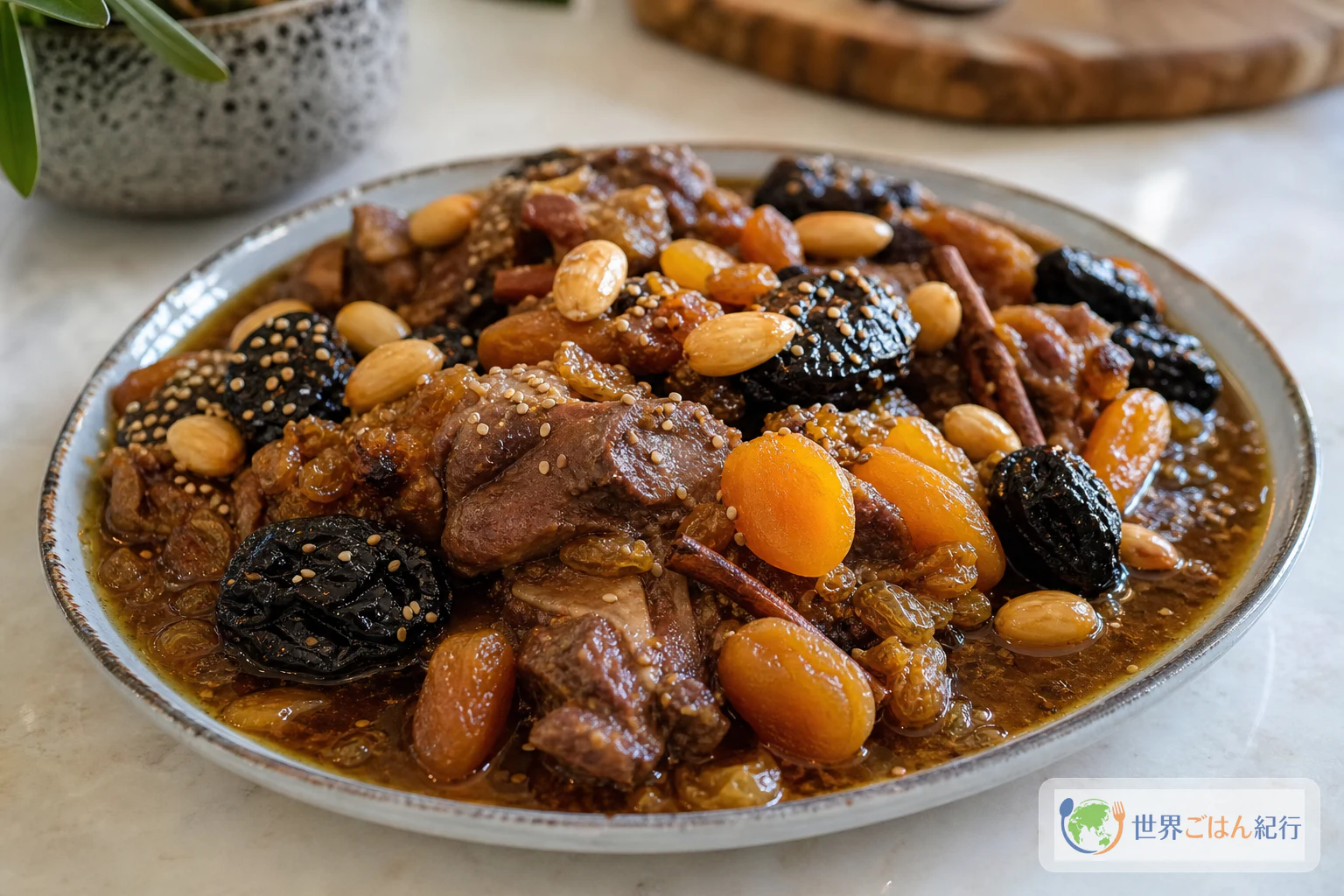
Leftover dried moringa is easiest to use a pinch at a time in sautéed greens. Peanuts can go into groundnut soup or mafé, and couscous goes well with soups, so harira gives the same staples another use.
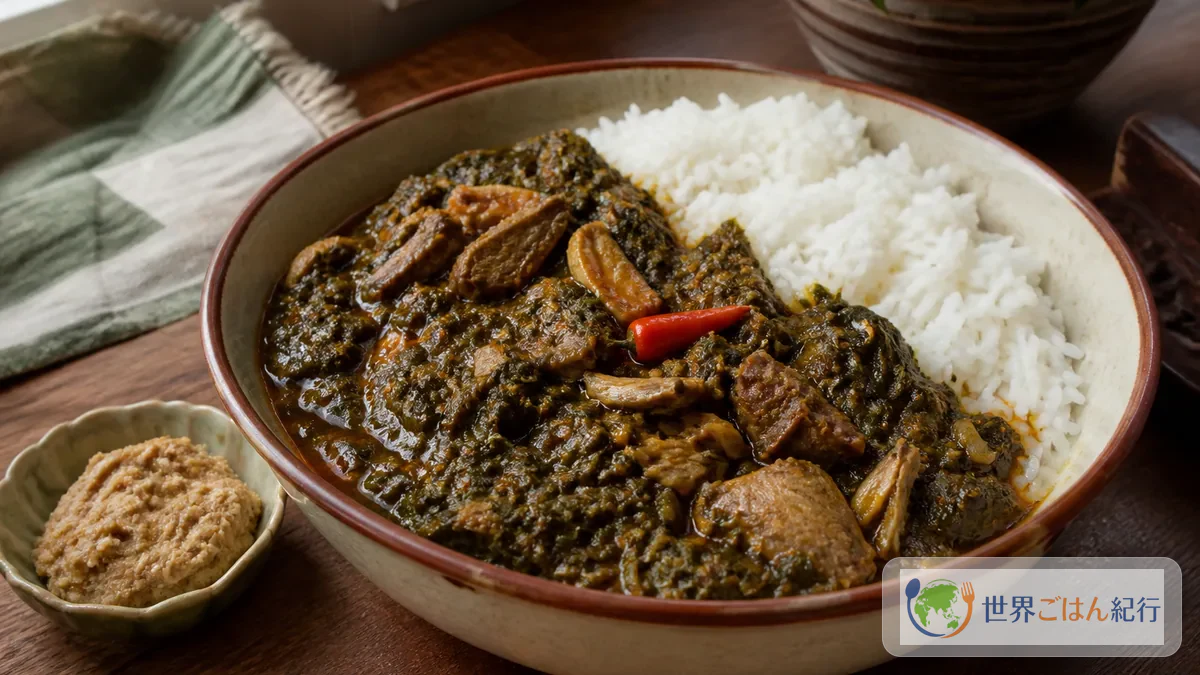
For West African tables where a staple carries the meal, Ghanaian fufu and Ivorian attiéké are good next steps; dambou is lighter than either, sitting somewhere between a salad and a staple. Curious about rice dishes? Try jollof rice. For leaves, look at matapa, Kenyan sukuma wiki or the rich leaf-and-nut stew ndolé, and you'll see how each region balances grain, leaves and oil.
FAQ
Can I make it without moringa?
Yes, though the backbone of the dish shifts a little. Increase the komatsuna to 9 oz (260 g) and the spinach to 5 oz (140 g), and finish by mixing in 2 finely chopped shiso leaves. The aroma moves in a different direction, but it still comes together as a dish of grains and greens.
Can I just rehydrate the couscous in boiling water?
On a busy weeknight, yes. Add 1 cups (260 ml) boiling water, 1 tbsp oil and 1/2 tsp salt to 10.5 oz (300 g) dried couscous, cover and let it sit for 5 minutes. It tends to turn heavy when mixed with the greens, so drive off steam in a skillet for 1 minute before combining; that also makes it much easier to reheat the next day. The first time, a steamer is less likely to go wrong.
What if someone has a peanut allergy?
If anyone at the table can't eat peanuts, leave them out entirely. White sesame seeds (2 tsp) can supply toastiness, but it won't be the richness of dambou. On nut-free days, center the meal on the grains and greens and add fish or eggs for substance.
Can I add meat to make it a one-plate meal?
Yes. Cut 9 oz (250 g) chicken thigh into 1 inches (2 cm) pieces, sprinkle with 1/4 tsp salt, and in step 4 sear it over medium heat for 5 minutes before sautéing the onion. Once the surface is browned and it's cooked through to the center, add the greens. Meat makes the grains heavier, so reduce the oil to 2 tbsp.
When do I add moringa powder?
In step 4, when the greens go in. The powder absorbs moisture readily, so dissolving 2 tsp in the ½ cup (120 ml) vegetable stock before adding it keeps green lumps from forming. Sprinkled on at the end, it stays powdery, so let it blend in briefly in the pan.