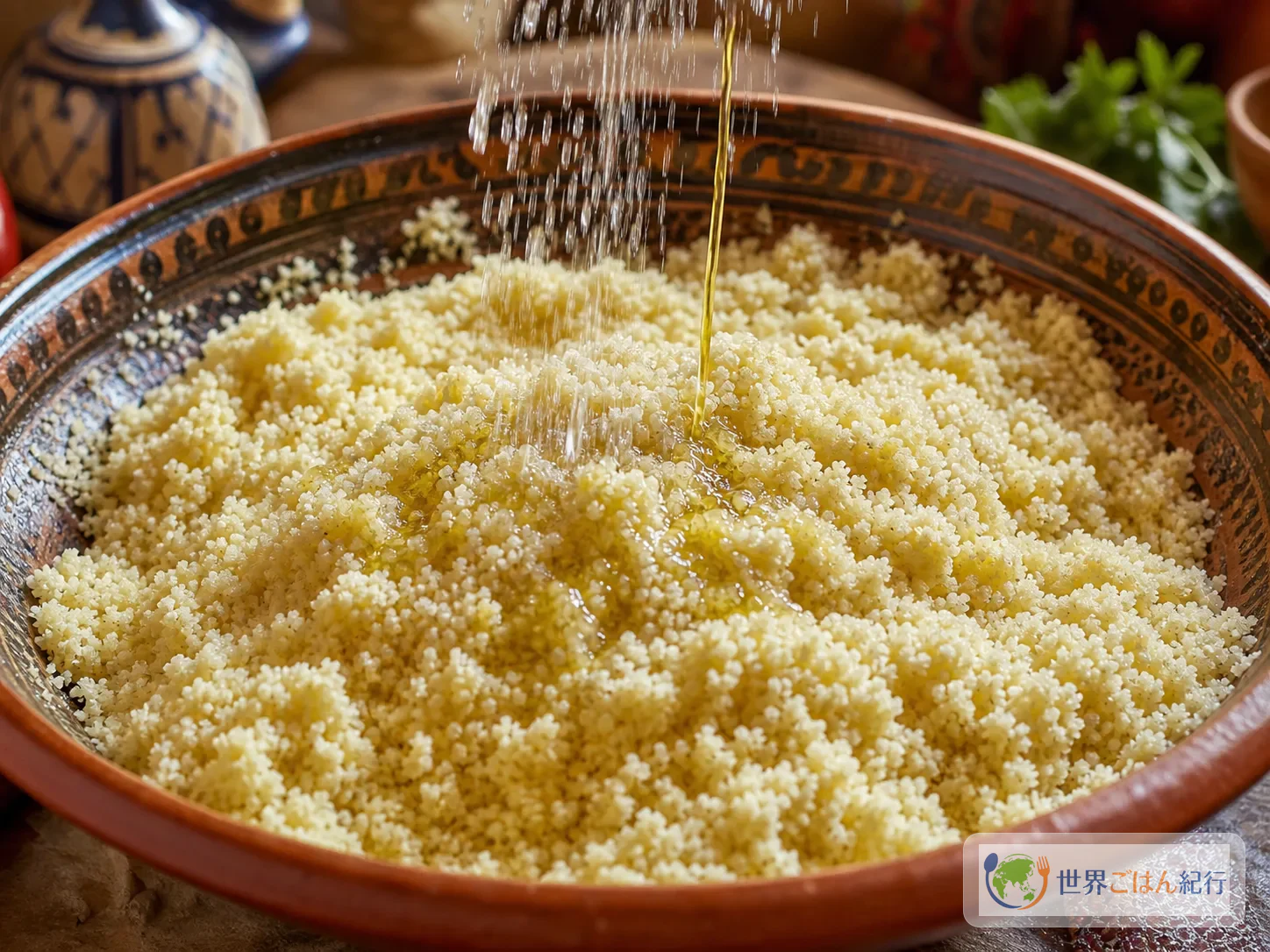
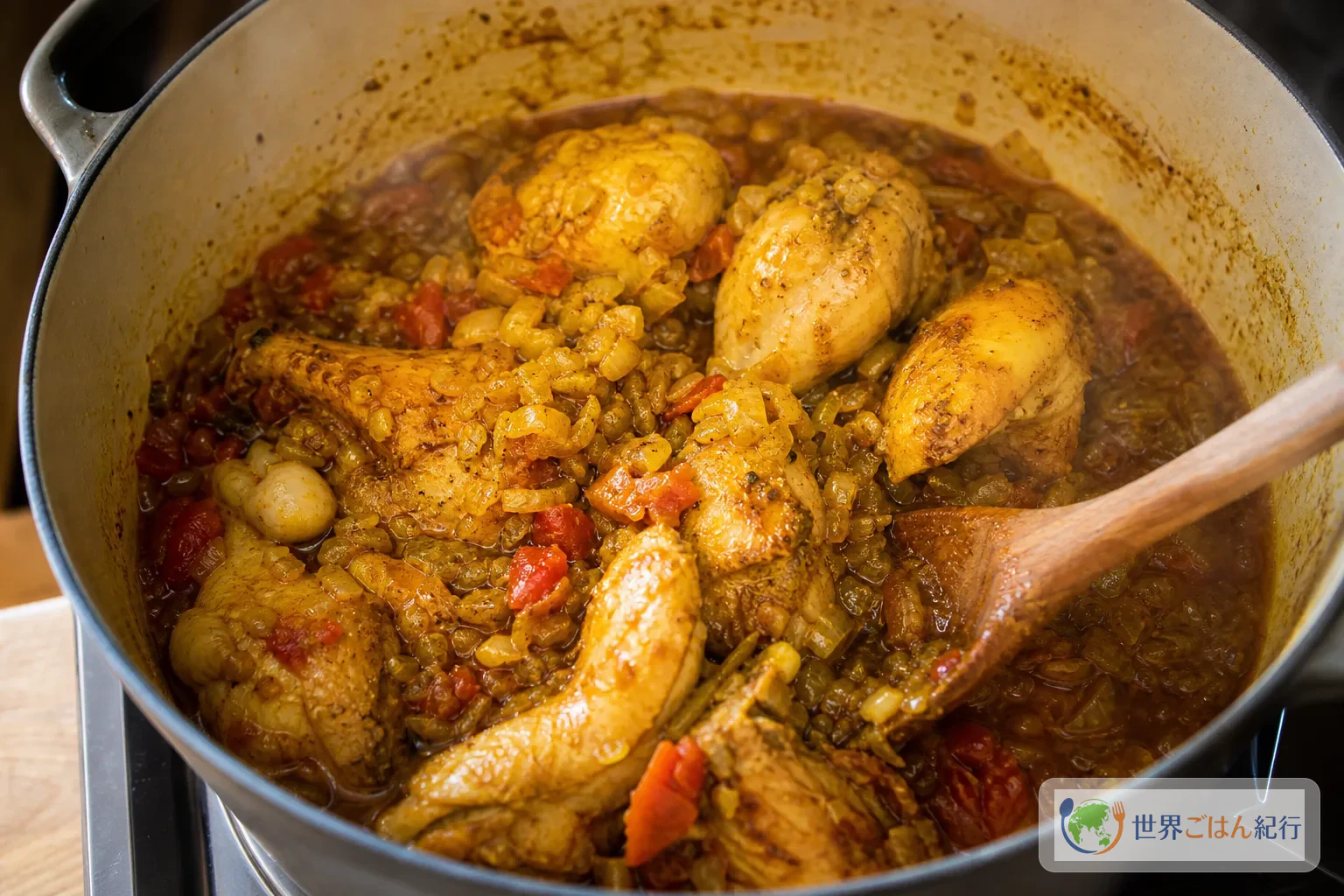
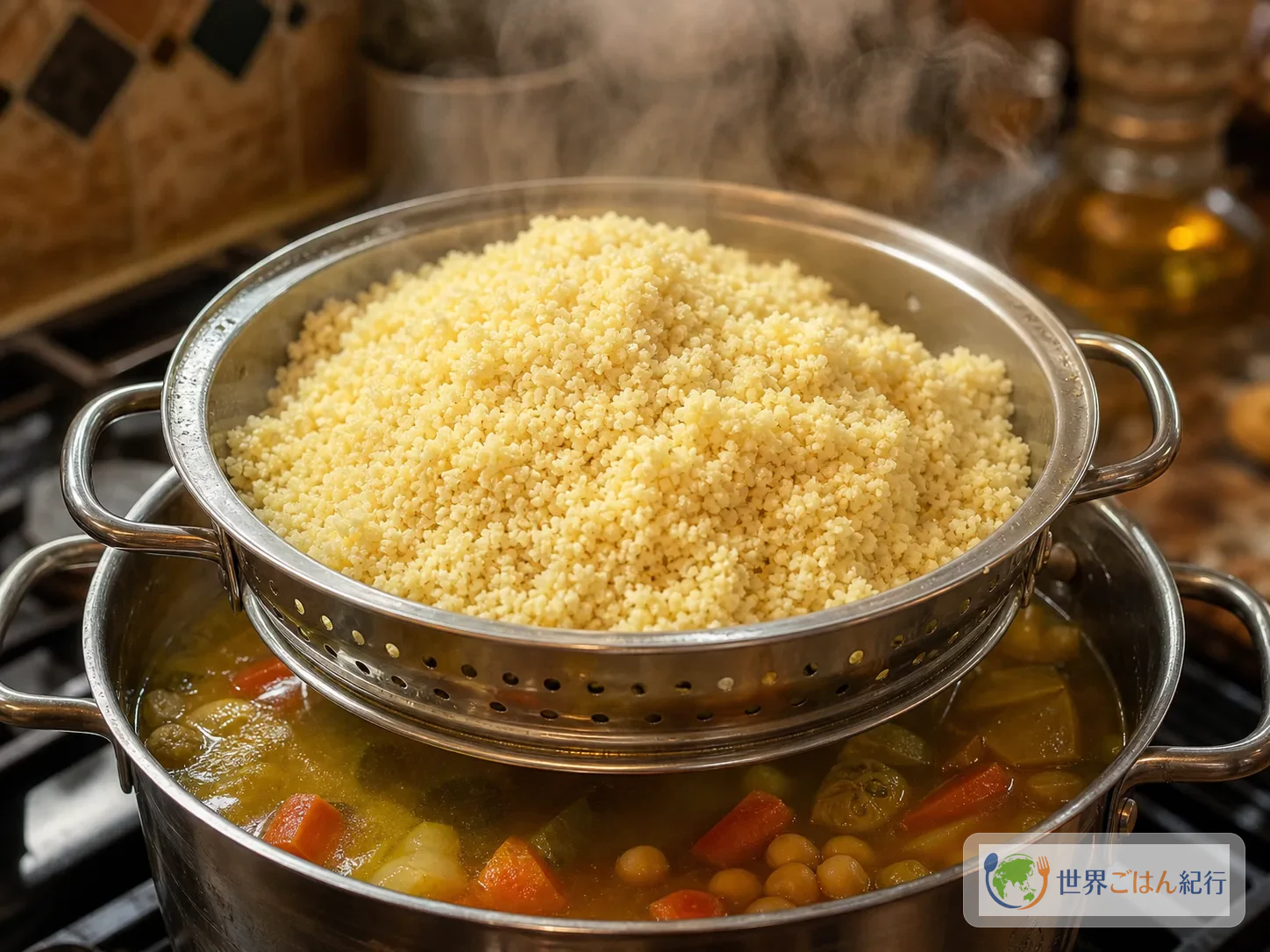
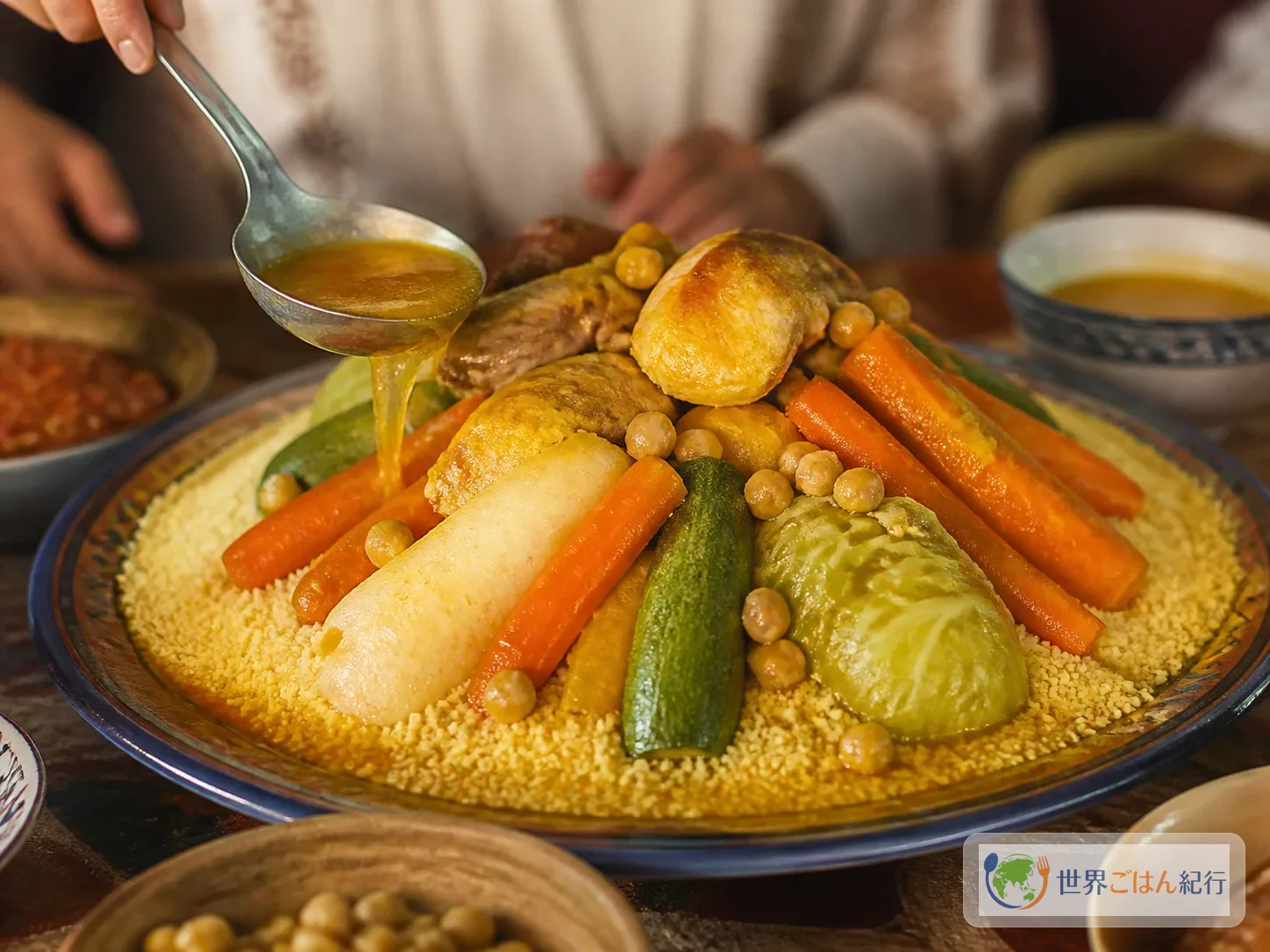
Work a little water into dry couscous and the sandy, free-flowing grains suddenly swell as if alive. Below, a chicken-and-vegetable broth perfumes the kitchen; above, the semolina drinks in the steam. Lift the lid and the room fills with the sweet smell of wheat, spices, and vegetables.
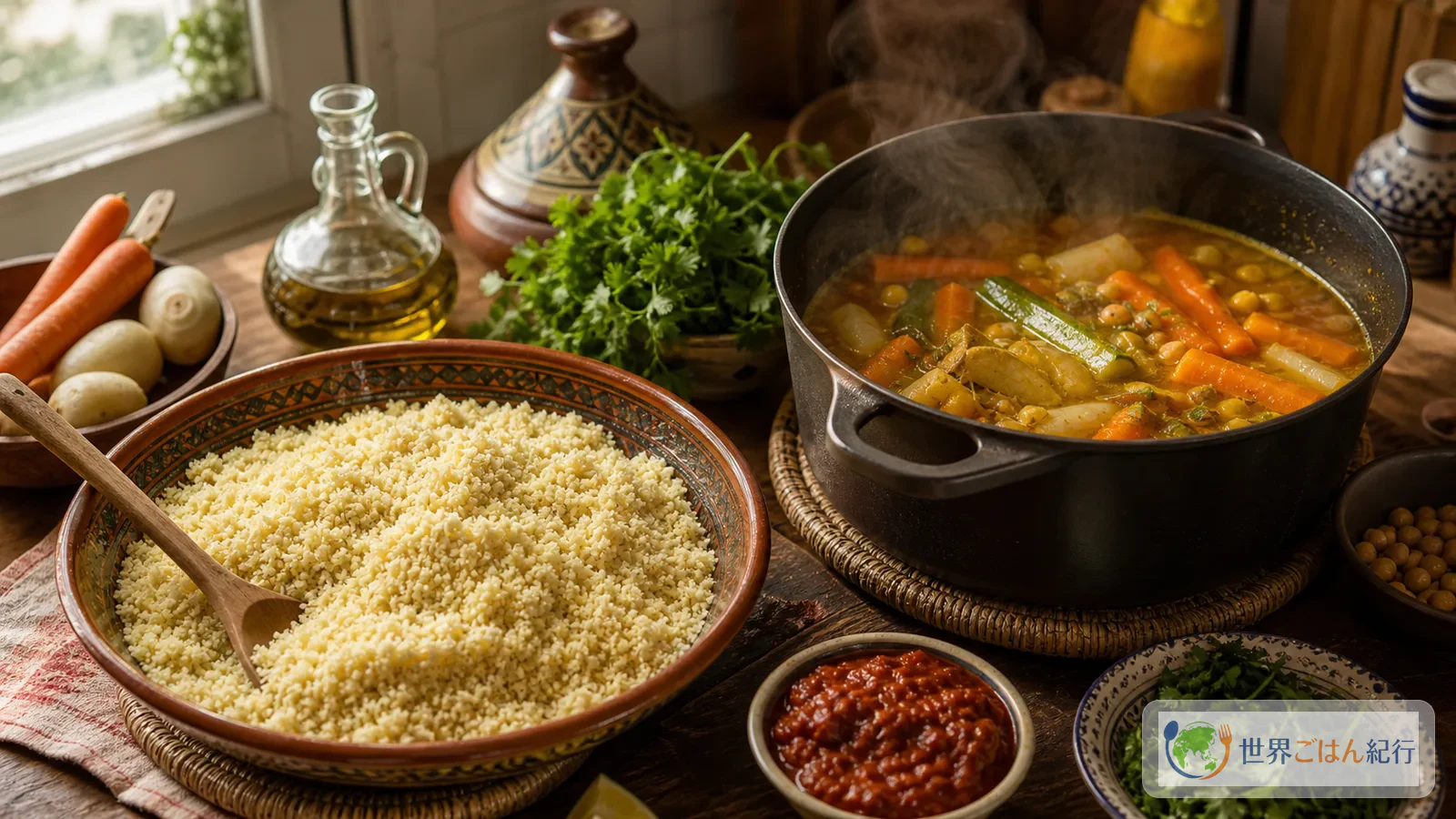
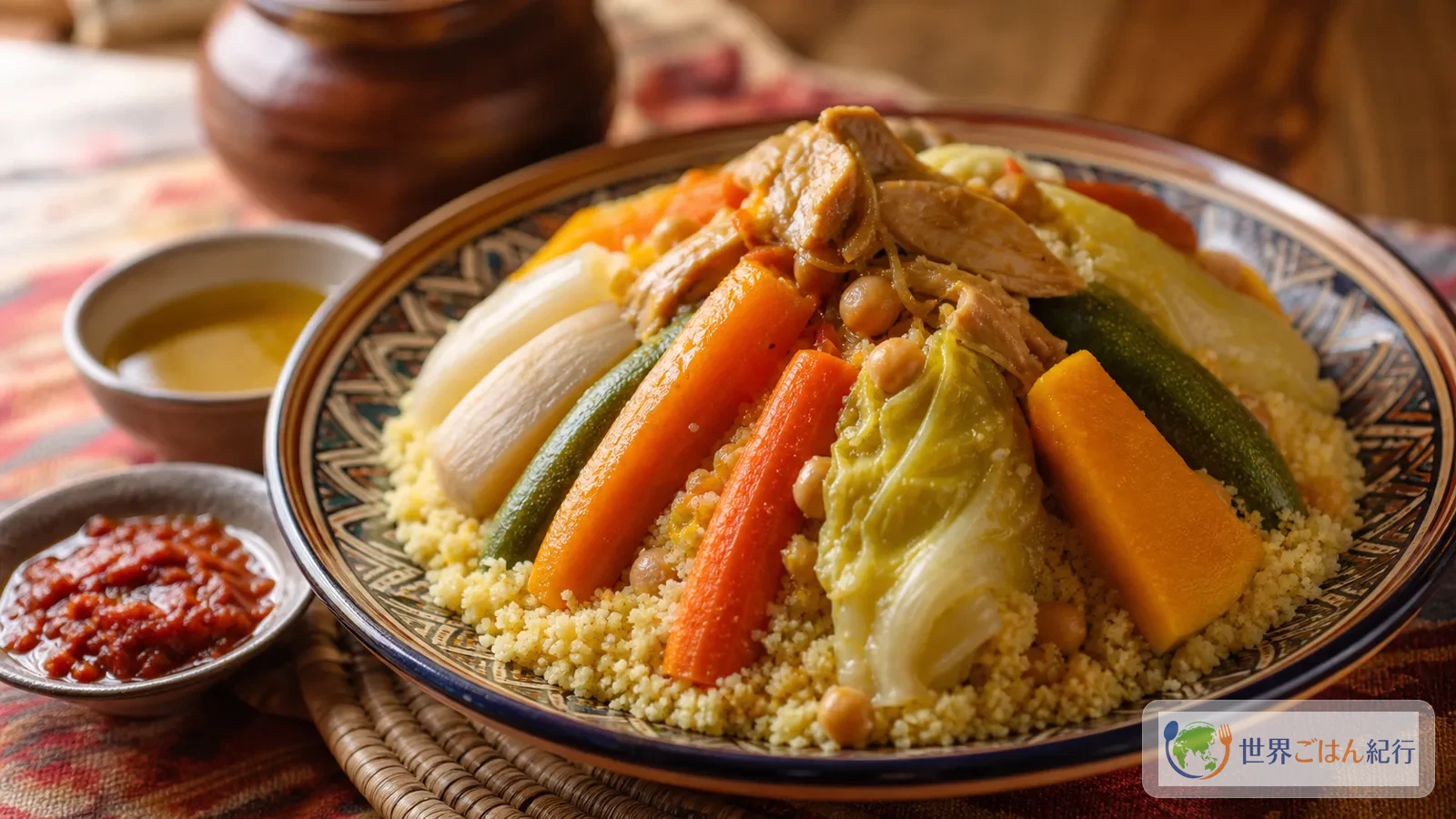
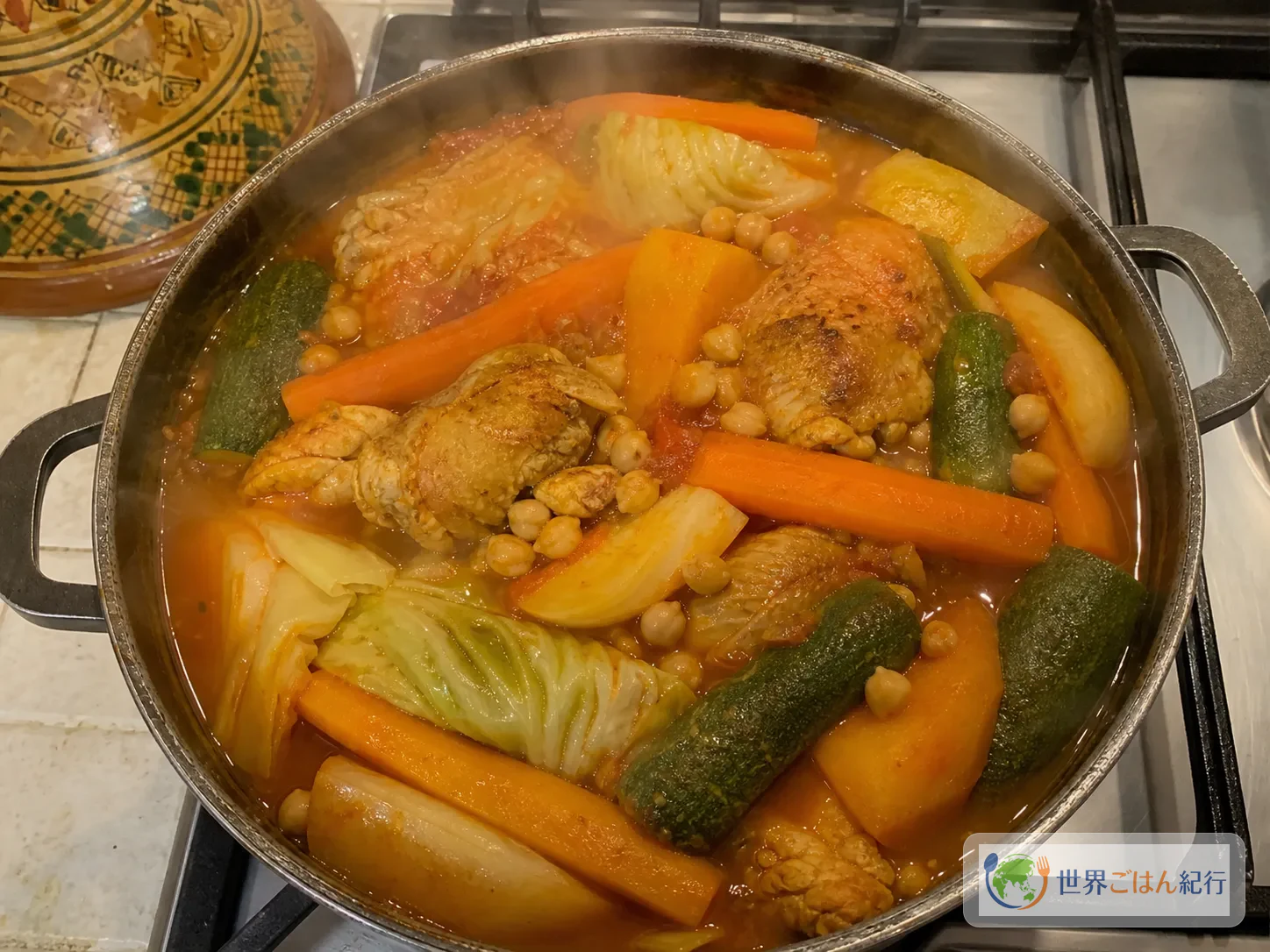
This is Morocco's couscous with seven vegetables: carrot, turnip, zucchini, pumpkin, cabbage, onion, and tomato, with chickpeas and chicken to make it a full meal. Many home cooks know couscous as tiny pasta you just pour boiling water over, and that is convenient and tastes good in its own way. Moroccan home-style couscous is slower. You moisten the grains, steam them, fluff them, steam them again, and only then let them drink the broth.
About Moroccan Couscous
Couscous is both the name of a dish and the name of the ingredient, semolina rolled into tiny grains. In North Africa it often refers to the whole dish of steamed couscous topped with a meat-and-vegetable broth, much as "rice" and "a rice dish" share a word.
A Dish of the Maghreb
Couscous is eaten widely across the Maghreb, in Algeria, Tunisia, and Mauritania as well as Morocco. In 2020, the knowledge and practices of making and eating couscous, nominated jointly by several countries, were added to the intangible cultural heritage list. It belongs to a culture of growing wheat on dry land, rolling it into grains, steaming it, and sharing it, rather than to any one country.
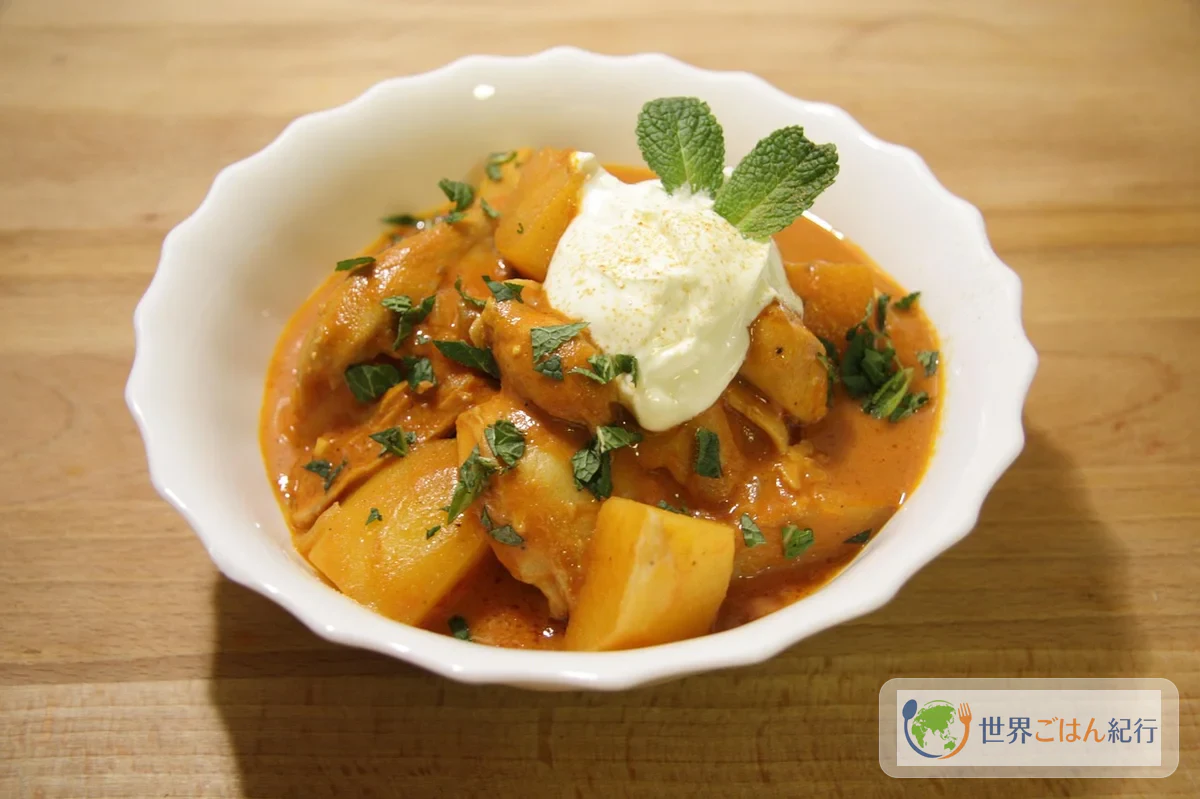
Across North Africa the grains also serve as a bed for stews. Mafrum, a Libyan-Jewish home dish of stuffed potatoes in tomato sauce, is sometimes eaten over couscous, which shows how well the grains soak up sauce.
Couscous on the Moroccan Table
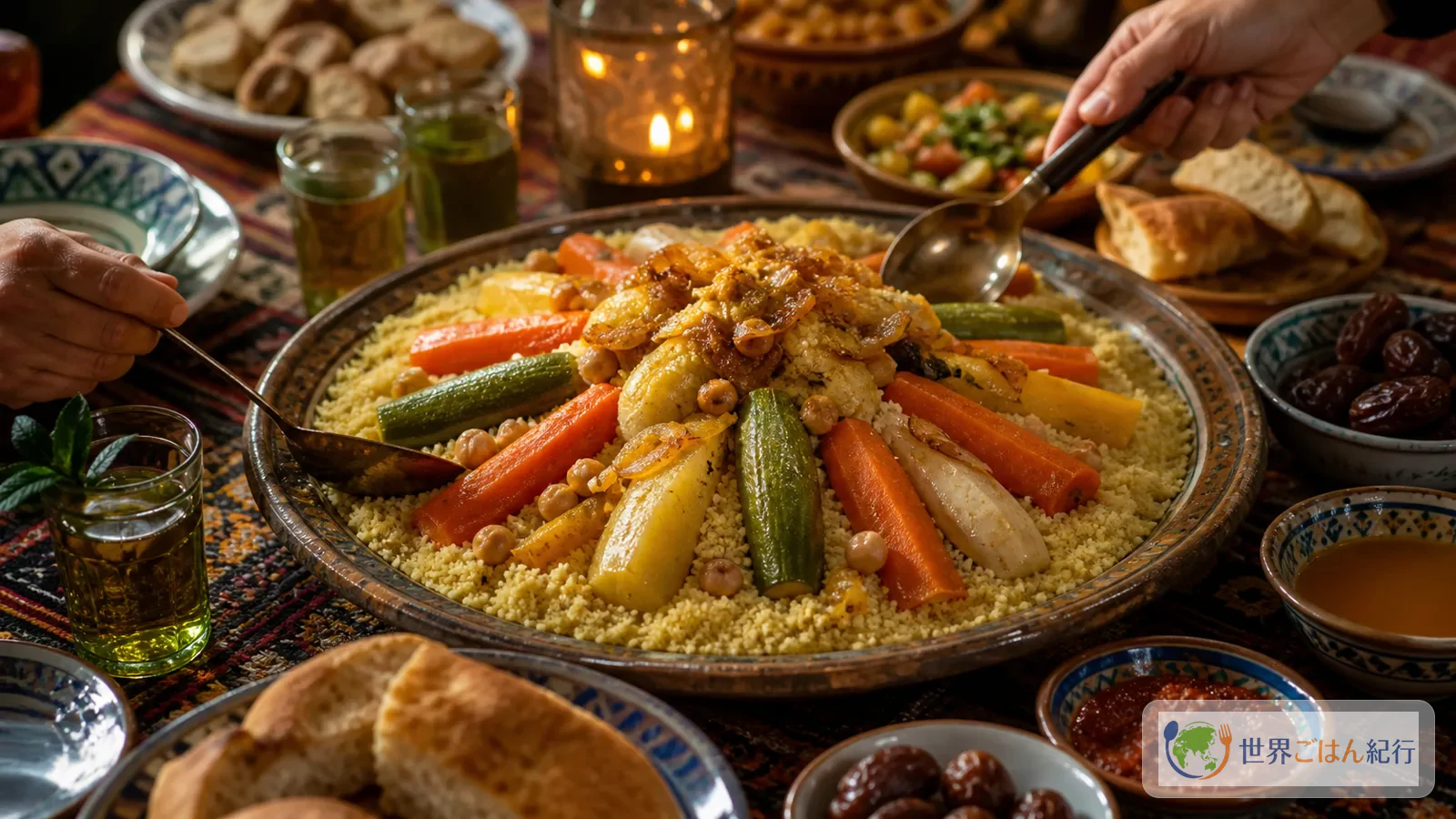
In Morocco, eating couscous for lunch after Friday prayers is a well-known custom, and it is still a big platter that brings people together. The couscous is heaped in the center, meat and vegetables are arranged on top, and the broth comes on the side. Each person eats from the part in front of them and ladles on a little more broth as needed. The work is less about effort than about planning the kitchen's time around a family lunch.
The star is the grains, not the meat. Chicken and lamb matter, of course, but if the grains turn sticky and clump, you end up with stew poured over flour, however good the broth. The Moroccan home style keeps the grains fluffy and separate, and never lets them soak up all the broth at once.
Ingredients (serves 4)
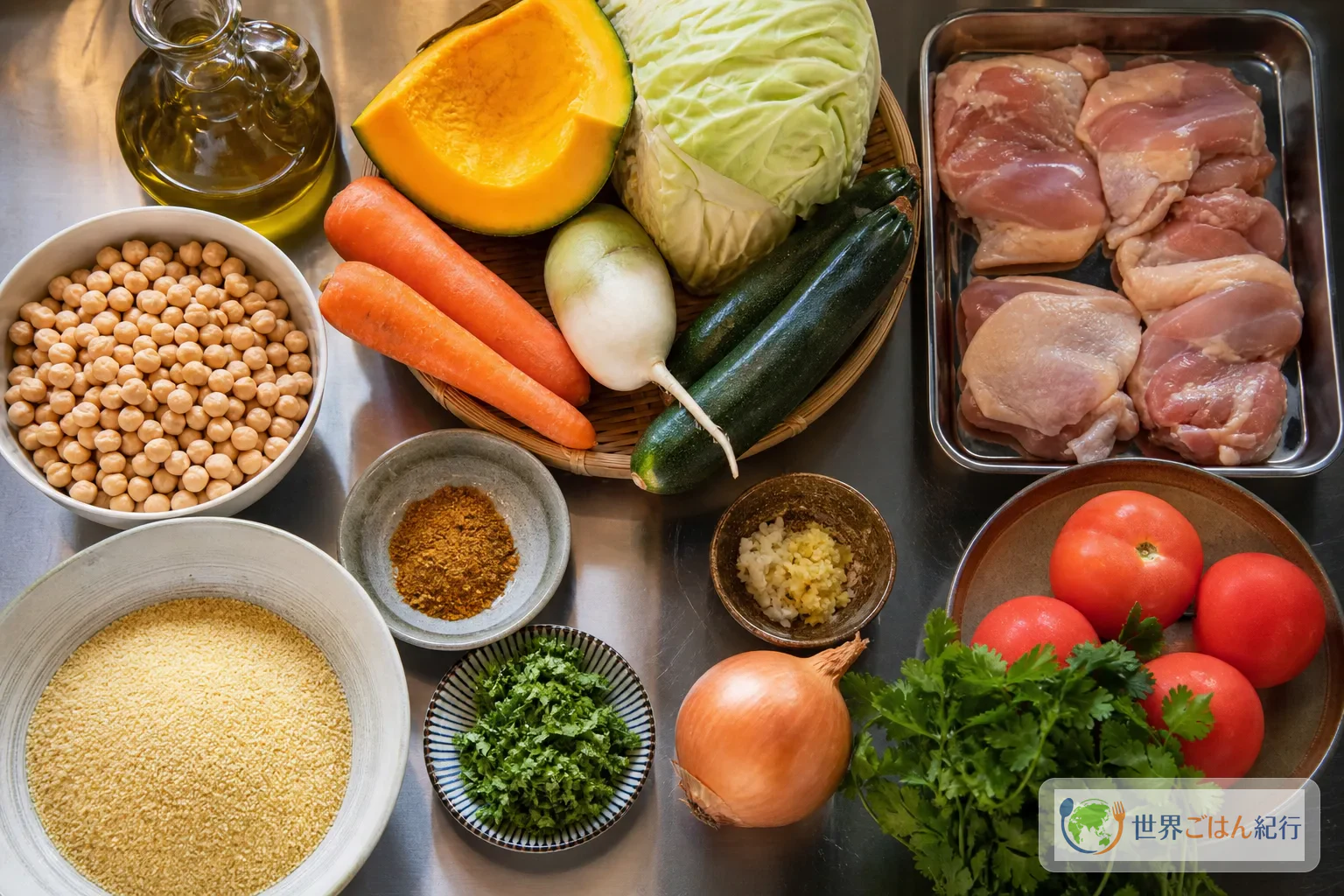
This recipe contains wheat (couscous), chicken, and dairy (the finishing butter). Couscous is made from wheat, so it is not suitable for people avoiding gluten. Store-bought bouillon and harissa may contain wheat, milk, soy, or nuts, so check the ingredient labels.
Shopping notes
Couscous is a dried staple, so a bag is unlikely to go to waste. It can serve as a side for tagine, a salad base, or a bed for soups. Ras el hanout is handy, but there is no need to force yourself to buy it the first time. With cumin, coriander, turmeric, and cinnamon, a home couscous has plenty of aroma.
Couscous and a steamer are tools that raise your odds of success. Even if you start with the hot-water method only, paying attention to the grain size and the steam in the pot changes the result. Look for couscous at larger supermarkets, Middle Eastern grocers, or online.
Choosing Ingredients for Couscous
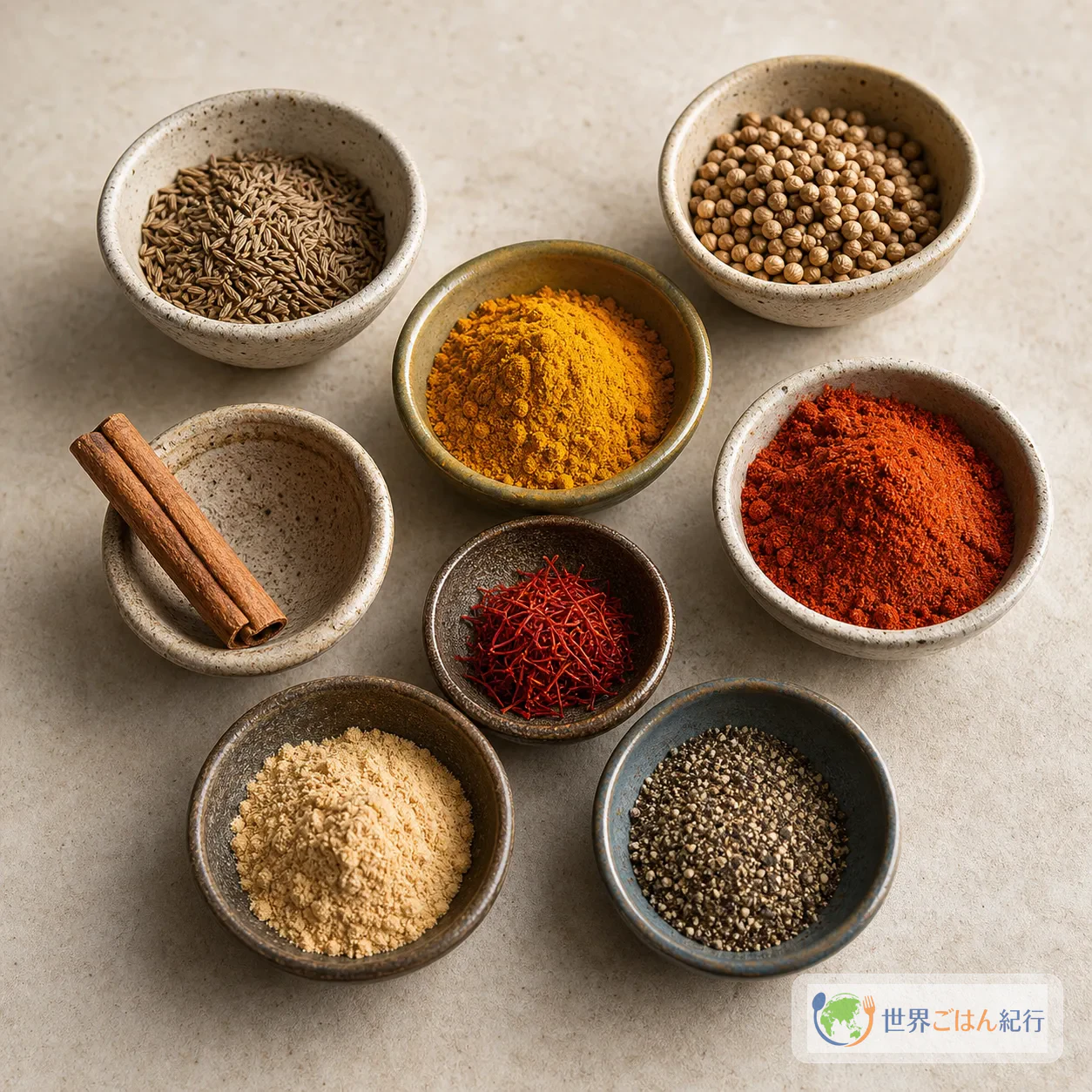
A couscous steamer is ideal, but a steamer basket or the hot-water method gets you close. The spices and beans overlap with tagine and harira, so this is a good way to use up the cumin, coriander, and harissa you bought for the introduction to Moroccan cuisine.
Bone-in chicken thighs are the easiest meat to handle. The flavor from the bones passes into the broth, and the grains absorb it. If you use boneless meat, add a little chicken stock or bouillon so the flavor does not go flat.
Sweet kabocha-type pumpkin breaks down easily, so leave the skin on and cut it large. Butternut squash, if you can find it, gives a texture closer to the original, but kabocha works fine.
Instructions
The traditional tool is a couscoussier: a pot below for the broth and a perforated pot above for steaming the couscous. At home, a pot with a steamer basket, or a colander lined with a cloth, gets you close enough. On a short day, use the hot-water method. The steps below use steaming.
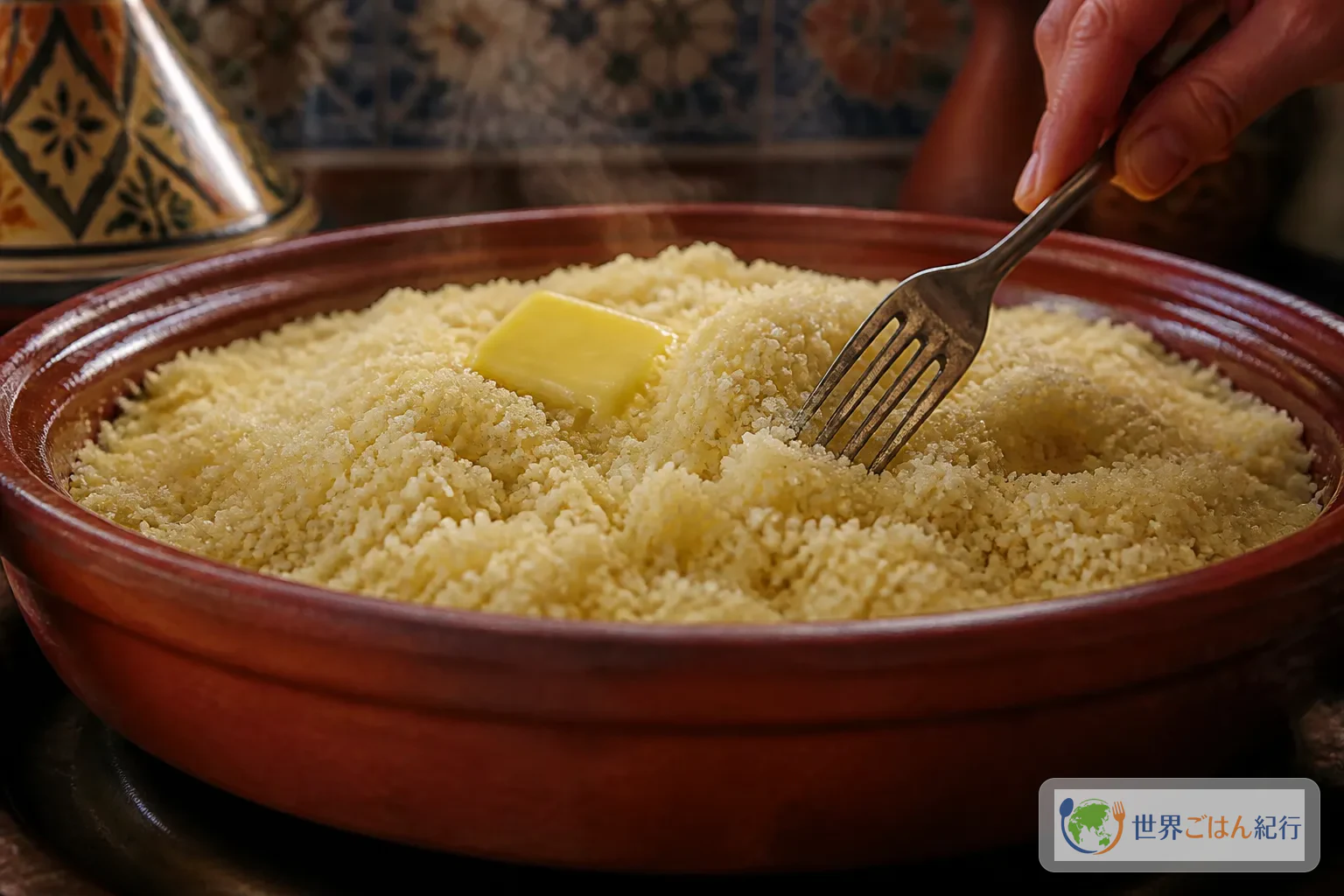
On days you skip the steamer, add 1 cup (250 ml) hot broth, 1 tbsp olive oil, and a little salt to 10.5 oz (300 g) dried couscous, cover, and rest for 5 minutes. Then fluff with a fork and mix in the butter. The aroma is lighter than the traditional steamed finish, but it is plenty for a weeknight dinner. If it turns sticky, use less broth and add more later.
Tips for Fluffy Couscous
Add the water a little at a time
The most common failure is adding all the water at once and making clumps. Instead of flooding the grains as when rinsing rice, moisten them little by little, like a mist, and rub them between your fingertips to even out the dry and wet grains. Think "steam and fluff" rather than "boil."
The same goes for the hot-water method. Use the amount on the package as a starting point, but on a first try add a little less, cover, and then add 1 tbsp of broth at a time if it falls short. Grains that are too soft cannot be brought back; hard grains can always take more liquid.
Keep the broth on the side
Pour all the broth over the platter right away and the first few minutes are delicious, but the grains at the bottom soon turn heavy. At Moroccan tables the broth is often served on the side and added during the meal, which also lets everyone adjust to their own taste.
Cut the vegetables large
Cut the carrots, turnips, pumpkin, and cabbage much larger than for curry. Couscous is eaten by breaking up grains and vegetables on the plate a little at a time, and small pieces sink into the broth and disappear. Carrots halved lengthwise, turnips in halves, pumpkin in thick wedges, and cabbage in wedges with the core left in are all easy to handle. Zucchini is soft, so add it in the second half.
Save half the herbs for the end
If all the parsley and cilantro cook from the start, the aroma turns too rounded. Put half in the broth and scatter the rest just before turning off the heat or at the table. The grains absorb a lot of fat and broth, and that fresh green note at the end keeps the dish from feeling heavy.
Use a deep pot
In a shallow frying pan the liquid evaporates quickly and the broth runs short, and couscous with too little broth to pour over at the end is hard to eat, however good the toppings. Use a heavy pot or a deep frying pan. If you set a steamer on top, wrap a clean cloth around the rim so steam does not escape through the gap.
Season lightly in the pot
Stop seasoning when the broth still tastes a little mild, and put harissa, salt, and lemon on the table. The grains keep absorbing flavor, so a broth that tastes right in the pot can turn too salty later. Leaving room to adjust also makes the dish easier to serve to first-timers.
Serving and Variations
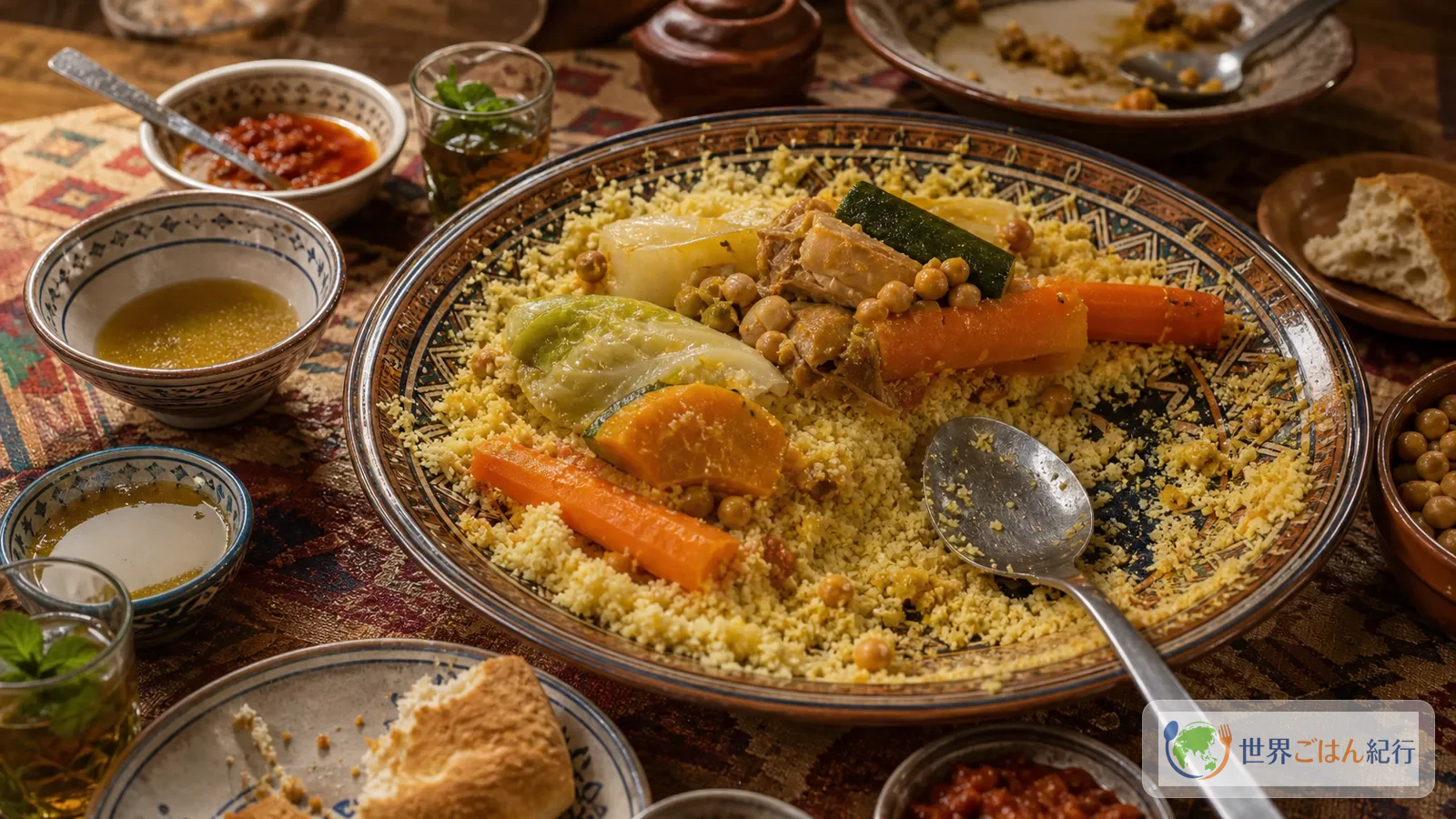
Serving and adjusting the heat
For children or anyone who dislikes heat, leave the chili out of the pot and put the harissa in a small dish. Adults can dissolve a little harissa in their broth and use it as a spicy sauce. Cinnamon and cumin are strong too, so you can use half the first time; the sweetness of the vegetables carries the dish without heat.
Couscous is complete on one plate, but at dinner a light side makes it easier to eat: a salad of cucumber and tomato dressed with salt, lemon, and olive oil, or a simple sauce of yogurt with salt and mint.
Lamb instead of chicken
Many Moroccan households use lamb. Use 1 lb (500 g) lamb shoulder or lamb chops, increase the ginger slightly, and reduce the cinnamon to 1/3 tsp to balance lamb's strong aroma. Cook it longer than chicken, about 45 minutes, so the fat and broth come together.
Vegetables only
For a vegetarian version, leave out the chicken and increase the chickpeas to 10.5 oz (300 g). Use vegetable stock instead of water and add 1 more tbsp olive oil. Without the umami of meat, it matters to cook the onion patiently for 10 minutes without scorching and to reduce the tomatoes well.
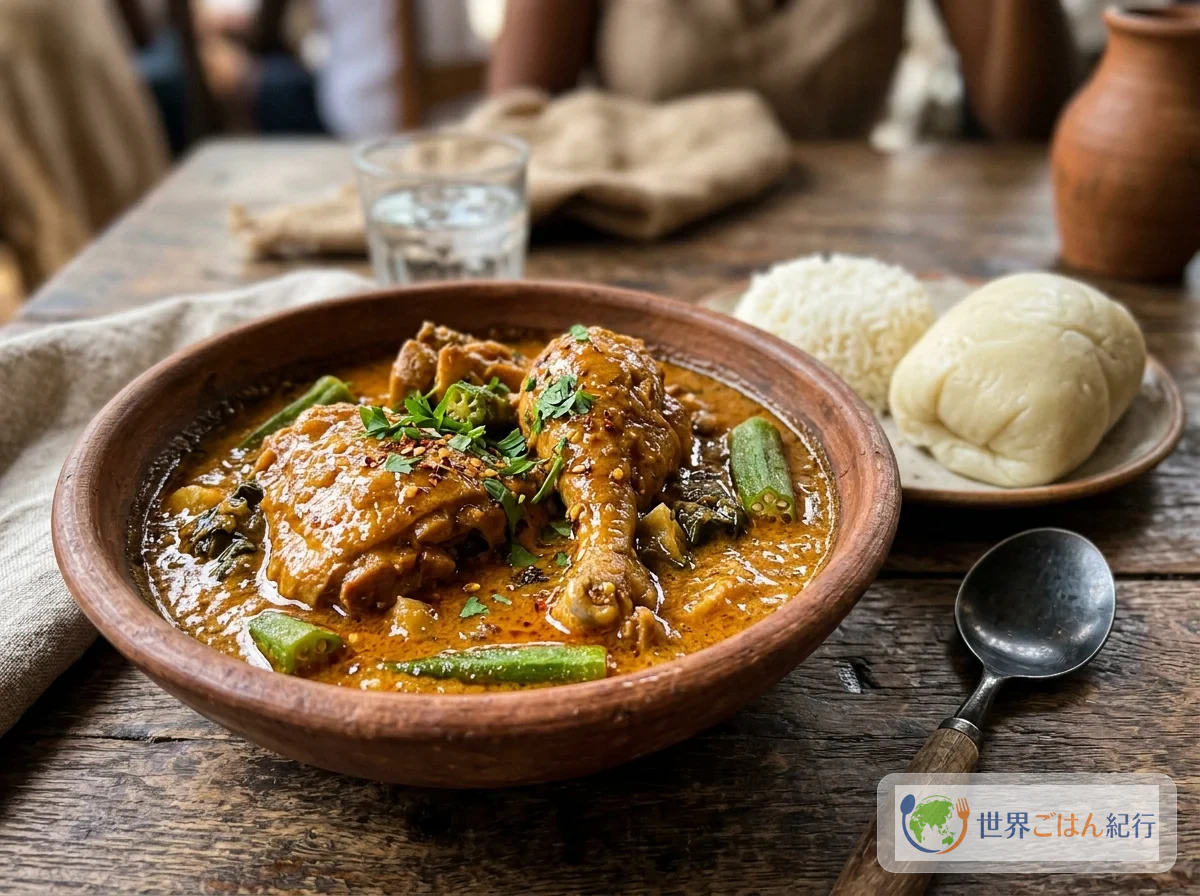
This version also makes a nice comparison with other African staples that catch a stew, like attieke and fufu. Couscous brings the lightness of wheat, attieke the tang of fermented cassava, and fufu a chewy stickiness, and the same stew feels very different over each.
Sweet tfaya-style topping
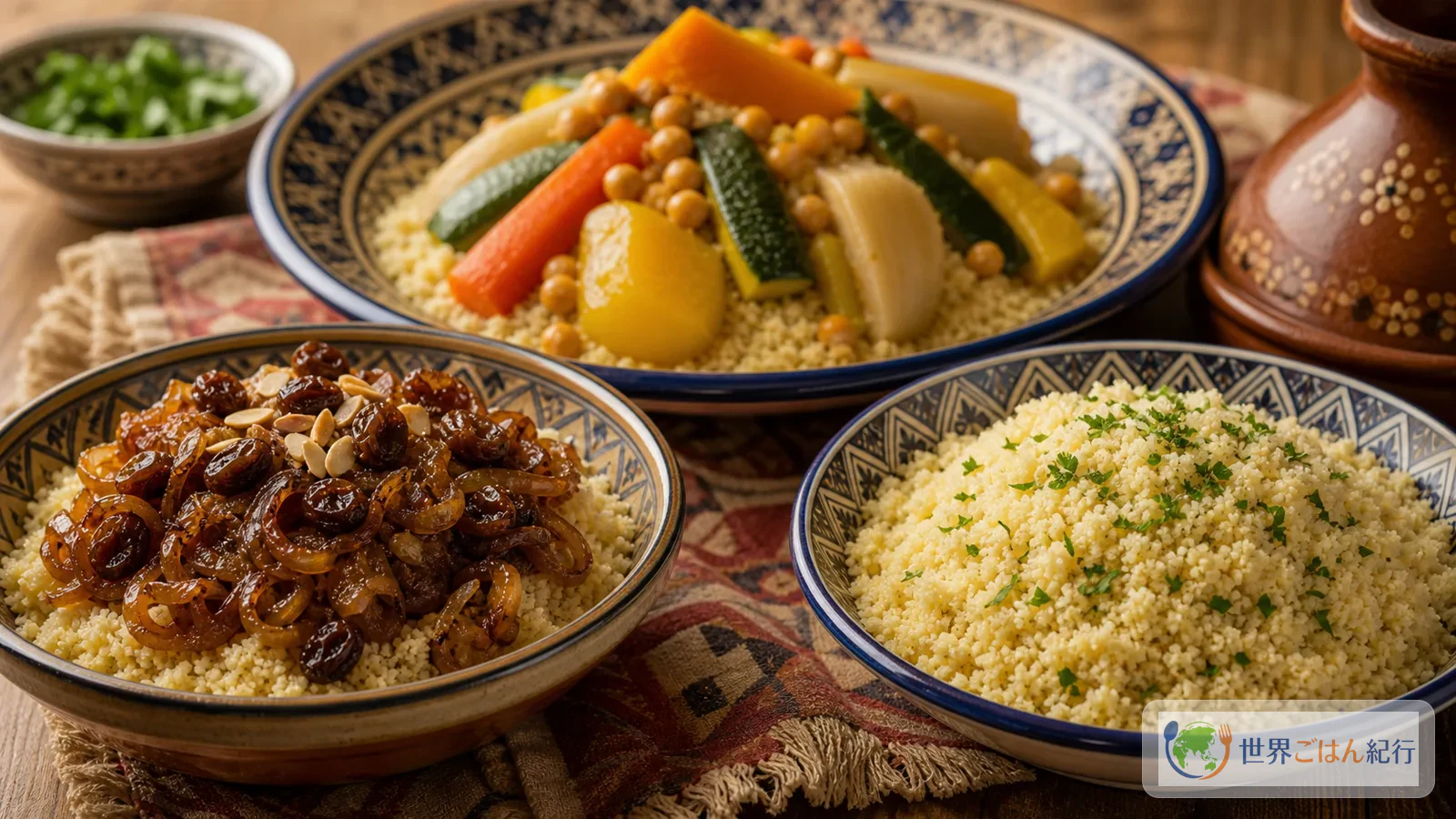
Couscous with tfaya-style onions and raisins cooked sweet with cinnamon is also common in Morocco. Cook 2 thinly sliced onions in 1 tbsp olive oil for about 20 minutes, then add 1.5 oz (40 g) raisins, 2 tsp honey, 1/4 tsp cinnamon, and a pinch of salt and simmer. A little on top of the meat and vegetables layers sweetness and spice for a festive feel. Tastes divide on the sweet version, so make the basic seven-vegetable couscous first and serve the tfaya in a small dish alongside from the second time on.
More from North Africa
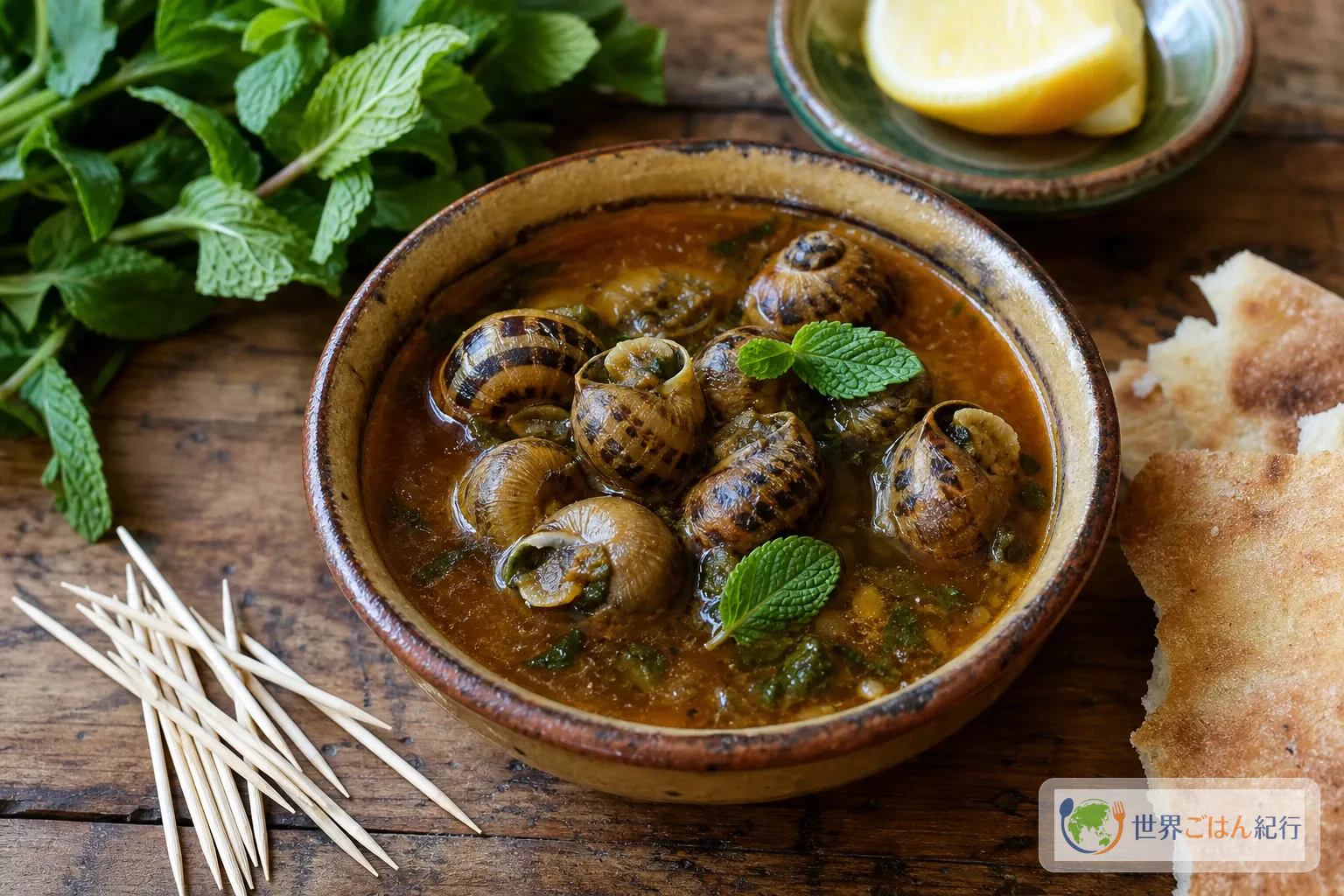
Serve a small harira as a starter, and the next week try Algeria's chorba frik to see how beans, grains, and herbs are used differently. If you like heat, Tunisia's chakchouka is a good next step, and babbouche, a small street soup eaten with herbs and spices, is another very Moroccan detour.
Frequently Asked Questions
Q1. Can couscous replace rice?
You can eat it in place of rice, but its character is a little different. Couscous is a grain-shaped wheat pasta, so it absorbs liquid quickly and tightens as it cools. It is handy for catching curries and stews, but it lacks the stickiness of onigiri or plain white rice. Eaten the Moroccan way, it is a base to which broth is added little by little.
Q2. If I have no steamer, is hot water alone really fine?
It is fine. Much of the couscous sold is processed to rehydrate quickly. Pour on hot broth, cover, rest for 5 minutes, and fluff with a fork. For the lightness of the traditional method, steam for 5 minutes after rehydrating, or work oil and salt in well in a large bowl first.
Q3. Can I fix couscous that has turned sticky?
A little, yes. Spread it on a large plate and let the steam escape for about 5 minutes while loosening it with a fork, then add 1 tsp olive oil and mix with a cutting motion to separate the grains. If it is fully clumped, add it to the broth the next day rather than serving it as the staple. Next time, cut the liquid by 20 percent and add broth afterward.
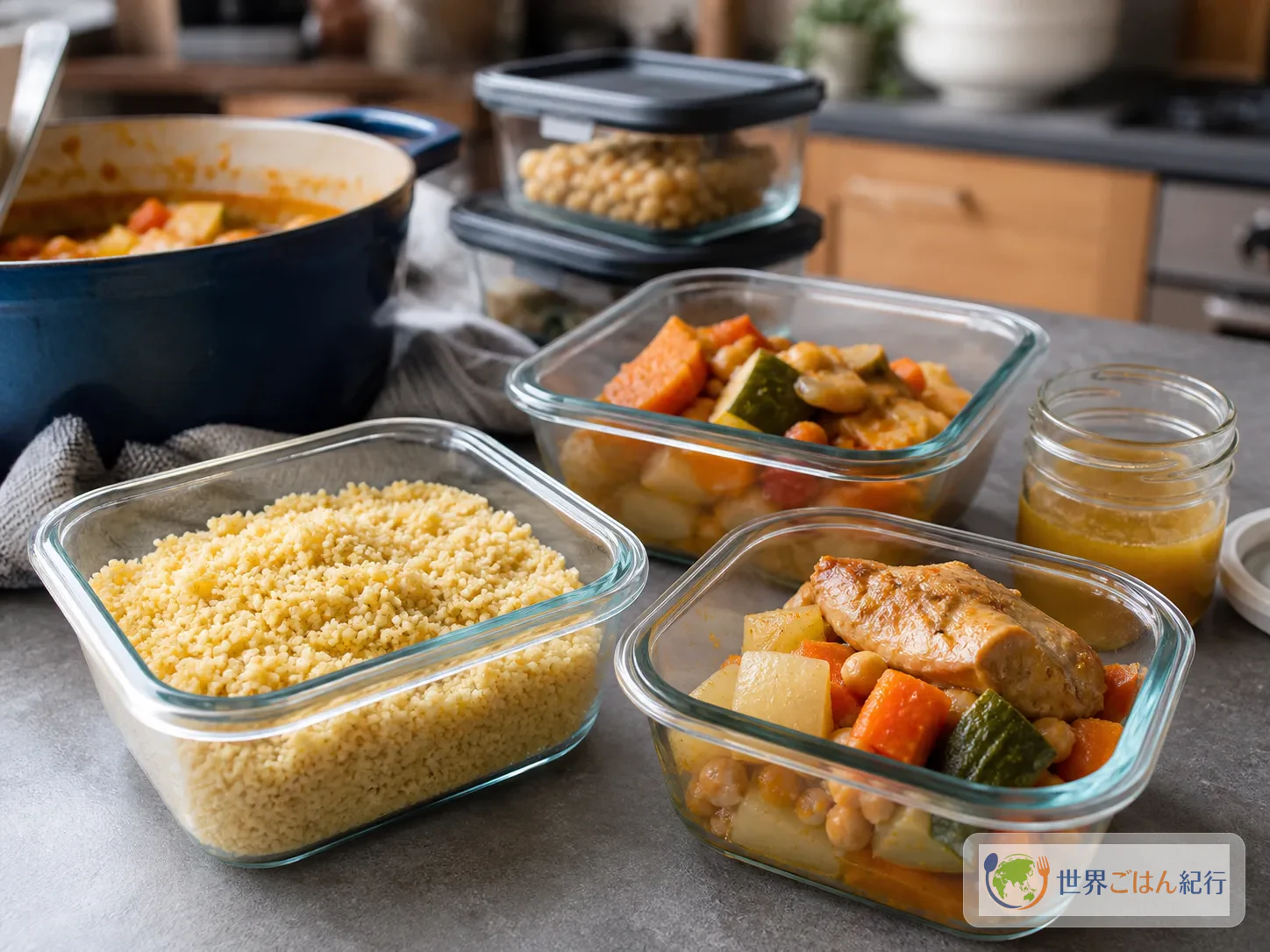
Q4. How long can leftovers be stored?
Store the couscous, toppings, and broth separately. Couscous keeps 2 days refrigerated, and the broth and toppings keep 3 days. To freeze, flatten only the couscous thinly and use within 1 month. To reheat, sprinkle 1–2 tbsp water or broth on the couscous and microwave in 1-minute rounds, checking as you go.
Sources
Overseas sources were used to confirm the cultural background and the steaming method, and the amounts and substitutes were rebuilt in a form easy to find at an ordinary supermarket.
- UNESCO Intangible Cultural Heritage. "Knowledge, know-how and practices pertaining to the production and consumption of couscous." https://ich.unesco.org/en/RL/knowledge-know-how-and-practices-pertaining-to-the-production-and-consumption-of-couscous-01602 (accessed 2026-05-09)
- Encyclopaedia Britannica. "Couscous." https://www.britannica.com/topic/couscous (accessed 2026-05-09)
- Taste of Maroc. "Moroccan Couscous with Seven Vegetables." https://tasteofmaroc.com/moroccan-couscous-with-seven-vegetables/ (accessed 2026-05-09)
- Taste of Maroc. "How to Steam Couscous in a Couscoussier." https://tasteofmaroc.com/how-to-steam-couscous-in-a-couscoussier/ (accessed 2026-05-09)
- The Spruce Eats. "Moroccan Couscous with Seven Vegetables." https://www.thespruceeats.com/moroccan-couscous-seven-vegetables-2394667 (accessed 2026-05-09)