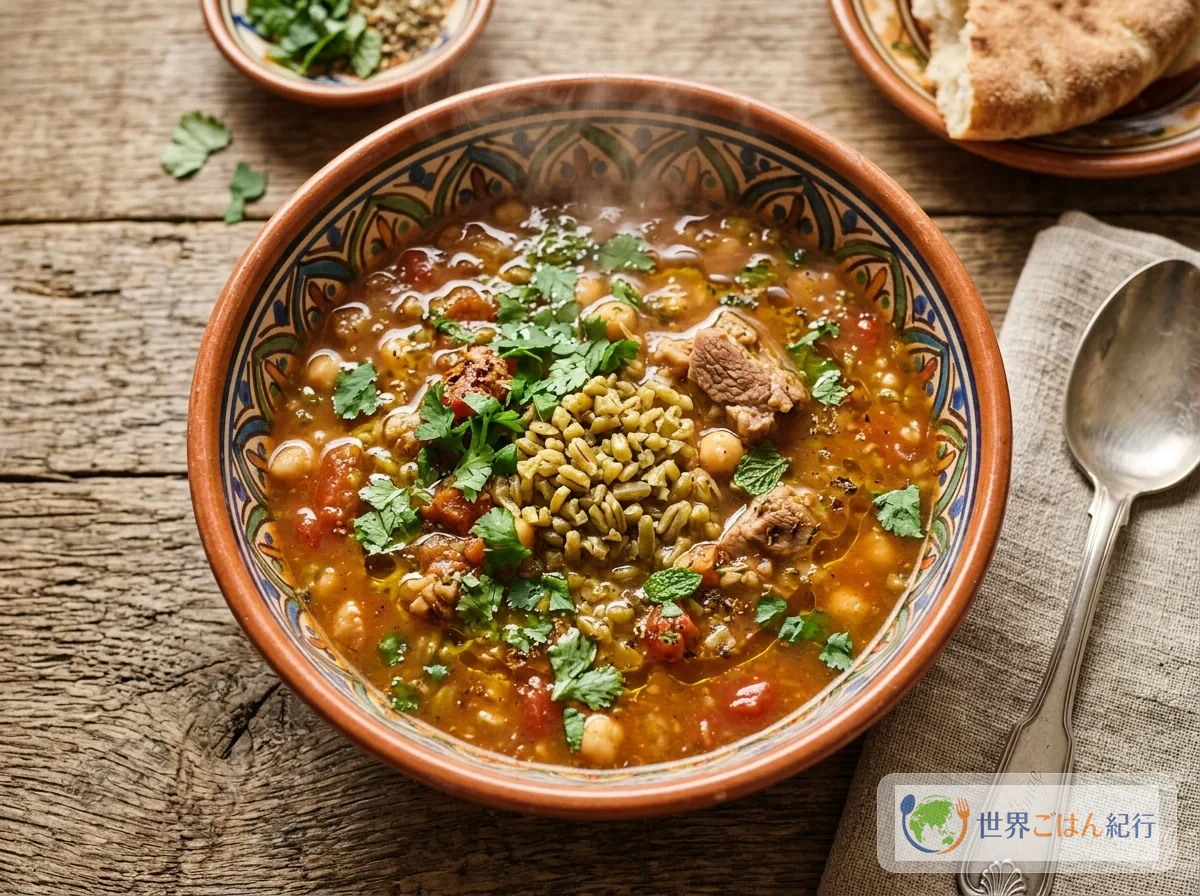
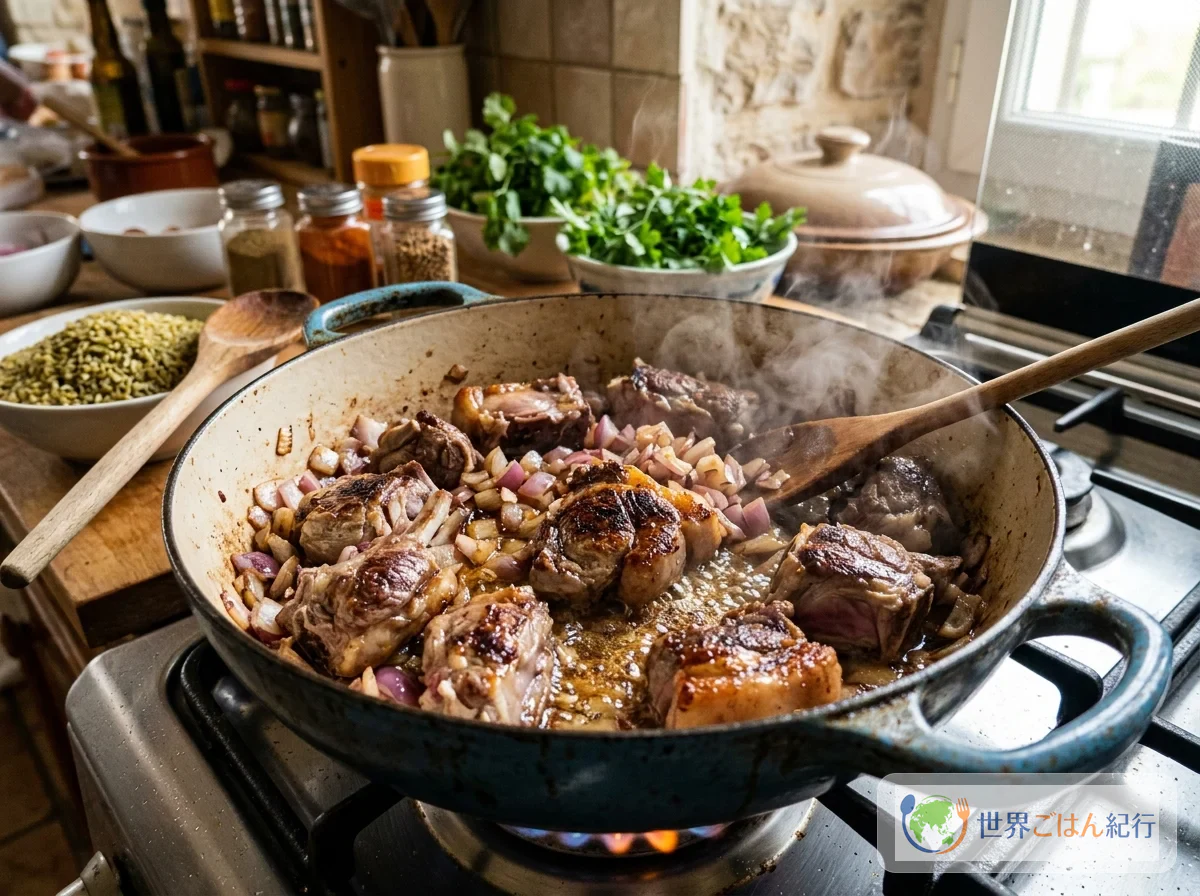
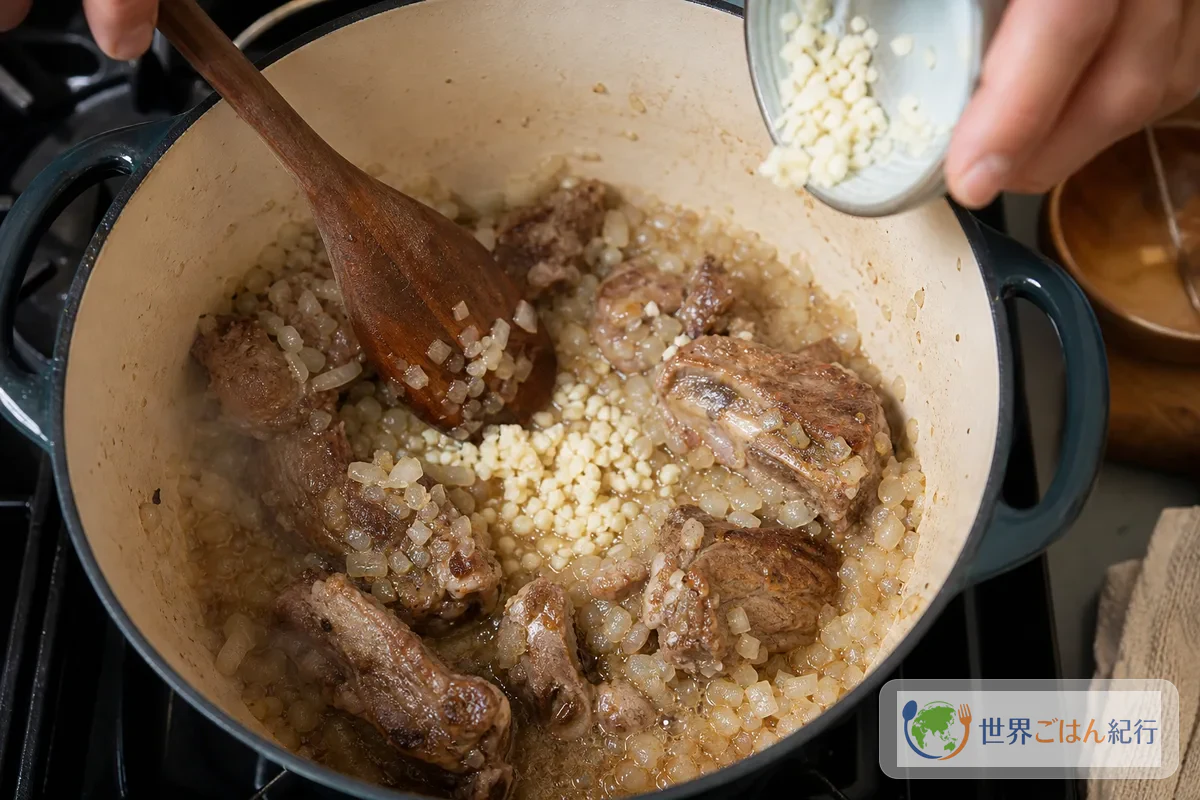
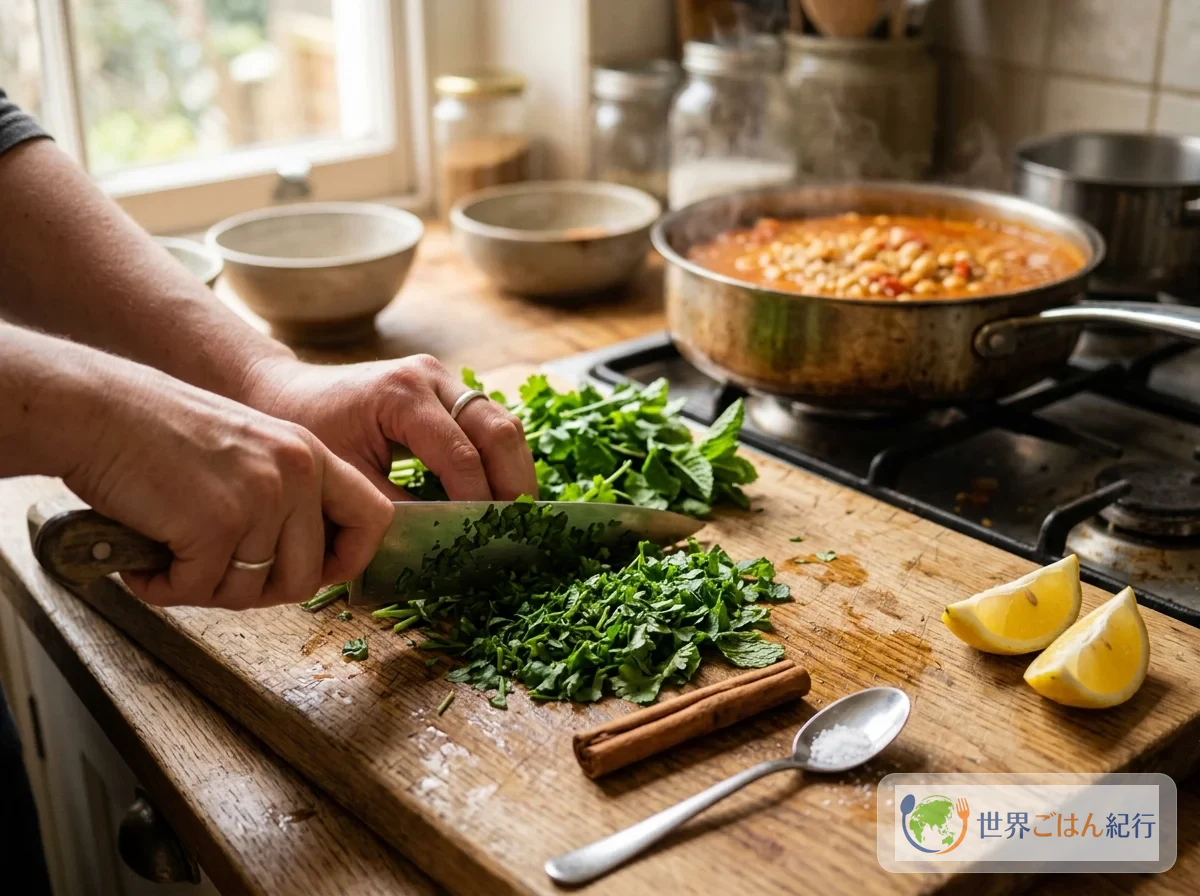
Lamb and onion sizzle in the pot, the tomato stains the bottom red, and then the water goes in. As the meat slowly turns tender over low heat, the steam carries the sweet scent of cumin and cinnamon. Add the freekeh, and the thin broth gradually gathers body around the grains, until each spoonful sits somewhere between something you drink and something you eat.
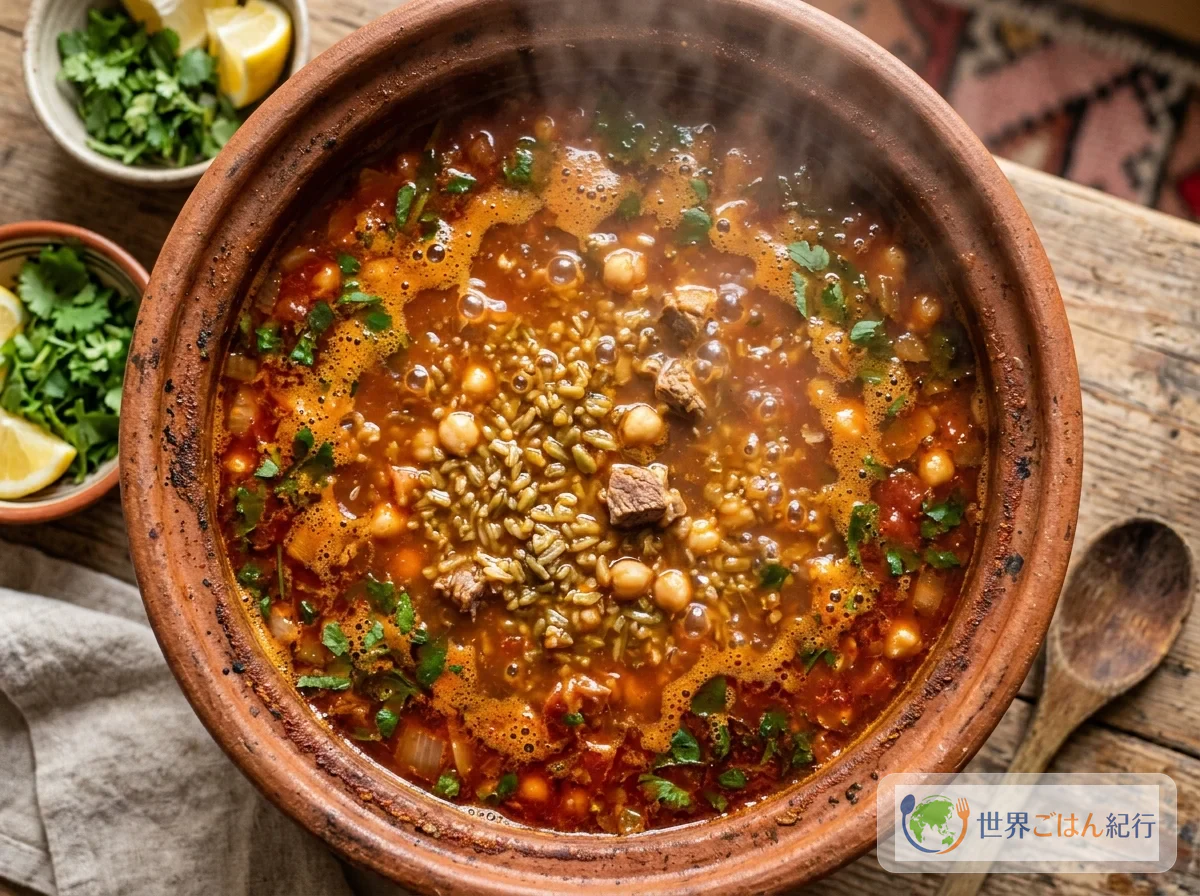
That's chorba frik (in Arabic, "شوربة فريك"), the Algerian soup of freekeh, meat, chickpeas, tomato and fresh herbs. Freekeh is young durum wheat that has been roasted and cracked. The meat, the amount of grain and the strength of the herbs change from one household to the next. Wherever you cook it, three things matter more than an exact ingredient list: the toasty aroma of freekeh, the acidity of tomato and the herbs added at the end.
Chorba frik at the Algerian table
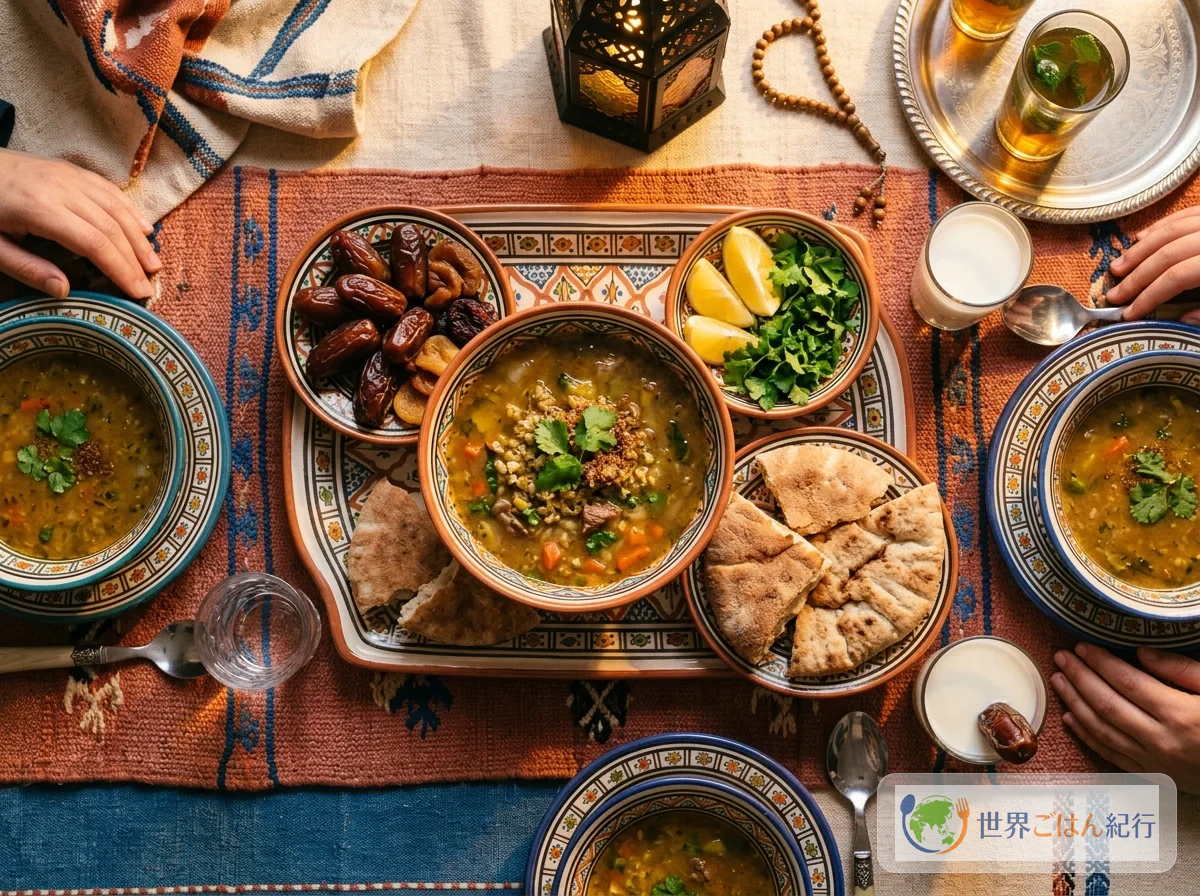
Soup after the dates at iftar
During Ramadan, the fast is broken with dates, and then comes soup, which settles hunger and thirst. Soups like this one combine meat, chickpeas, roasted and cracked green wheat, and spices such as cumin and coriander. The warm bowl brings liquid and heat back to the body at the end of the day and leads into the bread and main dishes. Chorba also turns up on the everyday family table, well outside Ramadan.
How chorba changes by region
Algerian cooking follows the land. On the coast it leans on fish and citrus, on the high plateaus on grains and vegetables, and in the Sahara on dates and preserved foods. Chorba changes with the region and with what each household has, so there is no single fixed formula, and the names and accompaniments change along with it.
Around the capital, you'll find red chorba centered on frik and meat, served with bourek. In the east and west, the soup goes by jari and comes with brik; in Jijel in the east, it's a fish soup. In the south, soups are built on grains and local ingredients, and a red soup may have its tomato acidity softened with date syrup. Each of these is one regional style among several.
| Place / table tendency | Where the pot tends to go | What it means in your kitchen |
|---|---|---|
| Coast | Seafood, olive oil, a citrus note | If you swap lamb for fish, don't overcook it; soften the freekeh first |
| High plateaus / interior | Grains, vegetables, slow-cooked meat | Close to this recipe's lamb-and-freekeh balance. Don't reduce the liquid too quickly |
| South / around the oases | Dates, preserved foods, local grains | Don't keep piling on tomato acidity or heat; watch the balance of sweetness and aroma |
| The family pot | Quantities handed down, whatever meat and herbs are on hand | Prioritize how the grain is cooked and how fresh the herbs are |
Where freekeh's aroma comes from
Freekeh is young durum wheat that is roasted or smoked, then polished and cracked. In Lebanon's Bekaa Valley, for example, young wheat is grown, harvested, roasted and processed into freekeh. Rolled barley, by contrast, is mature barley pressed flat, so it differs in both the grain and the processing. It can give you the soft texture of a cooked grain, but you won't get the same aroma.
Ingredients (serves 6)
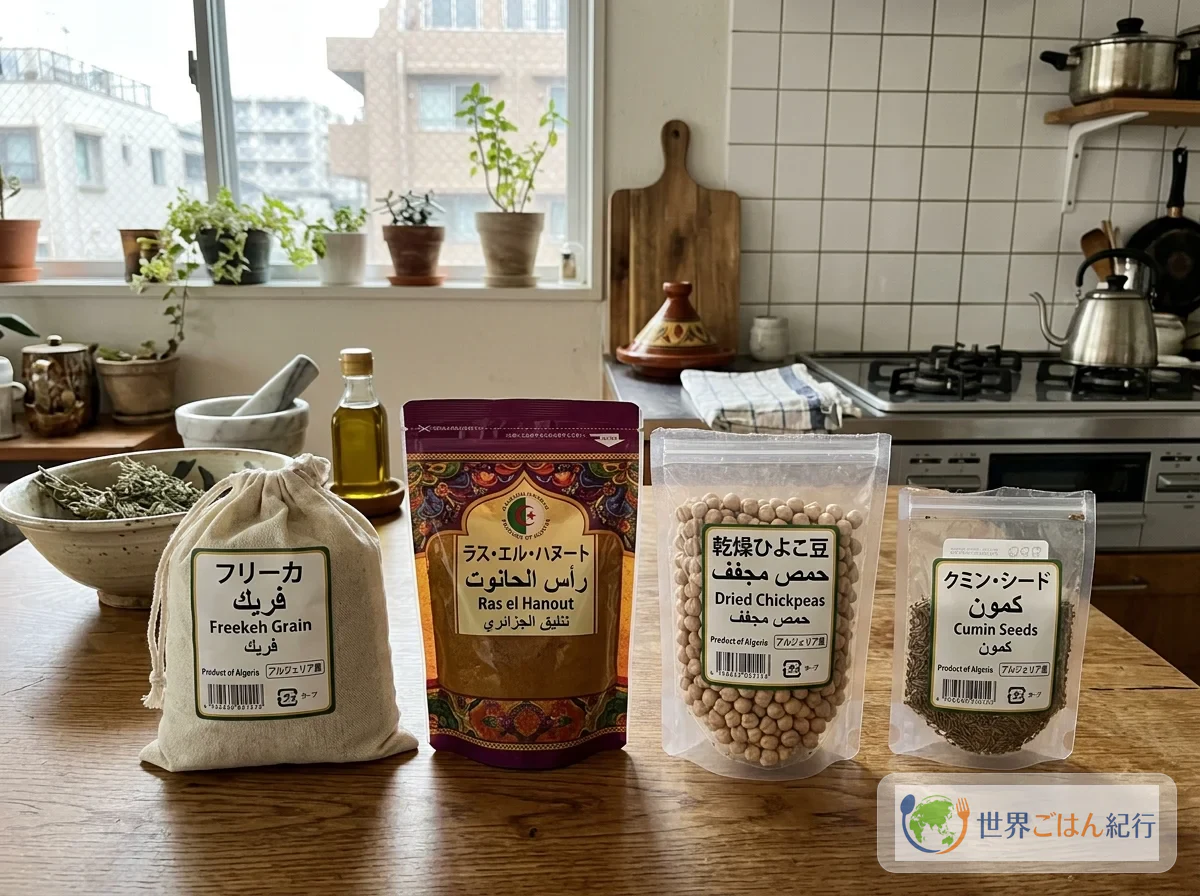
In stores and online, it's sold under names such as "freekeh," "frikeh," "farik" and "roasted green wheat." Middle Eastern grocers and online shops are the most reliable places to look. Grain size varies by product, so check the bag for terms like cracked, coarse or wholegrain. Many packages list durum wheat as the ingredient and state the country of origin. If you can't find it, you can make the soup with rolled barley or bulgur, but when using a substitute, follow the cooking time on its package.
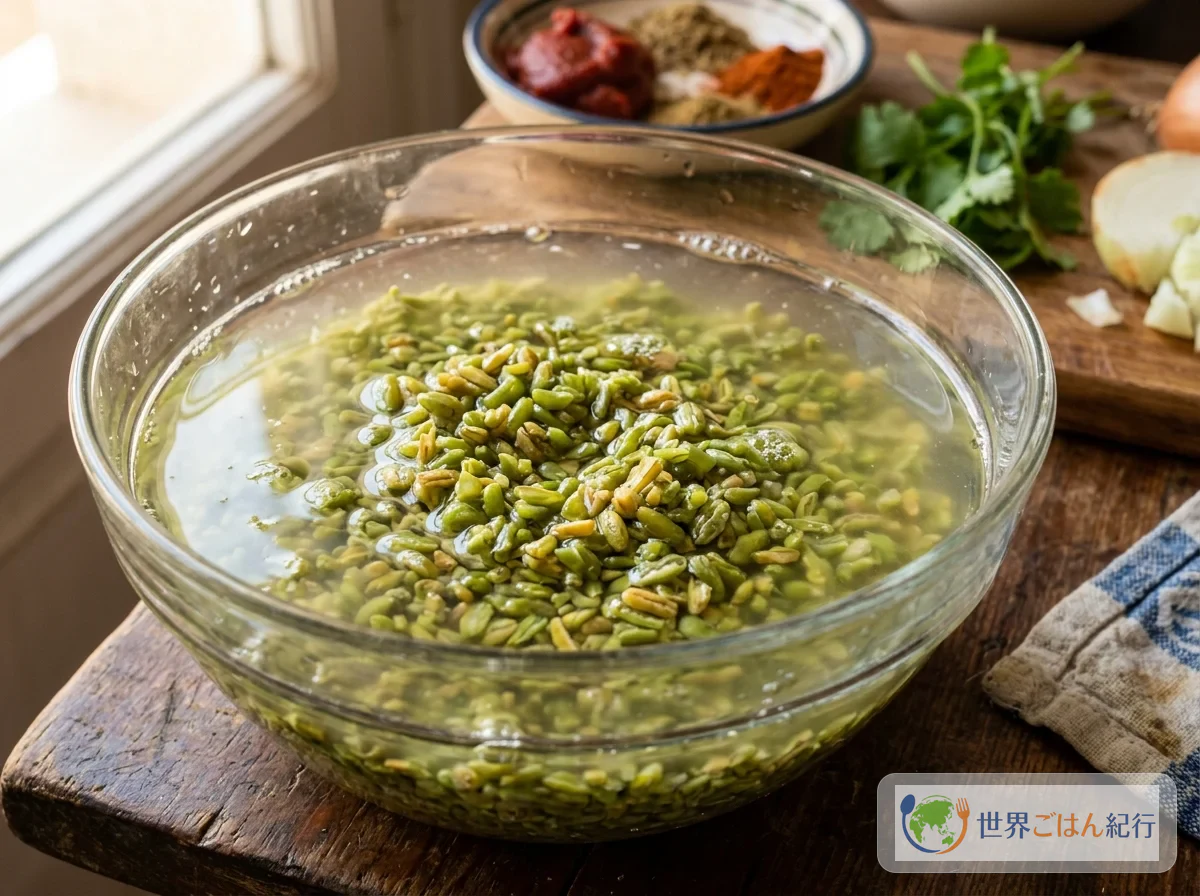
Freekeh is young durum wheat that has been roasted and then cracked; rolled (pressed) barley is mature barley that has been steamed and flattened. When you want the toasty aroma to be the star, choose freekeh. When you cook with barley, treat it as an alternative dish you enjoy for its texture, and don't expect dry-toasting alone to bring back the aroma that comes from freekeh's processing. Anyone with a wheat allergy should avoid freekeh and bulgur and check the labels.
Choosing ingredients and substitutes for chorba frik
Freekeh
Even under the same name, freekeh varies from product to product in grain size and in how strongly it's roasted. Before buying, check that the label lists durum wheat, whether the grain is wholegrain or cracked, the package size, and whether a cooking time is given. Some packages give a method such as rinsing, soaking for 30 minutes and simmering over low heat for 15–20 minutes.
Cumin and the other spices
Cumin is worth buying fresh. Cumin from an old jar falls flat against the gaminess of lamb, but freshly ground cumin, worked into the tomato and oil for about 30 seconds before the water goes in, leaves an earthy fragrance deep in the soup. A standard jar is more than one pot needs, and you can use up the rest in a Moroccan tagine or in bean dishes. If you already have fresh, fragrant cumin, use that.
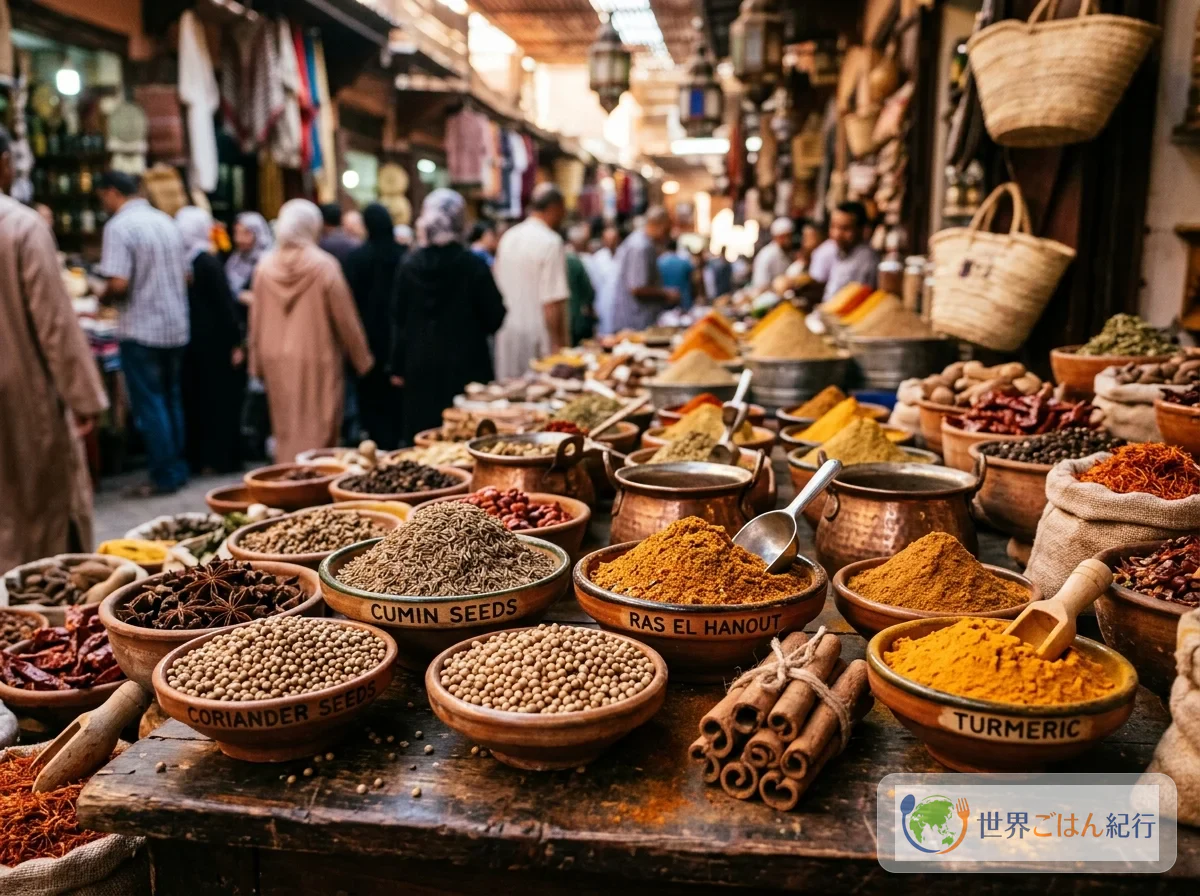
With cumin, coriander and cinnamon, you can build the backbone of the dish even without ras el hanout. Piling on extra spice blends buries the roasted aroma of the freekeh. If you'd like to use the spices again for Moroccan harira, start with fresh cumin and fill in any missing aromas a little at a time.
Lamb and other meats
Bone-in shoulder or shank is ideal for simmering, but any cut your butcher carries will work. Thaw frozen meat in the refrigerator and pat off the liquid before it goes into the pot. Beef shin gives a body close to bone-in lamb, but it can still be firm after the same cooking time, so check it with a fork before adding the freekeh. Chicken thighs cook quickly: get the broth right first, add the chicken in the second half, and make sure it isn't drying out when the freekeh goes in.
To leave out the meat, increase the chickpeas and keep the celery and herbs so the soup has more going on than tomato broth.
Bulgur or barley instead of freekeh
On days you can't find freekeh, bulgur gets you close on texture, since it's also cracked wheat. Some products cook quickly, so once the meat is tender, work backward from the package time to decide when to add it. If it soaks up too much soup, add boiling water, and stop while the grains are swollen but still distinct.
Barley is easy to find and gives a hearty grain, though it lacks the aroma of roasted young wheat. You can dry-toast it for a small boost of aroma, but don't let it burn. It's the one to reach for when you want a warm soup from the pantry, and less suited to a day when you want the dish as it's made in Algeria.
Method
Prep
Rinse the freekeh 2–3 times, until the water runs clear, and check for small stones or husks. If the package says to soak it for 30 minutes, drain it in a sieve afterward so the grains are only damp on the surface. If the package says no soaking is needed, follow that instead. Drain and lightly rinse canned chickpeas; if using dried, soak them the day before and cook them separately.
Cut the lamb into about 1 1/4–1 1/2 inches (3–4 cm) cubes and pat the surface dry. Leave bone-in pieces on the bone, and trim only the thickest areas of fat. If the fat that rises during simmering tastes heavy, skim it off.
Simmering the soup
Getting chorba frik right
Reduce the tomato first
Instead of pouring in the water right after the tomato paste, wait until the tomato flesh and oil come together. This softens the sharp edge of the acidity, and the soup is less likely to taste watery once the meat broth joins in. Concentrated paste can overpower everything else, so if yours is very strong, start with 1 tbsp and add more at the end after checking the color and acidity.
Keep some of the fat
Strip every bit of fat from bone-in lamb and the soup loses its body. Leave a thick layer on the surface, though, and it feels heavy even after the herbs and lemon go in. While it simmers, skim off a little of the fat that collects on top with a spoon, tasting as you go for the lamb's flavor and the richness of the tomato.
Timing the freekeh
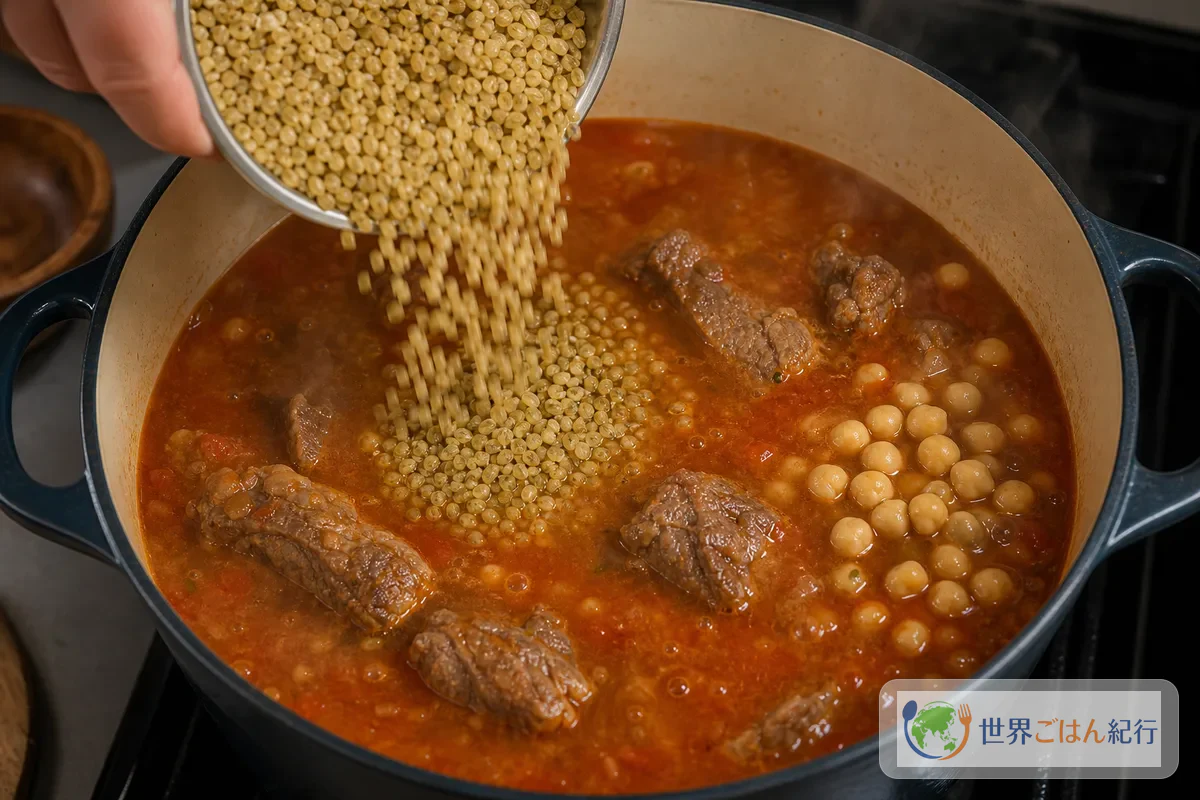
To keep freekeh's roasted aroma and its distinct grains, add it once the meat starts to turn tender. With cracked freekeh, bite a grain once the package time has passed, and turn off the heat when the grains have swelled and the center is no longer chalky but still has a slight spring. For barley or wholegrain freekeh, follow the package directions.
Troubleshooting
| Problem | Likely cause | Fix |
|---|---|---|
| The soup is heavy and oily on the palate | Too much lamb fat left in | Turn off the heat, skim the fat from the surface, and add lemon and herbs in the bowl |
| Only the tomato acidity stands out | Water added before the tomato was reduced | Simmer uncovered over low heat for about 10 minutes to concentrate the flavor. If adding more paste, use only a little |
| The freekeh is hard | Large grains, or added too late | Add boiling water ½ cup (100 ml) at a time and simmer 5–10 minutes longer over low heat. Stop as soon as the hard centers are gone |
| The freekeh has turned to porridge | Added too early, or boiled hard over high heat | Cook any extra grain in a separate pot and mix it in a little at a time just before serving. Next time, add it after the meat is tender |
| It tastes bitter | Scorched ground spices or garlic | Don't stir in the scorched bottom; transfer the soup above it to another pot. If it's very bitter, don't try to force a fix |
| The herb aroma is gone | All the herbs were added early in the simmering | Keep some aside for finishing and add them just before turning off the heat |
Serving and storing chorba frik
At the table
Dip bread into the chorba, squeeze in a wedge of lemon, and the bowl comes into balance. Breads and bourek are the usual companions for red chorba. A flatbread like kesra echoes the grain and toasty notes, but a sliced baguette soaks up the tangy broth just as well.
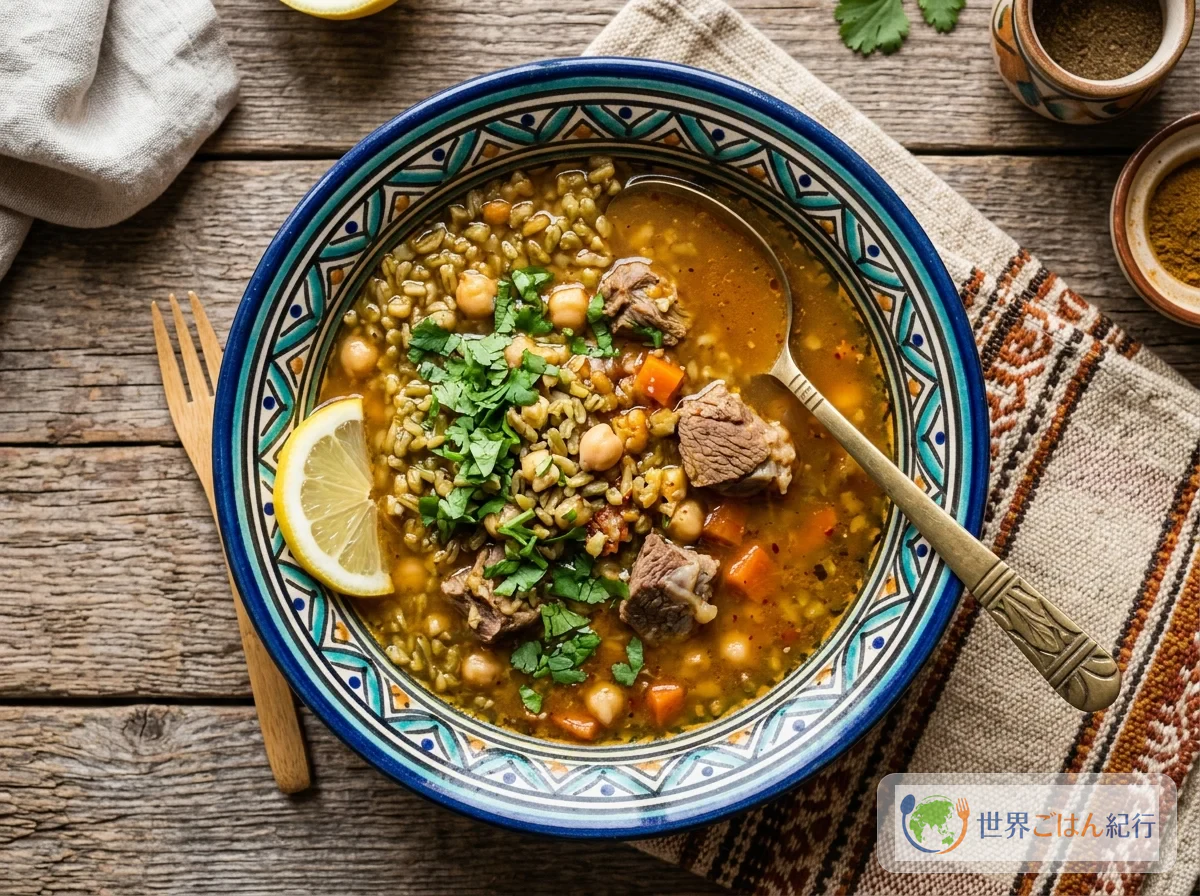
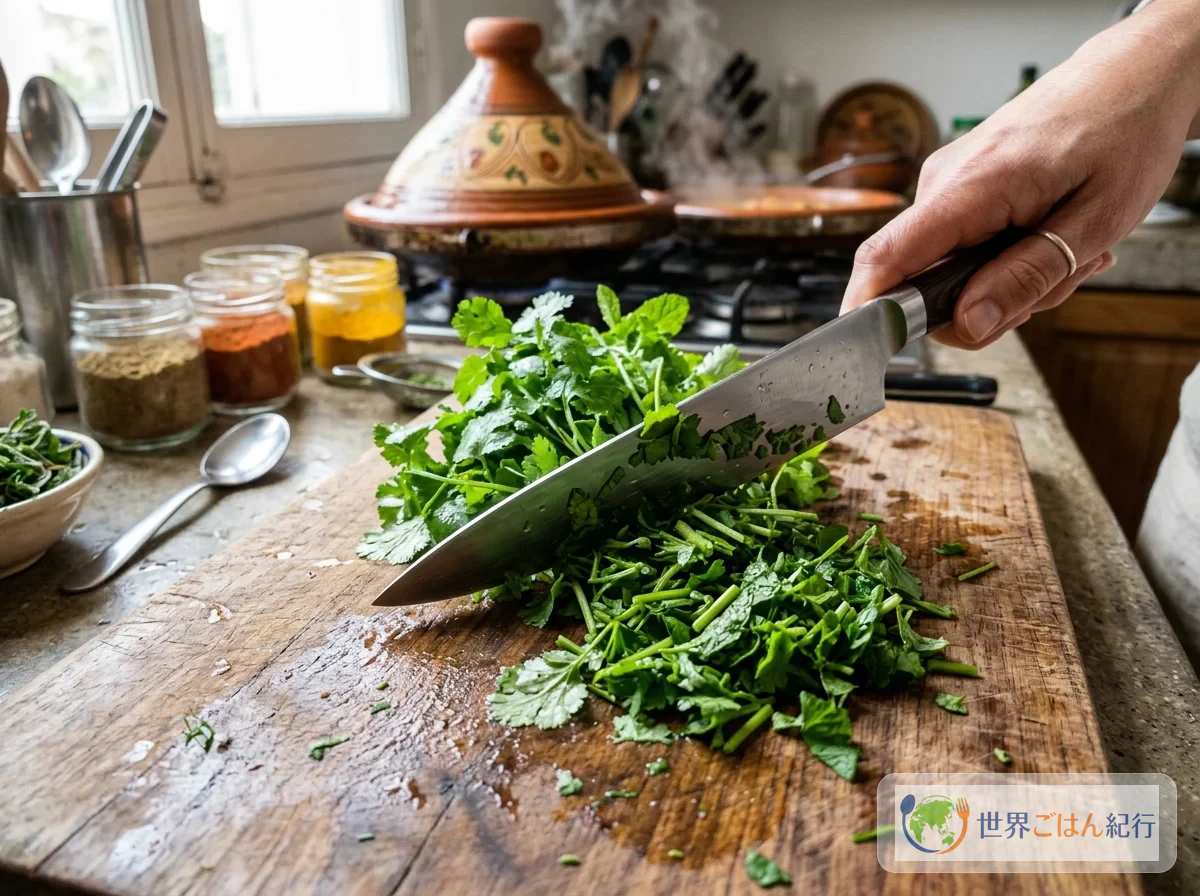
Hold back some of the finishing herbs and add them to each bowl, so everyone can adjust the intensity. If the whole pot gets all the herbs, their fresh aroma fades by the time you reheat it the next day. Heat works the same way: rather than spicing the pot from the start, put dried red chile or harissa on the side so everyone tastes the tomato and herbs first. If you serve dates, set them on a separate plate as a change of flavor.
Storage and reheating
Don't leave leftover chorba sitting in the pot at room temperature. Divide it into single portions in shallow containers, cool it quickly, and refrigerate or freeze. Eat refrigerated portions soon, keep your refrigerator cold, and don't judge freshness by smell or color alone. Reheat in a pot, stirring, until it is piping hot all the way through, including the center.
Freekeh keeps absorbing liquid as it sits, so add a little water or hot water when reheating and stir gently over low heat to avoid crushing the grains. For freezing, the texture holds up better if you portion out the meat-and-tomato base before adding the grain, then add the freekeh on the day you eat it. If you do freeze the finished soup, leave a little extra liquid, since the grains soften after thawing.
Freekeh and bulgur contain wheat. The recipe also uses chickpeas (a legume) and celery as an aromatic vegetable, so anyone with food allergies should check ingredient labels and any information about the facility where products are processed. Wash knives and cutting boards used for raw lamb with detergent, and don't reuse utensils that touched raw meat for the finishing herbs.
Calories: about 420 kcal; protein: about 1 oz (28 g); fat: about 14 g; carbohydrates: about 1.5 oz (46 g); dietary fiber: about 8 g; sodium: about 890 mg. Values vary with the cut of meat, the liquid in the canned goods and the amount of salt, so use them as a rough guide for planning the whole meal.
FAQ
Q1. Is it still chorba frik without freekeh?
Freekeh is the grain in the dish's name, so use it if you want the real aroma. Made with bulgur or barley, it's still a good warm tomato soup; just go by the package cooking time for the grain you're using and add it at the right moment.
Q2. Is it fine to make outside of Ramadan?
Absolutely. It's known as an iftar dish, but chorba is also everyday family food. On a cold day, it makes a good supper with bread, whatever the hour.
Q3. Is ras el hanout essential?
No. Cumin, coriander and cinnamon give the aroma its direction. If you use a spice blend, check its ingredients and heat level, and start with less than 1 tsp, tasting as you go.
Q4. Is "chorba" different from "shorba"?
They're variant transliterations of the same word; in English it's most often written chorba. Dishes made with frik also go by other names, such as jari or djari, depending on the region, and the same name can cover more than one recipe.