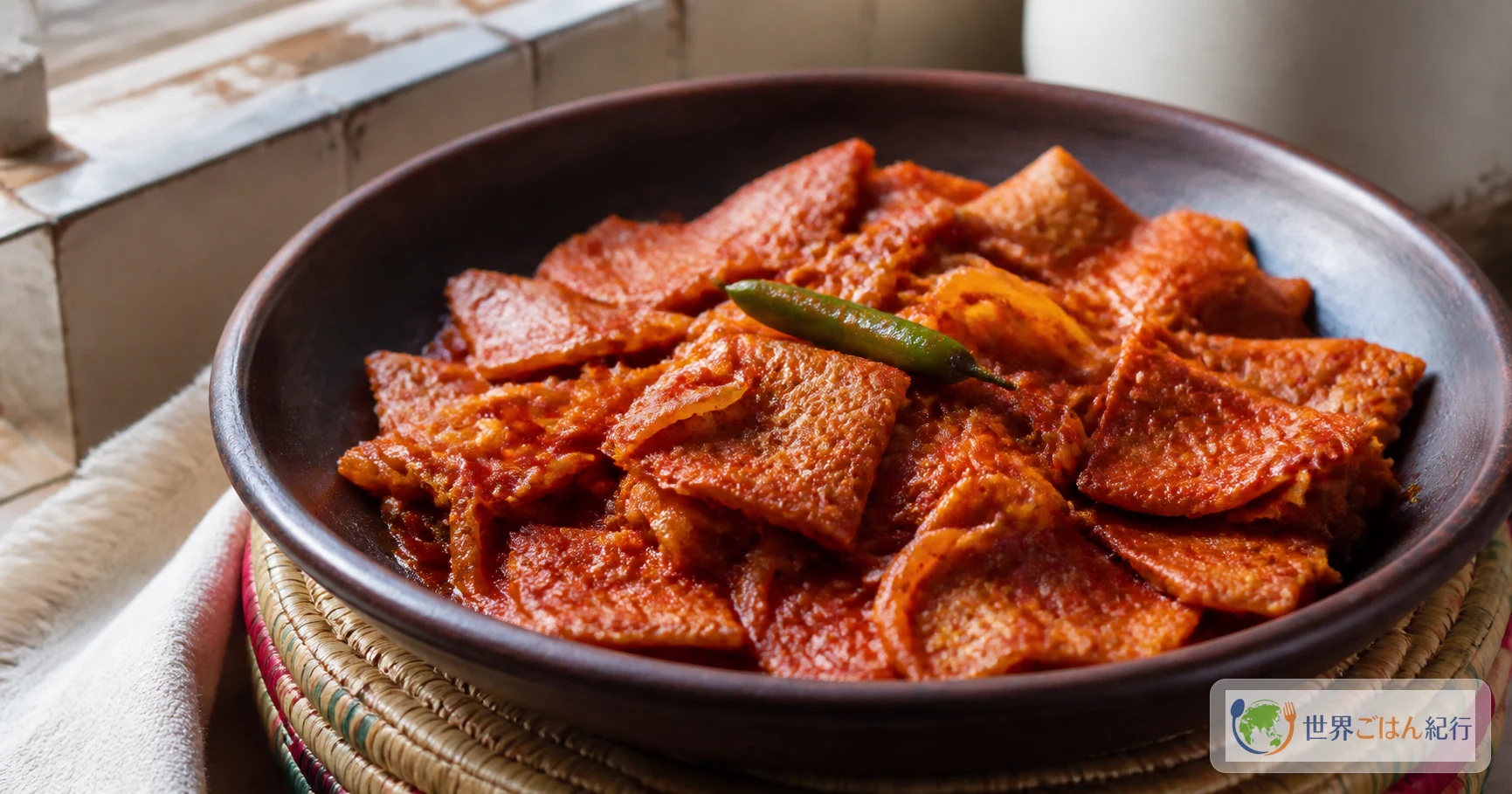
Tear yesterday's injera into 1 1/4–1 1/2 inches (3–4 cm) pieces and add them, at the very end, to a red sauce of simmered onion and tomato. The sour bread slowly takes on the color, and once the heat of the berbere has reached the inside of the pieces as well as the surface, you turn off the heat. That's firfir, Ethiopia's breakfast of dried injera crumbled and bound with a berbere and tomato sauce. Tomato acidity, berbere aroma and the faint sourness of fermented bread all go into one pot, and the result is lighter than curry and deeper than stir-fried tomato.
Firfir at the Ethiopian table
You may also see it spelled fitfit or fir-fir. It's a breakfast first, though it turns up at lunch and dinner too, and a version of injera torn and mixed with butter and berbere is also served as a morning dish. Turning leftover injera into something new makes a satisfying plate even without meat.
Breakfast from yesterday's injera
Injera is a staple with a fermented sourness and fine air bubbles. As it sits, the moisture leaves, and it becomes a dough that can take up sauce. If you bake your own injera and keep a little back for the next morning, you can taste the change for yourself.
At Ethiopian tables, wat and bean dishes are set on a large platter spread with injera and shared among several people. The bread is the tool for scooping up the food, and it ties together the family table and ritual. Meat and vegetable sauces are always eaten with injera, so think of firfir as that same combination moved onto a morning plate.
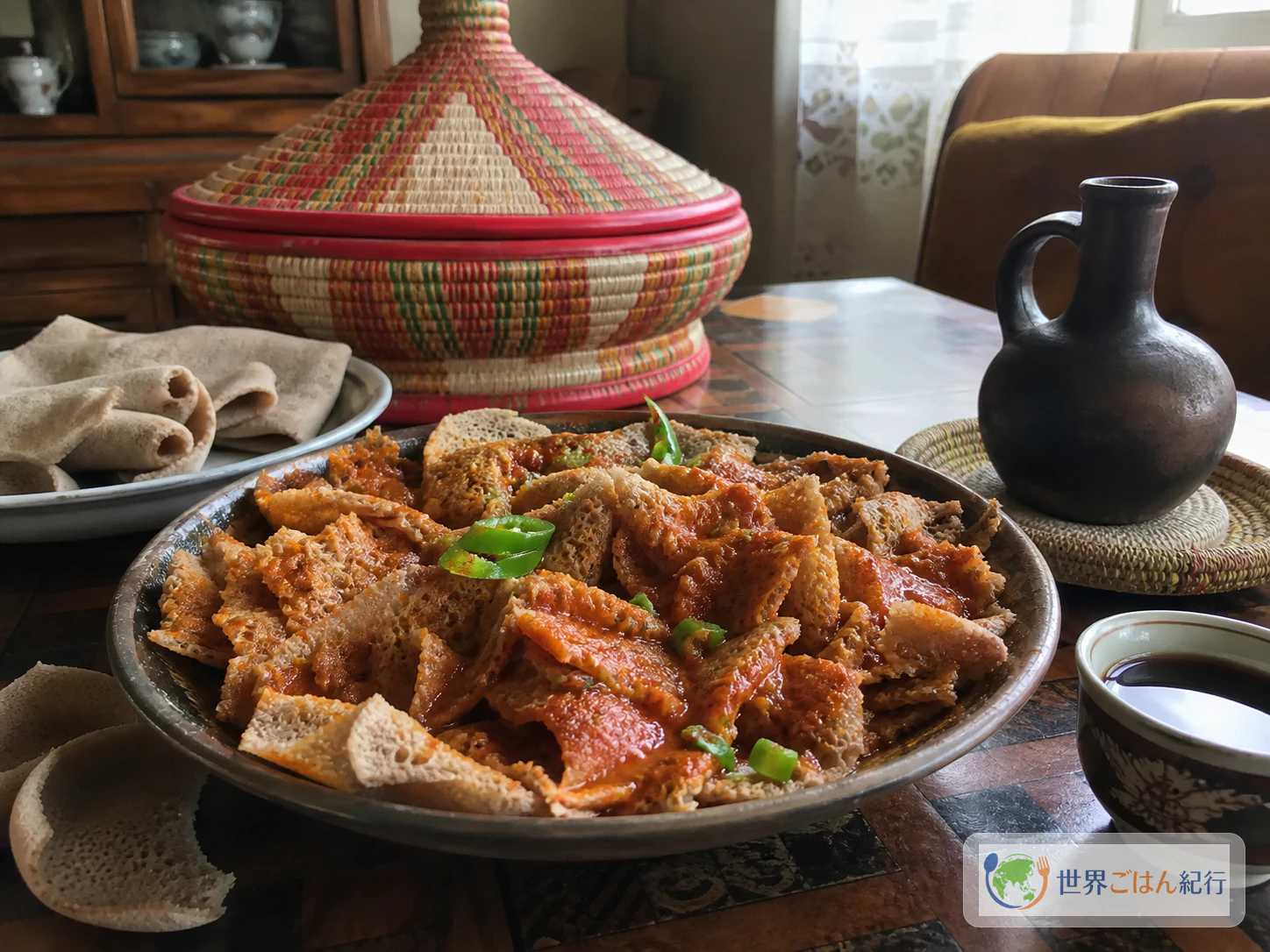
Firfir is household know-how rather than the set recipe of one town: a fermented staple carried into the next day's meal, with sauce and bread combined in a diet that includes fasting. The amount of berbere and the kind of bread shift from city to countryside and from one household to the next. Even the name of breakfast changes, since the words for bread and meals sound different in Amharic, Tigrinya and Oromo-speaking areas, and morning eating differs between town and countryside.
Firfir and chechebsa
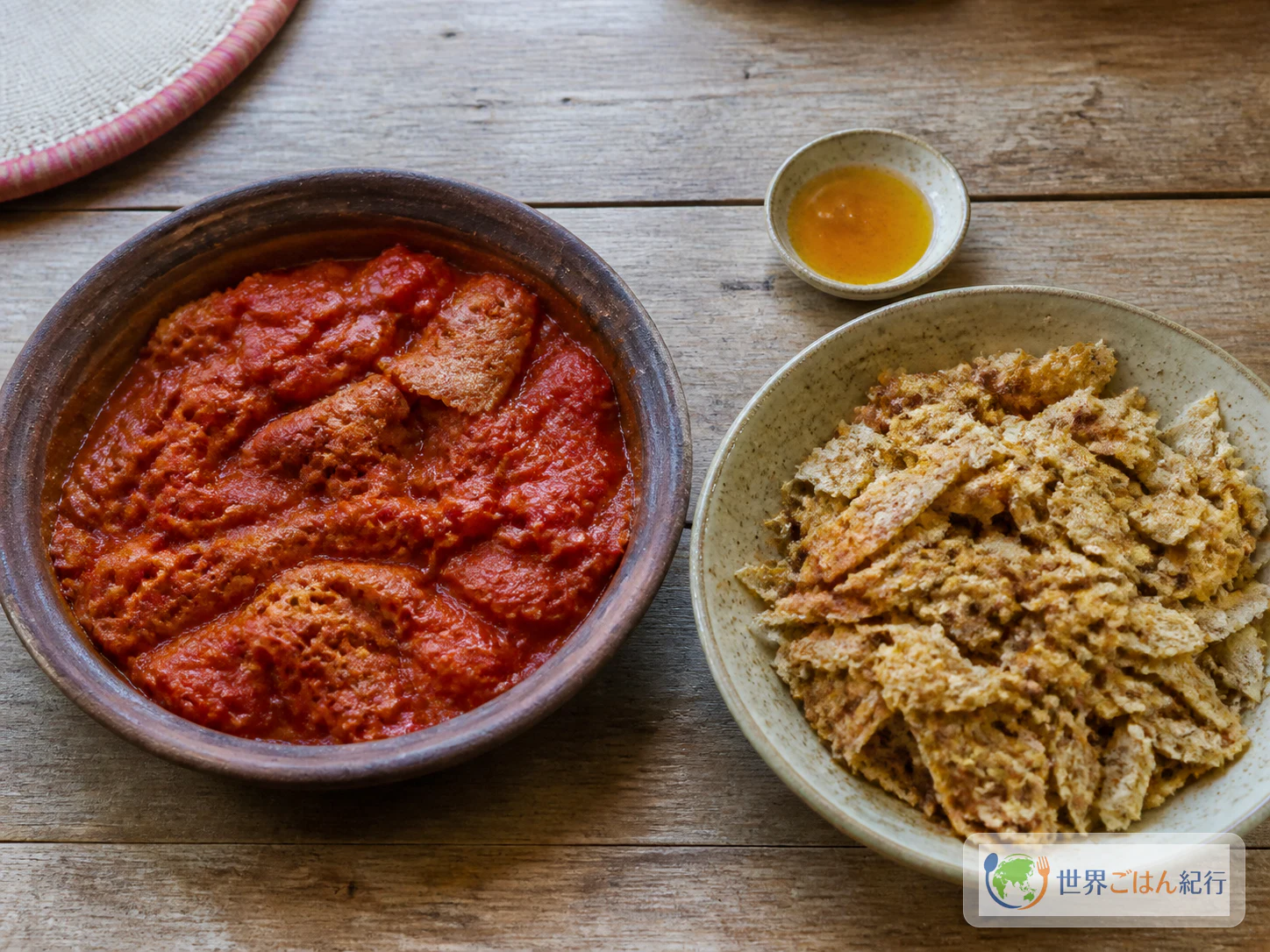
Look up firfir and you'll find two dishes: injera soaked in red sauce, and bread fried in oil or butter. The second is chechebsa (also written kitafirfir or kitafitfit), a breakfast of torn kitcha fried first in oil or niter kibbeh and then combined with berbere sauce, so the edges stay toasty. There's also a sweet version finished with a little honey, and without the egg it's a plant-based breakfast.
In the injera version, the fermented sourness and the bubbles hold the sauce. With more liquid it comes together soft; reduce it too far and only the sourness of the bread stands out. If you want moist sourness as the star, use injera; if you want toasty texture, use kitcha.
Ingredients (serves 4): built to keep the sourness and the heat
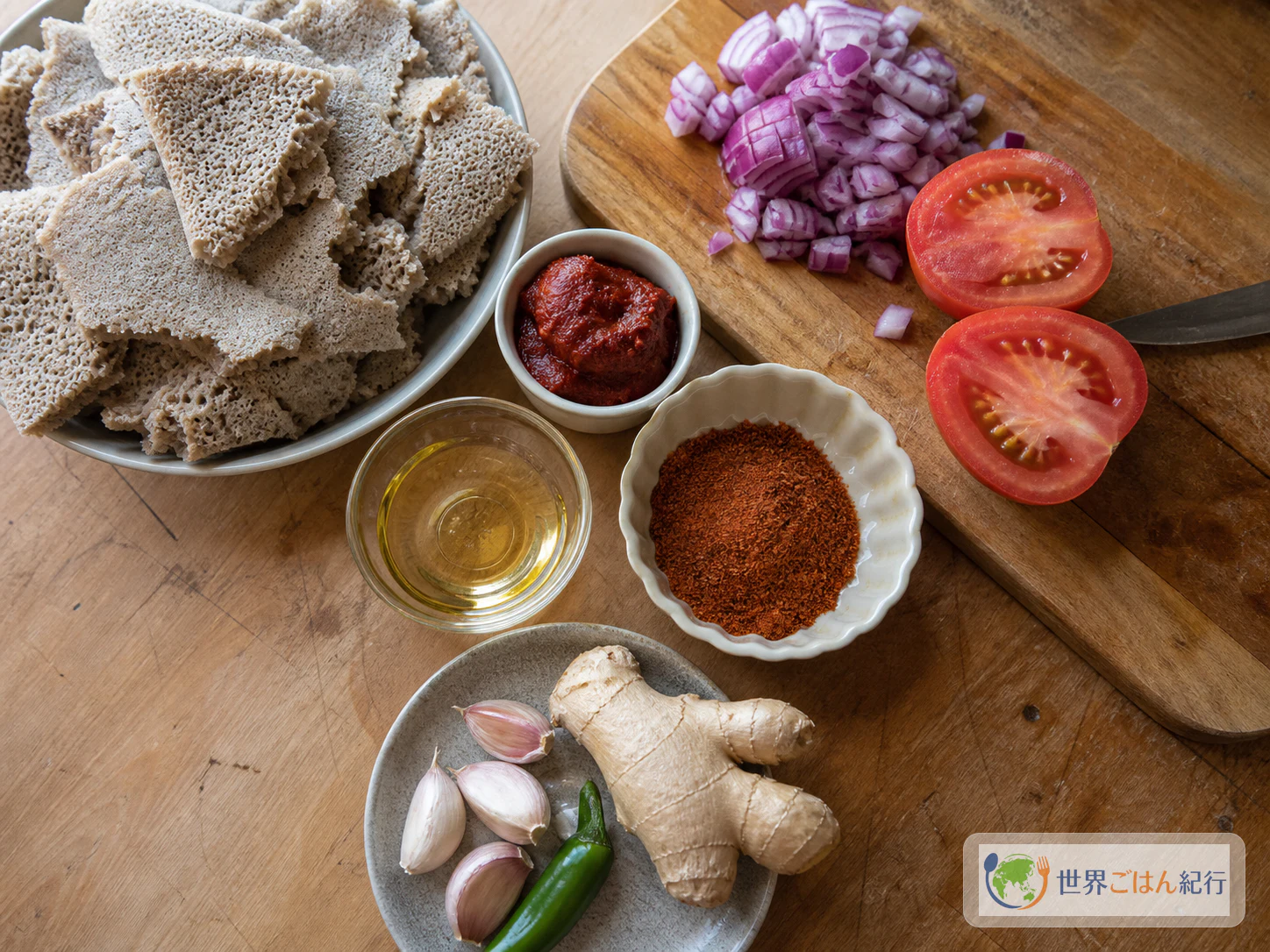
The amounts are adjusted from a firfir recipe so the sauce thickness is easy to see over a home burner. Injera weight changes with how dry it is, so don't go by the count of 4 sheets alone. Use about 1.25 lb (560 g) in total. If the sheets are thin, use more; if thick, use a little fewer.
Berbere is not just chili. It is a mix layered with the aromas of paprika, fenugreek, cardamom, cloves and more. Ordinary chili powder alone does not give the real aroma. If you are using it for the first time, choose a finished mix whose ingredients and heat level you can check. It saves you from gathering several spices at once.
If you buy a mix, pick one whose ingredient list and net weight you can check, and one you can reuse for bean and chicken dishes besides firfir. If you want less heat or want to build the aroma yourself, make a small batch of berbere from scratch instead of buying a finished mix. Check the ingredients, net weight and heat description on the label.
Substitutes and allergy check
A thin sourdough-type bread in place of injera keeps the sourness that comes from fermentation. Rice-flour bread or tortillas also work, but they change how much sauce is absorbed and the aroma. Don't add all the water at once; start from ½ cup (150 ml). Naan and thick-sliced sandwich bread dry out in the center before the outside breaks down, so don't use them as a substitute.
Berbere labels vary by product for wheat, sesame, nuts and so on. Some injera products mix wheat or barley in with the teff. Niter kibbeh is clarified butter and so contains dairy. If you have allergies, check the ingredient labels rather than assuming from the finished dish. Even when you use vegetable oil, check the berbere and injera labels separately.
Choosing injera, berbere and fat for firfir
For a first try, make the injera version. It's easier to find, and it's what the dish is meant to be. If you can buy injera at a specialty grocer, choose it for its sourness. Without injera, a thinly baked, sour sourdough-type bread works best; naan absorbs too much liquid, and a tortilla lacks both sourness and bubbles. With a substitute, reduce the water in the sauce by 2 tbsp (30 ml) and check the bread every 30 seconds after adding it.
Commercial berbere varies a lot in how much chili each maker puts in. If you're not used to heat, start with 4 g and taste once the sauce has reduced. If the standard 7 g still wants a little more fire, add 1 g at a time at the table; that keeps the whole pot easy to rescue. Hiding the heat with oil or sugar only blurs the berbere's aroma.
Making a small batch of berbere from whole spices lets you shape the aroma yourself: dry-roast the coriander and cumin, cool them, then grind. A dedicated mill is worth having if you grind spices often in amounts for a few uses, but with commercial berbere you can skip it.
Fasting periods include many days in the year when meat and animal foods are avoided, and practice differs by church, household and individual. On a fasting day, skip the niter kibbeh and egg and cook with 3 tbsp (45 ml) vegetable oil. Check the berbere and injera labels for dairy or egg, too.
How to make it: make the sauce first, and let the injera soak it up at the end
The basic approach is to finish the sauce first and not to stir too much after adding the injera. If you cook it for a long time like a stew, the sourness and the bubbles disappear and it comes closer to a soft bread porridge than to firfir.
Firfir problems and how to fix them
Sauce thickness
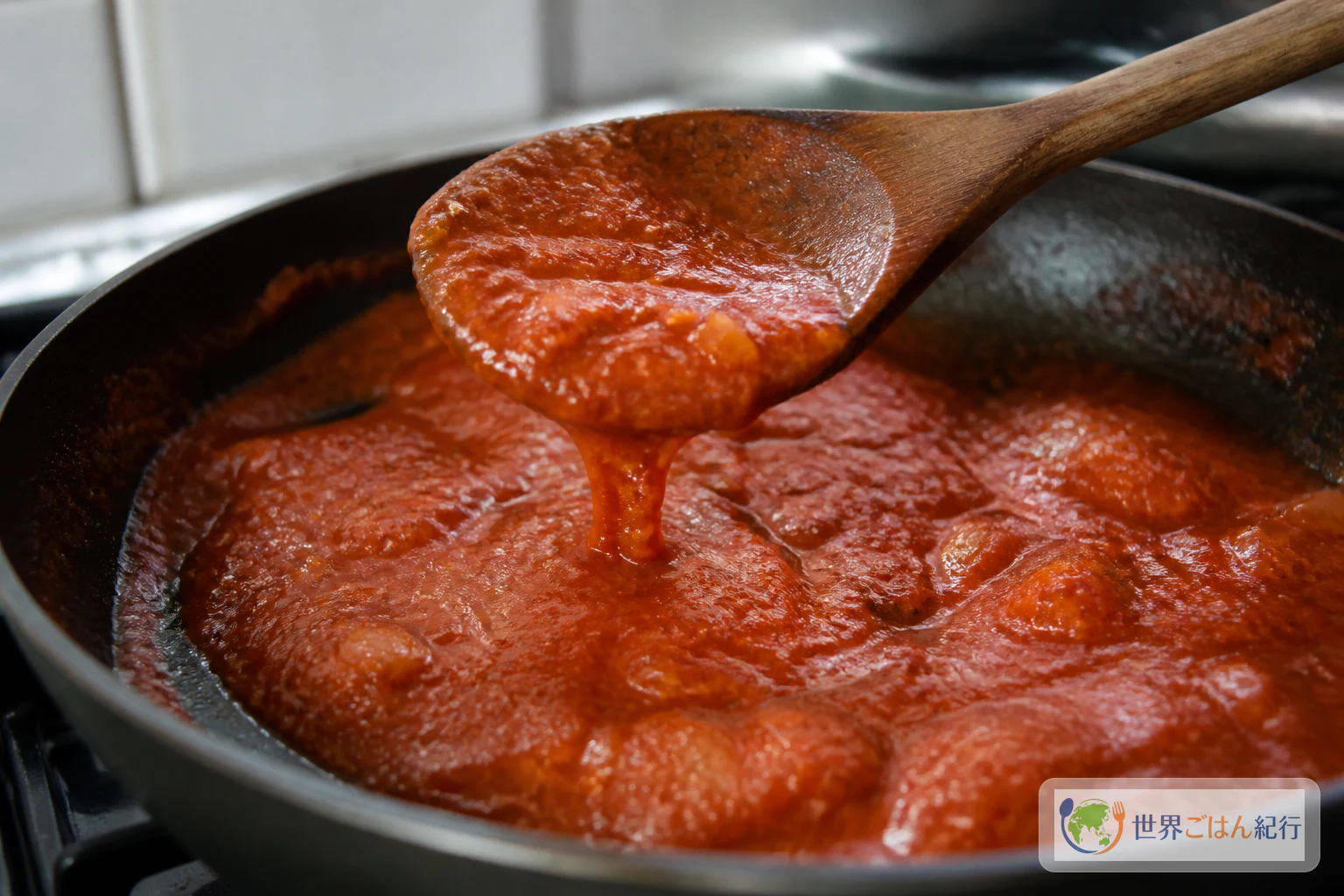
Before the injera goes in, the sauce should be thick enough that a wooden spoon's track stays for 1 second. The bread absorbs liquid, so a sauce that looks slightly too thick in the pot comes out just right on the plate. Add the injera to a watery sauce and it soaks up the liquid and turns into a soft, flavorless mass.
Add the bread last, too, because simmering it from the start makes firfir heavy. If the pot turns watery after mixing, see the table below, and add extra dry injera no more than 1 oz (30 g) at a time, since too much thins the flavor.
Tearing the injera
Center on 3–4 cm, but leave the thin edges at about 1 inches (2 cm) and the thick parts at about 1.5 inches (4 cm). Torn too fine, everything turns the same softness and you lose the feel of the bubbles. Pieces over 2 inches (5 cm) go the other way: the sauce struggles to reach the center, and the sourness bursts out only when you bite.
Troubleshooting firfir
| Condition | Why it happened | How to fix |
|---|---|---|
| Sauce is watery | Not reduced enough before adding the injera | 1–2 minutes over low heat with no lid. If already mixed, add 1 oz (30 g) dry injera, fold 30 seconds, turn off the heat and rest 1 minute |
| Everything is hard | The bread was too dry, or too little water | Drizzle on 1 tbsp (15 ml) boiling water, fold 30 seconds over low heat, then rest 1 minute |
| Mushy | Torn too fine, or overcooked | The texture doesn't fully come back. Next time tear to 3–4 cm and turn off the heat within 4 minutes of adding |
| Bitter | Scorched the berbere or tomato paste | Warm an extra 8.5 oz (240 g) tomatoes in a separate pot and combine a little at a time. Don't stir in the scorched bottom |
| Too hot | Berbere and green chili stacked together | Add 2.75 oz (80 g) more injera and taste without adding salt. Yogurt on the side helps, but adds dairy |
With bitterness, move only the upper part of the pot to another pot before combining it with the extra tomato. If it has scorched completely, don't try to force the flavor back. Next time, add 1 tsp water right after the berbere to bring the temperature down.
Serving firfir, with variations
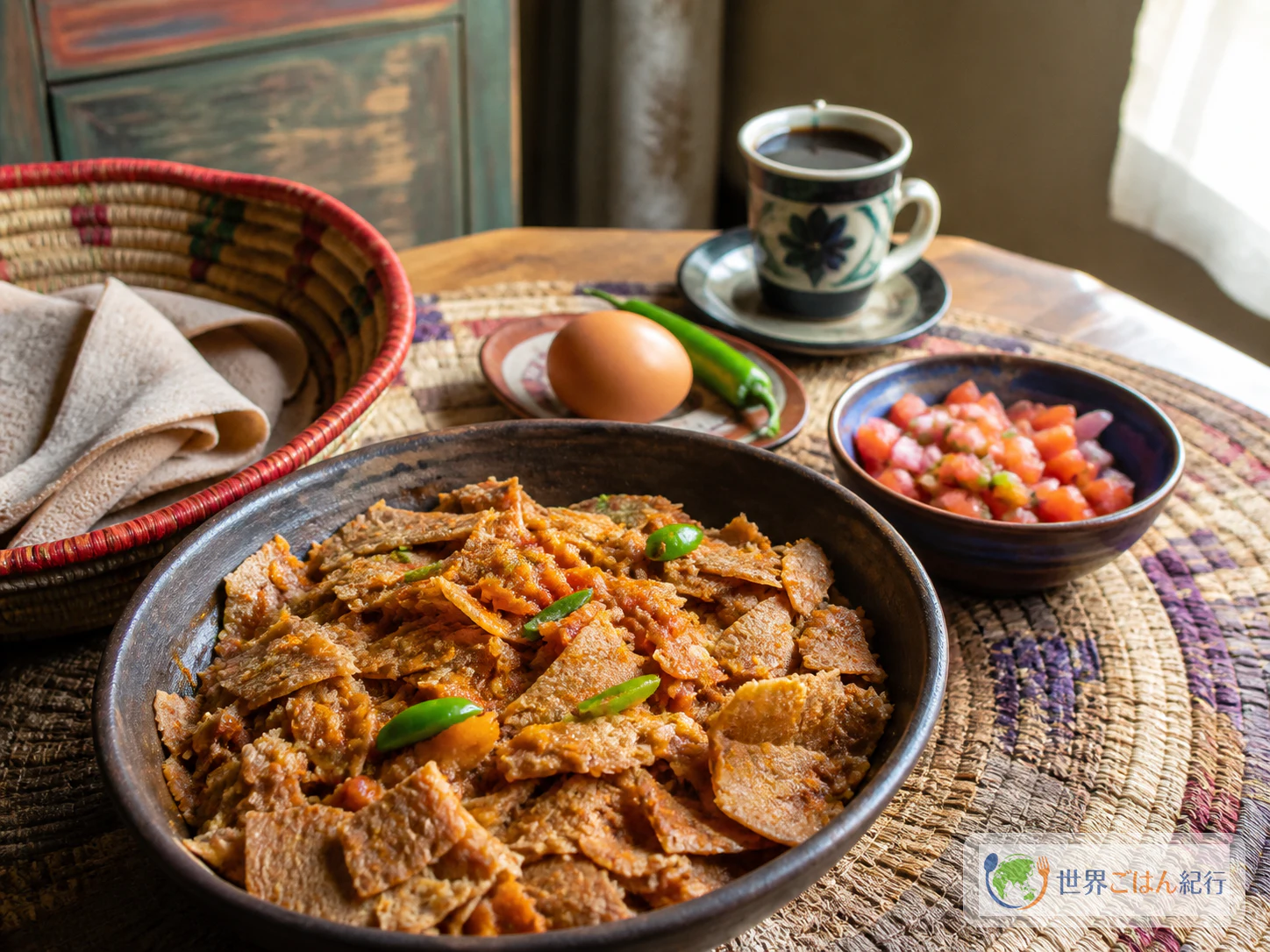
Firfir isn't plated one portion at a time like a Western breakfast. Serve it from a large bowl for sharing, or in individual bowls; what matters is catching the sauce with injera and eating together. In the morning, round out the plate with coffee or a boiled egg. At midday or night, serve a little misir wat or shiro wot alongside and treat the firfir as the staple.
Plant-based firfir with less heat
Use 4 g berbere, no green chili and 3 tbsp (45 ml) vegetable oil. Keep the order of cooking the onion until translucent before adding the berbere, and if you don't want the aroma to thin, add 3 g paprika.
Firfir with niter kibbeh
Cooking with 2 tbsp (30 ml) vegetable oil and 15 g niter kibbeh adds a butter aroma and rounds out the sauce. Skip it if you avoid dairy or are eating on a fasting day, and even with the butter, don't overcook the berbere.
Firfir with egg
Hard-boil 4 eggs in a separate pot, halve them and add 1 per person just before eating. Kept out of the pot, the egg's mildness and the sauce's sourness each come through on their own. On a fasting day, a small portion of a bean dish fills that place on the table.
Firfir with leftover wat
If you have leftover tomato-based wat or bean stew, add up to 7 oz (200 g) when making the sauce and reduce the water to ½ cup (120 ml). The stew brings its own salt, so taste before salting at the end. Shred large pieces such as chicken finely so they don't fall off when you lift the injera.
Toward chechebsa with kitcha
Tear kitcha or thin bread to about 1 inches (2 cm), fry it for 2 minutes in 1 tbsp (15 ml) vegetable oil or 15 g niter kibbeh, then add 0 oz (4–7 g) berbere. Rather than pouring in all the tomato sauce, add 2 tbsp (30 ml) at a time, just enough to moisten the surface.
Recovering from mistakes, storage and frequently asked questions
Storage and reheating
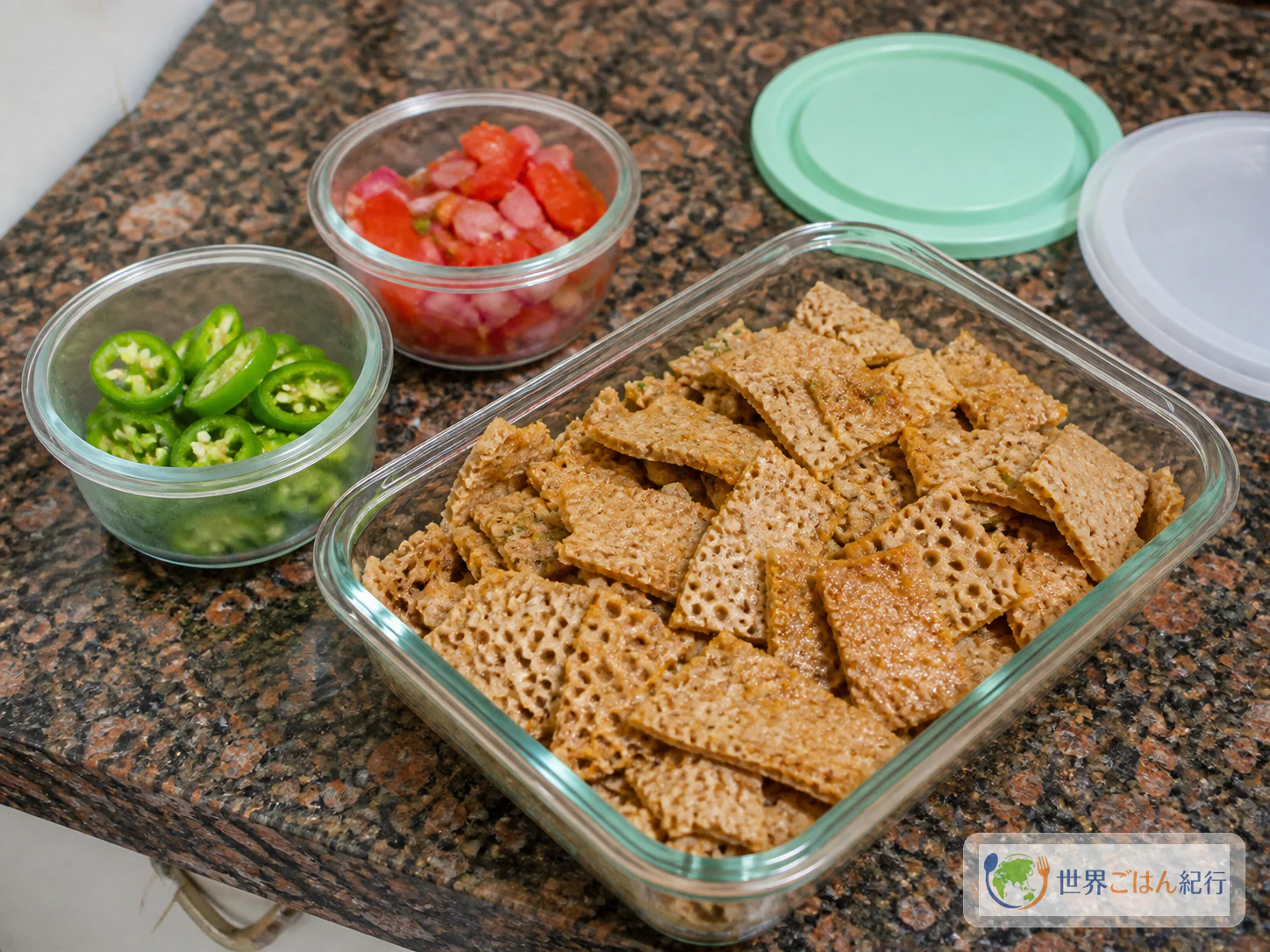
Divide leftovers into shallow containers and don't leave them at room temperature. Refrigerate within about 2 hours, or within 1 hour when it is above 90°F (32 °C). Keep the refrigerator at 39°F (4 °C) or below, eat leftovers within 3–4 days, and reheat to 165°F (74 °C). The bread firms up in the cold, so it's best the next day; add 1 tbsp (15 ml) water when reheating and fold gently.
Can I make firfir without injera?
You can, though the fermented sourness and bubbles will be different. Tear a thin sourdough-type bread into 3–4 cm (1 1/4–1 1/2 in) pieces and start from ½ cup (150 ml) water. With naan or thick bread, check every 30 seconds so the center doesn't stay hard while the sauce breaks down.
Can I substitute curry powder for berbere?
For heat and red color it gets close, but the aroma of fenugreek and cardamom thins out. As a stopgap, use 4 g paprika, 2 g curry powder and 0.5 g cayenne. Next time, switch to a finished mix or a blend that contains fenugreek to bring back the character of firfir.