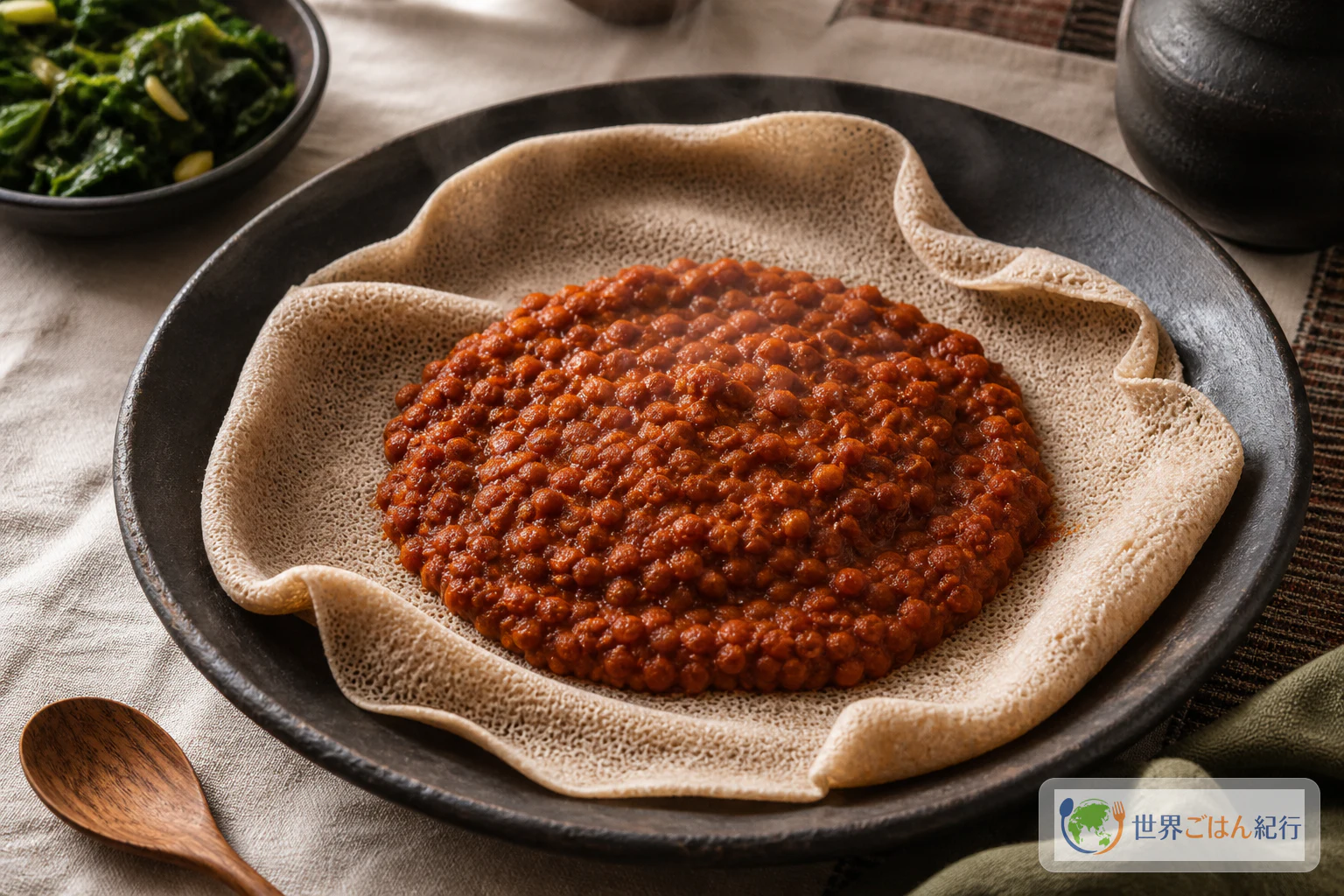
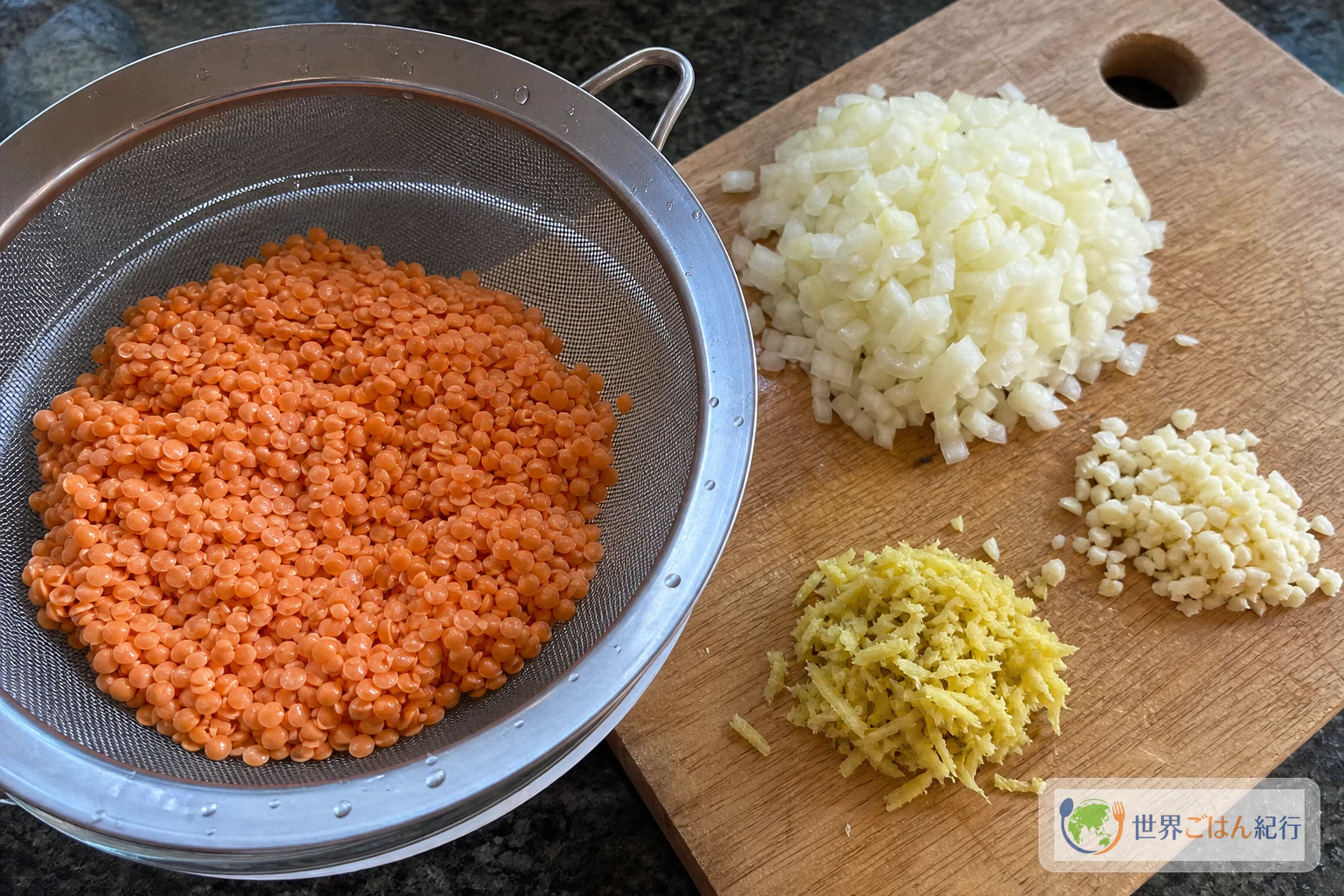
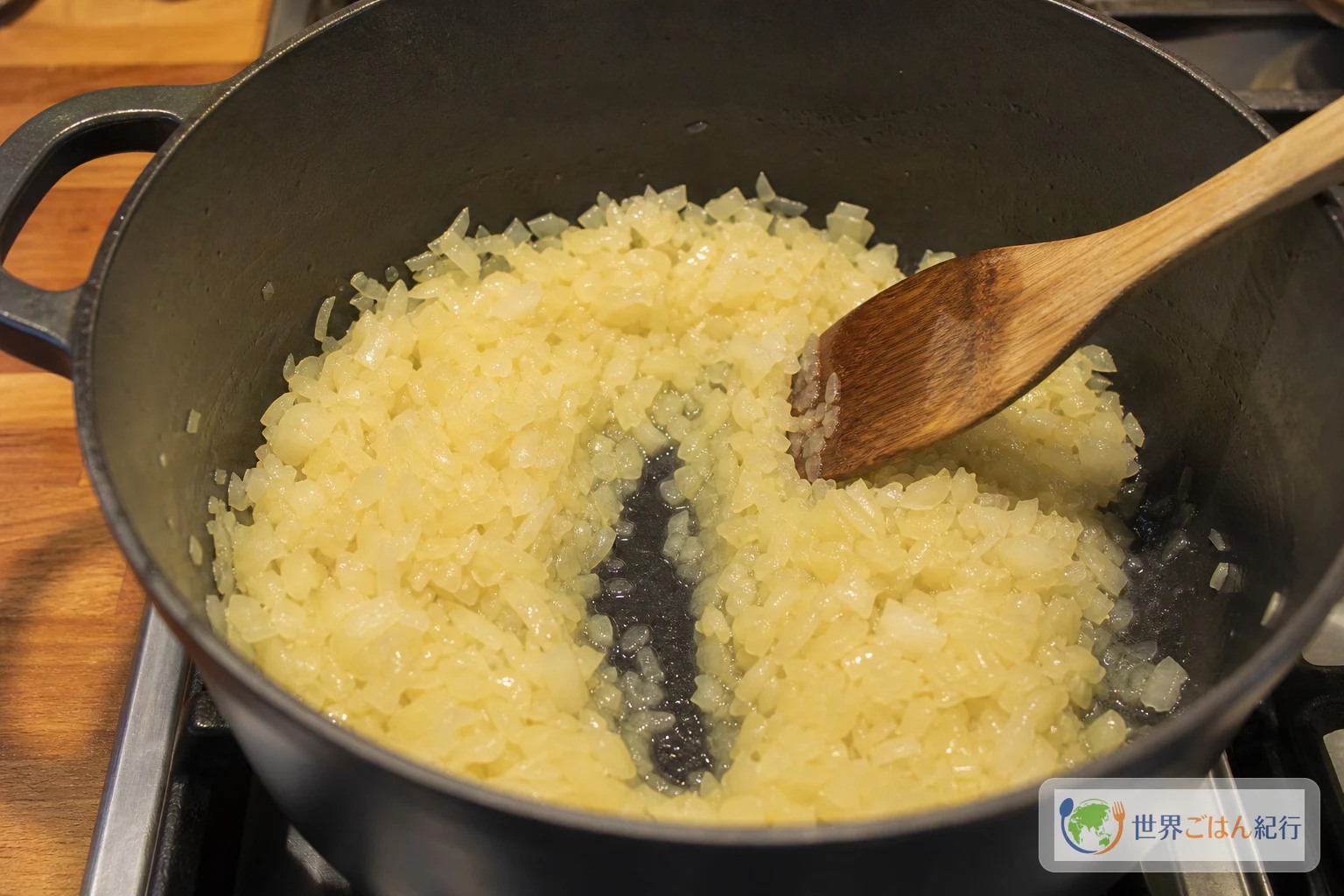
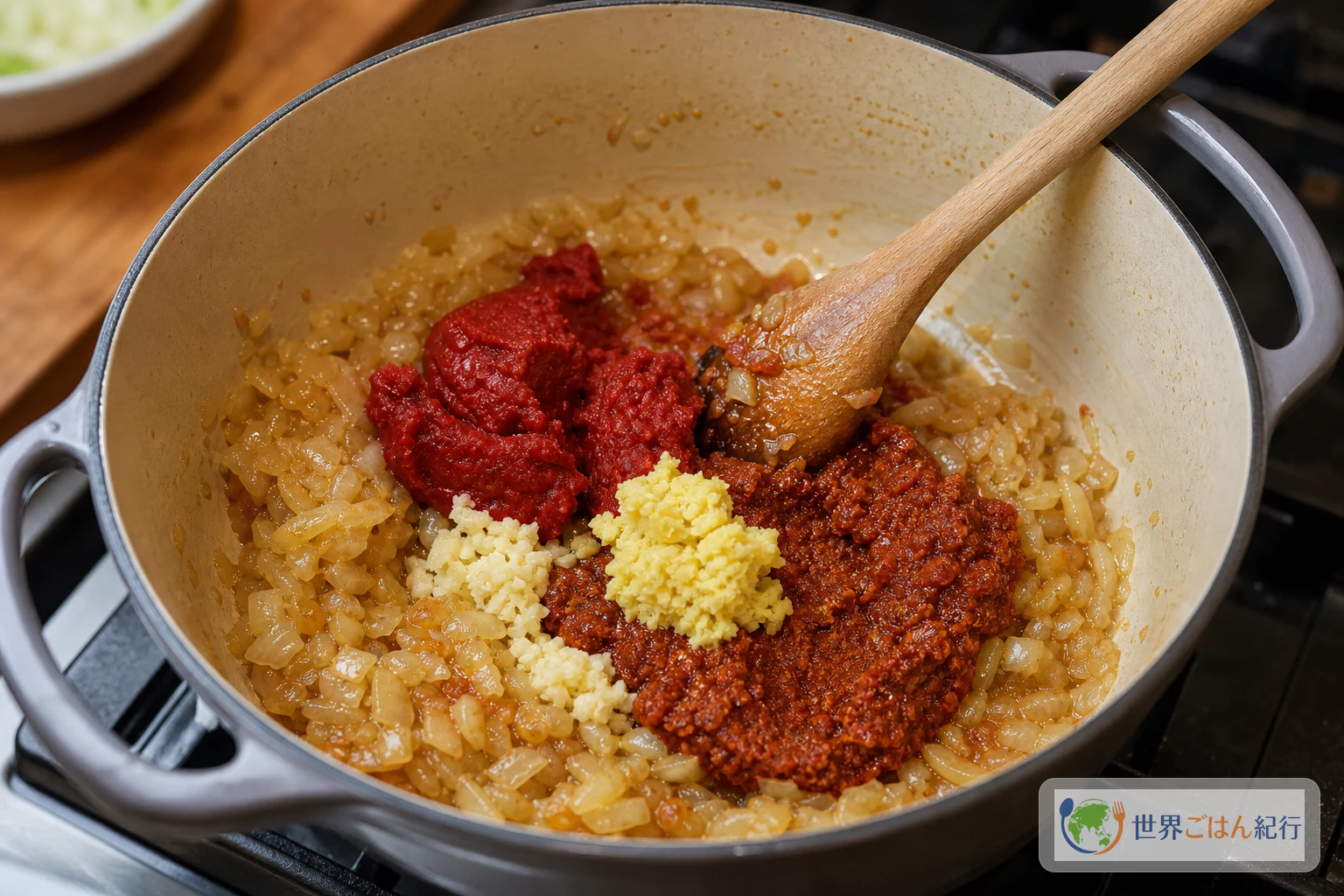
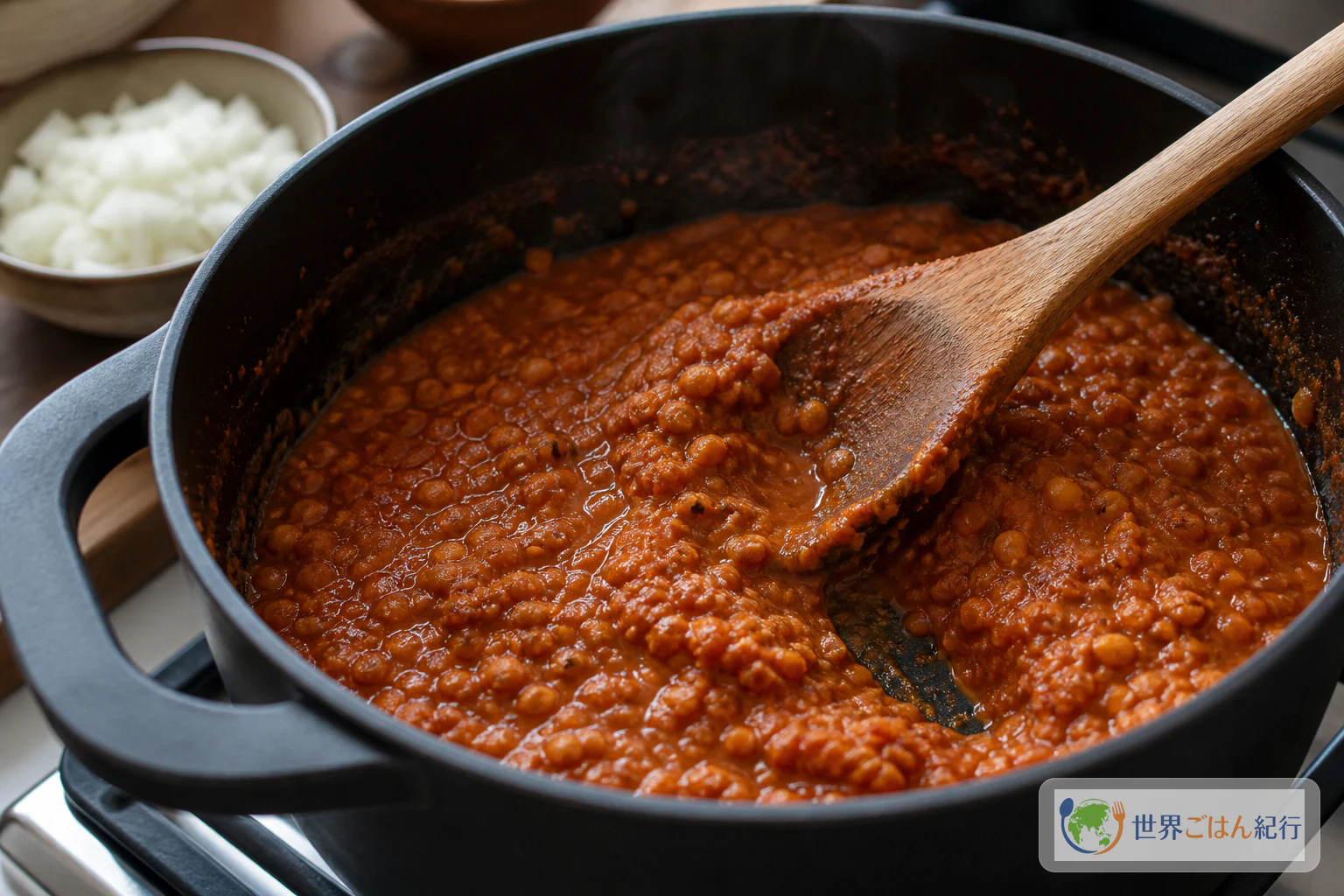
The bottom of the pot goes quiet as the onion gives up its moisture, and the sizzle turns fine. Then the berbere goes in, and its red chile, dry sweetness and faint bitterness rise together. Misir wat is an Ethiopian stew of red lentils simmered with berbere and aromatics. The lentils start out hard and lose their shape little by little, and most of the cooking is waiting for that change.
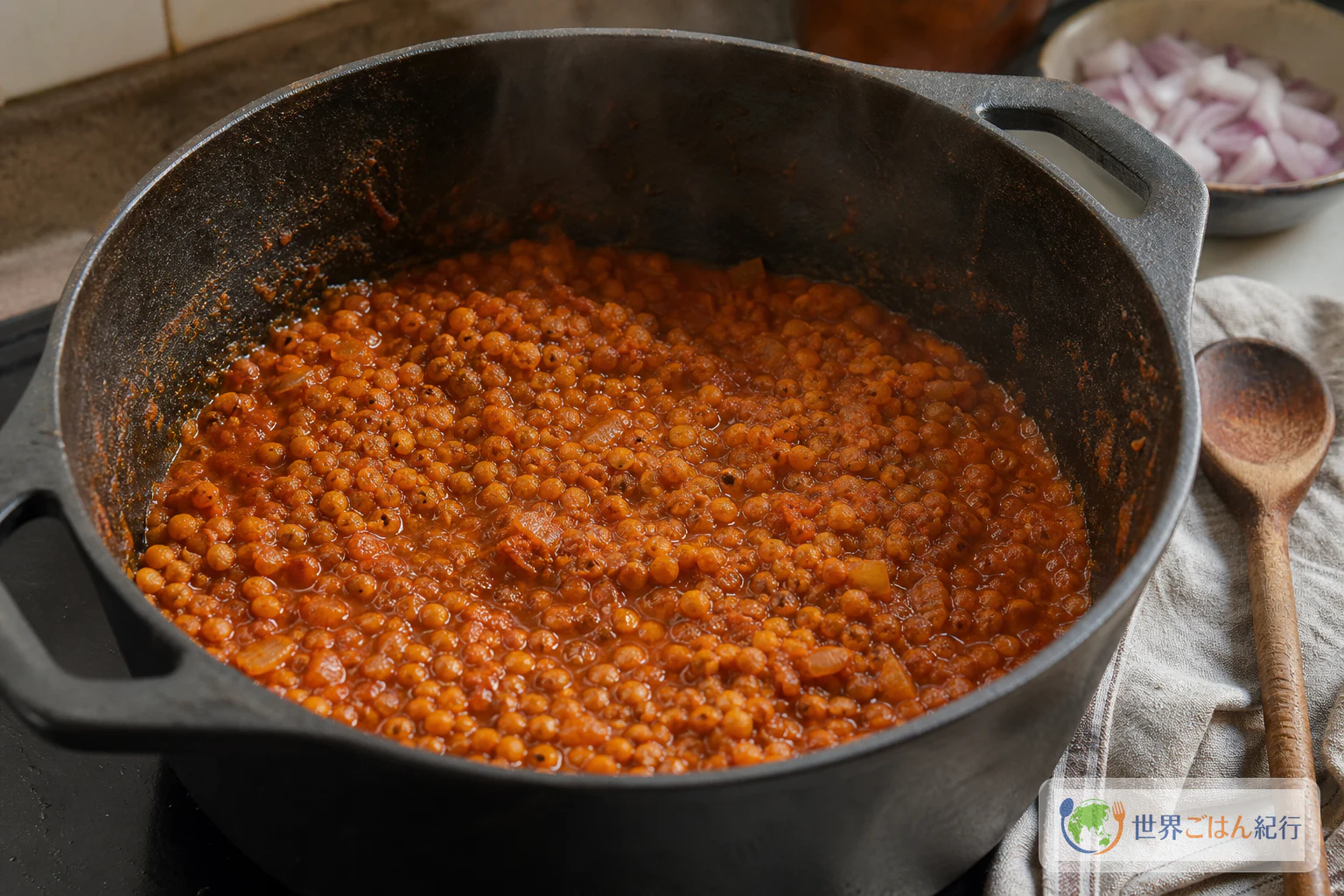
Misir Wat at the Ethiopian Table
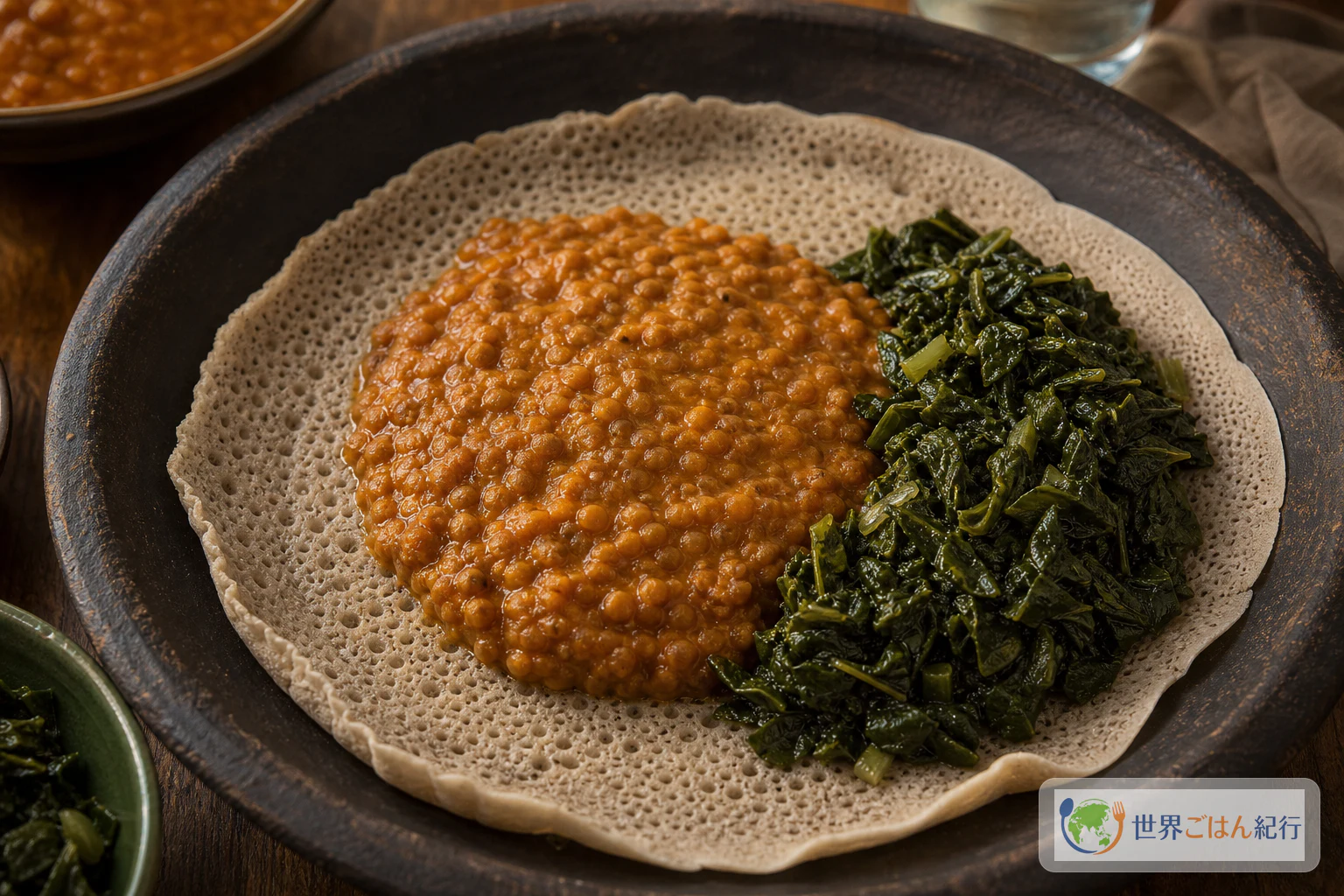
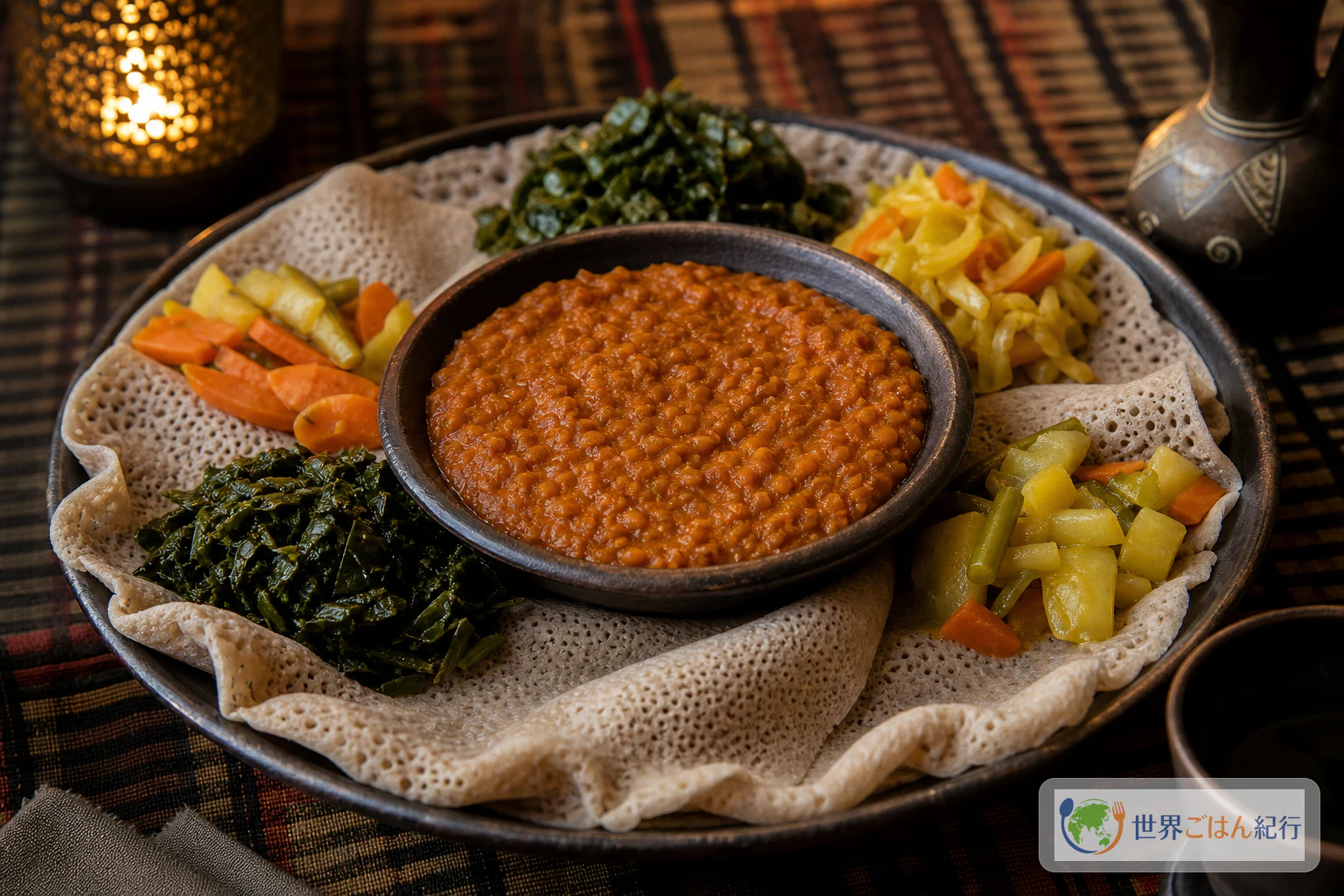
In English you'll see the name spelled several ways: Misir Wot, Misir Wat, Misr Wot. The dish is the same under all of them. It is rarely eaten alone with a spoon. It comes with injera, a thin, sour bread made from teff that is served with meat and vegetable sauces. You tear off a piece, scoop up the stew and mop up the sauce, and that is when the sourness of the bread and the sweetness of the lentils come through in layers.
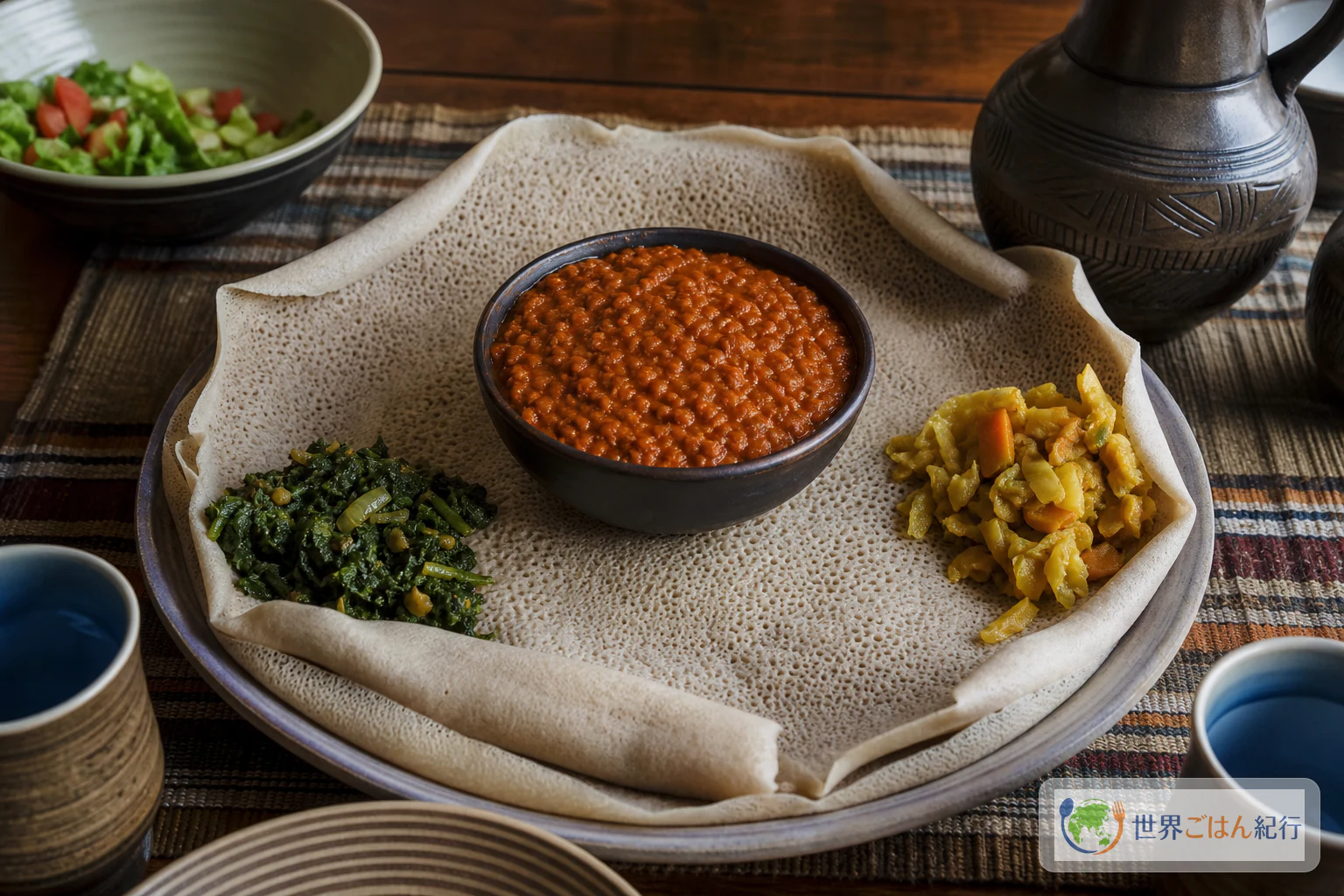
Meals are often served on one large platter and eaten by hand with injera. Misir wat is not meant to be the star. Its richness makes sense next to sour bread, greens and other stews. Set it beside the festival meat dish doro wot or the chickpea-flour-thickened shiro wot and you can see how changing the main ingredient changes a red stew's role on the table.
During the prescribed fasting periods, people avoid meat and also animal foods such as milk, butter and eggs. Misir wat made with vegetable oil and lentils fits easily into a fasting-day menu. If you follow strict dietary rules, check the labels of the oil, stock and spices before you cook.
Some versions start with niter kibbeh or unsalted butter. Others use vegetable oil and tomato paste. This recipe serves 4 and uses the vegetable oil, fasting-day style. The dish keeps its name either way, and the fat you begin with depends on whether you want a butter aroma or are avoiding animal foods that day.
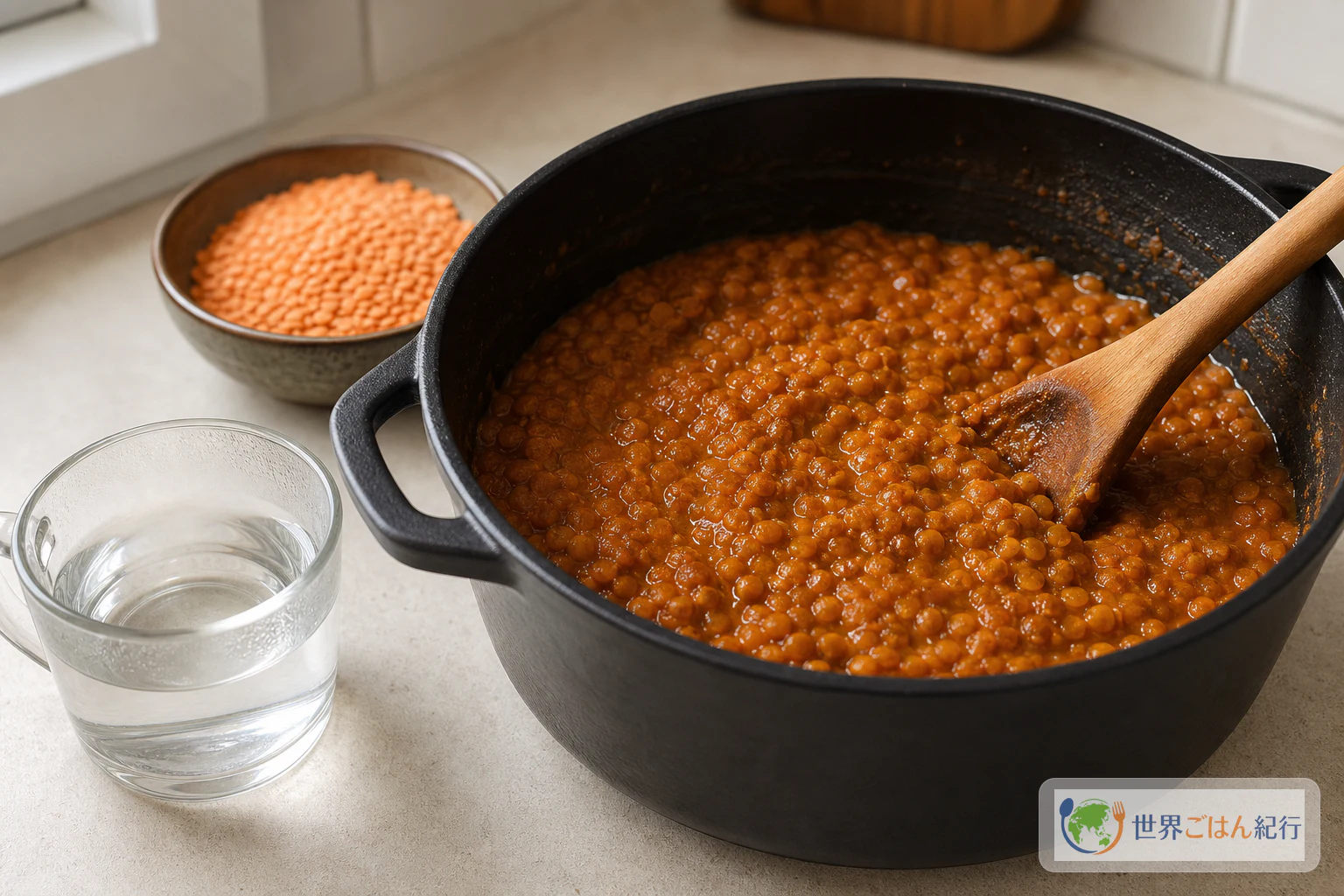
When finished, it is not a soup. The track of the wooden spoon stays visible for 2 to 3 seconds. Serve with 4 to 6 pieces of injera, or white rice, for 4 people.
The nutrition values are approximate figures for the misir wat itself, the vegetable-oil version divided into 4, and do not include injera or rice.
Few Ingredients. Don't Skip the Order of the Aroma
When cooking this elsewhere, you don't have to match every local brand.
But once red lentils, berbere, and onion are settled, the core of misir wat's flavor remains.
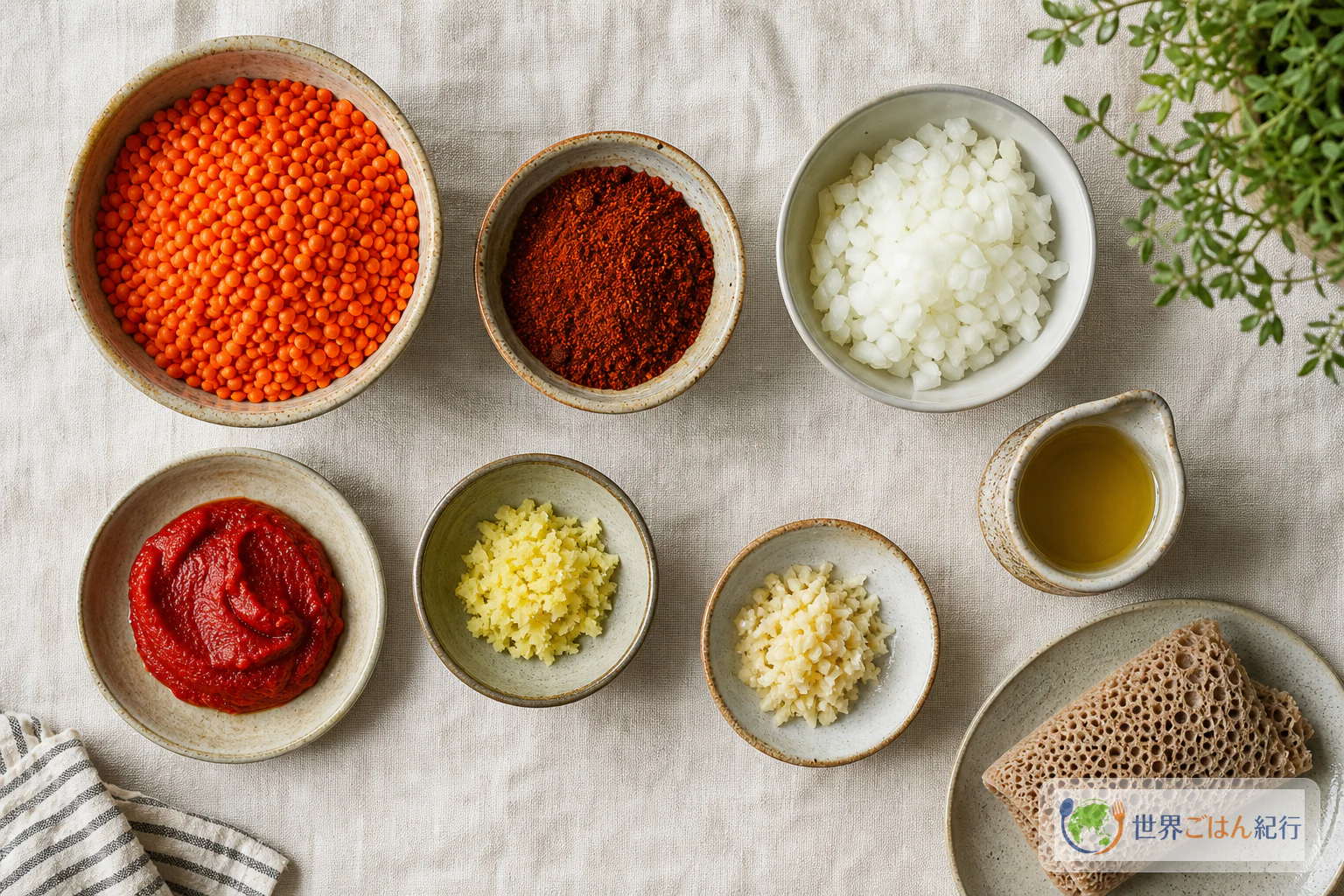
Red lentils come as types close to whole and types with the hulls split.
Whole-type lentils keep a little shape after cooking, while split ones fall apart sooner and turn smooth.
If you use split lentils, which are commonly sold, reduce to 8 oz (220 g) and shorten the simmering time by about 10 minutes.
Each brand of powdered berbere differs in chile strength and in the sweetness of its aroma.
Don't add all 1 oz (30 g) at once. Add 25 g, simmer, then check the heat and aroma at the end and add 5 g if needed. This is easier to recover from.
Fasting-Day Style, or Adding Richness
Made with vegetable oil alone, it fits more easily into a menu that avoids meat, dairy, and eggs.
If you use niter kibbeh, replace 2 tbsp (30 ml) of the 3 tbsp (45 ml) vegetable oil with niter kibbeh and keep the remaining 1 tbsp (15 ml) for sautéing.
Niter kibbeh contains dairy, so don't use it in plant-based cooking.
Commercial bouillon can also contain dairy or meat extract, so check the label.
For a fasting-day version, simmer with only water and salt and choose a berbere whose label you can check.
Red lentils are legumes. Do not serve them to anyone with a legume allergy. Berbere, bouillon, and injera mixes may contain wheat, sesame, nuts, or dairy. Check the ingredients and allergen labels of each product.
Shopping if You Build the Aroma Yourself
If you only use a ready-made berbere, fenugreek seeds are not essential.
If you make your own berbere, whole fenugreek is the core of the aroma, with a trace of bitterness.
It makes sense to buy it if you want to grind small amounts with other spices and adjust to your own heat.
If you don't expect to use up a bag of powdered berbere, or will only make misir wat once, the ready-made product is enough.
When you shop, check not just the product name but the quantity and ingredient list.
A granite mortar is a tool for people who grind whole spices, including fenugreek, themselves.
The coffee ceremony also uses a mortar and pestle to grind roasted beans.
So a mortar is not only for misir wat.
A reason to buy it appears if you make your own berbere and also use it for coffee or other spices.
If you buy powders or don't want more to store, skip it.
The one point to check is that the mortar comes with a pestle and that its size fits your storage space.
Choosing Ingredients and Substitutes for Misir Wat
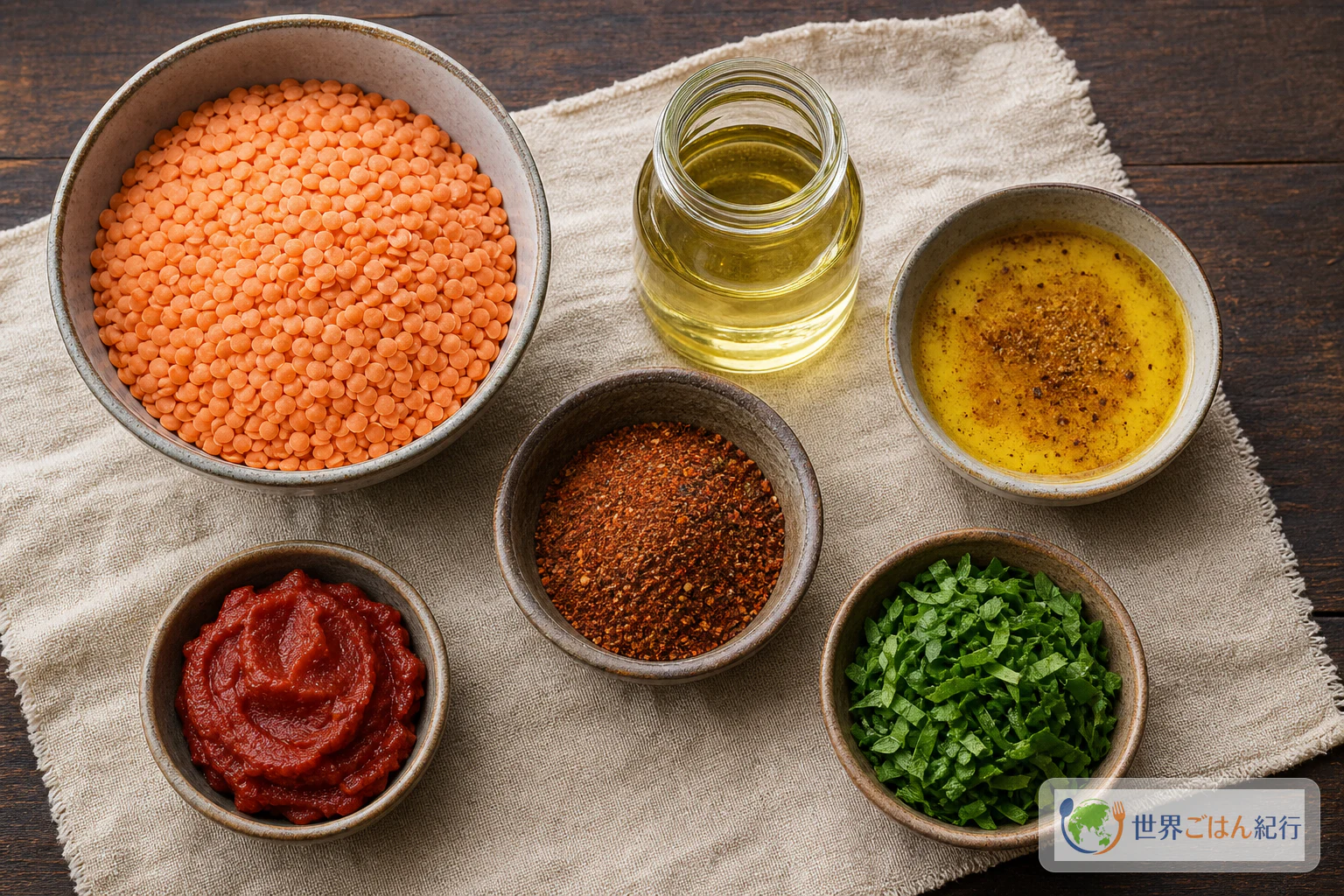
Ethiopian ingredients can be hard to find outside Ethiopia, so it helps to know what you can swap and what holds the dish together. If you already have berbere, red lentils and onion, you have everything you need. Fenugreek and a mortar matter only if you want to build the aroma yourself, and a granite mortar earns its place only if you'll grind whole spices again and again.
| What to change | How to change it | Effect on flavor |
|---|---|---|
| Red lentils | From whole to skinless split | Breaks down faster and gives a smoother stew |
| Fat | From vegetable oil to partly niter kibbeh | Adds butter aroma and richness. Not used in the fasting-day style |
| Tomato | From 1.5 oz (45 g) paste to 4 oz (120 g) diced tomatoes | More acidity and water, so reduce the boiling water by 3.5 tbsp (50 ml) |
| Heat | Start with 25 g berbere and add 5 g at a time | Easier to adjust heat while keeping aroma |
| Base | From injera to rice or rye bread | Sourness and texture change, but it still catches a thick lentil stew |
Three things are best left alone: cook the onion gently instead of browning it over high heat, fry the berbere only briefly, and keep the lentils moving rather than leaving them to sit in water.
Berbere is the one ingredient that's hard to replace. Curry powder alone makes an edible stew, but it becomes a different dish. A mix of small amounts of paprika, chile and cumin gets closer, though it is still a stand-in. Cook with ready-made berbere once before you make your own, and you'll have a better sense of what you want to add.
Method: Break Down the Lentils from the Sweetness of the Onion
Use a heavy-bottomed pot.
If you only have a thin pot, lower the heat a notch and stir so the bottom is never left alone.
Common Misir Wat Problems and Fixes
Getting the consistency right
At home the first hurdle is moisture, more than heat. Too much water and you have lentil soup. Too little and the spices scorch on the bottom of the pot. You're aiming for a stew where the bottom of the pot shows for a moment when you pull the wooden spoon through, thick enough to scoop onto injera.
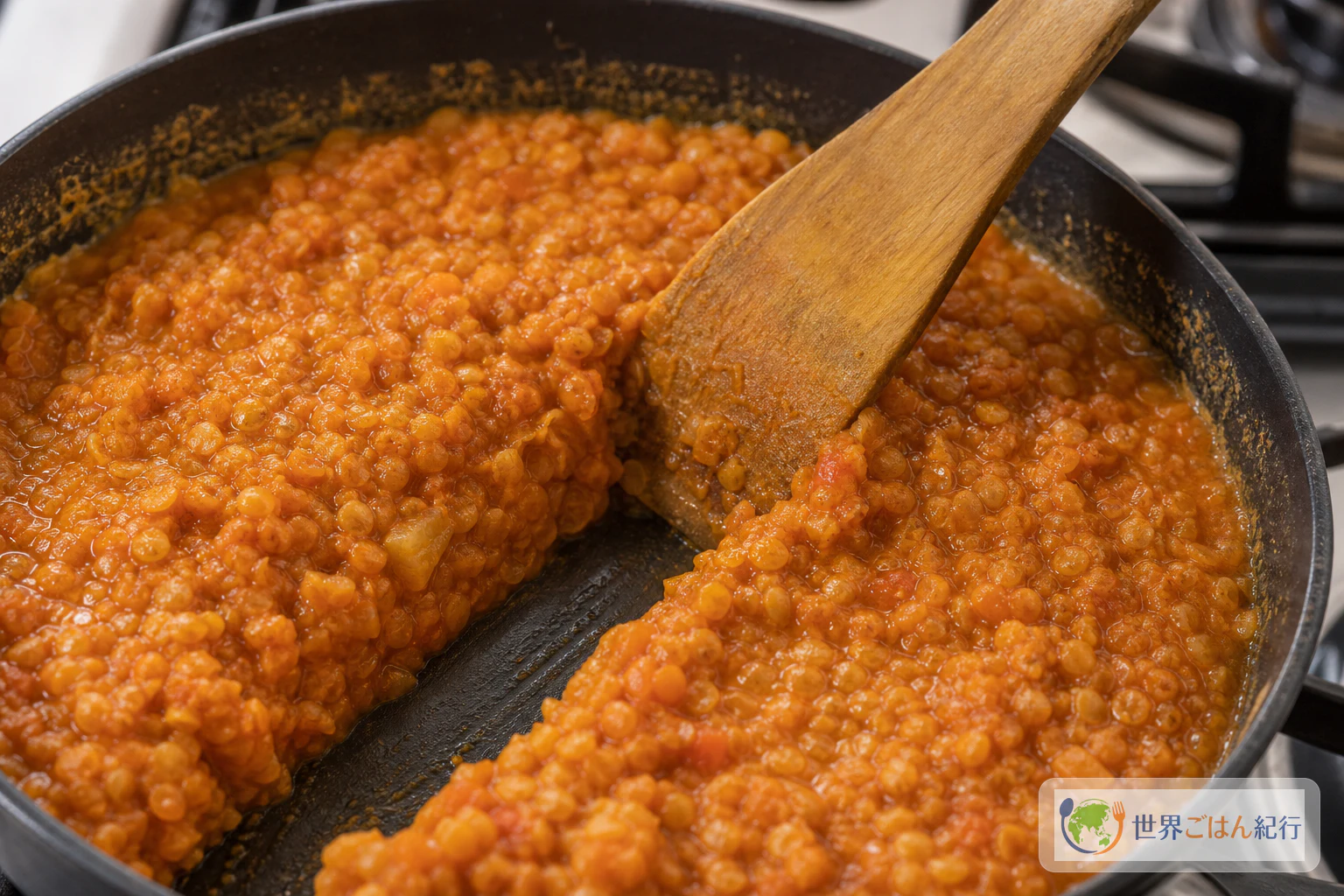
Watch the surface the moment you stop the spoon, not how red the pot looks. If the oil separates and only a red ring floats on top, the stew is short on liquid. Add 3.5 tbsp (50 ml) boiling water, stir, and simmer over low heat for 5 minutes.
Judging berbere by aroma
Redder does not mean more correct. Berbere color differs between brands, and a strong chile blend is hot even in small amounts. If the berbere smells powdery and stings your nose, it hasn't settled into the stew yet. A little boiling water and 5 more minutes of simmering will let it layer with the sweetness of the lentils.
To soften the heat, add a little unsalted cooked lentils, or tomato paste 1 tsp at a time. Skip the sugar. Adding lentils and liquid keeps the consistency right, and the flavor works better at the table.
Scorching
If you smell something bitter and scorched, leave the bottom alone. Move only the upper portion to another pot, add boiling water and carry on. Once the scorched layer is stirred in, no amount of extra lentils will take the bitterness away.
How to Recover from Mistakes
| State | How to recover |
|---|---|
| Lentils are hard | Add 3.5 tbsp (50 ml) boiling water and extend over low heat 10 minutes at a time with the lid slightly ajar |
| Watery | Remove the lid and simmer over low heat 3 to 5 minutes at a time, checking the spoon track |
| Too hot | Add a little unsalted cooked lentils or tomato paste and match the consistency |
| Powdery | Add a little boiling water, simmer 5 minutes over low heat, then rest 5 minutes |
| Scorched bottom | Don't scrape; move only the upper portion to another pot. If you sense scorching, don't force a fix |
Serving and Storing Misir Wat
What to serve on days without injera
Injera is both the tool for scooping misir wat and the source of sourness on the plate. Making it yourself, with fermenting and cooking, is a separate project, so plan for how to make injera ahead. For a meal on the same day, white rice, rye bread and thin buckwheat crepes pair most easily, in that order.
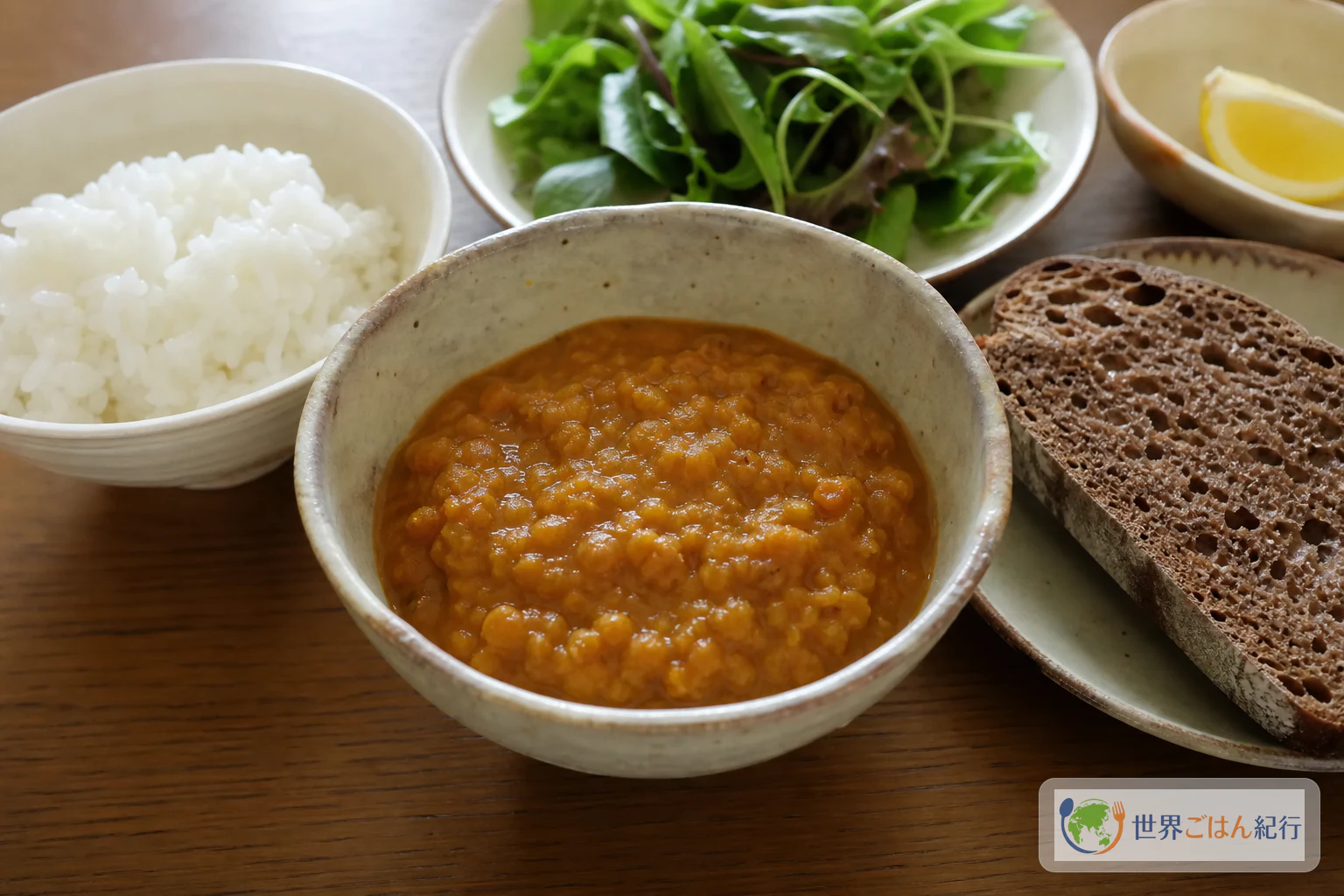
None of these taste like injera. White rice has no sourness, so the heaviness of the stew comes forward. Greens dressed with salt and a little oil, plus a few drops of lemon just before eating, reset your palate between bites. Arrange small portions of misir wat, greens and another lentil dish on one plate, and even a little stew feels like a meal. Once you know the aroma of berbere, read about the Ethiopian cuisine table as well, and injera will stop looking like just bread.
Storing and reheating
Misir wat thickens as it cools. If you plan to eat it the next day, finish it a little looser or keep some boiling water on hand for reheating. Don't leave it sitting in the pot at room temperature. Move it to shallow containers within 2 hours and refrigerate, then use it within 4 days.
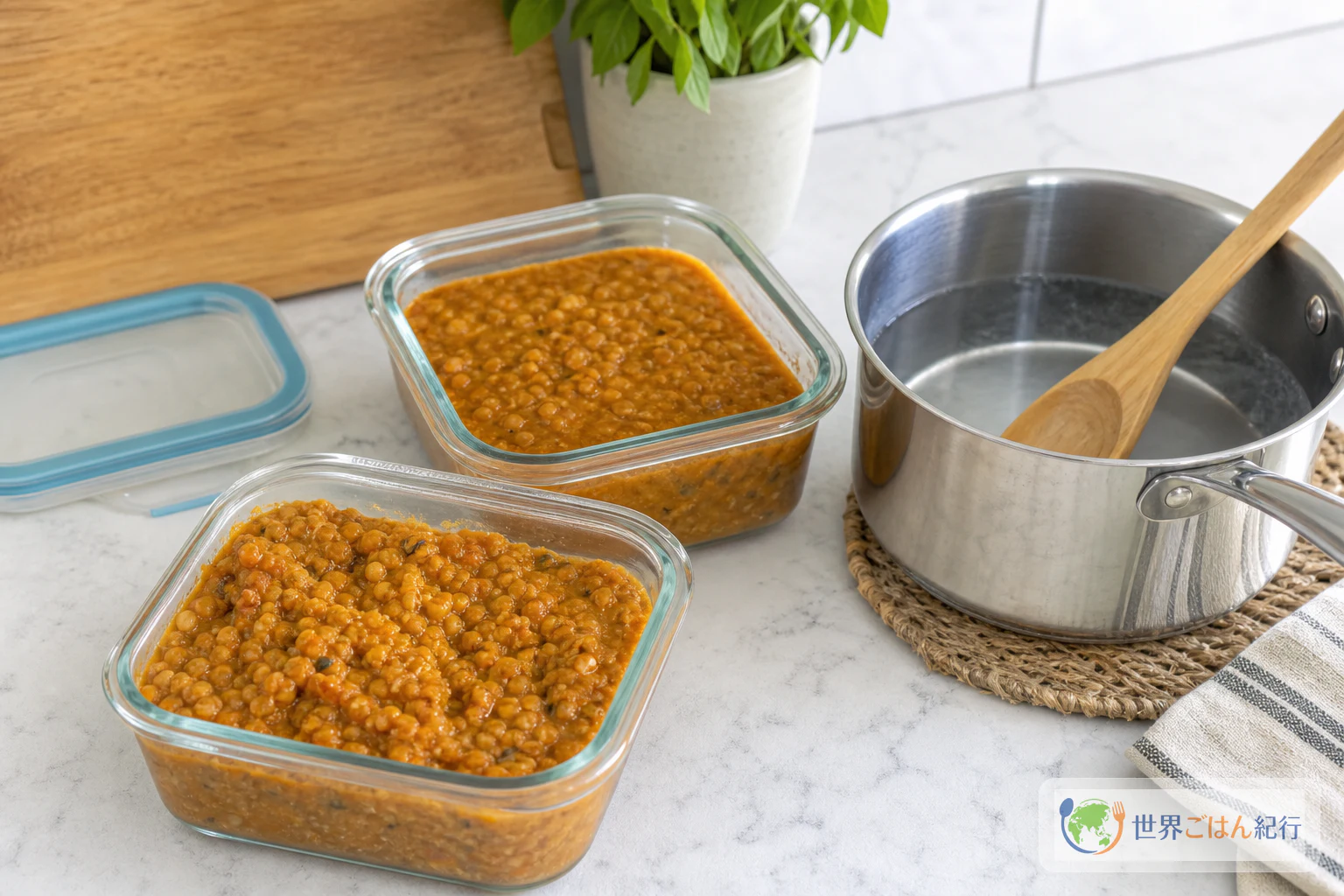
Take out only what you'll eat, put it in a small pot with 1 to 2 tbsp boiling water, and warm it over low heat until the whole pot bubbles again and the center reaches about 165°F (74°C). In a microwave, heat at 600 W for 1 minute at a time, stirring each time. Don't leave a container from the refrigerator out at room temperature for long. If it smells sour, the surface looks off, or you don't know how long it has been stored, throw it out rather than judging by taste.
Frequently Asked Questions
Q1. Can I use ordinary lentils instead of red lentils?
You can, but green or brown lentils break down differently and change the color. For split red lentils, use the 8 oz (220 g) in the ingredient table and check the simmer at 25 to 35 minutes. Turn off the heat when the centers have no white firmness left and the spoon track stays.
Q2. What if the berbere is too hot?
Next time, start with less than 25 g and make up the color with paprika. For a pot that's already simmered, add unsalted red lentils, or tomato paste 1 tsp at a time. Water alone only thins it, so add lentils too and taste as you go.
Q3. Do I add fenugreek seeds directly to misir wat?
With ready-made berbere, fenugreek is already taken care of. When you make berbere from whole spices, grind a small amount along with the other ingredients. Too much brings out bitterness, so start with the small amount in the recipe.