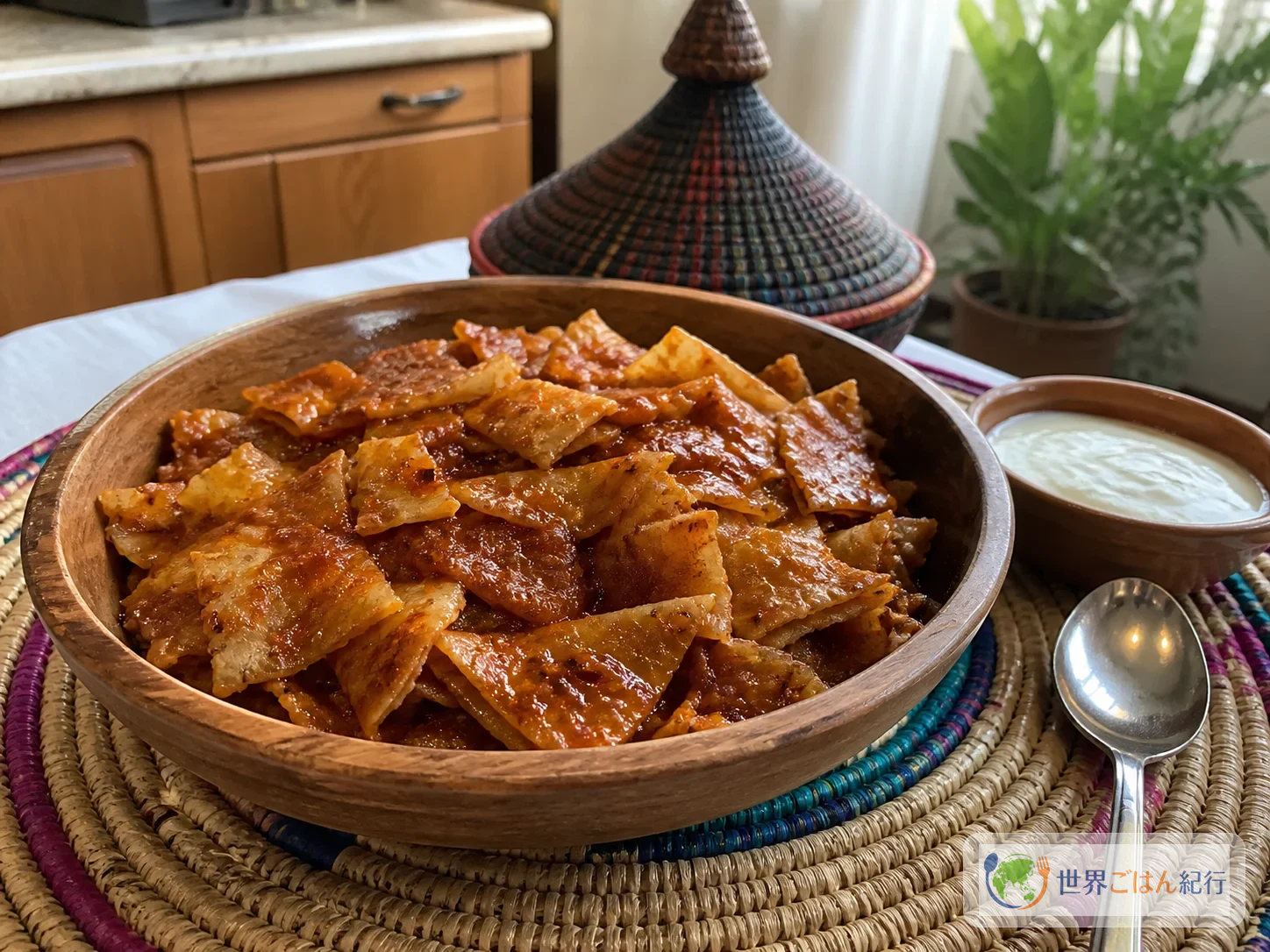
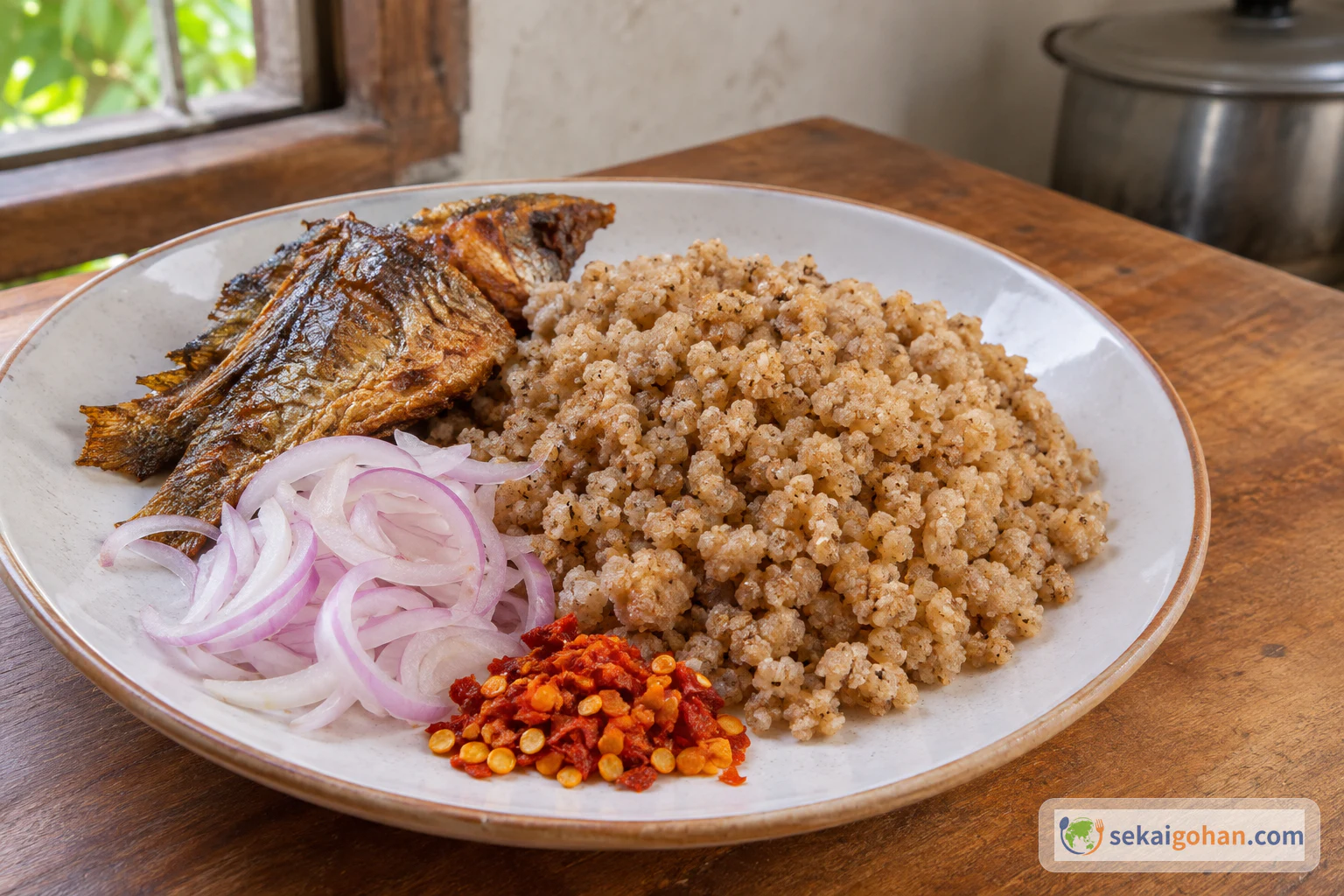
Deep red dried chilies spread out under the eaves of an Ethiopian kitchen, spices lined up beside a grinding stone, red powder trickling softly into the bowl below. Before long, someone's hands move the freshly ground powder into a jar. That powder is berbere (በርበሬ), the chili-based spice blend of Ethiopia and Eritrea. By layering spices over chili, it brings a sweet fragrance and a gentle bitterness that rise up behind the red color and the heat.

Berbere in Ethiopia and Eritrea

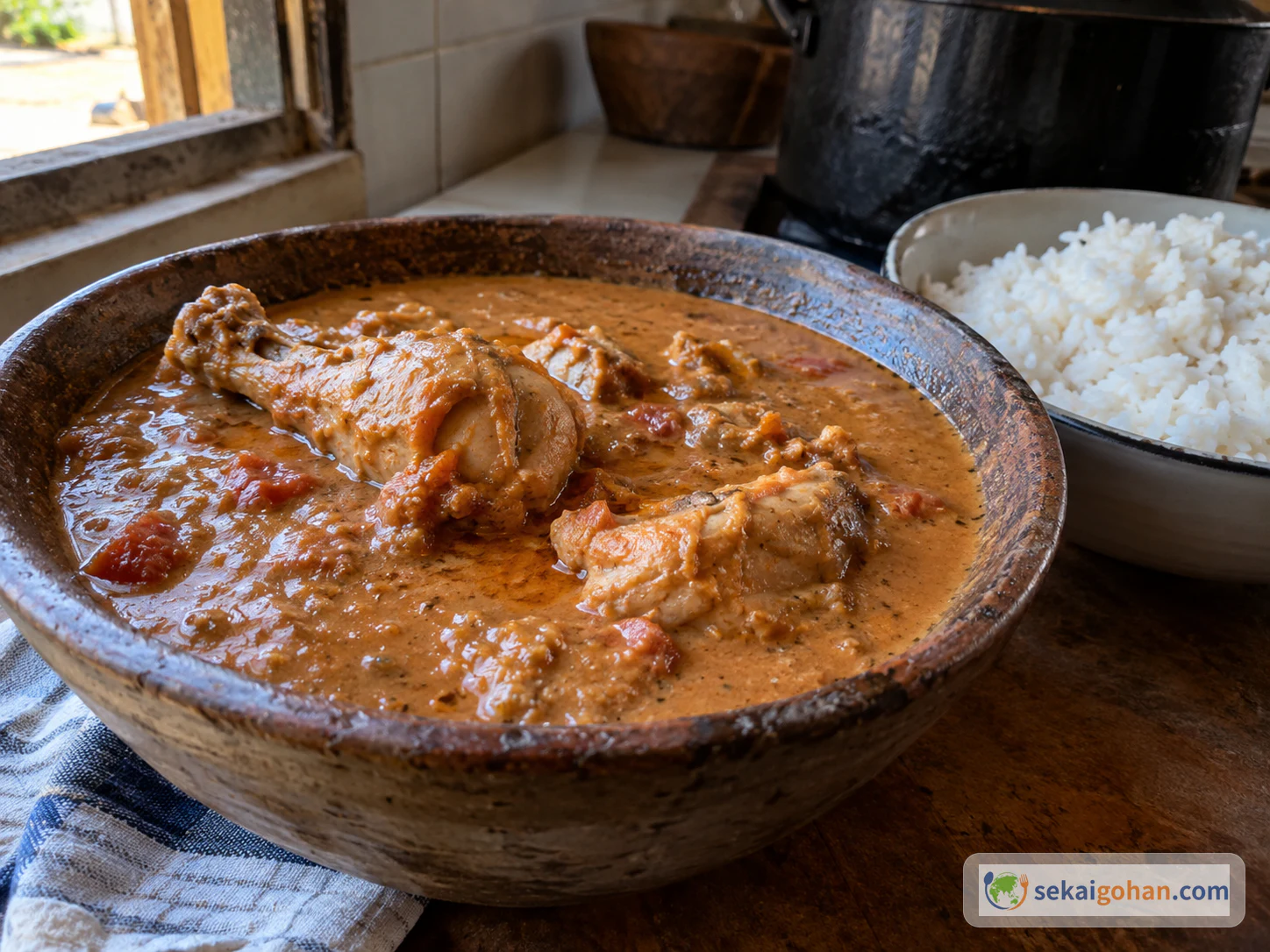
This red powder goes into doro wat, the chicken stew, into misir wat, made with red lentils, and into seasoning for meat and vegetables. Two stews can be equally red and still smell different from one house to the next, because there is no single fixed recipe. Fenugreek, ginger, garlic, cardamom-like aromas and more are layered over a base of dried red chilies, and what goes in, and how much, depends on the cook's taste and the spices available locally. Neither Ethiopia nor Eritrea has one set ratio of fenugreek or cumin. Every household's blend is different.
One traditional method grinds fresh aromatics into a paste, mixes it with dried red chilies and dries it in the sun. Dried spices are then added and everything is milled into powder. That kitchen work of drying and grinding is what produces the red powder, but timing and conditions vary locally, and it isn't a safe method to copy at home for a storable paste. The blend here uses only dry ingredients from the start, so keep fresh ginger and fresh garlic out of the jar.
A 2023 study from Ethiopia recorded 21 kinds of spices and herbs added to berbere. That's the total across the study, not what each household uses.

The spice that best shows this range is korarima, also called Ethiopian cardamom. Some recipes use green cardamom to fill in its aroma, though it's a different plant with a different scent, and some versions add korarima, rue, nigella and more. The same name doesn't mean a single aroma, so it's fine to start with the spices you can get.
If you have allergies, check the ingredients and allergen labeling of any store-bought mix, and of any curry powder you use as a substitute. Individual reactions to spices can happen, so this blend isn't allergen-free for everyone. Chili heat differs from product to product. If you don't handle spicy food well, leave out the cayenne and use less in your dishes.
Ingredients (one small jar)

Count 1 tbsp as 3 tsp. Adding up the volumes in the tables below gives about 26 tsp, or just under 9 tbsp by volume. The final amount depends on the volume after grinding and how tightly the powder packs. You can also make half this amount the first time. Measure with level spoonfuls, and for whole cardamom remove the pods and use only the seeds.
If you're using all ground spices, don't toast the ground coriander, cumin, cardamom, black pepper and cloves; just mix them in at the end. The rule is simple: never toast ground spices. Whole and ground spices don't measure the same by volume, so use the substitute amounts in the tables, and don't add both whole and ground versions of the same spice. If you leave out the fenugreek, don't try to make up for it with an equal amount of shichimi togarashi or sansho pepper either.
Choosing spices for berbere
What to buy
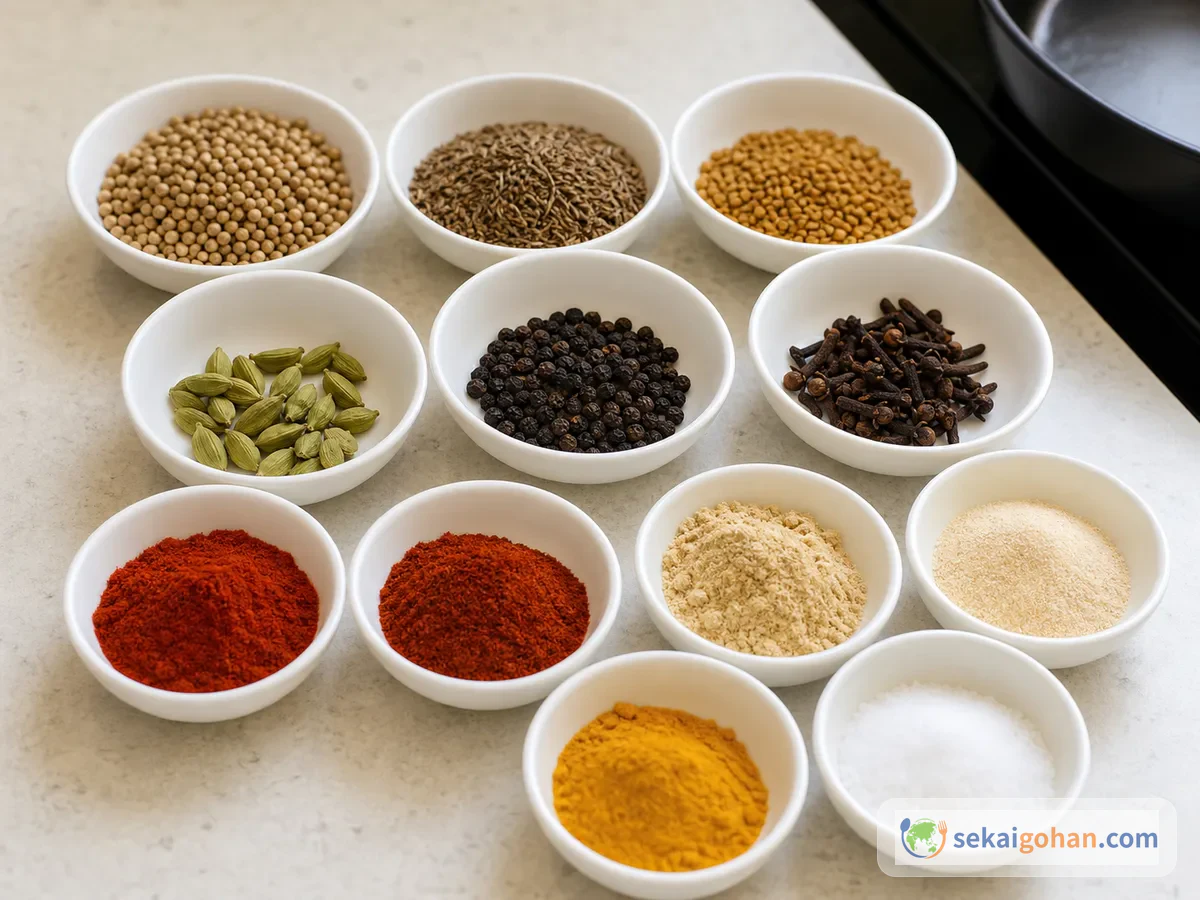
This is a dry blend adjusted to be easy to make at home: paprika builds the red color, chili brings the heat, and small amounts of fenugreek and cardamom build the aroma. Because you can adjust color and heat separately, you can also control the heat by how much you add to a dish. For your first shopping trip, get sweet (non-hot) paprika, Korean chili flakes (gochugaru), fenugreek and cardamom. For cloves, cinnamon, black pepper, ground ginger and the like, the jars you already have will do.
Fenugreek adds a gently bitter aroma. Leave it out and you won't get the same fragrance, but you can still make the blend. Buy only small amounts, starting with a single small jar of each. If you work entirely from ground spices, you won't need any grinding equipment; whole spices call for a mortar and pestle or a mill that can handle dry spices.
| Ingredient / option | What to look for on the label | Effect on flavor |
|---|---|---|
| Paprika | Sweet (non-hot); smoked or not | Color and a mild aroma. Smoked paprika adds a smoky note |
| Korean chili flakes (gochugaru) | Fine or coarse, and the heat level | Red color and heat. Heat differs by brand |
| Fenugreek | Seeds or ground | Bitterness. Seeds need toasting and grinding |
| Cardamom | Ground, seeds, or whole pods | Fills in the aroma. With pods, take out the seeds |
| Ready-made berbere | Ingredients, salt or no salt, heat level, best-by date | Blend and heat differ by product. Adjust the dish's salt and the amount you add |
A ready-made blend saves you measuring and grinding several spices, while a homemade one lets you cut back the heat on its own. Store-bought blends differ from product to product, and with a store-bought blend, check the salt and the heat so you can match the seasoning of your dish. Buy an amount that fits how often you'll cook with it.
Substitutes for berbere

Curry powder and garam masala are also multi-spice blends, but not the same blend as berbere. Curry powder alone can't supply the red color or the heat, so for a stopgap, use paprika and a little chili as the base and add a small amount of curry powder. Garam masala can fill in the warm, sweet-spice aroma, though each brand blends differently. Either way, substituting changes the aroma.
| What's missing / situation | Home-kitchen stopgap | What's still different |
|---|---|---|
| No berbere at all | Start with 2 tbsp paprika + 1 tsp curry powder + 1/4 tsp cayenne | The curry powder blend comes forward. A red home-style mix, not the same flavor |
| No fenugreek | Omit it. If using curry powder, add only 1/2 tsp to the full basic blend | Not a stand-in for fenugreek alone; other spices come along too |
| No korarima | Use green cardamom as in the ingredient table | Doesn't fully reproduce the regional aroma |
| Chili is very hot | Cut the Korean chili flakes in the basic blend to 1 tbsp and add 1 tbsp more paprika | A home adjustment that keeps the color and lowers the heat |
| Store-bought berbere is too hot | Take just what you'll use into a separate dish and mix in paprika a little at a time | Other spices get diluted too. Don't adjust the whole jar at once |
Shichimi togarashi and sansho make poor last resorts. Some shichimi blends contain sesame, dried citrus peel and other ingredients that vary by product, so the flavor goes beyond red chili, and sansho is a different spice from cardamom altogether. On days when you can't get everything, use the stopgap blend for stir-fries or roasted vegetables, then add just the missing ingredients next time. Filling in only what's missing gets you closer to the real aroma in the end.
Adjust the heat on a single portion taken into a separate dish. If you add more chili, do it a little at a time. Note the original blend, how much paprika you added, and how much you used in the dish, and adjusting next time gets easier.
Method
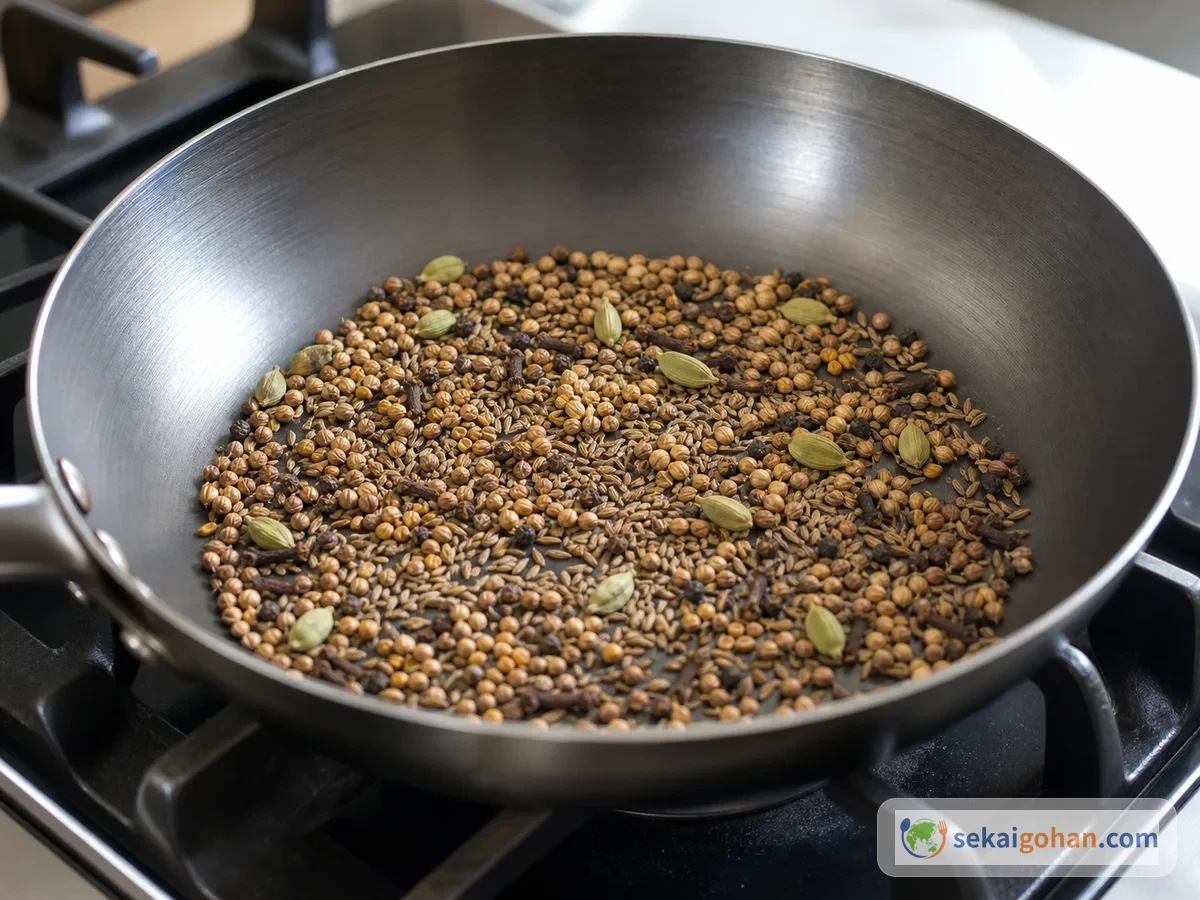
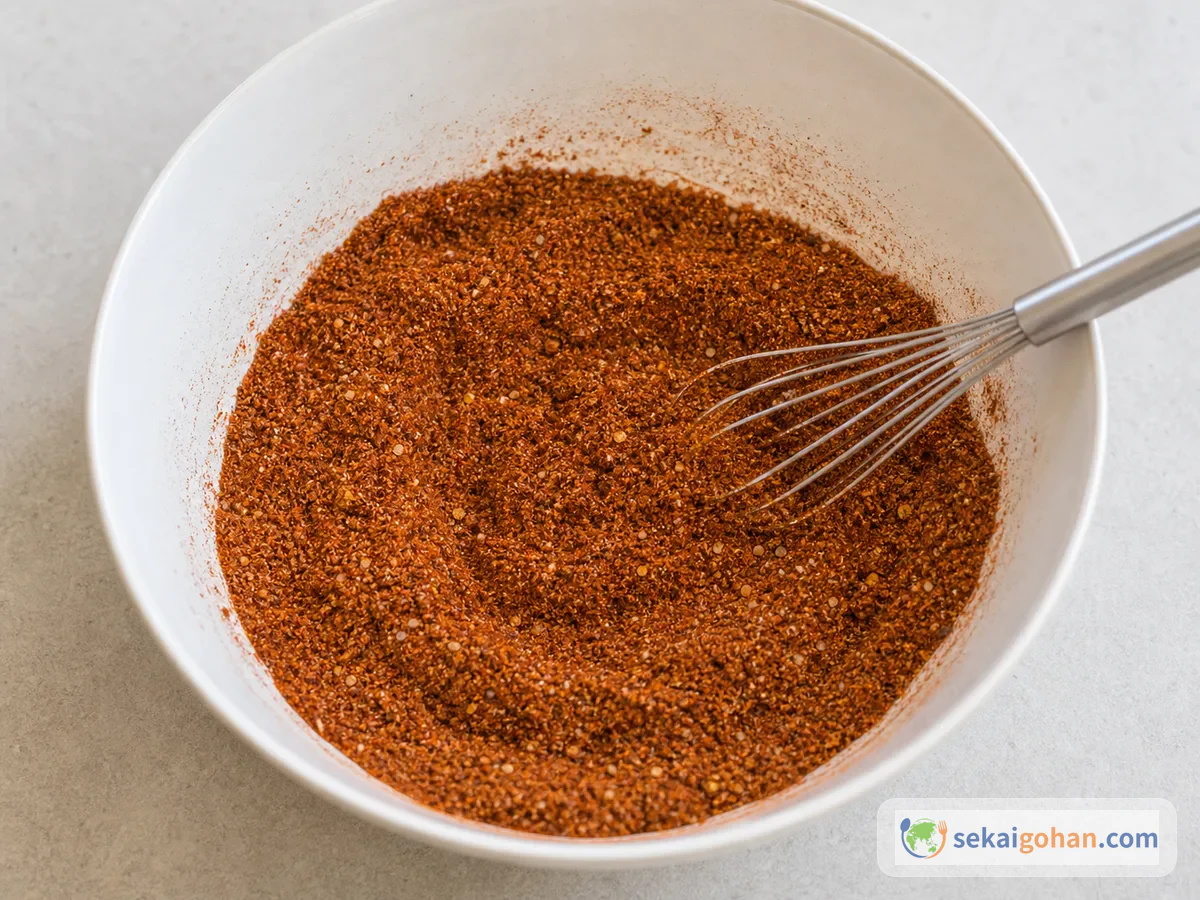
The order is: prep and measure, dry-toast, cool, grind, mix and jar. Only the whole spices go on the heat; the red powders and aromatic powders never go into the skillet. Toast for 2–3 minutes over low heat on a home stove. Go by changes in aroma and color rather than the clock. Never heat until it smokes.
If you used all ground spices, you can skip toasting, cooling and grinding. Just measure, mix until even and fill the jar. With powders only, go straight to mixing and jarring. Powders scorch more easily than whole spices, so never toast the powders alone in a dry skillet to bring out aroma.
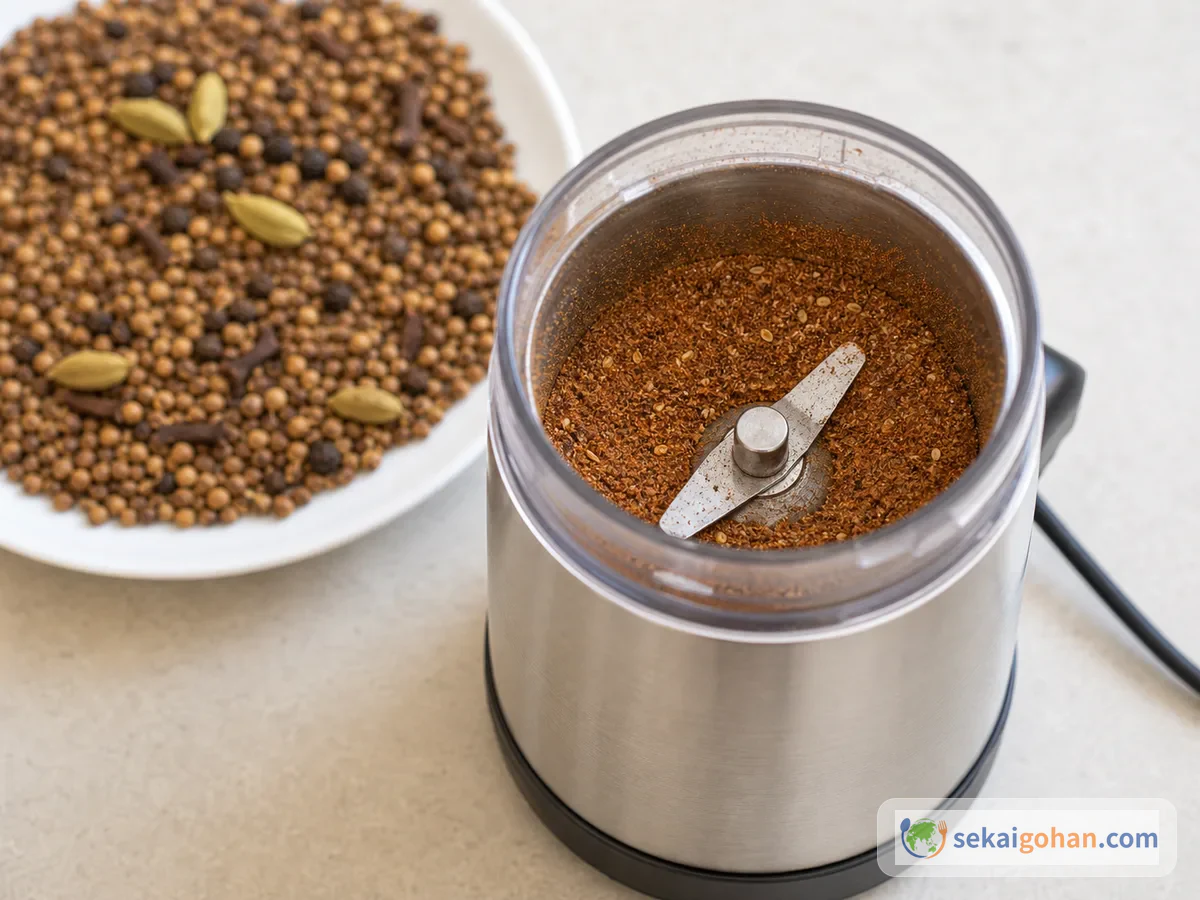
Add cardamom as either 1/2 tsp ground or the seeds from 4 pods, never both. Don't double up. Keep the cloves at 2 as well; even if you want more aroma, it's safer not to increase them the first time. Rather than stocking up on whole spices, measure out what you need and then toast.
Berbere too hot, bitter or powdery

A blend that's too hot needs a different fix from a dish that's too hot, so handle the powder and the pot differently. For the powder, take some into a separate dish and dilute it with paprika, knowing that this dilutes the cardamom and other aromas too. For a dish, add more of the same ingredients or sauce without spices; water alone changes the consistency as well.
| Problem | Likely cause | Fix |
|---|---|---|
| The powder is too hot | Type or amount of chili | Take just what you'll use into a separate dish and add paprika a little at a time |
| The whole pot is too hot | Too much added at the start | Dilute with unspiced ingredients or sauce. Serving beans or dairy alongside won't remove the heat |
| Burnt smell, black specks | Toasting heat too high, overheated | Make it again |
| Bitter without being burnt | Extra fenugreek or cloves | Go back to the original ratio rather than adding other spices to the whole jar |
| Coarse bits in the mouth | Not ground enough | If it's still at the powder stage, grind again. Next time, grind finely before mixing |
| The dish tastes powdery | Too little liquid, too much powder, not mixed enough | Add a little liquid, stir and simmer over low heat. Go back to the starting amounts in the table |
| Red in color but weak in aroma | How the spices were stored, long use | Check which ingredients have lost their aroma rather than adding more chili or cloves |
Even with the same 2–3 minutes, toasting turns out differently depending on the thickness of the pan and the heat. Black discoloration or a burnt smell means you've already gone too far: don't mix in burnt spices; make it again. Paprika and chili powders scorch more easily than whole spices, so never toast them on their own, and don't try to mask bitterness with sugar or stronger aromas.
Cooking with and storing berbere
How much berbere to use

The table below gives starting amounts for this home blend; store-bought mixes and other blends will differ. Start small the first time and taste after cooking. To add more, add 1/2 tsp at a time, stir it evenly into the dish and heat again, and with a store-bought mix, adjust the salt in the dish to match.
| Dish / ingredient | Starting amount of this blend | Where it goes / result |
|---|---|---|
| Doro wat (4 servings) | Start with 1 tbsp; up to 2–3 tbsp to taste | Work it into the sautéed onions and fat; if it looks like it will scorch, add water and move on to simmering |
| Tibs (14 oz–1.25 lb (400–600 g) meat) | Start with 2 tsp; up to 1 tbsp to taste | Coat the meat lightly, or combine with juicy onions or tomatoes |
| Misir wat (4 servings) | Start with 1 tbsp; up to 1.5 tbsp to taste | Mix into the onions, then add the lentils and water |
| Roasted vegetables (14 oz (400 g)) | 1 tsp | Mix with 1 tbsp oil and coat lightly. Don't let it blacken |
| Marinade for chicken (14 oz (400 g)) | 1 tsp | Mix with 1 tbsp oil and coat just before cooking |
| Tomato soup (2½ cups (600 ml)) | 1/2 tsp | Dissolve a little and simmer. Taste for heat before adding more |
| Rice (14 oz (400 g) cooked) | 1/2 tsp | A home-style twist mixed into fried rice |
Misir wat, doro wat and injera

Once you've made the powder, red lentil misir wat is a good place to start, and it needs no meat. It's one of berbere's classic uses: red lentils stewed with onions. Worked into onions and liquid, the powder's aroma spreads through the whole pot, though the lentils won't soak up the heat. For amounts given in other recipes, adjust based on how hot that recipe's blend is. Starting with one stew makes it easier to get a feel for how much powder a dish needs.
How to make red lentil misir wat
On a day when you have time, make doro wat, chicken simmered in an onion sauce. Work the berbere into the onions and fat first, then simmer, rather than searing it on its own over high heat. For meat dishes like tibs, keep it to a thin coating and keep the dry powder off the bare bottom of a hot pan. Piling on extra to make up for weak powder raises the heat, the bitterness and even the salt, and garlic, ginger and the like work better added to the dish itself.
Doro wat, starting from the onions
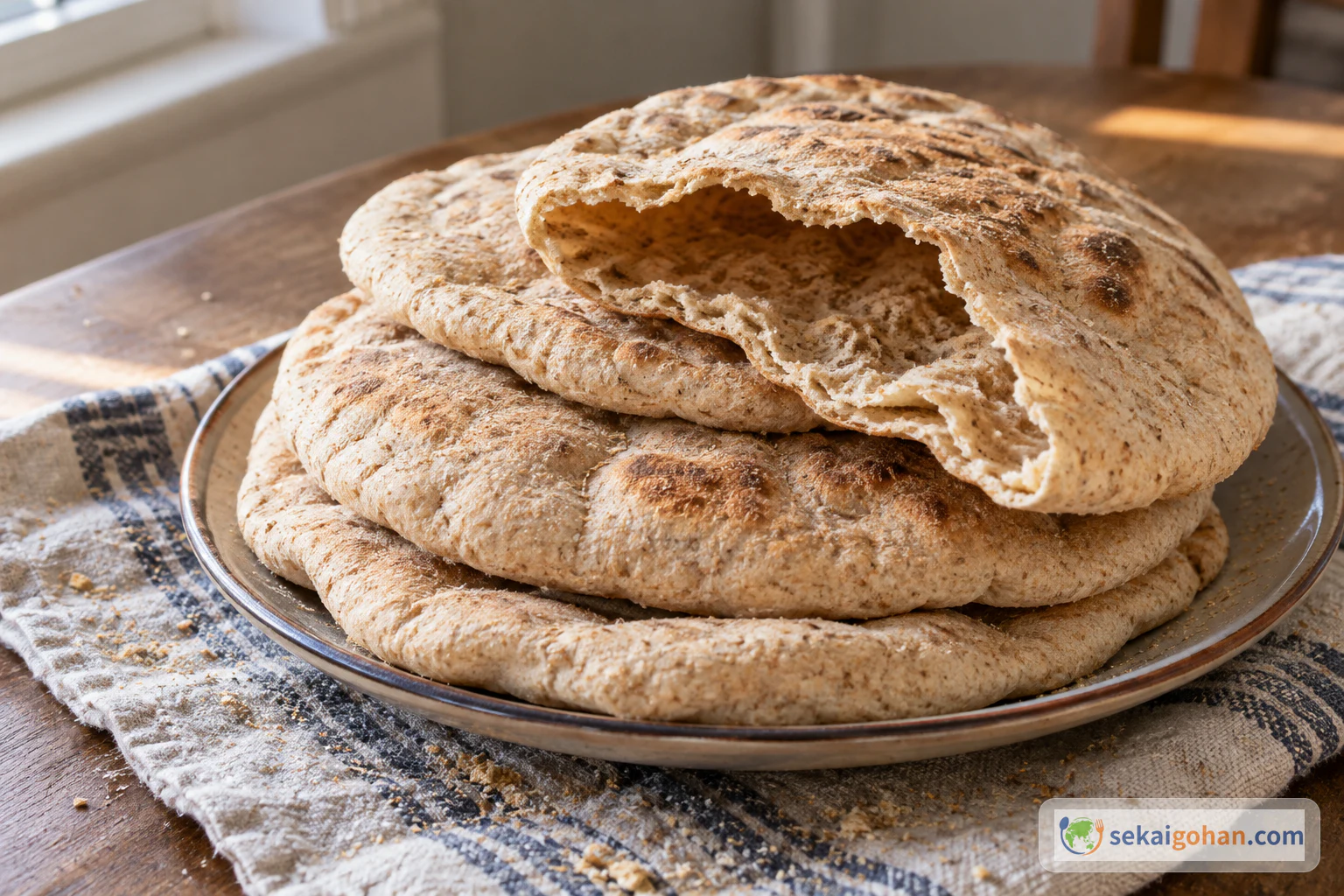
Berbere dishes are good with plain rice at home, and when you want the fermented bread eaten with these stews, make injera. Keep a note of how much powder you made and how much you used, and you'll end up with a blend you can make again in your own kitchen.
How to make injera to serve with stews
Storing berbere
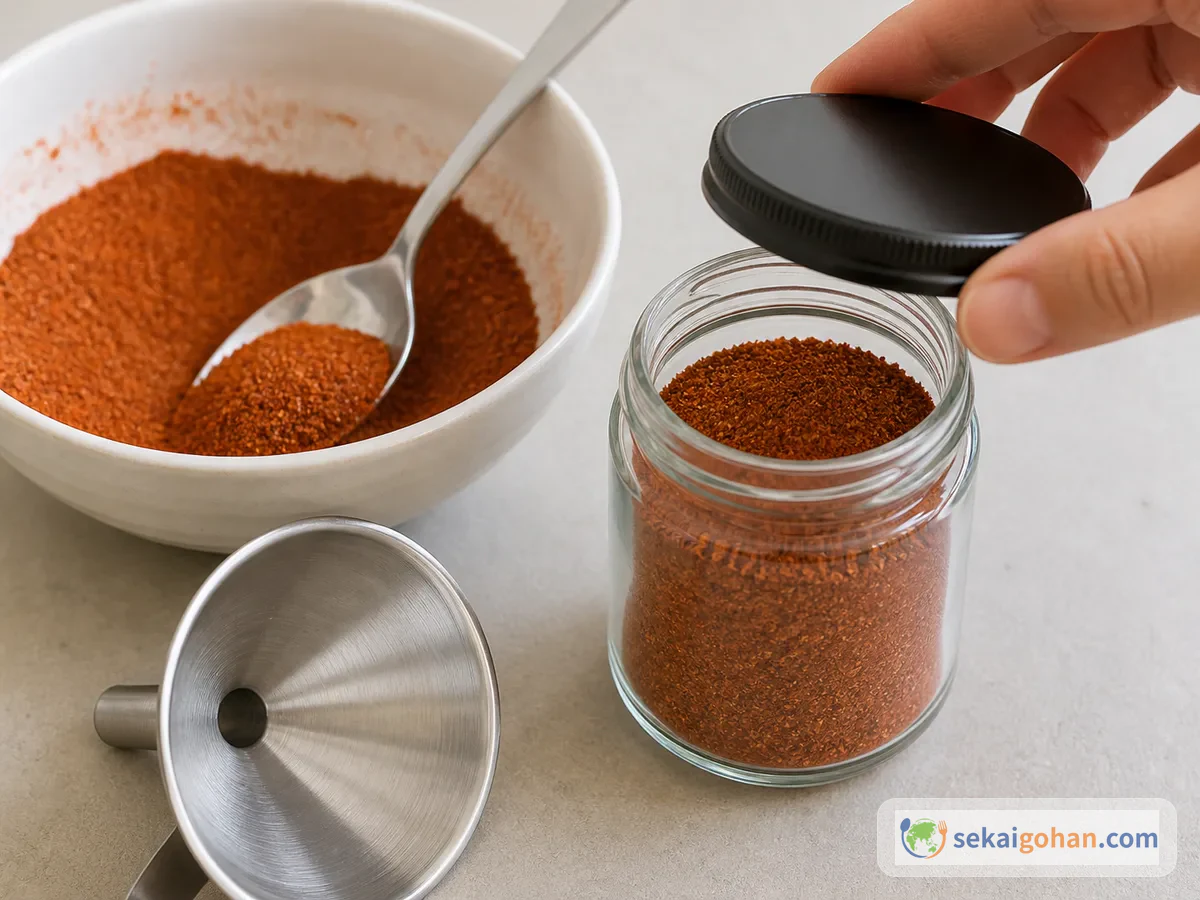
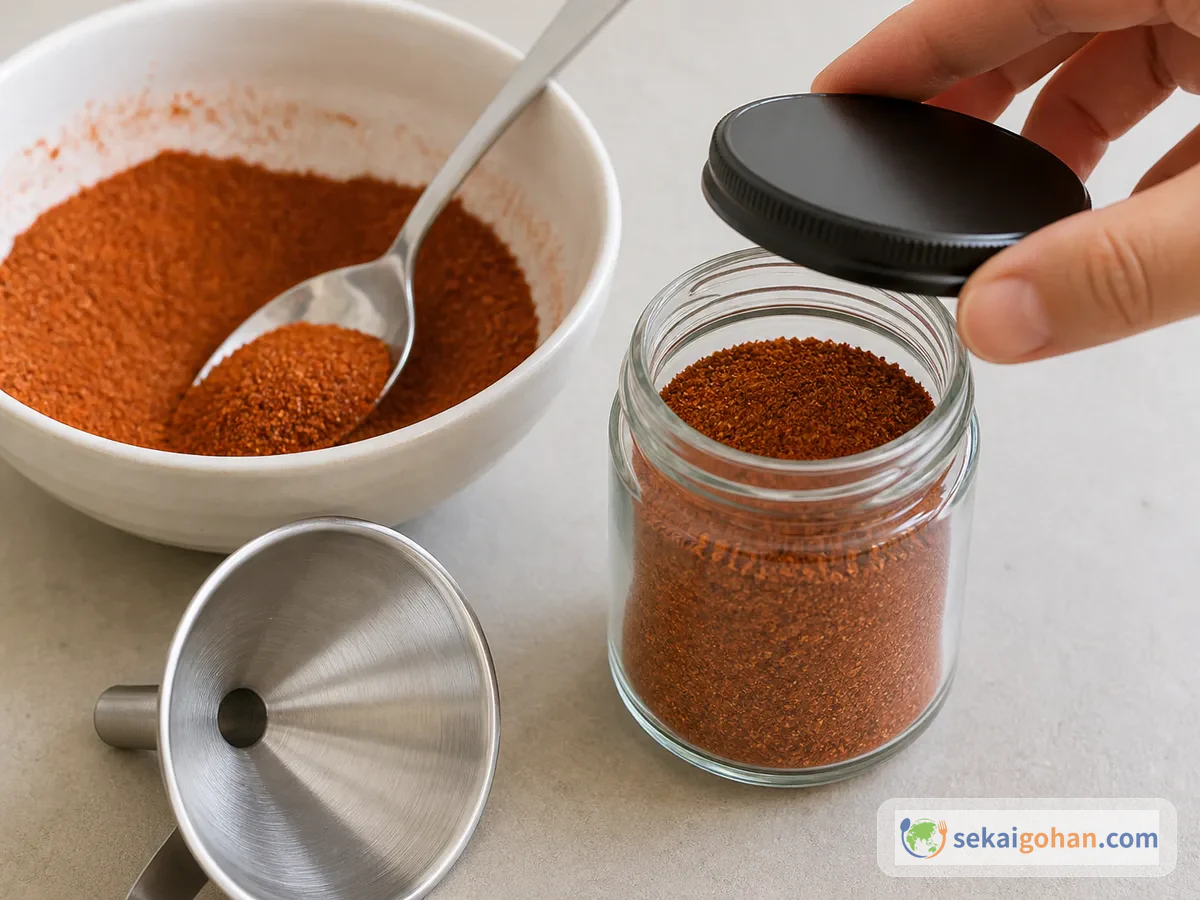
Keep the dry powder sealed and away from light, heat and moisture, and use it within 3 months for the best aroma. That's a guide for aroma, not a guarantee of safety: an aroma guideline and a safety limit are two different things. Follow the labels and storage conditions of your ingredients, and make small batches, ideally with a specific dish in mind so the jar doesn't sit forgotten.


A sealed glass jar in the refrigerator works well. If your only spot is warm and humid, divide the powder into small sealed portions. Scoop with a dry spoon rather than shaking the jar over a steaming pot, so moisture and condensation stay out. Loss of aroma is a separate issue from moisture or foreign matter getting in, and breaking up caked powder doesn't make it safe to use.
The powder belongs in a dry jar; keep fresh aromatics and fat in the pot, and the jar will last. The 3-month guideline for dry powder doesn't apply to cooked meat or bean dishes.
Fresh garlic mixed with oil carries a risk of botulism at room temperature. Refrigerate fresh garlic in oil at 4.4°C (40°F) or below and use it within 4 days, or freeze it for longer storage. At home, keep only dry powder in the storage jar, and mix oil, fresh ginger and fresh garlic into the portion you're cooking with each time. Don't store fresh garlic and oil at room temperature.
FAQ

Can I substitute curry powder for berbere?
Only as a stopgap, built on paprika with a little cayenne for the red color and heat. The flavor changes with the type of curry powder, and curry powder alone won't give you the same flavor, so rather than adding more and more, pick up some fenugreek and cardamom next time.
Can I use only ground spices instead of whole?
Yes. Use the ground-spice substitute amounts in the ingredient table, skip toasting and grinding, mix well and transfer to a dry jar. Whole spices need equipment and cooling time, and since you can make it with powders only, that route is less work the first time.
How should I use a store-bought blend that's too hot?
Check the ingredients and whether it contains salt, and don't assume the same amounts as this homemade blend. You can dilute just the portion you'll use with paprika, add less to the dish, or taste after cooking and then add more. If it's already in the dish, other spices won't take away the heat; dilute it with the same ingredients or sauce without spices.