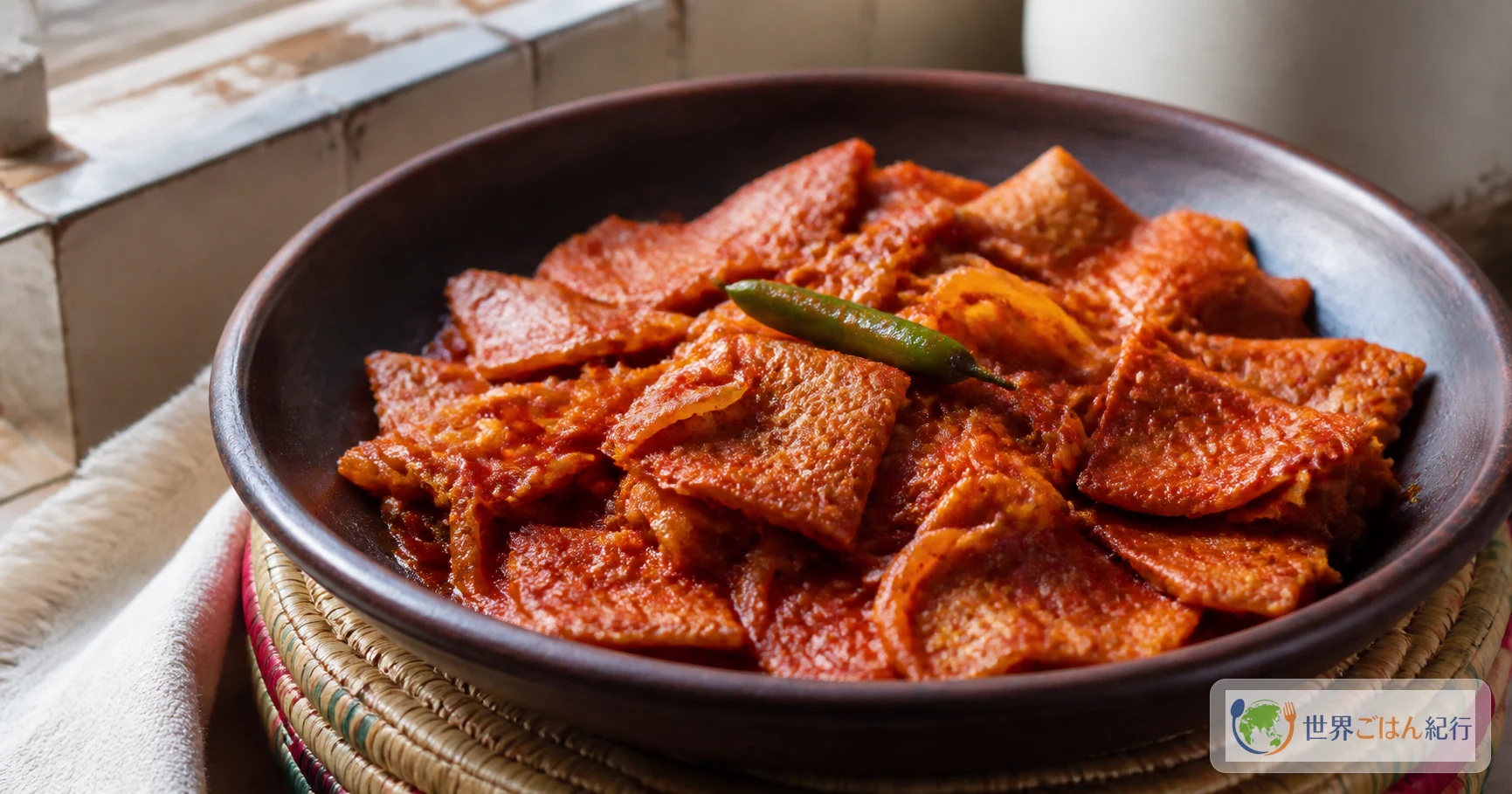
At night in Addis Ababa's busy Piassa district, smoke rises from the cast-iron pans in restaurant kitchens, and the savory smell of searing meat pulls you in. The clay pot that arrives at your table is still sizzling, full of cubed beef and colorful vegetables. That is tibs (ጥብስ): cubed or sliced meat (beef, lamb or goat) stir-fried quickly over high heat with onion, bell pepper, jalapeño, tomato, garlic and ginger. It's fast, hot cooking, closer in technique to a Chinese stir-fry than to the slow stews Ethiopia is also famous for.
Tibs in Ethiopian cooking
Ethiopian cooking has two main categories, and tibs is one of them. "Wot (ወጥ)" are slowly simmered stews, the best known being doro wot, where onions cook slowly for more than 30 minutes before the spices and water go in. "Tibs" names both a family of dishes and the method behind them: meat fried quickly over high heat. The meat, the cut and the level of heat all vary, and tibs and wot often sit side by side at the same meal.
How tibs is eaten

Tibs is usually served on top of injera, the fermented flatbread, and eaten by hand, each bite wrapped in a torn piece of injera. It is a dish for welcoming guests, and in restaurants it often comes to the table in the small cast-iron pot it was cooked in.
Tibs and hospitality
Ethiopia is the only country on the African continent that was not colonized by a European power (apart from a brief Italian occupation), and its food culture developed in its own way. Within it, tibs holds a special place as a dish for special occasions. Traditionally, slaughtering a cow or sheep to make tibs from fresh meat when receiving guests has been regarded as the highest form of hospitality. The custom is still alive in rural villages, and tibs is made in large quantities at weddings, baptisms and holidays such as Easter.
The Ethiopian Orthodox Church has many fasting days with no meat or dairy, so tibs is an especially anticipated meal once a fast ends. During the fast itself, people eat a vegetarian version called "Yetsom Tibs (fasting tibs)," made with mushrooms or avocado in place of meat.
Ingredients (serves 4)
Berbere, essential to Ethiopian cooking, can be made at home with the blend below. First gather the spices that bring the heat and color.
- Chili powder: 3 tbsp
- Paprika: 1 tbsp
- Fenugreek: 1/2 tsp
- Ground coriander: 1 tsp
- Cardamom: 1/2 tsp
Then add the spices that bring aroma and depth.
- Cumin: 1/2 tsp
- Black pepper: 1/2 tsp
- Allspice: 1/4 tsp
- Cinnamon: 1/4 tsp
- Cloves: 1/8 tsp
Dry-toast everything in a skillet over low heat for 1 minute, let it cool, and store in a jar. It keeps for 3 months in an airtight container. Ready-made berbere is also sold at spice shops and online.
Ethiopian cooking uses not plain butter but a spiced clarified butter called niter kibbeh. It is made by slowly melting butter over low heat with turmeric, cardamom, fenugreek, ginger and other spices, then straining out the solids. It is simple but takes time, so in everyday cooking unsalted butter is a perfectly good substitute. It is also very similar to ghee, the spiced butter of Indian cooking.
Choosing ingredients for tibs

Of the ingredients for tibs, only berbere and jalapeño are likely to be hard to find at an ordinary supermarket; everything else is easy to get. Berbere is the one thing worth seeking out, and making your own is easy. For a tibs with a different spice character, you can use 1 tbsp chili flakes + 1/4 tsp ground Sichuan pepper + 1 tsp curry powder instead.
Fresh jalapeño can be hard to find, but pickled jalapeño slices from jars are sold at most supermarkets and specialty grocers. The pickle adds some acidity, but it fits the taste of tibs well. If you can't find jalapeño at all, a combination of 6 shishito peppers and 1 dried red chile stands in for both the heat and the green flavor.
Mild long green chiles also work in place of jalapeño, and bell peppers can be swapped for green peppers and eggplant. In Ethiopia, the finishing herb is a native one called koseret; it's hard to find outside the region, and rosemary is the closest substitute.
Getting tibs right
Tibs goes wrong in one way above all: the meat steams instead of searing. Each of these points is about avoiding that, or about keeping the vegetables fresh.
Bring the meat to room temperature
Cold meat straight from the refrigerator drops the temperature of a hot skillet sharply, so it steams, gives off water and never browns. Simply taking it out 30 minutes ahead changes the result dramatically. It's the opposite of a long-simmered dish like rendang (rendang, in Japanese): tibs is decided in the first 2 minutes.
Heat the pan until it smokes
The single biggest factor is the temperature of the pan. Ideally the butter foams with a sizzle the moment it goes in and just begins to smoke (about 400°F (200°C)). At that heat the surface of the meat sets instantly and seals the juices inside; any lower and the water runs out, leaving you with stir-fried boiled meat.
Add the vegetables in order
Add the vegetables that are slow to cook first: onion, then garlic and ginger, then jalapeño and bell pepper, then tomato. The tomato goes in last and cooks only briefly, just until it still holds its shape, which keeps the dish tasting fresh. It's the same idea as the order of ingredients in nasi goreng (nasi goreng, in Japanese).
Rosemary for the last 10 seconds
Rosemary added too early turns bitter. Put it in the pan only for the 10 seconds just before you turn off the heat, let the residual heat release its aroma, and take it out right away.
Serving tibs and variations
Serving without injera

If you can't get injera, these will substitute.
- Naan: the closest in texture. Available at Indian grocers and in the frozen section of many supermarkets
- Tortillas: thin, soft and easy to wrap
- Plain rice: tibs eaten as a side dish with white rice is plenty delicious
- Buckwheat galette: has a grain flavor that resembles the teff of injera
If you'd like to try it yourself, here is how to make injera at home.
Kinds of tibs in Ethiopia
In Ethiopia, tibs comes in many versions, varying by type of meat, cut, level of heat and cooking method. The recipe here sits between Siga Tibs and Lebleb Tibs, and it's the easiest to recreate in a home kitchen.
| Name | Characteristics | Main ingredients |
|---|---|---|
| Derek Tibs | Dry finish. Moisture is cooked off completely until crisp | Beef + onion + jalapeño |
| Lebleb Tibs | Wet finish. Sauce is left, so it is moist | Beef + tomato + bell pepper |
| Awaze Tibs | Very hot version using awaze (chile paste) in the sauce | Beef + awaze |
| Yebeg Tibs | Lamb version. Especially popular in the mountains | Lamb + onion + rosemary |
| Yetsom Tibs | Vegetarian version for fasting | Mushrooms + vegetables |
| Siga Tibs | The most standard version of beef | Beef + basic vegetables |
Chicken tibs
Chicken tibs is common in Ethiopia too. Use 1 lb (500 g) of chicken thighs in place of beef and follow the same steps; slice the chicken thinner so it cooks faster, and keep the berbere to 1 tbsp for a lighter result. The spices are quite different from Philippine chicken dishes such as adobo (adobo, in Japanese), but the two share the same basic idea of chicken stir-fried with aromatics.
Mushroom tibs for fasting days
For Ethiopian Orthodox fasting days, use a total of 10.5 oz (300 g) of shiitake, maitake and king oyster mushrooms in place of meat. Cut them large so they keep some bite, and use olive oil instead of butter to make it vegan. The savoriness of the mushrooms goes beautifully with berbere, and it's satisfying enough that you won't miss the meat.
More to cook
To keep exploring Ethiopia, start with An Introduction to Ethiopian Cuisine. Further afield, Jamaica's jerk chicken shares tibs's love of spice and meat, Cameroon's bitterleaf stew ndolé shows another side of African meat cooking, and the Thai basil stir-fry gapao is built on the same high heat, speed and spice.
Frequently asked questions
Q1. Can I make it without berbere?
You can, but it won't have the flavor of Ethiopian cooking. The closest substitute is a combination of 1 tbsp cayenne pepper + 1/2 tsp cumin + 1 tsp paprika + 1/4 tsp allspice. Shichimi togarashi points in the same direction, but the result leans much more Japanese.
Q2. Can it be stored in the refrigerator?
It keeps until the next day in the refrigerator, though water comes out of the vegetables and the texture suffers. Reheat quickly over high heat to bring back as much crunch as you can. Freezing is not recommended, because it badly damages the texture of the vegetables.
Q3. Does the type of pan matter?
Very much. A nonstick pan won't give enough browning, so use a cast-iron skillet or a carbon steel pan. As with chakchouka, cast iron is best for a dish that is cooked and served in the same pan.
Q4. Can I make a version that is not spicy?
Reduce the berbere to 1–2 tsp and leave out the jalapeño (or replace it with green pepper) for a mild version with little heat. It's easier for children to eat, and Ethiopian households often go lighter on berbere for children too.
Sources
Books and papers:
- Mesfin, D. (2006). Exotic Ethiopian Cooking: Society, Culture, Hospitality & Tradition. Ethiopian Cookbook Enterprises. https://www.ethiopiancookbook.com/
- Gebreyesus, Y. (2019). Ethiopia: Recipes and Traditions from the Horn of Africa. Interlink Books. https://www.interlinkbooks.com/ethiopia
- McCann, J. C. (2009). Stirring the Pot: A History of African Cuisine. Ohio University Press. https://ohioswallow.com/book/Stirring+the+Pot
- Serious Eats. (2022). "The Essential Guide to Ethiopian Cooking." https://www.seriouseats.com/essential-guide-ethiopian-cooking
- BBC Good Food. (2023). "What is Berbere Spice?" https://www.bbcgoodfood.com/glossary/berbere-glossary
- Atlas Obscura. (2021). "The Sacred Fasting Food of Ethiopian Christianity." https://www.atlasobscura.com/articles/ethiopian-fasting-food
Tibs contains dairy (butter / niter kibbeh). If you have a dairy allergy, use olive oil in place of butter (as in the Ethiopian fasting version). Berbere contains a large amount of chile, so if you are sensitive to capsaicin, reduce the amount.
| Item | Value |
|---|---|
| Energy | 380 kcal |
| Protein | 34 g |
| Fat | 20 g |
| Carbohydrates | 12 g |
| Fiber | 3 g |
| Salt | 1.6 g |