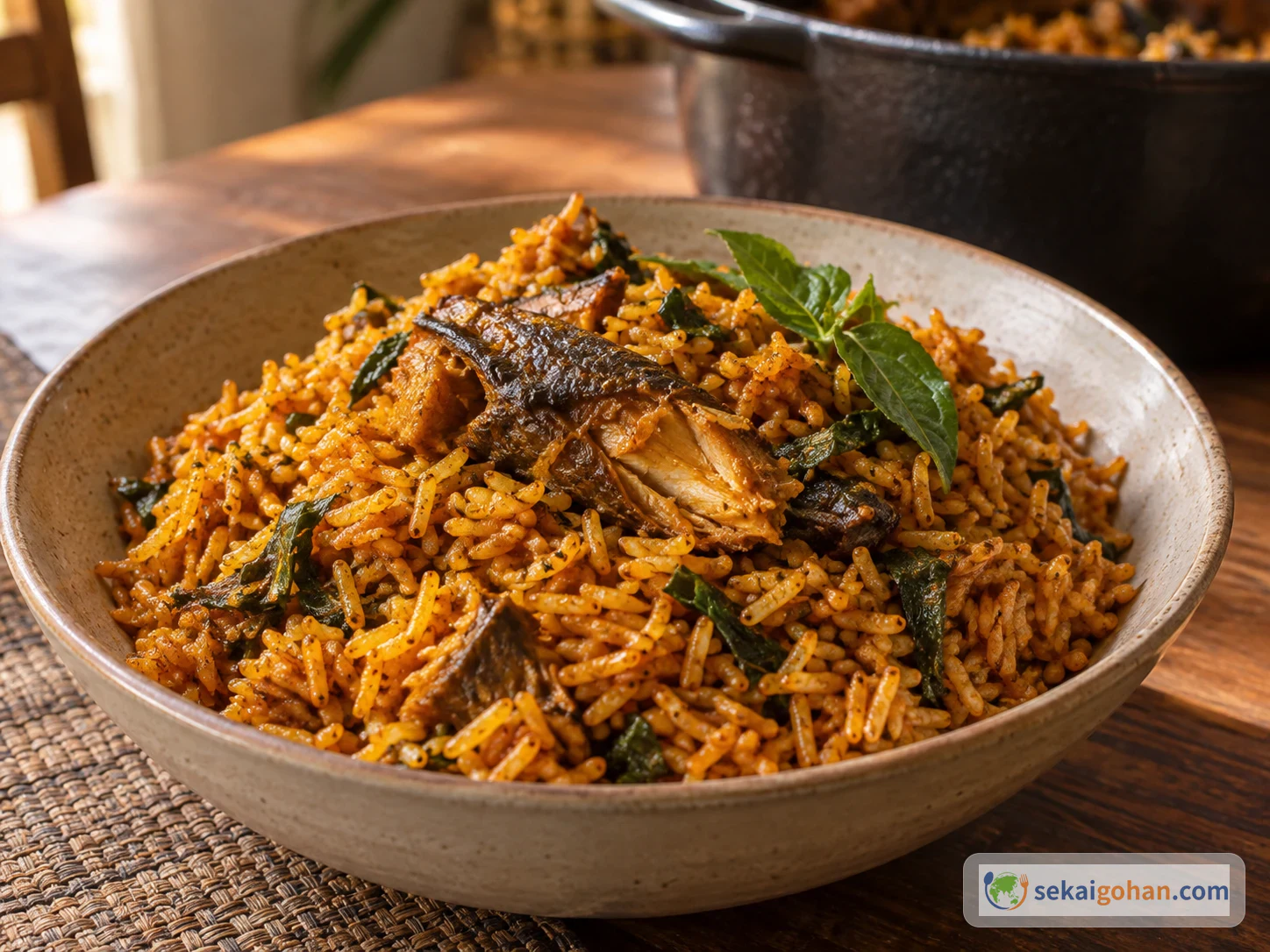
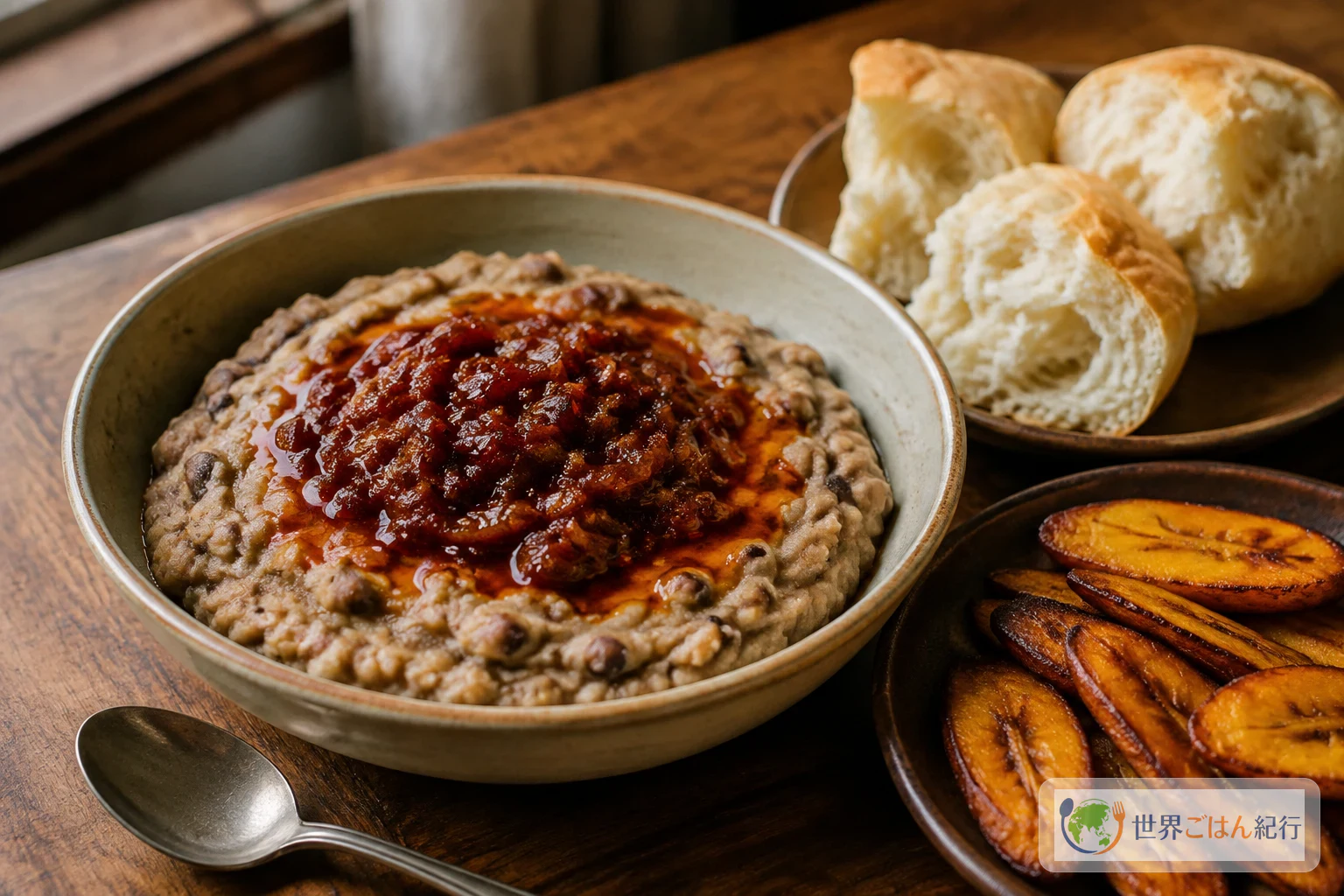
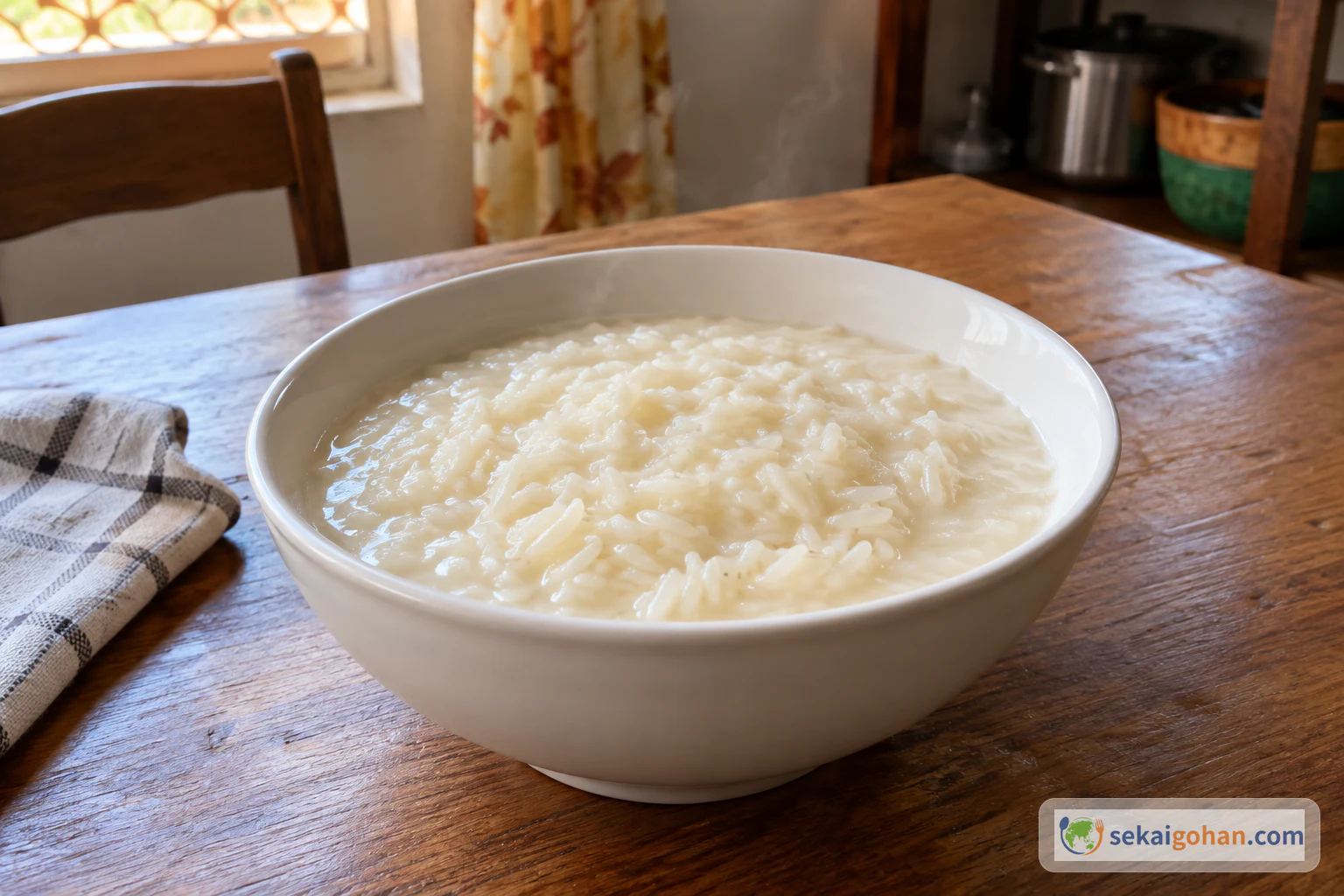
Lift the lid on a pot of egbo and not much rushes out at you. You've rehydrated dried corn, boiled black-eyed peas and heaped the pale kernels on a plate, and it all looks rather plain. Then a spoonful of red ata dindin goes alongside, and suddenly you're looking at a southwest Nigerian table. This Yoruba dish of mature corn and beans is simple and filling: corn kernels that loosen as you bite them, mealy black-eyed peas and a hot pepper sauce to eat with them.
Egbo in southwest Nigeria
Egbo is an everyday Yoruba dish rather than a celebration platter, and it's usually served with a red pepper sauce, either ata dindin or obe ata. The corn and beans on their own make a quiet plate. The ata dindin brings heat, oil and the aroma of sweet bell pepper. Because egbo pairs a grain with a bean, it satisfies even without meat.
It's worth setting egbo beside its Nigerian neighbors. Akara is closer to a breakfast food, black-eyed peas mashed and fried. Ekuru is a steamed dish of white beans, and jollof rice is a one-pot of rice and tomato. Egbo puts the chew of the grain forward more than any of them. It's less showy, but it shows a cook rehydrating dry goods and turning them into a meal.
Ingredients (serves 4): think of the corn kernels and the black-eyed peas separately

This serves 4 as a light lunch, or as a dinner with sides. Dried corn varies in hardness, so follow the label on your package if it has one. The recipe below uses dried white corn or hominy, soaked overnight and then boiled.
Black-eyed peas are legumes. If you use ground dried shrimp, check for shellfish. If you add bouillon, check the labels for wheat, dairy, and soy. Scotch bonnet and habanero are strongly hot even in small amounts, so the first time use 1/4 or less, and add more heat at the table.
Choosing ingredients for egbo
Egbo has so few ingredients that one wrong substitute turns it into a different dish. Protect these, in this order: the chew of the corn, the black-eyed peas, the red hot sauce and the red palm oil. The side dishes and any seafood flavor are yours to adjust.
| Ingredient in question | Why to protect it | Realistic choice |
|---|---|---|
| Corn | Decides the chew of egbo | Dried white corn, dried hominy, unsweetened canned hominy |
| Black-eyed peas | The lightness of the grain and the beany aroma | Black-eyed peas. Kidney beans or soybeans make it heavy |
| Red palm oil | The color of ata dindin and its West African aroma | Use only 2 tbsp, and combine with canola oil if heavy |
| Heat | The outline of the sauce | Scotch bonnet, habanero, or a small amount of a hot sauce |
Corn
Outside Nigeria, the corn is the hard part, and different shops sell dried corn under different names. Look for labels such as white corn, hominy, pozole or giant corn, and choose kernels meant to be boiled and eaten rather than sugared or snack kernels. Sweet canned corn won't come close. It looks similar, but it's soft and sugary, and the dish ends up as a sweet side. The easiest shortcut is unsweetened canned hominy from an international grocer with dried black-eyed peas. You skip the corn soak and the long first boil, so egbo becomes a weeknight dinner instead of a weekend project.
Beans, palm oil and heat
The black-eyed peas, red palm oil and Scotch bonnet-style heat also go into Ghana's red red and Nigerian akara, so buying them stocks a West African pantry. Black-eyed peas turn up again in akara, ekuru and Ghana's waakye. If you buy 2.25 lb (1 kg) of dried beans, soak them and freeze them in small portions, and your next West African dish is much easier.
Use red palm oil sparingly: 2 tbsp is enough for the color and aroma of the red sauce. The rest of the bottle can go into red red or egusi soup. If you can't find fresh Scotch bonnet, keep the pot mild and add a few drops of hot sauce at the table. That bottle will earn its keep in pelau (in Japanese: /recipes/south-america/trinidad/pelau) and other Caribbean dishes too.
Seafood flavor is optional, so make your first batch without it. The second time, add 1 tsp ground dried shrimp to the sauce for a savory note behind the palm oil and chile. If anyone at the table has a shellfish allergy, use a very small amount of ground bonito in place of the shrimp.
Method: hard kernels first, the red sauce separately
Prepare the corn, the beans, and the sauce separately, then put egbo together. If everything goes into one pot, the corn stays hard while the beans break down, or the sauce turns watery. Think of it as white kernels eaten with a red sauce, and it is easier to judge the heat.
If you use unsweetened canned hominy, prepare 1 lb (500 g) after draining and skip steps 1 and 2. If you also use canned black-eyed peas, use 10 oz (280 g) after draining and you can skip step 3 as well. In that case add 3.5 tbsp (50 ml) water in step 6 and warm over low heat for only 5 minutes. Adjust the salt at the end according to the salt in the cans.
Common egbo mistakes and fixes
Most egbo failures come from handling the kernels rather than from seasoning. The corn stays hard, the beans break down or the sauce turns watery. Avoid those three and even a plain-looking plate is a pleasure to eat.
| Problem | Cause | Recovery |
|---|---|---|
| Corn is hard | Under-soaked, not boiled long enough, or too little water | Add boiling water and cook 15 more minutes over medium-low heat. Canned hominy can shorten this |
| Beans break down | Kept boiling hard, or boiled too long in the same pot as the corn | Mix the broken beans into the sauce, and boil them separately next time |
| Sauce is watery | The pepper base was not cooked down | Another 5 minutes over medium heat. Cook off water until the spoon's track stays for a moment |
| Too hot | Too much chile at the start | Add more egbo to dilute it. Serve with a side that is not oily rather than yogurt |
| Greasy overall | Too much red palm oil, or too much oil floating on the sauce | Skim off about 2 tsp of oil from the surface, and next time use half canola oil |
Dried corn varies a lot from brand to brand. Some softens in 45 minutes and some takes over an hour, so taste rather than trusting the clock. Bite a kernel and check that the powdery center is gone. If you rush this step, the sauce can be delicious and you'll still notice the hardness in every bite.
The corn and beans cook separately because they soften at different rates. If both come from cans, just combine them at the end. A watery sauce won't cling to the kernels, and canned tomatoes need longer cooking before the spoon leaves a track. Too much chile can't be taken back, so when you're cooking for a family, let people add hot sauce at the table.
Serving and storing egbo
Serving
At home, think of the white kernels as the staple, the red sauce as the main flavor and the side dishes as palate cleansers. Egbo alone gets monotonous, and too much sauce pushes heat and oil to the front. Start with the sauce on about a quarter of the plate and add more as you eat.
For a full menu, serve fried plantain, boiled egg and salted cucumber alongside egbo and ata dindin. When the sauce is very hot, skip the yogurt and keep cold water, thin lemon water or unsweetened tea on hand. They keep the meal from feeling heavy as the oil and heat build.
| How to set the table | Suited to | Quantity guide |
|---|---|---|
| Egbo and ata dindin only | A light lunch, a day to savor dried goods | About 9 oz (250 g) egbo per person, 3 tbsp sauce |
| Add plantain and boiled egg | A day you want a satisfying dinner | 1/2 plantain, 1/2 egg |
| Add stir-fried greens or cucumber | A day you want to lighten the heat and oil | One small dish of side |
| A small portion beside jollof rice | A day for a Nigerian menu | Keep the egbo to about 3.5 oz (100 g) per person |
Storage and reheating
Store egbo and ata dindin separately. Mixed together, the corn soaks up oil and moisture and the whole thing turns heavy. Once the heat is off, divide everything into shallow containers within 2 hours and refrigerate.
| What you store | Refrigerator | Freezer | Reheating |
|---|---|---|---|
| Egbo itself | 3 days | 2 weeks | Sprinkle 2 tsp water, microwave at 600 W for 2 minutes per serving |
| Ata dindin | 4 days | 3 weeks | In a small pot over low heat for 3 minutes, or microwave at 600 W for 40 seconds |
| Mixed together | 2 days | 1 week | It dries out easily, so add water and bring it back over low heat |
Frozen egbo comes out a little dry. Put it in a pot with 2 to 3 tbsp water or bean cooking liquid and warm it over low heat for about 5 minutes, and the kernels plump back up. Warm the sauce separately and add it just before eating. Its heat mellows in storage but the oil aroma stays, so gentle heat makes it easier to eat.
Frequently asked questions
What can substitute if I have no black-eyed peas?
The closest are cowpea-type beans. Chickpeas also give a firm bite, but their aroma leans Middle Eastern and they make the dish heavier next to the corn. Soybeans have firm skins and feel heavy, and kidney beans taste sweet, so neither is a good first choice.
Can I eat it without ata dindin?
You can, but it becomes a very quiet dish. At minimum, serve a red sauce of onion, tomato and chile cooked down in oil. On busy days a few drops of store-bought hot sauce will do, though you'll miss the oil and sweetness of a fried sauce.
Can I make it not spicy?
Yes. Leave out the Scotch bonnet and habanero and make the sauce with just red bell pepper, tomato and onion. Add hot sauce only to the adults' plates, and children and anyone who dislikes heat can eat from the same pot.
Can I prepare it the day before?
Yes. The day before, soak the corn and beans and make the pepper base. If you also boil the corn and beans ahead, refrigerate them and warm them the next day over low heat with a little water. Keep the sauce separate so the kernels hold their texture.
Does it go with rice as a side?
Egbo is already a grain-and-bean dish, so serving it on white rice piles carbohydrate on carbohydrate. Set salted cucumber, grilled eggplant, boiled egg or stir-fried greens beside it instead. A small amount of egbo alongside rice works fine.
References consulted
To check the local name, the combination of corn and beans, how ata dindin is served, and how it is made at home, I compared information from English-language and Nigerian cooking sites.
- Wikipedia, "Egbo (food)" https://en.wikipedia.org/wiki/Egbo_(food)
- Wikibooks, "Cookbook: Egbo (Nigerian Cornmeal Porridge)" https://en.wikibooks.org/wiki/Cookbook:Egbo_(Nigerian_Cornmeal_Porridge)
- The Online Cook, "How to Cook Egbo and Ata Din Din" https://theonlinecook.com/how-to-cook-egbo-and-ata-din-din/
- Federal Ministry of Agriculture and Food Security / HarvestPlus, "Vitamin A Maize Recipe Book" https://agriculture.gov.ng/wp-content/uploads/2024/06/HarvestPlus-Recipe-Book.pdf