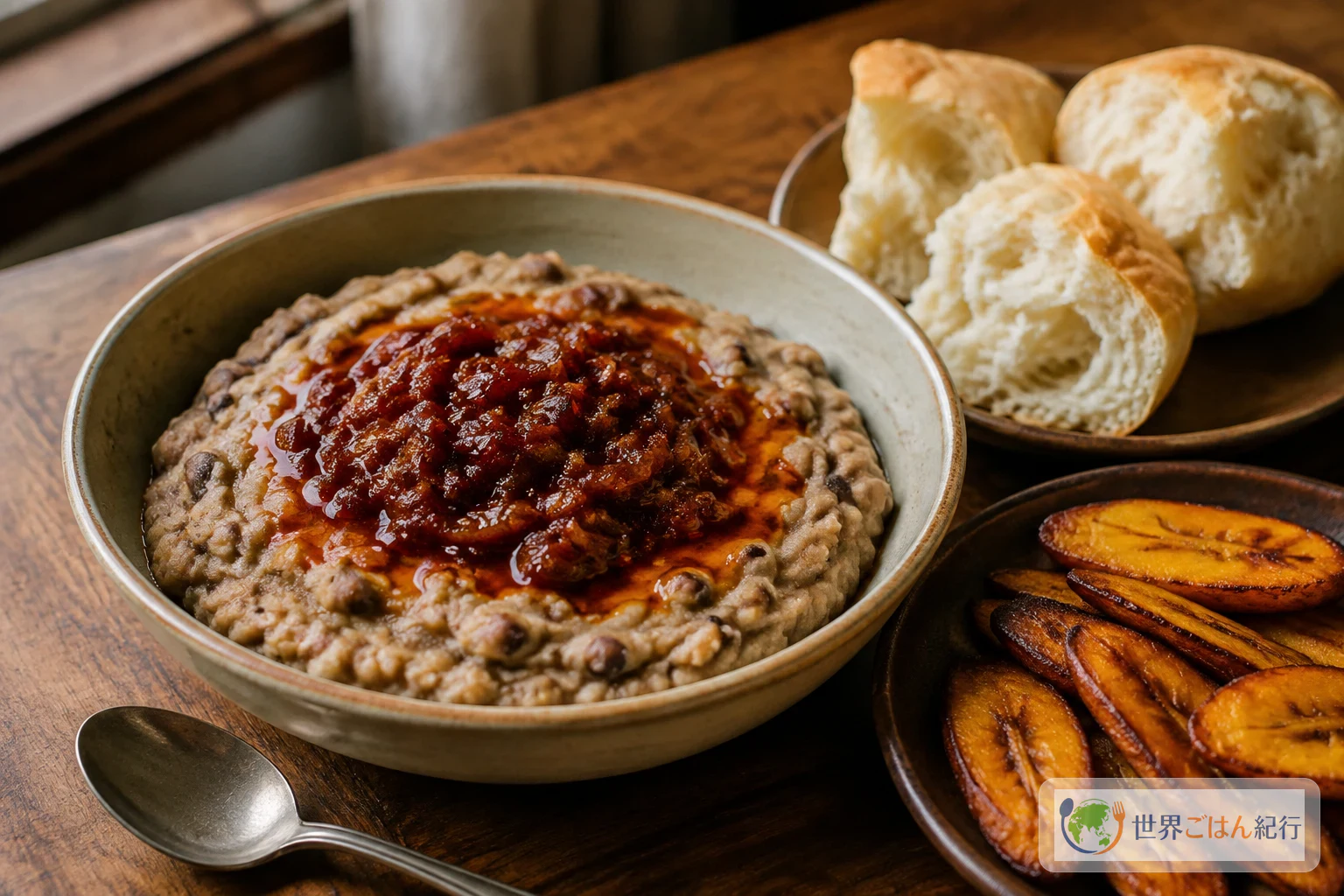
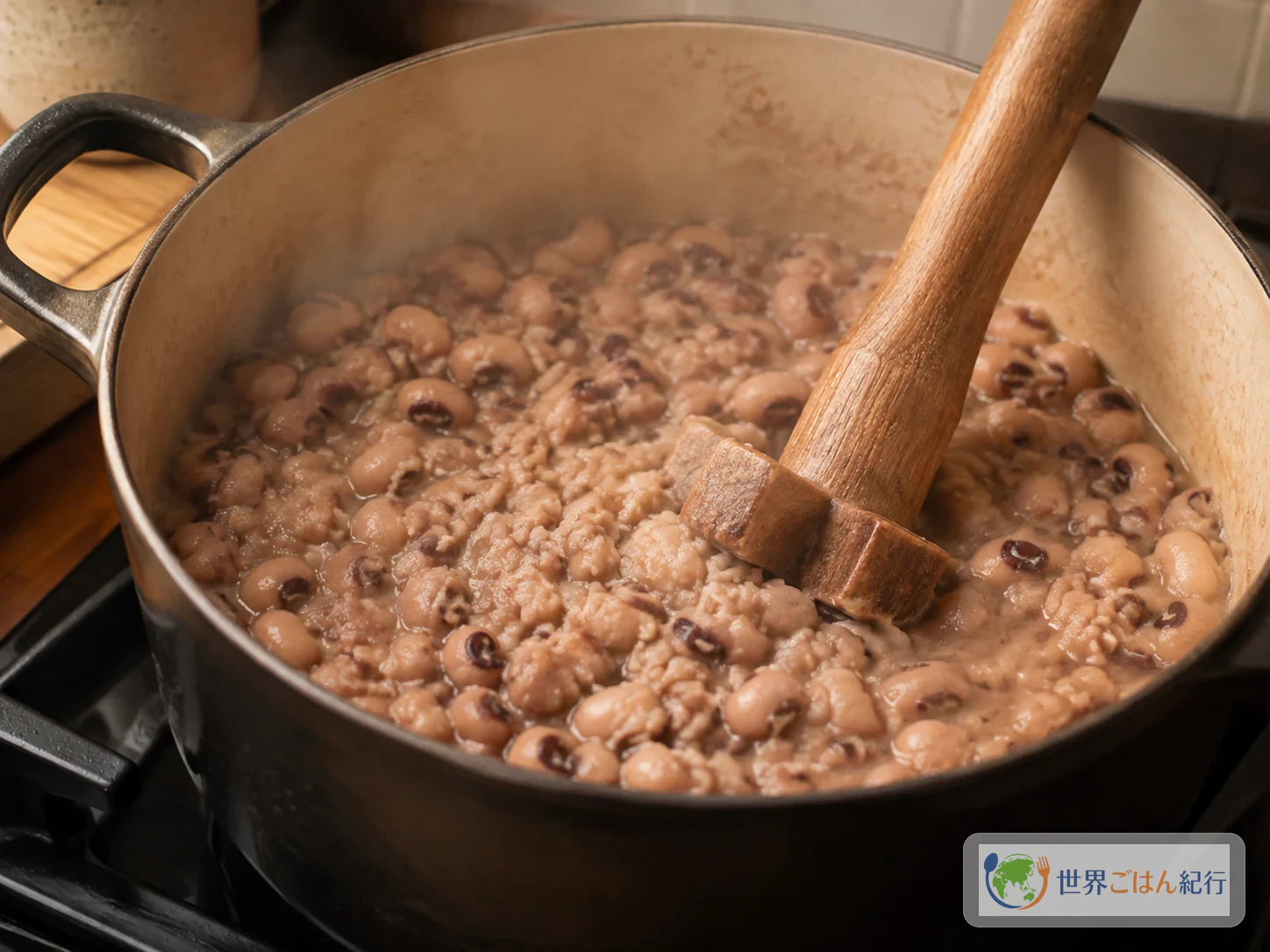
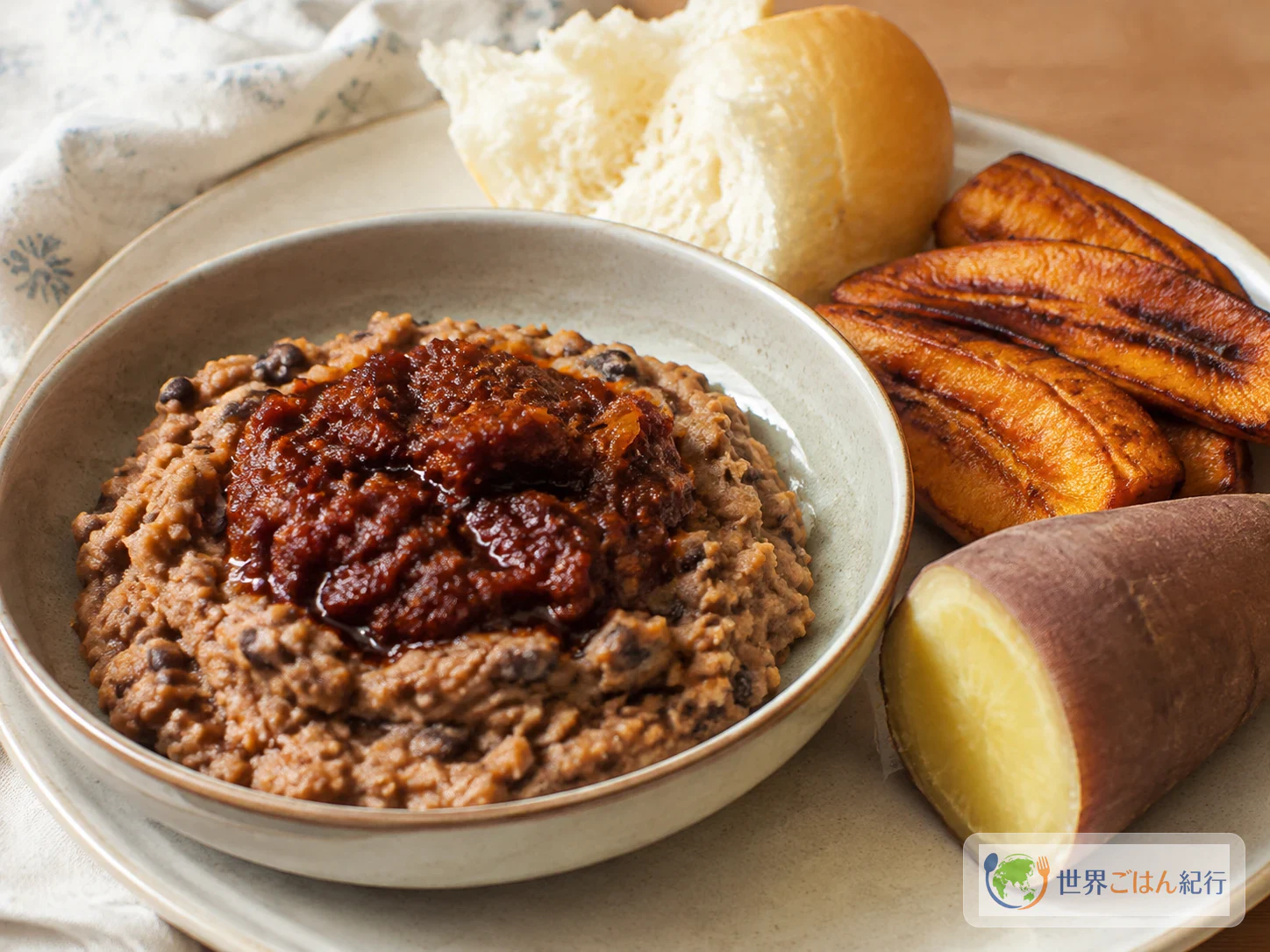
Tear off a piece of soft bread and press it into the steaming beans, then spoon over a red-brown sauce of dried chile and onion that has been fried for a long time. The mild sweetness of the beans meets the heat of the chile and the earthy scent of palm oil. This is ewa agoyin, loved on the street corners of Lagos. The beans are cooked longer than ordinary boiled beans and mashed until they lose their shape. The flavor comes from a separately made sauce poured on top, rather than from a stew stirred into the beans.
Ewa agoyin in Lagos: origin and similar dishes
Ewa agoyin, also written Ewa Aganyin, is a dish of Lagos. Its origin is traced to Togo or Ghana, or to the Agoyin people who came from Cotonou in Benin, and no single town can be pinned as its birthplace. It took shape through the movement of people between the Benin and Togo region and Lagos, where street vending and home cooking overlapped. Even under the same name, each seller and household uses its own bean, its own amount of chile and its own frying time.
“Ewa Agonyi (Benin Red Beans)” is a dish of Lagos State. Moin moin and moi moi, with spelling variants, are also dishes of Oyo, Ogun, Kogi, Kwara, Nasarawa and Niger states. Nigerian dish names change across borders, and also by language community, by cook and by where they are sold.
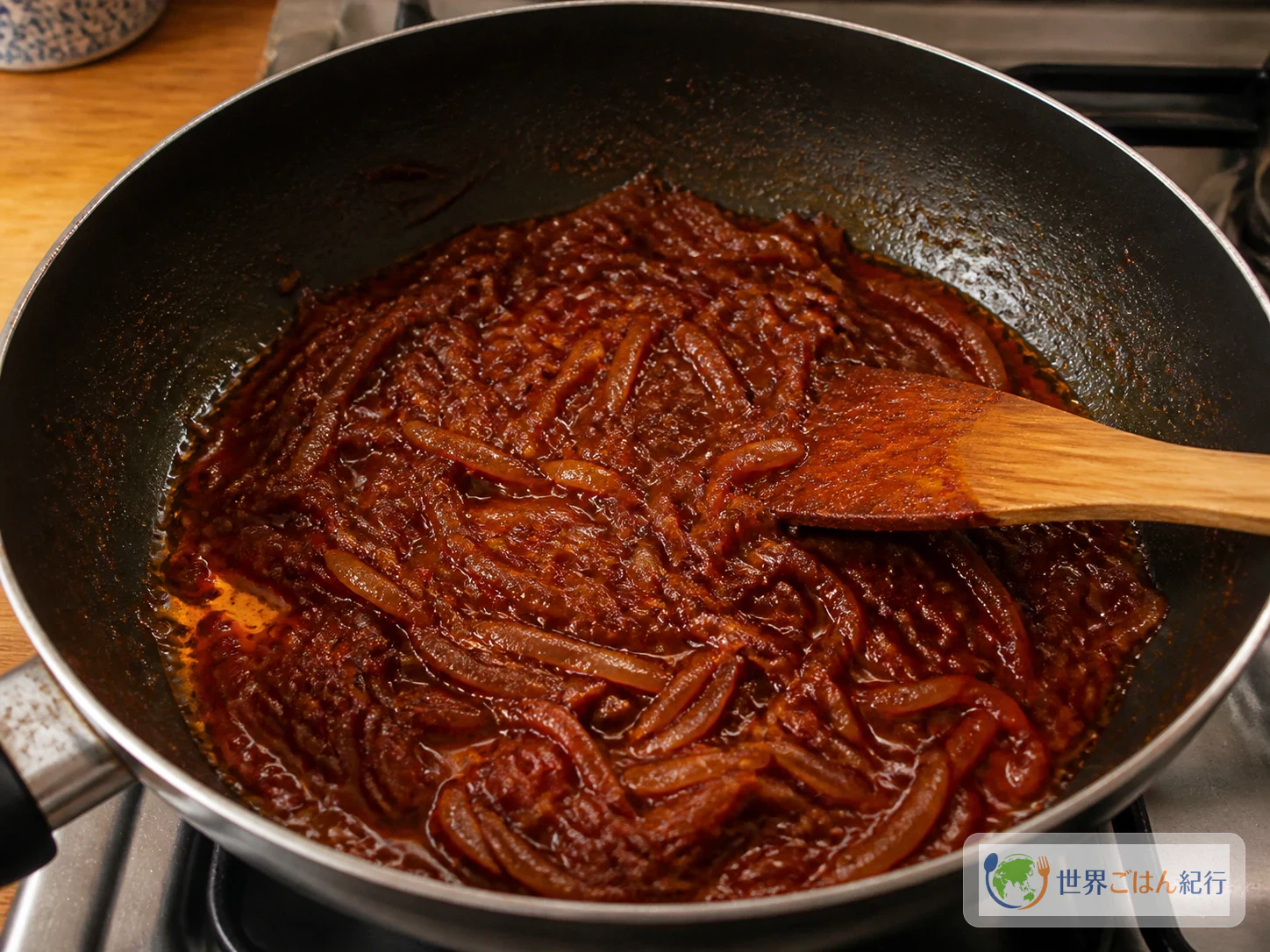
The sauce sets ewa agoyin apart. It isn't the bright red of a tomato stew; dried red chile, onion and palm oil are fried down to a deep red-brown, so dark it can look red-black. Treat the dish as a bean stew with a spicy sauce added and the beans end up undercooked. It depends on cooking the beans until they melt and reducing the sauce slowly.
Set beside other black-eyed bean dishes, it shows how one crop, cowpea, takes on different textures through steaming, frying and cooking down.
| Dish | How the beans are handled | Heating and how it is eaten |
|---|---|---|
| Ewa agoyin | Beans cooked until they fall apart, then mashed | Topped with a separately fried dried chile sauce, eaten with bread or yam |
| Moin moin | Skinned beans made nearly liquid | Mixed with aromatics and steamed, setting the bean batter |
| Akara | Beans ground into a batter | Fried in oil and eaten for breakfast or as a snack |
| Ghanaian red red | Beans cooked with the grains kept whole | Served as a bean stew with fried plantain and the like |
The beans are a smooth mash that carries a little cooking liquid, and they give way under a light press of the back of a spoon. The sauce is deep red-black, with the sweetness of onion and the aroma of dried chile rising and oil beading at the edge. Black scorching or bitterness means it has gone too far. Hit those two signs and the plate stays close to ewa agoyin even if you swap some ingredients.
Ingredients (serves 4)
The cooking liquid changes the beans’ finish a lot, so don’t add all the water at the start. Adjust as you add boiling water. Make a generous amount of sauce in a separate pot. This lets you adjust the heat without diluting the beans.
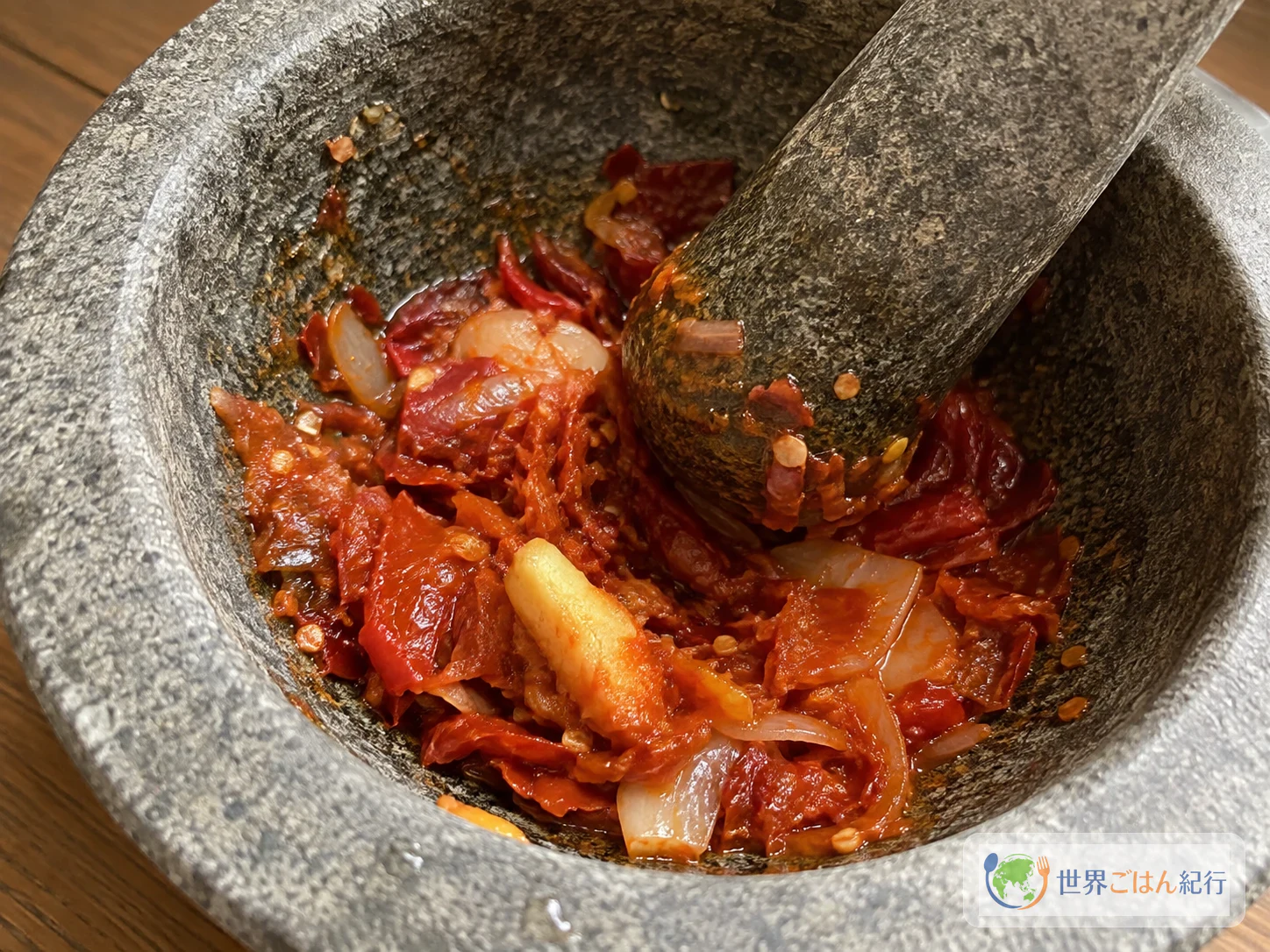
For this amount, chop the aromatics finely with a knife, then crush them in a mortar or blender you already have.
Choosing ingredients for ewa agoyin
Black-eyed beans or honey beans
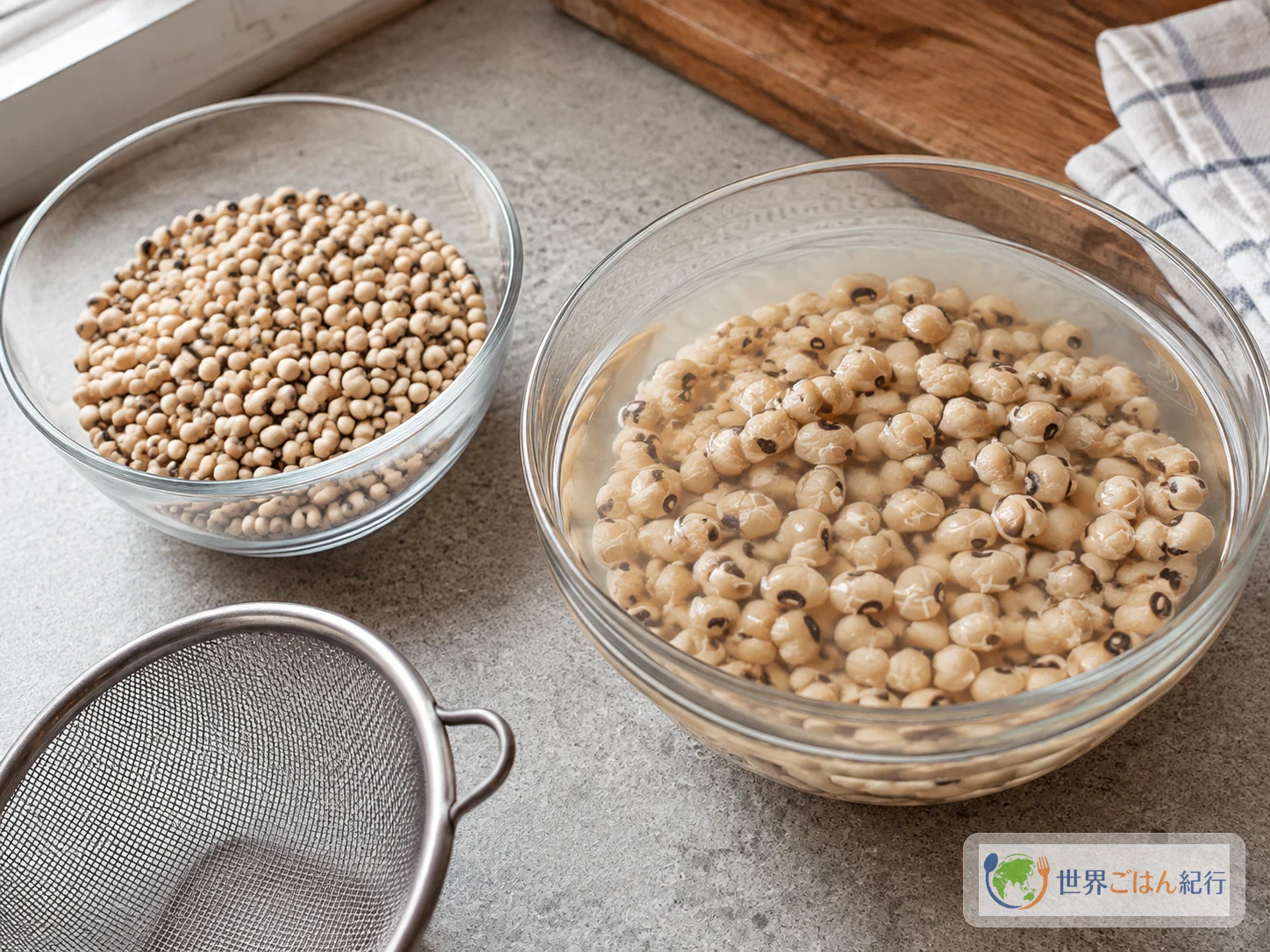
Use black-eyed beans, or the sweeter honey beans (Ewa Oloyin), which break down slightly differently. Black-eyed beans are easy to find at import grocery stores and online, and they mash soft enough even when cooked with their skins on. On the label, look for dried beans, “black-eyed beans / black-eyed peas,” and check the net weight. Dried beans need soaking, but they let you control the cooking liquid and decide how far the beans break down, so choose them over canned if you cook beans often.
Cowpea (Vigna unguiculata), which includes black-eyed beans, is eaten as young leaves and immature pods as well as dried seeds. In 2017, Nigeria was a leading producer and consumer of cowpea, accounting for 46% of world production. These beans are central to the West African table and its farming.
If you can't find black-eyed beans, the closest substitute is dried white beans with the skins on. Their skins are thick and they take longer, so after soaking, split one grain and check that water has reached the center. Lentils and chickpeas break down and smell differently, so skip them for your first plate. With canned black-eyed beans, drain and rinse them, simmer 20–30 minutes with a little water and onion, and mash; they lack the richness of the cooking liquid from dried beans, so spoon on less sauce.
Red palm oil, bought for aroma
As palm oil heats, the red fades and the oil takes on the aroma of onion and dried chile. Some cooks bleach it a little, others only lightly. At home, stop well short of smoking: warm it until the oil turns thin and fine bubbles form when the onion goes in, and aim for toasty richness rather than burnt bitterness. When buying, check that it is edible, its volume and its storage instructions.
Red palm oil is worth it if you want the sauce of a Lagos street stall or plan to keep cooking West African bean dishes. If you're making ewa agoyin only once, peanut oil leaves a toasty note, and rice bran or canola oil brings the chile and onion forward. The dish works either way, but the red color and earthy aroma thin out. Rather than compensating with lots of smoked paprika, keep the full amount of dried red pepper; it holds the flavor together better.
Dried chile, chosen for color and aroma
Dried tatashe (dried red bell pepper) and hot chiles such as Cameroon pepper are the common choices. Tatashe gives the sauce volume and red color, and Cameroon pepper brings heat that hits the nose even in small amounts. For an easy balance, build on a mild dried red pepper or ancho and add a little hot dried chile.
Without tatashe, build on dried red bell pepper, ancho or a mild Korean chile. Paprika can help with color, but powder alone lacks the body of rehydrated chile, so still soak the dried chile in a little hot water and add paprika from 1 tsp. Check that the paprika is the only ingredient. If you have tatashe, or are making this only once, you don’t need to buy extra. Fresh red bell pepper also works: chop it fine and fry the sauce about 10 minutes longer.
Some recipes add fresh tomato. Here dried chile and onion are the stars, and without tomato the moisture cooks off faster, giving the dark color and dry aroma of ewa agoyin. Tomato adds sourness and sweetness and makes a different sauce.
Dried shrimp, optional
Dried shrimp adds the umami of the sea to the sauce. For a plant-based plate or a shellfish allergy, leave it out and adjust with salt alone. Granulated stock raises the salt at once, so check the labeled amount and salt afterward; the aroma of beans and chile carries the dish without much extra seasoning.
Method: break down the beans, deepen the sauce in a separate pot
Rehydrate the chile while the beans soak, and start frying the sauce as the beans finish cooking, to save time. If you finish the sauce first and leave it a long time, the heat turns sharp, so time the final heating to how the beans are coming along.
Fixing common ewa agoyin problems
Ewa agoyin is easiest to fix when you treat the bean simmer and the sauce fry as two separate jobs. Work out which one is the cause before you touch the flavor.
The beans are still hard after 2 hours
Old beans, short soaking or water that dropped partway are the usual causes. Add boiling water, put the lid back, and keep going over low heat in 20–30 minute steps. Always use boiling water; cold water poured into a pot that has run dry drops the temperature. If the sauce is already done, keep cooking just the beans, since holding a strongly aromatic sauce warm for a long time makes it more bitter.
The beans are watery and run on the plate
Take the lid off and simmer 5–10 minutes over medium-low heat to cook off the excess water. Mash with a spatula, rest 5 minutes and check the thickness again: the beans look loose when hot, and their starch sets as they cool. Leave a little cooking liquid, because beans drained completely split easily when reheated.
The sauce turned black and bitter
Red-brown and burnt black are different things. If oil floats on top but the bottom is stuck and black, leave the scorched layer behind: move only the unburnt top to a clean pot, add 1–2 tbsp boiling water, and loosen it over low heat. If bitterness has spread through the whole batch, sugar won't save it. Make a small new batch with the heat under control.
The heat drowns out the beans
Reducing the sauce concentrates the heat, so turn off the burner now. Stir in unsalted mashed beans and serve more of the gentle staples: bread, boiled yam or sweet potato. Sugar only blurs the onion and beans. Next time, halve the hot chile itself rather than just the seeds, and increase the dried red pepper that gives color; the aroma survives better.
The paste is watery and the color never deepens
This comes from adding a lot of chile soaking water as is. Cook over medium-low heat with the lid slightly ajar until the oil returns to the edge. If it sticks, add 1 tbsp boiling water, stir and lower the heat. Raw onion or tomato would only add more moisture.
Serving and storing ewa agoyin
At the Lagos table
Ewa agoyin is built on the plate, with the sauce worked into bread or tubers. It's eaten with soft bread, and boiled yam and fried plantain are served alongside, with enough beans to soak up the spicy sauce.
| What it is eaten with | Change in mouthfeel | Preparation |
|---|---|---|
| Soft bread | Scoops up beans and sauce together | Plain loaf or rolls with little sweetness |
| Boiled yam | A fluffy staple takes on the heat | Sweet potato or potato as a substitute |
| Fried plantain | Adds sweetness to the sauce's heat | Thick slices of banana just short of ripe, pan-cooked |
The sauce sold in southwest Lagos sometimes leans hard on the heat of the dried chile, while at home people may cut the chile and add more onion and color-giving red pepper to make it easier to eat. You can do the same at the table: plate the beans first and add sauce one serving at a time. For anyone not used to heat, put the sauce in a small dish and set out the bread and boiled root vegetables first.
Portions for 4
250 g beans makes a side dish or light staple for 4 people with the accompaniments. Plan on about 1 piece of bread per person, or about 100 g sweet potato or yam per person. The sauce is strong, so start with 1–2 tbsp on the first plate and stop while you can still taste the sweetness of the beans.
Storage, reheating and allergens
Transfer leftover beans and sauce, unmixed, to separate shallow containers so they cool quickly; leaving the pot at room temperature is risky. Keep the refrigerator at 50°F (10°C) or below and finish the refrigerated beans and sauce within 2 days of the next day. To freeze, seal single portions, and store the beans with a little cooking liquid so they are less likely to split after thawing.
To reheat, add 1–2 tbsp water or cooking liquid to the beans and warm them over low heat; warm the sauce in a separate pot without scorching it. Heat until the center reaches 167°F (75°C) for at least 1 minute.
Before serving, ask guests about beans, chile, onion, palm oil and dried shrimp, and check dried shrimp labeling for shellfish. Wash the knife and cutting board that handled the spicy paste before using them for other dishes.
FAQ
Is it all right to cook the beans this soft?
Yes. The beans should be soft enough to mash with a spoon, though a completely smooth paste isn't the goal. Leave a few grains and some cooking liquid, and stop when the beans sit on bread without running off.
Are honey beans the same as black-eyed beans?
They are different. Honey beans are a sweet bean; black-eyed beans are a kind of cowpea. Start with black-eyed beans, which are easy to find. Changing the variety changes how the beans break down and how sweet they taste, so judge by their state rather than the clock.
Can I make it with tomato?
You can. Keep the amount small and fry the paste longer to cook off the moisture. Bring the sourness of tomato forward, though, and the sauce moves closer to a different West African stew than to the spicy onion sauce of ewa agoyin.