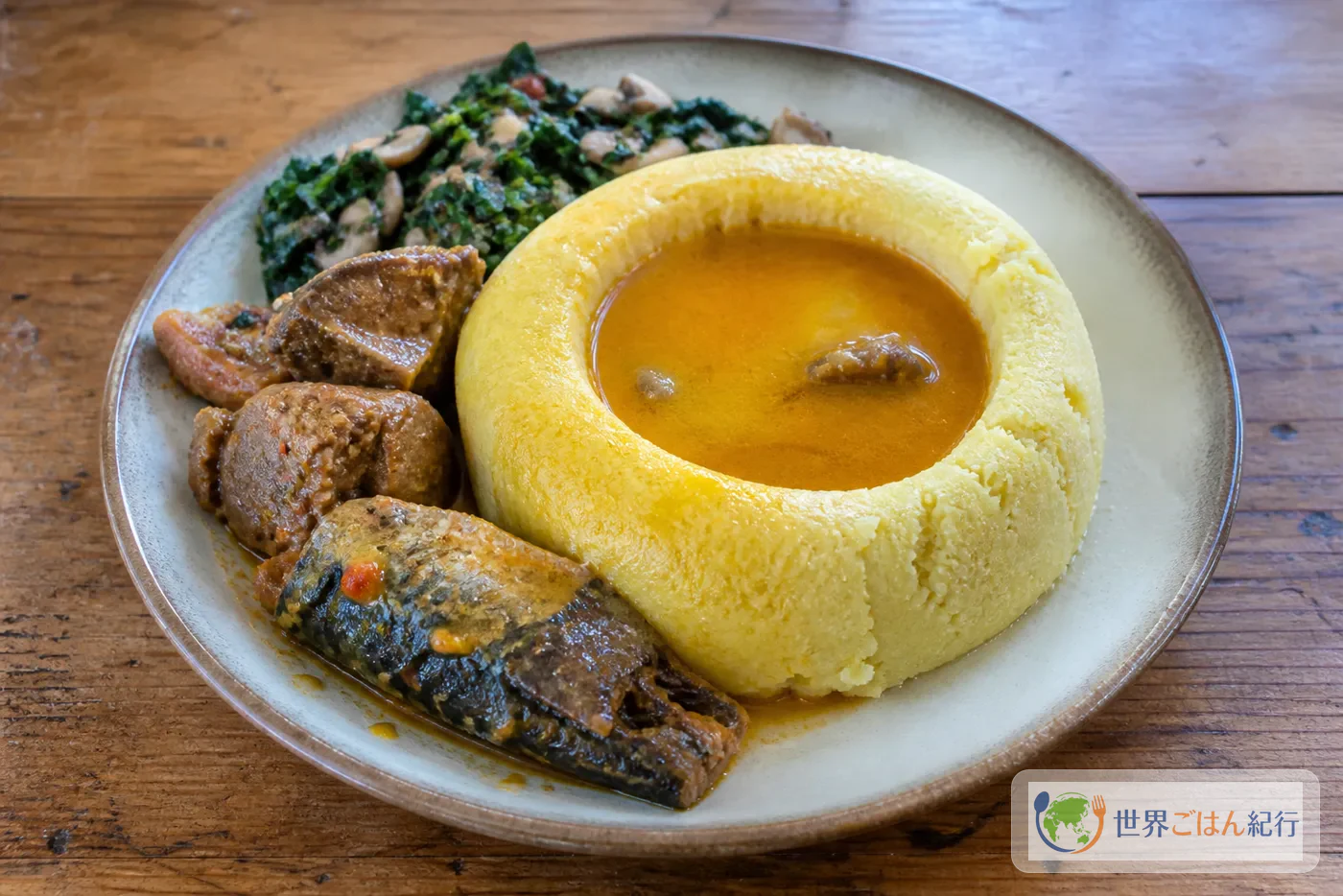
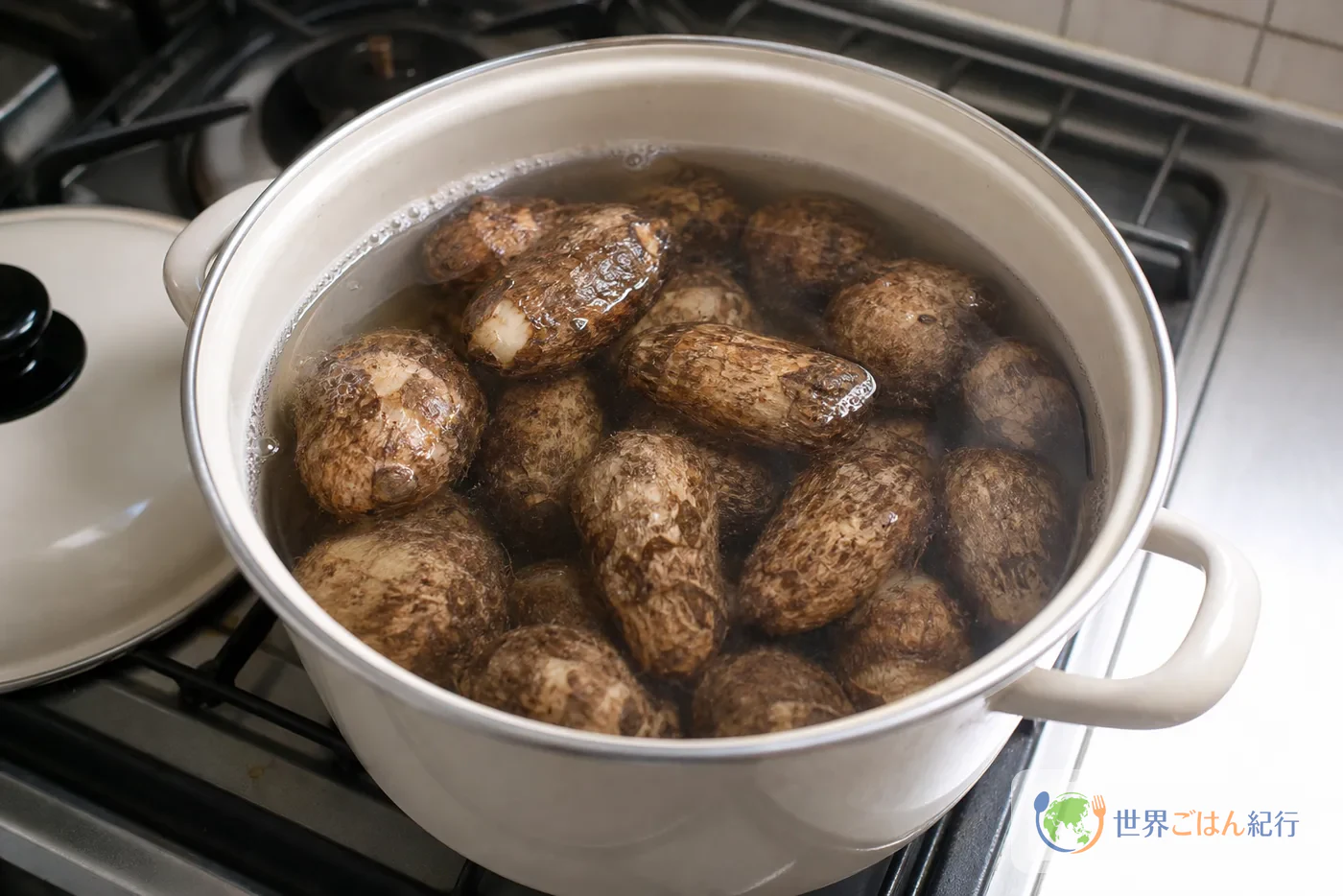
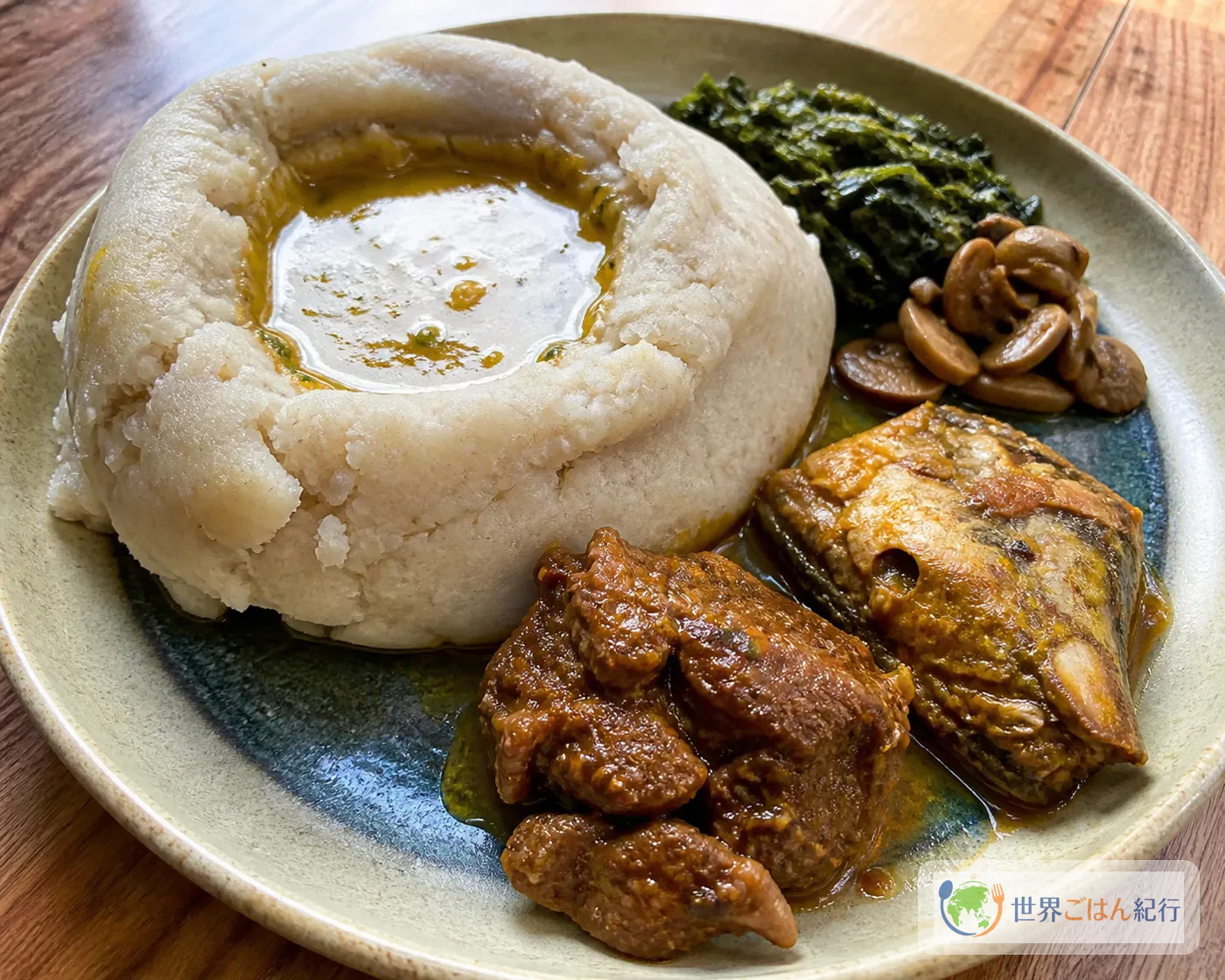
A white mound of cocoyam sits in the middle of the plate. You press a well into it with your fingers or a spoon, then pour in a yellow soup fragrant with red palm oil. This is achu soup, the pounded cocoyam and yellow soup of western Cameroon: sticky, smooth taro, a warm aroma of palm oil, and a stock built on meat and fish. It looks simple, but it quickly becomes real cooking: how smooth do you make the cocoyam, and how do you keep the yellow soup from separating?
About achu soup
Achu is a traditional dish of northwest and west Cameroon. The tuber, called cocoyam or taro, is boiled and pounded into a white paste and served with a yellow soup also known as sauce jaune or nah poh. The color comes not from turmeric but mainly from red palm oil, along with spices, meat or fish stock, and an alkaline material called limestone, kanwa or natron.
That alkaline material holds the soup together. Warm red palm oil combined with warm stock and a tiny amount of alkali comes together into a smooth, loose body instead of a plain oily broth. It is there for texture, not flavor.
Achu is eaten as a staple and soup in one. You break down the mound of taro bit by bit, coat each piece in the soup collected in the well, and add a little meat or fish. Eat it on its own rather than over white rice, and its character becomes clear. On the staple side, fufu, made from cassava or yam flour, is a close relative.
Ingredients (serves 4)
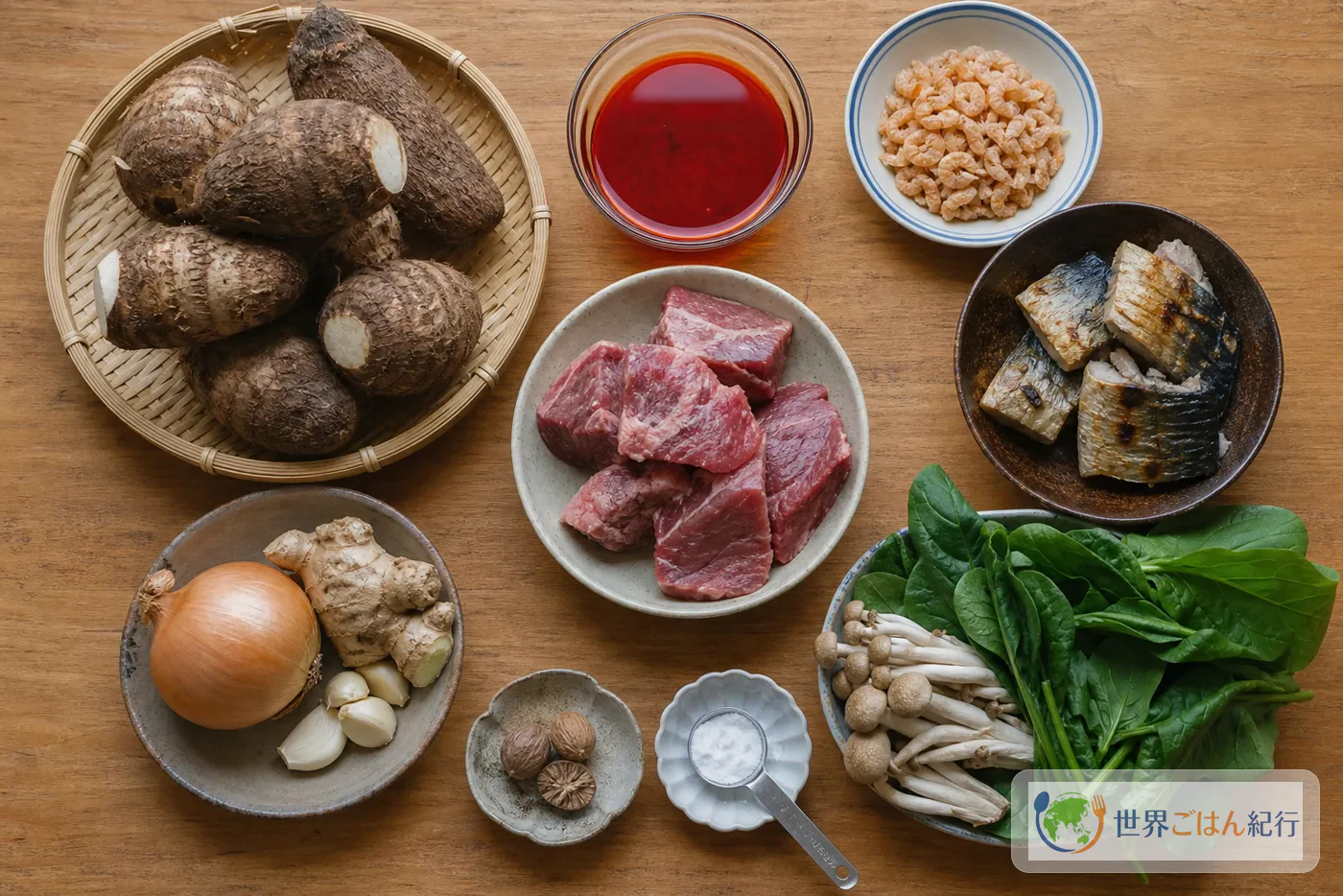
This is enough for 4 people eating achu as the staple. Start with 2 lb (900 g) of unpeeled taro, which comes to about 1.5 lb (650 g) after boiling and peeling. Red palm oil is strongly scented, so stop at ¼ cup (70 ml) the first time.
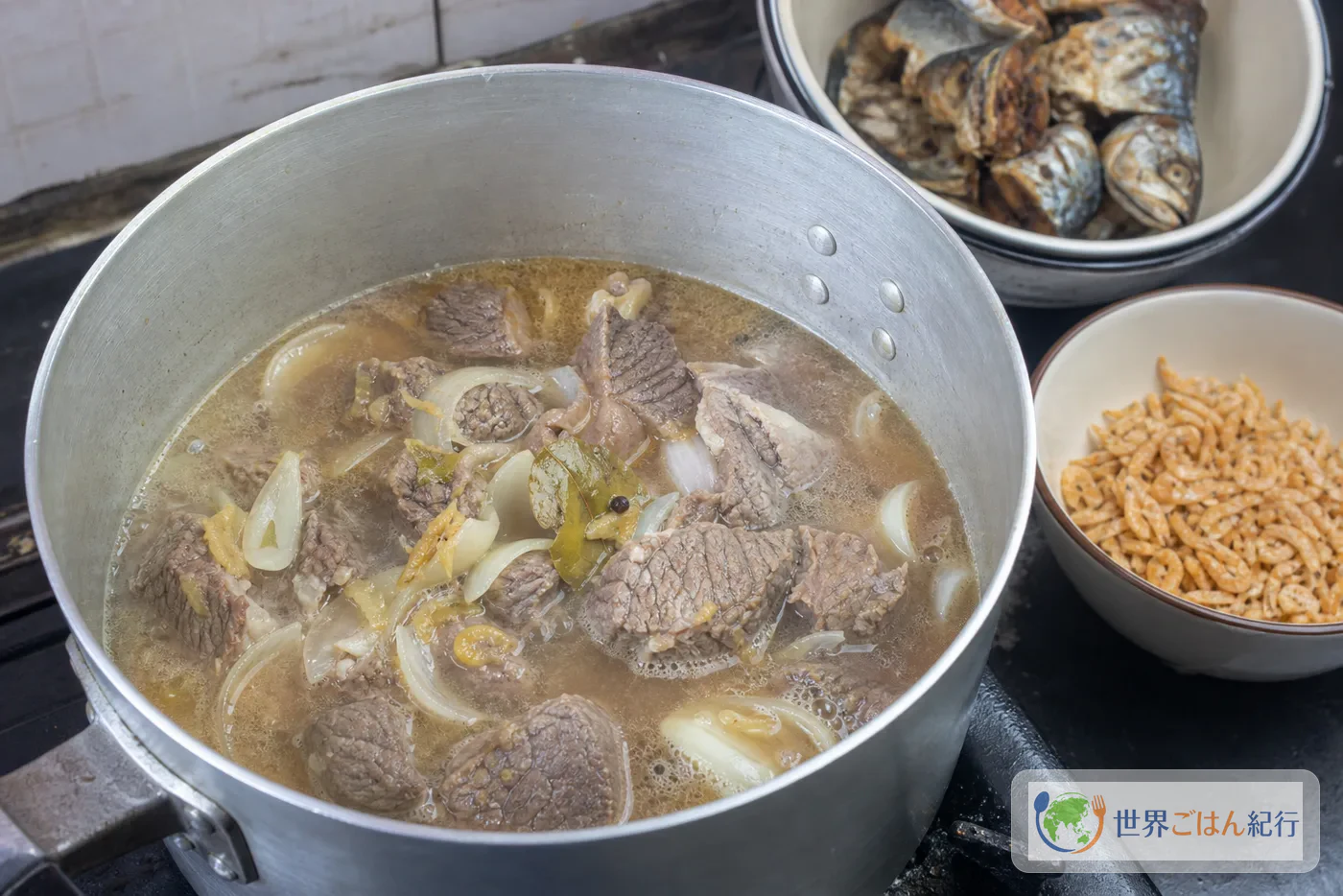
If you avoid shellfish, leave out the dried shrimp and replace it with 5 g of dried shiitake powder. If you skip fish, omit the grilled mackerel, increase the beef to 12.5 oz (350 g) and raise the salt to as much as 1 tsp.
Ingredients worth seeking out
The things worth looking for at an African or Asian grocer or online are red palm oil, which ordinary oil cannot replace, dried shrimp, which can make up for the aroma of smoked fish, and a hand blender, which makes the yellow soup emulsify finely. Get taro, beef, grilled mackerel and spinach at an ordinary supermarket, and restrict the specialty items to those that change the outline of the dish.
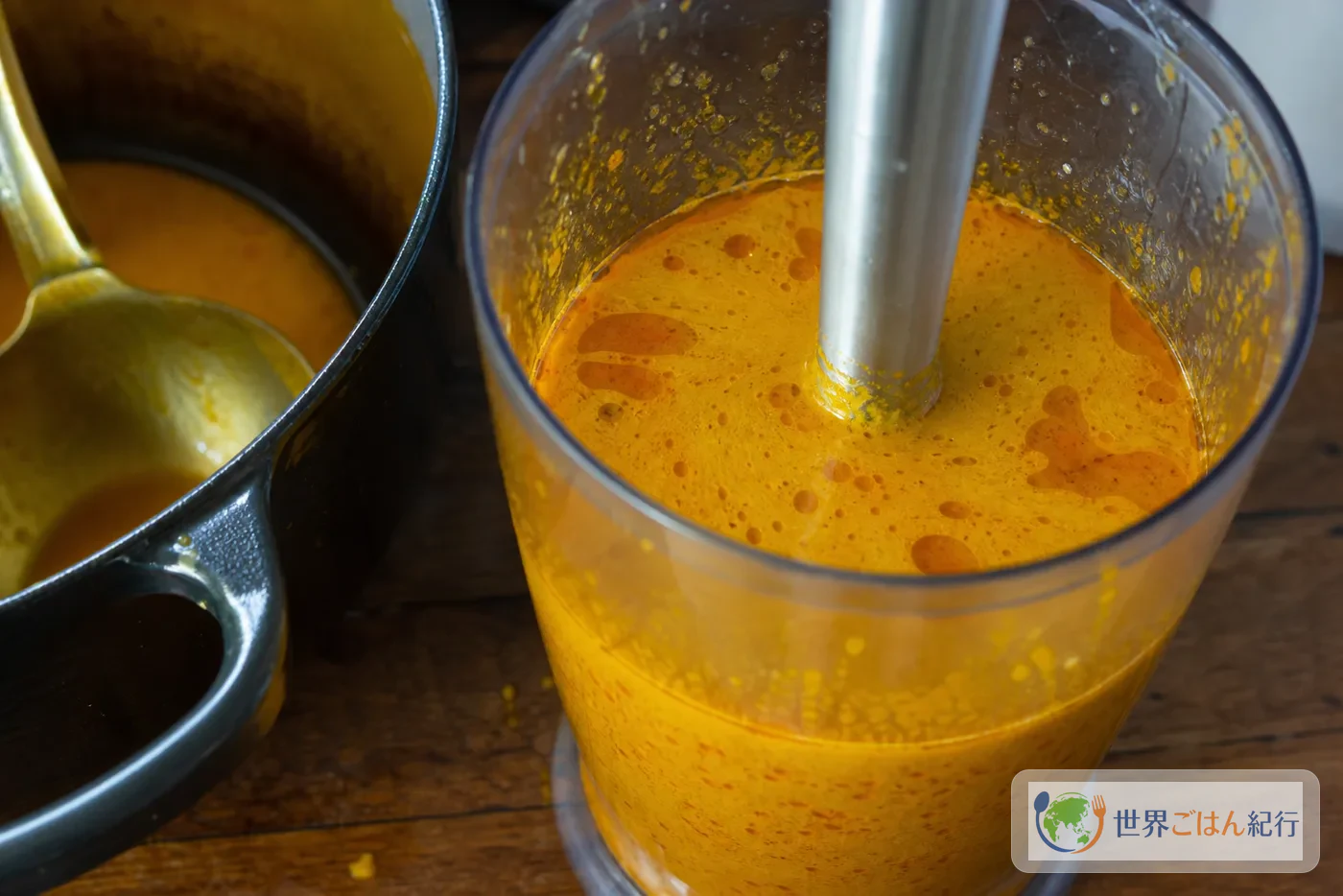
Red palm oil and dried shrimp are enough to start with. If you make it several times, a hand blender cuts the failures in step 5. An ordinary blender works, but it is easy to spill when you move hot soup into it, and mixing again when the oil stays in large rings is a nuisance. A tool you can run briefly inside the pot or a deep measuring cup is also useful for bean soups, hummus and chile sauce.
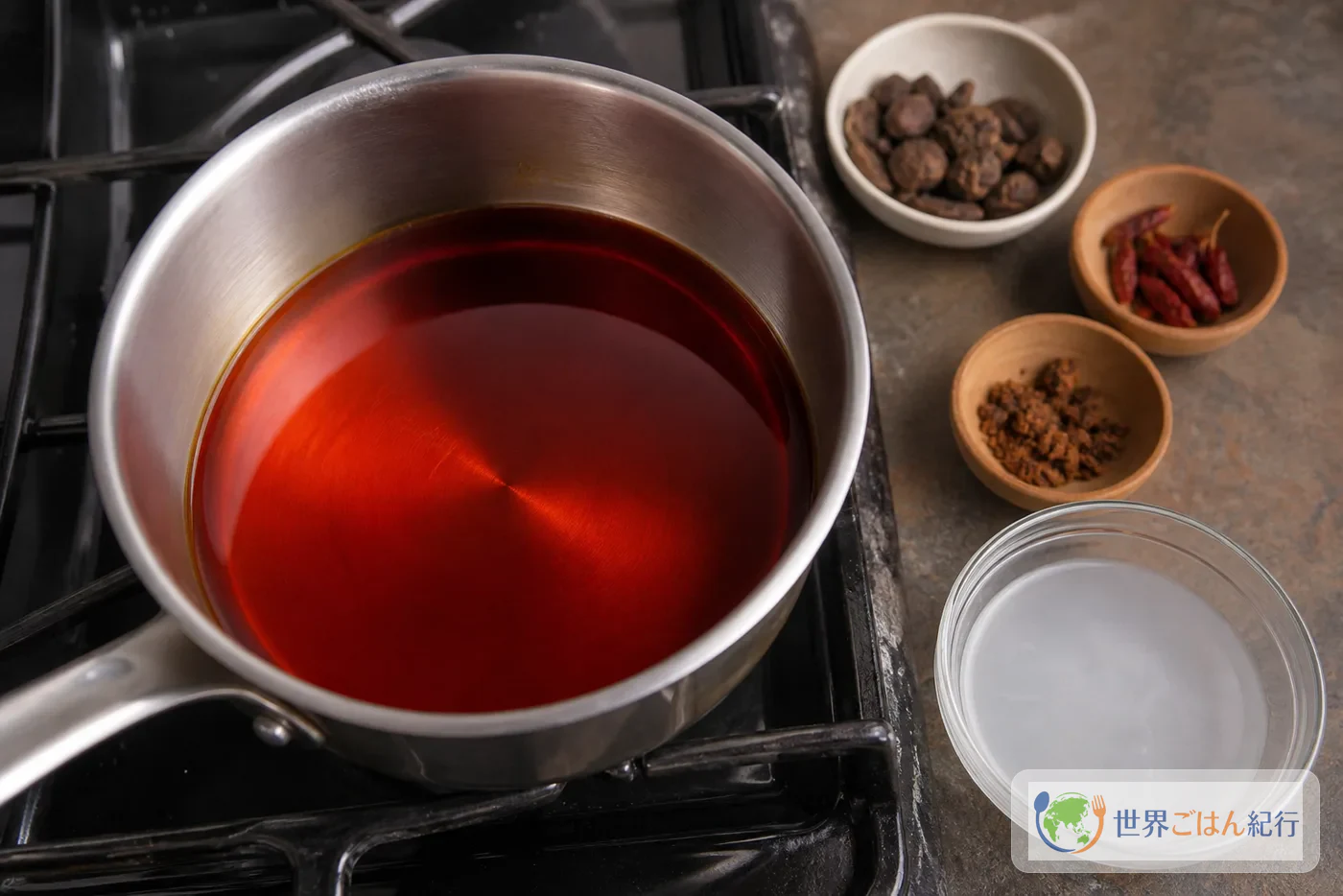
Red palm oil decides the color and aroma of the yellow soup. A small amount changes the impression of the pot, so one bottle that you plan to use up for dishes like sanga and egusi soup is easy to finish.
On days when you cannot get smoked fish, crushing dried shrimp into the soup gives a dried-seafood savoriness different from the aroma of fish. If you avoid shellfish, do not use it, and substitute dried shiitake powder.
Even when you think you have blended the oil and stock, large rings of oil can return by the time you pour the soup on the plate. If you want a stable emulsion from the first try, a brief run with a hand blender in a deep container breaks the red palm oil into fine droplets so it separates less when poured into the well in the cocoyam.
Choosing ingredients and substitutes for achu soup
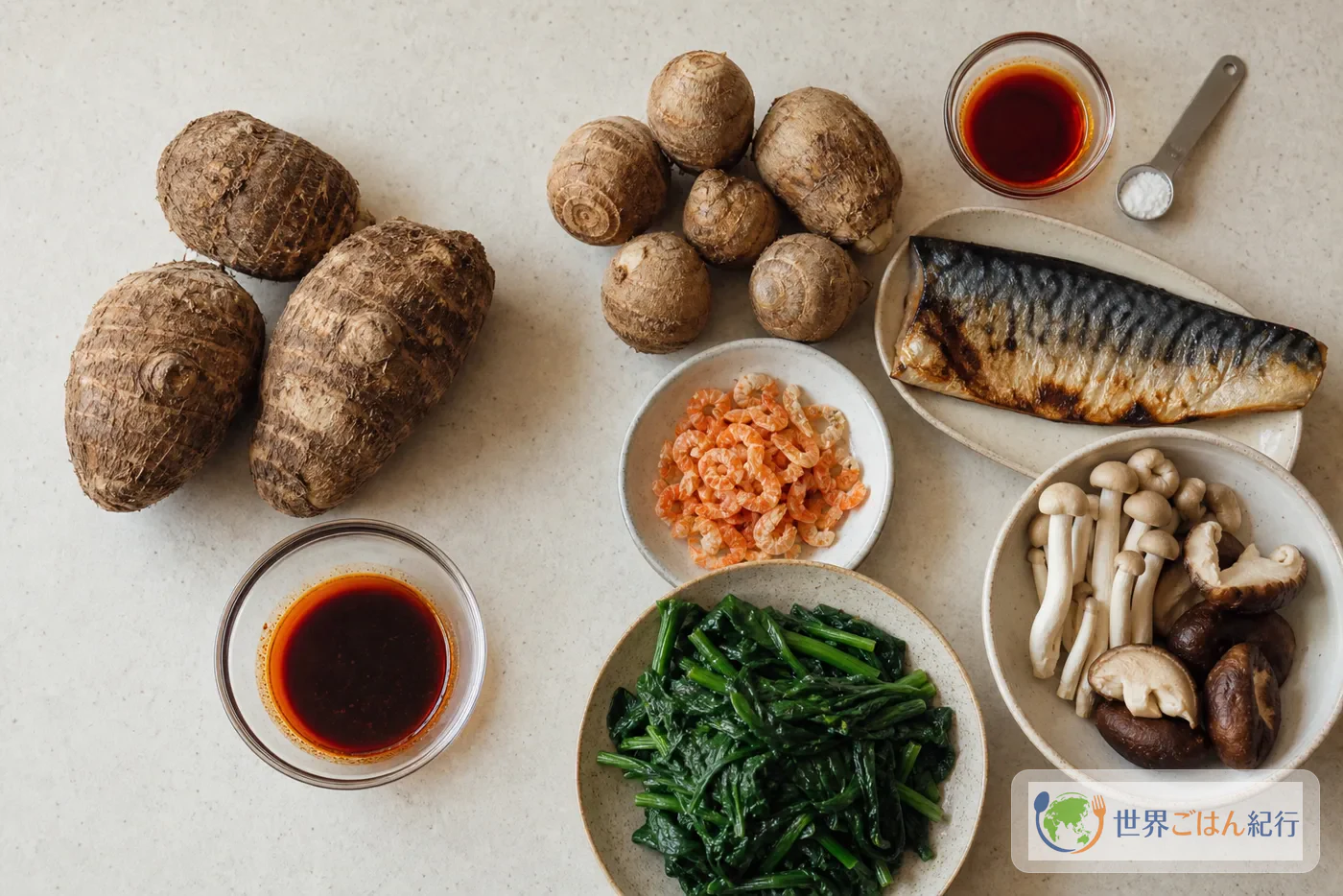
Try to source everything locally and you'll stall at the shopping stage. What you want to keep is the sticky white cocoyam, the aroma of red palm oil, the stock of fish and meat, and the emulsion of the yellow soup.
| Local-leaning ingredient | Substitute | What to protect |
|---|---|---|
| Cocoyam, taro, macabo | Taro, frozen taro, any taro you can find | Pound while hot for stickiness and smoothness |
| Kanwa, nikki, limestone | Food-grade baking soda, 1/3 to 1/2 tsp | Bitter if you increase it |
| Smoked fish | Grilled mackerel, grilled horse mackerel, dried shrimp | Use a little for fish aroma and set the salt at the end |
| Achu spice mix | White pepper, black pepper, nutmeg, chile | Split the aroma into several; avoid plain curry powder |
| Local leafy greens | Spinach, kale or a similar leafy green | A side note beside the rich cocoyam and oil |
Taro, palm oil and seafood
It helps to think of ingredients that build form and ingredients that add aroma separately. Taro builds the form, so taro alone is enough to give the dish its shape, and frozen taro needs only a small adjustment. Red palm oil and dried seafood supply the aroma; leave them out and the dish drifts toward "taro with a yellow sauce."
Replace the red palm oil with salad oil and the color and aroma move far away. White pepper and nutmeg aren't the local spices, but they're a practical bridge for building a warm aroma in layers. If you're buying extras, red palm oil, dried shrimp and white pepper, in that order, are enough.
Baking soda instead of kanwa
Real kanwa and local spices are hard to source safely, so use food-grade baking soda, whose composition you know. Too much won't make the soup more yellow; it brings out bitterness and sliminess. Start with 1/3 tsp the first time and raise it to 1/2 tsp only if the emulsion is weak.
Do not use cleaning-grade baking soda, limestone of unknown use, industrial carbonates, or lumps sold as "kanwa-style" whose origin and composition you do not know. The amounts below assume food-grade baking soda. Too much leaves a bitter, soapy aftertaste, so treat 1/2 tsp as the upper limit. Start with 1/3 tsp the first time.
How to make it: pound the taro hot, and do not overboil the yellow soup
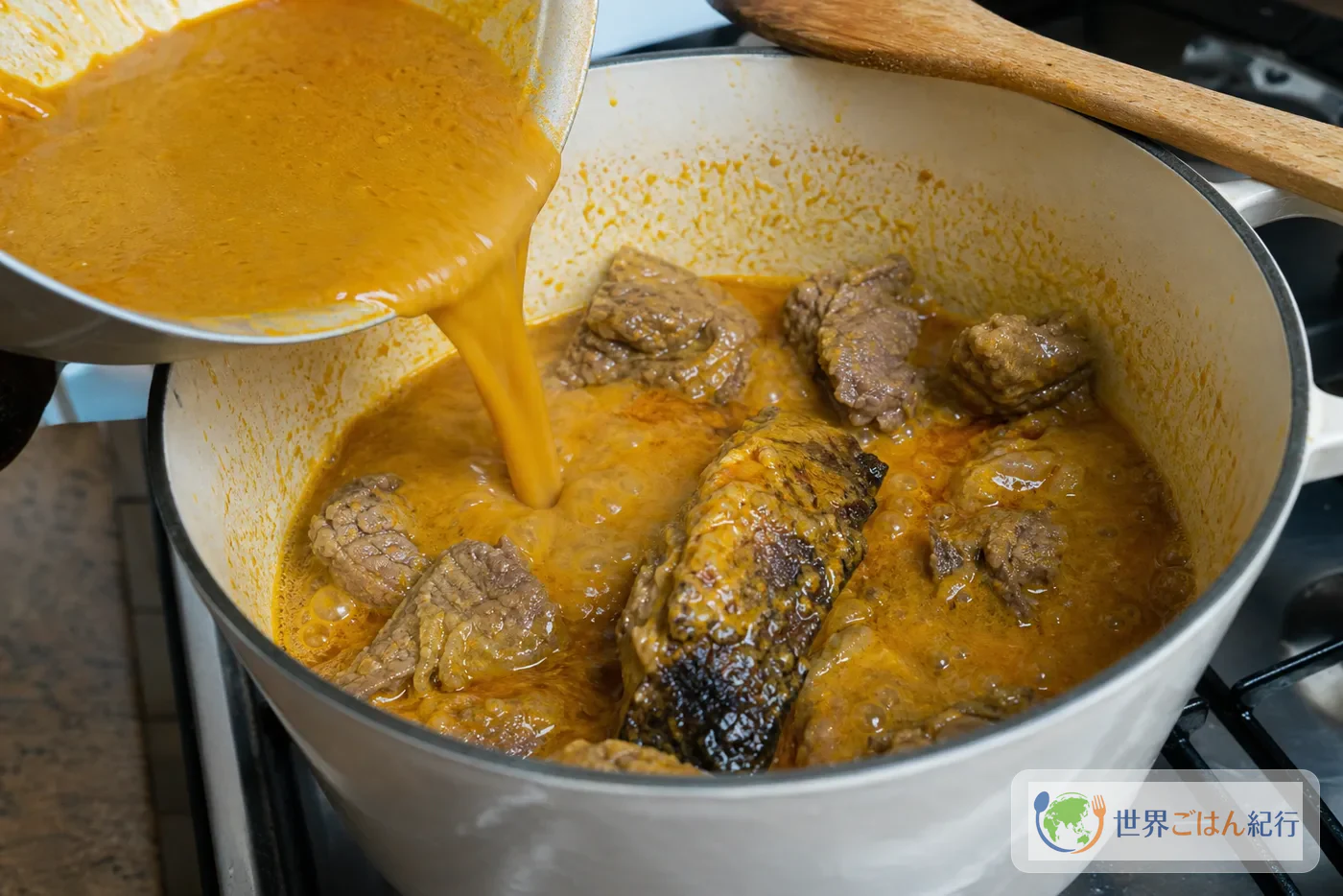
You can boil the taro and make the beef stock in parallel. The first time, do not rush: start the beef first, and put on the taro pot partway through, and the whole thing comes together.
Fixing separation, bitterness and wateriness
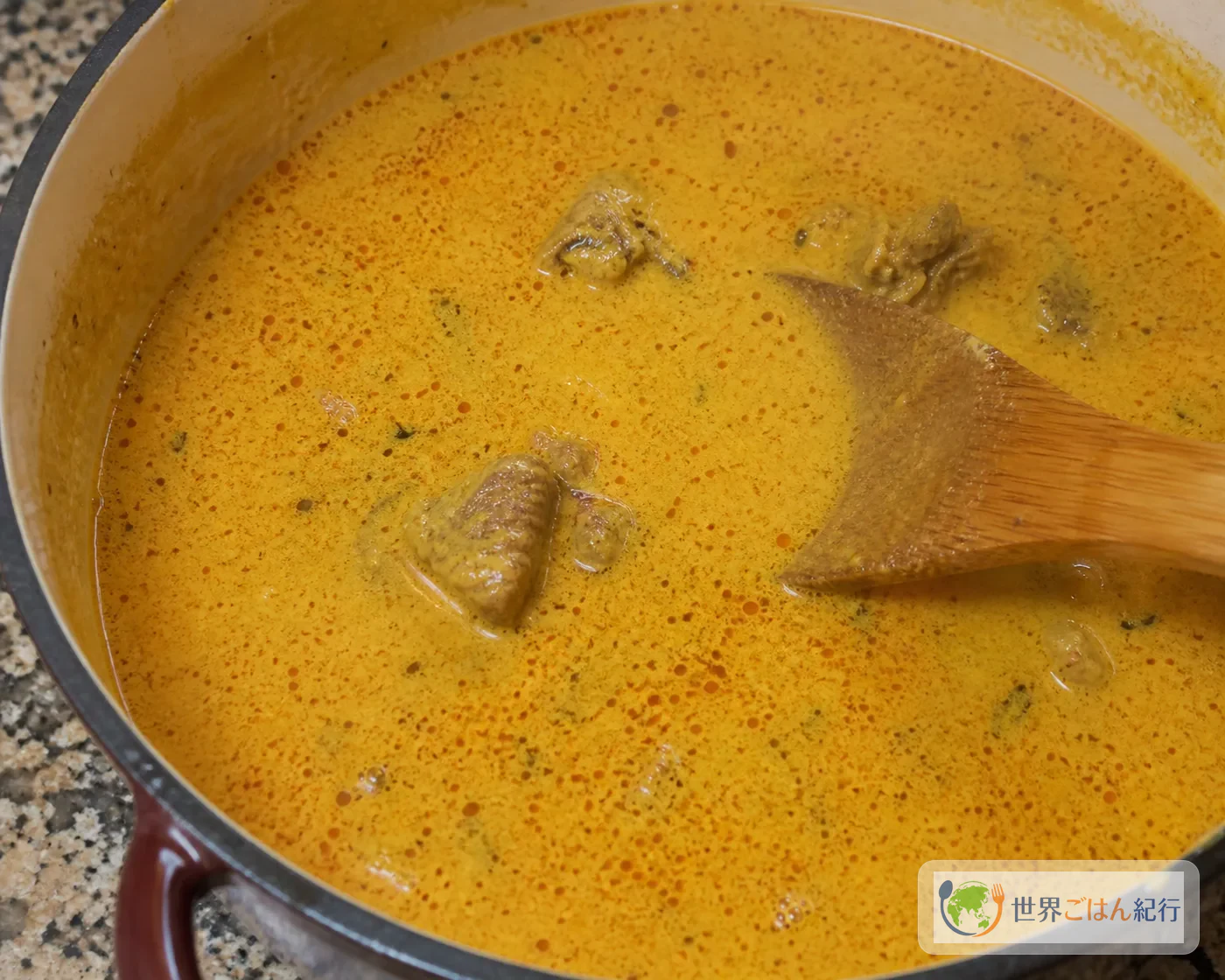
With achu soup, texture comes before flavor. Make the cocoyam smooth, keep the soup from separating, and don't let the baking soda dominate, and the dish becomes much easier to eat.
Chasing a deeper yellow tempts you to add more red palm oil, but the more oil you add, the more easily it separates. If the color is pale, first check that the stock is warm, that the dried shrimp powder hasn't settled, and that you blended long enough. Lift some on a spoon: it should cling to the back for a moment like a thin sauce, not run off like broth.
| Problem | Why it happens | How to fix it |
|---|---|---|
| Large rings of oil float on the soup | Cold stock, too little blending, or boiled hard | Add 3.5 tbsp (50 ml) warm stock, turn off the heat and blend again for 20 seconds |
| Bitter, soapy aftertaste | Too much baking soda | Don't correct with 1/2 tsp lemon juice; dilute with ½ cup (100 ml) stock and a little salt. Use 1/3 tsp next time |
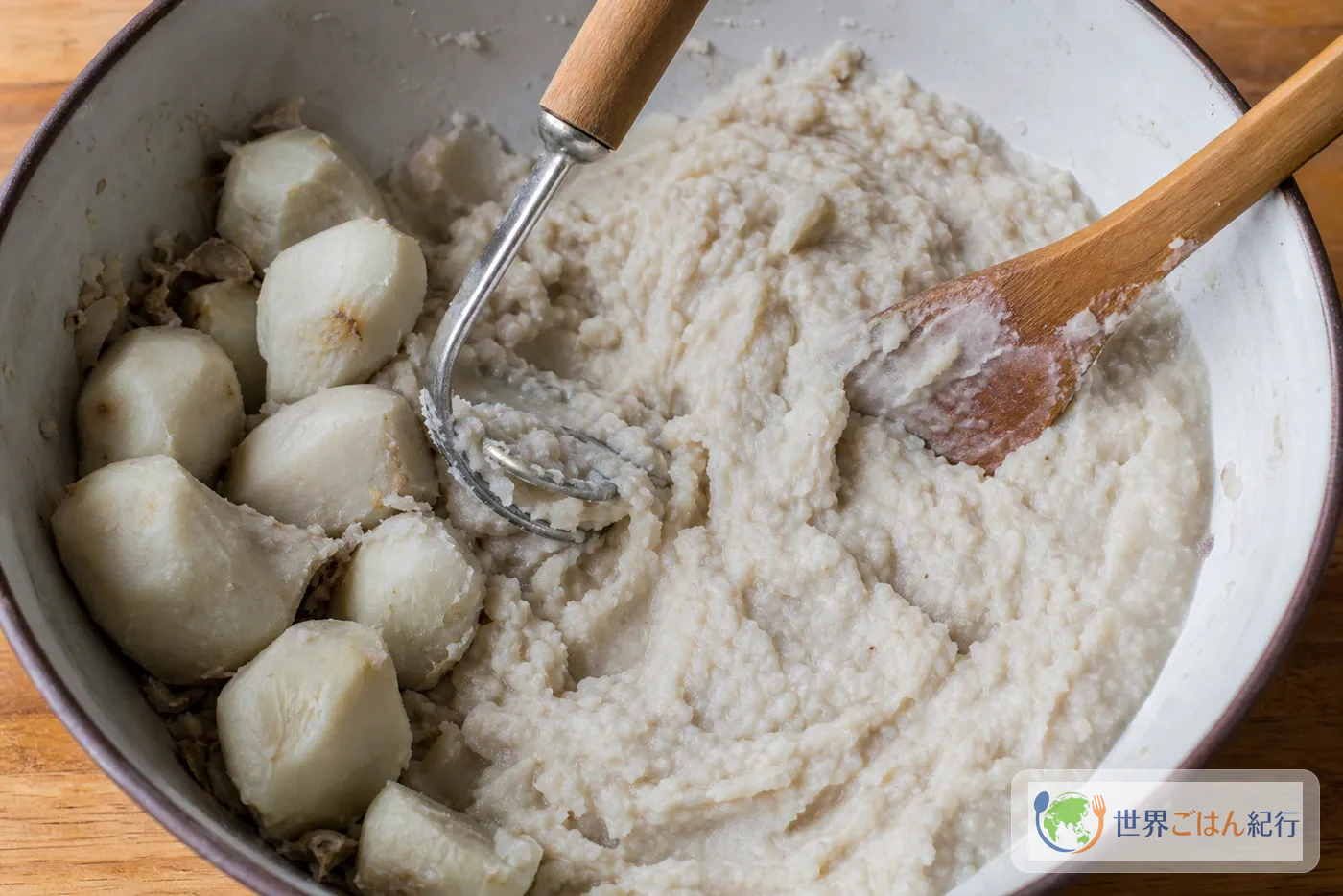
| Taro is watery | Not drained after boiling, or mashed after it cooled | Discard the water and dry it over low heat for just 1 minute, then mash while hot |
| Meat is tough | Boiled hard, or not simmered enough | Simmer 15 minutes more on low heat. Revive it in stock before it goes in the soup |
| Fish is too salty | Did not account for the salt in the grilled mackerel | Hold back the salt in the soup and decide at the end |
A separated soup is still edible, and it can be brought back. Bitterness is different: piling in acid breaks the yellow emulsion, so diluting is safer than correcting. Once the soup is fixed, warm it quietly on low heat, because boiling hard separates it again.
Serving and storing achu soup
At the table
Don't pour all the yellow soup at once. Make a small well in the white mound and add soup little by little, and the stickiness of the cocoyam and the aroma of the oil last to the end. Rather than mixing the meat and fish through, add a little with each bite so you taste the depth of the stock, the fish and the sweetness of the taro separately.
Hot achu has a slightly firm surface with a soft inside. Break off bites from the outside of the plate and the soup in the well stays put, so you can hold the yellow sauce right to the end. To lean toward the hand-eating tradition, divide portions onto small plates and let them stand until they're no longer too hot. At home, a deeper dish and a spoon to cut the cocoyam are easier.
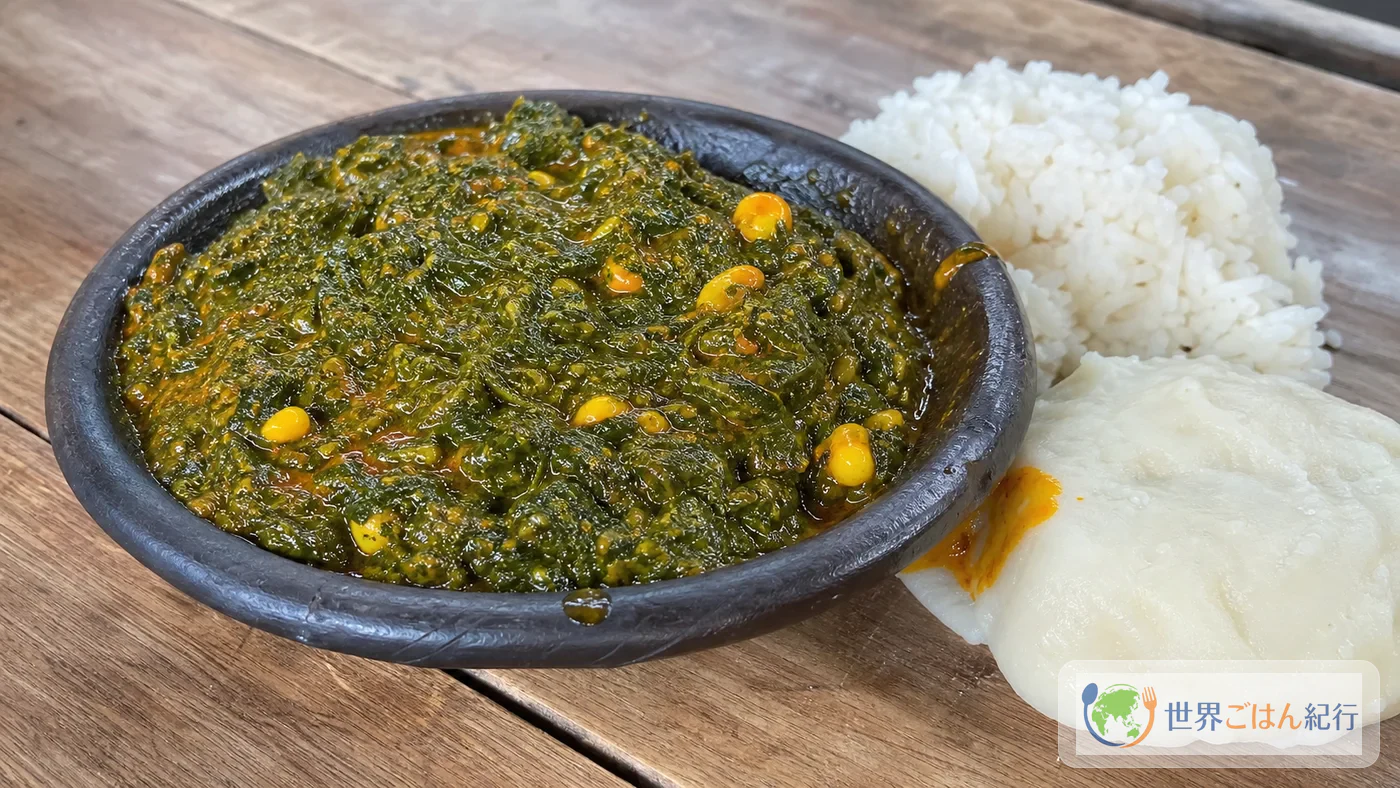
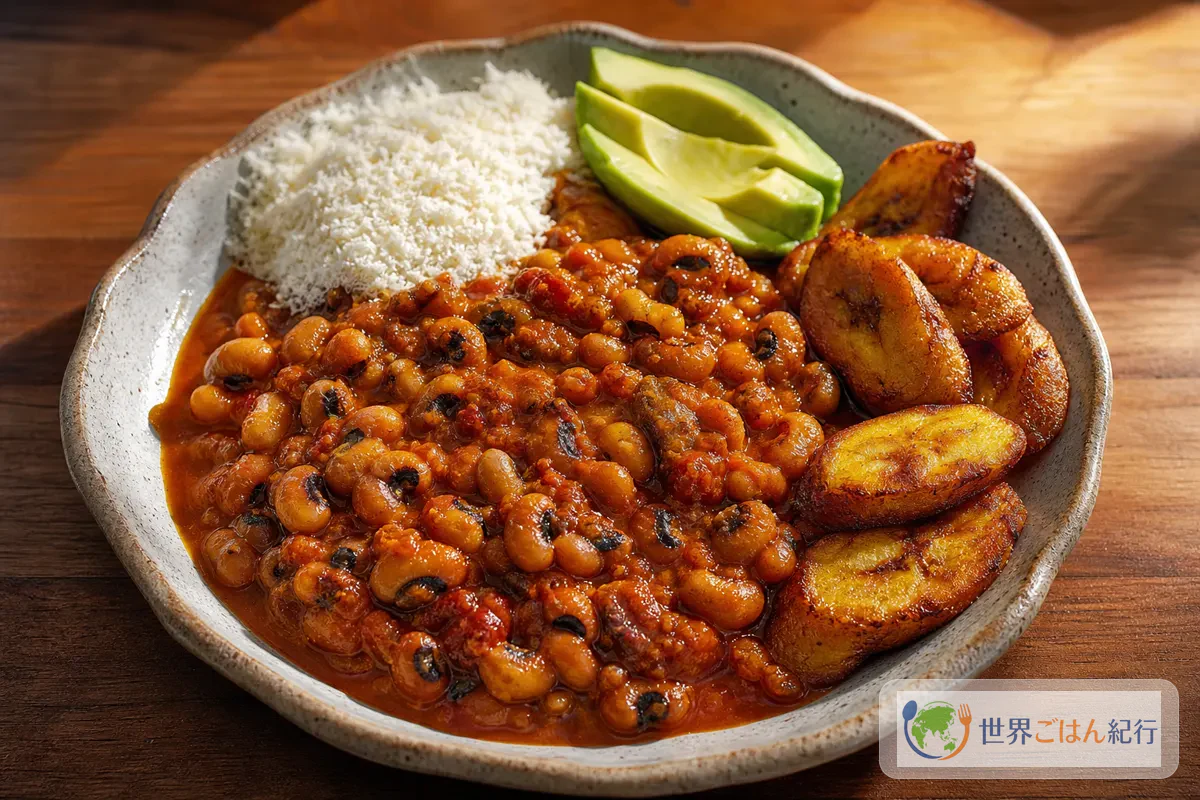
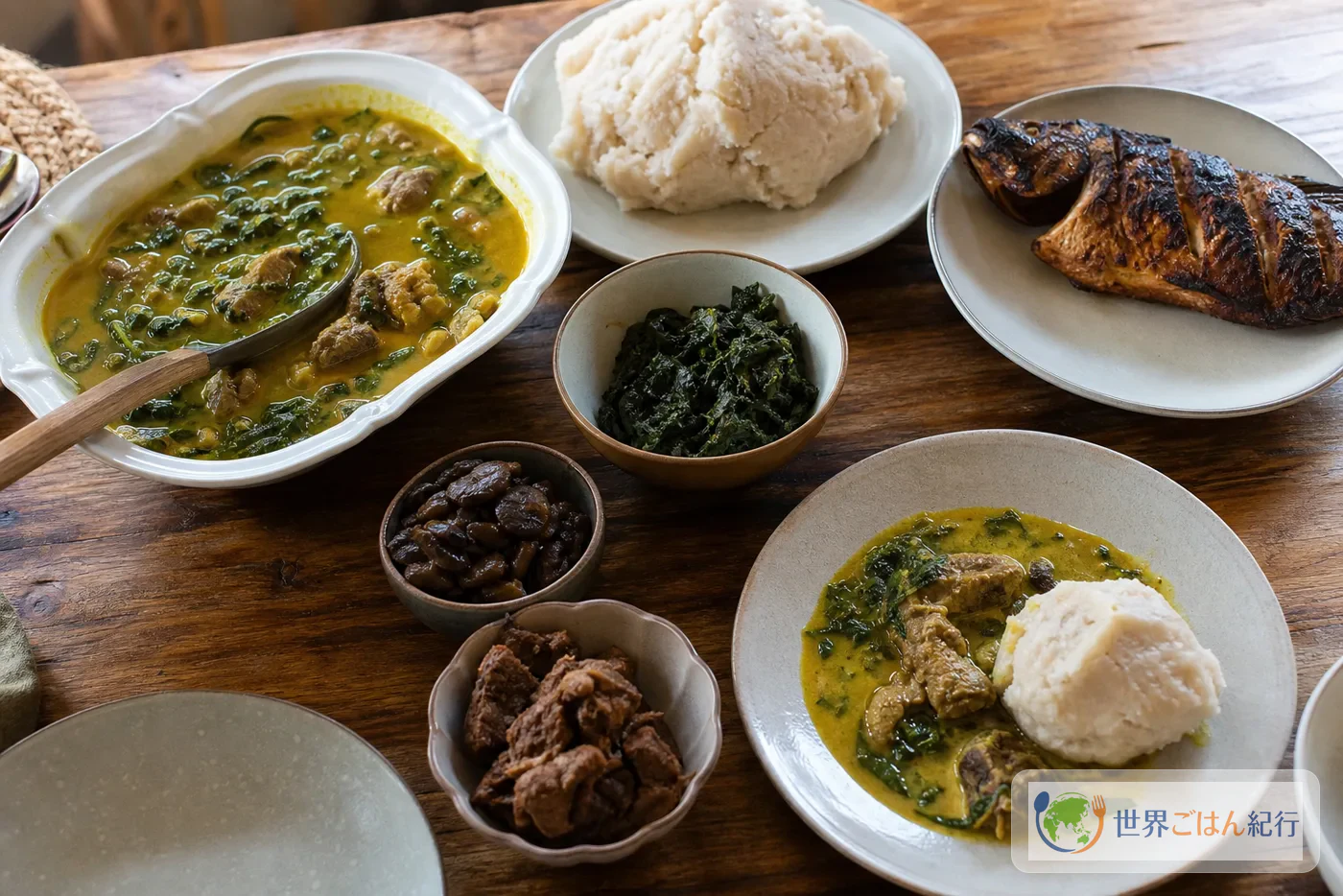
To widen the table, sanga, leafy greens simmered with corn, and ndole, made with bitterleaf and peanuts, show how Cameroon uses palm oil, greens and fish in other ways. Leftover red palm oil also goes to Nigeria's egusi soup and Ghana's red red.
Storage and reheating
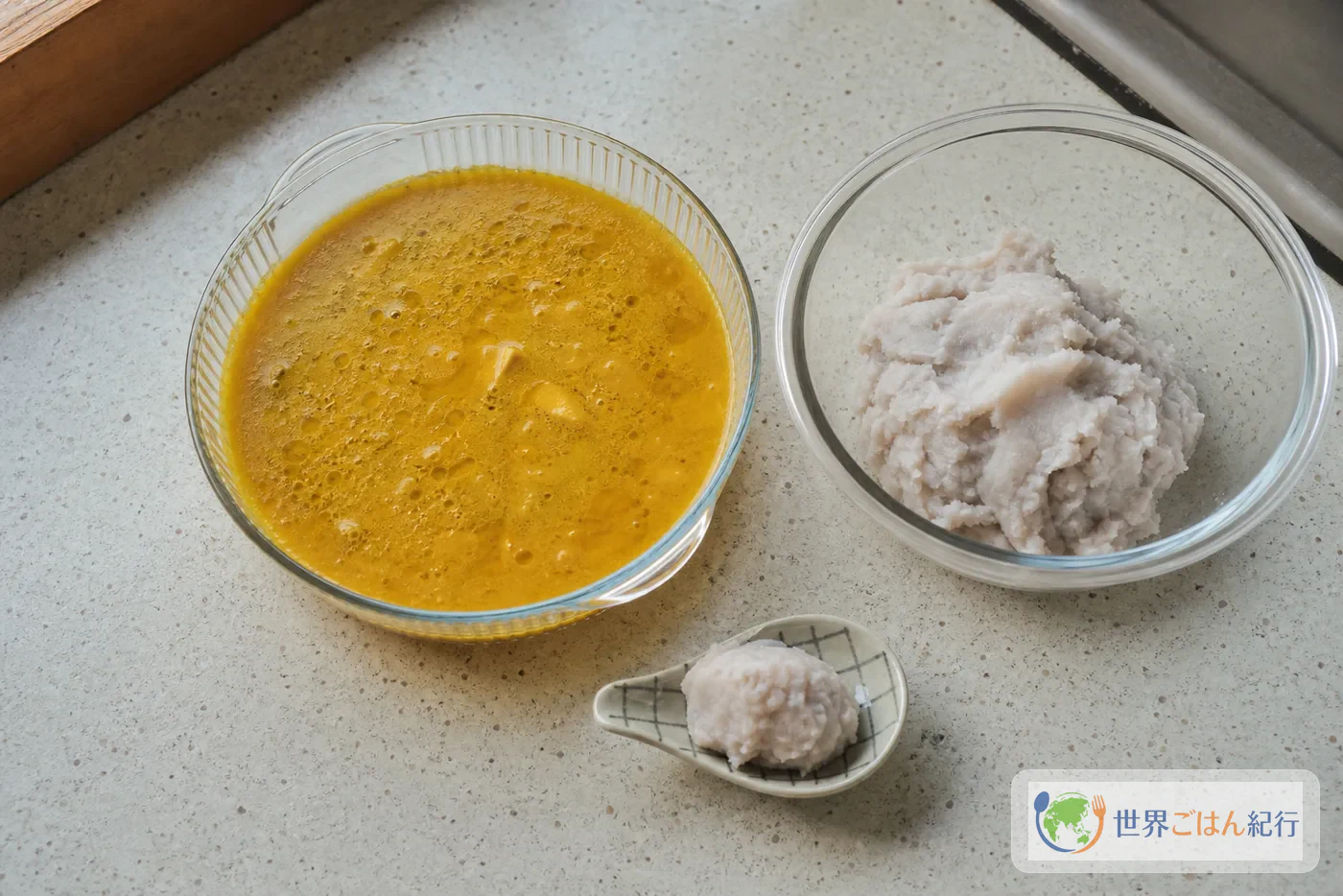
Store the yellow soup and the taro separately. Refrigerated together, the taro absorbs the moisture and turns heavy, and the soup's aroma dulls by the next day.
| What to store | Refrigerator | Freezer | Reheating |
|---|---|---|---|
| Yellow soup | 2 days | 2 weeks | In a small pot over low heat. Do not boil; if it separates, add 2 tbsp warm stock |
| Mashed taro | Until the next day | Not recommended; the texture suffers | Microwave at 600 W for 1 min 30 sec. Add 2 tsp meat stock and work it |
| Beef and fish | 2 days in the soup | 2 weeks | Warm with the soup over low heat |
If you're making it ahead, prepare only the meat stock and beef the day before. Boil and mash the taro on the day, and the white mound keeps its clean stickiness.
Frequently asked questions
Can I use frozen taro instead of fresh?
Yes. Frozen taro releases water easily, so after boiling, discard the water and shake the pot over low heat for just 1 minute. If it's loose when mashed, work it as it is without adding stock.
Can I replace the red palm oil with another oil?
The color and aroma change a lot, and with salad oil alone the yellow aroma of achu soup is hard to get. If you must cut back, use 2.5 tbsp (40 ml) red palm oil and 2 tbsp (30 ml) rice bran oil, but making it with red palm oil alone the first time shows you the baseline flavor.
Can I leave out the fish or dried shrimp?
Yes. If you skip the grilled mackerel and dried shrimp, increase the beef to 12.5 oz (350 g) and add 5 g dried shiitake powder. If you have a shellfish allergy, do not add the dried shrimp.