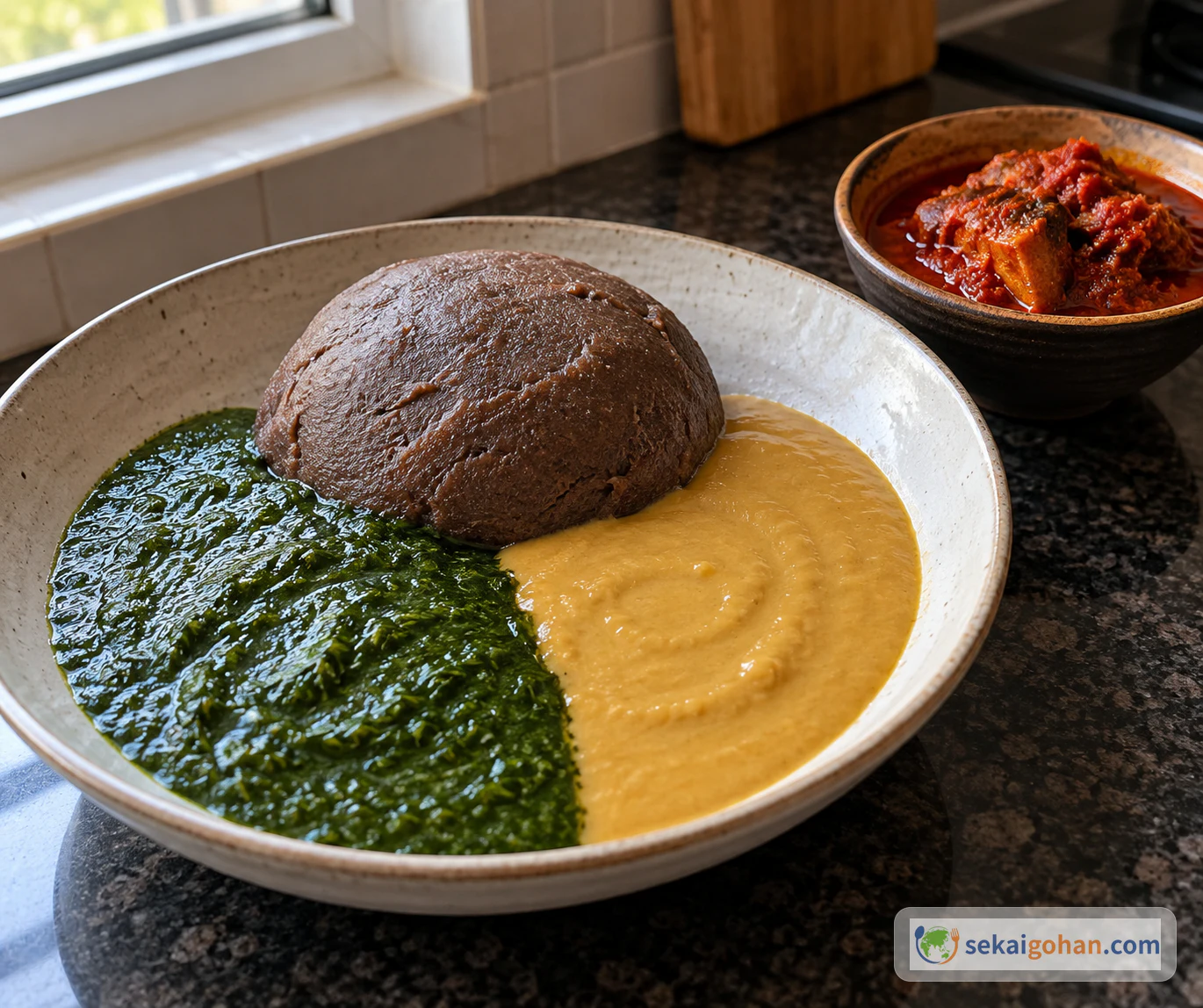
Soak black-eyed peas overnight, and by morning your kitchen becomes a little West African prep room. Rub the beans as you change the water and the thin skins float off, leaving only white beans at the bottom of the bowl. Fry them in oil and you have akara; take them to the steamer and you have ekuru. This white steamed bean pudding is loved in Yorubaland in southwest Nigeria, and it comes to the table under a red fried-pepper sauce such as ata dindin, white and red side by side on the plate.

Ekuru and Moin Moin
Ekuru is a Yoruba home dish, sometimes called plain steamed bean pudding or white moin moin. Moin moin is also steamed black-eyed peas, but its batter is often mixed with oil, chili, onion, fish and egg for color and fillings. Ekuru goes the other way: skinned beans ground to a thick paste, no oil or chili in the batter, steamed white, with the spicy sauce on the outside. The first time you make it, treat it as its own dish rather than a plain version of moin moin.
| Dish | Main cooking | Color and taste of the batter | How it is eaten |
|---|---|---|---|
| Ekuru | Steamed | White. Beans, salt and water at the center | With ata dindin, eko or pap |
| Moin moin | Steamed | Reddish, often with oil or fillings mixed in | Alone, with rice, garri or pap |
| Akara | Fried | Bean batter with onion and chili | Breakfast, with bread, pap, chili sauce |
Next to the red rice of jollof rice, the grilled aroma of suya and the thick seed soup of egusi soup, ekuru is a quiet dish, and that leaves nowhere to hide. Too much water and it won't set; too little air and it turns heavy; rough steaming makes it crack. Three things matter most: peel the beans, make a thick batter, and cook the sauce separately until rich.
Keeping the white pudding and the red sauce apart also makes ekuru easy to share at a family meal. The batter itself isn't hot, so people who like heat take more sauce, while children break the pudding small and take just a little. It's a good bean dish when you want to go easy on oil, too, though not a bland one: cook the sauce down until the oil seeps out, and the clean taste of the beans and the aroma of the sauce come together.
Ingredients (serves 4)

The main ingredient is beans. If you react to soy, peanuts or other legumes, avoid this dish or follow your doctor's instructions. If you use ground dried shrimp or crayfish in the sauce, watch for crustacean allergy. Chili is strong even in a small amount. When eating with children or elderly family, serve the sauce in a separate dish and add heat afterward.
Choosing Ingredients and Equipment for Ekuru
Ekuru needs no meat or dairy. The things worth seeking out are black-eyed peas, which can be hard to find nearby, a food processor that makes a thick bean paste, and a steamer that holds steady heat.
The beans have to be blended with very little water. An ordinary blender can manage, but if you add extra water to get it turning, the batter won't set in the steamer; a small food processor handles thick pastes better and earns its place for akara and aromatic pastes too. For the steaming, a two-tier steamer lets you line up leaf packets and heatproof cups side by side.
Banana leaves and red palm oil bring ekuru closer to the local version, but neither is essential the first time. As long as you keep a thick white batter and a separately reduced sauce, the substitutes below work well in a home kitchen.
| Where you hesitate | What matters | Realistic choice elsewhere |
|---|---|---|
| No black-eyed peas | Skinned beans for a white, light batter | Rather than white kidney beans, look for black-eyed peas online or at a specialty shop |
| No banana leaves | Setting plump with steam | Brush heatproof cups thinly with oil and steam |
| The chili is too strong | Adjusting heat on the sauce side | Keep it out of the batter and put the sauce in a separate dish |
| No red palm oil | Cooking the sauce down well | Use rice bran oil and make up color and aroma with the peppers and the reduction |
| No eko or pap | A grain to go with the white beans | Soft rice, cornstarch porridge, thin polenta |
Method
The failures of ekuru gather around three things: too much water, too little air, and rough steaming. Soak the beans the night before, and on the day peel them and steam all at once for an easy schedule. Make the sauce while it steams.
Common Ekuru Problems and Fixes

Watery after steaming
Either the batter had too much water or the steaming was too short. Start with ½ cup (100 ml) of water when blending, adding 1 tablespoon at a time only if the blade won't turn. If the batter clings heavily to the skewer when you test it, give it 5 more minutes at medium heat. Keep an eye on the water level, too: if it runs low, the heat weakens and the center is slow to set.
The cross-section is dense and heavy
Too many skins left on, too little beating, or beans that weren't soaked long enough. The skins don't have to be perfect, but remove more than 80%. After making the paste, add the salt and beat hard for about 3 minutes, until it turns whitish with fine bubbles.
The surface cracks
The cups were overfilled or the steam was too strong. Fill them only 80% full, leaving about 1.5 cm of space at the top, and turn the heat down to medium once steam rises. Cracked ekuru is still good to eat, but it dries out more easily, so serve it with a bit more sauce.
The sauce is watery
The moisture from the tomato and peppers hasn't cooked off. Cook it down 12 to 14 minutes over medium-low heat, until a wooden spoon dragged across the bottom leaves a track that holds for a moment. When red oil seeps out at the edge, the sauce has enough depth to stand up to the white beans.
Serving and Storing Ekuru
Eat ekuru hot, with the red sauce on top. The white batter tastes thin on its own, so make enough sauce that a little clings to every mouthful. Eko or pap brings it closest to the local table, and soft rice or thin polenta also takes the hot sauce well.
For a fuller meal, serve a small portion of ekuru as a starter with jollof rice as the staple; the red rice and white beans make a nice contrast. For a light lunch, a sour salad-type dish such as abacha on the side cuts the richness of the beans and oil.

Store the ekuru and the sauce separately. With the sauce on, the surface turns damp in the refrigerator and the clean aroma of the batter fades. The next day, re-steam the ekuru, warm the sauce on its own and then bring them together.
| State | Storage guide | Reheating |
|---|---|---|
| Freshly steamed | Eat on the spot | Rest 3 minutes and serve with the sauce |
| Refrigerated | 2 days | In a steamer over medium heat for 5 to 7 minutes. In a microwave, 600 W for 40 to 60 seconds |
| Frozen | 2 weeks | Half-thaw in the refrigerator and re-steam over medium heat for 8 to 10 minutes |
| Sauce | 3 days refrigerated | Over low heat in a small pot for 3 minutes. Stop when it simmers |
FAQ
Q1. Can I make it without removing all the skins of the black-eyed peas?
Yes, but with many skins left it turns grayish and heavy, so aim for 80% or more. Rubbing the beans in water and rinsing off the floating skins several times speeds things up.
Q2. Can I make it with canned beans?
I don't recommend it. Canned beans are already cooked and watery, which makes a thick batter hard to get. Ekuru is far more reliable when you soak dried black-eyed peas, peel them and then grind them.
Q3. Can I eat it without the sauce?
You can, but plain it's just a salted steamed bean pudding and quite bland. Even if you want less chili, serve a sauce of peppers, onion and oil cooked down.
Q4. What can I use leftover black-eyed peas for?
In Nigeria, akara; in Ghana, red red and waakye. Once you're used to skinning the beans, frying, steaming and stewing them all come easily, and one bag on the shelf opens the way into West African cooking.