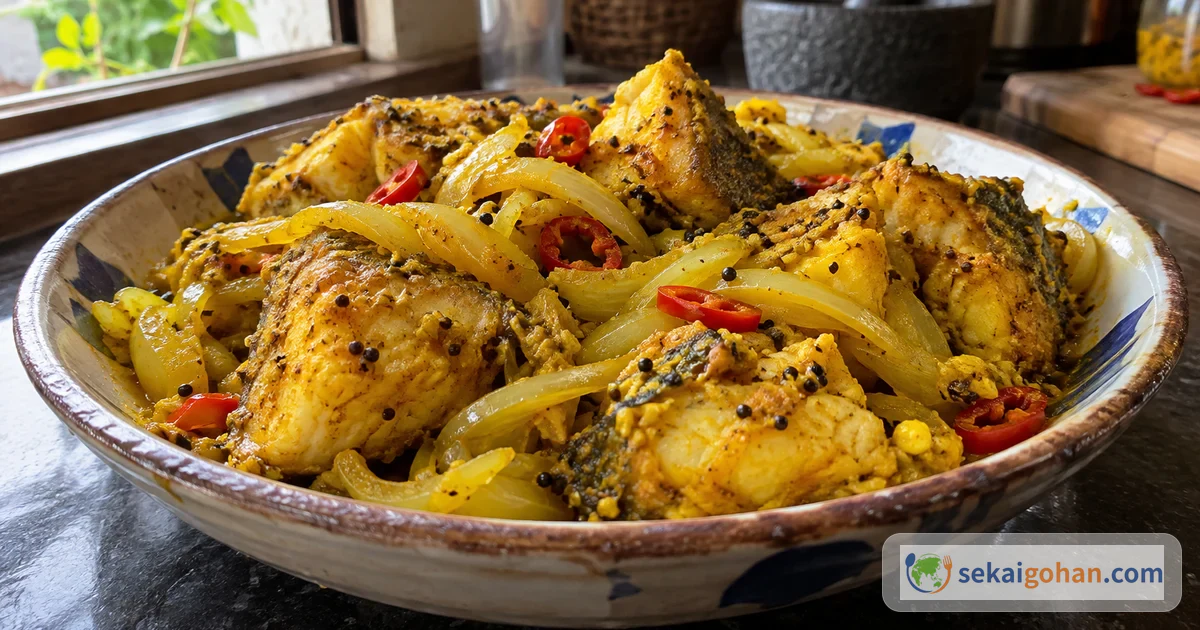
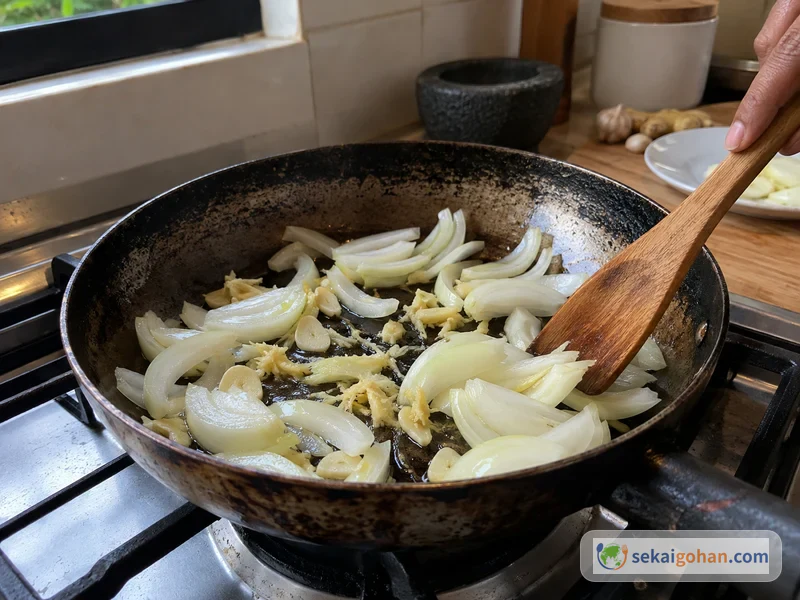
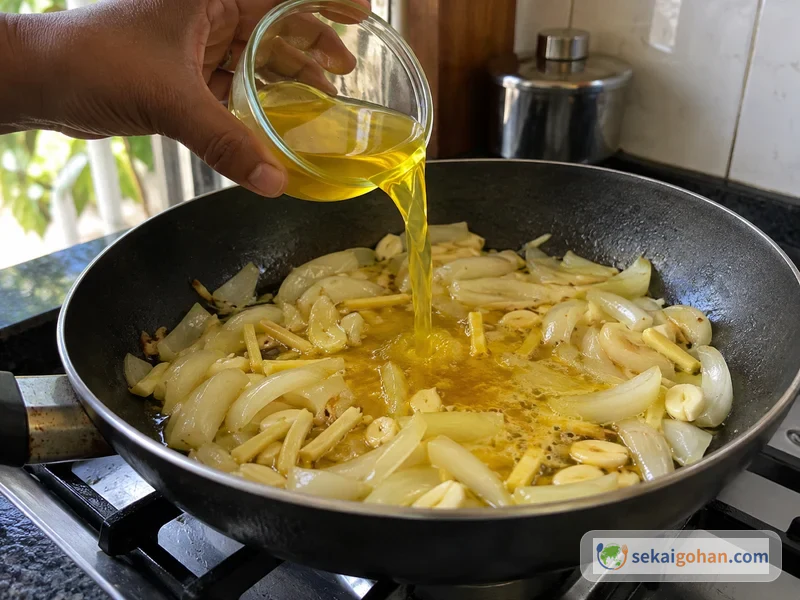
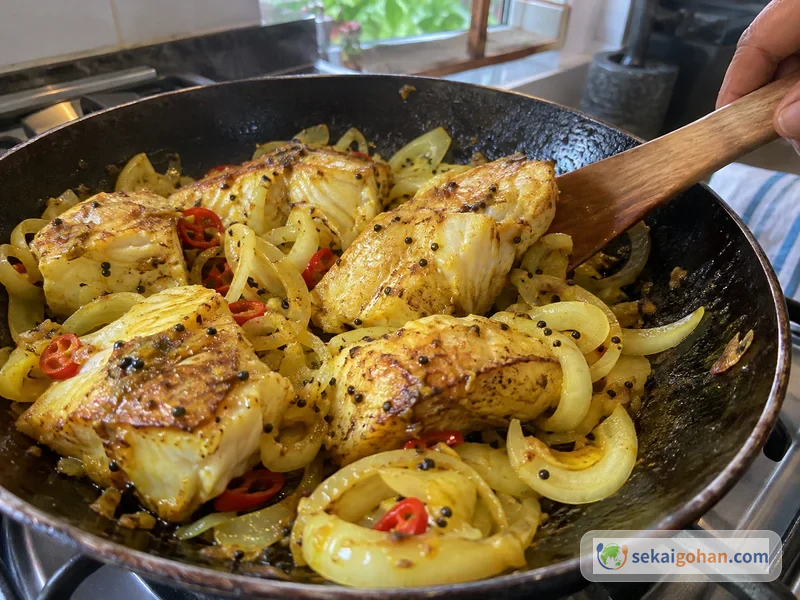
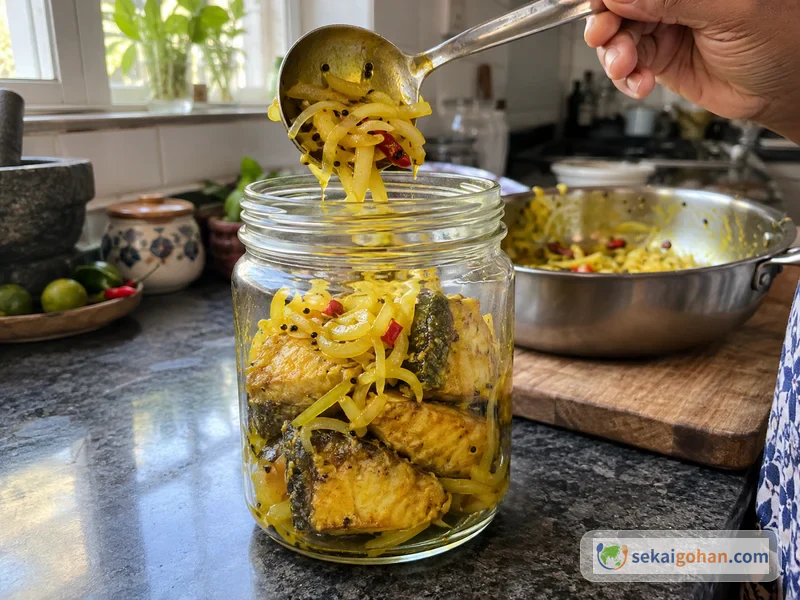
In the Central Market of Port Louis, the Mauritian capital, the stalls are piled high with colorful vegetables, fruit, and bags of spices from early morning, and past them the fish counters sell the day's catch. At home, that fish is fried until golden, then pickled in vinegar turned bright yellow with turmeric and dotted with popping mustard seeds. Open the jar a few days later and the sourness of the vinegar and the scent of the spices rise up to meet you. Vindaye is this spiced vinegar pickle, a recipe passed down in Mauritian homes, sour and gently spicy, with the warm, earthy aroma of turmeric running through it.
Vindaye Poisson in Mauritian Cooking

Mauritius is an island nation in the Indian Ocean, east of the African continent, and its cooking is a mix of Creole, French, Indian, and Chinese influences. You can see that blend everywhere on the island: in the Central Market and street stalls of Port Louis, in the brightly colored Tamil temples, in the traditional dance sega.
Vindaye is one of the island's home flavors, alongside the bean-filled flatbread dholl puri and the tomato stew rougaille. Its turmeric, mustard seeds, and vinegar are familiar from Indian kitchens, but here they are used to preserve the fish firmly in vinegar. Many cultures fit into one jar.
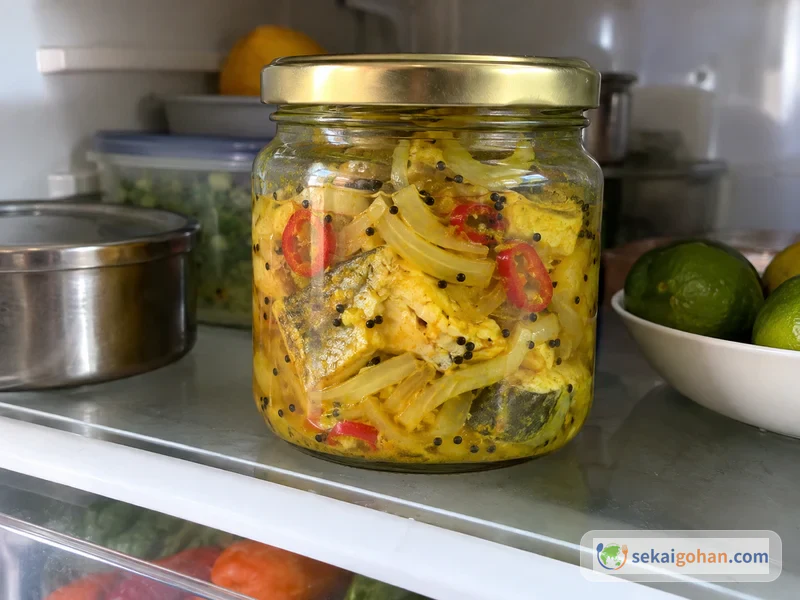
There are two ways to make it. This recipe is the pickled version: pan-fried fish is tossed in spiced vinegar, packed into a jar, and left in the refrigerator for a few days before eating, so the turmeric and vinegar have time to soak into the fish. The other version is simmered in a pan with the spices, vinegar, and sugar and eaten the same day. Make the pickle ahead, and the simmered one when you want vindaye right away.
Ingredients (serves 4)
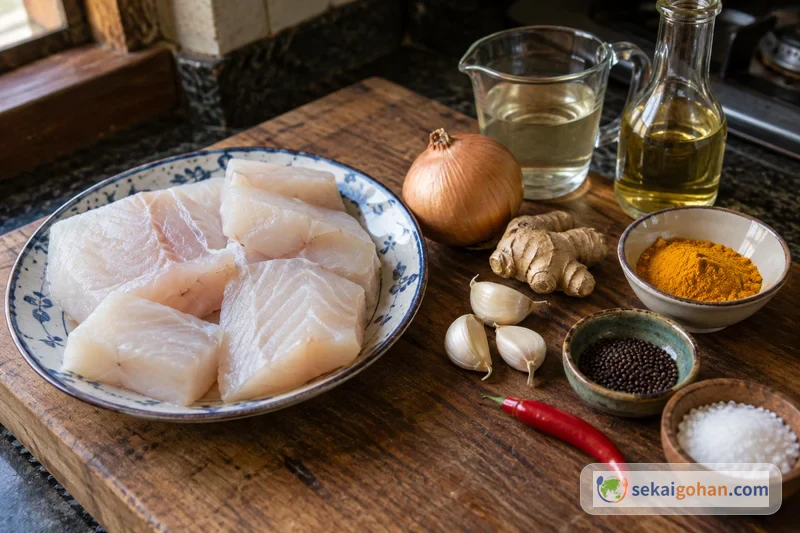
The amounts are halved from 4–6 servings so it is easy to make at home. Tablespoons here are Australian (1 tbsp = 20 ml), so the ginger is given in teaspoons.
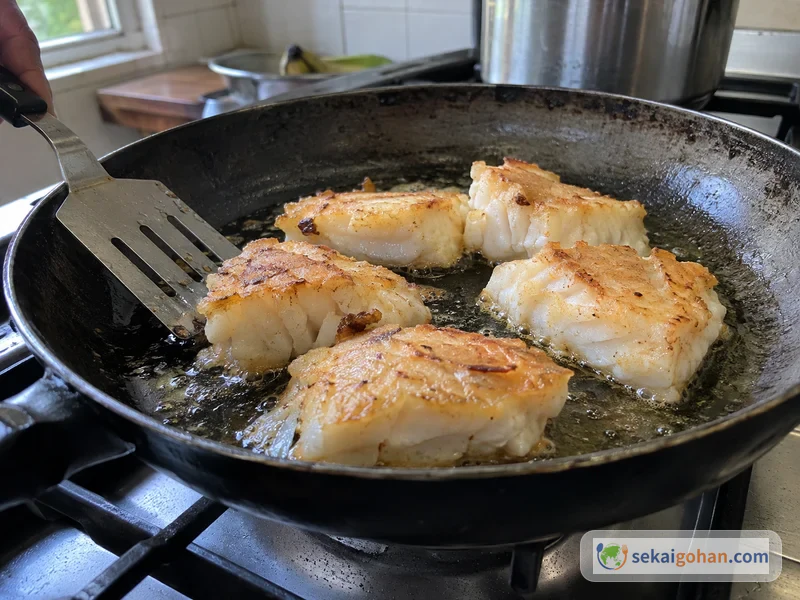
Choose a thick white fish that does not break down easily when pan-fried. With thin fillets the flesh splits when tossed in vinegar. Black mustard seeds give a strong mustard-like aroma. Lightly crushing them in a mortar helps the aroma move into the vinegar.
Before pan-frying the fish, wipe the surface dry thoroughly with paper towel and sprinkle lightly with salt. If moisture remains, the oil splatters and the surface does not crisp.
Choosing Fish and Spices for Vindaye
Use a thick white fish fillet that holds together when heated. Cod, swordfish, and Spanish mackerel are all easy to find. The heat is up to you, set by how much red chile you add. Leave the chile out and the pickle tastes of turmeric, mustard seeds, and the sourness of the vinegar.
Vindaye is a pickle kept in the refrigerator. Boil the jar in hot water to clean it, and use clean chopsticks or a spoon when taking some out. Keep it in the refrigerator for up to 2 weeks. If the smell or appearance seems off, do not eat it. People with a fish allergy should not eat it.
If you cook the fish through firmly at the pan-frying stage, the flesh is less likely to break when tossing and packing into the jar. A pale golden color is enough. If browned too dark, the surface turns hard and the vinegar does not soak in easily.
Lightly toasting the mustard seeds in a dry frying pan before crushing adds toastiness. They pop and fly, so toast them over low heat with the lid on.
Serving Vindaye with White Rice
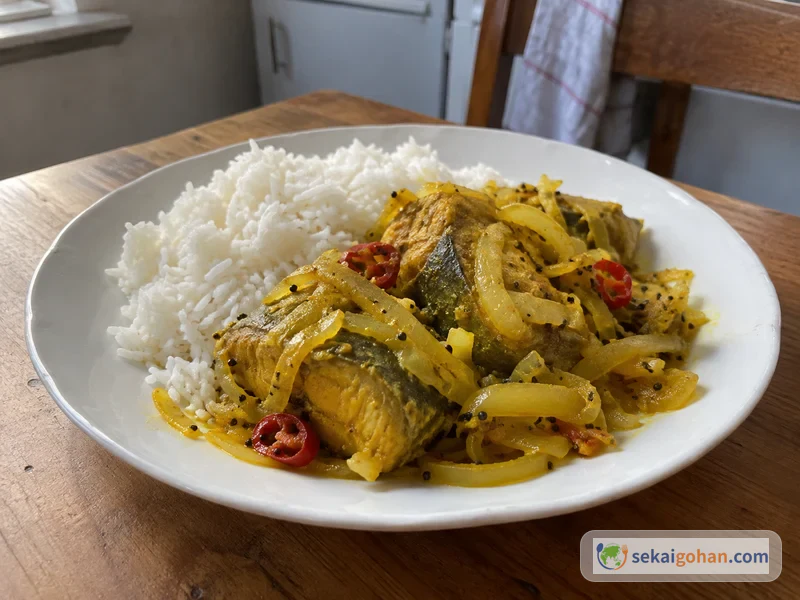
Take the rested vindaye out of the jar and let it sit for a little while at room temperature before eating; that's when the aroma really comes through. Serve it with steamed rice for an easy lunch or dinner. The simmered version is good with rice too, scattered with chopped cilantro. The sourness of the vinegar goes well with rice, and a single fillet will carry a surprising amount of it.
Vindaye is low in fat and rich in protein and omega-3 fatty acids.
For more of the Mauritian table, set it beside the island's bean-filled street flatbread, dholl puri. And for another Indian Ocean island dish, try the Seychelles octopus curry kari koko zourit.
Frequently Asked Questions
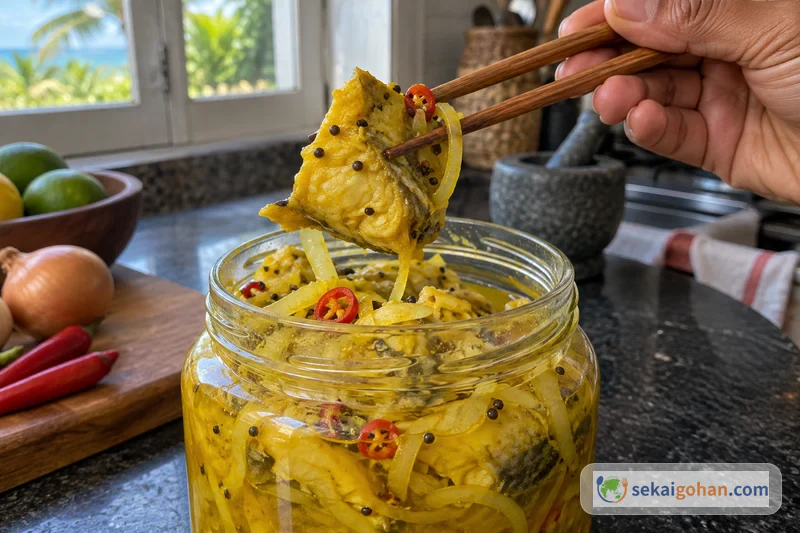
Can I eat it right after making it?
The pickle needs a few days for the flavors to blend. To eat it right away, make the simmered version: pop the mustard seeds in oil, sauté the onion, garlic, ginger, and turmeric, then add the fish, vinegar, sugar, and salt, cover, and simmer for 10–15 minutes until the fish is cooked through.
May I reduce the vinegar?
The vinegar pickles and preserves the fish as well as seasoning it, so using less lowers its keeping quality. If the acidity bothers you, keep the amount and instead let the fish stand a little at room temperature after taking it out of the jar.