
In Seychelles the fishermen are back from the sea before dawn, and by morning the market is full of the day's catch. Cinnamon trees scent the gardens, and the smell of seafood runs straight from the harbor into the kitchen.

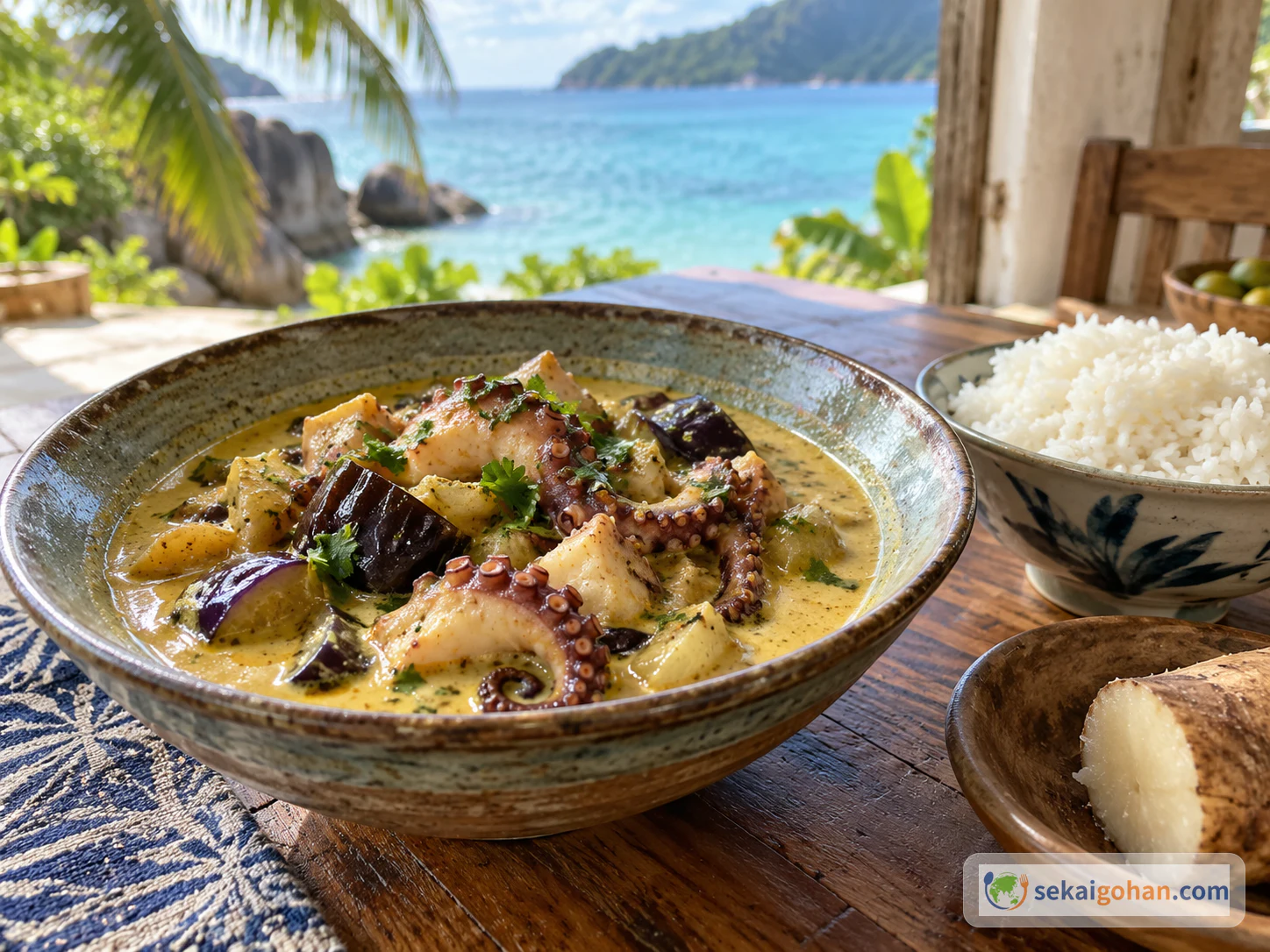
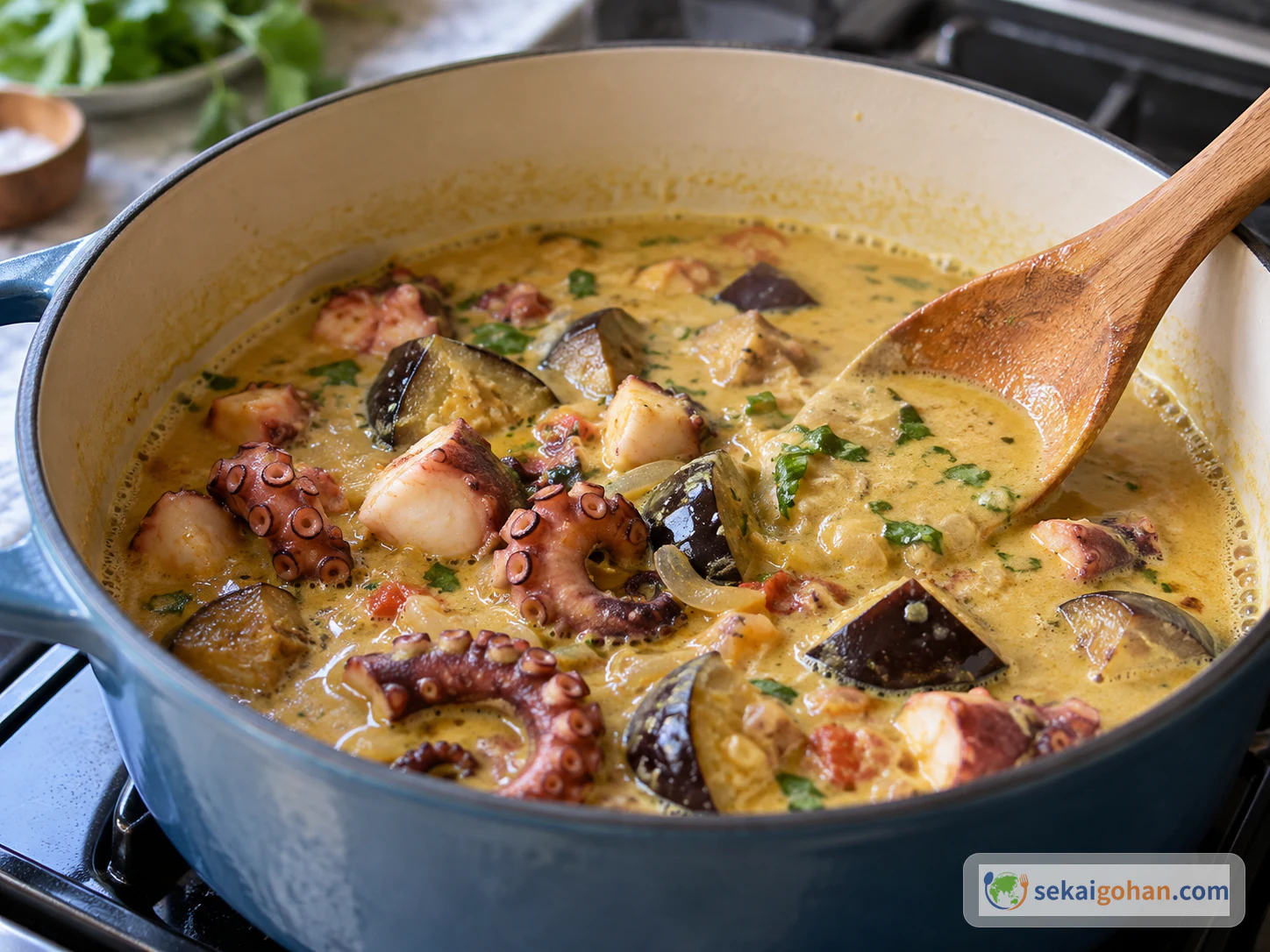
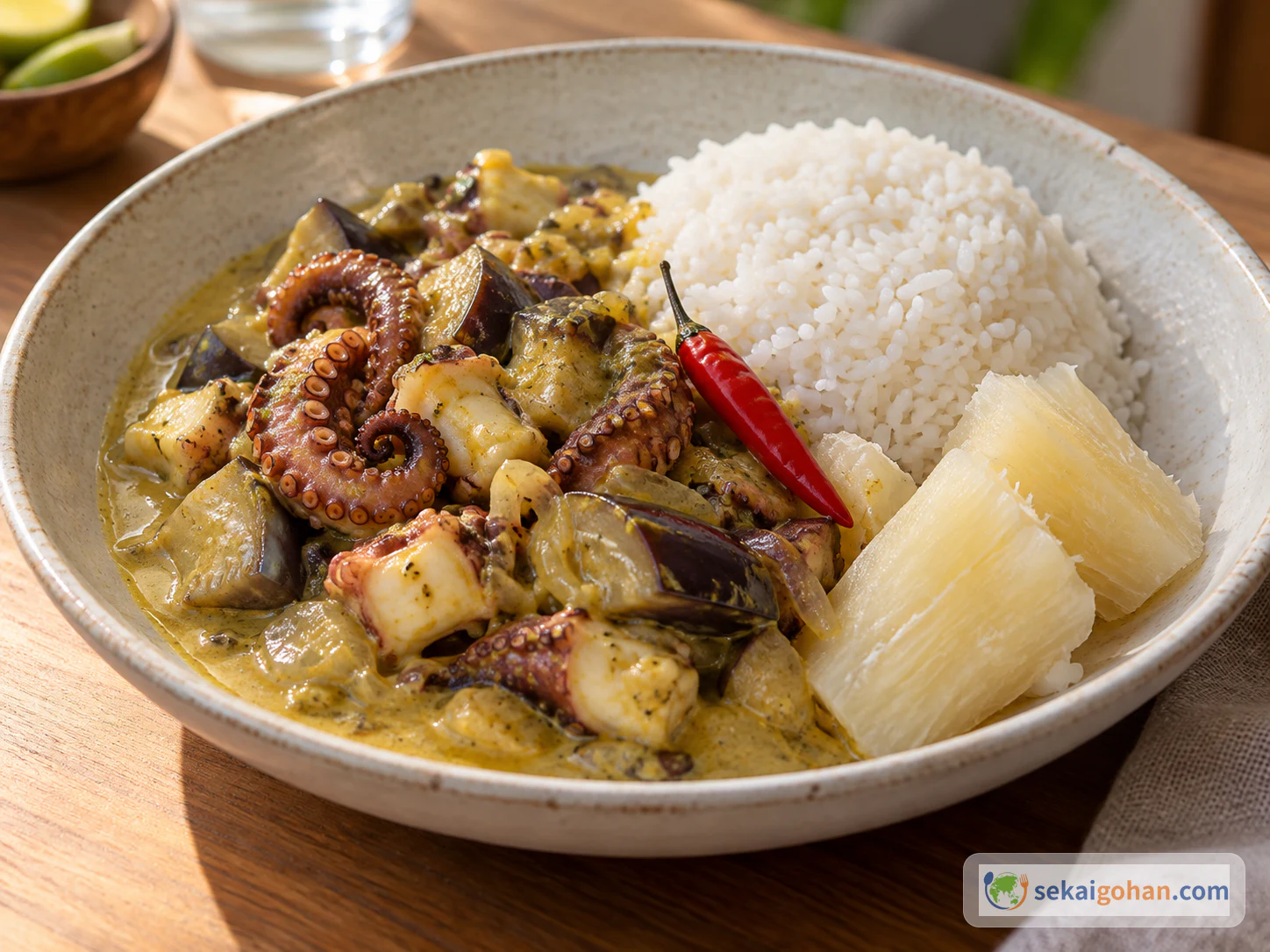
Kari koko zourit is octopus and eggplant stewed in a white sauce of thick unsweetened coconut milk, seasoned with masala or curry powder, turmeric and cinnamon. Ladle it over freshly cooked rice and the rice takes up everything: the savoriness from the octopus and the sauce too. You'll also find it as Octopus Coconut Curry - Kari Zourit. Only the spelling is different, so search under both names.
Kari koko zourit on the Seychellois table
Seafood and rice
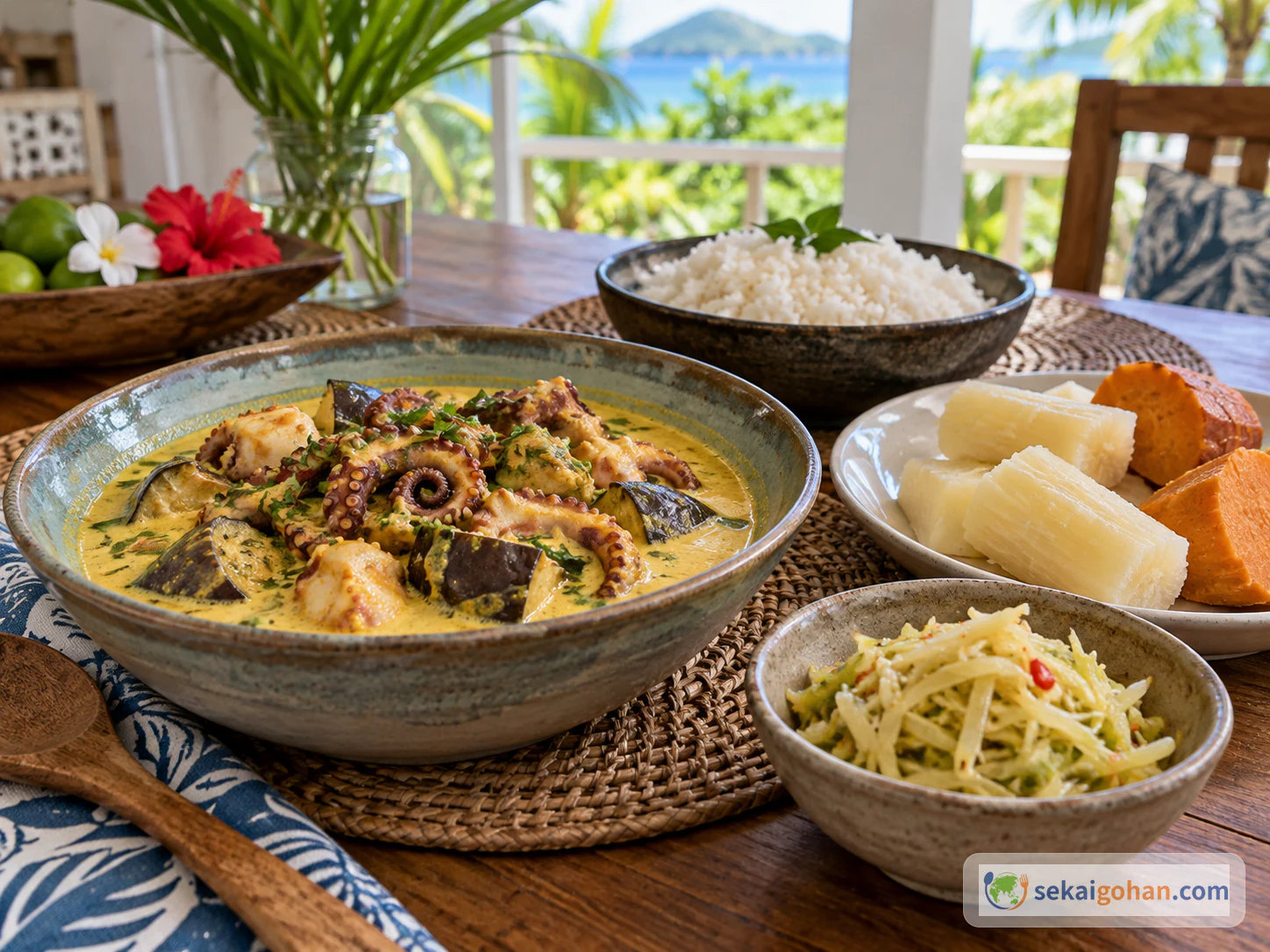
Seafood is a big part of cooking in Seychelles, an island nation in the Indian Ocean, and it is often eaten with rice. Fish gets steamed, grilled, salted, baked in the oven or wrapped in banana leaf. This curry is different from a cold salad or a piece of grilled fish. It's a warm main that sits at the center of the table, a main where the rice soaks up the sauce, usually with breadfruit, sweet potato or something similar on the side.
A Creole pot
Seychellois Creole cooking draws on five influences: French, African, Indian, Malagasy and Chinese. Over generations, their spices, their ways of eating rice, and techniques like frying, steaming and grilling have layered together. You can see it in this pot, which holds cinnamon, garlic, onion, chili and coconut, while rice and root vegetables fill the table around it.

Each household and each shop has its own version. Some add eggplant or chili and some don't. The root vegetable on the side changes, and so does whether chutney comes with it.
Octopus from the island's sea
Octopus is caught on a small, subsistence scale, by skin divers and by fishermen working on foot. The catch was about 11 tonnes in 2016. Octopus sells for a high price in the tourist market. At the fresh fish markets on Mahé, Praslin and La Digue it's sold to the public and also goes to hotels and restaurants. Supermarkets and processors' retail outlets sell it both fresh and frozen.
Similar island dishes
Other island dishes make this one easier to place. Fiji's kokoda is a cold dish of fish with sourness and coconut. Kari koko zourit is the opposite: the octopus is pre-boiled for a long time and finished in a warm sauce. Samoa's palusami also uses coconut, but it's wrapped in leaves and heated, so the texture and method are quite different. Madagascar's romazava, a stew of leafy greens and meat, uses different ingredients but shows the same Indian Ocean habit of building a meal around rice and stew.
Ingredients (serves 4)
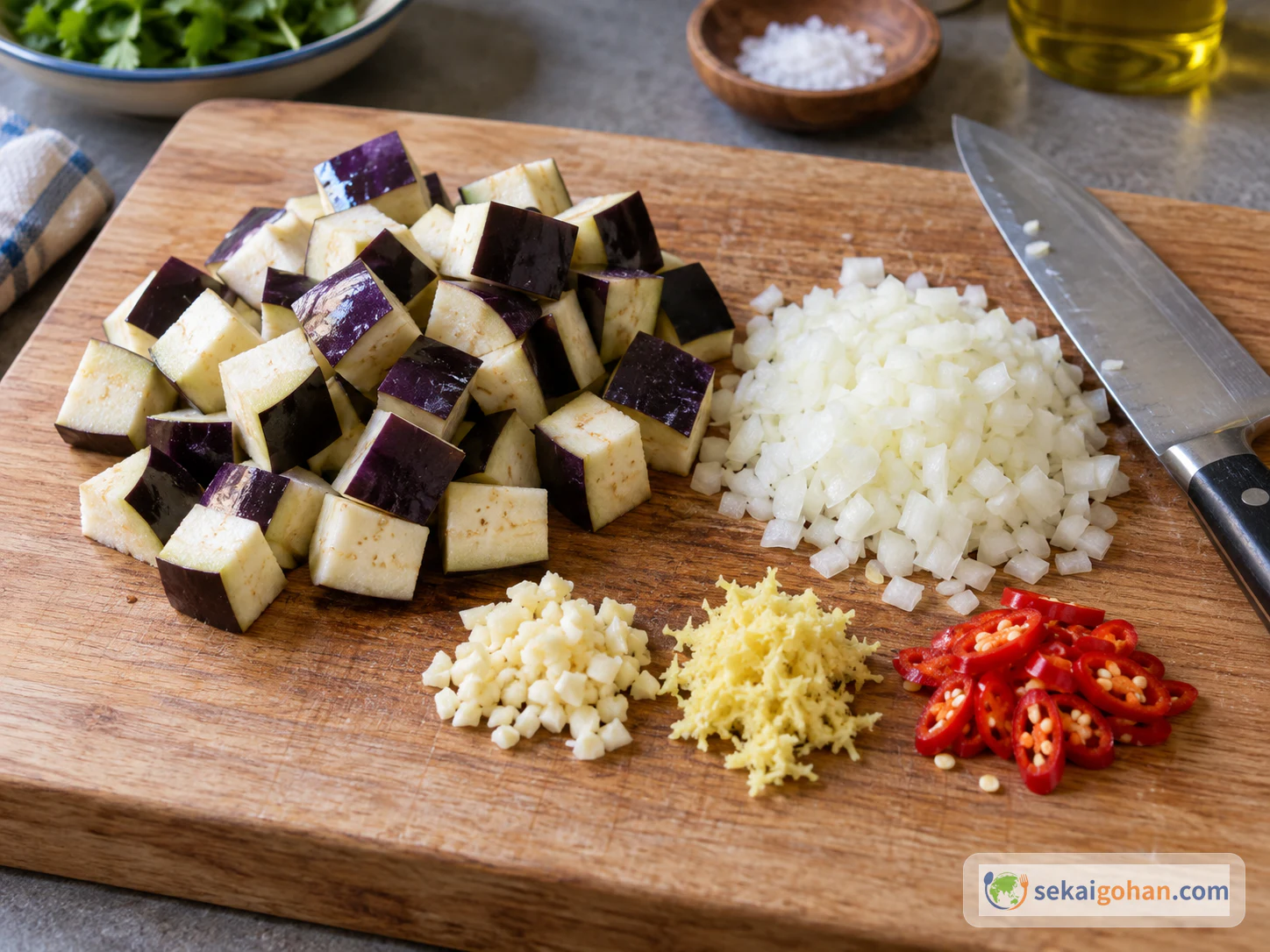
Shopping is easier if you separate specialty ingredients from ones you can get nearby. Octopus can be fresh or frozen as long as it is cleaned. Thaw frozen octopus completely and wipe off the surface moisture before weighing. You need 2.25 lb (1 kg) octopus, 2 cups (500 ml) coconut milk, 1 eggplant, 1 onion, 4 cloves garlic, 4 teaspoons masala, 1 teaspoon turmeric, 10 cinnamon leaves or 1 teaspoon ground cinnamon, chili, salt and oil. Here the onion is about 3.5 oz (100 g), ginger 15 g, oil 4 tbsp and salt 5 g.
For the coconut milk, choose unsweetened, thick coconut milk. Whichever cinnamon is easier to get is fine. You will be choosing cinnamon leaf or powder.
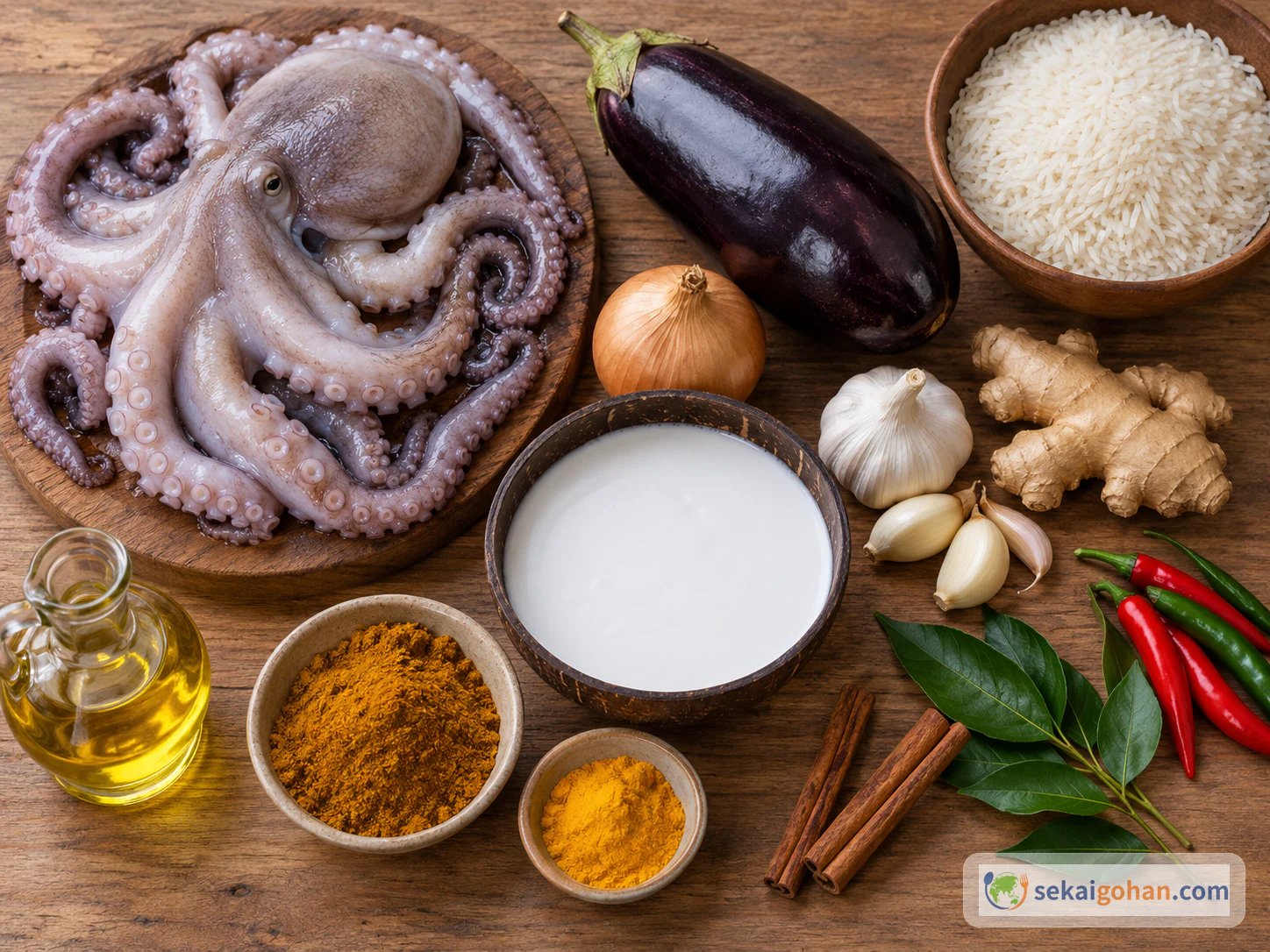
Shop in this order: first get 2.25 lb (1 kg) of cleaned octopus at the seafood counter, then look for unsweetened, thick coconut milk. Search the ingredient table by generic names such as "coconut milk," "turmeric" and "cinnamon." Oil, eggplant, onion, garlic, ginger and rice are all available nearby, so you don't need a particular product. Online ordering lets you choose the unsweetened, thick type without a trip to an import grocery. If you already have a can that meets these conditions, you don't need to buy more.
Keep seafood at a low temperature. Thaw frozen product in the refrigerator, and wash utensils used for raw fish separately before using them for other food. When using raw octopus, choose it by the label and storage condition at the seafood counter, and don't leave it at room temperature. This curry is cooked through to the center, but citrus and spices do not replace hygiene. Pregnant women, children, older adults and people with weakened immune function should follow hygiene rules at home and get medical advice first.
Choosing octopus and substitutes
If you don't have an island fish market nearby, a seafood counter works fine. Buy cleaned octopus, fresh or frozen. Thaw frozen octopus slowly in the refrigerator in its bag, and wipe off the moisture before you use it.
You can substitute ingredients as long as the dish keeps its character. Cinnamon leaf can be replaced with 1 tsp ground cinnamon, but the powder's aroma is strong and lasts, so don't add more at the start. If you have no Seychellois-style masala, use unsalted curry powder and adjust the salt at the end. Instead of breadfruit, serve sweet potato, cassava, potato or the like on a separate plate, not stirred into the curry. Fish or chicken in place of the octopus makes a different dish, and the octopus pre-boil time won't apply.
Method
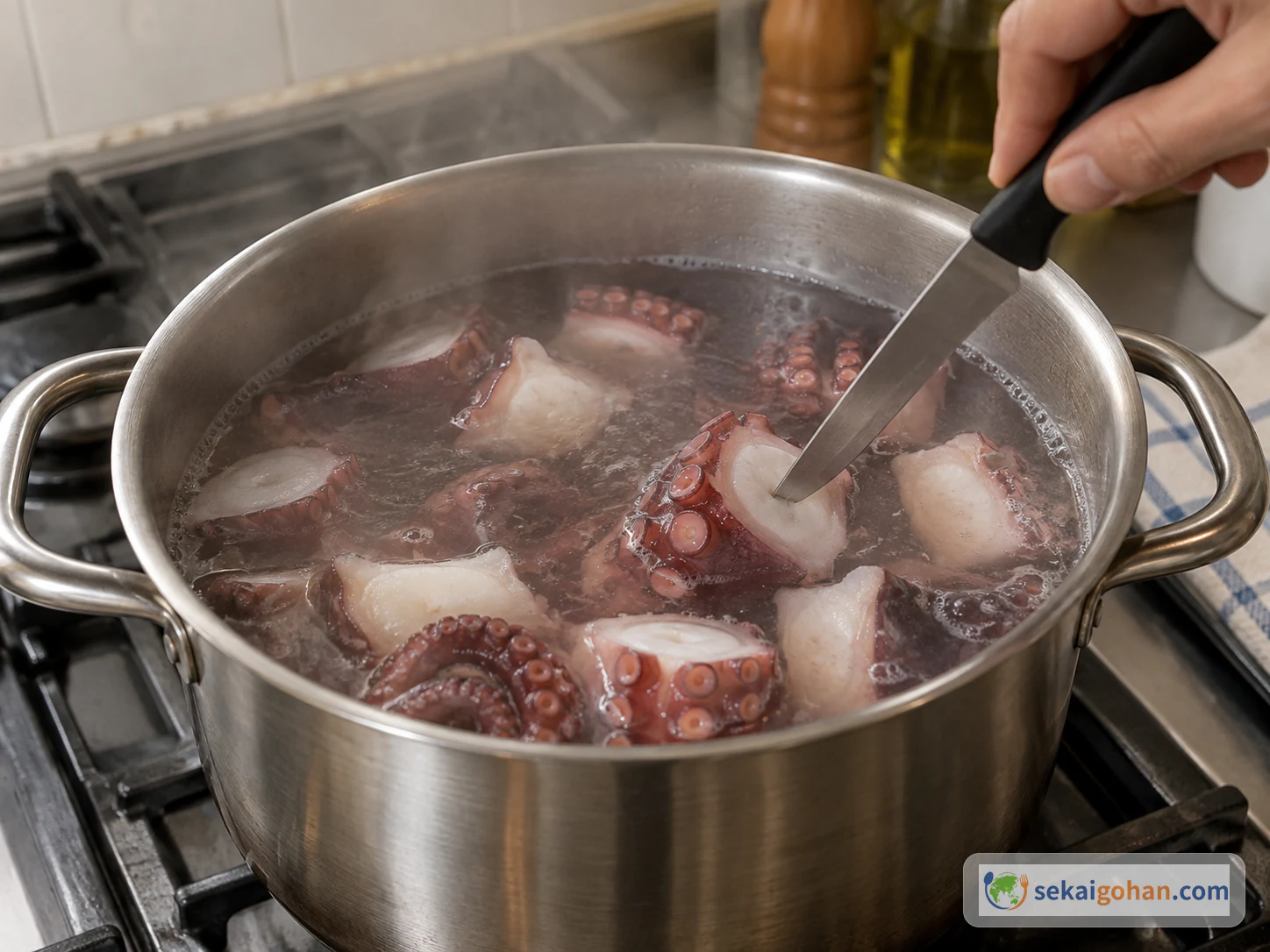
Allow 90 minutes for the pre-boil and 15 minutes for the curry. Watch the octopus and the sauce more than the timer. After the pre-boil, the octopus should let a knife through without resistance. At the curry stage, the coconut milk should not boil hard and the eggplant should not fall apart. That is the standard for done. Keep low heat that keeps a simmer. The octopus is ready when the knife goes through it, and the sauce is ready when it leaves a thin coat on a spoon.
There are three places you can go back to partway. If the octopus is tough, don't force it by reducing the curry pot; go back to the pre-boil stage, add hot water and extend 15 to 20 minutes over low heat. If the spices scorched, don't scrape the bottom; move only the unscorched part into another pot and add coconut milk. If the sauce separated, turn off the heat, add the pre-boil liquid or water 1 tbsp at a time and stir gently, and don't bring it back to a boil. If the eggplant seems about to fall apart, stop any further heating and plate once the tenderness of the octopus and the thickness of the sauce are in order.
Keeping the octopus tender and the sauce smooth
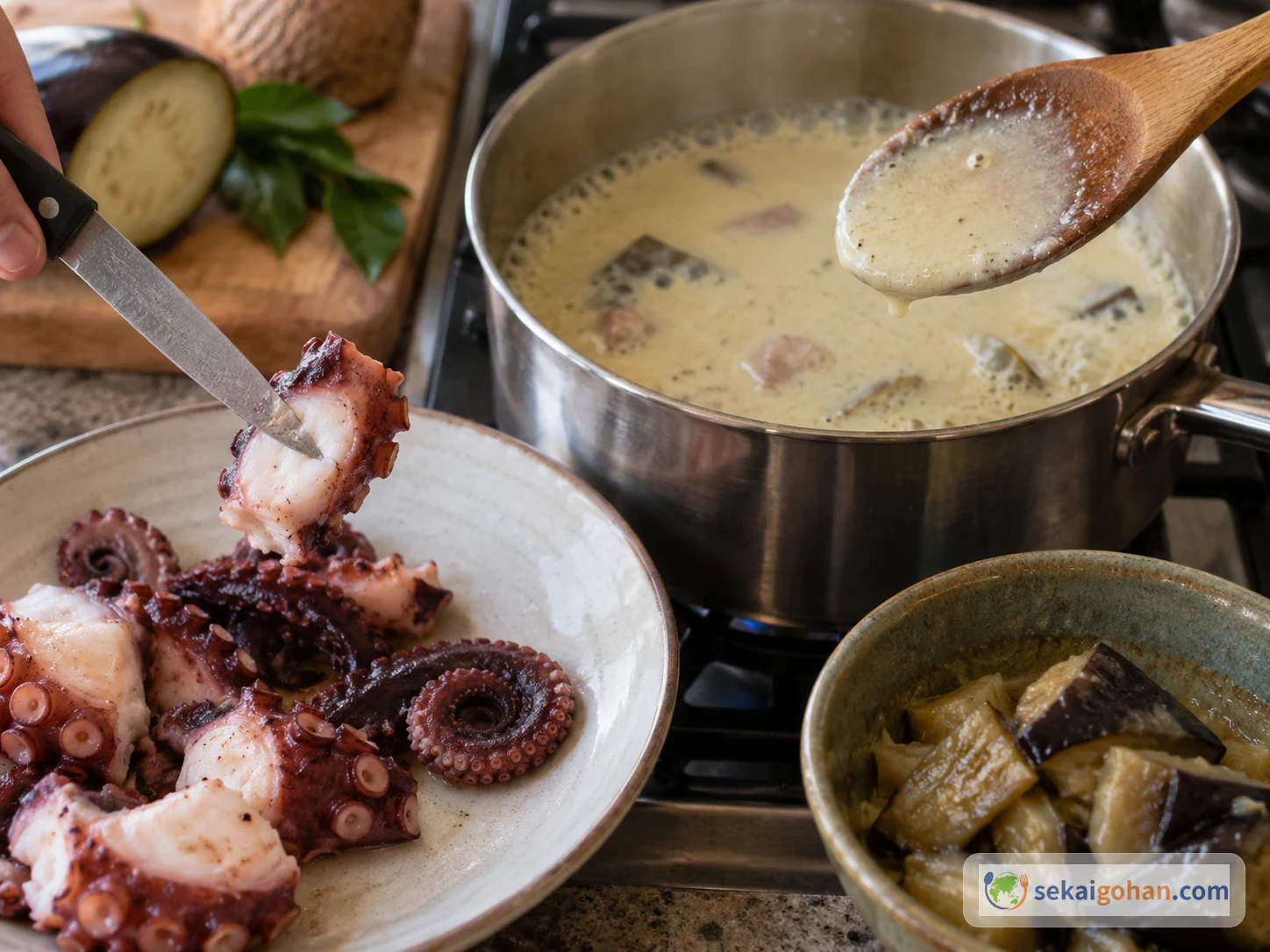
Two things matter most. Pre-boil the octopus until a knife goes through with no resistance, and bring the sauce together without boiling the coconut milk hard. Watch the pot, not the clock. Stop the octopus by how the knife goes in, not by time, and judge the eggplant the same way, by how far it has softened.
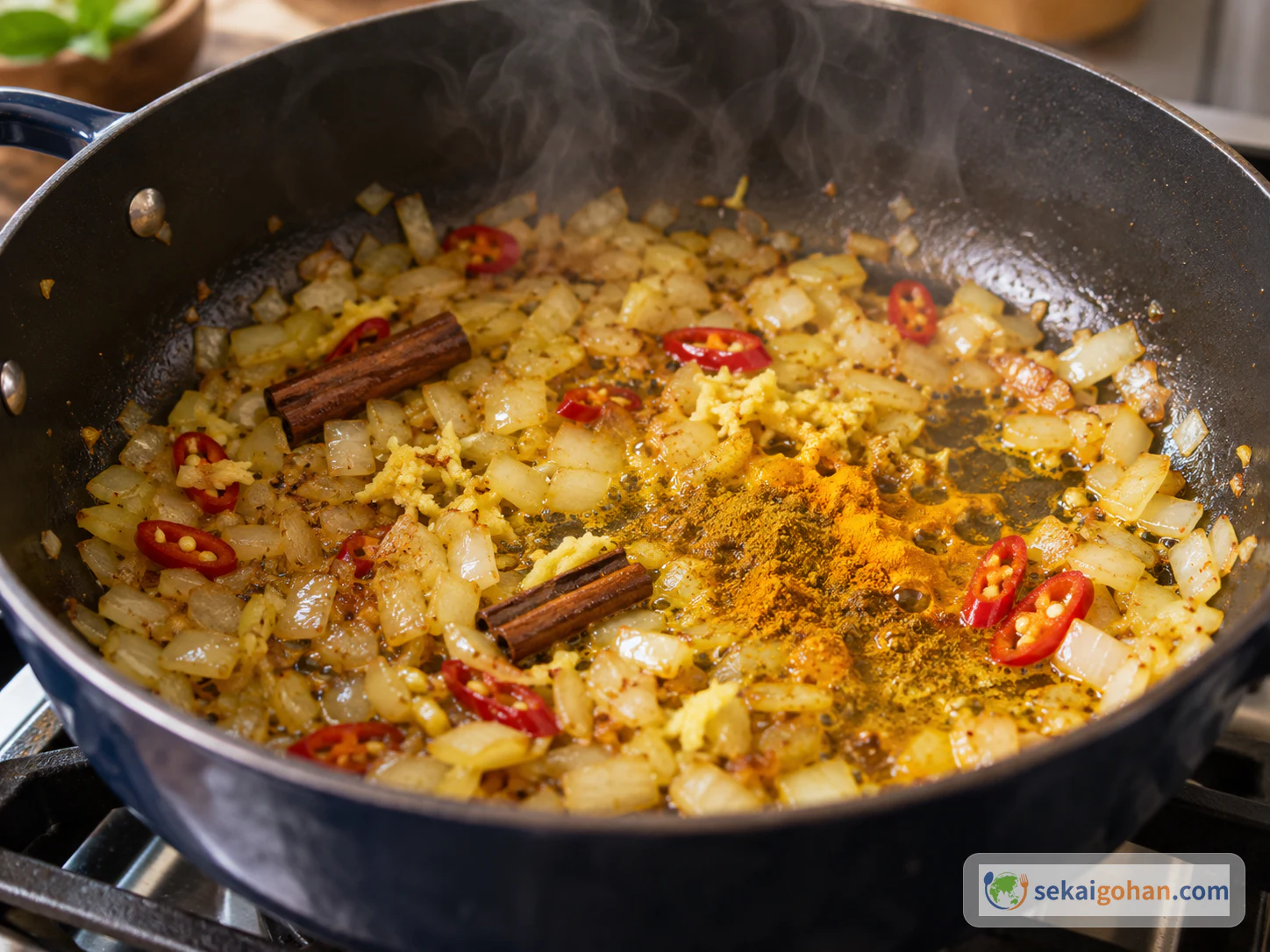
Octopus turns tough when the pre-boil was too short or when high heat drives out its moisture, and reducing the curry won't soften it again. Take care of tenderness during the pre-boil, until the knife goes into the thick part. If the spices taste bitter, the powder was fried in oil too long. Add the liquid as soon as the aroma rises to bring the temperature down.
While the curry stews, keep it on low heat with small bubbles. If the sauce is watery, check the moisture in the eggplant and the thickness of the coconut milk separately, then take off the lid and reduce it briefly over low heat. You want thickness that leaves a coat on the back of a spoon.
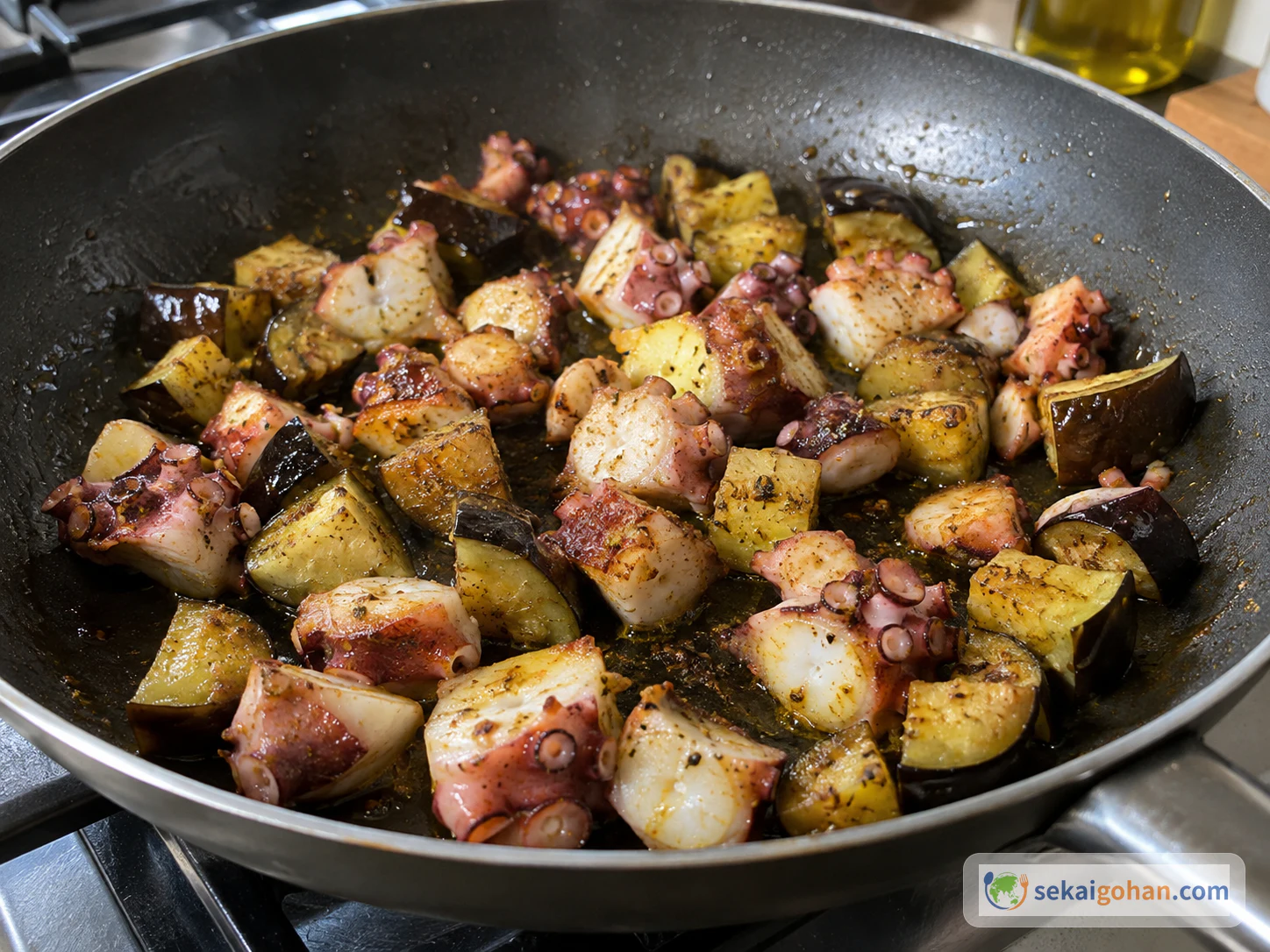
Here's how to check with your senses. The cut faces of the octopus aren't dry, it doesn't spring back hard when pressed, and a knife slides to the center without resistance. The eggplant keeps its skin color, a skewer slides through, and the corners haven't collapsed. The sauce goes from white to pale yellow, no oil separates on top, and a line drawn with a spoon holds for a moment.
Storage and frequently asked questions
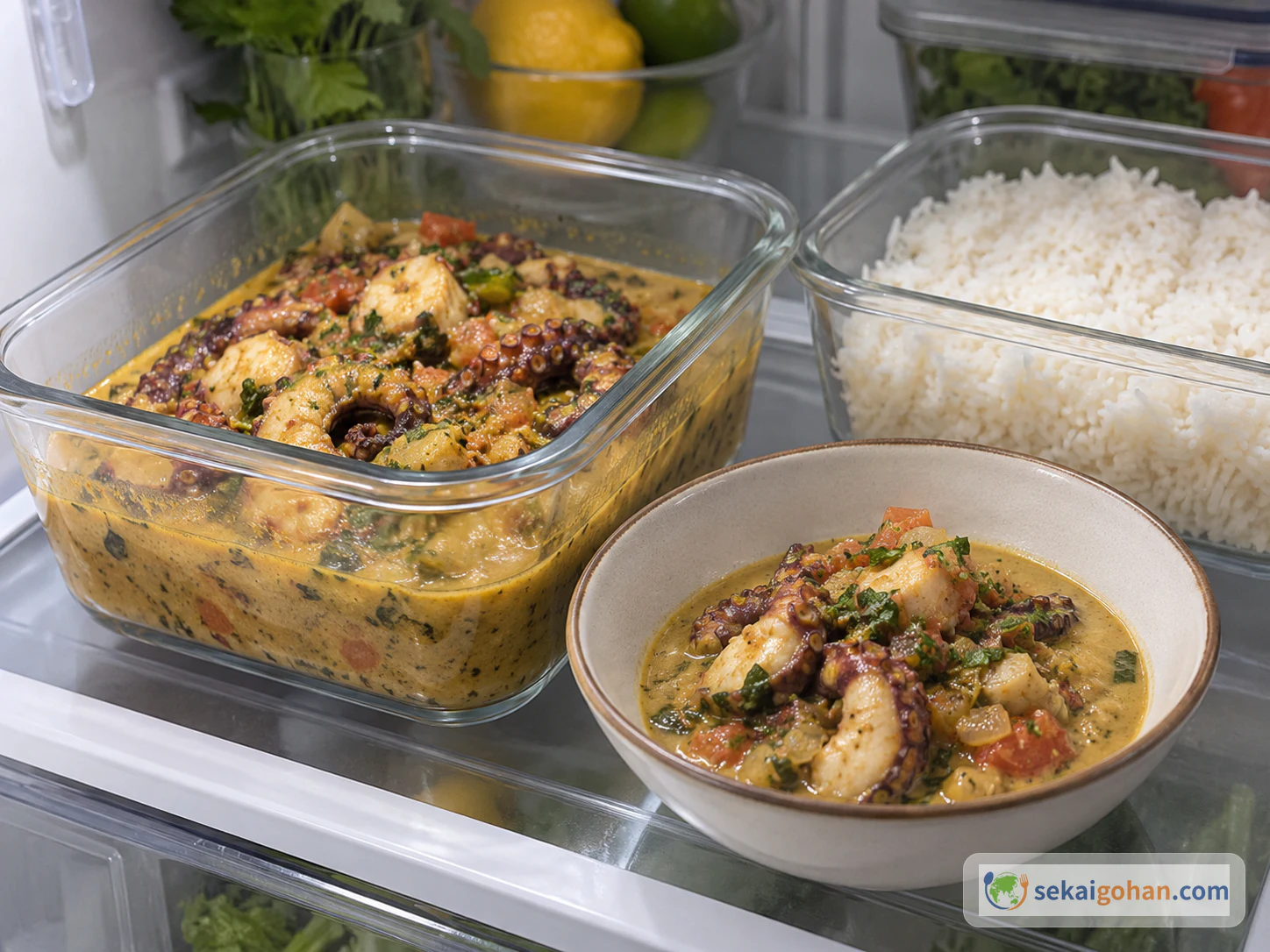
This curry is best finished at the meal where it's served. Keep the raw octopus refrigerated from prep until it goes into the pot, and keep utensils used for raw fish away from cooked food. If curry is left over, divide it into shallow, clean containers, cool it quickly and refrigerate it, with the rice stored separately. Don't keep rice that sat in the rice cooker or at room temperature for the next day. Reheat only what you'll eat, in a pot or microwave, until it's hot to the center, and reheat it only once.
What do I do if the octopus is still tough?
If the curry still has enough liquid, give it another 15 to 20 minutes over low heat. If the bottom of the pot looks close to drying out, add pre-boil liquid or hot water 1 tbsp at a time. If you've already reduced the sauce, take out just the octopus, soften it in a separate pot with some hot water, then return it. Hold off on more salt until a knife goes through, and adjust the seasoning after that.
Can I make it with boiled or frozen octopus?
Cleaned frozen octopus works. Thaw it as described above and weigh out the same amount as raw octopus. With already-boiled octopus, skip the pre-boil, fry the surface for 2 minutes in step 4, then continue with the eggplant and sauce. Cooked octopus toughens with long stewing, so add it back only for the last 5 of the 15 to 20 minutes the sauce simmers. You don't need sashimi-grade octopus, because the curry is cooked through to the center.
What if the coconut milk separates?
Separation comes from a hard boil, high heat at the bottom of the pot, or long cooking of thin coconut milk. If it happens, turn off the heat, add hot water or reserved pre-boil liquid 1 tbsp at a time, and stir gently with a wooden spoon. The oil may not fully blend back in, but as long as the octopus and eggplant are cooked through, you can plate it and eat it. Keep the heat low next time.
What should I serve other than rice?
Make rice the base, and put breadfruit, sweet potato or cassava on a separate plate. Potato is easy to find but soaks up the sauce in the stew, so boil it separately and serve it on the side. Green papaya chutney goes well with the curry. A sour pickle tastes quite different, so it isn't a good stand-in.
Can I eat it the next day?
Yes, if it's the cooked curry stored as described above. Eat it by the next day. Reheating toughens the octopus, so set a little sauce aside before storing and gently warm only what you'll eat. If it smells off, feels slimy or tastes sour, don't eat it, and if you aren't sure how long it's been stored, throw it out.


