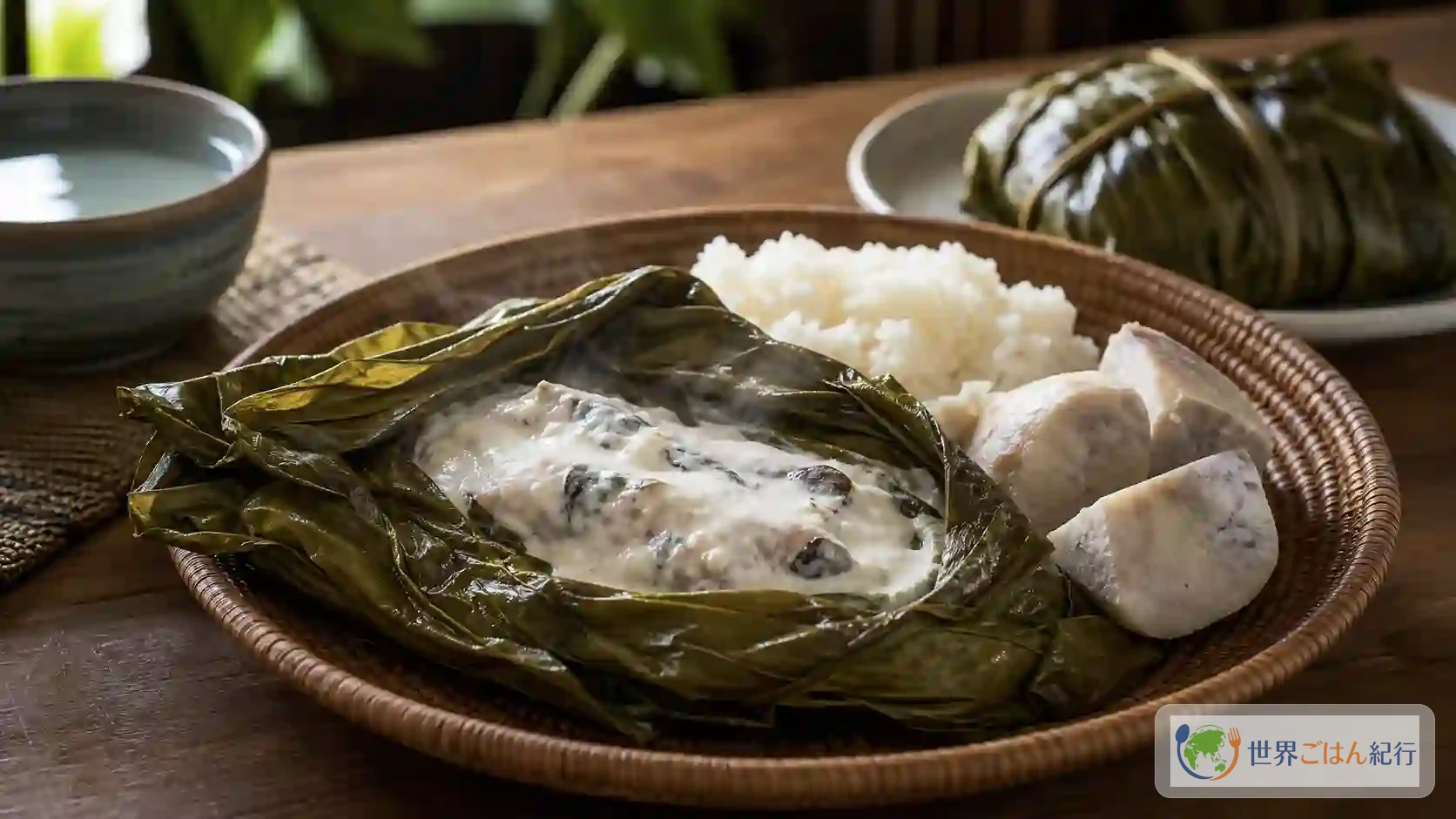
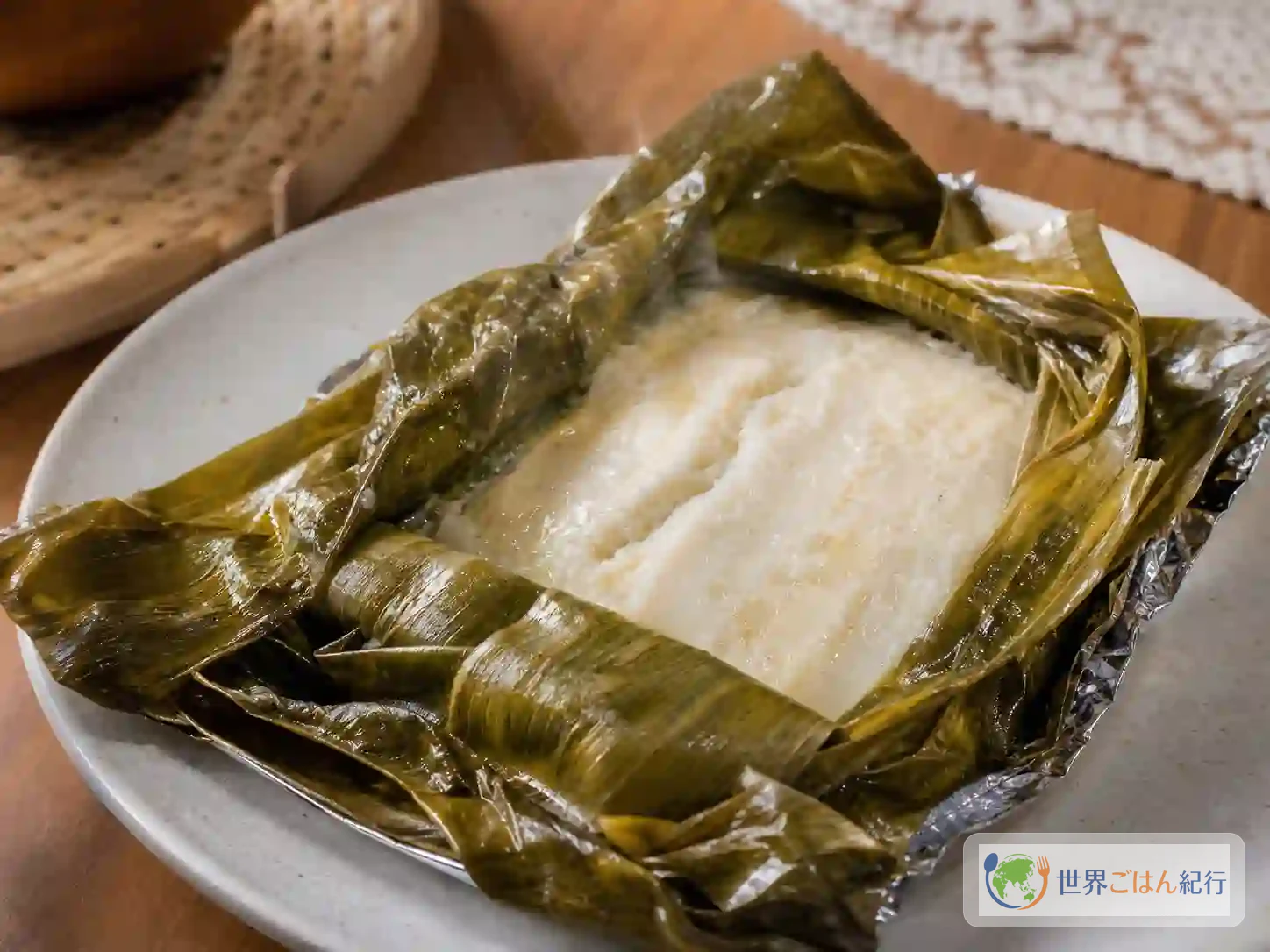
On a Sunday at midday, a blackened parcel sits in the middle of the table, and someone folds back the edge of the foil. Steam rises with the sweet scent of coconut and the green smell of leaves. Put in a spoon and the leaves are smoother than boiled spinach, while the coconut at the center has set into something closer to a soft cream than a sauce. This is Samoan palusami: taro leaves and coconut cream wrapped together and traditionally cooked in an umu, the earth oven. You can't bring hot stones and leaf smoke into a home kitchen, but the dish asks surprisingly few decisions of you. Choose young, edible leaves, use thick, unsweetened coconut milk, and cook the leaves until tender all the way through. Keep to these three, and even an oven comes close to the rich aroma and dense, creamy mouthfeel you get when you open the leaves.
Palusami at the Samoan Table
The umu and the family meal
Samoa's staple foods include taro and breadfruit, and every part of the coconut gets used: the flesh, water, oil and cream. In an umu, fish, pork, chicken, lamb, taro and bananas are set on heated stones and covered with leaves that hold in the smoke and steam. The umu is also where food gets finished together and then shared quickly with family and neighbors.
Food is central to to'ona'i, the family meal after church on Sunday, and to fa'alavelave, occasions such as weddings, funerals and christenings. Palusami fits easily on that kind of table. Several leaves are stacked into a bowl, the coconut cream is poured in, and the whole thing is wrapped into one large parcel. Opening it is part of the meal, and everyone looks at the same plate.
Where the name comes from
In Samoa, taro leaves are sometimes called lu'au, and palusami is the name of the dish made with them. Don't confuse it with the Hawaiian luau, which is a feast. One is a leaf you cook with and the other is an occasion. The name palusami comes from palu, "to mix," and sami, which relates to saltiness.
Island and household versions
The flavor changes a little from island to island. Savai'i adds chile and Manono finishes with lime, and both ways of cutting the rich coconut with heat or acidity are easy to try at home. Basic palusami is just leaves, coconut cream, salt and onion.
Some households add fish, chicken, salted meat or canned corned beef. Corned beef, which is used in pisupo, is a modern addition and only one of many authentic versions. Some families eat the leaf parcel plant-based, and others turn it into a full dish with whatever fish or meat they have on hand. For your first batch, make the basic version without meat so you can taste the sweet coconut, the soft onion and the green flavor of the leaf.
Ingredients
Decide first on the ingredients to gather and what can stand in for the leaves.
This makes 4 small parcels for 4 servings.
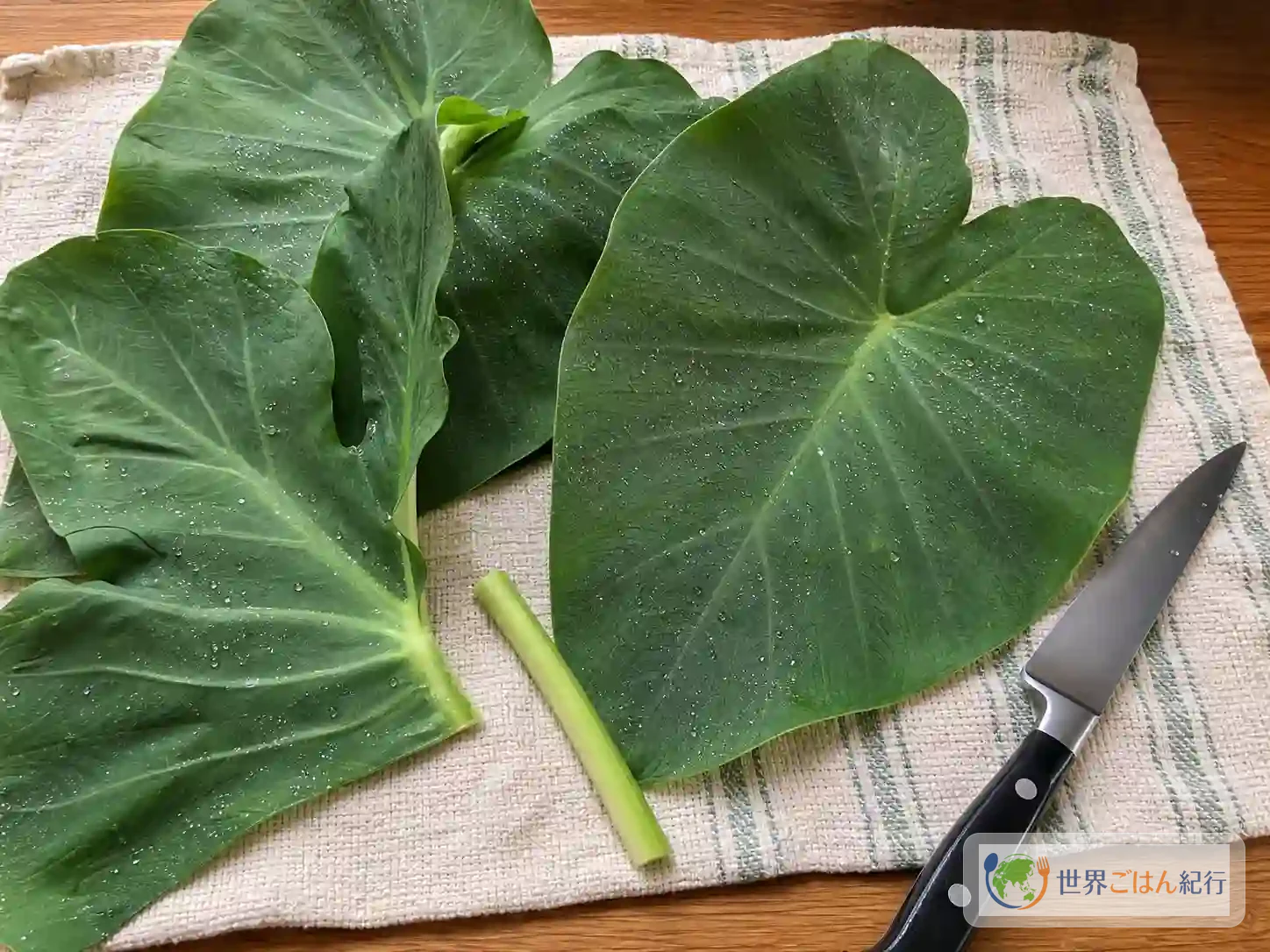
For the leaves, use only edible taro leaves sold for cooking.
Do not use ornamental elephant ear plants or foraged, unidentified leaves as taro leaves.
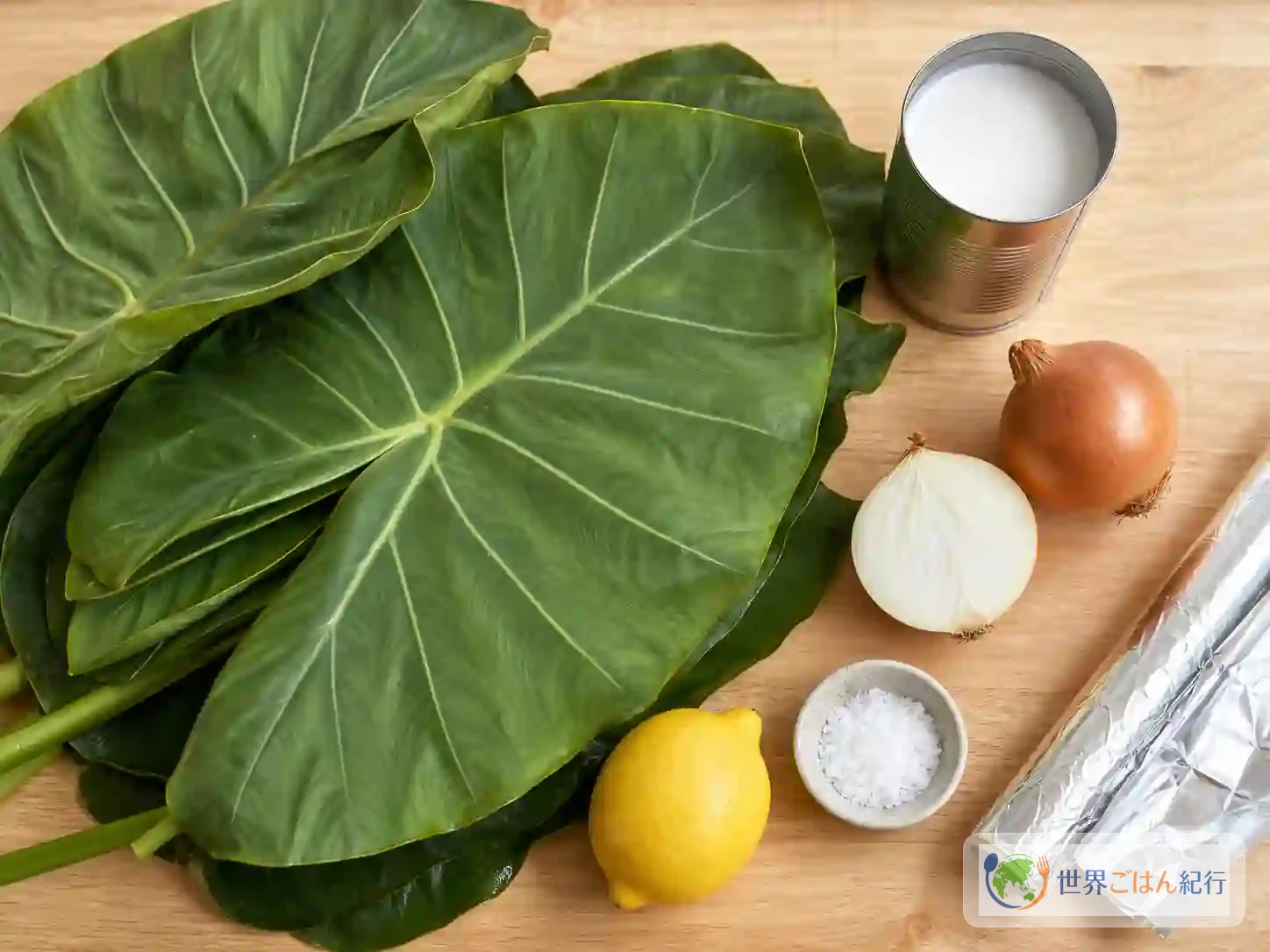
Do not serve it to anyone who avoids coconut, and check the ingredient list on the can.
Edible taro leaves can sometimes be found in the frozen section of Asian and Pacific grocery stores.
If you use frozen leaves, thaw them as the package directs and pat them dry before wrapping.
If you cannot find them, stacking several large spinach leaves is the practical option.
The taste gets close, but you lose the slightly earthy aroma of taro leaves and the smooth thickness they have after long cooking.
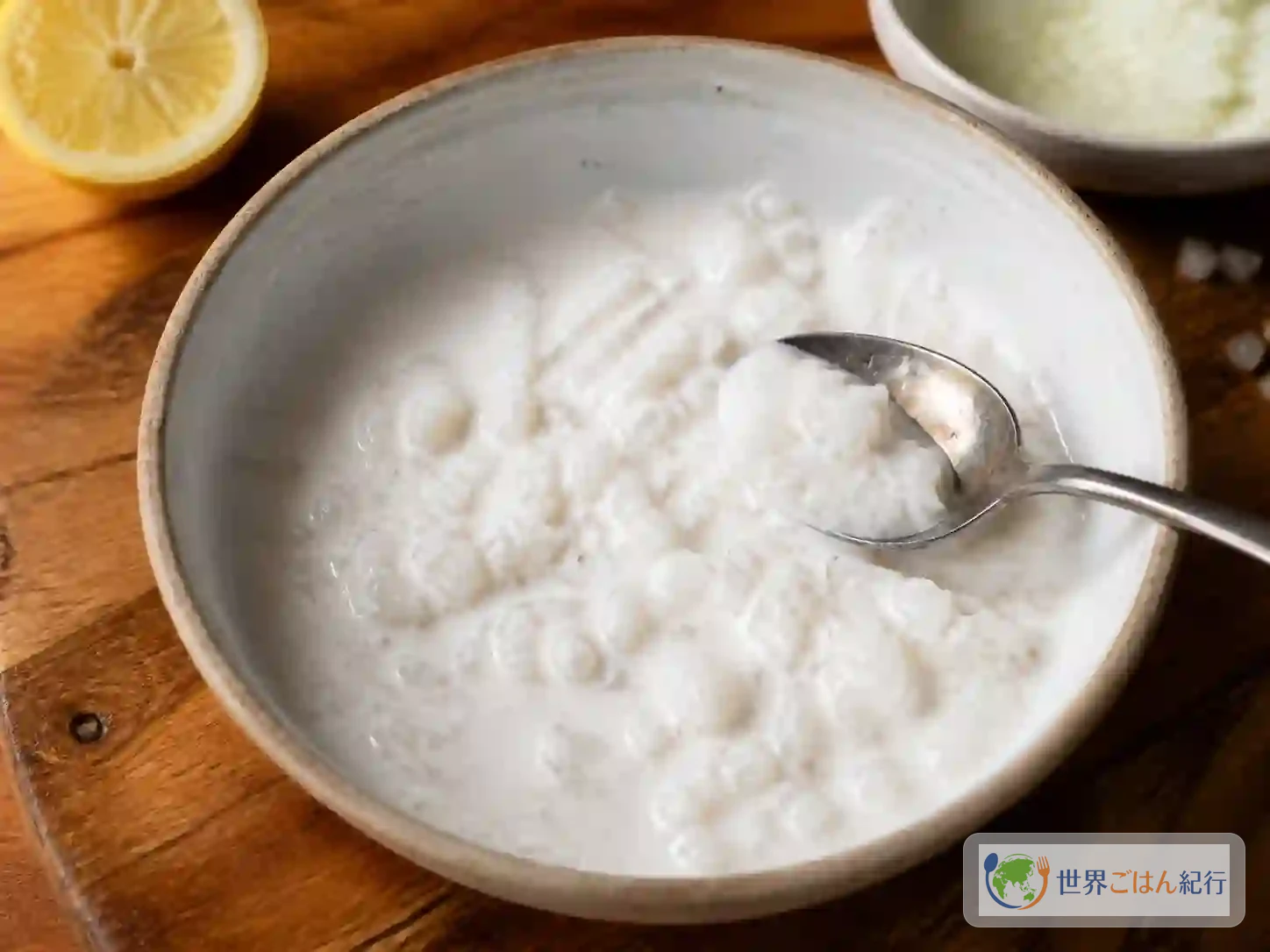
For the coconut milk, choose an unsweetened can made for cooking, not a drinking product or sweetened cream of coconut.
Light types are low in fat, and liquid runs onto the plate when you open the parcel.
When you buy, check the label for "around 1¾ cups (400 ml)," "unsweetened," and "full fat or regular type."
If you already have a can at home that meets these conditions, there is no need to buy more.
Choosing Leaves and Coconut for Palusami
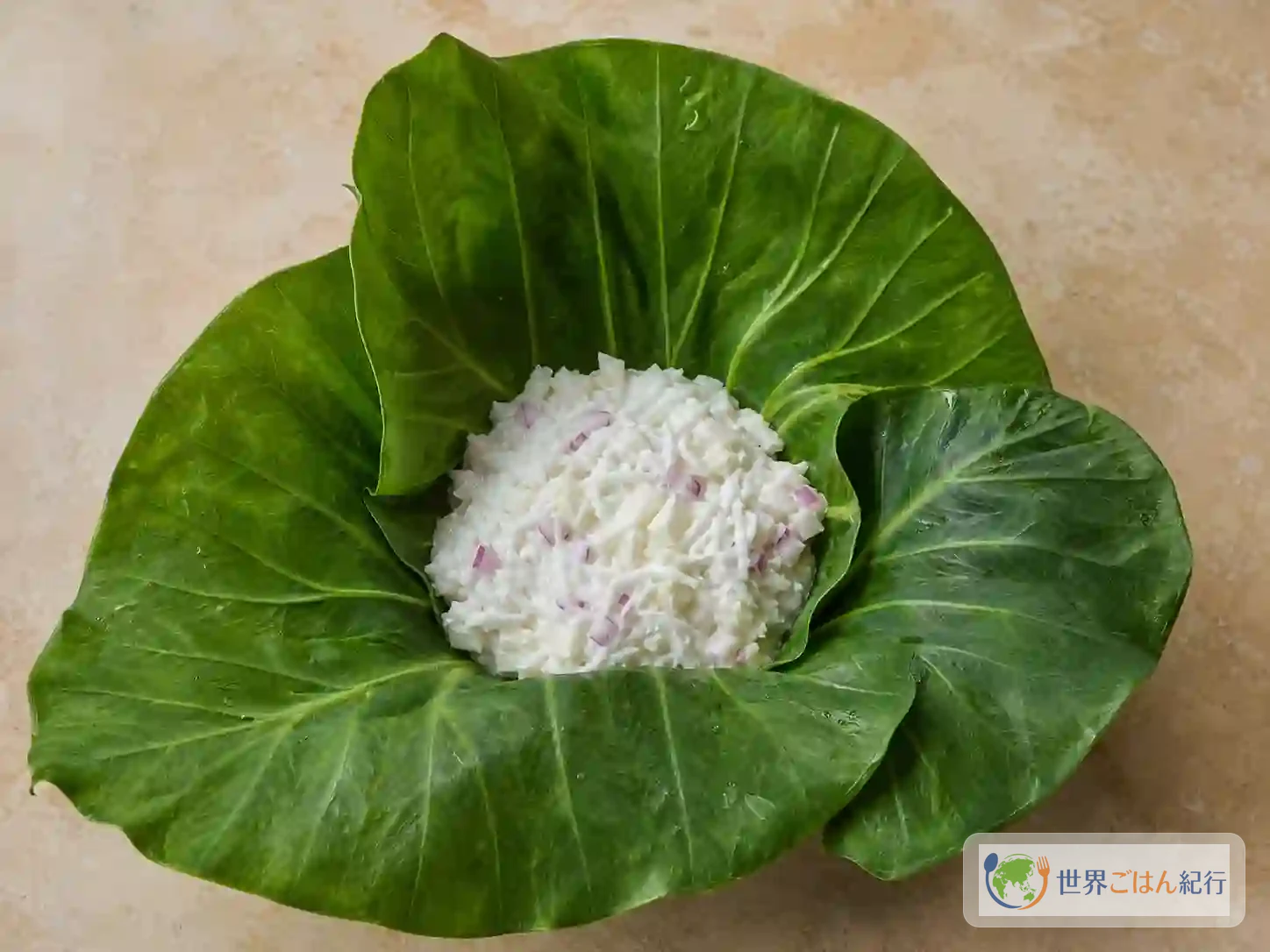
Young leaves have thin veins and soften easily once they're wrapped. Look for ones with green or pale stems, and skip leaves with yellowed edges, dry curled leaves, and stems as hard as wood.
The coconut needs to be full-fat. Its fat coats the green bitterness of the leaves and keeps the richness inside the parcel. Light or thin coconut milk leaves a lot of liquid behind even after baking. If you can't find a regular can, use 1¾ cups (400 ml) of coconut cream as it is, without thinning it with water.
Method
If you soften the leaves before wrapping, the richness of the coconut and the aroma of the leaves stay in the parcel when you open it.
Preparation (about 20 minutes)
Steam-bake in the oven (50–60 minutes)
Boil them, drain the water, and heat them again in water or coconut cream.
If you do not know what kind of leaf you have, do not use it; choose only leaves sold as food.
Even when you substitute spinach, do not wrap it raw and finish quickly; cook it thoroughly to the center.
Common Palusami Problems and Fixes
Leaves that need more time
People often wonder why something that is only wrapped in leaves takes so long to cook. The reason is the time the leaves need to heat until they are safe and good to eat. Don't cut it short.
Filling the parcels
If you pour in more than ½ cup (100 ml) per parcel, it runs out at the edges when you close it. With too little liquid, the leaves dry out before they steam. Put the filling in the center and leave 1 inches (3 cm) clear at the edge, which makes the parcel easiest to close.
Getting the oven heat right
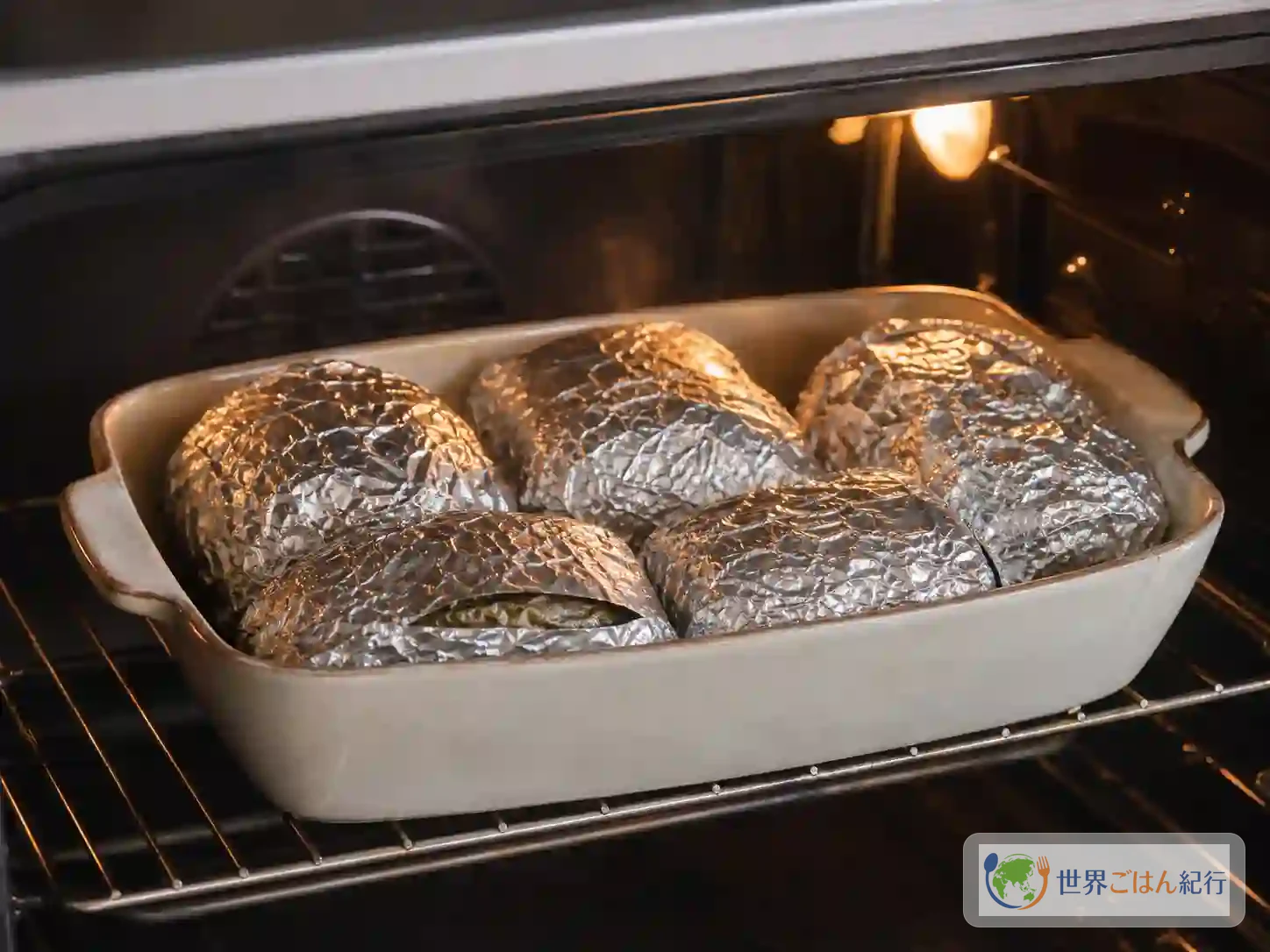
Without the hot stones, an oven won't give the leaves a smoky aroma. The dish still holds together, though, because what matters most is sealing the coconut in leaves and cooking it slowly in steam. Keep the parcels out of water. If you fill the dish as though you were simmering in a pot, the leaf aroma fades and the coconut turns watery. Drying the parcel out inside is just as bad, so fold the foil edges over twice and set the parcels in a deep baking dish to hold in the heat.
There's no need for liquid smoke or a sweet sauce. Palusami tastes most like itself when the leaves still smell green as you open them, and its flavor comes from how much coconut they have soaked up.
Opening the parcel
A baked parcel stays hot on the plate for a while, and if you open the foil all at once, steam and hot coconut come at your hands. Open just the top first, then move the leaves to the plate once the steam has settled.
Serving, Storing, and Varying Palusami
Serving
Palusami goes with white rice, and also with boiled taro, breadfruit and green bananas. Because the coconut is rich, it pairs well with a lightly salted staple or a sour raw vegetable.
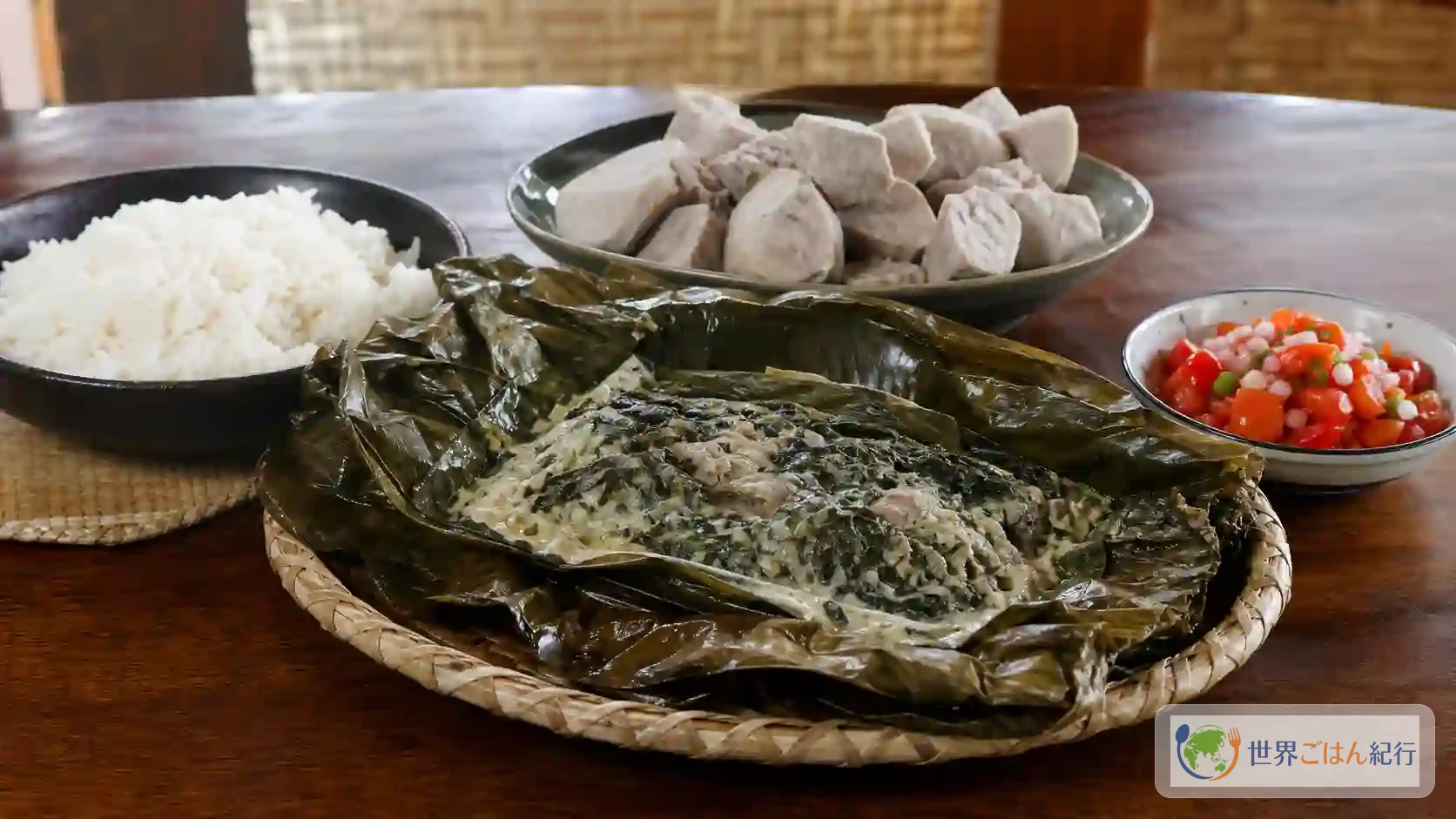
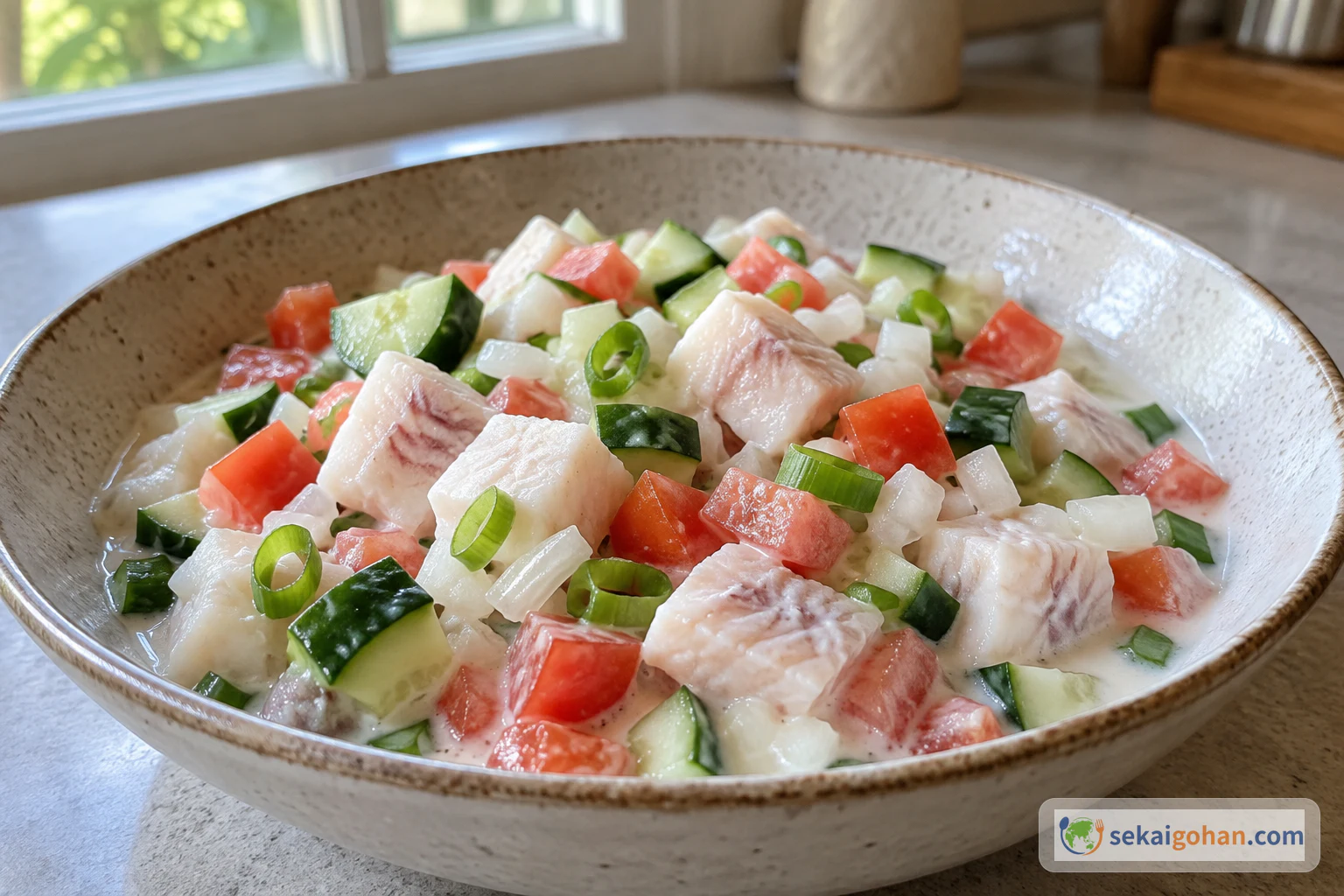
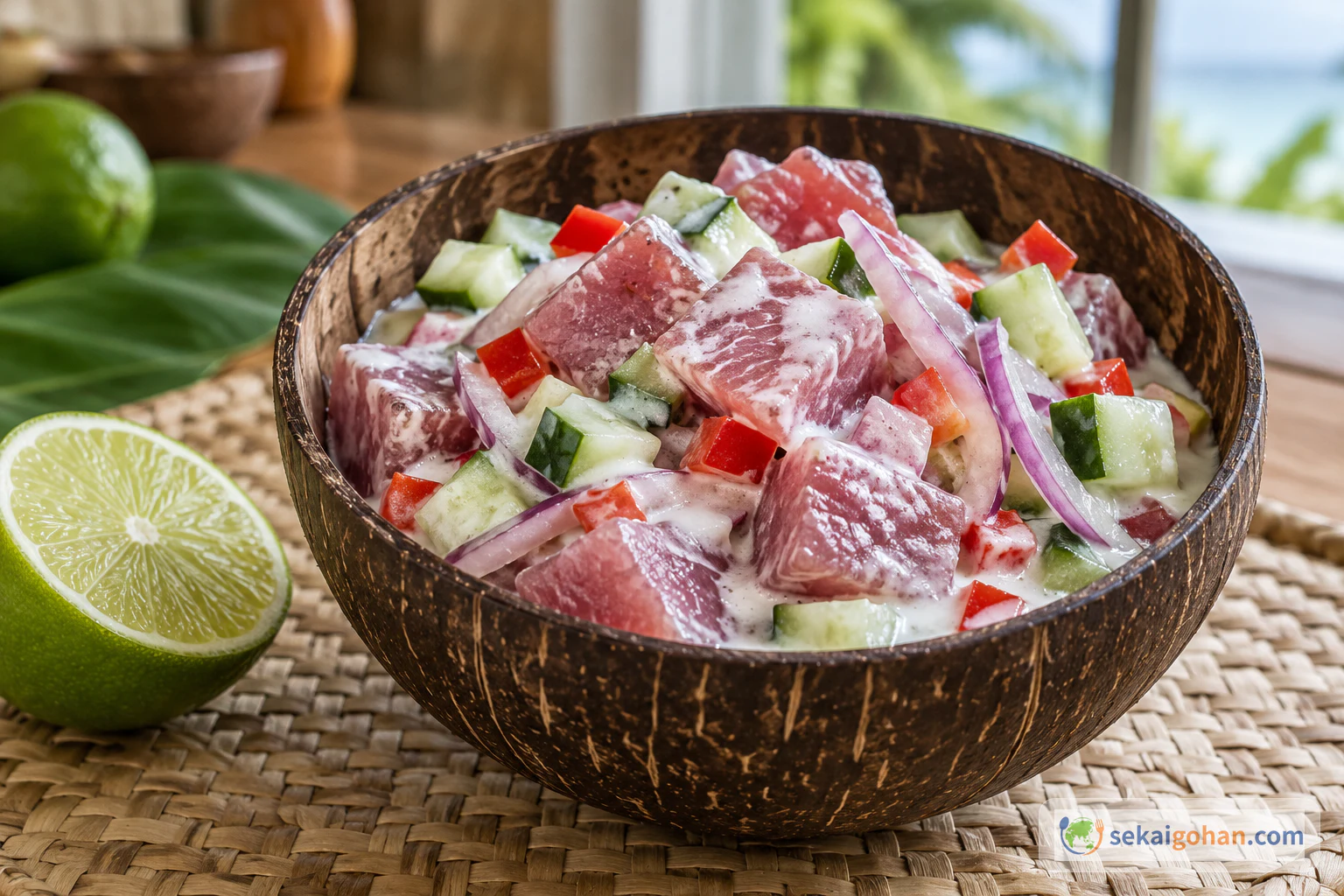
Oka is raw fish dressed with coconut, lime, onion and tomato. If it shares a plate with palusami, even a little of its acidity makes the meal feel lighter. You can also serve grilled fish or steamed chicken on a separate plate and spoon the palusami over it like a rich sauce. If you have coconut milk left over, try another leaf-wrapped, steam-baked dish such as bougna from New Caledonia.
Storing leftovers
Let leftovers cool slightly, then move them to a shallow airtight container and refrigerate. Eat them within 2–3 days. To reheat, cover with a lid or plastic wrap and heat at 325°F (160°C) for about 15 minutes, until the center reaches 167°F (75°C) or higher. Quick, high heat tends to make the coconut separate.
To freeze, take the filling out of the leaf parcel and wrap it in single-meal portions. The texture suffers, so after thawing it works better stirred into a soup or stew than served over rice.
Pisupo-style with corned beef
Drain 6 oz (170 g) corned beef, flake it, and mix it into the coconut mixture. Start with 3 g salt and add more once you've checked how salty the can is. The meat brings its own fat and salt, so this version goes better with boiled taro or rice than on its own.
With fish
Cut 5.5 oz (150 g) white fish fillet into 0.5 inches (1 cm) cubes and mix it in with the onion. The fish releases liquid, so reduce the coconut milk to 1½ cups (350 ml). Fish changes the core temperature and timing, so bake at 350°F (180°C) for 60 minutes and check that the thickest piece of fish is no longer translucent. Eat parcels with fish the day they're baked.
Chile and lime, Savai'i-style
Finely chop 1 green chile and add it to the coconut mixture with 1 tbsp (15 ml) lime juice. For a stronger aroma, crush the chile coarsely with a pinch of salt. A knife works fine, but if you plan to make this often and want a mortar, get a stone one that comes with a pestle.
FAQ
What can I substitute if I cannot find taro leaves?
Large spinach leaves are the easiest to find. Stack several to make a bowl, wrap in aluminum foil, and bake at the same temperature. You'll lose the earthy aroma and thickness of taro leaves, though. Cabbage leaves don't tear easily, but they're sweeter and end up tasting closer to cabbage rolls than palusami, so they make a poor first choice.
Are coconut milk and coconut cream the same?
The names vary by country and brand. For palusami, choose an unsweetened, high-fat one that doesn't pour out water first when you tilt the can. If the liquid is thin, don't add more. Bake 10 minutes longer to drive off the moisture.
My throat still feels itchy after preparing the leaves. What should I do?
Check the kind of edible leaf you used, how young it was, and how long you heated it. Eat the leaves only once even the stems are tender, and bake for another 10 minutes at 350°F (180°C) at a time until they are. If you can't be sure what leaf you used, throw it out rather than trying to fix it with more heat. Never eat taro leaves raw. Boil and drain them, then heat them again.
Is corned beef essential?
No. The basic version of just leaves and coconut is plant-based, and adding fish or meat is a household variation. If you do add corned beef, reduce the salt and taste as you go.
Can I wrap it the day before?
Yes. Refrigerate the wrapped parcels and bake them within 24 hours. Take them out of the refrigerator 20 minutes before baking so they don't go into a hot oven cold. The center of the leaves takes longer to warm up, so bake 10 minutes longer than usual and check them.
More to Cook Alongside
- Bougna from New Caledonia: chicken and root vegetables wrapped in leaves and steam-baked with coconut.
- Laing from the Philippines: taro leaves stewed in coconut milk, with a similar way of handling the leaves.
- Moqueca baiana from Brazil: fish in coconut milk, for when you want more flavors of the sea on the table.