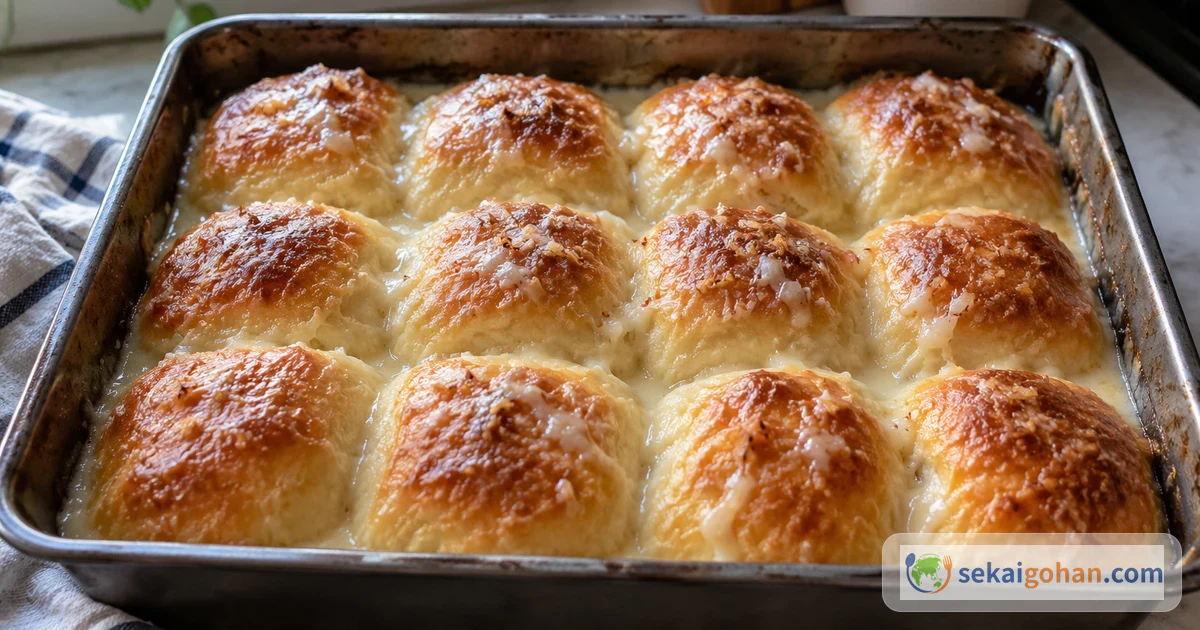
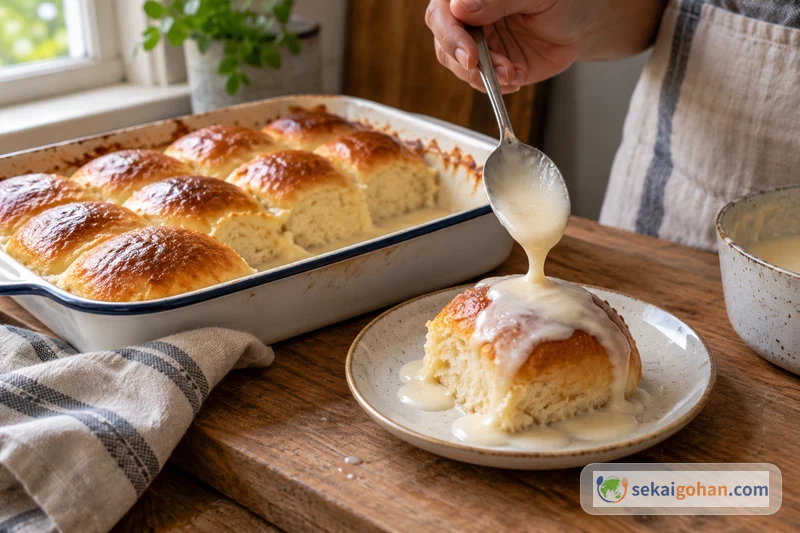
Open the oven door and sweet coconut steam wafts into your face. Twelve round buns, risen to fill a square pan, sit shoulder to shoulder, and in the gaps between them the coconut sauce has baked down into a soft set. Spoon the sauce over a bun and tear it apart while it is still warm. This is panipopo, a sweet bread from Samoan homes and the kitchens of aunties, with soft dough on top and a sticky, milky coconut layer underneath.
What panipopo is
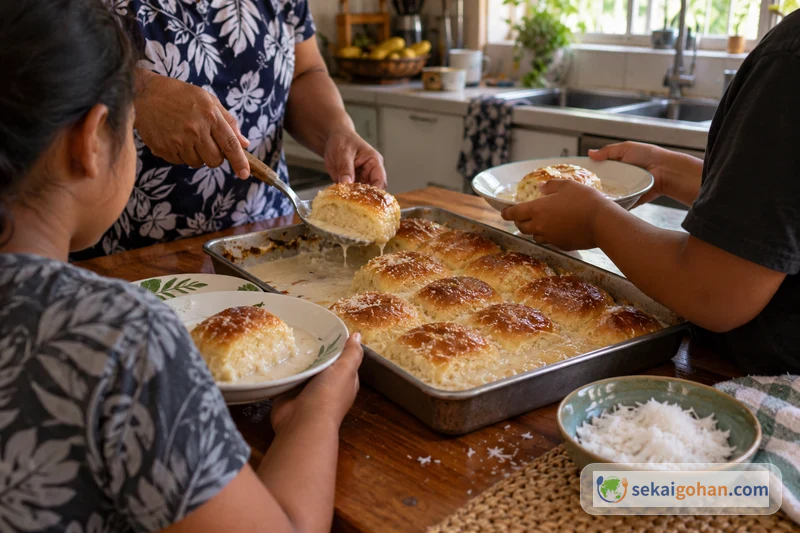
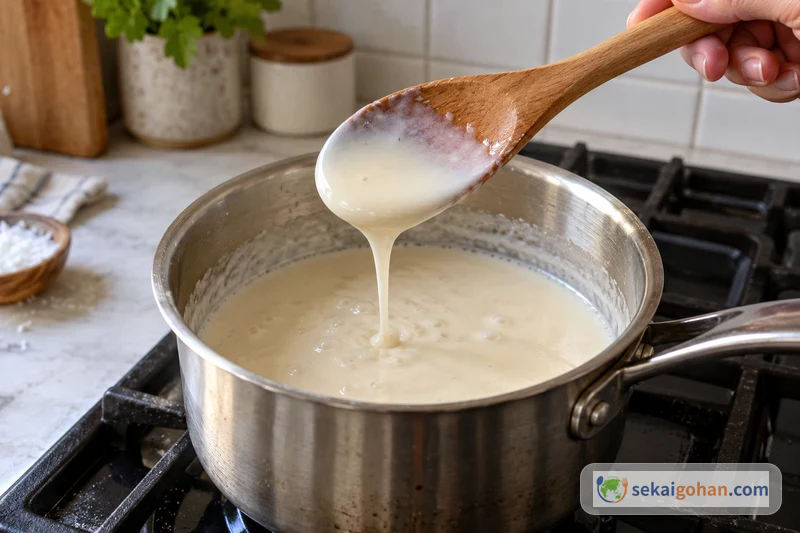
In Samoan, pani is bread and popo is coconut, so the name simply means "coconut bread." Sweet yeast dough is rolled into balls, arranged in a pan, and baked under a sauce of sugar dissolved in coconut milk. That's all there is to it. The sauce soaks into the base of the bread and bakes into a thin skin on top, so soft dough and a chewy layer of coconut become one.
Panipopo is a favorite among Samoan sweet breads. It's traditionally baked in a big tray, which makes it just right for a big family. In Samoa, the aunties' bread was always close at hand, and for some families, baking it themselves only started after moving to Britain. Now someone bakes almost every day.
Panipopo does not have a single shape. Some households make plain round buns, while others roll the dough into a spiral like a cinnamon roll. The sauce also varies: some pour it over the buns and bake, while others pour the sauce into the pan first, arrange the buns over it, and turn it out after baking.
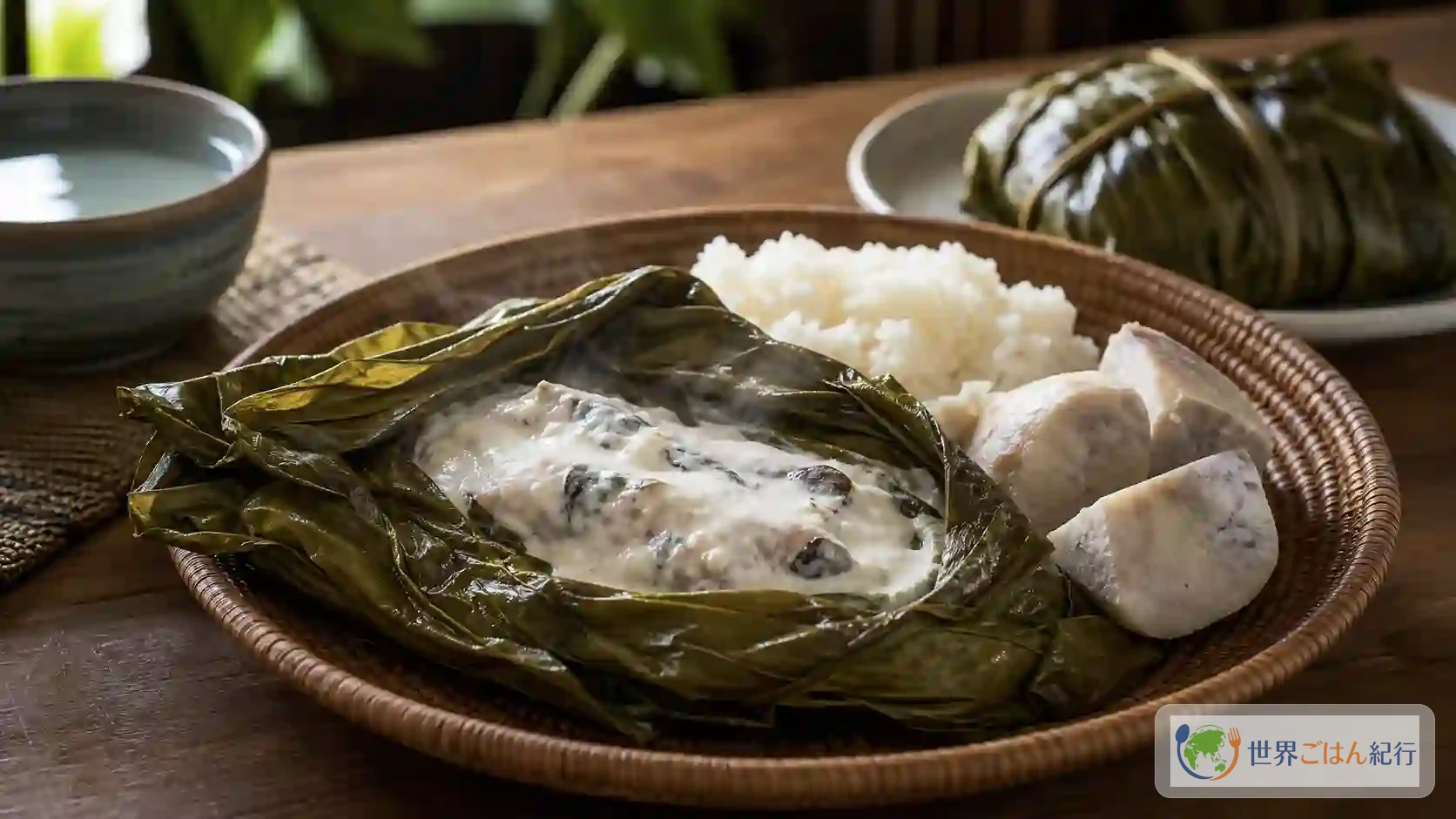
Coconut is the foundation of Samoan cooking. The same rich coconut milk goes into sweet snacks and into dishes like palusami, where coconut milk is wrapped in taro leaves and baked. Panipopo is a typical Polynesian snack, born where the island's traditional ingredients met wheat bread that came from outside.
Ingredients (makes 12)
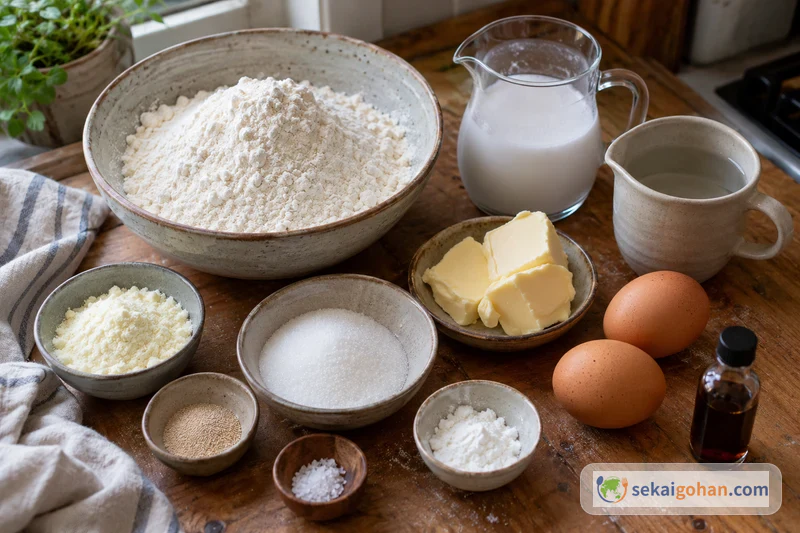
It makes 12 in a 9 × 13 inches (23 × 33 cm) pan, or 9 slightly larger buns in a 9 inches (23 cm) square pan.
This dish contains wheat, egg and dairy (skim milk powder, butter). Coconut milk is made from coconut. The sauce is extremely hot straight from the oven, so let it cool a little before serving to children.
Choosing ingredients for panipopo
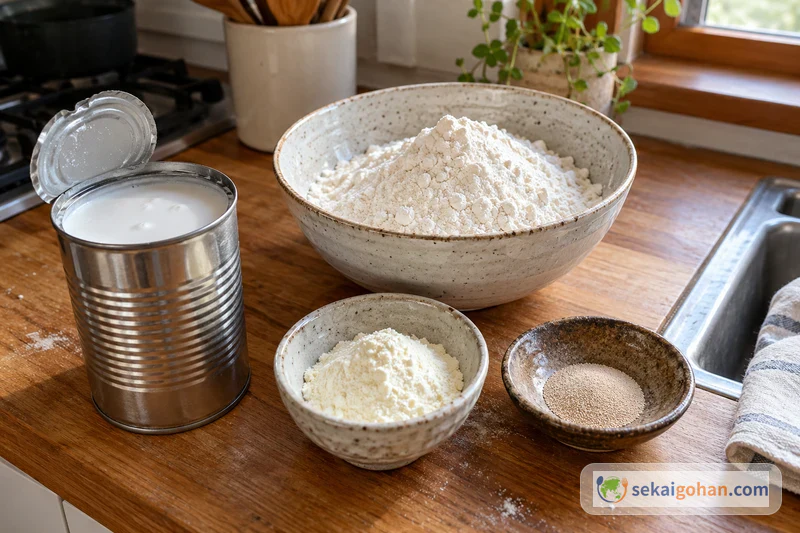
Most of the ingredients can be found in a supermarket. What matters most for flavor is the richness of the coconut milk. Canned coconut milk often has a white layer of solid fat on top when you open it, so empty the can into a bowl and stir well before measuring.
All-purpose flour can be swapped for bread flour, which gives a better rise and a lighter, fluffier bake. The milk powder in the dough can be replaced with skim milk powder. For the yeast, instant dry yeast is convenient because it needs no pre-proofing.
For the pan in which to arrange the buns, a metal one about 9 × 13 inches (23 × 33 cm) is suitable. Choose one about 2 inches (5 cm) deep so the sauce does not run out. If you use glass or ceramic, heat takes longer to get through, so allow a few minutes more and judge by color.
How to make panipopo
Hands-on time is about 25 minutes and baking is 18 to 25 minutes, but with the two proofings the whole takes about 3 hours 10 minutes. Prepare the sauce during the wait for proofing.
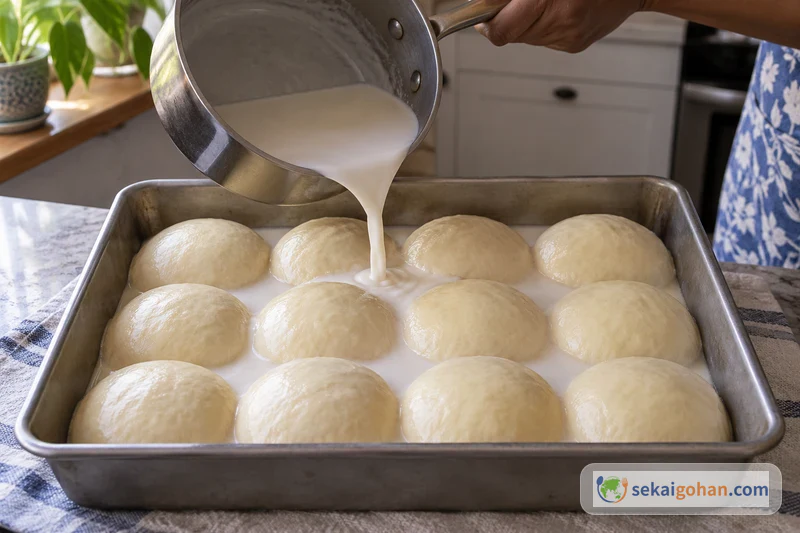
After pouring on the sauce, tilt the pan so it reaches even the buns at the edges. If the surface browns too deeply partway through, loosely cover with aluminum foil and keep baking.
The pan straight from the oven and the pooled coconut sauce are very hot. Use thick mitts to take it out, and do not tilt the pan too far so the sauce does not splash on your hands.
Kneading and proofing the dough
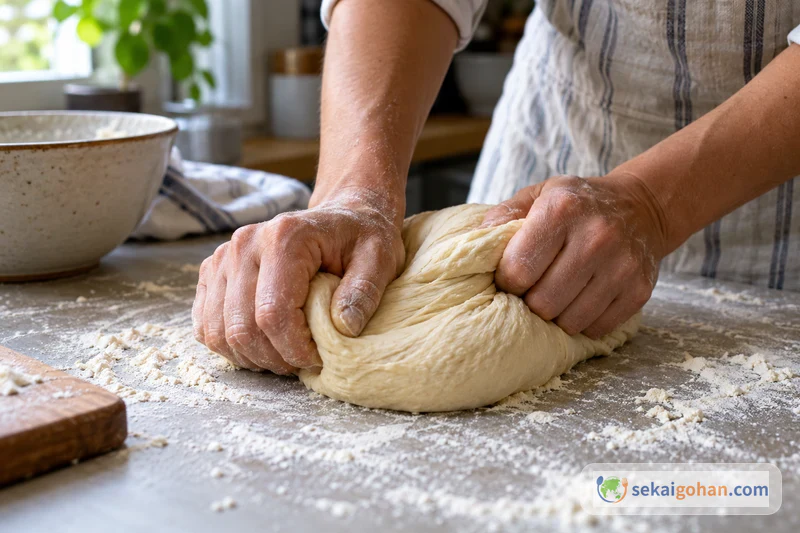
Hand kneading works perfectly well, even if this is your first time baking bread. It takes longer than a machine, though, and the proofing runs somewhat longer too, so go by the smoothness and rise of the dough rather than by the clock.
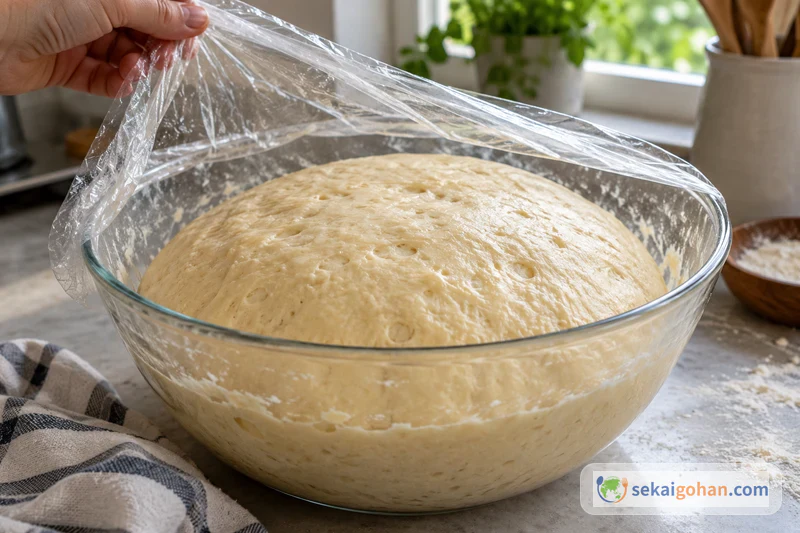
If the dough won't rise, check the water temperature. Water that's too hot (over 122°F (50°C)) weakens the yeast, and water that's too cold keeps proofing from getting going; aim for 35–40°C. When the room is cold, use the oven's proofing function, or set the bowl in a larger container filled with warm water.
Serving and varying panipopo
Two ways with the sauce
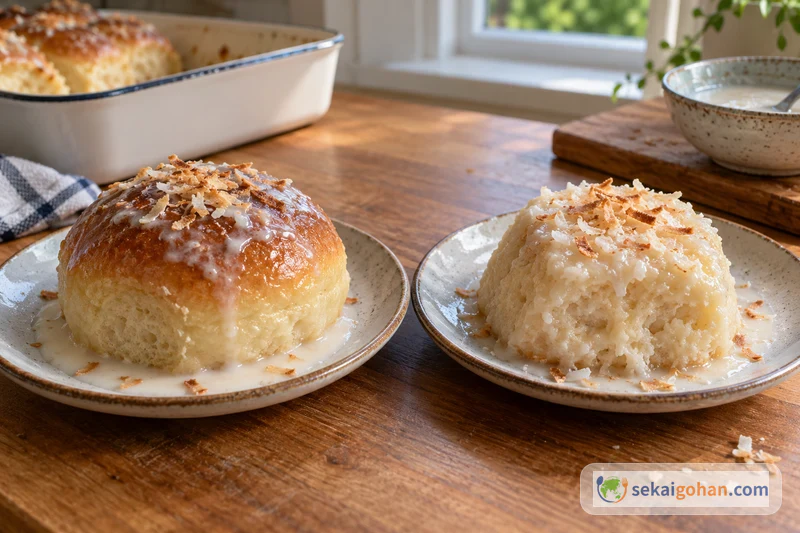
This recipe pours the sauce over the risen dough before baking. A coconut skin forms on the surface, and the buns come out moist, wrapped in sauce above and below. They're best eaten warm, while the sauce still flows.
The other method pours half the sauce into the pan first, scatters on toasted coconut, and sets the dough on top. The buns are brushed with butter and sprinkled with unrefined sugar for a golden, bread-like color, and after baking the rest of the sauce is poured over and left 30 minutes to soak in, so the coconut's sweetness seeps into the bread. Both are household methods, and neither is better. Whichever you choose, a pinch of salt in the sauce tightens the sweetness.
At the table
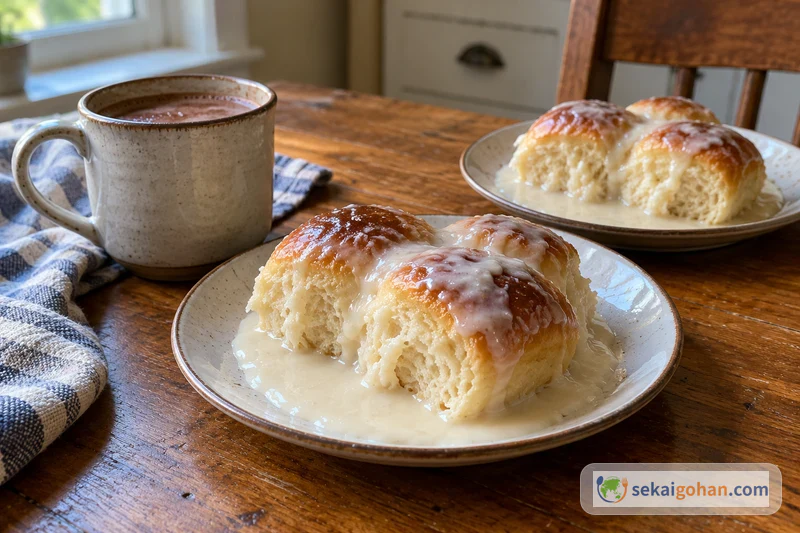
Bring it to the table in the pan and let everyone help themselves by hand. It works for breakfast or a snack, with sweet tea or Samoan cocoa, "koko Samoa." Outside Samoa, hot cocoa made by dissolving pure cocoa in milk gives you the same pairing: coconut's sweet aroma against the bittersweetness of cacao.
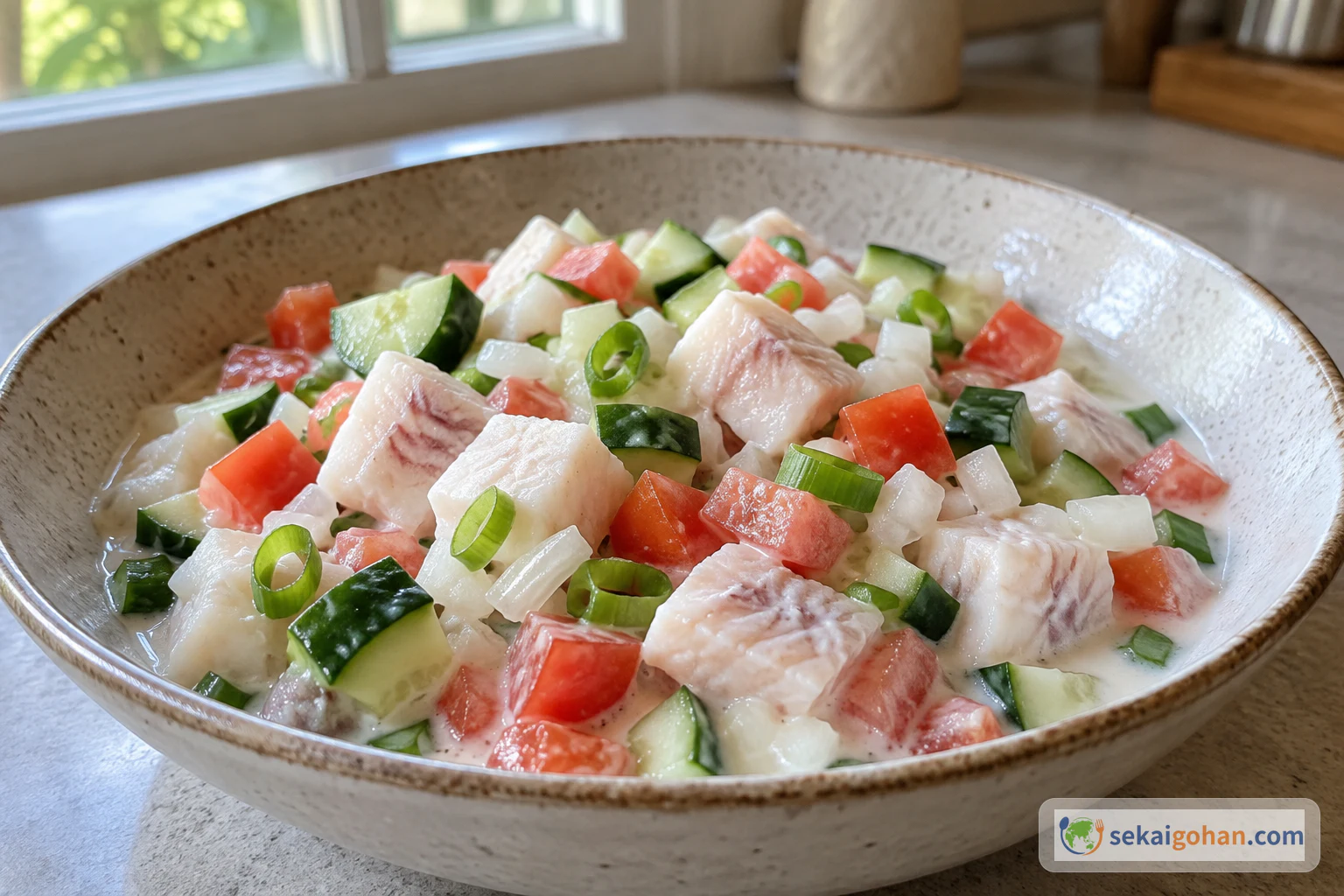
For more from Polynesia, try Tonga's lu pulu, corned beef wrapped in taro leaves and baked, or Fiji's kokoda, white fish cured in lime and coconut milk. Rich coconut milk is at the center of each, and you can taste how differently every island uses it.
Spirals, overnight dough and a restaurant twist
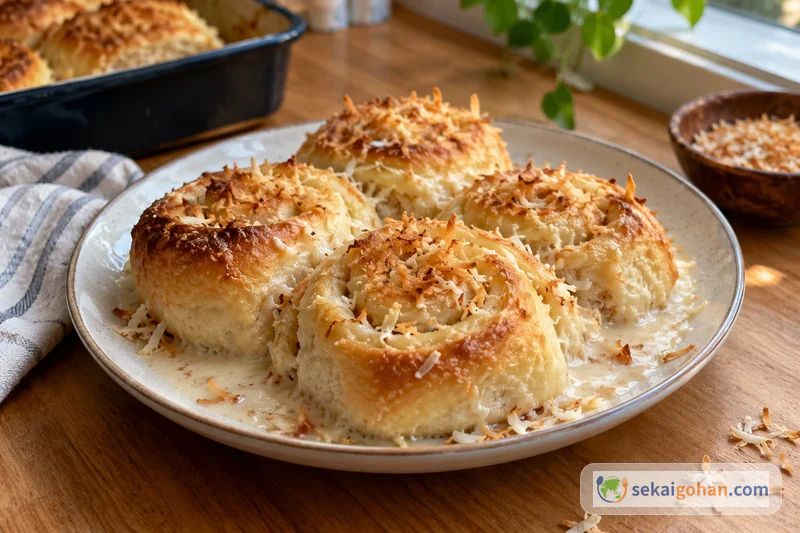
For a cinnamon-roll style spiral, roll the dough after the first proof into a rectangle about 30 × 40 cm, roll it up from the near edge and cut it into 12. Arrange the pieces cut side up in the pan and bake as usual. Scattering toasted fine coconut over the dough as you roll adds toastiness.
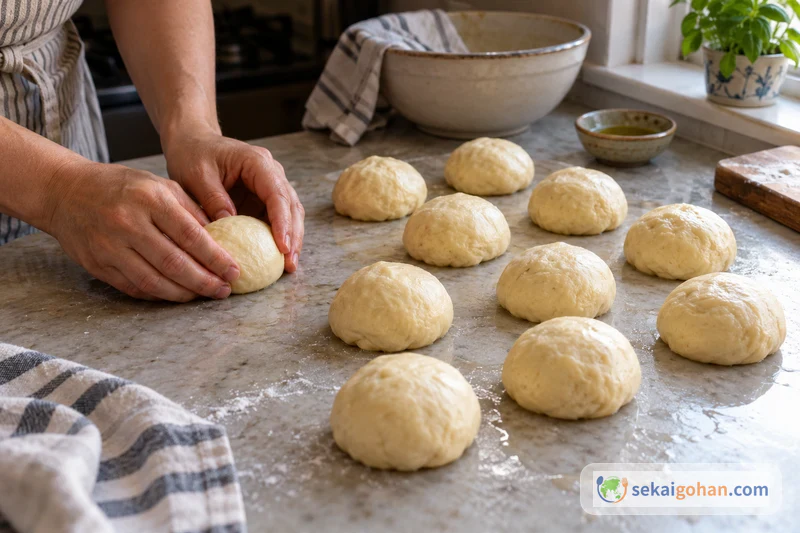
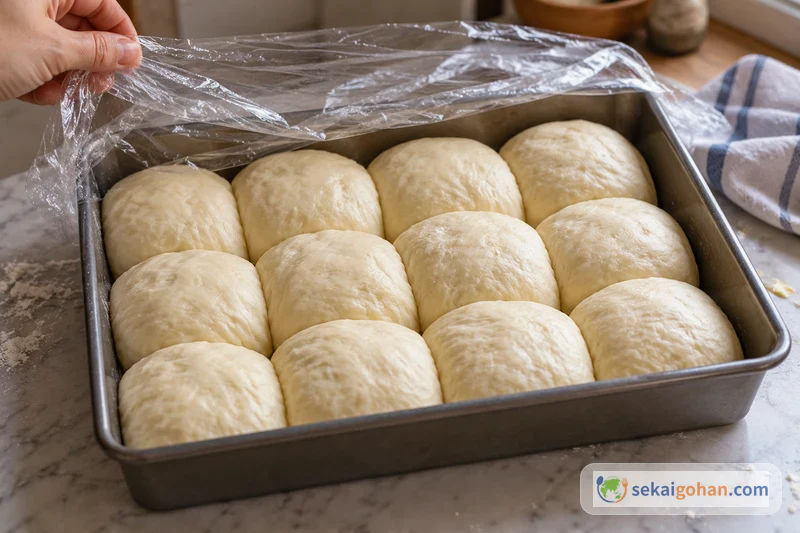
For fresh-baked buns on a weekend morning, shape the rounds the night before, arrange them in the pan, cover with plastic wrap and let them proof slowly in the refrigerator. In the morning, leave the pan at room temperature for 30 minutes to 1 hour, until the dough swells a size, then pour on the sauce and bake.
One restaurant serves panipopo flambéed with rum, turning a plain home bread into a plated dessert.
Frequently asked questions
Can I use coconut cream instead of coconut milk?
Yes, and it makes the baked sauce thicker. Coconut cream is high in fat, though, so using it for the whole amount makes the sauce very rich and heavy. Try replacing only half at first and use coconut milk for the rest.
Can I eat it the next day?
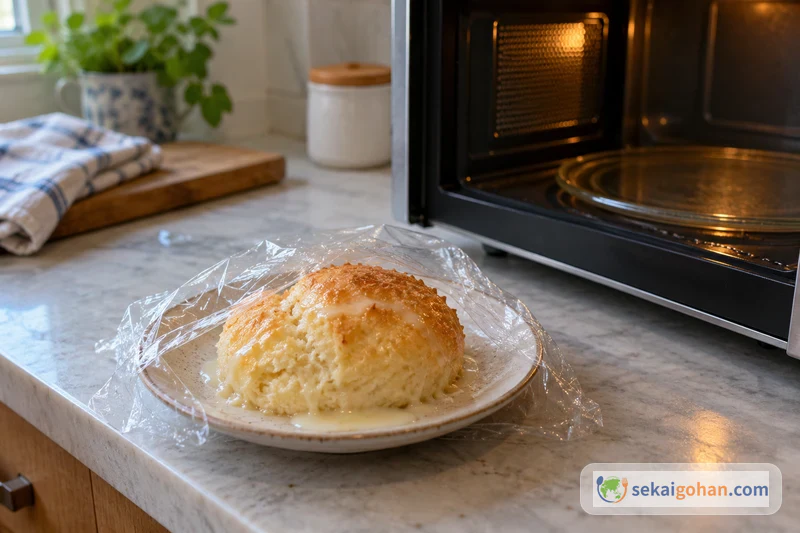
It's best eaten the day it's baked. If there's some left, cool it, wrap it in plastic, refrigerate and eat it by the next day. A brief warm-up in the microwave brings the sauce back to softness.
Can I make it without eggs?
Yes, just leave them out. The dough will be short on moisture, so add warm water a little at a time until it comes together softly. The texture is somewhat lighter and plainer.