Shake the pot instead of stirring it, and the fish keeps its shape while it soaks up a sauce of tomato, onion, bell pepper, and coconut milk, finished with a drizzle of red dendê oil. Moqueca baiana is a seafood stew from Bahia, in northeastern Brazil, where people love it. Fish and shrimp cook gently with herbs, coconut milk, and that palm oil. Heat is welcome, but the aroma doesn't come from a long list of spices. It comes from the roundness of coconut and the scent of red palm oil meeting the sweetness of the seafood. Remember it the next time you're at the fish counter and a little tired of plain salted and grilled white fish.

Moqueca Baiana and Brazilian Seafood Cooking
A Stew Made for Rice and Farofa
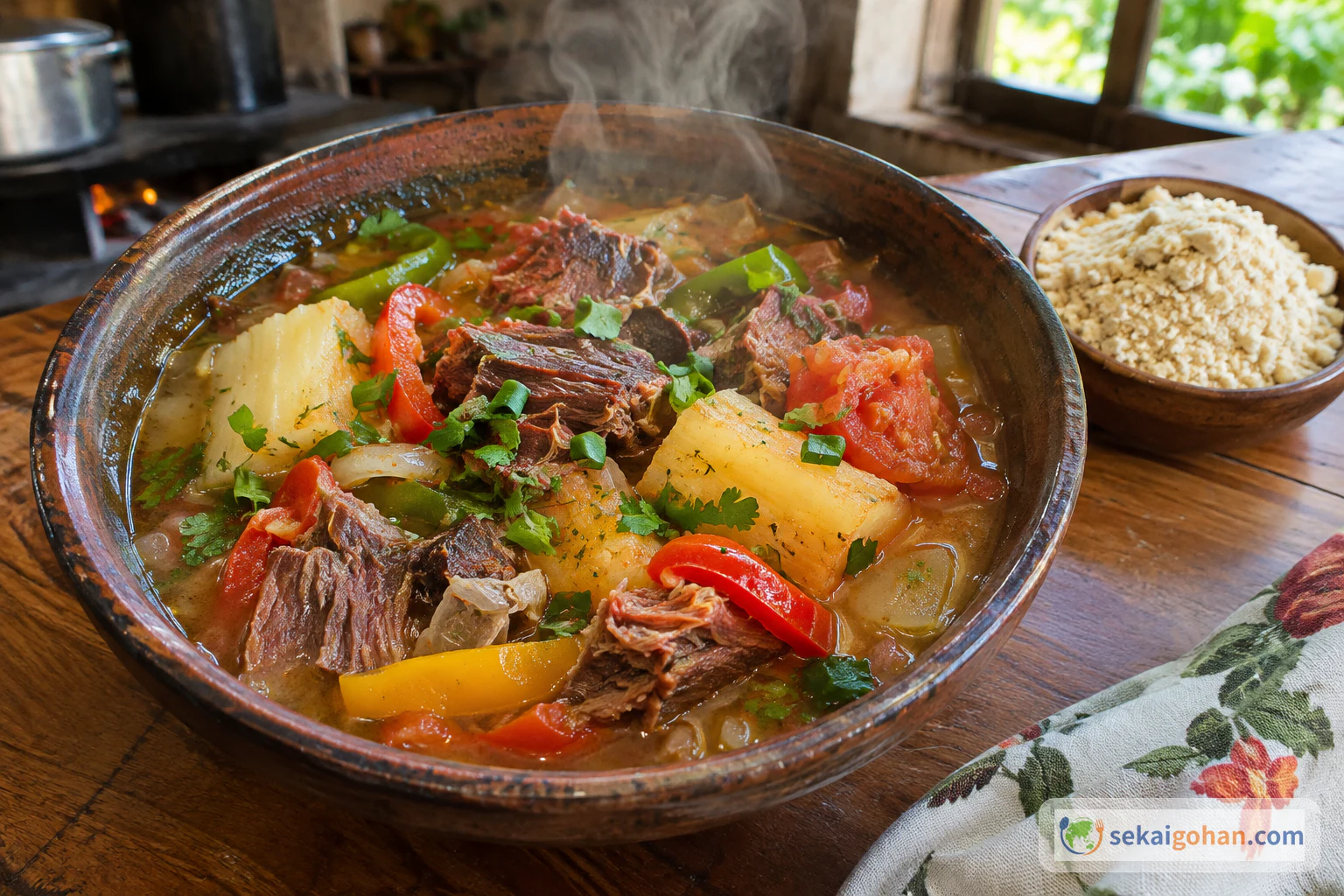
Moqueca is a different kind of Brazilian cooking from charcoal-grilled churrasco or black-bean feijoada. It never puts a strong flame on the food, and there's no stock simmering for hours. The pleasure is the sauce, so you need something to take it up: white rice or farofa at home, and in Brazil also pirão, a thick side made by mixing cassava flour into the seafood cooking liquid.
The technique hides in the pot. Layering keeps the fish whole, the heat stays low enough that the coconut never over-boils, and you have to judge how much dendê oil to add for aroma. Those quiet decisions change the result a great deal.
Bahian and Capixaba Moqueca
Look up moqueca and you'll find moqueca baiana from Bahia next to moqueca capixaba from Espírito Santo. Both cook seafood with vegetables, but they use different ingredients, and the aroma and weight of the pot differ too.

| Type | Main ingredients | Flavor direction | Practical decision |
|---|---|---|---|
| Bahian | Coconut milk, dendê oil, bell pepper, herbs | Rich, strongly aromatic, yellow | Good for a first try. Easy with canned coconut milk |
| Capixaba | Olive oil, urucum (annatto), tomato, herbs | Light, fish flavor to the front | Goes without dendê oil or coconut |
| Home version | Coconut milk, paprika, neutral oil | Leans toward Bahian | The choice on days you can't find dendê oil |
Capixaba moqueca uses olive oil, with no dendê oil or coconut milk, and gets its color from urucum. What makes it Bahian is the combination of dendê oil and coconut milk, not the color.
Origins: Indigenous, African, and Portuguese Traditions
The word moqueca goes back to a term tied to Indigenous cooking: fish wrapped in leaves and heated near a fire. That method met colonization, coastal seafood, African ingredients, and Portuguese ideas of stewing, and became today's moqueca. Shrimp moqueca belongs to Afro-Brazilian cuisine, and its dendê oil, coconut milk, and chili came out of those crossings, where coastal ingredients and food culture from across the Atlantic overlapped.
Salvador, the capital of Bahia, is known as a center of Afro-Brazilian culture. Dishes such as acarajé, vatapá, caruru, and moqueca often feature dendê oil, coconut, chili, and herbs. Brazil is vast, though, and the way dishes are flavored changes greatly from region to region.
Ingredients (serves 4): white fish and shrimp as the stars
The seafood doesn't need to be expensive. Choose a thick white fish and add a little shrimp, and the broth gains sweetness. Cod, sea bass, swordfish, and sea bream, in fillets that aren't too thin, are easy to handle. If using frozen fish, wipe off the moisture well after thawing.

This dish contains fish and shrimp. If you have a shrimp allergy, use white fish only, and check the ingredients of any seafood stock or seasoning. Cook the fish until the center reaches 145°F (63°C). Move leftovers to a shallow container to cool quickly, refrigerate, and finish them by the next day.
Where to find dendê oil and farinha
Dendê oil and farinha are not always at a nearby supermarket. Look in Brazilian or Latin American groceries, or buy online. If you are making moqueca just once, replace dendê oil with neutral oil and paprika, and skip the farofa. If you plan to cook Brazilian food often, the local aroma and texture are worth buying.
Buy dendê oil if you want the Bahian aroma. Check the label for edible cooking oil, and check the quantity. If you are making it only once, or dislike strongly scented oil, use neutral oil and paprika and skip the dendê.
Buy farinha to make the farofa that soaks up the moqueca sauce. Get it if you also plan to make farofa or meat dishes; for this pot alone, white rice is enough. Check that the label says cassava or manioc, and whether it is already toasted.
Choosing Ingredients and Substitutes for Moqueca
Away from Brazil, focus on what makes the dish work rather than hunting down perfect authentic ingredients. Hold on to gentle cooking of the seafood, the roundness of coconut, the aroma of red oil, herbs, and acidity. The type of fish, the pot, the heat source, and some of the sides can change freely.
Dendê Oil
Outside Brazil, the hard part is less the fish than the dendê oil. It's an edible red palm oil that gives Bahian cooking its color and aroma, and your nearby supermarket may not carry it. If you can get it, make the Bahian version. If not, the home version with neutral oil and paprika still works.
Paprika or turmeric can make the orange color, but they can't fully replace the aroma of dendê oil. Too much dendê oil can feel heavy at home, so learn the aroma with a small amount the first time, then increase it next time.
Freshness matters. Old dendê oil easily takes on an oxidized smell, so after opening, store it in a cool, dark place. If the smell turns heavy, skip it: you add this oil for color and aroma, and the paprika and neutral oil version will taste better than a stale bottle.
Dendê oil is a kind of palm oil. Aroma and refinement differ by product. When buying, check for "edible," "red palm oil," or "dendê oil," and don't use industrial or cosmetic oils in cooking. If environmental concerns matter to you, choose a product with a sustainability label.
Fish and Shrimp
Thin cod fillets are convenient but fall apart in the stew. Swordfish, sea bass, sea bream, and thick boneless white fish are steadier. If using frozen fish, wipe off the moisture carefully after thawing. Leftover water thins the sauce.
A little frozen peeled shrimp adds sweetness and stock to the sauce and makes even ordinary fillets more satisfying. If you add squid or shellfish, watch them: squid turns tough if simmered long, and shellfish release salt. For a first try, fish and shrimp are plenty.
Coconut Milk and Herbs
Don't use sweet coconut cream or the coconut drinks sold for baking and mixing. Use canned unsweetened coconut milk. Light types lack the body to stand up to the seafood stock, so use the regular type the first time.

Coconut milk is close to irreplaceable. Swap in milk or cream and you get a cream stew, not Brazilian food. If you dislike coconut, move toward the capixaba style instead: leave out the coconut milk and finish lightly with olive oil, tomato, and annatto or paprika.
Leaving out cilantro entirely makes the seafood and coconut sweetness feel a little flat. If you dislike it, make up the green aroma with flat-leaf parsley, scallions, or a small amount of another herb, just 2–3 leaves if it's a strong one. It moves away from Bahian, but it suits many tables.
Substitution Table

| Authentic ingredient or tool | Substitute | Why it's acceptable |
|---|---|---|
| Fish like badejo or robalo | Cod, sea bass, sea bream, swordfish | A thick white fish suits the sauce |
| Dendê oil | A little red palm oil, or neutral oil plus paprika | The aroma drops, but it works as a home version |
| Malagueta chili | Fresh chili, cayenne, sliced dried chili | Heat can be adjusted from mild |
| Clay pot | Heavy pot, cast-iron pot, deep skillet | It only needs even, gentle simmering |
| Coriander leaf | Cilantro, flat-leaf parsley, scallions | Makes up the green aroma |
How to make it: layer, don't stir, keep the fish whole
Moqueca is not a dish where you stir the pot over and over like a stir-fry. Spread the vegetables, layer the seafood, pour in the coconut milk, and cook over gentle heat. Fish breaks easily, so the biggest trick is resisting the urge to stir with a wooden spoon.
The most common failure with moqueca is fish breaking into "coconut fish crumble." Instead of stirring, hold the pot and shake it gently. If the bottom seems about to scorch, the heat is too high.
Common Moqueca Mistakes and Fixes
With so few ingredients, every decision shows in the flavor, above all the dendê oil, the thickness of the fish, and the heat under the coconut milk. Get those three right and even a first attempt turns out quite good.

If you fry dendê oil hard from the start, the aroma tends to get heavy. Some home recipes in Bahia add it early, but in a home kitchen adding it toward the end is easier to adjust. Start with 2 tsp; if you want more aroma, add a few drops at the table.
Broken fish usually comes from thin fillets or a spoon. Cut the fish large and shake the pot instead of stirring, so the pieces stay whole while they take on the sauce. Hard boiling also does damage, toughening the seafood and making the coconut milk separate, so keep the pot at a gentle simmer.
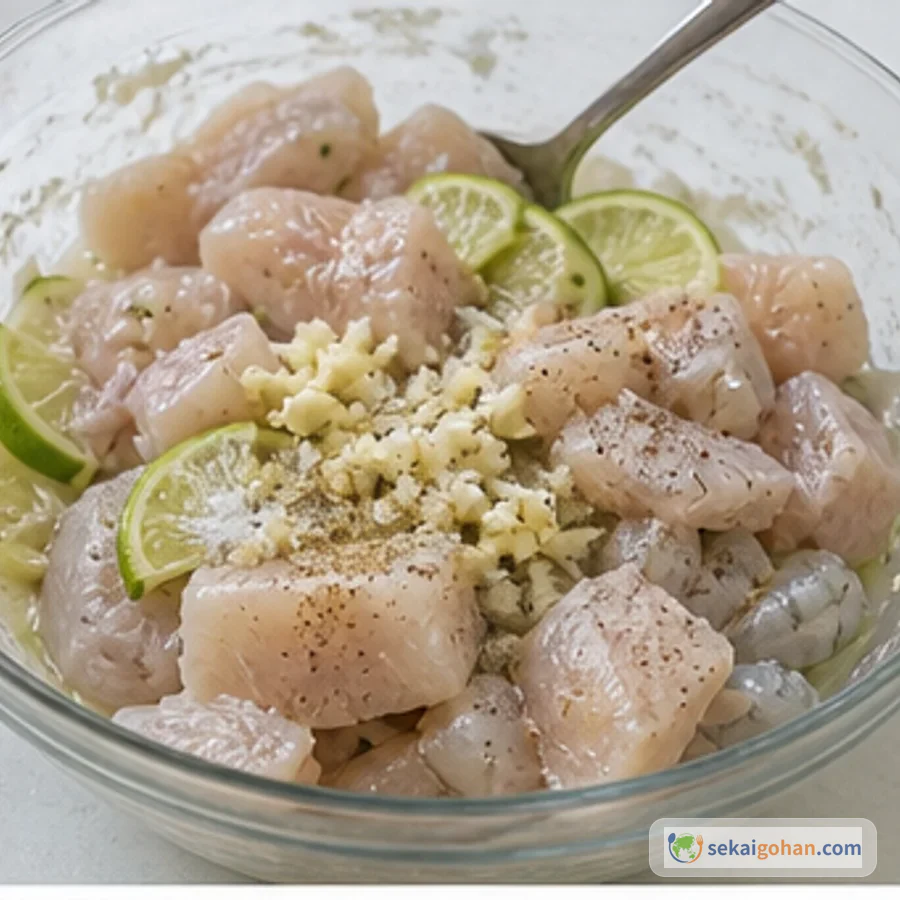
Don't marinate the seafood in lime for long. As with ceviche, the acid firms it, and in the moqueca only the surface turns tough.
Serving and Storing Moqueca Baiana
Sides and Menus

On a weeknight, white rice, moqueca, and lemon are enough. If you don't have time for farofa, fine dried breadcrumbs toasted in a little butter will still take up the sauce, and a salad of tomato and onion dressed with vinegar goes well alongside.
On a weekend, make a cassava flour side with how to make farofa and put vinagrete in a small bowl. Coconut from the moqueca, toasty farofa, and the acidity of the vinagrete give your palate somewhere to go.
Think of churrasco for a meat day, feijoada for a bean day, and moqueca for a seafood day, and a Brazilian table comes together easily. Farofa and vinagrete go with all three, so a side you've learned carries over to the next dish.
Mixing farofa all at once into the moqueca soaks up too much sauce and turns heavy. Set it at the edge of the plate and eat from where it touches the sauce a little, to enjoy both the dry and the moist.

Drinks
With coconut and dendê oil in the pot, a chilled white or sparkling wine goes down more easily than a heavy red. Beer drinkers should reach for a light lager. Without alcohol, sparkling water with a squeeze of lime is plenty.
Storage and Reheating
Moqueca looks like a good make-ahead dish, but seafood and coconut milk don't keep long. It's best the day you make it. Don't leave leftovers in the pot; move them to a shallow container and cool them quickly.
| State | Storage guideline | Reheating |
|---|---|---|
| Freshly made | Same day | Eat before the fish breaks down |
| Refrigerated | Until the next day | Warm on low heat; don't boil |
| Frozen | Not recommended | The fish falls apart and the coconut tends to separate |
| Sauce only | 2 days refrigerated | Only with the seafood removed. Add fresh fish after reheating |
A pot reheats it better than a microwave. Warm it slowly over low heat and turn it off as soon as it bubbles, because repeated warming toughens the fish and shrinks the shrimp.
Seafood stew is not a dish to refrigerate and reheat repeatedly. Portion the leftovers and warm only what you will eat. Don't eat anything with a stronger smell or an odd sourness.
By the next day the fish is a little broken, and it tastes better if you don't force it to look like yesterday. Break the fish up in the warm sauce, reduce it slightly, and toss it with short pasta or penne for a coconut seafood sauce. If it needs liquid, add coconut milk or water 2 tbsp at a time, not milk. For rice, skip risotto: spoon a little sauce over warm rice with a bit of farofa on top. Binding it with egg locks in the fish aroma too much, so brighten it with herbs and lemon instead.
Making Ahead for Guests
The day before, you can cut the vegetables, measure the non-seafood ingredients, and make the farofa and vinagrete. When guests come, don't make the moqueca itself too early. Cook the rice and chill the vinagrete first, then put the seafood in the pot about 20 minutes before everyone sits down, and it will be just plump when you serve it.

FAQ
Q1. Can I make it without dendê oil?
Yes, though the Bahian aroma will be weaker. For a home version, make up the color with 1 tbsp neutral oil, 1 tsp paprika, and a very small amount of turmeric. To get closer to the real thing, buy a small bottle of dendê oil just once and try it from 2 tsp at the end.
Q2. Which fish do you recommend most?
For a first time, swordfish, sea bass, sea bream, or thick cod are easy to handle. Thin cod breaks easily, so cut it large and don't stir. Salmon works too, but its fat and aroma are strong, so treat it as a different dish from the Brazilian white-fish moqueca.
Q3. Can I make it mild for children?
Yes. Leave out the chili and start the dendê oil at 1–2 tsp. The adults can add cayenne or chili oil at the end, so you don't have to split the pot. Go easy on the lime or lemon for children and let people add more at the table.
Q4. The coconut milk separated. Is that a failure?
A little floating oil isn't a failure. Hard boiling makes it separate, so next time lower the heat as soon as it bubbles. If it turns completely grainy, turn off the heat, shake the pot, and adjust the flavor before adding lime. Stirring hard to fix the separation will break the fish.
Q5. Is it good with white fish only, without shrimp?
It is. Shrimp adds stock and sweetness, so if you use only white fish, increase it to 1.5 lb (650 g), or add a little stock made from fish trimmings for body. For ease, you can add 1/2 tsp of an additive-free fish stock.