Cold potatoes cut thick, laid on lettuce and covered with plenty of yellow sauce, then finished with boiled egg and black olives. It sounds like just boiled potatoes with sauce, but with Peru's papa a la huancaína, that "just" is what wins you over. The plate looks mild, yet one taste brings together the bright Peruvian pairing of chili and dairy: yellow ají amarillo, salty white cheese, crackers for body and milk for roundness. It works as an appetizer or a light lunch.

About papa a la huancaína
The name and its origins
Papa a la huancaína means "potatoes in the style of Huancayo." Its origin has more than one story. A common account says local women sold boiled potatoes and a spicy cheese sauce to workers building the railway linking Lima and Huancayo. Another says a sauce made with the cheese and chilies of the Huanca region spread through Lima's restaurants and became a city appetizer.
In Spanish it is written papa a la huancaína. Huancaína is an expression tied to the central Peruvian city of Huancayo and the Huanca region. In English you also see "papas a la huancaína" and "huancaina sauce". Here we use huancaína throughout.
How it is eaten in Peru
Whichever story you believe, the core is easy to see: Andean potatoes, ají amarillo and white fresh cheese, together as a cold appetizer. In Peruvian homes and restaurants it is often served as an entrada at the start of a meal. Placed before a meat or rice dish, it does not feel too heavy.

Ají amarillo and the sauce
In Peruvian cooking, chili gives a dish its aroma and color as well as its heat, and ají amarillo is the leading example. Though called yellow, it is nearer orange when ripe, with a fruity aroma behind the heat. In huancaína sauce it is rounded with cheese and milk and thickened with crackers or bread.
The sauce is creamy, but it should never taste like mayonnaise. Oil, dairy and crackers make it smooth while keeping the aroma of ají amarillo front and center. Hold back too much chili out of fear of the heat and you end up with a plain yellow cheese dip.
Huancaína, ocopa and other potato dishes
Peru also has a potato dish topped with a green sauce, ocopa. Ocopa often uses the herb huacatay, peanuts and cheese, and the green fragrance of the herb is the star. Remembering that huancaína stars the yellow aroma of ají amarillo and the roundness of cheese makes them harder to confuse.
Among South American potato dishes, huancaína is very simple. Colombia's ajiaco breaks the potatoes down to thicken the soup, and Peru's causa limeña shapes a yellow potato dough. Huancaína keeps the potatoes whole and lets the sauce take over the plate, unlike a stuffed appetizer such as Venezuela's reina pepiada.
It also makes a very dependable first Peruvian dish. It is easier to shape than causa limeña, needs less worry about fish freshness than ceviche, and is simpler to cook than lomo saltado.
Ingredients (serves 4)
This amount serves four as an appetizer. For a main, increase the potatoes to 2.25 lb (1 kg) and make about 1.2 times the sauce. Make a little extra sauce so you can pour generously.
| Ingredient | Amount | Substitutes and notes |
|---|---|---|
| Potatoes | 1.5 lb (700 g) | Floury, yellow-fleshed. About 4–5 medium |
| Salt | 1 tsp | For the cooking water |
| Lettuce | 4 leaves | Leaf lettuce also works |
| Hard-boiled eggs | 2 | Boil until firm |
| Black olives | 8 | Pitted are easier to handle |
| Parsley | a little | Optional |
Huancaína sauce
| Ingredient | Amount | Substitutes and notes |
|---|---|---|
| Ají amarillo paste | 2 tbsp | With the substitute sauce, adjust from 2 1/2 tbsp |
| Cottage cheese | 4 oz (120 g) | Queso fresco is best if you have it |
| Cream cheese | 1.5 oz (40 g) | If using cottage cheese alone, add 1 tbsp oil |
| Evaporated milk or milk | ½ cup (120 ml) | Or ½ cup (100 ml) milk plus 1 tbsp cream |
| Low-salt crackers | 1.25 oz (35 g) | Or 1 oz (30 g) of the white part of sandwich bread |
| Neutral oil | 2 tbsp | Use an oil with a mild aroma |
| Garlic | 1/2 clove | Strong in aroma, so do not overdo it |
| Lime juice | 2 tsp | Lemon juice also works |
| Salt | 1/3 tsp | Adjust by the salt in the cheese and crackers |
| White pepper | a little | Black pepper also works |
Choosing ingredients for papa a la huancaína
With so few ingredients, a wrong substitute changes the taste right away. Because the sauce is poured on top, choose potatoes with a crumbly, floury texture; any floury variety works. Waxy potatoes alone feel a little watery once cold.

If you can get ají amarillo paste, use it; a small jar is plenty, though heat varies by product. If you have already made the ají amarillo substitute sauce (in Japanese), use that instead. The sweetness of yellow bell pepper rounds it a little, so finish with a bit of lemon or lime for definition.
Cheese needs the most thought. Queso fresco is an unaged white cheese, salty but not very assertive. If you use only one kind, cottage cheese comes closest, but with little fat it makes the sauce light, so mix in a little cream cheese for a smooth texture. The white part of a camembert or a low-salt feta can also go into the mix.
| Ingredient | Best | Substitute | Avoid |
|---|---|---|---|
| Potatoes | Floury, yellow-fleshed potatoes | Frozen peeled potatoes | Only waxy potatoes, only new potatoes |
| Ají amarillo | Jarred paste | Yellow bell pepper substitute sauce | Only hot sauce, only chili flakes |
| White cheese | Queso fresco | Cottage cheese plus cream cheese | Pizza cheese, blue cheese |
| Milk | Evaporated milk, unsweetened | Milk plus a little cream | Sweetened condensed milk |
| Thickener | Low-salt crackers | The white part of sandwich bread | Sweet biscuits |
This recipe means unsweetened evaporated milk, not sweetened condensed milk. Sweetened condensed milk makes the sauce taste like a dessert. If you cannot find evaporated milk, use milk with a little cream added.
Method: stop the sauce a little strong before chilling
Huancaína is not meant to be eaten piping hot. So if the sauce tastes a bit strong while you make it, it will be just right over cold potatoes. But if you add too much milk at the blender stage, the sauce runs off the plate.
If you make it in a bowl, strain the cottage cheese through a sieve and bring the cream cheese to room temperature before mixing. Crush the crackers finely through the bag and soak them in milk before adding. It will not be perfectly smooth, but you can enjoy it as a homey graininess.
Fixing huancaína sauce thickness and heat
Almost every failure with papa a la huancaína comes down to the thickness of the sauce; the potatoes are just boiled and cut, so they rarely go wrong. A thin sauce becomes a yellow puddle on the plate. A sauce that is too heavy pushes the cracker flavor forward and won't cling to the potatoes.

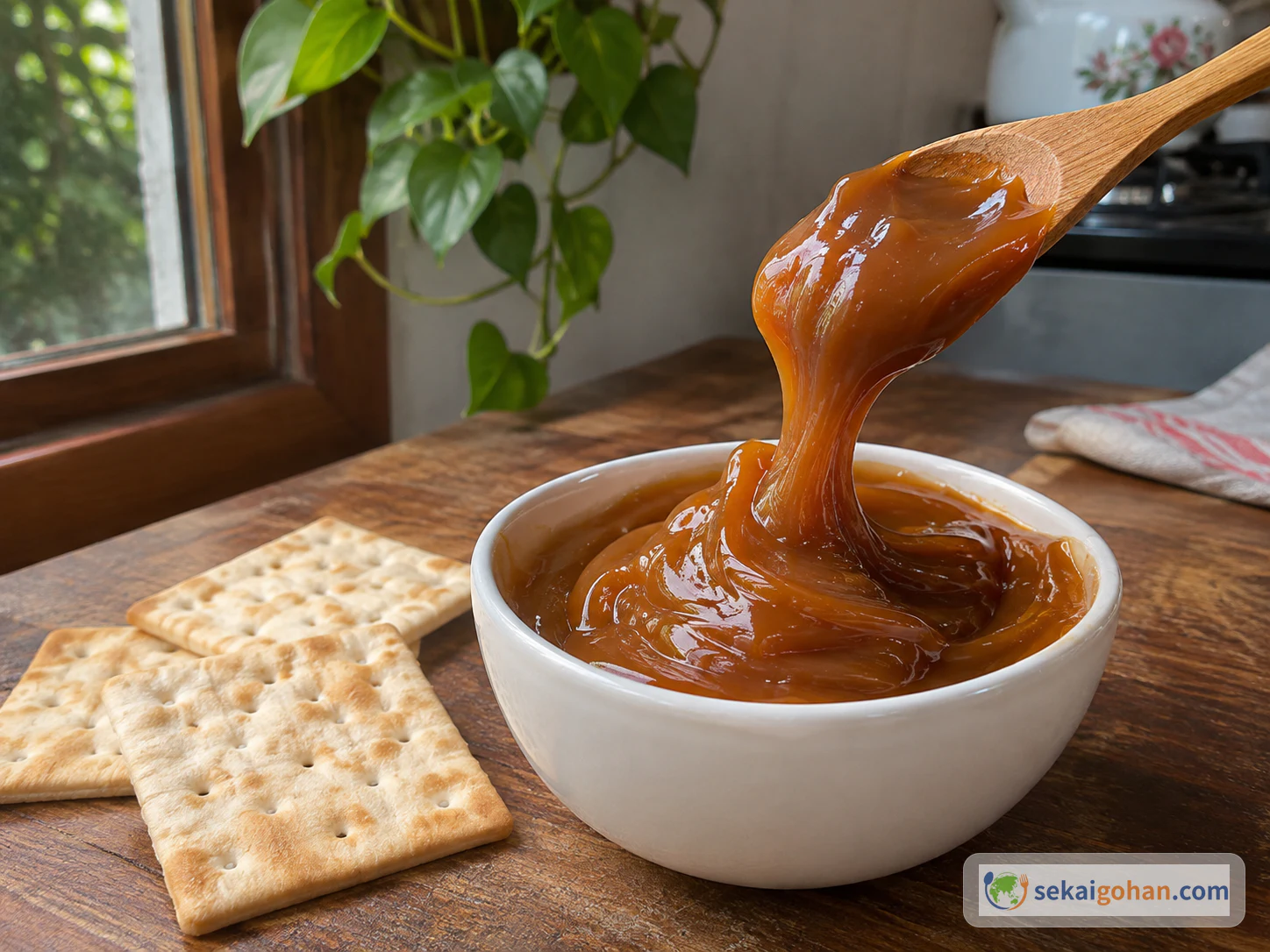
To test it, coat the back of a spoon with sauce and draw a line through it with a finger. The line should hold for a moment, and the sauce should feel a little heavier than pasta sauce and a little looser than a dip. It tightens in the refrigerator, so don't worry if it isn't perfectly firm when freshly made.
| State | Cause | Fix |
|---|---|---|
| Watery | Too much milk, or the potatoes were too warm | Add 1–2 crackers and leave 5 minutes |
| Floury | Too many crackers, or not blended enough | Add 1 tbsp milk and 1 tsp oil and blend again |
| Too hot | Too much paste | Add 1 oz (30 g) cheese and 2 tbsp milk |
| Flavor is blurry | Not enough salt and acidity | Add a little salt and 1 tsp lime juice |
| Smells of cheese | An aged cheese was used | Add a little ají amarillo and lime |
For heat, start modest if the whole family is eating. Peru's ají amarillo runs medium or hotter, though the dairy rounds it, and jarred paste varies a lot from brand to brand. Blend with 1 1/2 tbsp, check the color and aroma, then add more as needed.
Running it at high speed for several minutes warms the sauce and makes the dairy aroma heavy. Blend for 30 seconds, stop, scrape the sides, and blend 30 seconds more. Blending in short bursts balances smoothness and aroma more easily.
Serving, variations and storage
Serving papa a la huancaína
To serve it the way it's eaten locally, treat it as a cold appetizer: lettuce on the bottom of the plate, potatoes on top, then sauce, egg and black olives. As the overview of Peruvian cuisine (in Japanese) shows, huancaína, like ceviche and causa, brightens the start of a meal. Follow it with a sour dish or grilled meat.
On a weeknight, serve it with grilled chicken or fish; with the potatoes on the table, you can cut back on rice and still feel satisfied. For a Peruvian spread on a day off, serve ceviche, huancaína and lomo saltado in that order for a nice run from cold acidity to a creamy appetizer to a hot stir-fry.
For a lighter menu, skip the rice and pair it with something sour, such as a stew like adobo as the main; the roundness of the dairy works as a palate cleanser. For a South American menu, Chile's pastel de choclo or Brazil's vinagrete link corn, potato and acidity on one table.
In Peruvian cooking, potatoes, corn and chili often share a table. Just adding grilled corn or frozen corn creates the atmosphere. Sweet corn softens the heat of ají amarillo.
Variations
In Peru the sauce goes well beyond potatoes: it is tossed with pasta as tallarines a la huancaína, spooned over meat and used as a dip for vegetables. At home, leftover sauce gives you broccoli, boiled chicken or grilled corn the next day.
| Variation | How to make it | When it suits |
|---|---|---|
| Huancaína pasta | Toss the sauce with boiled spaghetti | Lunch the next day with leftover sauce |
| Boiled chicken huancaína | Shred chicken breast and pour the sauce on | Days you want more protein |
| Warm vegetable dip | Serve with broccoli, carrots and corn | A side dish the children also eat |
| Milder version | Halve the paste and add yellow bell pepper sauce | For family, potluck |
| Richer version | More cream cheese, less milk | Days to pair with wine or bread |
For pasta, keep the sauce off the boil; strong heat separates the cheese and turns it grainy. The residual heat of freshly boiled noodles is enough to warm it. If you want it a little warmer, put the sauce and some pasta water in the pan with the heat off and toss with the noodles.
Storage and make-ahead
Store the potatoes, sauce, eggs and olives separately rather than as a finished plate. Plated on lettuce in the refrigerator, the leaves release water and thin the sauce, and the egg surface dries. For the best look, at home or at a potluck, pour on the sauce and plate within the 30 minutes before eating.

Boiled, peeled and cut potatoes keep in an airtight container in the refrigerator until the next day; press plastic wrap right against the surface so they don't dry out. The sauce keeps in a clean container in the refrigerator for about 2 days. If it has stiffened, stir in milk 1 tsp at a time before eating.
Keep the eggs in their shells and cut them just before plating. Drain the black olives and keep them in a separate container. Wash the lettuce, wipe off the water and put it in a bag with paper towel, and all that's left before eating is making the plate.
This dish uses dairy and eggs, so avoid leaving it at room temperature in summer. For a potluck use ice packs and keep the sauce cold until just before eating. If serving at an outdoor table, plate small amounts at a time and return the rest to the refrigerator.
Frequently asked questions

Q1. What can I substitute if I have no ají amarillo?
Roast yellow bell pepper and combine it with chili, a little turmeric and lime. Chili flakes or hot sauce alone give heat without the color or fruity aroma. Use about 2 1/2 tbsp of the substitute sauce and finish with lime for definition.
Q2. What cheese should I buy?
Queso fresco is best, but it is hard to find outside Peru. To start, use 4 oz (120 g) cottage cheese plus 1.5 oz (40 g) cream cheese; cottage cheese alone is light, and cream cheese alone is heavy. Grated hard cheese or pizza cheese has a strong aroma and moves the sauce away from huancaína.
Q3. Can I pour it over warm potatoes?
You can, but it works better as a cold appetizer. Hot potatoes loosen the sauce and make the dairy aroma heavy. Let them cool until warm enough to touch, then pour on the cold sauce, and the flavor tightens.