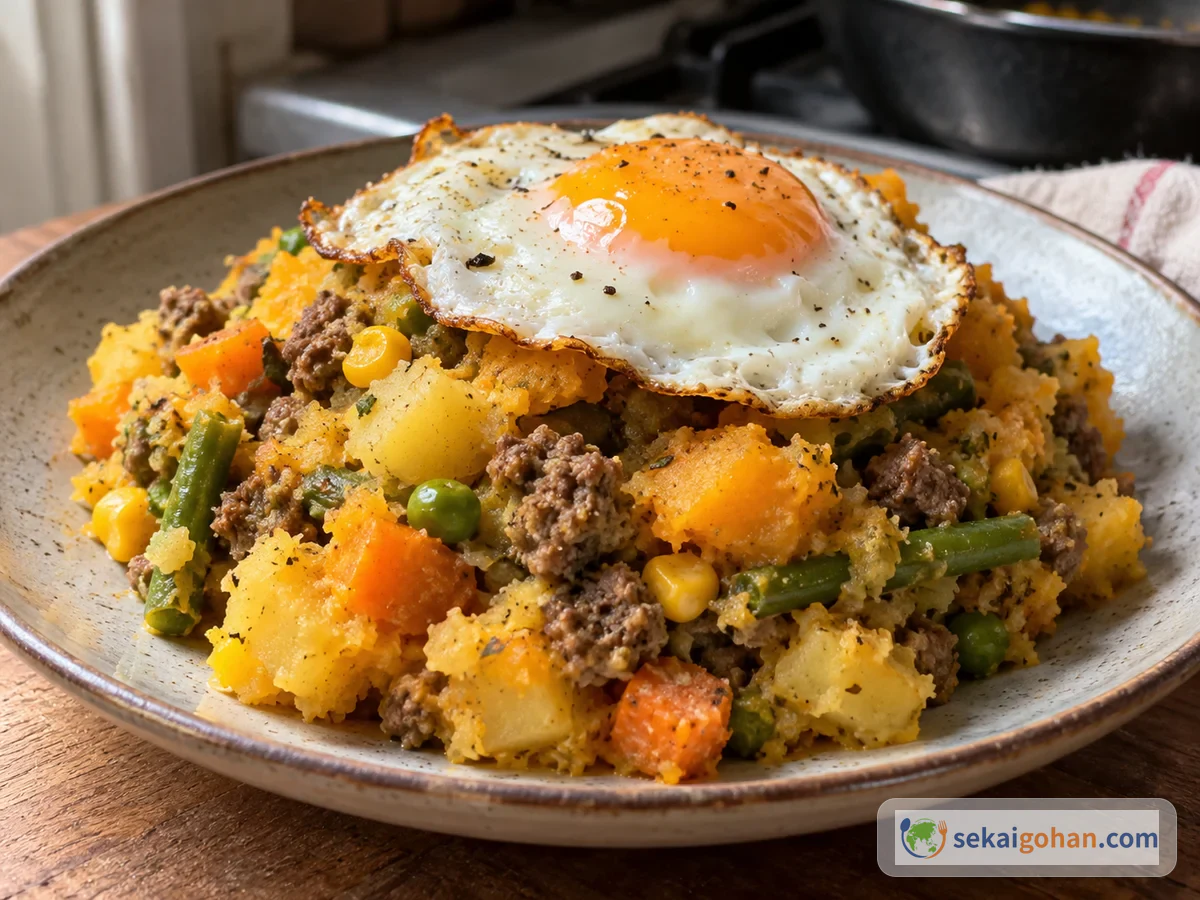
The top bakes to a crisp golden brown. Break through it with a spoon and you reach layers of savory meat, salty olives, sweet raisins and mellow boiled egg, and the sweet corn mixes with the deeply savory filling in your mouth. Pastel de choclo is Chile's corn pie: a spiced meat filling (pino) under a thick layer of ground fresh corn, baked in the oven. It shows up on Chilean tables when summer starts, and after one bite you can see why Chileans call it a taste of summer. Every ingredient can be found at an ordinary supermarket.
About Pastel de Choclo
Choclo is the Quechua-derived word for corn, and pastel is the Spanish word for pie or cake. It used to be a seasonal dish, made when corn was harvested during the Chilean summer (December to March). Frozen corn now makes it possible to eat it all year.
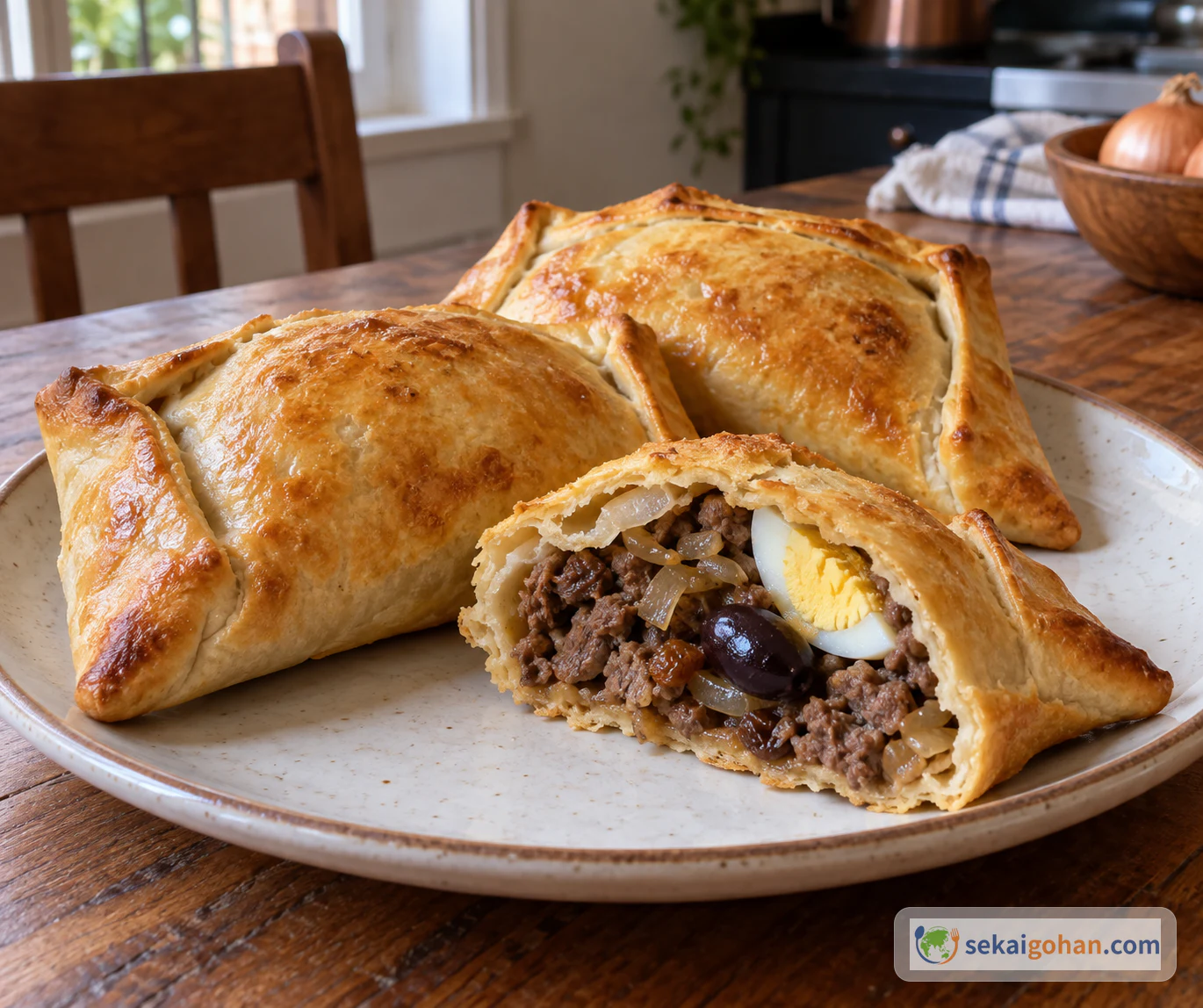
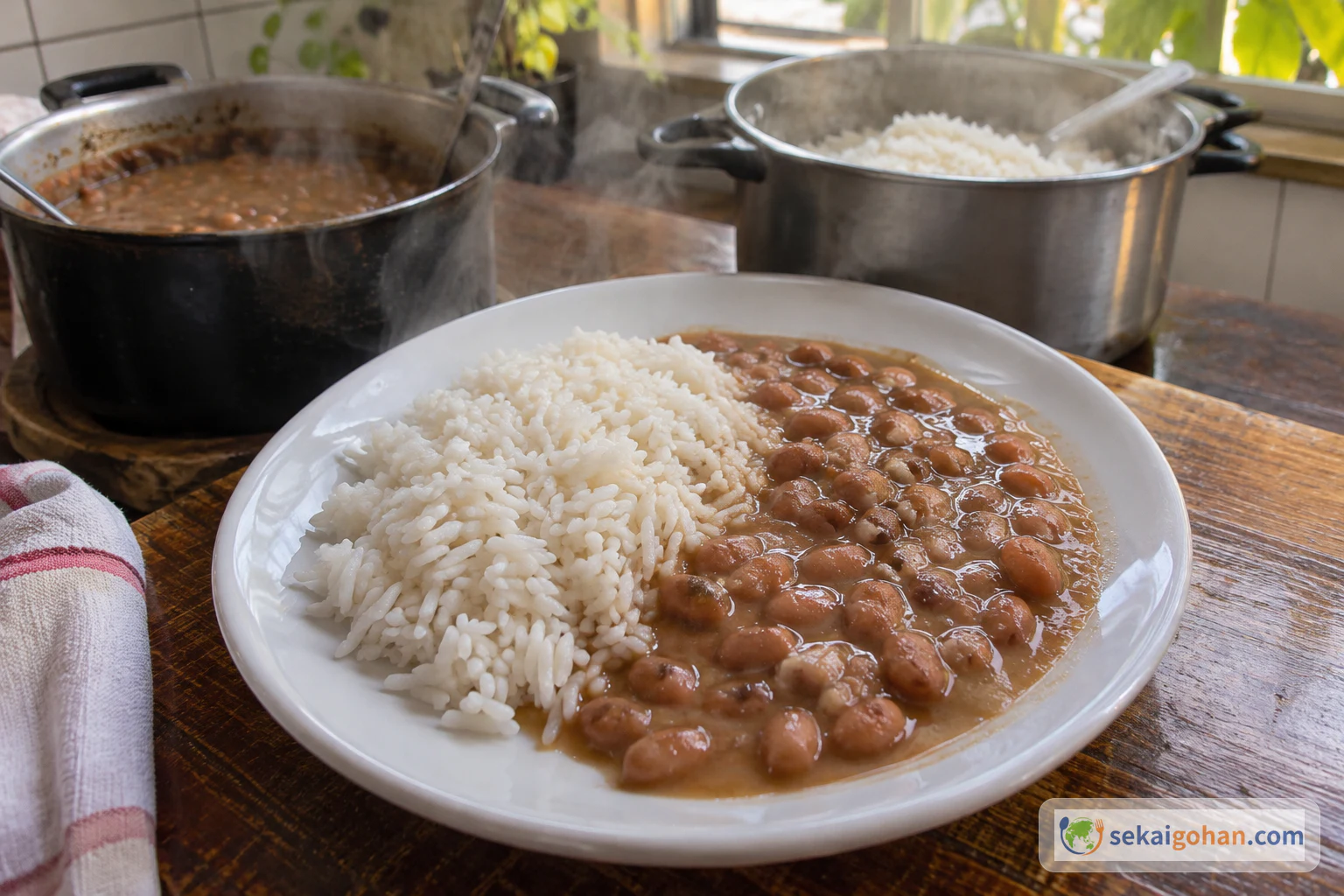
It is Chile's national comfort food and one of South America's classic dishes, alongside Brazilian feijoada and Peruvian ceviche. The filling is the same kind of pino that goes into Argentine empanadas.

The Mapuche Roots of Pastel de Choclo
The dish starts with the food of Chile's Indigenous Mapuche. Before the Spanish arrived, the Mapuche were already making humita, ground corn wrapped in leaves and steamed. After the Spanish colonized Chile in the sixteenth century, European ways of cooking meat merged with Mapuche corn dishes. The idea behind the Spanish empanada filling met the Mapuche corn paste, and pastel de choclo was born.
Grandmother's Summer Cooking
To Chileans, pastel de choclo is "grandmother's summer cooking," and it carries a lot of nostalgia. Every family makes it a little differently and picks its own olives, raisins, chicken and sugar. You see the same thing with the secret spice blends each family keeps for Jamaican jerk chicken. South American food is deeply rooted in seasons and celebrations, as the primer on South American cuisine (in Japanese) explains.
Ingredients (serves 4)
Contains dairy (butter, milk), egg, and possibly wheat (corn itself is gluten-free, but cornstarch can contain traces of wheat). If you avoid dairy, replace the butter with coconut oil and the milk with oat milk.

Choosing Corn and Basil
Pastel de choclo depends on sweet corn. Chileans use summer choclo, which is fresh white corn, and outside Chile sweet corn is the closest match. Fresh corn is best in season. In winter, frozen corn works well (see the FAQ below).
Basil (albahaca) in the corn paste is traditional in Chile, so don't skip it. Without basil the paste is only sweet, and its freshness is what links the sweet corn to the savory pino. If you have no fresh basil, 1 tsp dried basil can stand in.
Method
Make the pino (meat filling)
Make the corn paste
Assemble and bake
If the surface does not brown, switch to the oven's top heat (grill) for the last 5 minutes only. The temperature rises quickly, so watch that it does not burn. The golden color is what defines the look of pastel de choclo.
If the pino is still too wet, the corn lid collapses and sinks in the oven. Cook off the liquid in the pan until the filling is neither wet nor dry and crumbly.
Pastel de Choclo Variations and Nutrition
Chilean Variations
Pastel de papa is made in autumn and winter when corn is out of season, with a lid of mashed potato instead of corn. It comes out close to shepherd's pie. Make mashed potato from 1.25 lb (600 g) potatoes, 1 oz (30 g) butter and ½ cup (100 ml) milk, and assemble the dish the same way.
Seafood version: in place of the pino, use shrimp, scallops and white fish steamed in white wine. This one is popular on Chile's coast, which shares its seafood culture with Peruvian ceviche.
Other Twists
Wafu pastel de choclo uses the filling of nikujaga (Japanese braised meat and potatoes) instead of the pino. The sweet-savory Japanese seasoning goes surprisingly well with the corn, and soy sauce gives the depth that cumin usually adds.
Canned cream-style corn version: when you're short on time, heat 2 cans (14 oz (400 g) × 2) of cream-style corn with 15 g butter, 1 egg and a little salt for a quick corn paste. The texture isn't the same as the real thing, but it saves 15 minutes. Like Mexican mole poblano, Latin American dishes adapt well to home kitchens elsewhere.
Nutrition (per serving, of 4)
| Nutrient | Amount |
|---|---|
| Energy | 580 kcal |
| Protein | 1.25 oz (32 g) |
| Fat | 22 g |
| Carbohydrates | 2.5 oz (68 g) |
| Fiber | 6 g |
| Sodium | 620 mg |
The corn provides plenty of fiber, and the beef and chicken provide good protein. It is high in calories, though, so watch your portion size.
More Dishes from the Region
Frequently asked questions
Q1. Can I make it without fresh corn?
Yes. 1.25 lb (600 g) of frozen corn works fine, and many Chilean households use it now. Bring it to room temperature before processing, and add a little more butter and milk (½ cup / 120 ml) to make up for the flavor. Canned corn works too; if it's packed in water, drain it first.
Q2. What if I do not have clay dishes?
Any oven-safe dish works: gratin dishes, ramekins or heatproof glass. In Chile the traditional vessel is a clay dish called a paila. You can also bake it in one large dish and serve from that.
Q3. Can I leave out the boiled egg and olives?
You can, but each one matters. The egg adds mellowness and the olives add a salty accent. Without both, the flavor goes flat, so keep at least one.
Q4. Is it good the next day?
Yes. It keeps 3 days in the refrigerator. Reheat it in a microwave or in a 350°F (180°C) oven for 10 minutes; in the oven the corn lid crisps up again and tastes close to freshly baked.
Summary
Pastel de choclo is the identity of Chilean food itself, born when the corn culture of the Indigenous Mapuche met the meat cooking of the Spanish colonists. Under a lid of sweet corn are hidden cumin-spiced meat, salty olives, sweet raisins and mellow boiled egg, and every spoonful brings a new combination of flavors.
It is best made with sweet corn in season, but frozen corn reproduces it well. With a gratin dish and an oven you can try it today. Together with Brazilian feijoada, Peruvian ceviche and Argentine empanadas, experience the richness of South American food.