The first time a grilled steak lands on the cutting board, the kitchen fills with the smell of meat juices and browned fat. Salt and pepper alone are good. Then you take a small jar from the refrigerator and spoon on a green sauce that smells of chopped parsley and garlic, and suddenly the same meat belongs on a South American table. That sauce is chimichurri, a raw herb sauce from the grilling culture of Argentina and Uruguay, sharp with vinegar, bright with herbs, and made to cut through the richness of grilled meat.

Chimichurri and the Argentine asado

Chimichurri belongs to asado, the grilling tradition of Argentina and Uruguay. Parsley, oregano, garlic and chili form the foundation, with red wine vinegar and oil. Nothing is cooked: you chop everything fine, mix, let it rest a little, and spoon it over the meat.
Argentine beef culture likes its meat seasoned with only salt and pepper, and chimichurri is the one exception everyone loves. Asado meat isn't marinated. It is grilled over embers with salt, and aroma and sourness are added at the table. The sauce brightens the fat of grilled meat rather than hiding it, and it shows up just as happily beside churrasco, empanadas and revuelto gramajo, the scramble of egg and shoestring potatoes. You'll find it in the overview of South American cuisine (in Japanese) too.
Gauchos, immigrants and the name
The sauce grew out of the gaucho culture of herding cattle on the Argentine pampas, where meat was grilled out on the grassland and eaten with salt. European immigrants brought their own way with herbs, vinegar and oil, and the two came together in today's sauce. Nobody is sure where the name comes from. One theory points to the Basque tximitxurri. English speakers also tell a story about an Irishman named "Jimmy McCurry," but that is closer to folk etymology, and there is little evidence for it.
Every household has its own chimichurri. Some use more parsley, some more oregano, some stronger chili or sharper vinegar. At an Argentine asado, the asador watches the meat while each family's jar sits on the table.
Chimichurri vs. other South American sauces
South America has several sauces that do a similar job. Brazil's vinagrete is a salsa of diced tomato and onion, and farofa is a toasty meal that soaks up meat juices. Of these, chimichurri leans the hardest toward herbs and vinegar.
| Sauce | Main ingredients | Texture | Goes with |
|---|---|---|---|
| Chimichurri | Parsley, oregano, garlic, vinegar, oil | A liquid sauce with chopped herbs | Beef, chicken, fish, grilled vegetables |
| Vinagrete | Tomato, onion, bell pepper, vinegar, oil | Diced-vegetable salsa | Churrasco, bean dishes |
| Salsa criolla | Onion, tomato, chili, vinegar | Coarse relish | Locro, grilled meat, fried foods |
Ingredients (easy-to-make amount, about 6 servings)

This quantity covers 4 to 6 steaks, 2 to 3 chicken thighs, or one large platter of grilled vegetables. As a sauce, plan on 1 to 2 tbsp per person.
Chimichurri itself uses no wheat, egg or dairy. However, because it is a sauce of raw garlic and herbs in oil, avoid leaving it at room temperature. Once made, put it in a clean jar, keep it refrigerated, and eat it within 4 days. For longer storage, freeze it.
Ingredients worth thinking about when shopping
For parsley, choose flat-leaf if you can. Curly parsley has a stronger aroma, and finely chopped it can have a slightly green bitterness. But curly parsley is more easily available in many stores, so in that case remove the stems well and use only the leaves for easier eating.
Red wine vinegar gives chimichurri its outline. Made with grain vinegar alone it comes out a bit sharp, so combining rice vinegar and lemon juice suits home cooking. There is no need to buy an expensive olive oil, but it remains as an aroma at the end, so choose one that isn't too bitter.
Chimichurri ingredients and substitutes
The ingredients are easy to find, and most have a simple stand-in. If you can't get flat-leaf parsley, curly parsley will do. Rice vinegar and lemon can replace red wine vinegar, and coarse chili flakes can replace ají molido.
Some cooks elsewhere in Latin America add coriander. If you want to stay close to the Argentine style, though, keep parsley as the main herb and limit cilantro to about 10 g of the 1.5 oz (40 g) total.
Method
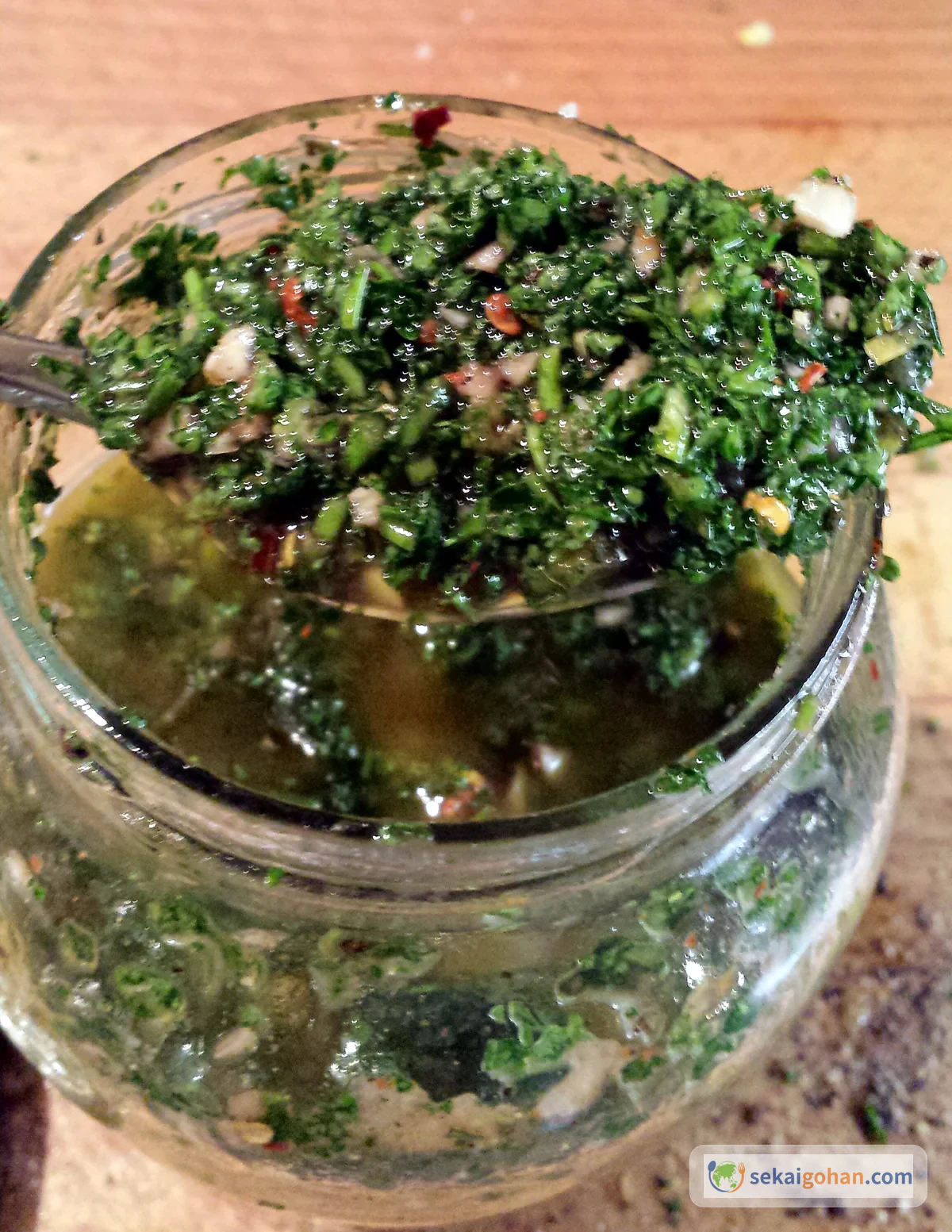
Tasting straight from a spoon makes the vinegar and garlic seem strong. Check it on what you'll actually serve it with: grilled meat, toast or potatoes. A sauce that is slightly strong on its own is just right on meat.
Getting the vinegar, oil and salt right
Too much oil is the most common reason chimichurri tastes dull. If you usually avoid sour sauces, the vinegar may seem strong at first, but asado needs a decent amount. Vinegar and herbs cut through the fat of the meat, the smoke from the embers and the salt.
The basic ratio is about 1.5 parts oil to 1 part vinegar. With less than half as much vinegar as oil, the sauce tastes more like herb oil and sits heavy on meat. Equal parts make it quite sharp, which suits grilled fish or chicken breast. For your first batch, start at 1.5 to 1 and it's hard to go wrong.
| Result | Oil | Vinegar | Good with |
|---|---|---|---|
| Basic | ½ cup (90 ml) | ¼ cup (60 ml) | Beef steak, chicken thighs, sausages |
| Fresher | ¼ cup (80 ml) | ¼ cup (70 ml) | Fish, pork, grilled vegetables |
| Mellower | ½ cup (110 ml) | 3.5 tbsp (50 ml) | Meat for children, mild chicken |
| For marinating | ¼ cup (70 ml) | ¼ cup (80 ml) | Chicken before grilling, mushrooms, onions |
Start with 1 tsp salt. If you salt the meat well, use 2/3 tsp in the sauce. For grilled vegetables or boiled potatoes, a little over 1 tsp is fine. Season it for whatever it's going on.
Chop everything fine, but don't purée it. If you use a food processor, stop while you can still see bits of parsley. Blend it smooth like a green juice and the oil and bitterness take over.
Don't leave a raw-garlic oil sauce out at room temperature. Garlic stored in oil at room temperature carries a risk of botulism. After making it, refrigerate it, and freeze it for the long term.
Serving chimichurri with meat, fish and vegetables

Beef is the classic pairing: steak, skirt steak, rump, roast beef, short ribs for grilling. Spoon the chimichurri onto the cut surface of the grilled meat, and the juices and vinegar run together into a little sauce on the plate. Serve it next to vinagrete with churrasco and you get Brazilian and Argentine grilling at the same meal.
Chicken works well too. Grill thighs with just salt and spoon chimichurri on right before eating. You get a green, herby aroma that's quite different from lemon chicken. For milder cuts like chicken breast or tenderloin, the mellower version with more oil suits better.
For fish such as salmon, mackerel, marlin or sautéed white fish, cut the garlic to 1 clove and add a little more vinegar. For grilled vegetables, try eggplant, zucchini, bell pepper, potato or corn. They're all excellent with it.
| Use | How to apply | A small touch |
|---|---|---|
| Beef steak | 1 to 2 tbsp after grilling | Rest the meat 5 minutes before spooning |
| Chicken thighs | Finish after browning the skin | A little lemon makes it lighter |
| Grilled fish | Over the top, with less garlic | More vinegar cuts fishiness |
| Grilled vegetables | Toss while still hot | Especially good with potatoes |
| Sandwiches | Mix with a little mayonnaise | Good for roast beef sandwiches |
Leftovers are useful. The next day, spread a thin layer on toast and top it with an egg, or serve it with grilled sausage for something close to choripán, the South American street food. Next to churrasco, empanadas or locro, a small dish of it brings out the flavors of Argentina and its neighbors.
Empanadas are already seasoned inside, so don't drench them. Serve chimichurri in a small dish and just dip the edge. A sharp, vinegary chimichurri works well with fried empanadas or meat-heavy fillings.
Storing chimichurri

You can make chimichurri ahead, but it won't keep the way a preserve does. It contains raw garlic, raw herbs and oil, so put food safety first.
| Storage method | Guideline | Good for |
|---|---|---|
| Refrigerated | Within 4 days | Best flavor, use as is on meat and vegetables |
| Frozen | 1 month | Portion in an ice-cube tray and use a little at a time on grilled food |
| Room temperature | Not allowed | On the table only during the meal. Discard leftovers rather than returning them |
In the refrigerator, the olive oil turns white and solid. That's normal for the oil. Take the jar out 10 minutes before eating and stir it gently, and it will turn liquid again. If it smells oddly sour, or shows mold, sliminess or foaming, don't eat it.
To freeze, put 1 tbsp into each cube of an ice-cube tray, then move the frozen cubes to a storage bag. Drop them straight onto hot grilled vegetables or meat, or thaw them in the refrigerator. The parsley darkens a little, but most of the aroma survives.
Don't keep adding fresh parsley or oil to a jar that has been served at the table. Meat tongs and spoons touching it increase the contamination risk. Put only what you'll use into a clean small dish, and don't return what's left in the dish to the storage container.
Chimichurri variations

There's no single right recipe. Once you have the basic green version down, change it a little at a time to suit the dish.
Red chimichurri
Add 1 tsp paprika, 1/4 tsp cumin and a little more chili to make red chimichurri. It's good with beef and sausage, and smoked paprika gives it a hint of charcoal. Too much heat drowns out the meat, so at first add just enough chili for color.
With Japanese ingredients
Rice vinegar in place of red wine vinegar, and rice bran oil for part of the olive oil, make it easier to fit into a Japanese meal. A little shiso is refreshing, but too much turns it into a Japanese condiment. Keep parsley as the main herb and stop at about 10 shiso leaves.
Milder, for children
Leave out the chili and cut the garlic to 1 clove. Use 3.5 tbsp (50 ml) vinegar and ½ cup (100 ml) oil for a gentler sauce. Serve it in a small dish rather than on the meat so adults can add more.
For marinating
Chimichurri also works as a marinade, but leave the meat in too long and the vinegar firms up the surface. Marinate chicken for 30 minutes to 2 hours and fish for 15 to 30 minutes. Never reuse the marinade as a table sauce unless you heat it first.
Keep the sauce you marinate in separate from the sauce you serve at the table. Set aside half right at the start. It's more hygienic and keeps the flavor better.
Adjusting at the asado table

At an asado, chimichurri doesn't override the grill cook's seasoning. It lets each person adjust their own plate. A little more vinegar suits fatty, well-grilled cuts. Lean meat wants a bit more oil, and sausage takes more chili. One jar goes around the table, and everyone adjusts it to their taste.
| Asado cut | Chimichurri adjustment | Reason |
|---|---|---|
| Fatty ribs | Add 1 tsp vinegar | Cuts the fat and lightens the next bite |
| Lean rump or skirt | Add 1 tsp oil | Offsets the dryness of lean meat and carries aroma |
| Sausage | Add a little chili | Heat suits the saltiness of processed meat |
| Grilled vegetables | Add a pinch of salt | Because vegetables have little salt of their own |
You can do the same at home. Make your first batch with the basic recipe, then adjust: a little more vinegar, less garlic, a lighter version for fish. After a few batches, it's your own chimichurri, and you'll want a jar in the refrigerator all the time.
FAQ

Q1. Can I make chimichurri in a blender?
Yes, as long as you pulse a few short times and stop while you can still see bits of parsley. Chopping by knife keeps the aroma cleaner, though, and lets the oil and herbs separate more naturally.
Q3. Is it still authentic with cilantro?
Some cooks elsewhere in Latin America use coriander. For the Argentine style, keep parsley as the main herb and add only a little cilantro instead of using it for all the herbs.
Q5. What does it go with best?
Start with beef steak. Spoon 1 tbsp over meat grilled with just salt and you can taste what the vinegar, oil and herbs each bring. Then try it with chicken thighs, grilled vegetables and sautéed fish, and the jar won't last long.