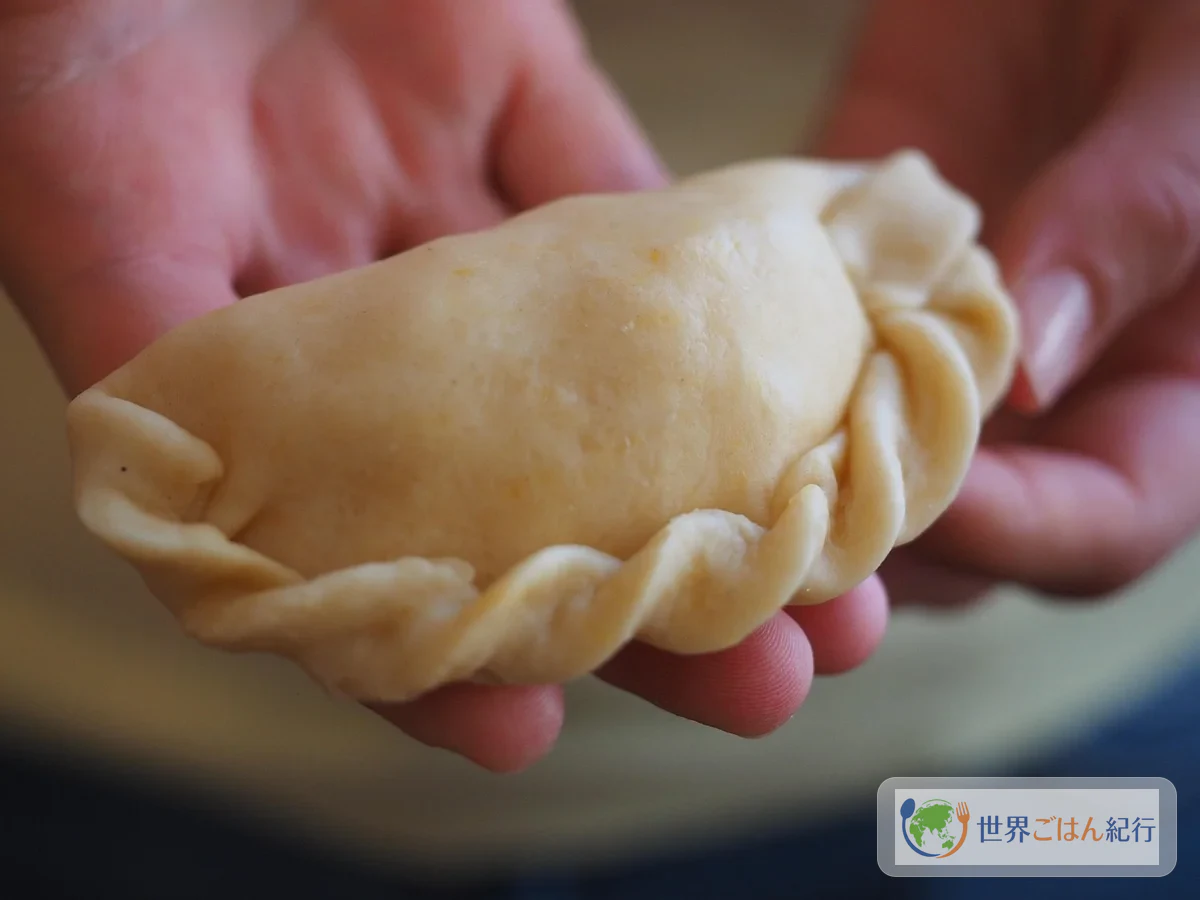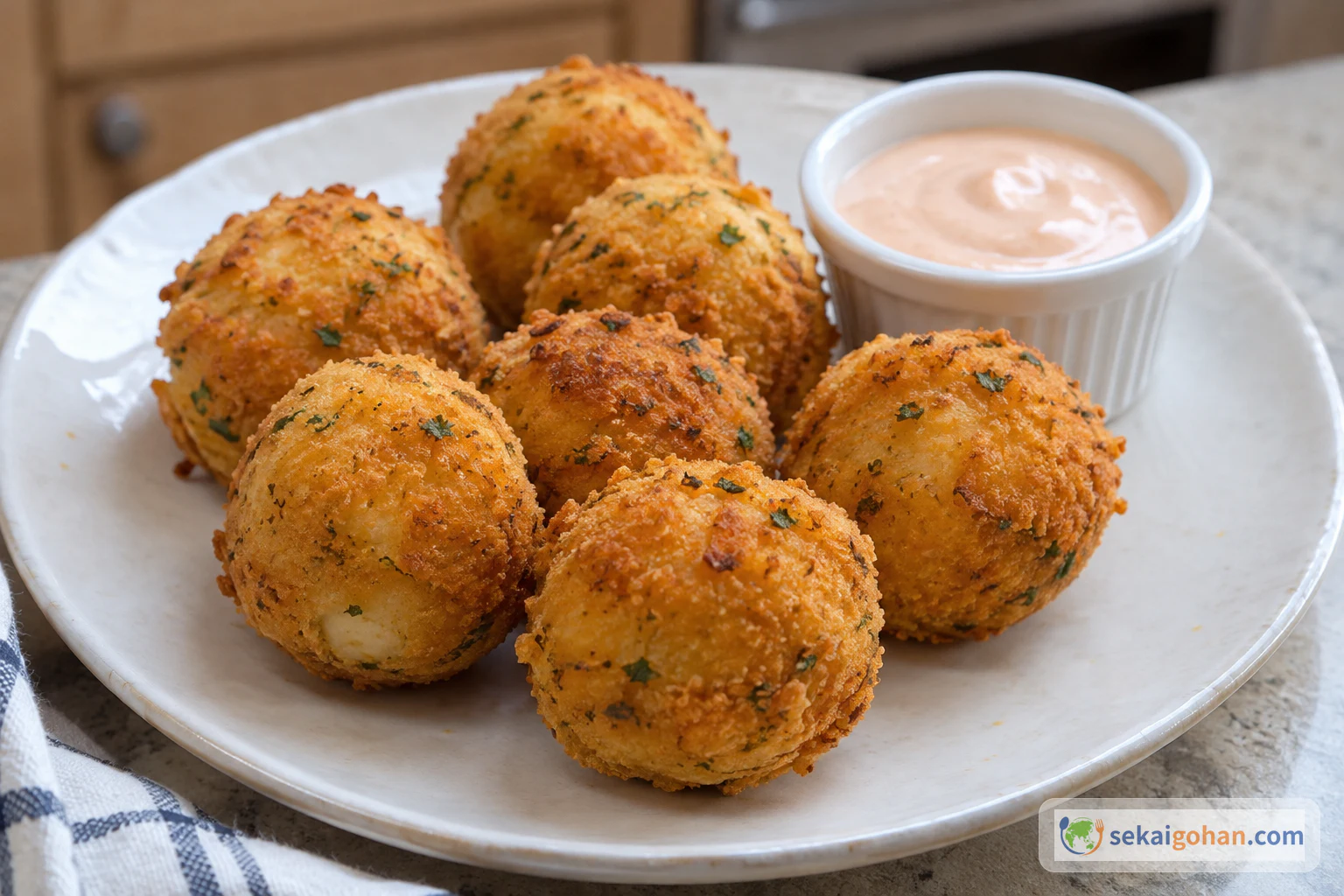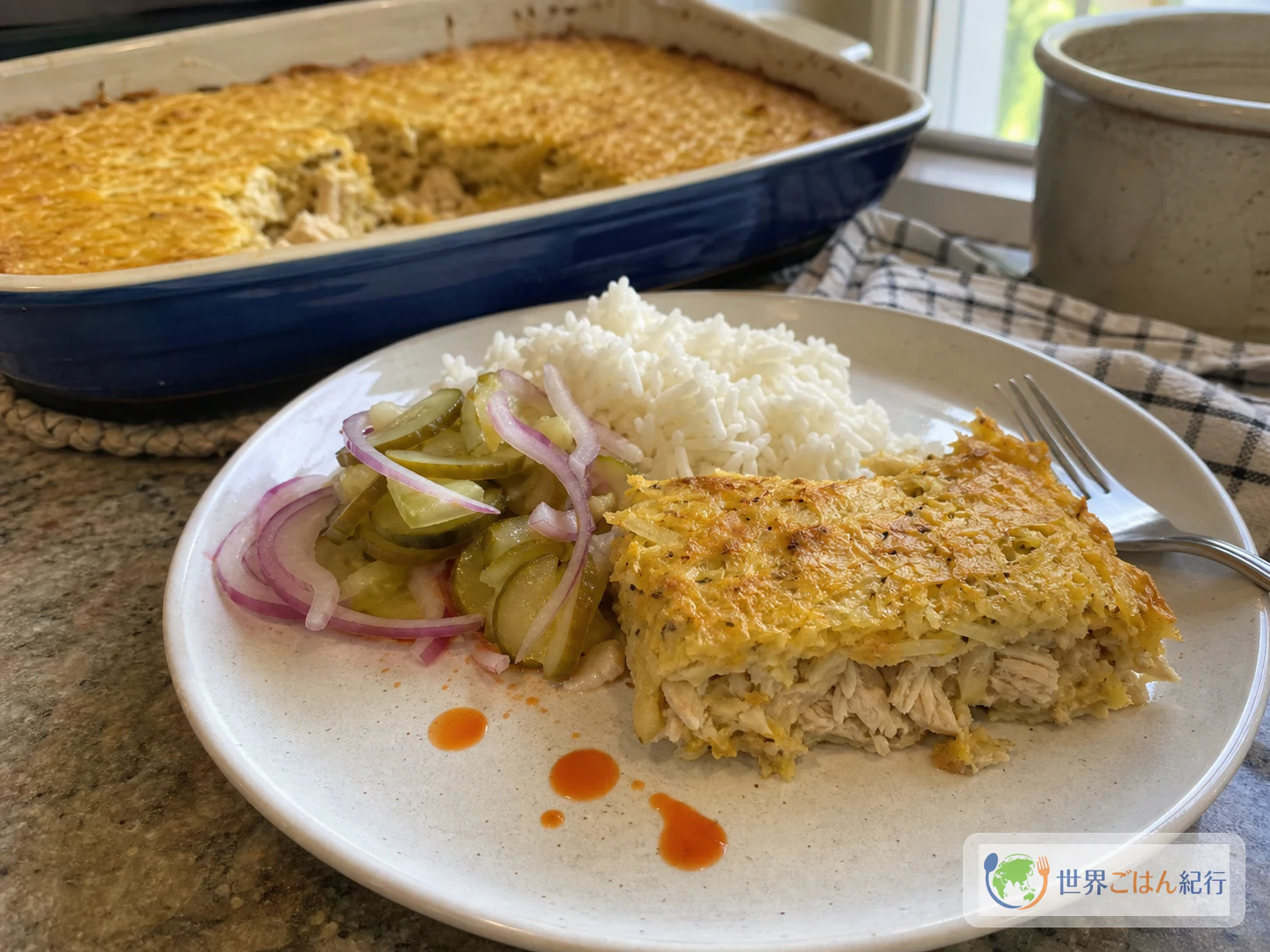
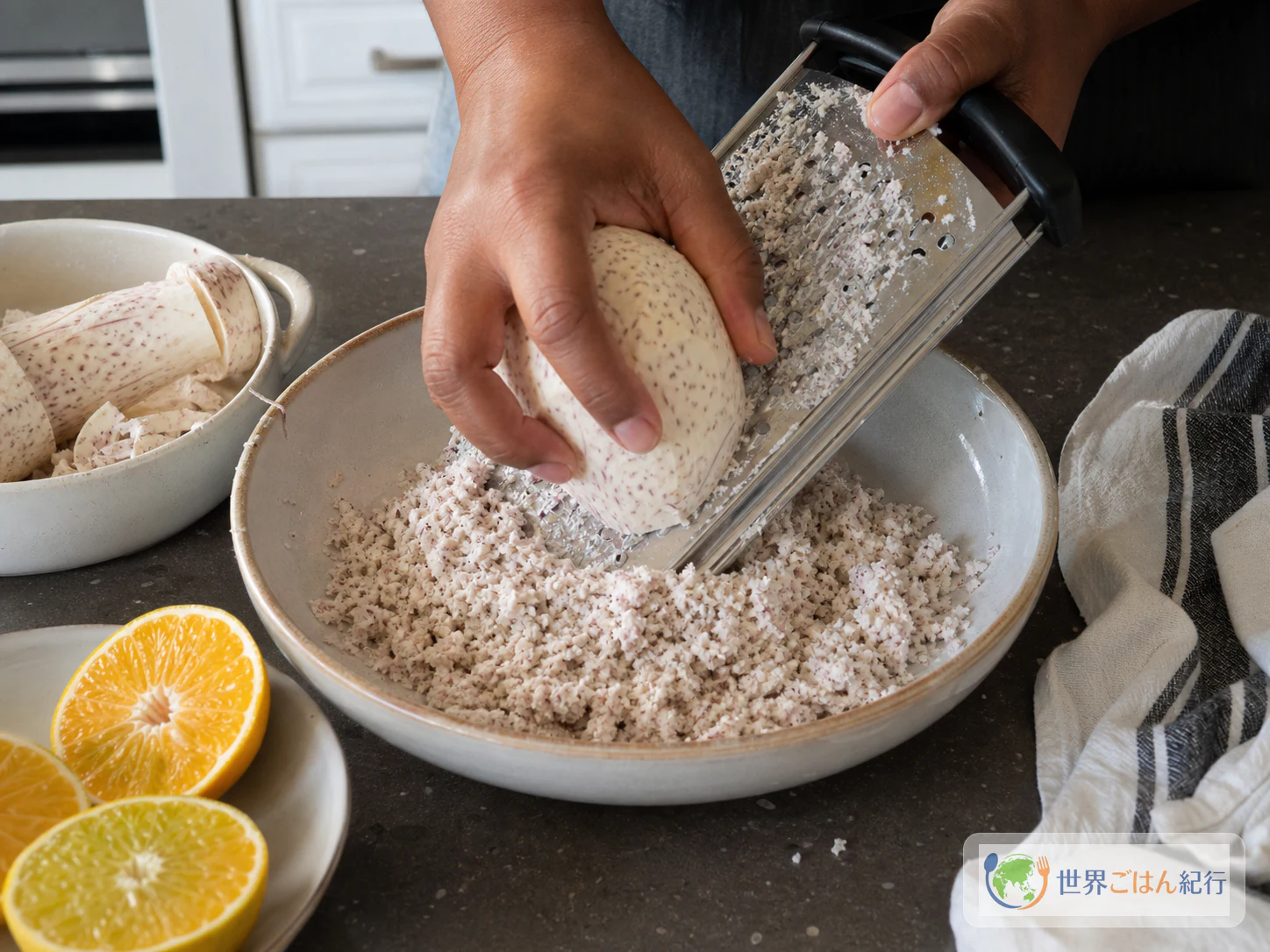
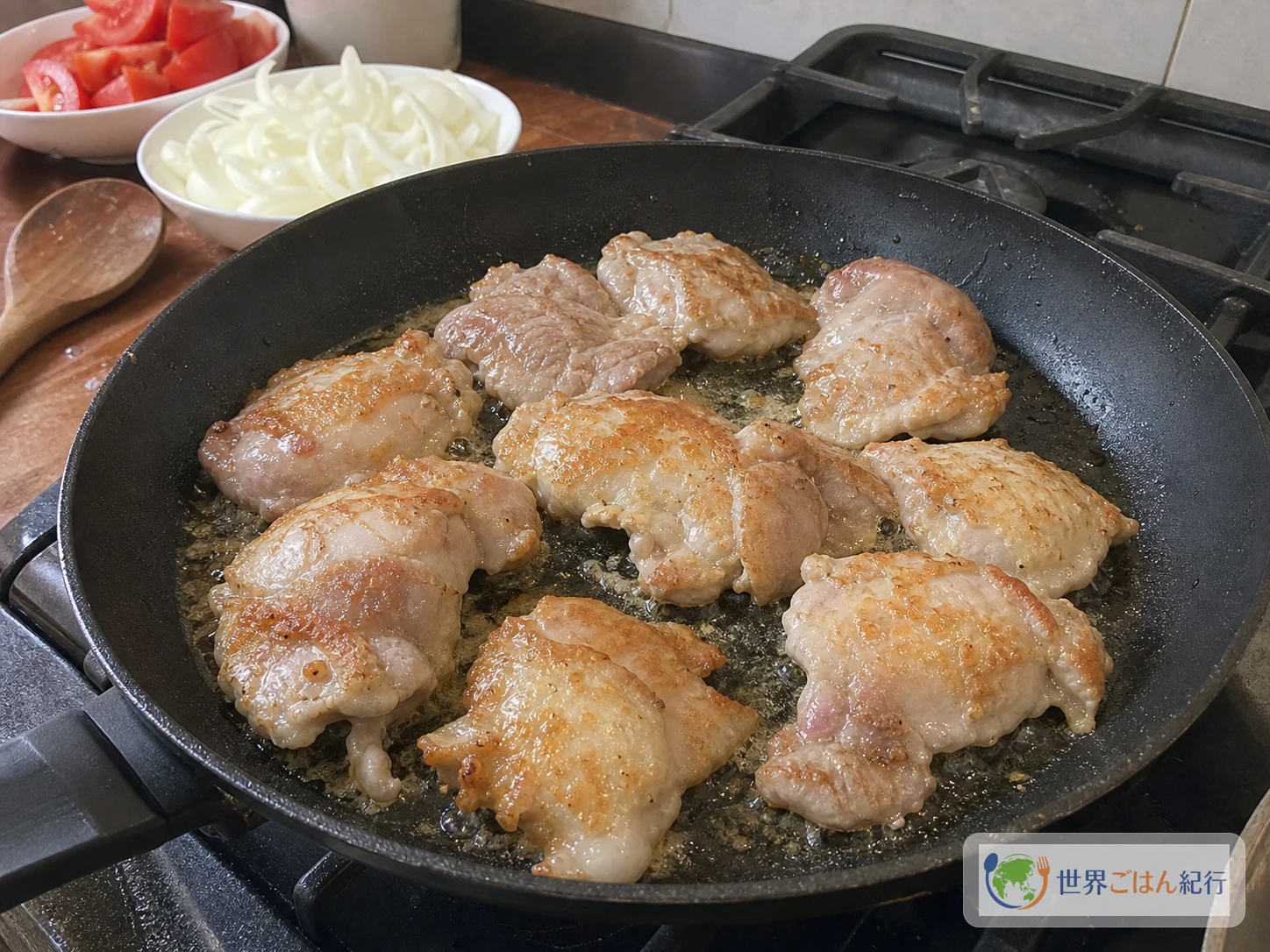
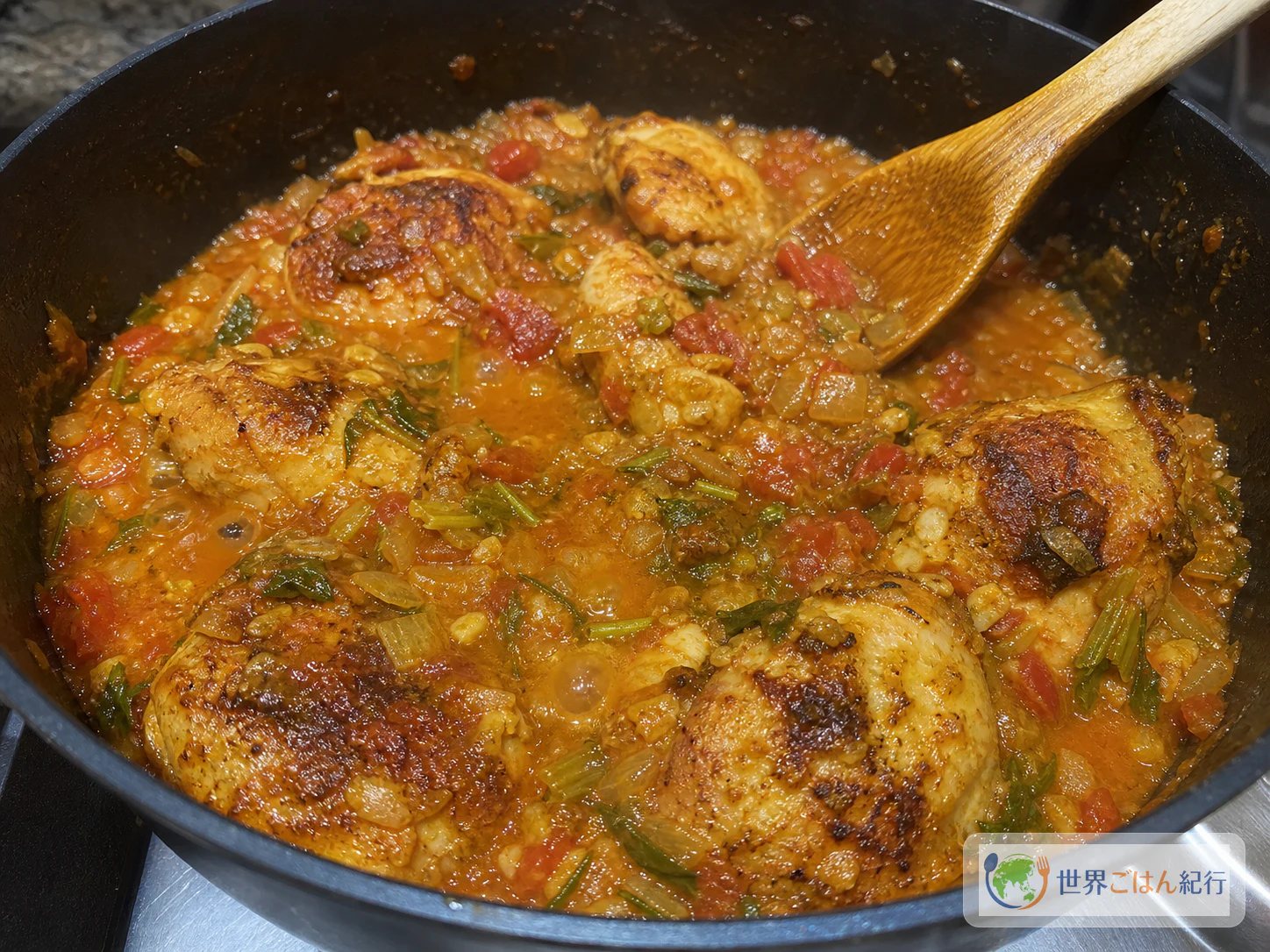
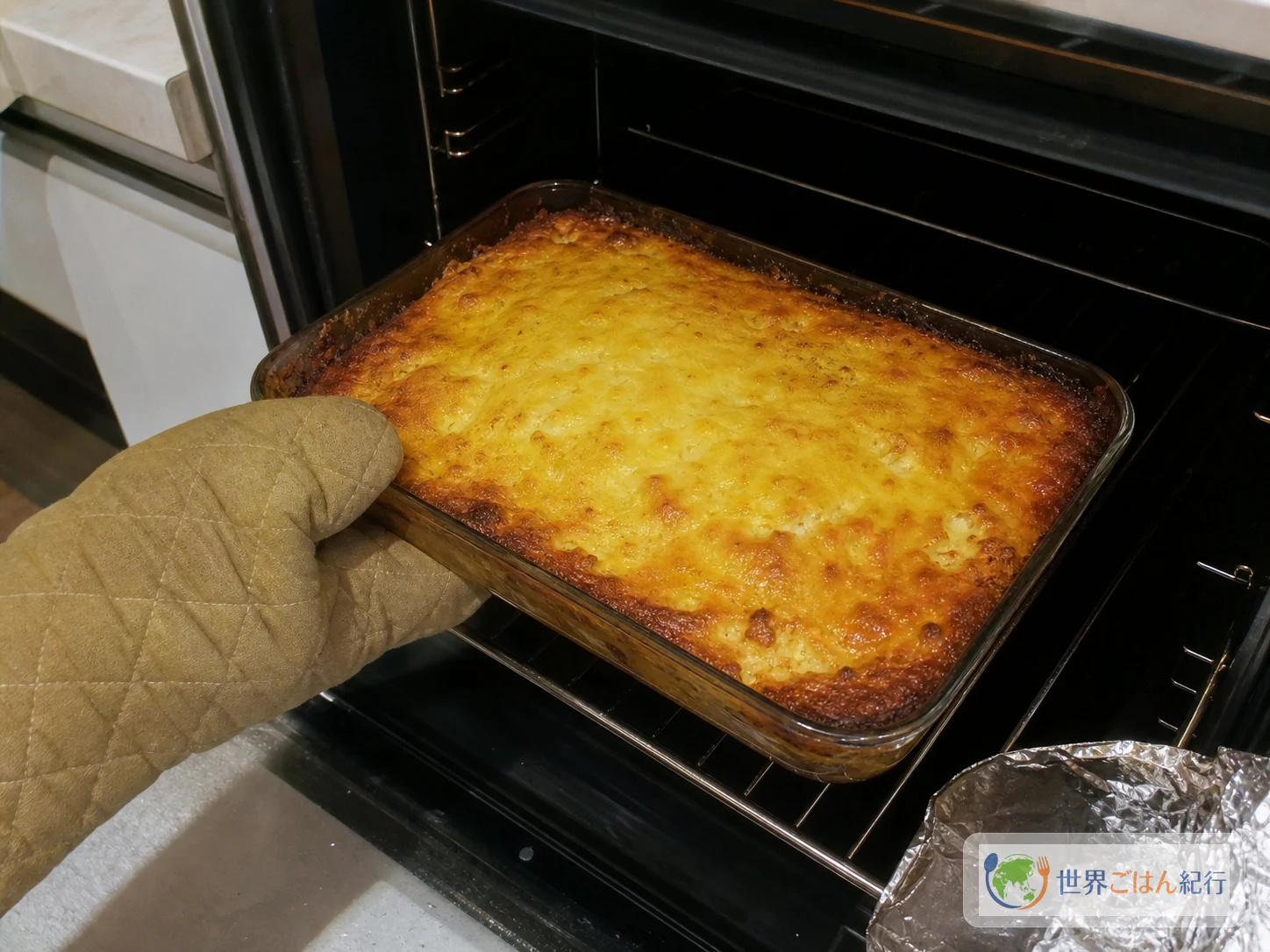
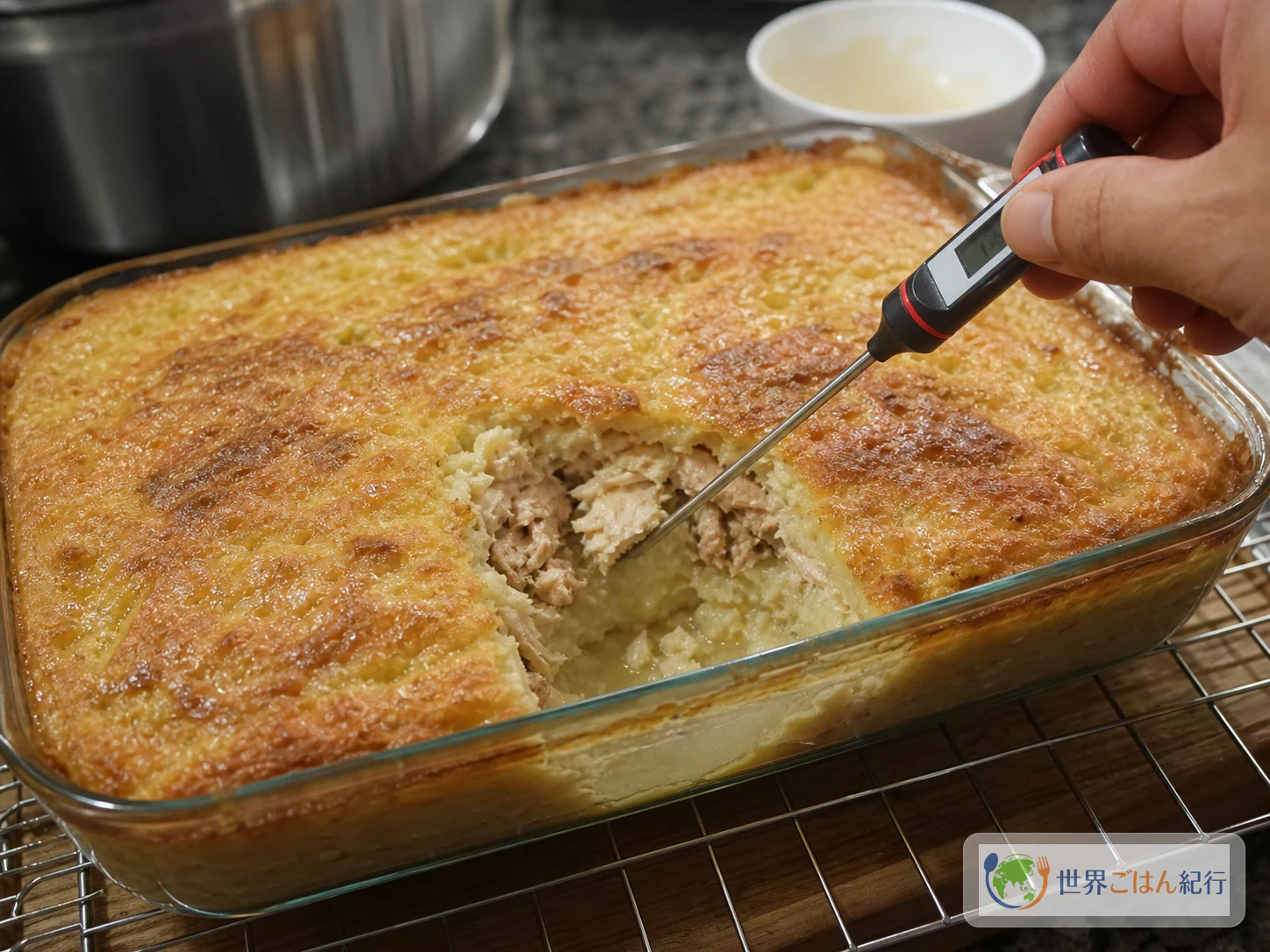
Open the oven door and the first thing to reach you is a sweet-sour smell of citrus and chicken fat. It looks like a gratin, but there's no potato and no béchamel. Instead, the sticky starch of a taro-type root has soaked up the chicken's cooking juices, and only the top has browned. Surinamese pom is what comes out of the oven at holidays and family gatherings in Suriname. It's built on a root called pomtajer, plus chicken, citrus and aromatic vegetables, and it tastes sour, savory and toasty all at once. Pomtajer is hard to find in many places, so here frozen taro, taro root and frozen taro root stand in for it.
Pom, Suriname's holiday casserole
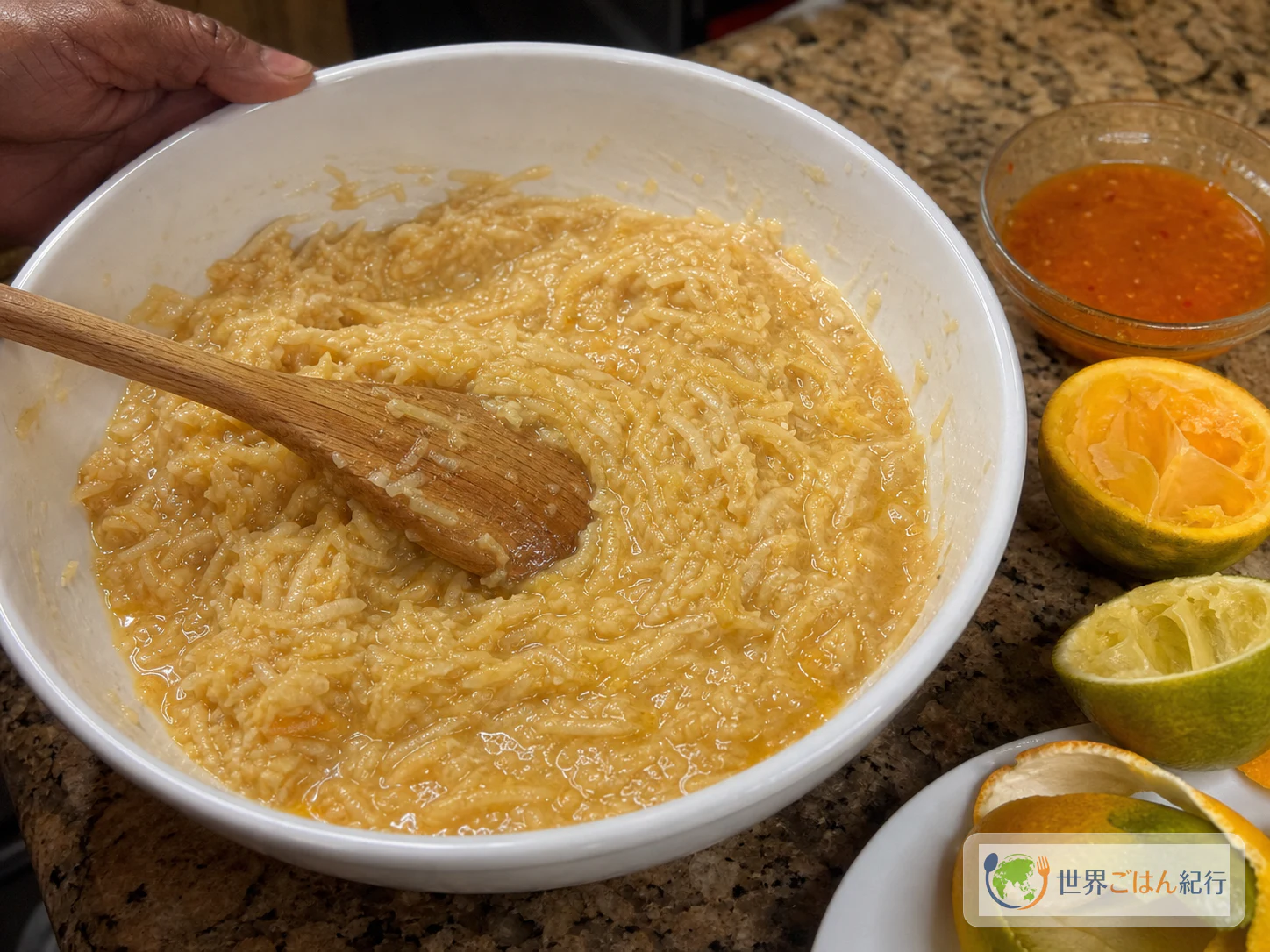
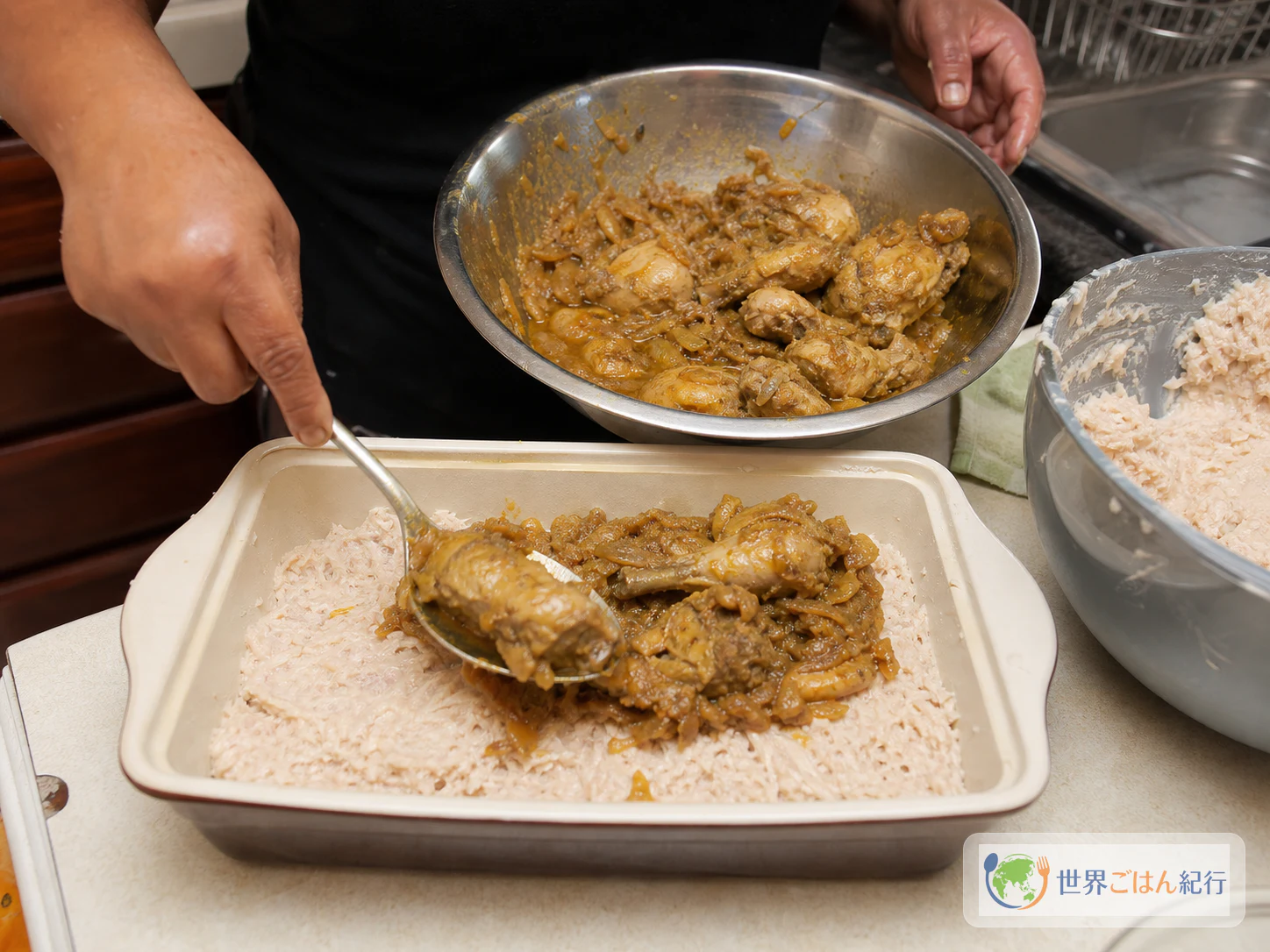
Pom puts Suriname's multiethnic food culture on one plate. Its main ingredients are pomtajer and chicken. In a common method, citrus juice, tomato, onion, butter and spices cook with the chicken, and then the chicken's cooking juices go back into the grated pomtajer before baking.
The root is what makes pom different from a potato bake. Potatoes give you a floury mash with baked chicken on top. Pomtajer is sticky and soaks up the chicken's juices, so the casserole holds together when you cut it. To get close to that texture, grate frozen taro or taro root, or heat frozen taro root and mash it coarsely.
| Local pillar | Role | What to protect when cooking at home |
|---|---|---|
| Pomtajer | Starch, stickiness, cohesion when baked | Build the stickiness with frozen taro, taro root or frozen taro root |
| Chicken | Cooking juices, filling, the satisfaction of a holiday | Bone-in for savor, boneless for easier cutting |
| Citrus | Sourness to lighten the heavy root batter | Use orange and lemon together, and keep the sourness from cooking off |
| Heat | The outline of Caribbean aroma | Go easy with Scotch bonnet-type sauce in the pot; adjust at the table |
Ingredients
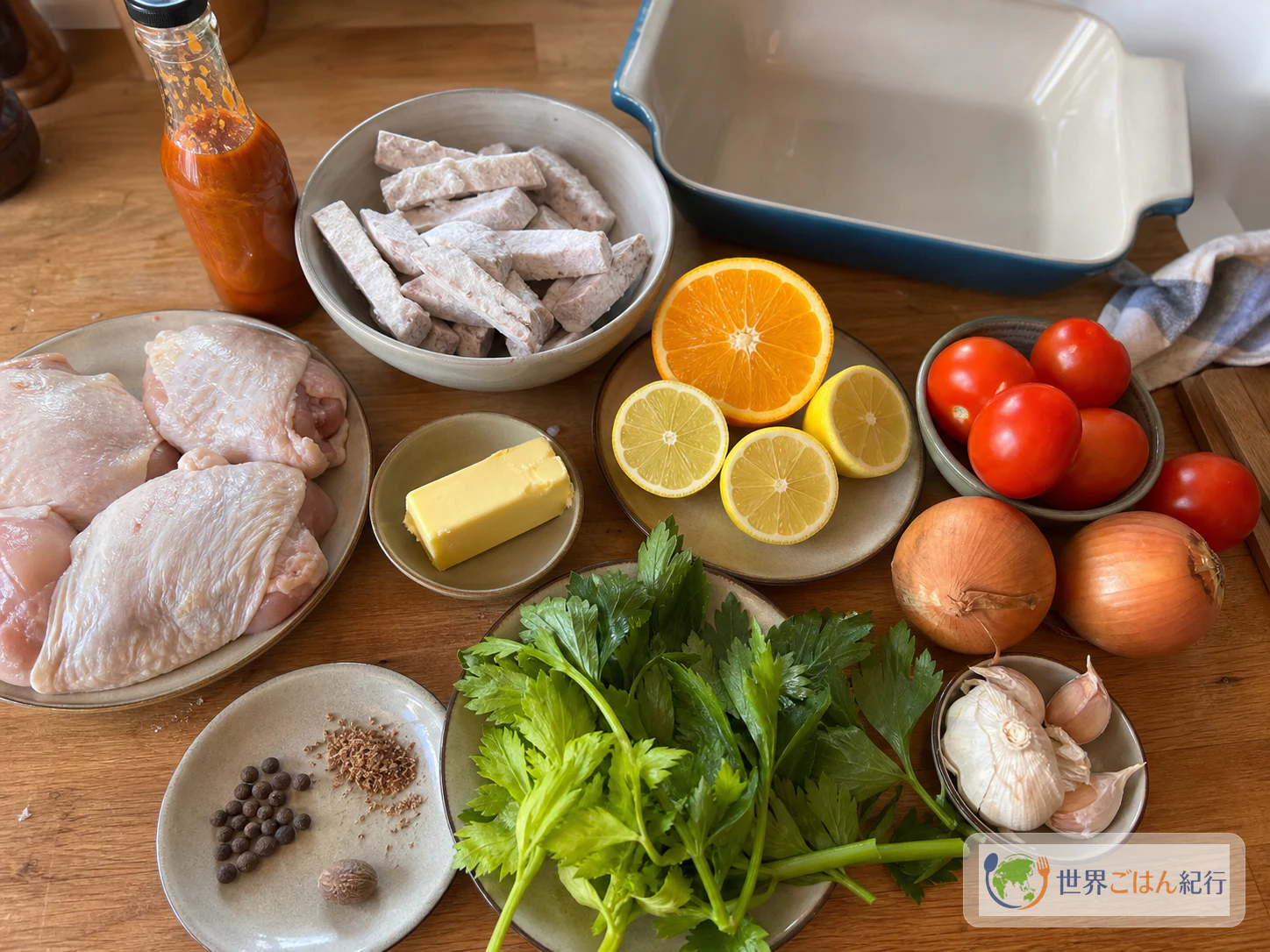
Serves 4. Use a baking dish about 8 inches (20 cm) square or about 2 quarts (2 L) in capacity. If the layers are too thick, heat has trouble reaching the center. If they are too thin, the root batter dries out.
This recipe uses chicken and dairy. Cook the chicken thoroughly to the center, and confirm 165°F (74°C) or more at the thickest part or at the center where the filling overlaps. Wash the knife, cutting board and hands that touched raw chicken before they touch vegetables or bread for serving. Hot seasoning is strong even in a small amount, so at a table with children or people who dislike heat, do not put it in the pot and adjust plate by plate.
Choosing ingredients and substitutes for pom
Finding the right root
The root is the hardest part to source outside Suriname. Pomtajer is sometimes translated as taro, but the taro sold elsewhere can be quite different, so choose your root by how it behaves rather than by its name. Look for frozen taro at import food stores, taro-type roots at Asian food stores, or frozen taro root at the supermarket.
| Substitute | Strengths | Adjustment |
|---|---|---|
| Frozen taro | Starchy and easy to cut and grate | Pat dry, and chop if the fibers are long |
| Taro root | Very sticky, holds together when baked | If too sticky, add 1.5 tbsp (20 ml) more orange juice |
| Frozen taro root | Easy to find, no peeling | Heat in the microwave, remove moisture, and do not mash too much |
| Potato | Easy to buy | Alone it makes a different dish. If used, half and half with taro root |
| Nagaimo (mountain yam) | Easy to grate | Very watery, and loose even baked. Avoid using alone |
The most reliable combination is 1.25 lb (600 g) frozen taro root with 9 oz (250 g) potato. Taro root alone comes out heavy and potato alone comes out floury. Together they make a batter that cuts cleanly, and you can buy both at an ordinary supermarket.
Heat, allspice and a thermometer
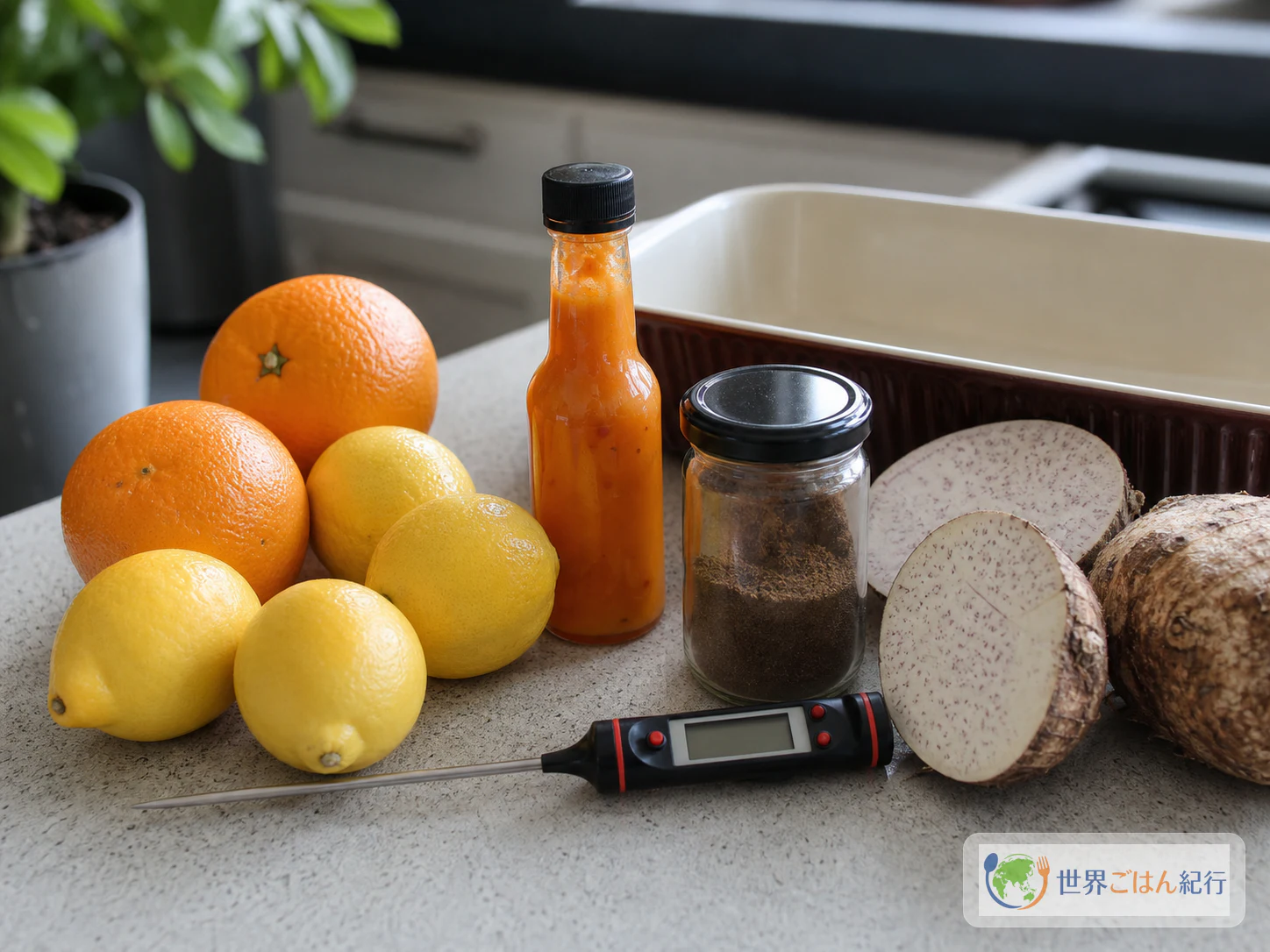
You can get chicken, onion, tomato and citrus anywhere. Three things are worth ordering online: the chili heat that gives Surinamese and Caribbean cooking its aroma, allspice, and an instant-read thermometer.
Scotch bonnet-type sauce has a fruity heat close to habanero. If you put too much in the pot, everyone at the table eats the same level of heat. The first time, use just 1/4 tsp, or pass the sauce at the table.
Allspice is optional, but a small amount brings the warm aroma you find in Caribbean chicken dishes. Use up what's left in jerk chicken or rice and peas.
The top of a pom browns well before the center is cooked, so you can't judge doneness by looking. In a thicker baking dish, a quick reading with an instant-read thermometer tells you whether it needs more time.
Common pom problems and fixes
| Failure | Cause | Fix |
|---|---|---|
| The center is watery | The root held too much moisture, or too little baking time | Add 10 minutes at 350°F (180°C). Next time, pat dry after thawing |
| Only the surface scorches | The dish is thin, or the top heat is strong | Put the foil back and prioritize the center at 350°F (180°C) |
| Too sour | The lemon is strong, or there is too little orange | Add 1 tsp sugar, and serve rice at the table |
| The chicken is tough | Browned too long at first, or baked too long | Step 2 is surface only. Watch the internal temperature and stop the extra cooking |
| It crumbles when cut | Not rested enough, or the batter is thin | Rest 10 minutes after baking, and make the bottom layer at least 0.5 inches (1 cm) |
Pom is done when the center is hot and the batter has settled, and the color of the top won't tell you that. If you scoop it out piping hot like a gratin, it looks hearty in the dish but the layers slump on the plate. For guests, let it rest about 15 minutes after baking before you cut it, and the pieces will come out much neater.
Serving and storing pom
Serving
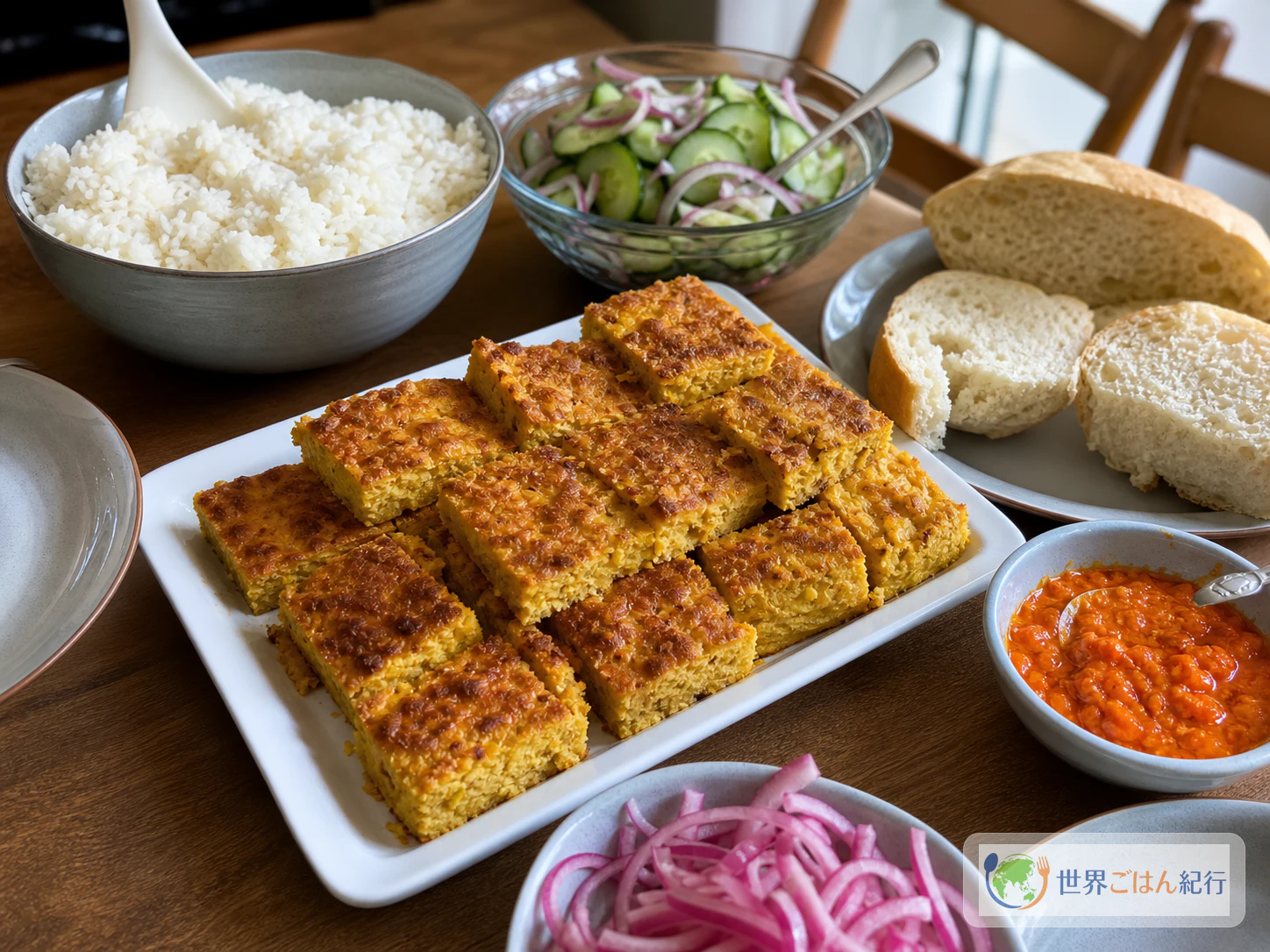
A common way to eat pom is broodje pom: pom in a bread roll. A roll or baguette with a slightly firm crust works better than very soft sandwich bread. Warm a piece of pom lightly and tuck it in with cucumber pickles, red onion and a little hot sauce, which cut through the chicken fat and the heaviness of the root.
With rice, serve plain white rice and something sour on the side. For a Caribbean-style spread, add rice and peas, jerk chicken with its strong aroma, and light fried pholourie. Pom is heavy, so balance the plate with cucumber, cabbage, citrus and green herbs instead of another meat dish.
Storage and reheating
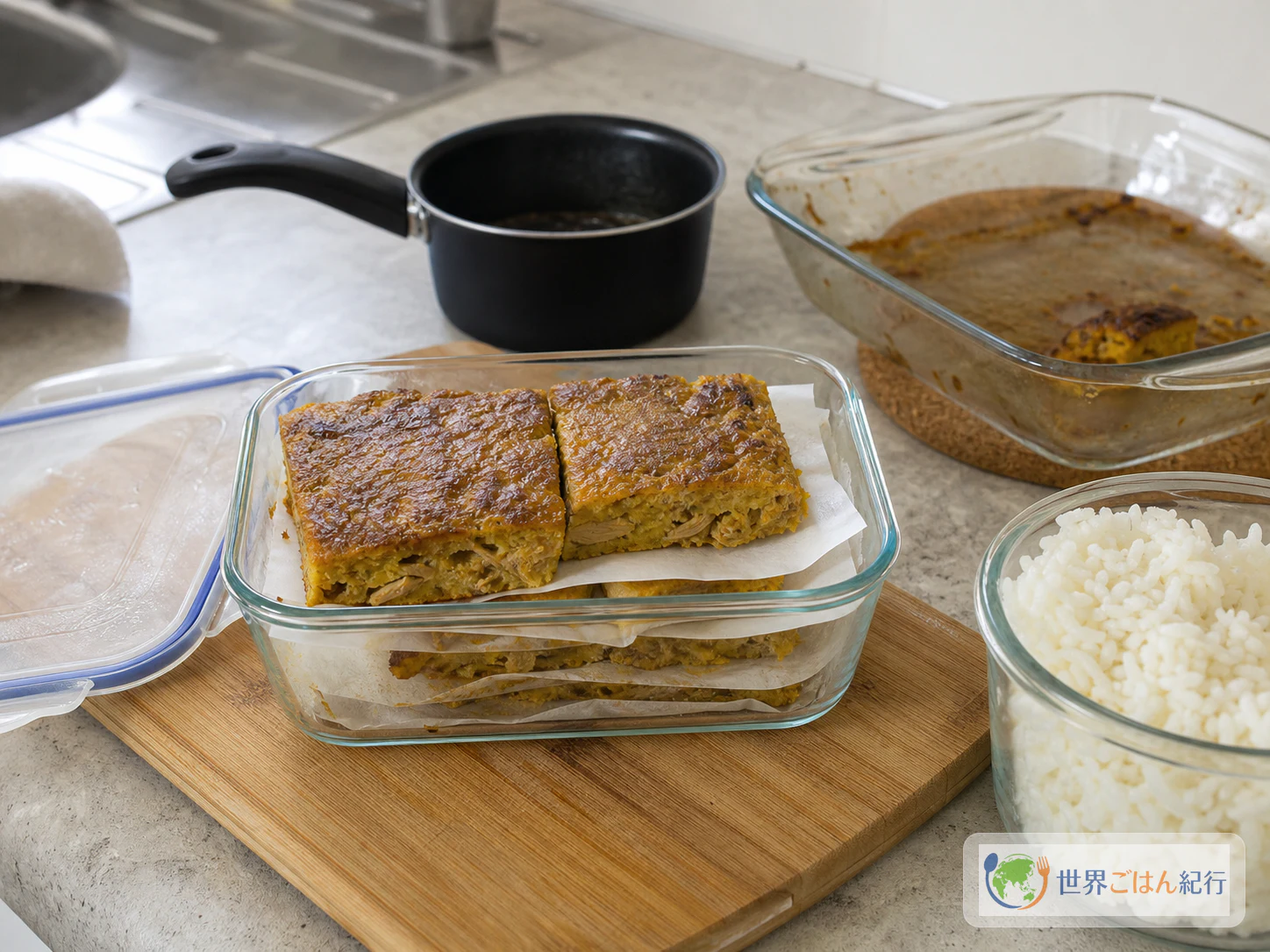
Once pom is off the heat, cut it and put it away within 2 hours. For the freezer, wrap each piece in plastic wrap so it doesn't dry out.
| Storage | Guide | Reheating |
|---|---|---|
| Refrigerator | 3 days | 10 to 12 minutes in a 350°F (180°C) oven or toaster oven |
| Freezer | 3 weeks | Thaw in the refrigerator for half a day, then 15 minutes at 350°F (180°C) |
| Lunch box | Same day | Reheat thoroughly to the center, then cool before packing |
The microwave alone will warm pom through, but the crust stays soft. For a hot center and a browned top, microwave for 2 minutes at 600 W, then give it 3 minutes in a toaster oven.
Frequently asked questions
Can I make it with chicken breast?
Yes, but breast has less fat and juice. Cut 1.25 lb (600 g) chicken breast into large slices and shorten the browning in step 2 to 2 minutes on one side and 1 minute after turning. Breast dries out if overbaked, so let it finish cooking in the sauce.
Do I have to add heat?
No. The Scotch bonnet-type heat sharpens the aroma, but the heart of pom is root, chicken and citrus. If someone doesn't like heat, leave it out of the pot and let the adults add a few drops at the table.
Can I make it the day before?
Yes, and it actually holds together better when cut the next day. Refrigerate it after baking, then reheat for 15 minutes at 350°F (180°C) before serving. If the top starts to dry out, cover it with foil for the first 10 minutes.
Can I make it without an oven?
A frying pan alone gives you quite a different dish. If you have no other choice, layer it in a heavy frying pan, cover and cook over low heat for 35 minutes, then toast the top under a broiler or in a toaster oven. It's hard to check the internal temperature this way and it scorches easily, so for your first pom, use an oven or a combination oven.