Lift the lid just a crack and the steam rises thick with coconut, thyme, garlic and red beans. The name suggests rice with green peas, but the "peas" in Jamaican rice and peas are mainly red kidney beans, which Jamaicans call red peas. The rice cooks in the beans' own liquid with coconut milk, pimento and a whole Scotch bonnet, so it comes out fragrant and rounded rather than fiery. Because it's a rice dish, the liquid measurements can look fussy, but the key is simple. Before the rice goes in, finish the liquid in the pot as a "slightly strong soup." Once that's right, all that's left is to let it cook gently on low heat.
About Jamaican rice and peas

In Jamaica, rice and peas is an essential home staple of Sunday lunch, and it turns up on everyday lunch plates too. It sits next to boldly flavored dishes like jerk chicken, curry goat and oxtail, the staple on a table the whole family shares.
What sets it apart from plain rice cooked with beans is that it's cooked in the beans' cooking liquid as well, along with coconut milk, pimento (allspice) and a whole Scotch bonnet. Nobody chops the chile and stirs it in. Many households let it perfume the rice and then lift it out at the end, so you can make this even if you're not a fan of heat.
The dish was born in the Caribbean during the colonial era. The Spanish brought rice to the Americas, while red kidney beans, allspice and the Scotch bonnet are American crops. On top of that came the rice-and-bean traditions and the use of coconut brought by people forcibly taken from West Africa, and the dish spread as each island's own version of rice and beans.
Even under the same name, the beans change from region to region and household to household. Jamaica also has a version made with pigeon peas (gungo peas), and on some other Caribbean islands pigeon peas or other beans are the norm. In a home kitchen, canned red kidney beans and canned coconut milk get you very close to the original, and allspice is easy to find in the spice aisle.
Pimento means allspice berries, not a sweet pepper.
Ingredients (serves 4)

This makes 4 side-dish servings. As an accompaniment to jerk chicken or ackee and saltfish, this amount is plenty. On days when rice and peas is the main starch on its own, add roast chicken, fried plantains and coleslaw to round out the plate.
This recipe uses coconut milk. Depending on the product, canned beans and seasonings can contain salt, antioxidants or thickeners. Scotch bonnets are extremely hot chiles. Don't cut them with bare hands; adding the chile whole and removing it without breaking it helps keep the heat in check.
Ingredients worth a closer look when shopping
Rice, scallions and garlic are easy to find at any supermarket. The ingredients worth seeking out at a Caribbean or international grocery or online are pimento, which sets the direction of the aroma, unsweetened coconut milk, red kidney beans and a Scotch bonnet-style hot sauce. The hot sauce isn't a main ingredient for the pot; treat it as a fallback to add a little at the table when you can't get a whole chile.
Choosing ingredients and substitutes for rice and peas

With so few ingredients, every swap changes the flavor a lot. Hold on to coconut, pimento and thyme, though, and the result moves from plain rice and beans toward a Jamaican plate.
| Ingredient in question | Easiest choice | How the flavor differs |
|---|---|---|
| Red kidney beans | Canned to save time, dried for deeper color and aroma | Canned gives a lighter result. Dried beans turn the liquid red and the rice a deeper color |
| Pimento | Whole berries are ideal; put ground in a tea bag | Ground allspice added directly turns all the rice brown and the aroma can come on strong |
| Scotch bonnet | Whole, or hot sauce at the table | Chopping it makes it far too hot. Whole, it's mostly about aroma |
| Rice | Long-grain is easiest | Short-grain rice gets sticky, so reduce the liquid by 2 tbsp (30 ml) |
| Coconut milk | Unsweetened canned | Coconut drinks or sweetened cream throw off the moisture and sweetness |
For the deep-red version made with dried beans, soak 4 oz (120 g) red kidney beans in water overnight. The next day, drain off the soaking water, add 3 cups (700 ml) fresh water and boil hard over high heat for at least 10 minutes. Raw or undercooked red kidney beans contain lectins that can cause food poisoning, so never cook them only at a low, slow simmer.
After the hard boil, add 1 clove garlic, 4 g ginger and 4 allspice berries and simmer over medium-low heat for 60–75 minutes. When the beans yield to a light press of your finger, set aside 1¾ cups (420 ml) of the cooking liquid, adding water if you're short. Combine it with the ¾ cup (200 ml) coconut milk and continue from step 2.
After soaking, dried red kidney beans must always be boiled hard over high heat for at least 10 minutes before simmering. If you soften them only in a slow cooker or with low-temperature cooking, the lectins aren't sufficiently broken down and can cause nausea or diarrhea. Canned beans are already cooked and can be used as they are.
If you can't find a Scotch bonnet, a whole fresh habanero works, though the roundness of the aroma changes a little. On days when you want no heat at all, leave the chile out of the pot and add a few drops of hot sauce at the table; that's harder to get wrong.
Instructions
This is the canned-bean version. Long-grain rice keeps its grains more separate if you rinse it and cook it right away without soaking. If you're using short-grain rice, follow the same steps but reduce the water by 2 tbsp (30 ml) and extend the resting time to 12 minutes.
Rice and peas troubleshooting

With rice dishes, mistakes show up in moisture and heat more than in seasoning. Coconut milk contains fat, so the rice can feel heavier than rice cooked in plain water. For your first try, pick a roomy pot with a tight-fitting lid for more consistent results.
| Problem | Main cause | Fix |
|---|---|---|
| Watery | Too much coconut milk, heat too low | Uncover and cook over medium-low heat for just 2–3 minutes to drive off moisture |
| Hard centers in the rice | Not enough liquid, heat dropped too early | Drizzle over 3 tbsp boiling water, cook on low heat for 5 minutes and rest for 10 minutes |
| Sticky | Too much water with short-grain rice, stirred during cooking | Next time, reduce the water by 2–3.5 tbsp (30–50 ml). Leave it unstirred while it cooks |
| Too hot | The chile burst | Remove it right away and dilute with 2 tbsp coconut milk and some warm rice |
| Weak aroma | Not enough pimento and thyme | Add more allspice berries, and stick to 1 tsp dried thyme |
| Scorched bottom | Heat too high, thin-bottomed pot | Turn down to low and shift the pot slightly during cooking to spread the heat |
If it does scorch, leave the bottom alone. Move only the rice on top to a separate dish so the burnt flavor doesn't spread. A little color on the bottom gives the toasty note of a Caribbean one-pot rice, but black, bitter scorching weighs down the whole dish.
Serving and storing rice and peas

The classic partner is fragrant jerk chicken. The coconut rice takes on the heat of the meat, its charred notes and the tang of lime. For something closer to breakfast, it goes well with the saltiness of ackee and saltfish. On a fish day, serve a little alongside run down, salt fish simmered in coconut milk, and you can taste how the same coconut works differently in the rice and in the sauce around the fish.
To explore other Caribbean rice and beans, try Trinidad's pelau, a one-pot dish with chicken and beans cooked together, or Ghana's waakye. Rice and peas also makes an easy Caribbean plate next to bold mains like Puerto Rico's mofongo or Haiti's griot.
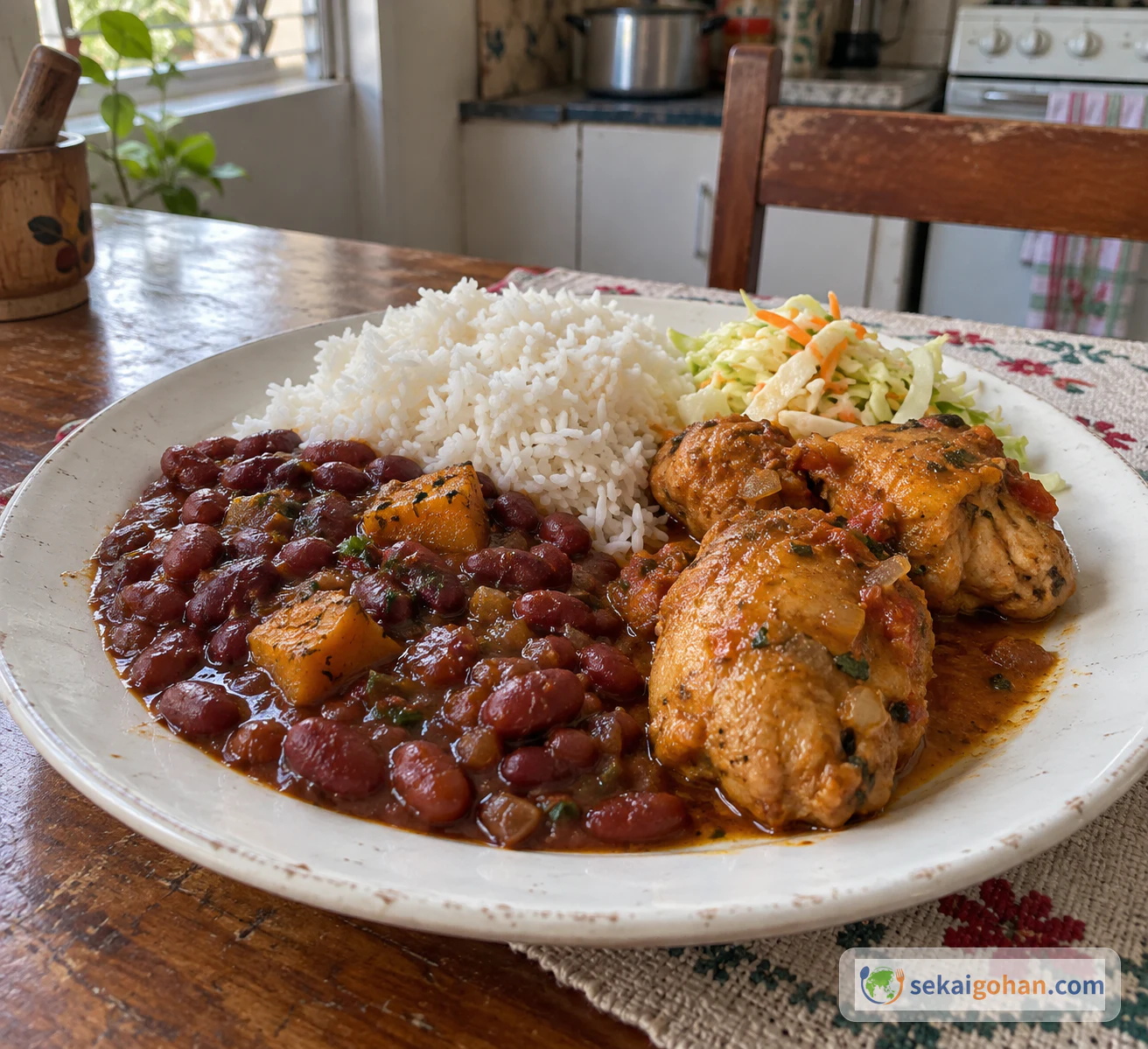
On the plate, it's easier to eat if the rice and peas isn't buried under the meat. Spread half the rice wide, set the main dish beside it and put a tangy salad or lime in front, so the roundness of the coconut, the char of the meat and the acidity come in turn. Keep the hot sauce in a little pool at the edge of the plate. Rice soaks up heat easily, and mixing it all in from the start makes the second half of the meal monotonous.
Store it as you would any cooked rice. Take out what you'll eat first, then spread the rest in a shallow container so it cools quickly, and get it into the fridge within 2 hours. It keeps refrigerated for up to about 2 days. To reheat, sprinkle with 2 tsp water, cover and microwave at 600 W for 2–3 minutes, or warm in a small pot over low heat for about 5 minutes, until it's steaming hot. To freeze, wrap single portions flat and eat within 2–3 weeks to best keep the texture.
FAQ: questions about rice and peas

Can I make it with green peas?
You'll get a different rice-and-pea dish that won't taste much like Jamaican rice and peas. Red kidney beans, or the pigeon peas known as gungo peas, will get you closer.
Should I rinse the canned beans?
Leave them unrinsed and use ½ cup (150 ml) of the can liquid as part of the cooking liquid. That's how the color and aroma of the beans get into the rice. If your brand's can liquid is very salty, reduce it to ½ cup (100 ml) and use 1¼ cups (320 ml) water.
Can I make it in a rice cooker?
Yes. Make the cooking liquid in a pot through step 3, transfer it to the rice cooker with the rice and cook on the regular setting. Set the Scotch bonnet on top before cooking and remove it as soon as the rice is done. The aroma lingers in the steam vent, so wash the inner lid afterward.
My coconut milk separated.
A few small white beads of fat floating in the pot are nothing to worry about. Separation gets more noticeable at a hard boil, so keep the liquid at a gentle bubble over medium to low heat before adding the rice.
Can I pack it for lunch the next day?
Yes, if you store it carefully. Cool and refrigerate it as described above, then reheat it thoroughly to the center the next morning, pack it while it's still steaming, and add an ice pack.