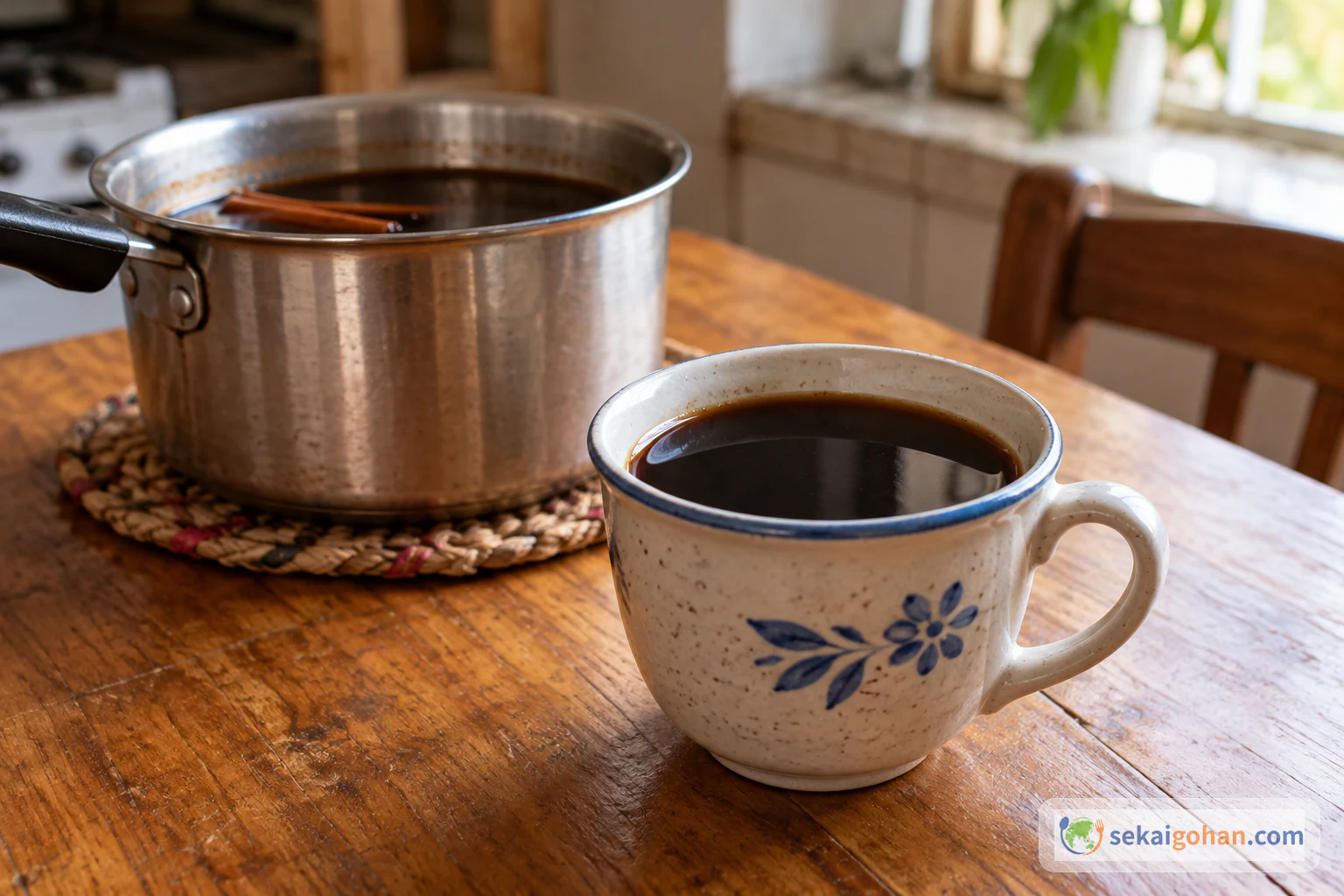
The first time you make Belizean chimole (Chimole / Chirmole), the color of the pot stops your hand. It is a chicken soup with tomato, yet the broth is black as ink, and when the whites of the boiled eggs float up, a familiar chicken-and-egg soup turns into something from a Central American kitchen. The blackness comes from black recado (recado negro / black recado), a paste with the aroma of annatto, allspice, cumin, oregano, and chile. Under that startling color is a homey soup. It sits somewhere between Guyana's black pepperpot stew and the chile and warm spice of Jamaica's jerk chicken.
What chimole is
Chimole is Belize's black chicken soup, known as Chimole or Chirmole, and in English sometimes as Black Dinna. In Belizean homes it is chicken soup with black recado dissolved into it, filled out with tomato, onion, garlic, potatoes, and boiled eggs, and it turns up at Sunday tables and on special days.
It is closely related to the Yucatán's chilmole and relleno negro. All of them get their black color from charred tortillas and chiles. The main difference is the stuffing: relleno negro and some versions of Black Dinna are filled with meat, while chimole is simply a black chicken soup. For the Yucatán stuffed version, see how to make relleno negro.
Every household has its own way. Some cooks add ground pork or wrap the egg in meat, some use a whole chicken, and some keep the soup thin.
Black recado is traditionally made by burning chiles and tortillas until they are quite black. Charring chiles this heavily sends irritating smoke through the kitchen, and a range hood alone cannot handle it safely. Use store-bought black recado, or use the home-friendly substitute paste.
Ingredients (serves 4)

This serves 4 with white rice or corn tortillas. Bone-in chicken adds savor to the broth. Boneless thighs also work: shorten the simmering time a little, and stop before the chicken toughens in step 6.
The substitute paste is not black recado. It does not give the aroma of charred chiles. Still, annatto, allspice, cumin, oregano, bitterness, and sourness make a far richer soup than plain chicken and tomato. The first time you make it, put "do not scorch it, and let the chicken absorb the aroma" ahead of getting it black.
Black recado and other chimole ingredients

Outside Belize, black recado is not on the shelf at the nearby grocery store, and not every online shop carries it reliably. When you have it, use it. On days you can't find it, make a black-recado-style substitute with annatto, allspice, cumin, oregano, and a little cocoa and soy sauce. It keeps what makes chimole taste like chimole and skips the dangerous step of burning chiles at home.
Chicken, eggs, potatoes, tomatoes, and onion are easy to find nearby, so look online only for what your store can't supply.
| Shopping priority | What to look for online | Role in the dish | What to get nearby |
|---|---|---|---|
| Top | Black recado, or annatto | Color of the broth and Central American aroma | Chicken, eggs, potatoes |
| High | Allspice | Makes the warm aroma of black-recado-style | Cumin and oregano from a grocery store are fine |
| Medium | Scotch bonnet-style pepper sauce | Adds fragrant heat without fresh chiles | Habanero only on days you can get it |
| Low | Corn tortillas | Moves closer to the local way of eating | White rice is enough |
Annatto builds the base of the aroma when there is no black recado. Paprika can bring the color closer, but it can't give you annatto's earthy aroma. Allspice is worth keeping in the pantry too, since it shows up again and again in Caribbean cooking, from jerk chicken to pepperpot.
Adjust the heat at the table, not in the pot. A whole habanero simmered in the soup gives aroma, but if it splits, the heat comes on all at once. The first time you make chimole, put pepper sauce on the table instead.
Method: let the chicken absorb the black broth without scorching
Make chimole in this order: season the chicken, boil the eggs, dissolve the black recado, brown the chicken, simmer in the black broth, return the eggs, and serve. Scorched black paste on the bottom makes the bitterness harsh. Loosen it with warm water before adding it to the pot.
Common chimole mistakes and fixes

Chimole goes wrong when you rush to make it black. Black recado is strongly aromatic, so if it sticks to the bottom over high heat, the bitterness of scorching comes through. If the broth isn't black enough, don't raise the heat; add a little more dissolved paste instead.
| State | Cause | Fix |
|---|---|---|
| Strong bitterness | The black recado scorched on the bottom, or too much cocoa in the substitute paste | Do not scrape the scorch; move it to another pot and thin with ½ cup (100 ml) water and 1 tsp lime juice |
| Tough chicken | It kept boiling hard, or boneless meat was cooked too long | Drop to a low 85 to 95°C. For boneless meat, check step 6 at about 18 minutes |
| Pale color | Too little black recado, or a weak color in the substitute paste | Add 2 tsp dissolved black recado or 1/2 tsp annatto |
| Too hot | The habanero split, or too much pepper sauce went in the pot | Take out the chile, add ½ cup (100 ml) water and half a potato's worth, and simmer 10 minutes |
| Eggs break up | They went in early and cooked too long, or were stirred hard | Add the eggs in step 7 and only spoon the broth over them |
In Belize, some cooks thicken the broth slightly with bread or corn-based ingredients. Thicken too much the first time, though, and the bottom scorches easily. For a thin broth to pour over white rice, skip it; if you want the broth to cling to tortillas, reduce it over low heat for about 5 minutes at the end.
Serving and storing chimole
How chimole is eaten
For all its black look, chimole is eaten in a homey way. Pick up the chicken with a corn tortilla and scoop up the black broth, or pour it over white rice. Break a boiled egg and let a little yolk melt into the broth, and the comfort of chicken soup comes through ahead of the surprise of the color.
To compare it with other Caribbean tables, try pelau (/recipes/south-america/trinidad/pelau, in Japanese), a sweetly caramelized rice dish; pepperpot, the black meat stew; and the strongly spiced jerk chicken. Among Central American recado dishes, it sits beside Guatemala's kak'ik and Mexico's mole poblano, which show the range of chile, spices, and black sauces.
| Menu | Suited to | How to pair |
|---|---|---|
| Chimole, white rice, lime | A weekday dinner | Finish the broth thin and ladle it over rice |
| Chimole, corn tortillas, avocado salad | A weekend Central American menu | Add heat at the table and pick up chicken with the tortillas |
| Chimole, pelau, pickled cucumber | A day for comparing the Caribbean side | Serve small portions of the black soup and the sweet rice |
| Chimole, grilled corn, bean salad | A day children eat too | Leave out the habanero and put pepper sauce only on the adults' plates |
Storage and reheating

Chimole contains chicken and egg, so cool it promptly once the heat is off. Divide it into shallow containers and refrigerate it once the steam settles, after about 30 minutes. It keeps in the refrigerator for 2 days, or in the freezer for 3 weeks. Take the eggs out before freezing, since freezing ruins the texture of the whites.
To reheat, put one serving and 2 tbsp water in a pot and warm over low heat for 6 to 8 minutes, until the edge of the broth bubbles and the center of the chicken is hot. In a microwave, heat at 600 W for 2 minutes, stir once, and add 1 more minute. Halve the eggs and check them often so they don't burst.
By the next day, the color of the broth has settled a little and the aroma has soaked into the chicken. If it tastes too salty, add 3.5 tbsp (50 ml) water, warm over low heat for 5 minutes, and finish with a few drops of lime. For more heat, add pepper sauce on the plate, not in the pot.
Frequently asked questions
Can I make it without black recado?
Yes, but the result is chimole-style rather than true chimole, because the aroma of charred chiles and tortillas can't be reproduced. The substitute paste gets close with annatto, allspice, cumin, oregano, and a touch of bitterness and sourness. Next time, look for black recado.
Is it lacking without habanero?
Not really. The star is the aroma of black recado more than the heat. If your household dislikes spicy food, skip the habanero and add a few drops of scotch bonnet-style pepper sauce at the table.
Should the eggs go in whole or halved?
Either works. Whole eggs keep their whites intact, while halved eggs let the yolk blend into the black broth. The first time, halve them and warm them in step 7 for easy eating.
How is it different from versions with ground pork?
Belizean Black Dinna and relleno negro have versions with a stuffing of ground pork or beef and egg. This recipe is the chicken-and-egg chimole, easy to make on a weekday. If you add a meat stuffing, cook it through in a separate step to a safe core temperature, and refrigerate it promptly after cooking.
Can I make it for children?
Yes. Leave out the habanero and use a smaller amount of a mild black recado. If you make the substitute paste, reduce the black pepper to 1/4 tsp and put pepper sauce only on the adults' plates.
- Travel Belize, Indulge in the Rich Flavours of Recado with these Belizean Soups: consulted for black recado, the differences between Relleno Negro and Black Dinna, and the explanation of charred tortillas and chiles.
- Belize Poultry Association, Chilmole: The Yucatecán "black mole": consulted for the flow of dissolving black recado in water and simmering the chicken over medium heat, and the step of preparing the chicken with lime.
- BelizeHub, How To Make Belizean Chimole or Black Dinna: checked for the range of ingredients in chimole and eating it with potatoes, tomato, eggs, and corn tortillas.
- Aunt Sadie's Belize, Black Dinna: consulted for the name Black Dinna, black recado, and the context of eating it with eggs and rice or tortillas.
- The Takeout, You Can Make This Chicken Stew With Store-Bought Spice Paste: consulted for the ventilation risk of making black recado at home, the realistic choice of store-bought paste, and the idea of adjusting heat at the table.