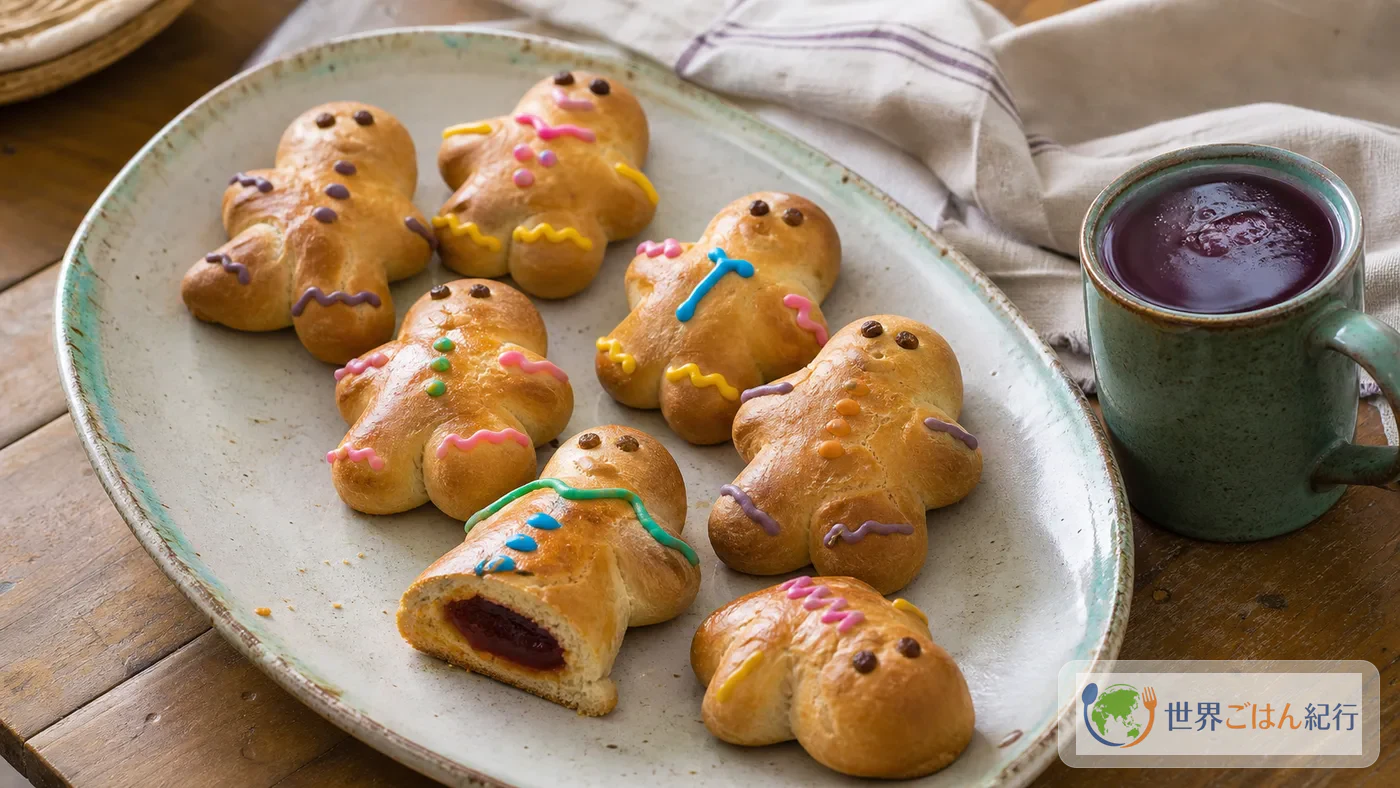
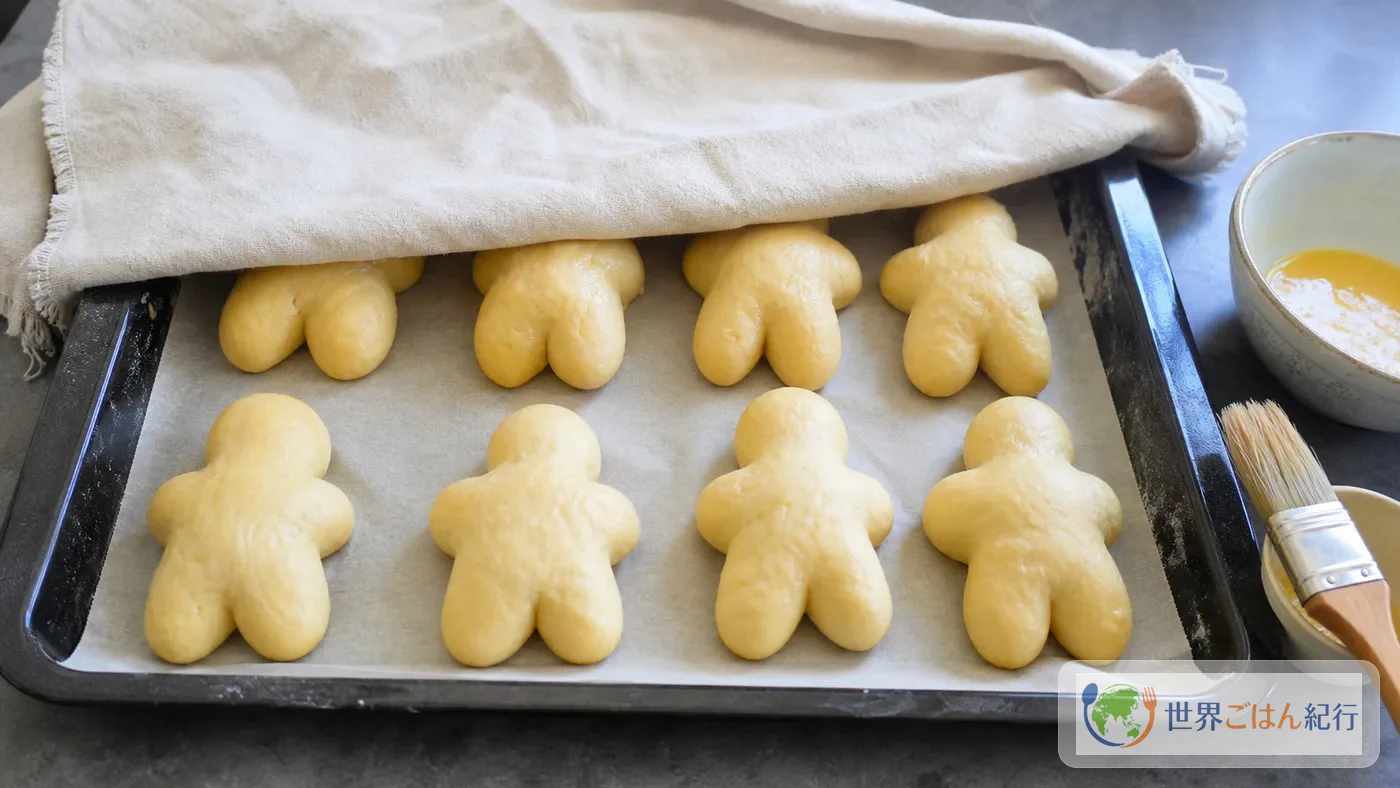
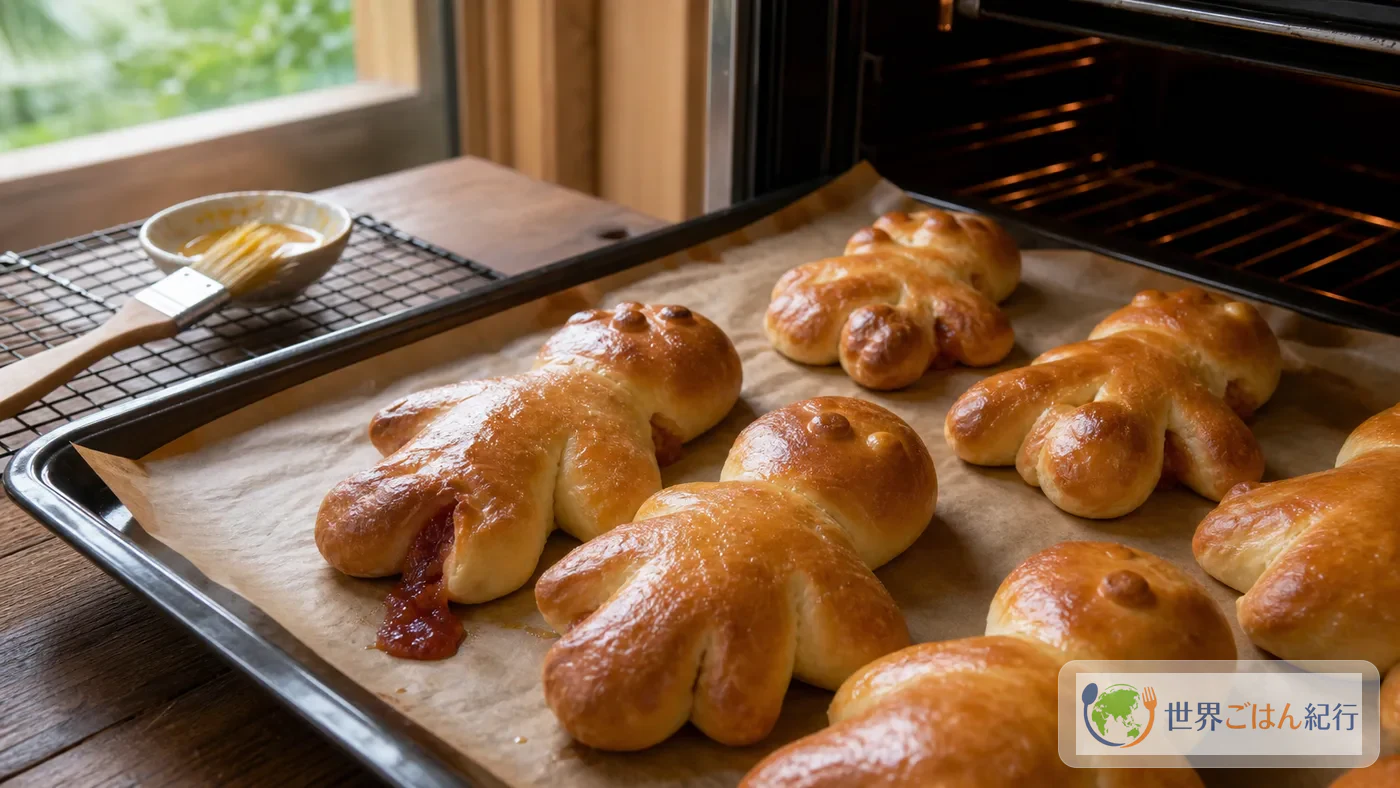
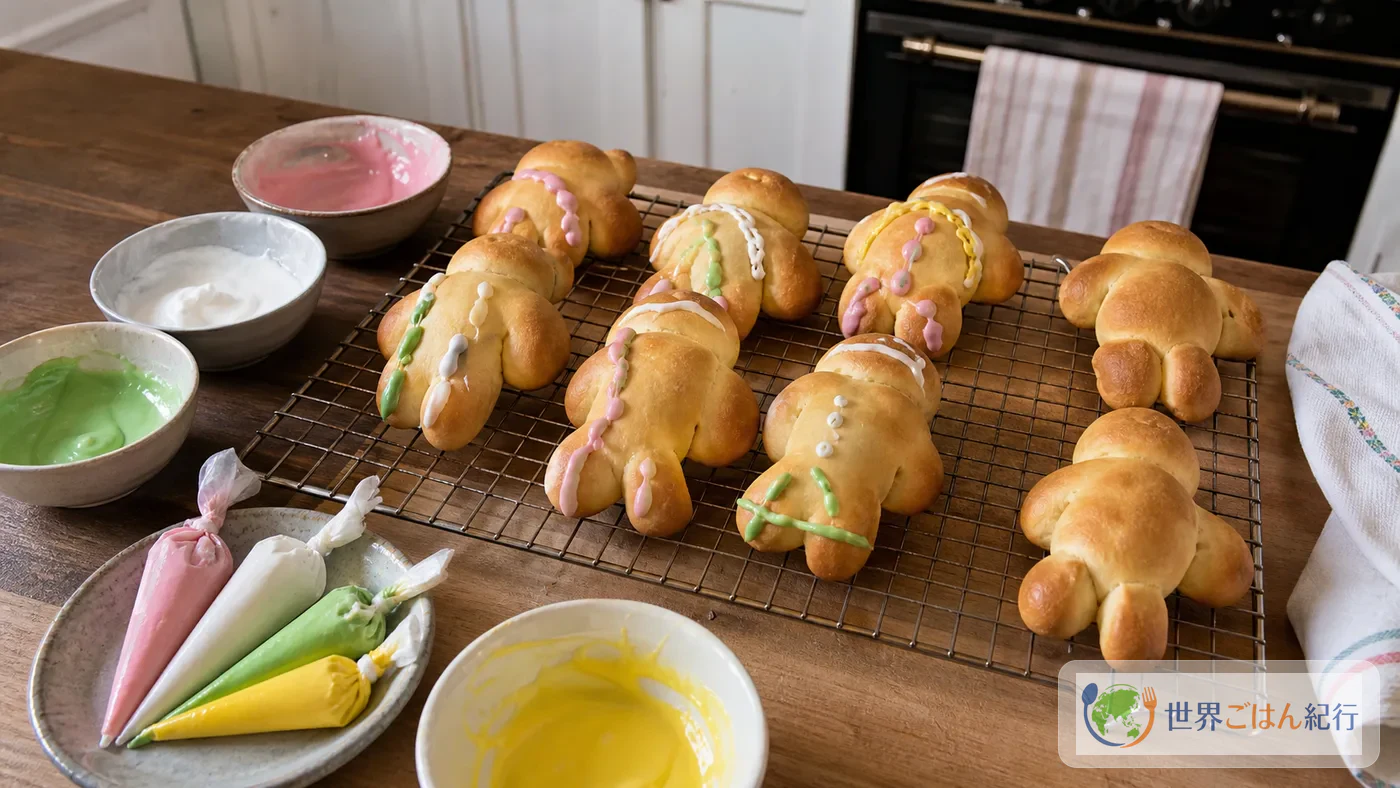
A sweet bread fresh from the oven smells of orange zest and cinnamon. It's still hot and you want to touch it, but you wait until it cools before drawing on the face in fine lines. Ecuador's guagua de pan is a small sweet bread shaped like a doll, made from an egg-enriched dough with a tart guava filling. Once baked, it gets decorated with colored icing for the face and clothes.
In short: guagua de pan (also spelled wawa de pan, and sometimes called "baby bread" in English) is Ecuador's Day of the Dead bread. Guagua means baby or child, so the name is literally "bread baby." It tastes sweet and lightly citrusy, with a tart guava center, and it is traditionally eaten with colada morada.
Guagua de Pan in Ecuador and the Andes
In Ecuador, guagua de pan shows up around the Day of the Dead alongside colada morada, a purple drink. Across the Andes the bread is also called T'anta wawa or tantawawa: t'anta is described as the word for bread and wawa as the word for child. The shape, aroma and filling vary by country and by household. The Ecuadorian home version is the sweet guava-filled one with colored icing.
The essentials are a doll-like shape, a sweet egg dough, tart guava, the scent of orange and cinnamon, and icing drawn once the bread has cooled. Don't worry about getting every detail of the doll perfect. It matters more to shape it thick enough that it stays plump after baking.
| What to look at | Ecuadorian style | Making it elsewhere |
|---|---|---|
| When it is eaten | Around the Day of the Dead, with colada morada | Purple corn is hard to find, so a dark berry juice or tea works |
| Filling | Guava paste or sweet jam | Guava jam, guava paste, or a tart berry jam |
| Shape | Bread that looks like a baby or doll | Make a head, body and arms, and don't overbake or the outline is lost |
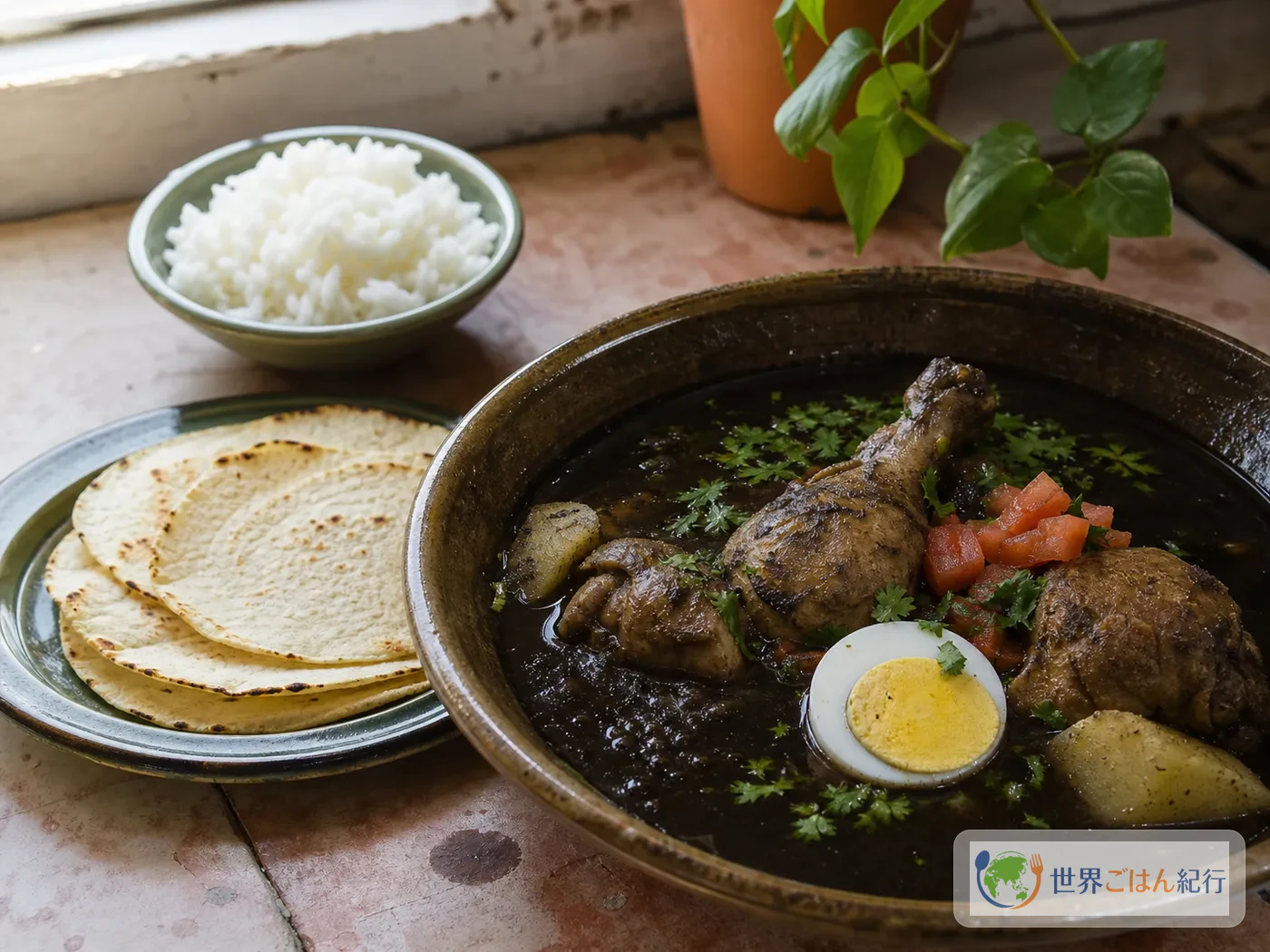
If you'd like to start with a savory Ecuadorian dish, encebollado is a good choice. Put this bread next to Argentine empanadas and Bolivian salteñas, two more South American wrapped foods, and you'll see how differently the same flour works at the table.
Ingredients (makes 8)
This makes 8 small doll breads of about 4.5 inches (12 cm). If each one is too large, the surface dries before the center bakes, and cracks show before you draw the face. Making 8 equal pieces the first time keeps the proofing, shaping, and judging of color steadier.
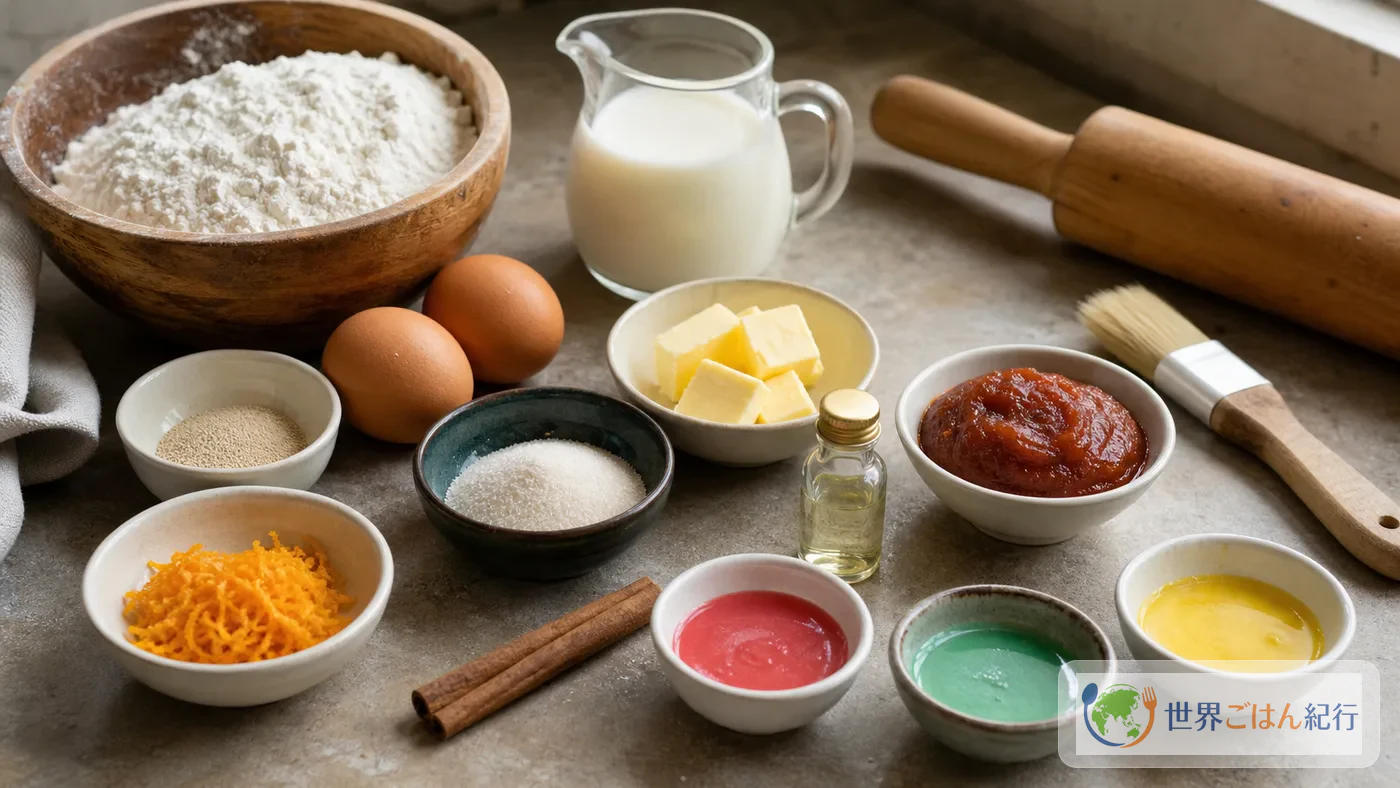
This uses wheat, eggs, and milk. Check the allergen labels on the food coloring and jam. Aim for an internal temperature of at least 90°C (194°F) when the bread is baked, and put the icing on only after the bread has cooled.
Choosing Ingredients for Guagua de Pan
The hard part of shopping isn't the flour or the butter. It's deciding on the aroma. Orange zest and cinnamon alone make a fine plain sweet bread, but a little floral scent makes the dough taste more like an Ecuadorian celebration sweet.
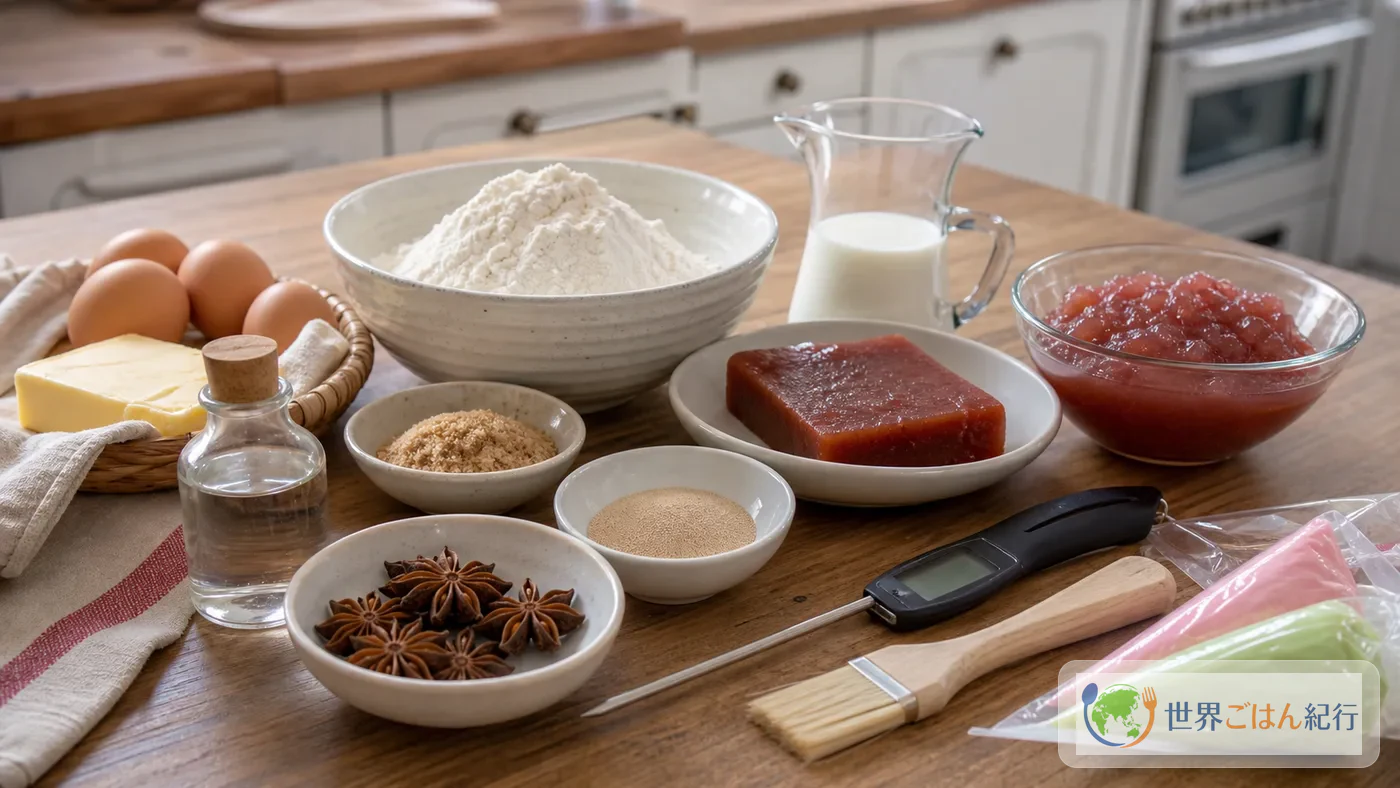
You only need 1/2 tsp of orange blossom water. The rest of the bottle can go into Middle Eastern sweets, tea and syrups, so it won't go to waste if you bake often. To skip it, steep star anise briefly in the milk instead: put 1/4 of a star in the warmed milk for 2 minutes, then take it out. Ground and mixed into the dough, star anise easily turns medicinal.
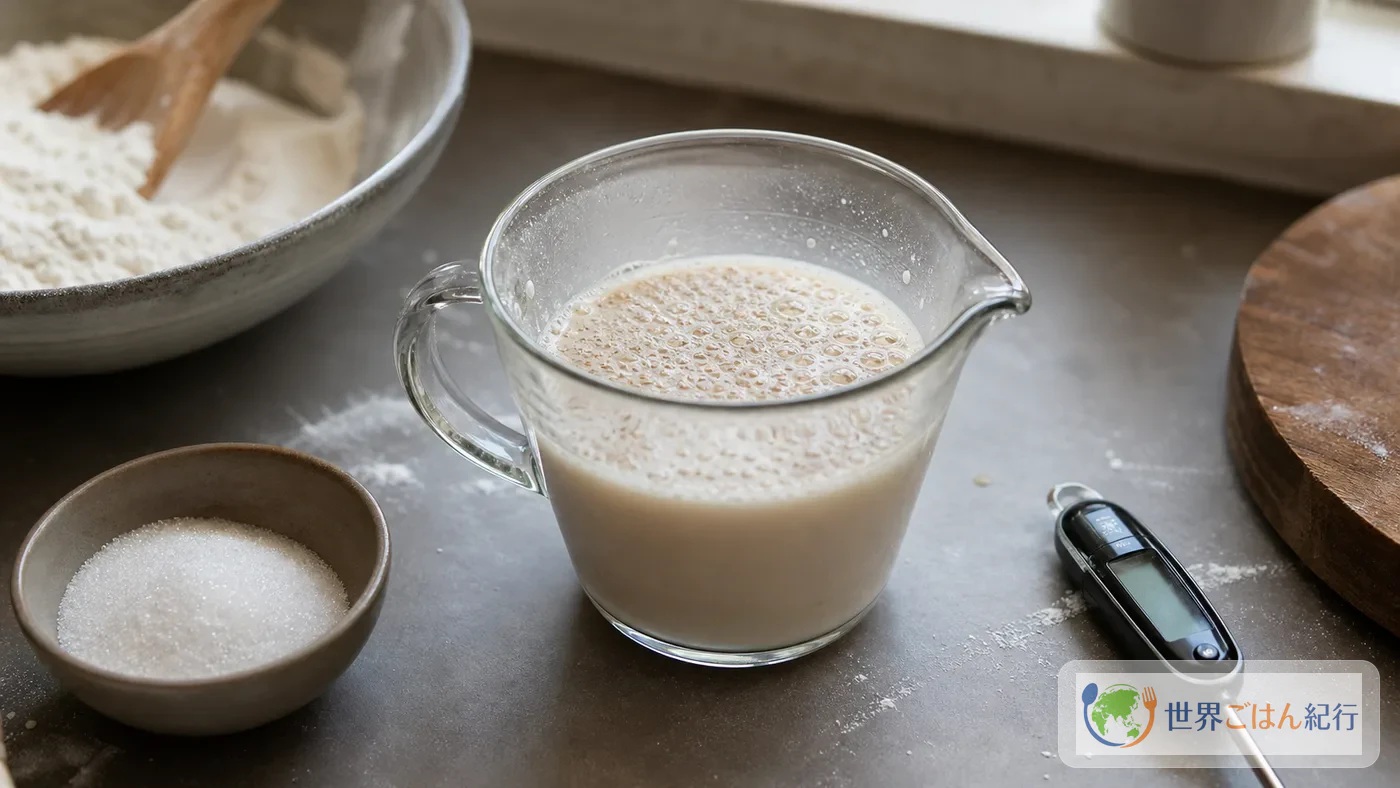
Enriched doughs change character with just a few degrees of temperature, so a thermometer is worth having. It lets you check three things: the temperature of the warmed milk, the spot you pick for the first proof, and the internal temperature of the baked bread.
Method: Bake Them as Dolls Without Overproofing
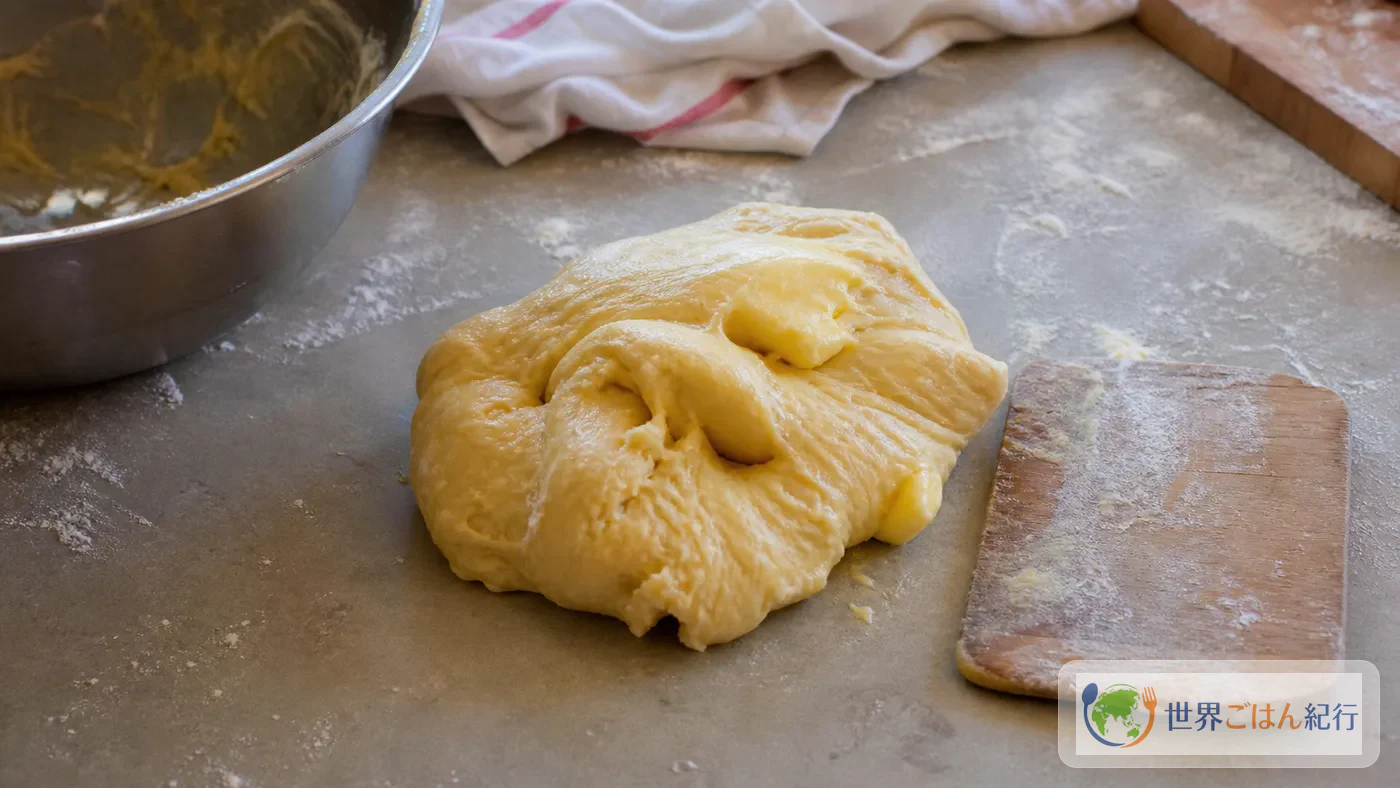
The dough is sweet and rich in fat, so rushing the proof makes only the surface puff up and shifts the position of the face when baked. The goal is not a big dome like a bakery brioche but a softness that keeps the outline of the shaped doll.
Fixing Cracks and Leaks in Guagua de Pan
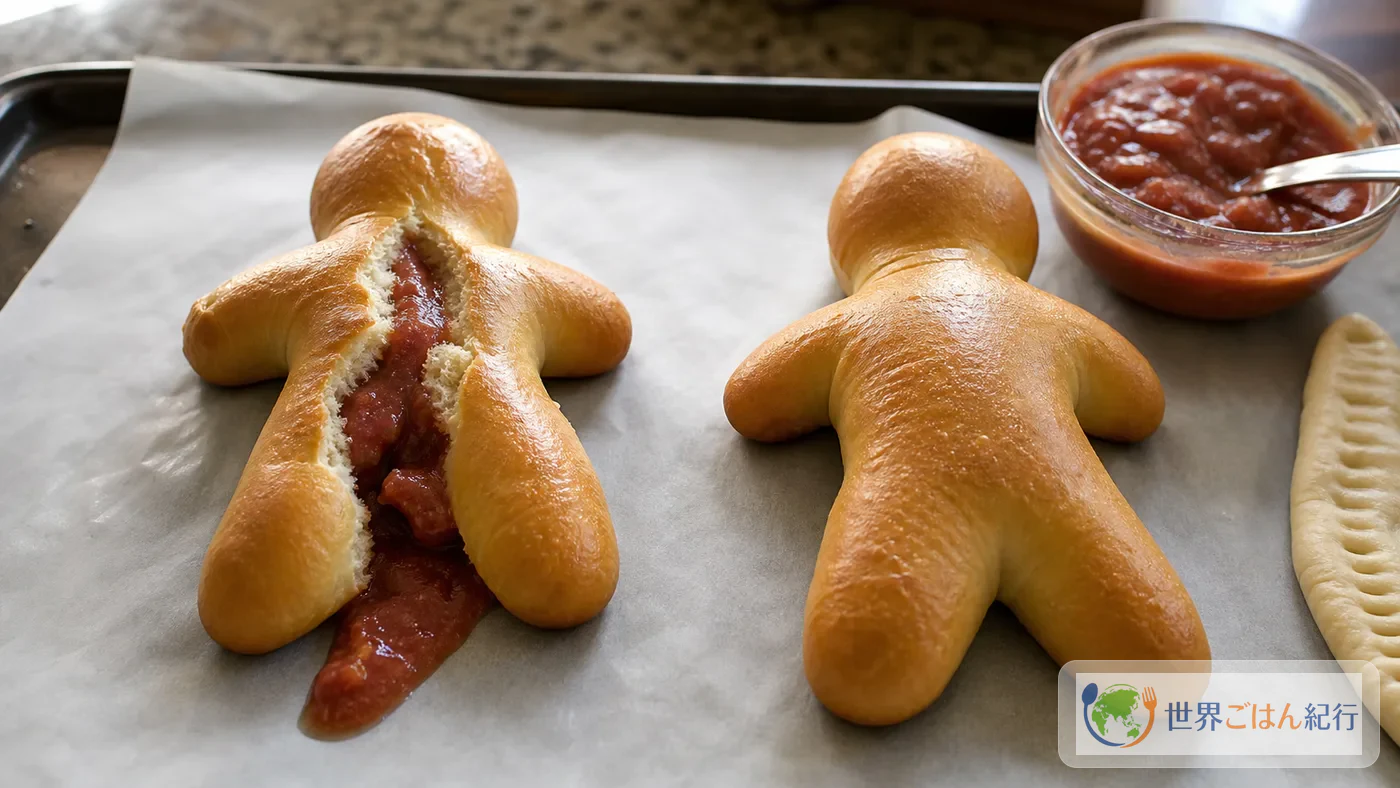
With guagua de pan, problems show up in the shape before the flavor. Cracks, leaking filling and bleeding faces almost always come down to one of three things: proofing, how firm the filling is, or cooling.
| What happened | Likely cause | How to fix it next time |
|---|---|---|
| The surface cracks badly | Underproofed second rise, or the dough surface dried out | Cover loosely with lightly oiled plastic wrap during proofing, not a dry cloth |
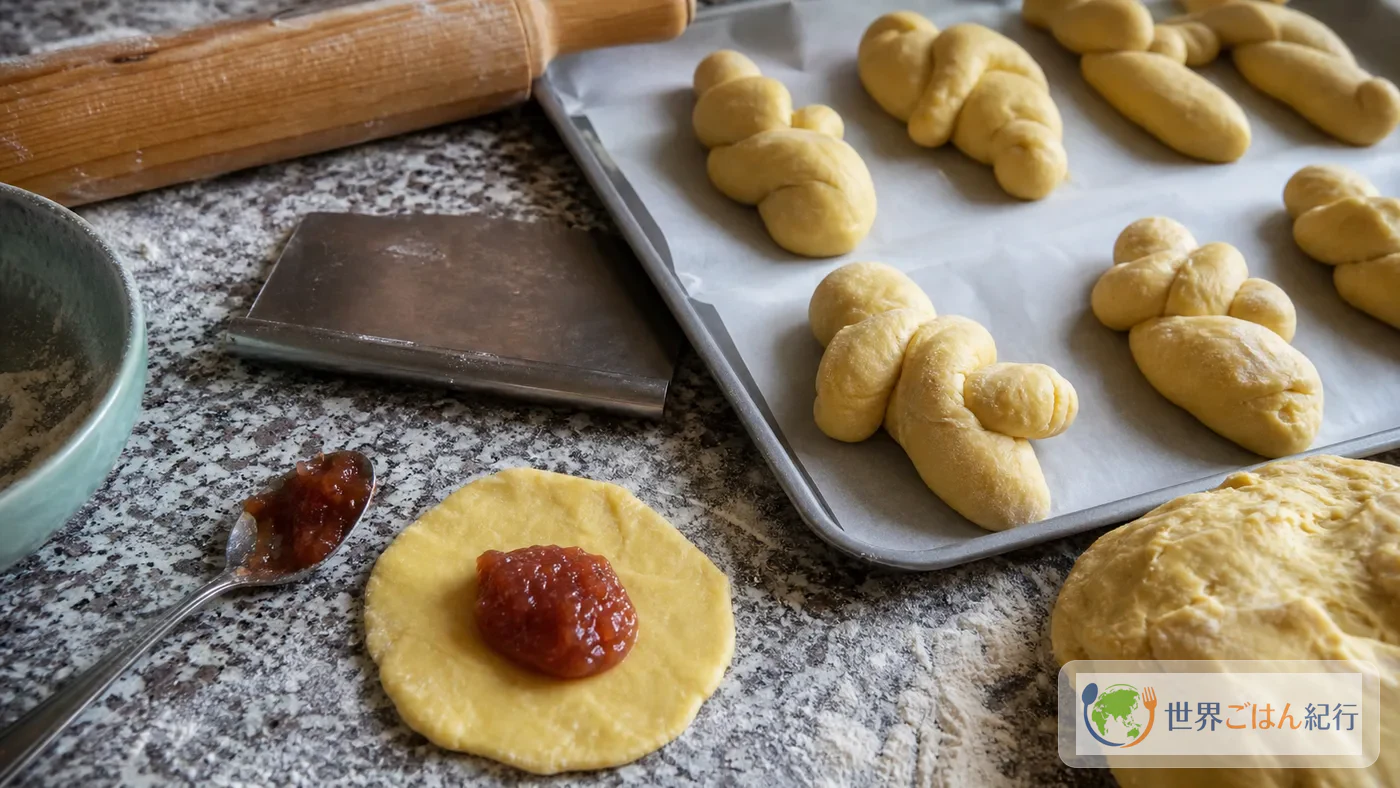
| The filling leaks from the bottom | The filling was hot, or the seam was thin | Cool the filling completely, overlap the seam by 0.5 inches (1 cm), and set it seam-side down |
| The doll shape rounds out and disappears | The second proof was too long | Stop at 1.2–1.3 times the size |
| The color is dark and the bread hard | Over 350°F (180°C), or overbaked | Check the color at 12 minutes; if dark, cover with foil |
| The icing runs | The bread is warm, or the icing is loose | Cool at least 20 minutes and add powdered sugar 5 g at a time |
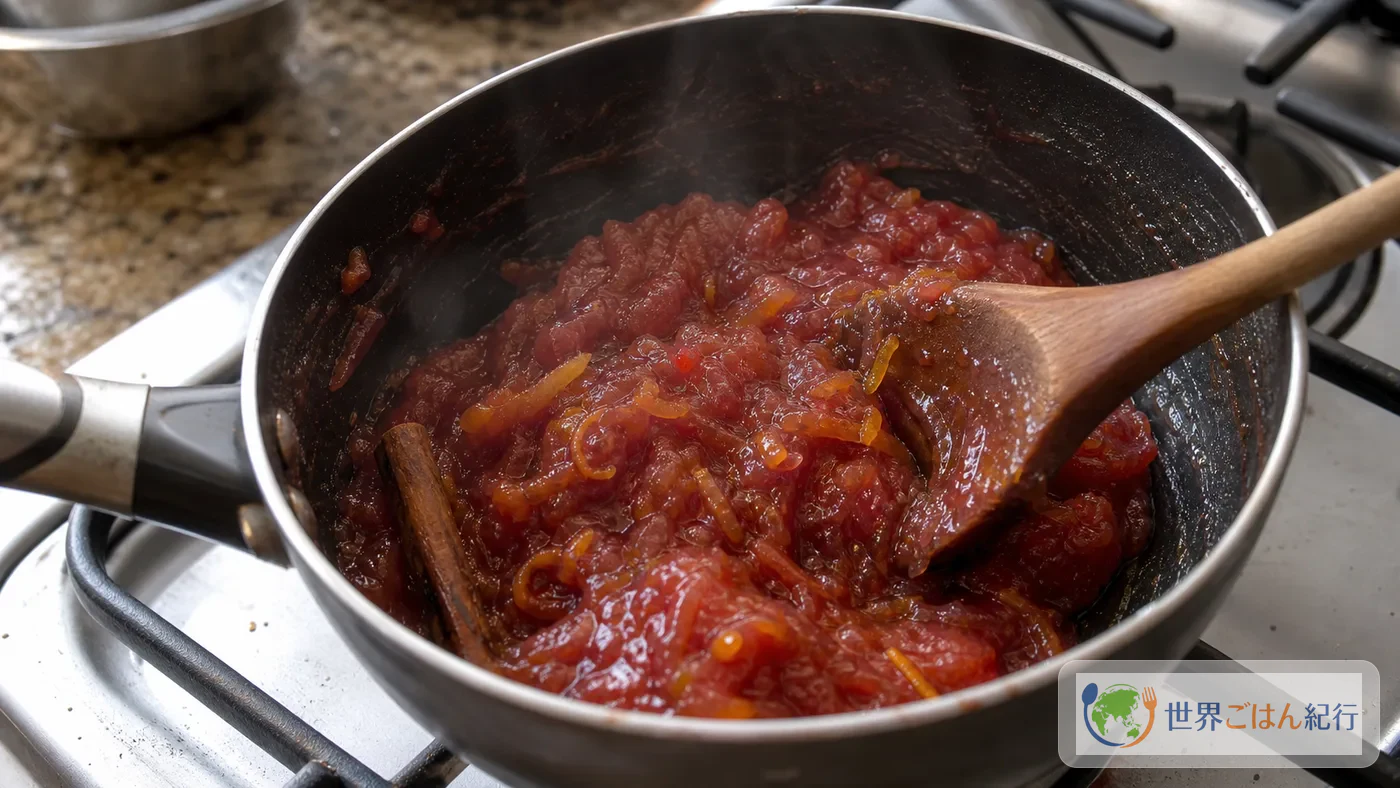
The filling is the easiest thing to correct. Guava paste firms up suddenly as it cools, so it's fine if it still feels a little loose when you turn off the heat. Jam holds more water, so cook it 2–3 minutes longer over low heat, until it falls thickly from a lifted spatula.
Serving and Storing Guagua de Pan
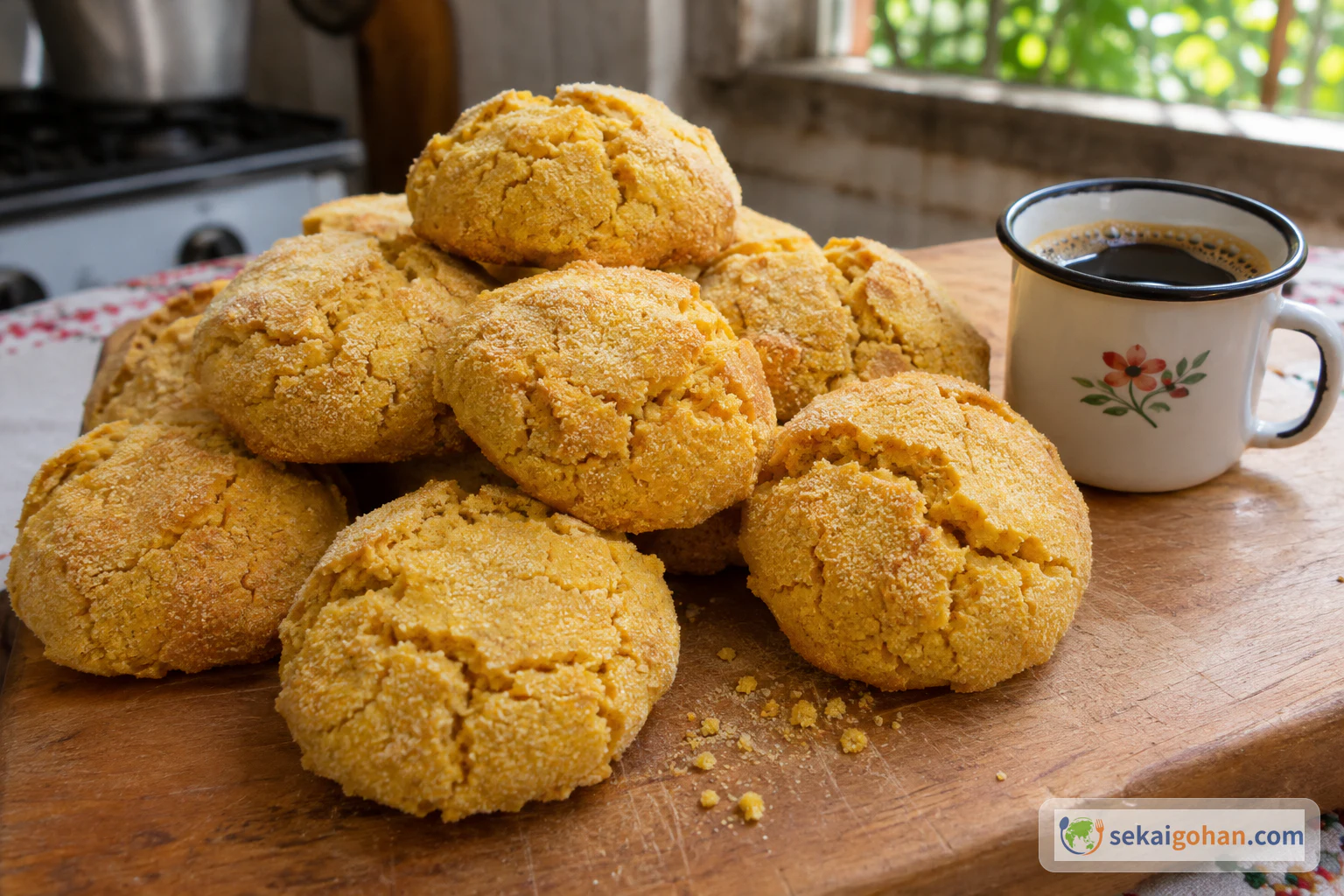
In Ecuador the bread goes hand in hand with colada morada, but you don't need to hunt down purple corn every time. A tart berry juice, strong black tea or black coffee also lets the guava and spices come through. For a South American spread, serve savory Paraguayan vori vori or chewy Brazilian pão de queijo before or after, and enjoy the contrast between flour, corn and cheese.
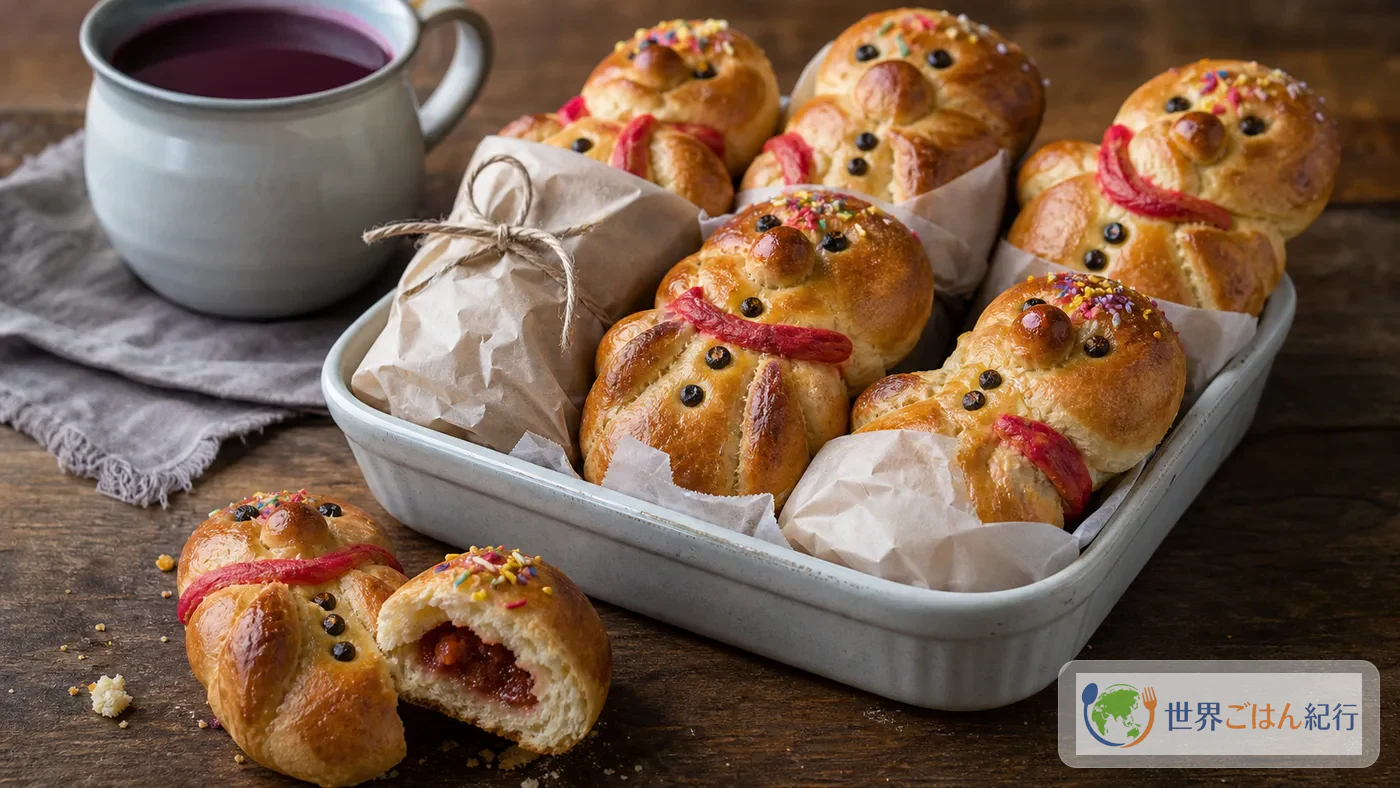
The breads keep until the next day at room temperature in a container that stops them drying out, or about 2 days in the refrigerator. The fridge firms up the dough, so warm them in a toaster oven at 250°F (120°C) for 3–4 minutes and let them cool slightly before eating. Avoid the microwave, because thick icing melts when heated.
To freeze, wrap each baked bread in plastic wrap before you add the icing, put them in a freezer bag, and eat within 2 weeks. Thaw overnight in the refrigerator, then reheat in a 300°F (150°C) oven for 6–7 minutes.
FAQ
I can't find guava paste. What can I use instead?
Firm guava jam is the closest substitute. If you can't get that either, combine 4 oz (120 g) raspberry jam with 2 oz (60 g) apple jam, add 2 tsp (10 ml) lemon juice, and cook for 3 minutes over low heat. The aroma will be different, but you'll get a similar balance of sweet and tart.
Can I leave out the orange blossom water?
Yes. Increase the orange zest to 7 g and steep star anise in the warm milk as described above. That nudges the aroma back toward a celebration sweet.
How much can I prepare the day before?
You can make the filling the day before and refrigerate it. After the first proof, divide the dough into 8, roll it into balls, and leave them overnight in an airtight container in the refrigerator. The next day, let them sit at room temperature for 30 minutes before shaping. Don't shape the dolls the night before, because they easily lose their definition overnight.
Is it the same as T'anta wawa in Bolivia or Peru?
The basic idea of "bread shaped like a child" is shared across the Andes, but the shape, the decoration and the occasion differ by country and region. If you're making the ritual breads of Bolivia or Peru, it's best to look up the decoration molds, how the faces are drawn, and whether there's a filling.
Is it not authentic without colada morada?
The drink is a symbolic pairing, but what defines the bread is its doll shape, the sweet enriched dough, the guava filling and its aroma. At home, it matters more that you don't overbake the bread and that you draw the face after it cools than that you get the drink exactly right.
What does guagua de pan mean, and why is it called baby bread?
The name is built from the Andean word for child, wawa (spelled guagua in Ecuador), plus the Spanish pan, bread. So guagua de pan is "child of bread," or "baby bread": a loaf shaped like a small doll or swaddled baby. That is why you will see it searched as wawa de pan, guaguas de pan or baby bread.
When do people eat guagua de pan in Ecuador?
Around the Day of the Dead, together with a cup of colada morada. At home, make the breads a day or two before, ice them once cooled, and serve them with the drink or with tea.
How is it different from Mexico's pan de muerto?
Both are sweet breads made for the Day of the Dead, but guagua de pan is shaped like a doll and has a guava filling. For Mexico's bread for the same season, see pan de muerto. For the Bolivian child-shaped bread, see Bolivian guagua de pan.